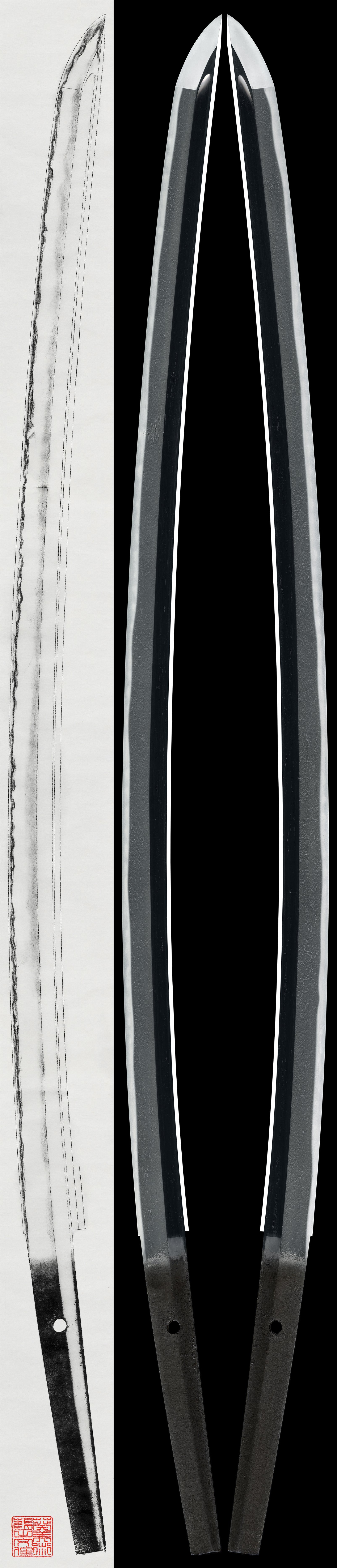
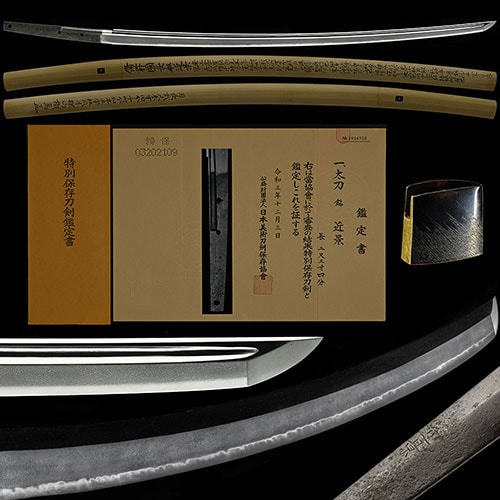
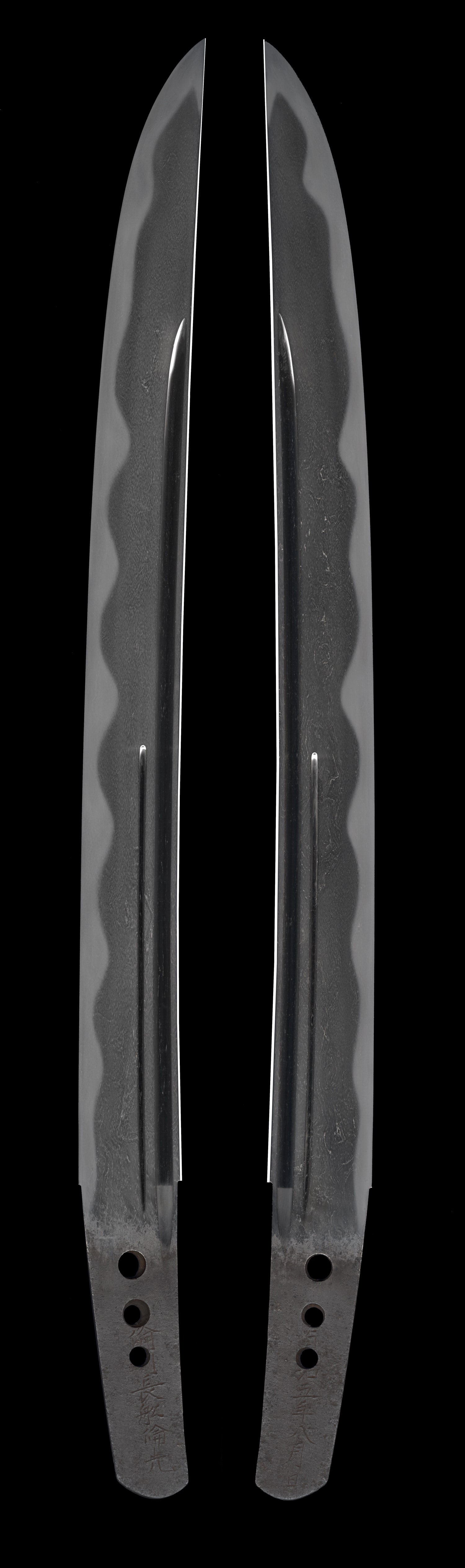
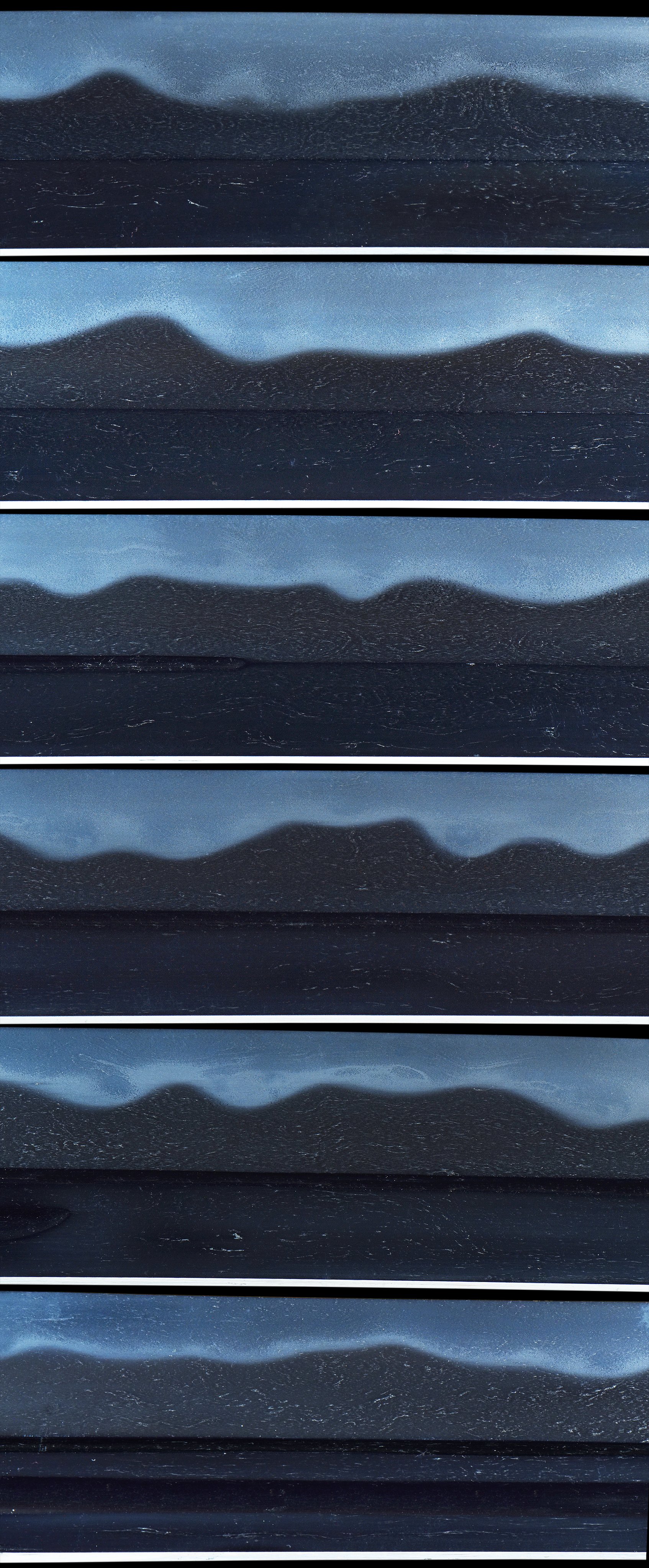
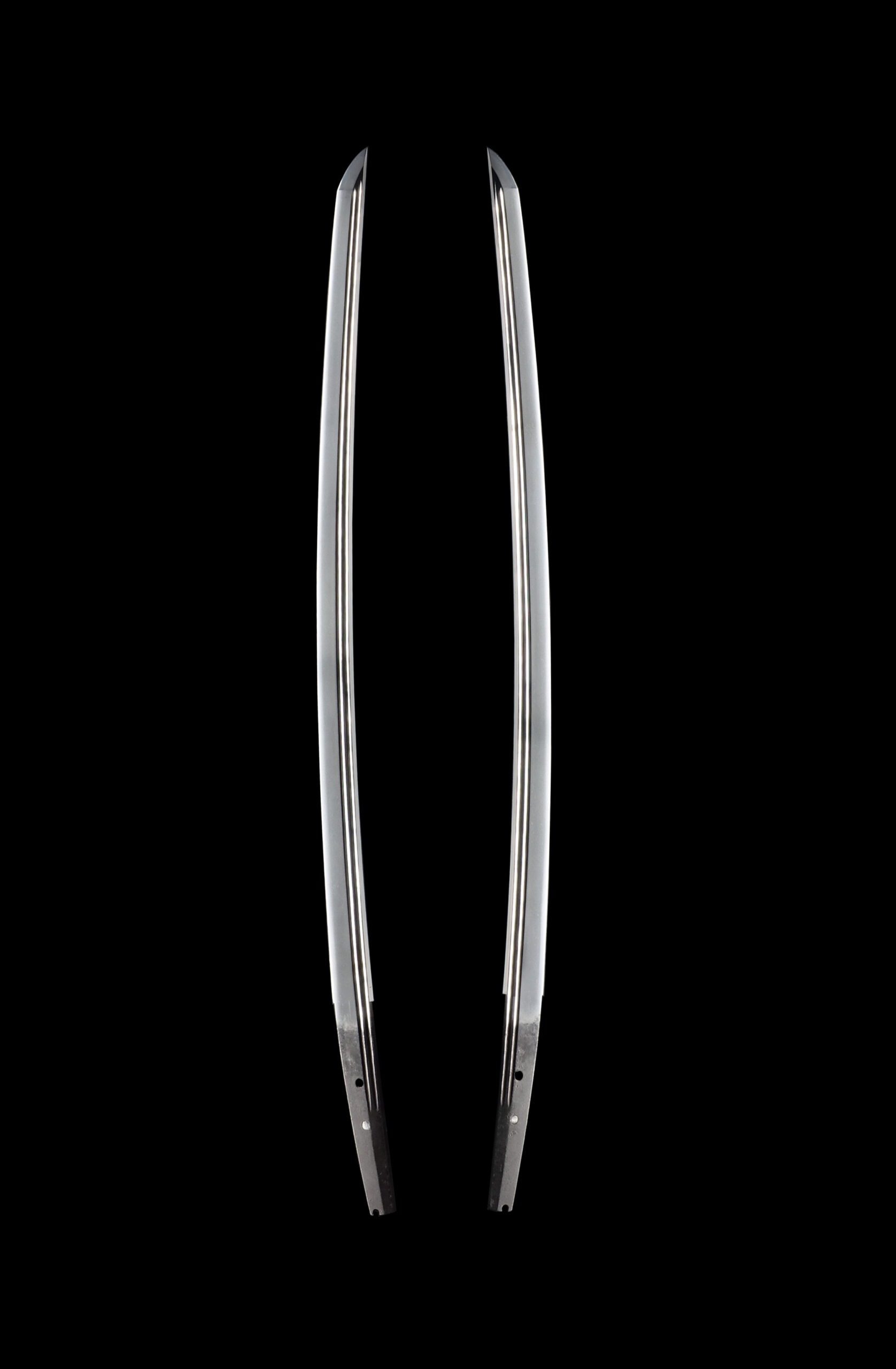
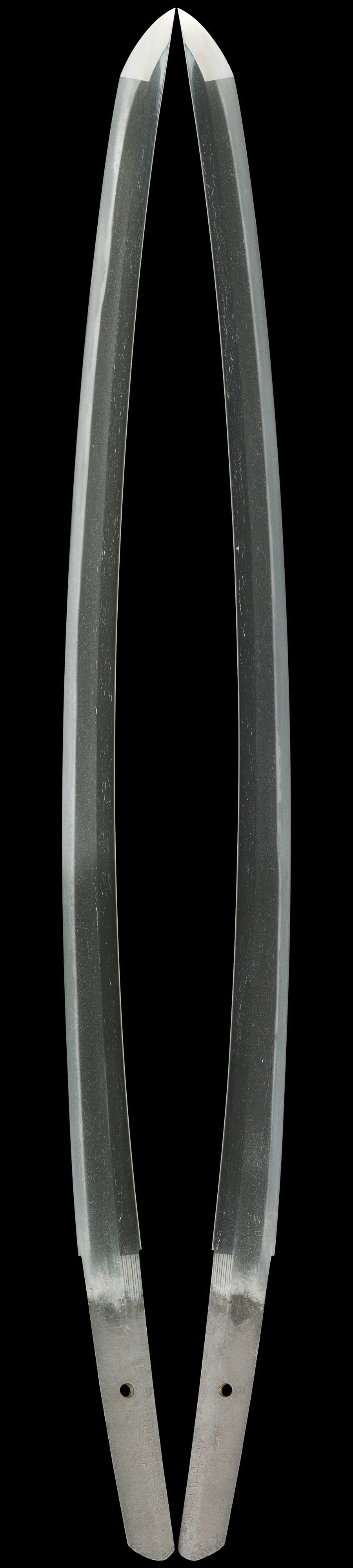
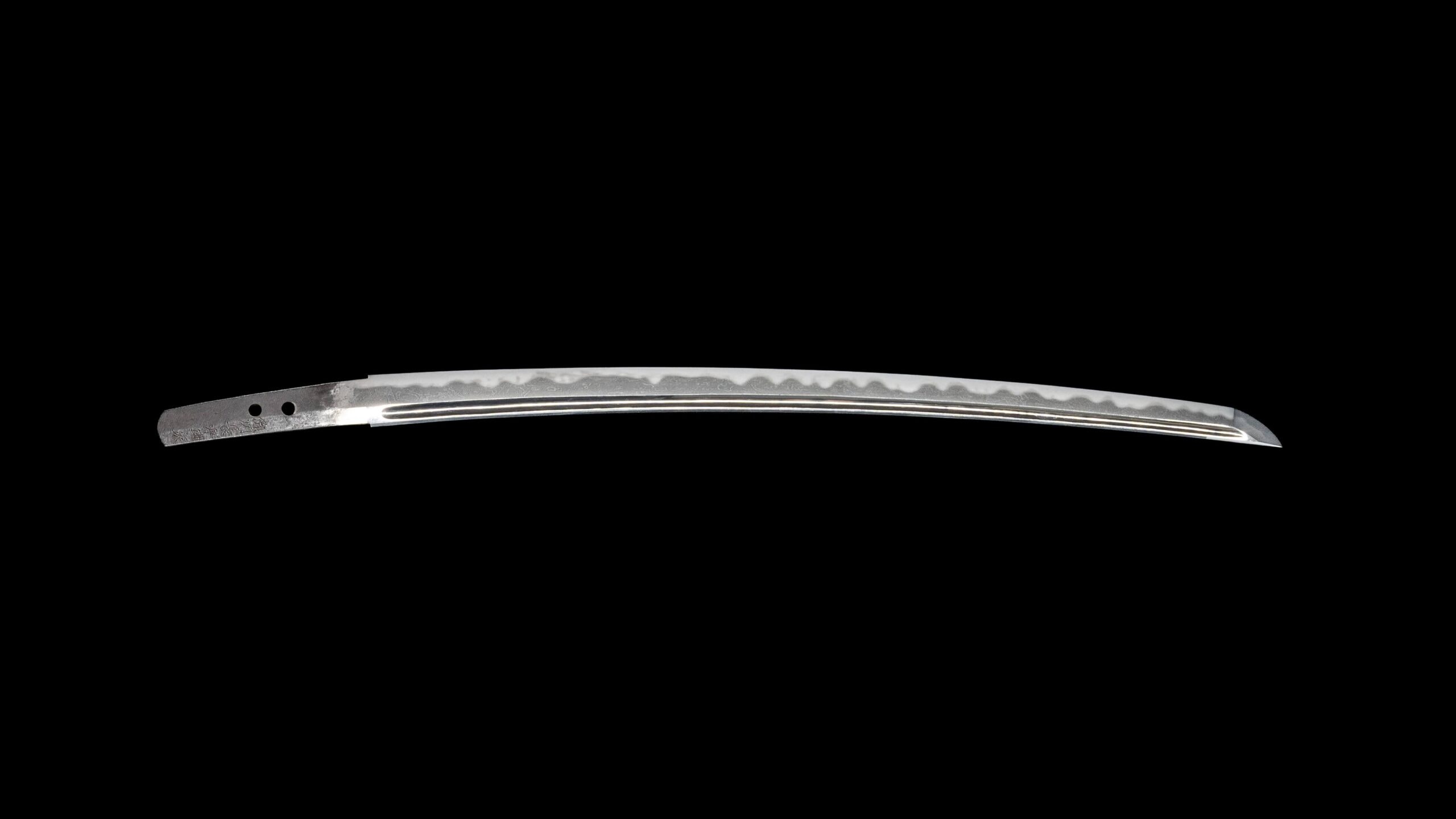
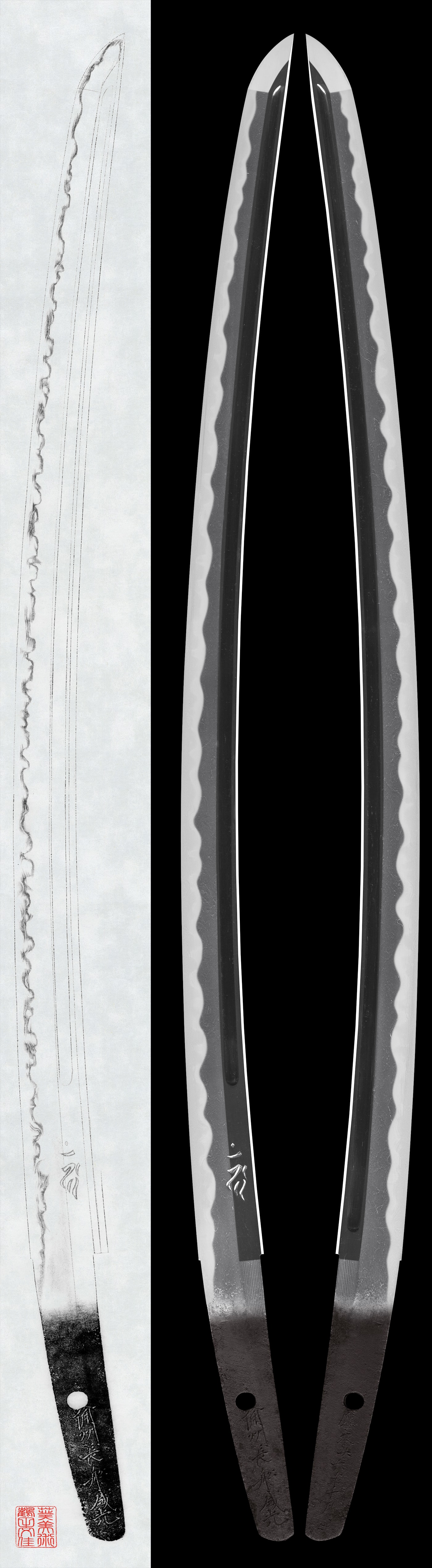
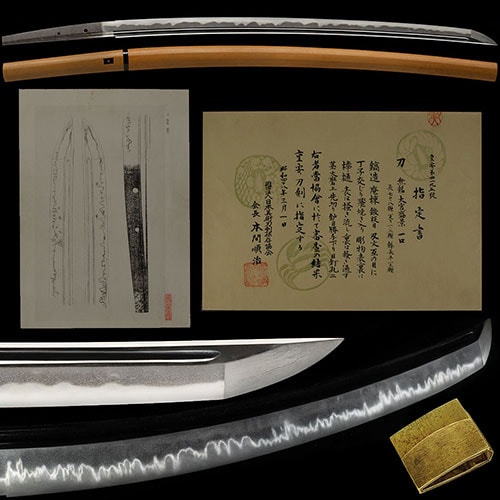
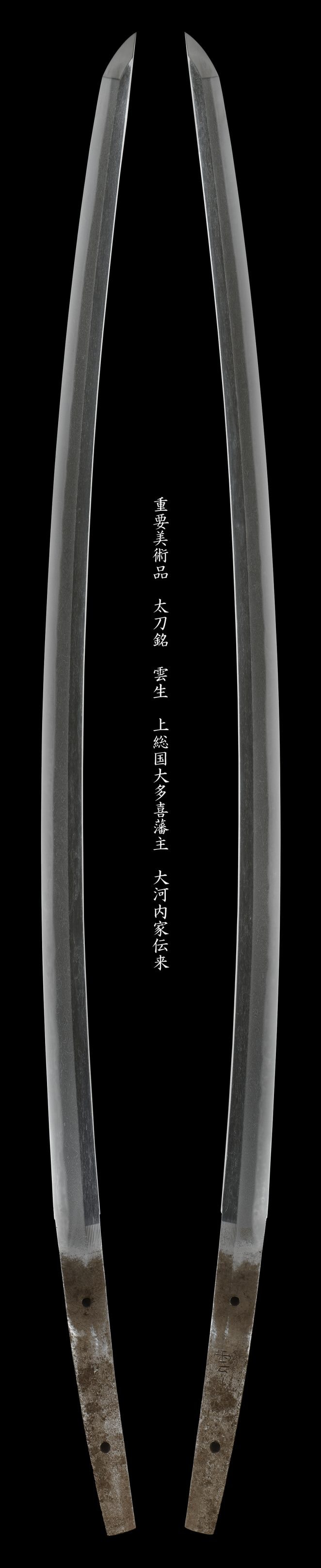
The published sources open their account of Kanemitsu with one fixed sentence: he is "the mainline heir of the school, following Kagemitsu". Son of Kagemitsu and fourth master of the line that runs from Mitsutada through Nagamitsu and Kagemitsu, he stands as the leading smith of the period. His dated works span what the calls an unusually long period, roughly forty-five years from Genko 1 (1321) at the close of the period through the Joji era (1362-1368), and some designations carry the span to and read it as fully fifty years. So long a working life raises, in the sources' own framing, the question of a first and a second generation, with no settled view as to where the division should fall; the later master is known to the record as "Enbun Kanemitsu".
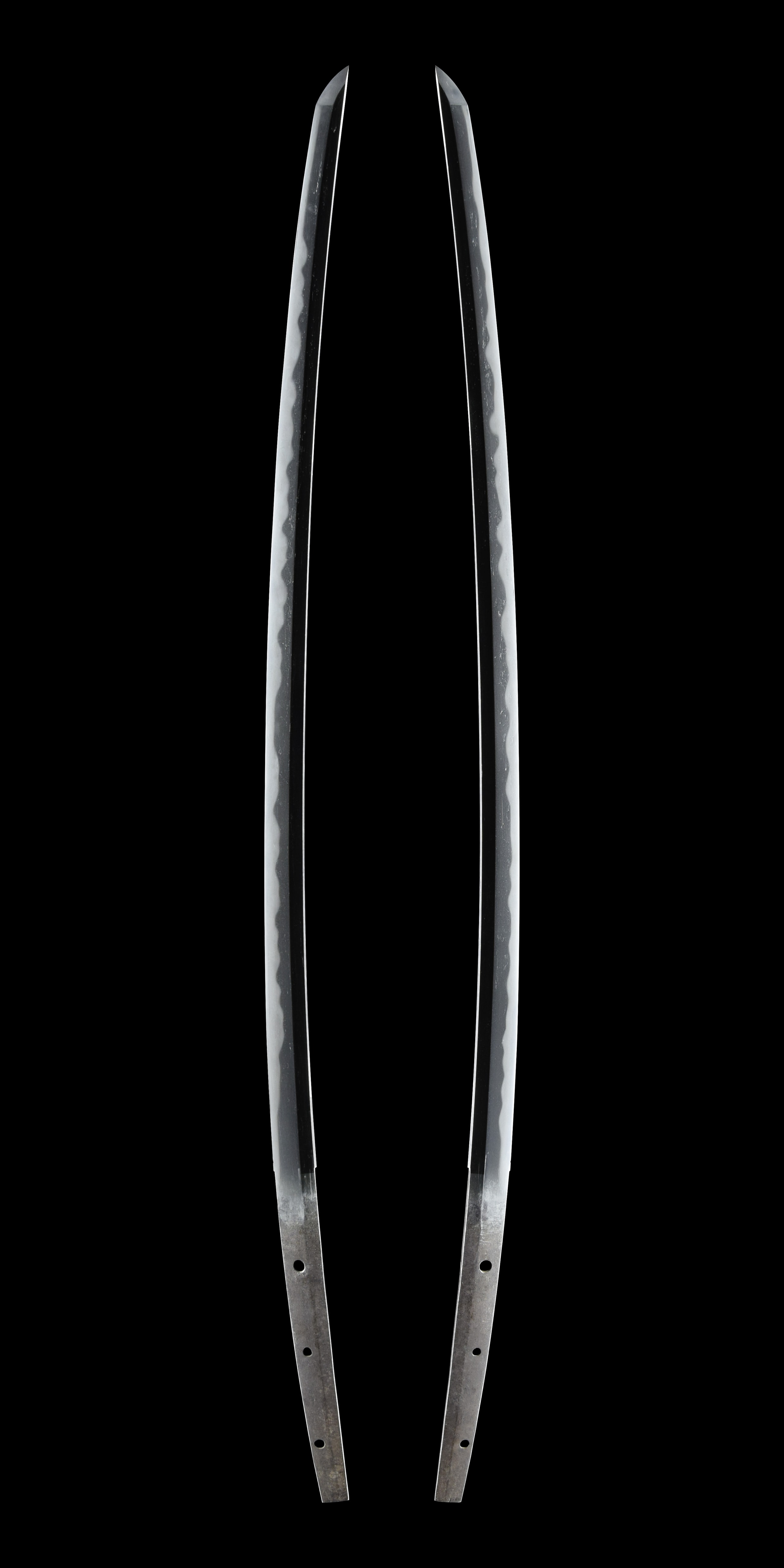
His hand divides at a watershed the published sources place in the Jowa and 'o eras (1345-1352). Until around Koei both and keep standard proportions, tempered either in a tone mixed with or in the he inherited from his father, work that in the recurring judgment of the designations "wholly follows the father Kagemitsu's manner". From Jowa and 'o the build turns grand, and the sentence nearly every later designation repeats takes over: "a -dominant that had not existed before appears, and is met most often around Bunna and Enbun". The broad, unhurried and the angular are alike singled out as "what Kanemitsu excelled in", and one description calls the angular "the construction he favored from first to last". Against the rounder returns of the earlier mainline, his runs in , often thrusting up before a pointed tip.
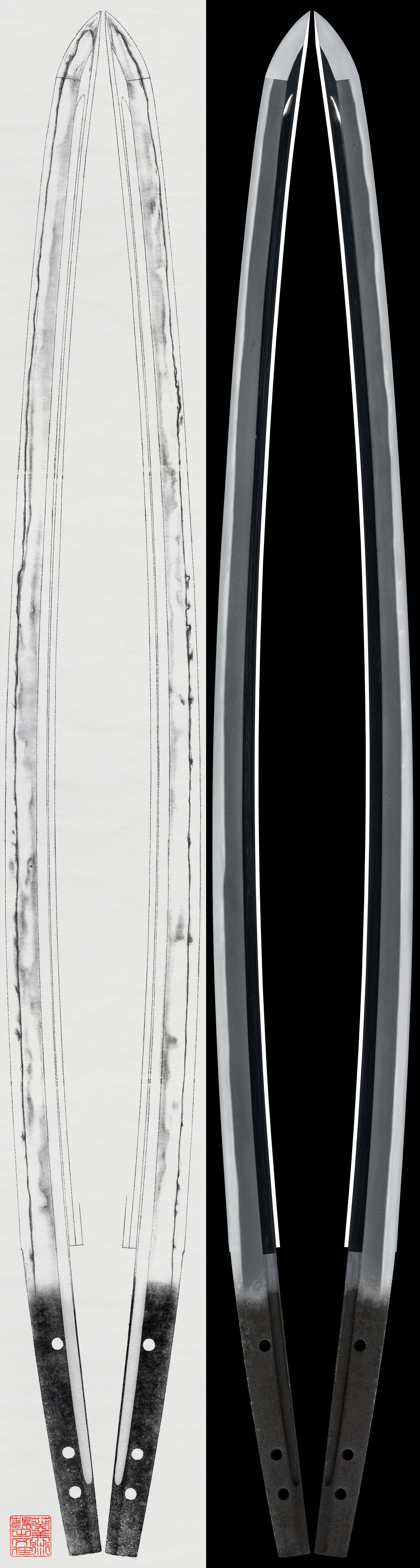
Even at the grand scale the forging holds. The is mixed with , and the remarks of one that it shows not the slightest loosening or coarseness of the surface pattern from base through tip. Fine adheres thickly, fine enter, and a stands out, often called vivid, the steel bright; on the early -signed pieces the reflection is rather a or over a tight . The temper is for the most part -dominant with . and gather toward the , small and -like effects appear in places, and and enter freely. To this he adds a distinctive program of carving: , and , and above all the cursive grass-style , a composition the sources note recurs on works of Kanemitsu and Tomomitsu, and at times Chikakage.
Most of what survives from the late phase is the of the Enbun-Joji build: wide in with little taper from base to tip, the large, the shallow or moderately deep. Beside it stand the and , broad and thin with shallow , and the long blades signed on the , made as from the outset, of which the Uesugi "Suijin-giri" is the recorded example. Signed work is plentiful for so heavily shortened an oeuvre, one hundred ten signed against ninety-eight unsigned among the blades gathered here, the long signatures reading no -ju Kanemitsu or Bishu -ju Kanemitsu, many with dates. The strengthened of the late manner the sources read with their own hedge, "possibly under the influence of the tradition", adding that "since the also is emphasized, the work is known in the world as Soden-". The older designations go further only as a question: one note finds in the turn to notare "the relation to Masamune, together with the succession of a first and second generation", the Masamune-pupil tradition held open, never asserted. The many shortened blades carry attributions of the Honami line, Kotoku and Koson among them, which the in case after case upholds.
Within his place is fixed by what he carried and what he introduced. The descends to him through Kagemitsu alone within the school's mainline, and the is his own addition, the broad, unforced that, in the words of one description, this smith pioneered among craftsmen. His grand manner passes into late through his circle: the published sources read related blades as work of the sphere surrounding Kanemitsu, and the cursive he favored recurs in Tomomitsu.
Fujishiro grades him Sai-jo , and two hundred thirty-seven designated works stand on record. No National Treasure is among them, but thirteen blades hold the rank of Important Cultural Property, and the named swords cluster there: the O-Kanemitsu (大兼光) and the of Uesugi Kagekatsu's hand-picked thirty-five, both cited in the record as Important Cultural Properties, and the Nami-oyogi Kanemitsu (波游兼光), whose gold inlay records the ownership of Hashiba Okayama Chunagon Hideakira, identified as Kobayakawa Hideaki. Forty of his blades hold the rank, the most of any swordsmith, and with the blades the two tiers carry two hundred two. The provenance roll is deep, sixty-nine blades with recorded histories: Ashikaga Takauji, Uesugi Kenshin and Uesugi Kagekatsu, Toyotomi Hideyoshi, Todo Takatora, and the Kuroda, Date, Hosokawa, Maeda and Owari Tokugawa houses; one went to Tokugawa Iemitsu as the bequest of Sugihara Hoki no Kami Shigenaga, and another descended in the Masuda family, hereditary elders of the Choshu domain. The Important Cultural Property and Bijutsuhin pieces rest as patrimony in shrines, museums and long-held collections, the Tokugawa Art Museum, the Sano Art Museum and Eisei Bunko among recorded holders. For the collector the field is less closed than with most names of this rank: blades of the and tiers, many of recorded private whereabouts, appear from time to time. Yet most are held rather than traded, and a signed and dated piece of either phase is a landmark when it comes.