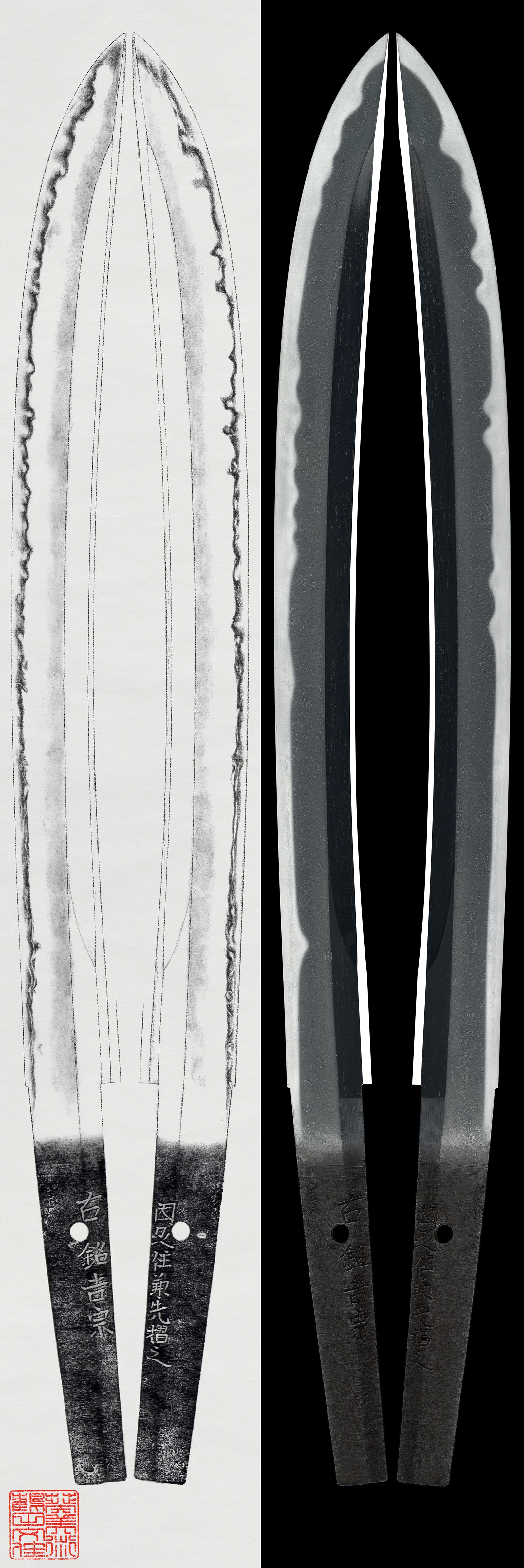
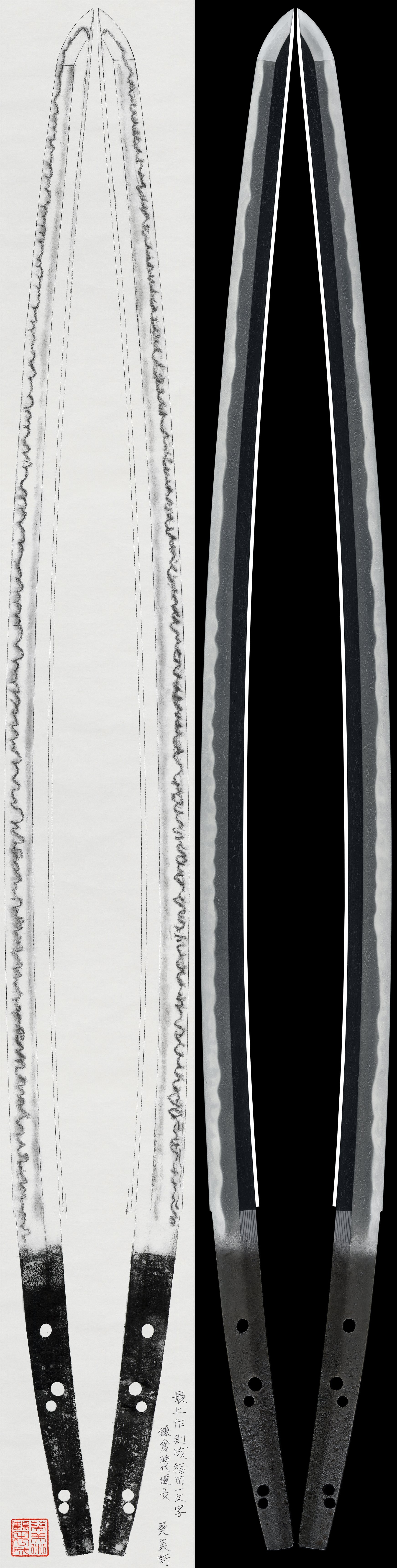
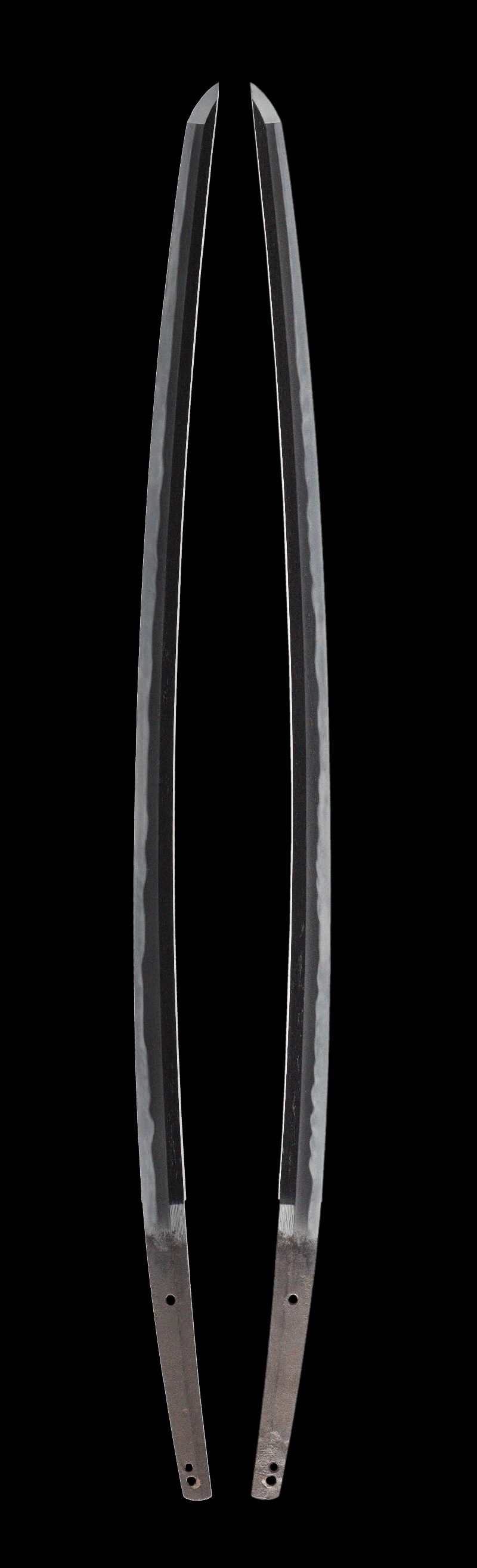
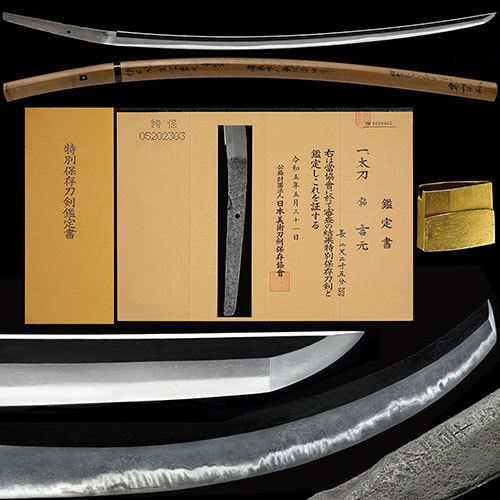
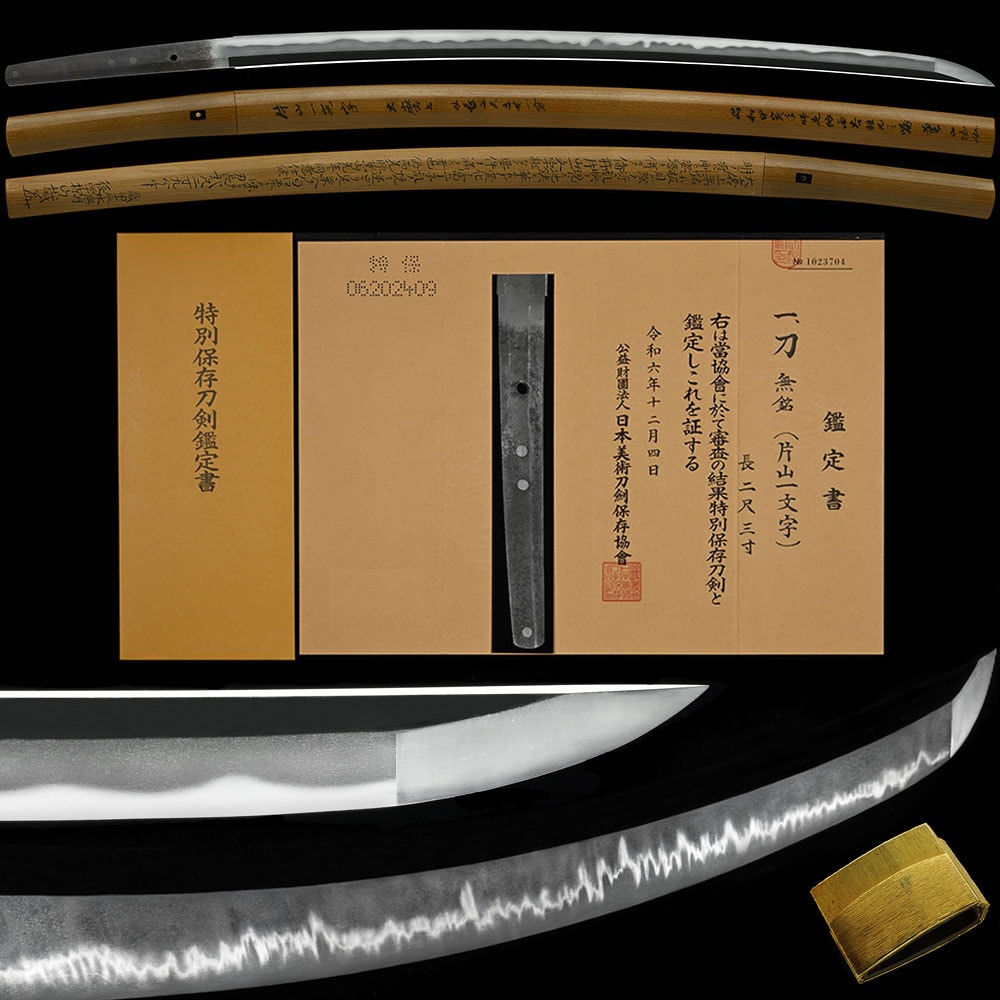
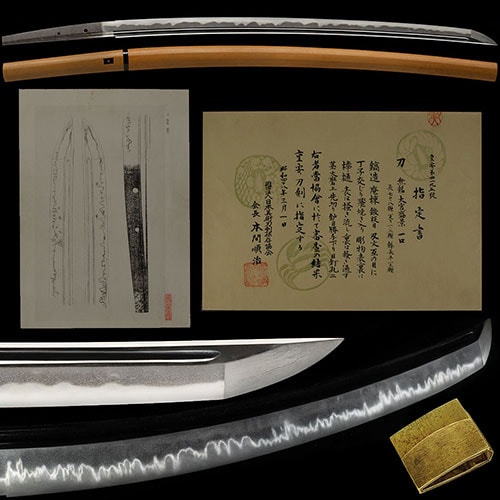
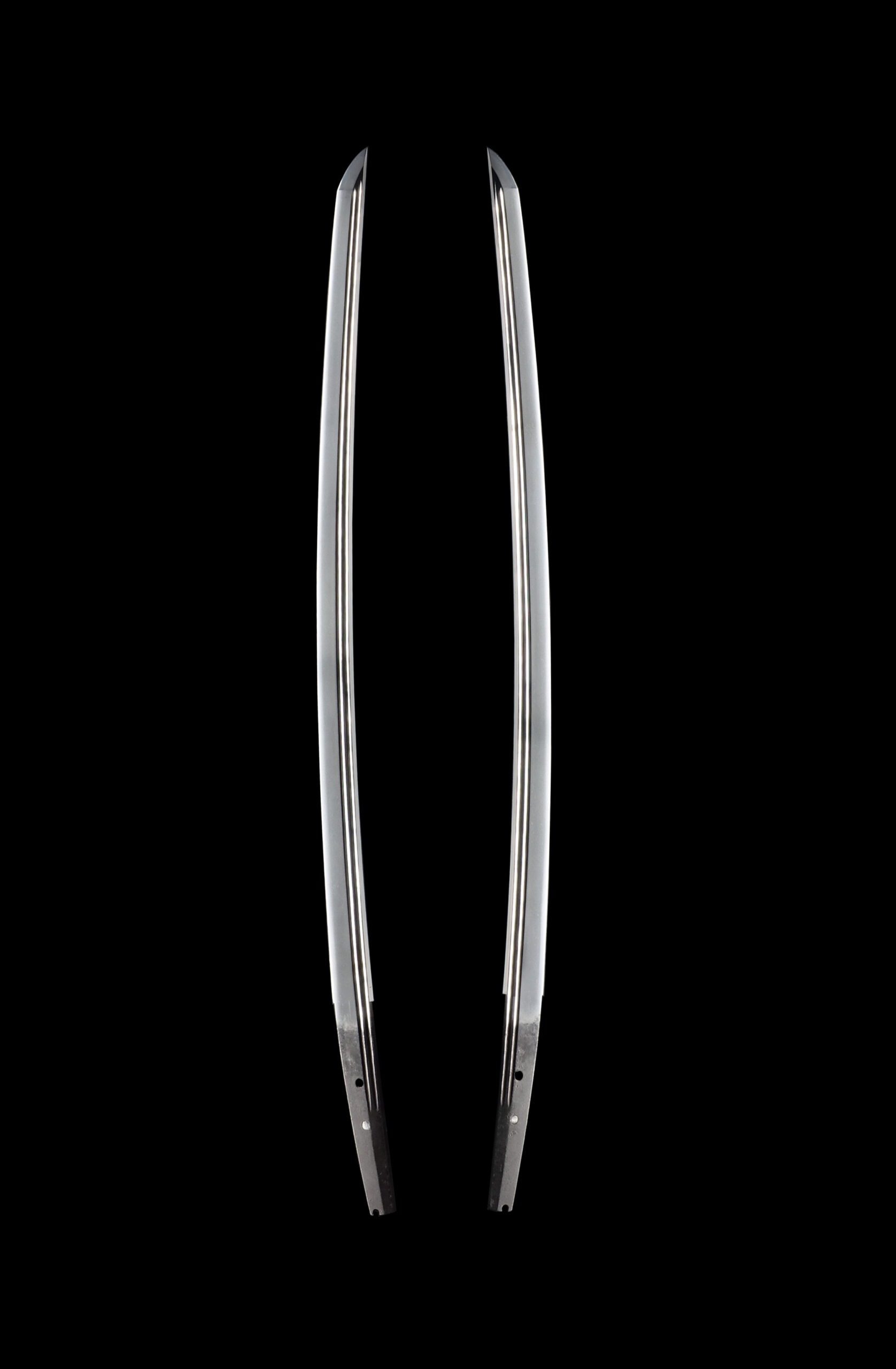
Norikane of the Fukuoka school worked in mid- , and the published sources are consistent about both his origin and his rarity: the swordsmith references record him as a son of the Fukuoka smith Sukefusa, in the line of the founder Norimune, his active dates variously transmitted as around the Ryakunin era (1238) or the Kenchō era (1249–1256). The commentaries note in nearly every entry that his extant works are comparatively few, so that a signed Norikane is scarce material in its own right. The two great currents of the age, the published record frames, were the and the schools, the flourishing into the period at Fukuoka, Yoshioka and Iwato; within it Norikane belongs to the mature Fukuoka manner. The clearest single witness to his hand is the descended in the Uesugi house, recorded as one of the "Thirty-five Swords Selected by Kagekatsu", of which the writes that as a signed work by the rarely encountered Fukuoka Norikane it is "exceptionally valuable as documentary material".
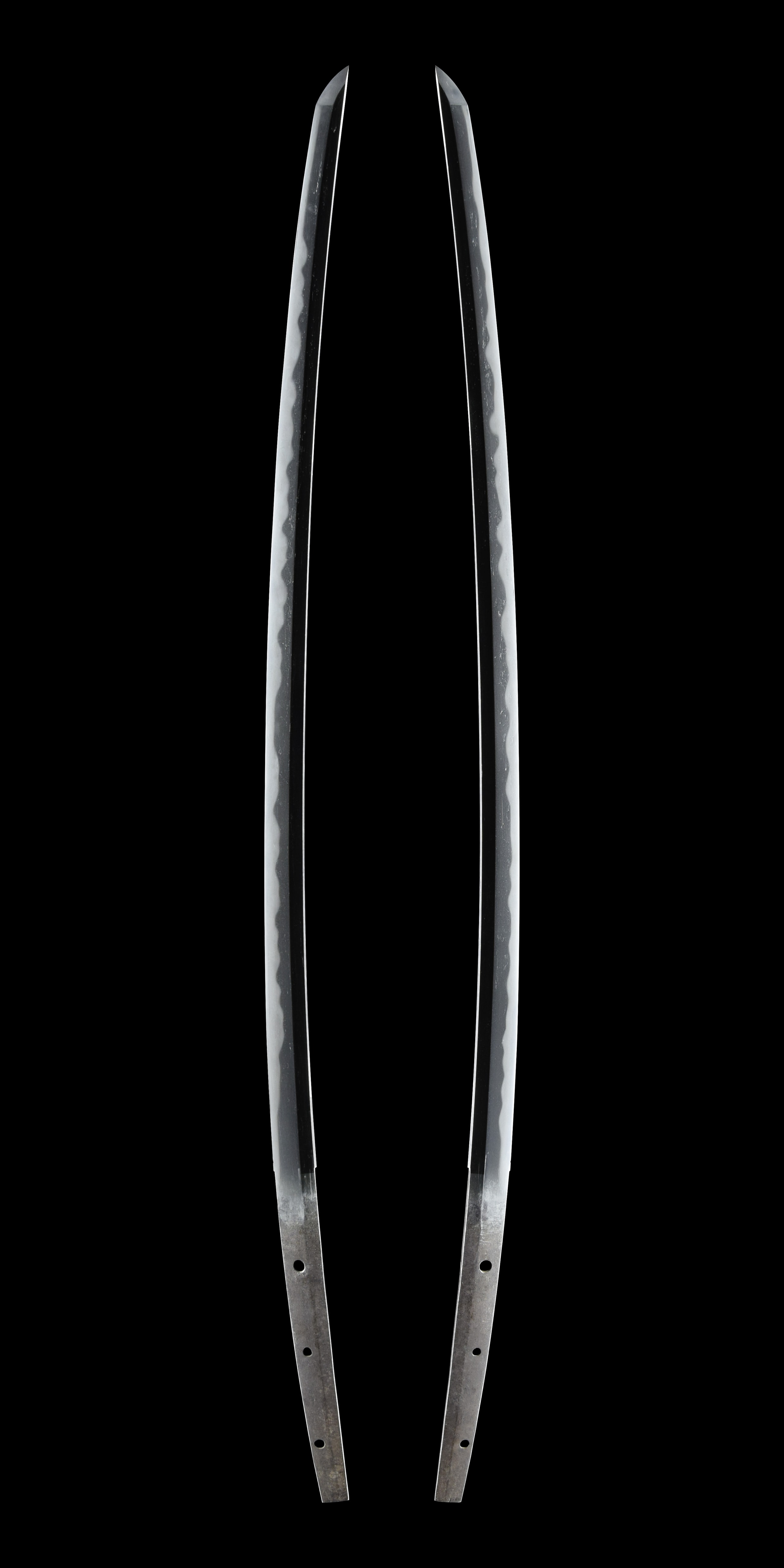
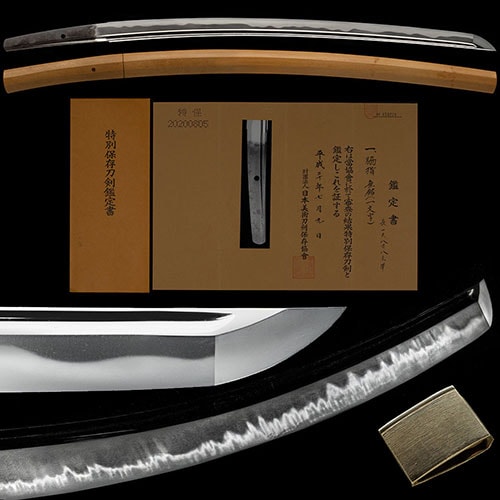
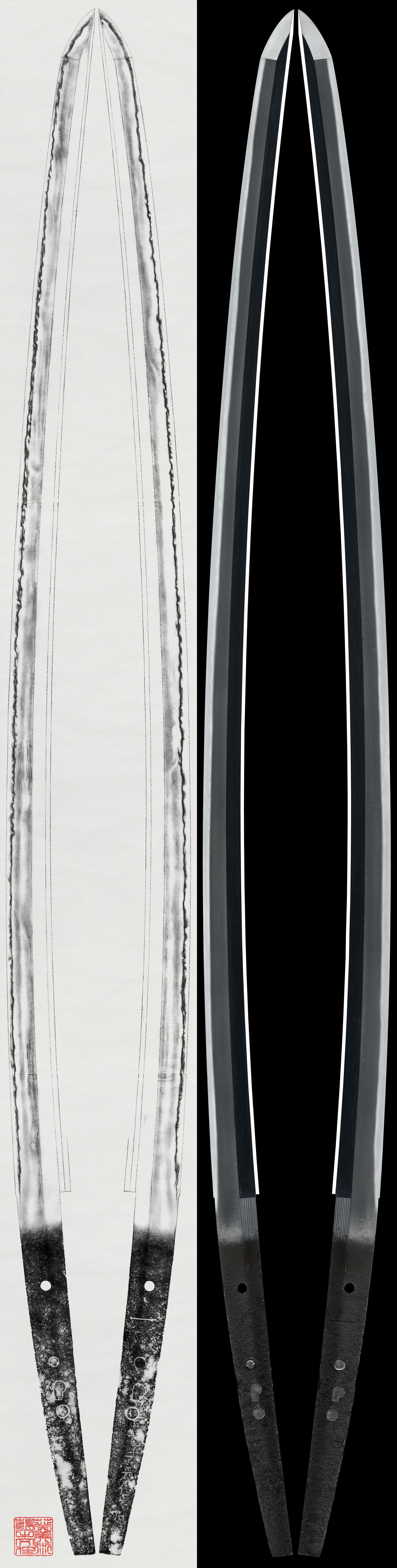
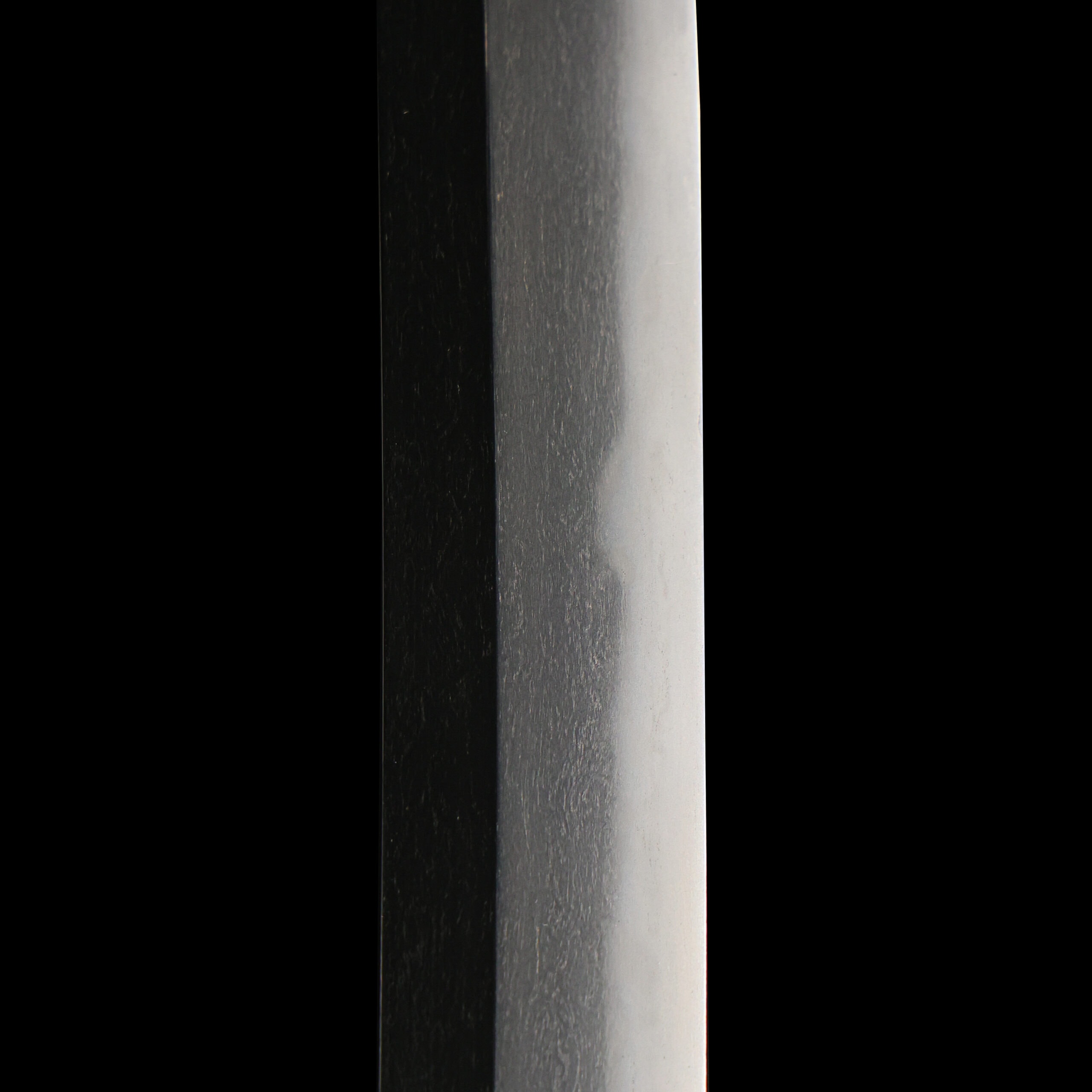
The hand the published descriptions assign to his signed is the flamboyant mid- Fukuoka work at its fullest. The shape runs broad and long, thick in the , the curvature high with pronounced carried toward the point, the tightened to a stout cast, the powerful, imposing the sources call gōsō. Over this he fires a of wide , flamboyant and full of height variation, the upper blade marked by large tufted (fusa ), with and mixed in, and entering freely, the temper -dominant with . The runs with a tendency and only a slight turnback. On the finest the is deep and bright, and playing within the temper. These, the states, display the characteristics of the Fukuoka school strongly in both and , the typical style of the mid- branch as Norikane represents it.
Beneath the temper the forging is mixed with , at times tending to , a standing grain; on the more refined pieces it tightens to a dense , the adhering, fine entering. Across nearly all of his work, signed and attributed alike, stands a clear , the bright reflection over the that anchors the attribution to and to this branch. It is the trait the published sources name first in almost every entry, and it is what the archaic Ko- cousins lack, so that its presence separates his hand from theirs. The carving on his signed is elaborate and devotional: double grooves finished in with a beneath, and below that, on one face the characters "" incised, on the other a in layered relief, a program that recurs on both surviving signed and ties them as one hand.
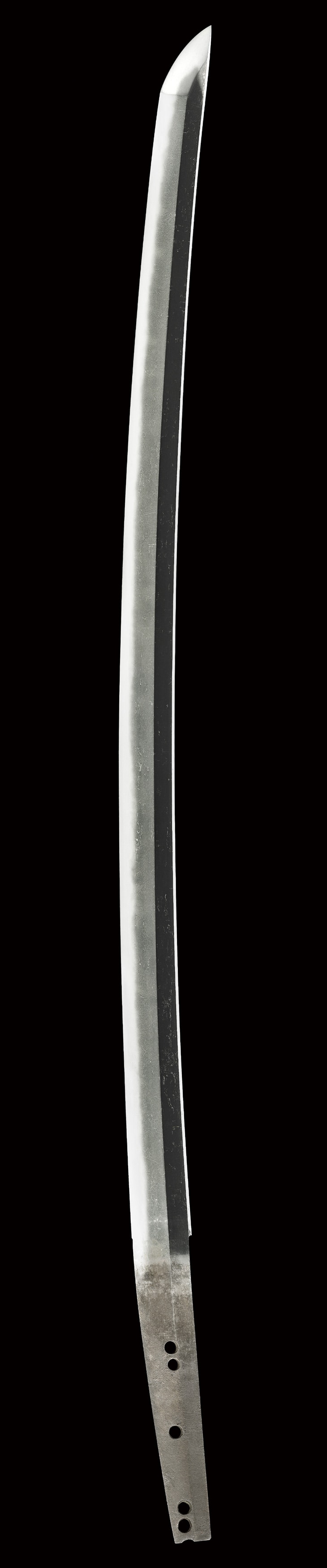
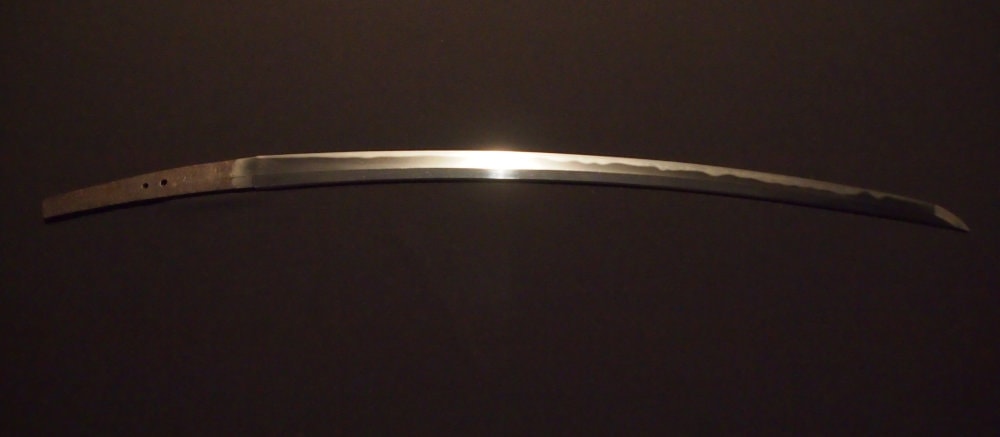
His surviving body of work divides into two registers that the published sources themselves set side by side. The signed are the broad, flamboyant, large- pieces described above. Against them stand the blades transmitted as his, and the two to which Kōchū attached gold-inlay attributions (); by the 's own contrast these run smaller in pattern, with and mixed in and a tendency to turn , the softly clouded toward . The 16th-session blade states the comparison directly: among Norikane's signed works there are pieces of wide and richly undulating, flamboyant , whereas this one shows a temper "generally smaller in pattern, and moreover turning reversed", demonstrating one facet of the smith's range. The signatures that survive are two-character () on the ; on the shortened the original is preserved as a , the panel inlaid back into the tang. The and the older it once carried are later attributions, not his own cutting.
The relation between the two registers is itself the substance of the connoisseurship. Of the gold-inlay the writes that its style "connects directly to the signed works, so that Kōchū's attribution to Norikane is entirely appropriate", making the signed the standard against which the pieces are read. The quieter register also carries the most candid self-criticism. The 14th-session is judged to show "a slight suggestion of , fatigue, without losing its aesthetic appeal"; of a the commentary observes that, the being relatively flamboyant, "the blade as a whole is poor in overall brilliance", the clouded to . The reversed temper and the moist meet in the 14th-session note that "the tends slightly to and turns reversed", the personal tell of his hand against the brighter Fukuoka mainline of Yoshifusa. He stands, in short, as the -rich mature Fukuoka , beside the flamboyant Yoshifusa line and apart from the -less Ko-.
He is graded in the upper reach of the Tōkō Taikan valuation, and the weight of designation behind his name reflects how little of him survives: two of his works are Important Cultural Property and four are , with further blades at , the signed prized as scarce documentary material for the whole Fukuoka . Provenance gathers around the great houses. The signed descended in the Uesugi family as one of Kagekatsu's thirty-five selected swords and is recorded with Uesugi Jinja; the presented to the shogunal house in Kyōhō 2 (1717) as a relic of Honda Shinano-no-kami Tada-nao of Kōriyama, and another piece, came through the Tokugawa shogunal family. Of recorded whereabouts a Norikane is held, not traded: the two Important Cultural Properties are patrimony that will not move, preserved with institutions such as Uesugi Jinja and the Ibaraki history collection, while the and blades number only a handful. For so rare a Fukuoka name a privately held signed example is among the scarcer things a collector could hope to encounter, coming to light only seldom.