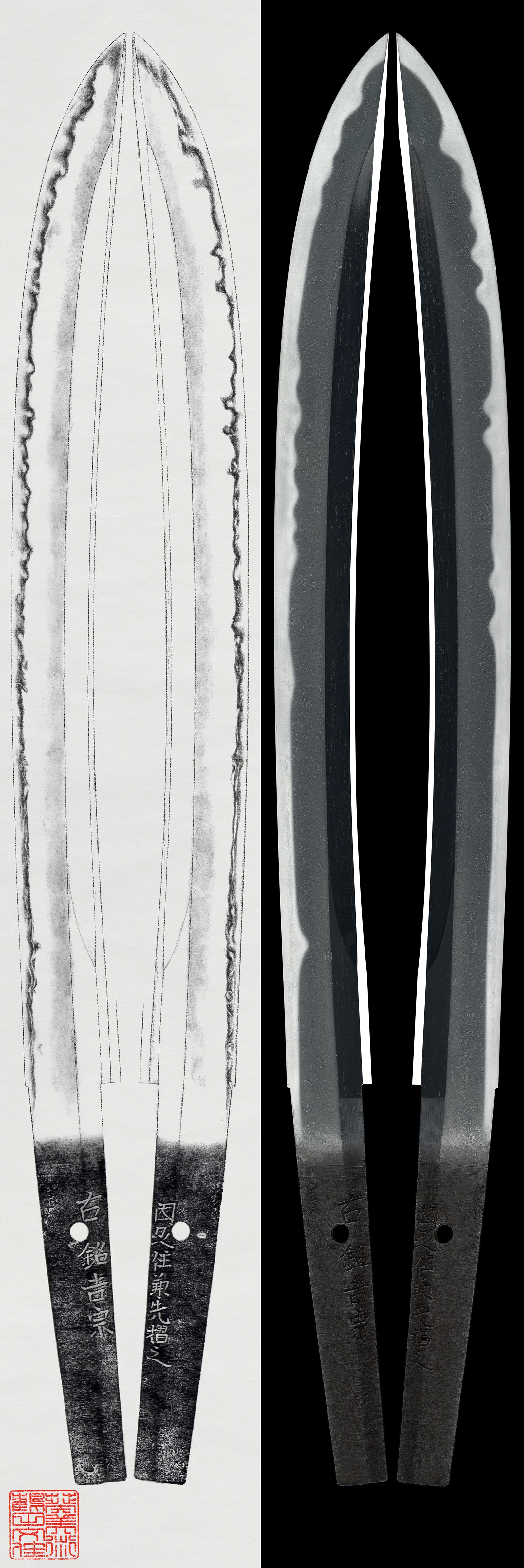
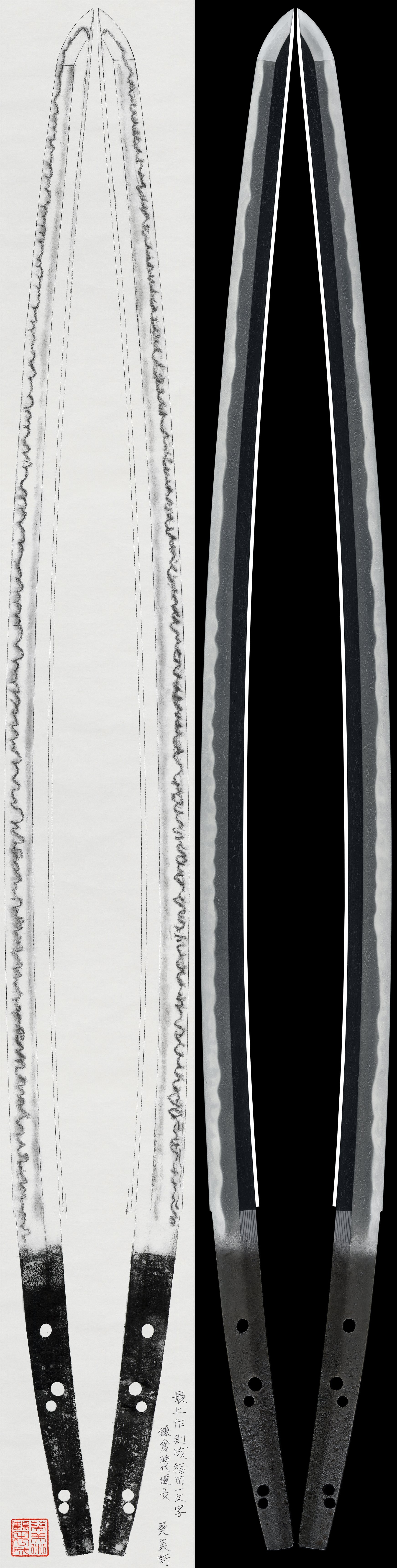
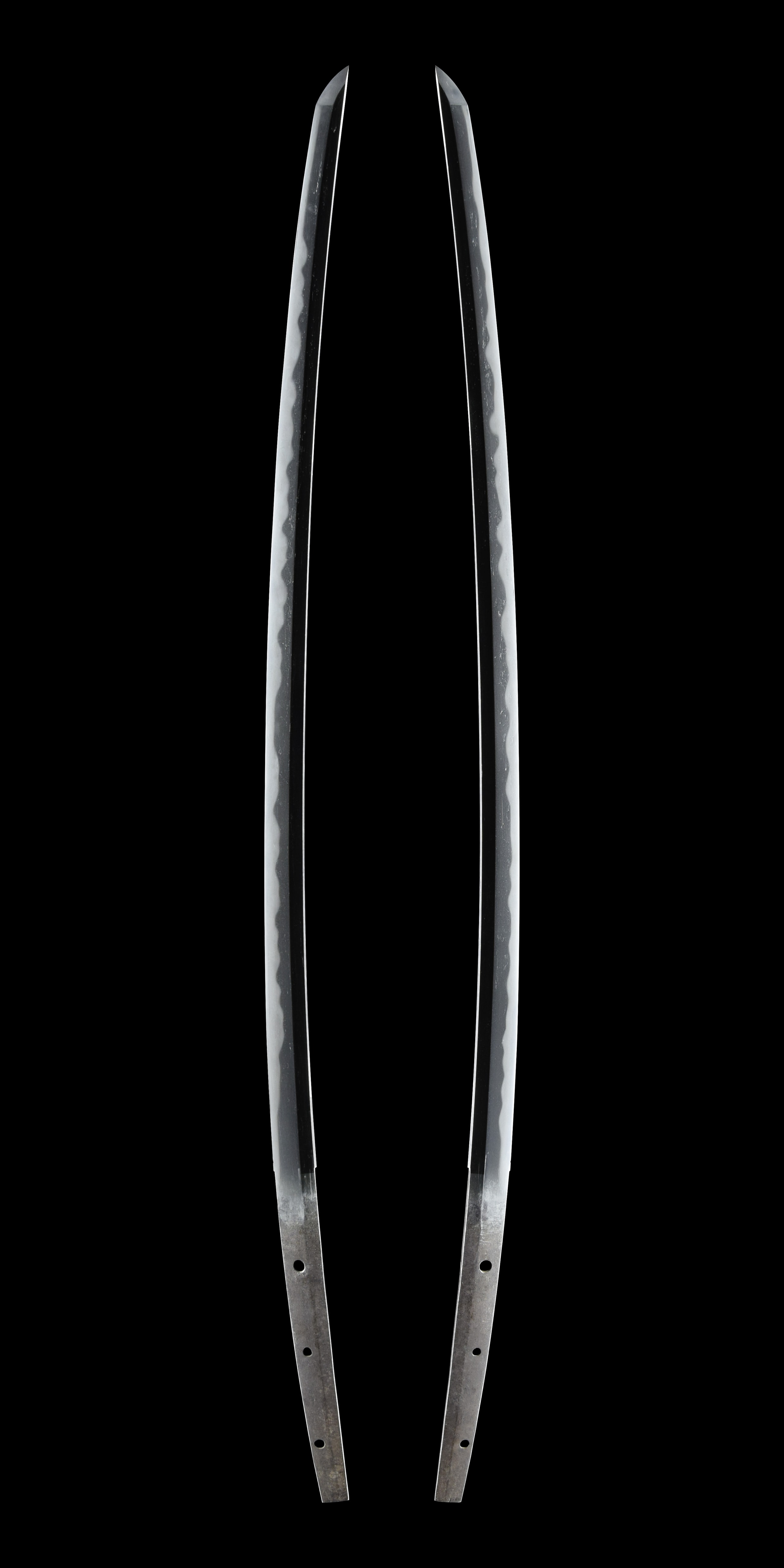
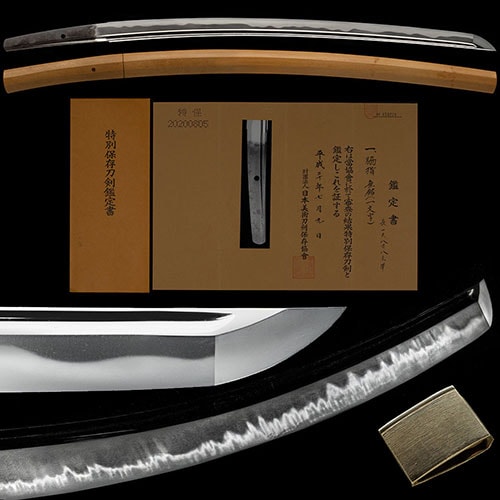
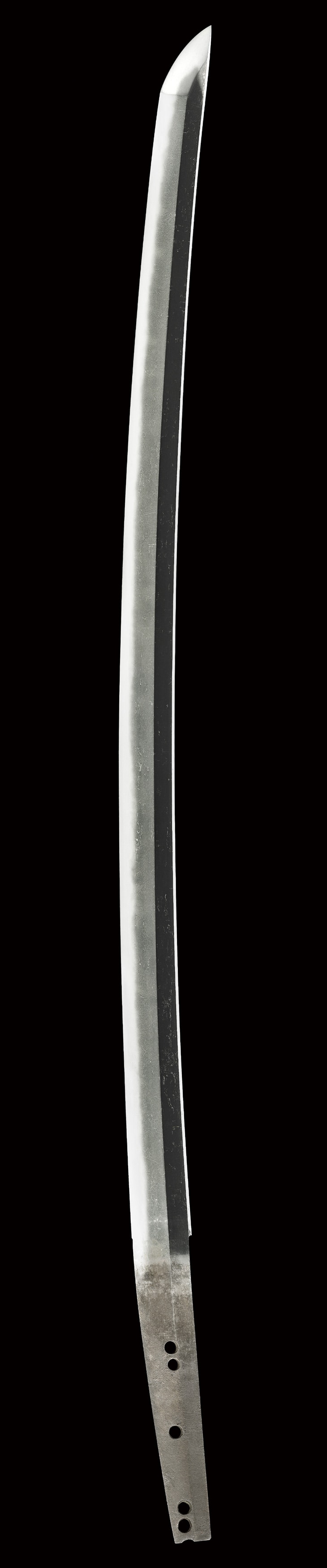
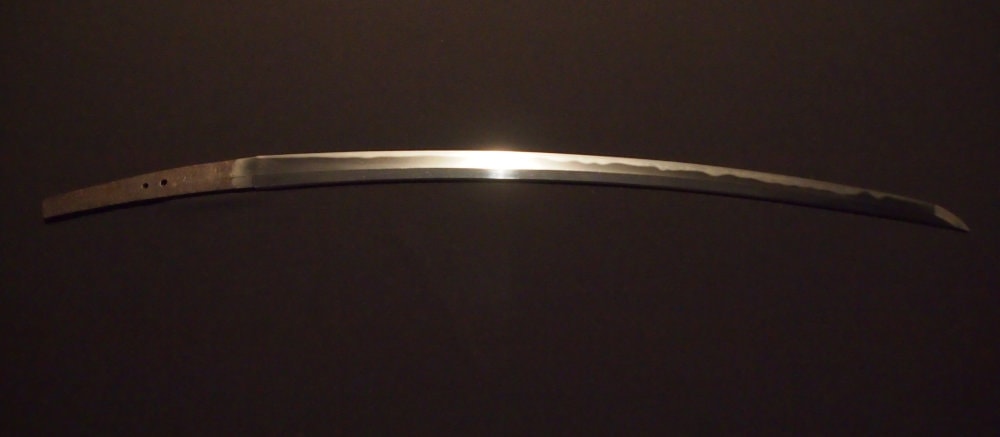
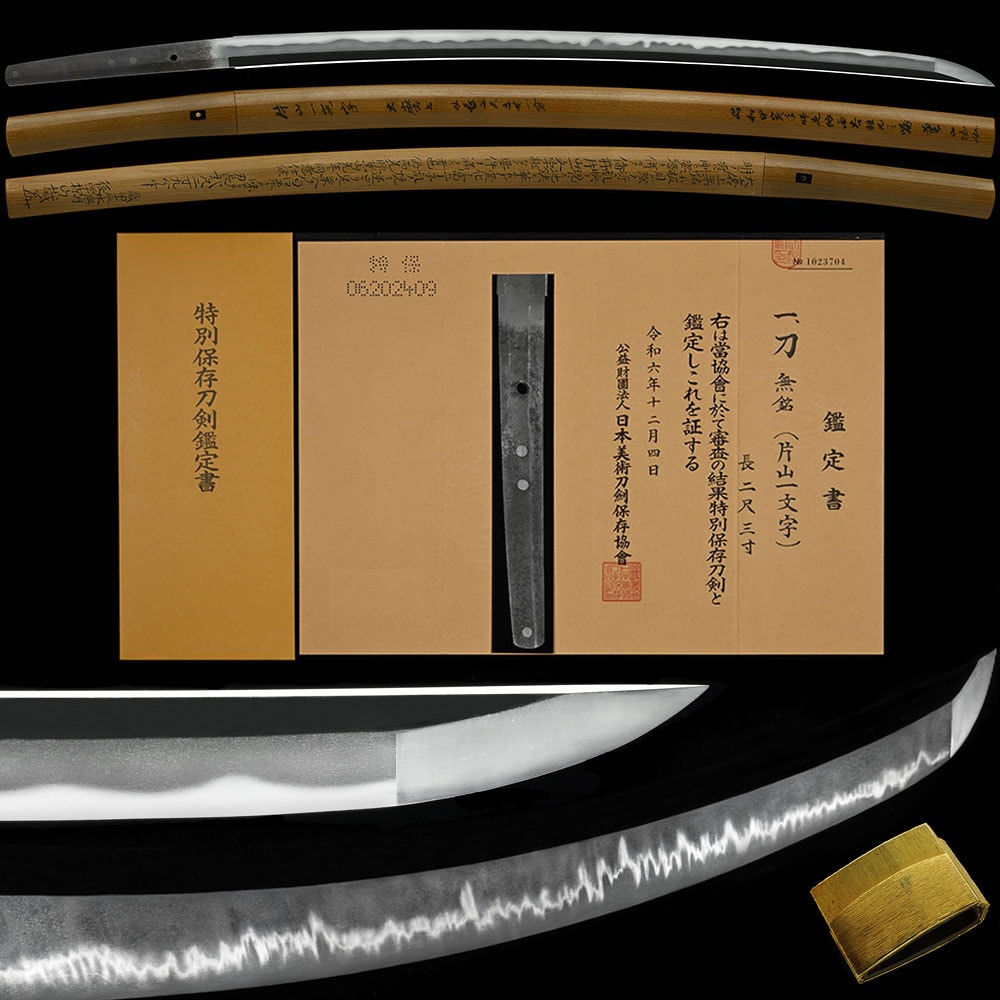
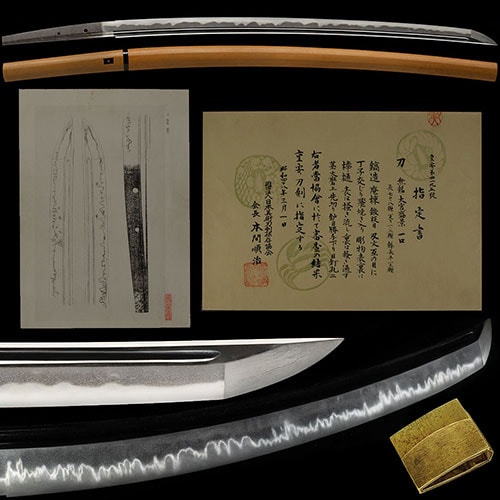
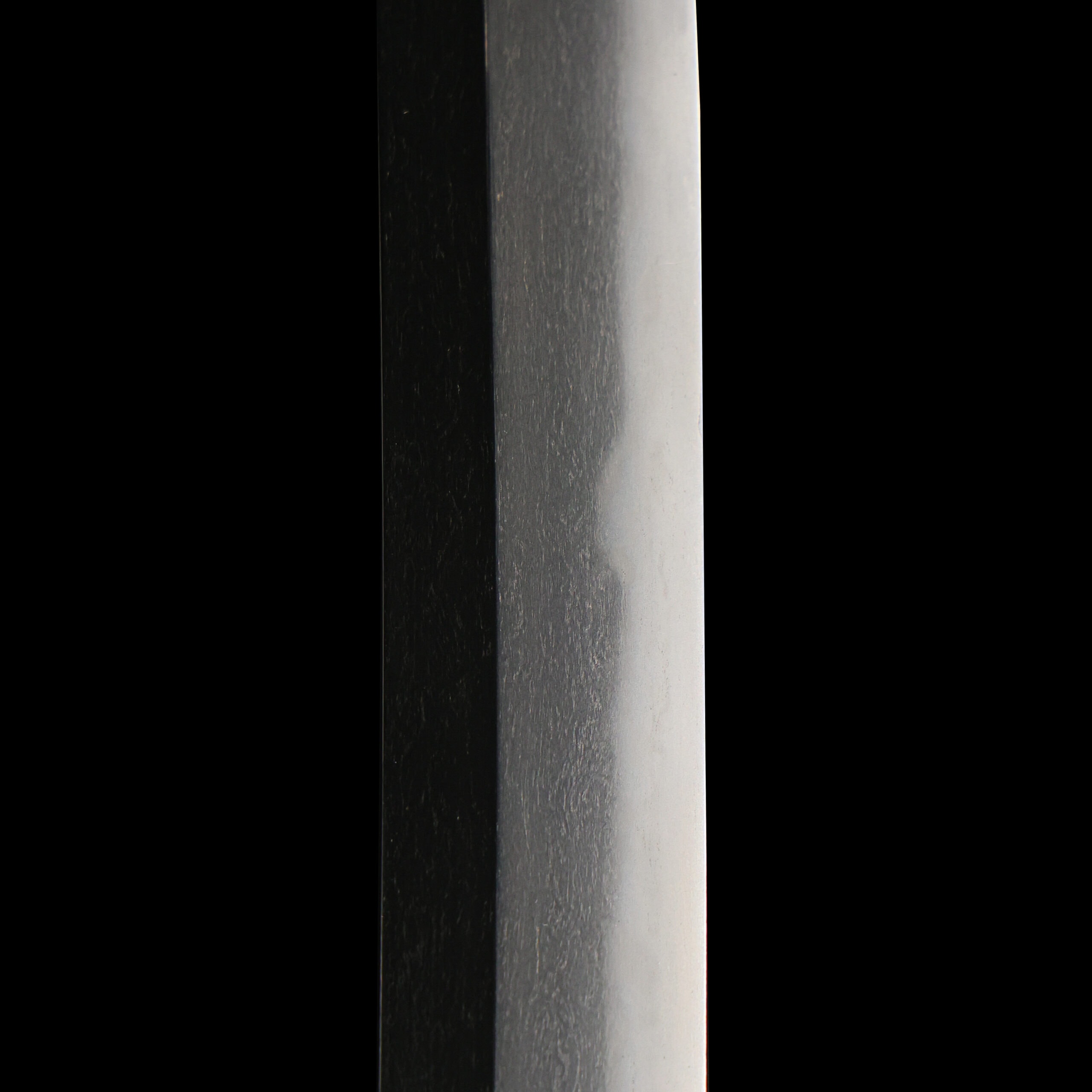
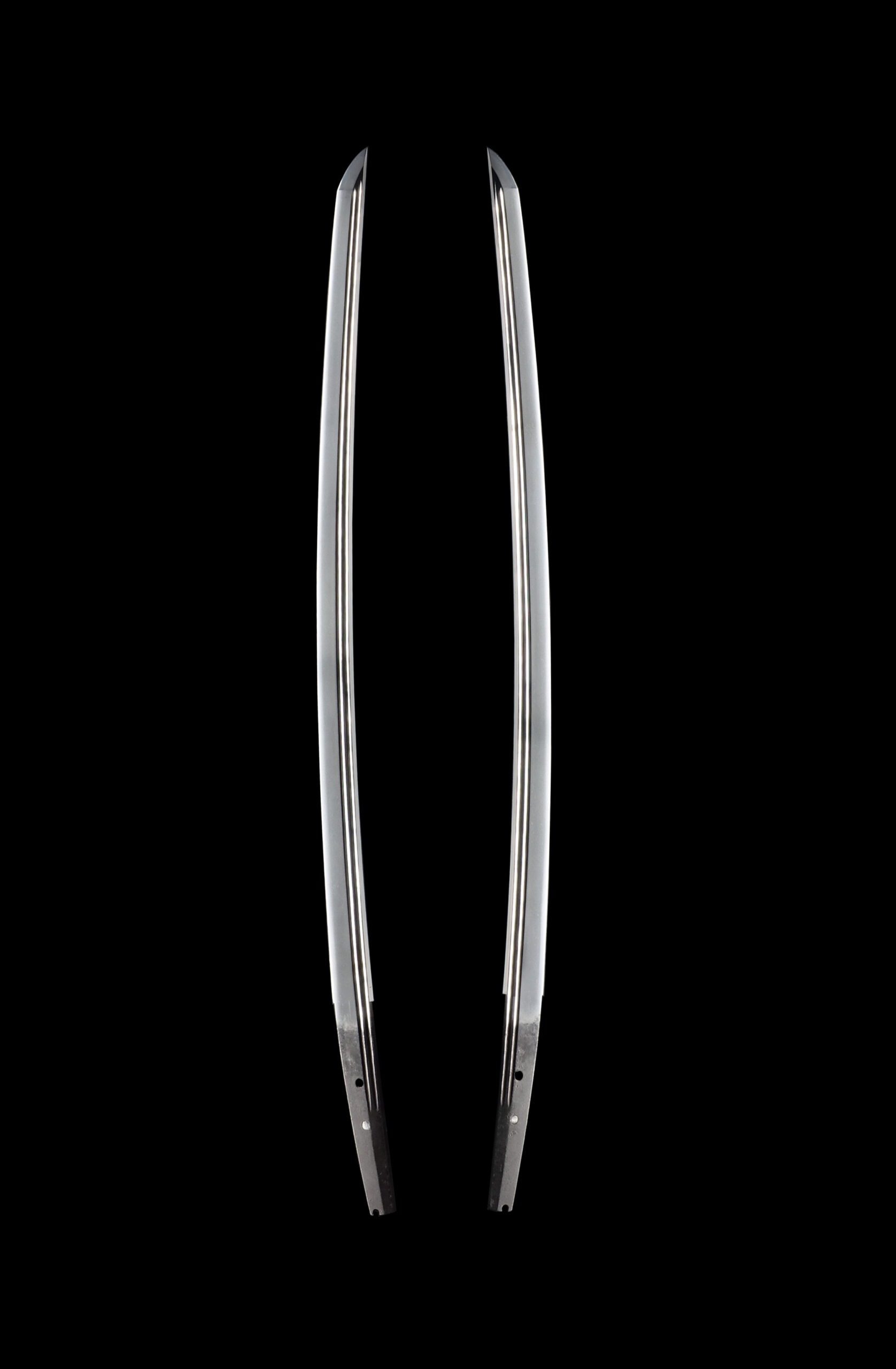
Naganori is the late- smith of the Fukuoka school whose work is the school's great exception, and his blades are the documentary anchor of its geography. He held the court title Saemon-no-jo, and the published sources record that among all the smiths of the line only his signature explicitly cuts Fukuoka-ju, resident of Fukuoka: as one entry puts it, among works bearing the inscription Fukuoka, "the practice begins with Naganori" (「福岡住」と銘したものは長則に始まり). On several pieces he cut the full signature no Fukuoka-ju Saemon-no-jo Naganori with a date, and extant examples carry the Einin, Shoan and Kagen eras of the late thirteenth and early fourteenth centuries, placing him a generation below the school's mid- masters Yoshifusa and Sukezane. For reasons the published sources admit are not understood, he came to be nicknamed "Ko-ryu Naganori". He is the smith one cites when the question is who, within so flamboyant a school, made quiet swords.
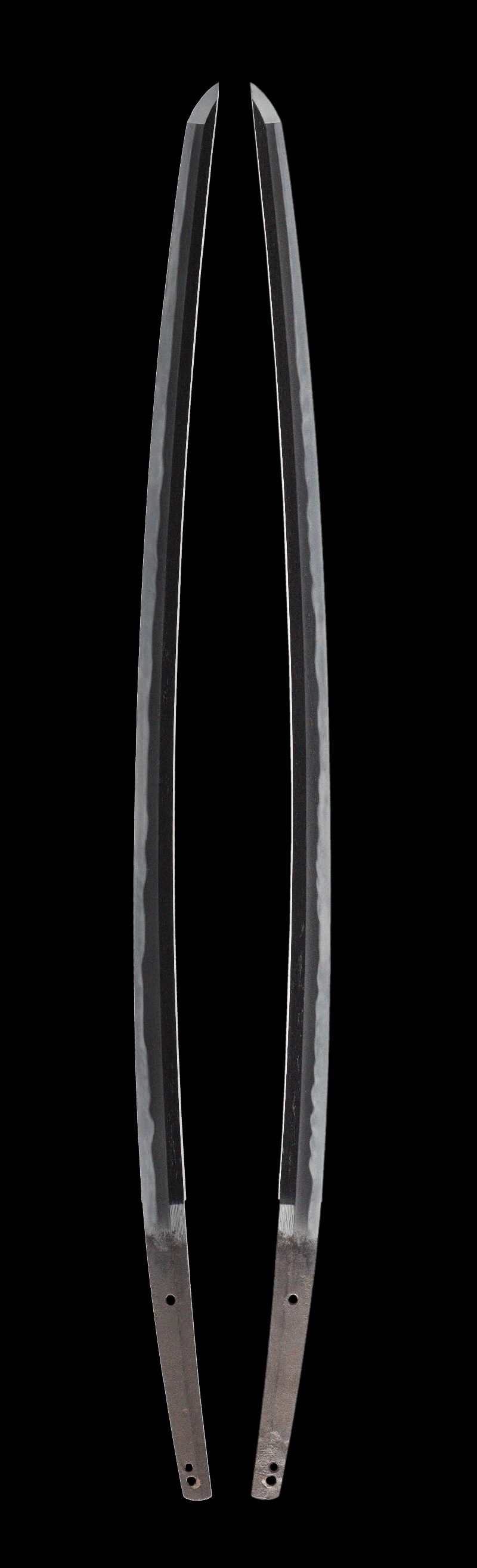
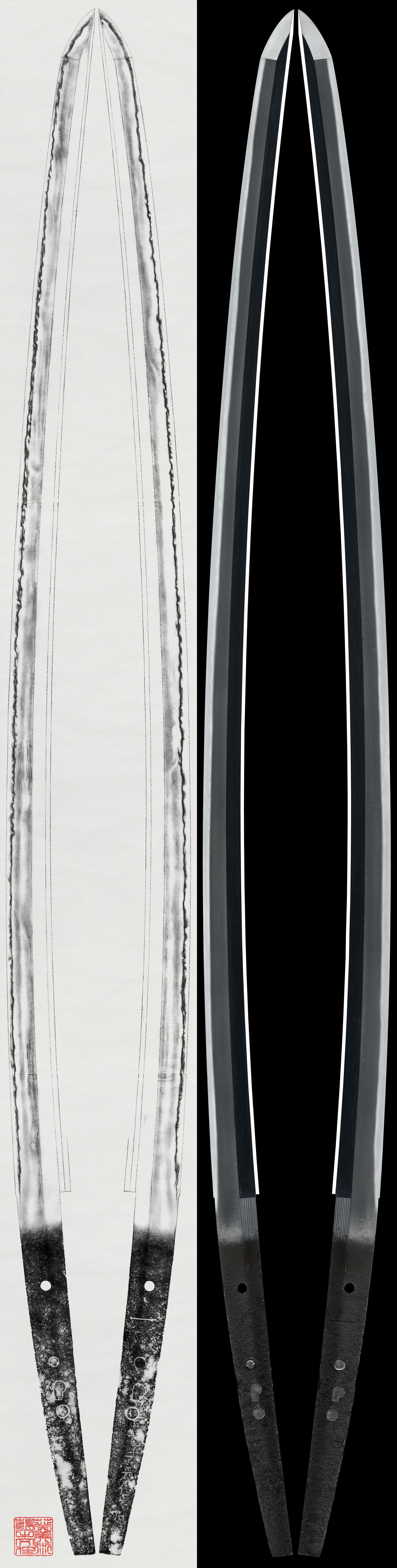
The heart of his recognition is a contradiction the judges state outright. When one speaks of Fukuoka one thinks at once of brilliant -, the published sources note, "yet Naganori, differing in spirit from the usual manner of his group, was particularly noted for tempering a -toned mixed with small ". His are slender and well-shaped, with high and pronounced , the curvature often increasing toward the point. Over a steel of well-packed to itame he tempers low, a into which and run continuously from base to tip, the and entering abundantly, the bright and tending to tighten, with fine and and patches of along the . The runs straight to a , at times entering with a slight . It is a calm, even subdued hand, and the sources call one such "a uniformly subdued construction in which the is especially vivid".
The is the constant of his work. His is a or , at times mixed with and standing a little, with fine and , and over it stands an the judges single out as conspicuously clear; on his finest dated the upper half can deepen into a mottled . Against that bright the stays deliberately low. The activity is carried not in towering clove clusters but in the small and of the line, the and , the and bright . A small number of his blades lean into a reverse tendency, the turning with entering and the clear, and a appraised to him keeps a faint reverse-slanting within its , placing him within the late- taste for reverse work without his ever leaving that calm base.
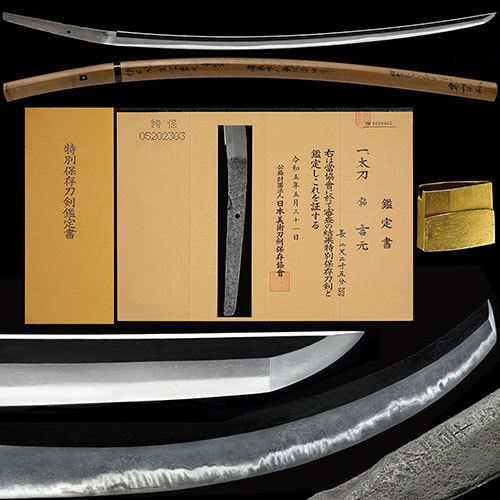
His record divides cleanly in two. There are the , signed and dated , the documentary core, prized for preserving an original form together with an era name: a Shoan-dated is called a typical work of Saemon-no-jo Naganori, conspicuous for its bright and sound condition, the date itself excellent reference material. Set against them are the and appraised to him as Naganori, which keep the quiet with and the vivid , the attribution resting on era and the calm temper rather than on a long signature. Of his roughly seventeen designated works on record, nine are signed and seven unsigned, a near-even split that lets the signed, dated pieces serve as the yardstick by which the ones are judged.
What sets him apart is exactly the affinity the judges draw. They align his late-period manner with the work of Kagemitsu and Chikakage, noting that his style "shares common features with Kagemitsu and Chikakage of " while his stands a touch more prominently than theirs. Read from the other side, his bright and the linked small on a low base hold him apart from the plainer smiths, just as his calm temper holds him apart from the flamboyant of Yoshifusa, Sukezane and Norimune within his own school. He is the quiet exception at the school's late edge, the Fukuoka name a collector reaches for to show that the line could forge restraint as surely as splendor.
For the connoisseur he is a rare and well-documented name. Fujishiro grades him Jo . He has no National Treasures; his record runs instead through an Important Cultural Property, the prewar Bijutsuhin, a and some thirteen blades, with around fourteen pieces falling in the and tiers in all. His blades carry the provenance of warrior houses with documented descent: a was transmitted in the Naruse family of Inuyama, and a long with its black-lacquer mounting was preserved in the Oyama family of Innai, senior retainers of the Satake lords of Akita, while a Kotsune of Kyoho 2 attests another as genuine Naganori. Most of his designated work is held rather than traded, and a signed, dated Naganori in particular comes to market only seldom; a privately held example, signed Fukuoka-ju or appraised to his calm hand, is a notable thing for a collector to encounter, and a document of the one smith who made the great showy school quiet.