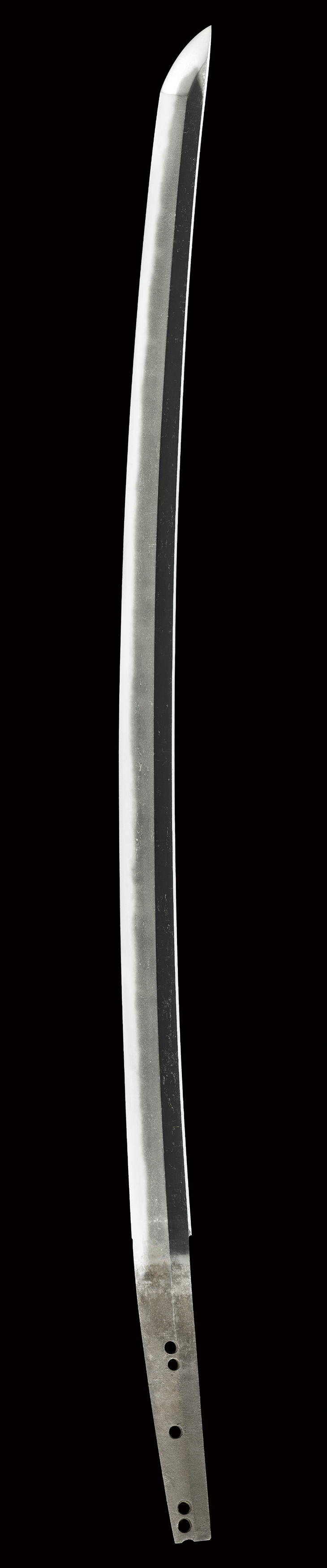
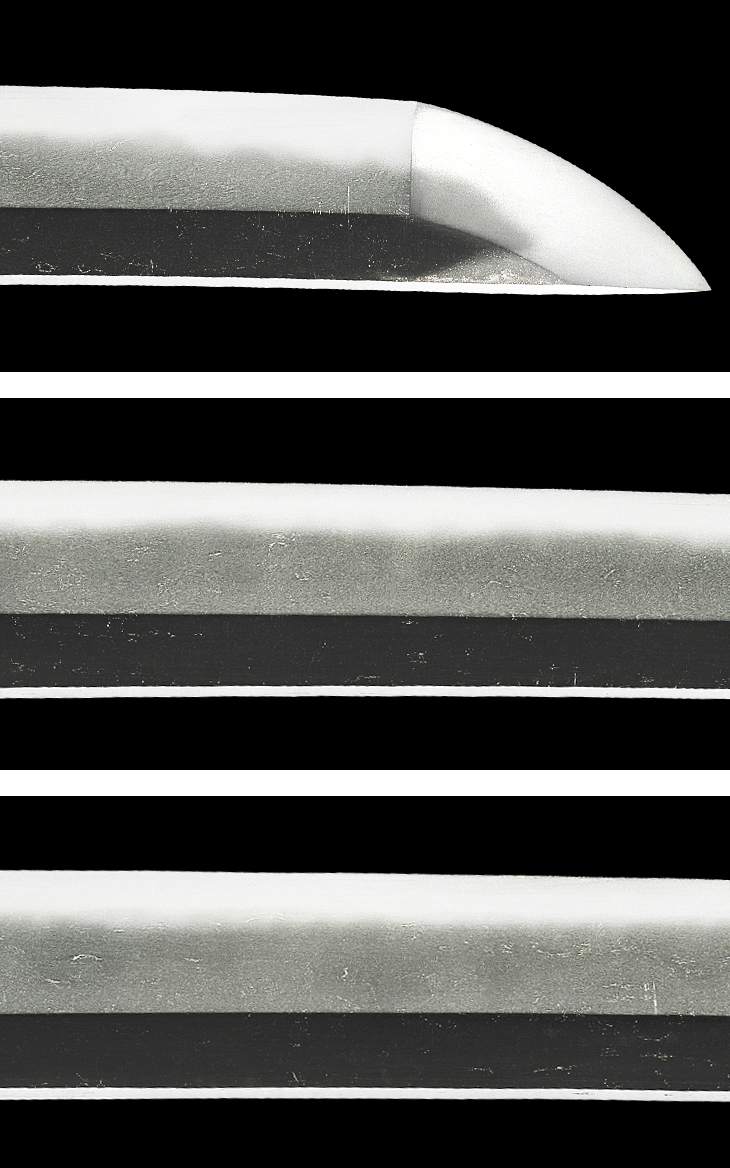
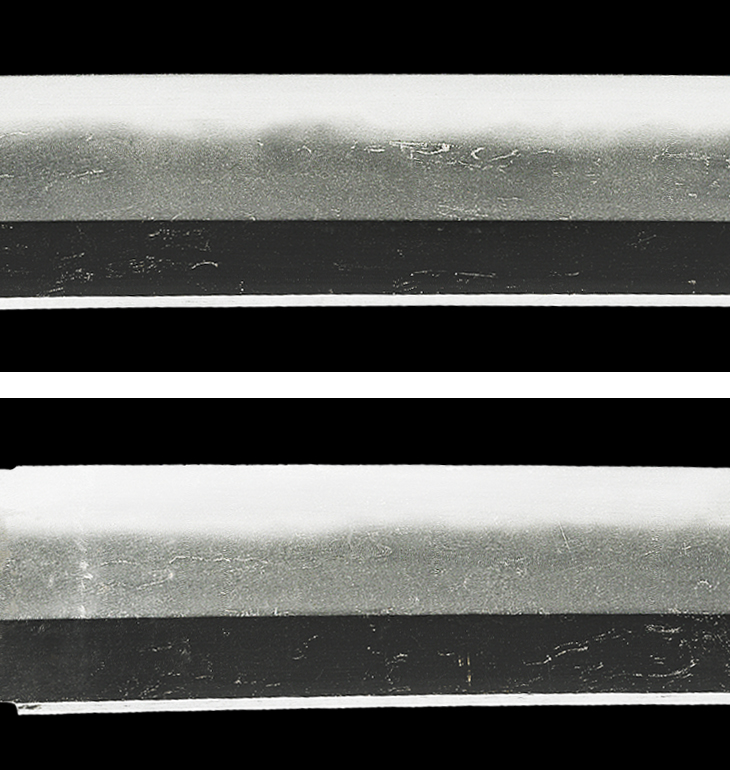
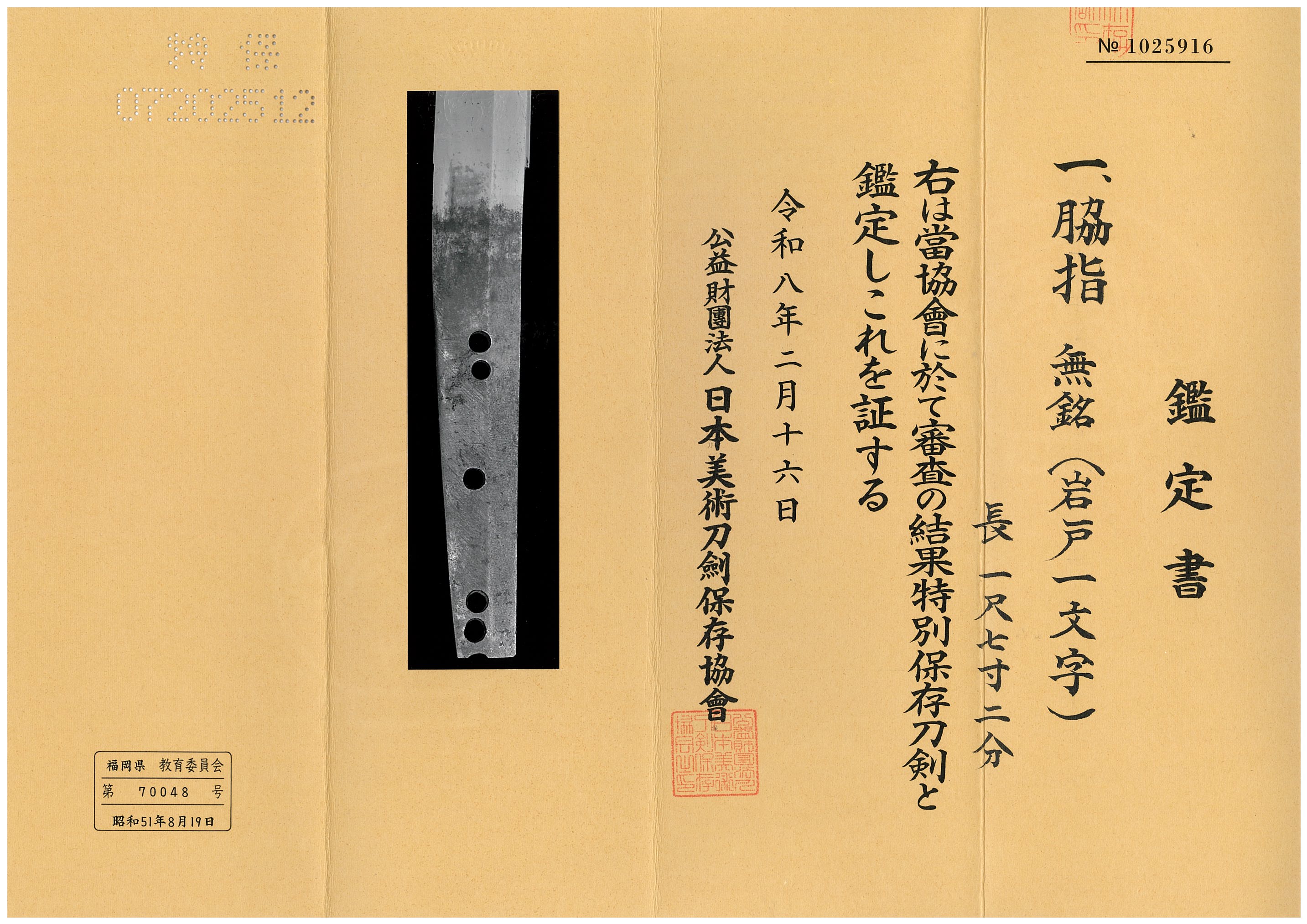
The Iwato Ichimonji school represents a small but distinctive branch of the broader Ichimonji lineage that flourished in Iwato-shō, Bizen Province, from the late Kamakura period into the Nanbokuchō era. According to sword reference works, the school's founder is traditionally identified as Yoshimitsu or Yoshiuji, though extant signed works are primarily represented by Yoshiie, whose blades bear elaborate inscriptions such as "Ichi Bishū Iwato-shō jitō Sahyōe-no-jō Minamoto Yoshiie"[[c:1]] with dates from the Gentoku era. Like other Ichimonji branches in Fukuoka and Yoshioka, these smiths employed the signature convention of cutting the character ichi (一, "one") into the nakago, either alone, combined with individual names, or omitted entirely in favor of personal signatures. The technical characteristics of Iwato Ichimonji workmanship reveal a refined aesthetic distinct from the more prominent Fukuoka Ichimonji style. The forging typically exhibits tightly wrought itame-hada mixed with mokume, with standing grain (hada-dachi) and extremely fine ji-nie adhering thickly throughout the jigane. Fine chikei enter frequently, and midare-utsuri appears prominently.
The hamon is characteristically based on chōji mixed with ko-gunome and angular elements, but the overall patterning tends toward smaller scale and more restrained undulation compared to Fukuoka works—the chōji heads are less pronounced, and the midare composition is more subdued. Ko-ashi and yō enter well, and the nioiguchi displays a tight, bright quality (shimarigokoro) with ko-nie, kinsuji, and fine sunagashi appearing along the temper boundary. Iwato Ichimonji blades demonstrate a high level of forging skill consistent with mainline Bizen production, particularly in the excellence of their jihada and the clarity of boundary activities. While the school's output is regarded as somewhat less exuberant than Fukuoka Ichimonji, the restrained elegance of their small-patterned midare and the soundness of their construction have earned recognition within the broader Ichimonji tradition. The survival of multiple unsigned examples attributed to this school, alongside Yoshiie's signed works, attests to a coherent technical identity that remained recognizable across generations of smiths working in this Bizen locale during one of the most accomplished periods of Japanese sword production. Learn more →

 NihontoWatch