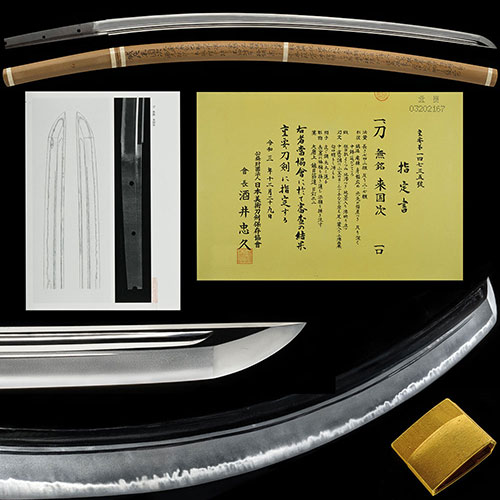

Juyo-Token, 67th Session — Designated October 29, 2021
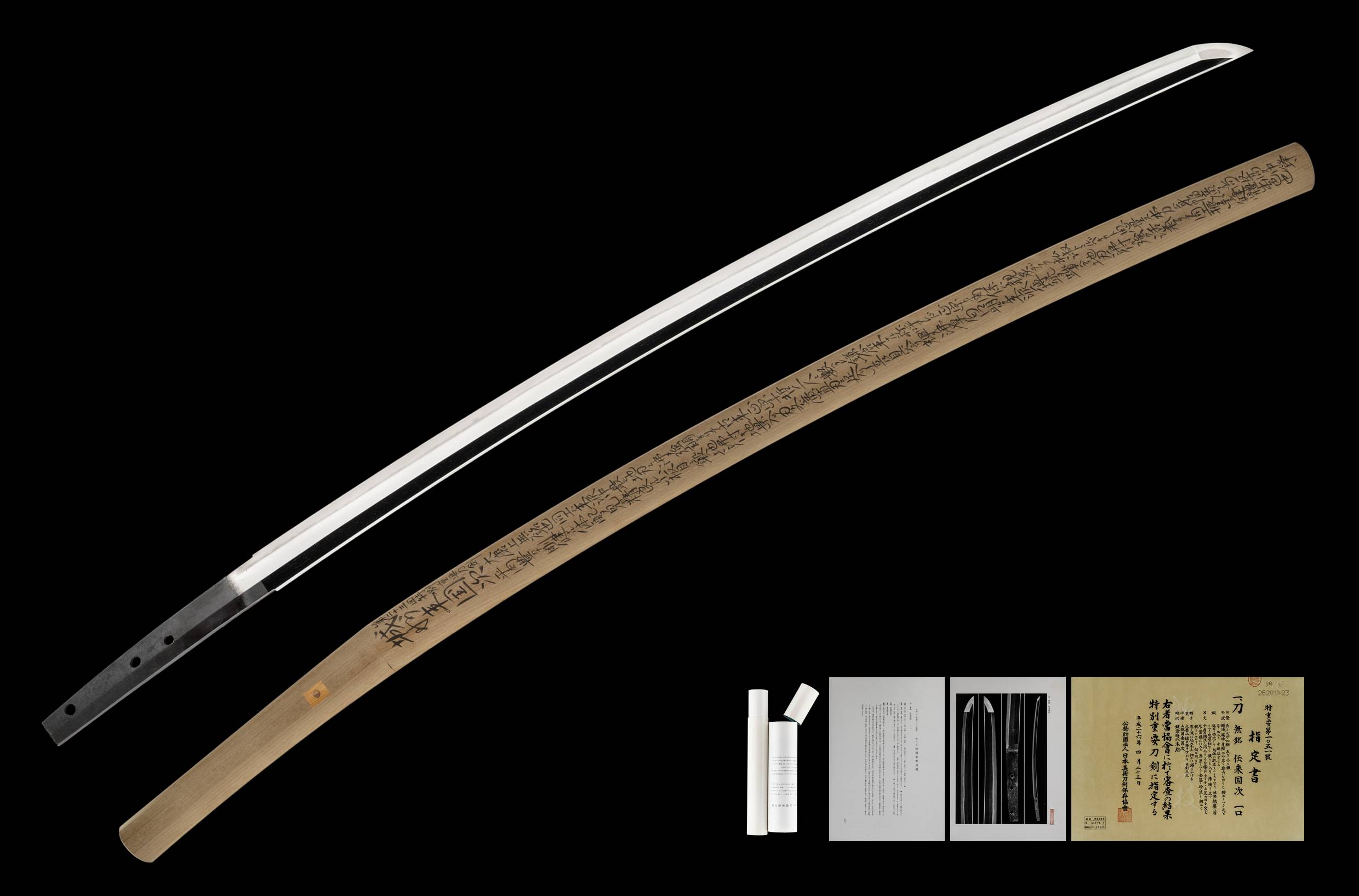
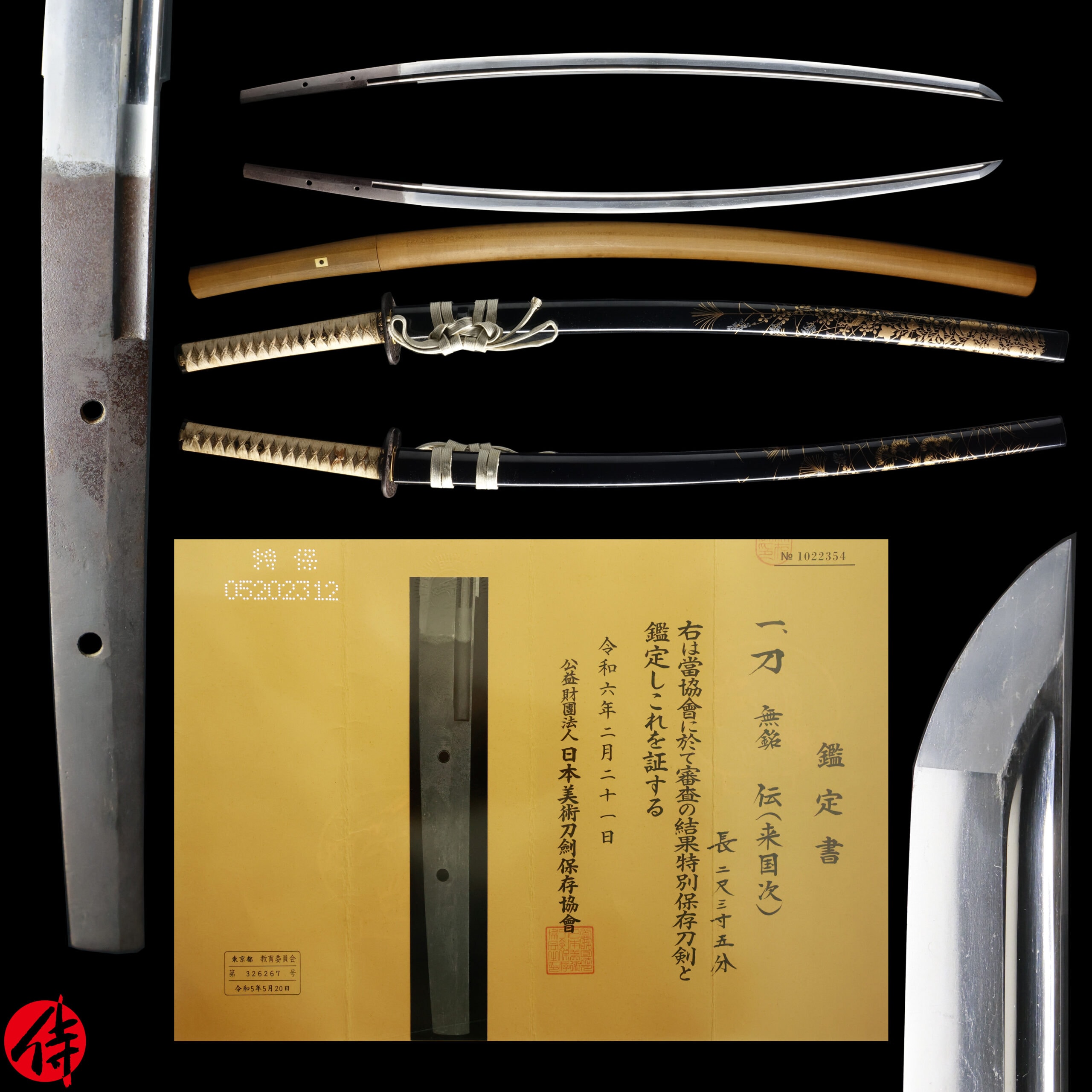
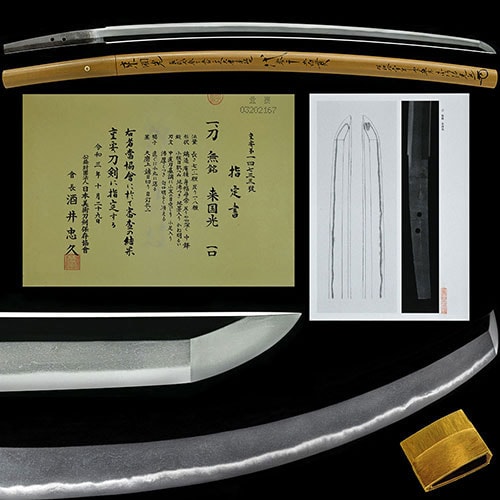
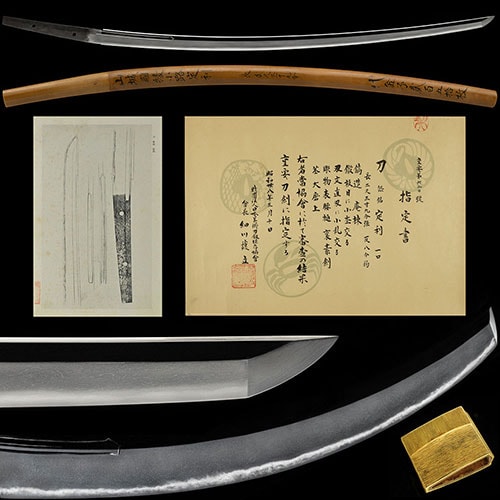
Katana, mumei: Rai Kunitsugu (来国次)
Measurements Nagasa 74.2 cm, sori 2.7 cm, motohaba 2.9 cm, sakihaba 1.95 cm, kissaki-nagasa 3.5 cm, nakago-nagasa 19.9 cm, nakago-sori 0.1 cm
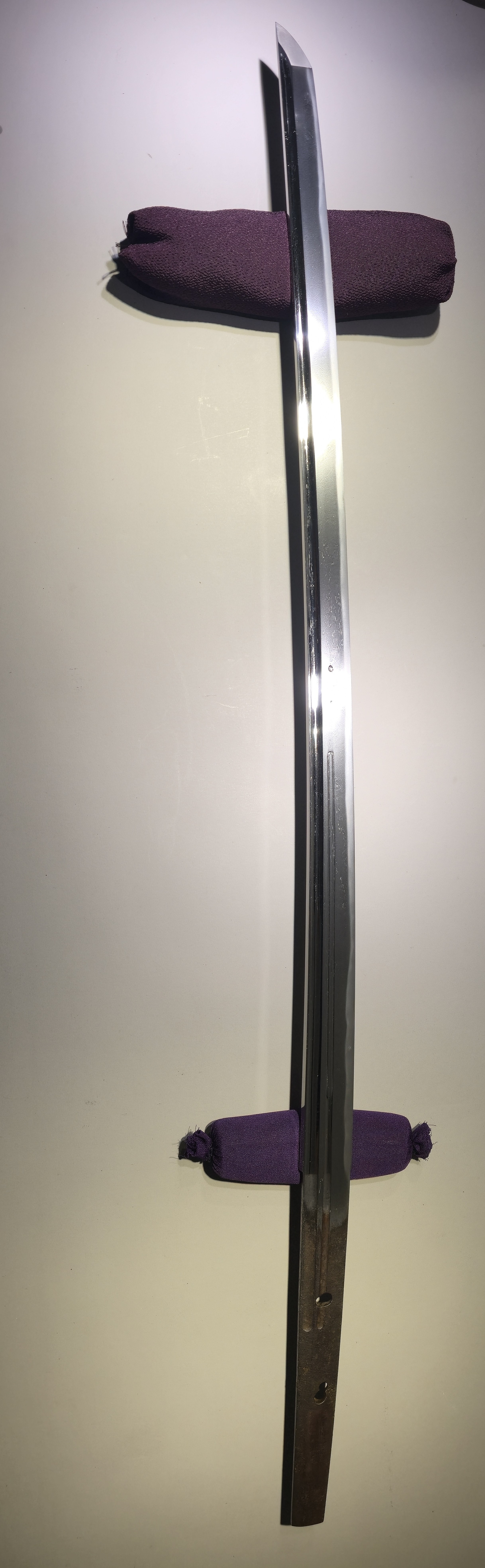
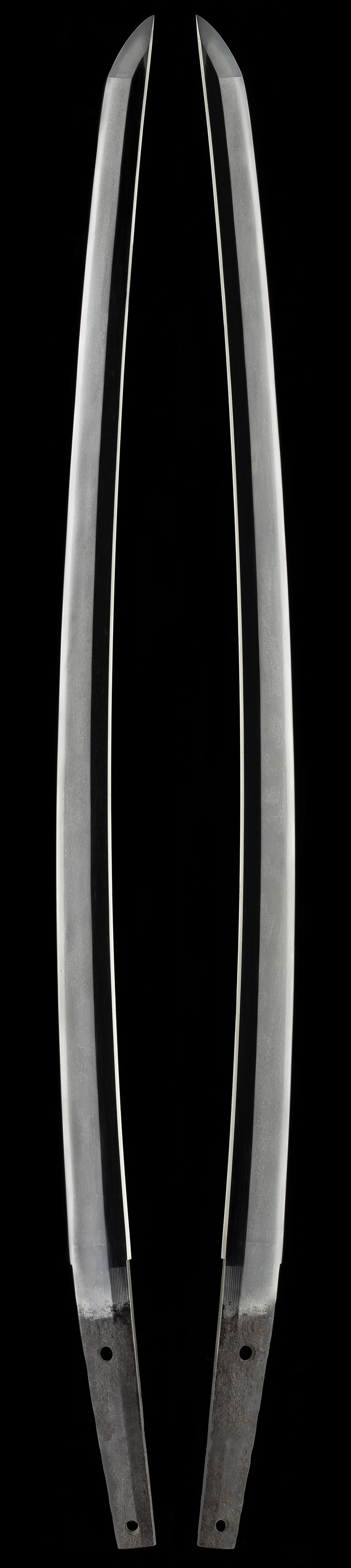
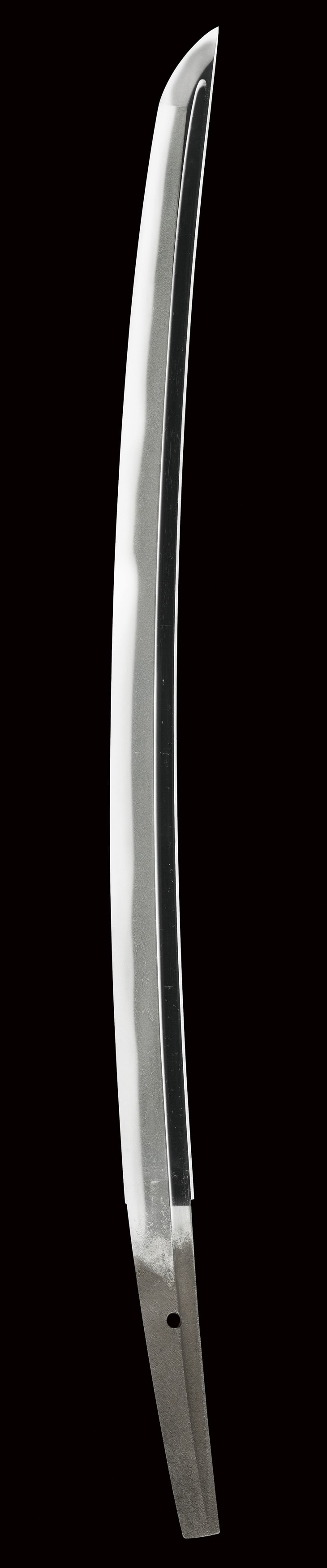
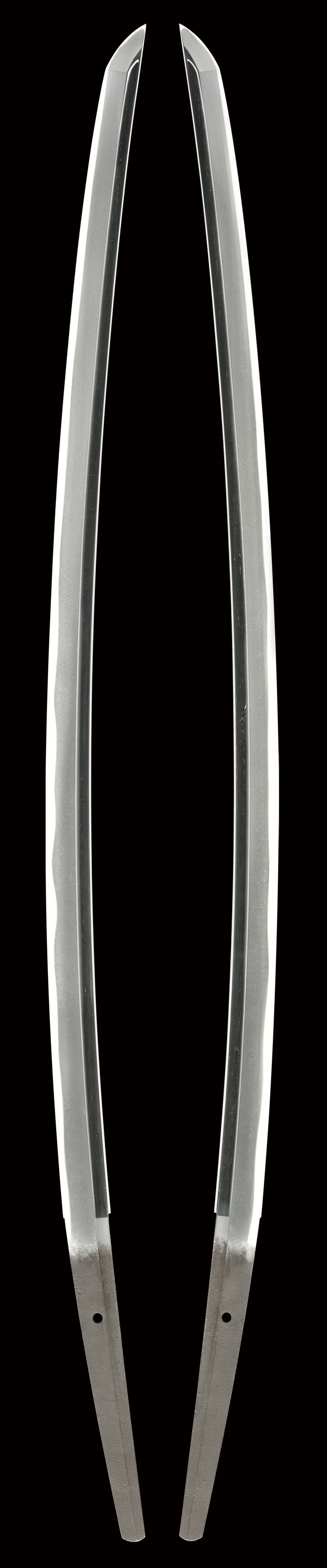
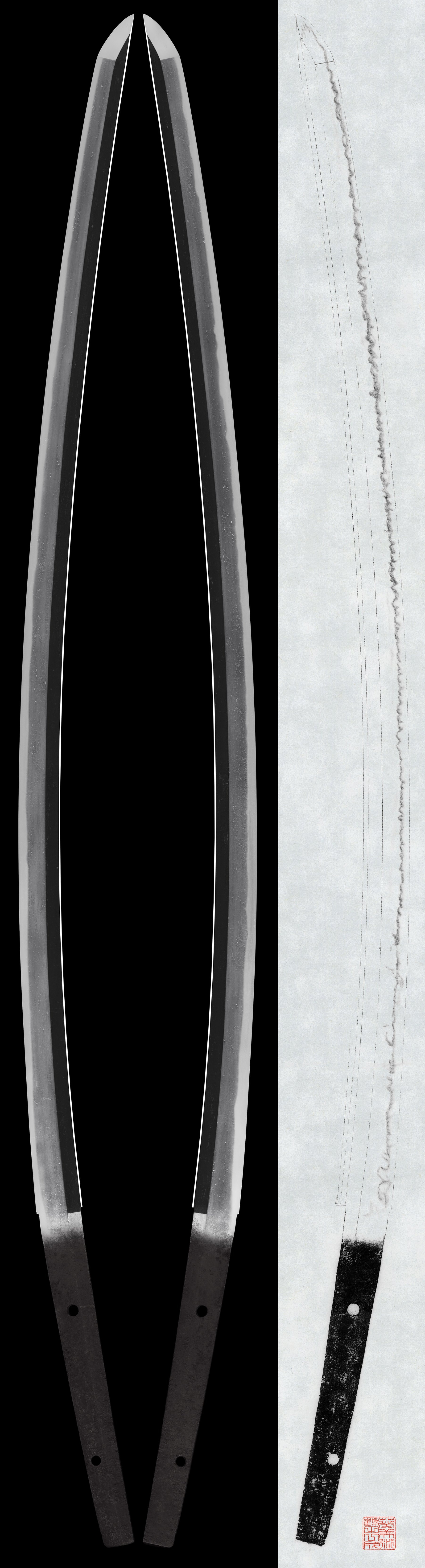
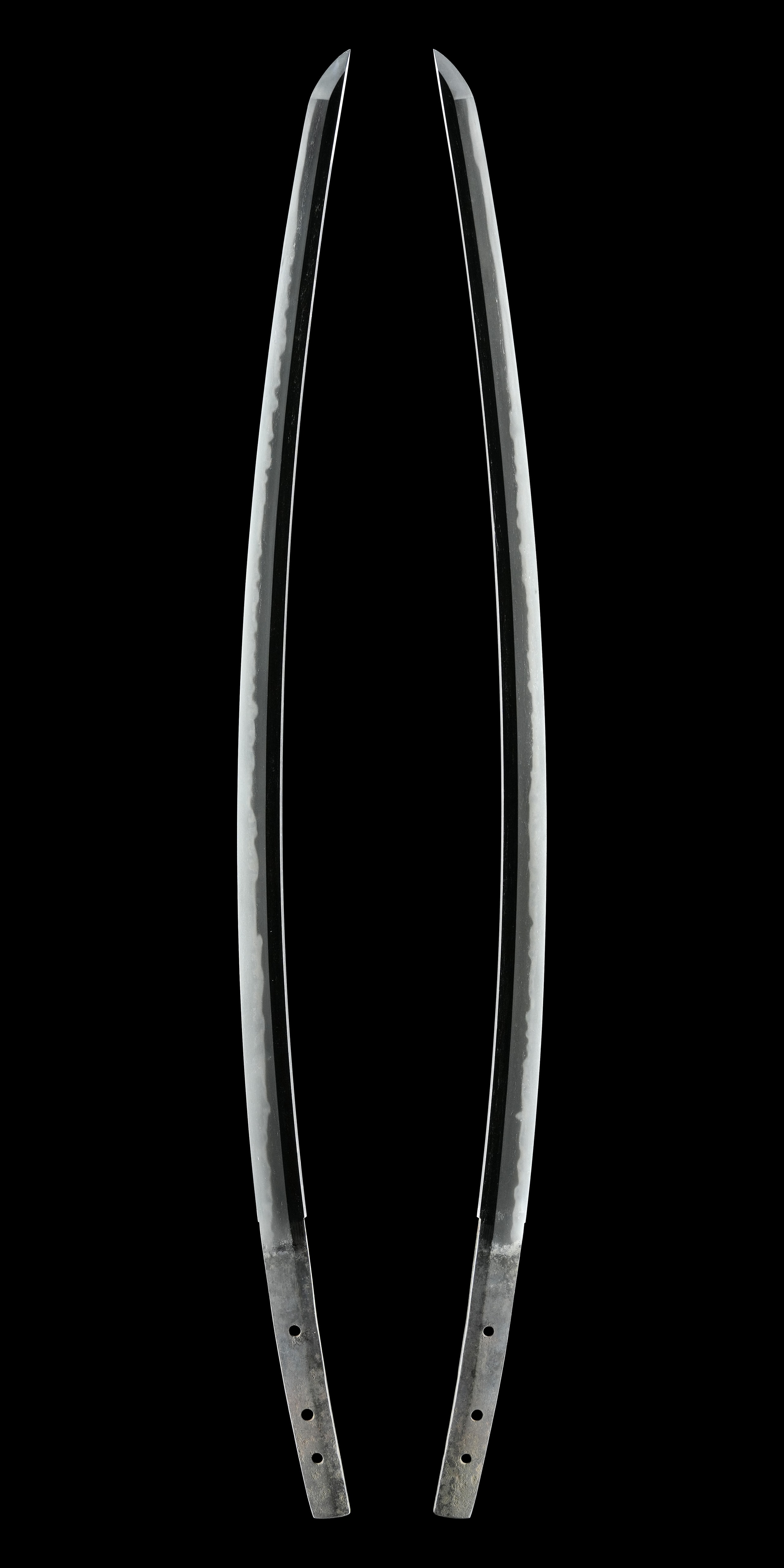
Description Keijo: shinogi-zukuri, iori-mune; rather wide mihaba with marked taper from base to tip; moderate kasane; though ō-suriage, the curvature remains deep, tending toward wazori; the chū-kissaki is slightly elongated. Kitae: Well-forged itame-hada tightly consolidated; minute ji-nie thickly applied; fine chikei enter intermittently; conspicuous nie-utsuri appears; the jigane is bright. Hamon: Primarily chū-suguha mixed with gunome, ko-gunome, pointed elements, and ko-chōji-like forms; ashi, small ashi, and yō appear; ko-nie-deki; in places it deepens, with nie well applied; yubashiri, tobiyaki, and muneyaki are seen; the nioiguchi is bright and clear. Boshi: sugu with a tendency toward hakikake, turning back in a rounded manner. Horimono: On both sides, bō-hi are carved through (kaki-tōshi), with accompanying soe-bi running off (kaki-nagashi). Nakago: ō-suriage; kiri-jiri (with traces of a former mekugi-ana toward the tip); sujikai-yasurime; two mekugi-ana; unsigned.
Artisan Rai Kunitsugu
Era Late Kamakura period (Koto)
Explanation Rai Kunitsugu was a student of Rai Kunitoshi, and one tradition holds that he was a cousin of Rai Kunimitsu. He produced comparatively few tachi; most extant works are tantō and ko-wakizashi, and examples of ken and yari are extremely rare. Since early times he has been counted among the “Ten Great Disciples of Masamune” (Masamune juttetsu), and he bears the epithet “Kamakura Rai” (Kamakura Rai). This is because his style displays workmanship strongly reflecting the influence of the Sōshū tradition: a predominantly midare-based, vigorously nie-laden hamon not previously seen in the Rai school, and a forging style with thickly applied ji-nie and prominent chikei.
This katana shows a deep curvature tending toward wazori. The jigane is a refined forging in tightly packed itame in which nie-utsuri stands out, clearly exhibiting characteristics of Rai workmanship. The hamon, based on chū-suguha, incorporates varied irregularities such as gunome and pointed elements, and shows abundant activities including yubashiri, tobiyaki, and muneyaki. Throughout, the work plainly manifests Rai Kunitsugu’s manner. Compared to his usual work, the attachment of nie is somewhat more restrained; overall, it is a tasteful and well-composed blade of high dignity and refinement.
(Koto 15)