鎌倉時代は備前の頂点である。伝えでは一文字派の工が後鳥羽上皇の御番鍛冶に列し、世紀の半ばには光忠が長船派を興して、注文は公家からも武家政権からも流れ込んだ。国宝刀剣の数で備前に並ぶ国はない。
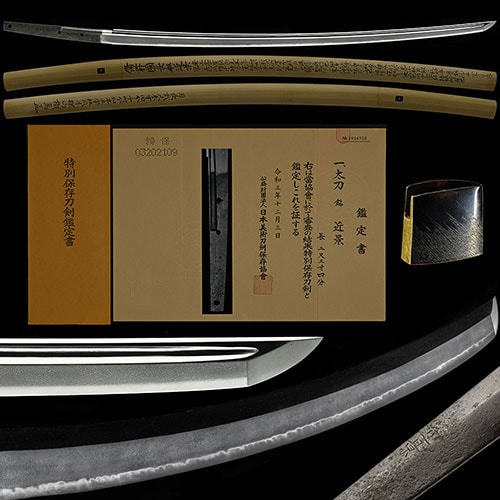
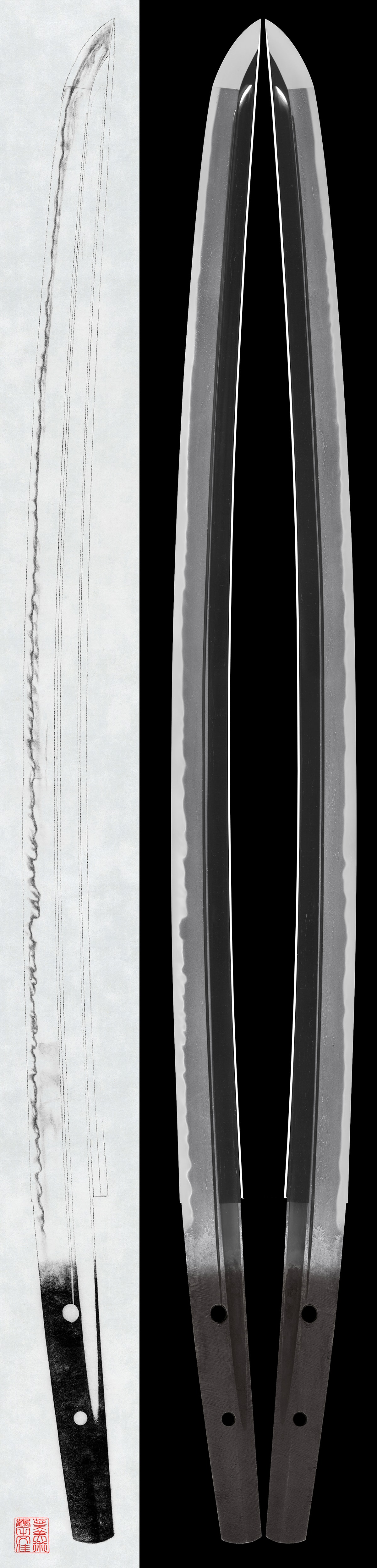
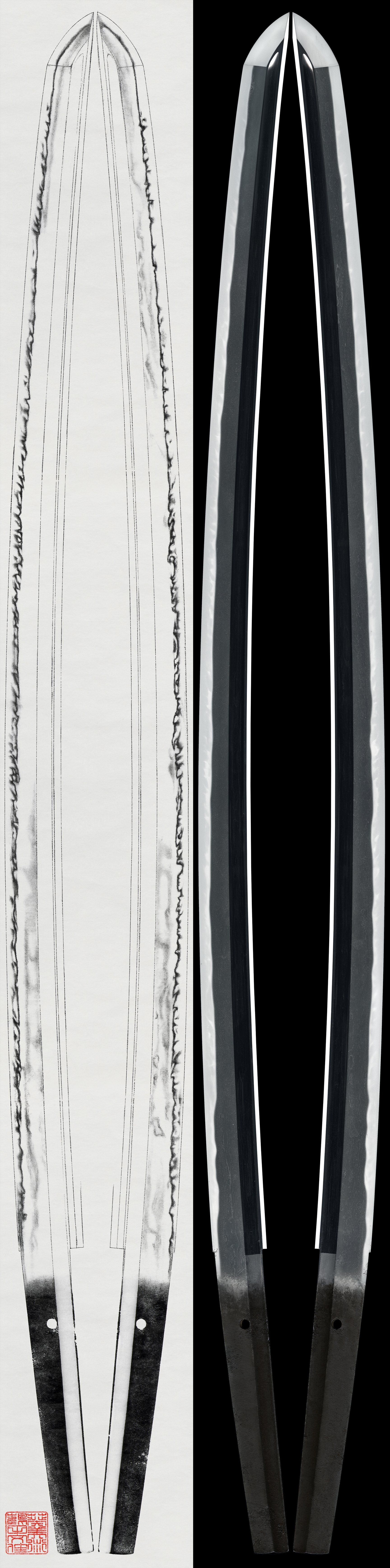
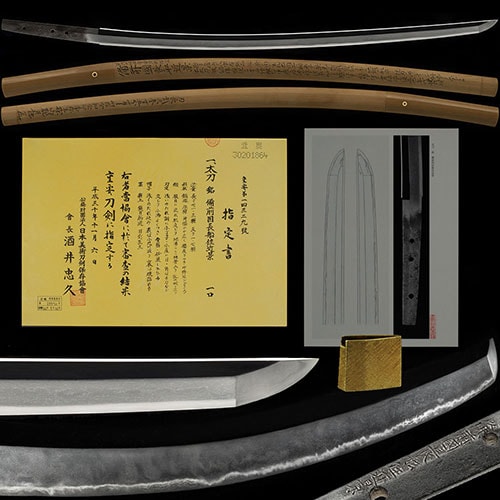
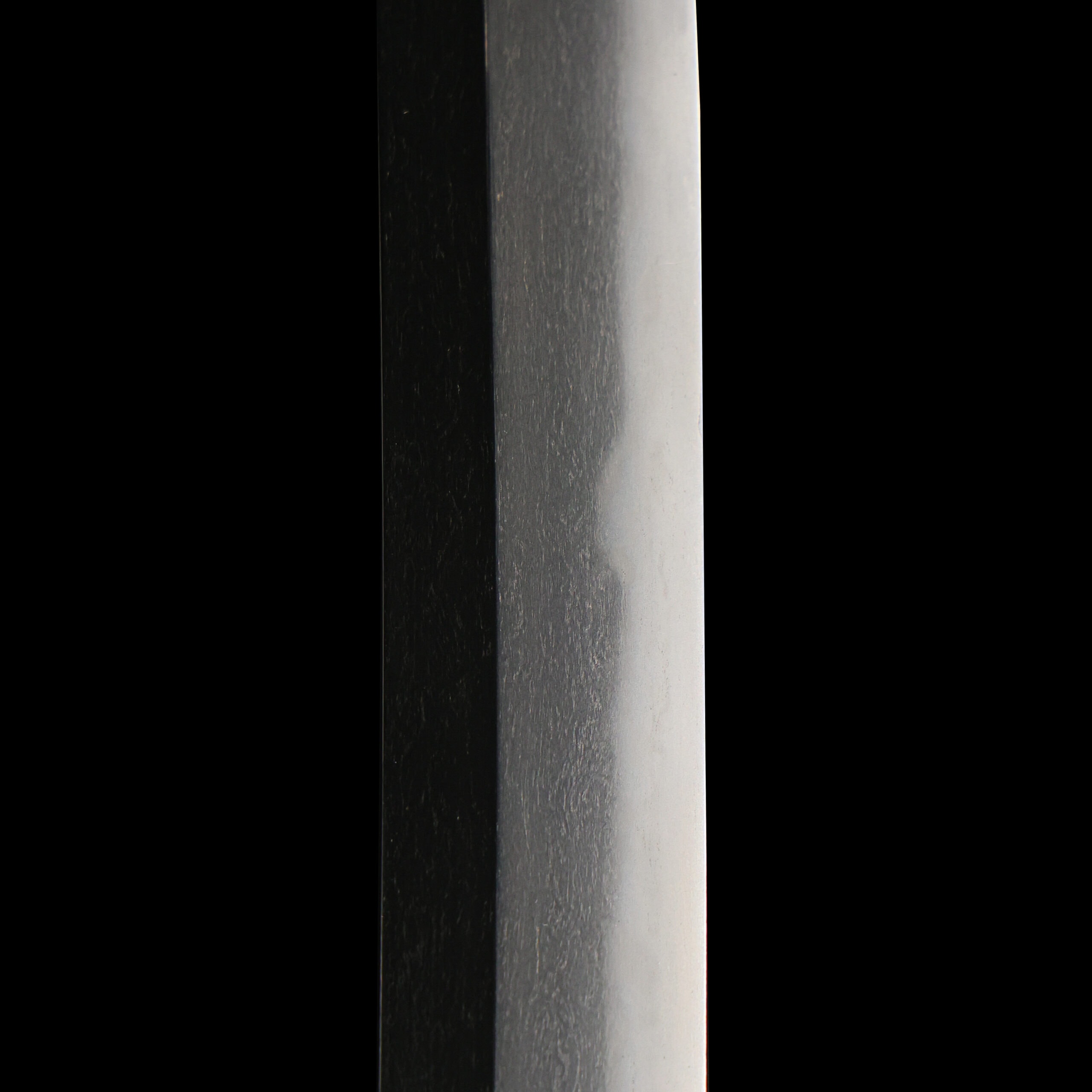
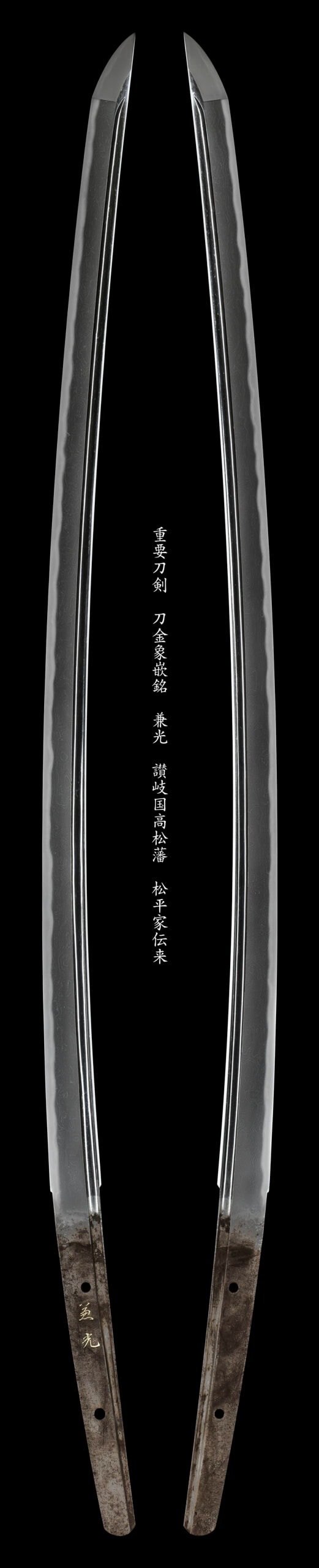
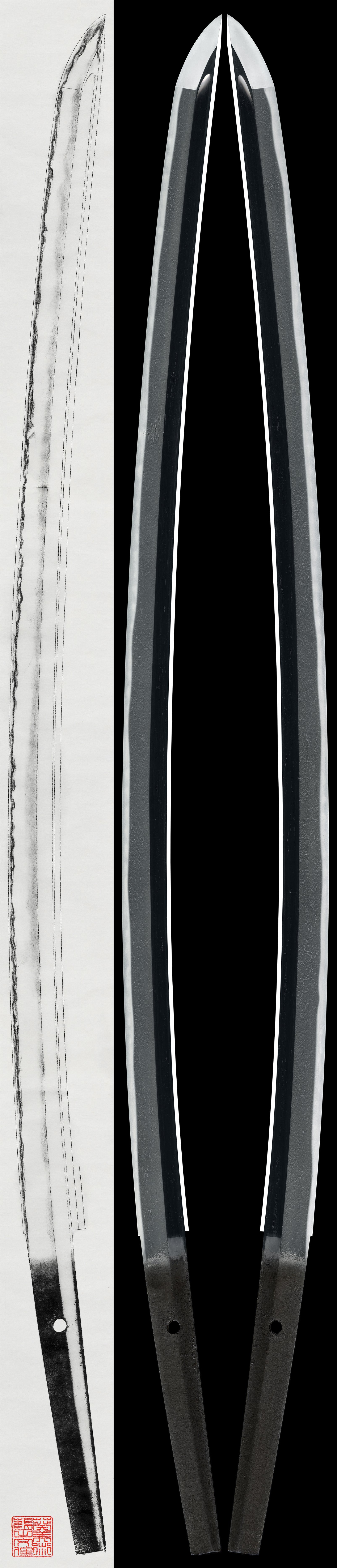
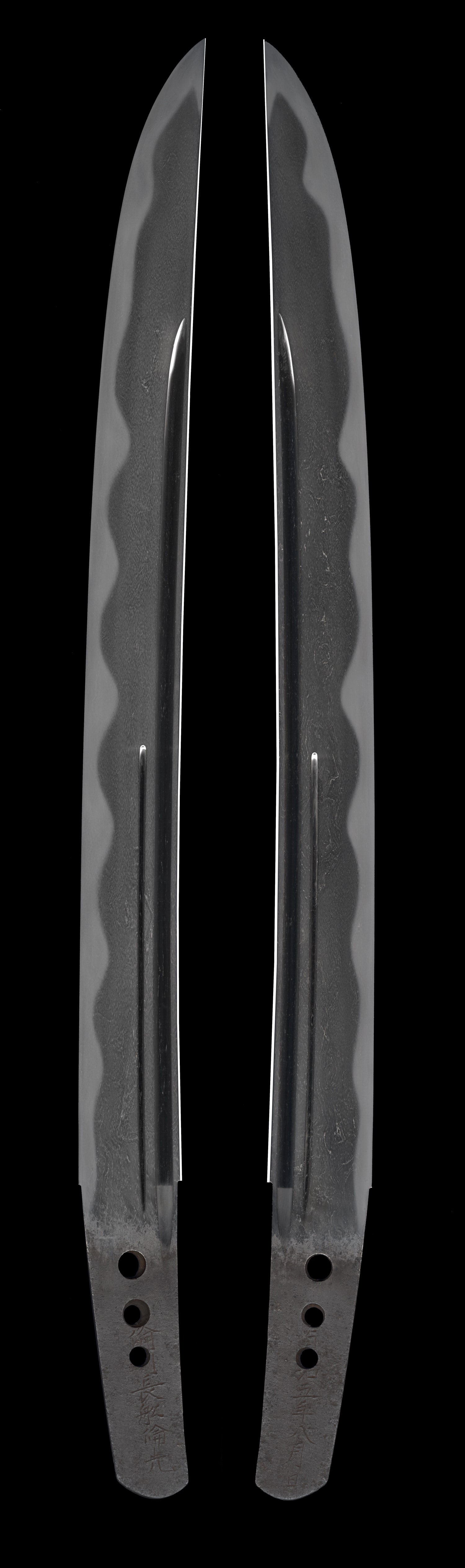
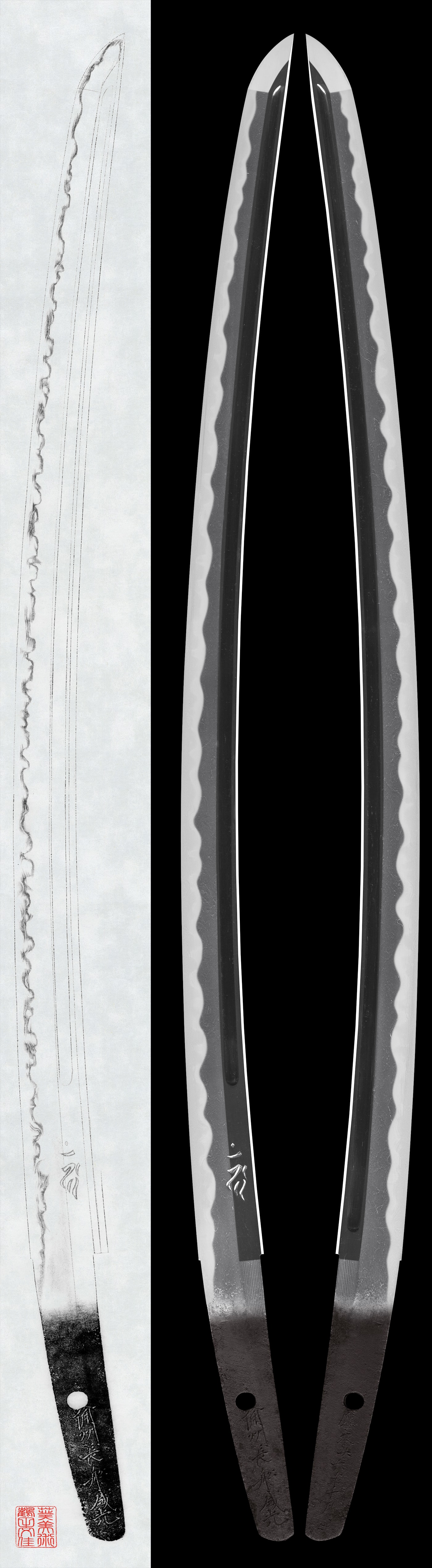
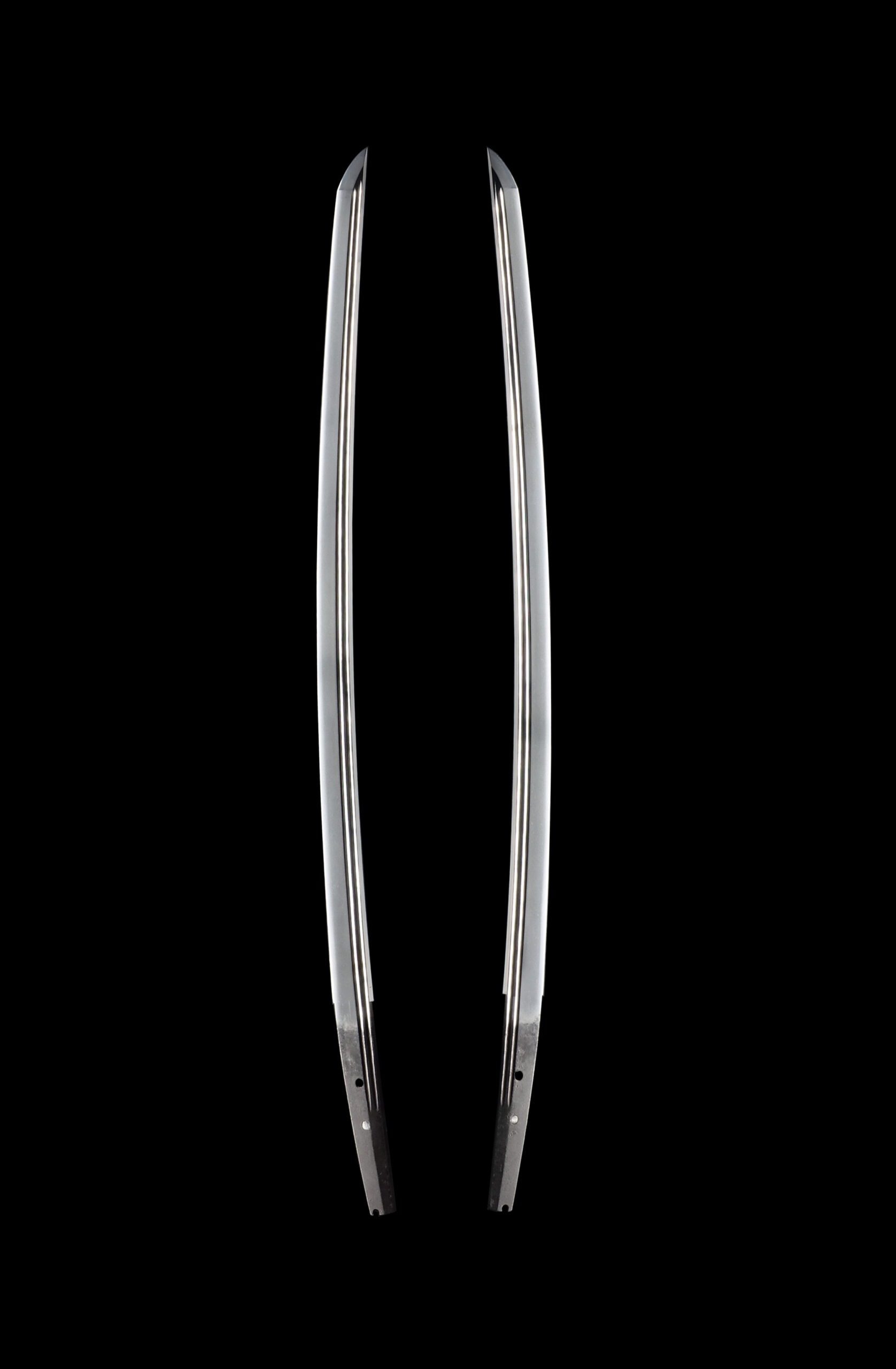
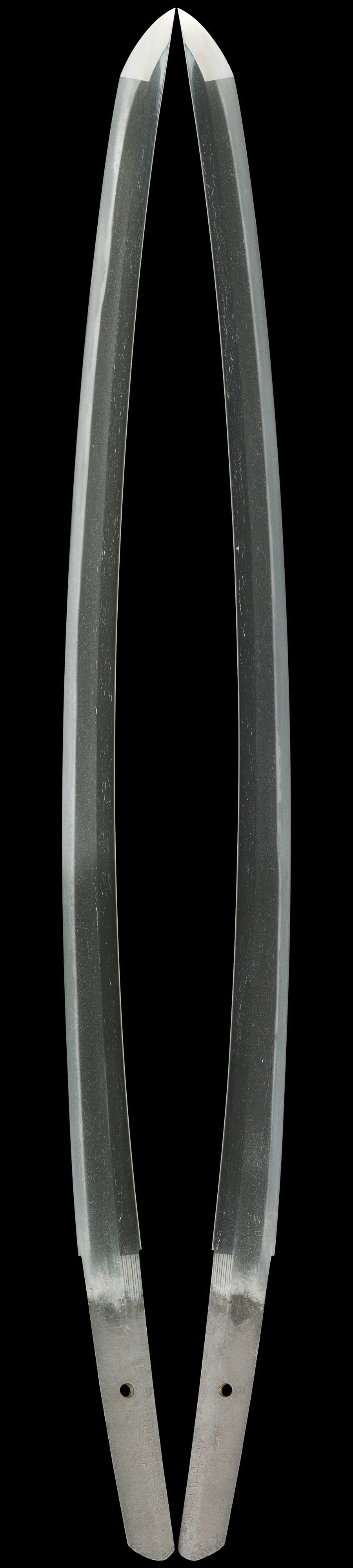
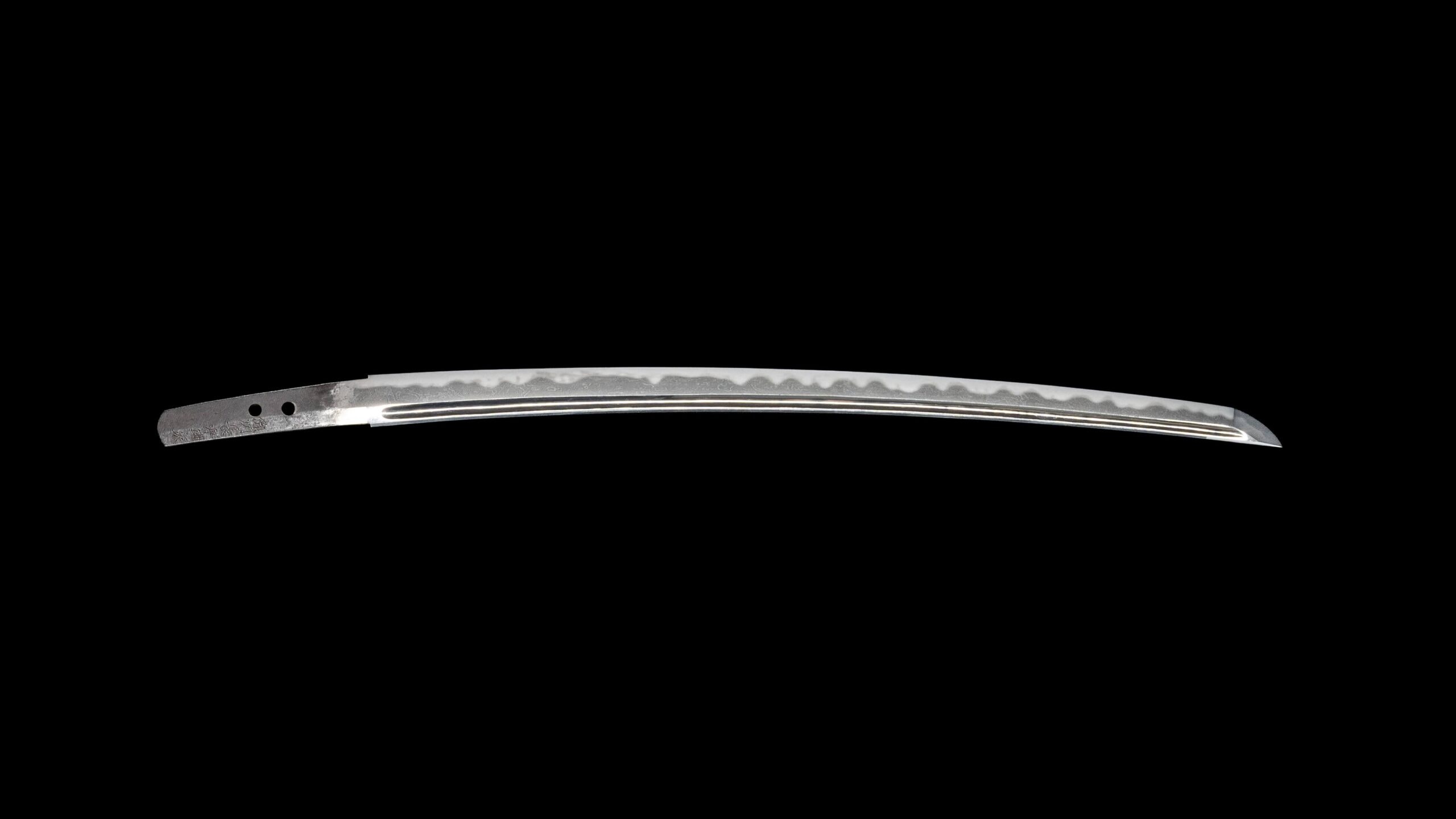
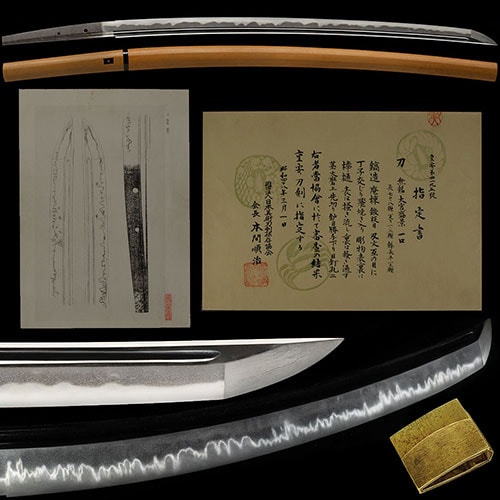
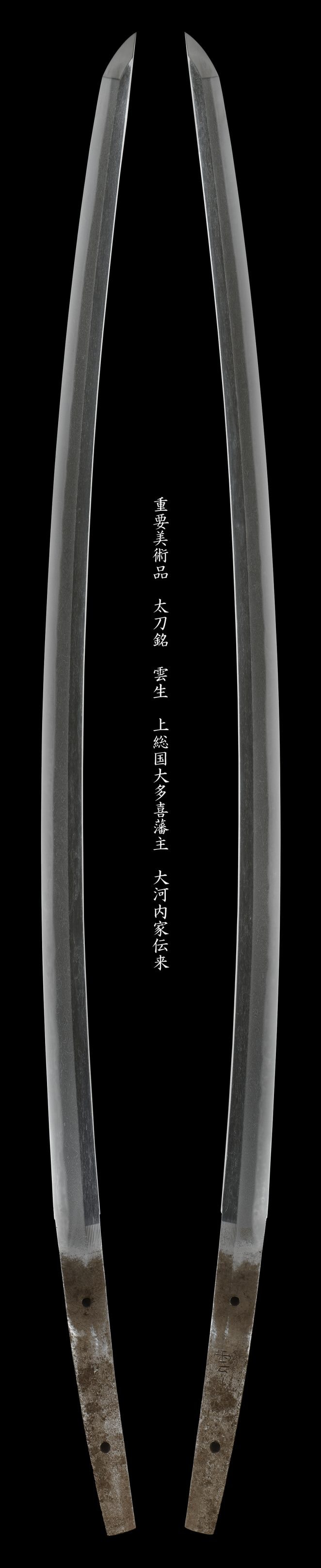
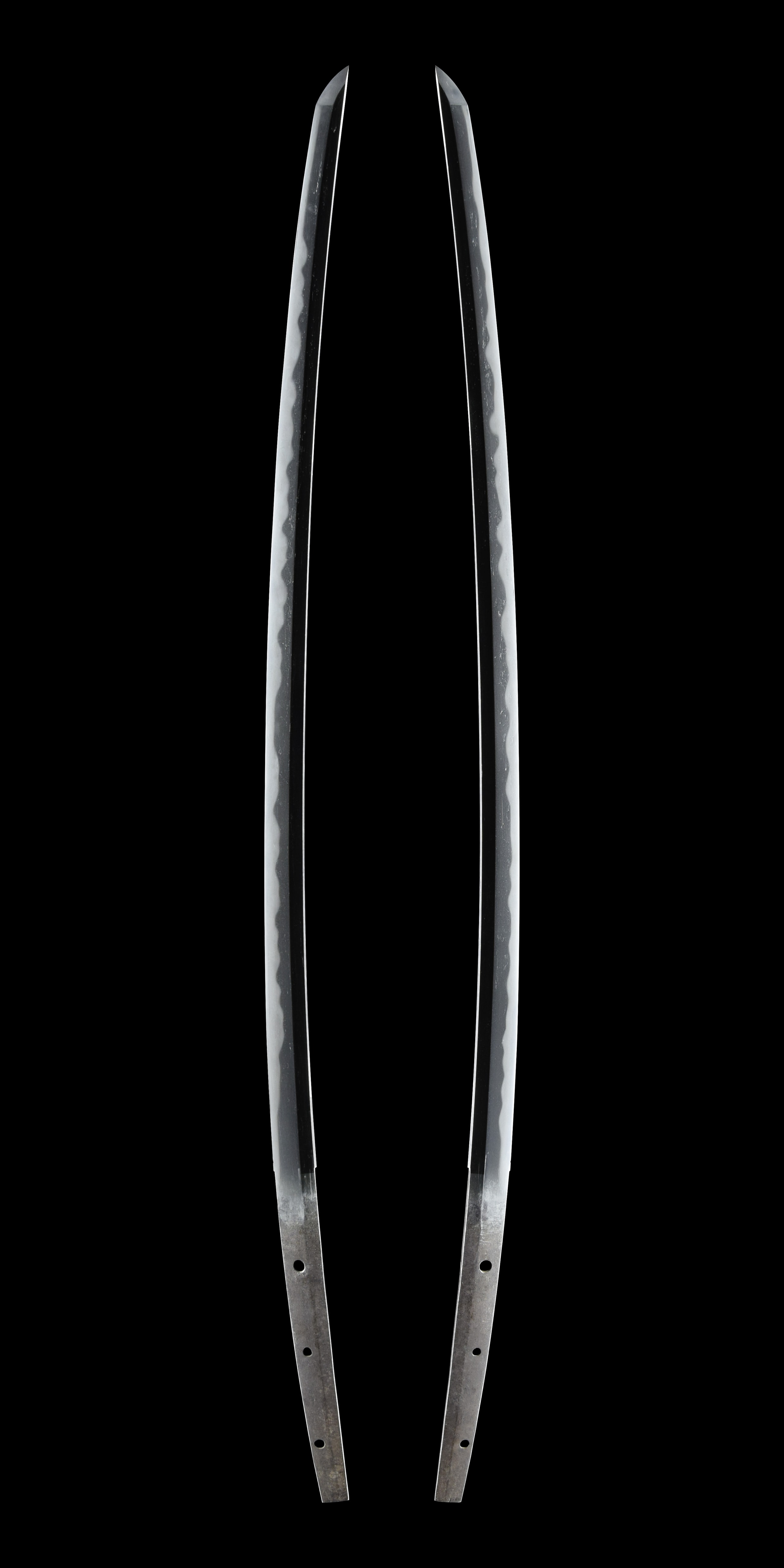
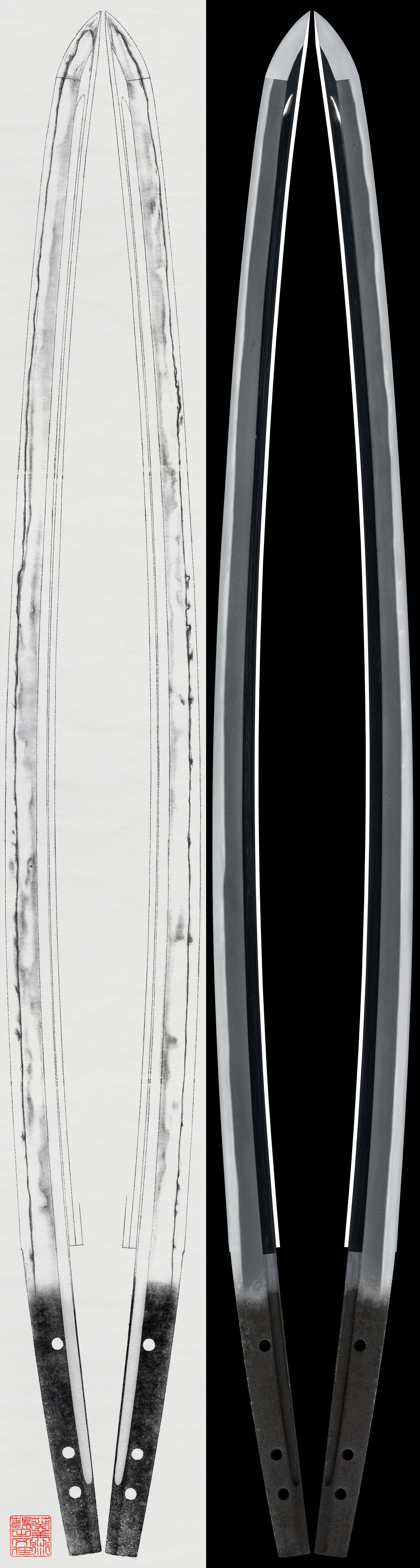
商品番号 UJKA454 – 売約済 備前国長船近景 薙刀直し刀 (近景) 近景は備前国長船の刀工で、伝承では近恒の子、長光の門人とされています。その年紀作は鎌倉末期の文保(1317-1319)から南北朝中期の貞和(1345-1350)に及びます。長光門下の中でもその作風は景光に最も近く、銘振りもまた酷似しています。近景は「上々作」に列せられ、長船正系の中心を担う名工の一人です。彼の太刀の一振りは国宝に指定されており、これは日本刀および刀装具の長い歴史の中でも、わずか120振ほどしか存在しない至高の栄誉です。 本作は、かつて類稀なる大寸の薙刀であったものを刀に仕立て直した「薙刀直し」です。元の長さは二尺八寸から九寸(約85〜89cm)に及んだと推定され、近景の薙刀としては最大級の作であったと考えられます。磨上げの際、銘の一部を残すため茎を折り返した「折返し銘」となっており、現在は「貞和五年」の年紀の一部が残されていますが、作者名は惜しくも切り落とされています。NBTHK(日本美術刀剣保存協会)の最高ランクである「特別重要刀剣」の中でも、折返し銘を持つものは僅か20口ほどしか存在しません。 姿は南北朝期の豪壮な薙刀の面目を保ち、身幅広く反り浅く、15.7cmにも及ぶ破格の大切先を呈しています。肌目は板目に木目が交じり、地沸つき、鮮明な乱れ映りが立ちます。刃文は小互の目に小丁子を交え、足・葉・金筋が盛んに入り、高低の変化に富んで刃境の働きも極めて健全です。地刃ともに驚くほど健体であり、両面に細い腰樋を掻き流しています。年紀の刻銘は「逆鏨(ぎゃくたがね)」で切られており、これはNBTHKによって近景の大きな特徴として認められ、本作を彼の手によるものと断定する決定的な根拠となっています。
 NihontoWatch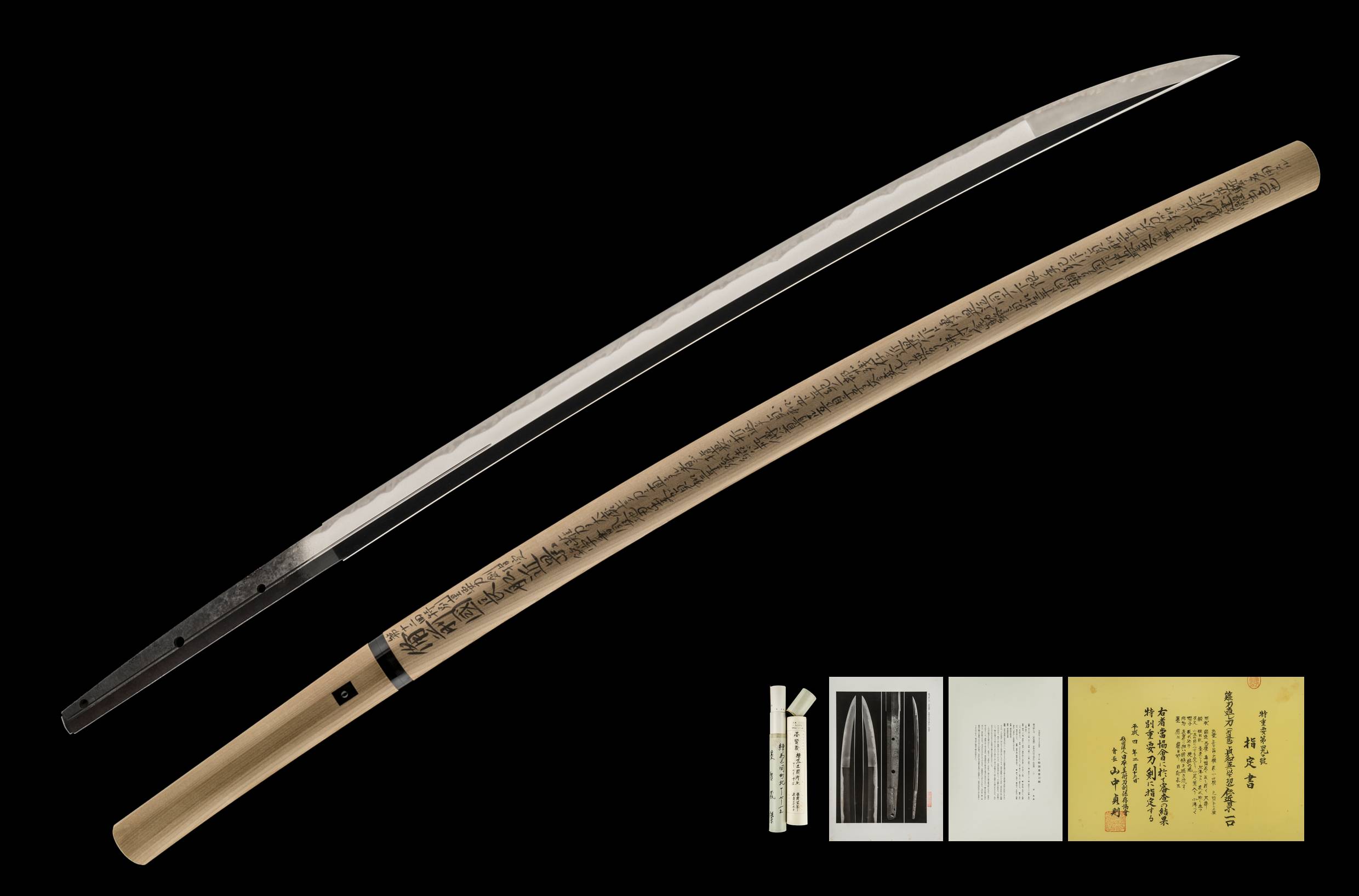
Osafune (Bizen) · 備前 · 1322-1347頃
藤代 Jo-jo saku · 刀剣大鑑 上位5%
現在4点販売中
近景は、一門の中で景光に最も近く立つ工である。「長光の門人と伝え」[[c:1]]、現存する年紀は鎌倉時代末期の正和・文保から南北朝時代初期の貞和に及び、活躍期を景光とほぼ同じくして少しく後輩にあたる。景光の在銘作の中には近景と全く同調の銘振りのものがあり、近景が代銘したものとみられるなど、「両者の関係は極めて密接であったものと推察される」[[c:2]]。近景を知るとは、まず、仕えた名手との僅かな違いを知ることである。
姿は鎌倉時代末期の備前太刀の典型で、磨上ながらも腰反りが高くつき、先へも反りが加わり、中鋒に結ぶ。身幅は尋常ないしやや広く、南北朝に傾く晩年の作は身幅広く長寸となり、薙刀直しや大鋒のものもある。地鉄は板目に杢・流れ肌を交えてやや肌立ちごころとなり、地沸が微塵に厚くつき、地景が入り、乱れ映りが鮮明に立つ。処々地斑調の肌合を交えることもある。
景光の精良でよく詰んだ肌合に対して、近景はやや肌立ち、時に大肌を交えてやや不揃いの鍛えとなる点が一つの別である。もっとも出来のよいものは、説明書がいう通り「地がねが常に比して細かで精緻」[[c:3]]であり、地鉄そのものの美しさは特筆すべきものがある。刃文は直刃・中直刃を基調に小丁子・小互の目・片落ち風の互の目などを交え、総体に逆がかり、足・葉がよく入って逆足を見せ、匂口明るく小沸つき、金筋・砂流しがかかる。逆がかる刃と肌立つ鍛えは、景光と分かつ確かな手掛かりとなる。
帽子こそ旧来の見立てが誤った所であり、また資料の最も明快な所である。最も多いのは小丸で、横手上で立ち上がって浅く返るものが多く、「帽子浅くのたれ込み小丸」[[c:4]]と記される。これに「帽子の先が尖りごころとなるもの」[[c:5]]が次ぎ、さらに焼詰めとなるものや、薙刀直しに見るように「帽子乱れ込み、焼詰め風となる」[[c:6]]ものがある。旧説のいう誇張された三作帽子は一部の作の誇張に過ぎず、section単位の事実は小丸を主調に尖り・焼詰め・乱れ込みを交える帽子であって、実用の鑑定はこれを携えるべきである。
収集の観点では、近景は藤代の極めで上々作に列する。沸は景光に見ないほど強く、銘は逆鏨で切られ、「逆鏨を多用した銘字も典型的である」[[c:7]]と評される。これが地刃の見どころと併せて資料的な決め手となる。指定作は確かで層も厚く、国宝一口・重要文化財三口を数え、特別重要・重要の各刀剣を多く擁する。その所伝は上杉謙信および上杉家、徳川将軍家、伊達家など第一級の諸家に及んでいる。近景は景光の不可欠な影であり、景光をほぼ完璧に映すその手こそ、かの長船の大工房がいかに緊密であったかの何よりの証である。
近景の位置づけを、日本刀全体および伝統・時代・時期ごとに示します。各位(随一・屈指・有数・著名)は、NBTHK および文化庁による指定に加え、三作や名物帳などの歴史的栄誉を加味したものです。
各項目を選ぶと評価方法が表示されます。
在銘年紀作が示す、確実に活動していた年代
備前伝 · 備前
現在236点販売中
備前国邑久郡長船の地に興り、鎌倉時代中期から室町時代末期に至るまで連綿と鍛刀を続けた、刀剣史上最大の流派である。事実上の祖は光忠で、近忠の子と伝えるが近忠の作刀が知られないため、長船本流の起点はこの工に置かれる。古伝はその源を古備前正恒の一類が長船に移り住んだことに求め、光忠はその流れを承けて一門を興したと説く。すなわち本流派は、古備前の地盤の上に、丁子を主調とする華麗な作風をもって自立した備前鍛冶の本系である。光忠の下に長光、真長、景光らが輩出し、以後、相伝備前の兼光・長義・元重、室町初期の応永備前を経て末備前に至るまで、備前伝の中核を担い続けた。 作風は備前伝を基盤とし、よく錬れて杢を交えた板目に地沸が微塵につき、地景が細かに入り、地に乱れ映りが鮮明に立つ鍛えを共通の地とする。この乱れ映りこそ、在銘無銘を問わず一門の作を備前へ繋ぎ止める最も確かな標である。刃文には世代ごとの軸がある。草創の古長船にあって光忠は蛙子丁子を看どころとし、子の長光は頭の丸いふくらみのある丁子を加え、孫の景光は片落ち互の目を完成して逆がかりの足を看どころとした。この光忠、長光、景光の三代が長船嫡流の背骨をなし、近景がその影として景光をほぼ完璧に映し、真長は同じ地に締まる匂口の直刃を得意とした。南北朝期に入ると兼光が嫡流を承けつつのたれ主調の大模様を加え、相州伝を摂取した相伝備前の作風が現れる。長義は耳形の刃を看どころに兼光以上に相州伝を強調し、長重と兼長がこれに連なり、義景は匂口の沈むところに、元重は焼頭の揃った角ばる刃と青江気質に、それぞれ別系の個性を示した。体配もまた時代を映し、鎌倉の腰反り高い太刀から、南北朝の身幅広く大鋒の延文貞治型へ、さらに応永備前では古作への復古を志して優美な太刀姿と丁子刃が甦る。康光と盛光を双璧とする応永備前は、腰の広く開いた互の目とローソクの芯と称する尖り返る帽子を看どころとし、その腰開き互の目と棒映りは末備前へと受け継がれた。長光景光以来の梵字、三鈷剣、倶利迦羅、八幡大菩薩などの刀身彫もまた、末備前まで絶えず継承された一門の標である。 鑑定にあっては、まず鮮明な乱れ映りで一門を備前と読み、次に世代と系統の看どころで工を分かつ。蛙子丁子は光忠、丸い頭の丁子は長光、逆がかる片落ち互の目は景光、のたれと角互の目は兼光、耳形の刃は長義、角ばり逆がかる刃と蝉の羽根の肌は元重、ローソクの芯の帽子は応永備前という具合に、看どころが系統と時代を指し示す。嫡流の光忠、長光、景光、兼光は藤代の最上作に列し、なかでも長光は重要文化財の指定数が全刀工中最多で、嫡流の作には名物大般若長光や小龍景光をはじめ、織田信長、徳川家康、上杉謙信ら天下を握った者の手を経た作が多い。相伝備前の長義や兼長、応永備前の康光や盛光もそれぞれ重きをなし、別系の元重もまた南北朝備前の大きな名を保つ。嫡流の在銘作が市に現れることは稀で、大半は大磨上無銘の極めとして伝わるが、長光のごとく銘を惜しまなかった工の作はなお蒐集家の手の届く範囲にある。後世への影響は計り知れず、本流派の作風と刀身彫の伝統は末備前を通じて室町備前の主流をなし、備前伝そのものの規範となった。 詳しく見る →
鎌倉時代の備前
鎌倉時代は備前の頂点である。伝えでは一文字派の工が後鳥羽上皇の御番鍛冶に列し、世紀の半ばには光忠が長船派を興して、注文は公家からも武家政権からも流れ込んだ。国宝刀剣の数で備前に並ぶ国はない。
重要刀剣の中でも出来が際立ち、資料的価値が極めて高く、国指定の重要文化財に準ずると判断された、NBTHK鑑定の最高位です。
最高峰であり、特別重要刀剣に到達した刀剣はわずか1,211口、登録刀剣の約2,064口に1口にすぎません。
日本美術刀剣保存協会(NBTHK)は、1948年に設立され、文化庁の監督を受ける公益財団法人で、東京・刀剣博物館に本部を置きます。専門の審査員が出品作を直接審査し、美術的・歴史的価値に応じた鑑定書を発行します。NBTHKの鑑定書は、日本刀および刀装具の真正性を示す最も広く認知された基準です。
NBTHK公式サイトAll swords come with a three-day inspection period beginning from the date of delivery. If not satisfied, the sword may be returned within this period for a full refund of the purchase price. Outside of this period, all sales are final. Swords purchased on a layaway payment plan are not eligible for the three-day inspection period.
商品番号 UJKA454 – 売約済 備前国長船近景 薙刀直し刀 (近景) 近景は備前国長船の刀工で、伝承では近恒の子、長光の門人とされています。その年紀作は鎌倉末期の文保(1317-1319)から南北朝中期の貞和(1345-1350)に及びます。長光門下の中でもその作風は景光に最も近く、銘振りもまた酷似しています。近景は「上々作」に列せられ、長船正系の中心を担う名工の一人です。彼の太刀の一振りは国宝に指定されており、これは日本刀および刀装具の長い歴史の中でも、わずか120振ほどしか存在しない至高の栄誉です。 本作は、かつて類稀なる大寸の薙刀であったものを刀に仕立て直した「薙刀直し」です。元の長さは二尺八寸から九寸(約85〜89cm)に及んだと推定され、近景の薙刀としては最大級の作であったと考えられます。磨上げの際、銘の一部を残すため茎を折り返した「折返し銘」となっており、現在は「貞和五年」の年紀の一部が残されていますが、作者名は惜しくも切り落とされています。NBTHK(日本美術刀剣保存協会)の最高ランクである「特別重要刀剣」の中でも、折返し銘を持つものは僅か20口ほどしか存在しません。 姿は南北朝期の豪壮な薙刀の面目を保ち、身幅広く反り浅く、15.7cmにも及ぶ破格の大切先を呈しています。肌目は板目に木目が交じり、地沸つき、鮮明な乱れ映りが立ちます。刃文は小互の目に小丁子を交え、足・葉・金筋が盛んに入り、高低の変化に富んで刃境の働きも極めて健全です。地刃ともに驚くほど健体であり、両面に細い腰樋を掻き流しています。年紀の刻銘は「逆鏨(ぎゃくたがね)」で切られており、これはNBTHKによって近景の大きな特徴として認められ、本作を彼の手によるものと断定する決定的な根拠となっています。
NihontoWatchOsafune (Bizen) · 備前 · 1322-1347頃
藤代 Jo-jo saku · 刀剣大鑑 上位5%
現在4点販売中
近景は、一門の中で景光に最も近く立つ工である。「長光の門人と伝え」[[c:1]]、現存する年紀は鎌倉時代末期の正和・文保から南北朝時代初期の貞和に及び、活躍期を景光とほぼ同じくして少しく後輩にあたる。景光の在銘作の中には近景と全く同調の銘振りのものがあり、近景が代銘したものとみられるなど、「両者の関係は極めて密接であったものと推察される」[[c:2]]。近景を知るとは、まず、仕えた名手との僅かな違いを知ることである。
姿は鎌倉時代末期の備前太刀の典型で、磨上ながらも腰反りが高くつき、先へも反りが加わり、中鋒に結ぶ。身幅は尋常ないしやや広く、南北朝に傾く晩年の作は身幅広く長寸となり、薙刀直しや大鋒のものもある。地鉄は板目に杢・流れ肌を交えてやや肌立ちごころとなり、地沸が微塵に厚くつき、地景が入り、乱れ映りが鮮明に立つ。処々地斑調の肌合を交えることもある。
景光の精良でよく詰んだ肌合に対して、近景はやや肌立ち、時に大肌を交えてやや不揃いの鍛えとなる点が一つの別である。もっとも出来のよいものは、説明書がいう通り「地がねが常に比して細かで精緻」[[c:3]]であり、地鉄そのものの美しさは特筆すべきものがある。刃文は直刃・中直刃を基調に小丁子・小互の目・片落ち風の互の目などを交え、総体に逆がかり、足・葉がよく入って逆足を見せ、匂口明るく小沸つき、金筋・砂流しがかかる。逆がかる刃と肌立つ鍛えは、景光と分かつ確かな手掛かりとなる。
帽子こそ旧来の見立てが誤った所であり、また資料の最も明快な所である。最も多いのは小丸で、横手上で立ち上がって浅く返るものが多く、「帽子浅くのたれ込み小丸」[[c:4]]と記される。これに「帽子の先が尖りごころとなるもの」[[c:5]]が次ぎ、さらに焼詰めとなるものや、薙刀直しに見るように「帽子乱れ込み、焼詰め風となる」[[c:6]]ものがある。旧説のいう誇張された三作帽子は一部の作の誇張に過ぎず、section単位の事実は小丸を主調に尖り・焼詰め・乱れ込みを交える帽子であって、実用の鑑定はこれを携えるべきである。
収集の観点では、近景は藤代の極めで上々作に列する。沸は景光に見ないほど強く、銘は逆鏨で切られ、「逆鏨を多用した銘字も典型的である」[[c:7]]と評される。これが地刃の見どころと併せて資料的な決め手となる。指定作は確かで層も厚く、国宝一口・重要文化財三口を数え、特別重要・重要の各刀剣を多く擁する。その所伝は上杉謙信および上杉家、徳川将軍家、伊達家など第一級の諸家に及んでいる。近景は景光の不可欠な影であり、景光をほぼ完璧に映すその手こそ、かの長船の大工房がいかに緊密であったかの何よりの証である。
近景の位置づけを、日本刀全体および伝統・時代・時期ごとに示します。各位(随一・屈指・有数・著名)は、NBTHK および文化庁による指定に加え、三作や名物帳などの歴史的栄誉を加味したものです。
各項目を選ぶと評価方法が表示されます。
在銘年紀作が示す、確実に活動していた年代
備前伝 · 備前
現在236点販売中
備前国邑久郡長船の地に興り、鎌倉時代中期から室町時代末期に至るまで連綿と鍛刀を続けた、刀剣史上最大の流派である。事実上の祖は光忠で、近忠の子と伝えるが近忠の作刀が知られないため、長船本流の起点はこの工に置かれる。古伝はその源を古備前正恒の一類が長船に移り住んだことに求め、光忠はその流れを承けて一門を興したと説く。すなわち本流派は、古備前の地盤の上に、丁子を主調とする華麗な作風をもって自立した備前鍛冶の本系である。光忠の下に長光、真長、景光らが輩出し、以後、相伝備前の兼光・長義・元重、室町初期の応永備前を経て末備前に至るまで、備前伝の中核を担い続けた。 作風は備前伝を基盤とし、よく錬れて杢を交えた板目に地沸が微塵につき、地景が細かに入り、地に乱れ映りが鮮明に立つ鍛えを共通の地とする。この乱れ映りこそ、在銘無銘を問わず一門の作を備前へ繋ぎ止める最も確かな標である。刃文には世代ごとの軸がある。草創の古長船にあって光忠は蛙子丁子を看どころとし、子の長光は頭の丸いふくらみのある丁子を加え、孫の景光は片落ち互の目を完成して逆がかりの足を看どころとした。この光忠、長光、景光の三代が長船嫡流の背骨をなし、近景がその影として景光をほぼ完璧に映し、真長は同じ地に締まる匂口の直刃を得意とした。南北朝期に入ると兼光が嫡流を承けつつのたれ主調の大模様を加え、相州伝を摂取した相伝備前の作風が現れる。長義は耳形の刃を看どころに兼光以上に相州伝を強調し、長重と兼長がこれに連なり、義景は匂口の沈むところに、元重は焼頭の揃った角ばる刃と青江気質に、それぞれ別系の個性を示した。体配もまた時代を映し、鎌倉の腰反り高い太刀から、南北朝の身幅広く大鋒の延文貞治型へ、さらに応永備前では古作への復古を志して優美な太刀姿と丁子刃が甦る。康光と盛光を双璧とする応永備前は、腰の広く開いた互の目とローソクの芯と称する尖り返る帽子を看どころとし、その腰開き互の目と棒映りは末備前へと受け継がれた。長光景光以来の梵字、三鈷剣、倶利迦羅、八幡大菩薩などの刀身彫もまた、末備前まで絶えず継承された一門の標である。 鑑定にあっては、まず鮮明な乱れ映りで一門を備前と読み、次に世代と系統の看どころで工を分かつ。蛙子丁子は光忠、丸い頭の丁子は長光、逆がかる片落ち互の目は景光、のたれと角互の目は兼光、耳形の刃は長義、角ばり逆がかる刃と蝉の羽根の肌は元重、ローソクの芯の帽子は応永備前という具合に、看どころが系統と時代を指し示す。嫡流の光忠、長光、景光、兼光は藤代の最上作に列し、なかでも長光は重要文化財の指定数が全刀工中最多で、嫡流の作には名物大般若長光や小龍景光をはじめ、織田信長、徳川家康、上杉謙信ら天下を握った者の手を経た作が多い。相伝備前の長義や兼長、応永備前の康光や盛光もそれぞれ重きをなし、別系の元重もまた南北朝備前の大きな名を保つ。嫡流の在銘作が市に現れることは稀で、大半は大磨上無銘の極めとして伝わるが、長光のごとく銘を惜しまなかった工の作はなお蒐集家の手の届く範囲にある。後世への影響は計り知れず、本流派の作風と刀身彫の伝統は末備前を通じて室町備前の主流をなし、備前伝そのものの規範となった。 詳しく見る →
鎌倉時代の備前
鎌倉時代は備前の頂点である。伝えでは一文字派の工が後鳥羽上皇の御番鍛冶に列し、世紀の半ばには光忠が長船派を興して、注文は公家からも武家政権からも流れ込んだ。国宝刀剣の数で備前に並ぶ国はない。
重要刀剣の中でも出来が際立ち、資料的価値が極めて高く、国指定の重要文化財に準ずると判断された、NBTHK鑑定の最高位です。
最高峰であり、特別重要刀剣に到達した刀剣はわずか1,211口、登録刀剣の約2,064口に1口にすぎません。
日本美術刀剣保存協会(NBTHK)は、1948年に設立され、文化庁の監督を受ける公益財団法人で、東京・刀剣博物館に本部を置きます。専門の審査員が出品作を直接審査し、美術的・歴史的価値に応じた鑑定書を発行します。NBTHKの鑑定書は、日本刀および刀装具の真正性を示す最も広く認知された基準です。
NBTHK公式サイトAll swords come with a three-day inspection period beginning from the date of delivery. If not satisfied, the sword may be returned within this period for a full refund of the purchase price. Outside of this period, all sales are final. Swords purchased on a layaway payment plan are not eligible for the three-day inspection period.