応仁の乱が足利の体制を砕いた後、戦国の一世紀はほとんどすべての国を武装させた。この時代は選ぶ目に報いる。並の作は多いが、その傍らには第一級の注文打ちが立っている。
 NihontoWatchNihontoWatch
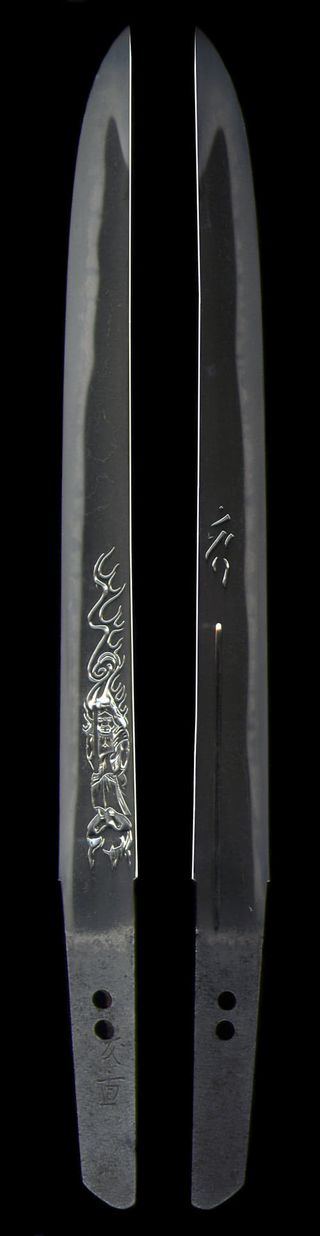
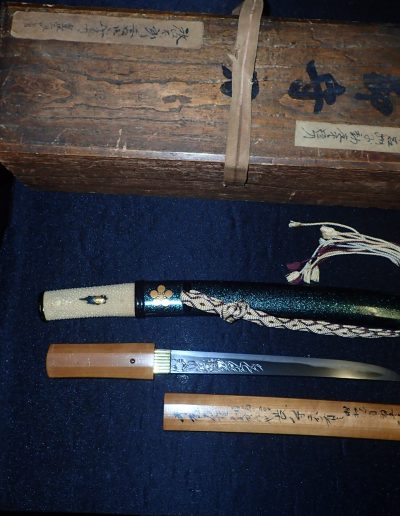
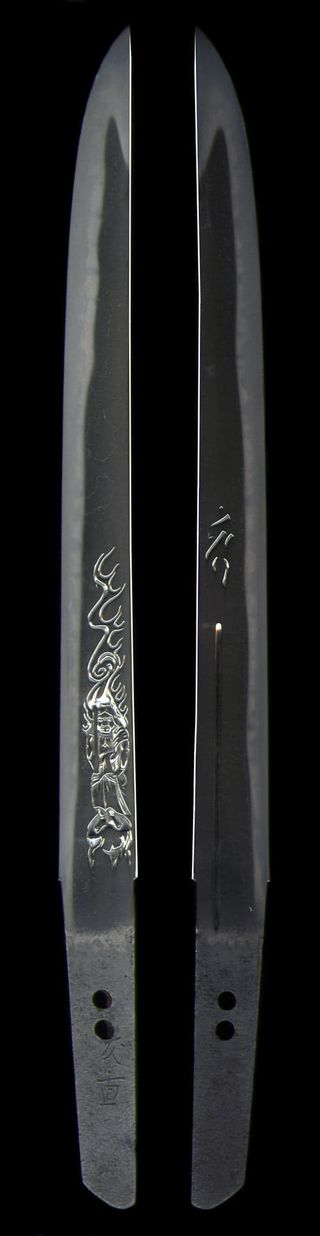
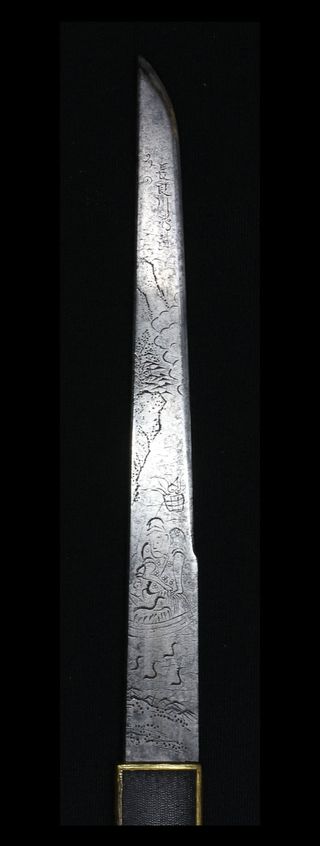
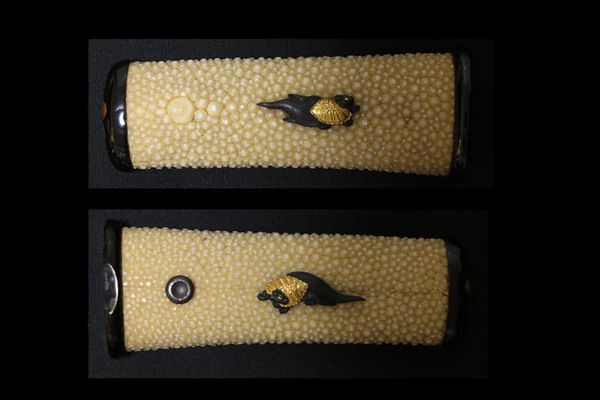
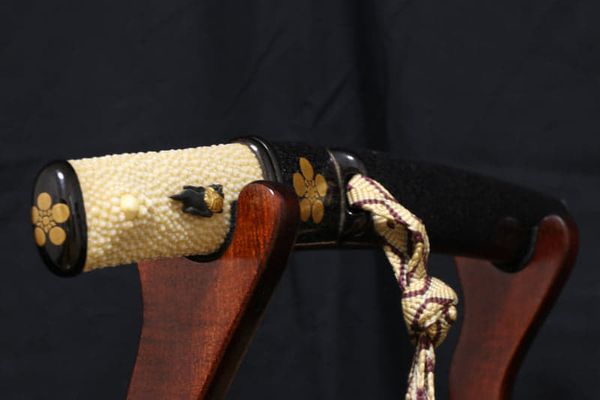
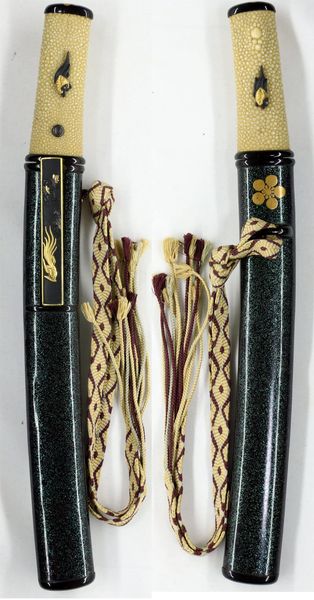
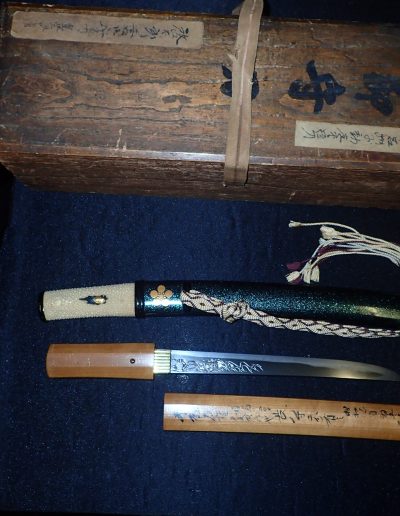
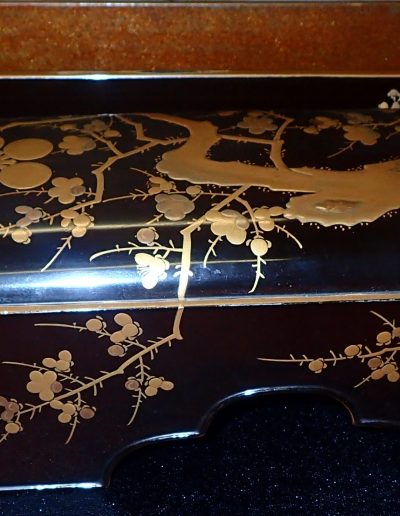
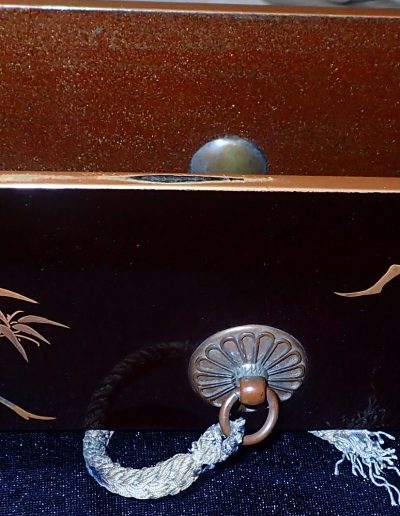
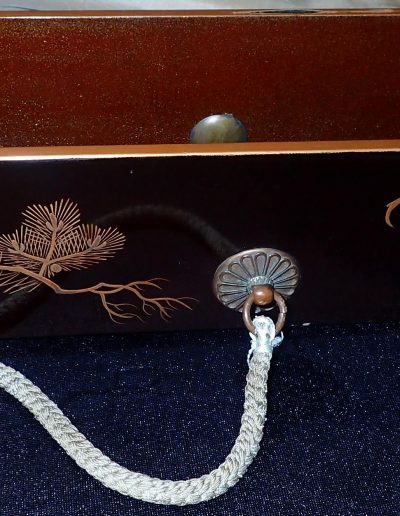
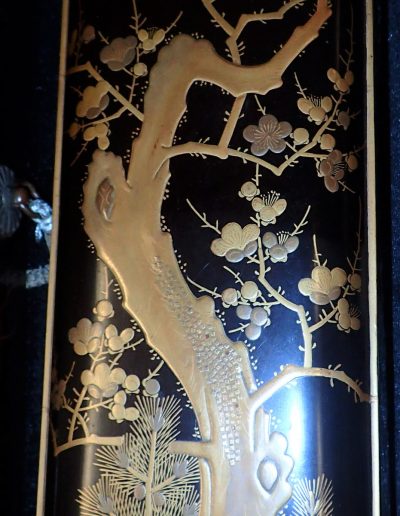
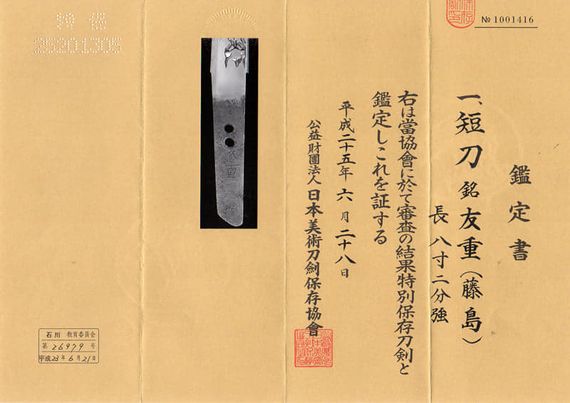
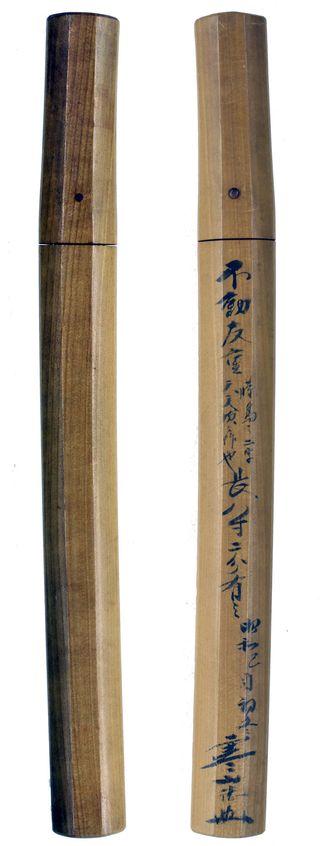
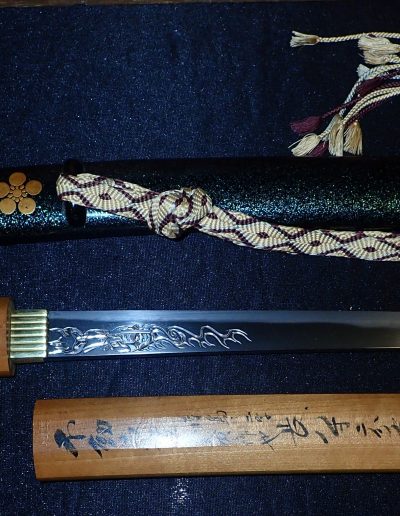
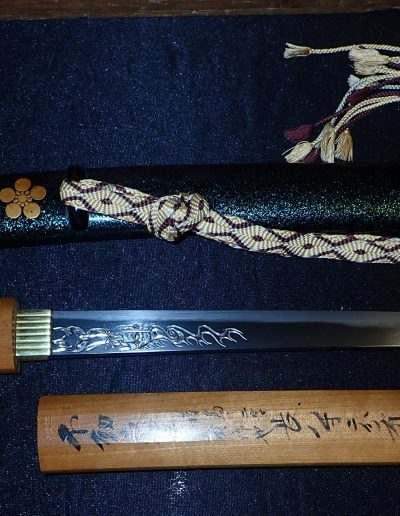
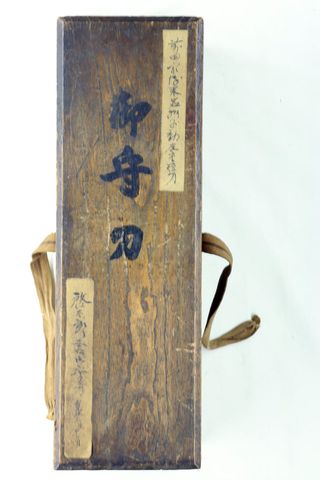
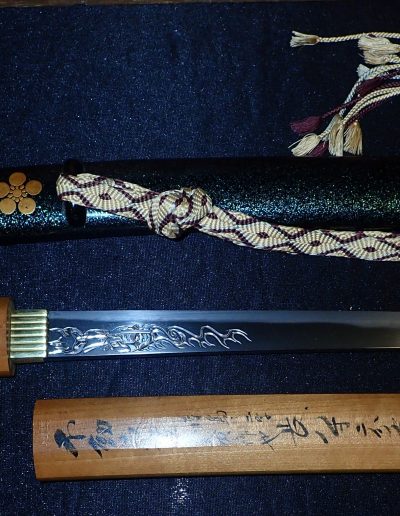
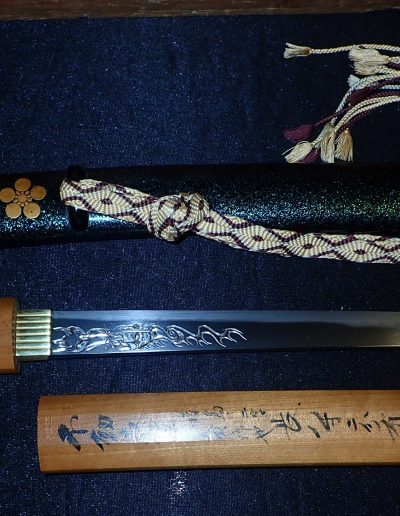
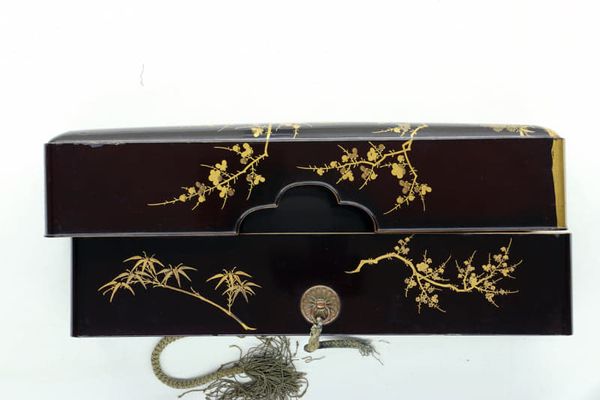
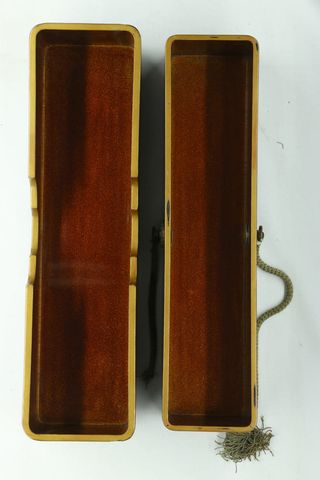
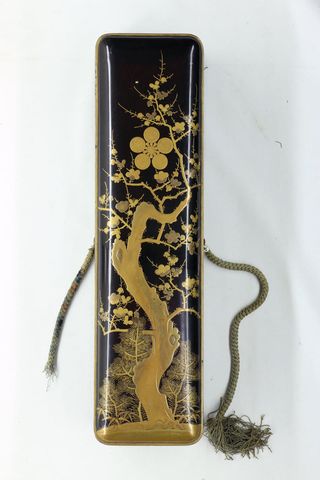
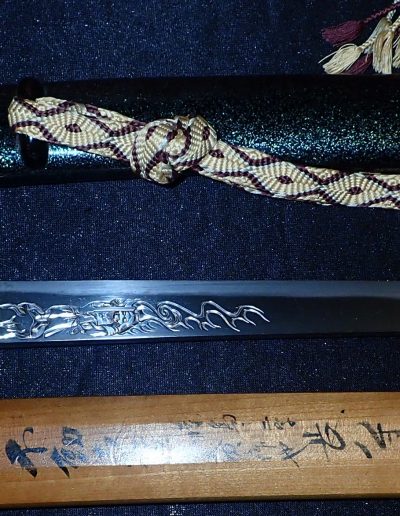
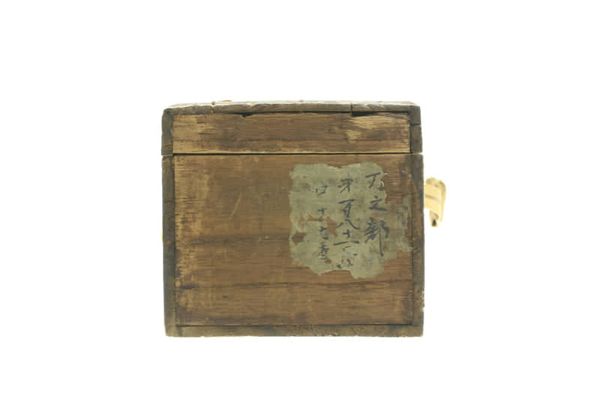
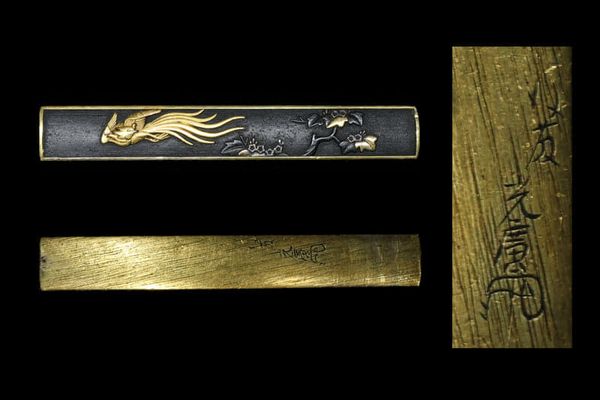
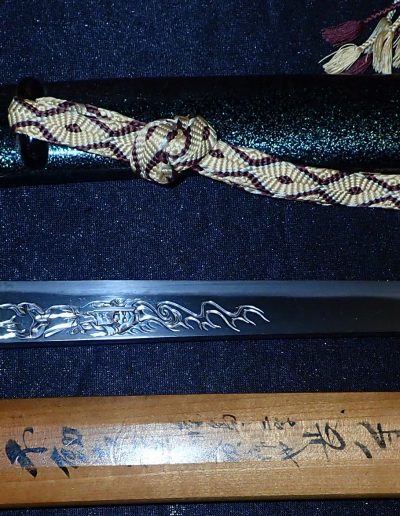
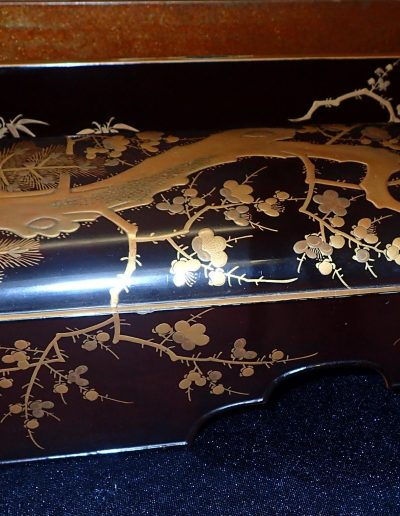
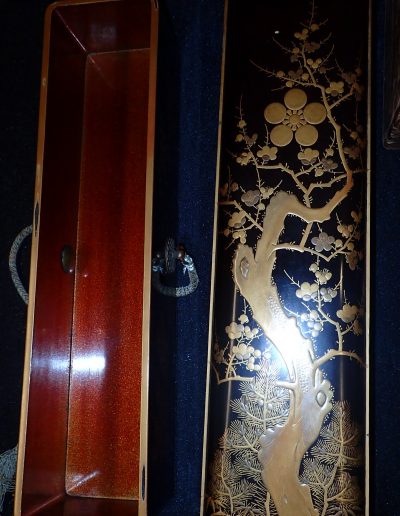
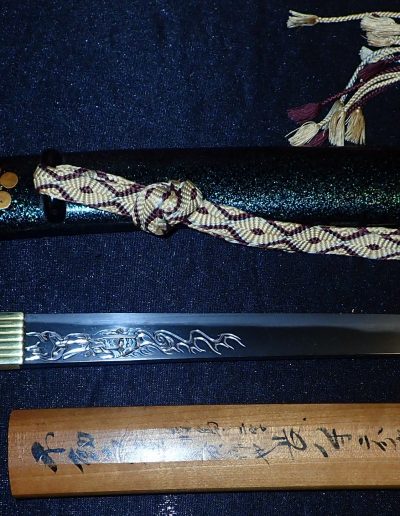
Very Rare Historically important tanto owned by Maeda Daimyo Tanto With NBTHK Tokubetsu Hozon Certificate in original wooden storage box with inner makie lacquered box with Maeda Mon on the lid . Koshirae also has Maeda mon on the saya and Kashira, excellent kozuka with Hou bird / Phoenix signed Goto Misuhisa, Kogatana has very fine horimono .Very well forged blade with active hamon with loads of hataraki and Great Horimono of Fudo. NBTHK Tokubetsu Hozon Certificate KANTEI-SHO (鑑定書) ‒ APPRAISAL No 1001416 Tantō, signed: Tomoshige (友重) (Fujishima, 藤島) Nagasa ~ 24.9 cm According to the result of the shinsa committee of our society, we judge this work as authentic and rank it as Tokubetsu-Hozon Tōken. June 28, 2013 [Foundation] Nihon Bijutsu Tōken Hozon Kyōkai, NBTHK (日本美術刀劍保存協會 Sayagaki on Shirasaya by Kanzan Sato Sensei 不動友重 藤島之二字 天文頃之作也 ⻑八寸二分有之 昭和己酉初冬 寒山誌「花押」 Fudō Tomoshige Fujishima kore niji Tenbun goro no saku nari Nagasa hassun ni-bu kore ari Shōwa tsuchinoto-tori shotō Kanzan shirusu + kaō Fudō Tomoshige [Reference to engraving of deity Fudō-Myōō] Fujishima [smith], signed two characters. Tomoshige. Work from around Tenbun (1532-1555). Blade length ~ 24.9 cm Written by Kanzan in October of the year of the rooster of the Shōwa era (1969) + monogram Ink inscription of wooden storage box: 御守刀 Omamori-gatana “Protective sword” Tag on top right of box: 前田家傳来名物不動友重短刀 Maeda-ke denrai meibutsu Fudō Tomoshige tantō “Famous tantō that was handed down within the Maeda family as Fudō Tomoshige” Tag on bottom left of box: 哲太郎君御守刀 寛政十二庚申二月 Tetsutarō-kimi omamori-gatana, Kansei jūni kanoe-saru nigatsu “Protective sword of Tetsutarō, second month of Kansei twelve (1800), year of the monkey.” Tag on side of box: 刀之部 第百八十一号 ロ十七番 Katana no bu Dai hyakuhachijūichi gō Ro jūshichi-ban “Sword section Nr. 181–B17 Maeda Toshiyasu (前田 利保, March 23, 1800 – September 14, 1859) was the 10th daimyō of Toyama Domain in the Hokuriku region of Japan, and a noted Japanese naturalist and entomologist. Toshiyasu was born in Edo as Keitaro (啓太郎), the second son of Maeda Toshinori, but was still underage on his father’s death, so the domain was assigned to Maeda Toshitsuyo instead. In 1811, he was adopted by Toshitsuyo to restore the line of succession and became daimyō in 1835 when Toshitsuyo retired due to illness. On taking office, the domain was hit hard by a crop failure, which continued through 1838 as part of the Tenpō famine. The domain defaulted on all its debts, and was forced to take a 30,000 ryō loan from the shogunate in 1838, followed by an additional 25,000 ryō the following year. In 1841, the domain reported that it did not have the funds to make its required sankin kōtai to Edo. In 1846, citing ill heath, Toshiyasu went into retirement in favor of his sixth son, Maeda Toshitomo. His wife was a daughter of Asano Narikata of Hiroshima Domain. Along with Kuroda Narikiyo of Fukuoka Domain, he was also a noted scientist, and organised a society of naturalists which met each month. An account was written of the subject discussed, for instance, in September 1840 they discussed the beetle family Scarabaeidae and wrote Kyōro-shakō-zusetsu in which twenty chafer species are scientifically drawn and described. As these studies were refined each member of the group became a specialist. Maeda learned the Dutch language (the Japanese naturalists followed Philipp Franz von Siebold and also learned the French language Siebold’s choice for Fauna Japonica and Flora Japonica) and translated the Dutch language Systema Naturae into Japanese. He is also noted for authoring the Honzō Tsūkan, an encyclopaedia of Chinese medicinal herbs, which remained uncompleted in 94 volumes at the time of his death.

(翻訳なし) 店主の原文のまま表示しています。正確さの確認を通った翻訳のみを表示します。
山城伝 · 加賀
現在18点販売中
藤島派は加賀国藤島の地に興り、北陸道にあって数代を重ねた一門である。その祖にして代表工が友重で、名跡は南北朝末から室町を経て近世にまで及び、現存する年紀作のうち最も古いものは応永二年の短刀である。構成員の解説はいずれも、初代を山城の来国俊の門人、あるいは同国真景の門とする古伝を載せながらこれを疑い、作風の上で来国俊に結ばれず、年代の上で真景にも肯定し難いとして、茎仕立と地刃よりすればむしろ大和物の系統、大和尻懸の手に近いものと判ずる。南北朝期を遡る作はみないとされ、初代は建武の頃、二代は貞治、三代は応永と伝える説もあるが、構成員はおおむね各作を一個人の経歴にではなく、固定した同派の特質に照らして鑑する。北陸の地にあって、同派は越中・越前の工と気脈を通じ、美濃と大和の風を受けた古刀の一門として立つ。 作風の眼目はその地鉄にある。板目に杢を交え、流れごころに肌立って、地沸つき地景入り、かねは際立って黒みをおびる。構成員はこれを同派一番の見どころとして、地鉄が肌立ちごころで黒みを帯びることを北国物の徴とし、ある作には白気映りが淡く立つと記す。山城のようなつんだ小板目には締まらず、槍・薙刀や磨上の太刀では柾目に寄った肌となって、その地に大和を素直に示す。刃文はこの地に応えて自らの混在を示し、互の目乱れを基調に、箱がかった刃・尖り刃・角ばる刃をのたれ・小のたれとともに交える。これを構成員は備前気質と美濃風が混在した感のある乱れ刃と呼び、足やや長く入り、総体に沸づいて砂流しかかり金筋入り、処々に飛焼や二重刃を交え、帽子は直ぐまたは乱れ込んで小丸となり、しばしば掃きかける。短刀ではこの手が穏やかになり、鍛えは小板目につみ、焼刃は細直刃あるいは低い小のたれ・小互の目に小沸を交え、匂口はうるんでほつれ・湯走りを交えて、同派の大和の素地が最も素直に現れる。 鑑定の勘所は、大和を素地とする黒く肌立つかねの上に、備前・美濃を想わせる躁ぎ立つ焼刃を置くという取り合わせにある。互の目と長い足は備前の作に似るが、箱がかった刃と尖り刃、肌立つ黒い地、絶えずかかる砂流しが素直な備前丁子からこれを引き離し、柾に寄る地と黒いかねが真の山城・純然たる大和の作からもこれを隔てる。同派は売立や商家に時に現れる重要刀剣を遺し、銘はほぼ在銘で、藤嶋友重の四字銘が最も多く、友重の二字銘がこれに次ぎ、生ぶ茎の作が大半を占める。藤代は同工を中上作、あるいは古刀の中位に位置づける。中心となるのは応永頃の友重で、室町から後代にかけての作が最も多く現存する。白眉として、三鈷剣と妙見大菩薩の神号を彫った大身槍を同時代を代表する名槍とする評があり、太刀の遺例は数少なく取り立てられる。伝来は稲葉家に伝わった刀や本間による御物台帳に所載の短刀があり、市場の品ではなく長く家に伝えられた重宝を含む。一口の黒いかねの作が北国一派の総体をその地に湛えるところに、同派の値はある。 詳しく見る →
室町時代
応仁の乱が足利の体制を砕いた後、戦国の一世紀はほとんどすべての国を武装させた。この時代は選ぶ目に報いる。並の作は多いが、その傍らには第一級の注文打ちが立っている。
保存刀剣のうち、出来が一層優れ、保存状態も良好と認められたものです。再刃や、室町・江戸期の多くの無銘作は対象外となり、保存刀剣より高い基準が課されます。
日本美術刀剣保存協会(日刀保)は、1948年に設立され、文化庁の監督を受ける公益財団法人で、東京・刀剣博物館に本部を置きます。専門の審査員が出品作を直接審査し、美術的・歴史的価値に応じた鑑定書を発行します。日刀保の鑑定書は、日本刀および刀装具の真正性を示す最も広く認知された基準です。
日刀保公式サイト価格はお問い合わせ
Certificate reading — 銘 友重