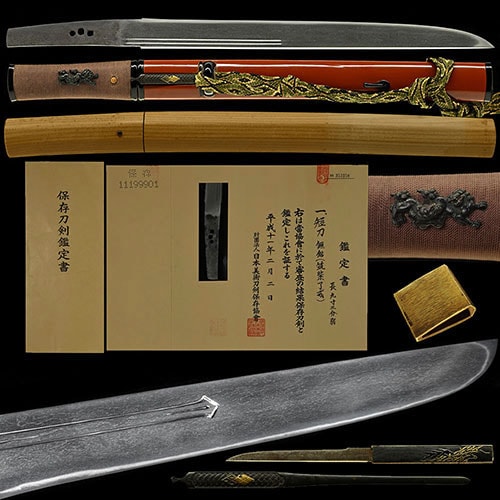
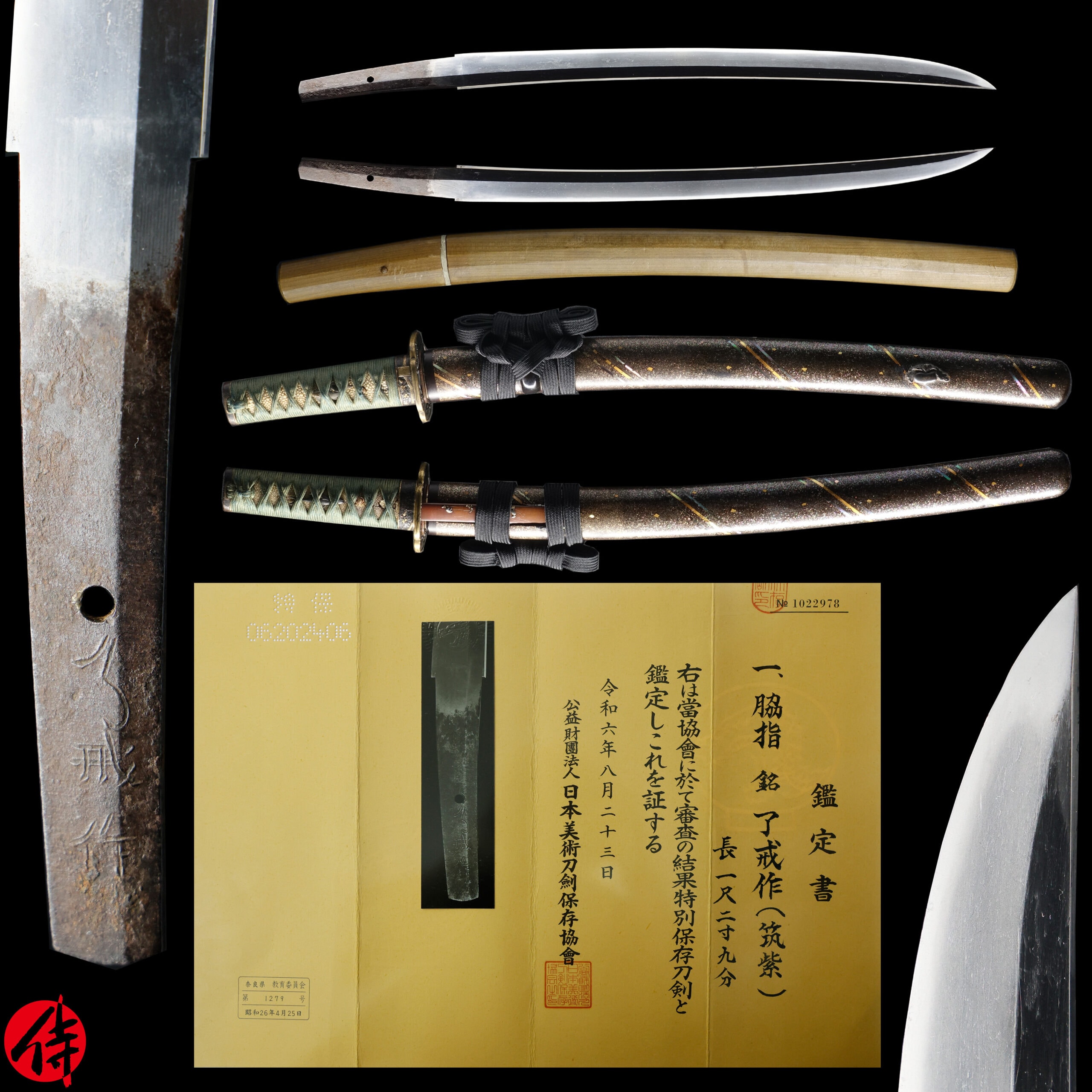
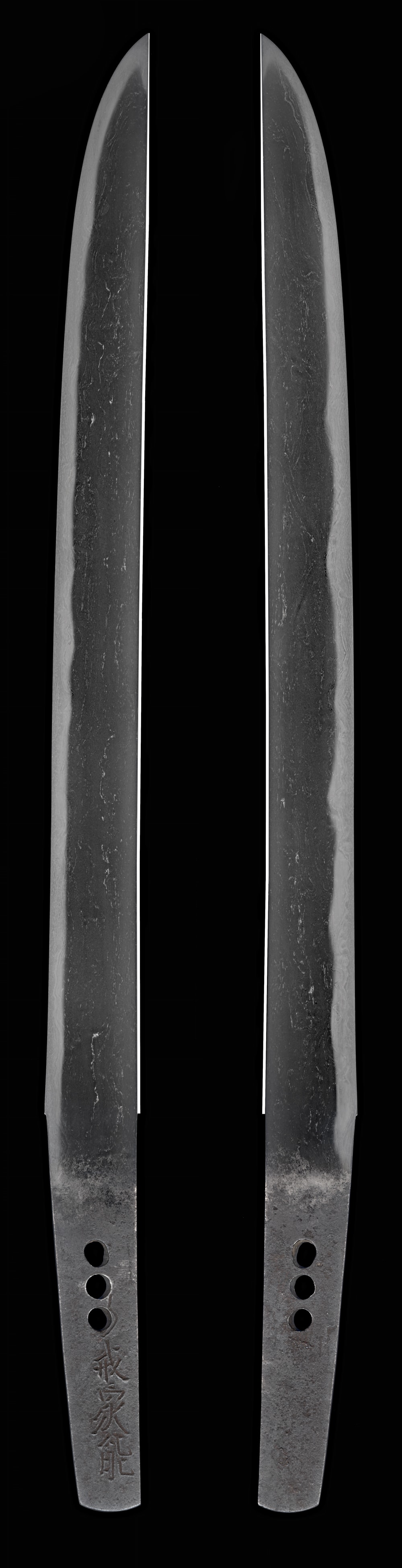
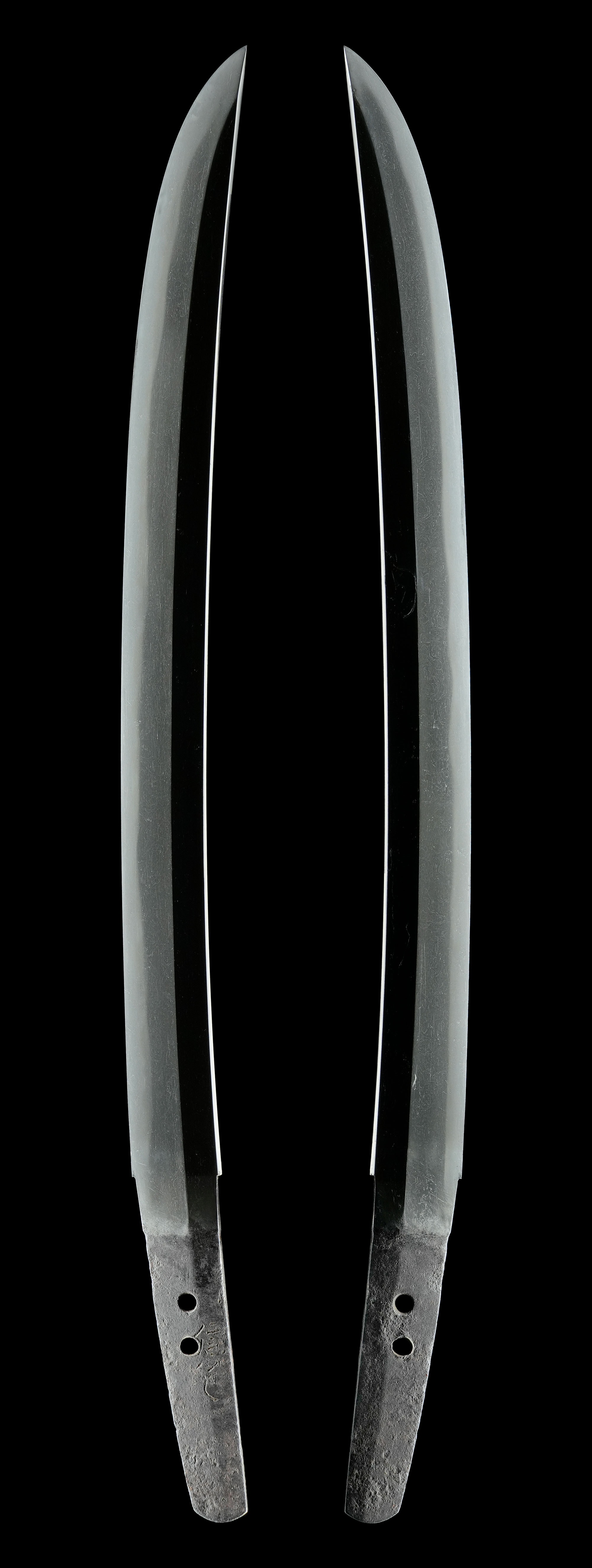
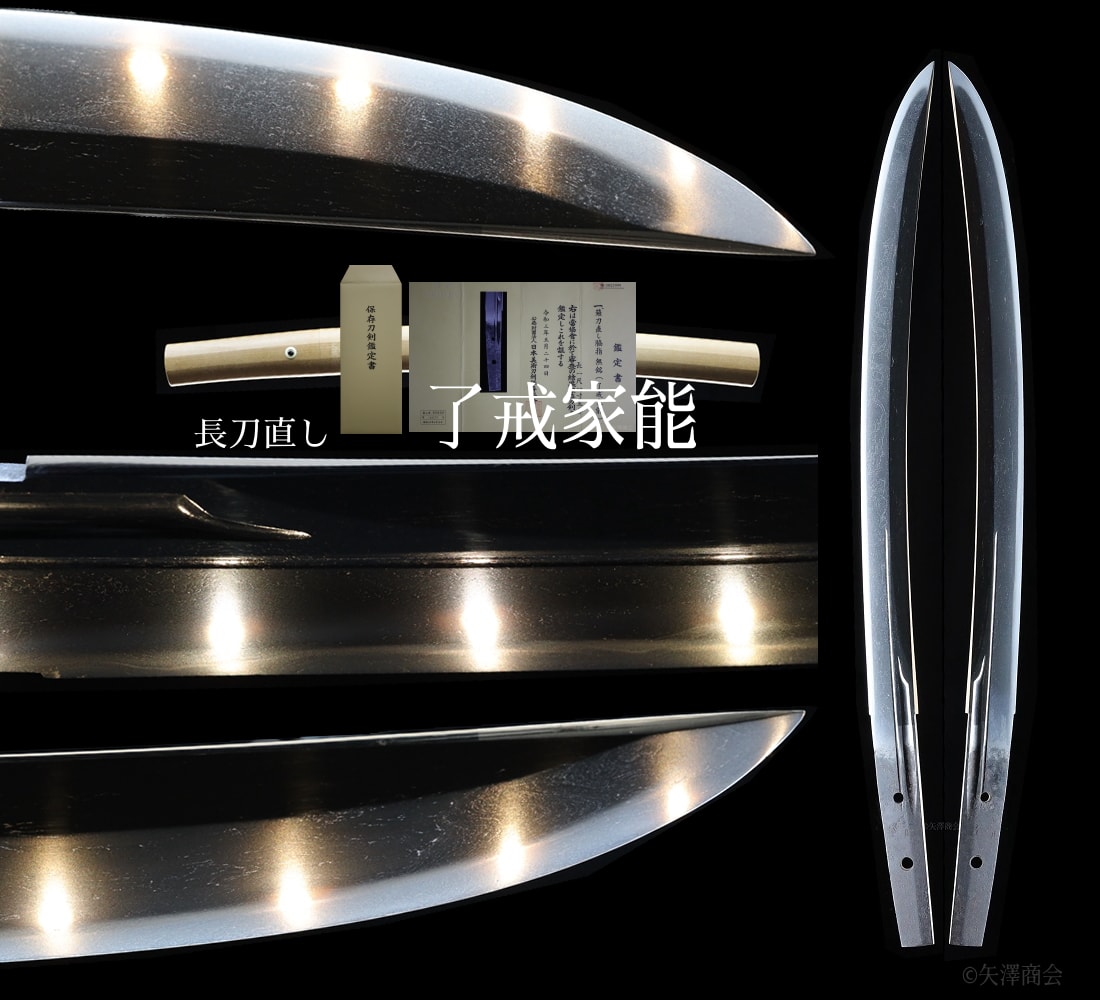
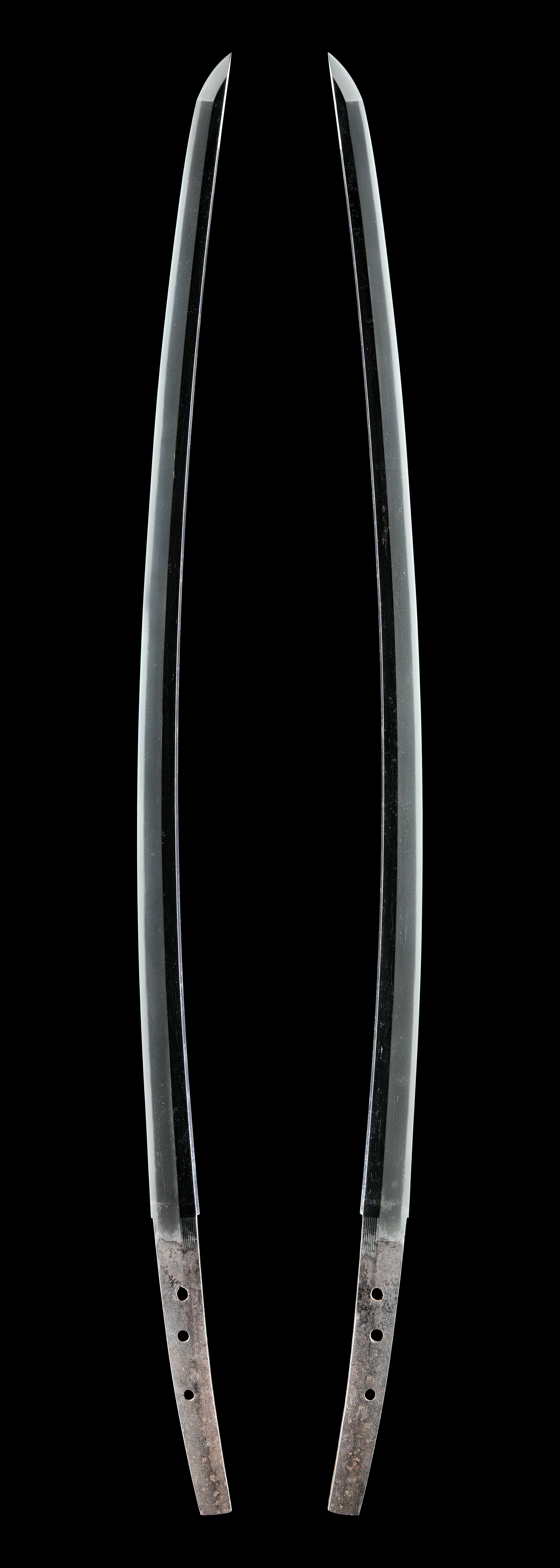
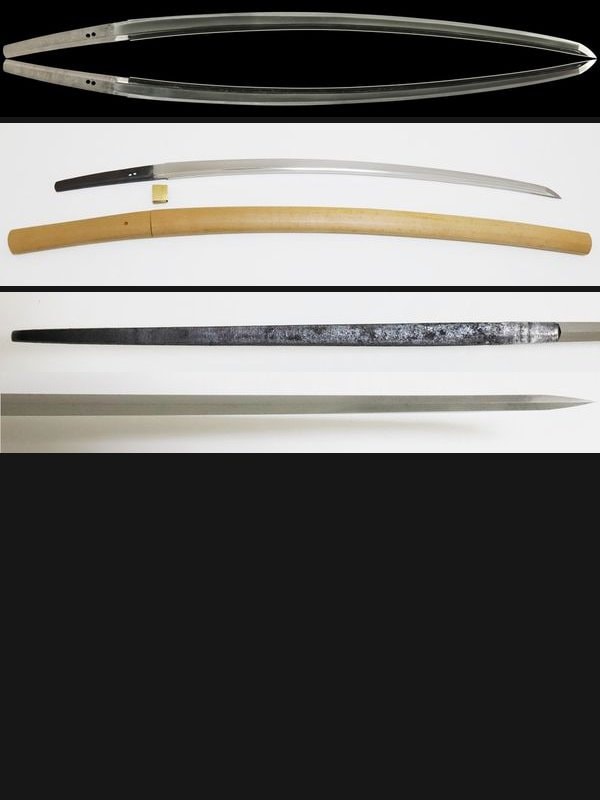
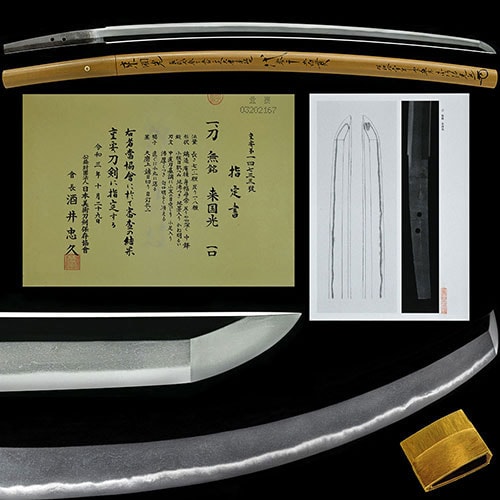
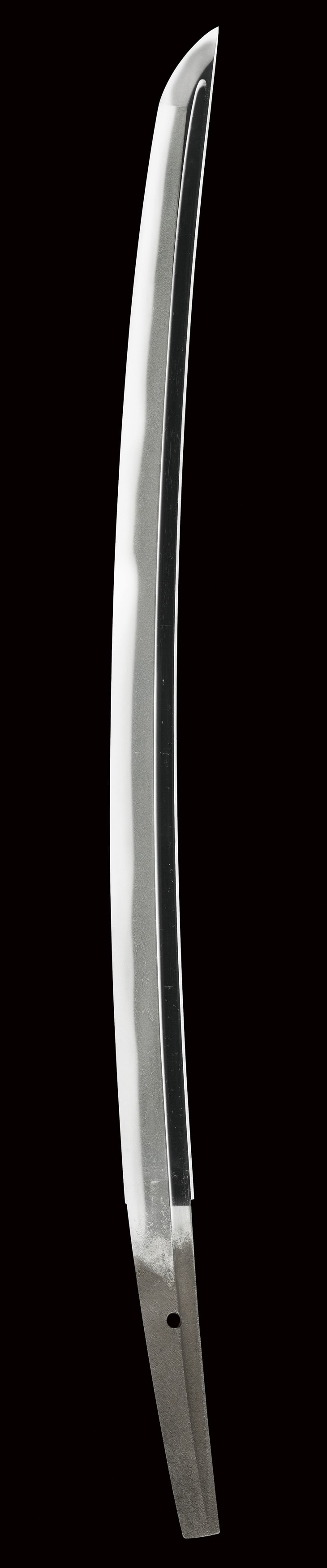
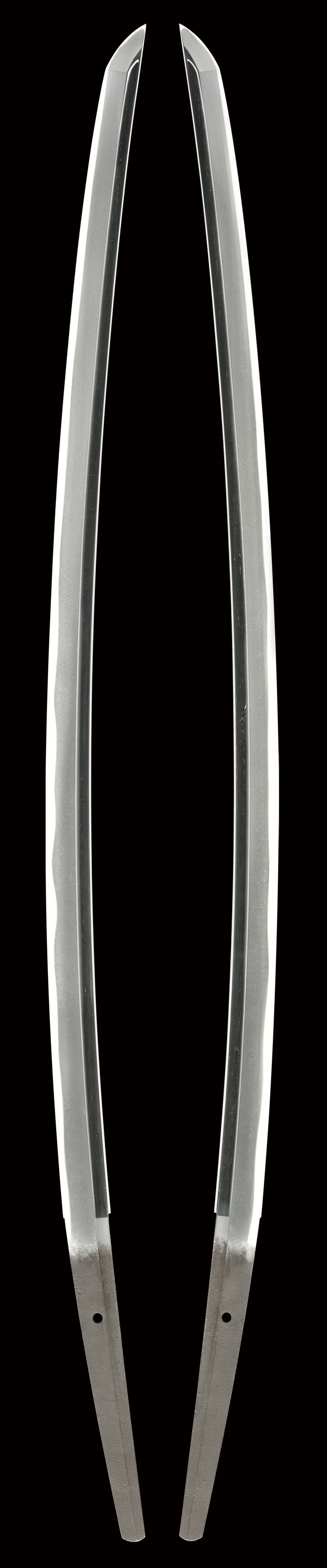
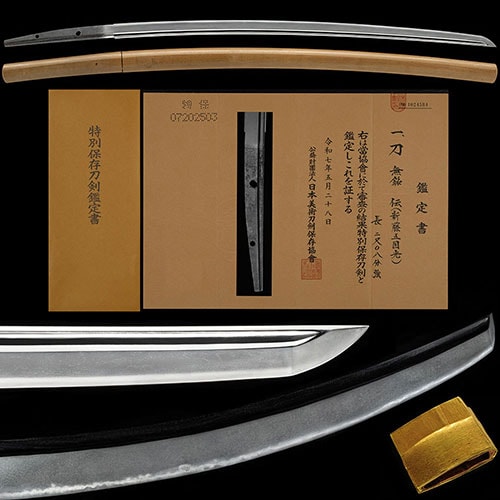
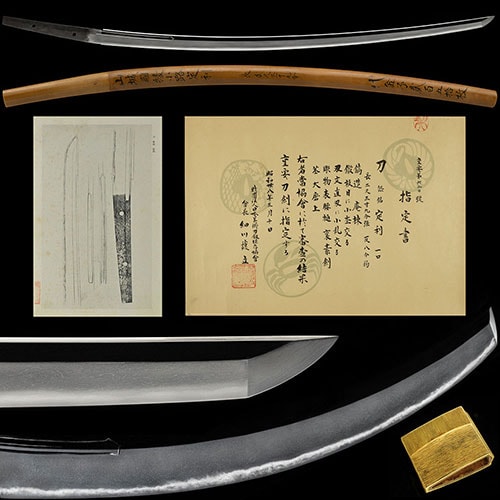
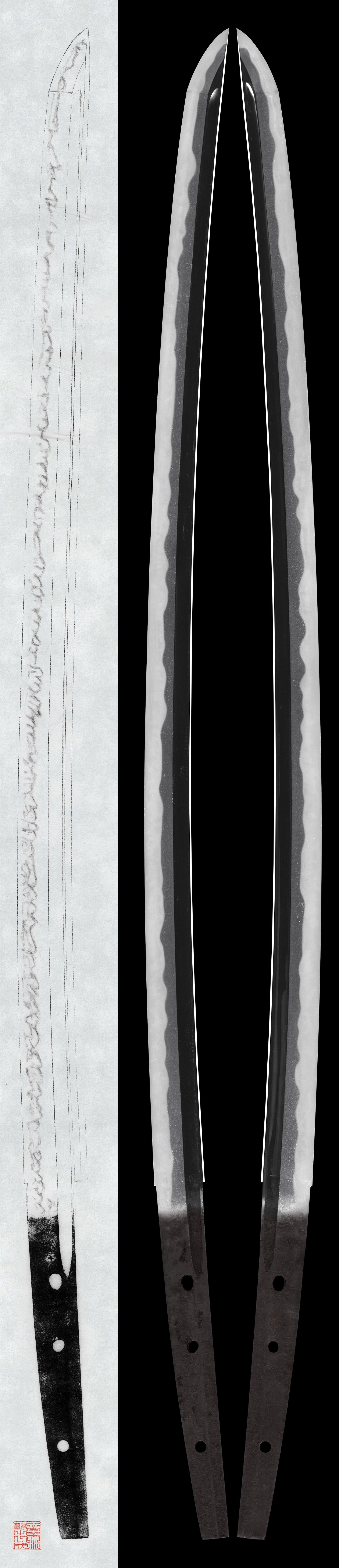
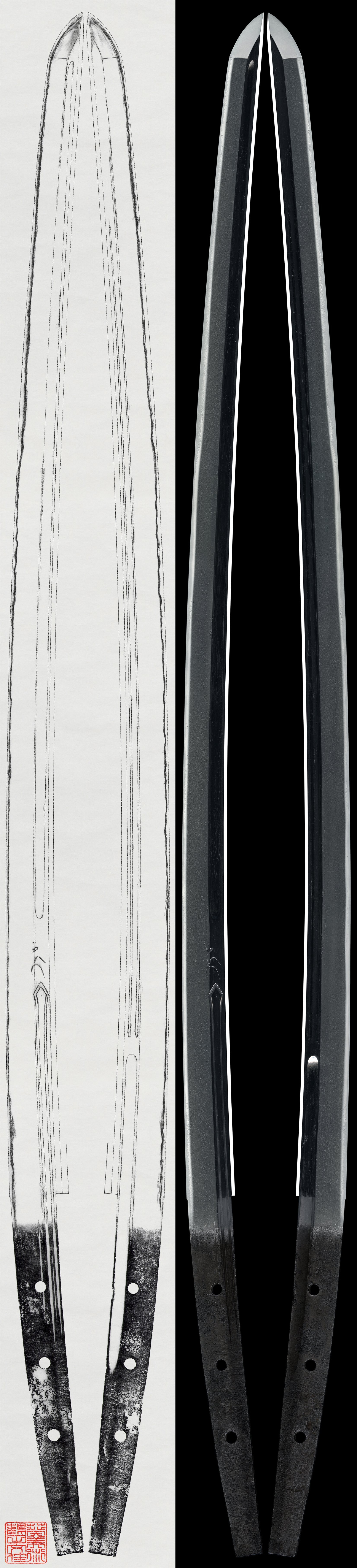
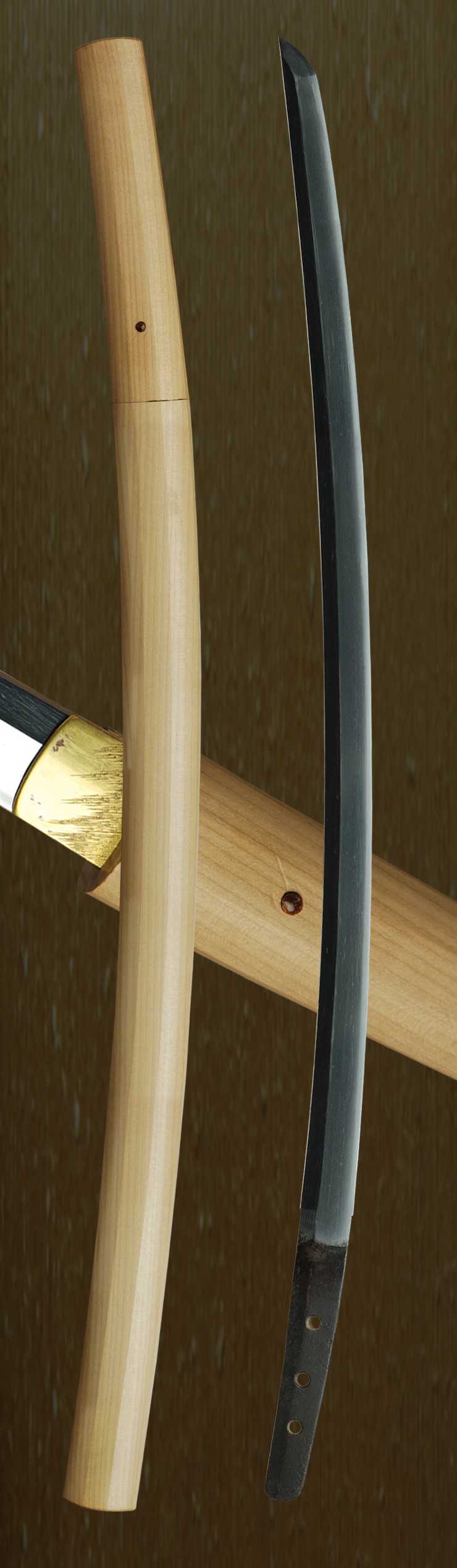
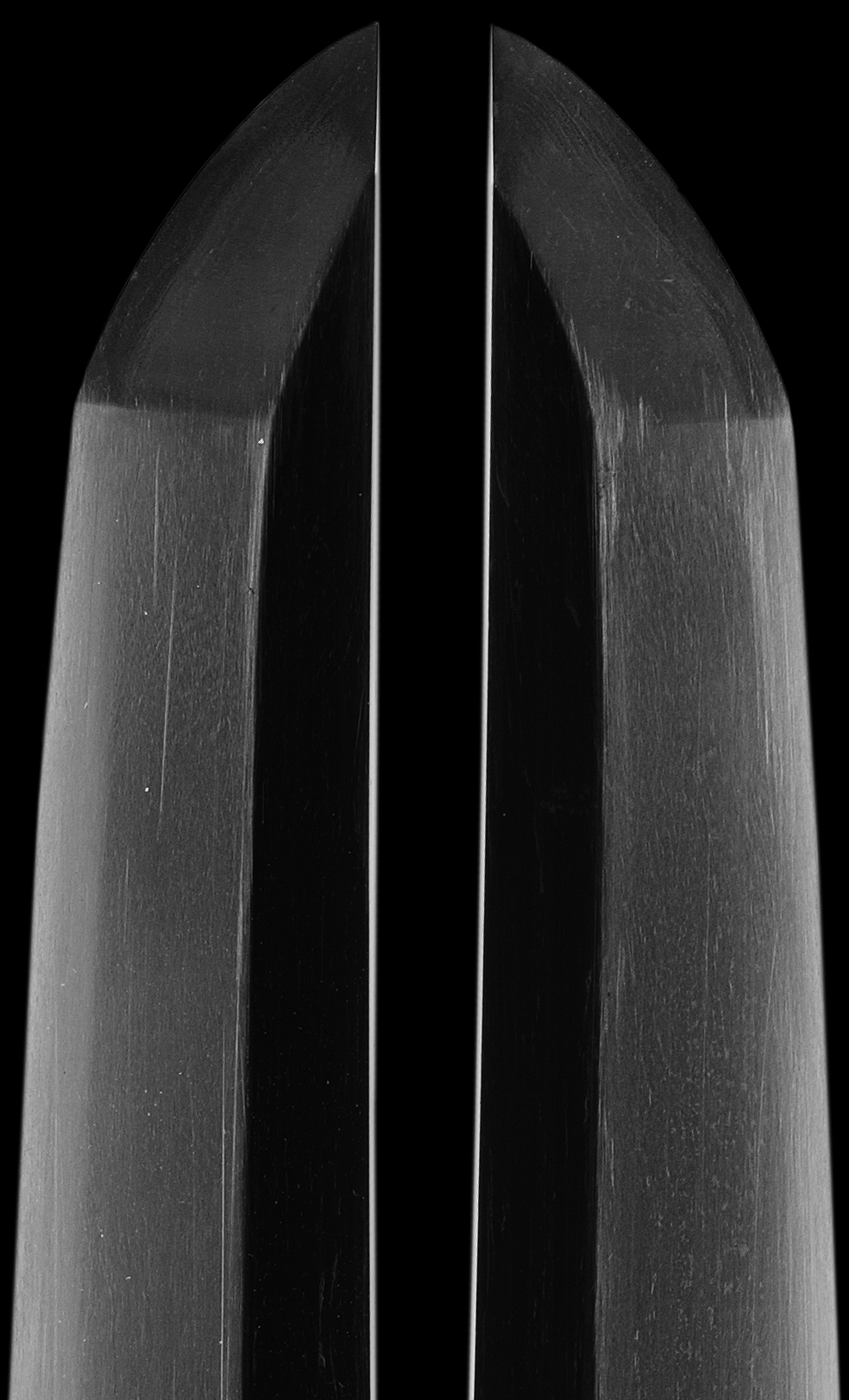
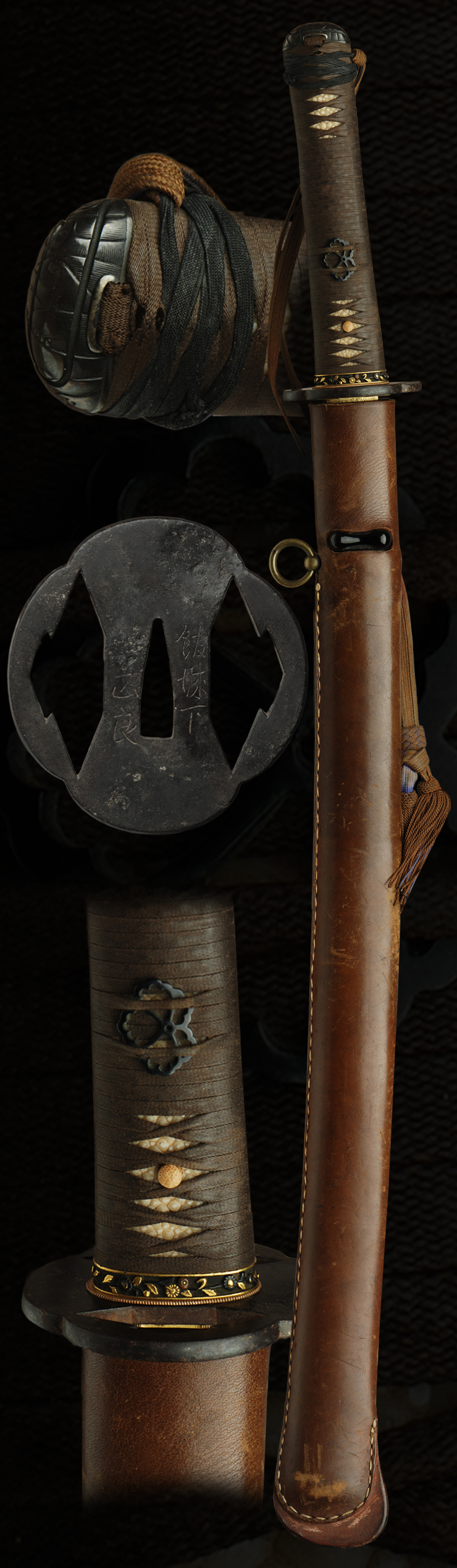
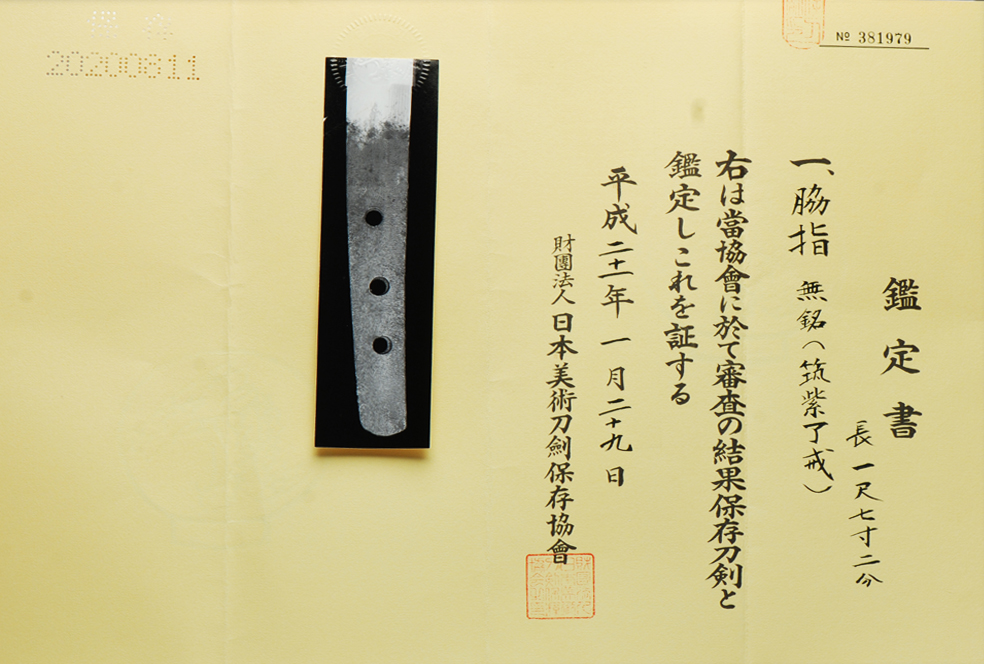
Please note this is a important school of swordsmiths. These swords are highly desirable for collecting and not commonly found.Tsukushi-Ryôkai (筑紫了戒)The Tsukushi-Ryôkai group goes back to the later Ryôkai smith Yoshisada (能定) who moved towards the end of the Nanbokuchô period from Kyôto to Usa (宇佐) which was located along the border between the provinces of Buzen and Bungo. His students and their students spread then from the beginning of the Muromachi period onwards across the northern provinces of Kyûshû, e.g. Chikuzen, Chikugo, and Buzen whereas they were summarized by referring to the old name for that region, Tsukushi. Most smiths of this group used Ryôkai as a trade name, signing it as prefix to their own name, for example “Ryôkai Yoshizane” (了戒能真), most of them sharing the character for “Yoshi” (能). Known individual smiths from that grou are Hideyoshi (秀能), Nobuyoshi (宣能), and Naoyoshi (直能), just to name a few. Most Tsukushi-Ryôkai works are of a rustic charme that is typical for provincial works of the Muromachi period and basically follow the stylistic roots of the group, which are to be found in the Ryôkai interpretation of the Yamashiro tradition. Although not displaying a highly sophisticated workmanship in general, Tsukushi-Ryôkai were held in high regards among Sengoku bushi because they enjoyed the reputation of being good and reliable weapons, and this applies to other contemporary Kyûshû swordsmith groups like that of the Dôtanuki School of Higo province and the Takada School of Bungo province.This is a fine example of the koto era Ryôkai blade. This sword was shortened to wakazashi size at 20 1 / 2′′ with 3 holes in the tang“.The sword is most likely from the late Nambokucho through the early Muramachi period. The hamon is a suguha with a hada of itame emulating the Yamashiro style.The blade is mounted in shirasaya with gold emalgamated habaki in an older polish. A fresh polish would greatly enhance this blade and highlight it true characteristics.The sword fittings are older and were mounted into WWII mounts with a leather cover over the original saya. Generally this was done with Katana not wakazashi. When wakazashi were mounted like this it indicates that it was more than likely used as a pilots sword. Aircraft pilots had wakazashi because of the size in there cockpit. Also a very interesting historic fact.The sword comes with a set of papers from the NBTHK attesting to the authenticity and validity of the sword Mei:MumeiDate:Koto EraNagasa:20.1/2 inchesSori:13.0 mmWidth at the ha-machi:24.9 mmWidth at the yokote:16.1 mmThickness at the mune-machi:6.9 mmConstruction:Shinogi zukuriMune:IoriNakago:O-suriageKitae:ItameHamon:SugubaBoshi:MaruCondition:Good older polish kantei-sho (鑑定書) No 381979 wakizashi, mumi: Tsukushi-Ryôkai (筑紫了戒)nagasa 1 shaku 7 sun 2 bu Migi wa tô-kyôkai ni oite shinsa no kekka, hozon-tôken to kantei-shi kore o shô-suru.(右は當協會に於て審査の結果保存刀剣と鑑定しこれを証する)Heisei nijûichinen ichigatsu nijûkunichi (平成二十一年一月二十九日)zaidan-hôjin (財團法人): Nihon Bijutsu Tôken Hozon Kyôkai (日本美術刀劍保存協會)Appraisalwakizashi, unsigned: Tsukushi Ryôkainagasa ~ 52.1 cm According to the result of the shinsa committee of our society we judged this work as authentic and designateit as hozon-tôken. January 29th 2009 [Foundation] NBTHK Subscribe for the Latest Updates!Join our mailing list to receive the latest News & Updates fromNihonto Antiques.SUBSCRIBEYou have Successfully Subscribed!Your email address will be kept private & will only be used to send updates from this site! MY INVESTMENT -30% = my bottom lineKo Nio Nambokucho katana $10,500 $7,350Takenori katana $6,500 4,550Akitomo katana $,4,800 3,360Chikushi Ryokai wakizashi $3,600 2,520Miyaguchi Yasuhiro $7,800 5,460Rai Nobuyoshi katana $12,250 8,575Rai Nobuyoshi wakizashi $6,000 4,200Zenjo $10,000 7,000Kunitake $9,226 6,450
 NihontoWatch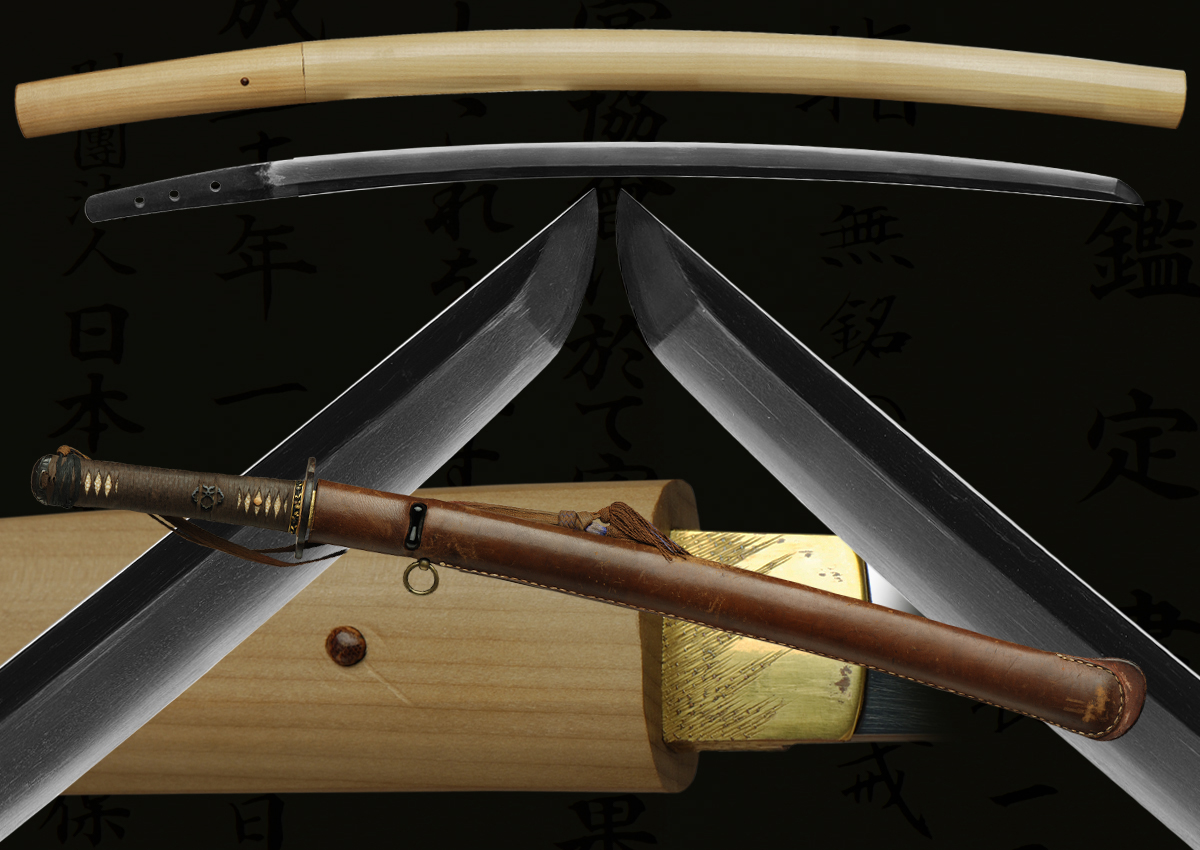

山城伝 · 山城
現在15点販売中
了戒派は鎌倉時代末期、京都山城に興った来の分派である。祖の了戒は古来来国俊の子あるいは門人と伝えられるが、現存する作刀に正応・永仁・嘉元・延慶の紀年銘があって来国俊とほぼ同年代に活躍したことが知られ、説明書はむしろ相弟子、あるいは二字国俊の子と見るのが自然とする。俗名を九郎左衛門尉と称し、子の久信が二代を継ぎ、嘉元二年の長銘年紀の太刀によってその実在と父子の関係が裏づけられる。来の山城風を一段やわらげた手をもって一門を率い、その名は下って数代続き、南北朝より室町にかけては九州に豊後・豊前の筑紫了戒が京の系統より分かれ出た。母体の来から枝分かれしながら、地刃に大和の柾気と相州風の沸の働きをあわせ持つところに一派の位置があり、その流れはのちの信国へと展開してゆく。 一派の作風は穏やかな山城の直刃を本領とする。鍛えは板目あるいは小板目がつみ、しばしば柾に流れてやや肌立ちごころとなり、地沸微塵によくつき、地景細かに入って、一派特有の白け映りが立つ。これが了戒系を母体の来から分かつ第一の見どころで、来の明るい乱れ映り・地斑映りに対し、了戒の映りはより淡く乾いた白けを呈する。刃文は穏やかな中直刃・細直刃を基調とし、処々小丁子・小互の目・小乱れを交え、小足・葉入り、京逆足を見せることもある。見どころは匂口にあって、来国俊より一段締まり、刃中淋しく、部分的にうるみごころを呈し、その内に金筋・砂流し細かにかかって刃縁僅かにほつれ、喰違刃を見せる。帽子は直ぐに小丸、しばしば掃きかける。来とは一見紛れるが、やわらかな地刃・柾気・白け・うるむ匂口によって極まり、姉妹の延寿が丸味の大きい大丸に返るのに対し、了戒は直ぐに小丸へ結んでその直刃はうるむ点で明快に分かれる。祖の了戒は藤代の極めで上作、二代久信は上上作に位し、いずれも父祖の手をほとんど変えずに継いで一派の典型を遺した。 遺例は二つの相に読み分けられる。在銘作は細身の生ぶ太刀と短刀に、棟寄りの第一目釘孔上へ大振りの二字銘「了戒」あるいは三字銘「了久信」を切り、太刀は腰反り高く小鋒に、短刀は内反りで重ね厚く、表に梵字・素剣、裏に護摩箸を彫るものがあって、いかにも鎌倉末期の京の典雅を示す。いま一つの相は大磨上無銘の刀で、輪反りと京風は一見来を想わせるが、締まって沈みうるむ匂口・流れる柾・白けによって了戒と極まる。久信の俳名を示す嘉元の年紀太刀は、かつて父単独の作と読まれた一口が実は父子の合作であることを明らかにした資料として重く、在銘の子は繰り返し極めて稀である。伝来には秋田了戒の短刀をはじめ、宮本武蔵佩刀との伝えを残す太刀、諫早・伊達・前田の各家を経た作があり、指定作の多くは東京国立博物館・佐野美術館・物部神社・徳川美術館などの公私の旧蔵に蔵される。市に現れるのは稀で、わけても在銘生ぶの了戒・久信の作は、京鎌倉物を蒐める者が接しうる最も稀な部類に属し、出会いには時を要する。 詳しく見る →
銘が正しい、または無銘でも年代・国・系統を確実に指摘できる、保存に値する真正の作と鑑定されたものです。
日本美術刀剣保存協会(NBTHK)は、1948年に設立され、文化庁の監督を受ける公益財団法人で、東京・刀剣博物館に本部を置きます。専門の審査員が出品作を直接審査し、美術的・歴史的価値に応じた鑑定書を発行します。NBTHKの鑑定書は、日本刀および刀装具の真正性を示す最も広く認知された基準です。
NBTHK公式サイトWe offer a 48 hour inspection period for all Antique items shipped within the United States only. If the item is not to your satisfaction, we will gladly refund your money less any shipping and handling fees. All sales are final after the 48 hour inspection period. Please note that all discounted items are a final sale and not returnable.
Please note this is a important school of swordsmiths. These swords are highly desirable for collecting and not commonly found.Tsukushi-Ryôkai (筑紫了戒)The Tsukushi-Ryôkai group goes back to the later Ryôkai smith Yoshisada (能定) who moved towards the end of the Nanbokuchô period from Kyôto to Usa (宇佐) which was located along the border between the provinces of Buzen and Bungo. His students and their students spread then from the beginning of the Muromachi period onwards across the northern provinces of Kyûshû, e.g. Chikuzen, Chikugo, and Buzen whereas they were summarized by referring to the old name for that region, Tsukushi. Most smiths of this group used Ryôkai as a trade name, signing it as prefix to their own name, for example “Ryôkai Yoshizane” (了戒能真), most of them sharing the character for “Yoshi” (能). Known individual smiths from that grou are Hideyoshi (秀能), Nobuyoshi (宣能), and Naoyoshi (直能), just to name a few. Most Tsukushi-Ryôkai works are of a rustic charme that is typical for provincial works of the Muromachi period and basically follow the stylistic roots of the group, which are to be found in the Ryôkai interpretation of the Yamashiro tradition. Although not displaying a highly sophisticated workmanship in general, Tsukushi-Ryôkai were held in high regards among Sengoku bushi because they enjoyed the reputation of being good and reliable weapons, and this applies to other contemporary Kyûshû swordsmith groups like that of the Dôtanuki School of Higo province and the Takada School of Bungo province.This is a fine example of the koto era Ryôkai blade. This sword was shortened to wakazashi size at 20 1 / 2′′ with 3 holes in the tang“.The sword is most likely from the late Nambokucho through the early Muramachi period. The hamon is a suguha with a hada of itame emulating the Yamashiro style.The blade is mounted in shirasaya with gold emalgamated habaki in an older polish. A fresh polish would greatly enhance this blade and highlight it true characteristics.The sword fittings are older and were mounted into WWII mounts with a leather cover over the original saya. Generally this was done with Katana not wakazashi. When wakazashi were mounted like this it indicates that it was more than likely used as a pilots sword. Aircraft pilots had wakazashi because of the size in there cockpit. Also a very interesting historic fact.The sword comes with a set of papers from the NBTHK attesting to the authenticity and validity of the sword Mei:MumeiDate:Koto EraNagasa:20.1/2 inchesSori:13.0 mmWidth at the ha-machi:24.9 mmWidth at the yokote:16.1 mmThickness at the mune-machi:6.9 mmConstruction:Shinogi zukuriMune:IoriNakago:O-suriageKitae:ItameHamon:SugubaBoshi:MaruCondition:Good older polish kantei-sho (鑑定書) No 381979 wakizashi, mumi: Tsukushi-Ryôkai (筑紫了戒)nagasa 1 shaku 7 sun 2 bu Migi wa tô-kyôkai ni oite shinsa no kekka, hozon-tôken to kantei-shi kore o shô-suru.(右は當協會に於て審査の結果保存刀剣と鑑定しこれを証する)Heisei nijûichinen ichigatsu nijûkunichi (平成二十一年一月二十九日)zaidan-hôjin (財團法人): Nihon Bijutsu Tôken Hozon Kyôkai (日本美術刀劍保存協會)Appraisalwakizashi, unsigned: Tsukushi Ryôkainagasa ~ 52.1 cm According to the result of the shinsa committee of our society we judged this work as authentic and designateit as hozon-tôken. January 29th 2009 [Foundation] NBTHK Subscribe for the Latest Updates!Join our mailing list to receive the latest News & Updates fromNihonto Antiques.SUBSCRIBEYou have Successfully Subscribed!Your email address will be kept private & will only be used to send updates from this site! MY INVESTMENT -30% = my bottom lineKo Nio Nambokucho katana $10,500 $7,350Takenori katana $6,500 4,550Akitomo katana $,4,800 3,360Chikushi Ryokai wakizashi $3,600 2,520Miyaguchi Yasuhiro $7,800 5,460Rai Nobuyoshi katana $12,250 8,575Rai Nobuyoshi wakizashi $6,000 4,200Zenjo $10,000 7,000Kunitake $9,226 6,450
NihontoWatch山城伝 · 山城
現在15点販売中
了戒派は鎌倉時代末期、京都山城に興った来の分派である。祖の了戒は古来来国俊の子あるいは門人と伝えられるが、現存する作刀に正応・永仁・嘉元・延慶の紀年銘があって来国俊とほぼ同年代に活躍したことが知られ、説明書はむしろ相弟子、あるいは二字国俊の子と見るのが自然とする。俗名を九郎左衛門尉と称し、子の久信が二代を継ぎ、嘉元二年の長銘年紀の太刀によってその実在と父子の関係が裏づけられる。来の山城風を一段やわらげた手をもって一門を率い、その名は下って数代続き、南北朝より室町にかけては九州に豊後・豊前の筑紫了戒が京の系統より分かれ出た。母体の来から枝分かれしながら、地刃に大和の柾気と相州風の沸の働きをあわせ持つところに一派の位置があり、その流れはのちの信国へと展開してゆく。 一派の作風は穏やかな山城の直刃を本領とする。鍛えは板目あるいは小板目がつみ、しばしば柾に流れてやや肌立ちごころとなり、地沸微塵によくつき、地景細かに入って、一派特有の白け映りが立つ。これが了戒系を母体の来から分かつ第一の見どころで、来の明るい乱れ映り・地斑映りに対し、了戒の映りはより淡く乾いた白けを呈する。刃文は穏やかな中直刃・細直刃を基調とし、処々小丁子・小互の目・小乱れを交え、小足・葉入り、京逆足を見せることもある。見どころは匂口にあって、来国俊より一段締まり、刃中淋しく、部分的にうるみごころを呈し、その内に金筋・砂流し細かにかかって刃縁僅かにほつれ、喰違刃を見せる。帽子は直ぐに小丸、しばしば掃きかける。来とは一見紛れるが、やわらかな地刃・柾気・白け・うるむ匂口によって極まり、姉妹の延寿が丸味の大きい大丸に返るのに対し、了戒は直ぐに小丸へ結んでその直刃はうるむ点で明快に分かれる。祖の了戒は藤代の極めで上作、二代久信は上上作に位し、いずれも父祖の手をほとんど変えずに継いで一派の典型を遺した。 遺例は二つの相に読み分けられる。在銘作は細身の生ぶ太刀と短刀に、棟寄りの第一目釘孔上へ大振りの二字銘「了戒」あるいは三字銘「了久信」を切り、太刀は腰反り高く小鋒に、短刀は内反りで重ね厚く、表に梵字・素剣、裏に護摩箸を彫るものがあって、いかにも鎌倉末期の京の典雅を示す。いま一つの相は大磨上無銘の刀で、輪反りと京風は一見来を想わせるが、締まって沈みうるむ匂口・流れる柾・白けによって了戒と極まる。久信の俳名を示す嘉元の年紀太刀は、かつて父単独の作と読まれた一口が実は父子の合作であることを明らかにした資料として重く、在銘の子は繰り返し極めて稀である。伝来には秋田了戒の短刀をはじめ、宮本武蔵佩刀との伝えを残す太刀、諫早・伊達・前田の各家を経た作があり、指定作の多くは東京国立博物館・佐野美術館・物部神社・徳川美術館などの公私の旧蔵に蔵される。市に現れるのは稀で、わけても在銘生ぶの了戒・久信の作は、京鎌倉物を蒐める者が接しうる最も稀な部類に属し、出会いには時を要する。 詳しく見る →
銘が正しい、または無銘でも年代・国・系統を確実に指摘できる、保存に値する真正の作と鑑定されたものです。
日本美術刀剣保存協会(NBTHK)は、1948年に設立され、文化庁の監督を受ける公益財団法人で、東京・刀剣博物館に本部を置きます。専門の審査員が出品作を直接審査し、美術的・歴史的価値に応じた鑑定書を発行します。NBTHKの鑑定書は、日本刀および刀装具の真正性を示す最も広く認知された基準です。
NBTHK公式サイトWe offer a 48 hour inspection period for all Antique items shipped within the United States only. If the item is not to your satisfaction, we will gladly refund your money less any shipping and handling fees. All sales are final after the 48 hour inspection period. Please note that all discounted items are a final sale and not returnable.