応仁の乱が足利の体制を砕いた後、戦国の一世紀はほとんどすべての国を武装させた。この時代は選ぶ目に報いる。並の作は多いが、その傍らには第一級の注文打ちが立っている。
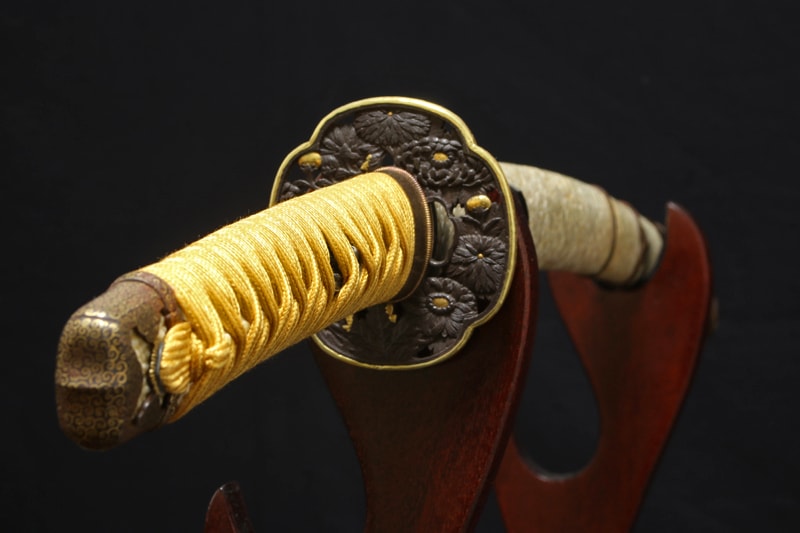
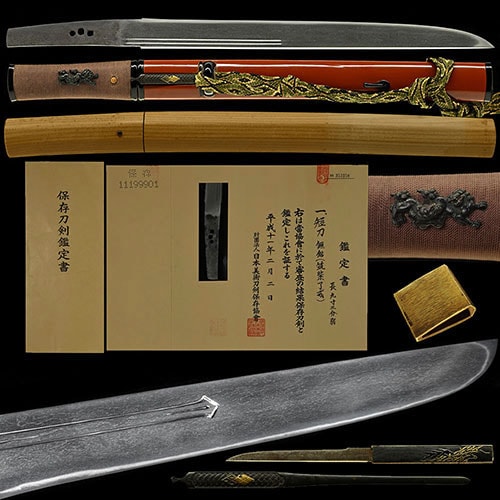
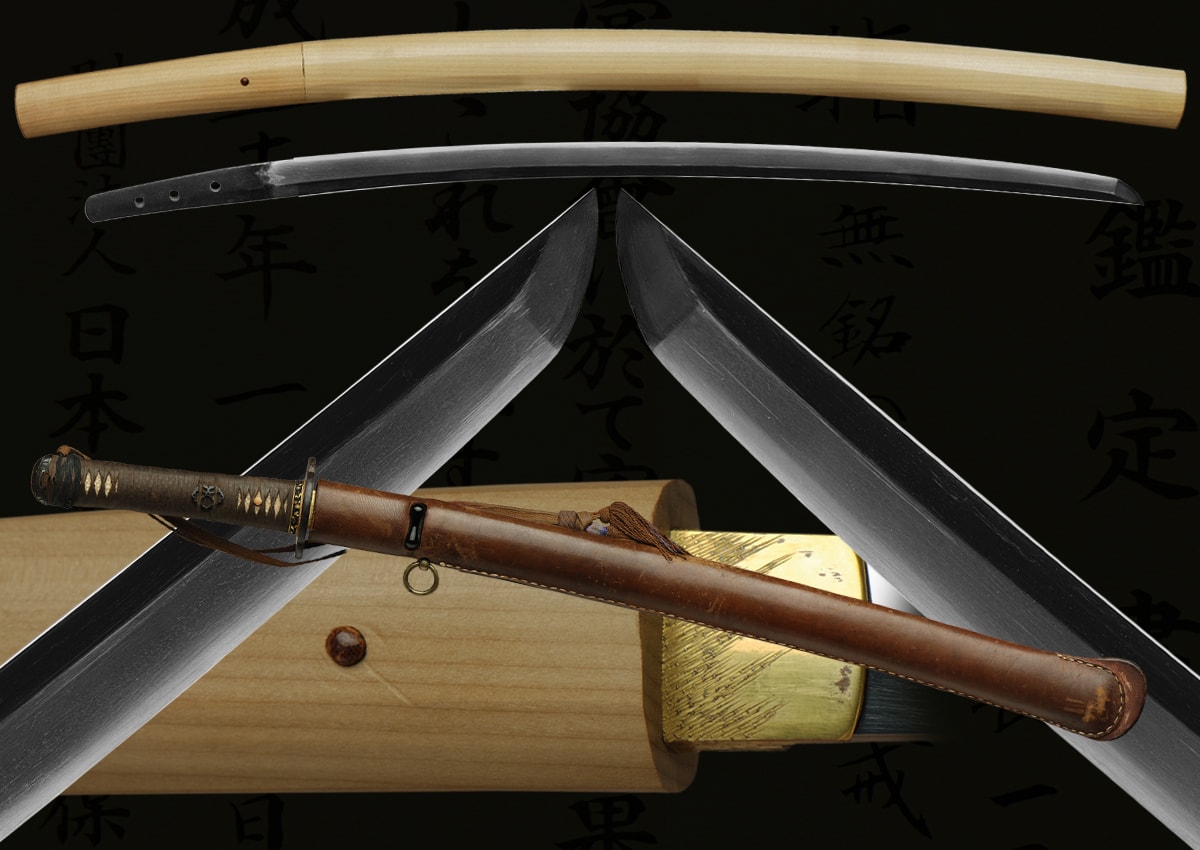
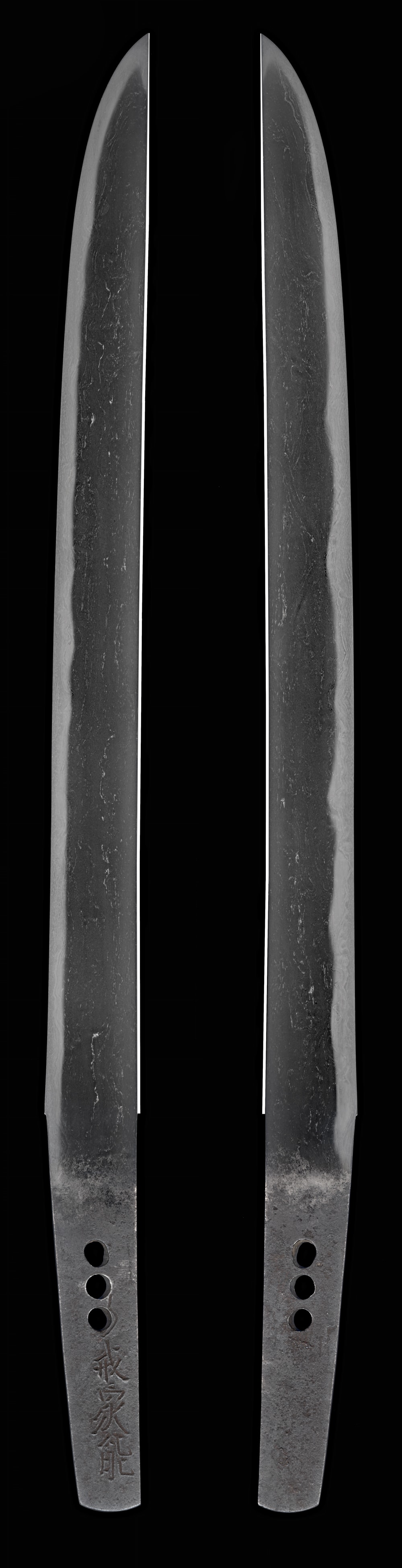
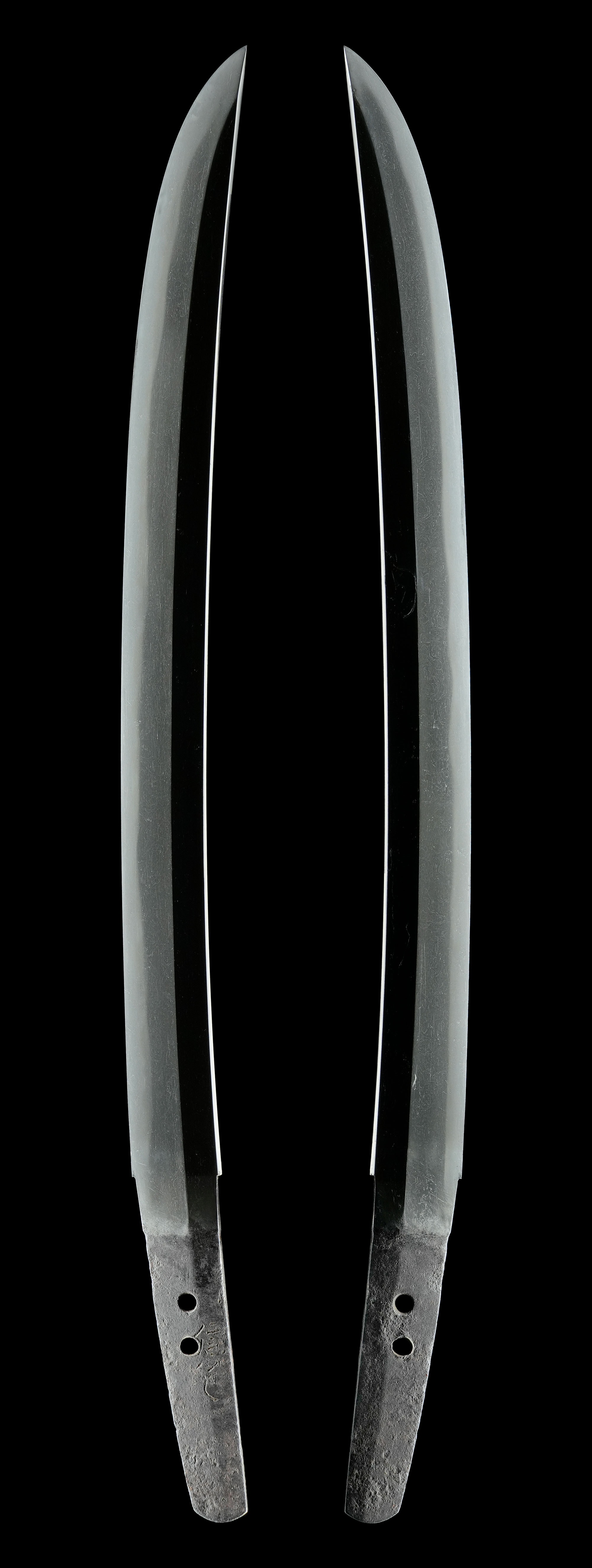
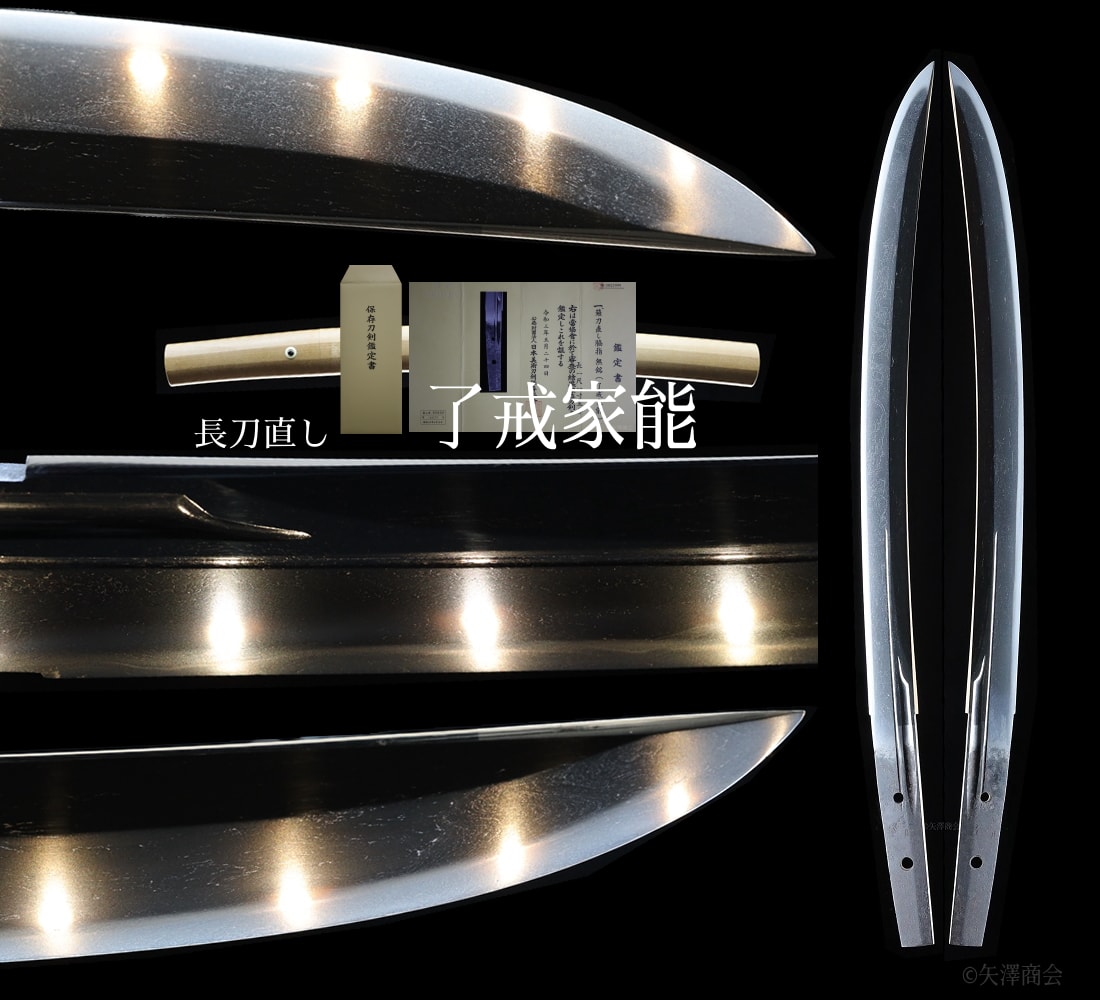
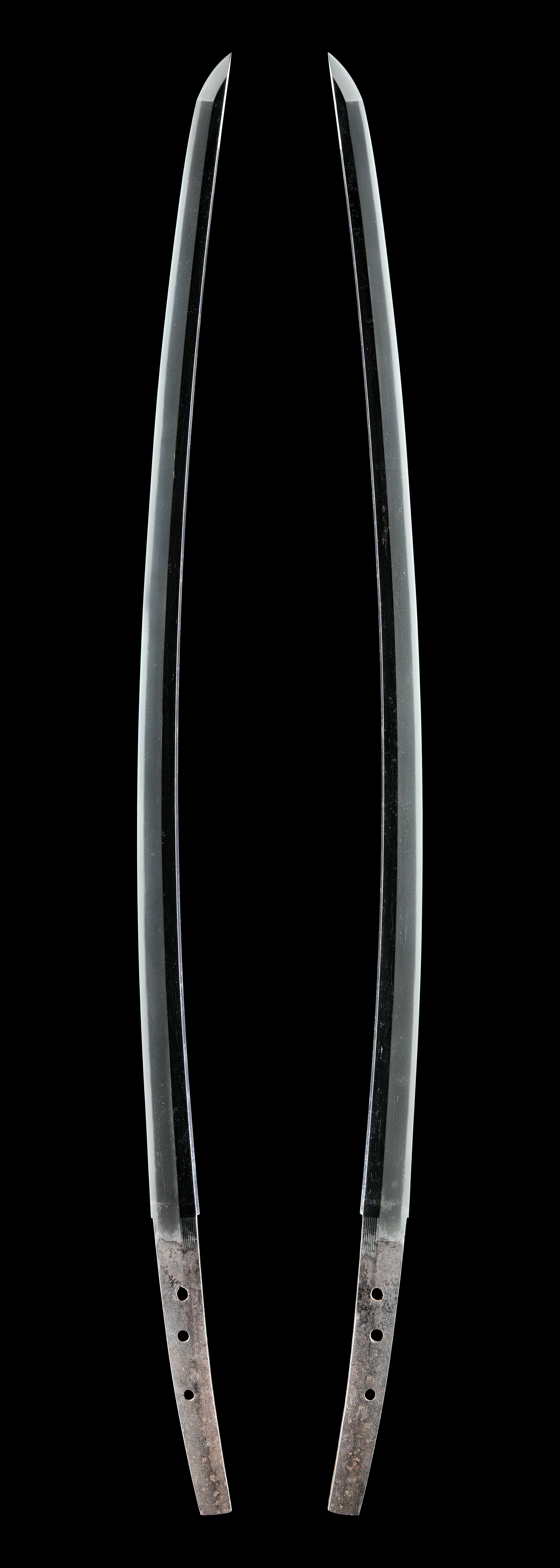
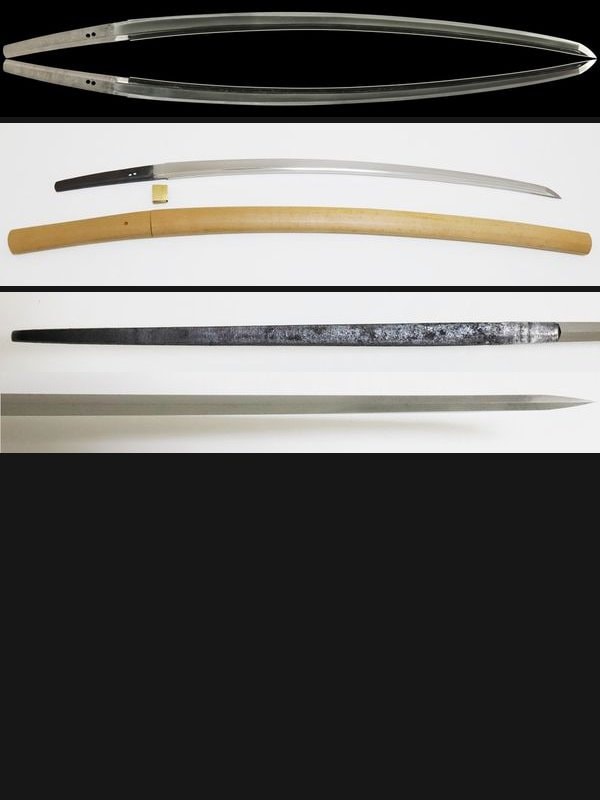
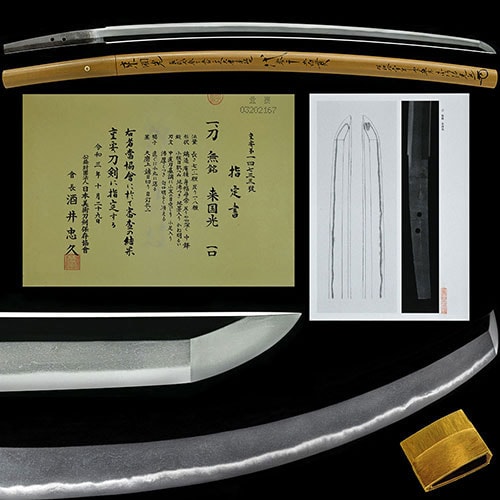
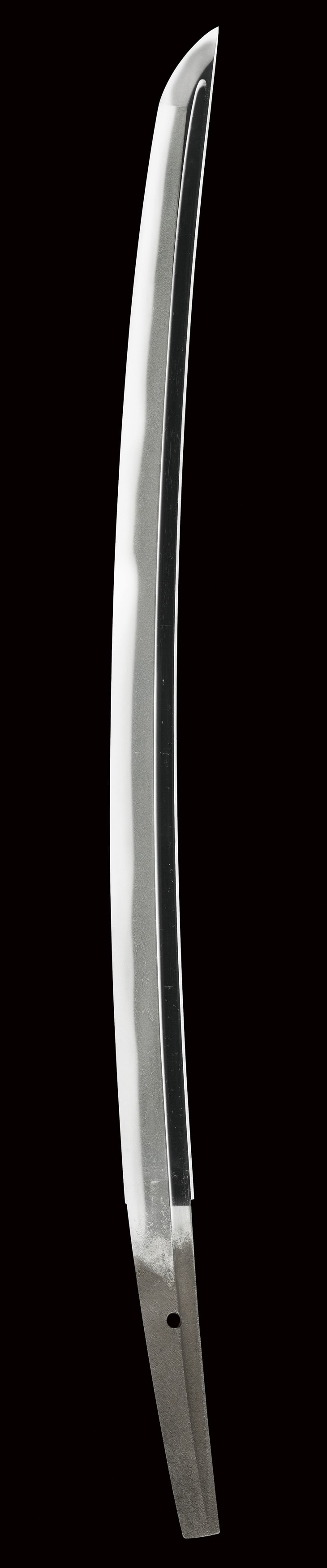
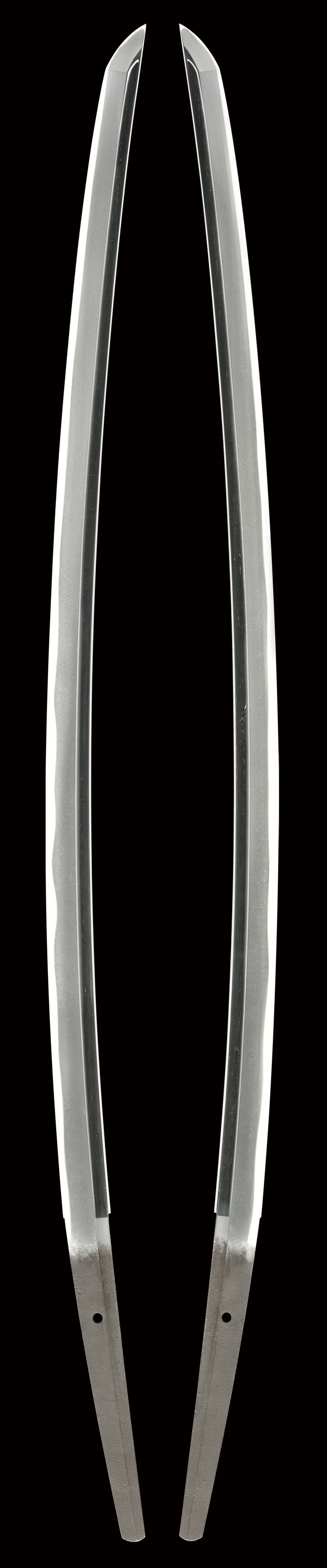
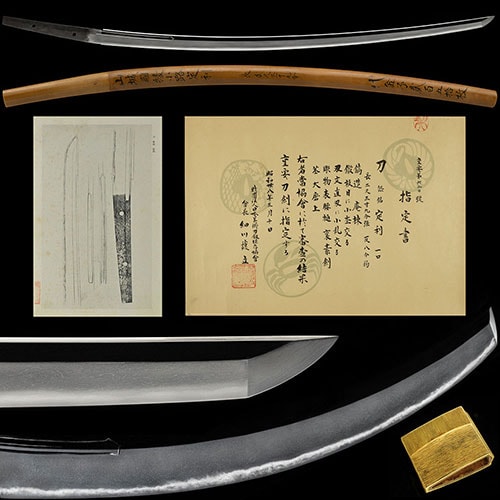
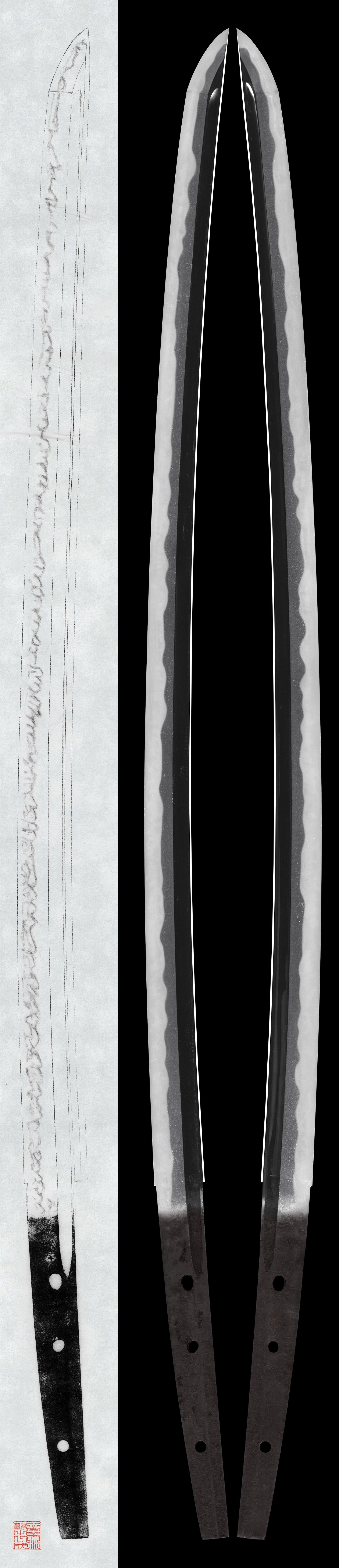
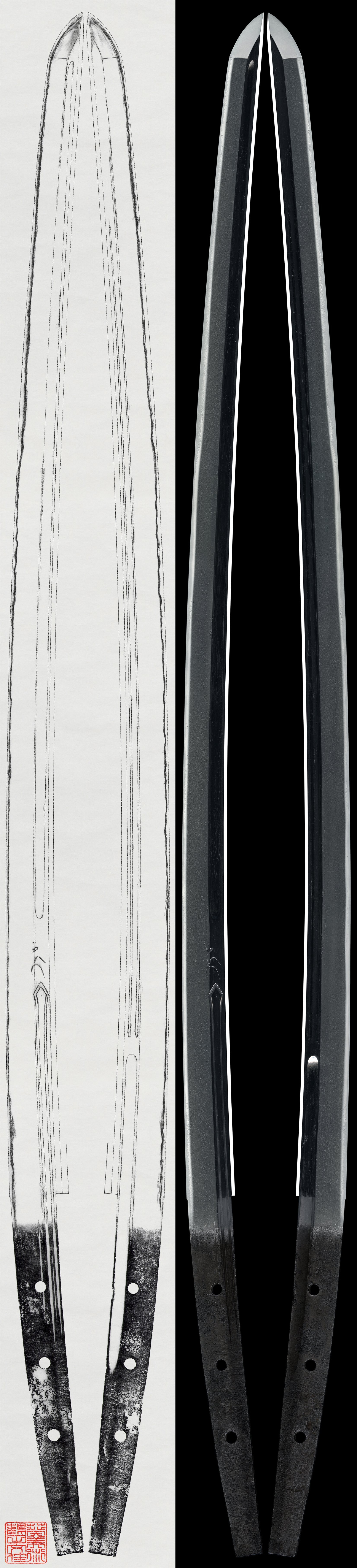
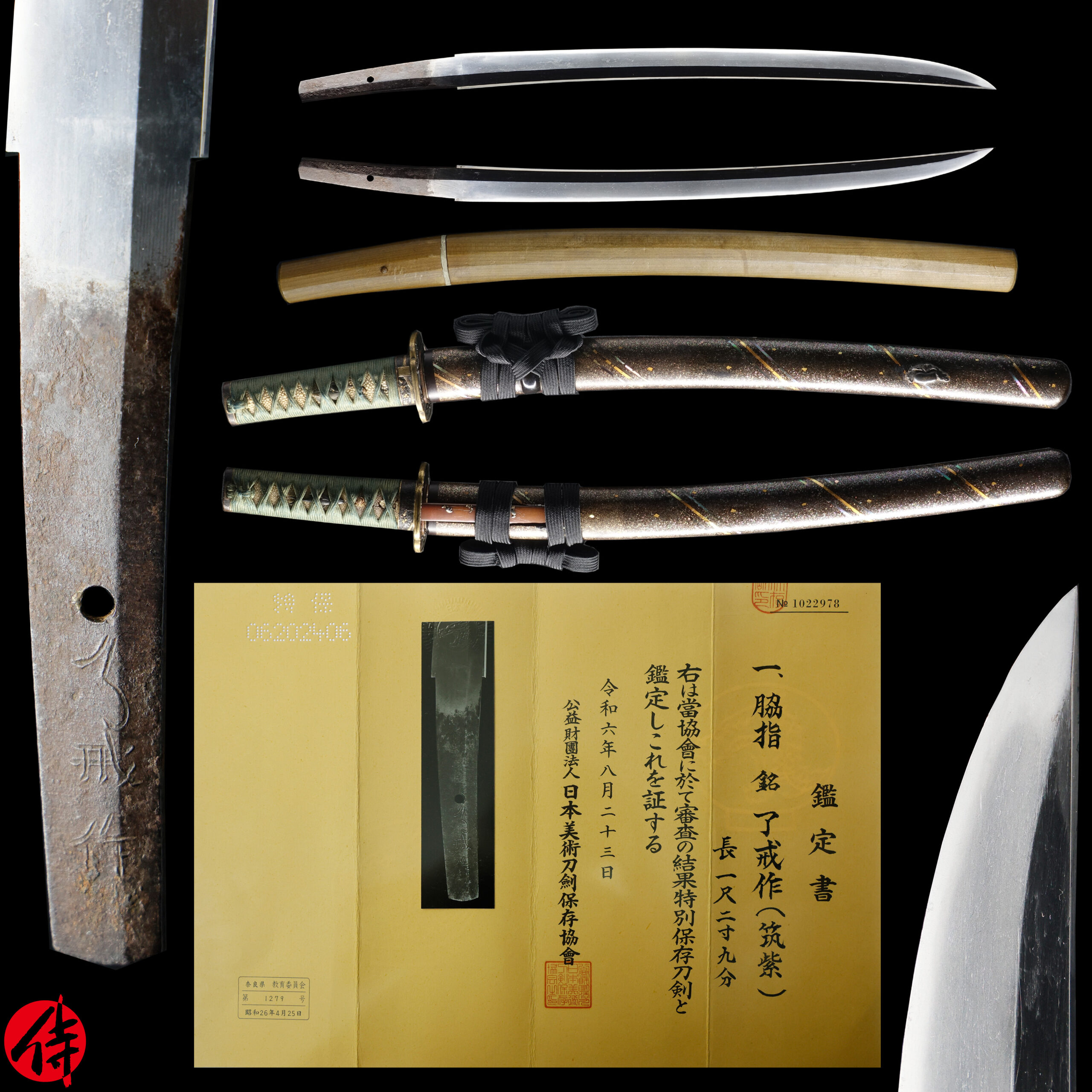
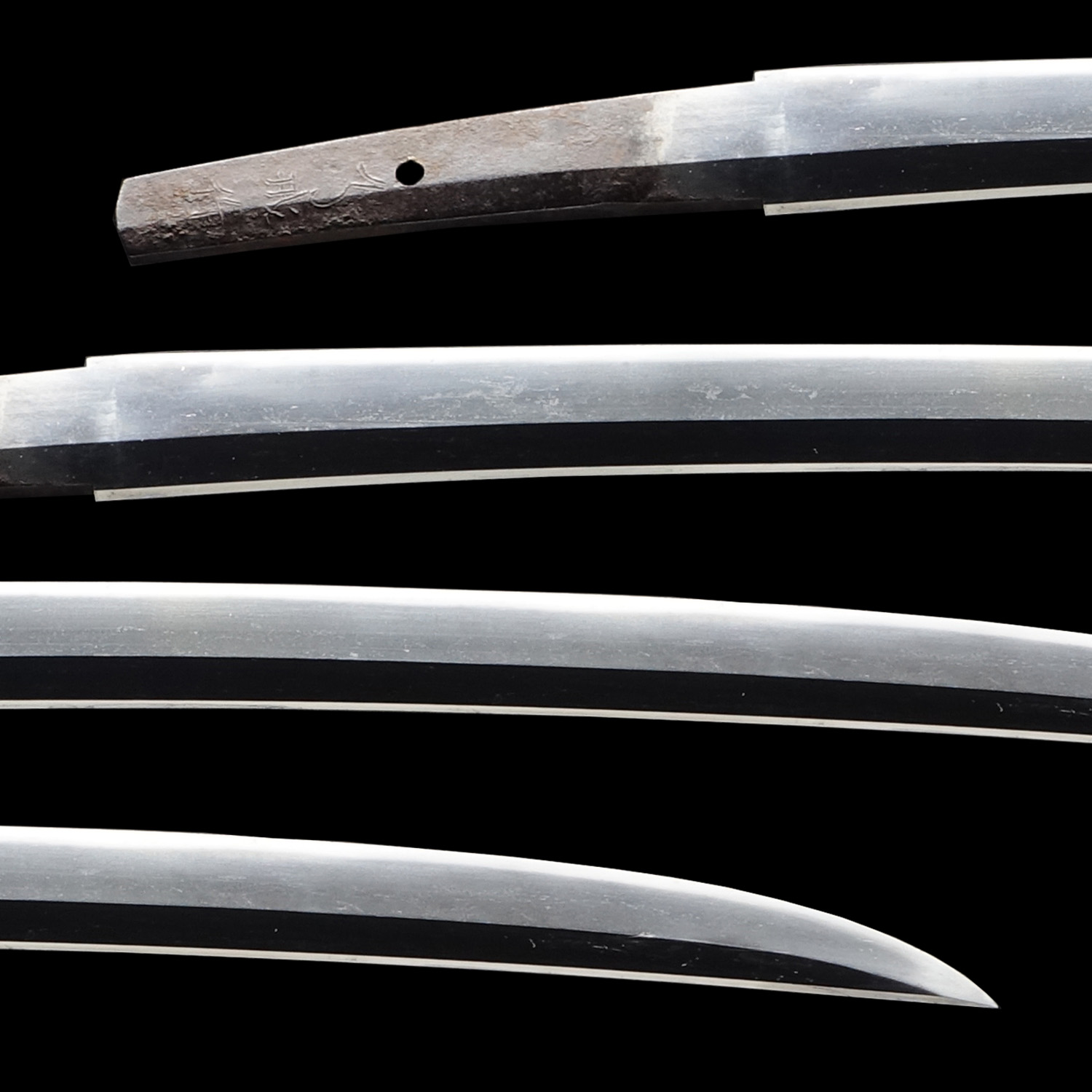
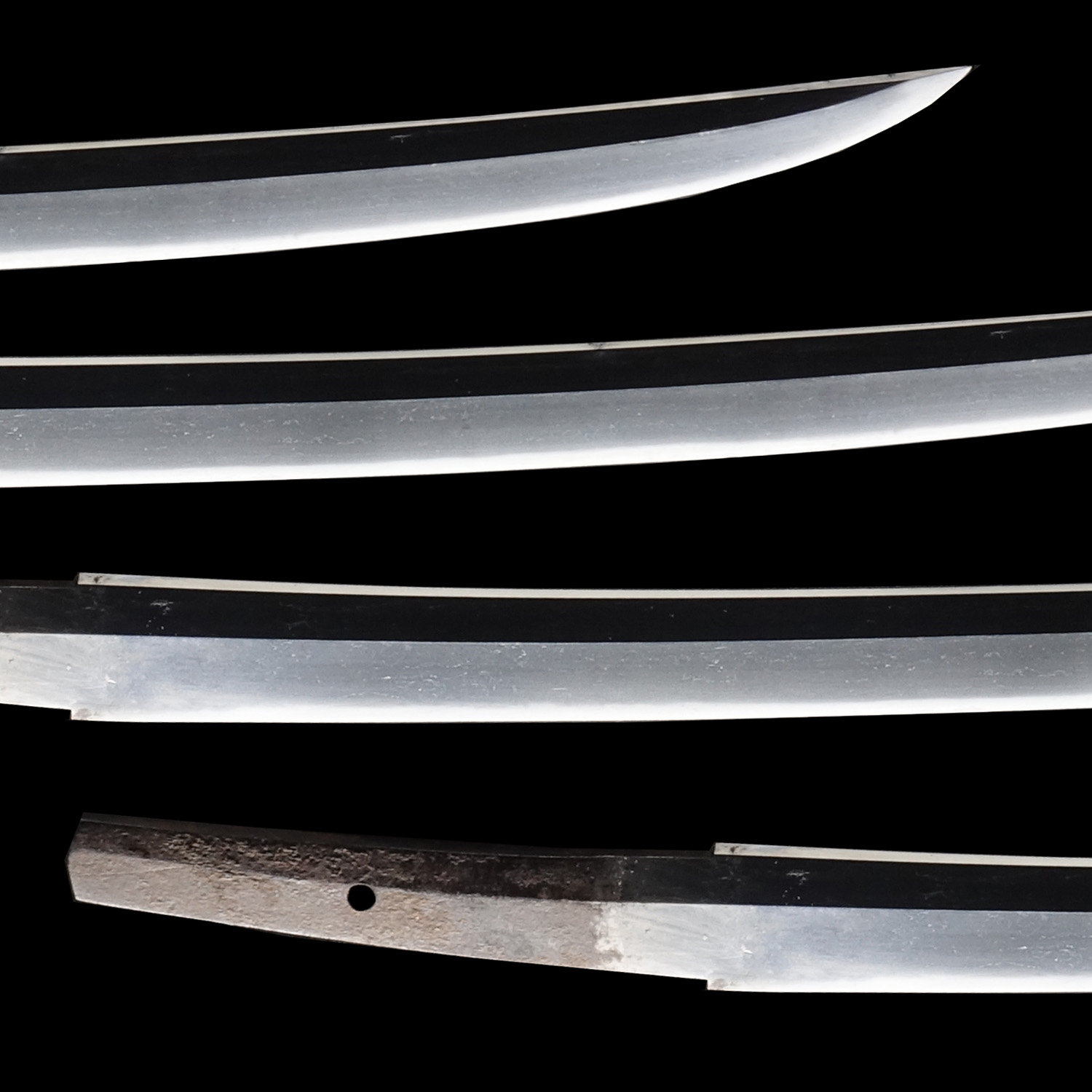
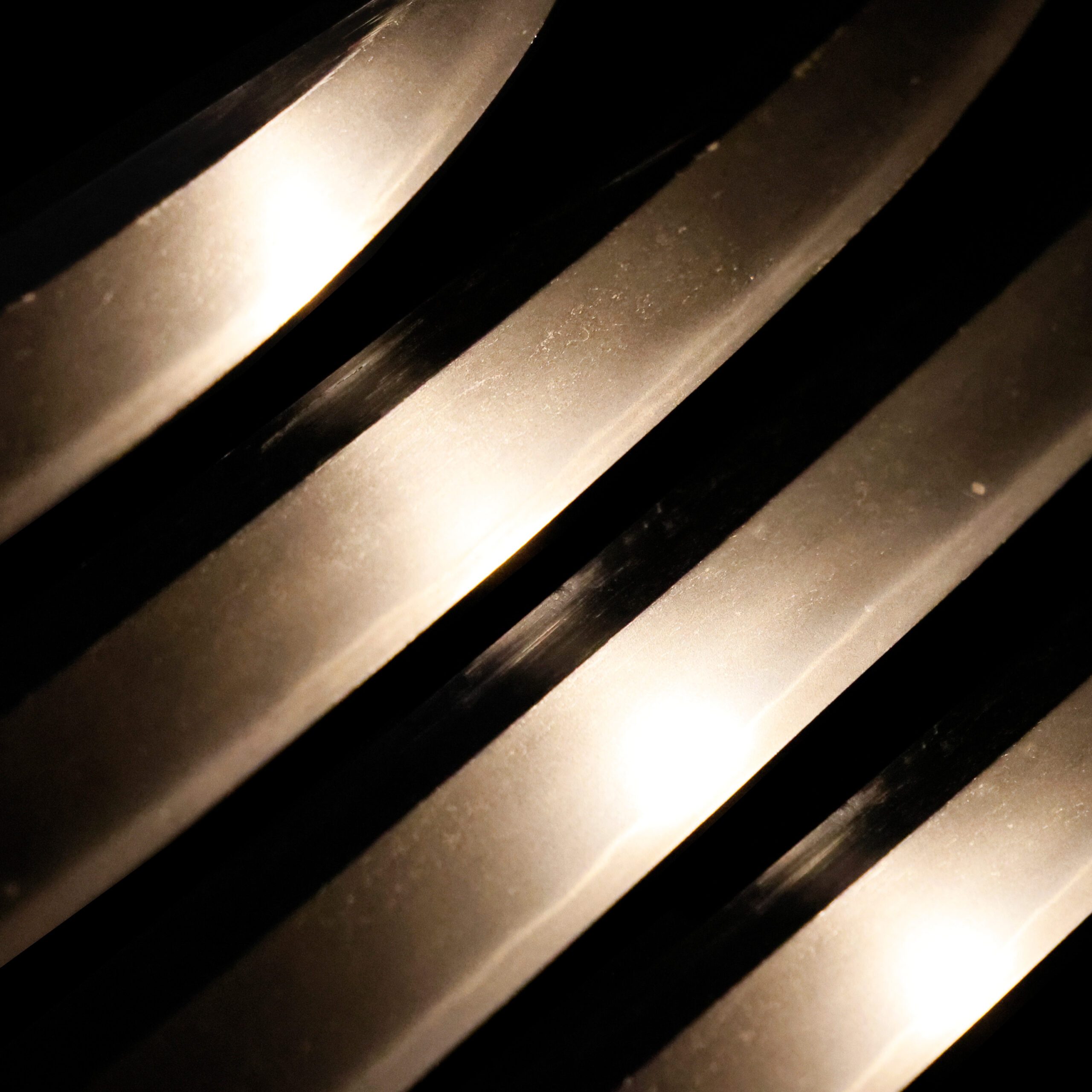
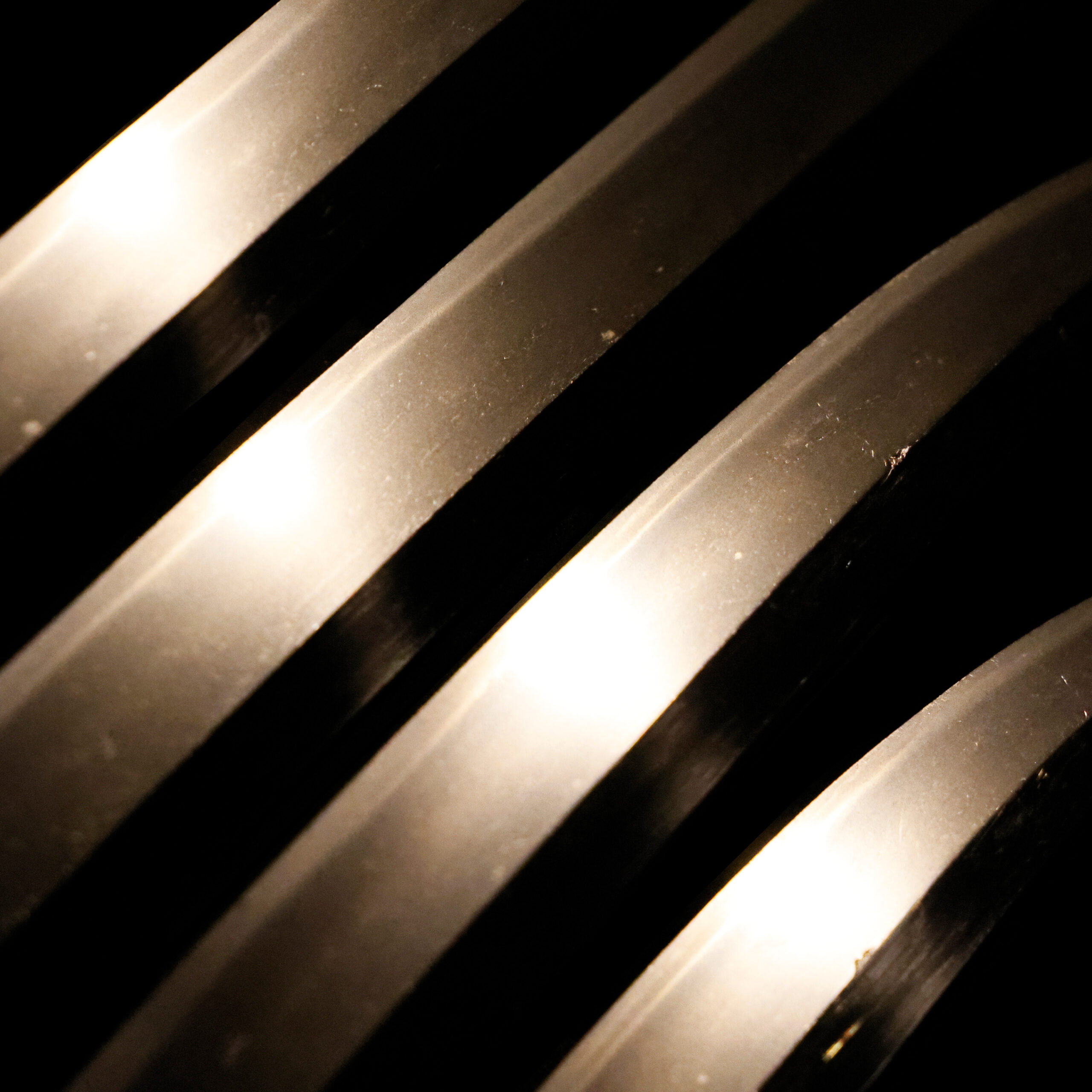
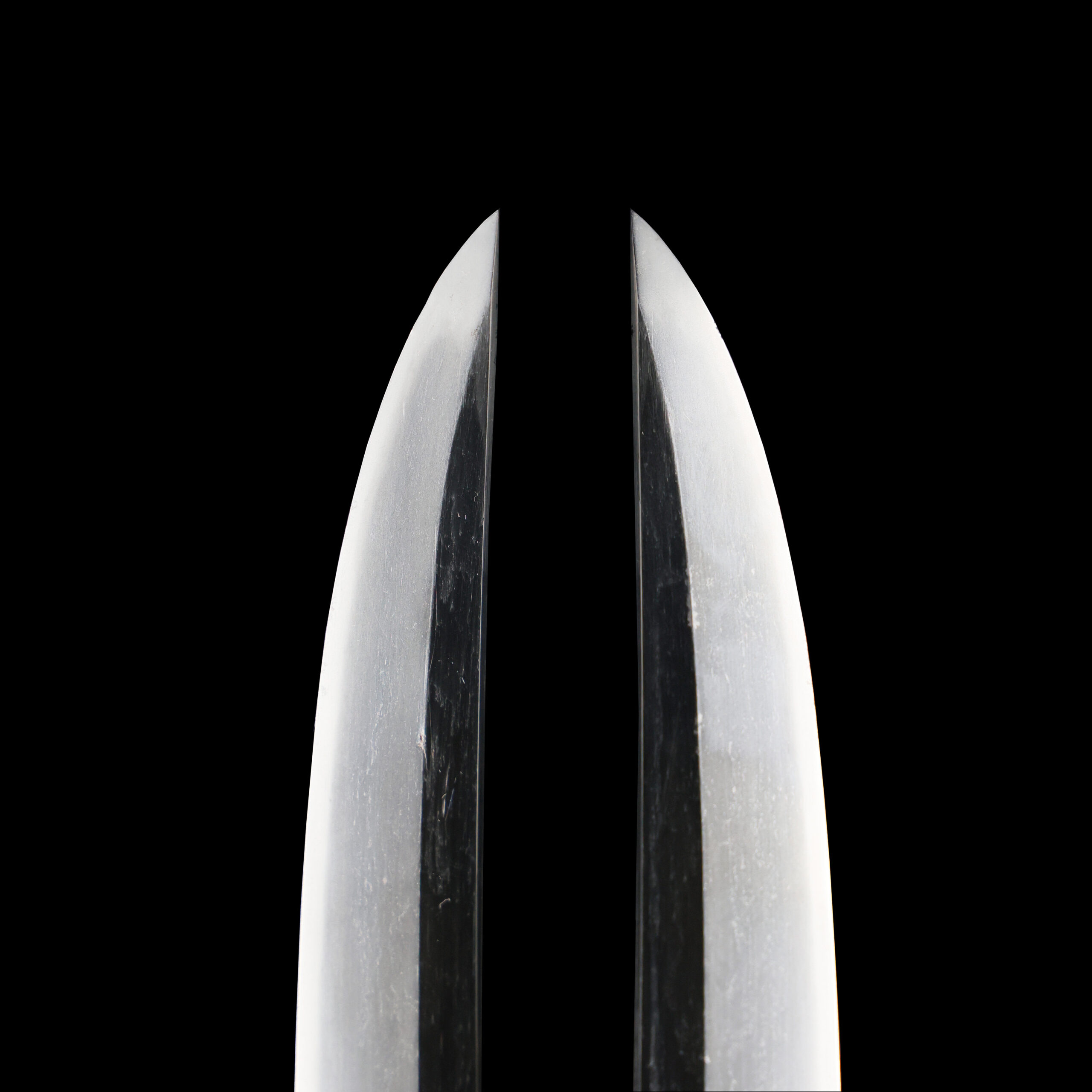
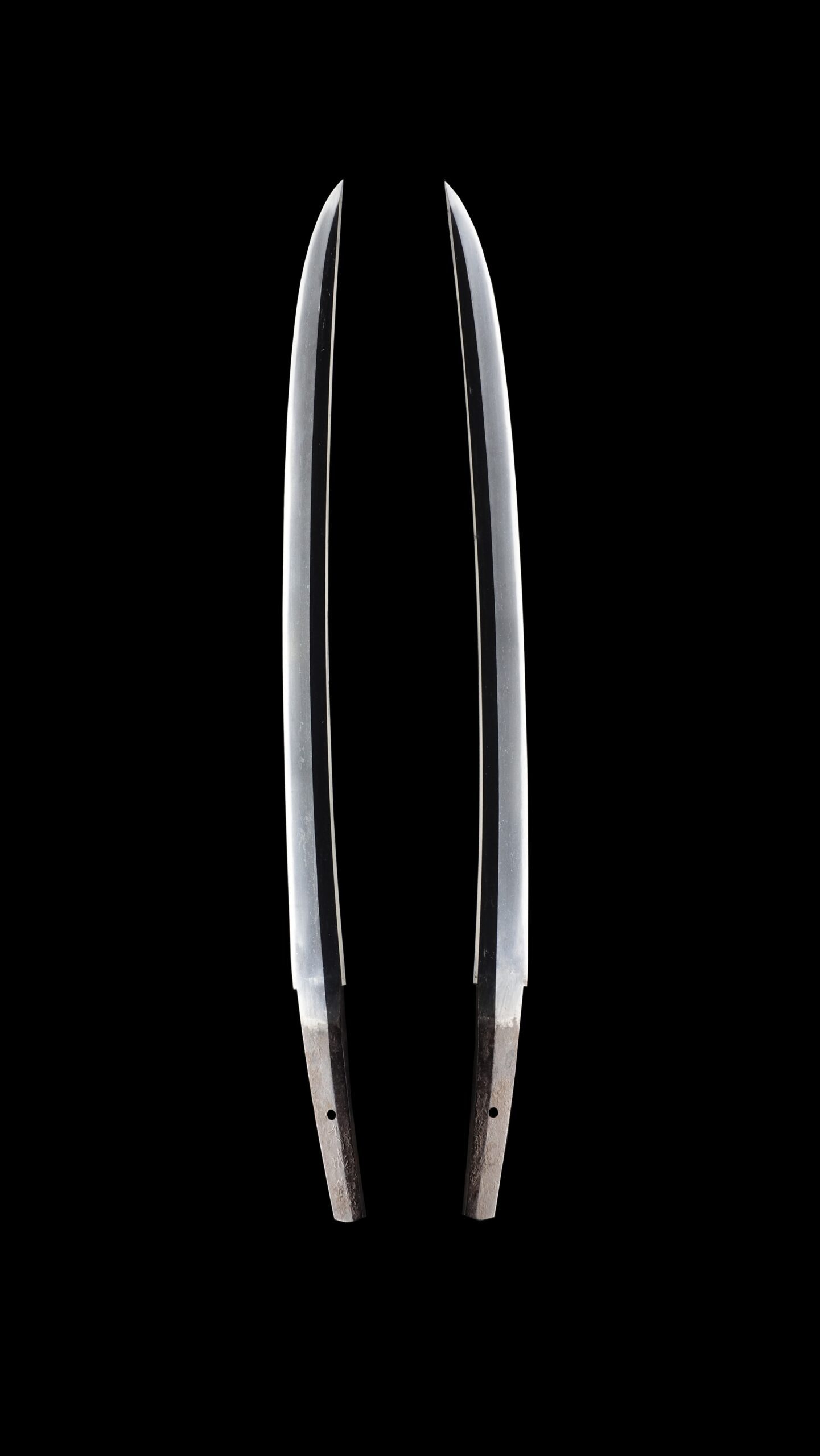
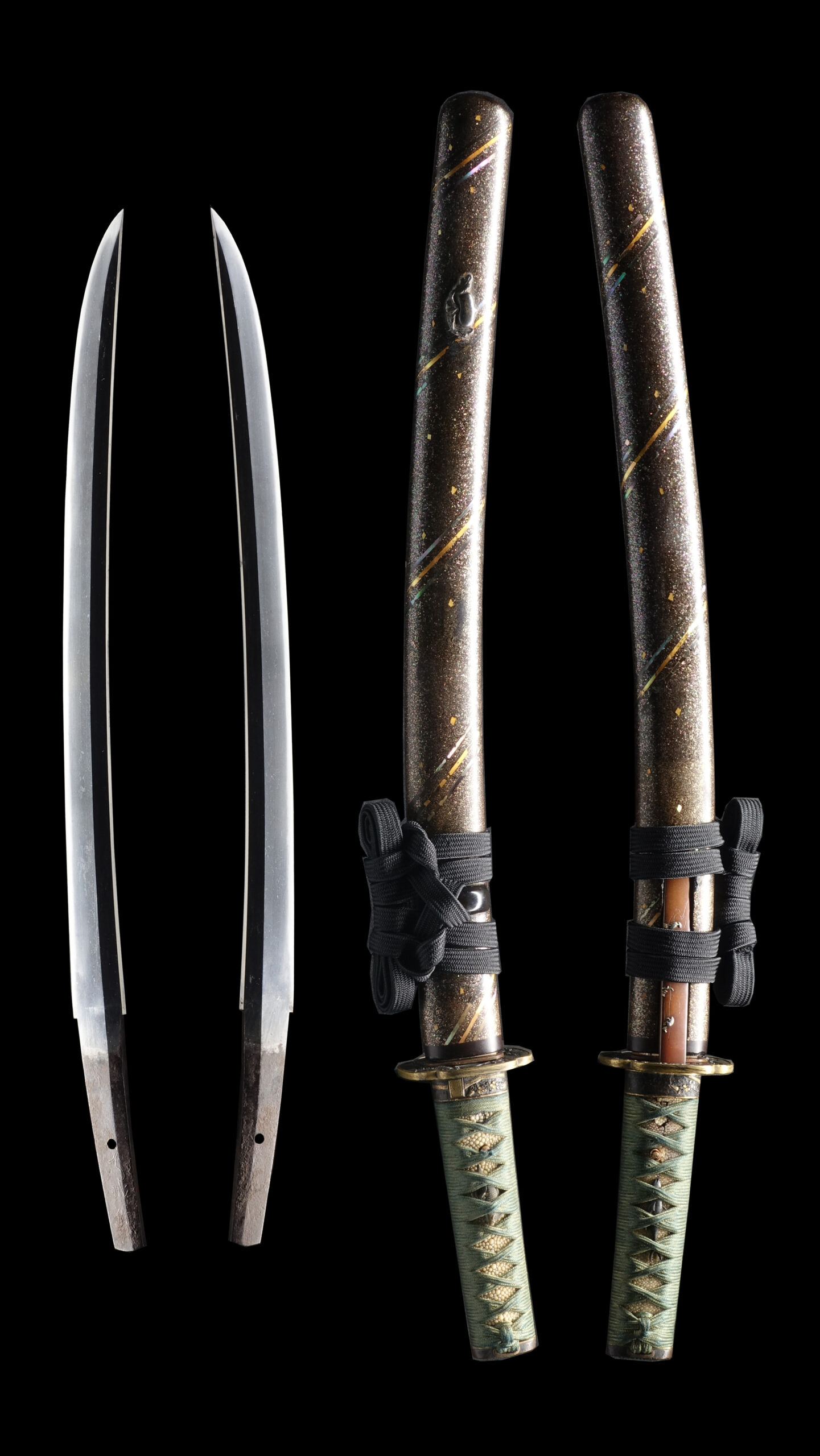
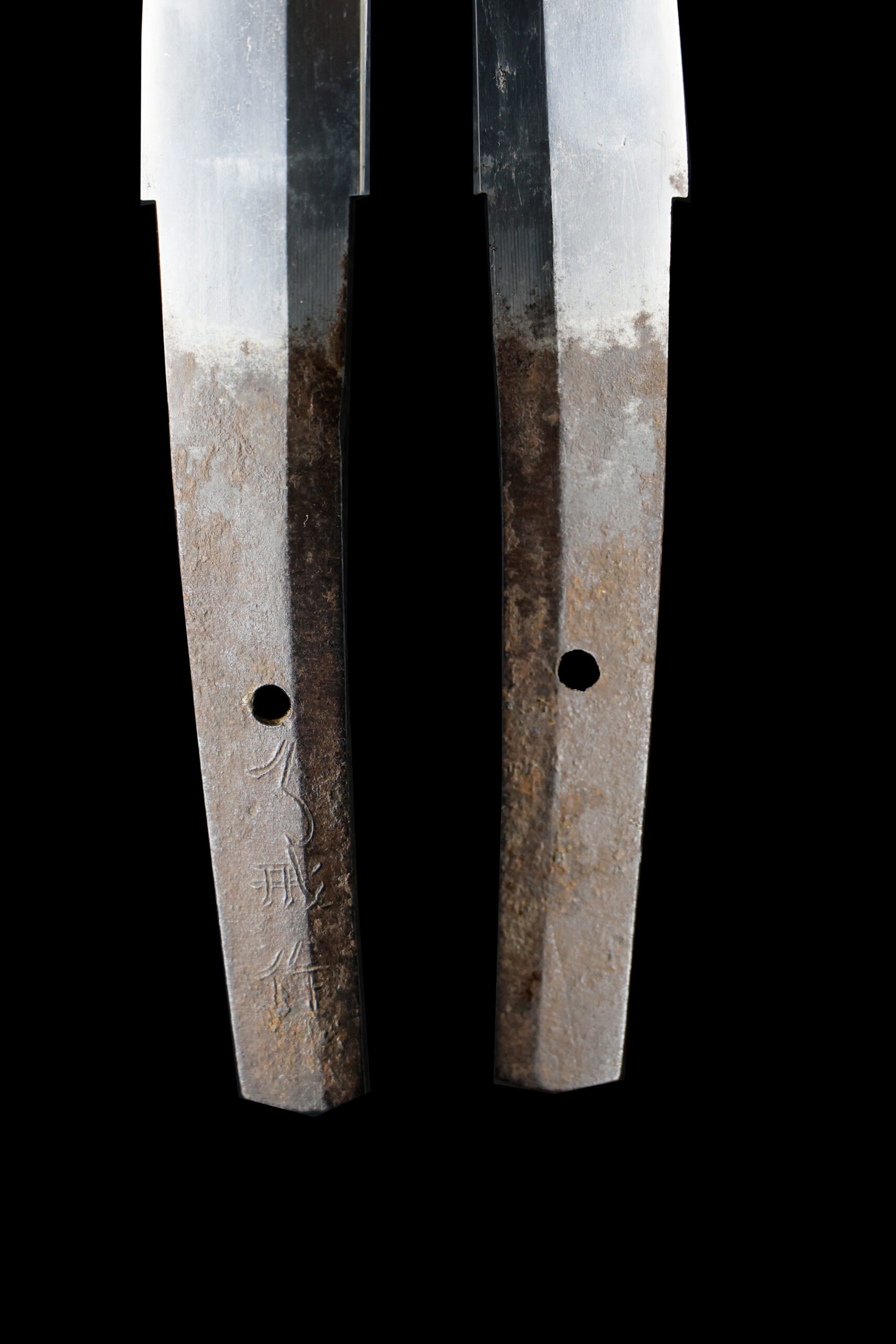
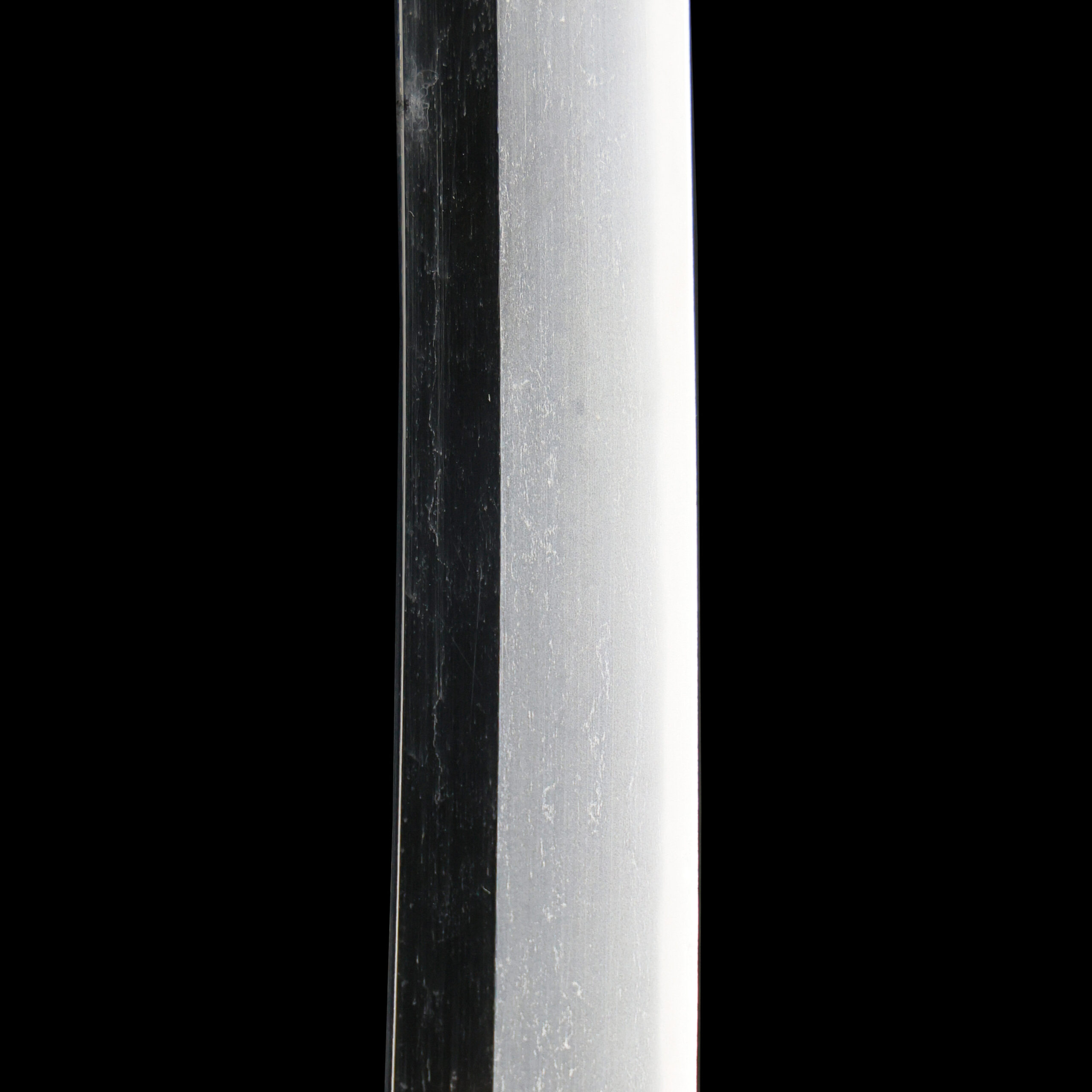
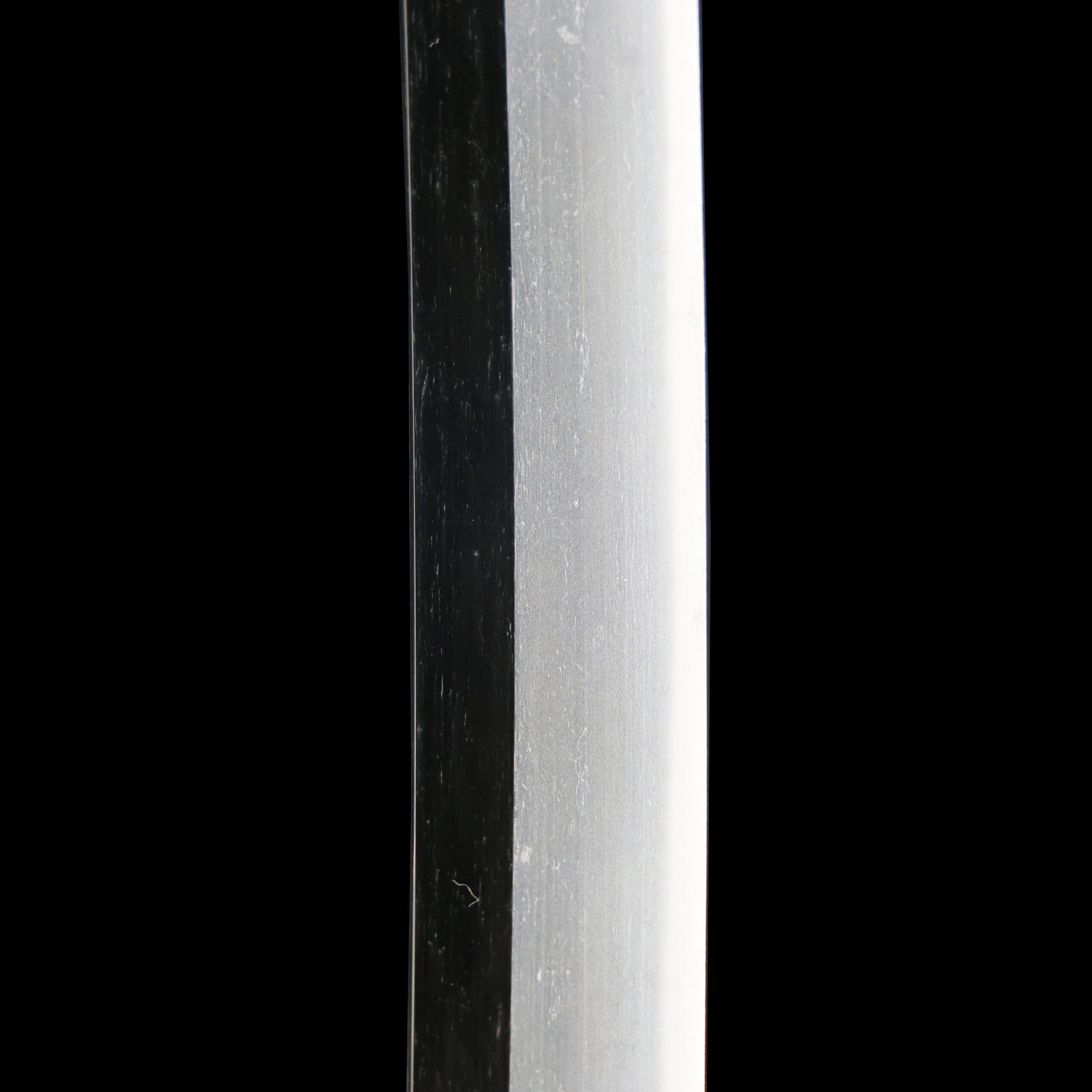
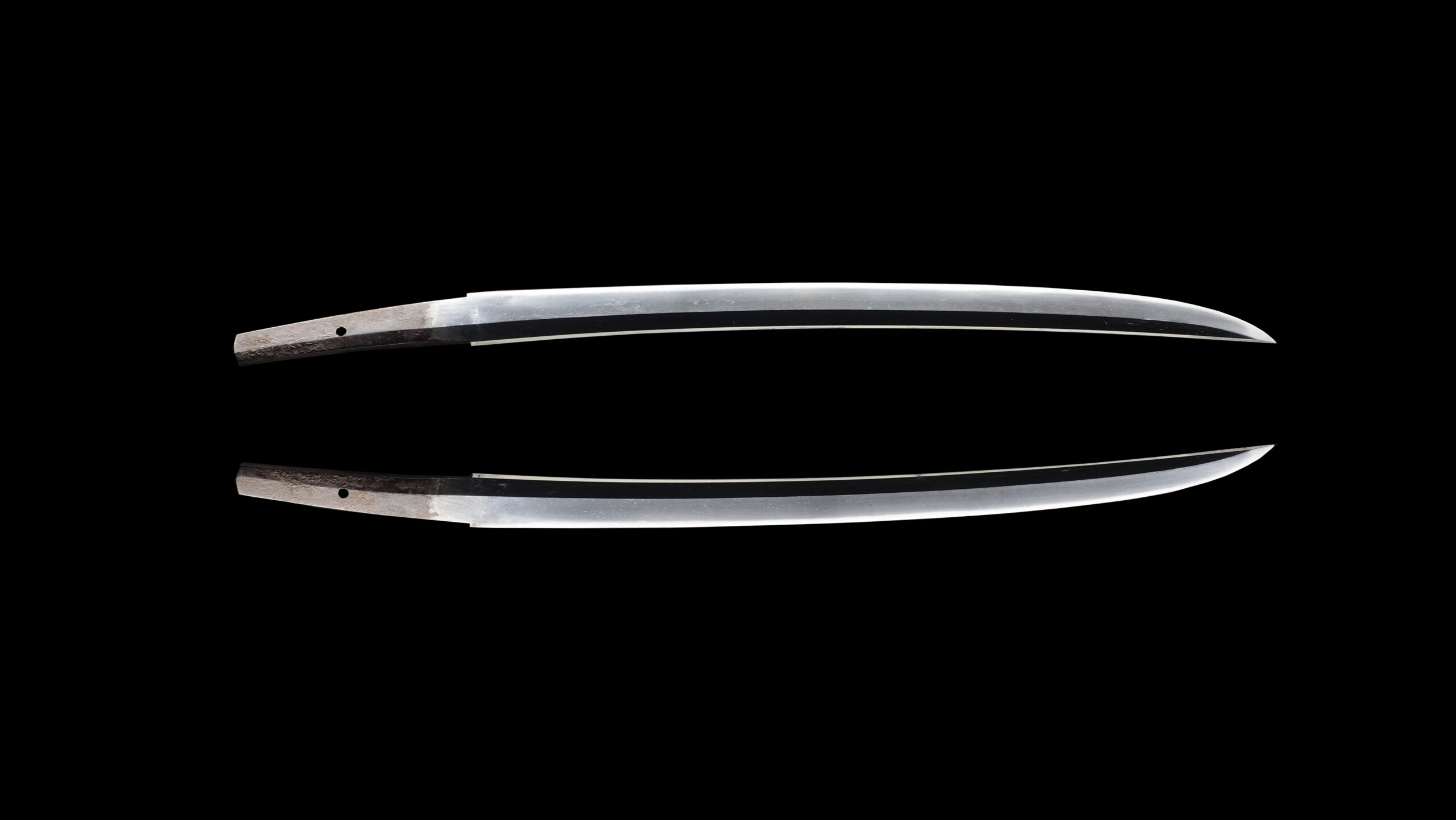
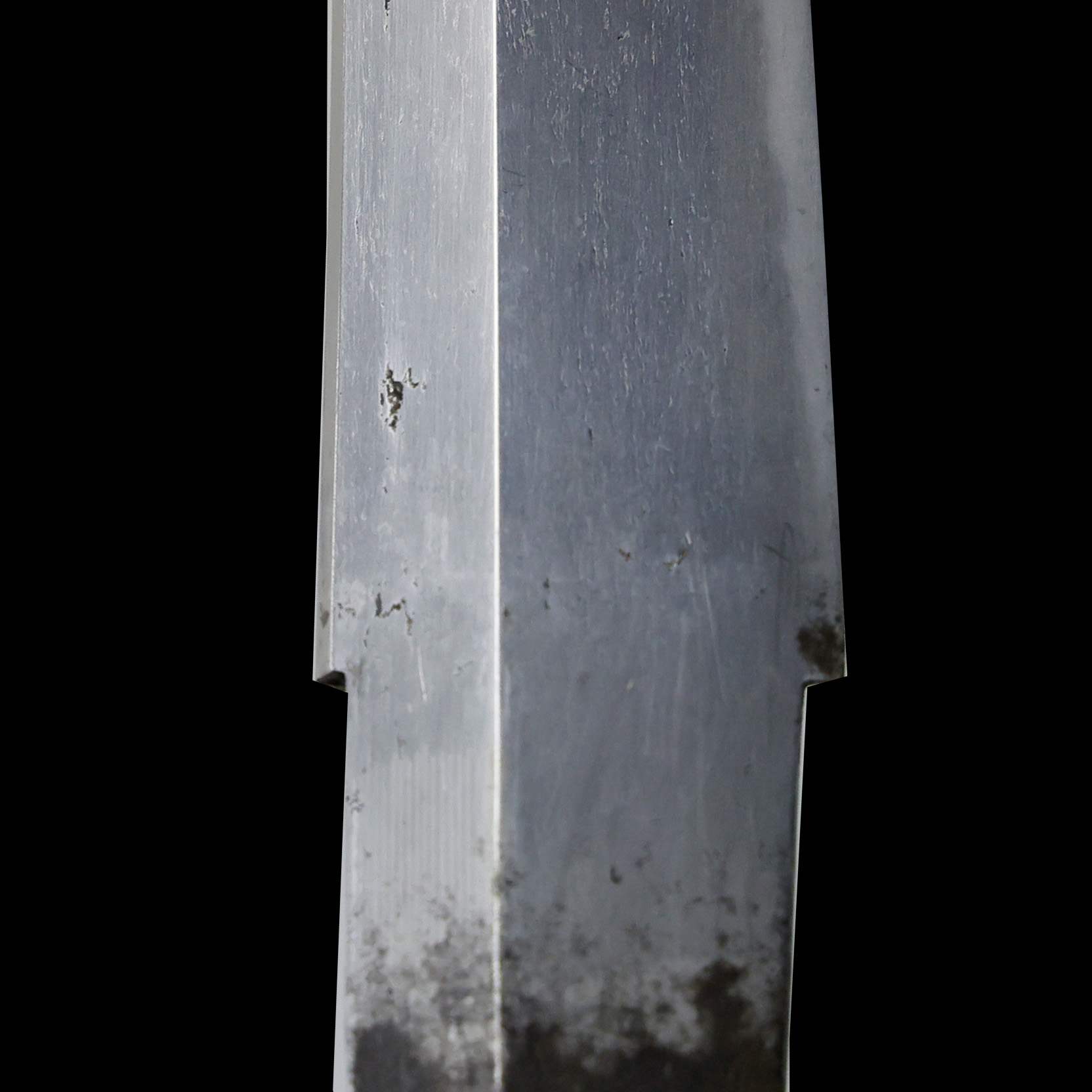
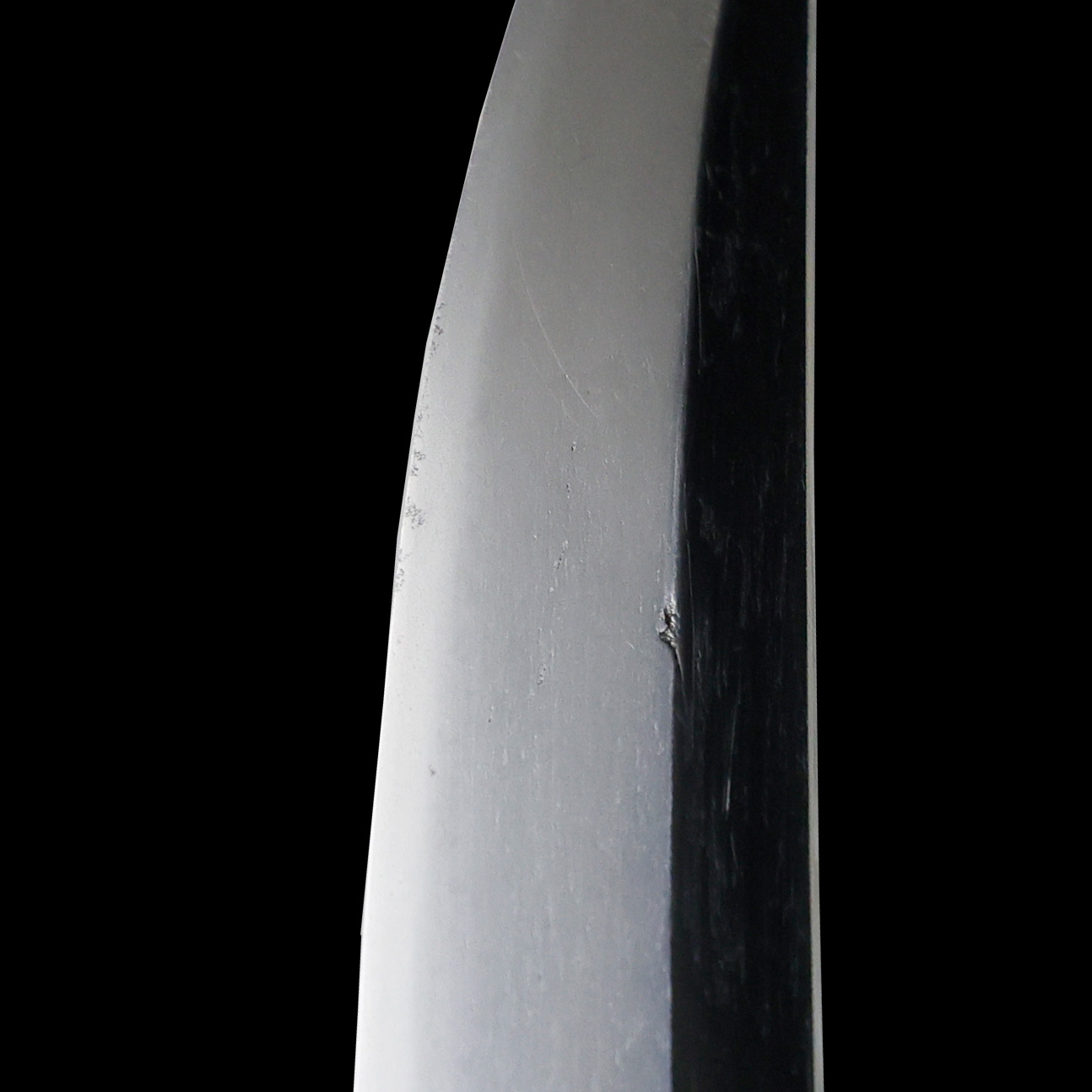
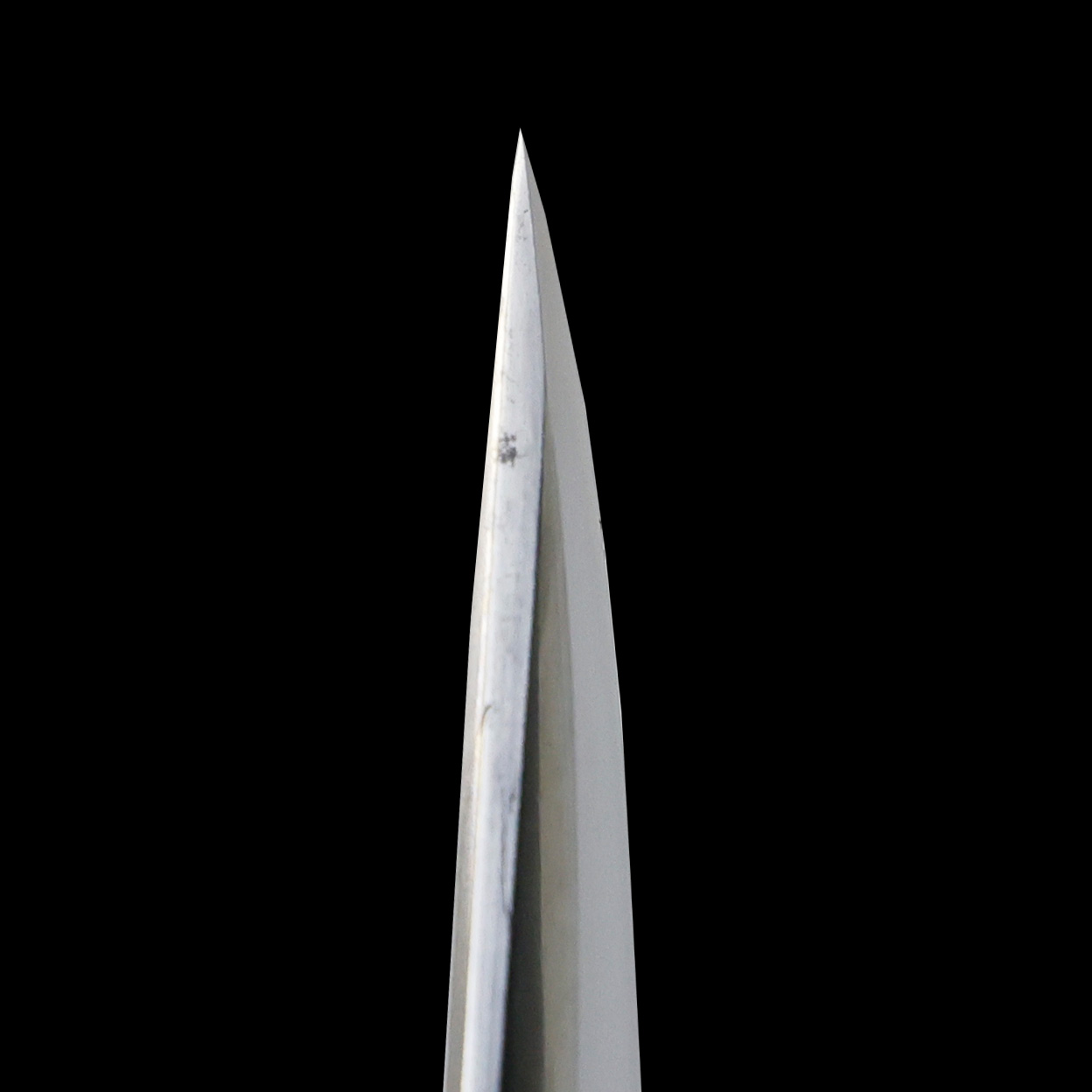
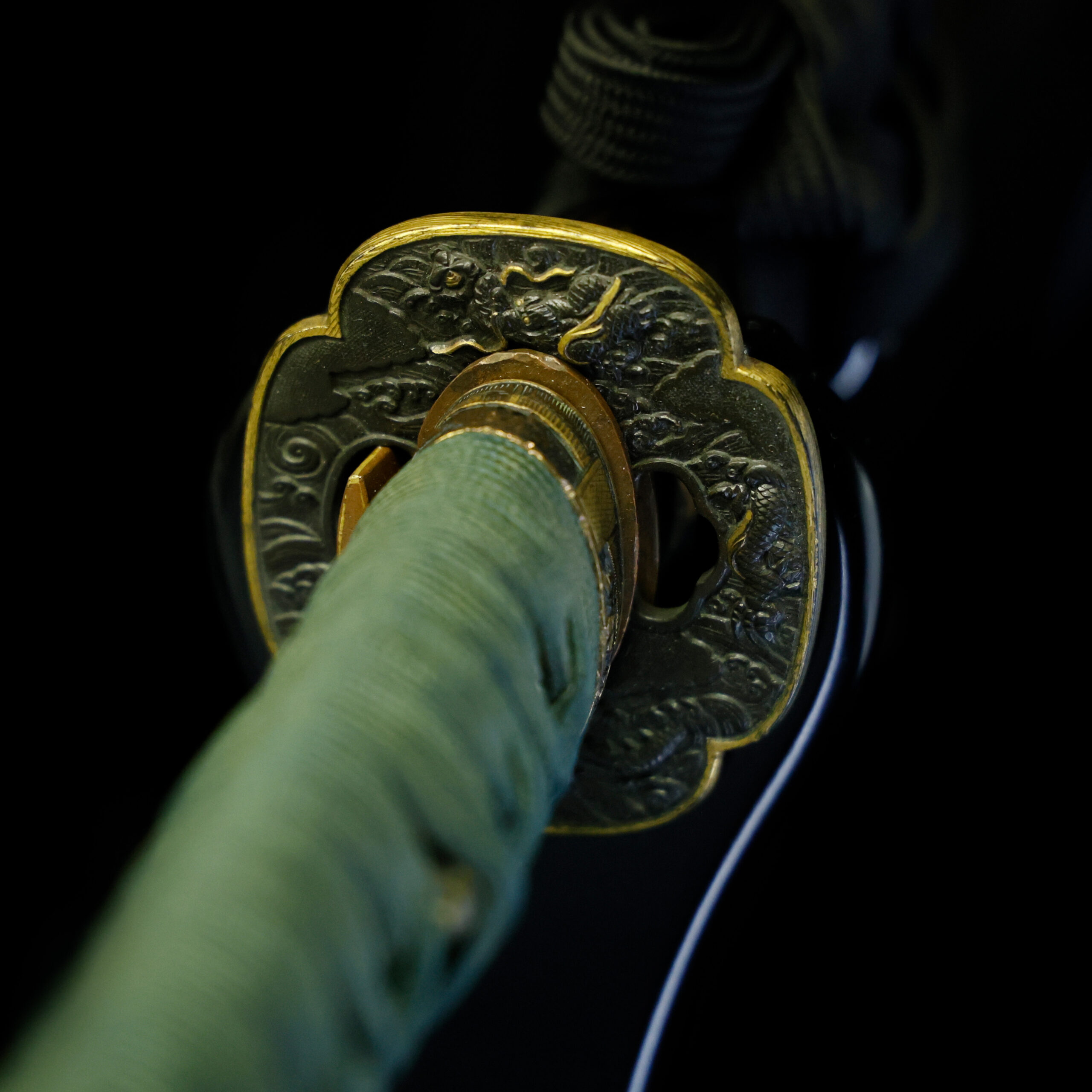
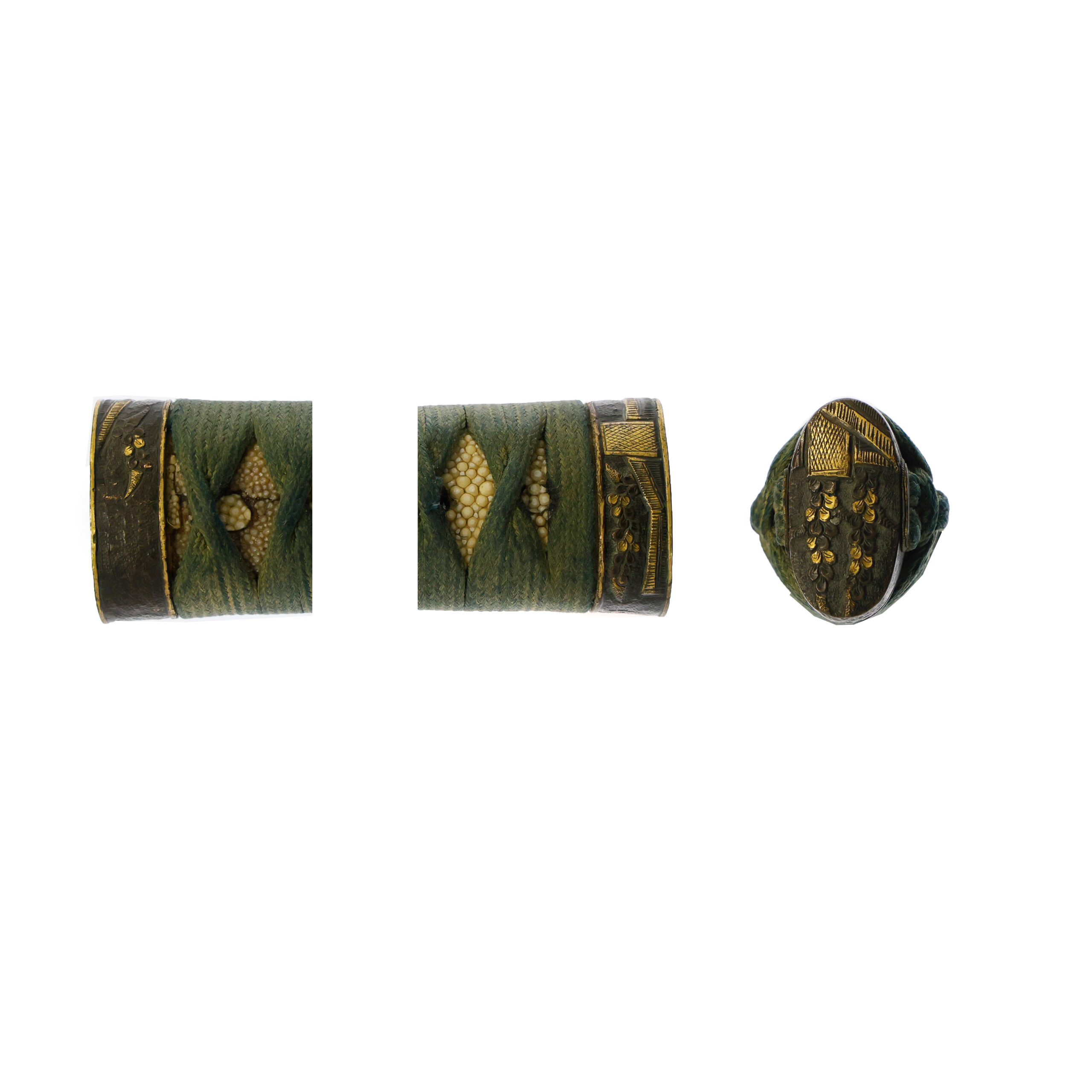
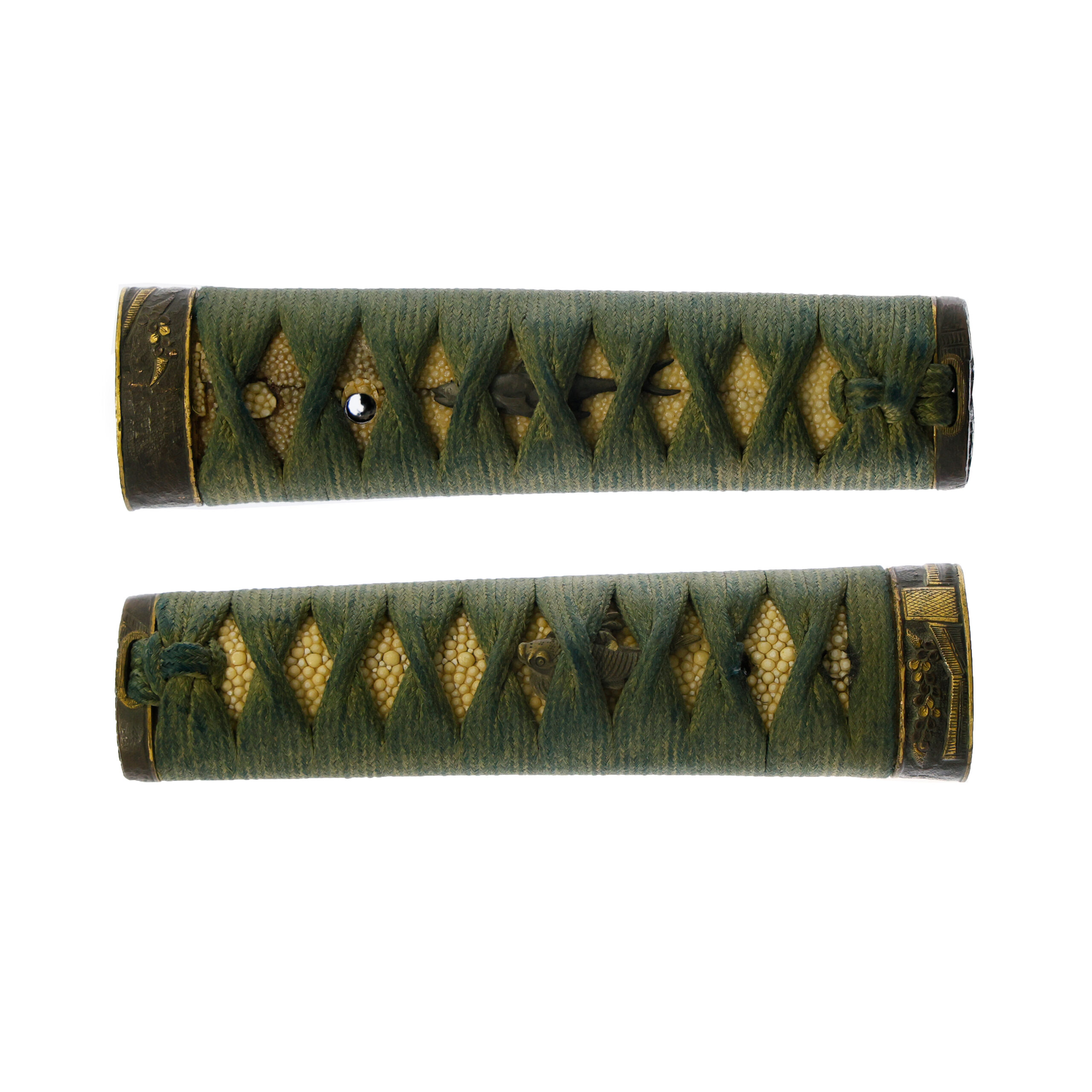
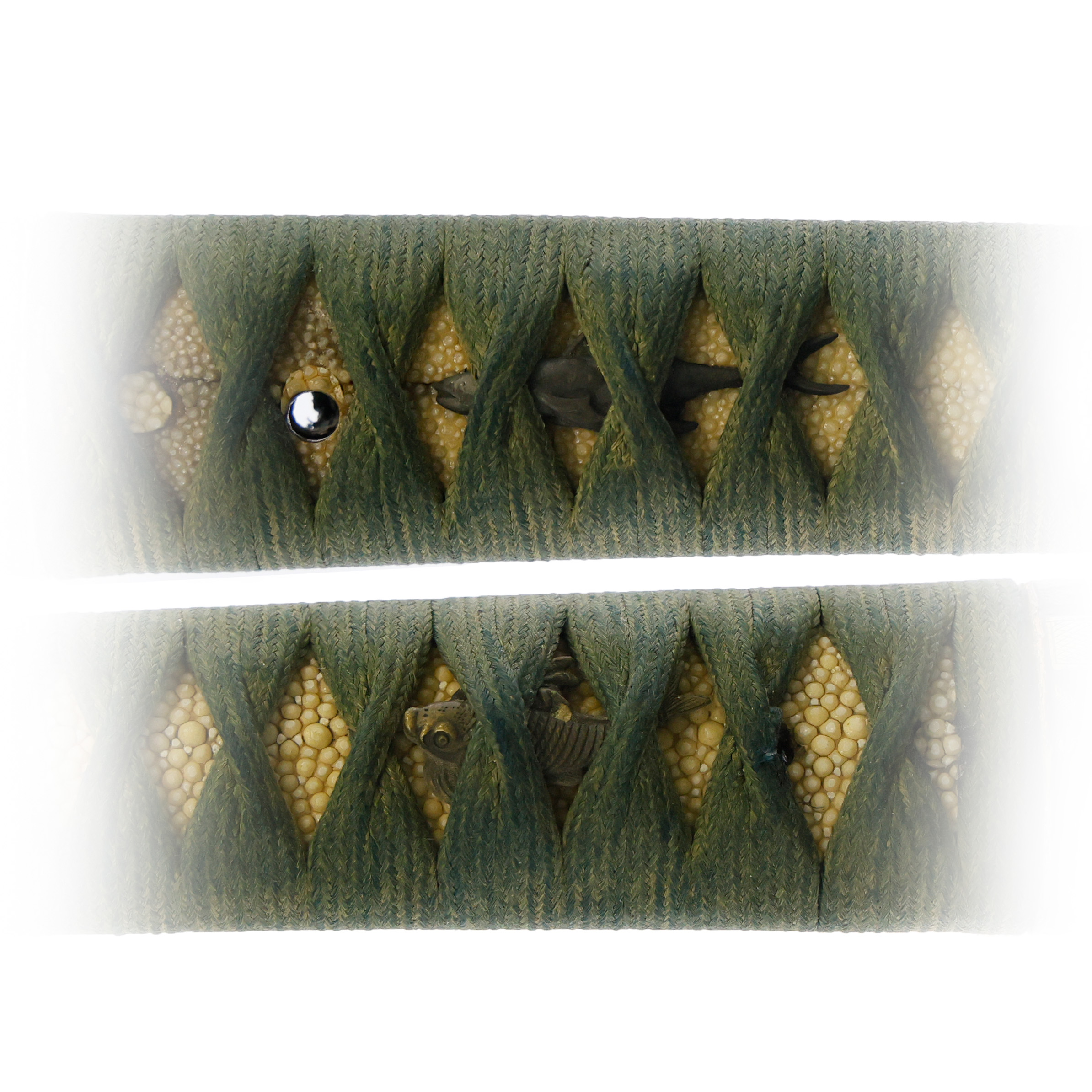
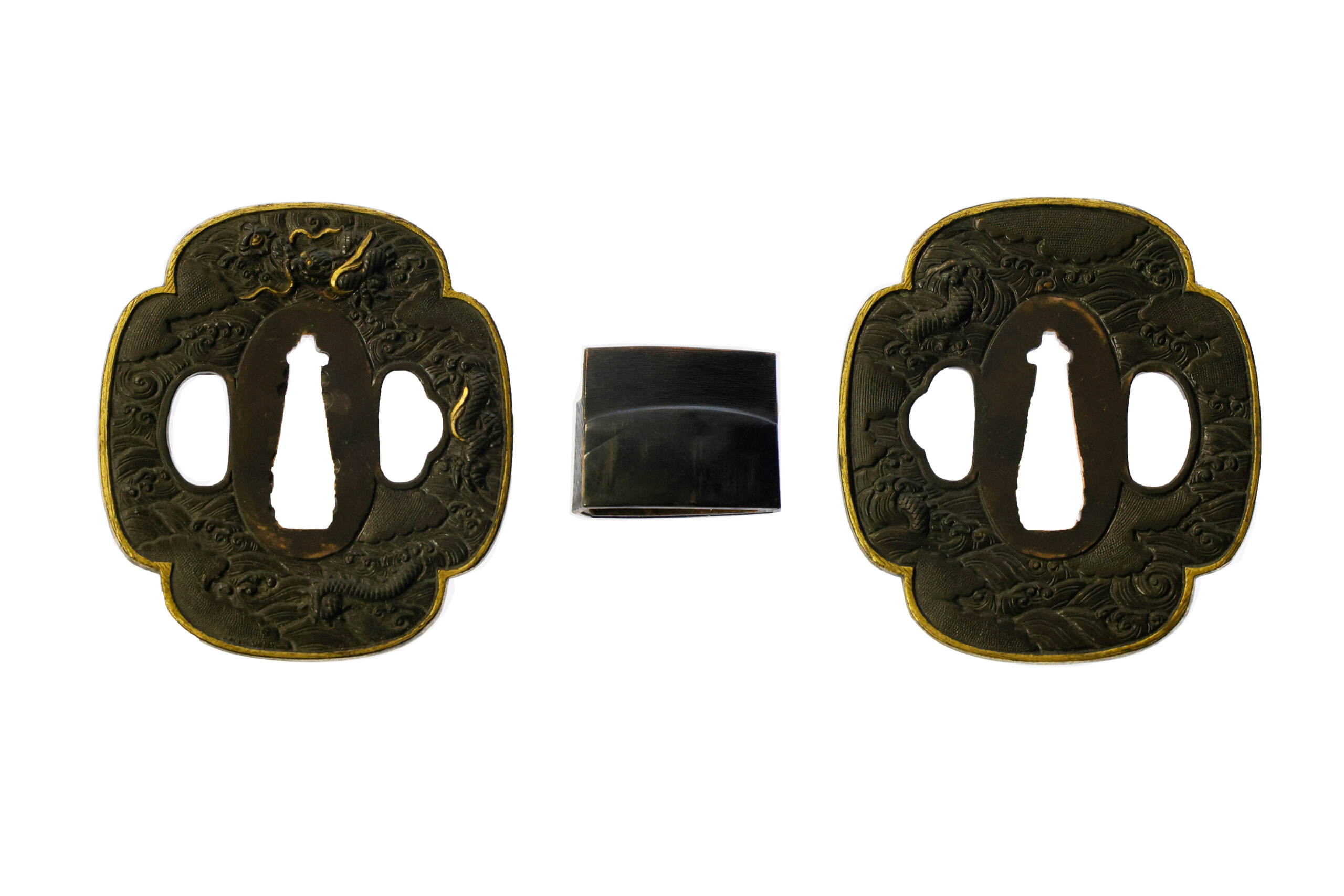
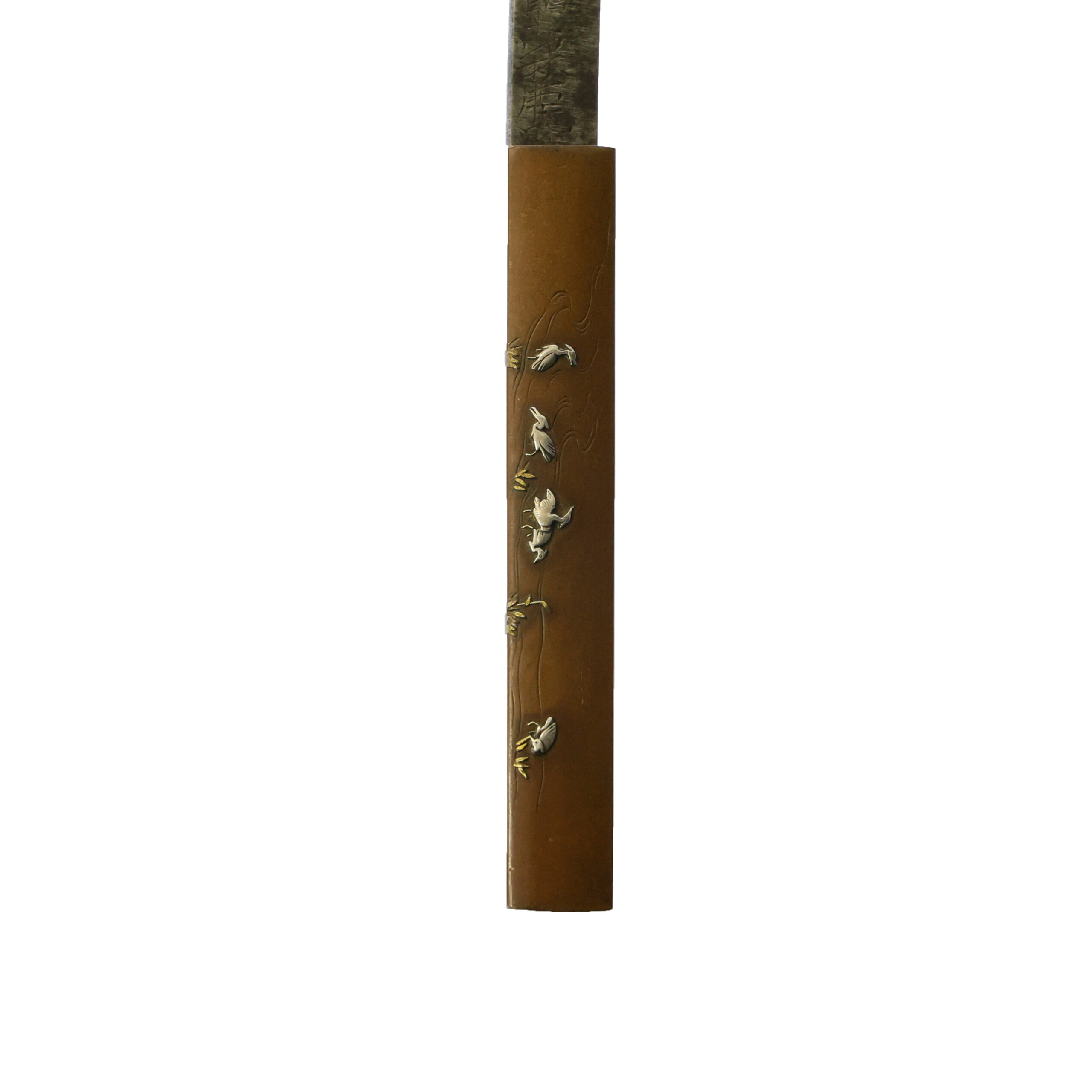
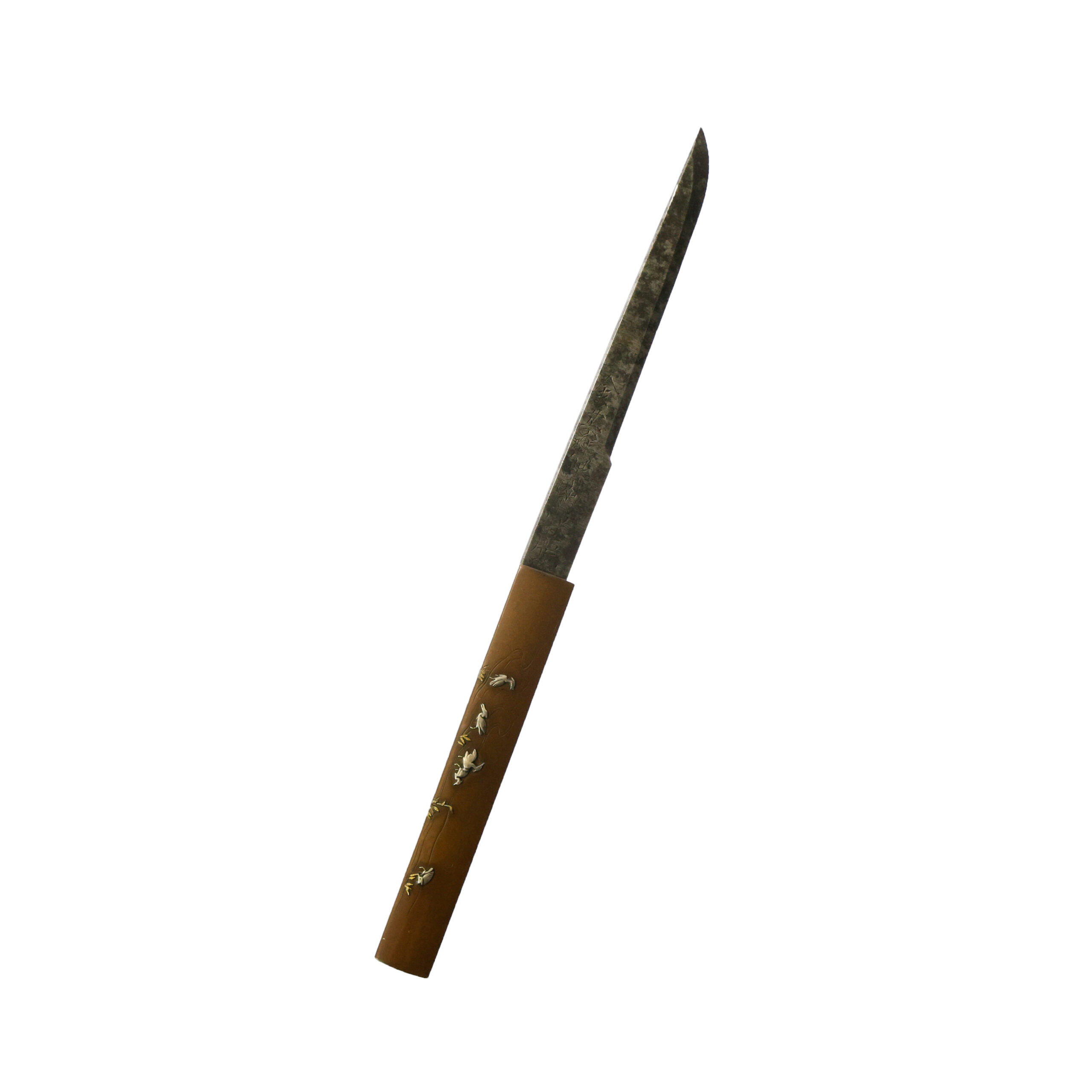
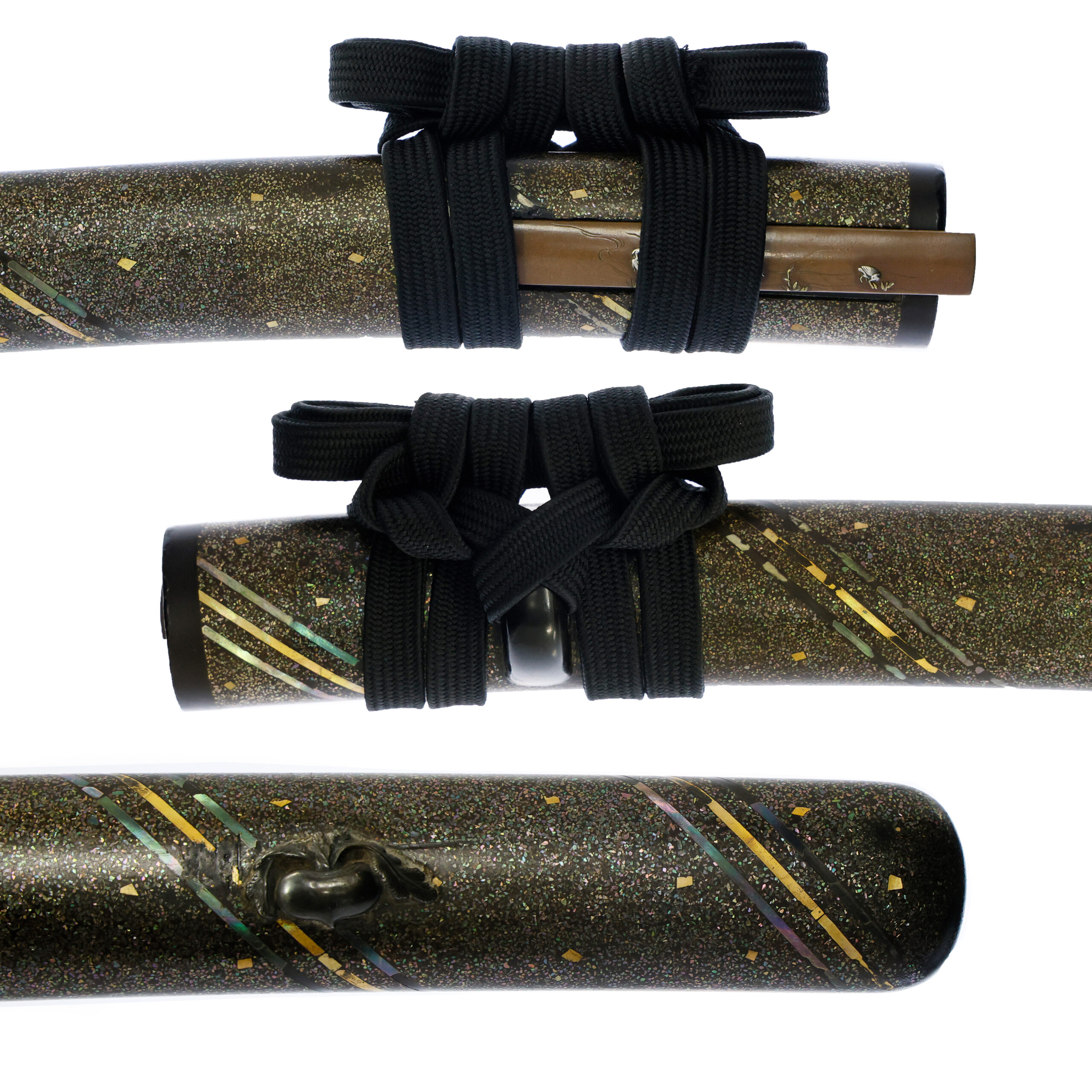
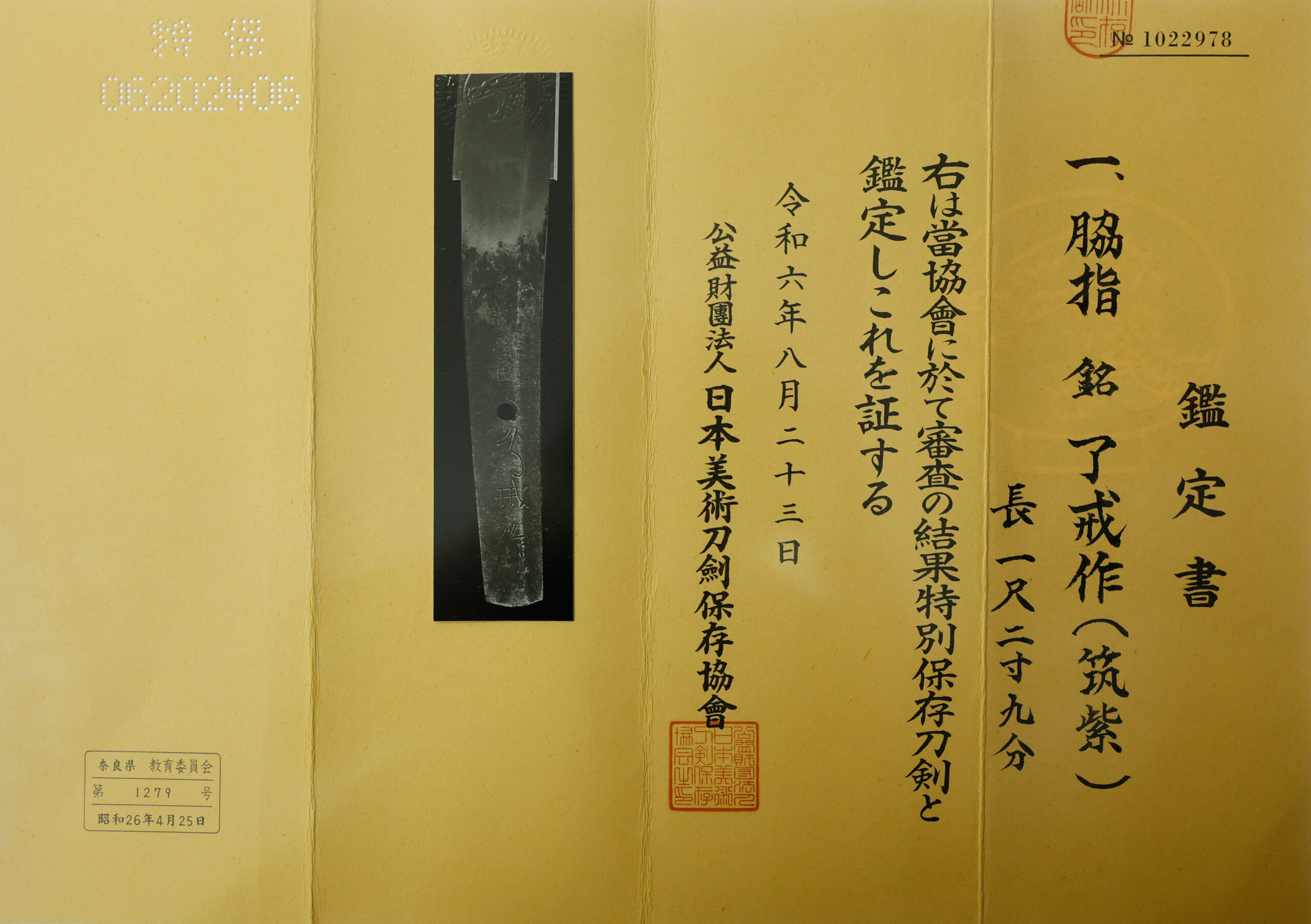
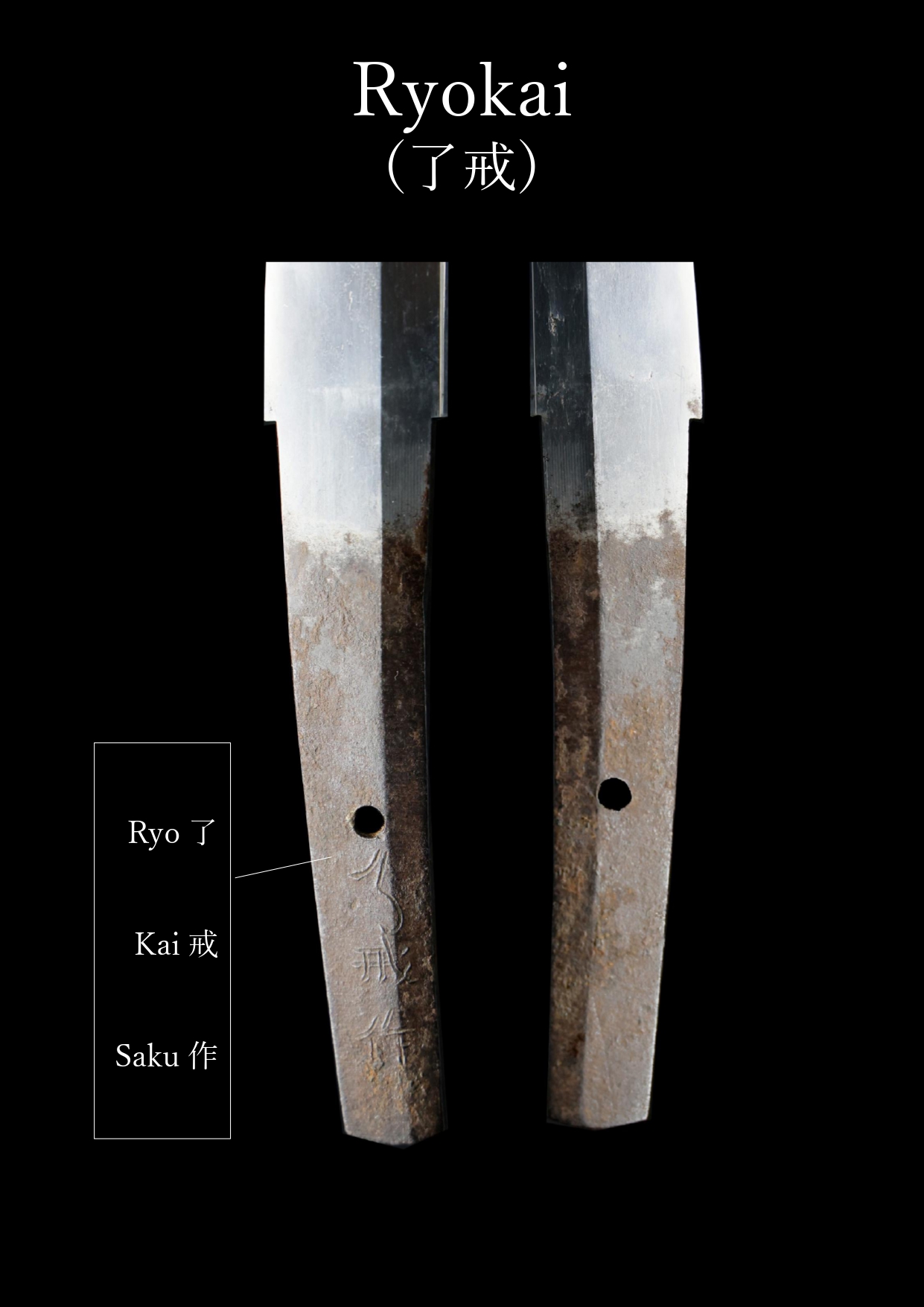
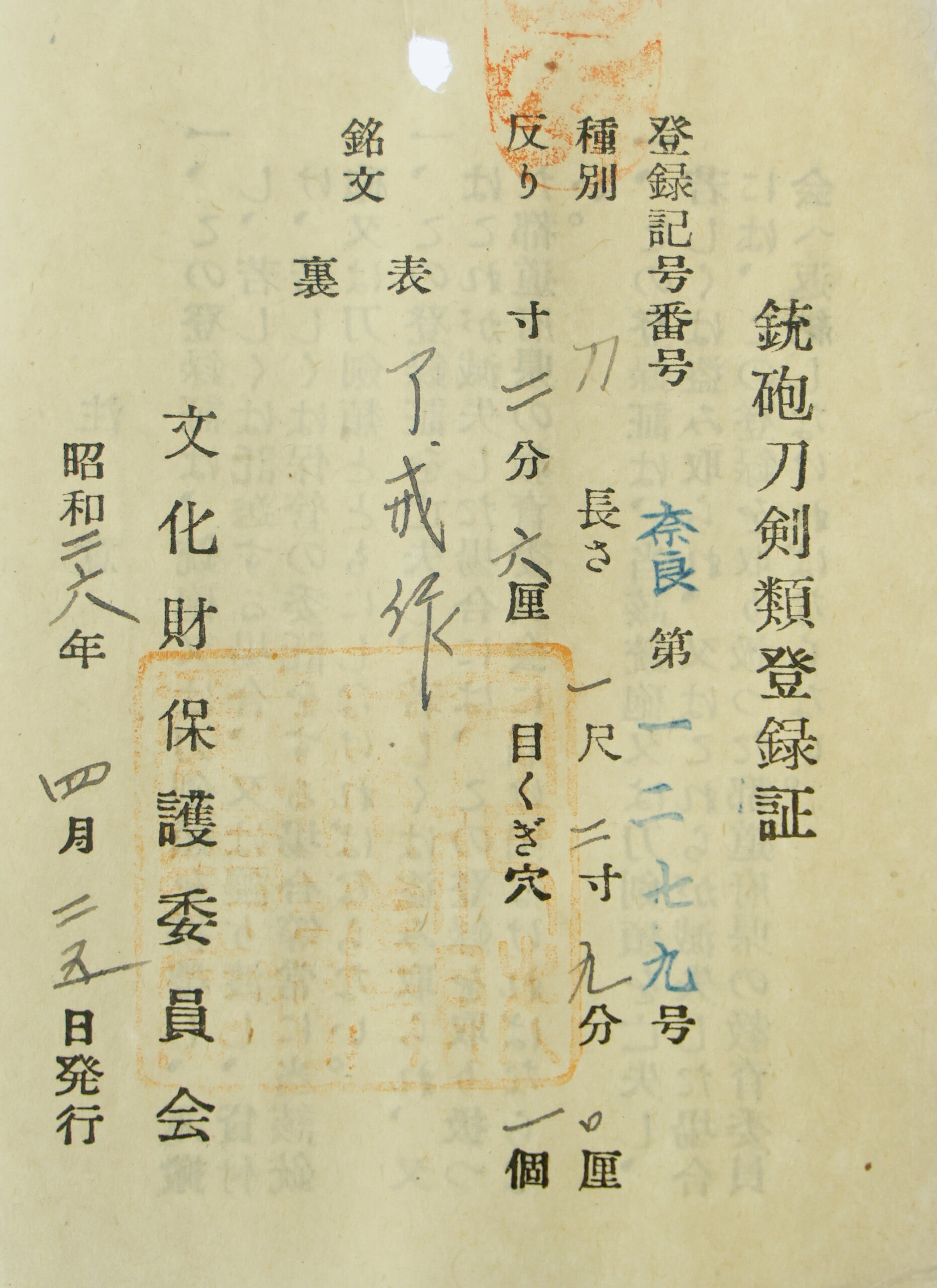
Antique Japanese Sword Wakizashi Signed by Ryokai with NBTHK Tokubetsu Hozon Certificate 【Description】 This blade was signed by Ryokai (了戒) during the late Muromachi period. Ryokai was one of the most prosperous school in Bungo province (today’s Oita prefecture) during the period. Ryokai School Ryokai was a swordsmith from the late Kamakura period in Yamashiro Province(Today’s Kyoto). It is said that he was a son of Rai Kuniyuki (来国行) and a younger brother of Rai Kunitoshi (来国俊). Both of them are renowned swordsmiths throughout Samurai history. Ryokai founded his own school, and the apprentices were allowed to use Ryokai in their maker’s names. Ryokai’s son was Ryokai Hisanobu, who took over the school. And his apprentice Ryokai Yoshisada also run the school after Hisanobu. However, Ryokai Yoshisda had to evacuate Yamashiro province during the late 14th century because the battle between the south emperor court and the north emperor court became severe. And as a result, Kyoto city was burnt(the late 1300’s). We called it the Nanbokucho war when the Japanese imperial court was separated into two. Ryokai Yoshisda managed to escape and arrive in Kyushu island at Tsukushi Province (Today’s Fukuoka prefecture), looking for better opportunities. And, Yoshisada founded Tsukushi Ryokai school there. Among Japanese sword experts, Ryokai school in Tsukushi province is called Tsukushi Ryokai to distinguish it from the Ryokai school in Yamashiro province. Since the origin of this school came from Yamashiro province, the blades forged by the Tsukushi Ryokai school have characteristics of *Yamashiro Den tradition. Among Tsukushi Ryokai school, the swordsmiths were named with 能 (Yoshi) such as 勝能 (Katsuyoshi). According to its NBTHK appraisal, this blade was signed by a Tsukushi Ryokai. Yamashiro Den Yamashiro province was famous for its sword-making style called YAMASHIRO-DEN. YAMASHIRO-DEN’s origin dates back to the Heian period (794 A.D) when the capital city was moved from Nara to Kyoto. The swordsmiths in Yamashiro province initially prospered by forging swords for court nobles and imperial families. Later on, they also forged swords for feudal lords after Samurai military government took control of Japan. There are so many renowned swordsmiths from this region. It is said that the founder of YAMASHIRO-DEN was Sanjo Munechika. And there were four prestigious main branches in this region. They are Sanjo, Rai, Nobukuni, and Awataguchi. One of the characteristics of YAMASHIRO-DEN is its elegant design and beautiful Jigane (steel surface pattern). This blade represents a great trait of YAMASHIRO-DEN. It is appraised as a Tokubetsu Hozon Token (特別保存刀剣) issued by NBTHK (Nihon Bijutsu Touken Hozon Kyokai: 日本美術刀剣保存協会). This authentication paper was only given to authentic Japanese swords, especially well preserved and high quality with artistic value. *Please keep in mind that there are a few Kitae Kizu on this blade as well as light black rusts. If you like to know the detailed condition, please feel free to contact us. 【Blade】 Cutting Edge Length (Nagasa) : 39.1 cm ( 15.4 inches) Curvature (Sori) : 0.78 cm (0.31 inches) Hamon : The crystalline structure which forms along the cutting edge of a blade as a result of the hardening process. Jimon(Jihada) : visible steel surface pattern created by folding and hammering during forging process Kissaki : Kissaki is the tip of the Japanese sword. Nakago : Nakago is the tang of the Japanese sword. Japanese swordsmiths left the black rust on the tang because it prevents red rust while the tang is in its handle. And the discoloration of the tang was created over time, and it is a great indicator for a Japanese sword specialist to estimate when the sword was forged. Koshirae : Koshirae is the mounting of the Japanese sword. There are several parts that consist of Koshirae such as Saya (Scabbard), Tsuka (Handle), Tsuba (Handguard). Fuchi-Kashira : A pair of matching sword fittings that cover the upper and
 NihontoWatch
在銘 · Ryokai · 室町 · 長さ 39.1cm · 反り 0.78cm
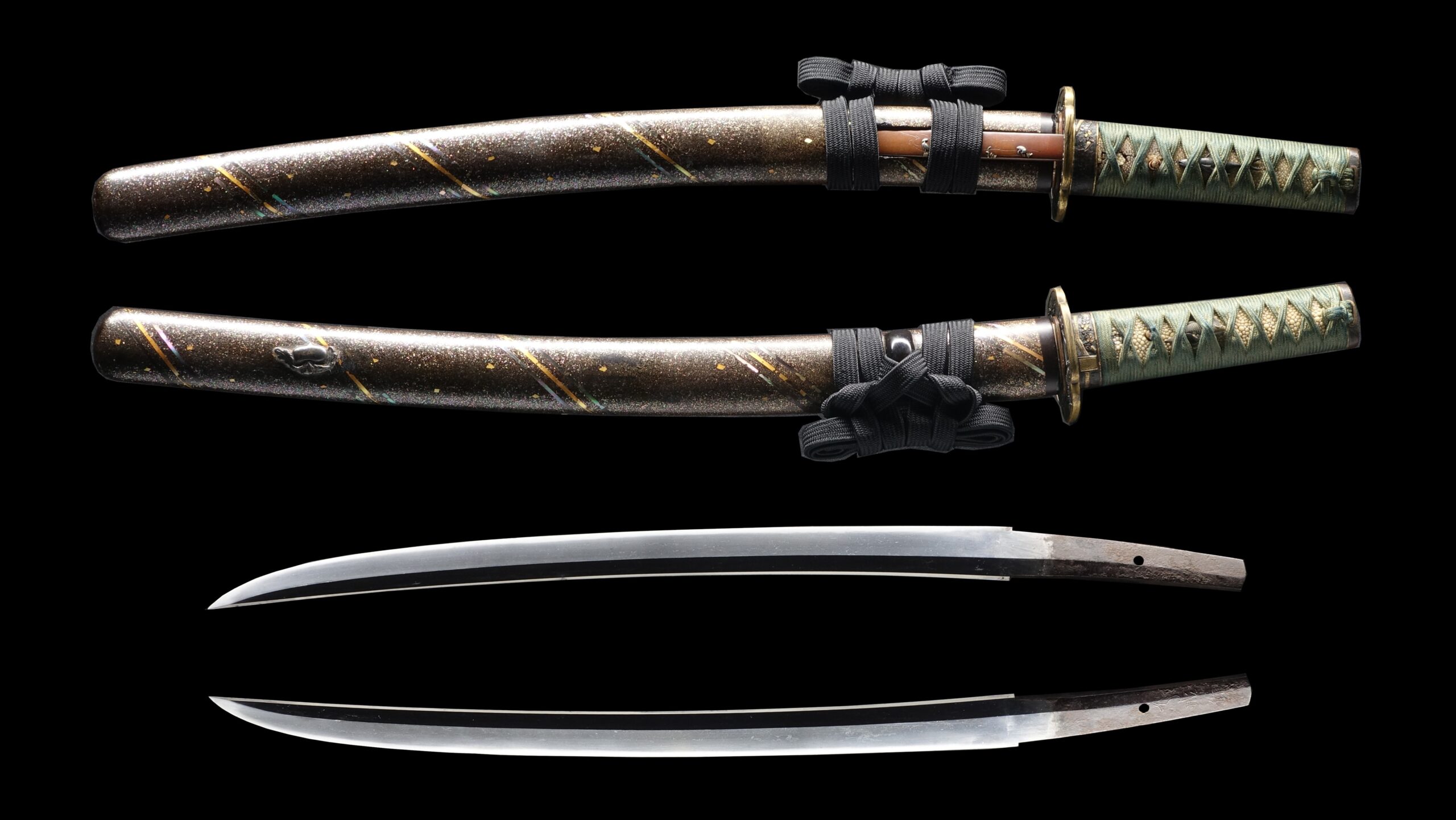
山城伝 · 山城
現在15点販売中
了戒派は鎌倉時代末期、京都山城に興った来の分派である。祖の了戒は古来来国俊の子あるいは門人と伝えられるが、現存する作刀に正応・永仁・嘉元・延慶の紀年銘があって来国俊とほぼ同年代に活躍したことが知られ、説明書はむしろ相弟子、あるいは二字国俊の子と見るのが自然とする。俗名を九郎左衛門尉と称し、子の久信が二代を継ぎ、嘉元二年の長銘年紀の太刀によってその実在と父子の関係が裏づけられる。来の山城風を一段やわらげた手をもって一門を率い、その名は下って数代続き、南北朝より室町にかけては九州に豊後・豊前の筑紫了戒が京の系統より分かれ出た。母体の来から枝分かれしながら、地刃に大和の柾気と相州風の沸の働きをあわせ持つところに一派の位置があり、その流れはのちの信国へと展開してゆく。 一派の作風は穏やかな山城の直刃を本領とする。鍛えは板目あるいは小板目がつみ、しばしば柾に流れてやや肌立ちごころとなり、地沸微塵によくつき、地景細かに入って、一派特有の白け映りが立つ。これが了戒系を母体の来から分かつ第一の見どころで、来の明るい乱れ映り・地斑映りに対し、了戒の映りはより淡く乾いた白けを呈する。刃文は穏やかな中直刃・細直刃を基調とし、処々小丁子・小互の目・小乱れを交え、小足・葉入り、京逆足を見せることもある。見どころは匂口にあって、来国俊より一段締まり、刃中淋しく、部分的にうるみごころを呈し、その内に金筋・砂流し細かにかかって刃縁僅かにほつれ、喰違刃を見せる。帽子は直ぐに小丸、しばしば掃きかける。来とは一見紛れるが、やわらかな地刃・柾気・白け・うるむ匂口によって極まり、姉妹の延寿が丸味の大きい大丸に返るのに対し、了戒は直ぐに小丸へ結んでその直刃はうるむ点で明快に分かれる。祖の了戒は藤代の極めで上作、二代久信は上上作に位し、いずれも父祖の手をほとんど変えずに継いで一派の典型を遺した。 遺例は二つの相に読み分けられる。在銘作は細身の生ぶ太刀と短刀に、棟寄りの第一目釘孔上へ大振りの二字銘「了戒」あるいは三字銘「了久信」を切り、太刀は腰反り高く小鋒に、短刀は内反りで重ね厚く、表に梵字・素剣、裏に護摩箸を彫るものがあって、いかにも鎌倉末期の京の典雅を示す。いま一つの相は大磨上無銘の刀で、輪反りと京風は一見来を想わせるが、締まって沈みうるむ匂口・流れる柾・白けによって了戒と極まる。久信の俳名を示す嘉元の年紀太刀は、かつて父単独の作と読まれた一口が実は父子の合作であることを明らかにした資料として重く、在銘の子は繰り返し極めて稀である。伝来には秋田了戒の短刀をはじめ、宮本武蔵佩刀との伝えを残す太刀、諫早・伊達・前田の各家を経た作があり、指定作の多くは東京国立博物館・佐野美術館・物部神社・徳川美術館などの公私の旧蔵に蔵される。市に現れるのは稀で、わけても在銘生ぶの了戒・久信の作は、京鎌倉物を蒐める者が接しうる最も稀な部類に属し、出会いには時を要する。 詳しく見る →
室町時代
応仁の乱が足利の体制を砕いた後、戦国の一世紀はほとんどすべての国を武装させた。この時代は選ぶ目に報いる。並の作は多いが、その傍らには第一級の注文打ちが立っている。
保存刀剣のうち、出来が一層優れ、保存状態も良好と認められたものです。再刃や、室町・江戸期の多くの無銘作は対象外となり、保存刀剣より高い基準が課されます。
日本美術刀剣保存協会(NBTHK)は、1948年に設立され、文化庁の監督を受ける公益財団法人で、東京・刀剣博物館に本部を置きます。専門の審査員が出品作を直接審査し、美術的・歴史的価値に応じた鑑定書を発行します。NBTHKの鑑定書は、日本刀および刀装具の真正性を示す最も広く認知された基準です。
NBTHK公式サイトReturns/exchanges limited to defects caused by shipping (except willful misconduct or gross negligence by the company); customers must contact within 72 hours of receiving the product.
Antique Japanese Sword Wakizashi Signed by Ryokai with NBTHK Tokubetsu Hozon Certificate 【Description】 This blade was signed by Ryokai (了戒) during the late Muromachi period. Ryokai was one of the most prosperous school in Bungo province (today’s Oita prefecture) during the period. Ryokai School Ryokai was a swordsmith from the late Kamakura period in Yamashiro Province(Today’s Kyoto). It is said that he was a son of Rai Kuniyuki (来国行) and a younger brother of Rai Kunitoshi (来国俊). Both of them are renowned swordsmiths throughout Samurai history. Ryokai founded his own school, and the apprentices were allowed to use Ryokai in their maker’s names. Ryokai’s son was Ryokai Hisanobu, who took over the school. And his apprentice Ryokai Yoshisada also run the school after Hisanobu. However, Ryokai Yoshisda had to evacuate Yamashiro province during the late 14th century because the battle between the south emperor court and the north emperor court became severe. And as a result, Kyoto city was burnt(the late 1300’s). We called it the Nanbokucho war when the Japanese imperial court was separated into two. Ryokai Yoshisda managed to escape and arrive in Kyushu island at Tsukushi Province (Today’s Fukuoka prefecture), looking for better opportunities. And, Yoshisada founded Tsukushi Ryokai school there. Among Japanese sword experts, Ryokai school in Tsukushi province is called Tsukushi Ryokai to distinguish it from the Ryokai school in Yamashiro province. Since the origin of this school came from Yamashiro province, the blades forged by the Tsukushi Ryokai school have characteristics of *Yamashiro Den tradition. Among Tsukushi Ryokai school, the swordsmiths were named with 能 (Yoshi) such as 勝能 (Katsuyoshi). According to its NBTHK appraisal, this blade was signed by a Tsukushi Ryokai. Yamashiro Den Yamashiro province was famous for its sword-making style called YAMASHIRO-DEN. YAMASHIRO-DEN’s origin dates back to the Heian period (794 A.D) when the capital city was moved from Nara to Kyoto. The swordsmiths in Yamashiro province initially prospered by forging swords for court nobles and imperial families. Later on, they also forged swords for feudal lords after Samurai military government took control of Japan. There are so many renowned swordsmiths from this region. It is said that the founder of YAMASHIRO-DEN was Sanjo Munechika. And there were four prestigious main branches in this region. They are Sanjo, Rai, Nobukuni, and Awataguchi. One of the characteristics of YAMASHIRO-DEN is its elegant design and beautiful Jigane (steel surface pattern). This blade represents a great trait of YAMASHIRO-DEN. It is appraised as a Tokubetsu Hozon Token (特別保存刀剣) issued by NBTHK (Nihon Bijutsu Touken Hozon Kyokai: 日本美術刀剣保存協会). This authentication paper was only given to authentic Japanese swords, especially well preserved and high quality with artistic value. *Please keep in mind that there are a few Kitae Kizu on this blade as well as light black rusts. If you like to know the detailed condition, please feel free to contact us. 【Blade】 Cutting Edge Length (Nagasa) : 39.1 cm ( 15.4 inches) Curvature (Sori) : 0.78 cm (0.31 inches) Hamon : The crystalline structure which forms along the cutting edge of a blade as a result of the hardening process. Jimon(Jihada) : visible steel surface pattern created by folding and hammering during forging process Kissaki : Kissaki is the tip of the Japanese sword. Nakago : Nakago is the tang of the Japanese sword. Japanese swordsmiths left the black rust on the tang because it prevents red rust while the tang is in its handle. And the discoloration of the tang was created over time, and it is a great indicator for a Japanese sword specialist to estimate when the sword was forged. Koshirae : Koshirae is the mounting of the Japanese sword. There are several parts that consist of Koshirae such as Saya (Scabbard), Tsuka (Handle), Tsuba (Handguard). Fuchi-Kashira : A pair of matching sword fittings that cover the upper and
NihontoWatch在銘 · Ryokai · 室町 · 長さ 39.1cm · 反り 0.78cm
山城伝 · 山城
現在15点販売中
了戒派は鎌倉時代末期、京都山城に興った来の分派である。祖の了戒は古来来国俊の子あるいは門人と伝えられるが、現存する作刀に正応・永仁・嘉元・延慶の紀年銘があって来国俊とほぼ同年代に活躍したことが知られ、説明書はむしろ相弟子、あるいは二字国俊の子と見るのが自然とする。俗名を九郎左衛門尉と称し、子の久信が二代を継ぎ、嘉元二年の長銘年紀の太刀によってその実在と父子の関係が裏づけられる。来の山城風を一段やわらげた手をもって一門を率い、その名は下って数代続き、南北朝より室町にかけては九州に豊後・豊前の筑紫了戒が京の系統より分かれ出た。母体の来から枝分かれしながら、地刃に大和の柾気と相州風の沸の働きをあわせ持つところに一派の位置があり、その流れはのちの信国へと展開してゆく。 一派の作風は穏やかな山城の直刃を本領とする。鍛えは板目あるいは小板目がつみ、しばしば柾に流れてやや肌立ちごころとなり、地沸微塵によくつき、地景細かに入って、一派特有の白け映りが立つ。これが了戒系を母体の来から分かつ第一の見どころで、来の明るい乱れ映り・地斑映りに対し、了戒の映りはより淡く乾いた白けを呈する。刃文は穏やかな中直刃・細直刃を基調とし、処々小丁子・小互の目・小乱れを交え、小足・葉入り、京逆足を見せることもある。見どころは匂口にあって、来国俊より一段締まり、刃中淋しく、部分的にうるみごころを呈し、その内に金筋・砂流し細かにかかって刃縁僅かにほつれ、喰違刃を見せる。帽子は直ぐに小丸、しばしば掃きかける。来とは一見紛れるが、やわらかな地刃・柾気・白け・うるむ匂口によって極まり、姉妹の延寿が丸味の大きい大丸に返るのに対し、了戒は直ぐに小丸へ結んでその直刃はうるむ点で明快に分かれる。祖の了戒は藤代の極めで上作、二代久信は上上作に位し、いずれも父祖の手をほとんど変えずに継いで一派の典型を遺した。 遺例は二つの相に読み分けられる。在銘作は細身の生ぶ太刀と短刀に、棟寄りの第一目釘孔上へ大振りの二字銘「了戒」あるいは三字銘「了久信」を切り、太刀は腰反り高く小鋒に、短刀は内反りで重ね厚く、表に梵字・素剣、裏に護摩箸を彫るものがあって、いかにも鎌倉末期の京の典雅を示す。いま一つの相は大磨上無銘の刀で、輪反りと京風は一見来を想わせるが、締まって沈みうるむ匂口・流れる柾・白けによって了戒と極まる。久信の俳名を示す嘉元の年紀太刀は、かつて父単独の作と読まれた一口が実は父子の合作であることを明らかにした資料として重く、在銘の子は繰り返し極めて稀である。伝来には秋田了戒の短刀をはじめ、宮本武蔵佩刀との伝えを残す太刀、諫早・伊達・前田の各家を経た作があり、指定作の多くは東京国立博物館・佐野美術館・物部神社・徳川美術館などの公私の旧蔵に蔵される。市に現れるのは稀で、わけても在銘生ぶの了戒・久信の作は、京鎌倉物を蒐める者が接しうる最も稀な部類に属し、出会いには時を要する。 詳しく見る →
室町時代
応仁の乱が足利の体制を砕いた後、戦国の一世紀はほとんどすべての国を武装させた。この時代は選ぶ目に報いる。並の作は多いが、その傍らには第一級の注文打ちが立っている。
保存刀剣のうち、出来が一層優れ、保存状態も良好と認められたものです。再刃や、室町・江戸期の多くの無銘作は対象外となり、保存刀剣より高い基準が課されます。
日本美術刀剣保存協会(NBTHK)は、1948年に設立され、文化庁の監督を受ける公益財団法人で、東京・刀剣博物館に本部を置きます。専門の審査員が出品作を直接審査し、美術的・歴史的価値に応じた鑑定書を発行します。NBTHKの鑑定書は、日本刀および刀装具の真正性を示す最も広く認知された基準です。
NBTHK公式サイトReturns/exchanges limited to defects caused by shipping (except willful misconduct or gross negligence by the company); customers must contact within 72 hours of receiving the product.