Sixty years of war between two courts drove blades long and broad, and Osafune met the demand: Kanemitsu and Chōgi led forges serving the provincial warriors who did the fighting, while Sōshū influence arrived with the armies to create Sōden-Bizen.
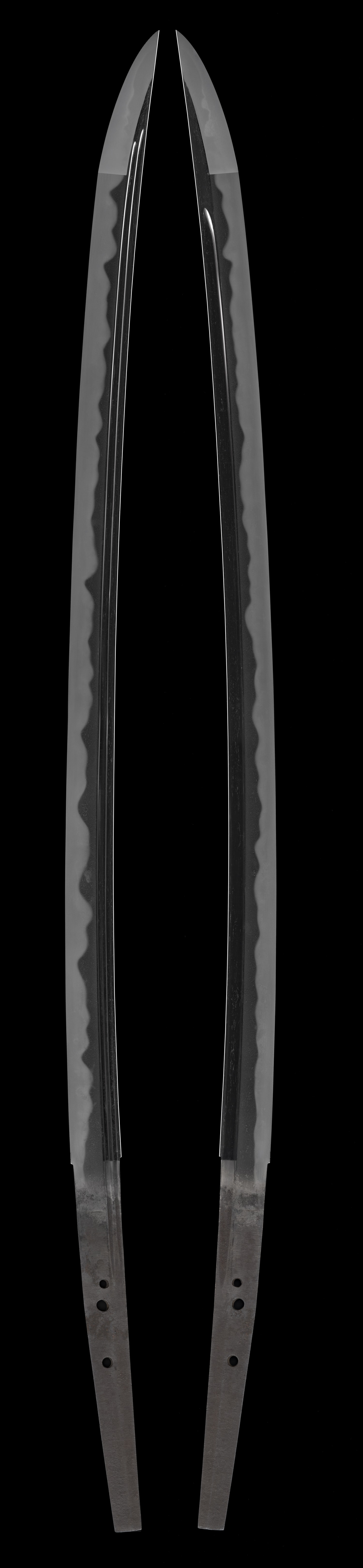
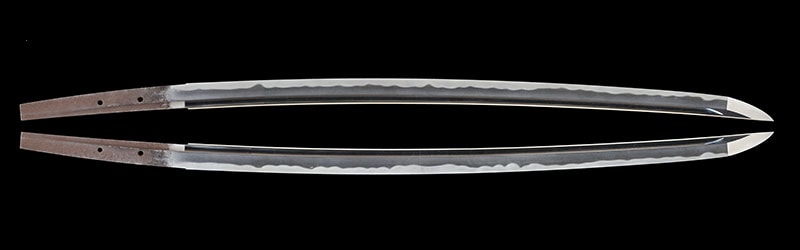
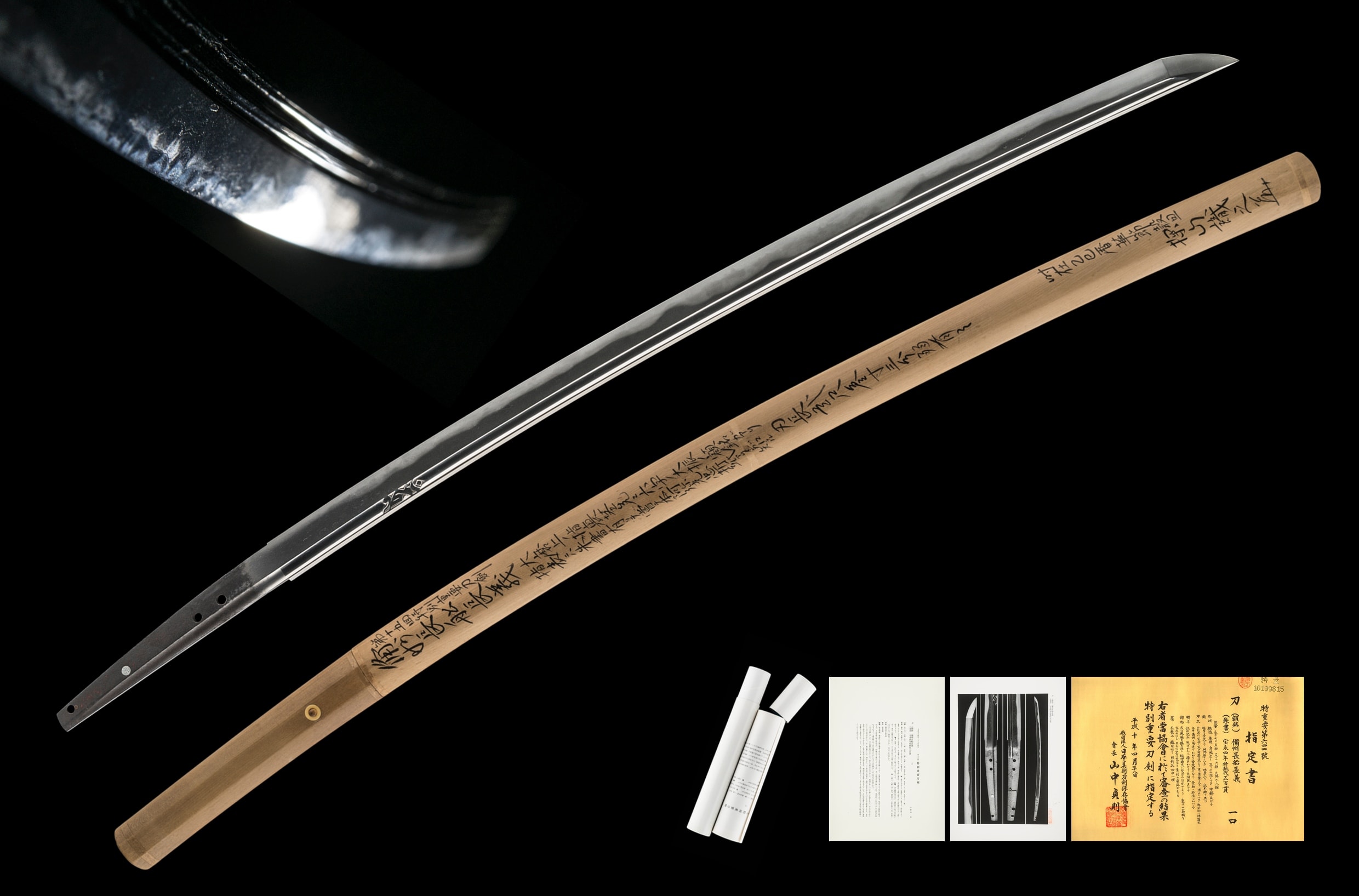
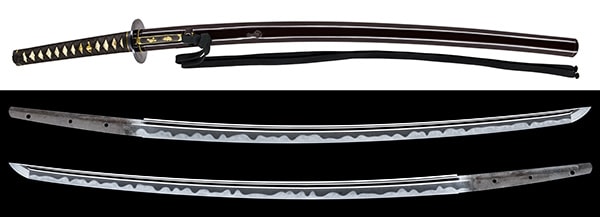
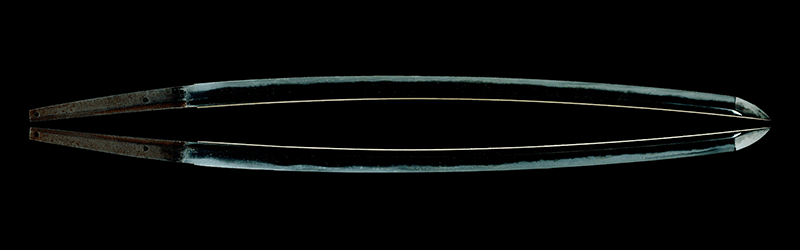
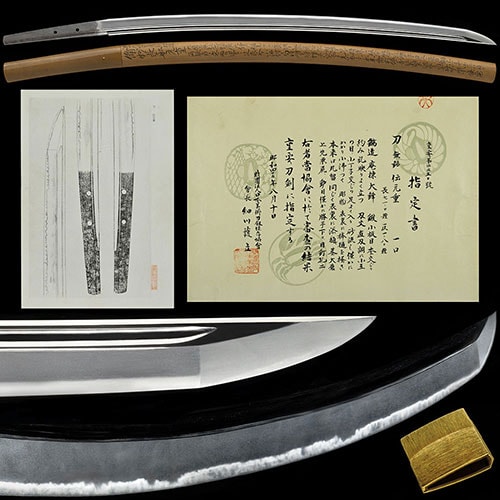
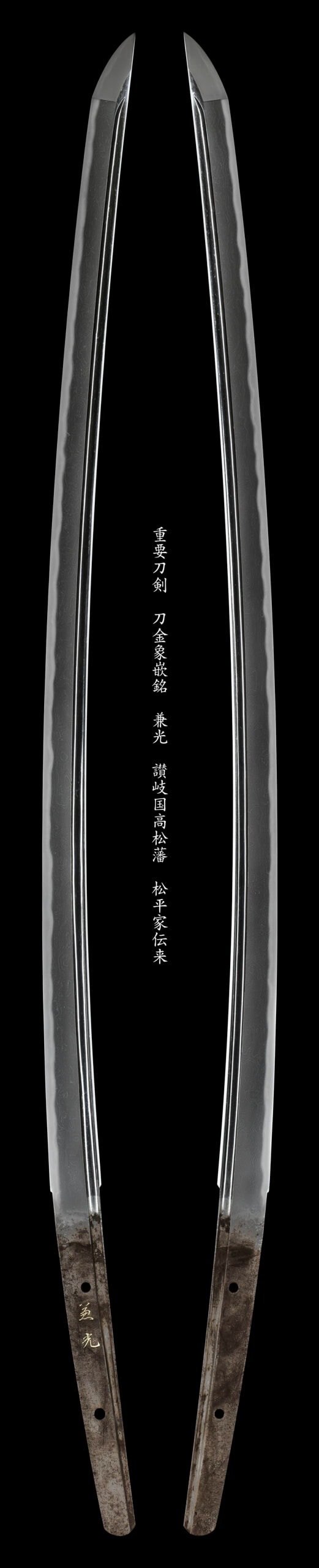
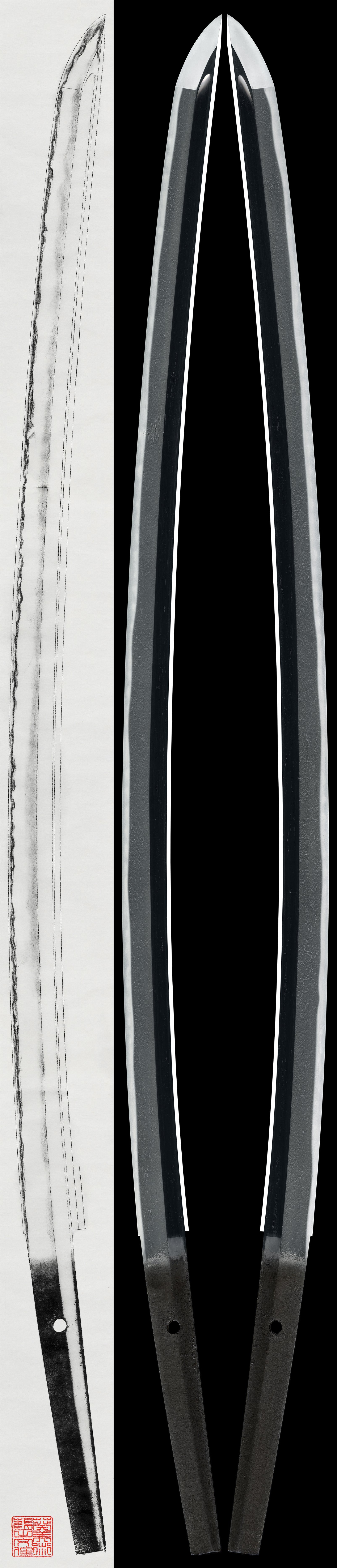
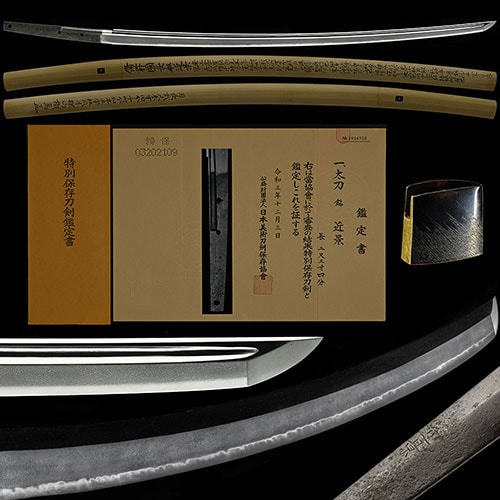
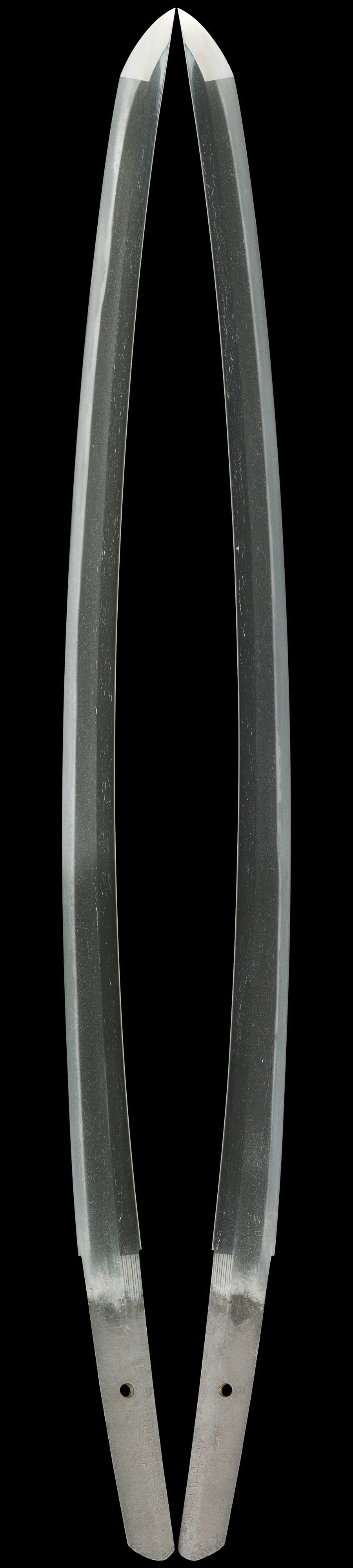
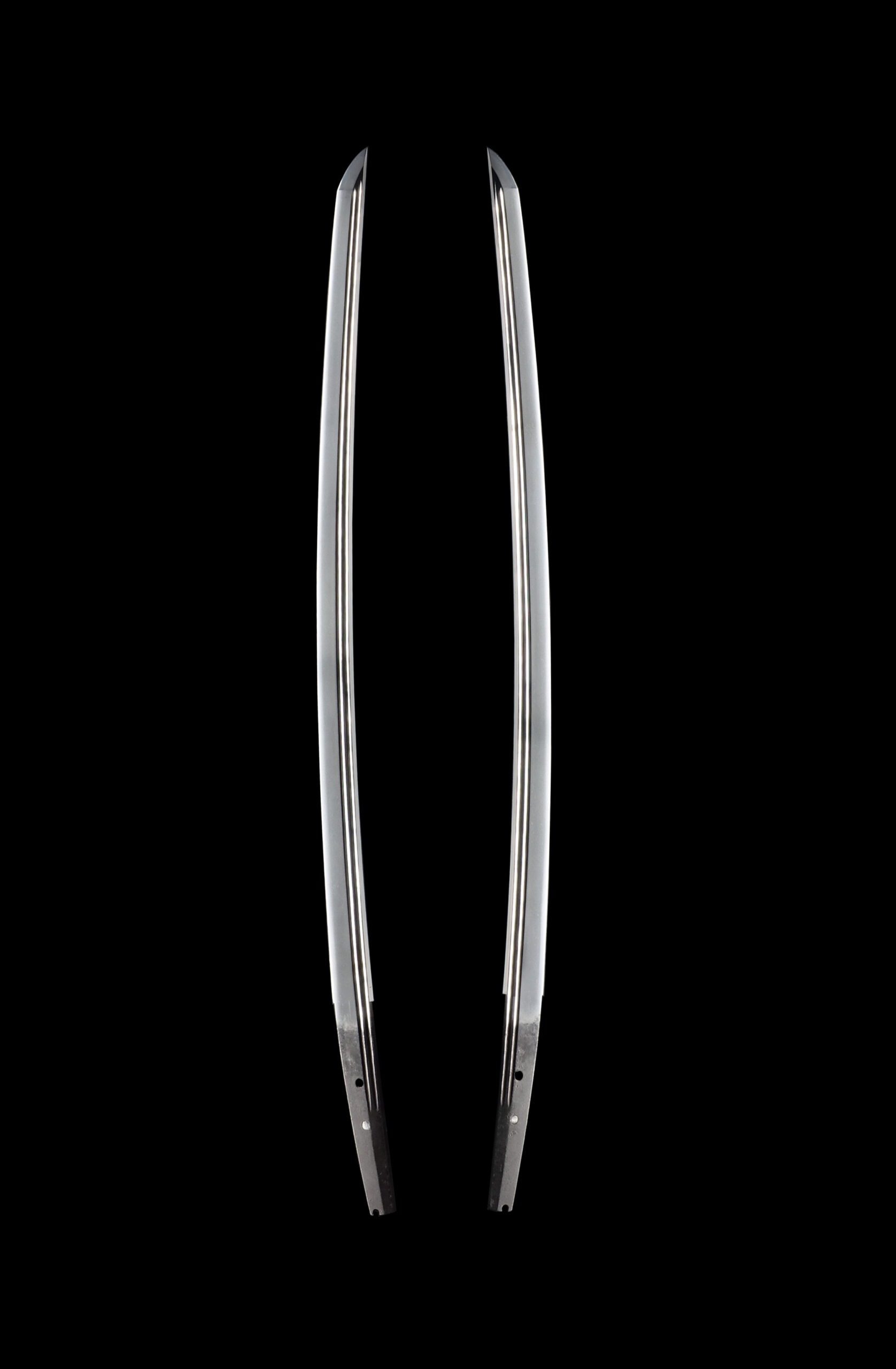
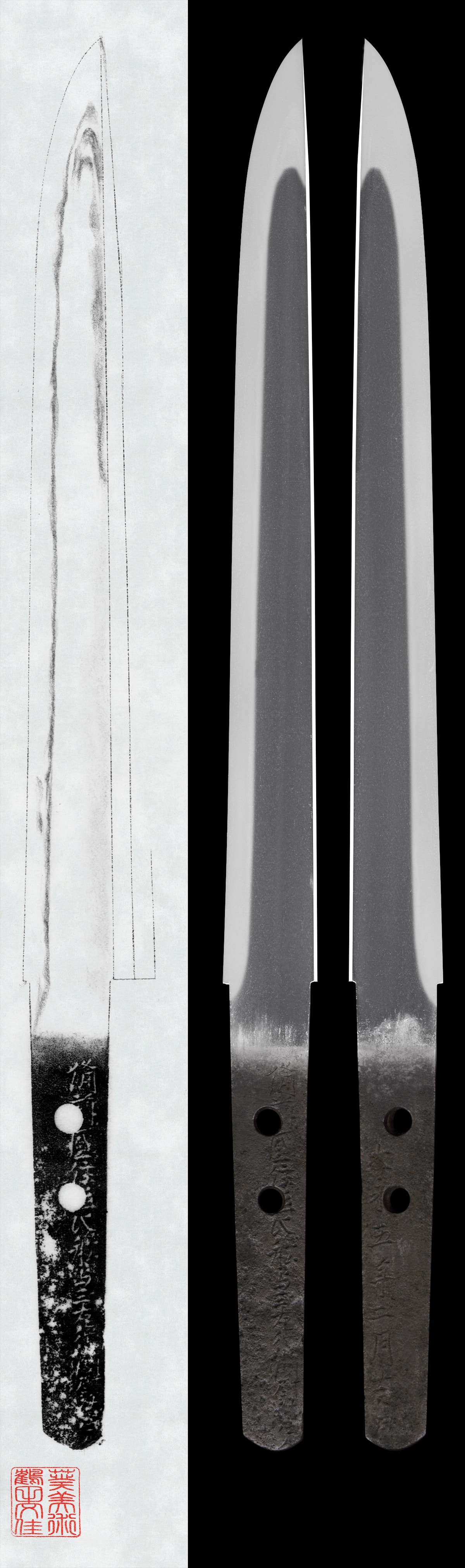
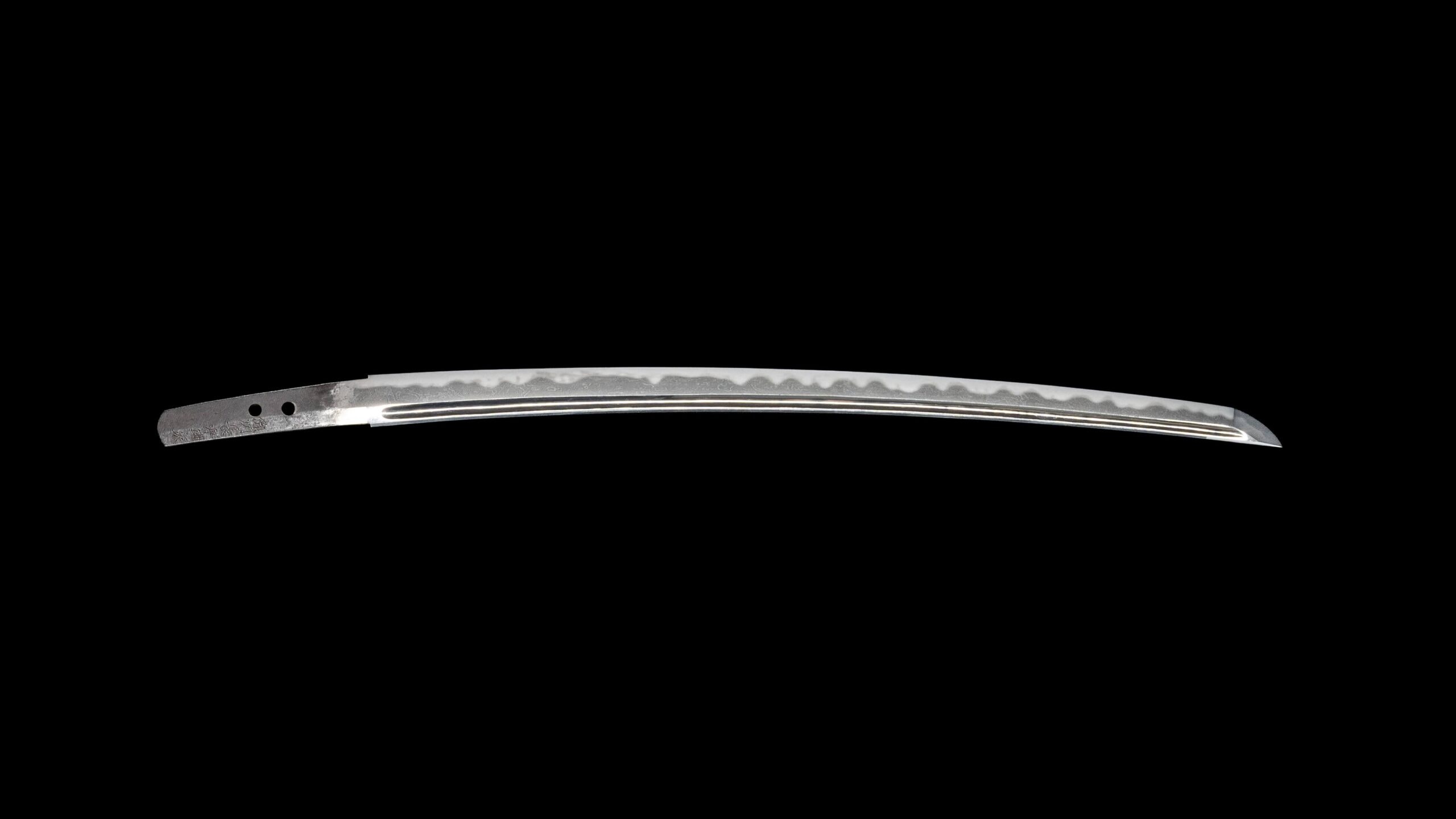
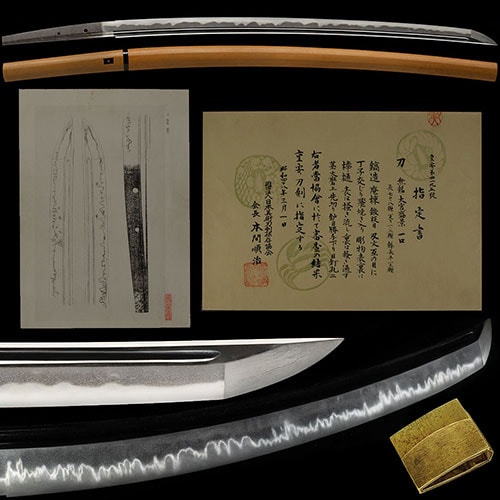
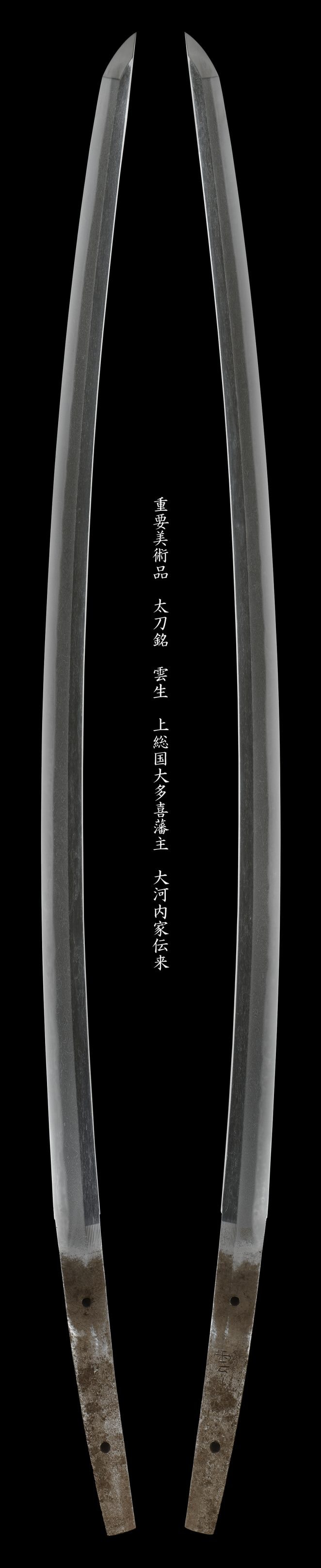
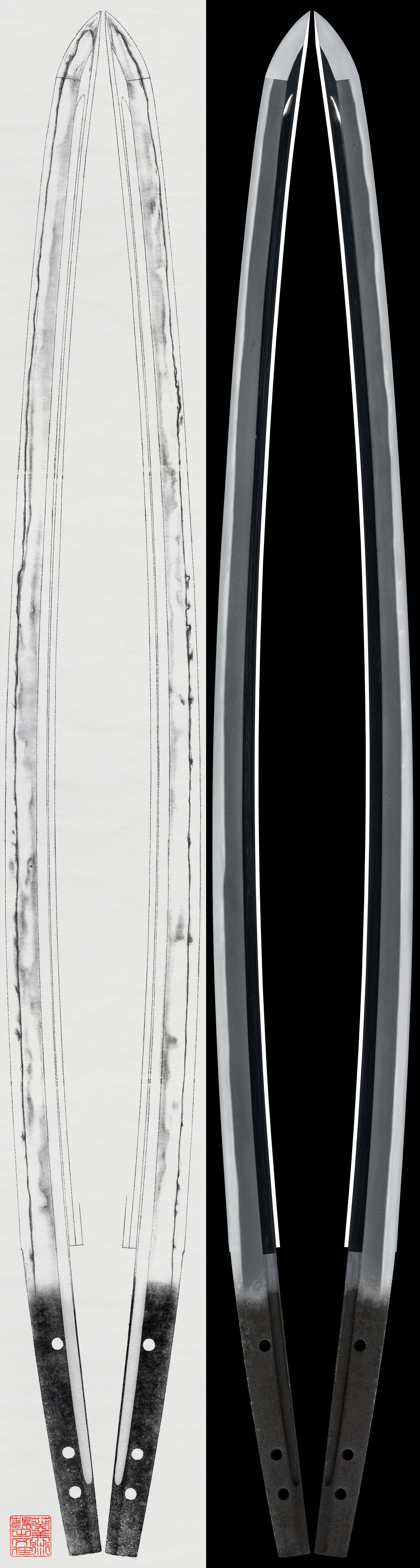
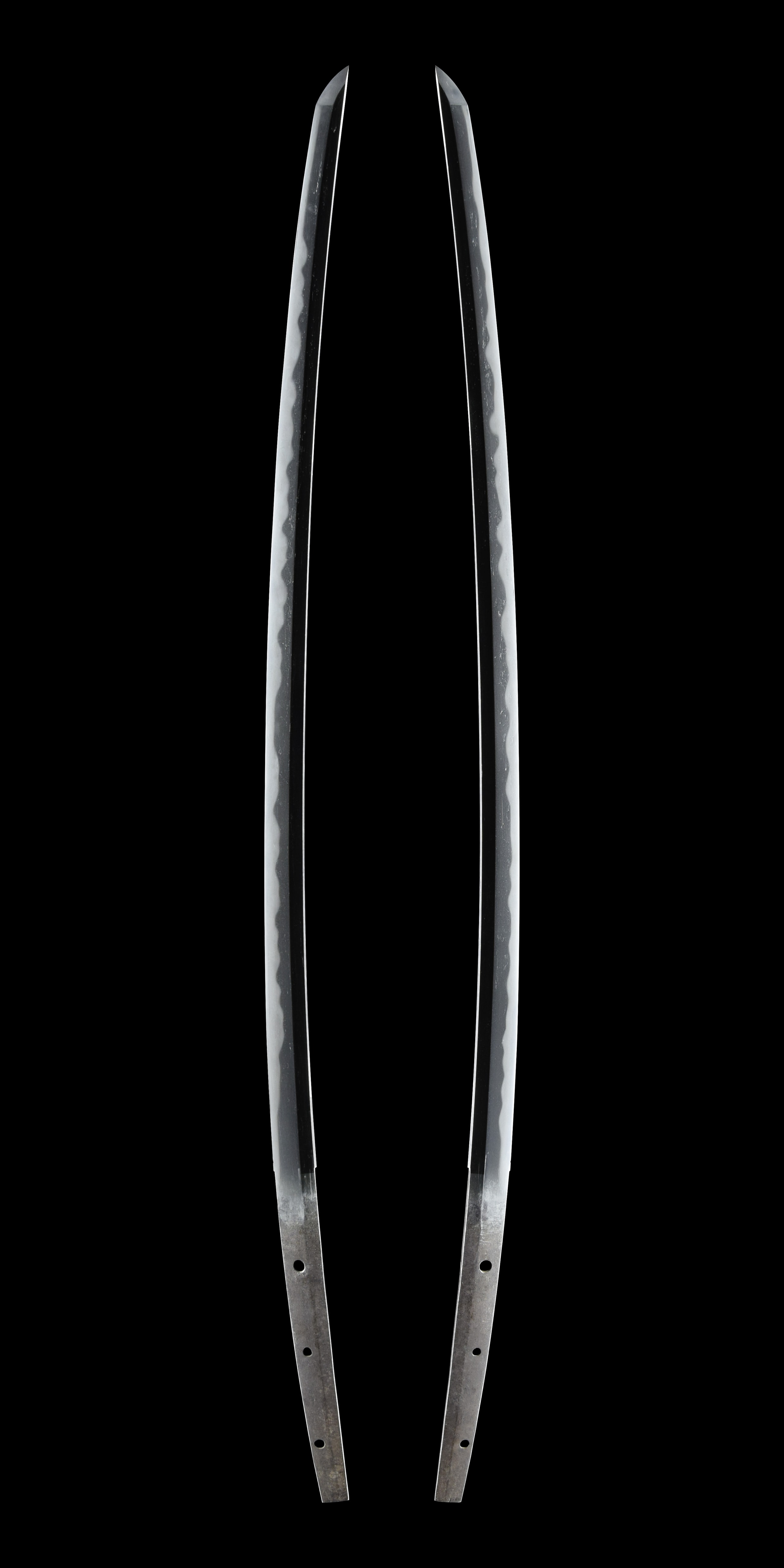
This katana is attributed to Den Chōgi (Nagayoshi), a disciple of Masamune, and designated as Jūyō Tōken in 1967. The blade is ō-suriage (shortened in antiquity) and bears a sayagaki by Kanzan (Dr. Honma Junji). Kanzan’s inscription attests to the blade’s quality, praising its healthy steel and appropriate workmanship.
 NihontoWatch
mumei · Sō-Bizen · Koto · nagasa 60.4cm
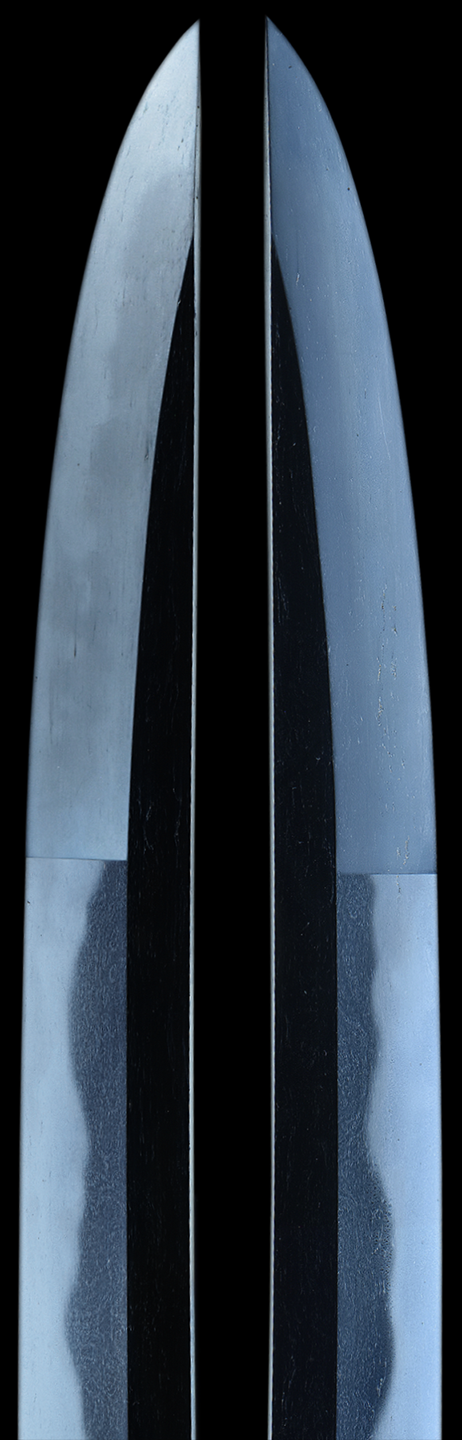
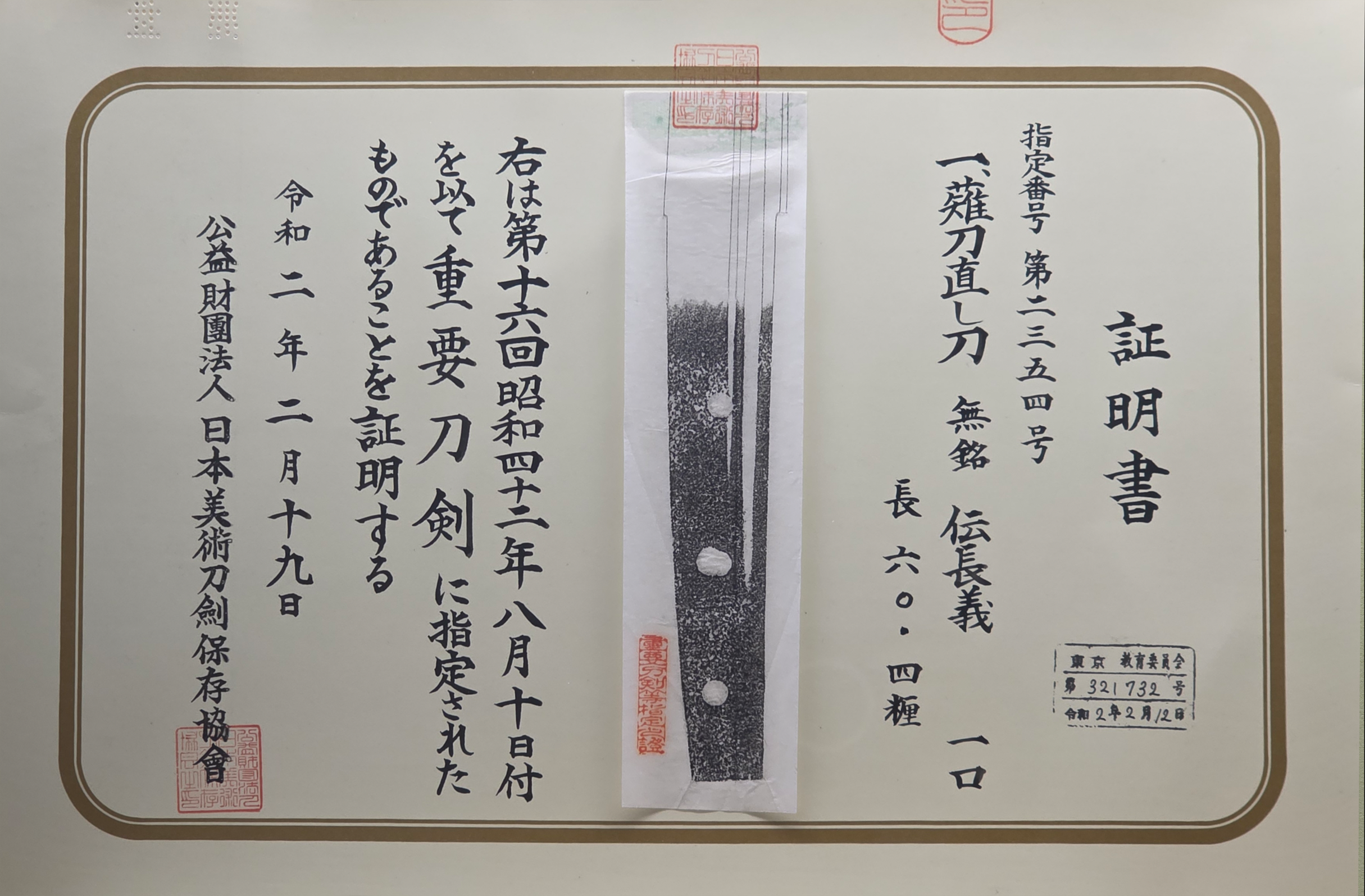
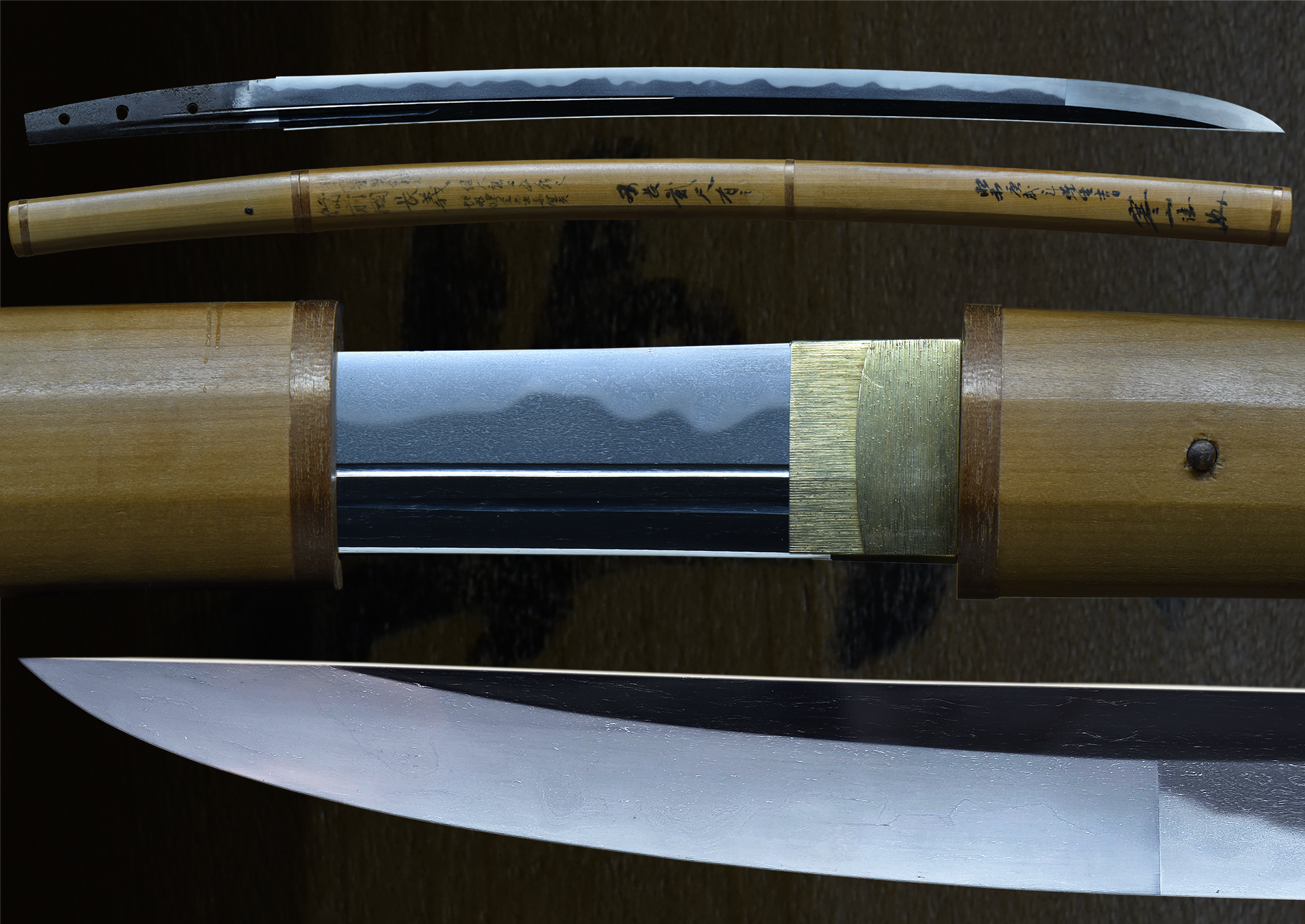
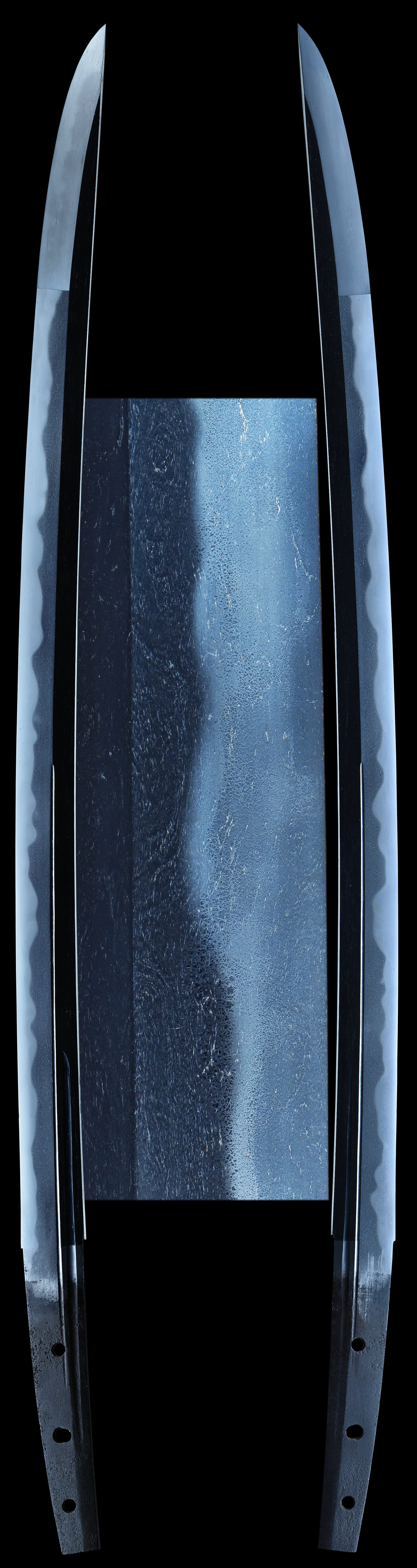
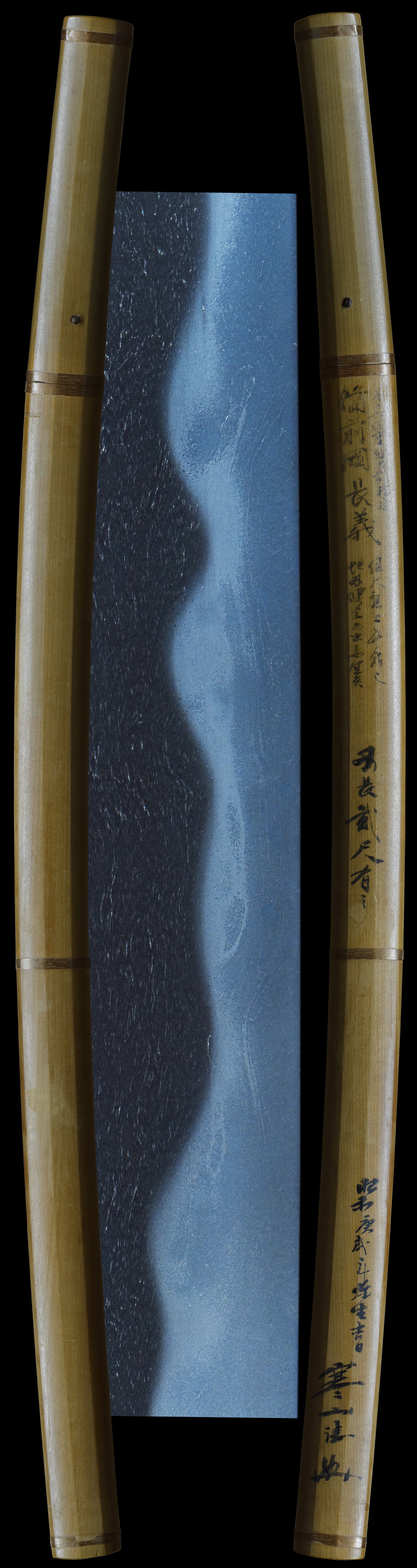
Chogi (Soden-Bizen) · Bizen · around 1356-1379
Fujishiro Sai-jo saku
1 piece on the market now
Chogi (長義) was the leading Bizen smith of the Nanbokucho age, a master whom the published sources name in the same breath as Kanemitsu as one who, together with Kanemitsu, displayed outstanding skill[[c:1]] among the many Bizen smiths of the period grouped under the appellation Soden-Bizen. One tradition transmits him as a descendant of the Osafune mainline smith Sanenaga, and the dated blades that survive run from the Jowa years through Koryaku, so his career sits squarely in the high Nanbokucho decades of Enbun and Joji. The sources draw a clear line between two faces of his work, one in which nioi prevails and one in which the nie of the jigane and hamon runs strong, and it is the second of these that earned him the phrase repeated again and again across his papers, that of all Bizen smiths Chogi is the one whose work departs furthest from Bizen[[c:2]].
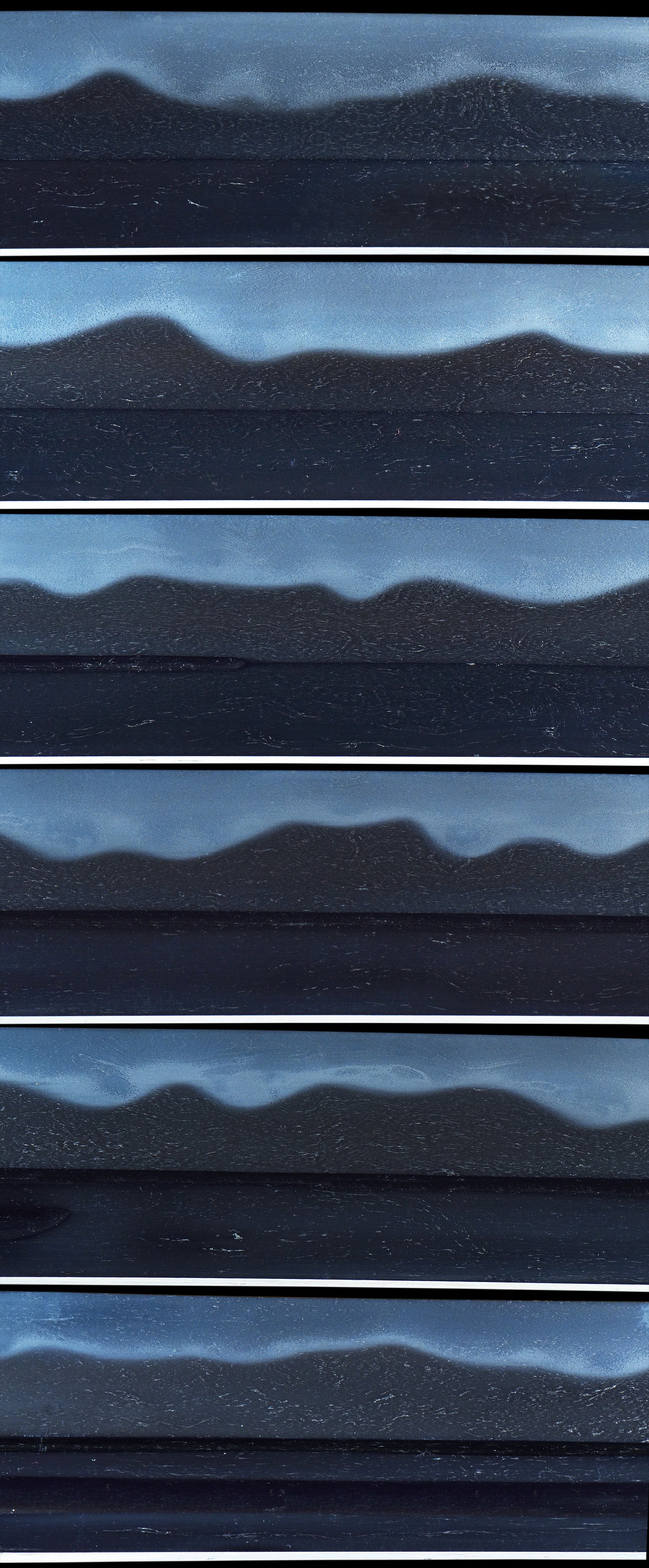
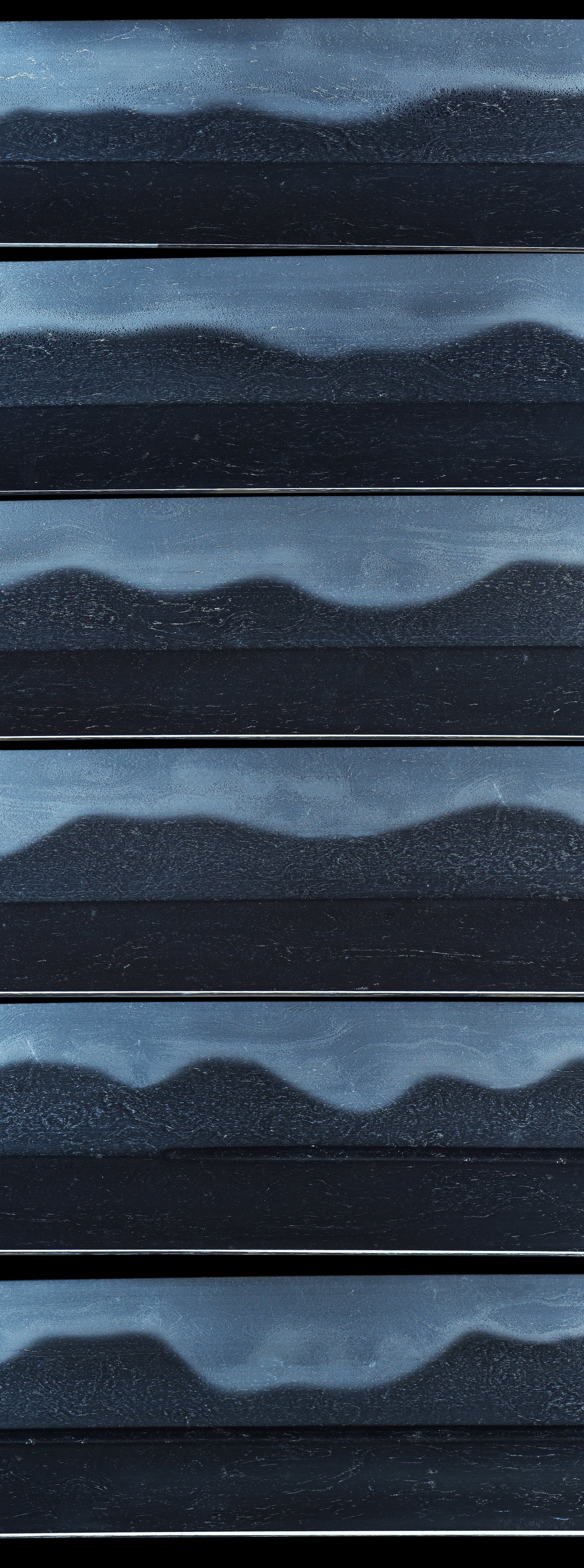
The first thing to look for is not a borrowed resemblance but his own typical hand. Over a base of notare he tempers a bold, varied midare in which gunome, choji, angular ha and pointed togari elements crowd together, and at intervals two gunome lean head to head into an ear shape, the mimigata that the sources single out as the form to watch for in his work. On the Shotoku wakizashi the judges write that the notare-toned hamon mixing ear-shaped ha is this smith's typical work[[c:3]], and on a signed tanto they describe the notare ha whose head splits in two into the ear-shaped ha[[c:4]]. This is the surest Chogi tell, more reliable than any single famous comparison, because it recurs across signed and attributed blades alike and belongs to no other hand in quite this form.
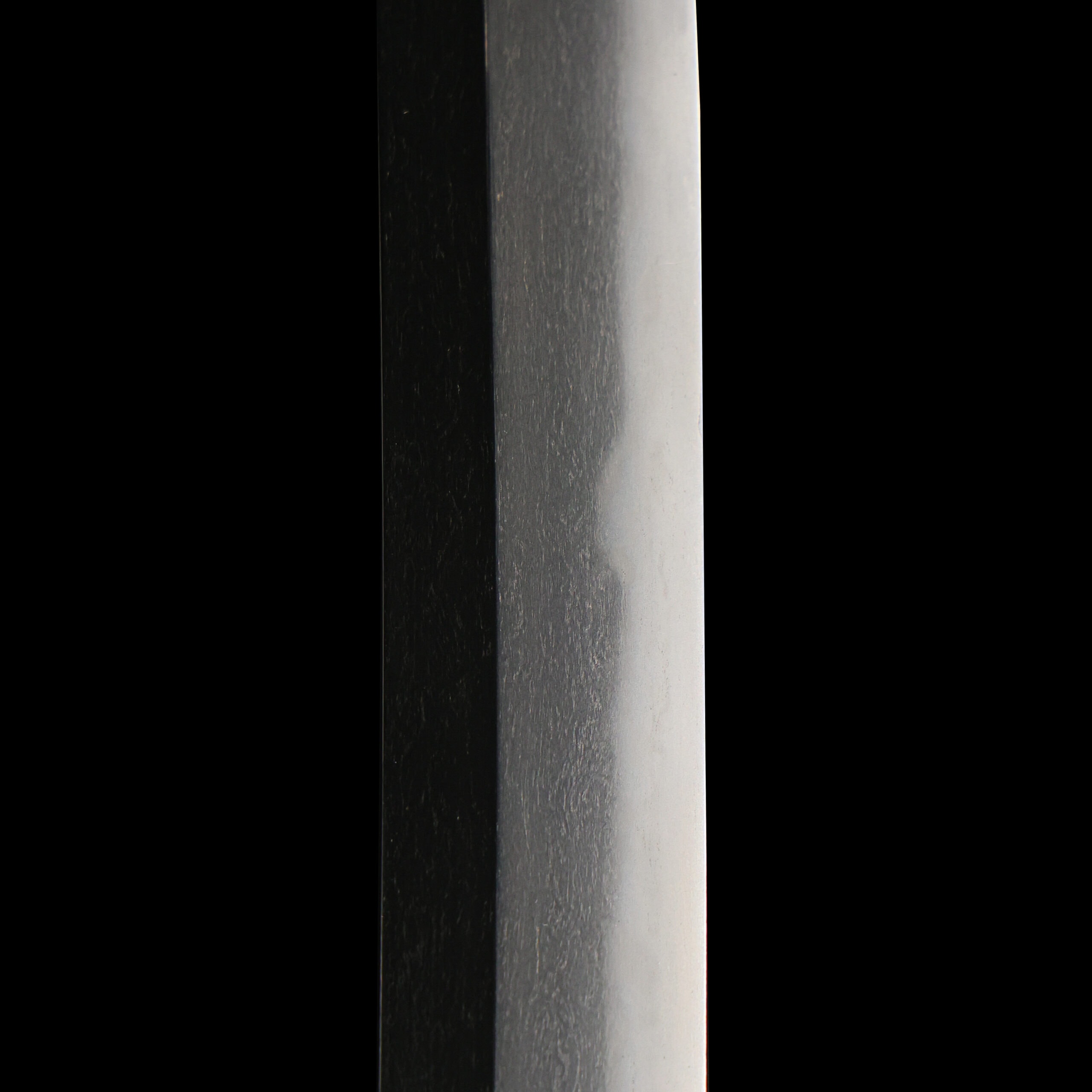
Within the temper the activity is profuse and Soshu in feeling. Ashi and yo enter freely, the nie gathers thick and at times clustered, kinsuji and sunagashi run through the ha, and tobiyaki and yubashiri drift above it, so that the nioiguchi is now bright, now slightly subdued. The judges note that in his nie-strong work the Soshu manner is emphasized even more than in Kanemitsu, which is precisely why the old saying about the most un-Bizen of Bizen smiths attaches to him. Yet the hamon never loses its Bizen footing, and the choji and mountain-shaped clusters keep the reading anchored in the province.
The jigane answers the temper. The itame stands, often a touch hada-tatsu, carries thick ji-nie and abundant well-entering chikei, and beneath the Soshu fire a midare-utsuri rises, faint on some blades and vivid on others. It is this doubling, Soshu nie worked into a jigane that still throws a Bizen utsuri, that lets a Chogi be read at sight, and the sources say plainly that his forging lays thick ji-nie over itame and mixes in chikei. The boshi follows the disorder of the ha. It runs midare-komi, often turning pointed in togari, with hakikake sweeping the tip and at times a thrusting-up tsukiage before a short ko-maru turn-back, a strong and restless point that the judges repeatedly single out for its force.
The shape is the grand Nanbokucho figure, broad in the mihaba with little taper from base to tip, shallow in the sori and extended into an o-kissaki, imposing and o-buri. Most of his surviving blades are osuriage-mumei o-dachi later shortened, their bearing still vividly of the Enbun and Joji peak, and among the signed work are fine nie-rich tanto and a dated tanto of Oan. The most celebrated piece is the Yamanbagiri Chogi, an Important Cultural Property and the very blade that Horikawa Kunihiro famously copied, though that history comes from outside the published sources rather than from the catalog records themselves.
For the collector Chogi is, by the measure of a name this great, comparatively within reach. Fujishiro grades him Sai-jo saku, and he holds no National Treasure, but five of his blades are Important Cultural Properties and a strong body of his work carries Tokubetsu Juyo and Juyo papers, with thirty-two at the Tokubetsu Juyo tier. The provenance is illustrious: blades descend through the Mito Tokugawa and Kishu Tokugawa houses, one passed through the Hori family of the Iida domain in Shinano and the collection of Ito Miyoji. Held across public institutions and long-private hands, a Chogi surfaces only occasionally, and is a major acquisition whenever it does.
Where Chogi stands among comparable artisans: across all of nihontō, and within tradition, era, and period. The tiers (Foremost · Leading · Major · Notable) weigh official designations from the NBTHK and Japan's Agency for Cultural Affairs, together with historical honors of lasting repute such as the Sansaku and Meibutsu-chō.
Select a lens to see how it's measured.
Years he was demonstrably active, proven by signed-and-dated blades
Bizen-den
Phase: Sōden-Bizen相伝備前· 1330–1394
8 pieces on the market now
The Soden Bizen school encompasses the group of Nanbokucho-period Osafune smiths in Bizen Province whose work absorbed the technical influence of the Soshu-den, producing a distinctive synthesis that stands apart from both orthodox Bizen and pure Sagami practice. The school divides into two principal lineages: the Kanemitsu group, representing the direct main line of Osafune that descends from Mitsutada through Nagamitsu and Kagemitsu; and the Chogi group, a collateral branch whose members carried the Soshu idiom to its most expressive extremes within Bizen. Kanemitsu, the chakuryu heir of Kagemitsu, pioneered the broad, relaxed notare-based midare that defines the mature Nanbokucho Osafune manner, while Chogi -- described by the NBTHK as the smith "who departs furthest from Bizen" among Bizen makers -- pushed nie-dominant forging to a level that rivals the output of the great Sagami smiths themselves. Together with disciples and contemporaries including Tomomitsu, Motomitsu, Masamitsu, Yoshimitsu, Kanenaga, Nagashige, and Nagamori, they constitute one of the most prolific and technically accomplished groups in the history of Japanese swordsmithing. The school's collective technical identity is anchored in a shared jigane of itame-hada mixed with mokume, with fine ji-nie adhering thickly, chikei entering well, and midare-utsuri standing out -- a persistent Bizen hallmark that survives even in the most Soshu-inflected work. The sugata overwhelmingly reflects the grand Nanbokucho taihai: wide mihaba with little taper between base and tip, and an extended chu-kissaki or o-kissaki conveying martial vigor. Within this shared framework, two distinct temperaments emerge.
" Yoshimitsu likewise inherits the small-pattern tendency, producing ko-gunome mixed with ko-choji whose restraint the NBTHK praises as "upper rank" Soden Bizen. The Chogi lineage, by contrast, emphasizes powerful nie in both ji and ha: Chogi's flamboyant large-scale midare weaves together gunome, choji, togariba, and koshi-hiraki forms with tobiyaki and yubashiri scattering freely, while kinsuji and sunagashi streak through the hardened edge. " Nagashige, now thought to be Chogi's elder brother rather than his junior, works a gentler, smaller-patterned midare yet with nie so strong as to "even surpass Chogi," while Nagamori occupies an intermediate position, his "somewhat smaller patterning" accompanied by rich internal activity. The historical significance of the Soden Bizen school lies in its demonstration that the Soshu influence, far from merely displacing Bizen conventions, catalyzed an extraordinary expansion of the Osafune repertoire. " The NBTHK's evaluative language across the school converges on consistent themes: the forging is "meticulous" and "excellent-quality," the nioiguchi "bright and clear," and the finest examples display a kenzen condition that attests to the soundness of Bizen steel at its peak. The abundance of dated inscriptions -- from Kanemitsu's forty-five-year span through Masamitsu's four-decade career extending into the early Muromachi period -- provides an unusually well-documented chronological framework, with later works by Masamitsu and Yoshimitsu pointing toward the subsequent development of Oei Bizen. Within the broader canon, the Soden Bizen school stands as the fullest realization of the creative possibilities that emerged when two of Japan's greatest forging traditions met and merged. Learn more →
| Smith | Era | Designated |
|---|---|---|
| Chogi長義 | 1356-1379 | 108 |
| Kanenaga兼長 | 1362-1388 | 94 |
| Nagashige長重 | 1334-1342 | 16 |
| Yoshikage義景 | 1334-1363 | 66 |
| Nagashige長重 | 1356-1361 | 0 |
Bizen in the Nanbokuchō period
Sixty years of war between two courts drove blades long and broad, and Osafune met the demand: Kanemitsu and Chōgi led forges serving the provincial warriors who did the fighting, while Sōshū influence arrived with the armies to create Sōden-Bizen.
A blade of top-grade workmanship and condition, formally judged to rank with a nationally recognized Important Art Object (Jūyō Bijutsuhin). Awarded only at the NBTHK’s competitive annual examination.
Of Japan’s roughly 2.5 million registered swords, only 12,307 (about 1 in 203) have ever attained Jūyō.
The NBTHK (Nihon Bijutsu Tōken Hozon Kyōkai, the Society for the Preservation of Japanese Art Swords) is a public-interest incorporated foundation founded in 1948 and supervised by Japan’s Agency for Cultural Affairs (Bunkachō); it is based at the Japanese Sword Museum in Tokyo. Its expert panels physically examine each submitted work (shinsa) and issue a certificate (kanteishō) ranking it by artistic and historical merit. NBTHK papers are the most widely recognized standard of authentication for Japanese swords and fittings.
NBTHK official siteWe offer a 48 hour inspection period for all Antique items shipped within the United States only. If the item is not to your satisfaction, we will gladly refund your money less any shipping and handling fees. All sales are final after the 48 hour inspection period. Please note that all discounted items are a final sale and not returnable.

Price on request
This katana is attributed to Den Chōgi (Nagayoshi), a disciple of Masamune, and designated as Jūyō Tōken in 1967. The blade is ō-suriage (shortened in antiquity) and bears a sayagaki by Kanzan (Dr. Honma Junji). Kanzan’s inscription attests to the blade’s quality, praising its healthy steel and appropriate workmanship.
NihontoWatchmumei · Sō-Bizen · Koto · nagasa 60.4cm
Chogi (Soden-Bizen) · Bizen · around 1356-1379
Fujishiro Sai-jo saku
1 piece on the market now
Chogi (長義) was the leading Bizen smith of the Nanbokucho age, a master whom the published sources name in the same breath as Kanemitsu as one who, together with Kanemitsu, displayed outstanding skill[[c:1]] among the many Bizen smiths of the period grouped under the appellation Soden-Bizen. One tradition transmits him as a descendant of the Osafune mainline smith Sanenaga, and the dated blades that survive run from the Jowa years through Koryaku, so his career sits squarely in the high Nanbokucho decades of Enbun and Joji. The sources draw a clear line between two faces of his work, one in which nioi prevails and one in which the nie of the jigane and hamon runs strong, and it is the second of these that earned him the phrase repeated again and again across his papers, that of all Bizen smiths Chogi is the one whose work departs furthest from Bizen[[c:2]].
The first thing to look for is not a borrowed resemblance but his own typical hand. Over a base of notare he tempers a bold, varied midare in which gunome, choji, angular ha and pointed togari elements crowd together, and at intervals two gunome lean head to head into an ear shape, the mimigata that the sources single out as the form to watch for in his work. On the Shotoku wakizashi the judges write that the notare-toned hamon mixing ear-shaped ha is this smith's typical work[[c:3]], and on a signed tanto they describe the notare ha whose head splits in two into the ear-shaped ha[[c:4]]. This is the surest Chogi tell, more reliable than any single famous comparison, because it recurs across signed and attributed blades alike and belongs to no other hand in quite this form.
Within the temper the activity is profuse and Soshu in feeling. Ashi and yo enter freely, the nie gathers thick and at times clustered, kinsuji and sunagashi run through the ha, and tobiyaki and yubashiri drift above it, so that the nioiguchi is now bright, now slightly subdued. The judges note that in his nie-strong work the Soshu manner is emphasized even more than in Kanemitsu, which is precisely why the old saying about the most un-Bizen of Bizen smiths attaches to him. Yet the hamon never loses its Bizen footing, and the choji and mountain-shaped clusters keep the reading anchored in the province.
The jigane answers the temper. The itame stands, often a touch hada-tatsu, carries thick ji-nie and abundant well-entering chikei, and beneath the Soshu fire a midare-utsuri rises, faint on some blades and vivid on others. It is this doubling, Soshu nie worked into a jigane that still throws a Bizen utsuri, that lets a Chogi be read at sight, and the sources say plainly that his forging lays thick ji-nie over itame and mixes in chikei. The boshi follows the disorder of the ha. It runs midare-komi, often turning pointed in togari, with hakikake sweeping the tip and at times a thrusting-up tsukiage before a short ko-maru turn-back, a strong and restless point that the judges repeatedly single out for its force.
The shape is the grand Nanbokucho figure, broad in the mihaba with little taper from base to tip, shallow in the sori and extended into an o-kissaki, imposing and o-buri. Most of his surviving blades are osuriage-mumei o-dachi later shortened, their bearing still vividly of the Enbun and Joji peak, and among the signed work are fine nie-rich tanto and a dated tanto of Oan. The most celebrated piece is the Yamanbagiri Chogi, an Important Cultural Property and the very blade that Horikawa Kunihiro famously copied, though that history comes from outside the published sources rather than from the catalog records themselves.
For the collector Chogi is, by the measure of a name this great, comparatively within reach. Fujishiro grades him Sai-jo saku, and he holds no National Treasure, but five of his blades are Important Cultural Properties and a strong body of his work carries Tokubetsu Juyo and Juyo papers, with thirty-two at the Tokubetsu Juyo tier. The provenance is illustrious: blades descend through the Mito Tokugawa and Kishu Tokugawa houses, one passed through the Hori family of the Iida domain in Shinano and the collection of Ito Miyoji. Held across public institutions and long-private hands, a Chogi surfaces only occasionally, and is a major acquisition whenever it does.
Where Chogi stands among comparable artisans: across all of nihontō, and within tradition, era, and period. The tiers (Foremost · Leading · Major · Notable) weigh official designations from the NBTHK and Japan's Agency for Cultural Affairs, together with historical honors of lasting repute such as the Sansaku and Meibutsu-chō.
Select a lens to see how it's measured.
Years he was demonstrably active, proven by signed-and-dated blades
Bizen-den
Phase: Sōden-Bizen相伝備前· 1330–1394
8 pieces on the market now
The Soden Bizen school encompasses the group of Nanbokucho-period Osafune smiths in Bizen Province whose work absorbed the technical influence of the Soshu-den, producing a distinctive synthesis that stands apart from both orthodox Bizen and pure Sagami practice. The school divides into two principal lineages: the Kanemitsu group, representing the direct main line of Osafune that descends from Mitsutada through Nagamitsu and Kagemitsu; and the Chogi group, a collateral branch whose members carried the Soshu idiom to its most expressive extremes within Bizen. Kanemitsu, the chakuryu heir of Kagemitsu, pioneered the broad, relaxed notare-based midare that defines the mature Nanbokucho Osafune manner, while Chogi -- described by the NBTHK as the smith "who departs furthest from Bizen" among Bizen makers -- pushed nie-dominant forging to a level that rivals the output of the great Sagami smiths themselves. Together with disciples and contemporaries including Tomomitsu, Motomitsu, Masamitsu, Yoshimitsu, Kanenaga, Nagashige, and Nagamori, they constitute one of the most prolific and technically accomplished groups in the history of Japanese swordsmithing. The school's collective technical identity is anchored in a shared jigane of itame-hada mixed with mokume, with fine ji-nie adhering thickly, chikei entering well, and midare-utsuri standing out -- a persistent Bizen hallmark that survives even in the most Soshu-inflected work. The sugata overwhelmingly reflects the grand Nanbokucho taihai: wide mihaba with little taper between base and tip, and an extended chu-kissaki or o-kissaki conveying martial vigor. Within this shared framework, two distinct temperaments emerge.
" Yoshimitsu likewise inherits the small-pattern tendency, producing ko-gunome mixed with ko-choji whose restraint the NBTHK praises as "upper rank" Soden Bizen. The Chogi lineage, by contrast, emphasizes powerful nie in both ji and ha: Chogi's flamboyant large-scale midare weaves together gunome, choji, togariba, and koshi-hiraki forms with tobiyaki and yubashiri scattering freely, while kinsuji and sunagashi streak through the hardened edge. " Nagashige, now thought to be Chogi's elder brother rather than his junior, works a gentler, smaller-patterned midare yet with nie so strong as to "even surpass Chogi," while Nagamori occupies an intermediate position, his "somewhat smaller patterning" accompanied by rich internal activity. The historical significance of the Soden Bizen school lies in its demonstration that the Soshu influence, far from merely displacing Bizen conventions, catalyzed an extraordinary expansion of the Osafune repertoire. " The NBTHK's evaluative language across the school converges on consistent themes: the forging is "meticulous" and "excellent-quality," the nioiguchi "bright and clear," and the finest examples display a kenzen condition that attests to the soundness of Bizen steel at its peak. The abundance of dated inscriptions -- from Kanemitsu's forty-five-year span through Masamitsu's four-decade career extending into the early Muromachi period -- provides an unusually well-documented chronological framework, with later works by Masamitsu and Yoshimitsu pointing toward the subsequent development of Oei Bizen. Within the broader canon, the Soden Bizen school stands as the fullest realization of the creative possibilities that emerged when two of Japan's greatest forging traditions met and merged. Learn more →
| Smith | Era | Designated |
|---|---|---|
| Chogi長義 | 1356-1379 | 108 |
| Kanenaga兼長 | 1362-1388 | 94 |
| Nagashige長重 | 1334-1342 | 16 |
| Yoshikage義景 | 1334-1363 | 66 |
| Nagashige長重 | 1356-1361 | 0 |
Bizen in the Nanbokuchō period
Sixty years of war between two courts drove blades long and broad, and Osafune met the demand: Kanemitsu and Chōgi led forges serving the provincial warriors who did the fighting, while Sōshū influence arrived with the armies to create Sōden-Bizen.
A blade of top-grade workmanship and condition, formally judged to rank with a nationally recognized Important Art Object (Jūyō Bijutsuhin). Awarded only at the NBTHK’s competitive annual examination.
Of Japan’s roughly 2.5 million registered swords, only 12,307 (about 1 in 203) have ever attained Jūyō.
The NBTHK (Nihon Bijutsu Tōken Hozon Kyōkai, the Society for the Preservation of Japanese Art Swords) is a public-interest incorporated foundation founded in 1948 and supervised by Japan’s Agency for Cultural Affairs (Bunkachō); it is based at the Japanese Sword Museum in Tokyo. Its expert panels physically examine each submitted work (shinsa) and issue a certificate (kanteishō) ranking it by artistic and historical merit. NBTHK papers are the most widely recognized standard of authentication for Japanese swords and fittings.
NBTHK official siteWe offer a 48 hour inspection period for all Antique items shipped within the United States only. If the item is not to your satisfaction, we will gladly refund your money less any shipping and handling fees. All sales are final after the 48 hour inspection period. Please note that all discounted items are a final sale and not returnable.
Price on request