NihontoWatch MonNihontoWatchBETA
MarketEncyclopedia
NihontoWatch Mon

NihontoWatchBETA

Market
Encyclopedia
Overview·Kantei·Designations·Provenance·Blade Forms·Signatures·Lineage·School
OverviewKanteiDesignationsProvenanceBlade FormsSignaturesLineageSchool
  1. Schools
  2. Osafune
  3. Sōden-Bizen
  4. Masamitsu

Osafune Masamitsu

政光

Tokujū
Vol. 23, No. 25 · Tachi

Osafune Masamitsu

政光

84 ranked works

ProvinceBizenEraEnbun (1356–1361)PeriodNanbokuchōSchoolOsafuneTraditionBizen-denGeneration1stTeacherKanemitsuFujishiroJo-jo sakuToko Taikan800(top 14%)TypeSwordsmithCodeMAS1549
2Jūyō Bunkazai
1Jūyō Bijutsuhin
1Gyobutsu
2Tokubetsu Jūyō78Jūyō Tōken

Overview

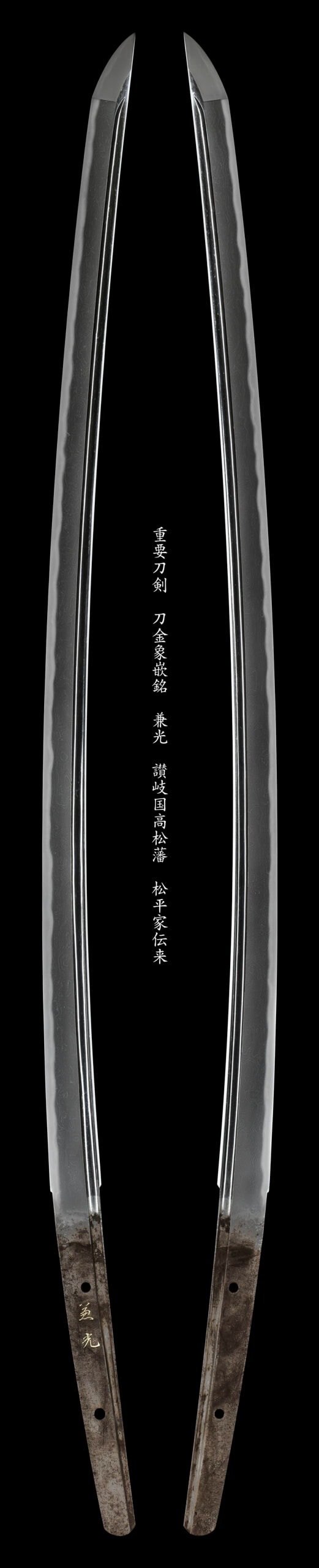
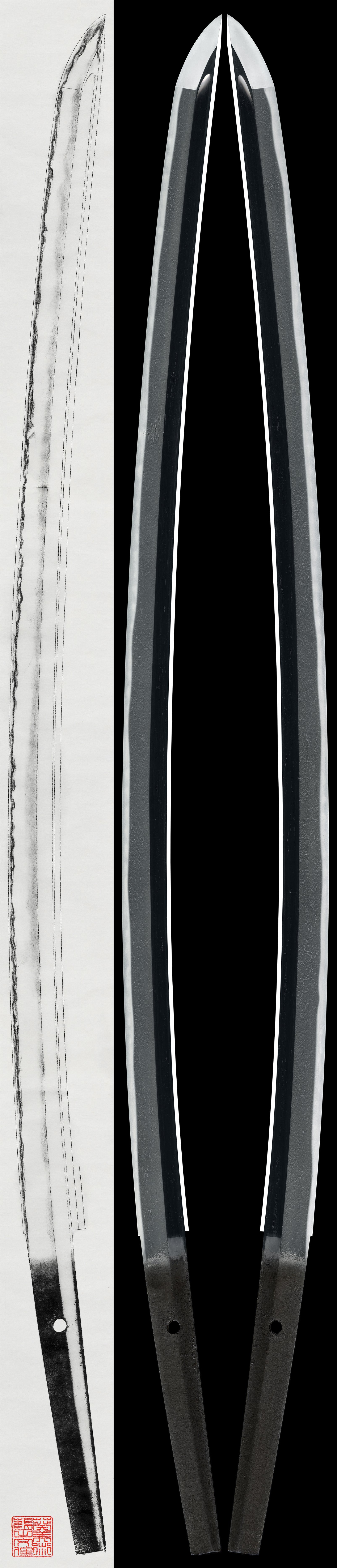
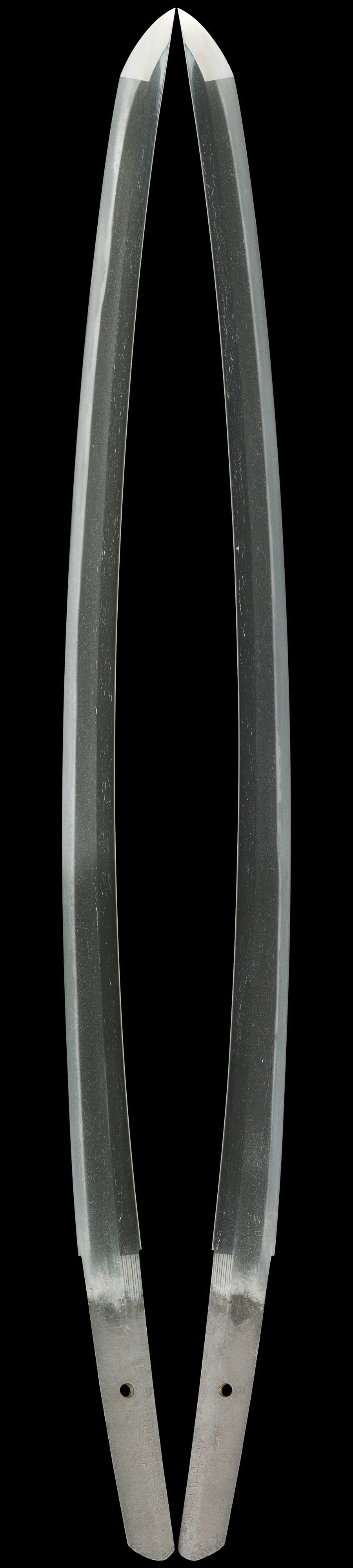
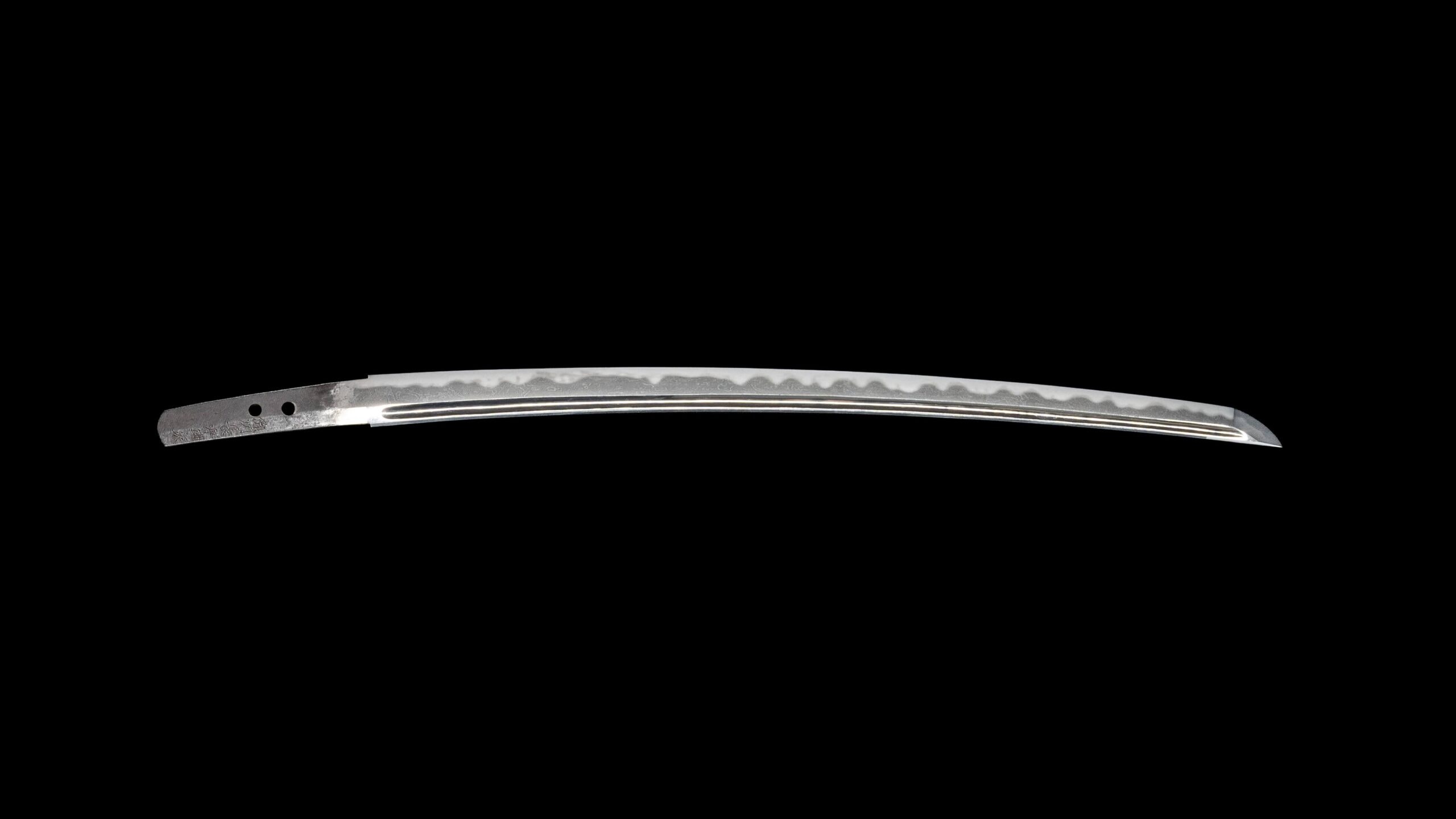
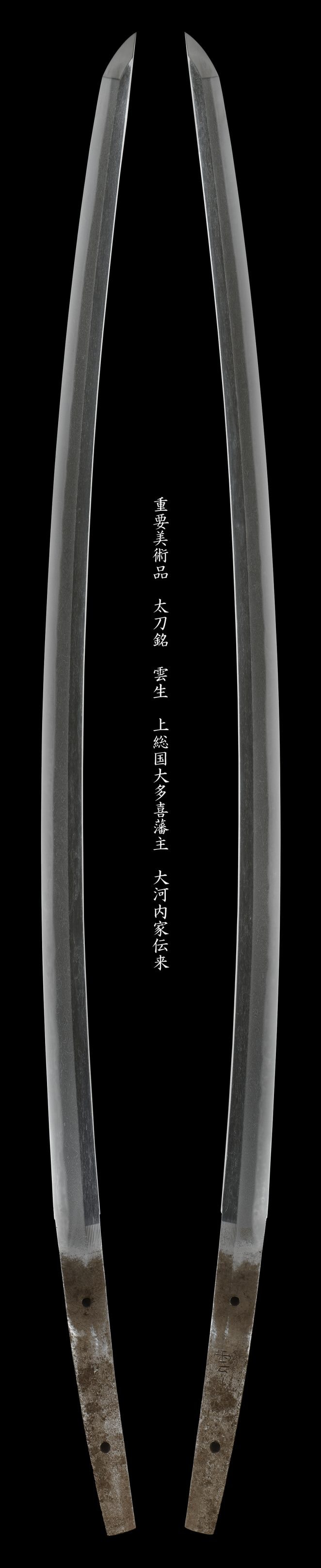
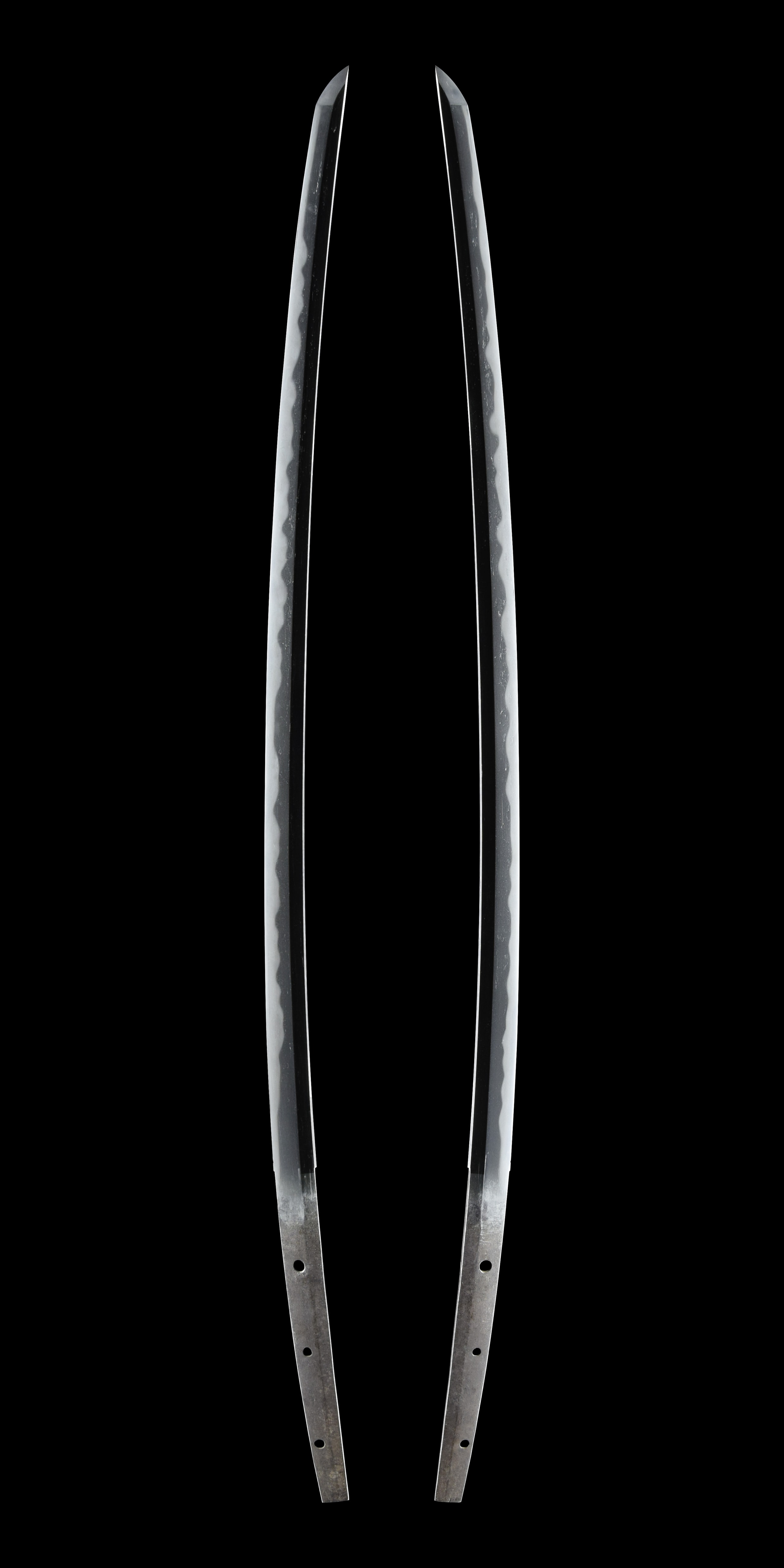
Among the dated by Masamitsu is one carved on the with a swelling-dragon and on the with a and , a thick- piece dated Eiwa 4 (1378) that the published record calls a representative superior work of his oeuvre (政光中の代表的優品) and that has come down with the epithet Koryū Masamitsu, the Small Dragon Masamitsu. He was a smith of the mid- into the early period and one of the disciples of Kanemitsu, named in the published sources in one breath with his fellow students Tomomitsu and Motomitsu. His dated blades run from Enbun through Ōei, so that his working span is fixed with a clarity unusual for the late , and he carries his teacher's manner forward into the closing decades of the tradition.

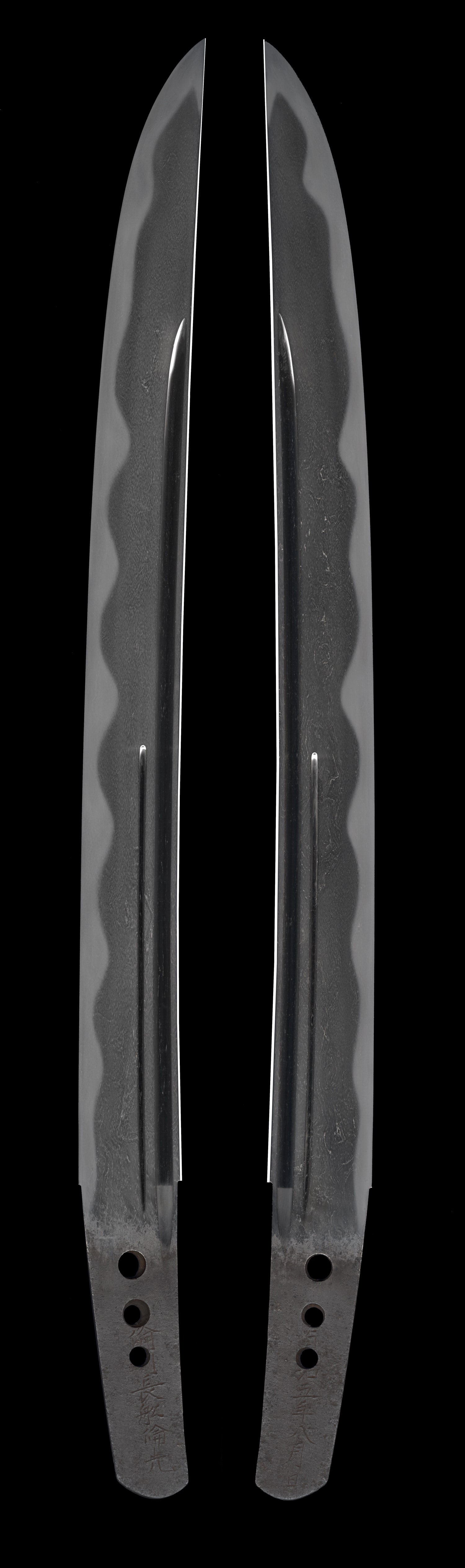
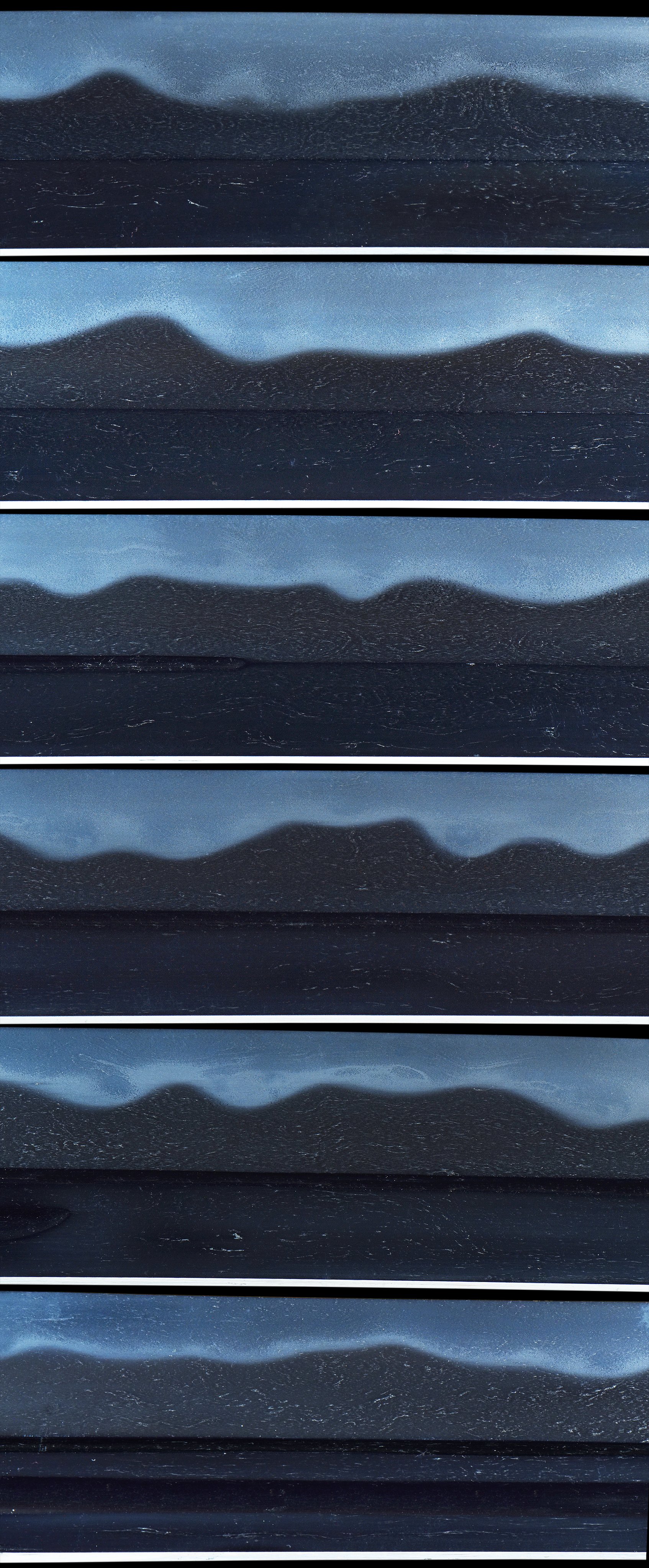
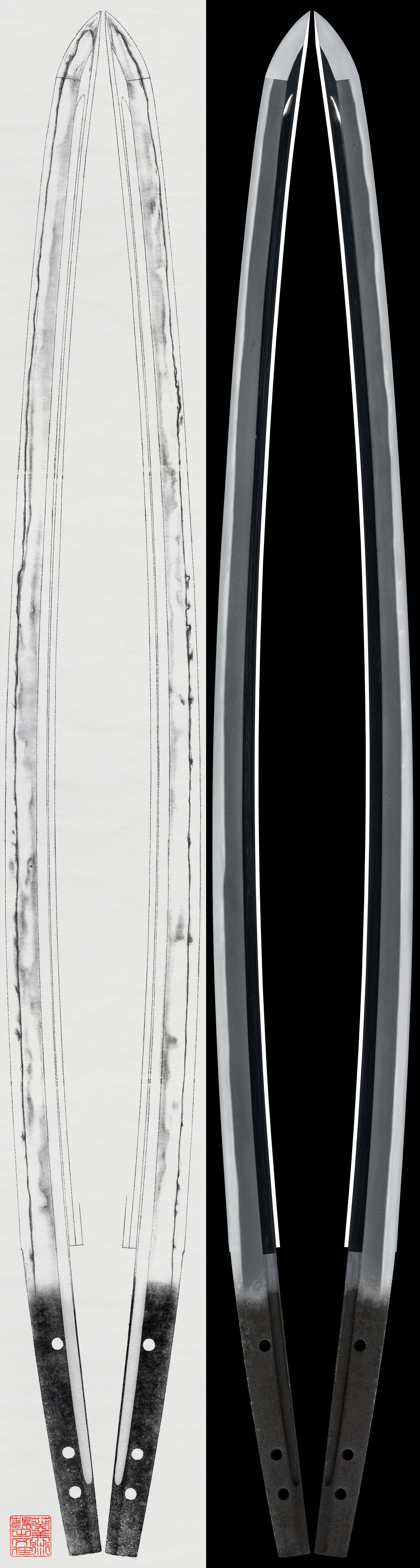
The tell of his hand is restraint. Following Kanemitsu he works , and alike, yet across the whole of his output the temper settles toward a small, subdued pattern, and the names this exactly: 「総じて刃文が小模様となるところに此の工の見どころがある」, the point of appreciation in his work is that the as a whole becomes small in scale. Over a well-forged he tempers a into which , , and pointed enter, the -dominant and tight, carrying with fine and , and on his finest , the Koryū Masamitsu among them, he sets a , the saw-tooth temper that is the Kanemitsu school's own inheritance. The and enter well; the activity is held within a quiet line rather than flung into towering clusters.

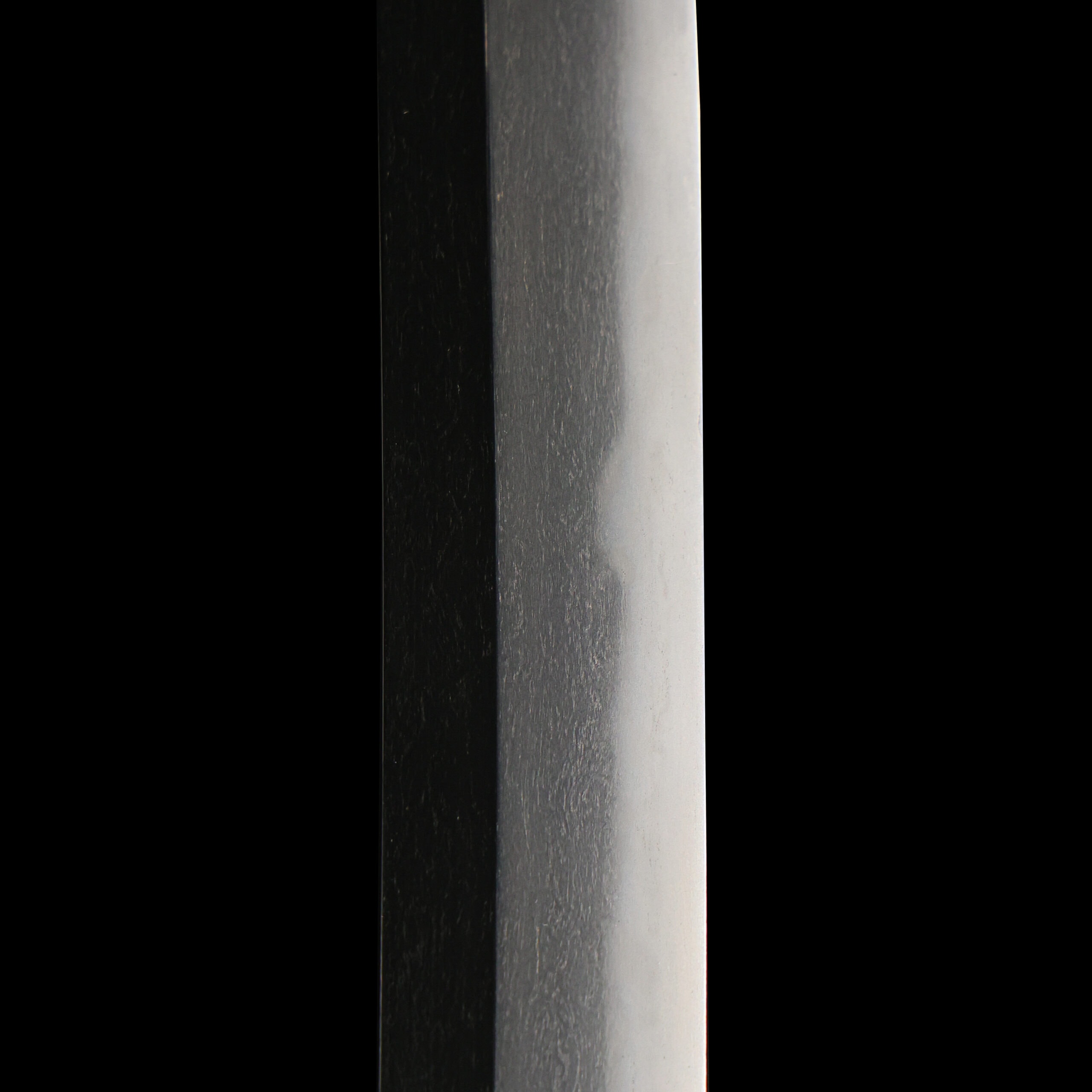
The is the constant beneath that quiet edge. His is well forged, often standing a little and mixed with , with a thick and fine , and over it stands a bright , the speckled reflection of old steel, that the published record finds on his signed and his attributed work alike. Where the forging tightens into a packed the only grows clearer; on the slender late pieces it can run as a straight or a instead. The answers the , entering in to a or finishing with a faintly pointed and , and on his he carves the devotional program of the school, with a gyō-form and with , the swelling-dragon motif that the published commentary traces to the distinctive of the line since the second-generation Nagamitsu (二代長光以来の長船派独特の彫り物).

His record falls into clear registers. The signed and dated work of the high is the core, cut on an tang with the full Bishū Masamitsu signature and a year date. The late work is the slender , ko- and of the Kakyō years at the very end of the period, narrower in body and tighter in the line, which the swordbooks gather as a class the published record describes thus: 「総称して江戸時代以来小反物と称している」, pieces collectively called since the period. Beside these stand the and attributed to him within the Kanemitsu circle. Running through all of it is the standing scholarly note that the name Masamitsu was borne by two generations, the of the Enbun through Eitoku years and the nidai of the Kakyō years, the swordbooks assigning individual pieces to each by year inscription and workmanship; on one signed second-generation the judges go so far as to write that the quality of its and is so good as to give 「殆んど兼光を見るような感がある」, almost the impression of looking at Kanemitsu himself.

What sets him apart within his own school is precisely that subdued line and that bright reflection. On the attributions the published record affirms the Kanemitsu-school and while granting candidly that the work resembles Kanemitsu yet falls a step short of him, seen in the slightly subdued temper and the less settled , so that the attribution rests on era and school as much as on a personal tell. Against his teacher's broader, more varied , Masamitsu is read by the smallness of his pattern and the tightness of his ; against the plainer late- hands he is held by the brightness of his and the on his edge. He stands among the last masters to keep the Kanemitsu manner intact before the school turned to the volume production of the Ōei years.

For the collector he is a knowable late- name carried on a substantial signed record. Fujishiro grades him Jō-jō . He has no National Treasures; his standing rests instead on two Important Cultural Property , two blades at the rank, and a wide spread at , and the published commentary singles out one , more complex and showy than his wont, as 「同作中出色の出来映え」, an outstanding example among his works. His blades are grounded in old provenance, the Tokugawa shogunal house among them, with the Koryū Masamitsu transmitted in the Ōmaeda family and once carrying a Kōtsune , and his work is held today in long-standing public and private collections, including the Kyushu National Museum, the Hayashibara Museum of Art and the Tokyo National Museum. With only a small number of blades in the and tiers and most of those long held rather than traded, a signed and dated Masamitsu of recorded whereabouts comes to light only from time to time, and a privately held example, ideally an -tang piece with its date intact, is a satisfying thing for a collector to encounter, a precisely datable document of how the great line carried its art to the close of the age.

Kantei

one late-Osafune Kanemitsu-school hand read in three registers: the prime signed and dated Nanbokucho tachi and tanto in his subdued, small-pattern manner; the late slender ko-sorimono of the Kakyo years; and the o-suriage mumei attributions within the Kanemitsu circle, with the two-generation question the standing scholarly note

Masamitsu is a smith of the mid- to early period, one of the disciples of Kanemitsu, whose dated blades run from Enbun through Oei so that his working span is established with unusual clarity. The published sources name him in one breath with his fellow Kanemitsu students Tomomitsu and Motomitsu: he carries his teacher's manner forward, working , and alike, but the recognizing point of his hand is that the temper as a whole tends to a small, subdued pattern, the quality the calls . Over a well-forged , often with standing grain and mixed , he lays a thick , fine and a clear , and tempers a into which , , and pointed enter, with abundant and , the -dominant and tight, carrying and fine and . The runs in to a or a slightly pointed point. His record divides into the prime signed and dated work of the high , the late slender of the Kakyo years that the swordbooks group as a class, and the and attributed within the Kanemitsu circle. The published sources note that the name Masamitsu was borne by two generations, and on his finest , the Koryu Masamitsu, hold his typical manner up as a representative superior work of his oeuvre.

Diagnostic discriminators

unique vs his teacher Kanemitsu (broad, varied Bizen midare)

unique vs Kanemitsu-school inheritance (the saw-tooth tell)

unique vs Osafune horimono tradition since Nagamitsu

Observation by phase

The signed, dated prime (his typical hand)

His core record is the signed and dated work of the high , where the Bishu Masamitsu signature and a year date are cut on an tang. The is a well-forged , at times a packed , mixed with and standing a little, with a thick , fine and a clear . Over it he tempers a into which , , and pointed enter, with and well in, the -dominant and tight, carrying and fine and . The runs to a or a slightly pointed point with . On he carves the devotional program at the base, with a gyo-form on the and with on the , the swelling-dragon motif current at from Nagamitsu onward; the Koryu Masamitsu carries it. The published sources call this his typical workmanship, following Kanemitsu's manner like his fellow students Tomomitsu and Motomitsu, and judge that the tending overall to a small pattern is the point of his hand.

Sugata 姿
Jigane 地鉄
Hamon 刃文
Bōshi 帽子

The late ko-sorimono (Kakyo years, the slender small-scale class)

His late work is the slender , ko- and of the Kakyo years at the very end of the , signed and dated on an tang. These are narrower in body, several with a high , and the temper tightens further into a small with , the tight and the activity within the sparse, sometimes with a reversed () tendency. The published sources treat this as a class: the small-scale, small- pieces the swordbooks have called since the period, and they read the overall small pattern of the temper as the appreciation point of that class. Several carry the date inscriptions that fix the late , and the well-preserved are valued as relatively uncommon survivals of a form soon to give way to the .

Sugata 姿
Jigane 地鉄
Hamon 刃文
Bōshi 帽子

The o-suriage mumei attributions (within the Kanemitsu circle)

The other face of his record is the , several of them , attributed to him within the Kanemitsu circle. These are wide in body with an extended or large , the , over a or mixed with , with , and a clear . The temper is a with open-based and slight , the tight with , and entering, the activity within the comparatively sparse. The published sources affirm the Masamitsu attribution from the Kanemitsu-school and , while noting on more than one piece that the work resembles Kanemitsu yet falls a step short of him, seen in the subdued and the slightly unsettled , so the attribution rests on the school and era as much as on a personal tell.

Sugata 姿
Jigane 地鉄
Hamon 刃文
Bōshi 帽子
Scholarship

The published sources note that the name Masamitsu was borne by two generations across the Nanbokucho: the shodai of the Enbun through Eitoku years, and the nidai of the late Nanbokucho Kakyo years, whose slender kodachi and naginata the swordbooks group, since the Edo period, as ko-sorimono. They date individual pieces to each generation by year inscription and workmanship, and judge the finest of the second generation so good as to give the impression of Kanemitsu himself.

The published sources read his hand against his teacher: like his fellow students he follows Kanemitsu's varied manner of notare, gunome and suguha, but the appreciation point of his own work is that the temper as a whole becomes small in pattern, and on the o-suriage mumei attributions they grant the work resembles Kanemitsu while falling a step short of him.

Designations

Kokuhō—
Jūyō Bunkazai2
Jūyō Bijutsuhin1
Gyobutsu1
Tokubetsu Jūyō2
Jūyō Tōken78

Elite Standing

0.27 across 84 designated works

Top 9% among smiths

Provenance

13 documented provenances across certified works by Masamitsu

Provenance Standing

9 works held in elite collections across 13 documented provenances

Top 9% among smiths

Raw score: 2.61 / 10

Blade Forms

Distribution across 84 ranked works

Signatures

Signature types across 84 ranked works

Currently Available

Lineage

TeacherKanemitsu
Masamitsu
Students (5)
  1. 1.Tomomitsu倫光1 for sale64designated
  2. 2.Yoshikage義景3 for sale67designated
  3. 3.Iesuke家助1 for sale11designated
  4. 4.Nariie成家3 for sale21designated
  5. 5.Kanesada兼貞

Osafune School

Other artisans of the Osafune school

  1. 1.Mitsutada光忠61designated
  2. 2.Nagamitsu長光2 for sale253designated
  3. 3.Kagemitsu景光1 for sale146designated
  4. 4.Kanemitsu兼光4 for sale237designated
  5. 5.Sanenaga眞長64designated
  6. 6.Chikakage近景4 for sale86designated
  7. 7.Tomomitsu倫光1 for sale64designated
  8. 8.Kagemasa景政2 for sale22designated
  9. 9.Motomitsu基光3 for sale41designated
  10. 10.Kagehide景秀23designated
  11. 11.Yoshimitsu義光35designated
  12. 12.Shigezane重眞1 for sale45designated