NihontoWatch MonNihontoWatchBETA
MarketEncyclopedia
NihontoWatch Mon

NihontoWatchBETA

Market
Encyclopedia
Overview·Kantei·Designations·Provenance·Blade Forms·Signatures·Lineage·School
OverviewKanteiDesignationsProvenanceBlade FormsSignaturesLineageSchool
  1. Schools
  2. Osafune
  3. Sue-Bizen
  4. Sukesada

Sukesada

祐定

Tokujū
Vol. 21, No. 25 · Katana

Sukesada

祐定

73 ranked works

ProvinceBizenEraEisho-Tenmon (1504–1542)PeriodMuromachiSchoolOsafune>SukesadaTraditionBizen-denGeneration1stTeacherHikobei no Jo Sukesada (father)FujishiroJo-jo sakuToko Taikan1,000(top 8%)TypeSwordsmithCodeSUK788
1Jūyō Bunkazai
6Jūyō Bijutsuhin
2Gyobutsu
1Tokubetsu Jūyō63Jūyō Tōken

Overview

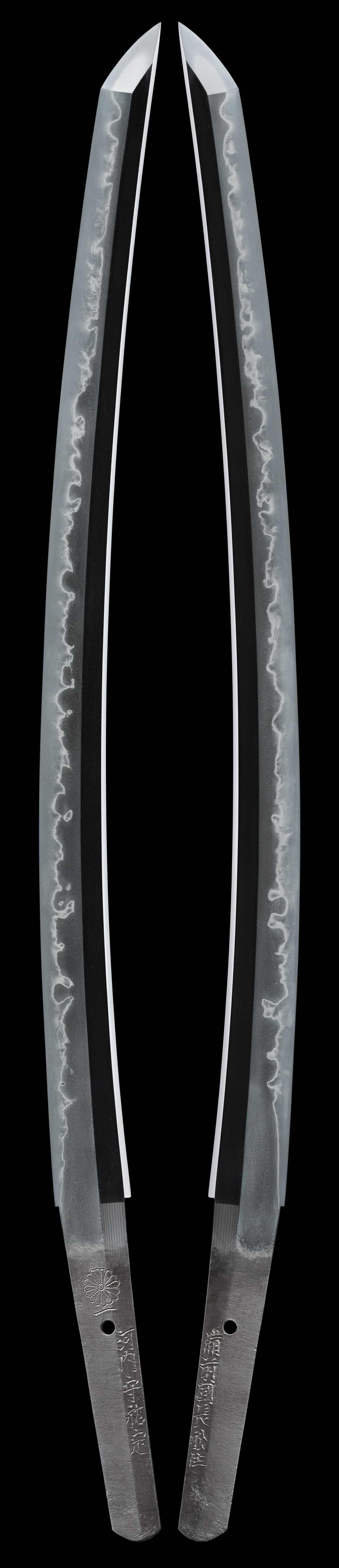
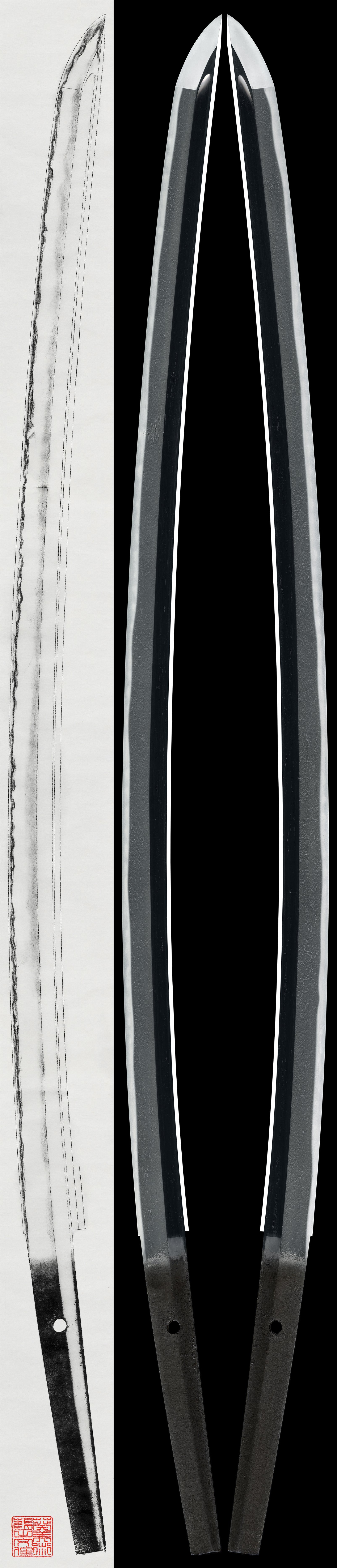
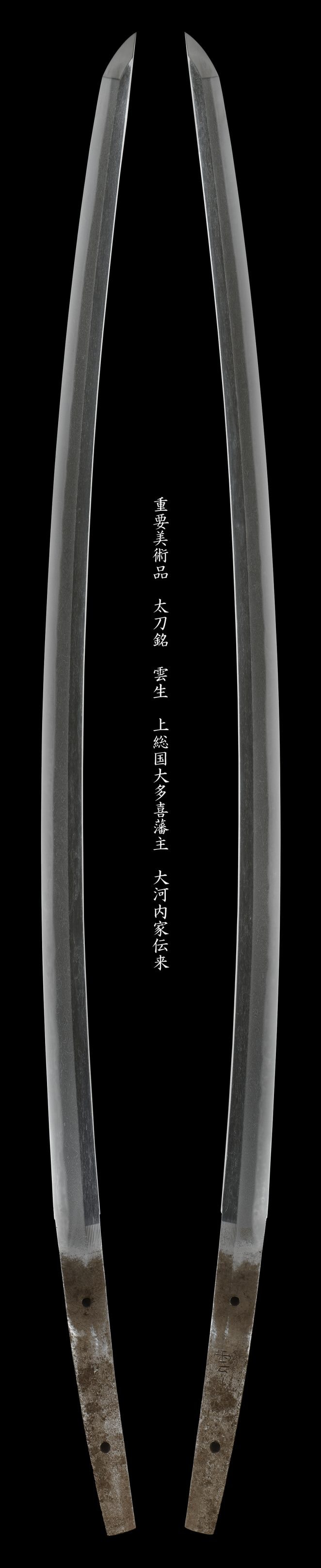
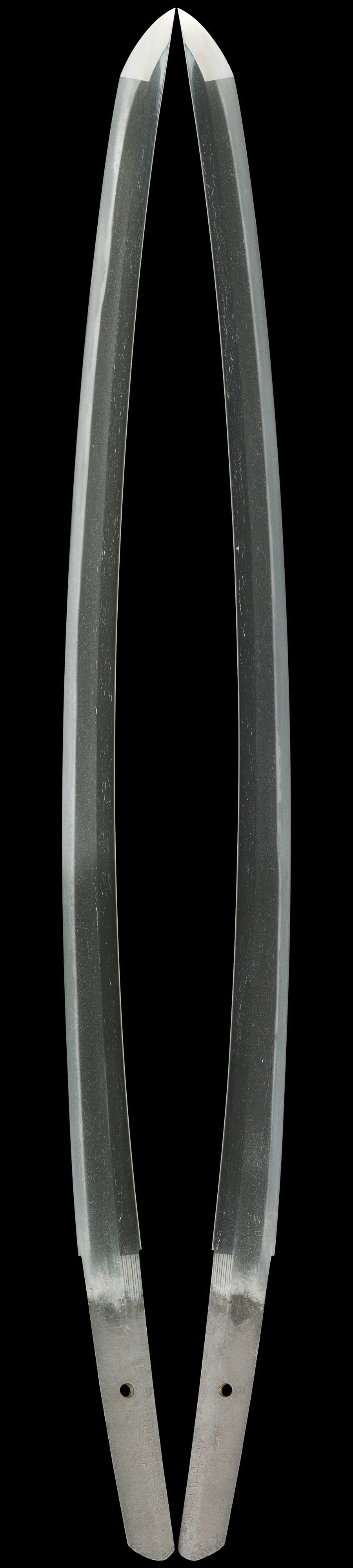
A dated Daiei 3 (1523), made in the smith's fifty-seventh year and signed in full as no resident, Yosozaemon no Jo Sukesada, descends in the Hachisuka family and is the highest-papered blade in this record. Sukesada is less a man than a house. The name belongs to the forges of the late that scholars group together as , and of these the published sources are blunt about its scale: "of the smiths of the late , the most prosperous was the Sukesada family" (この中で最も繁栄したのが祐定の一門である). The early-modern reference Hayami-dashi, the published commentary notes, "lists as many as twenty-one Sukesada smiths who add a personal name to the signature" (銘に俗名を冠している者を二十一人と数多くあげている). Within that crowd one branch stands first by name and by hand, the Yosozaemon no Jo line, of whom the first generation, born in Onin 1 by back-count from a inscribed made at age seventy-one in Tenbun 6, is the apex of the name. The published record states the ranking plainly: "among the Sukesada of the name, the one who styles himself Yosozaemon no Jo is the most famous, and the most skilled" (与三左衛門尉を冠するものが最も有名で、また上手である).

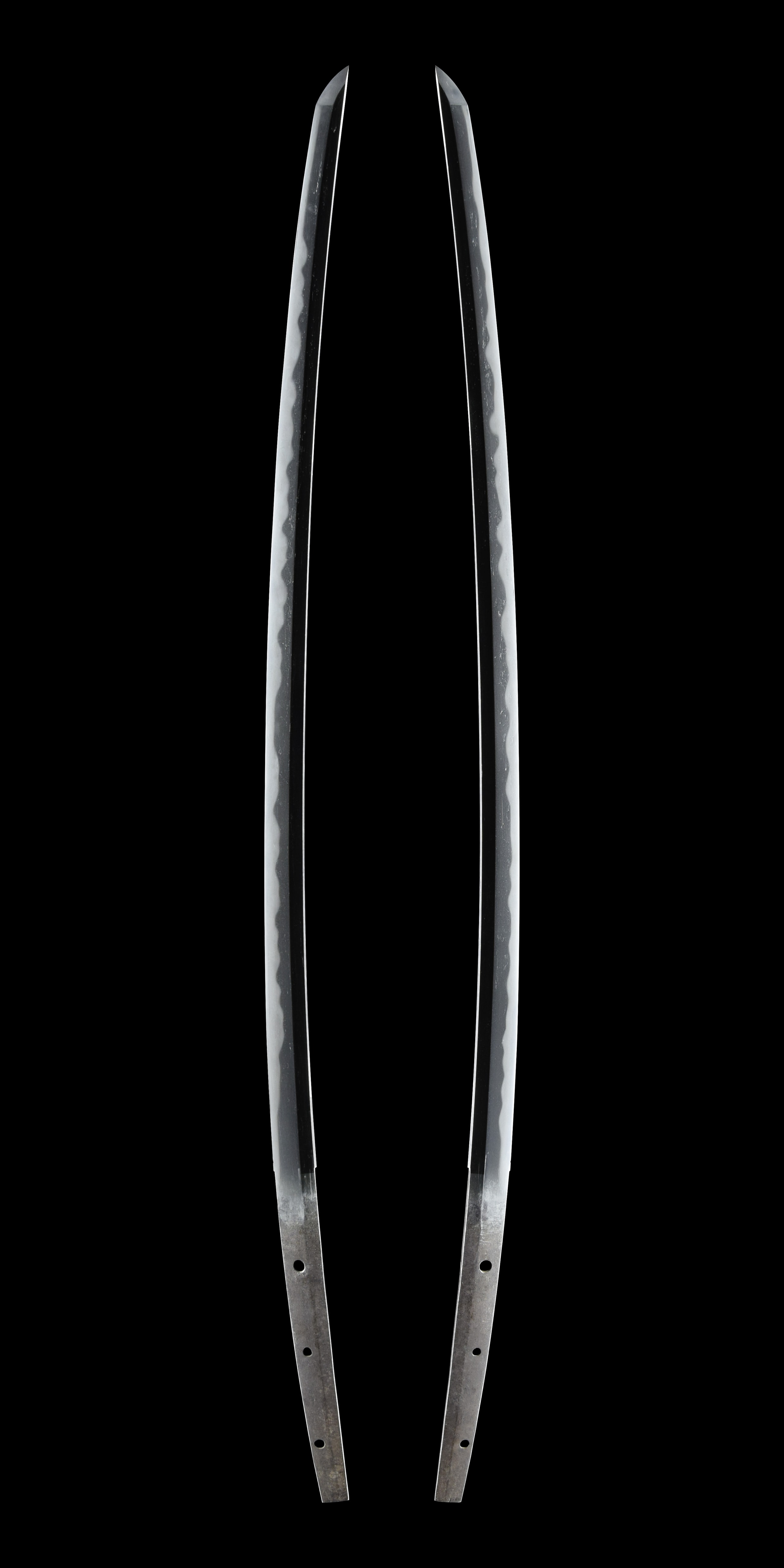
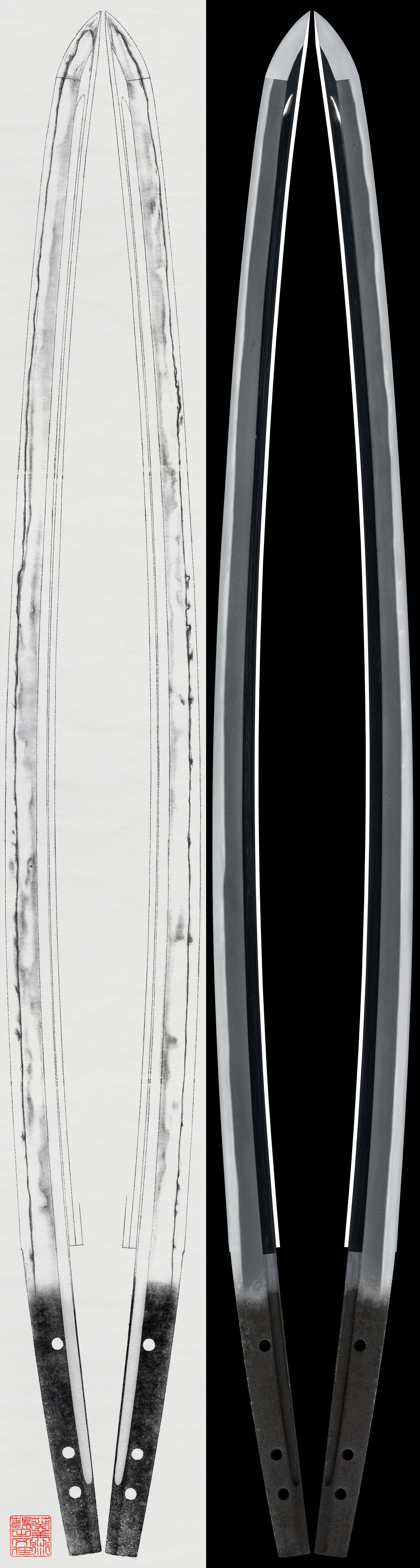
His characteristic hand is the temper the late workshops made their own. Over the body runs an open-waisted that builds into a double-structured , the - that more than any other feature marks a blade, mixed with - and pointed , and entering richly, the tending to tighten, adhering, small interspersed and the bright. The published sources call the dated that carry it the representative work not of one smith only: one Jubi-era piece they describe as "a typical work among blades, and among works of the hand the most excellent representative example" (末備前作中の典型的の作であり、同作中の最も優秀な代表作である). It is a temper of breadth rather than of a single flourish, the wide, complex line answering the broad and of the late- on which it most often appears.

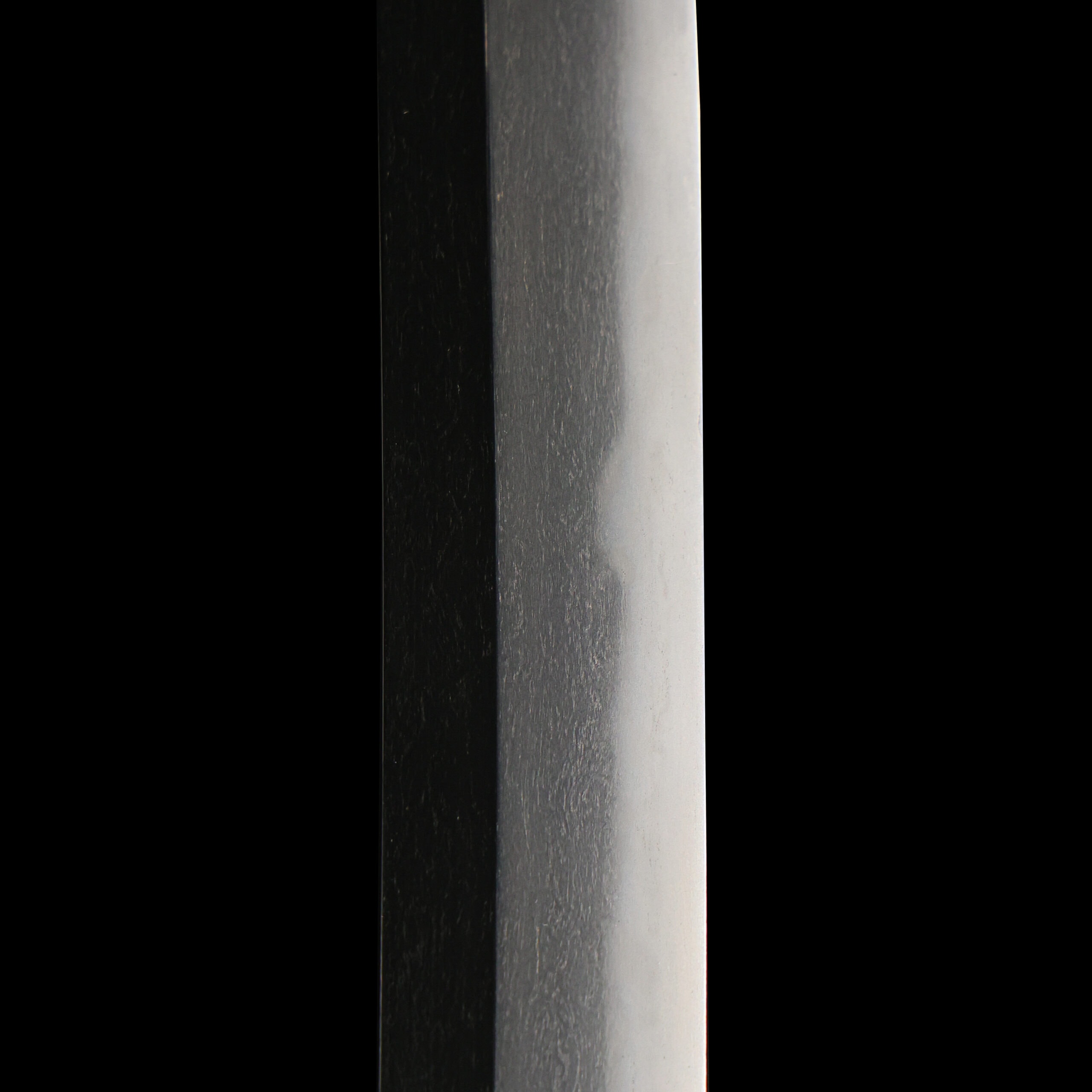
The is the foil to that animated edge. It is a forged tight and well packed, fine laid over it like dust and a fine, dense woven through, the surface refined and high in quality. On the best signed pieces a faint rises along the , the last trace of the bright reflection that filled the school's prime, here grown thin in the steel of a later, busier age. The most often runs into a small round or enters as a , slightly pointed, with and a turnback that runs a little long. Across the corpus the activity is carried in abundant and , with and frequent, the temper deep in and rather than in towering clusters of clove.

What lifts Yosozaemon above the run of the house is the breadth the judges keep naming. Beyond the double-structured he commands two further registers. One is the flamboyant face: a temper that climbs the body into full with frequent and , deep in , the standing and the gathered answering each other. The published sources note that is apt to lack refinement, yet single out his examples as well made, and one such blade is a collaboration signed jointly with Genbei no Jo Sukesada, the two foremost personal names of the family on one . The other is the calm face, the deliberately quiet and , broad and shallowly undulating, sometimes mixed with and fushi; of these the commentary remarks that even "when he tempers a he is skilled" (直刃を焼いても上手である), and elsewhere that he is "a master among the smiths, accomplished alike in and in " (末備前刀工中の名工であり、直刃、乱刃共に上手である). One unusual blade divides the temper into double-structured at the and and bridges the span between with , a the judges call rare. Beneath all of this sits the chronology of the name itself, the central scholarly question around Sukesada: a second generation shares the Yosozaemon signature, the records two Yozaemon smiths a generation apart, and a body of blades carries the Sukesada name with no personal name at all, judged to the house by era and quality.

What sets him apart within his own school he is given by the judges who place him there. His bright, well-packed and the wide, double-structured distinguish him from the plainer mass of late- production, while the faintness of his and the busy complexity of his edge separate him from the classical of two centuries before. The published commentary names "the -particular double-structured he tempers" (末備前特有の複式互の目を焼いた) as the signature of his typical work, and ranks his finest dated as representative of all , not of Sukesada alone. He stands beside his fellow late- master Kiyomitsu as one of the two great names of the workshop's final age, and his hand is the standard against which the school's unsigned blades are measured.

For the collector Yosozaemon no Jo Sukesada is the most attainable of the great names, which is to say attainable in a way the masters are not, never that he is common at the top. Fujishiro grades the first generation Jo-jo , and the Toko Taikan values his work at 1,000 yen. He has no National Treasures; his record on this evidence runs through one Important Cultural Property and one blade among fifty-nine and a long file of prewar Bijutsuhin, so the higher tiers number a little over sixty designated works on record and reach the market only rarely, a notable event when one does. His blades are kept in long-held collections and houses grounded in their own provenance: the , made in his fifty-seventh year, is "a single blade of excellent workmanship transmitted in the Hachisuka family" (蜂須賀家に伝来した優れた出来映えの一口である), while the Mori and Ii houses, the Imperial collection, and a recorded as having belonged to the warrior Yamanaka Shikanosuke carry others. A signed and dated Yosozaemon Sukesada, broad, healthy and bright, with the open-waisted reading clearly down its edge, is the late- blade a serious collector can realistically hope to encounter, and the surest single document of how worked in its last great generation.

Kantei

one Sue-Bizen house seen through its foremost branch: the Yosozaemon-no-jo prime in well-packed ko-itame and the open-waisted, double-structured gunome that defines late Bizen; an orthogonal split into the flamboyant hitatsura register and the calm suguha / hiro-suguha register; and the broad body of namesakes and mumei attributions the school carries by era and quality

Sukesada is not one smith but the largest swordmaking house of the late , the line called : the Hayami-dashi lists twenty-one Sukesada smiths who add a personal name to the signature, and the published sources call the family the most prosperous of the late forges and the most numerous of all surviving late- work. This corpus is dominated by the one branch the ranks first within it, Yosozaemon-no-jo Sukesada (与三左衛門尉祐定), with the lesser-known Hikobei-no-jo, Genbei-no-jo and Yozaemon-no-jo named alongside, and a body of unsigned blades judged Sukesada by era and quality. Yosozaemon's prime hand is a well-packed ground, fine scattered like dust and fine woven in, over which he sets a high, bright temper based on the open-waisted, double-structured ( -) that is the tell, mixed with - and , abundant and , the tightening, adhering, small interspersed. His range is broad: the published sources record him working open-waisted complex , and , and full with equal command. The first-generation Yosozaemon, born in Onin 1 by back-count from his dated late , is the apex of the name; a second generation shares the signature.

Diagnostic discriminators

unique vs earlier Bizen choji-midare baseline

16% of his works · 0.2× vs Kamakura-Nanbokucho Osafune (utsuri pervasive)

Observation by phase

Yosozaemon-no-jo, the foremost hand (his recognized prime)

The recognized prime of the name is the dated, long-signed of Yosozaemon-no-jo Sukesada: tightened in length with , wide in body with little width-taper, the somewhat thick, kept, a tending to extend. The ground is a well-packed with scattered like dust, fine woven through, and a faint appearing along the . Over it the temper is high and bright, the open-waisted building into the double-structured that is the tell, mixed with - and , and entering richly, the tightening with adhering, and running, small interspersed. The runs into a small round or a , slightly pointed, with and a long turnback. The published sources call the first-generation Yosozaemon the foremost of all who signed the Sukesada name in personal-name form, broadest in range and highest in technique, and rank his finest pieces as representative not merely of Sukesada but of all .

Sugata 姿
Jigane 地鉄
Hamon 刃文
Bōshi 帽子

The flamboyant hitatsura register

Orthogonal to the prime is the flamboyant register the published sources call characteristic of : a temper that climbs the body into with frequent and , deep in and , bright and clear. On these the lower half is often a deep mixed with and , the upper half breaking into full . The sources note that is apt to lack refinement, yet single out Yosozaemon's blades as well made, the standing and the gathered answering each other; one is a collaboration with Genbei-no-jo Sukesada, the two foremost personal names of the house signed together. This is the showpiece face of the name, the one a collector meets least often and prizes most among the school's irregular work.

Jigane 地鉄
Hamon 刃文
Bōshi 帽子

The calm suguha / hiro-suguha register

The third register is the deliberately calm one. The published sources note that Yosozaemon, while most at home in the double-structured , is equally skilled when he tempers a , and several blades are a broad, shallowly undulating , sometimes mixed with and fushi, and entering, laid, and running, the straight into a small round. One dated piece divides the blade, -toned above and the open-waisted below, in the manner the sources say is typical of Yosozaemon; another tempers the and in double-structured and bridges the span between with , a the sources call unusual. This calm register is the foil to the flamboyance, and the published sources read these too as the work of a superior hand.

Hamon 刃文
Bōshi 帽子

Namesakes and mumei attributions (the broad house)

less firmly established

Beyond Yosozaemon the house is broad. The published sources name Hikobei-no-jo, Genbei-no-jo, Yozaemon-no-jo and Hikozaemon-no-jo among the next-best hands, and the lists two Yozaemon Sukesada smiths a generation apart. A number of blades carry only the Sukesada name with no personal name, judged to the house by era and quality; one Eisho-dated is signed Sukesada without a personal name and could be any of the several, the sources declining to fix it. The two-edged ryoha , the thick- armour-piercer and the long-, flaring-tip shape are the school's shared late- forms. These attributions rest on era and house rather than on a single personal tell, and the sources hold the finest of the unsigned pieces to be of fully Yosozaemon quality.

Sugata 姿
Jigane 地鉄
Hamon 刃文
Scholarship

The published sources record that the Sukesada family is the most prosperous of the late Osafune forges and the most numerous of all surviving Sue-Bizen work, that the Hayami-dashi lists twenty-one Sukesada smiths who add a personal name to the signature, and that among them Yosozaemon-no-jo is foremost in renown and in technique. A second generation shares the Yosozaemon signature; the first generation is identified by back-count from a tanto inscribed made at age seventy-one in Tenbun 6, placing his birth in Onin 1.

On the unsigned and personal-name-less pieces the published sources judge by era and quality rather than by a personal tell, declining to fix one Eisho-dated Osafune Sukesada to any single smith among the several, while affirming the finest of them as of fully Yosozaemon quality. The second Yozaemon Sukesada is distinguished from the first through the Meikan, which records two smiths of that name a generation apart.

Designations

Kokuhō—
Jūyō Bunkazai1
Jūyō Bijutsuhin6
Gyobutsu2
Tokubetsu Jūyō1
Jūyō Tōken63

Elite Standing

0.31 across 73 designated works

Top 8% among smiths

Provenance

13 documented provenances across certified works by Sukesada

Provenance Standing

6 works held in elite collections across 13 documented provenances

Top 14% among smiths

Raw score: 2.25 / 10

Blade Forms

Distribution across 73 ranked works

Signatures

Signature types across 73 ranked works

Currently Available

Lineage

Sukesada
Students (4)
  1. 1.Sukesada祐定18designated
  2. 2.Sukesada祐定9 for sale2designated
  3. 3.Sukesada祐定1 for sale2designated
  4. 4.Sukesada祐定2designated

Sukesada School

Other artisans of the Sukesada school

  1. 1.Sukesada祐定18designated
  2. 2.Sukesada祐定3 for sale8designated
  3. 3.Sukesada祐定5designated
  4. 4.Sukesada祐定1 for sale2designated
  5. 5.Sukesada祐定1designated
  6. 6.Sukesada祐定2designated
  7. 7.Sukesada祐定9 for sale2designated
  8. 8.Sukesada祐定3 for sale1designated
  9. 9.Sukesada祐定3 for sale2designated
  10. 10.Sukesada祐定1designated