
NihontoWatch Mon

NihontoWatch

MarketAuctions
Encyclopedia
NihontoWatch Mon

NihontoWatch

MarketAuctions
Encyclopedia

Description

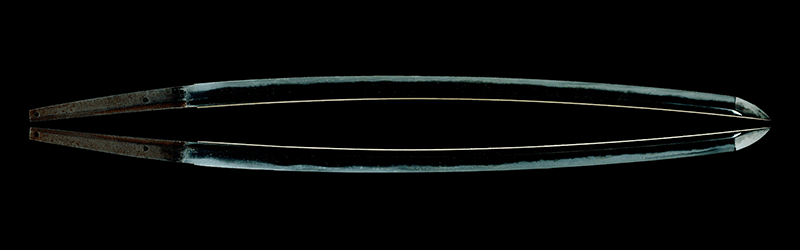
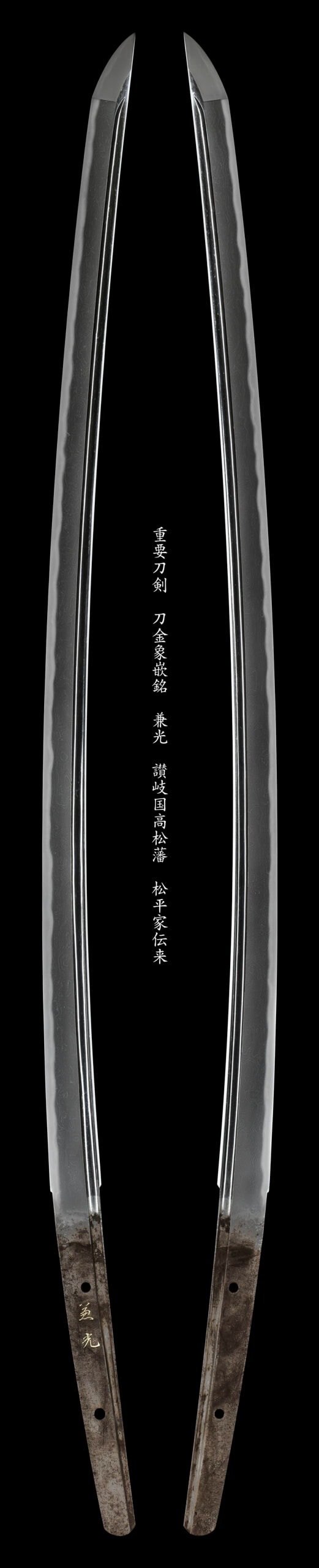
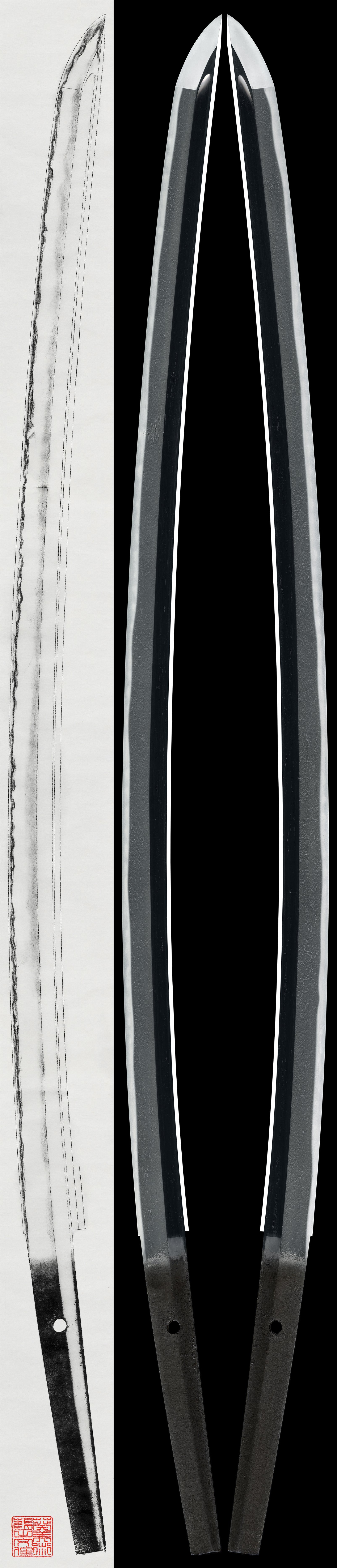
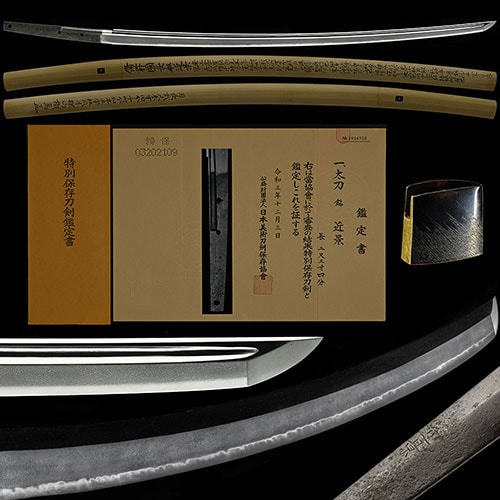
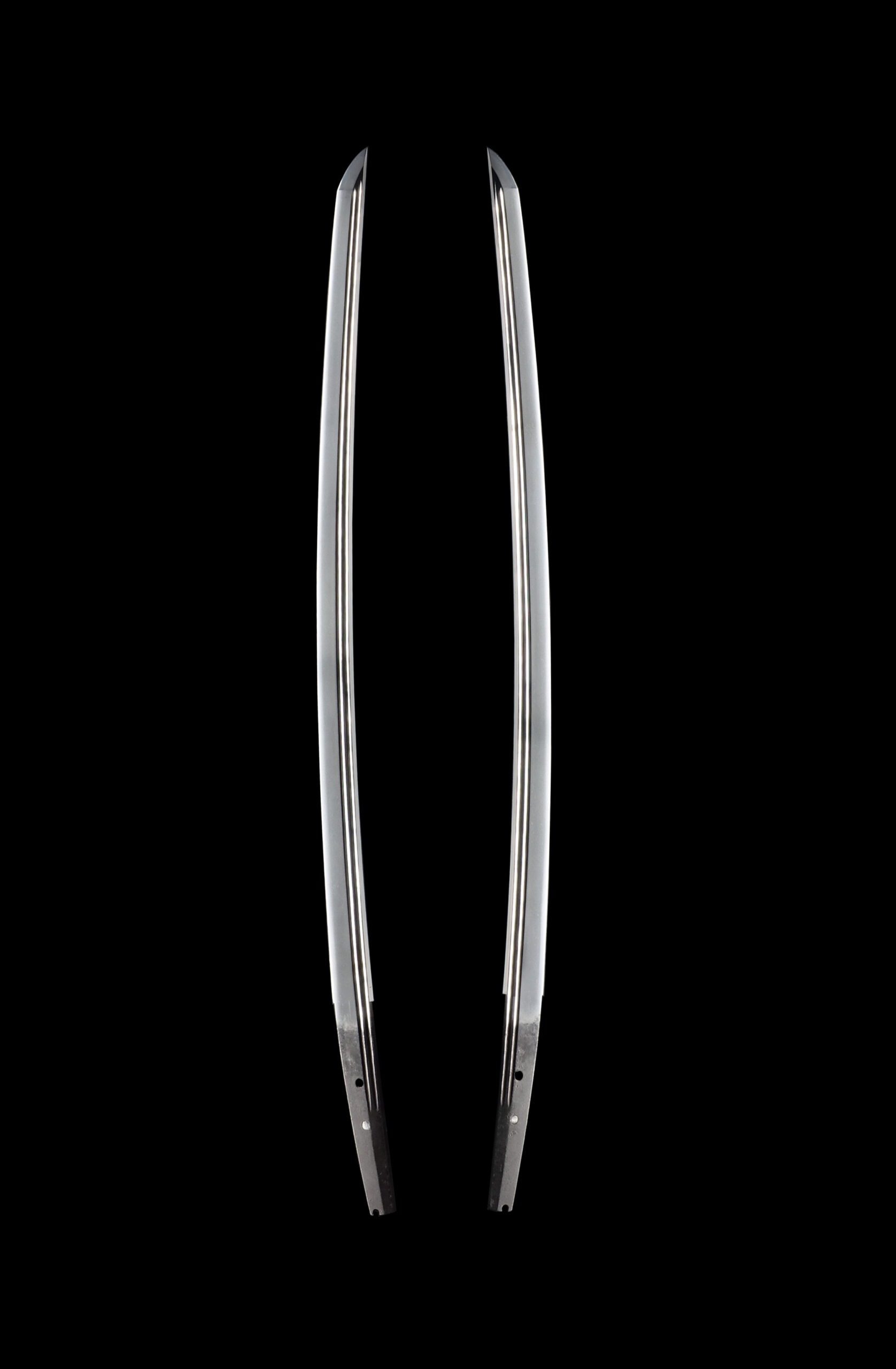
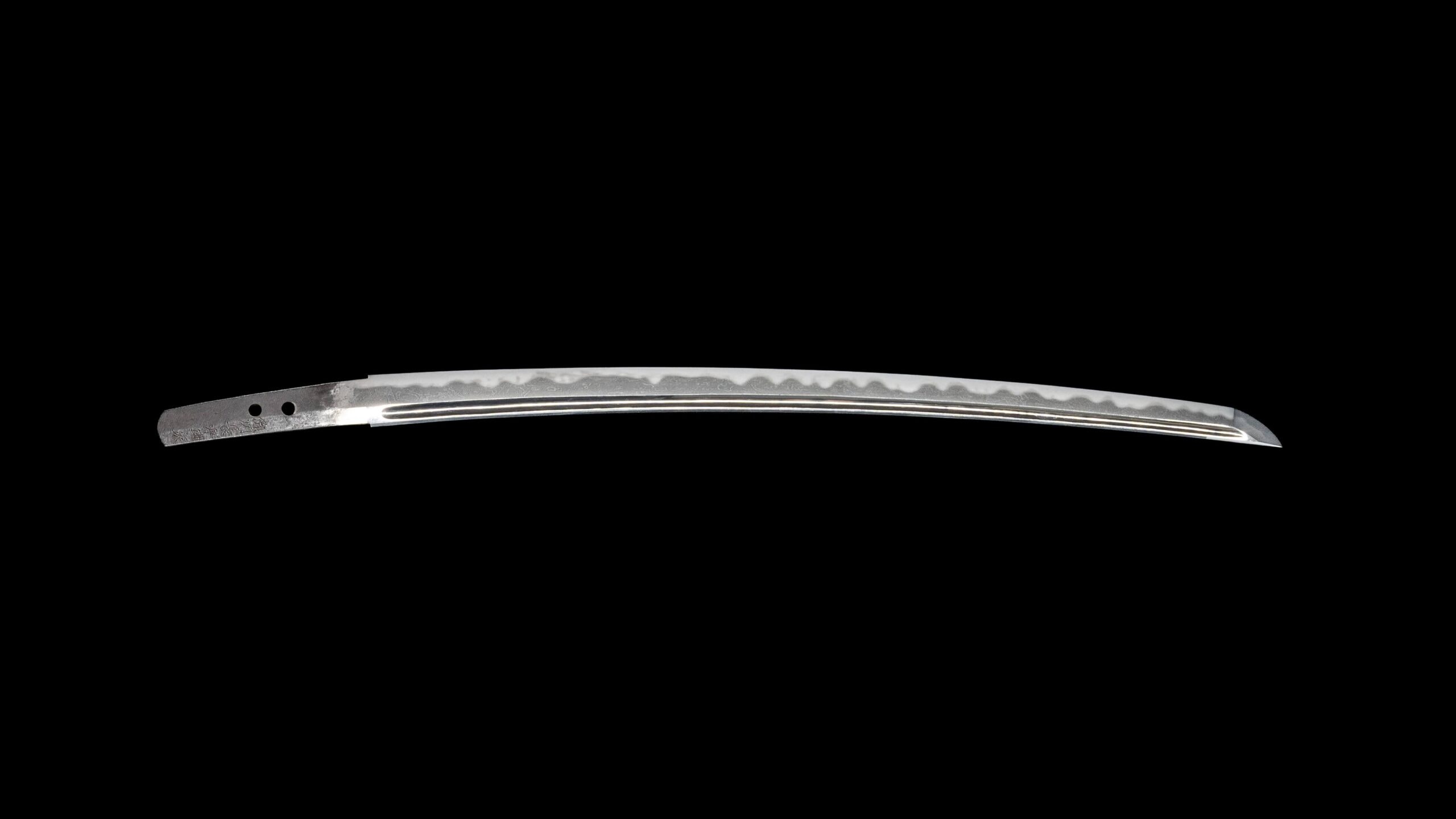
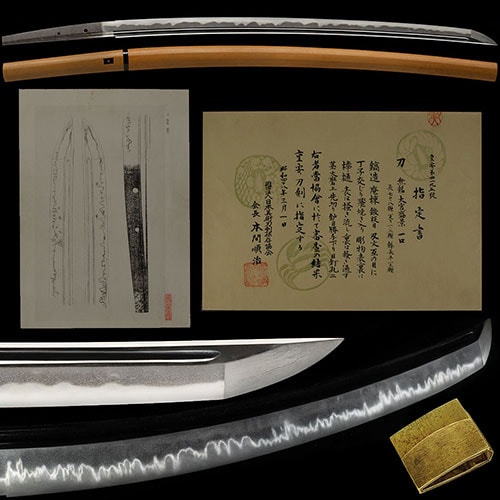
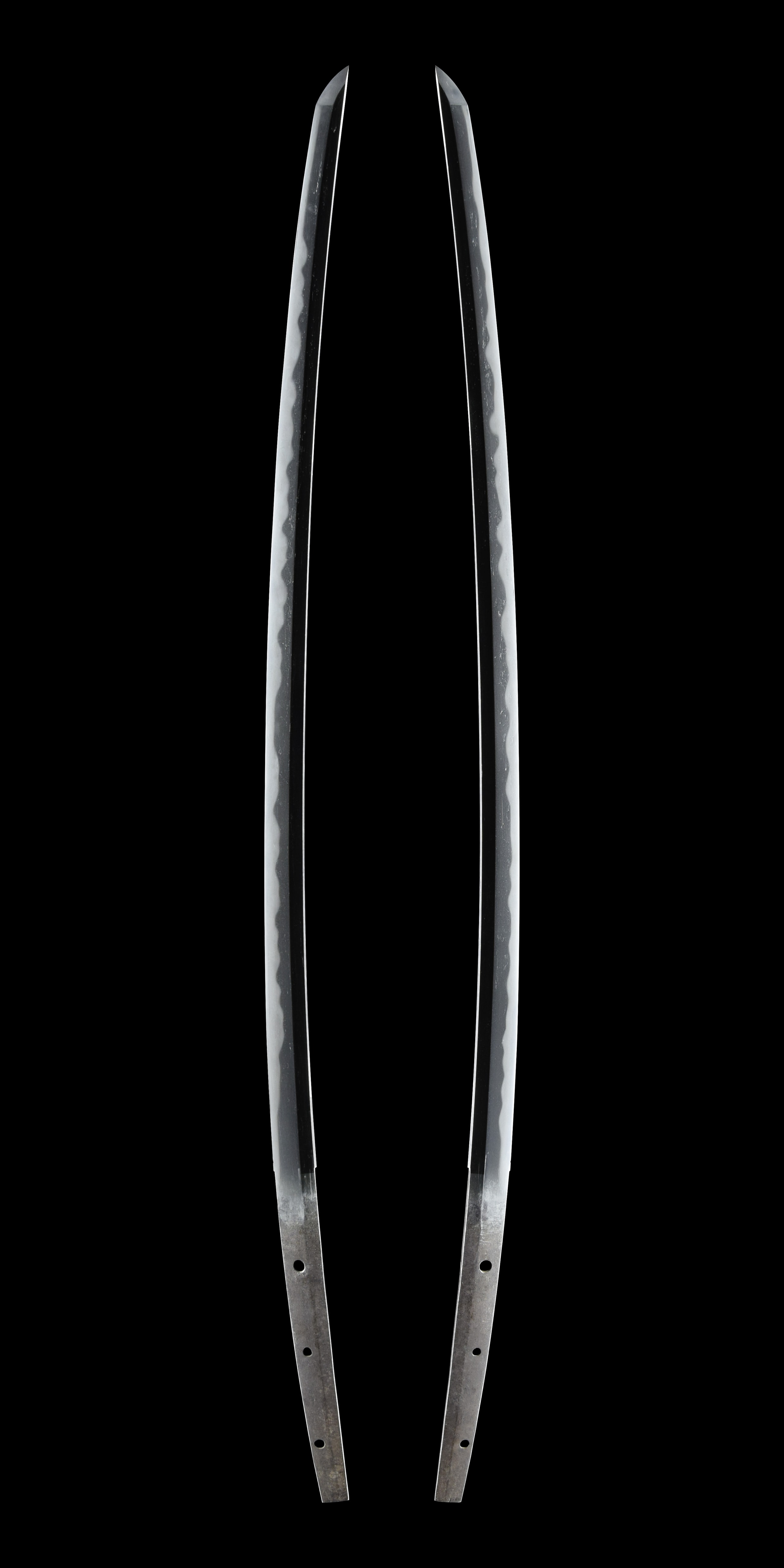
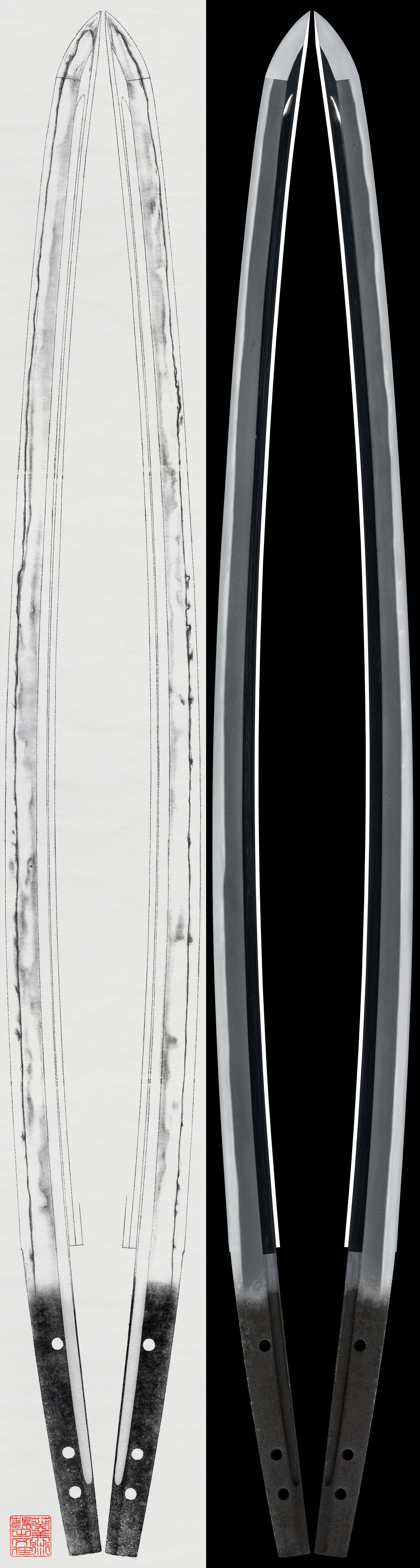
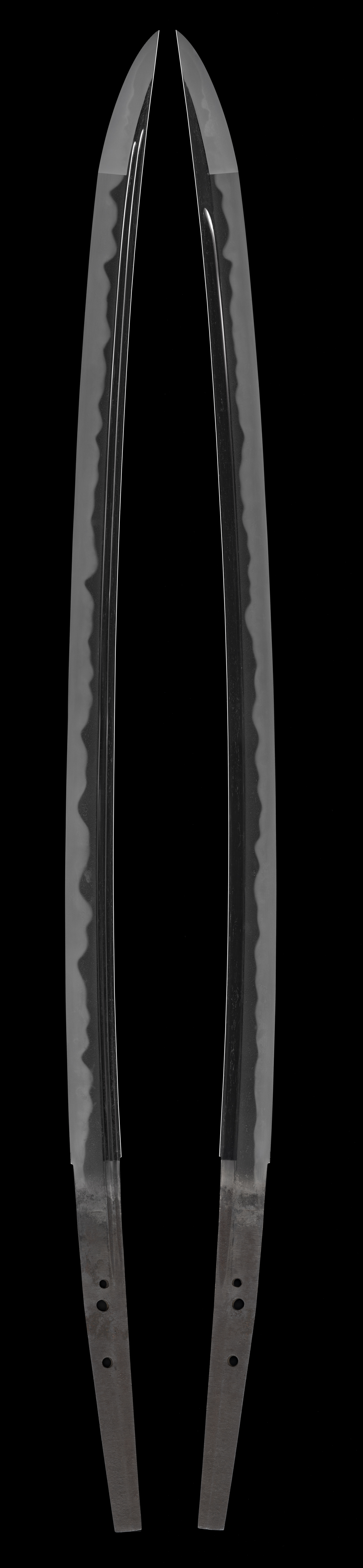
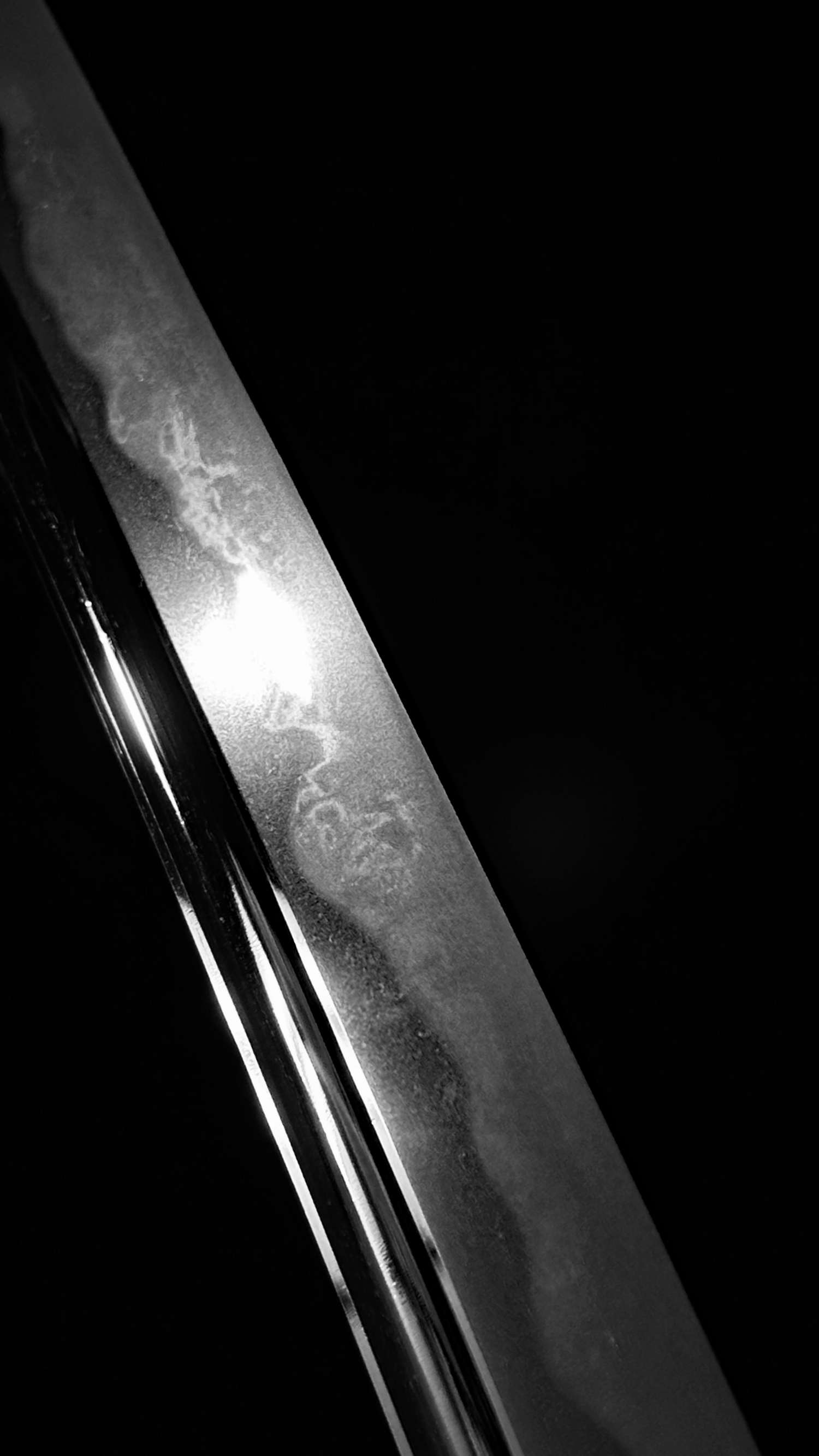
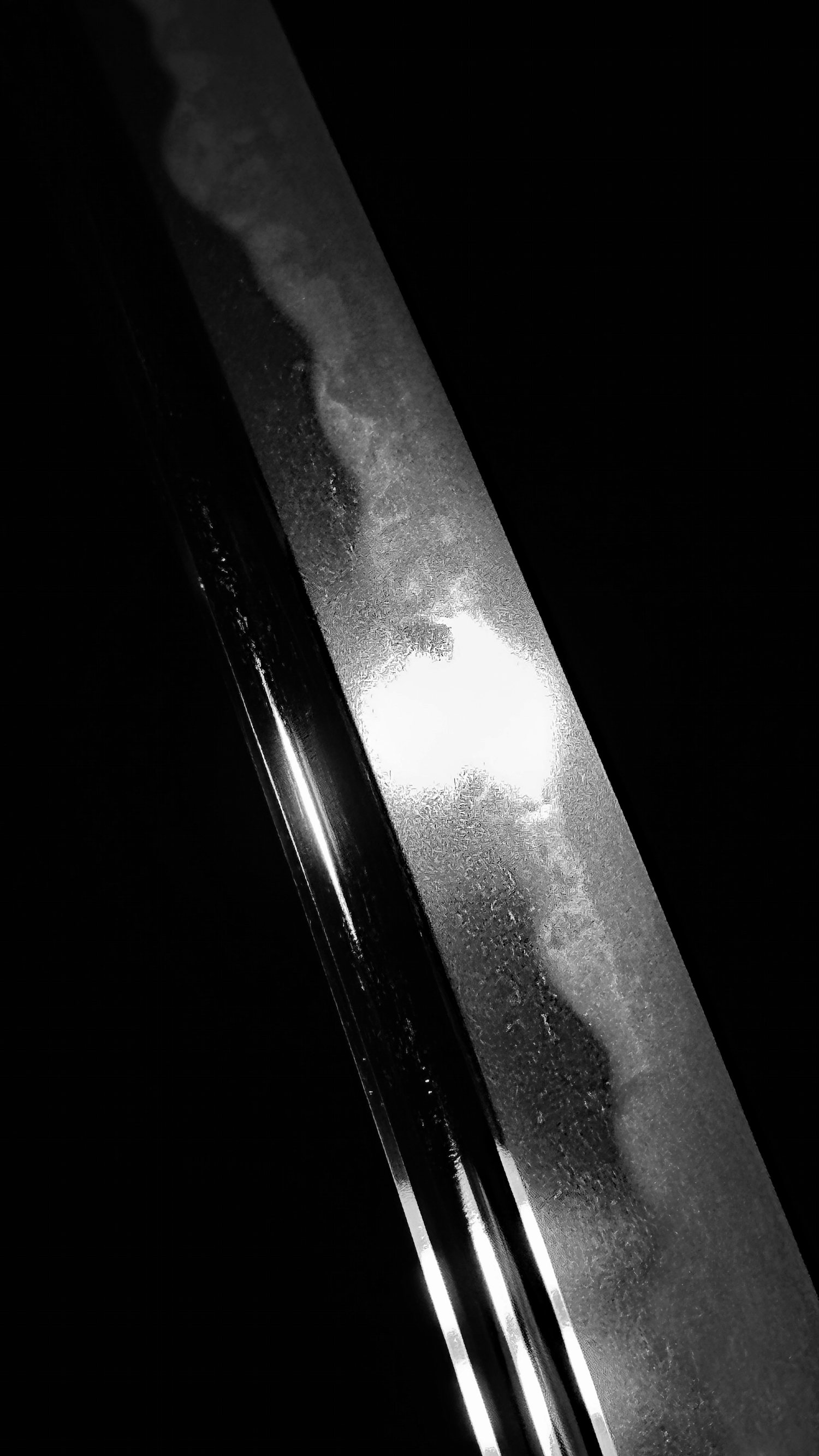
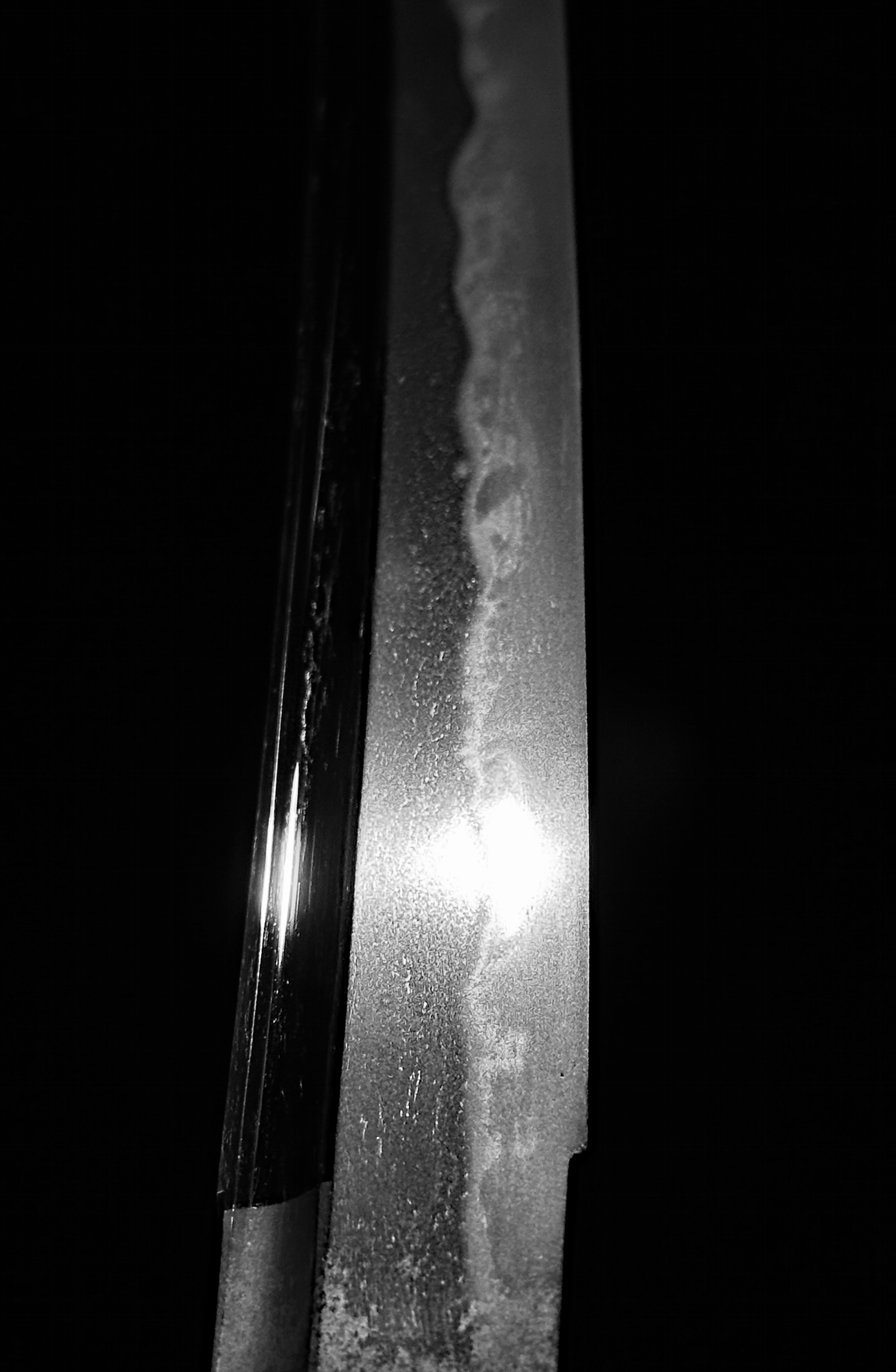
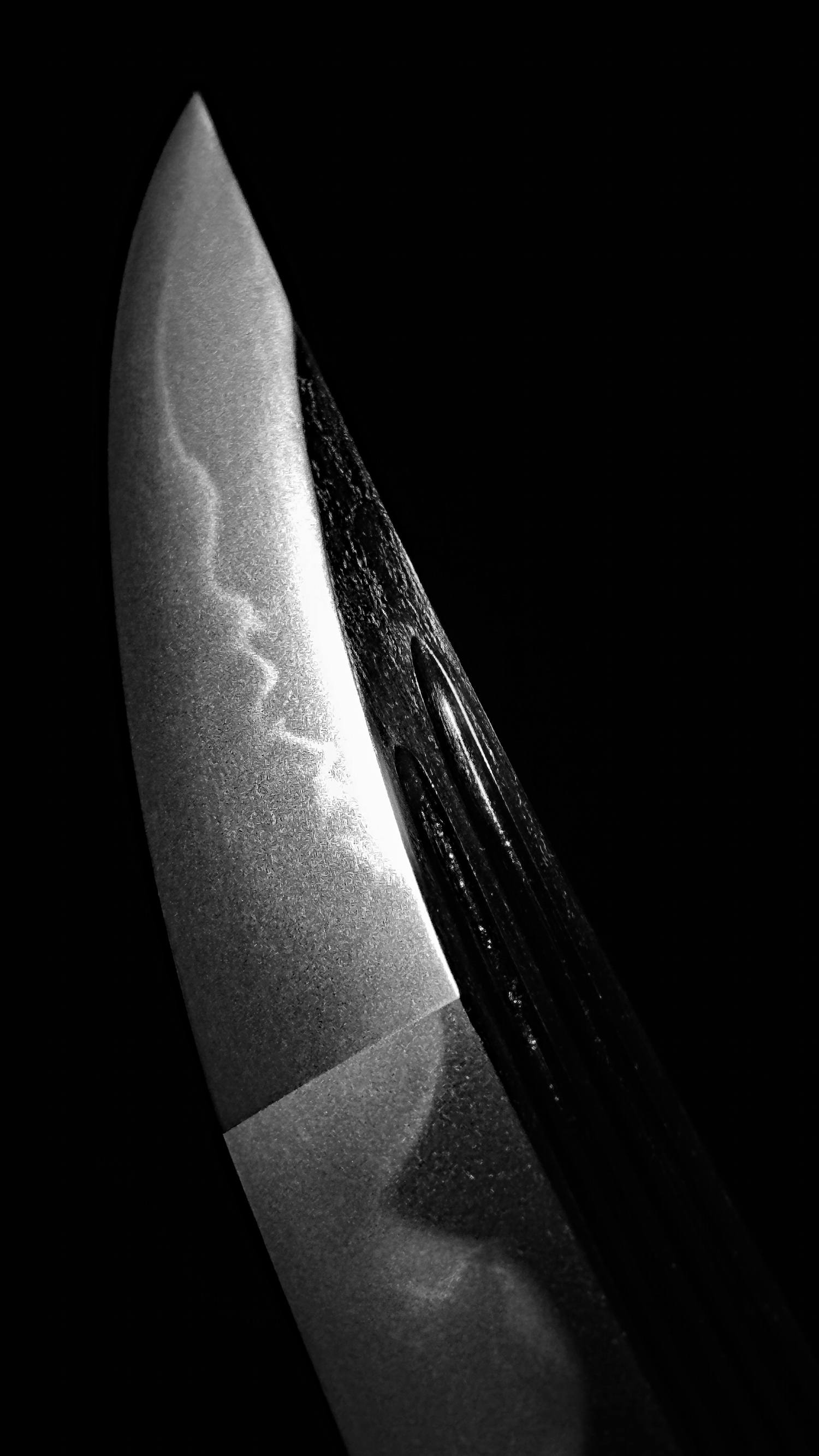
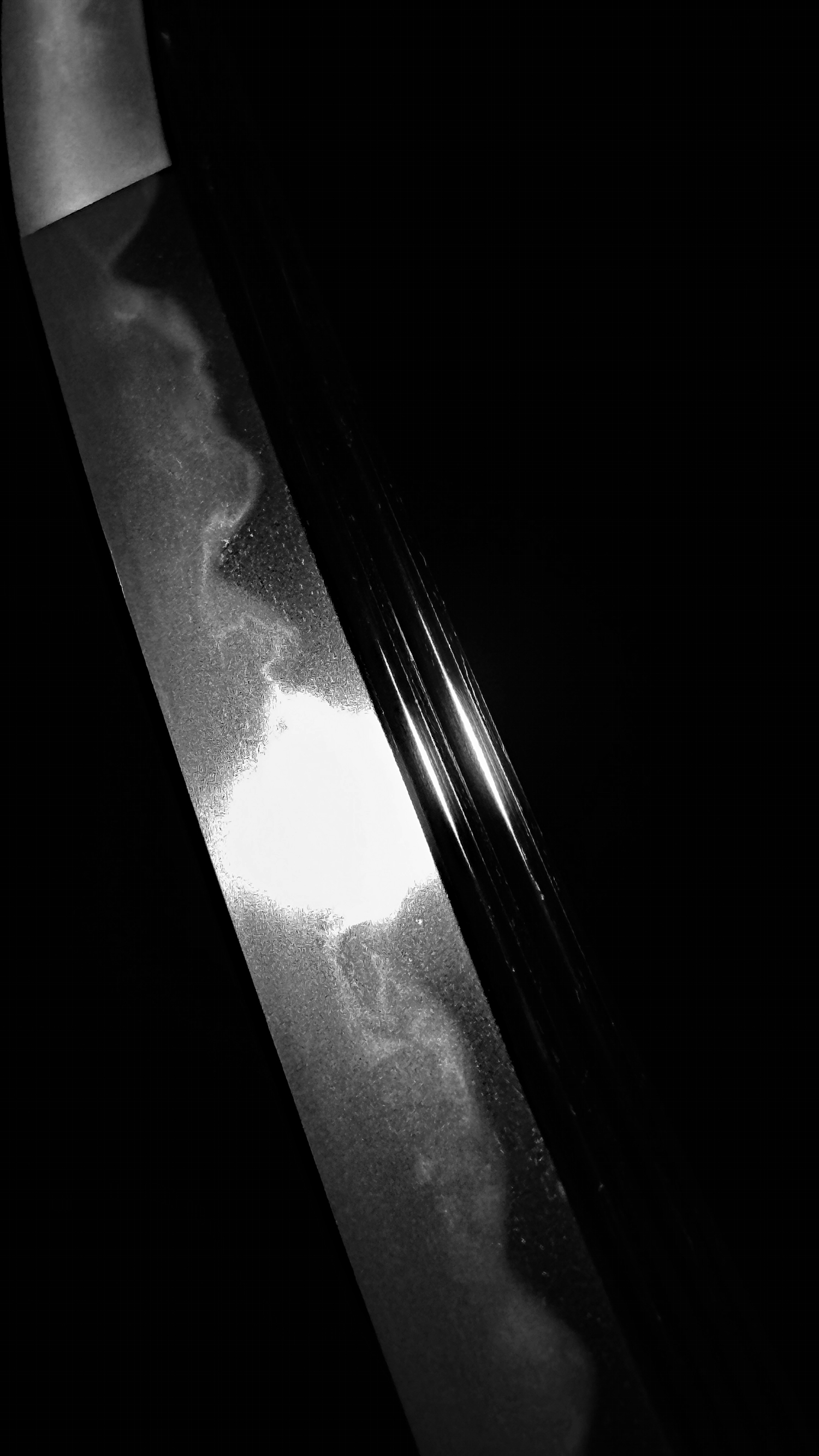
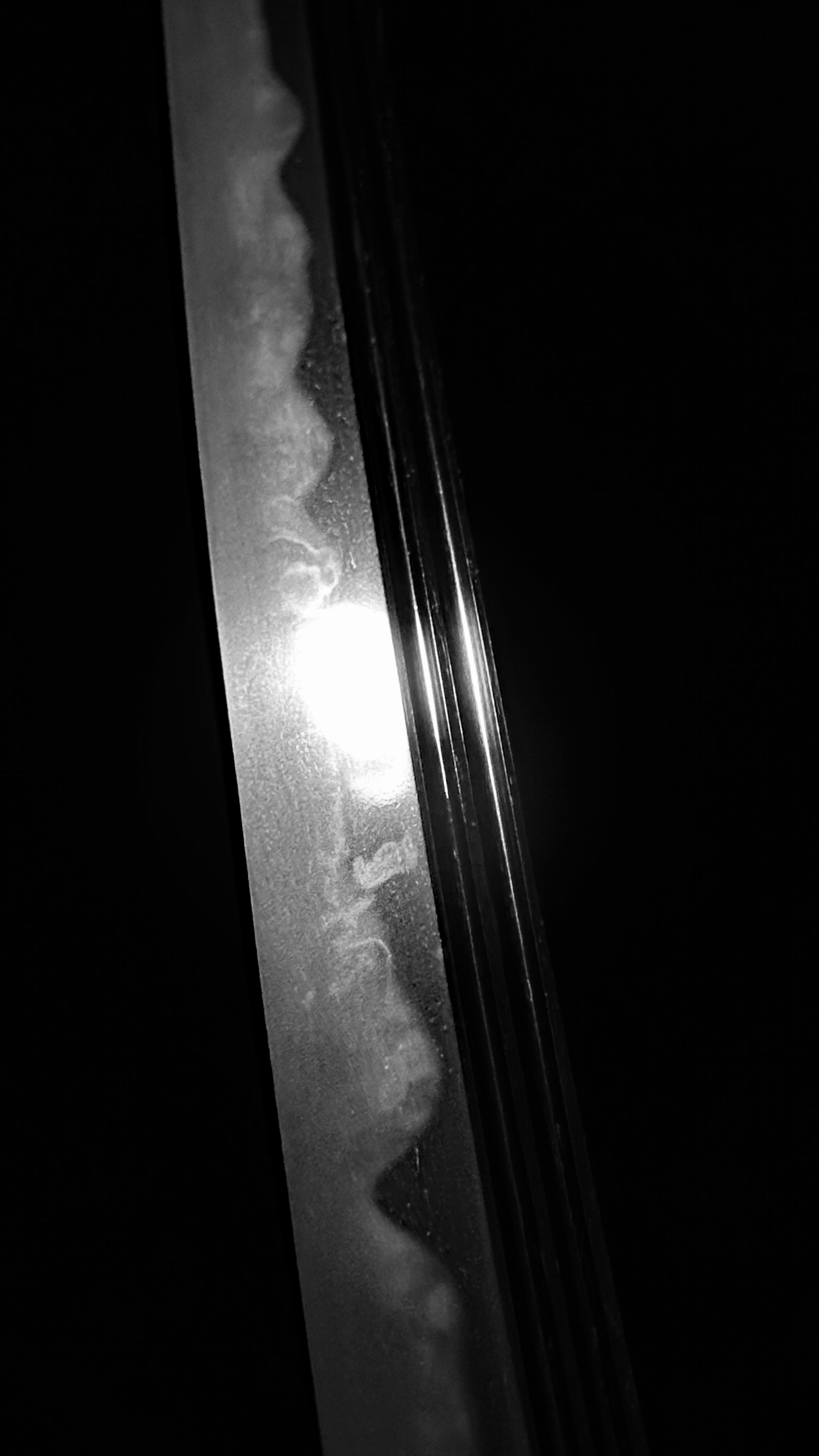
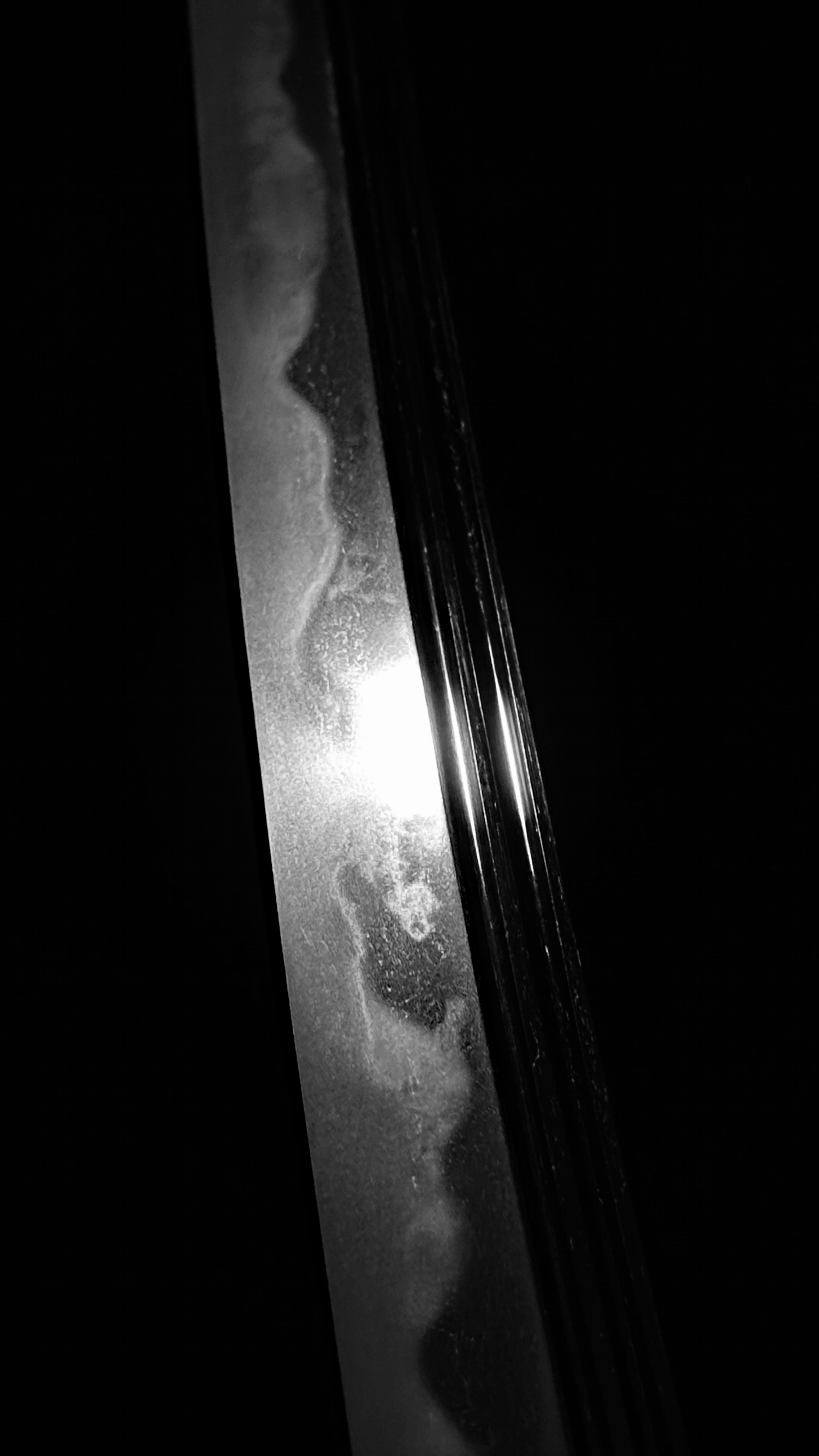
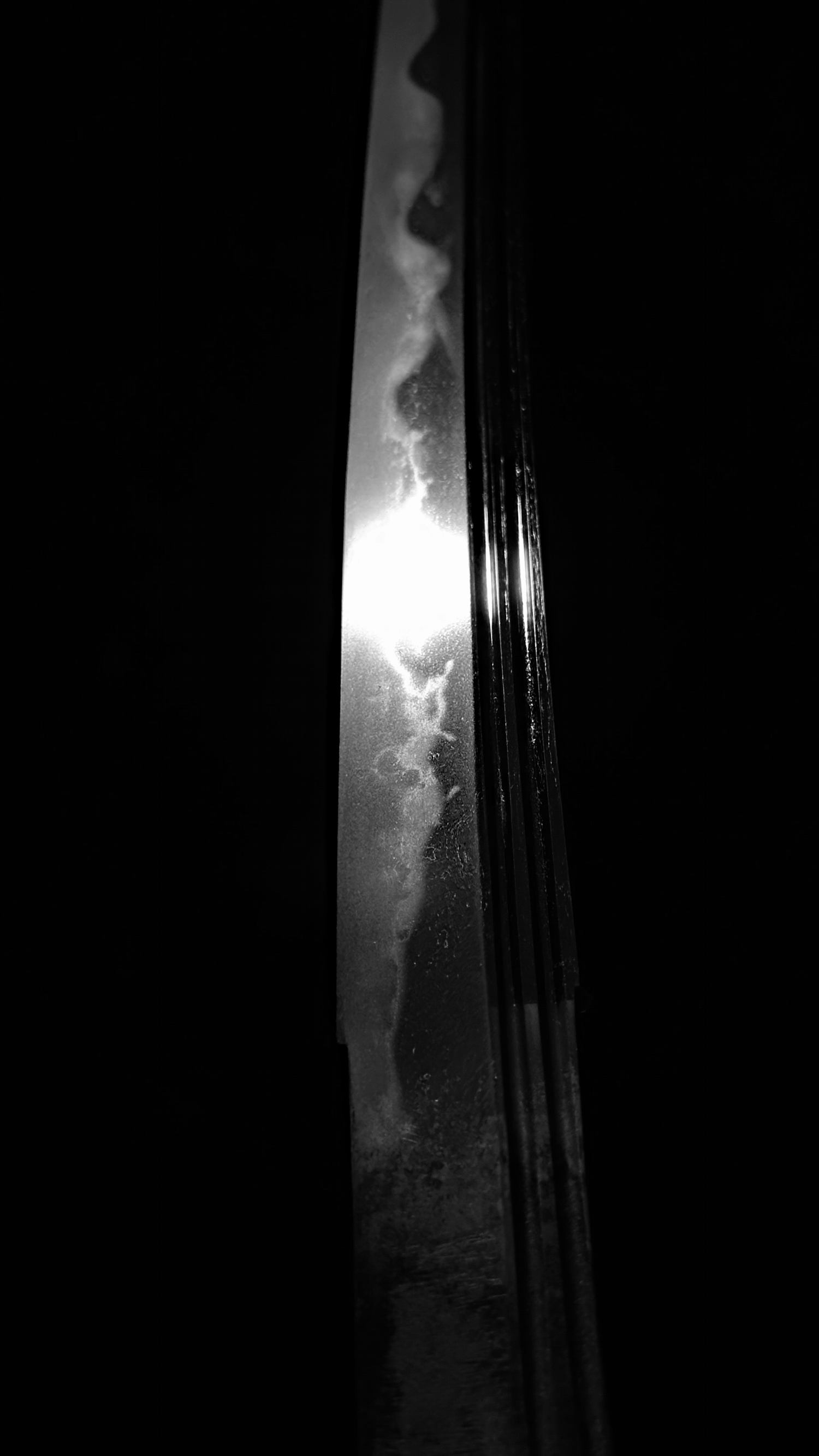
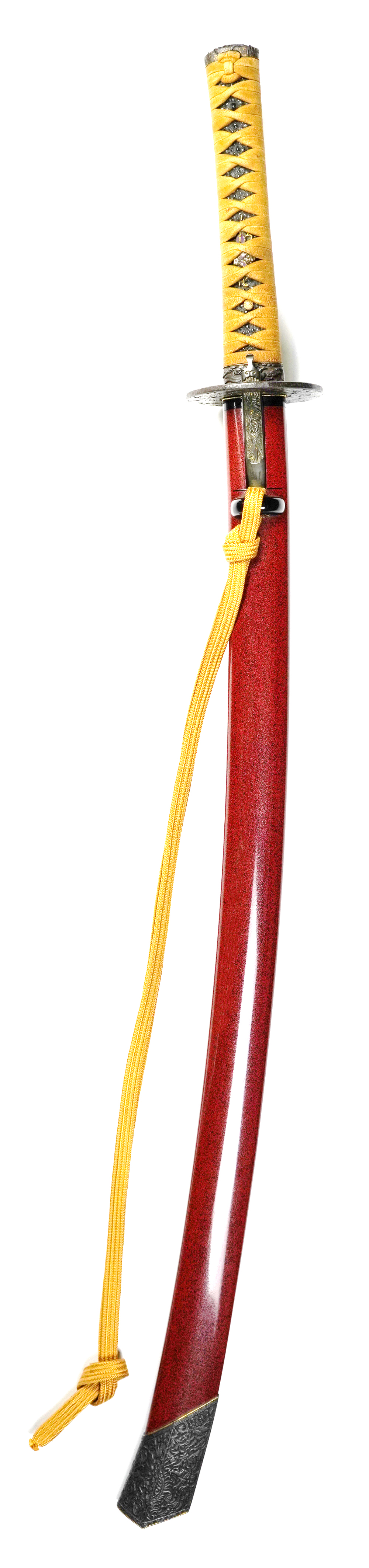
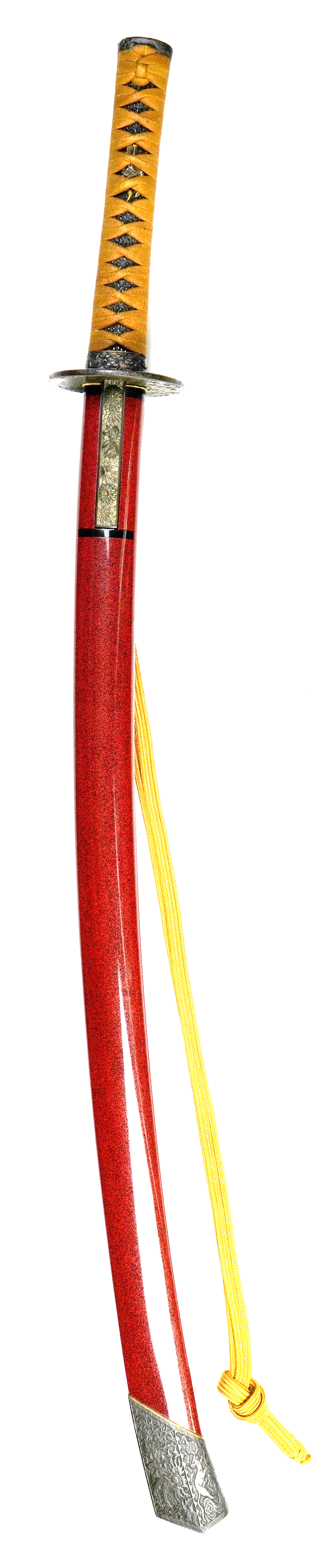
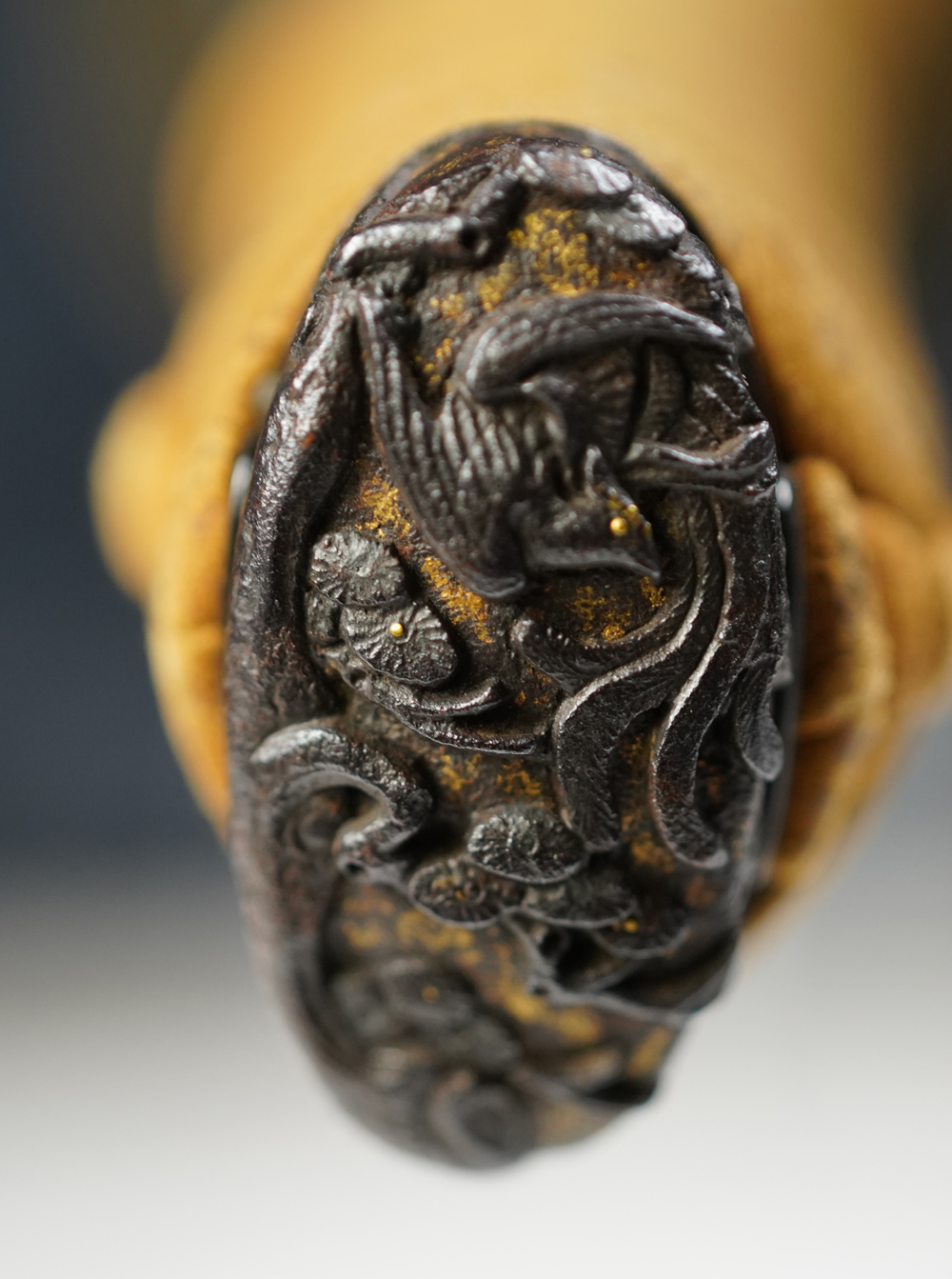
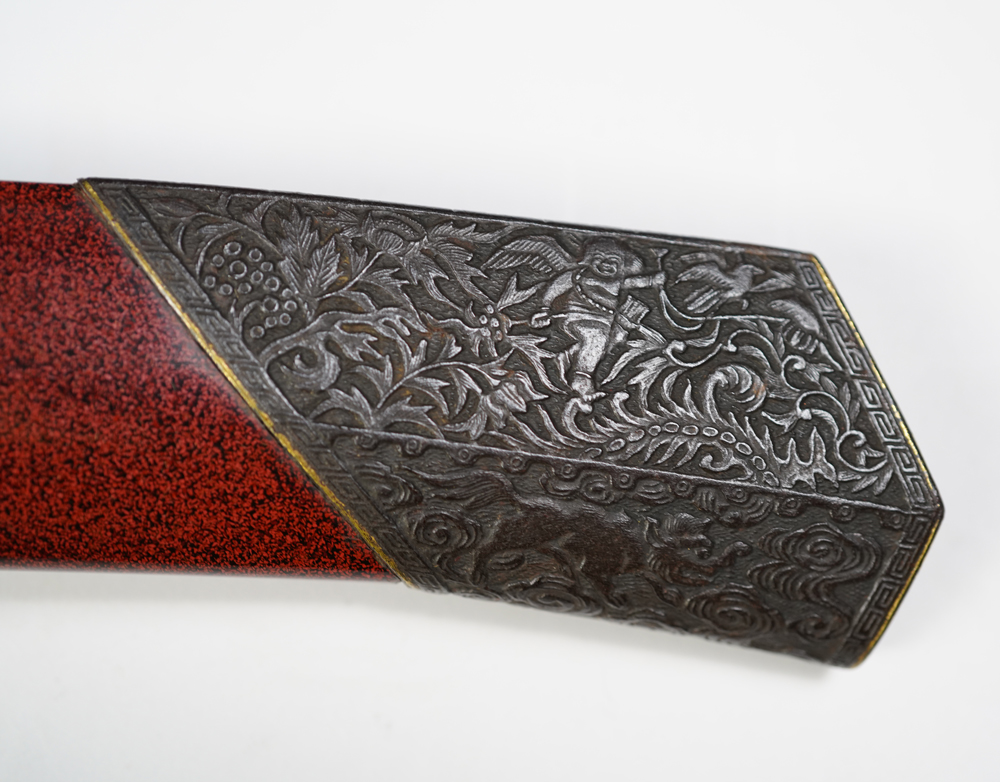
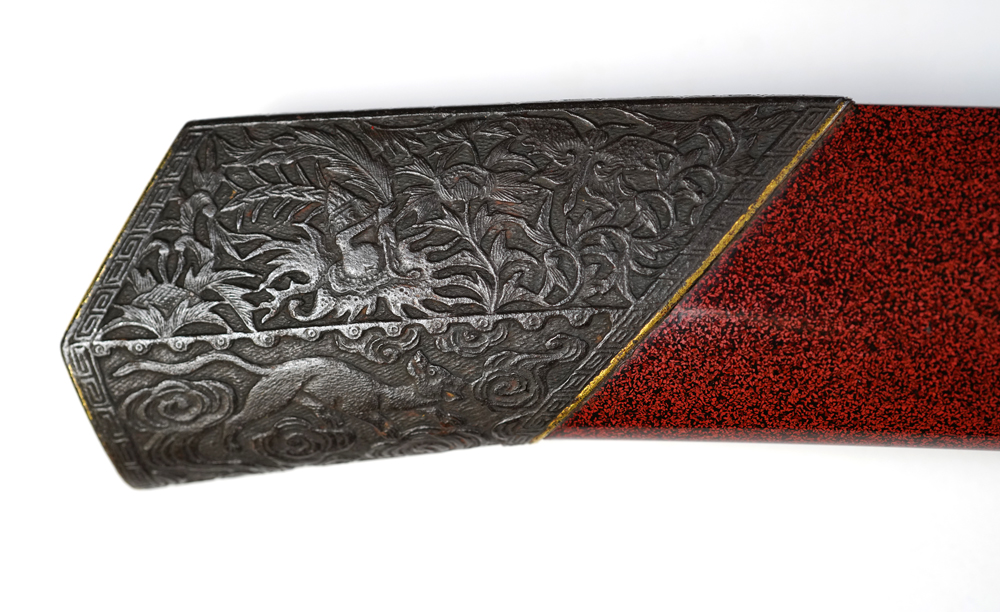
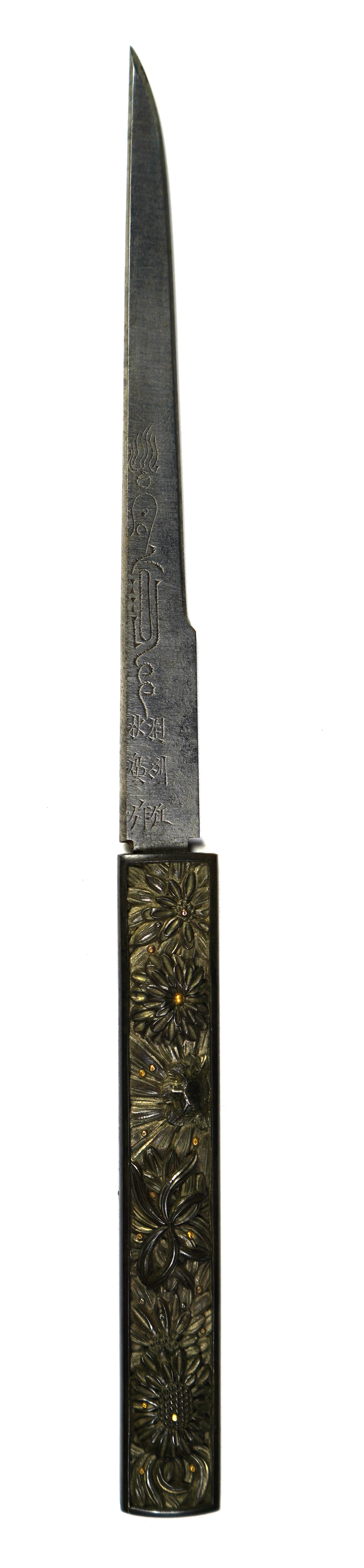
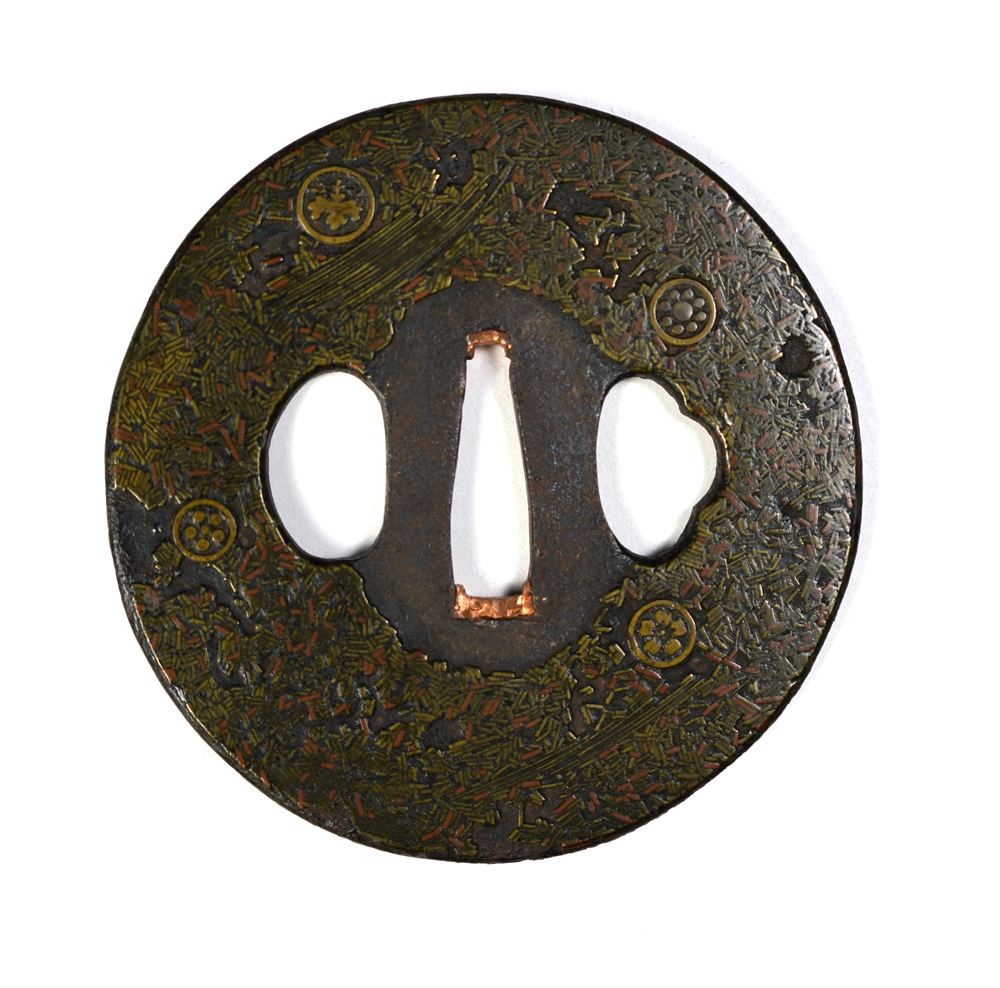
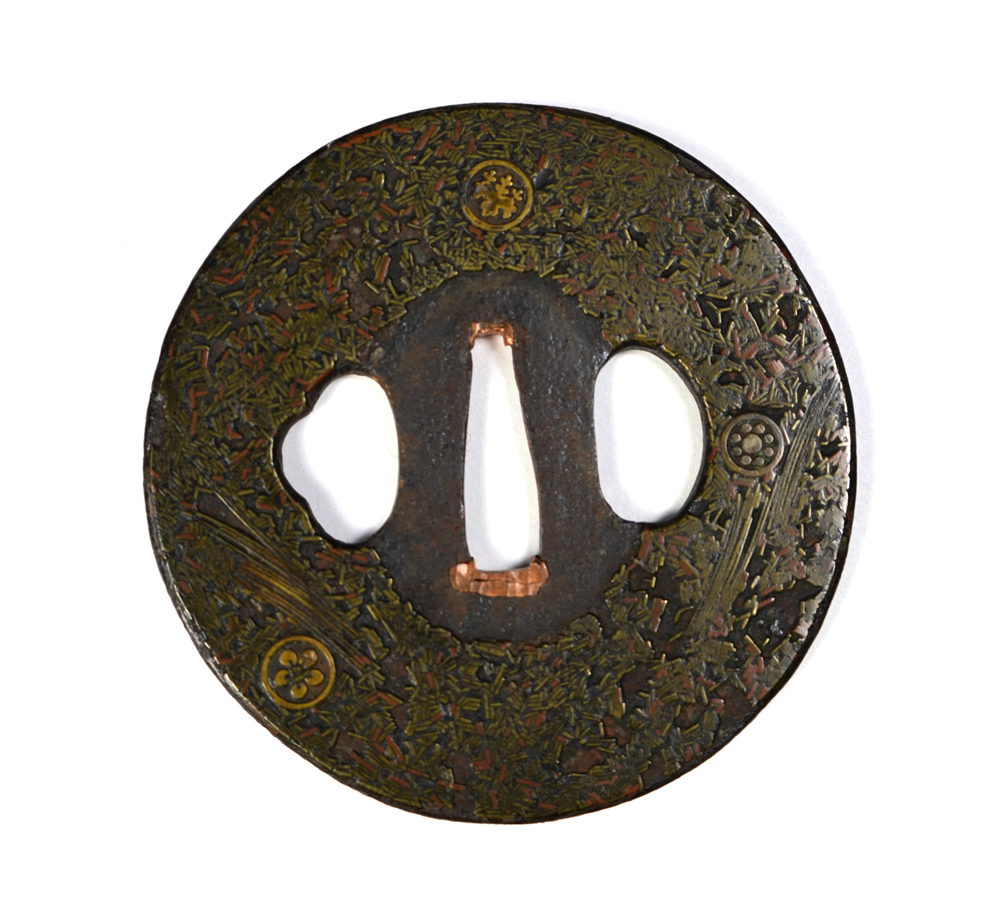
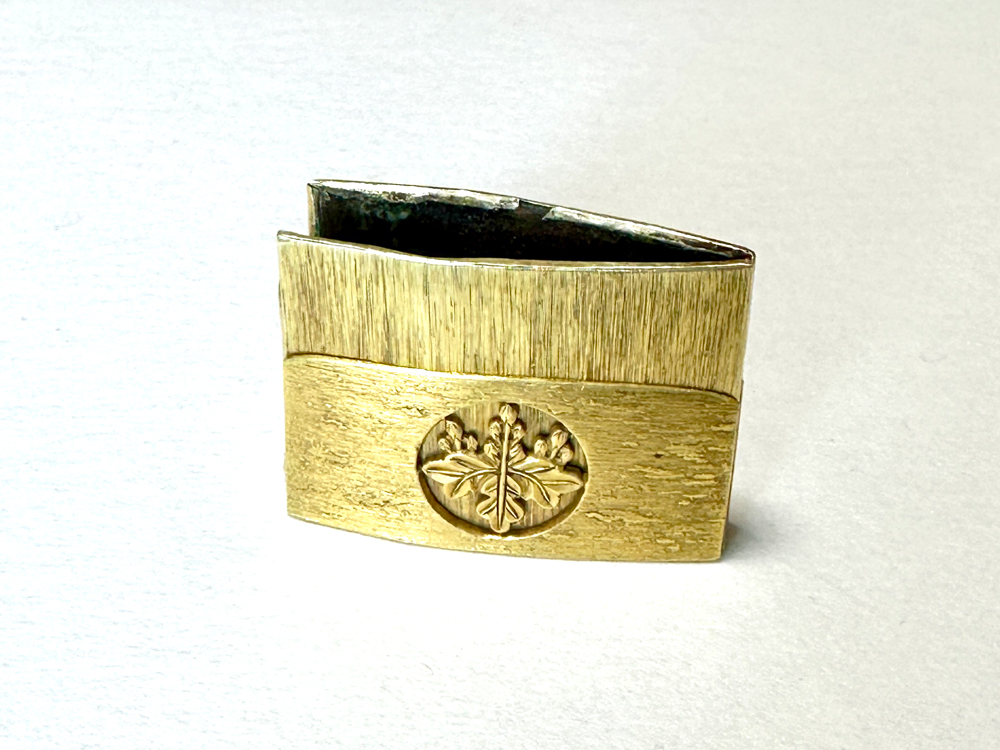
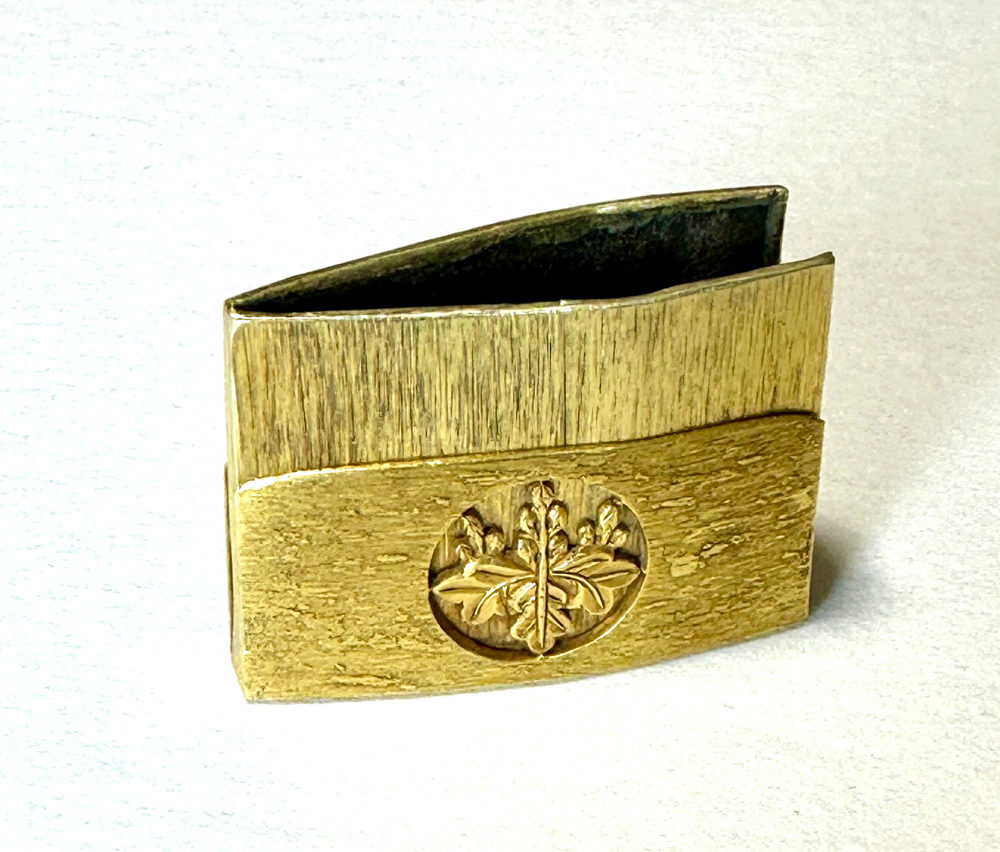
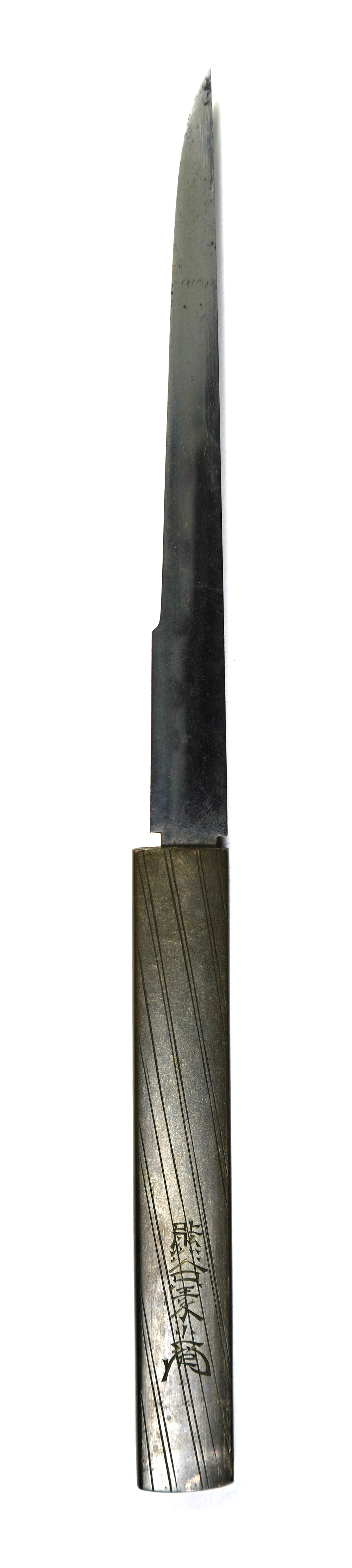
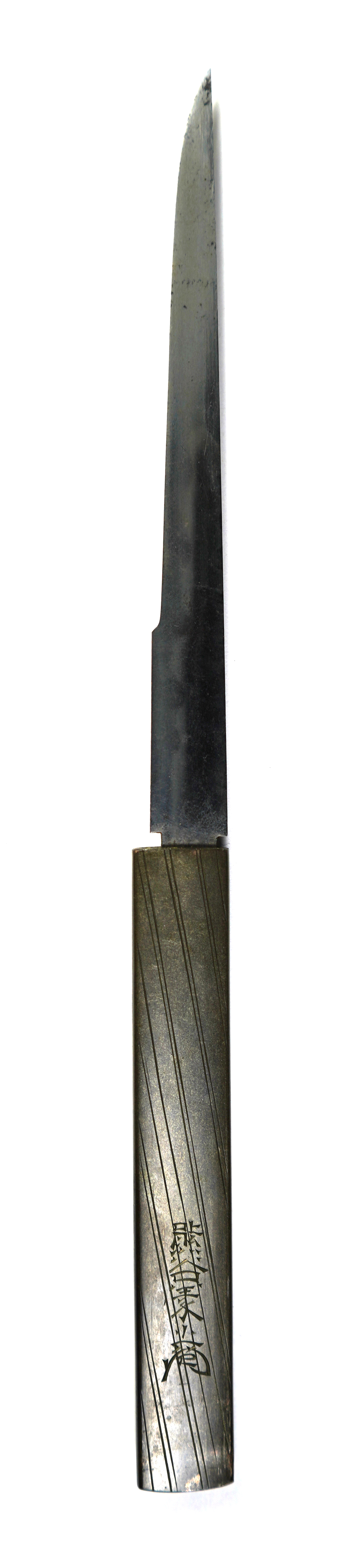
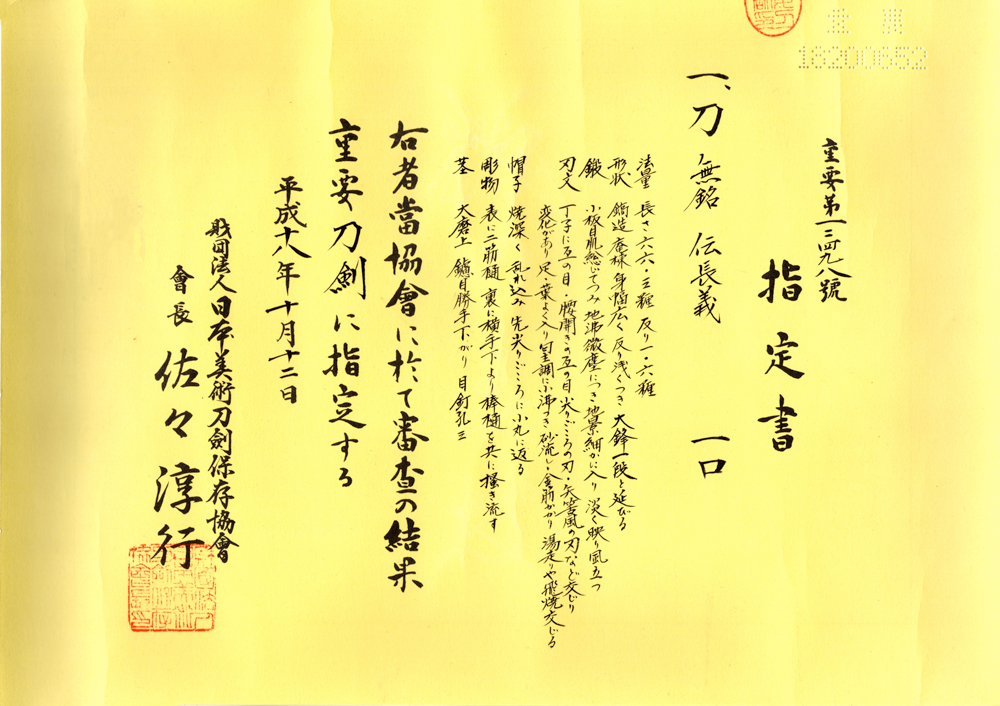
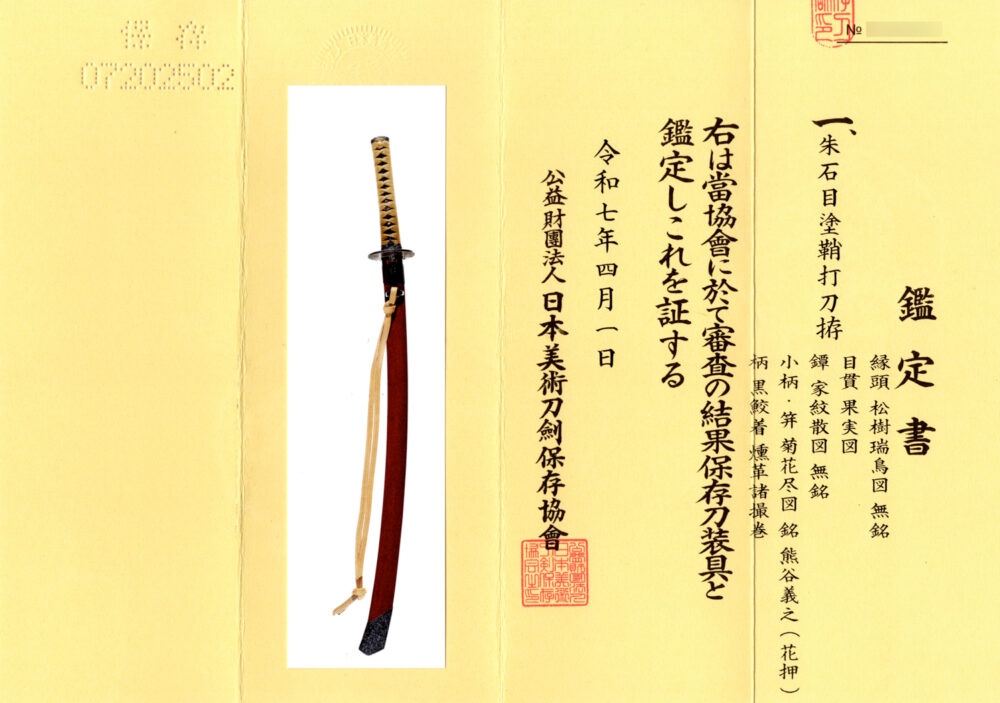
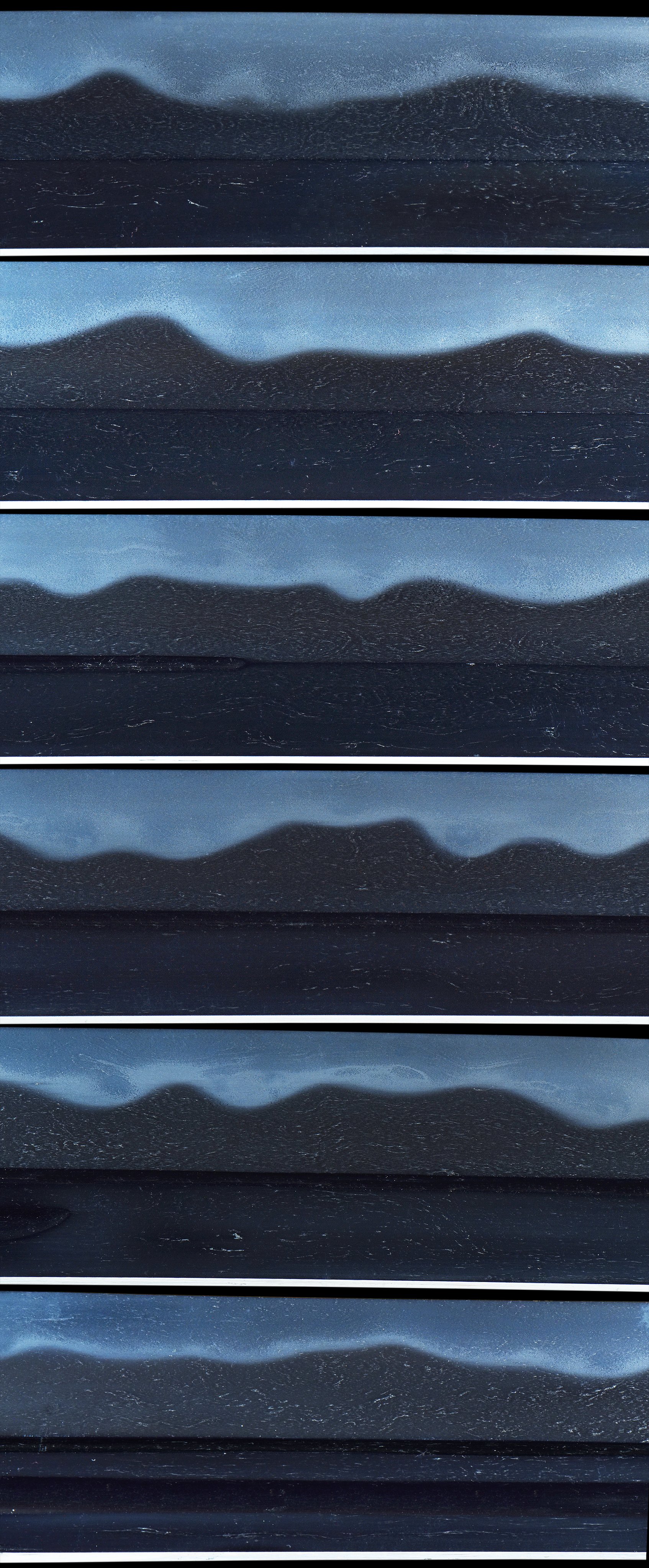
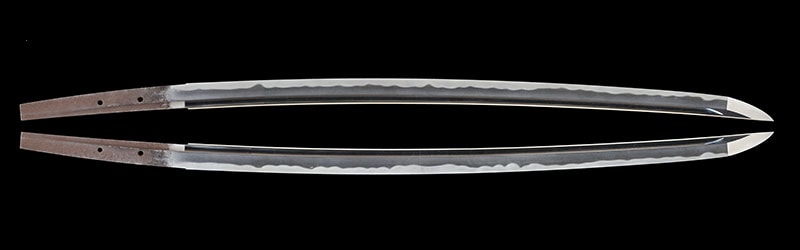
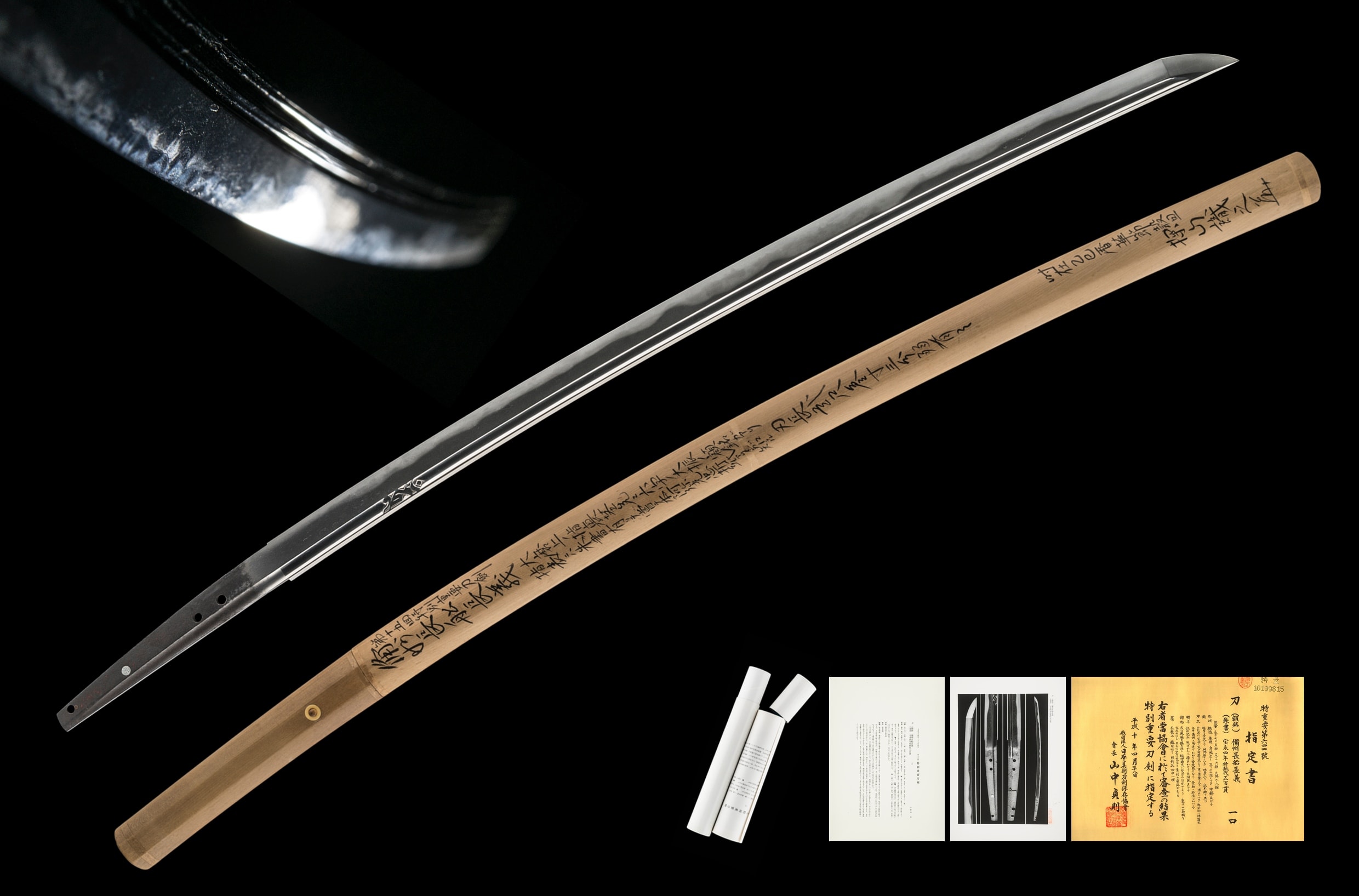
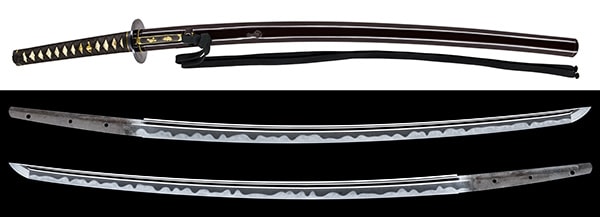
This is a magnificent katana attributed to Chogi, a master smith of the Nanbokucho period from the Bizen Osafune school, known for his exceptional skill in the Soshu tradition. It features a wide body, a dramatically extended o-kissaki, and a vibrant hamon with various patterns. The blade is accompanied by a red ishime nuri uchigatana koshirae and is designated as a 52nd session NBTHK Juyo Token.

NBTHK Setsumei

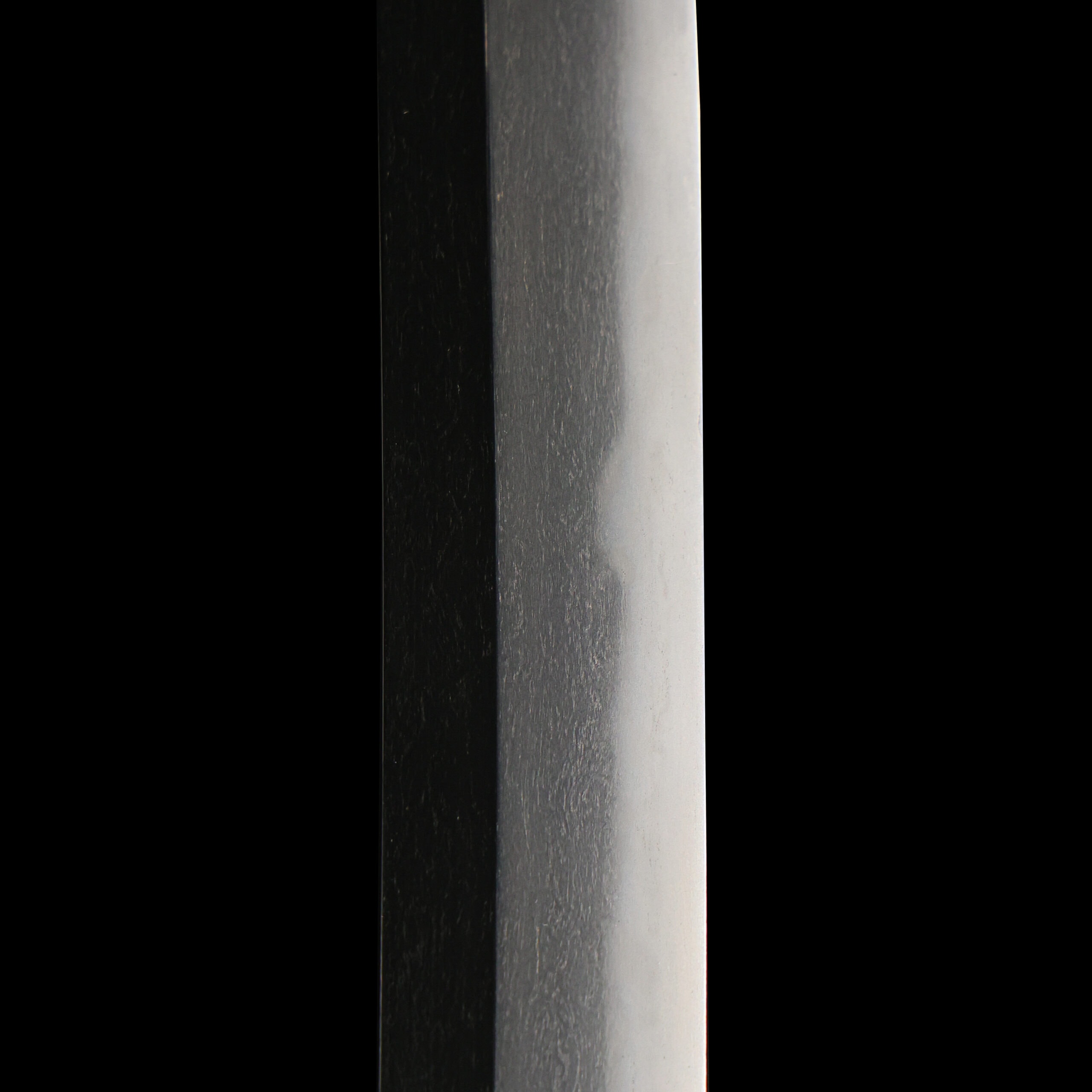
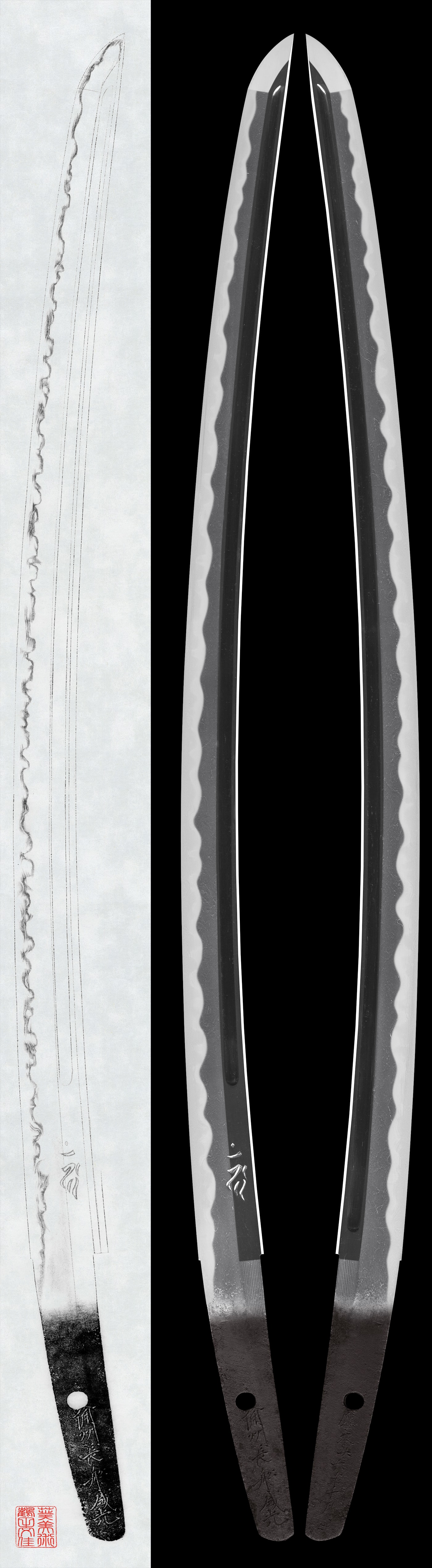
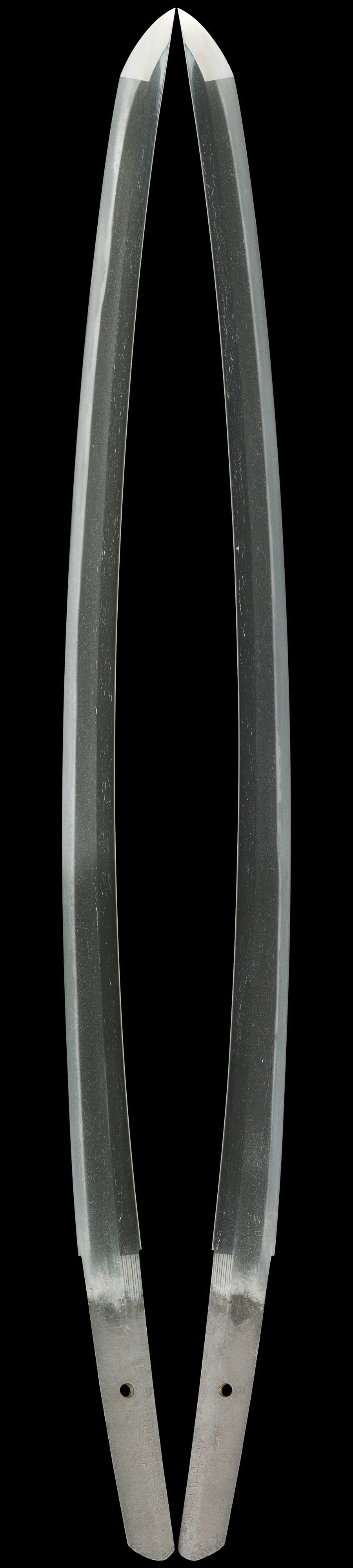
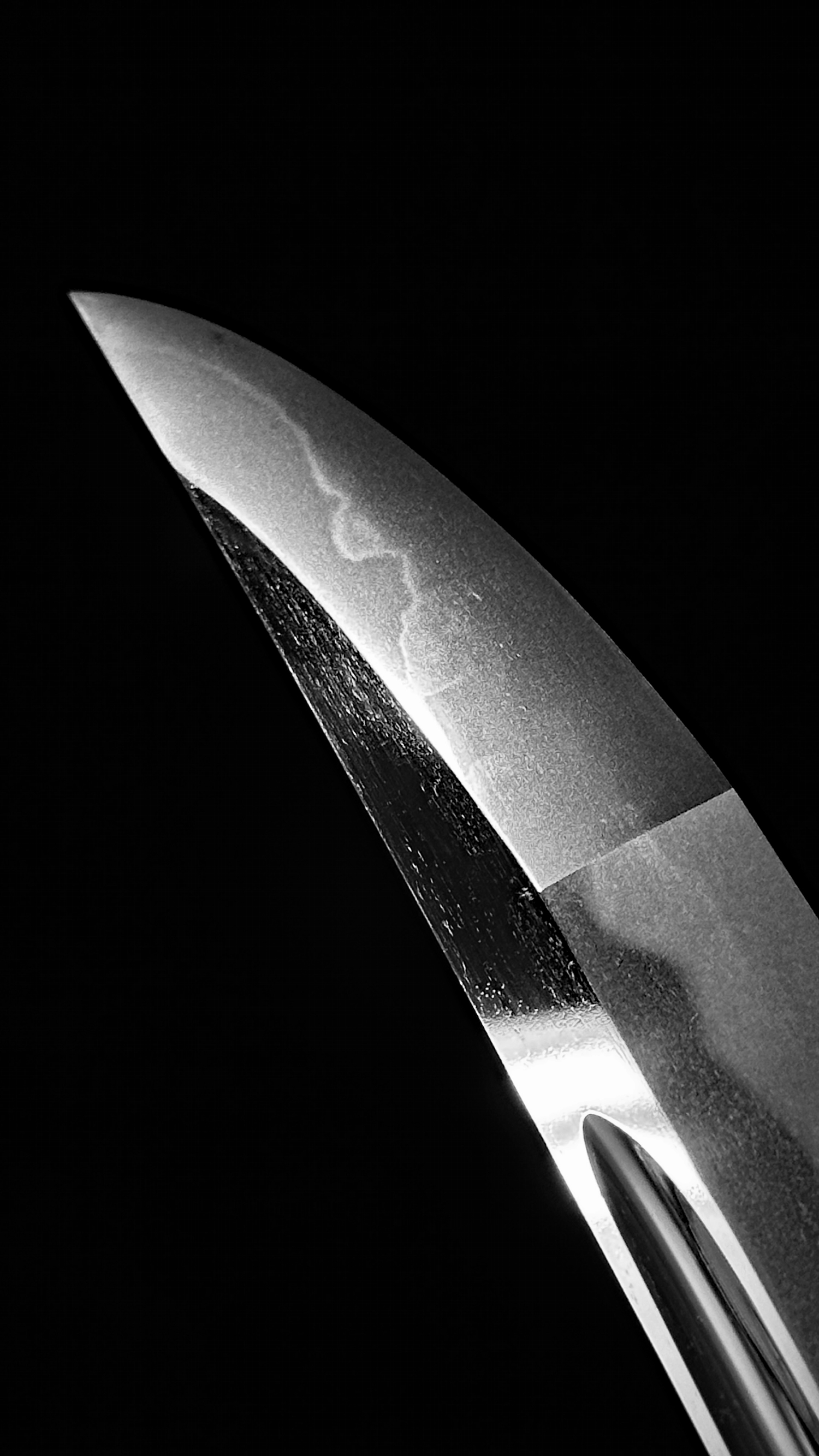
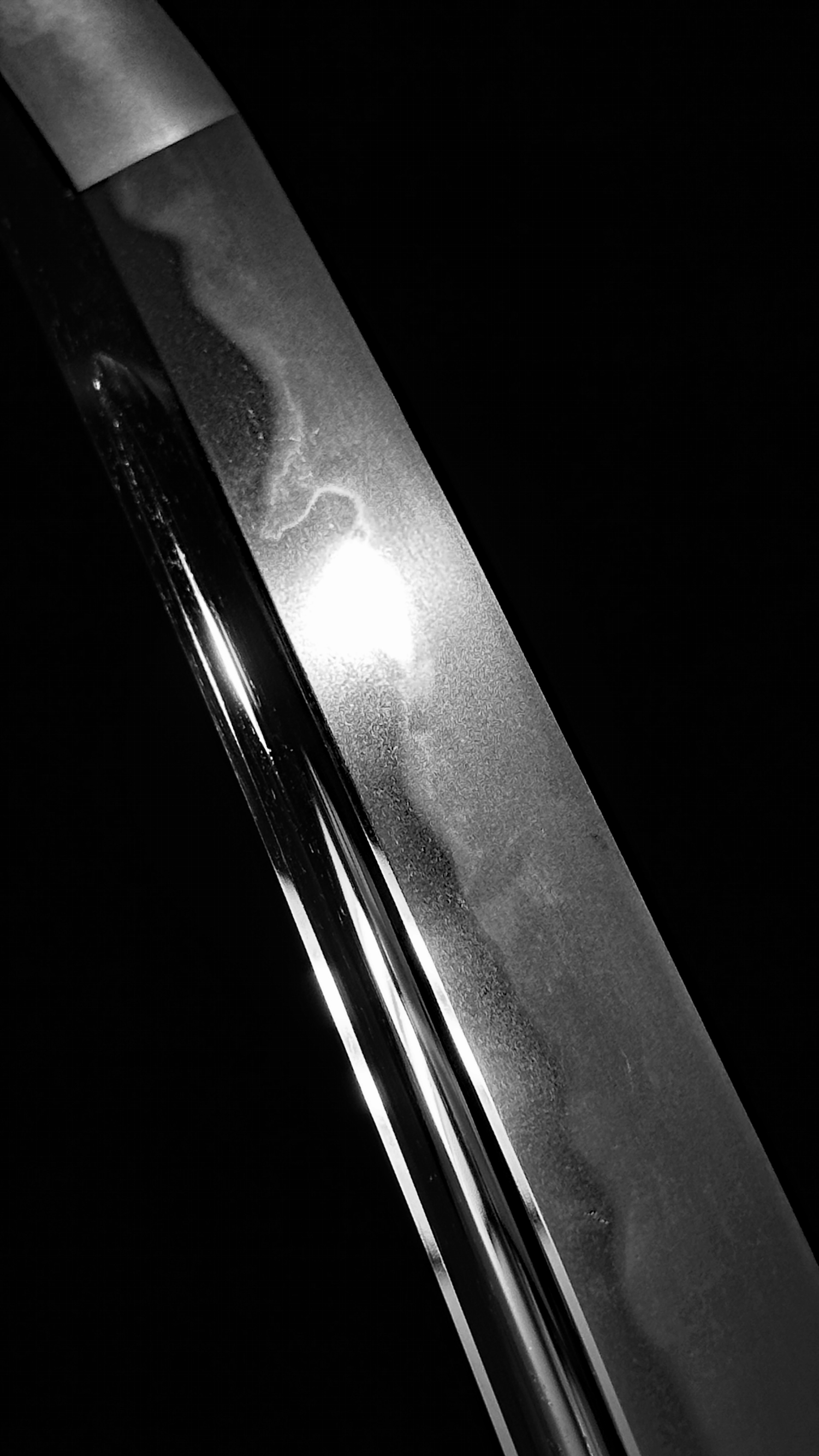
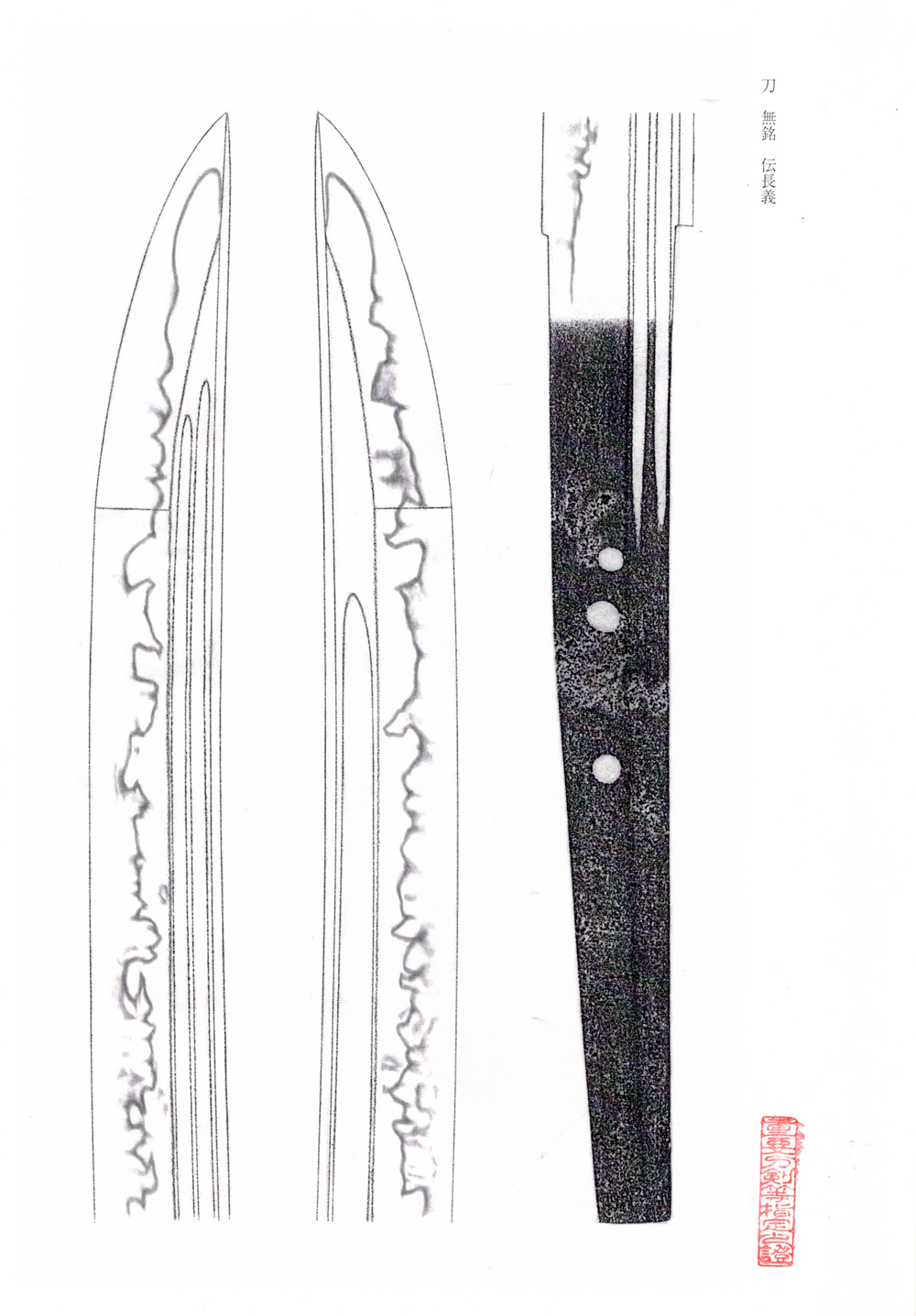
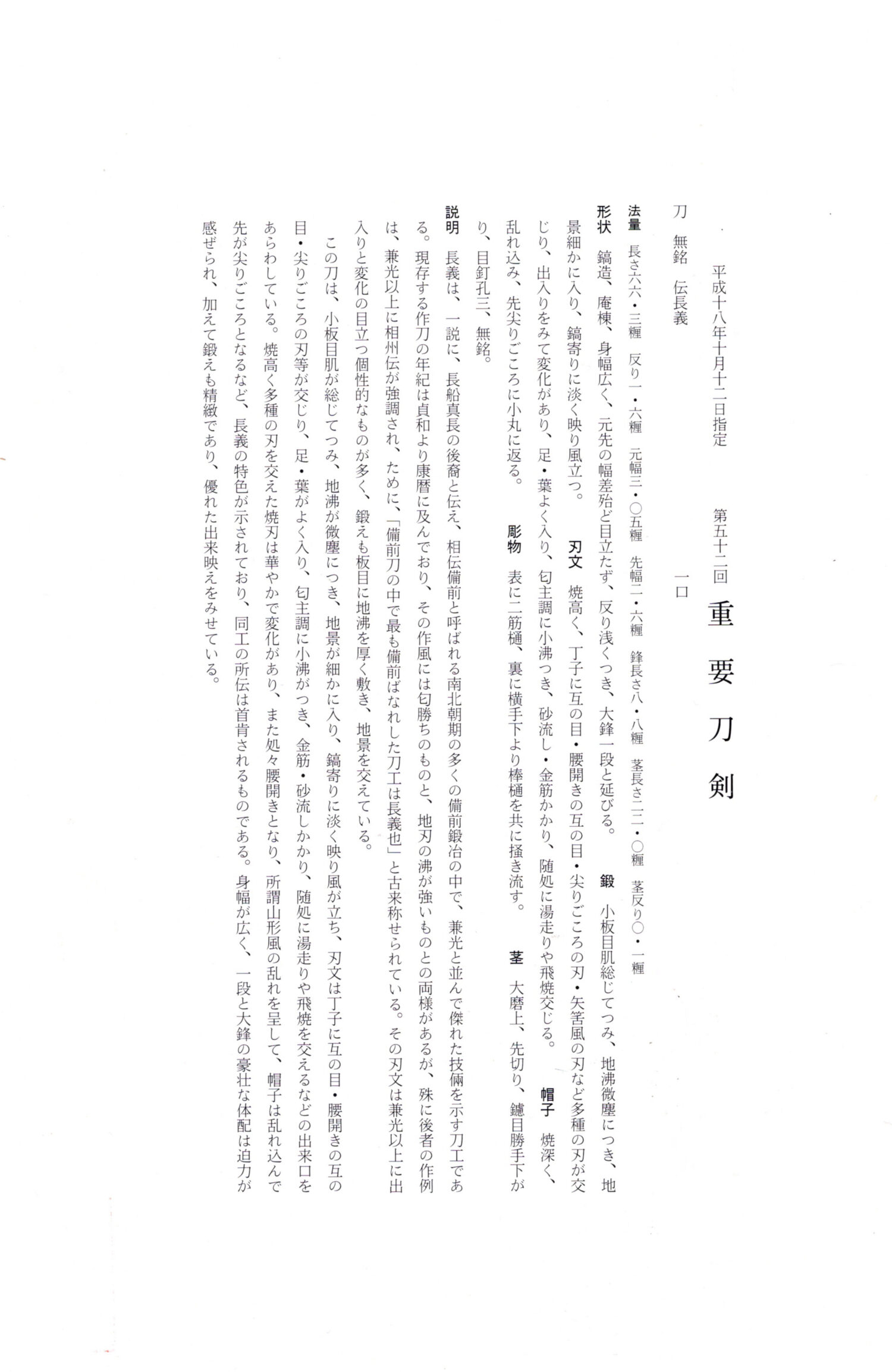
Jūyō-Tōken, 52nd Session — Designated October 12, 2006 Katana, mumei: den Chōgi (長義) Measurements Nagasa 66.3 cm, sori 1.6 cm, motohaba 3.05 cm, sakihaba 2.6 cm, kissaki-nagasa 8.0 cm, nakago-nagasa 22.0 cm, nakago-sori 0.1 cm Description Keijō: Shinogi-zukuri with iori-mune; wide mihaba with almost no taper from base to tip; shallow sori; an especially elongated ō-kissaki. Kitae: Tight ko-itame-hada overall; extremely fine ji-nie; fine chikei appear; near the shinogi there is faint utsuri and a “wind-swept” appearance (kaze-tatsu). Hamon: High-tempered (yaki-daka); a varied composition mixing chōji with gunome, open-based (koshi-biraki) gunome, pointed elements, and yahazu-like forms, with pronounced undulation and change; abundant ashi and yō; predominantly nioi with attached ko-nie; sunagashi and kinsuji appear, and in places yubashiri and tobiyaki are mixed in. Bōshi: Deeply tempered; midare-komi; with a slightly pointed tendency, returning in ko-maru. Horimono: On the omote, futasuji-hi; on the ura, a bō-hi beginning below the yokote; both are kaki-nagashi. Nakago: Greatly shortened (ō-suriage); kiri-jiri; katte-sagari yasurime; three mekugi-ana; unsigned. Artisan Den Chōgi (長義) Era Nanbokuchō period Explanation Chōgi is, according to one tradition, transmitted as a descendant of Osafune Sanenaga. Among the many Bizen smiths of the Nanbokuchō period who are grouped under the designation “Sōden-Bizen,” he is a swordsmith who, together with Kanemitsu, demonstrates outstanding technical skill. Surviving dated works span from the Jōwa era through Kōryaku. Within his style there are broadly two modes: one in which nioi is dominant, and another in which the nie of both ji and ha is strong. In particular, examples of the latter mode emphasize the Sōshū tradition even more strongly than Kanemitsu’s, and hence it has long been said that “among Bizen swords, the smith who departs furthest from Bizen is Chōgi.” His hamon is often more individualistic than Kanemitsu’s, with especially conspicuous rise-and-fall and variation; and his forging commonly lays dense ji-nie over an itame foundation while intermingling chikei. This katana shows a generally tight ko-itame-hada, with extremely fine ji-nie and finely entering chikei; near the shinogi faint utsuri appears and the surface takes on a kaze-tatsu aspect. The hamon mixes chōji with gunome, open-based gunome, and pointed elements, among others; ashi and yō enter well, and while nioi predominates, ko-nie attaches, with kinsuji and sunagashi forming, and with yubashiri and tobiyaki intermingled here and there. The high-tempered edge, combining many varieties of pattern, is brilliant and full of change; moreover, in places it becomes open at the base, producing the so-called “mountain-shaped” (yamagata) manner of midare. The bōshi enters in midare-komi and shows a slightly pointed tendency at the tip. These are characteristic features of Chōgi, and the traditional attribution to him is fully persuasive. Its broad blade and the exceptionally large, elongated ō-kissaki create a magnificent, forceful presence. In addition, the forging is meticulous, and the workmanship displays a notably superior quality.
NihontoWatch MonNihontoWatch
MarketAuctionsEncyclopedia
Swords›Bizen-den›Osafune›Sōden-Bizen›Chogi›Katana: Mumei Den Chogi (with) Red Ishime Nuri Uchigatana Koshirae
katanaJūyō
Chogi

Katana: Mumei Den Chogi (with) Red Ishime Nuri Uchigatana Koshirae

mumei · Osafune · Nanbokucho · nagasa 66.3cm · sori 1.6cm

SOLD
Chogi — 1 of 37
Chogi — 2 of 37
Chogi — 3 of 37
Chogi — 4 of 37
Chogi — 5 of 37
Chogi — 6 of 37
Chogi — 7 of 37
Chogi — 8 of 37
Chogi — 9 of 37
Chogi — 10 of 37
Chogi — 11 of 37
Chogi — 12 of 37
Chogi — 13 of 37
Chogi — 14 of 37
Chogi — 15 of 37
Chogi — 16 of 37
Chogi — 17 of 37
Chogi — 18 of 37
Chogi — 19 of 37
Chogi — 20 of 37
Chogi — 21 of 37
Chogi — 22 of 37
Chogi — 23 of 37
Chogi — 24 of 37
Chogi — 25 of 37
Chogi — 26 of 37
Chogi — 27 of 37
Chogi — 28 of 37
Chogi — 29 of 37
Chogi — 30 of 37
Chogi — 31 of 37
Chogi — 32 of 37
Chogi — 33 of 37
Chogi — 34 of 37
Chogi — 35 of 37
Chogi — 36 of 37
Chogi — 37 of 37
1 / 37
1 / 37
Chogi — 1 of 37Chogi — 2 of 37Chogi — 3 of 37Chogi — 4 of 37Chogi — 5 of 37Chogi — 6 of 37Chogi — 7 of 37Chogi — 8 of 37Chogi — 9 of 37Chogi — 10 of 37Chogi — 11 of 37Chogi — 12 of 37Chogi — 13 of 37Chogi — 14 of 37Chogi — 15 of 37Chogi — 16 of 37Chogi — 17 of 37Chogi — 18 of 37Chogi — 19 of 37Chogi — 20 of 37Chogi — 21 of 37Chogi — 22 of 37Chogi — 23 of 37Chogi — 24 of 37Chogi — 25 of 37Chogi — 26 of 37Chogi — 27 of 37Chogi — 28 of 37Chogi — 29 of 37Chogi — 30 of 37Chogi — 31 of 37Chogi — 32 of 37Chogi — 33 of 37Chogi — 34 of 37Chogi — 35 of 37Chogi — 36 of 37Chogi — 37 of 37
Measurements & details
Smith
Chogi
Type
Katana
School
Chogi
Period
Around 1356–1379(Kenmu ND)
Province
Bizen
Signature
Unsigned(26% of this smith's designated works are signed)
Measurements
Nagasa 66.3cmSori 1.6cmMotohaba 3.05cmSakihaba 2.6cmKasane 0.6cm
Description

This is a magnificent katana attributed to Chogi, a master smith of the Nanbokucho period from the Bizen Osafune school, known for his exceptional skill in the Soshu tradition. It features a wide body, a dramatically extended o-kissaki, and a vibrant hamon with various patterns. The blade is accompanied by a red ishime nuri uchigatana koshirae and is designated as a 52nd session NBTHK Juyo Token.

NBTHK Zufu Commentary

Juyo #52

AI translation — may contain errors

-, 52nd Session — Designated October 12, 2006

, : Chōgi (長義)

Measurements 66.3 cm, 1.6 cm, 3.05 cm, 2.6 cm, 8.0 cm, 22.0 cm, 0.1 cm

Description Keijō: with ; wide with almost no taper from base to tip; shallow ; an especially elongated . : Tight overall; extremely fine ; fine appear; near the there is faint and a “wind-swept” appearance (kaze-tatsu). : High-tempered (); a varied composition mixing with , open-based () , pointed elements, and -like forms, with pronounced undulation and change; abundant and ; predominantly with attached ; and appear, and in places and are mixed in. : Deeply tempered; ; with a slightly pointed tendency, returning in . : On the , ; on the , a beginning below the ; both are kaki-nagashi. : Greatly shortened (); ; ; three ; unsigned.

Artisan Chōgi (長義)

Era period

Explanation Chōgi is, according to one tradition, transmitted as a descendant of Sanenaga. Among the many smiths of the period who are grouped under the designation “Sōden-Bizen,” he is a swordsmith who, together with Kanemitsu, demonstrates outstanding technical skill. Surviving dated works span from the Jōwa era through Kōryaku. Within his style there are broadly two modes: one in which is dominant, and another in which the of both and is strong. In particular, examples of the latter mode emphasize the tradition even more strongly than Kanemitsu’s, and hence it has long been said that “among swords, the smith who departs furthest from is Chōgi.” His is often more individualistic than Kanemitsu’s, with especially conspicuous rise-and-fall and variation; and his forging commonly lays dense over an foundation while intermingling .

This shows a generally tight , with extremely fine and finely entering ; near the faint appears and the surface takes on a kaze-tatsu aspect. The mixes with , open-based , and pointed elements, among others; and enter well, and while predominates, attaches, with and forming, and with and intermingled here and there. The high-tempered edge, combining many varieties of pattern, is brilliant and full of change; moreover, in places it becomes open at the base, producing the so-called “mountain-shaped” () manner of . The enters in and shows a slightly pointed tendency at the tip. These are characteristic features of Chōgi, and the traditional attribution to him is fully persuasive.

Its broad blade and the exceptionally large, elongated create a magnificent, forceful presence. In addition, the forging is meticulous, and the workmanship displays a notably superior quality.
About the maker

Chogi

長義

Chogi (Soden-Bizen) · Bizen · around 1356-1379

Fujishiro Sai-jo saku

1 piece on the market now

›

Chogi (長義) was the leading Bizen smith of the Nanbokucho age, a master whom the published sources name in the same breath as Kanemitsu as one who, together with Kanemitsu, displayed outstanding skill[[c:1]] among the many Bizen smiths of the period grouped under the appellation Soden-Bizen. One tradition transmits him as a descendant of the Osafune mainline smith Sanenaga, and the dated blades that survive run from the Jowa years through Koryaku, so his career sits squarely in the high Nanbokucho decades of Enbun and Joji. The sources draw a clear line between two faces of his work, one in which nioi prevails and one in which the nie of the jigane and hamon runs strong, and it is the second of these that earned him the phrase repeated again and again across his papers, that of all Bizen smiths Chogi is the one whose work departs furthest from Bizen[[c:2]].

The first thing to look for is not a borrowed resemblance but his own typical hand. Over a base of notare he tempers a bold, varied midare in which gunome, choji, angular ha and pointed togari elements crowd together, and at intervals two gunome lean head to head into an ear shape, the mimigata that the sources single out as the form to watch for in his work. On the Shotoku wakizashi the judges write that the notare-toned hamon mixing ear-shaped ha is this smith's typical work[[c:3]], and on a signed tanto they describe the notare ha whose head splits in two into the ear-shaped ha[[c:4]]. This is the surest Chogi tell, more reliable than any single famous comparison, because it recurs across signed and attributed blades alike and belongs to no other hand in quite this form.

Within the temper the activity is profuse and Soshu in feeling. Ashi and yo enter freely, the nie gathers thick and at times clustered, kinsuji and sunagashi run through the ha, and tobiyaki and yubashiri drift above it, so that the nioiguchi is now bright, now slightly subdued. The judges note that in his nie-strong work the Soshu manner is emphasized even more than in Kanemitsu, which is precisely why the old saying about the most un-Bizen of Bizen smiths attaches to him. Yet the hamon never loses its Bizen footing, and the choji and mountain-shaped clusters keep the reading anchored in the province.

The jigane answers the temper. The itame stands, often a touch hada-tatsu, carries thick ji-nie and abundant well-entering chikei, and beneath the Soshu fire a midare-utsuri rises, faint on some blades and vivid on others. It is this doubling, Soshu nie worked into a jigane that still throws a Bizen utsuri, that lets a Chogi be read at sight, and the sources say plainly that his forging lays thick ji-nie over itame and mixes in chikei. The boshi follows the disorder of the ha. It runs midare-komi, often turning pointed in togari, with hakikake sweeping the tip and at times a thrusting-up tsukiage before a short ko-maru turn-back, a strong and restless point that the judges repeatedly single out for its force.

The shape is the grand Nanbokucho figure, broad in the mihaba with little taper from base to tip, shallow in the sori and extended into an o-kissaki, imposing and o-buri. Most of his surviving blades are osuriage-mumei o-dachi later shortened, their bearing still vividly of the Enbun and Joji peak, and among the signed work are fine nie-rich tanto and a dated tanto of Oan. The most celebrated piece is the Yamanbagiri Chogi, an Important Cultural Property and the very blade that Horikawa Kunihiro famously copied, though that history comes from outside the published sources rather than from the catalog records themselves.

For the collector Chogi is, by the measure of a name this great, comparatively within reach. Fujishiro grades him Sai-jo saku, and he holds no National Treasure, but five of his blades are Important Cultural Properties and a strong body of his work carries Tokubetsu Juyo and Juyo papers, with thirty-two at the Tokubetsu Juyo tier. The provenance is illustrious: blades descend through the Mito Tokugawa and Kishu Tokugawa houses, one passed through the Hori family of the Iida domain in Shinano and the collection of Ito Miyoji. Held across public institutions and long-private hands, a Chogi surfaces only occasionally, and is a major acquisition whenever it does.

Historical importance

Where Chogi stands among comparable artisans: across all of nihontō, and within tradition, era, and period. The tiers (Foremost · Leading · Major · Notable) weigh official designations from the NBTHK and Japan's Agency for Cultural Affairs, together with historical honors of lasting repute such as the Sansaku and Meibutsu-chō.

随一
Foremost
屈指
Leading
有数
Major
著名
Notable

Select a lens to see how it's measured.

Designation record
108 designated works
Jūyō Bunkazai
5
Jūyō Bijutsuhin
6
Gyobutsu (Imperial)
3
Tokubetsu Jūyō
32
Jūyō
62
1 work by Chogi on the market→
Chogi — full profileChogi (Soden-Bizen) school

Dated Works

Years he was demonstrably active, proven by signed-and-dated blades

Active period
1363–1379Editorial estimate: 1356–1379
8 of 22 designated works carry a date
1360
1370
1380
About the school

Chogi

長義

Bizen-den

Phase: Sōden-Bizen相伝備前· 1330–1394

9 pieces on the market now

›

The Soden Bizen school encompasses the group of Nanbokucho-period Osafune smiths in Bizen Province whose work absorbed the technical influence of the Soshu-den, producing a distinctive synthesis that stands apart from both orthodox Bizen and pure Sagami practice. Learn more →

4 recorded smiths284 designated works
Leading smiths
SmithEraDesignated
Chogi長義1356-1379108
Kanenaga兼長1362-138894
Nagashige長重1334-134216
Yoshikage義景1334-136366
Nagashige長重1356-13610
Explore the Chogi school →
NBTHK Certificate
Jūyō Tōken重要刀剣
Important Sword
›

A blade of top-grade workmanship and condition, formally judged to rank with a nationally recognized Important Art Object (Jūyō Bijutsuhin). Awarded only at the NBTHK’s competitive annual examination.

Of Japan’s roughly 2.5 million registered swords, only 12,307 (about 1 in 203) have ever attained Jūyō.

About the NBTHK›

The NBTHK (Nihon Bijutsu Tōken Hozon Kyōkai, the Society for the Preservation of Japanese Art Swords) is a public-interest incorporated foundation founded in 1948 and supervised by Japan’s Agency for Cultural Affairs (Bunkachō); it is based at the Japanese Sword Museum in Tokyo. Its expert panels physically examine each submitted work (shinsa) and issue a certificate (kanteishō) ranking it by artistic and historical merit. NBTHK papers are the most widely recognized standard of authentication for Japanese swords and fittings.

NBTHK official site→
Seller
K
Katanahanbai
🇯🇵Ships from Japan
›
✓Verified dealerkatanahanbai.com
✓Ships worldwide✓English supportWire transferPayPalCredit card
Return policy

For cooling-off, contact us within 3 days including the day you received the item, and ship it so that it arrives within 8 days. After 8 days a return cannot be accepted. Returning an item after 8 days will be treated as a buy-back.

View all of Katanahanbai’s listings→View this item on the dealer’s site→

More works by Chogi

View all →
Nihonto Antiques
Jūyō
Katana - Jūyō - by Chogi - Den Chōgi (Nagayoshi) - JuyoKatana - Jūyō - by Chogi - Den Chōgi (Nagayoshi) - Juyo

Katana

ByChogi
Ask

Previously sold by Chogi

Aoi Art
Tokuho
Tanto - Tokuho - by Chogi - Bishu Osafune ju Nagayoshi, Jowa 6th Year, New Year's DayTanto - Tokuho - by Chogi - Bishu Osafune ju Nagayoshi, Jowa 6th Year, New Year's Day
Sold

Tantō

ByChogi
SOLD
Iida Koendo
Tokujū
Katana - Tokuju - by Chogi - Past Sales ItemKatana - Tokuju - by Chogi - Past Sales Item
Sold

Katana

ByChogi
SOLD
Unique Japan
Tokujū
Katana - Tokuju - by Chogi - ChôgiKatana - Tokuju - by Chogi - Chôgi
Sold

Katana

ByChogi
SOLD
Iida Koendo
Tokujū
Katana - Tokuju - by Chogi - Koto Katana: Mumei (Attributed to Chougi)Katana - Tokuju - by Chogi - Koto Katana: Mumei (Attributed to Chougi)
Sold

Katana

ByChogi
SOLD
Iida Koendo
Tokujū
Katana - Tokuju - by Chogi - Koto Katana: Mumei Chogi (Hachimonji Chogi)Katana - Tokuju - by Chogi - Koto Katana: Mumei Chogi (Hachimonji Chogi)
Sold

Katana

ByChogi
SOLD
World Seiyudo
Katana - by Chogi - Nagayoshi - Tokubetsu Juyo TokenKatana - by Chogi - Nagayoshi - Tokubetsu Juyo Token
Sold

Katana

ByChogi
SOLD

More Sōden-Bizen works

View all →
Katanahanbai
Tokuho
Wakizashi - Tokuho - by Osafune Tomomitsu - Bishu Osafune Tomomitsu - Dated Teiji 5th Year, 8th MonthWakizashi - Tokuho - by Osafune Tomomitsu - Bishu Osafune Tomomitsu - Dated Teiji 5th Year, 8th Month

Wakizashi

ByOsafune Tomomitsu
¥4,800,000
Aoi Art
Tokuho
Katana - Tokuho - by Osafune Motomitsu - Mumei (Attributed to Osafune Motomitsu)Katana - Tokuho - by Osafune Motomitsu - Mumei (Attributed to Osafune Motomitsu)

Katana

ByOsafune Motomitsu
¥1,200,000
Goushuya
Jūyō
Katana - Jūyō - by Osafune Kanemitsu - Kanemitsu with Gold Inlay InscriptionKatana - Jūyō - by Osafune Kanemitsu - Kanemitsu with Gold Inlay Inscription

Katana

ByOsafune Kanemitsu
Ask
Iida Koendo
Jūyō
Tachi - Jūyō - by Osafune Shigezane - Bishu Osafune ju Shigezane, Enbun 3rd year, 12th monthTachi - Jūyō - by Osafune Shigezane - Bishu Osafune ju Shigezane, Enbun 3rd year, 12th month

Tachi

ByOsafune Shigezane
¥33,000,000
Choshuya
Jūyō
Tachi - Jūyō - by Osafune Motomitsu - Signed Bishu (ika kire) den Osafune MotomitsuTachi - Jūyō - by Osafune Motomitsu - Signed Bishu (ika kire) den Osafune Motomitsu

Tachi

ByOsafune Motomitsu
¥8,500,000
Eirakudo
Jūyō
Katana - Jūyō - by Motoshige - Motoshige - Juyo TokenKatana - Jūyō - by Motoshige - Motoshige - Juyo Token

Katana

ByMotoshige
¥6,000,000
Samurai Museum
Katana - by Osafune Kanemitsu - Antique Japanese Sword Katana Attributed to Den Osafune Kanemitsu NTHK Yushu Saku Kanteisho CertificateKatana - by Osafune Kanemitsu - Antique Japanese Sword Katana Attributed to Den Osafune Kanemitsu NTHK Yushu Saku Kanteisho Certificate

Katana

ByOsafune Kanemitsu
¥27,569
Eirakudo
Tokuho
Tachi - Tokuho - by Osafune Chikakage - Zaimei Chikakage Tachi - Tokubetsu Hozon TokenTachi - Tokuho - by Osafune Chikakage - Zaimei Chikakage Tachi - Tokubetsu Hozon Token

Tachi

ByOsafune Chikakage
¥5,500,000

More from the Osafune school

View all →
Nihonto.com
Jūyō
Tanto - Jūyō - by Osafune Kagemitsu - Juyo Tanto by Bizen KagemitsuTanto - Jūyō - by Osafune Kagemitsu - Juyo Tanto by Bizen Kagemitsu

Tantō

ByOsafune Kagemitsu
¥89,500
Iida Koendo
Jūyō
Tachi - Jūyō - by Osafune Nagamitsu - Bizenkoku Osafune ju Sakonshogen Nagamitsu tsukuru, Einin Gannen Junigatsu Hi (December 1293)Tachi - Jūyō - by Osafune Nagamitsu - Bizenkoku Osafune ju Sakonshogen Nagamitsu tsukuru, Einin Gannen Junigatsu Hi (December 1293)

Tachi

ByOsafune Nagamitsu
¥55,000,000
Eirakudo
Tokuho
Tachi - Tokuho - by Osafune Sanenaga - Sanenaga - Tokubetsu Hozon TokenTachi - Tokuho - by Osafune Sanenaga - Sanenaga - Tokubetsu Hozon Token

Tachi

ByOsafune Sanenaga
¥7,500,000
Samurai Museum
Tokuho
Wakizashi - Tokuho - by Osafune Kagemitsu - Antique Japanese Sword Wakizashi Attributed to Den Osafune Kagemitsu NBTHK Tokubetsu Hozon CertificateWakizashi - Tokuho - by Osafune Kagemitsu - Antique Japanese Sword Wakizashi Attributed to Den Osafune Kagemitsu NBTHK Tokubetsu Hozon Certificate

Wakizashi

ByOsafune Kagemitsu
¥20,966
Ginza Seikodo
Jūyō
Katana - Jūyō - by Sukesada - Katana Signed Bizen no Kuni Ju Osafune Hikobeno Jo Sukesada SakuKatana - Jūyō - by Sukesada - Katana Signed Bizen no Kuni Ju Osafune Hikobeno Jo Sukesada Saku

Katana

BySukesada
Ask
Iida Koendo
Jūyō
Tachi - Jūyō - by Osafune Nagamitsu - NagamitsuTachi - Jūyō - by Osafune Nagamitsu - Nagamitsu

Tachi

ByOsafune Nagamitsu
¥33,000,000
Tosa Touken Do
Tokujū
Tachi - Tokuju - by Osafune Kagemasa - Ko Osafune KagemasaTachi - Tokuju - by Osafune Kagemasa - Ko Osafune Kagemasa

Tachi

ByOsafune Kagemasa
Ask
Hyozaemon
Jūyō
Tachi - Jūyō - by Osafune Kagemitsu - Osafune KagemitsuTachi - Jūyō - by Osafune Kagemitsu - Osafune Kagemitsu

Tachi

ByOsafune Kagemitsu
Ask

More from the Bizen tradition

View all →
Eirakudo
Jūyō Bijutsuhin
Katana - Jubi - by Chu-Aoe Sadatsugu - Aoe Sadatsugu - Juyo BijutsuhinKatana - Jubi - by Chu-Aoe Sadatsugu - Aoe Sadatsugu - Juyo Bijutsuhin

Katana

ByChu-Aoe Sadatsugu
Ask
Tsuruginoya
Jūyō
Katana - Jūyō - by Fukuoka Ichimonji School - Mumei Fukuoka IchimonjiKatana - Jūyō - by Fukuoka Ichimonji School - Mumei Fukuoka Ichimonji

Katana

ByFukuoka Ichimonji School
¥10,000,000
Eirakudo
Jūyō
Tachi - Jūyō - by Fukuoka Ichimonji School - Fukuoka Ichimonji - Juyo TokenTachi - Jūyō - by Fukuoka Ichimonji School - Fukuoka Ichimonji - Juyo Token

Tachi

ByFukuoka Ichimonji School
Ask
Aoi Art
Jūyō
Katana - Jūyō - by Yoshioka Ichimonji Sukemitsu - Ichi Bizen-koku Yoshioka Sakon Sho (Sukemitsu)Katana - Jūyō - by Yoshioka Ichimonji Sukemitsu - Ichi Bizen-koku Yoshioka Sakon Sho (Sukemitsu)

Katana

ByYoshioka Ichimonji Sukemitsu
¥9,500,000
Hyozaemon
Tokuho
Wakizashi - Tokuho - by Fukuoka Ichimonji Yoshifusa - Fukuoka Ichimonji YoshifusaWakizashi - Tokuho - by Fukuoka Ichimonji Yoshifusa - Fukuoka Ichimonji Yoshifusa

Wakizashi

ByFukuoka Ichimonji Yoshifusa
Ask
Goushuya
Jūyō Bijutsuhin
Tachi - Jubi - by Ukai Unsho - Kumoio - From the collection of the Okouchi family, lord of Otaki Domain, Kazusa ProvinceTachi - Jubi - by Ukai Unsho - Kumoio - From the collection of the Okouchi family, lord of Otaki Domain, Kazusa Province

Tachi

ByUkai Unsho
Ask
Token-Net
Jūyō
Jūyō - by Aoe School - Naginata Naoshi Katana: Mumei (Aoe)Jūyō - by Aoe School - Naginata Naoshi Katana: Mumei (Aoe)

Naginata Naoshi Katana: Mumei (Aoe)

ByAoe School
¥3,200,000
Eirakudo
Tokuho
Tokuho - by Aoe School - Aoe Katana Tokubetsu Hozon TokenTokuho - by Aoe School - Aoe Katana Tokubetsu Hozon Token

Aoe Katana Tokubetsu Hozon Token

ByAoe School
¥2,380,000

Swords

  • Katana
  • Wakizashi
  • Tantō
  • Tachi
  • Naginata
  • Yari

Fittings

  • Tsuba
  • Fuchi-Kashira
  • Kozuka
  • Menuki

By Certification

  • Tokujū
  • Jūyō
  • Tokuho
  • Hozon

Resources

  • Dealer Directory
  • Artist Directory
  • Glossary
  • Browse All
Nihontowatch© 2026
TermsPrivacyCookiesAbout

Description

This is a magnificent katana attributed to Chogi, a master smith of the Nanbokucho period from the Bizen Osafune school, known for his exceptional skill in the Soshu tradition. It features a wide body, a dramatically extended o-kissaki, and a vibrant hamon with various patterns. The blade is accompanied by a red ishime nuri uchigatana koshirae and is designated as a 52nd session NBTHK Juyo Token.

NBTHK Setsumei

Jūyō-Tōken, 52nd Session — Designated October 12, 2006 Katana, mumei: den Chōgi (長義) Measurements Nagasa 66.3 cm, sori 1.6 cm, motohaba 3.05 cm, sakihaba 2.6 cm, kissaki-nagasa 8.0 cm, nakago-nagasa 22.0 cm, nakago-sori 0.1 cm Description Keijō: Shinogi-zukuri with iori-mune; wide mihaba with almost no taper from base to tip; shallow sori; an especially elongated ō-kissaki. Kitae: Tight ko-itame-hada overall; extremely fine ji-nie; fine chikei appear; near the shinogi there is faint utsuri and a “wind-swept” appearance (kaze-tatsu). Hamon: High-tempered (yaki-daka); a varied composition mixing chōji with gunome, open-based (koshi-biraki) gunome, pointed elements, and yahazu-like forms, with pronounced undulation and change; abundant ashi and yō; predominantly nioi with attached ko-nie; sunagashi and kinsuji appear, and in places yubashiri and tobiyaki are mixed in. Bōshi: Deeply tempered; midare-komi; with a slightly pointed tendency, returning in ko-maru. Horimono: On the omote, futasuji-hi; on the ura, a bō-hi beginning below the yokote; both are kaki-nagashi. Nakago: Greatly shortened (ō-suriage); kiri-jiri; katte-sagari yasurime; three mekugi-ana; unsigned. Artisan Den Chōgi (長義) Era Nanbokuchō period Explanation Chōgi is, according to one tradition, transmitted as a descendant of Osafune Sanenaga. Among the many Bizen smiths of the Nanbokuchō period who are grouped under the designation “Sōden-Bizen,” he is a swordsmith who, together with Kanemitsu, demonstrates outstanding technical skill. Surviving dated works span from the Jōwa era through Kōryaku. Within his style there are broadly two modes: one in which nioi is dominant, and another in which the nie of both ji and ha is strong. In particular, examples of the latter mode emphasize the Sōshū tradition even more strongly than Kanemitsu’s, and hence it has long been said that “among Bizen swords, the smith who departs furthest from Bizen is Chōgi.” His hamon is often more individualistic than Kanemitsu’s, with especially conspicuous rise-and-fall and variation; and his forging commonly lays dense ji-nie over an itame foundation while intermingling chikei. This katana shows a generally tight ko-itame-hada, with extremely fine ji-nie and finely entering chikei; near the shinogi faint utsuri appears and the surface takes on a kaze-tatsu aspect. The hamon mixes chōji with gunome, open-based gunome, and pointed elements, among others; ashi and yō enter well, and while nioi predominates, ko-nie attaches, with kinsuji and sunagashi forming, and with yubashiri and tobiyaki intermingled here and there. The high-tempered edge, combining many varieties of pattern, is brilliant and full of change; moreover, in places it becomes open at the base, producing the so-called “mountain-shaped” (yamagata) manner of midare. The bōshi enters in midare-komi and shows a slightly pointed tendency at the tip. These are characteristic features of Chōgi, and the traditional attribution to him is fully persuasive. Its broad blade and the exceptionally large, elongated ō-kissaki create a magnificent, forceful presence. In addition, the forging is meticulous, and the workmanship displays a notably superior quality.

NihontoWatch MonNihontoWatch
MarketAuctionsEncyclopedia
Swords›Bizen-den›Osafune›Sōden-Bizen›Chogi›Katana: Mumei Den Chogi (with) Red Ishime Nuri Uchigatana Koshirae
katanaJūyō
Chogi

Katana: Mumei Den Chogi (with) Red Ishime Nuri Uchigatana Koshirae

mumei · Osafune · Nanbokucho · nagasa 66.3cm · sori 1.6cm

SOLD
Chogi — 1 of 37
Chogi — 2 of 37
Chogi — 3 of 37
Chogi — 4 of 37
Chogi — 5 of 37
Chogi — 6 of 37
Chogi — 7 of 37
Chogi — 8 of 37
Chogi — 9 of 37
Chogi — 10 of 37
Chogi — 11 of 37
Chogi — 12 of 37
Chogi — 13 of 37
Chogi — 14 of 37
Chogi — 15 of 37
Chogi — 16 of 37
Chogi — 17 of 37
Chogi — 18 of 37
Chogi — 19 of 37
Chogi — 20 of 37
Chogi — 21 of 37
Chogi — 22 of 37
Chogi — 23 of 37
Chogi — 24 of 37
Chogi — 25 of 37
Chogi — 26 of 37
Chogi — 27 of 37
Chogi — 28 of 37
Chogi — 29 of 37
Chogi — 30 of 37
Chogi — 31 of 37
Chogi — 32 of 37
Chogi — 33 of 37
Chogi — 34 of 37
Chogi — 35 of 37
Chogi — 36 of 37
Chogi — 37 of 37
1 / 37
1 / 37
Chogi — 1 of 37Chogi — 2 of 37Chogi — 3 of 37Chogi — 4 of 37Chogi — 5 of 37Chogi — 6 of 37Chogi — 7 of 37Chogi — 8 of 37Chogi — 9 of 37Chogi — 10 of 37Chogi — 11 of 37Chogi — 12 of 37Chogi — 13 of 37Chogi — 14 of 37Chogi — 15 of 37Chogi — 16 of 37Chogi — 17 of 37Chogi — 18 of 37Chogi — 19 of 37Chogi — 20 of 37Chogi — 21 of 37Chogi — 22 of 37Chogi — 23 of 37Chogi — 24 of 37Chogi — 25 of 37Chogi — 26 of 37Chogi — 27 of 37Chogi — 28 of 37Chogi — 29 of 37Chogi — 30 of 37Chogi — 31 of 37Chogi — 32 of 37Chogi — 33 of 37Chogi — 34 of 37Chogi — 35 of 37Chogi — 36 of 37Chogi — 37 of 37
Measurements & details
Smith
Chogi
Type
Katana
School
Chogi
Period
Around 1356–1379(Kenmu ND)
Province
Bizen
Signature
Unsigned(26% of this smith's designated works are signed)
Measurements
Nagasa 66.3cmSori 1.6cmMotohaba 3.05cmSakihaba 2.6cmKasane 0.6cm
Description

This is a magnificent katana attributed to Chogi, a master smith of the Nanbokucho period from the Bizen Osafune school, known for his exceptional skill in the Soshu tradition. It features a wide body, a dramatically extended o-kissaki, and a vibrant hamon with various patterns. The blade is accompanied by a red ishime nuri uchigatana koshirae and is designated as a 52nd session NBTHK Juyo Token.

NBTHK Zufu Commentary

Juyo #52

AI translation — may contain errors

-, 52nd Session — Designated October 12, 2006

, : Chōgi (長義)

Measurements 66.3 cm, 1.6 cm, 3.05 cm, 2.6 cm, 8.0 cm, 22.0 cm, 0.1 cm

Description Keijō: with ; wide with almost no taper from base to tip; shallow ; an especially elongated . : Tight overall; extremely fine ; fine appear; near the there is faint and a “wind-swept” appearance (kaze-tatsu). : High-tempered (); a varied composition mixing with , open-based () , pointed elements, and -like forms, with pronounced undulation and change; abundant and ; predominantly with attached ; and appear, and in places and are mixed in. : Deeply tempered; ; with a slightly pointed tendency, returning in . : On the , ; on the , a beginning below the ; both are kaki-nagashi. : Greatly shortened (); ; ; three ; unsigned.

Artisan Chōgi (長義)

Era period

Explanation Chōgi is, according to one tradition, transmitted as a descendant of Sanenaga. Among the many smiths of the period who are grouped under the designation “Sōden-Bizen,” he is a swordsmith who, together with Kanemitsu, demonstrates outstanding technical skill. Surviving dated works span from the Jōwa era through Kōryaku. Within his style there are broadly two modes: one in which is dominant, and another in which the of both and is strong. In particular, examples of the latter mode emphasize the tradition even more strongly than Kanemitsu’s, and hence it has long been said that “among swords, the smith who departs furthest from is Chōgi.” His is often more individualistic than Kanemitsu’s, with especially conspicuous rise-and-fall and variation; and his forging commonly lays dense over an foundation while intermingling .

This shows a generally tight , with extremely fine and finely entering ; near the faint appears and the surface takes on a kaze-tatsu aspect. The mixes with , open-based , and pointed elements, among others; and enter well, and while predominates, attaches, with and forming, and with and intermingled here and there. The high-tempered edge, combining many varieties of pattern, is brilliant and full of change; moreover, in places it becomes open at the base, producing the so-called “mountain-shaped” () manner of . The enters in and shows a slightly pointed tendency at the tip. These are characteristic features of Chōgi, and the traditional attribution to him is fully persuasive.

Its broad blade and the exceptionally large, elongated create a magnificent, forceful presence. In addition, the forging is meticulous, and the workmanship displays a notably superior quality.
About the maker

Chogi

長義

Chogi (Soden-Bizen) · Bizen · around 1356-1379

Fujishiro Sai-jo saku

1 piece on the market now

›

Chogi (長義) was the leading Bizen smith of the Nanbokucho age, a master whom the published sources name in the same breath as Kanemitsu as one who, together with Kanemitsu, displayed outstanding skill[[c:1]] among the many Bizen smiths of the period grouped under the appellation Soden-Bizen. One tradition transmits him as a descendant of the Osafune mainline smith Sanenaga, and the dated blades that survive run from the Jowa years through Koryaku, so his career sits squarely in the high Nanbokucho decades of Enbun and Joji. The sources draw a clear line between two faces of his work, one in which nioi prevails and one in which the nie of the jigane and hamon runs strong, and it is the second of these that earned him the phrase repeated again and again across his papers, that of all Bizen smiths Chogi is the one whose work departs furthest from Bizen[[c:2]].

The first thing to look for is not a borrowed resemblance but his own typical hand. Over a base of notare he tempers a bold, varied midare in which gunome, choji, angular ha and pointed togari elements crowd together, and at intervals two gunome lean head to head into an ear shape, the mimigata that the sources single out as the form to watch for in his work. On the Shotoku wakizashi the judges write that the notare-toned hamon mixing ear-shaped ha is this smith's typical work[[c:3]], and on a signed tanto they describe the notare ha whose head splits in two into the ear-shaped ha[[c:4]]. This is the surest Chogi tell, more reliable than any single famous comparison, because it recurs across signed and attributed blades alike and belongs to no other hand in quite this form.

Within the temper the activity is profuse and Soshu in feeling. Ashi and yo enter freely, the nie gathers thick and at times clustered, kinsuji and sunagashi run through the ha, and tobiyaki and yubashiri drift above it, so that the nioiguchi is now bright, now slightly subdued. The judges note that in his nie-strong work the Soshu manner is emphasized even more than in Kanemitsu, which is precisely why the old saying about the most un-Bizen of Bizen smiths attaches to him. Yet the hamon never loses its Bizen footing, and the choji and mountain-shaped clusters keep the reading anchored in the province.

The jigane answers the temper. The itame stands, often a touch hada-tatsu, carries thick ji-nie and abundant well-entering chikei, and beneath the Soshu fire a midare-utsuri rises, faint on some blades and vivid on others. It is this doubling, Soshu nie worked into a jigane that still throws a Bizen utsuri, that lets a Chogi be read at sight, and the sources say plainly that his forging lays thick ji-nie over itame and mixes in chikei. The boshi follows the disorder of the ha. It runs midare-komi, often turning pointed in togari, with hakikake sweeping the tip and at times a thrusting-up tsukiage before a short ko-maru turn-back, a strong and restless point that the judges repeatedly single out for its force.

The shape is the grand Nanbokucho figure, broad in the mihaba with little taper from base to tip, shallow in the sori and extended into an o-kissaki, imposing and o-buri. Most of his surviving blades are osuriage-mumei o-dachi later shortened, their bearing still vividly of the Enbun and Joji peak, and among the signed work are fine nie-rich tanto and a dated tanto of Oan. The most celebrated piece is the Yamanbagiri Chogi, an Important Cultural Property and the very blade that Horikawa Kunihiro famously copied, though that history comes from outside the published sources rather than from the catalog records themselves.

For the collector Chogi is, by the measure of a name this great, comparatively within reach. Fujishiro grades him Sai-jo saku, and he holds no National Treasure, but five of his blades are Important Cultural Properties and a strong body of his work carries Tokubetsu Juyo and Juyo papers, with thirty-two at the Tokubetsu Juyo tier. The provenance is illustrious: blades descend through the Mito Tokugawa and Kishu Tokugawa houses, one passed through the Hori family of the Iida domain in Shinano and the collection of Ito Miyoji. Held across public institutions and long-private hands, a Chogi surfaces only occasionally, and is a major acquisition whenever it does.

Historical importance

Where Chogi stands among comparable artisans: across all of nihontō, and within tradition, era, and period. The tiers (Foremost · Leading · Major · Notable) weigh official designations from the NBTHK and Japan's Agency for Cultural Affairs, together with historical honors of lasting repute such as the Sansaku and Meibutsu-chō.

随一
Foremost
屈指
Leading
有数
Major
著名
Notable

Select a lens to see how it's measured.

Designation record
108 designated works
Jūyō Bunkazai
5
Jūyō Bijutsuhin
6
Gyobutsu (Imperial)
3
Tokubetsu Jūyō
32
Jūyō
62
1 work by Chogi on the market→
Chogi — full profileChogi (Soden-Bizen) school

Dated Works

Years he was demonstrably active, proven by signed-and-dated blades

Active period
1363–1379Editorial estimate: 1356–1379
8 of 22 designated works carry a date
1360
1370
1380
About the school

Chogi

長義

Bizen-den

Phase: Sōden-Bizen相伝備前· 1330–1394

9 pieces on the market now

›

The Soden Bizen school encompasses the group of Nanbokucho-period Osafune smiths in Bizen Province whose work absorbed the technical influence of the Soshu-den, producing a distinctive synthesis that stands apart from both orthodox Bizen and pure Sagami practice. Learn more →

4 recorded smiths284 designated works
Leading smiths
SmithEraDesignated
Chogi長義1356-1379108
Kanenaga兼長1362-138894
Nagashige長重1334-134216
Yoshikage義景1334-136366
Nagashige長重1356-13610
Explore the Chogi school →
NBTHK Certificate
Jūyō Tōken重要刀剣
Important Sword
›

A blade of top-grade workmanship and condition, formally judged to rank with a nationally recognized Important Art Object (Jūyō Bijutsuhin). Awarded only at the NBTHK’s competitive annual examination.

Of Japan’s roughly 2.5 million registered swords, only 12,307 (about 1 in 203) have ever attained Jūyō.

About the NBTHK›

The NBTHK (Nihon Bijutsu Tōken Hozon Kyōkai, the Society for the Preservation of Japanese Art Swords) is a public-interest incorporated foundation founded in 1948 and supervised by Japan’s Agency for Cultural Affairs (Bunkachō); it is based at the Japanese Sword Museum in Tokyo. Its expert panels physically examine each submitted work (shinsa) and issue a certificate (kanteishō) ranking it by artistic and historical merit. NBTHK papers are the most widely recognized standard of authentication for Japanese swords and fittings.

NBTHK official site→
Seller
K
Katanahanbai
🇯🇵Ships from Japan
›
✓Verified dealerkatanahanbai.com
✓Ships worldwide✓English supportWire transferPayPalCredit card
Return policy

For cooling-off, contact us within 3 days including the day you received the item, and ship it so that it arrives within 8 days. After 8 days a return cannot be accepted. Returning an item after 8 days will be treated as a buy-back.

View all of Katanahanbai’s listings→View this item on the dealer’s site→

More works by Chogi

View all →
Nihonto Antiques
Jūyō
Katana - Jūyō - by Chogi - Den Chōgi (Nagayoshi) - JuyoKatana - Jūyō - by Chogi - Den Chōgi (Nagayoshi) - Juyo

Katana

ByChogi
Ask

Previously sold by Chogi

Aoi Art
Tokuho
Tanto - Tokuho - by Chogi - Bishu Osafune ju Nagayoshi, Jowa 6th Year, New Year's DayTanto - Tokuho - by Chogi - Bishu Osafune ju Nagayoshi, Jowa 6th Year, New Year's Day
Sold

Tantō

ByChogi
SOLD
Iida Koendo
Tokujū
Katana - Tokuju - by Chogi - Past Sales ItemKatana - Tokuju - by Chogi - Past Sales Item
Sold

Katana

ByChogi
SOLD
Unique Japan
Tokujū
Katana - Tokuju - by Chogi - ChôgiKatana - Tokuju - by Chogi - Chôgi
Sold

Katana

ByChogi
SOLD
Iida Koendo
Tokujū
Katana - Tokuju - by Chogi - Koto Katana: Mumei (Attributed to Chougi)Katana - Tokuju - by Chogi - Koto Katana: Mumei (Attributed to Chougi)
Sold

Katana

ByChogi
SOLD
Iida Koendo
Tokujū
Katana - Tokuju - by Chogi - Koto Katana: Mumei Chogi (Hachimonji Chogi)Katana - Tokuju - by Chogi - Koto Katana: Mumei Chogi (Hachimonji Chogi)
Sold

Katana

ByChogi
SOLD
World Seiyudo
Katana - by Chogi - Nagayoshi - Tokubetsu Juyo TokenKatana - by Chogi - Nagayoshi - Tokubetsu Juyo Token
Sold

Katana

ByChogi
SOLD

More Sōden-Bizen works

View all →
Katanahanbai
Tokuho
Wakizashi - Tokuho - by Osafune Tomomitsu - Bishu Osafune Tomomitsu - Dated Teiji 5th Year, 8th MonthWakizashi - Tokuho - by Osafune Tomomitsu - Bishu Osafune Tomomitsu - Dated Teiji 5th Year, 8th Month

Wakizashi

ByOsafune Tomomitsu
¥4,800,000
Aoi Art
Tokuho
Katana - Tokuho - by Osafune Motomitsu - Mumei (Attributed to Osafune Motomitsu)Katana - Tokuho - by Osafune Motomitsu - Mumei (Attributed to Osafune Motomitsu)

Katana

ByOsafune Motomitsu
¥1,200,000
Goushuya
Jūyō
Katana - Jūyō - by Osafune Kanemitsu - Kanemitsu with Gold Inlay InscriptionKatana - Jūyō - by Osafune Kanemitsu - Kanemitsu with Gold Inlay Inscription

Katana

ByOsafune Kanemitsu
Ask
Iida Koendo
Jūyō
Tachi - Jūyō - by Osafune Shigezane - Bishu Osafune ju Shigezane, Enbun 3rd year, 12th monthTachi - Jūyō - by Osafune Shigezane - Bishu Osafune ju Shigezane, Enbun 3rd year, 12th month

Tachi

ByOsafune Shigezane
¥33,000,000
Choshuya
Jūyō
Tachi - Jūyō - by Osafune Motomitsu - Signed Bishu (ika kire) den Osafune MotomitsuTachi - Jūyō - by Osafune Motomitsu - Signed Bishu (ika kire) den Osafune Motomitsu

Tachi

ByOsafune Motomitsu
¥8,500,000
Eirakudo
Jūyō
Katana - Jūyō - by Motoshige - Motoshige - Juyo TokenKatana - Jūyō - by Motoshige - Motoshige - Juyo Token

Katana

ByMotoshige
¥6,000,000
Samurai Museum
Katana - by Osafune Kanemitsu - Antique Japanese Sword Katana Attributed to Den Osafune Kanemitsu NTHK Yushu Saku Kanteisho CertificateKatana - by Osafune Kanemitsu - Antique Japanese Sword Katana Attributed to Den Osafune Kanemitsu NTHK Yushu Saku Kanteisho Certificate

Katana

ByOsafune Kanemitsu
¥27,569
Eirakudo
Tokuho
Tachi - Tokuho - by Osafune Chikakage - Zaimei Chikakage Tachi - Tokubetsu Hozon TokenTachi - Tokuho - by Osafune Chikakage - Zaimei Chikakage Tachi - Tokubetsu Hozon Token

Tachi

ByOsafune Chikakage
¥5,500,000

More from the Osafune school

View all →
Nihonto.com
Jūyō
Tanto - Jūyō - by Osafune Kagemitsu - Juyo Tanto by Bizen KagemitsuTanto - Jūyō - by Osafune Kagemitsu - Juyo Tanto by Bizen Kagemitsu

Tantō

ByOsafune Kagemitsu
¥89,500
Iida Koendo
Jūyō
Tachi - Jūyō - by Osafune Nagamitsu - Bizenkoku Osafune ju Sakonshogen Nagamitsu tsukuru, Einin Gannen Junigatsu Hi (December 1293)Tachi - Jūyō - by Osafune Nagamitsu - Bizenkoku Osafune ju Sakonshogen Nagamitsu tsukuru, Einin Gannen Junigatsu Hi (December 1293)

Tachi

ByOsafune Nagamitsu
¥55,000,000
Eirakudo
Tokuho
Tachi - Tokuho - by Osafune Sanenaga - Sanenaga - Tokubetsu Hozon TokenTachi - Tokuho - by Osafune Sanenaga - Sanenaga - Tokubetsu Hozon Token

Tachi

ByOsafune Sanenaga
¥7,500,000
Samurai Museum
Tokuho
Wakizashi - Tokuho - by Osafune Kagemitsu - Antique Japanese Sword Wakizashi Attributed to Den Osafune Kagemitsu NBTHK Tokubetsu Hozon CertificateWakizashi - Tokuho - by Osafune Kagemitsu - Antique Japanese Sword Wakizashi Attributed to Den Osafune Kagemitsu NBTHK Tokubetsu Hozon Certificate

Wakizashi

ByOsafune Kagemitsu
¥20,966
Ginza Seikodo
Jūyō
Katana - Jūyō - by Sukesada - Katana Signed Bizen no Kuni Ju Osafune Hikobeno Jo Sukesada SakuKatana - Jūyō - by Sukesada - Katana Signed Bizen no Kuni Ju Osafune Hikobeno Jo Sukesada Saku

Katana

BySukesada
Ask
Iida Koendo
Jūyō
Tachi - Jūyō - by Osafune Nagamitsu - NagamitsuTachi - Jūyō - by Osafune Nagamitsu - Nagamitsu

Tachi

ByOsafune Nagamitsu
¥33,000,000
Tosa Touken Do
Tokujū
Tachi - Tokuju - by Osafune Kagemasa - Ko Osafune KagemasaTachi - Tokuju - by Osafune Kagemasa - Ko Osafune Kagemasa

Tachi

ByOsafune Kagemasa
Ask
Hyozaemon
Jūyō
Tachi - Jūyō - by Osafune Kagemitsu - Osafune KagemitsuTachi - Jūyō - by Osafune Kagemitsu - Osafune Kagemitsu

Tachi

ByOsafune Kagemitsu
Ask

More from the Bizen tradition

View all →
Eirakudo
Jūyō Bijutsuhin
Katana - Jubi - by Chu-Aoe Sadatsugu - Aoe Sadatsugu - Juyo BijutsuhinKatana - Jubi - by Chu-Aoe Sadatsugu - Aoe Sadatsugu - Juyo Bijutsuhin

Katana

ByChu-Aoe Sadatsugu
Ask
Tsuruginoya
Jūyō
Katana - Jūyō - by Fukuoka Ichimonji School - Mumei Fukuoka IchimonjiKatana - Jūyō - by Fukuoka Ichimonji School - Mumei Fukuoka Ichimonji

Katana

ByFukuoka Ichimonji School
¥10,000,000
Eirakudo
Jūyō
Tachi - Jūyō - by Fukuoka Ichimonji School - Fukuoka Ichimonji - Juyo TokenTachi - Jūyō - by Fukuoka Ichimonji School - Fukuoka Ichimonji - Juyo Token

Tachi

ByFukuoka Ichimonji School
Ask
Aoi Art
Jūyō
Katana - Jūyō - by Yoshioka Ichimonji Sukemitsu - Ichi Bizen-koku Yoshioka Sakon Sho (Sukemitsu)Katana - Jūyō - by Yoshioka Ichimonji Sukemitsu - Ichi Bizen-koku Yoshioka Sakon Sho (Sukemitsu)

Katana

ByYoshioka Ichimonji Sukemitsu
¥9,500,000
Hyozaemon
Tokuho
Wakizashi - Tokuho - by Fukuoka Ichimonji Yoshifusa - Fukuoka Ichimonji YoshifusaWakizashi - Tokuho - by Fukuoka Ichimonji Yoshifusa - Fukuoka Ichimonji Yoshifusa

Wakizashi

ByFukuoka Ichimonji Yoshifusa
Ask
Goushuya
Jūyō Bijutsuhin
Tachi - Jubi - by Ukai Unsho - Kumoio - From the collection of the Okouchi family, lord of Otaki Domain, Kazusa ProvinceTachi - Jubi - by Ukai Unsho - Kumoio - From the collection of the Okouchi family, lord of Otaki Domain, Kazusa Province

Tachi

ByUkai Unsho
Ask
Token-Net
Jūyō
Jūyō - by Aoe School - Naginata Naoshi Katana: Mumei (Aoe)Jūyō - by Aoe School - Naginata Naoshi Katana: Mumei (Aoe)

Naginata Naoshi Katana: Mumei (Aoe)

ByAoe School
¥3,200,000
Eirakudo
Tokuho
Tokuho - by Aoe School - Aoe Katana Tokubetsu Hozon TokenTokuho - by Aoe School - Aoe Katana Tokubetsu Hozon Token

Aoe Katana Tokubetsu Hozon Token

ByAoe School
¥2,380,000

Swords

  • Katana
  • Wakizashi
  • Tantō
  • Tachi
  • Naginata
  • Yari

Fittings

  • Tsuba
  • Fuchi-Kashira
  • Kozuka
  • Menuki

By Certification

  • Tokujū
  • Jūyō
  • Tokuho
  • Hozon

Resources

  • Dealer Directory
  • Artist Directory
  • Glossary
  • Browse All
Nihontowatch© 2026
TermsPrivacyCookiesAbout
NihontoWatch Mon

NihontoWatch

MarketAuctions
Encyclopedia
NihontoWatch Mon

NihontoWatch

MarketAuctions
Encyclopedia