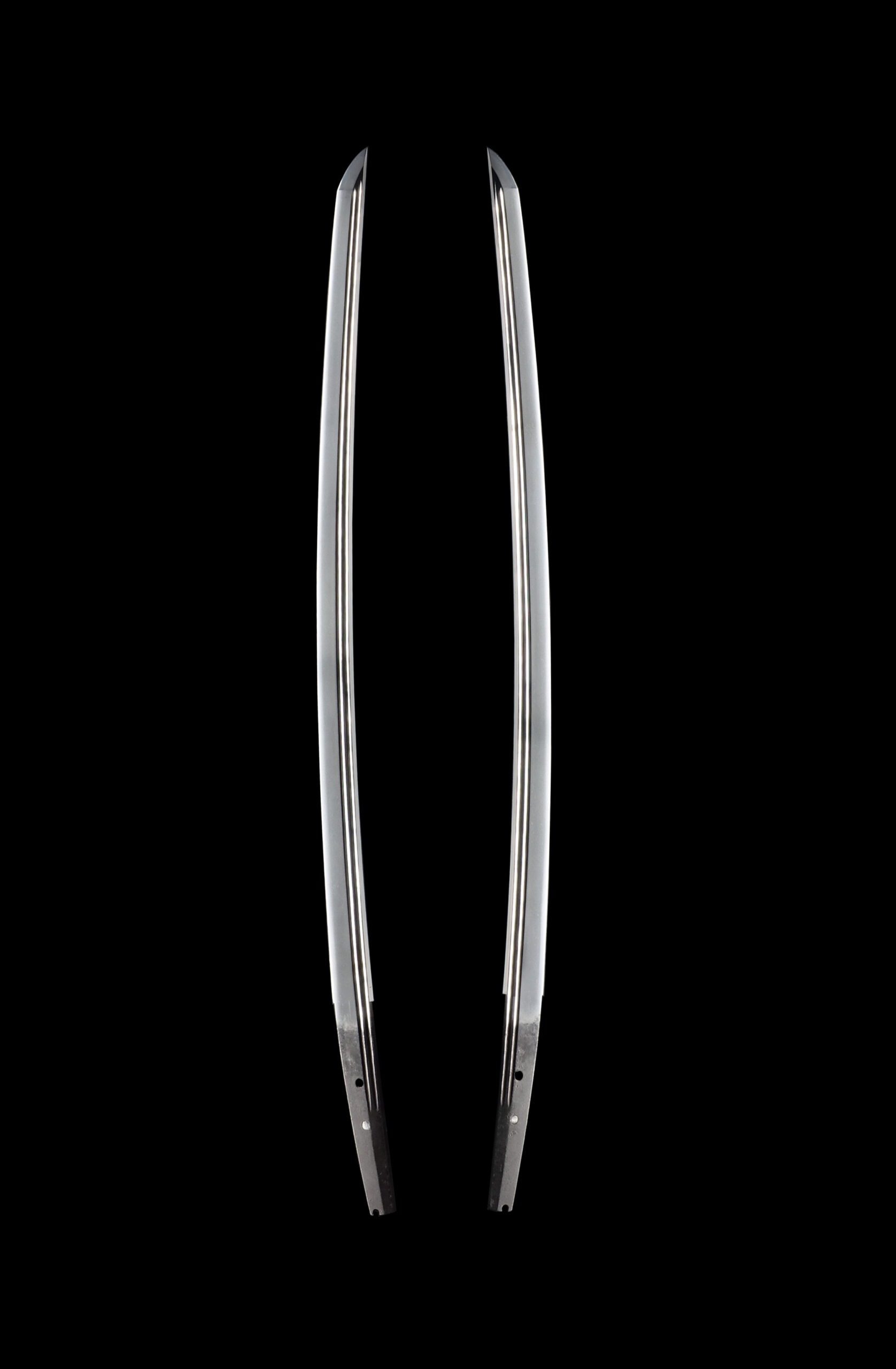
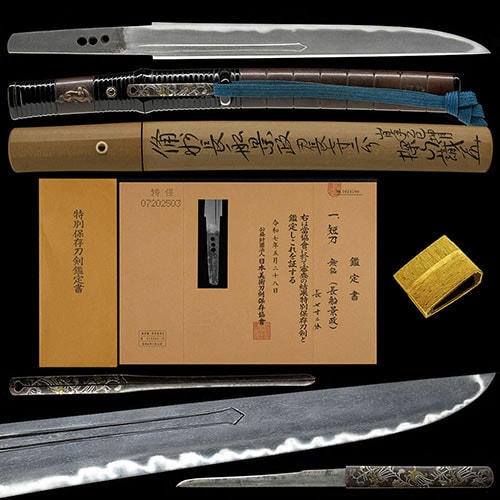
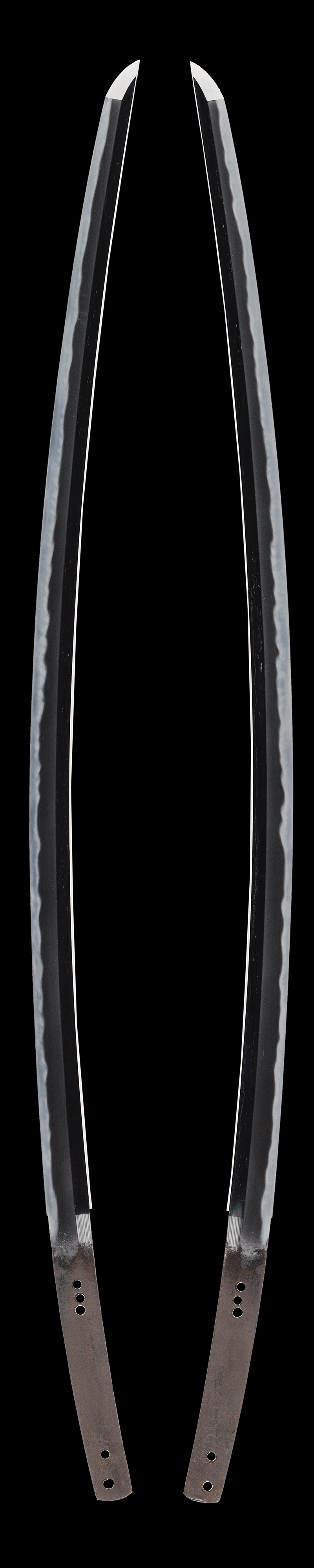
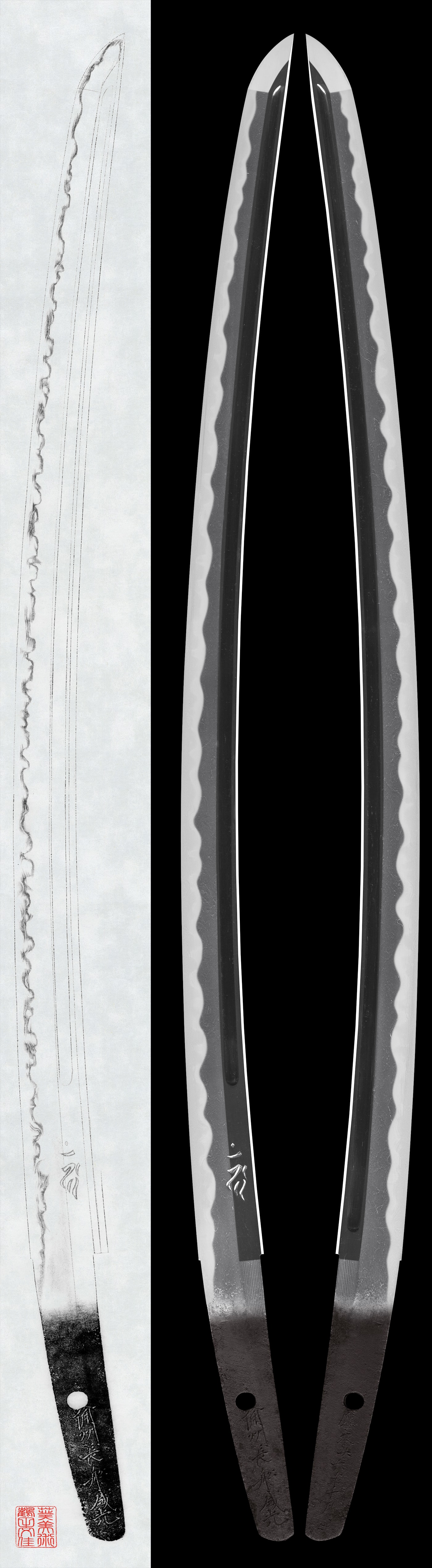
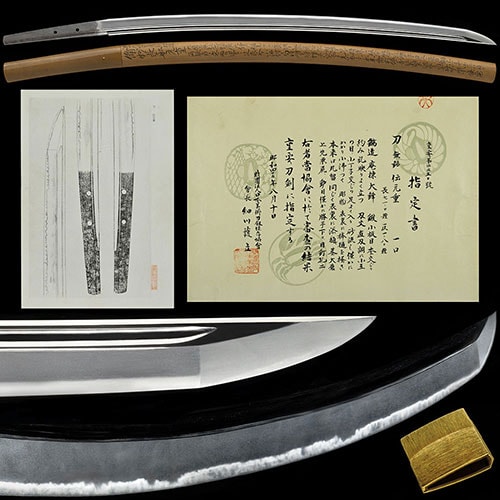
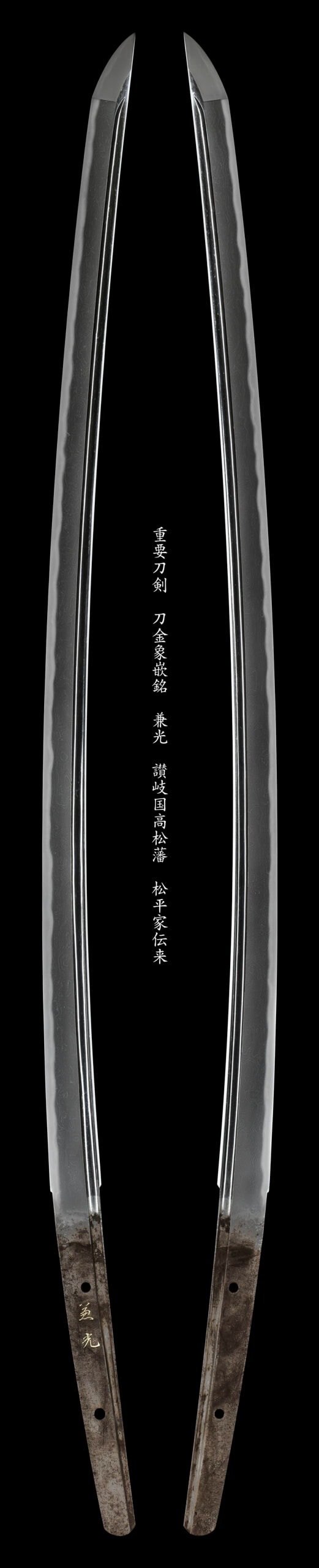
Signed works by Nagamitsu survive in greater numbers than those of any other smith of the period: the published sources open his record with the statement that his "extant signed works are the most numerous among -period swordsmiths", and that every one of them shows "no unevenness in the making". He was the son of Mitsutada, founder of the school, its second generation, and "a master ranking alongside his father" in the 's words. The record gathered here holds 173 signed blades against 63 unsigned; "the two-character form is the most numerous" of his signatures, and dated pieces such as an of Einin 2 (1294) fix his chronology as few contemporaries allow.
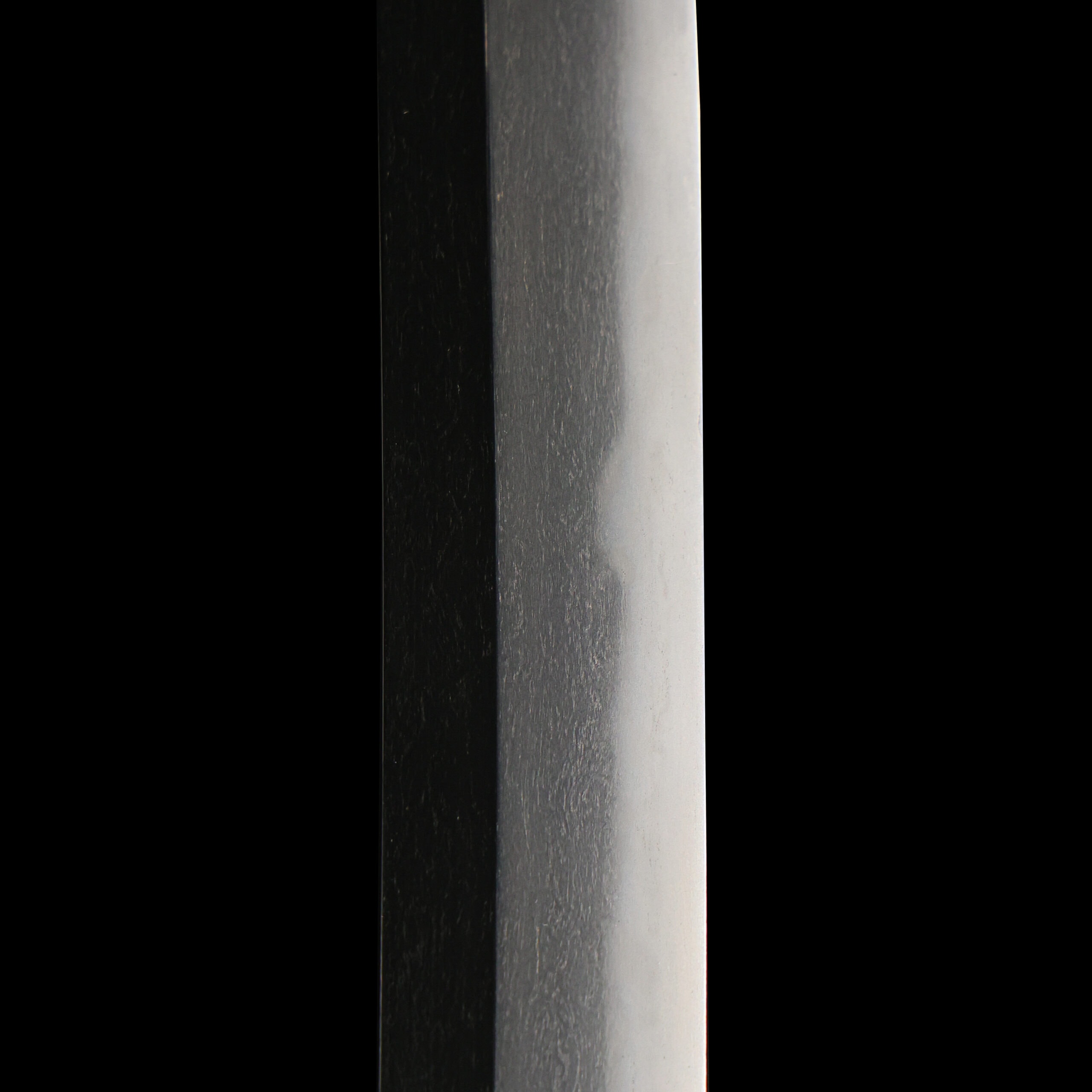
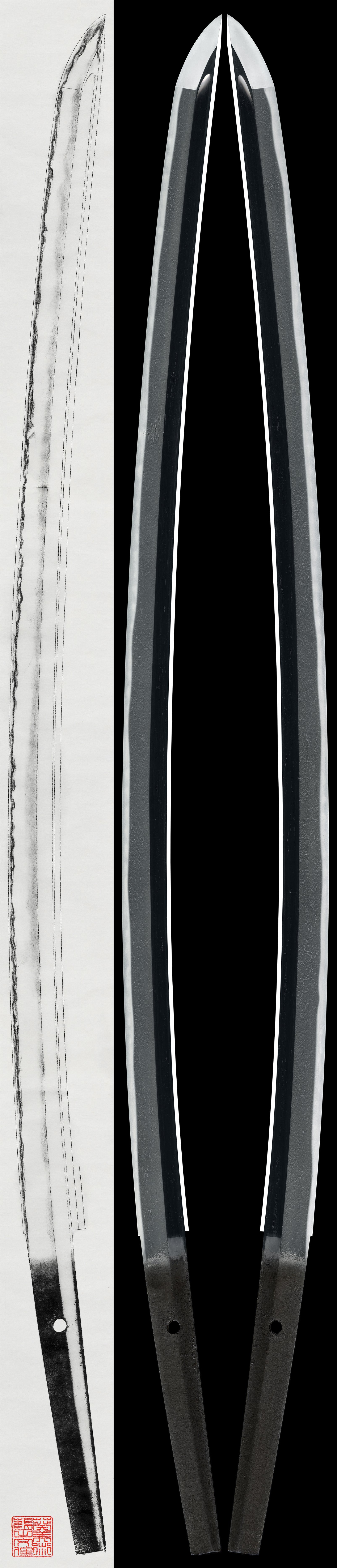
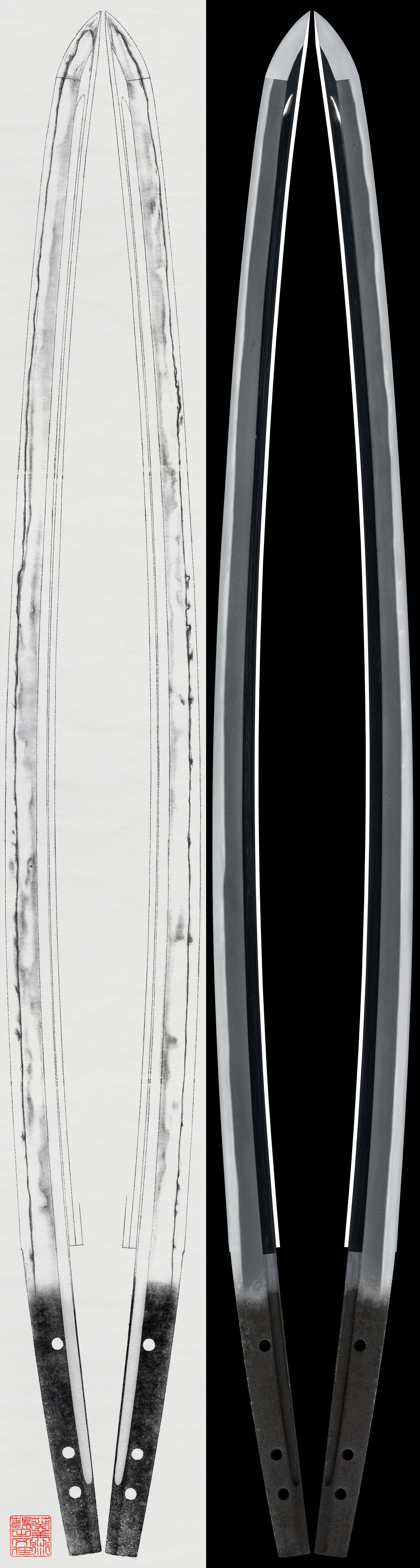
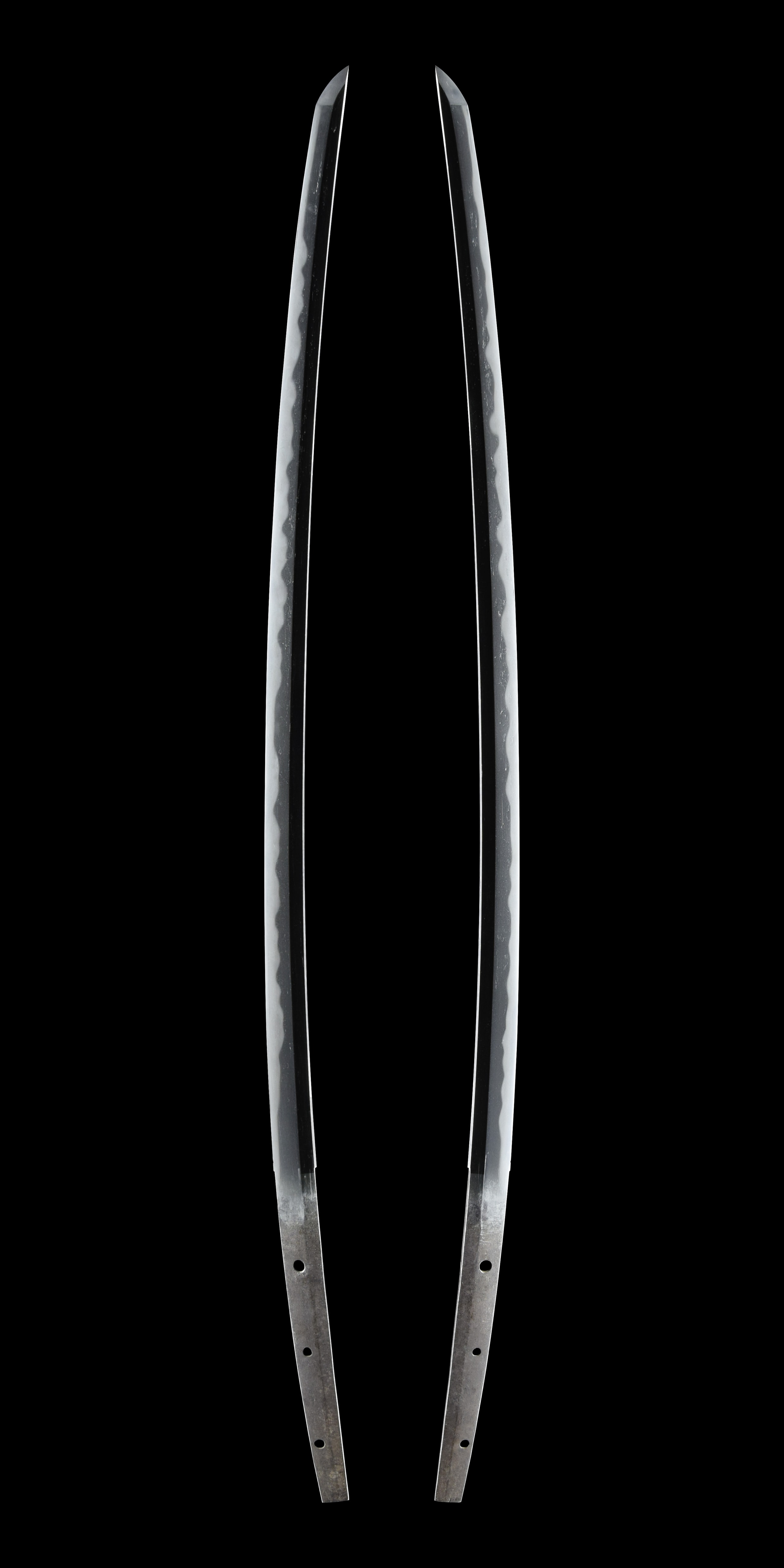
His style divides broadly in two, a formula the published sources repeat across decades of designations. One manner is a robust construction carrying on the feeling of his father Mitsutada, tempered in a flamboyant dominated by ; the other is a form of standard or slender width in a comparatively calm -toned temper with -. In the exuberant manner the is a mixed with , and and enter in abundance. predominates with , fine and run through, and the is bright. The element the sources single out as his own is the "round-topped, plump ", a full swelling crest not shown in his father's record. The is far more often than any other form, the published sources reading again and again "shallow , returning short in at the point"; on the more active blades it runs in as before that turn-back, and on a minority it stops in , the whole settling toward what the notes call the atmosphere of the so-called Sansaku .
The is an that tends in places toward a slightly standing grain and on many blades tightens into a refined . Very fine adheres thickly, fine enter, and a vivid rises clearly, present on the great majority of his blades. Of one signed late the published sources write that its tightly compacted , with extremely fine and minute , is a forging "combining precision with beauty"; the notes return again and again to steel that is bright and clear.
Three registers can be followed through the record. The earliest lies closest to his father, a -dominant temper into which mingles, work that "truly calls Mitsutada to mind". The prime works carry the rounded plump with , the vivid and the Sansaku . The calm manner gathers late, around blades cut with the title Sakon Shogen and with long signatures. Transmission texts of the and periods held that there were two generations, the Shogen pieces belonging to a second; the observes that "no difference between a first and second generation can be found in the signature characters", and the persuasive reading now takes Shogen Nagamitsu as the work of his later to final years. In the of this late register appear the first buds of , the form his son Kagemitsu would complete.
His flamboyant works can at first glance resemble the school, and the published sources draw the line by his own features: the stands out more prominently within his , the pattern grows calmer above the where the drops distinctly lower, and the settles toward the Sansaku form. Against his father he is told by the rounded swelling crests and by a temper that keeps its composure where the early works flare. His late and the buds of his open directly onto Kagemitsu, so that Mitsutada, Nagamitsu and Kagemitsu form the spine of the mainline, with Nagamitsu its broad and steady center.
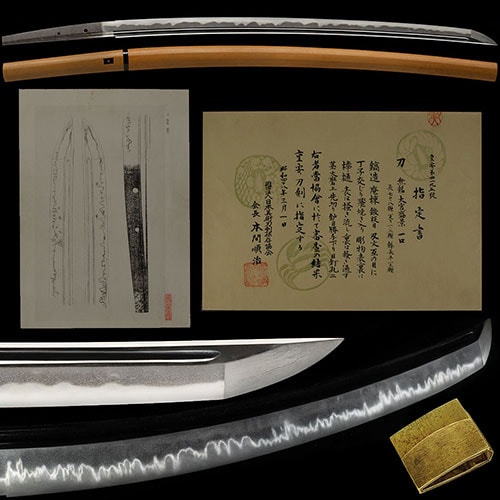
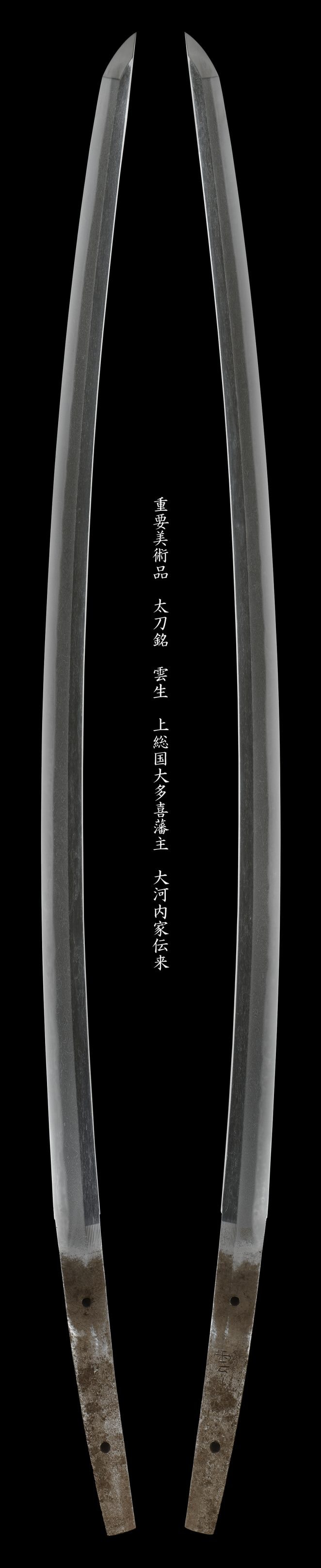
Fujishiro ranks him Sai-jo . Twenty-six of his blades are Important Cultural Properties, the most of any swordsmith, and six are National Treasures; beneath them stand twenty-eight and one hundred and forty-four , out of two hundred and fifty-three designated works on record. The Daihannya Nagamitsu passed from Ashikaga Yoshiteru through Miyoshi Nagayoshi to Oda Nobunaga and Tokugawa Ieyasu, and the wider names Akechi Mitsuhide, Toyotomi Hideyoshi, the Asano of Geishu, the Hosokawa of , the Ikeda, the Uesugi, the Maeda, the Mito, Owari and Kishu Tokugawa houses, and the Imperial Family. His National Treasures and Important Cultural Properties are patrimony, preserved among holders that include the Tokyo National Museum, the Kyoto National Museum, the Tokugawa Art Museum, Atsuta Jingu and Itsukushima Jinja. Because he signed so freely, the body of work in the and tiers is substantial, and a signed Nagamitsu, though it comes to market only rarely and at the very top of it, is not wholly beyond a patient collector's reach in the way the great unsigned masters are; when one appears, it is an event.