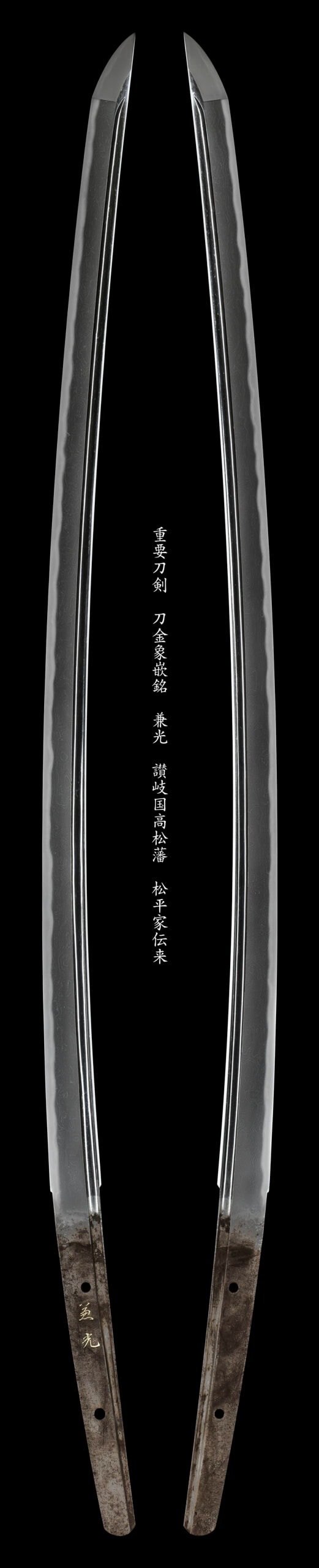
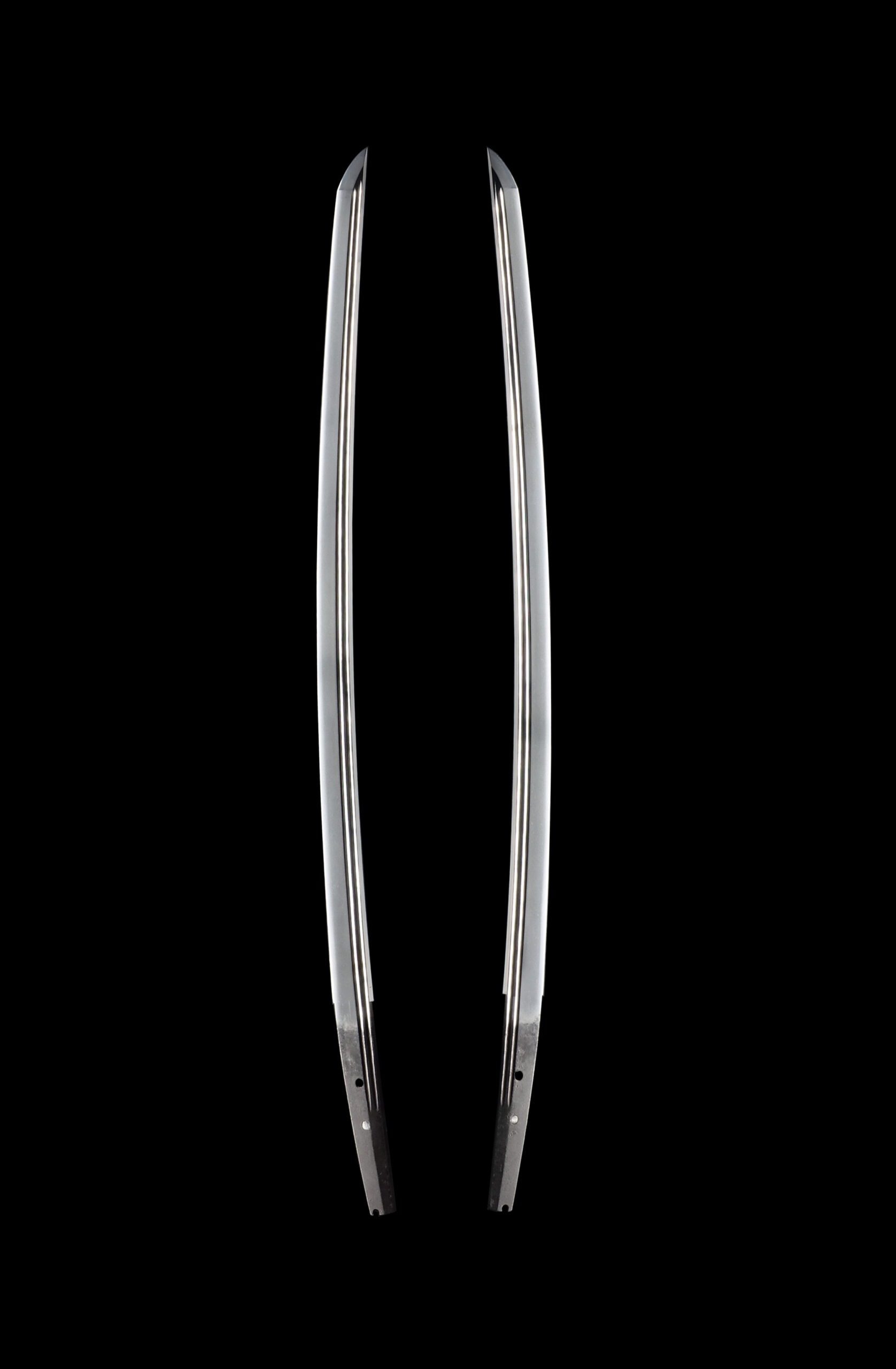
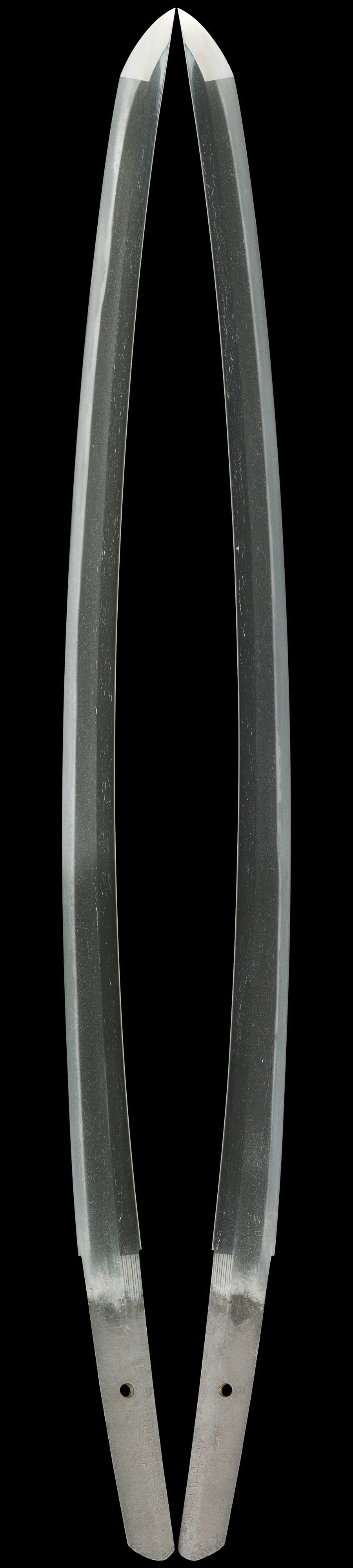
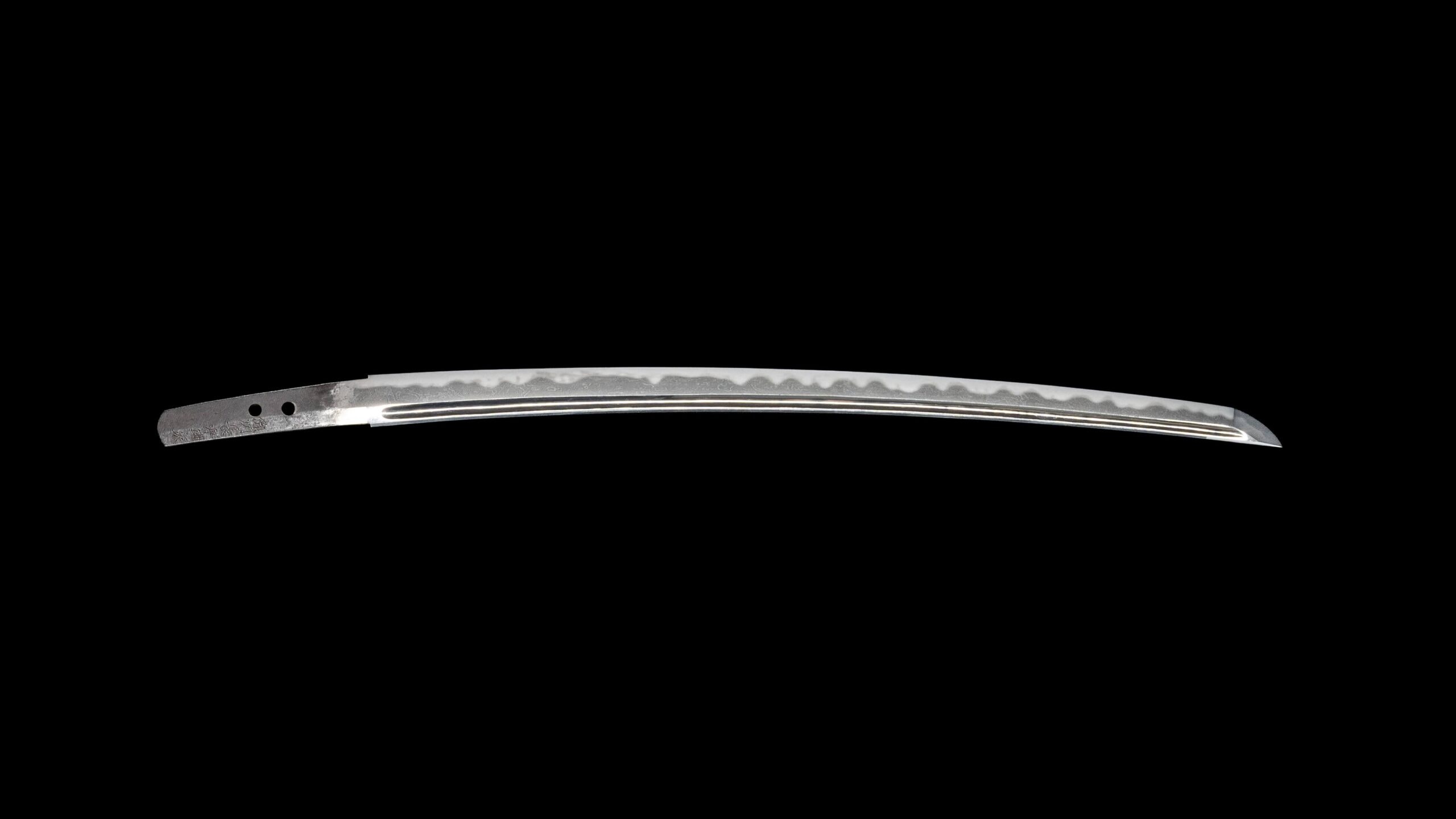
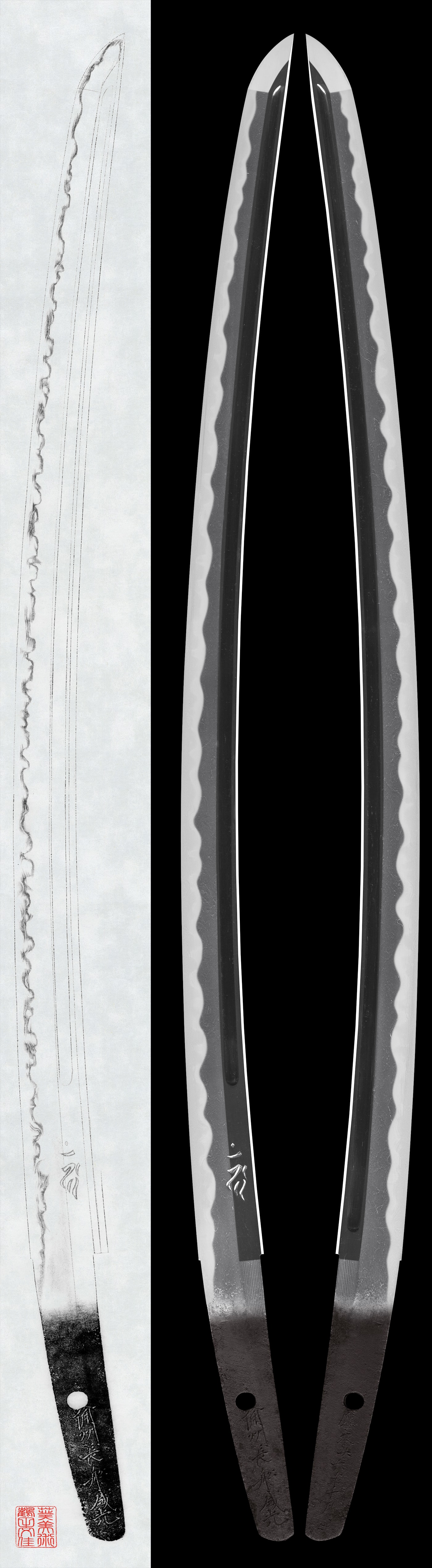
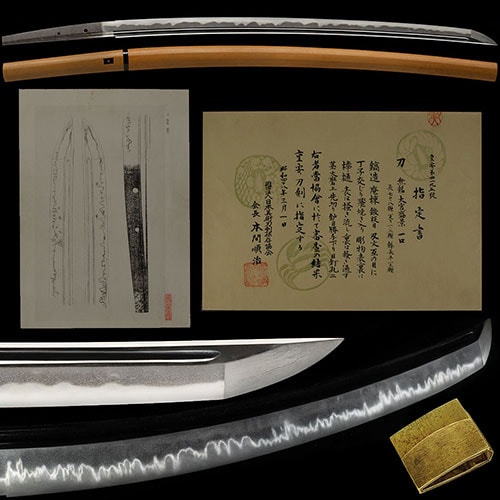
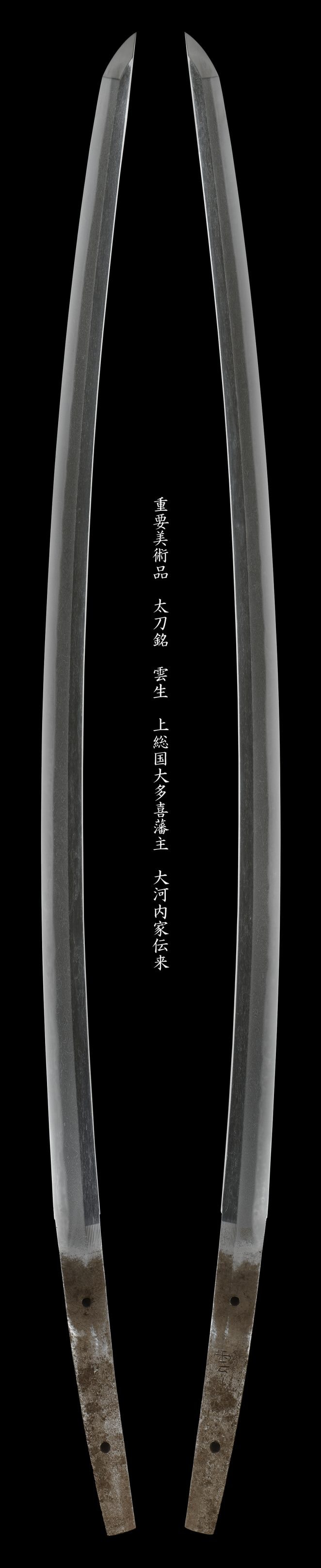
The largest of Tomomitsu's signed works is the great of Futarasan Shrine in Nikko, a National Treasure dated Joji 5 (1366). The published record cites it from the first session as "the largest of his signed works" and in the most recent as "the pinnacle of Tomomitsu", anchoring the carving of new submissions against it. Tomomitsu (倫光) was a swordsmith of the mainline in the period, introduced by the with one unvarying sentence: "one of the students of Kanemitsu, and by one tradition even said to have been Kanemitsu's younger brother". The modern formula runs his dated work from Jowa to Eiwa, 1345 to 1379; the dated blades on the official record carry nengo from Bunna through . The formula places him within the school: closest of all to Kanemitsu's manner, his rank of work "pressing the master himself". Fujishiro grades him Jo-jo .
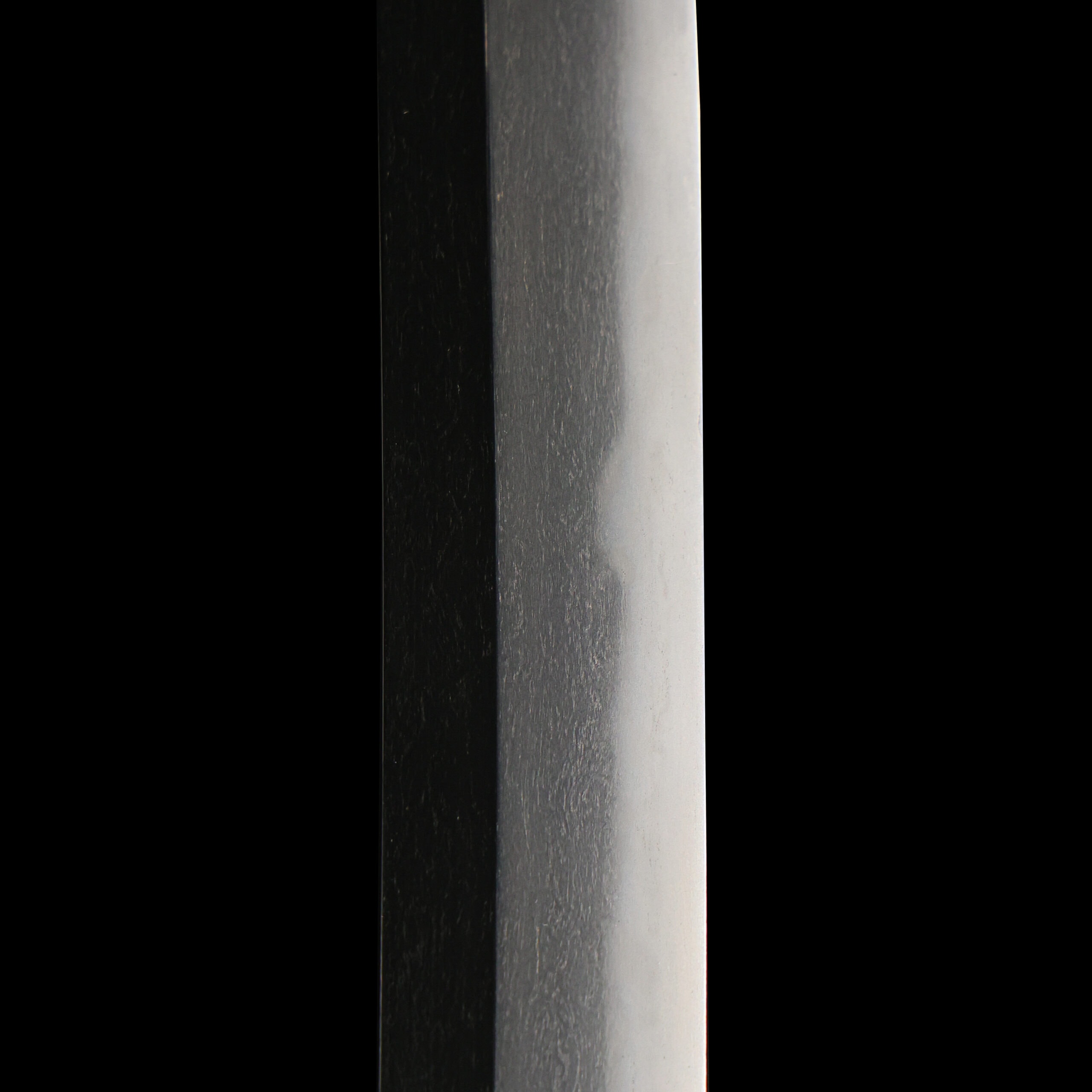
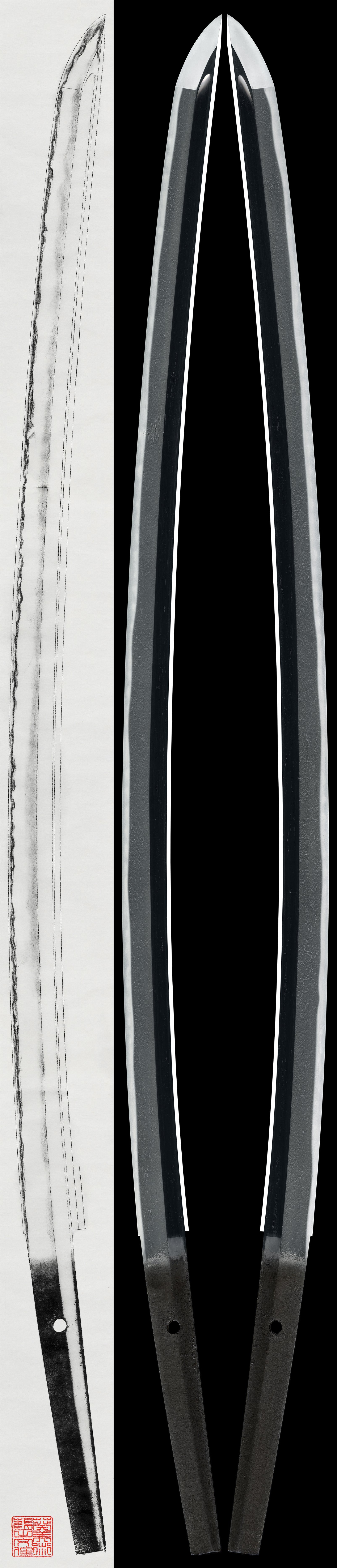
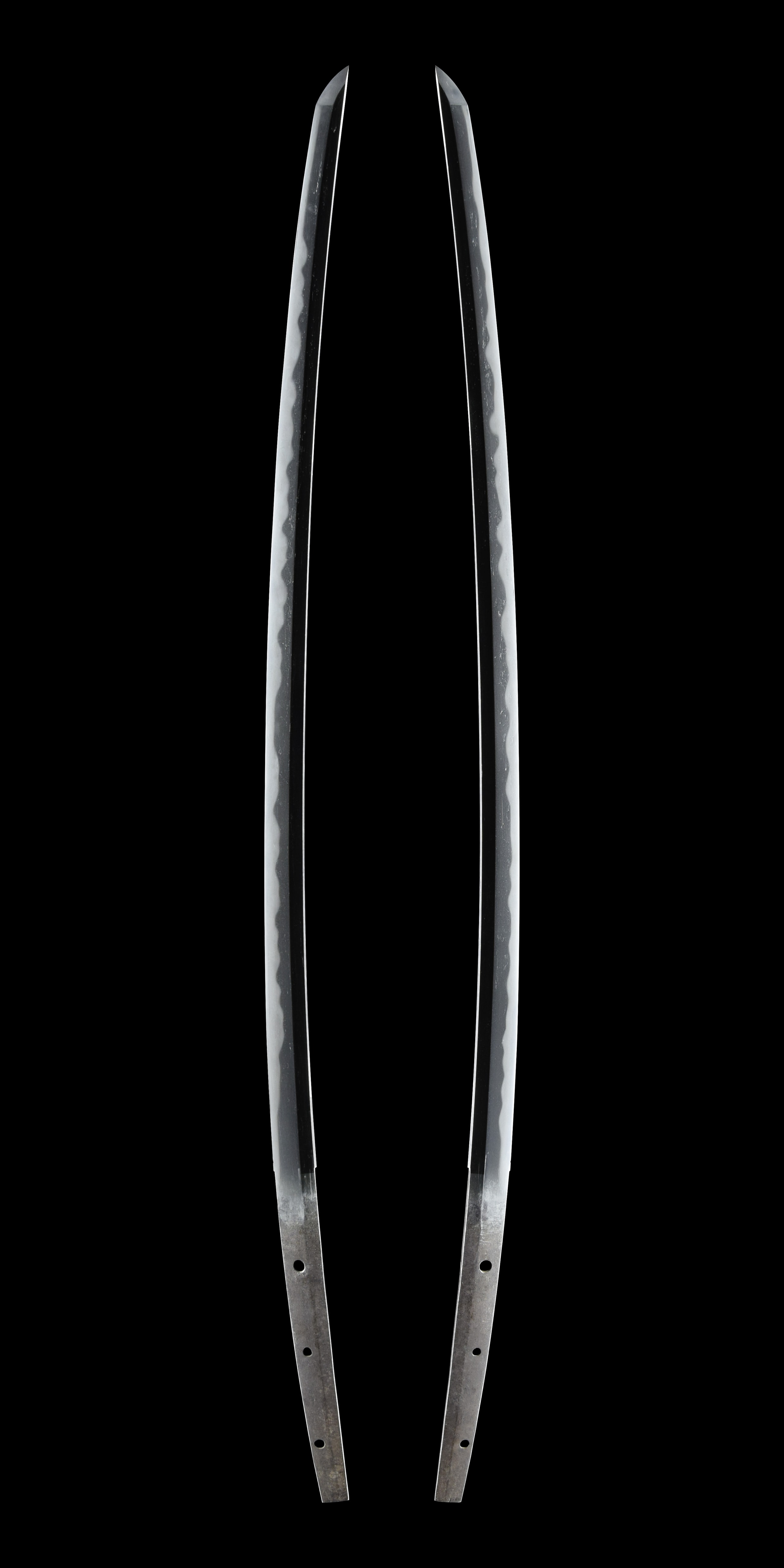
His own hand, the published sources repeat, is "the easygoing, gentle led by ", most often a mixing , , pointed and somewhat angular teeth. The criterion is given in so many words: such a blade "is to be judged Tomomitsu from the point that the crests of the tend slightly to points". and enter, the temper leans to with , and and work through it; the runs , usually finishing pointed, at times swept with . mark his blades far more often than the rest of the school: beyond the the record draws , , paired , the three-pronged and above all the , the grass-style form of which "is a peculiar carving scarcely met with outside this smith and Kanemitsu"; the Futarasan and a signed in the Kurokawa Institute of Ancient Cultures carry the reference examples.
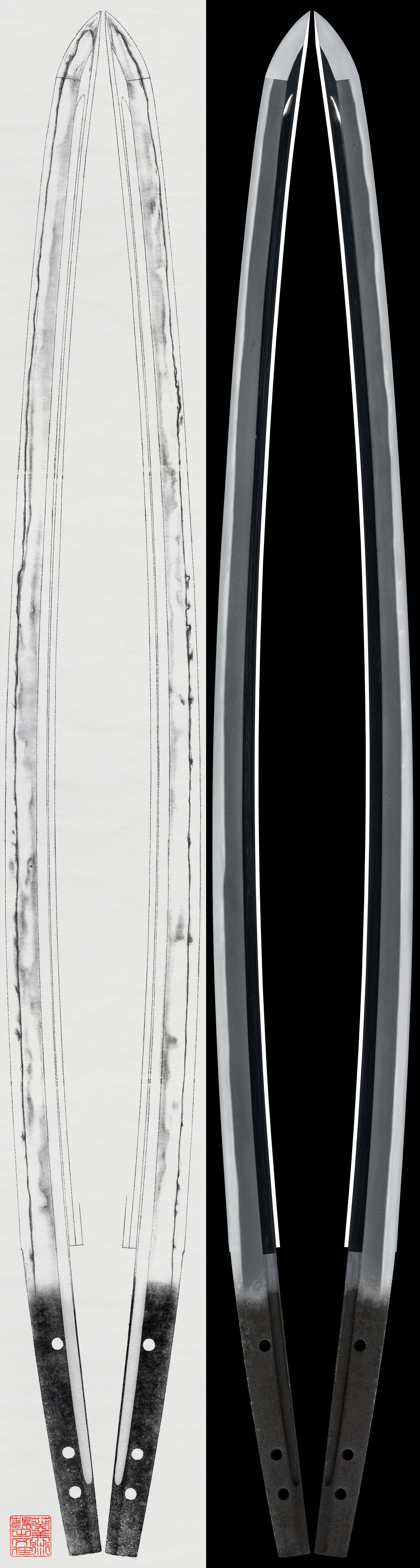
The is mixed with , attaching and fine entering; on the and a rises, while the pieces lean to a -style or . Here the published sources separate him from his master with unusual candor: the first session records that "compared with Kanemitsu his is inferior, and many works tend somewhat to stand", and the recent formula repeats the division in kinder terms: close to Kanemitsu, yet marked as Tomomitsu by the slightly standing and the unhurried notare base.
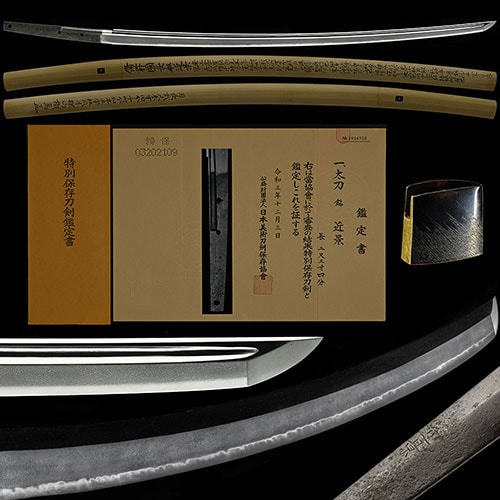
The shape of what survives was set out in the first session: " and short survive signed in comparative numbers, but the are almost all unsigned". His were mostly the long blades of the Enbun-Joji fashion, wide, with little taper and an extended , and they come down as ; the signed and dated work concentrates in the wide, , and , two carrying the incised invocation . The signature is the six-character long Bishu Tomomitsu, smallish, often in a fine chisel, set toward the , with the date on the ; twenty-eight of the designated blades are signed against thirty-one unsigned. The gold inlays on the shortened blades, of Kojo, Koyu and Sato Kanzan and a of Koson, are attributions by later appraisers, not signatures; one keeps its original folded back as an . An early entry raises, and leaves open, the question of two generations of the name.
Two side manners flank the . On signed work of Joji and he also worked the older spine of the school: a led by or squared, angular teeth; the sources hold such a against his masterpieces and call it proof of "the breadth of his working range and the sureness of his technique", while a small recalls Kagemitsu and Kanemitsu and "at first sight could be mistaken for a -period piece". Among the unsigned attributions stands a markedly -strong group, where and small appear along the temper and the pointed completes what the record names "the Soden- character". Its emblem is the great hocho-gata of Yasukuni Shrine, recorded with its in Matsudaira Sadanobu's Shuko-jisshu (集古十種) as the sword of Egara Tenmangu in , handed down of old as a work of Masamune, "a celebrated piece famous since antiquity"; the modern judges read its vivid , -led and pointed as a smith under influence; its , close to that of the Futarasan , settles the attribution. In inverse, the that defines Kagemitsu and Kanemitsu recedes in him, and falls away almost entirely. The record sets him beside the other Kanemitsu students, Hidemitsu, Masamitsu and Motomitsu, whose works resemble the master while falling a step short; no successor line is drawn for him.
Sixty-four designated works stand on the official record: the Futarasan National Treasure, two Important Cultural Properties, eight and fifty-one , fifty-nine in the and tiers. The provenance roll runs through the great houses: the first session's signed of 6 came down in the Yamauchi family, lords of Tosa; the with the gold-inlaid attribution descended in the Matsudaira family as the reputed sword of Matsudaira Shungaku, with a Genroku 7 (1694) of Kojo; another , bestowed by Ii Naomasa on his retainer Suzuki Iwami no Kami Shigeyoshi, was later presented to the Mito Tokugawa family; other pieces passed through the Okubo lords of Odawara and the statesman Miyoji. The National Treasure and the Important Cultural Properties, three blades, are patrimony held permanently outside the market, the at Futarasan Shrine and the at Yasukuni with its Shuko-jisshu . What a private collector may realistically encounter lies in the and tiers, most of it the cut down from his grand ; a signed and dated or is the rarer event, and an signed rarer still; the first session already observed that of ordinary length were few from his hand. A Tomomitsu reaches the market only from time to time, recognized when it does by the easy whose crests tend slightly to points.