NihontoWatch MonNihontoWatchBETA
MarketEncyclopedia
NihontoWatch Mon

NihontoWatchBETA

Market
Encyclopedia
Overview·Kantei·Catalogue·Designations·Provenance·Blade Forms·Signatures·Lineage·School
OverviewKanteiCatalogueDesignationsProvenanceBlade FormsSignaturesLineageSchool
  1. Schools
  2. Osafune
  3. Sōden-Bizen
  4. Kanenaga

Chogi Kanenaga (Kencho)

兼長

Tokujū
Vol. 26, No. 30 · Katana

Chogi Kanenaga (Kencho)

兼長

94 ranked works

ProvinceBizenEraTeiji (1362–1368)PeriodNanbokuchōSchoolOsafune>ChogiTraditionBizen-denGeneration1stTeacherChogiFujishiroJo sakuToko Taikan900(top 10%)TypeSwordsmithCodeKAN1670
4Jūyō Bijutsuhin
11Tokubetsu Jūyō79Jūyō Tōken

Overview

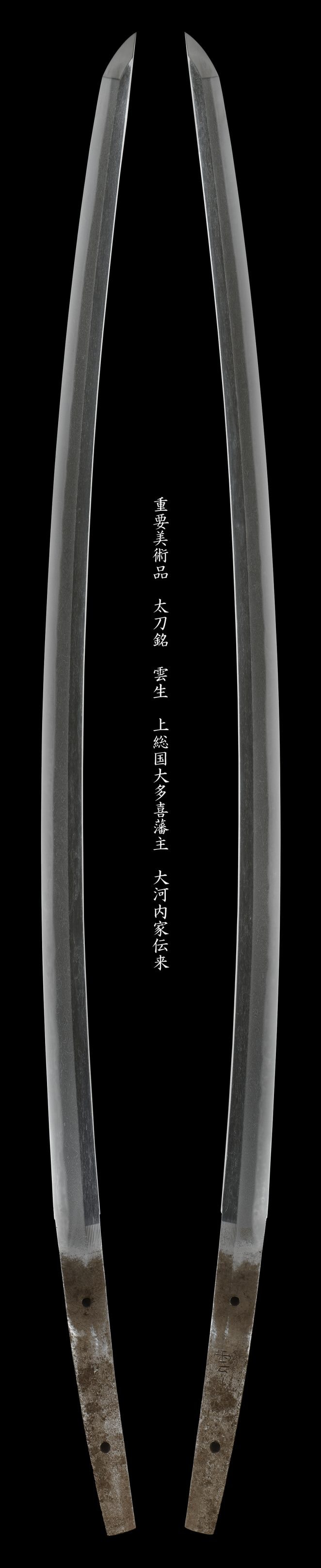
Kanenaga of , written 兼長, is transmitted in the published sources as a pupil of Chōgi (長船長義の門と伝え), and so as a smith of the Soden- line in which the manner of Masamune was carried into the workshop. The published record is candid about how little signed work survives: extant in- examples are exceedingly few. The standards are a dated Jōji 5 (1366), designated an Important Art Object, and dated Shitoku 4 (1387) and Kakei 2 (1388), the latter two showing stronger and activity richer than the first. From these few dated blades the published sources draw the judgment that anchors the whole attribution: his workmanship approaches that of Chōgi yet pushes the side further still (長義の作風に近似しながらもそれ以上に相州伝が強調された). The reality of the , however, lies elsewhere, since almost everything that survives under his name is a grand attributed to him by workmanship rather than by a signature.

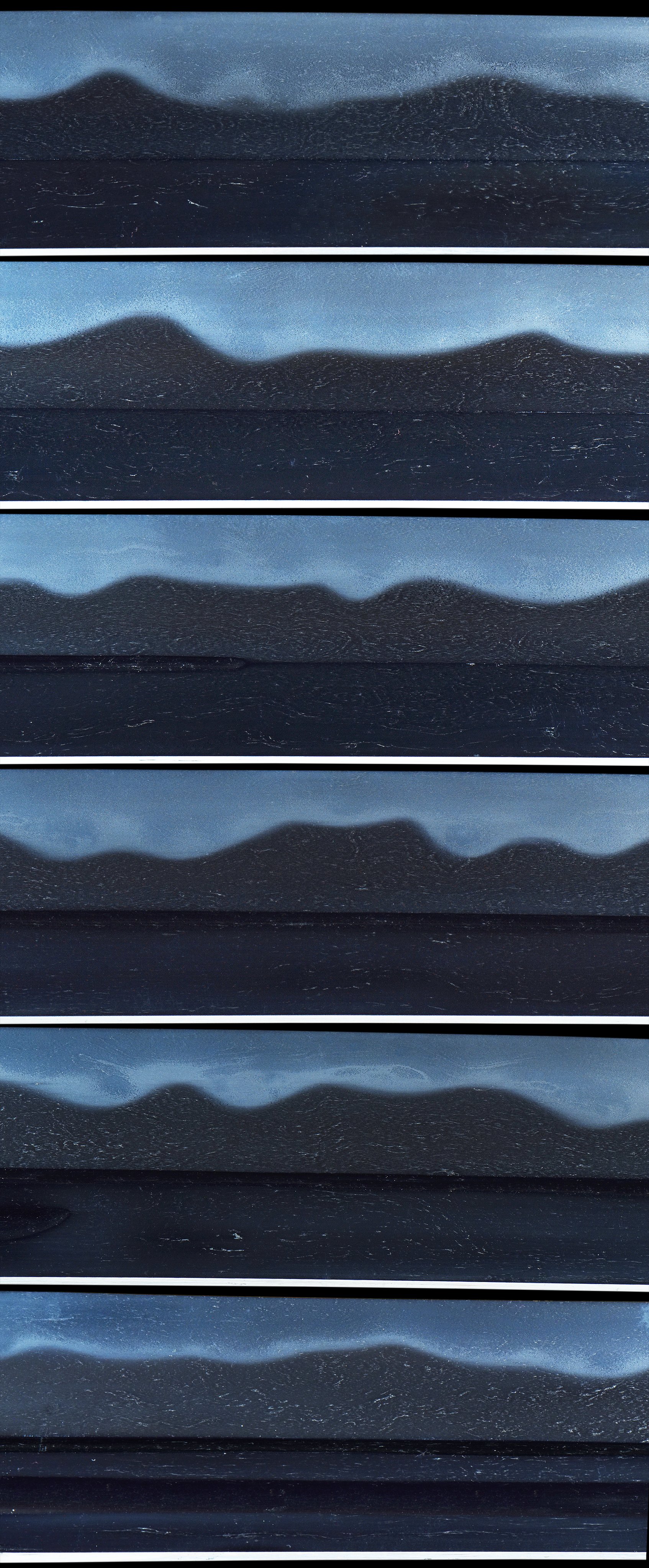
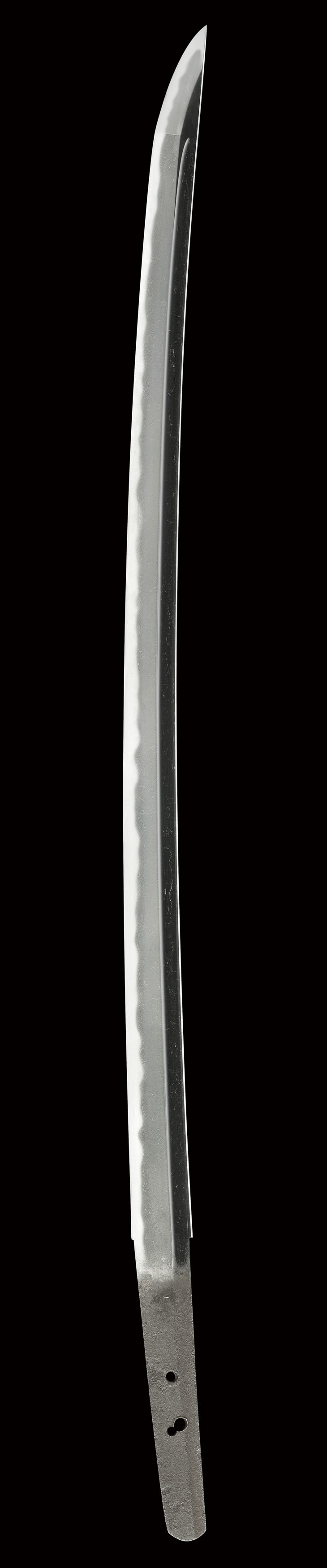
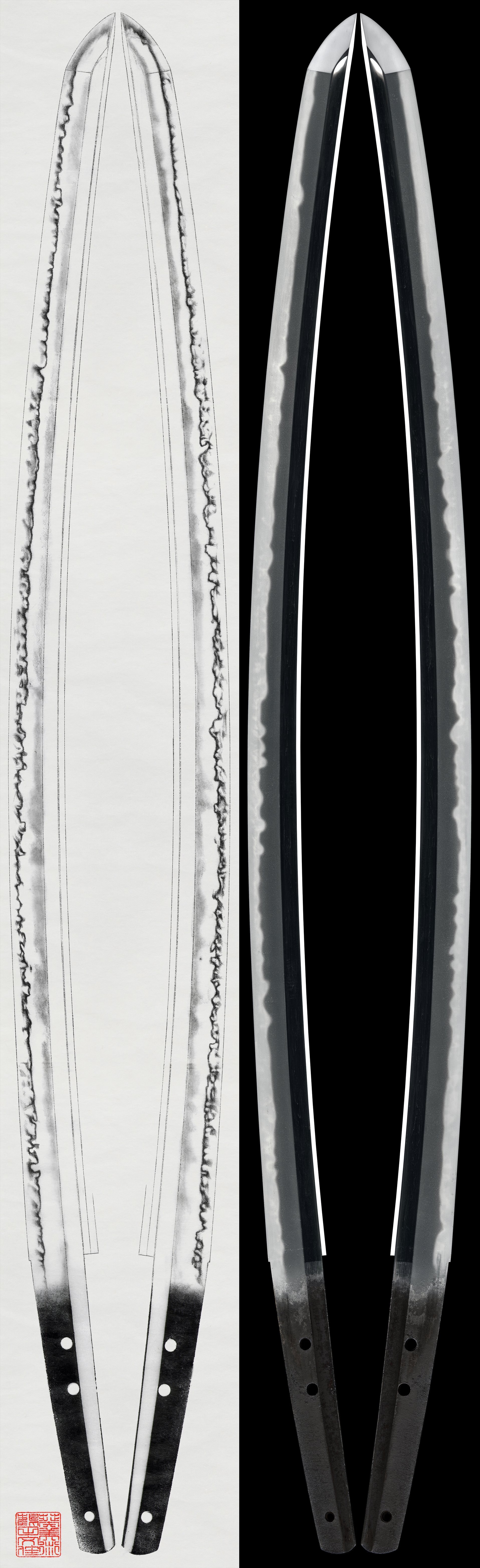
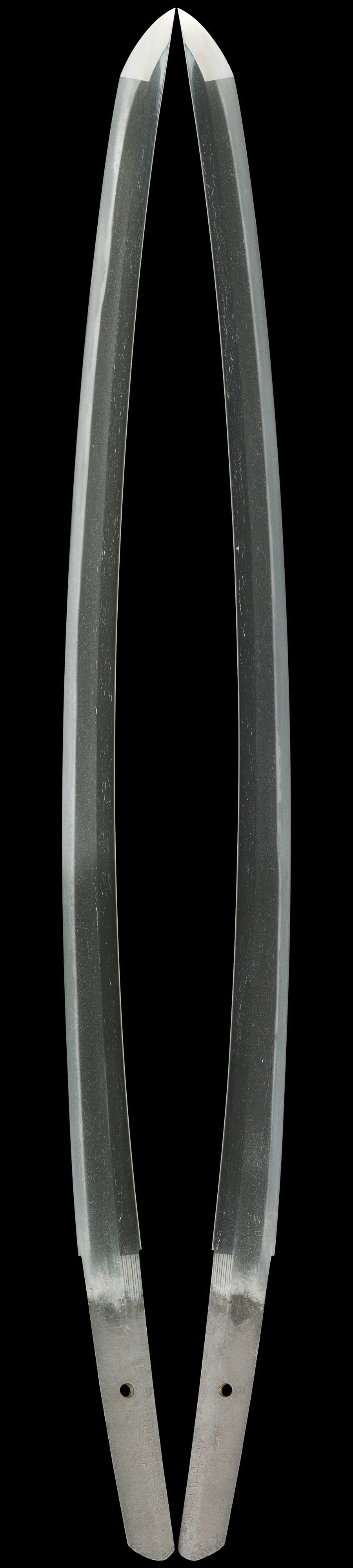
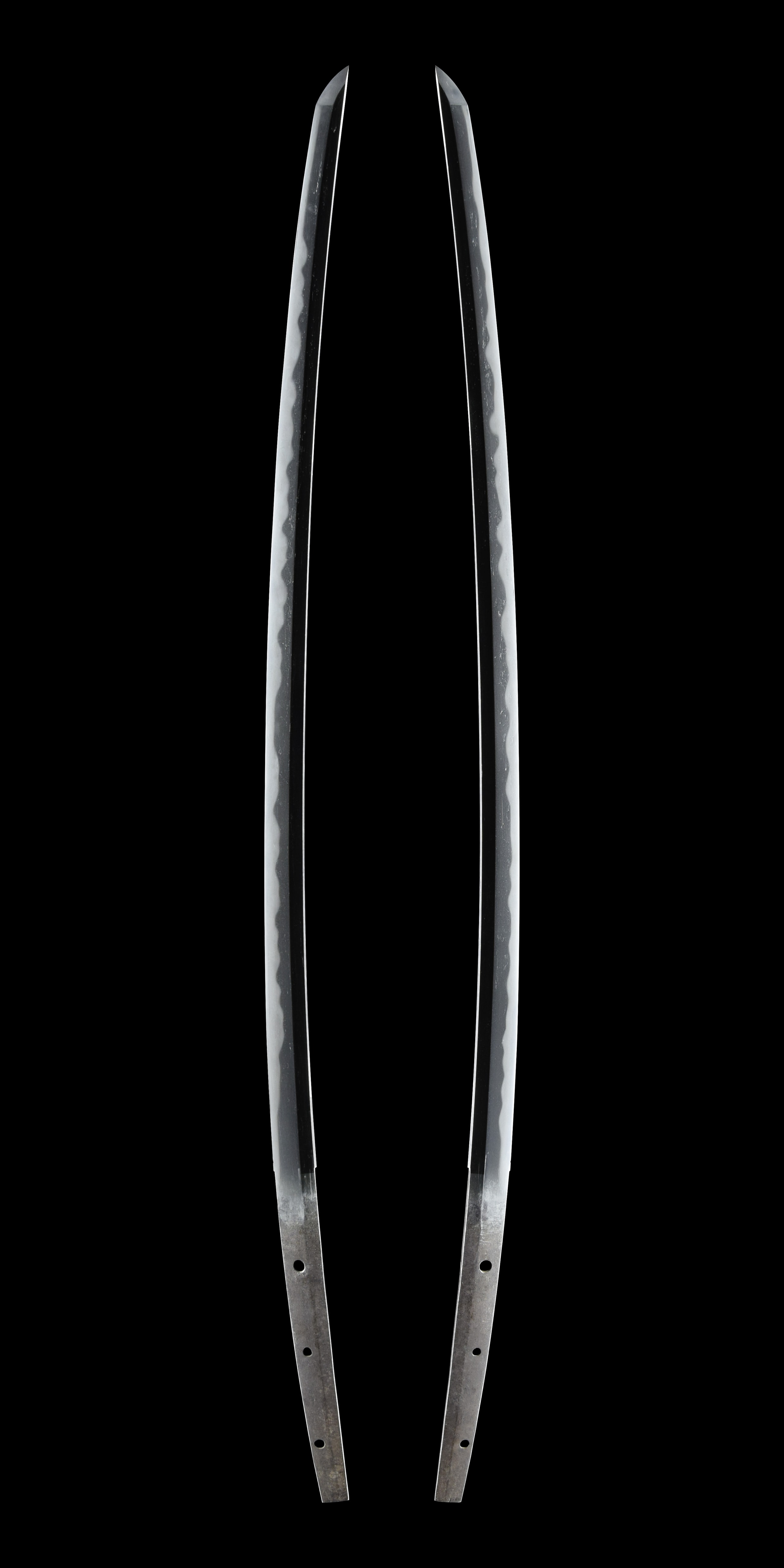
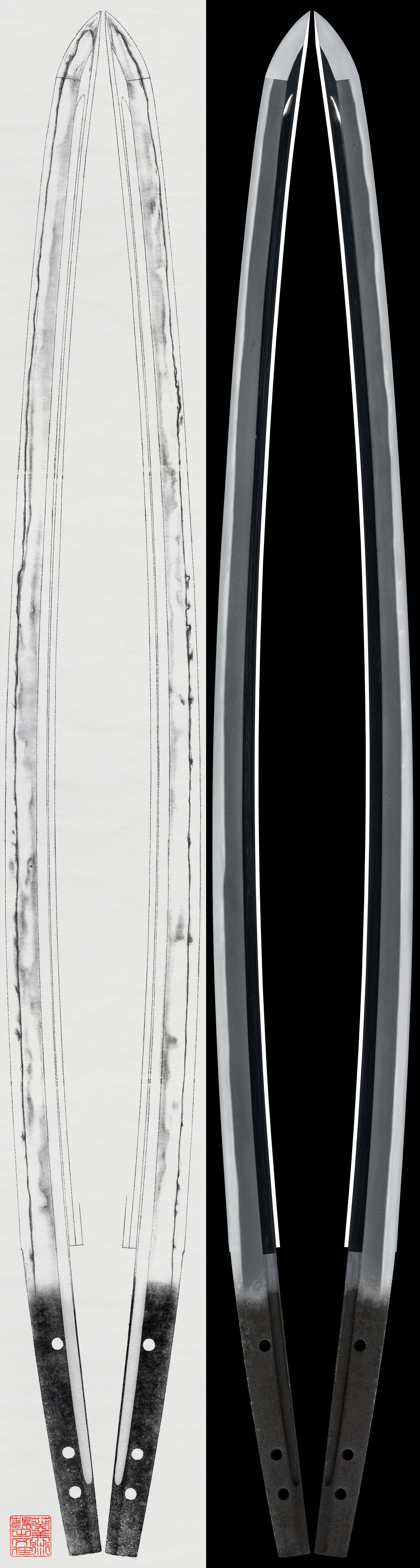
In that majority register the published sources describe a that resembles Chōgi but is, in their words, more strongly -laden, with activity working freely within the temper (長義に似て一段と沸が強く、刃中よく働く). The form they record is itself part of the recognition: wide with almost no taper from base to tip, thick , a rather deep , and an or an extended , the bold shape preserved by . The temper they describe is a large-pattern on a or base, mixing and with , angular , pointed elements, and the waist-open shapes that give his work its swing. and enter well, the runs deep and bright, and the clots and in places coarsens, with and running frequently. Small and detached break out above the temper, and the runs , often pointed and sweeping into or a flame-like tip.

The is the base over which that temper is laid. The published sources describe mixed with and , areas of , and a grain that stands out (); over it fine adheres densely and enter thickly and well. The is present but faint, recorded again and again as a that stands only dimly (淡く乱れ映り立つ). That thin reflection is itself a tell: the more the side is pushed, the less the old shows its , and on the most of his blades the reflection recedes almost to nothing. The published commentary reads the surviving as the proof of his province, judging one such , because the reflection appears at all, to be Soden- (映りが現れていることから、相伝備前と鑑せらる).

The work therefore divides in two. The rare dated signed pieces are the calibration: the Jōji runs toward a tone, and the Shitoku and Kakei carry the manner so far that the published sources liken them to Norishige, written as blades that at a glance could be confused for him in their emphasized Sōshū-den (一見則重にも紛れる位に相州伝の強調された). The signature style and the chisel-work of these dated pieces confirm, the sources say, that this hand belongs to the Chōgi line. Against that calibration stands the great body of , more flamboyant and bolder in pattern than Chōgi himself. The published record also preserves a dating question, attributed to Honma: the Jōji Kanenaga signature differs from Chōgi's, whereas the later Shitoku, Kakei and Meitoku pieces match the signature style of Chōgi's years, so that the received account ought to be re-examined (通説を検討すべき), and the earlier Jōji Kanenaga may be a separate line while the later Kanenaga is the true Chōgi pupil (長義とは別系であり、至徳以後の兼長が長義の門下であろう). The sources present this as an open question of scholarship, not a settled fact.

Within the Chōgi group his place is the most -emphasized extreme. The published commentary repeatedly distinguishes him from Chōgi by degree: where the ordinary attribution to Chōgi runs a step quieter, his is the bolder, larger-patterned, more strongly -laden hand, and one is judged, among the Chōgi group, the work most properly attributed to Kanenaga himself (長義一類の中でも兼長に最も擬すべき). His waist-open is the most particular of these tells, a swing the orthodox- members of the group do not show; his and are the most profuse, and his detached the most insistent. He stands thereby apart from the more orthodox- Kanemitsu and Motoshige, whose work keeps closer to the line, and beside Chōgi as the pupil who carried the side of Soden- the furthest.

Kanenaga is Jō in Fujishiro's grading, with a Tōkō Taikan valuation of 900. Despite the near-absent signed record, the weight of designation behind his name is substantial: none of his blades carry a national heritage designation, but eleven have reached and seventy-nine more are , ninety in the two top tiers, with several further designated Bijutsuhin. The provenance recorded against his blades carries names of standing, the Sanada Family, the Tōdō Family, Sakai , the Tsuchiya Family of Tsuchiura, the Yamauchi, and the American collector Walter A. Compton. Of recorded whereabouts, two examples are held by institutions, the Sword Museum and Itsukushima Jinja, the rest by private hands. Because almost nothing signed survives and the attributed are themselves uncommon, a Kanenaga reaches the market only rarely; with no blade locked in the highest heritage tiers, the recorded examples sit in the and tiers, most of them held rather than traded, so that an example coming into open hands is a landmark when it does, not a thing to be sought at will.

Kantei

Soden-Bizen pupil of Chogi, known through o-suriage mumei: bold waist-open gunome over a standing itame, the Soshu side pushed hardest in the group, the Bizen utsuri faintest

Kanenaga is transmitted as a pupil of Chogi and the most -pushed member of the Chogi group. His surviving signed work is very rare; he is known almost entirely from grand attributed to him. Over a standing with thick , abundant and only a faint , he forges a bold, large-patterned with waist-open , and square teeth, deep in with profuse , and ; the judges read him as bolder and more strongly than Chogi himself.

Diagnostic discriminators

unique vs Chogi / Kanemitsu / Motoshige / Tomomitsu

78% of his works · 2.1× vs Kanemitsu

36% of his works · 9.0× vs Kanemitsu

27% of his works · 0.7× vs Chogi / Kanemitsu / Motoshige

Observation by phase

O-suriage mumei (the kantei reality)

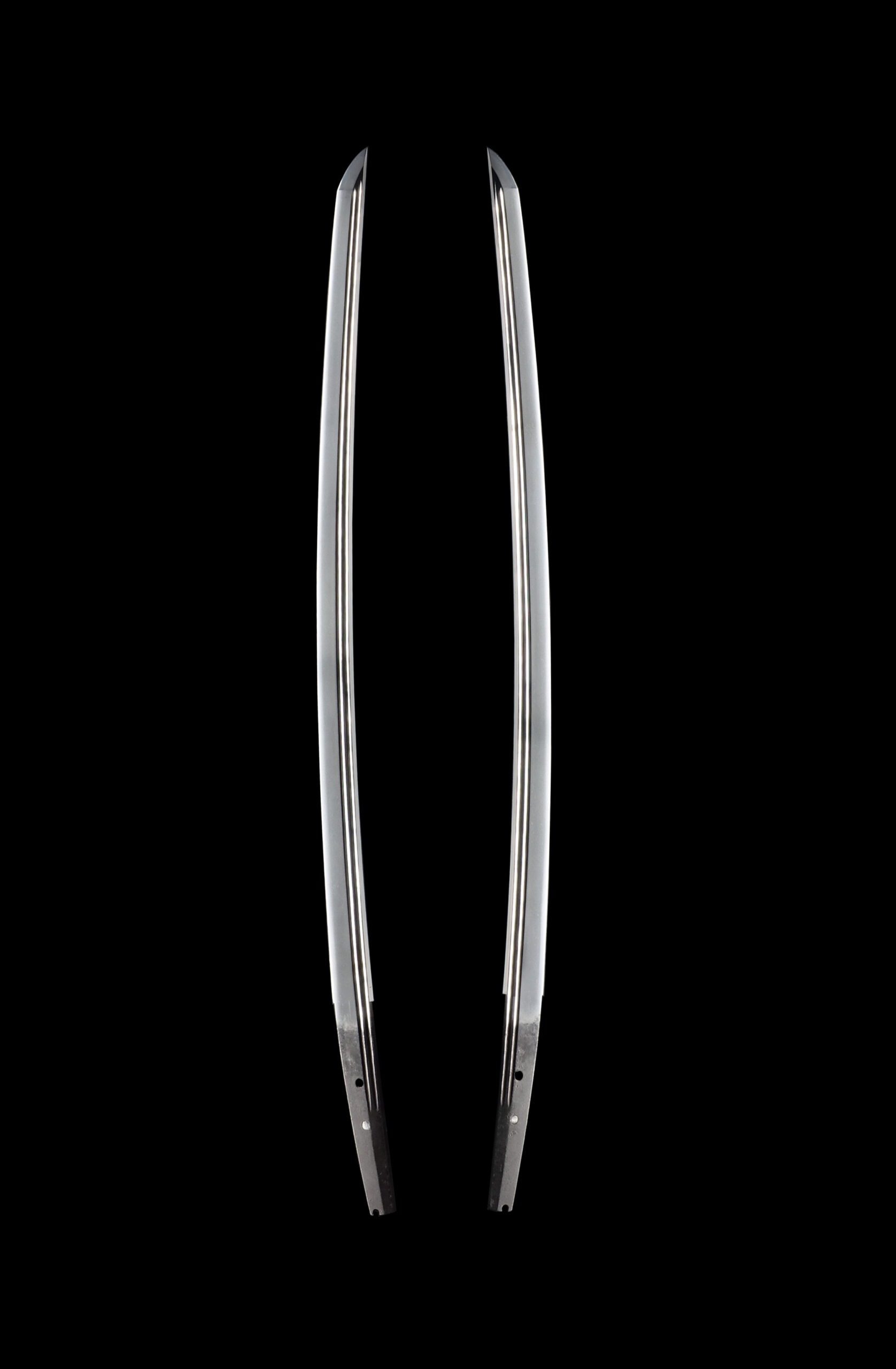
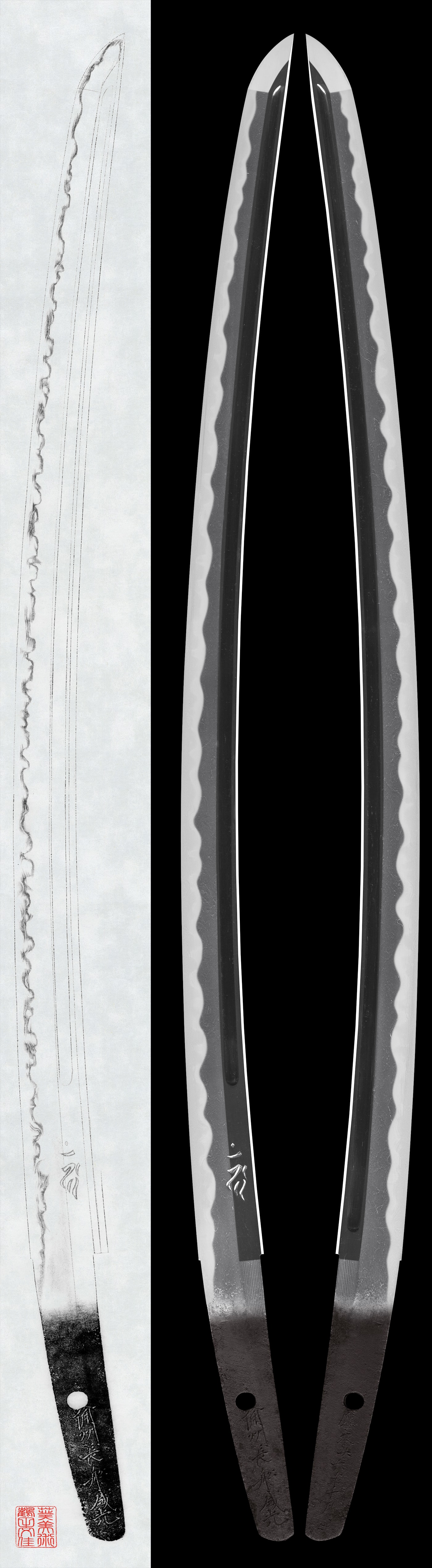
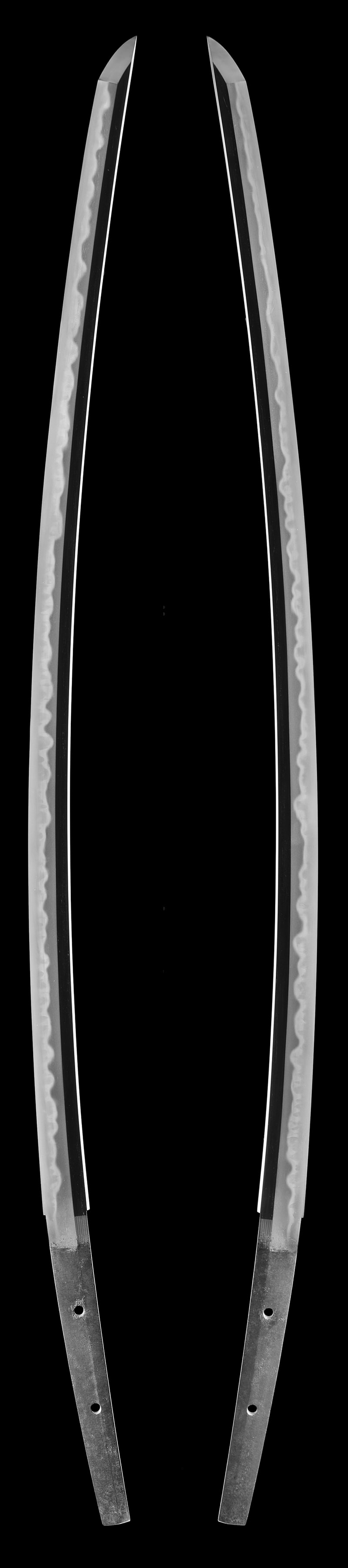
Almost all Kanenaga blades are grand, broad with extended or large , attributed to him within the Chogi group. The stands and carries thick , fine and only a faint ; the temper is a large-patterned with waist-open , square and pointed teeth and , deep in with , , and detached , the and often pointed with . He is told from Chogi by the bolder, larger pattern and the still-stronger .

Sugata 姿
Jigane 地鉄
Hamon 刃文
Bōshi 帽子

The rare dated signed standards

the few in-mei works (long signature, dated 1366-1388) are the standards by which the mumei attributions are judged

Only a handful of signed pieces survive and serve as the standards: a Jochi 5 (1366) in a -tone manner, and Shitoku (1387) and Kakei 2 (1388) whose is stronger and side more emphasized still, so deep that the published sources liken them to Norishige. The long-signature 'Bishu ju Kanenaga' and the signature style confirm him as a Chogi-line smith.

Jigane 地鉄
Hamon 刃文
Scholarship

The published sources note a dating question: the Jochi (1362-68) Kanenaga signature differs from Chogi's, while the later Shitoku and Kakei pieces match the signature style of Chogi's Oan years, so it is argued that the earlier Kanenaga may be a separate line and the later one the true Chogi pupil.

Published Works

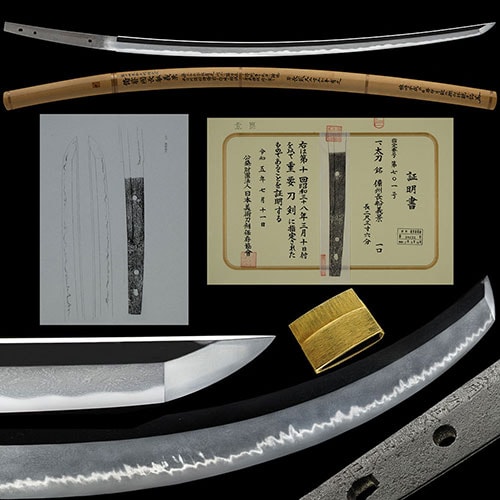
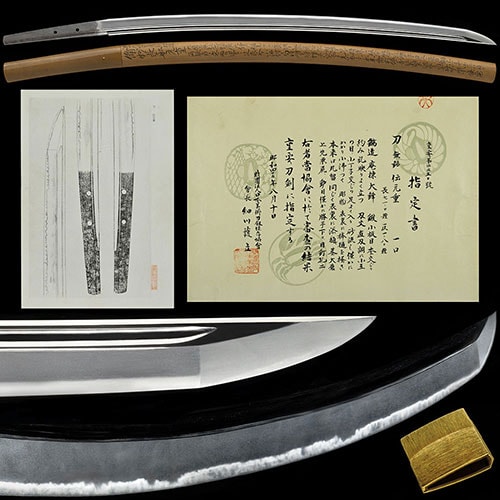
Jūyō— Vol. 32, No. 47 · wakizashi

Sayagaki

- at 32nd .

Kenchō/Kanenaga from province.

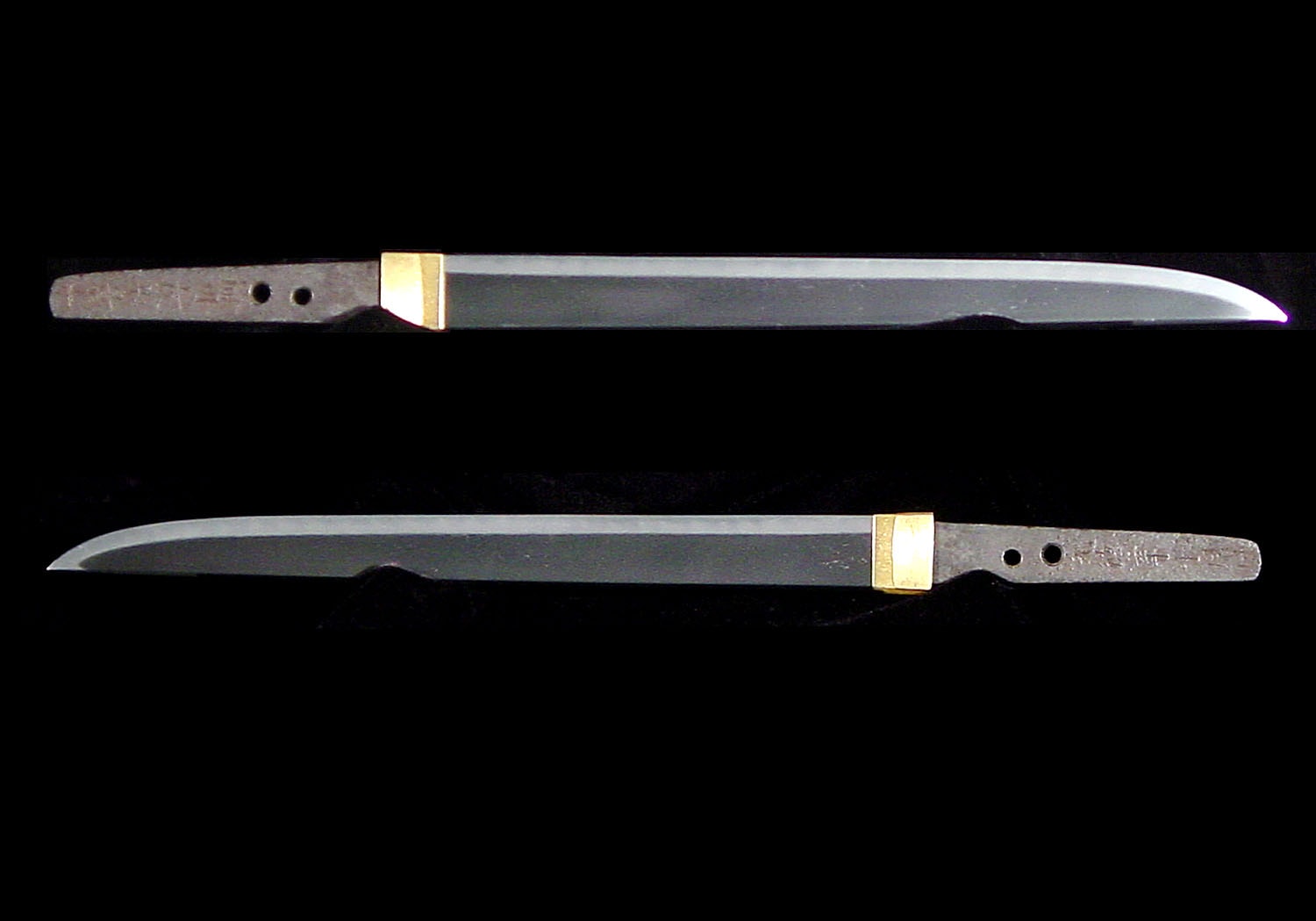
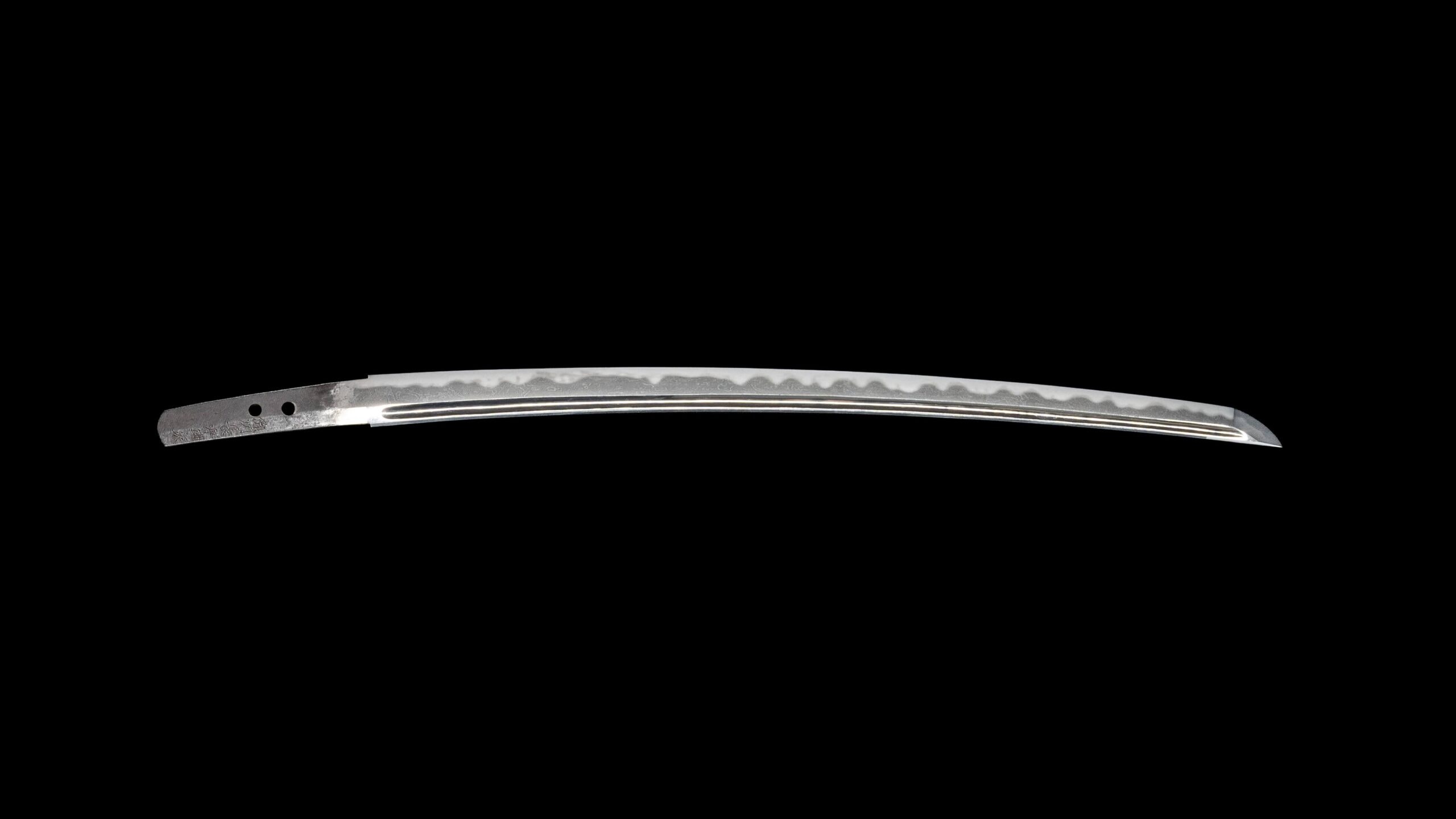
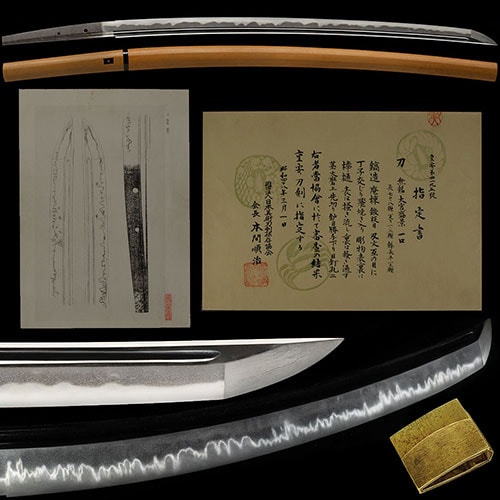
With - that features a with mother-of-pearl and cloud décor and en suite fittings by Hagiya Katsuhira and that passed -tōsō at the 59th - Blade length ~ 58.5 cm

Written by Tanzan [Tanobe Michihiro] in April of the year of the rat of this era (2020) + monogram

Although the blade is and , this masterwork reflects with its Enbun-Jōji shape, its with , its -laden and variety-rich with its elements and its ups and downs, and its rather pointed with its late starting the characteristic features of Sōden-Bizen, and within the group around the foremost master of this trend, Chōgi, the interpretation speaks in particular for the hand of Kenchō/Kanenaga.

Of great interest is the fact that this blade was handed down from Ashikaga Yoshiteru (1536-1565) over Takeda Shingen (1521-1573) to Tokugawa Ieyasu (1543-1616) as Hoshizukiyo-Masamune. Ieyasu later presented the blade to Mito-Tokugawa Yorifusa (1603-1661) whereupon it was henceforth handed down within his family. After his descendant Mito-Tokugawa Nariaki’s (1800-1860) death, the blade came into the possession of the Tsuchiya family, who were the of thje Tsuchiura fief. It is assumed that the nickname of the blade goes back to the abundance of within the , which are reminiscent of stars (hoshi) in a moonlight night (tsukiyo, voiced zukiyo).

Catalogue enriched by Hoshi
Feb 2026

Designations

Kokuhō—
Jūyō Bunkazai—
Jūyō Bijutsuhin4
Gyobutsu—
Tokubetsu Jūyō11
Jūyō Tōken79

Elite Standing

0.41 across 94 designated works

Top 6% among smiths

Provenance

9 documented provenances across certified works by Kanenaga

Provenance Standing

2 works held in elite collections across 9 documented provenances

Top 16% among smiths

Raw score: 2.20 / 10

Blade Forms

Distribution across 94 ranked works

Signatures

Signature types across 94 ranked works

Currently Available

Lineage

TeacherChogi
Kanenaga
Students (11)
  1. 1.Nagashige長重16designated
  2. 2.Yoshikage義景3 for sale67designated
  3. 3.Kanemichi兼道1 for sale
  4. 4.Kanemoto兼元
  5. 5.Kanemoto兼元1 for sale
  6. 6.Kanenaga兼長
  7. 7.Kanenaga兼長
  8. 8.Kaneyoshi兼吉
  9. 9.Kanetoshi包利
  10. 10.Kaneaki兼明
  11. 11.Niro二郎

Chogi School

Other artisans of the Chogi school

  1. 1.Chogi長義1 for sale109designated
  2. 2.Yoshikage義景3 for sale67designated
  3. 3.Nagashige長重16designated