応仁の乱が足利の体制を砕いた後、戦国の一世紀はほとんどすべての国を武装させた。この時代は選ぶ目に報いる。並の作は多いが、その傍らには第一級の注文打ちが立っている。
 NihontoWatchNihontoWatch
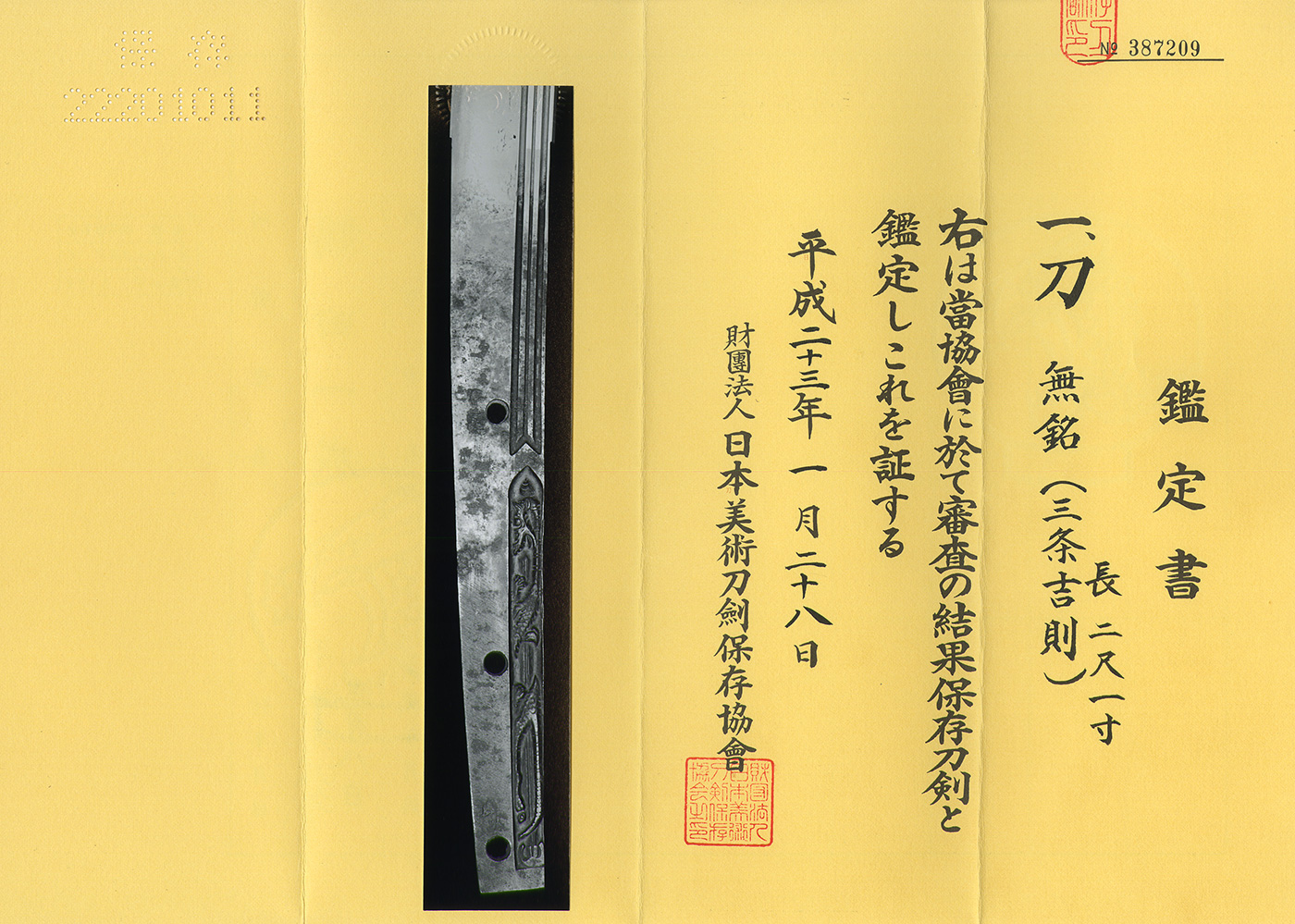
Ordering Number: AS26364Katana in Shirasaya (NBTHK Hozon Token)Signature: Mumei (Attributed to Sanjō Yoshinori)無銘(三条吉則)Sue-Koto: Ryō Wazamono: Jyo Saku: Yamashiro(We divide 4 sections for each sword as Saijyo Saku, Jyojyo Saku, Jyo Saku and Regular Saku).This blade is ranked as Jyojyo Saku among works attributed to Sanjō Yoshinori.Habaki: Single copper habaki.Blade Length: 63.6 cm (25.04 in).Curvature: 1.6 cm (0.63 in).Mekugi Hole: 3.Width at Base (Motohaba): 2.86 cm (1.13 in).Width at Yokote: 2.01 cm (0.79 in).Thickness of rim (Kasane): 0.66 cm (0.26 in).Sword Weight: 670 g.Era: Around the Bunmei era (1469–1487), Muromachi period.Shape: A sturdy katana with substantial mihaba and kasane. Fine carvings are present on both sides of the blade.Jigane: Well-forged ko-itame hada with some areas showing larger grain (ō-hada).Hamon: Nioi-deki gunome-midare.Features: Sanjō Yoshinori belonged to a lineage of swordsmiths dating back to the late Heian period. This blade was forged around the Bunmei era. It has a pronounced koshi-zori curvature. Although some larger grain is visible in the jigane, the carvings on the tang and the rope-pattern carving on the reverse side are particularly distinctive and add considerable interest to the piece.Historical Background: The Bunmei era (1469–1487) fell in the midst of the Ōnin War, which began in 1467 and divided the country. The conflict devastated Kyoto, destroying much of the city, including major temples, shrines, and aristocratic residences. The authority of the Muromachi Shogunate declined sharply, marking the beginning of the gekokujō ("the low overthrow the high") period, in which military power increasingly determined political authority. The war originated from a succession dispute over the 8th Muromachi Shogun, Ashikaga Yoshimasa, combined with rivalries among powerful shugo daimyō, eventually drawing warriors from across Japan into a prolonged civil conflict.NBTHK Hozon Token.AoiArt estimation paper: Whole Oshigata.Overseas
NihontoWatch
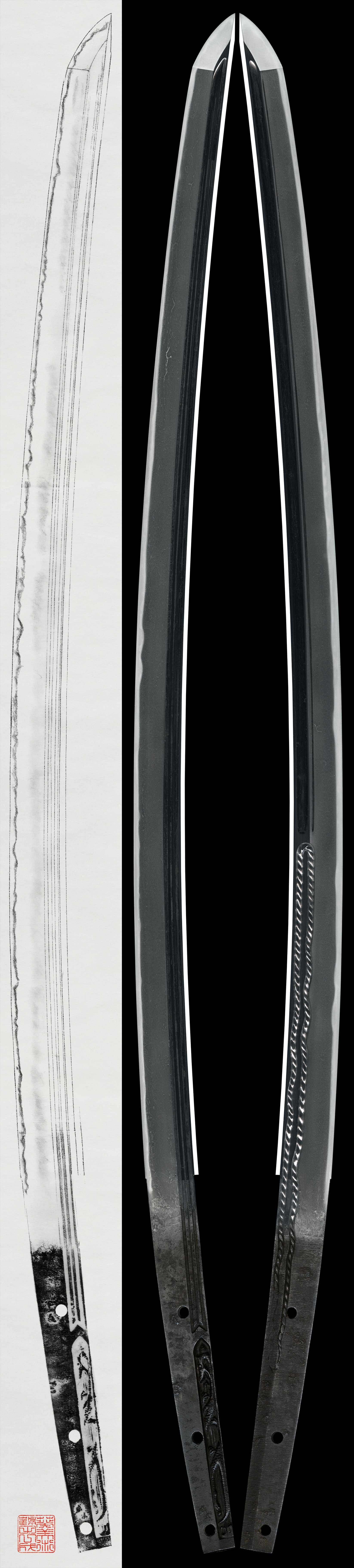


山城伝 · 山城 · 1469-1487頃
藤代 上作 · 刀剣大鑑 上位31%
現在2点販売中
吉則の位置づけを、日本刀全体および伝法・時代・時期ごとに示します。各区分(随一・屈指・有数・著名)は、日刀保および文化庁による指定に加え、三作や名物帳などの歴史的栄誉を加味したものです。
各項目を選ぶと評価方法が表示されます。
山城伝 · 京都
現在11点販売中
平安城象嵌は応仁鐔の流れを汲む流派である。室町末期に京都において成立し、桃山時代から江戸時代初期にかけて繁栄を見た。有銘の作は知られず、無銘のままに「平安城象嵌」と称される一群として伝えられている。この派の古い作例は時代的にもほぼ応仁鐔に近く、真鍮据文象嵌を施して文様風の意匠を展開させている。 初期の作風は大振りで量感があり、鉄槌目地や鉄地に真鍮据文象嵌を施して花唐草文や網目文などの文様を表し、地透や小透を加えて雅びな京風の趣を示す。やがて時代が下るにつれて真鍮以外の金、銀、素銅、赤銅、山金などを併用するようになり、意匠も絵風のものが加わって、据文と平象嵌を混用したり鋤出高彫を施したものも見られる。技法は洗練味が高く、桶底耳や大切羽状に接着した共鉄などの造作が作品の力強い趣を増幅している。 この門からは小池与四郎が出て一派をおこし、また長吉、吉長、政重らの銘を名のる集団がある。上杉家伝来など大名家に伝来した作例も知られ、室町末期から桃山時代にかけての京都における装剣金工の展開を示す重要な流派として位置づけられている。 詳しく見る →
室町時代
応仁の乱が足利の体制を砕いた後、戦国の一世紀はほとんどすべての国を武装させた。この時代は選ぶ目に報いる。並の作は多いが、その傍らには第一級の注文打ちが立っている。
銘が正しい、または無銘でも年代・国・系統を確実に指摘できる、保存に値する真正の作と鑑定されたものです。
日本美術刀剣保存協会(日刀保)は、1948年に設立され、文化庁の監督を受ける公益財団法人で、東京・刀剣博物館に本部を置きます。専門の審査員が出品作を直接審査し、美術的・歴史的価値に応じた鑑定書を発行します。日刀保の鑑定書は、日本刀および刀装具の真正性を示す最も広く認知された基準です。
日刀保公式サイト返品をご希望の場合、お客様が受領されてから3日以内にお知らせください。この期間を過ぎますとキャンセルはお受けできかねますので何卒ご了承ください。なお当社へのご返送は、5営業日以内の発送をお願いしております。なおキャンセルは販売した当時の状態がそのまま保持されている事が条件となりますのでお取り扱いには十分ご注意下さい。