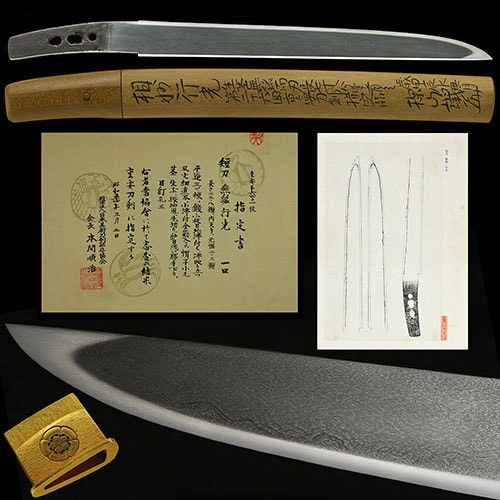


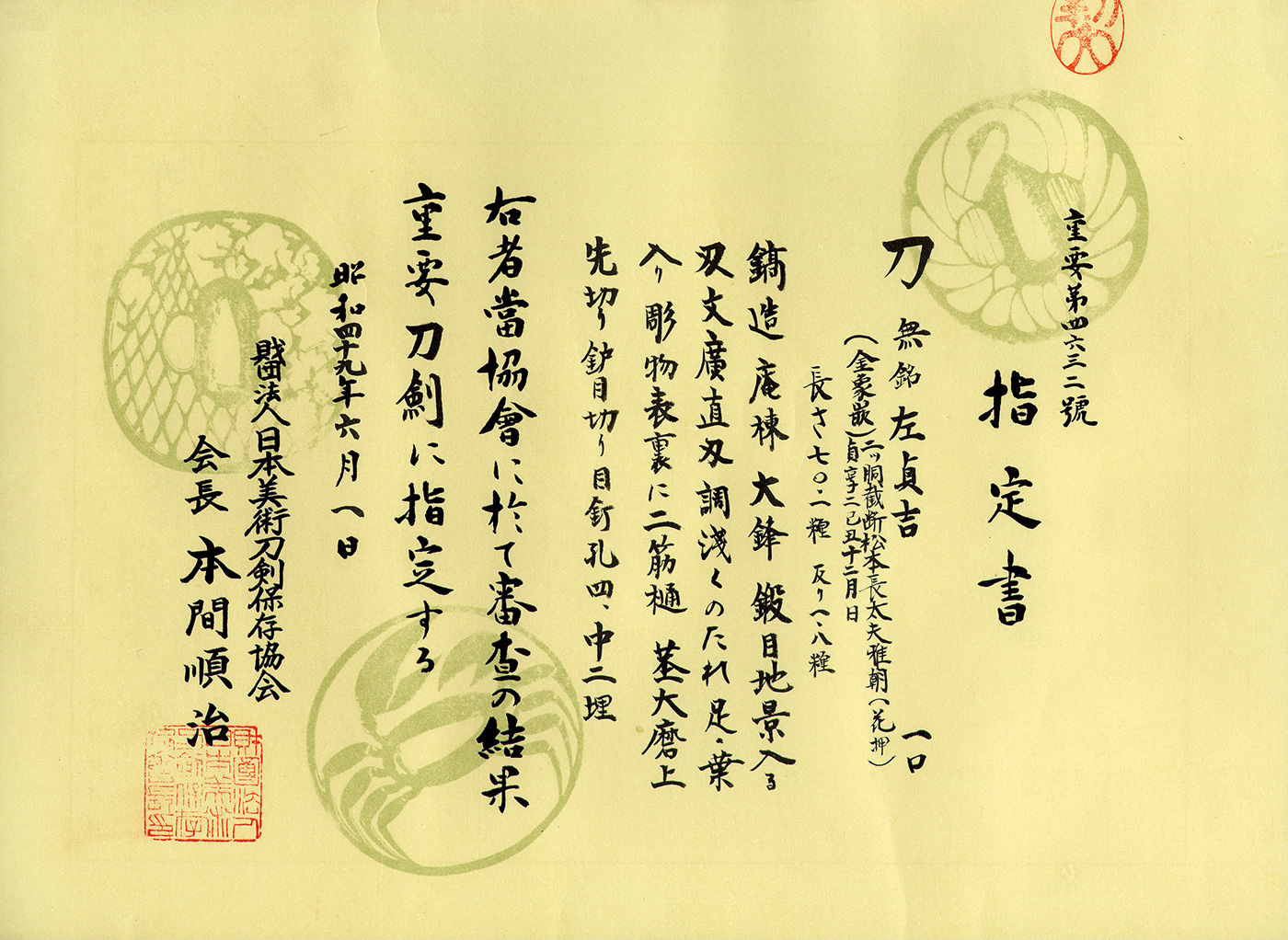
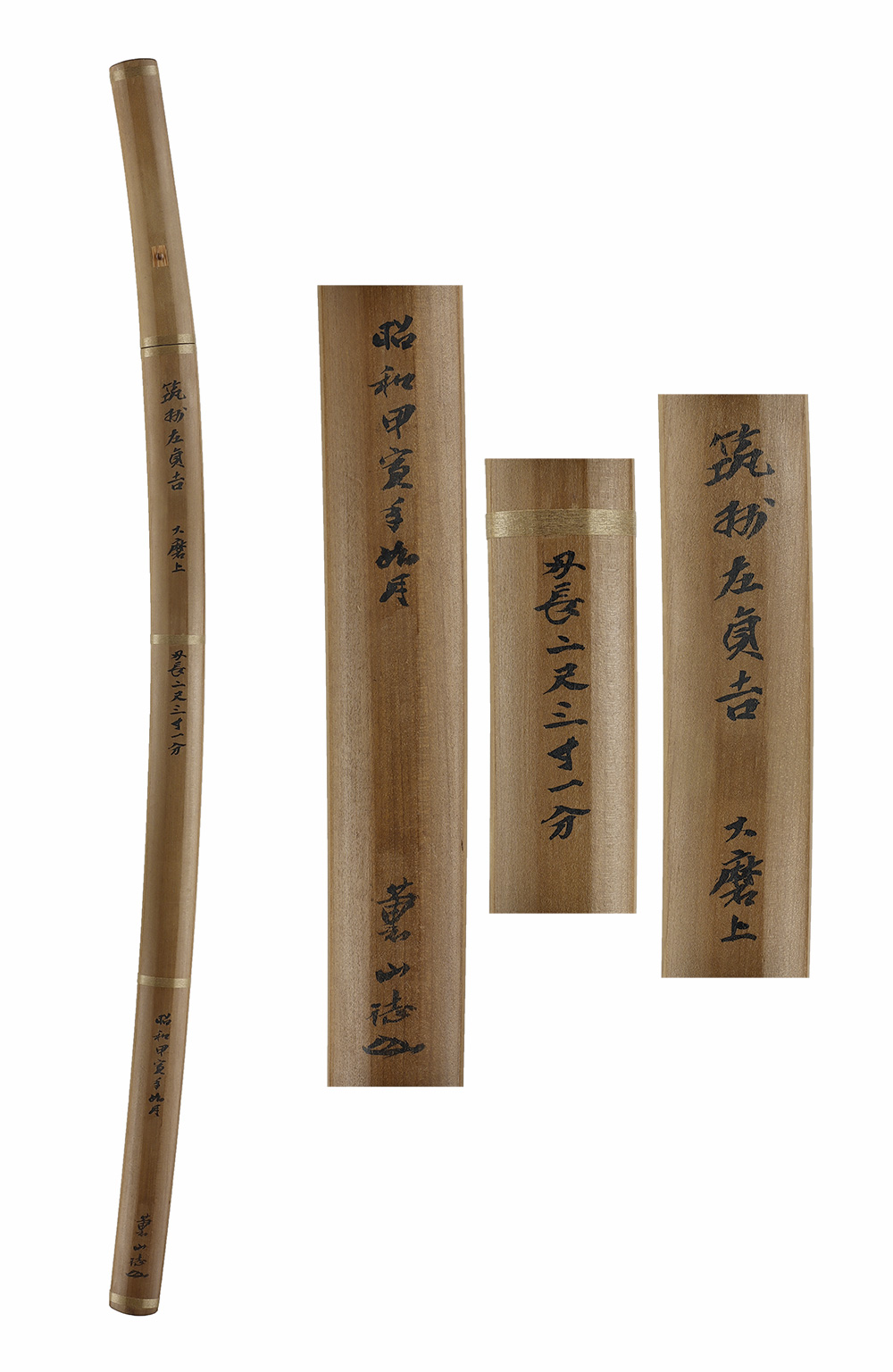
Jūyō-Tōken, 22nd Session — Designated June 1, 1974
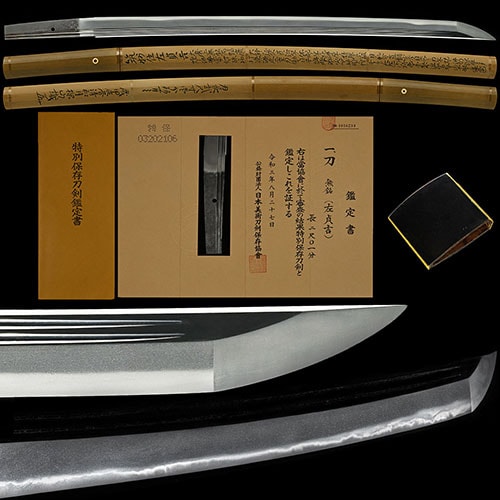
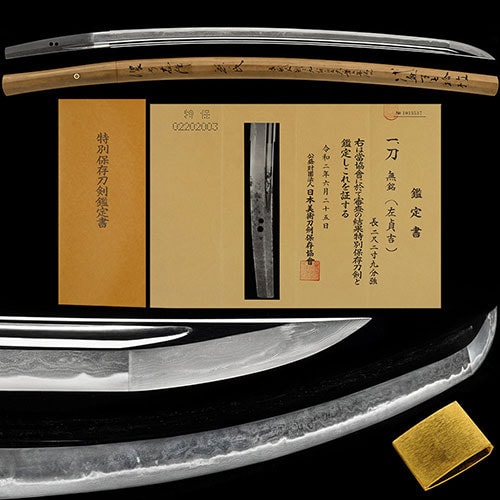
Katana, mumei: Sa Sadayoshi (左貞吉)
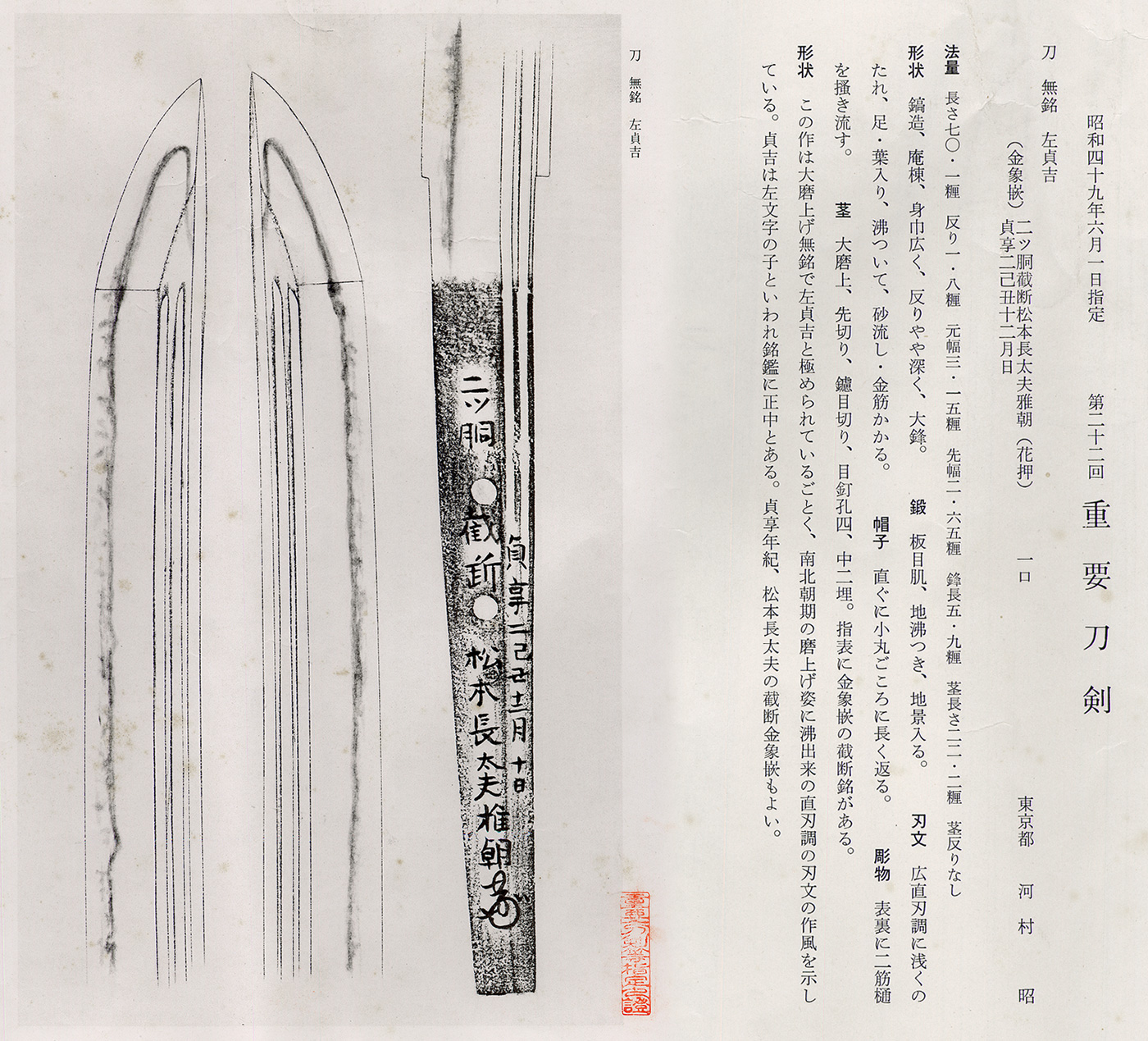
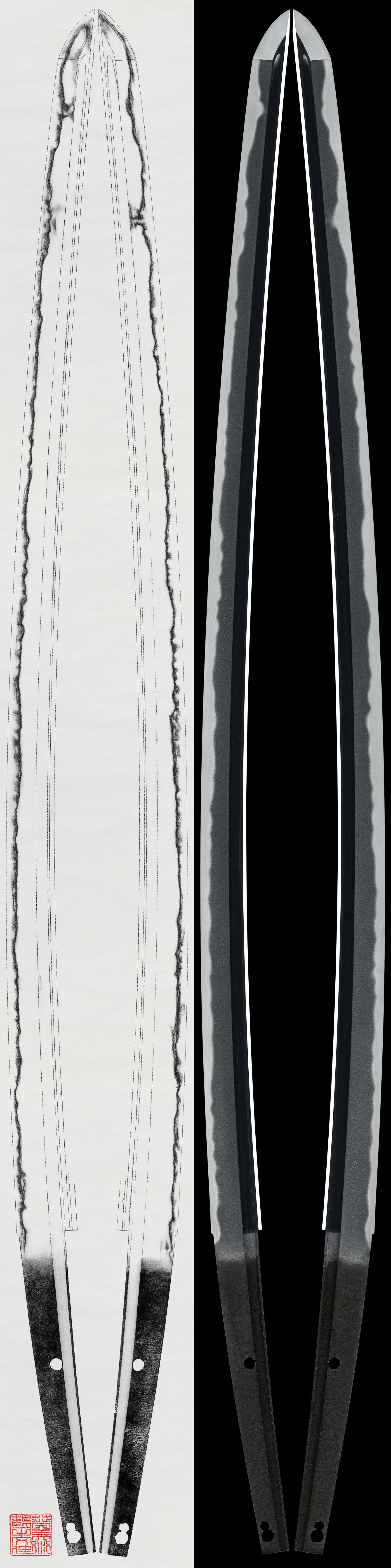
Measurements Nagasa 70.1 cm, sori 1.8 cm, motohaba 3.15 cm, sakihaba 2.65 cm, kissaki-nagasa 5.9 cm, nakago-nagasa 22.2 cm, nakago-sori none
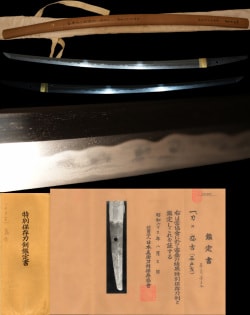
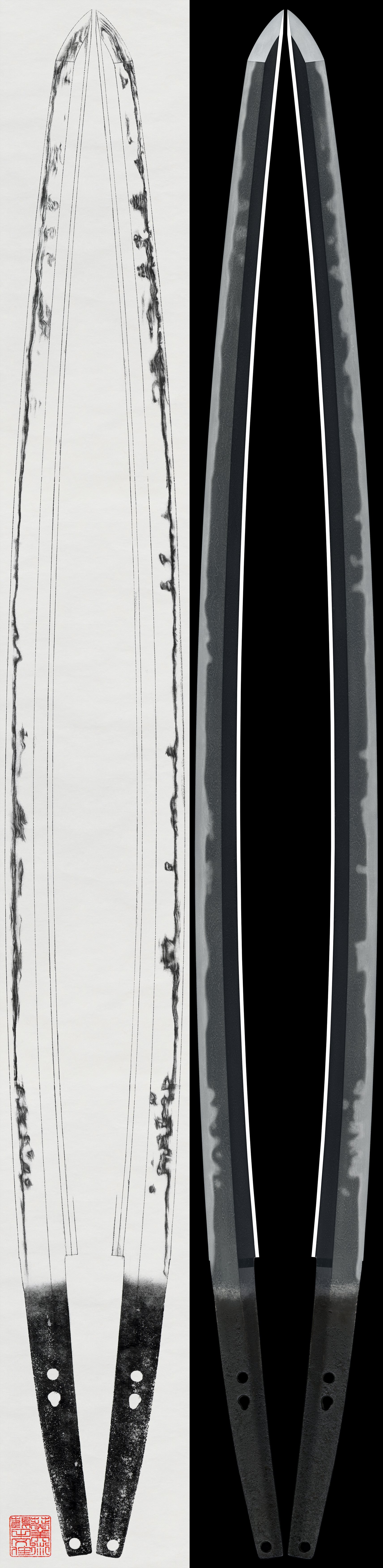
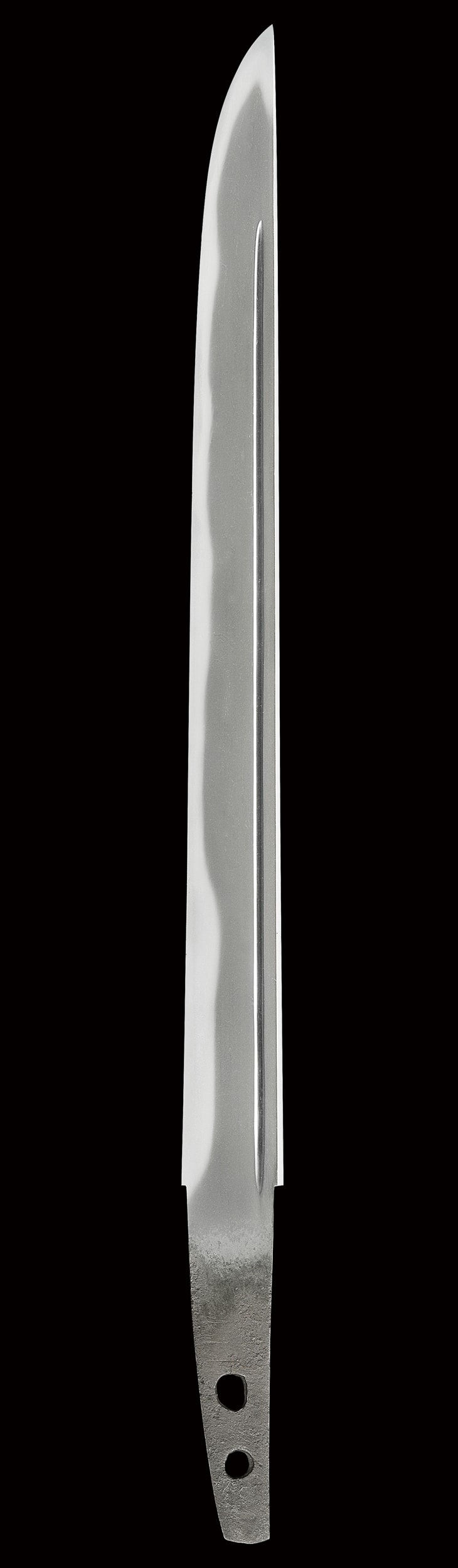
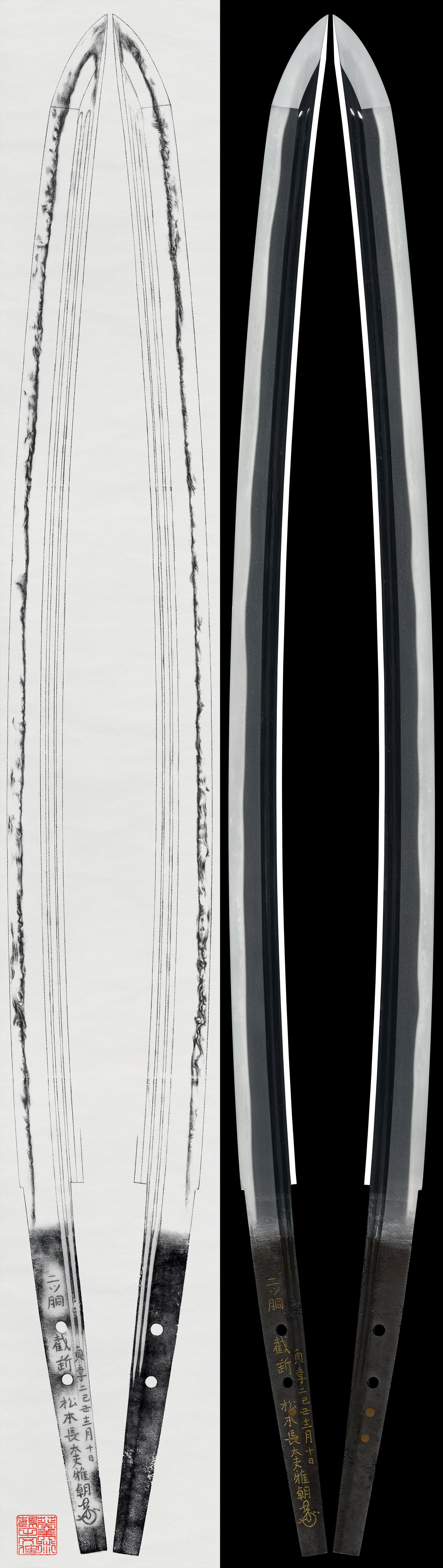
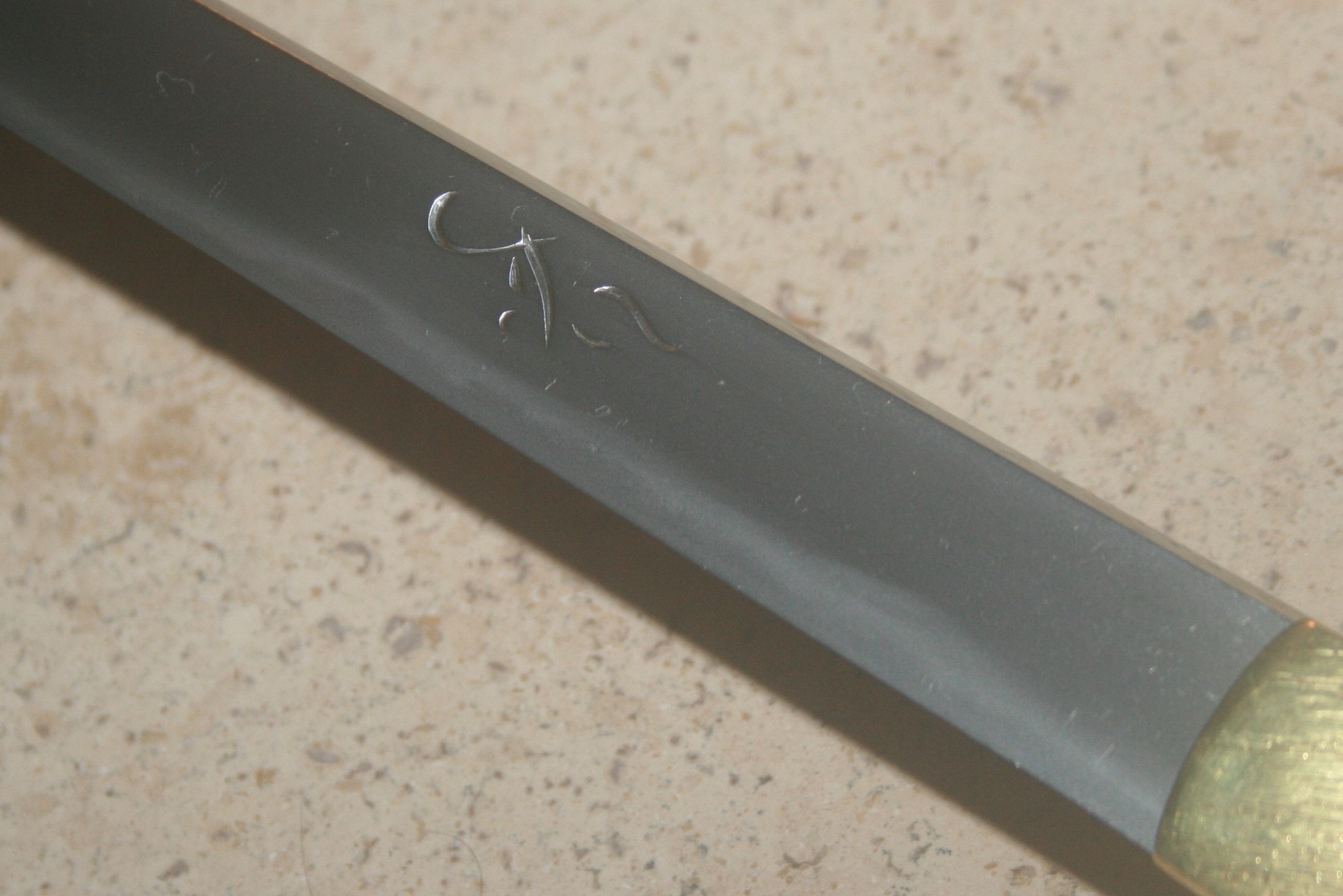
Description Keijō: Shinogi-zukuri with iori-mune; wide mihaba; rather deep sori; ō-kissaki. Kitae: Itame-hada with ji-nie; chikei appears. Hamon: A wide suguha-based temper with shallow notare; with ashi and yō; nie; sunagashi and kinsuji are seen. Bōshi: Sugu with a ko-maru-like feeling, turning back long. Horimono: On both sides, futasuji-hi carved kaki-nagashi. Nakago: Greatly shortened (ō-suriage), tip cut off (saki-kiri); file marks kiri; four mekugi-ana, two plugged among the central holes. On the sashi-omote there is a gold-inlaid (kinzōgan) cutting inscription.
Artisan Sa Sadayoshi (左貞吉)
Era Nanbokuchō period
Explanation This blade is greatly shortened (ō-suriage) and mumei, and—just as it has been appraised as Sa Sadayoshi—it displays a style characteristic of a Nanbokuchō-period shortened form, together with a nie-based (nie-deki) suguha-toned temper pattern.
Sadayoshi is said to have been a son of Sa Monji (Samonji), and in sword-signature references (meikan) he is recorded under the Shōchū era. The Jōkyō date and the gold-inlaid cutting inscription by Matsumoto Chōdayū Masatomo are also of good quality.


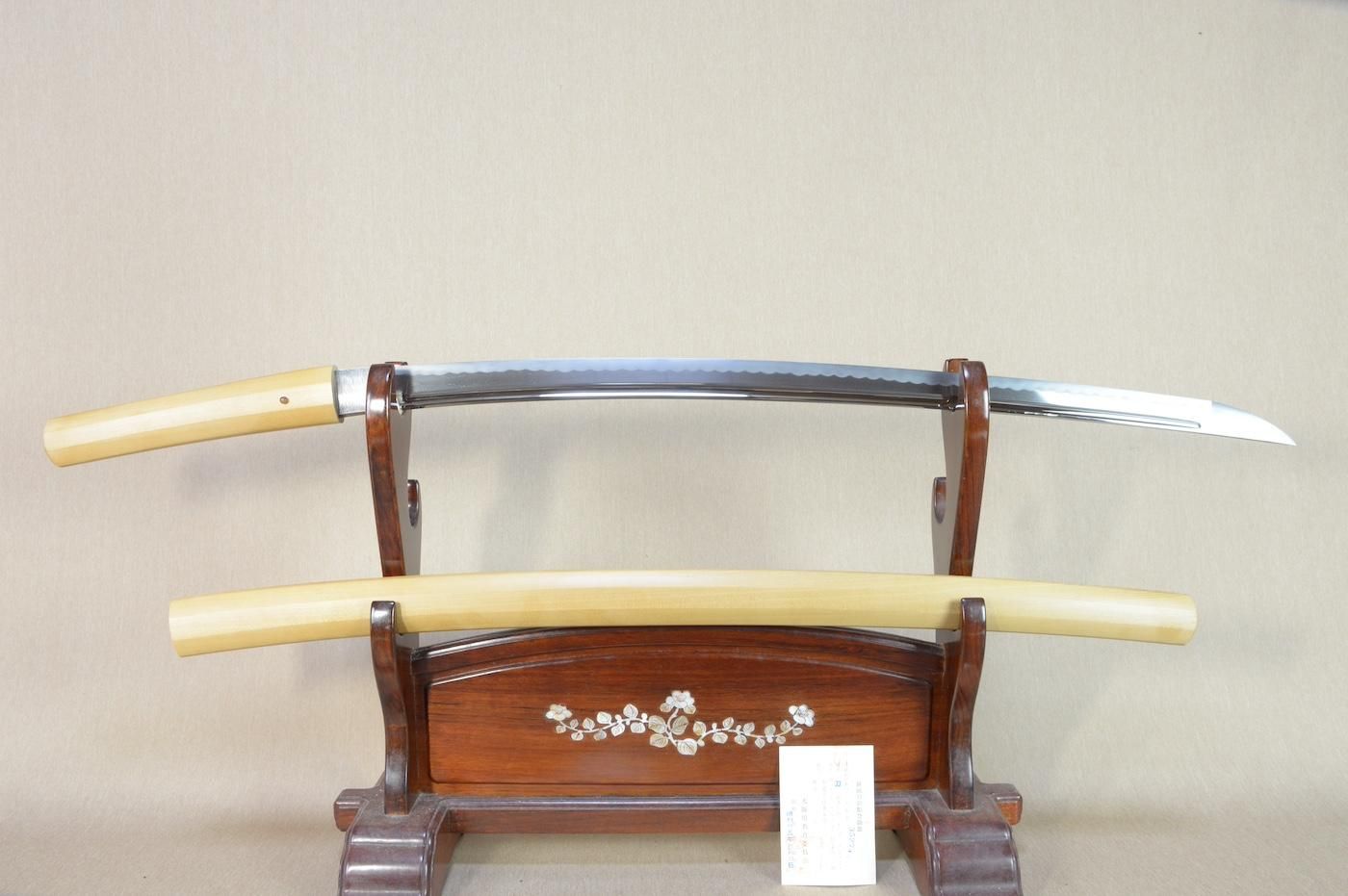


![Wakizashi - Tokuho - 作 定行 - 脇差 朱銘[佐野貞幸]日本美術刀剣保存協会 特別保存刀剣](/_next/image?url=https%3A%2F%2Fitbhfhyptogxcjbjfzwx.supabase.co%2Fstorage%2Fv1%2Fobject%2Fpublic%2Flisting-images%2Fworld-seiyudo%2FL31508%2F00.jpg&w=2560&q=90)