1333年に鎌倉は落ちたが、一派の最大の時代はその後に来た。師の水準で鍛える貞宗、皆焼を大成した広光と秋広。相州風は軍勢とともに広がり、一時は国じゅうの様式となった。
 NihontoWatchNihontoWatch
番号:AS26012 刀:白鞘入り、拵付き(第65回重要刀剣指定品) 銘:無銘(左吉貞) 中古刀:正平頃(1346–1370):上々作:筑前(藤代古刀篇) (弊社では刀剣の出来を、最上作、上々作、上作、普通作の四段階に分類しております。本作は無銘(左吉貞)の中でも最上作にランクされる逸品です。) ハバキ:金着一重ハバキ 長さ:69.54 cm (2尺2寸9分) 反り:0.60 cm (2分) 目釘穴:2個 元幅:2.91 cm 先幅:1.89 cm 重ね:0.61 cm 刀身重量:550 g 時代:南北朝時代、正平頃(1346–1370) 体配:身幅、重ね共にしっかりと残り、表裏に棒樋を掻き通す。大切先となり、姿の整った見事な体配。 地鉄:小板目肌よく練れ、地沸厚くつき、精良な地鉄となる。淡く地景が入り、映りが現れる。 刃文:のたれを基調に、互の目乱れ、小互の目乱れが混じる。匂口深く、小足がよく入る。砂流し、湯走りかかり、金筋働く。 特徴: 本作の最大の見どころは、精良に鍛え上げられた地鉄にあります。地景が細かく入り、地沸が厚くつく様は圧巻です。 匂口は深く、柔らかみのある小足が入り、新刀期には見られない深い味わいのある刃文を構成しています。 霞がかったような潤いのある、極めて格調高い出来映えです。 左吉貞は、左文字(左衛門三郎)の息子、あるいは弟子と伝えられる左一派の刀工です。 正平十三年(1358年)銘の脇差が現存しており、その活躍期が裏付けられています。 現存する作品は短刀、脇差、太刀共に少なく、刃文は小模様になるものが多いとされています。 多くは無銘の極めとなりますが、本作は砂流し、湯走りが豊富に入り、沸の妙味が強く、かつ上品な左一派の特色を顕著に示しています。 全体として落ち着きのある洗練された作風であり、地刃共に極めて健全な、同工の代表的な傑作と言える一口です。
左吉貞は、左文字の流れを汲む左一類の刀工の一人で、左文字の子、または門下と伝えており、正平十三年紀の脇指が存在することから、 凡の活躍年代を知ることが出来る。 遺存する在銘作は脇指・短刀類で、太刀の作例は僅少であり、左一類の中でも刃文が小模様となるものが多 く、無銘極めのものにも、その傾向を有するものが見られる。銘文は「吉貞」「吉貞作」ときる場合が多い。 この刀は、身幅尋常で反りが浅く、刃文は小のたれを主体にして焼きを低く抑えた作風を示しているものの、尖り風の帽子や、下半を中心に して見られる、砂流しや湯走りなど、 沸の力強い働きが看取されることから、 左一類と鑑すべきもので、就中、総じて穏やかな出来映えを示し ていることから吉貞に最も擬せられるものである。同工らしく、気品ある沸出来となり、優れた出来口でしかも地刃共に健全であることも好ま しく、左吉貞極めの優品である。
NihontoWatch
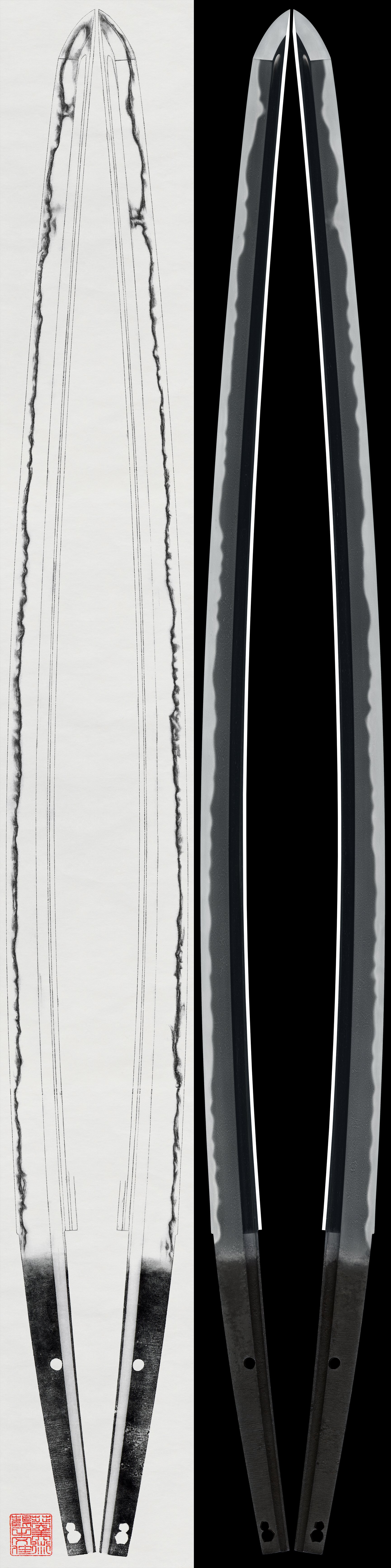



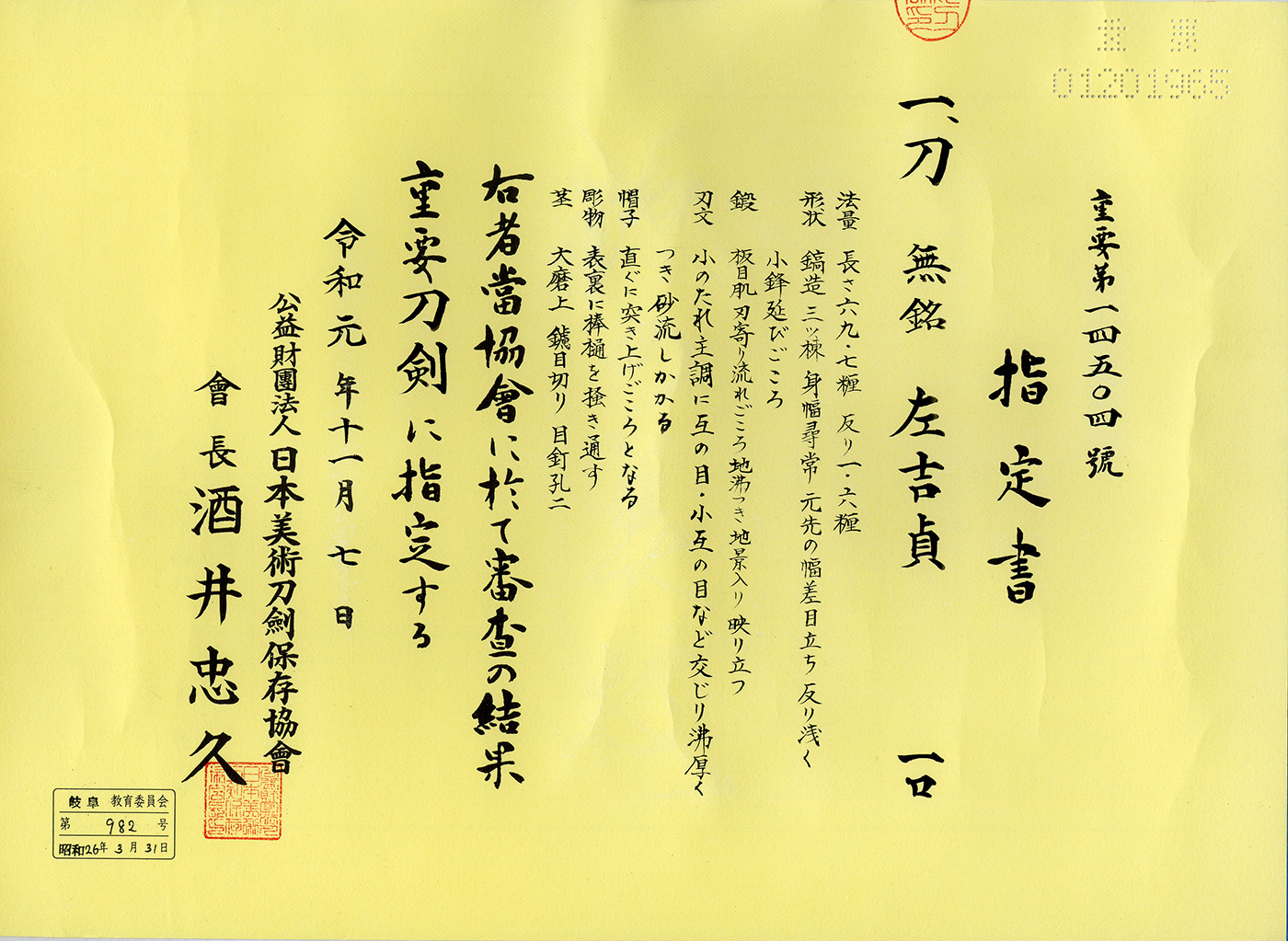
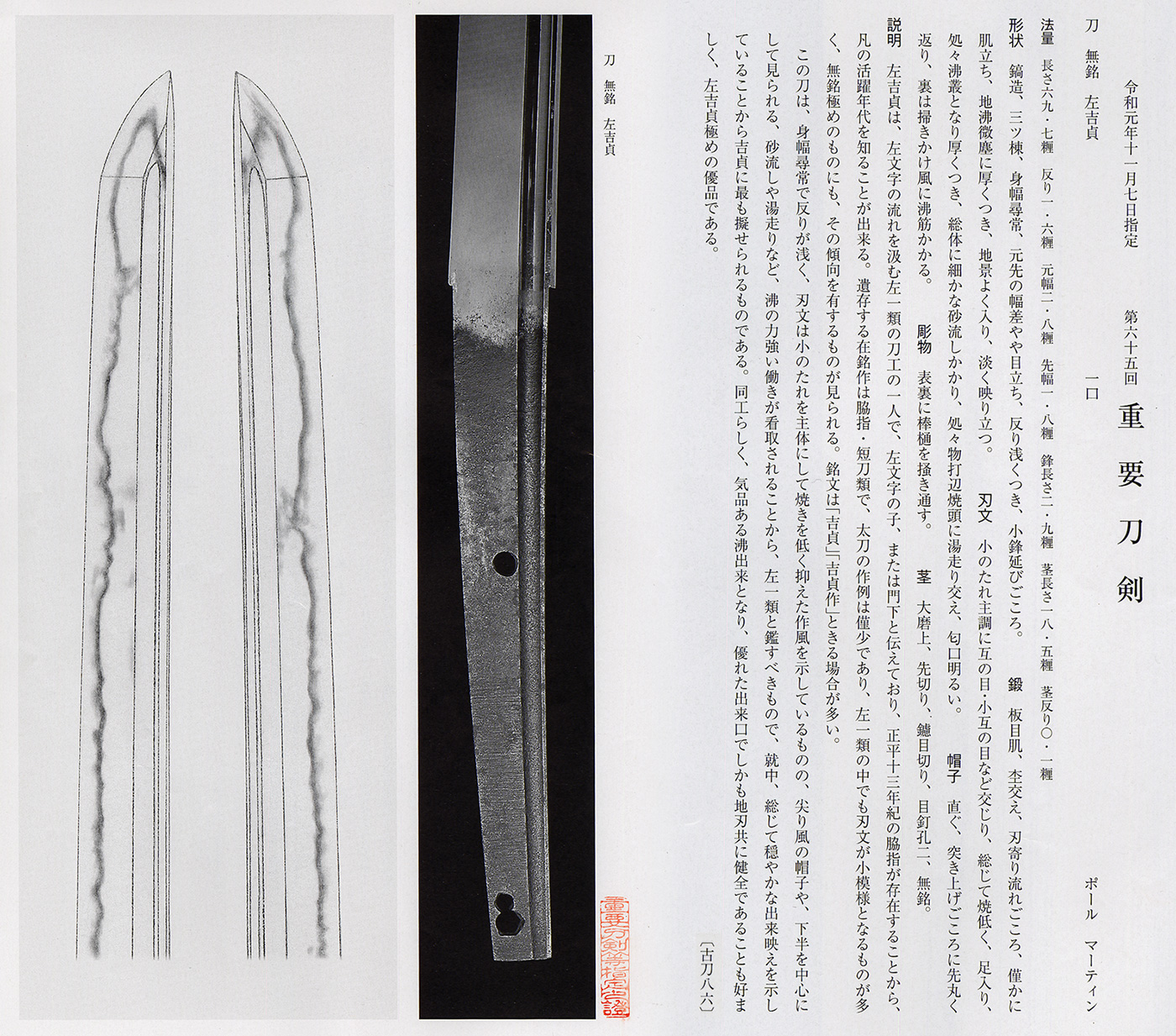
左吉貞は、左文字の流れを汲む左一類の刀工の一人で、左文字の子、または門下と伝えており、正平十三年紀の脇指が存在することから、凡の活躍年代を知ることが出来る。 遺存する在銘作は脇指・短刀類で、太刀の作例は僅少であり、左一類の中でも刃文が小模様となるものが多く、無銘極めのものにも、その傾向を有するものが見られる。銘文は「吉貞」「吉貞作」ときる場合が多い。 この刀は、身幅尋常で反りが浅く、刃文は小のたれを主体にして焼きを低く抑えた作風を示しているものの、尖り風の帽子や、下半を中心にして見られる、砂流しや湯走りなど、 沸の力強い働きが看取されることから、 左一類と鑑すべきもので、就中、総じて穏やかな出来映えを示していることから吉貞に最も擬せられるものである。同工らしく、気品ある沸出来となり、優れた出来口でしかも地刃共に健全であることも好ましく、左吉貞極めの優品である。
Sa (Samonji) school, Chikuzen · 筑前 · 1345-1359頃
藤代 上々作 · 刀剣大鑑 上位14%
現在1点販売中
正平十三年(一三五八)紀の脇指は、裏に「九月日」、表に注文者銘「主長政」を切り、吉貞の生涯を測る基準作である。説明書はこれにより本工が大左の直門であることを首肯し、活躍年代を十四世紀半ばに定める。吉貞は筑前左文字(左一類)の刀工で、南北朝期に安吉・行弘・吉弘・国弘・弘安らと並んで一派の作風を担った左一類の一人である。「大左の子と伝え」、あるいは少なくともその近き一門に属するとされ、銘は「吉貞」「吉貞作」と切り、「筑州住」と添えたものは経眼しない。
その手はまず、説明書が本工に許す唯一の個性を通して読まれる。左一類の刀工は個々の特色が比較的少ないとした上で、説明書は吉貞を「左一類の中でも刃文が小模様となる点に吉貞の作風上の個性が窺え」[[c:2]]と挙げる。この小模様の乱れが作の一貫した筋である。在銘作には二様が引かれる。一つは直刃を基調に浅くのたれた穏やかな手、一つは同派安吉に通じつつ「安吉に似てそれよりも少しく小ずむ」[[c:3]]互の目の手である。いずれも沸よくつき、細かに金筋・砂流しがかかり、その働きは高い房ではなく小足・葉に托され、帽子は突き上げ風に先尖りごころに返る。
地鉄は左一類が共有する相州由来の鍛えで、二様いずれの下にも変わらぬところである。杢・流れ肌を交えてやや肌立つ板目に、地沸厚く地景よく入り、地鉄は時に黒みがかり、作によって白気風の映りが地に立つ。その地に対して刃文は総じて小模様にとどまる。穏やかな作が緩やかなのたれを匂深く明るく焼くのに対し、より働く作は互の目を説明書のいう小模様に纏め、処々に荒めの沸を交え、物打辺には沸筋や湯走り状の飛焼を交えて変化のある景色を見せる。
記録の二つの面は相並ぶ。在銘作は脇指・短刀を主とし、水戸徳川家伝来の特別重要短刀は平造で身幅広く、地刃ともに沸つよく匂口明るく冴え、説明書はこれを「同工の出色の出来」[[c:4]]とする。正平十三年紀の脇指は注文者銘を負い、物部吉貞の太刀は腰元の焼を高く取って明るく華やかな乱れとなり、同じ手がどこまで開き得たかを示す。もう一つの面は、吉貞と極められた大磨上無銘の刀で、身幅広く豪壮、延びごころの中鋒あるいは大切先となり、肌立つ板目の上に小沸出来の互の目乱れに多少の丁子ごころを交え、表裏に棒樋を掻き流す。説明書は無銘極めのものにも刃文が小模様となる傾向があるとし、本工の作の本体は在銘の極め手によるよりもこの小模様の乱れを通して読まれる。うち一口は本阿弥光徳による吉貞極めの金象嵌銘を有する。
左一類の中で吉貞を分かつのは、まさにこの小模様の刃である。安吉の互の目がより太く立つのに対し、吉貞のそれは小さく締まって描かれ、一派全体が個々の特色少なしと読まれる中で、その締まった乱れと明るい匂口、突き上げて尖る帽子が作ごとに本工自身のものとして繰り返される。彼は大左の後に左一類を支えた世代に属し、祖の輝きでも末流の衰えでもなく、その個性を華やかさではなく刃の小ささに見いだされる、健全で見分けの利く一手である。
収集の観点では、記録の確かな、しかし数少ない南北朝の名である。藤代の極めは上々作。国宝・重要文化財はなく、その記録は特別重要刀剣四口・重要刀剣四十二口を通じ、大磨上無銘の刀二口が戦前の重要美術品に指定され、うち一口は本阿弥光徳の金象嵌銘を有して現在は静嘉堂文庫が蔵する。作は来歴も確かで、水戸徳川家(徳川家康・頼房に遡る作を含む)、毛利家、備前池田家、島津家・佐竹家に伝わり、京都国立博物館寄託や静嘉堂文庫の蔵するところがある。在銘作はまことに少なく、「太刀の作例は稀有」[[c:5]]であり、現存の多くは伝来して市場に出るものではないが、重要刀剣級の無銘極めや、稀に在銘の脇指・短刀が時に世に現れることがあり、私蔵の吉貞は収集家にとって、左文字の後を継いだ手がいかに読まれたかを語る得難い一口である。
吉貞の位置づけを、日本刀全体および伝法・時代・時期ごとに示します。各区分(随一・屈指・有数・著名)は、NBTHK および文化庁による指定に加え、三作や名物帳などの歴史的栄誉を加味したものです。
各項目を選ぶと評価方法が表示されます。
在銘年紀作が示す、確実に活動していた年代
相州伝 · 筑前
時期区分: 末左· 1338–1450
現在9点販売中
末左とは、大左の後を承けた左文字派の後代を総称する呼び名である。説明文がたびたび繰り返すように、筑前国左文字は南北朝時代初期に出現し、それまでの古典的な九州物の作域から脱皮して地刃の明るく冴えた作風を確立したが、その一門は末左と汎称され、安吉・行弘・吉貞・国弘・弘行・弘安・貞吉らが師風をよく受け継いで活躍した。これらの諸工は大左の子あるいは門人と伝えられる。安吉は大左の子で、後に筑前から長州へ移住したと伝え、その移住は正平十七年紀の「長州住安吉」の銘振りが常々の安吉銘と一致することから首肯される。弘安は行弘の子と伝え、現存作に正平二十年紀、『埋忠押形』所載のものに正平十三年紀がある。国弘は吉弘の子とも定行の子とも伝え、貞国は左国弘の子で時代を応安頃とする。世代は南北朝盛期から末期、降って室町初期の応永にまで及び、安吉の作には永和・応永年紀のものが遺って代替りの存在も窺われる。 作風の上では、末左は大左が確立した相州伝を一代隔てて受け継いでいる。鍛えは板目に小板目・杢を交え、肌立ちごころとなって地沸が厚くつき、地景が細かに頻りに入り、淡く沸映りが立つ。刃文はのたれを基調に互の目・小互の目・尖りごころの刃を交え、足・葉が入り、匂が深く小沸が厚くついて、金筋・砂流しが細かにかかる。帽子は乱れ込んで突き上げ、先が尖りごころとなって掃きかけ、長く返る。これらは左一類の特徴であり、無銘の刀を左一類と鑑る拠りどころとなる。ただし大左の地刃に見られる際立った冴えに対し、末左ではその度合いがやや劣り、匂口が沈みごころとなる作も少なくない。作柄は一門の諸工に比して特に際立った個性を見出し難く、定型化の傾きをもつ。なかには安吉のように刃沸が弱く匂勝ちで、刃近くに棒映りを現して備前気質を交える手もあり、大左の純然たる相州伝からの隔たりを示している。 末左を大左と分かつ鑑定の要点は、地刃の冴えの度合いと、作風の定型化の度合いにある。明るく冴えた地と突き上げて尖る帽子という見どころは共有しつつも、末左ではその冴えが一段退く。無銘極めにおいては、互の目の目立つものは弘安に、最も華やかに大模様へ乱れたものは国弘に擬する、というのが本阿弥家以来の見方である。主要工としては、行弘が大左に最も接近する弟子として一群の頭に立ち、安吉・国弘・弘安・貞国らが続く。在銘作は一様に頗る稀で、太刀の弘安在銘や安吉の生ぶ在銘短刀のごときは資料的価値が極めて高く、その多くは大磨上無銘の同工極めを通じて世に伝わる。伝来も豊かで、弘安の刀には黒田家・高須松平家・久松家に伝わったものがあり、本阿弥光忠・光温らの折紙を伴う。貞国の短刀は毛利家に伝わり、吉弘の太刀は備前池田家に伝来して、八代将軍吉宗より池田継政が拝領したと考えられている。 詳しく見る →
南北朝時代の相州
1333年に鎌倉は落ちたが、一派の最大の時代はその後に来た。師の水準で鍛える貞宗、皆焼を大成した広光と秋広。相州風は軍勢とともに広がり、一時は国じゅうの様式となった。
特別保存刀剣の中から、特に出来が優れ、国認定の重要美術品に準ずると判断された名品です。年に一度の重要刀剣審査で選ばれます。
極めて選別的で、日本に登録された約250万口の刀剣のうち、重要刀剣に達したものは12,348口(約202口に1口)にすぎません。
日本美術刀剣保存協会(NBTHK)は、1948年に設立され、文化庁の監督を受ける公益財団法人で、東京・刀剣博物館に本部を置きます。専門の審査員が出品作を直接審査し、美術的・歴史的価値に応じた鑑定書を発行します。NBTHKの鑑定書は、日本刀および刀装具の真正性を示す最も広く認知された基準です。
NBTHK公式サイト返品をご希望の場合、お客様が受領されてから3日以内にお知らせください。この期間を過ぎますとキャンセルはお受けできかねますので何卒ご了承ください。なお当社へのご返送は、5営業日以内の発送をお願いしております。なおキャンセルは販売した当時の状態がそのまま保持されている事が条件となりますのでお取り扱いには十分ご注意下さい。
¥5,000,000