 NihontoWatchNihontoWatch
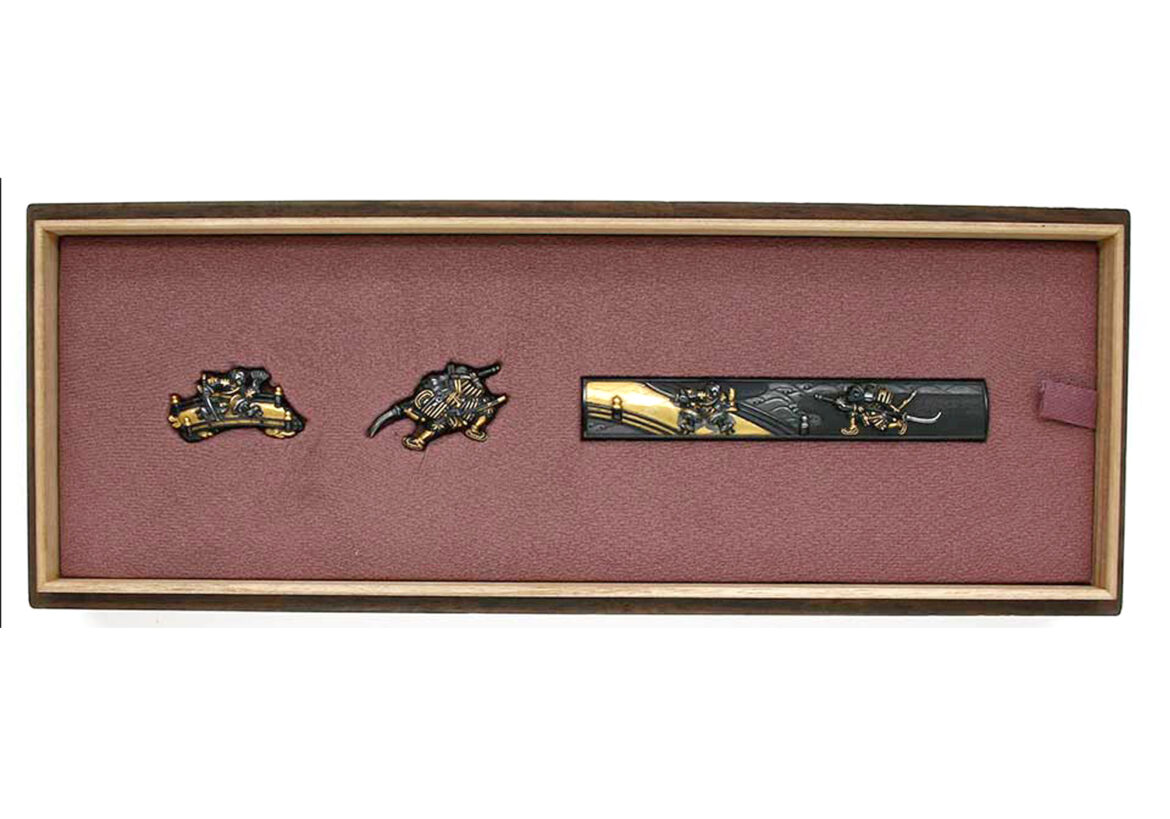
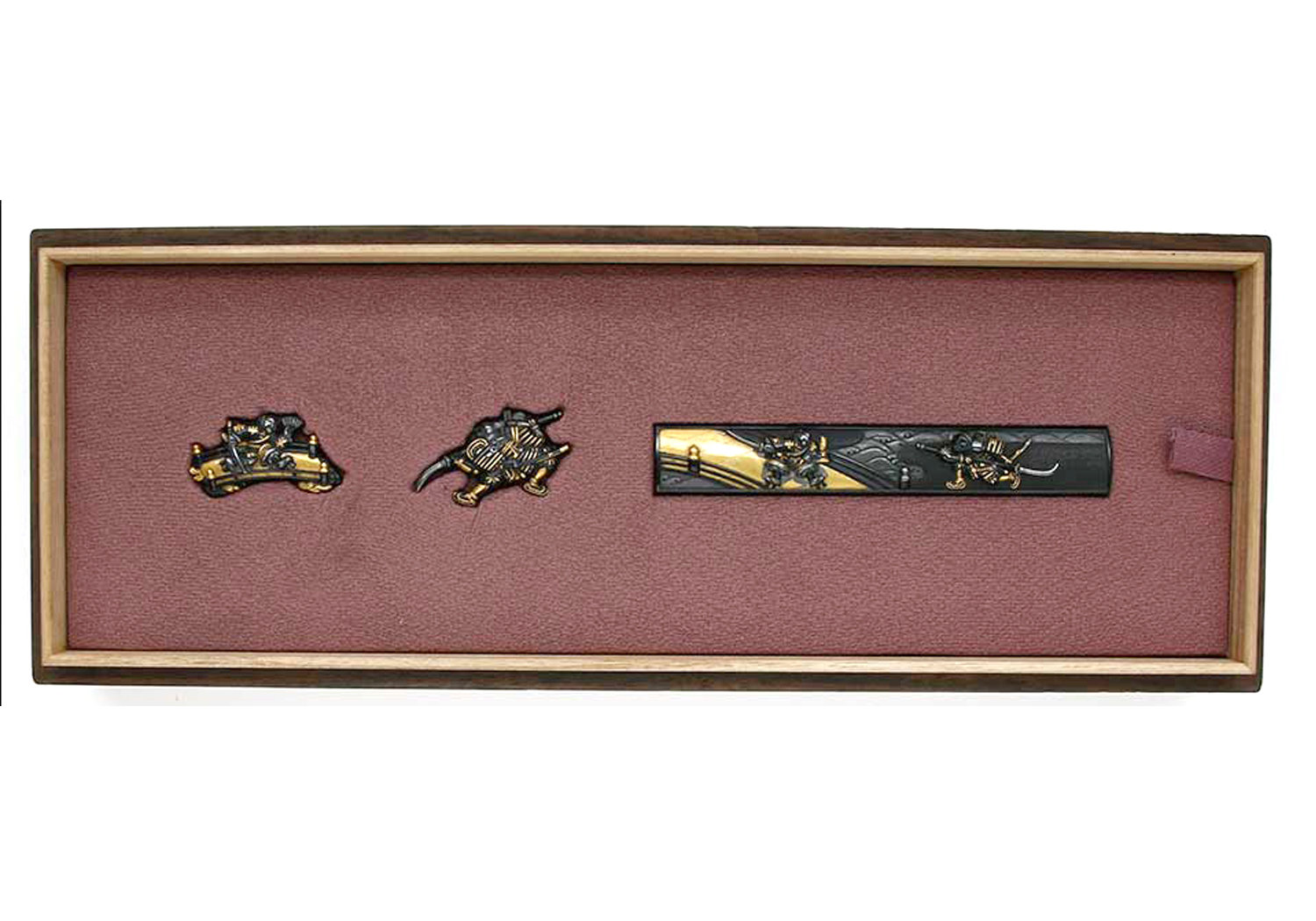
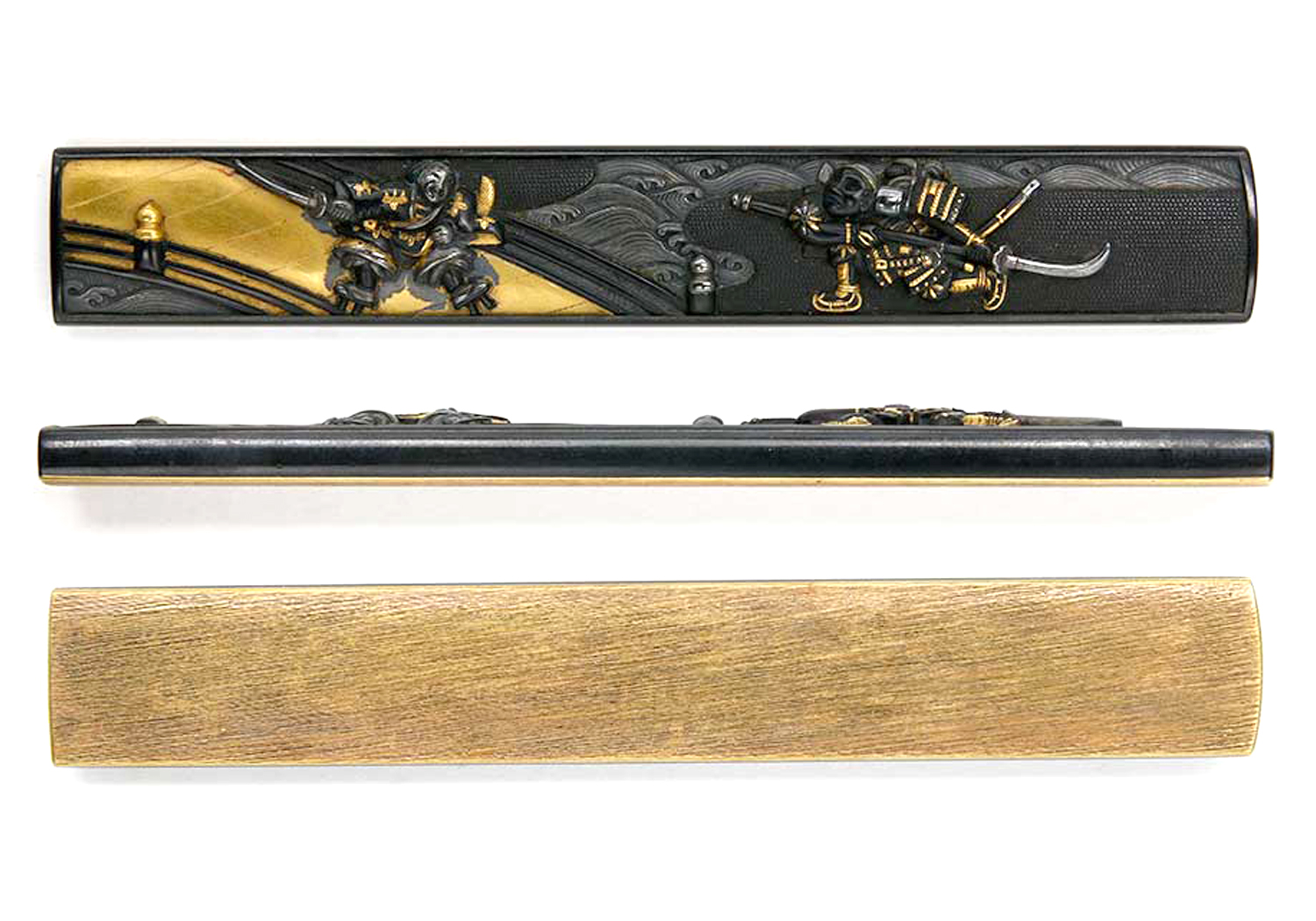
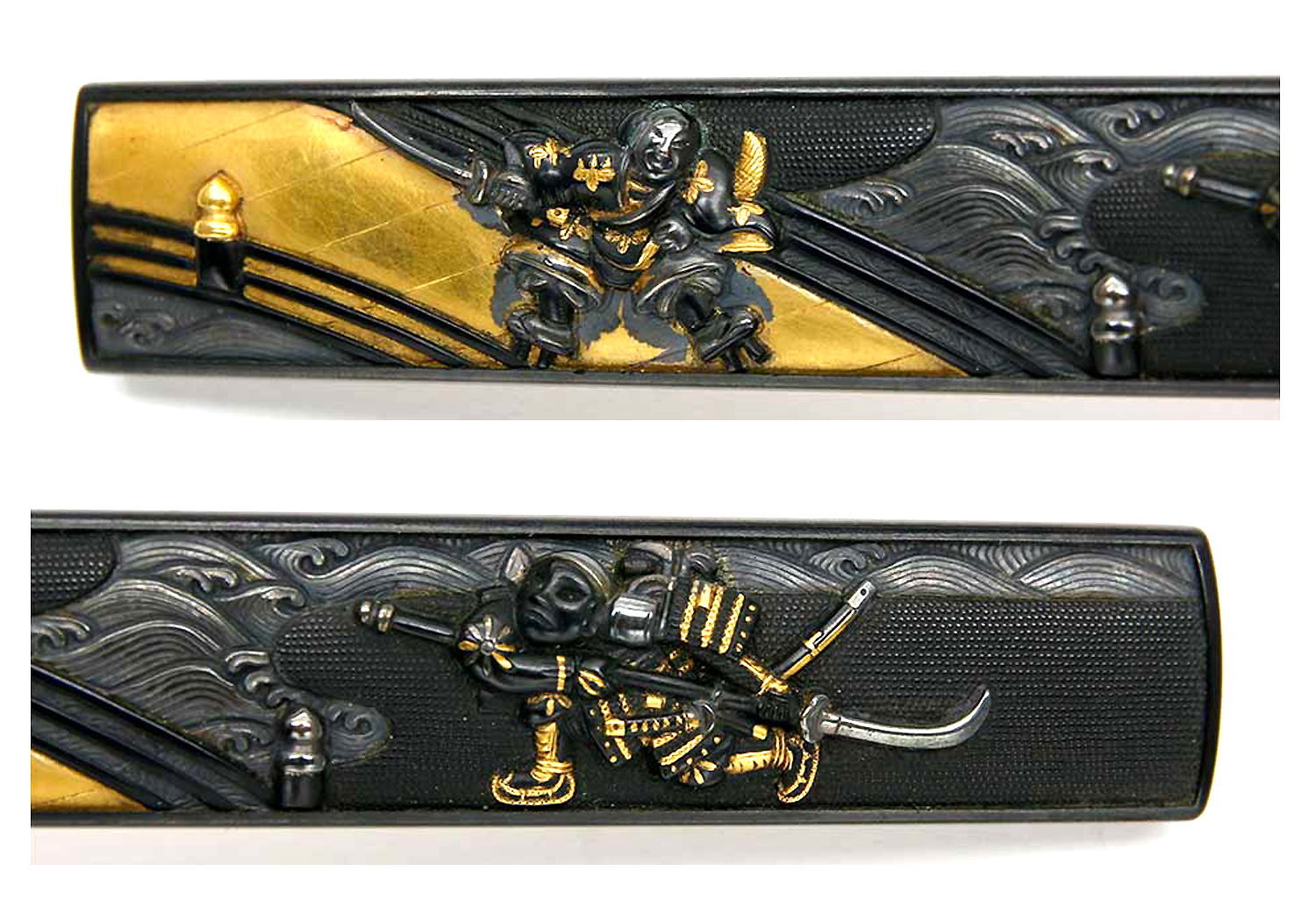
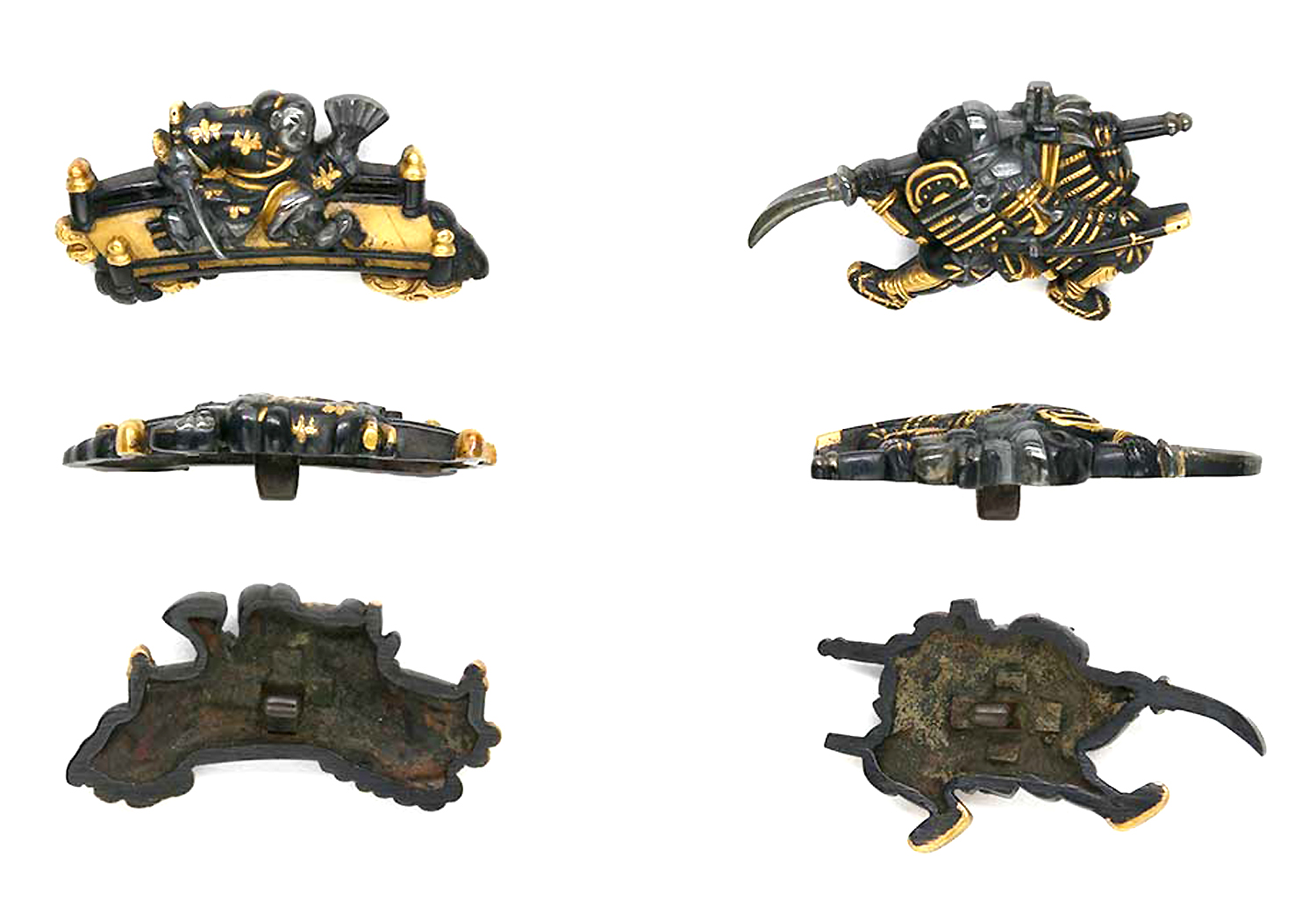
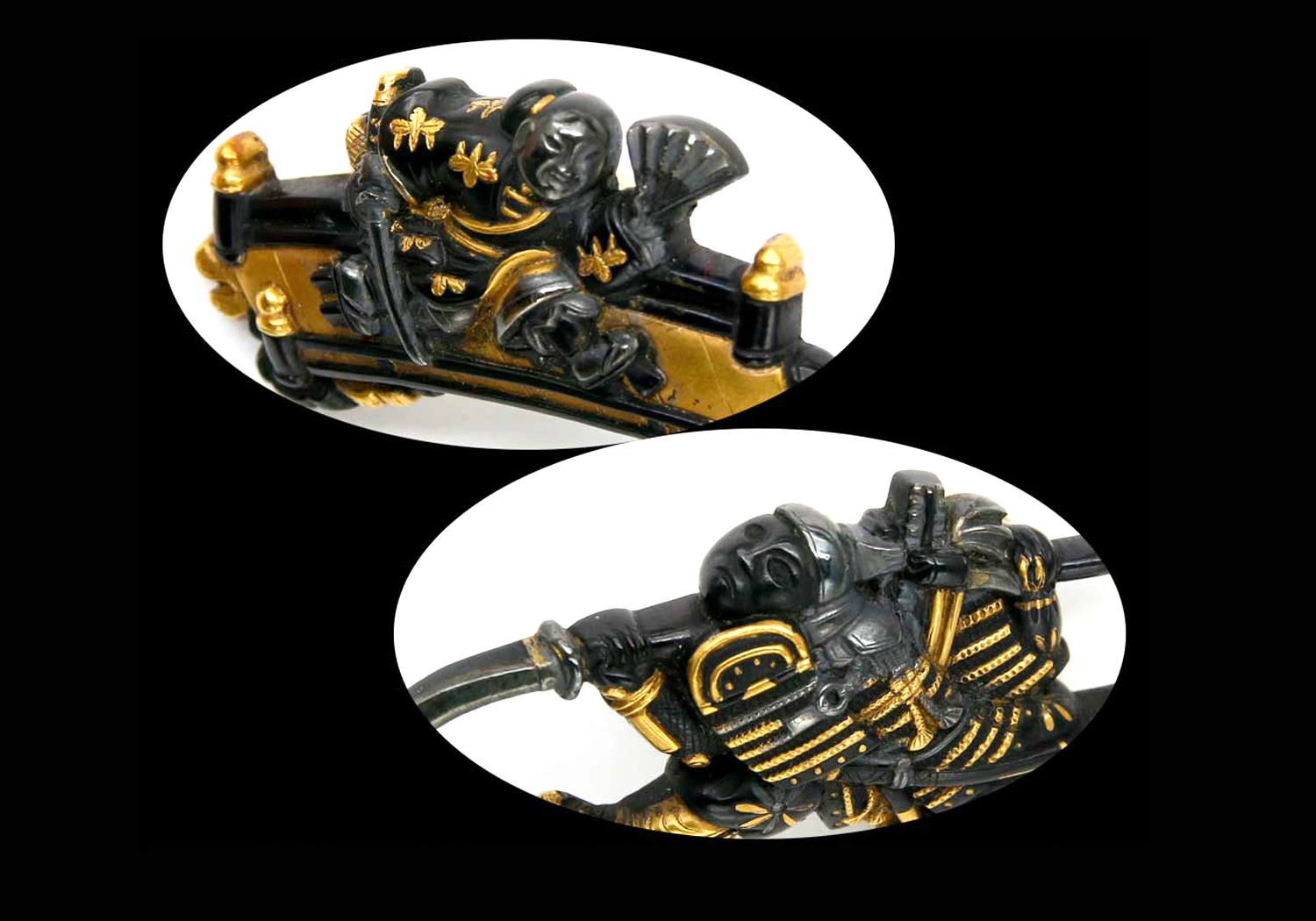
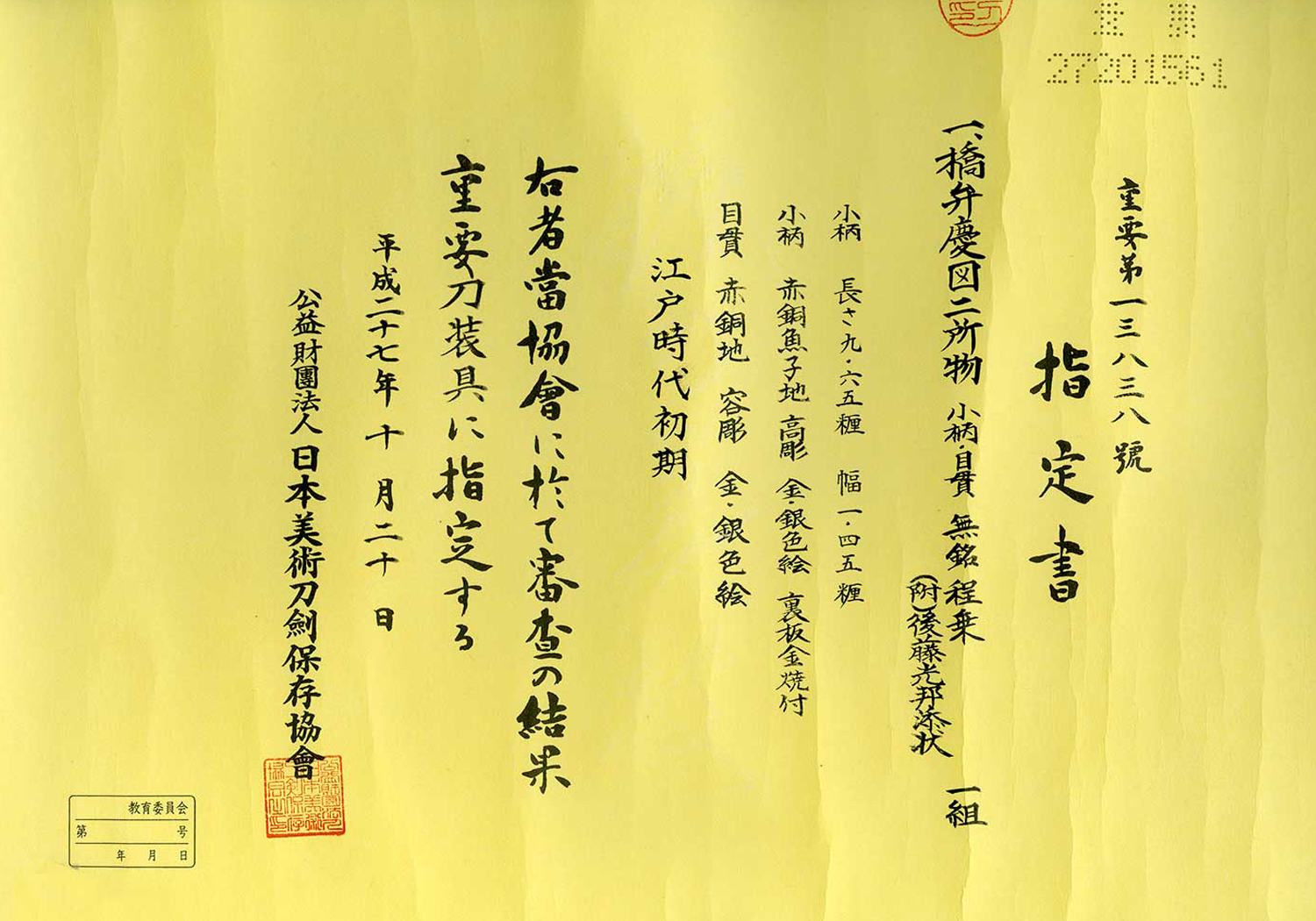
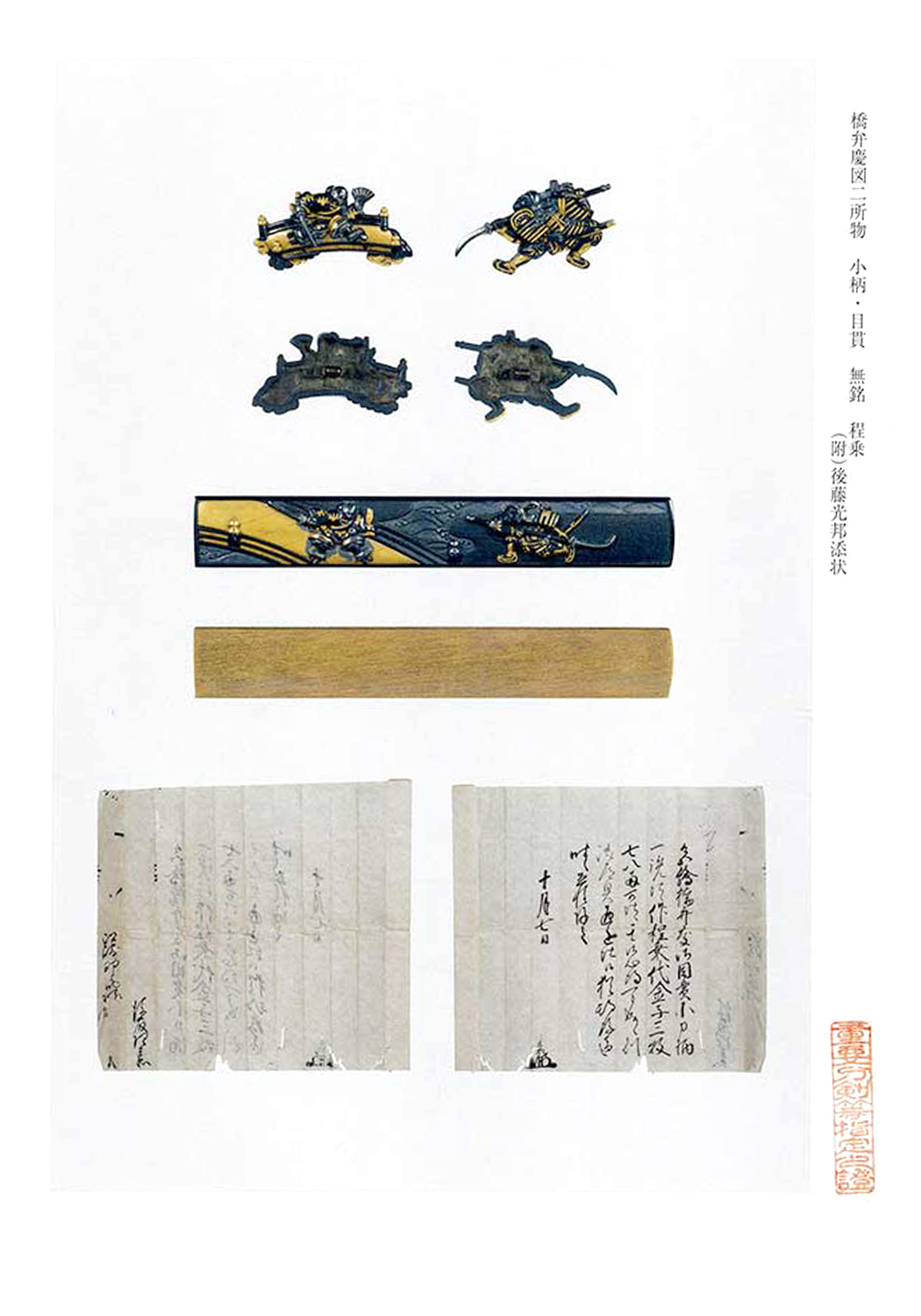
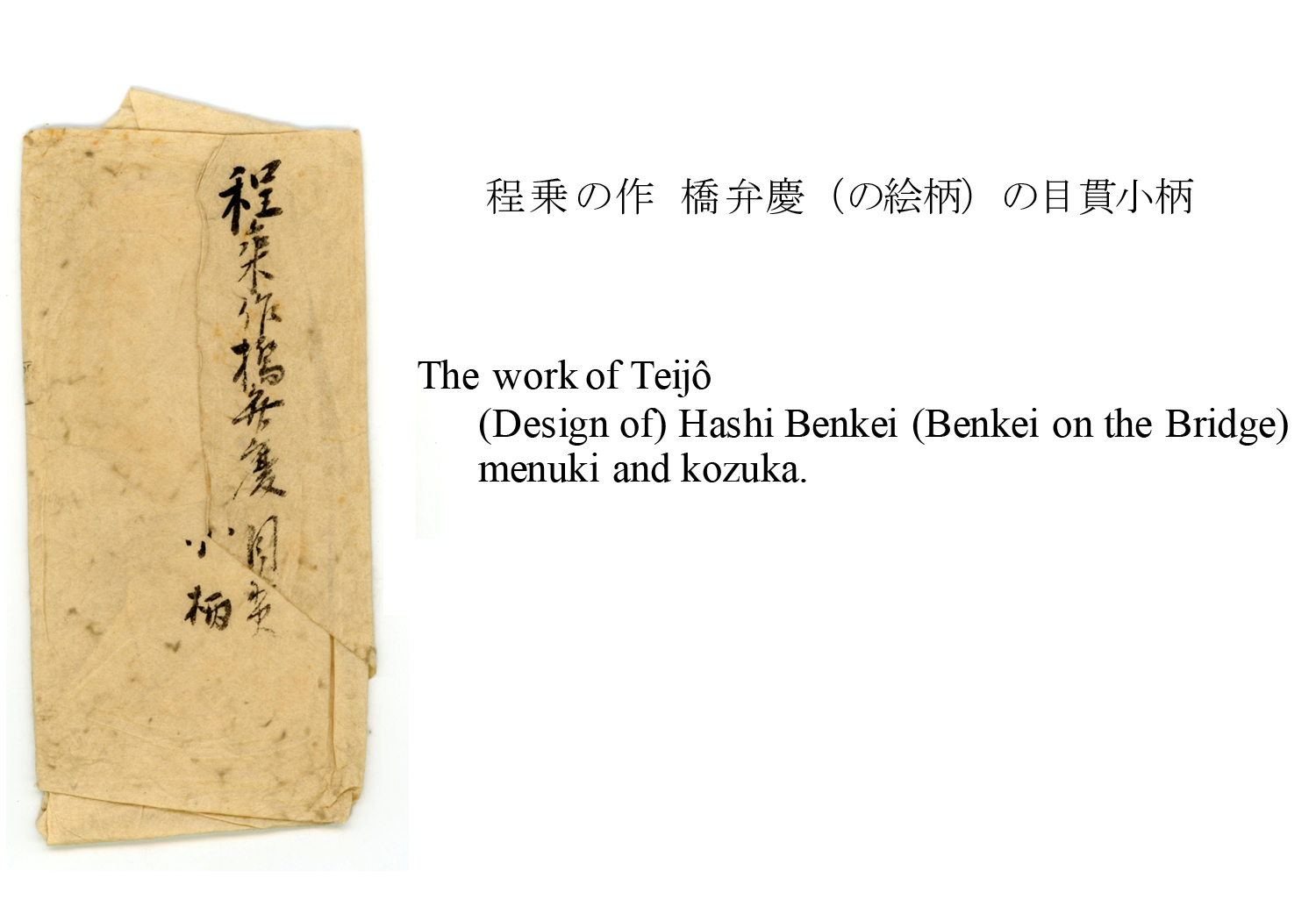
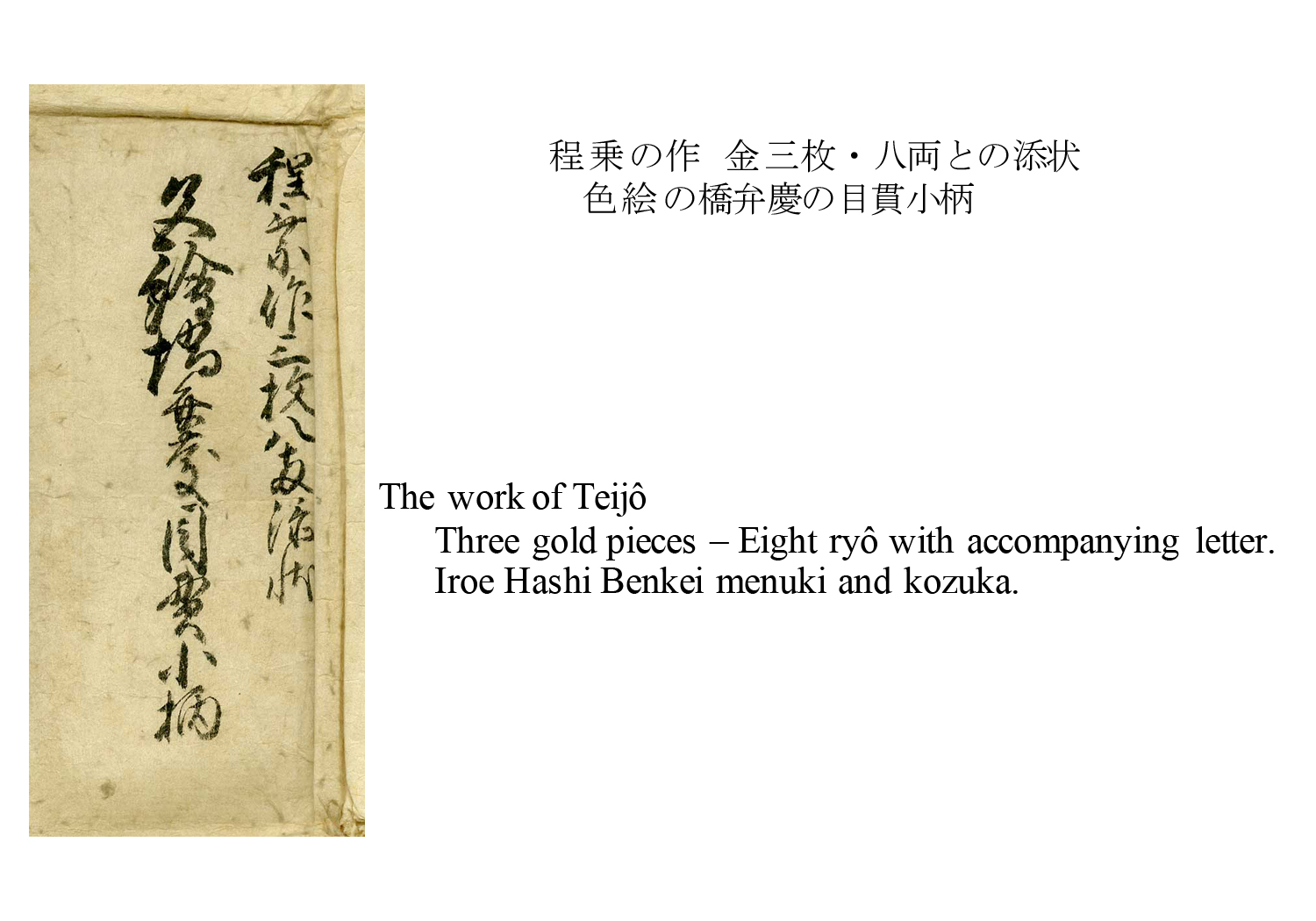
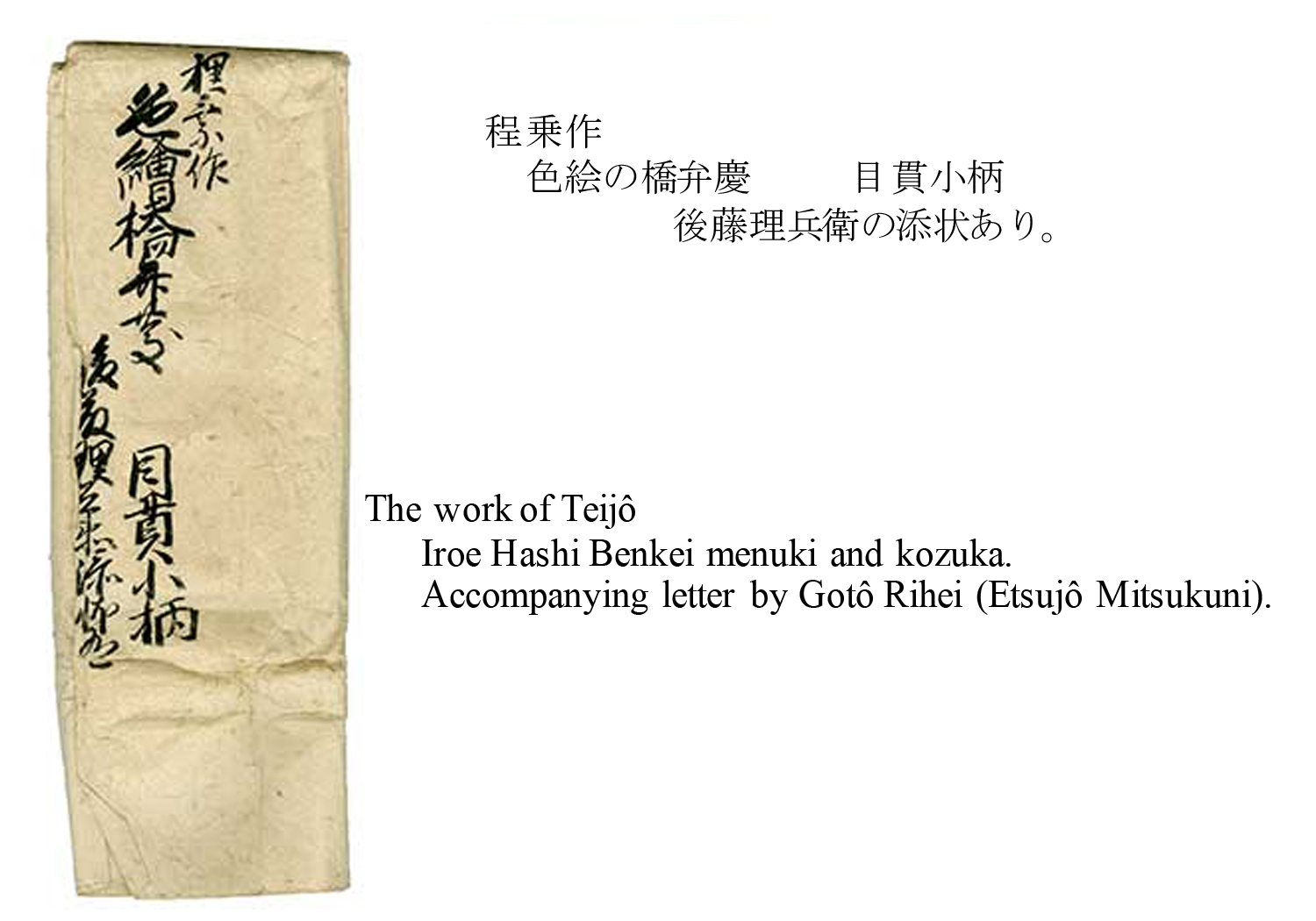
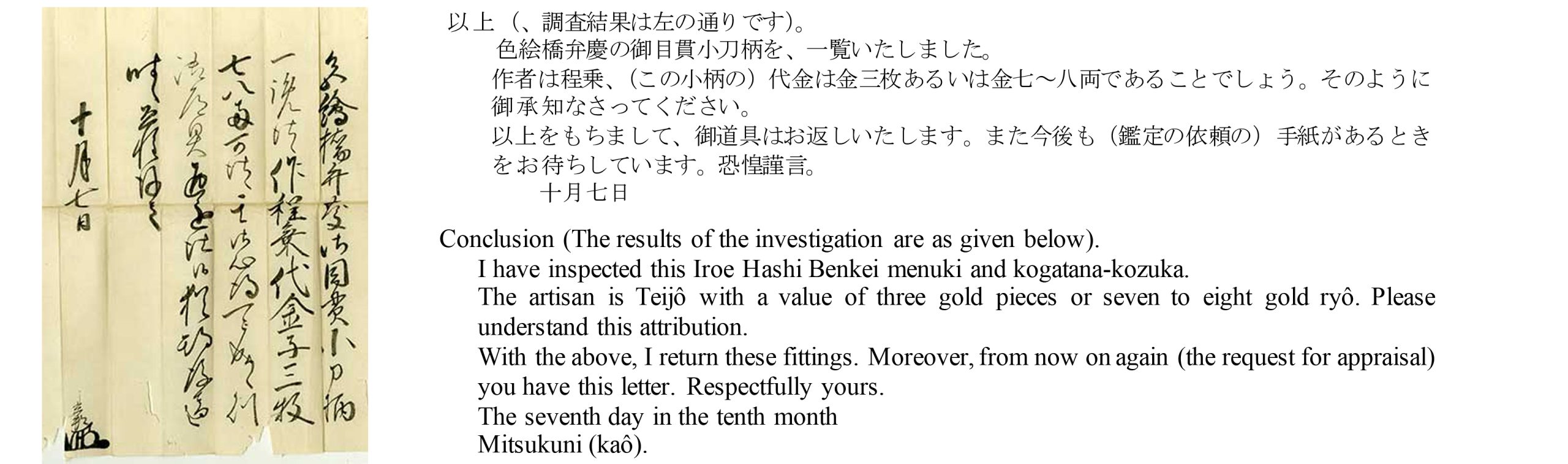
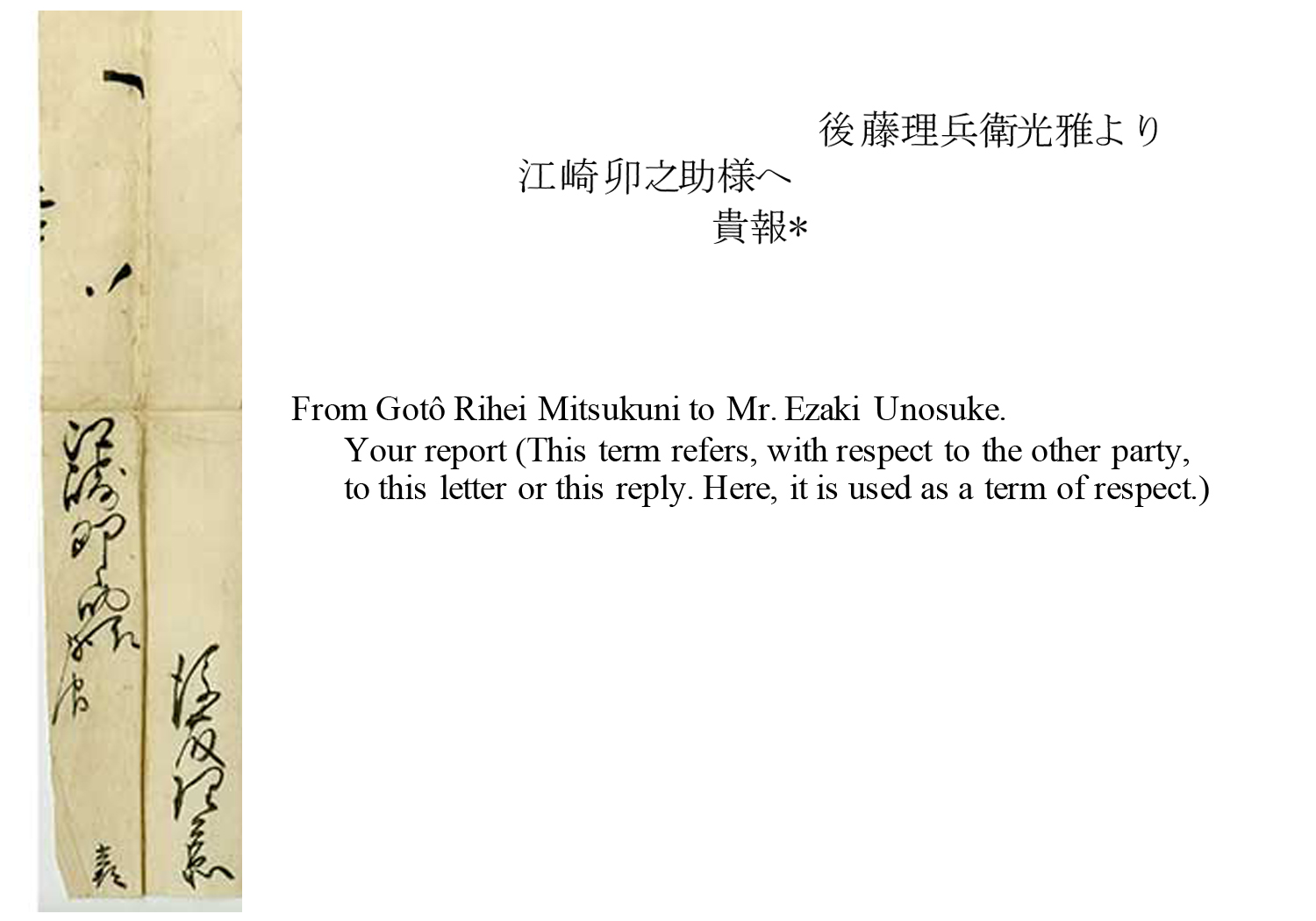
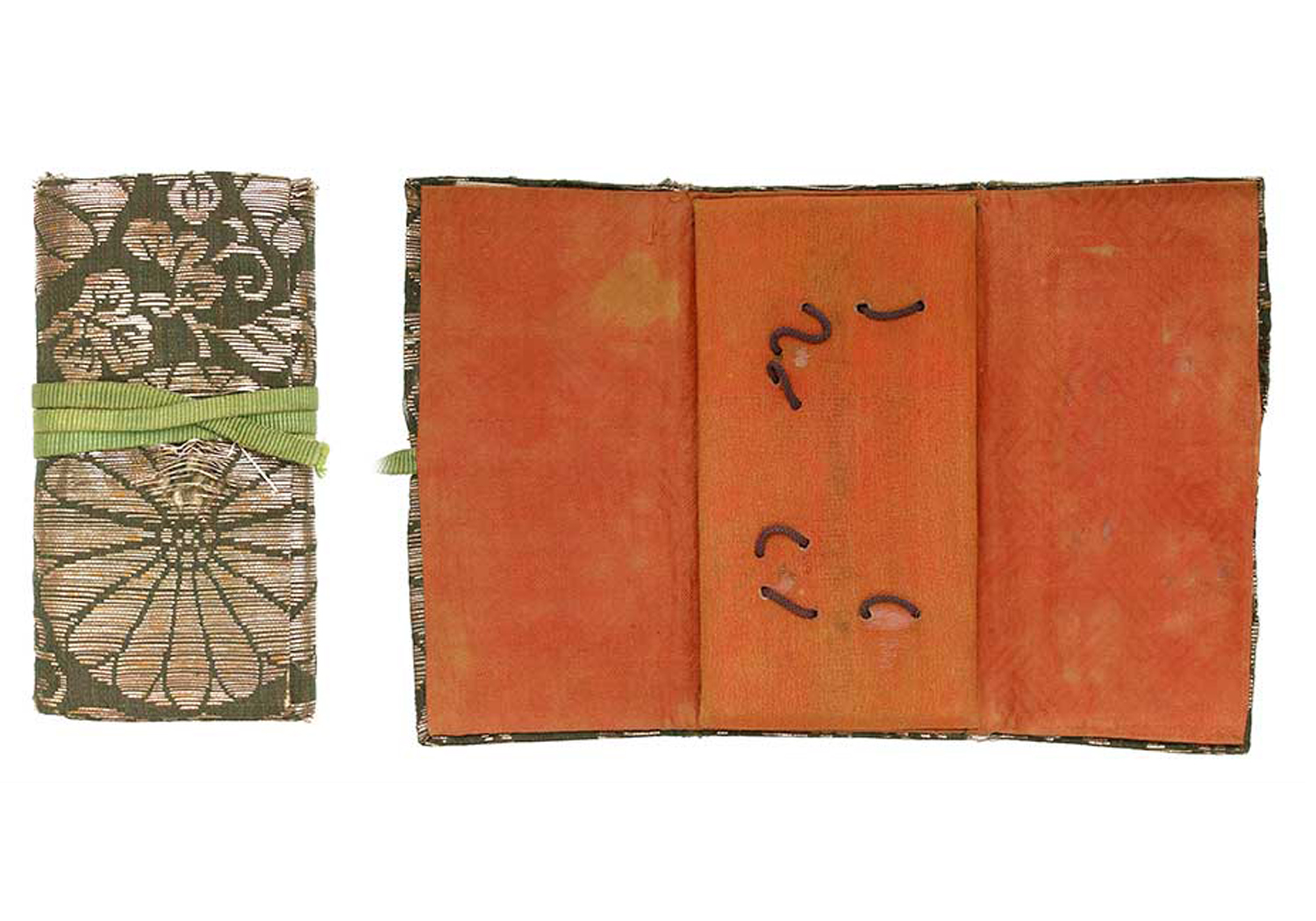
Gotô Teijô (1603-1673), was the second son of Kenjô, the seventh Shirobei mainline master. His real name was Genichirô, which was changed to Mitsumasa after his twenty-second birthday. Mitsumasa ‘s uncle was Sokujô Mitsushige (1600-1631), the eighth Gotô Shirobei master. Sokujô died in 1631 at the early age of 32. His son, Renjô, who was four years old at the time, was too young to take over as head of the family lineage. Therefore, Teijô became the guardian of the family and inherited the title as head of the Gotô Shirobei line in Kan-ei 13th (1636), becoming the ninth mainline master. In the third year of Shoho (1646), when he was forty-four, Mitsumasa changed his name to Teijô. For some time, Gotô Teijô was in the service of Tokugawa Ietsuna, the fourth Tokugawa Shogun, receiving an annual stipend of forty koku of rice. He also worked for the Maeda family as second master of the Kaga Gotô school. When Renjô came of age around Shoo 1st (1652), Teijô retired as head of the family and became a full-time retainer of Maeda Toshitsune (1593-1658). Along with his cousin Enjo, Teijo Mitsumasa continued to work for the Maeda clan in Kaga, and the Edo Bakufu, until his death in the first year of Enpo (1673). The works of Teijô, Kenjô and Kakujô mark the beginning of the Kaga Gotô school. These makers and their followers were all quite highly skilled. The Kinko Meikan ranks Teijô as Meiko which is the next to top rank for a kinko artisan. Gotô Teijô signed some of his items but mostly left his work unsigned. This was standard practice at the time as the works were going to daimyo, nobility and the Shogunate. When he signed he signed sometimes with his civilian name Gotô Mitsumasa, sometimes he signed just in two characters as Teijô with his kao. Sometimes he signed and filled his name in gold. From the signed items we can see a diverse work style and subject matter that branched out from the standard shishi and dragon types from previous generations. Some of these are whimsical. However when he made dragons, he made powerful and beautifully shaped items. Many of Teijô’s works have passed Jûyô, and one tsuba passed Tokujû (his kogai is part of a mixed set on a daisho which has also pass Tokuju). There are some other mixed sets of Gôtô work at Jûyô that contain his work as well. Furthermore, there is an outstanding koshirae for a ken which is the work of Gotô Teijô and has the rank of Jûyô Bunkazai, and Important Cultural Property. The futatokoromono presented here are a fine example of the skill of Gotô Teijô. The kozuka and menuki tell the story of the duel on the Gojo Bridge in Kyôto between Musashibo Benkei and Ushiwakamaru who later became known as Minamoto Yoshitsune. Benkei was a powerful Buddhist priest who was known for his fighting prowess using the long staffed Naginata. None could defeat him. He was said to have wandered around Kyoto every night on a personal quest to take 1000 swords from samurai warriors, who he believed were arrogant and unworthy to possess them. After collecting 999 swords through duels and looking for his final prize, he met a young man playing a flute at Gojotenjin Shrine in Kyôto. The much shorter man supposedly carried a gilded sword around his waist. Instead of dueling at the shrine itself, the two walked to Gojo Bridge in the city where the bigger Benkei ultimately lost to the smaller warrior, who happened to be Minamoto no Yoshitsune, a son of Minamoto no Yoshitomo. Not long after the duel, Benkei, frustrated and looking for revenge, waited for Yoshitsune at the Buddhist temple of Kiyomizu, where they fought and he lost yet again. After the second defeat, he became Yoshitsune’s retainer and fought with him in the Genpei War against the Taira clan from 1185 until his death in 1189. This set of fittings passed jûyô kodôgu in the 61st Jûyô shinsa held in 2015. The translation of the Jûyô certification is as follows: Jūyō-kodōgu at the 61st jūyō shinsa held on October 20, 2015 Hashi Benkei no zu futatokoromono (橋弁慶図二所物) – Futatokoro depicting Minamoto no Yoshitsune (源義経) fighting Benkei (弁慶) on Gojô bridge Kozuka, menuki mumei: Teijō (程乗) With soejō by Gotō Mitsukuni (後光) Measurements: Kozuka length 9.65 cm, width 1.45 cm Description: Hinshitsu-keijō: kozuka of shakudō with nanako ground and takabori relief that is highlighted with gold and silver iroe, reverse gilded; menuki of shakudō, in katachibori, and highlighted with gold and silver iroe. Era: Early Edo period Explanation; The 9th Gotō generation Teijō (程乗) was the second son of the 7th generation Kenjō (顕乗) and was born in Keichō eight (慶⻑, 1603). He bore the same youth name as his father, Gen’ichirō (源一郎), and his legal first name was Mitsutada (光伊). When his father entered priesthood in Kan’ei one (寛永, 1624) under the name Kenjō, Teijō, then Mitsutada, succeeded as 2nd generation of the Ribei (理兵衛) lineage under the name Ribei Mitsumasa (理兵衛光昌). He was 22 years old at that time. When the 8th Gotō main line generation Mitsushige (光重), also named Sokujō (即乗) died at the young age of 32, his successor Kameichi (⻲市), later Renjō (廉乗), was only four years old. Thus, Kenjō succeeded as 8th generation of the main line and passed on this function to his son Teijō, who later followed as 9th generation. When Kameichi/Renjō turned 18, he became the 10th head of the main line, although Teijō acted as his guardian until Kameichi/Renjō was 25 years old. Together with Kakujō’s (覚乗) son Enjō (演乗), Teijō worked on a biannual basis for the wealthy Kaga domain and contributed so greatly to the flamboyant local culture. This work depicts the gorgeously carved scene of Ushiwakamaru (牛若丸), i.e., the young Minamoto no Yoshitsune, fighting the warrior monk Benkei on the large Gojō (五条) Bridge in Kyōto, and the actions of each of the figures is interpreted in a truly lively manner. This futatokoromono set comes with an accompanying documentation (soejō) written by Teijō’sson and heir Etsujō Mitsukuni (悦乗光邦), in which he certifies that this is an authentic work of his father. Such a soejō is regarded as reliable as if the work was signed by the artist. Incidentally, appraising soejō by Etsujō Mitsukuni are extremely rare and valuable. This futatokoromono set comes with an accompanying documentation (soejō) written by Teijō’s son and heir Etsujō Mitsukuni (悦乗光邦), in which he certifies that this is an authentic work of his father. Such a soejō is regarded as reliable as if the work was signed by the artist. Incidentally, appraising soejō by Etsujō Mitsukuni are extremely rare and valuable. CERTIFICATION PAPERS This is the actual original Soejō (appraisal) written by Gotô Etsujō Mitsukuni in the 1600’s attesting to the fact that his father, Gotô Teijô made these fittings. EDO PERIOD PACKAGING This is the packaging used by Gotô Teijô when he presented these items to his client.
NihontoWatch
後藤程乗
江戸(1603-1673)
無銘
重要
(翻訳なし)
家彫 · 山城 · 1603-1673頃
現在10点販売中
後藤光昌(ごとうみつまさ)は、後藤家九代目を務めた刀装金工である。七代顕乗(けんじょう)の次男として慶長八年(1603年)に京都で生まれ、幼名を源一郎、諱を光尹と称した。寛永元年(1624年)、父正継が剃髪して顕乗と号した際に、理兵衛家を相続し、名を理兵衛光昌と改めた。その後、宗家八代目光重(みつしげ、即乗)が若くして没したため、後継者の亀市(かめいち、後の廉乗)が幼少であったことから、一時的に宗家を預かり、後に九代目を相続した。廉乗が成長すると宗家を譲り、その後見役を務めた。また、加賀前田家に覚乗の子である演乗と隔年交代で勤務し、加賀百万石文化の発展に大きく貢献した。
光昌の作風は、後藤家の伝統を受け継ぎつつも、独自の意匠と技法を加味した格調高いものである。赤銅魚子地(しゃくどうななこじ)の高彫(たかぼり)、色絵(いろえ)を多用し、金、銀、赤銅などの素材を巧みに用いて、写実的かつ装飾的な表現を追求した。題材は、源平合戦の武将の勇戦を描いた合戦図、牽牛織女(けんぎゅうしょくじょ)のような故事、鶴退治(つるたいじ)や羅生門(らしょうもん)のような物語、獅子虎豹(ししこひょう)や龍のような吉祥文様など、多岐にわたる。特に獅子や龍の意匠は得意とし、その姿態は躍動感に溢れ、筋肉の動きや毛並みまで細密に表現されている。また、金象嵌(きんぞうがん)や金無垢地(きんむくじ)を用いることで、作品に豪華さを加えている点も特徴である。作風は「格調高く堂々たる出来栄え」と評され、「悠揚迫らず格調の高い」[[c:1]]銘振りが王者の風格を感じさせると評される。
光昌は、後藤家における鐔(つば)製作の初期の作者としても知られ、自身銘のある鐔は極めて珍しいとされる。その作品は、後藤家の伝統的な技法を踏襲しながらも、名工としての技量の高さを示し、狭い鐔の面に堂々とした景色を表現している。また、光昌銘の三所物(みところもの)は貴重であり、その出来栄えは勇壮で躍動感に溢れ、壮年期の撥剌とした空気を発散していると評される。後藤家では龍と獅子の作品が多いが、二疋を組み合わせた龍の作品はあまり見受けられない中、光昌の作には数少ない二疋龍図の目貫も存在する。総じて、光昌は後藤家の中でも特に優れた技量を持つ金工家として高く評価されており、その作品は「品位が高く、程乗の傑作といい得る」[[c:2]]と評されている。
後藤程乗の位置づけを、日本刀全体および伝法・時代・時期ごとに示します。各区分(随一・屈指・有数・著名)は、NBTHK および文化庁による指定に加え、三作や名物帳などの歴史的栄誉を加味したものです。
各項目を選ぶと評価方法が表示されます。
家彫 · 山城
時期区分: 後藤宗家· 1573–1900
現在309点販売中
特別保存刀剣の中から、特に出来が優れ、国認定の重要美術品に準ずると判断された名品です。年に一度の重要刀剣審査で選ばれます。
極めて選別的で、日本に登録された約250万口の刀剣のうち、重要刀剣に達したものは12,348口(約202口に1口)にすぎません。
日本美術刀剣保存協会(NBTHK)は、1948年に設立され、文化庁の監督を受ける公益財団法人で、東京・刀剣博物館に本部を置きます。専門の審査員が出品作を直接審査し、美術的・歴史的価値に応じた鑑定書を発行します。NBTHKの鑑定書は、日本刀および刀装具の真正性を示す最も広く認知された基準です。
NBTHK公式サイトThree-day inspection period and seven-day return period; buyer notifies by email within three days of receipt, no reason needed; full refund once item returned undamaged and unaltered.
$29,500