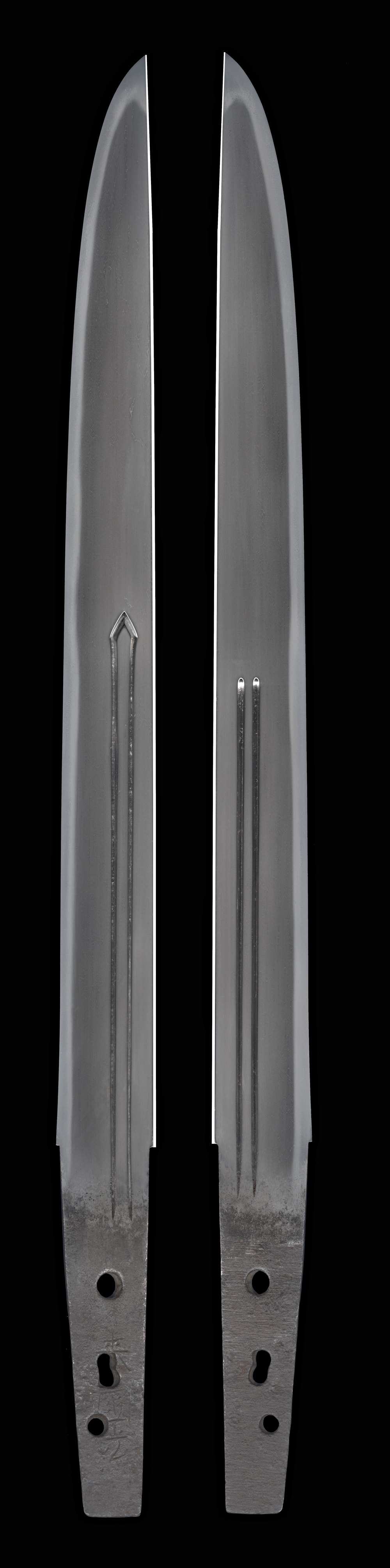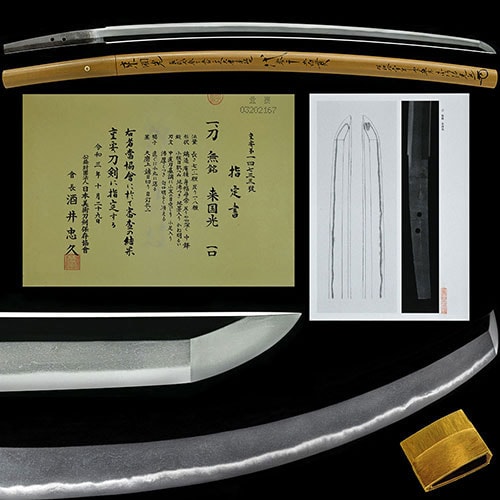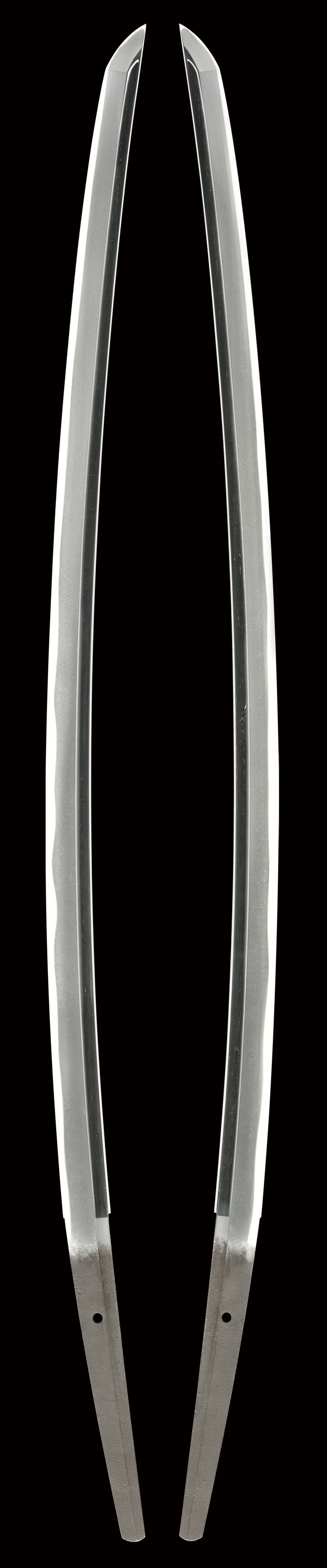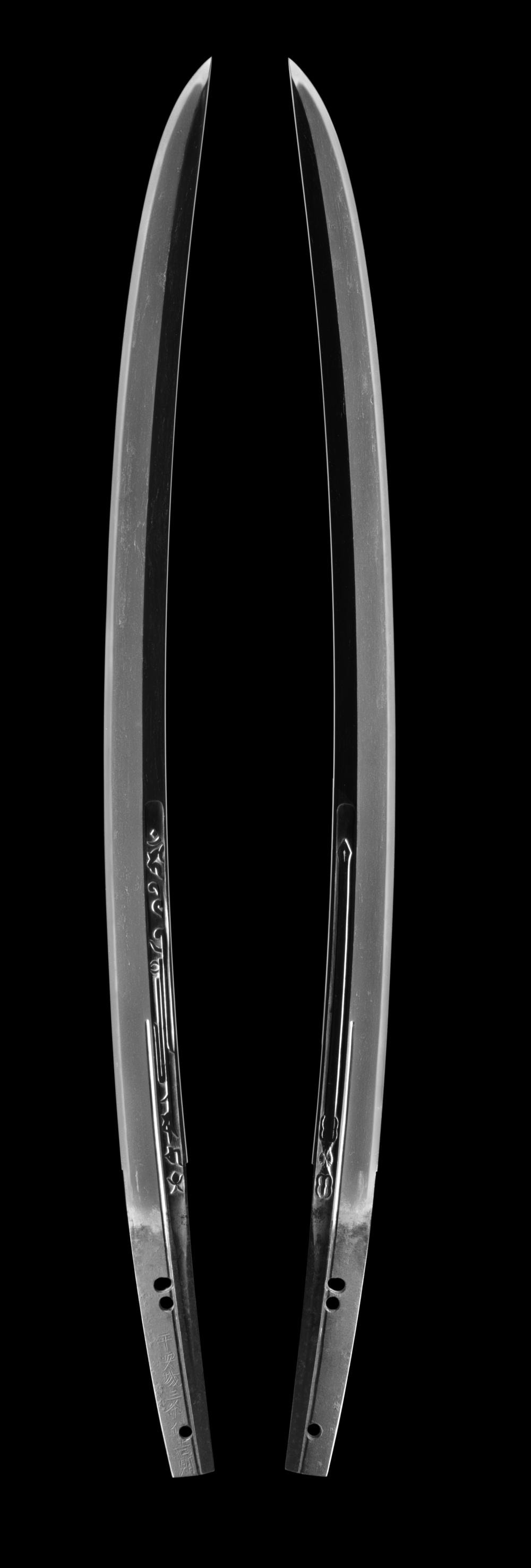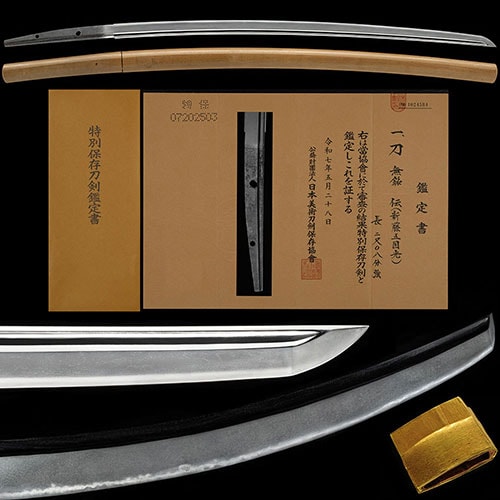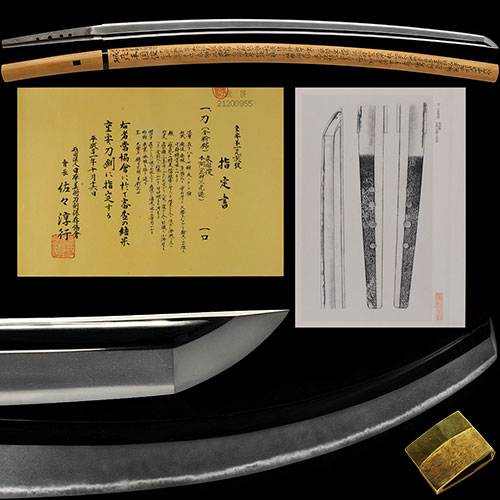

Juyo-Token, 55th Session — Designated October 16, 2009
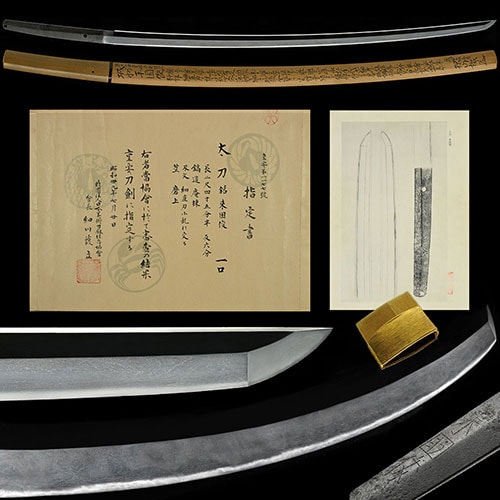
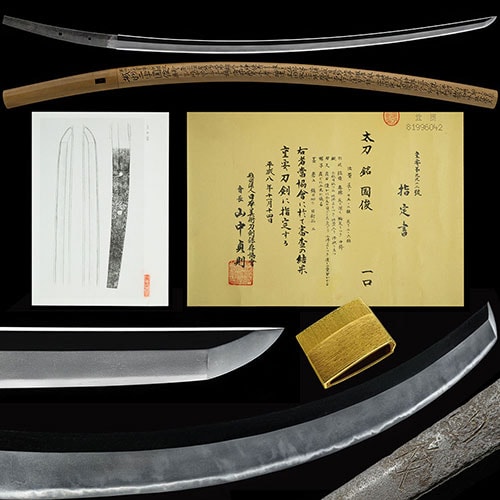
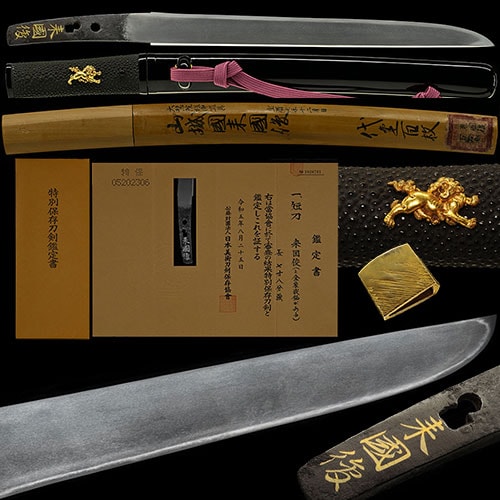
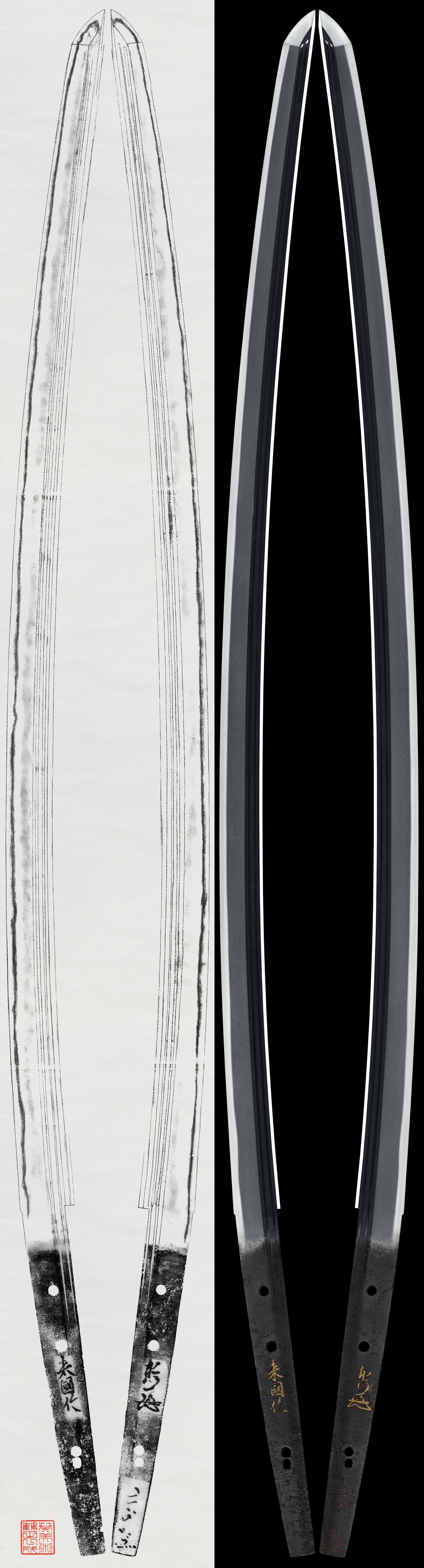
Katana, kinzogan-mei: Rai Kunitoshi (来国俊)
Measurements Nagasa 83.7 cm, sori 2.2 cm, motohaba 3.2 cm, sakihaba 2.1 cm, kissaki-nagasa 3.5 cm, nakago-nagasa 21.5 cm, nakago-sori 0.1 cm
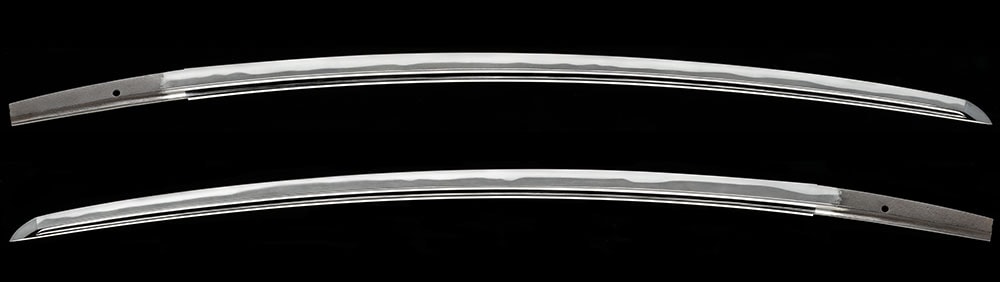
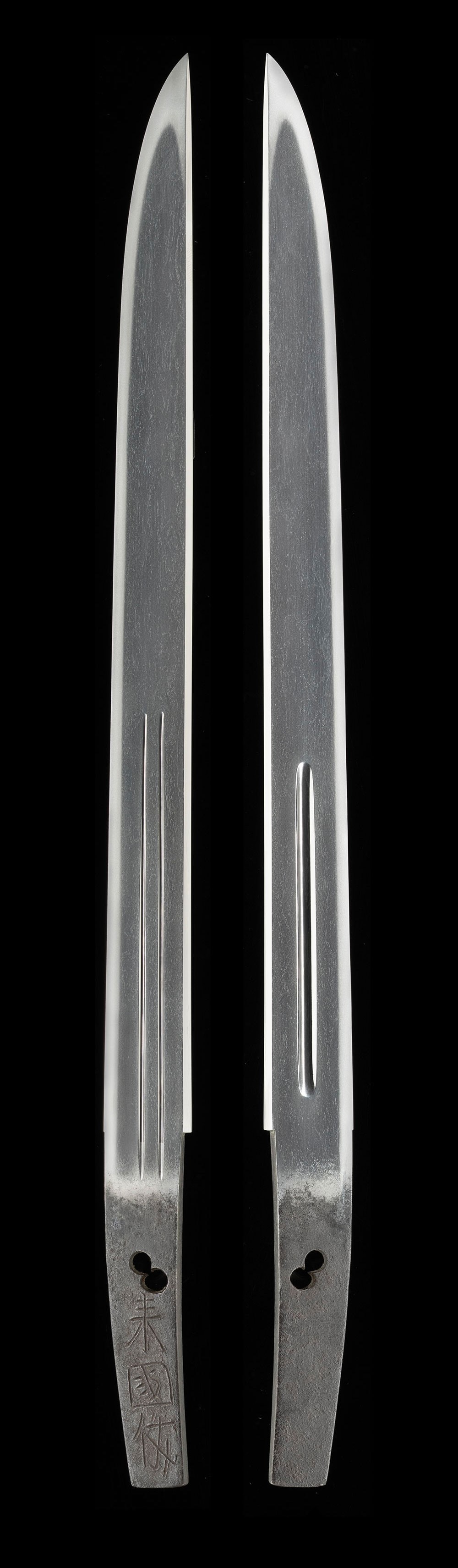
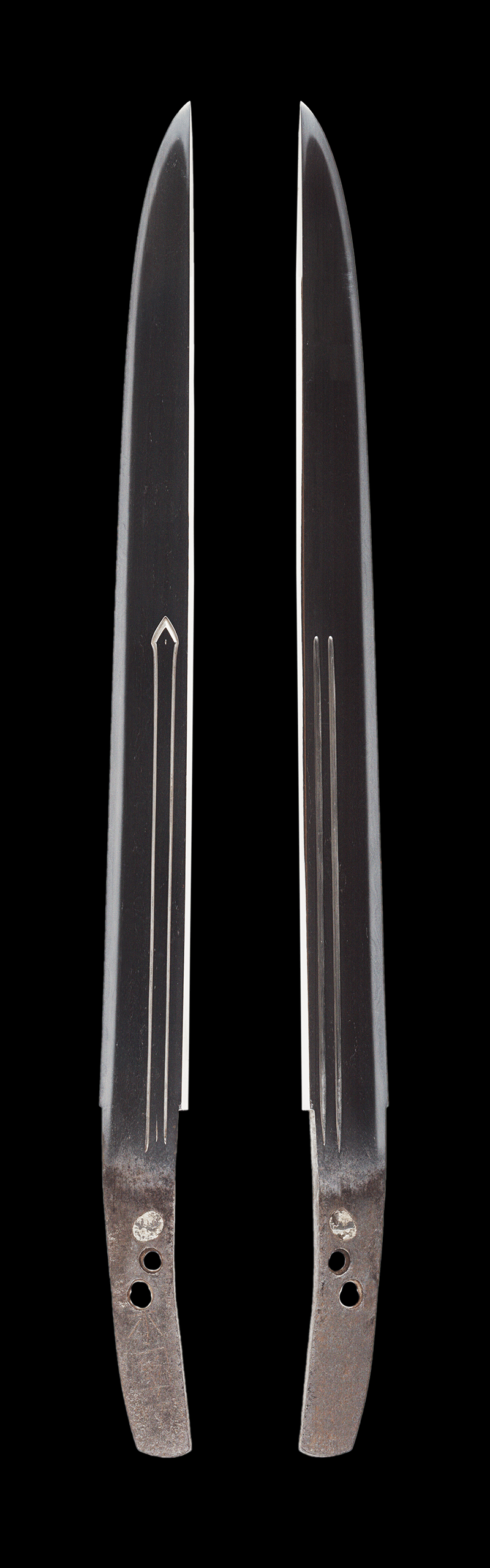
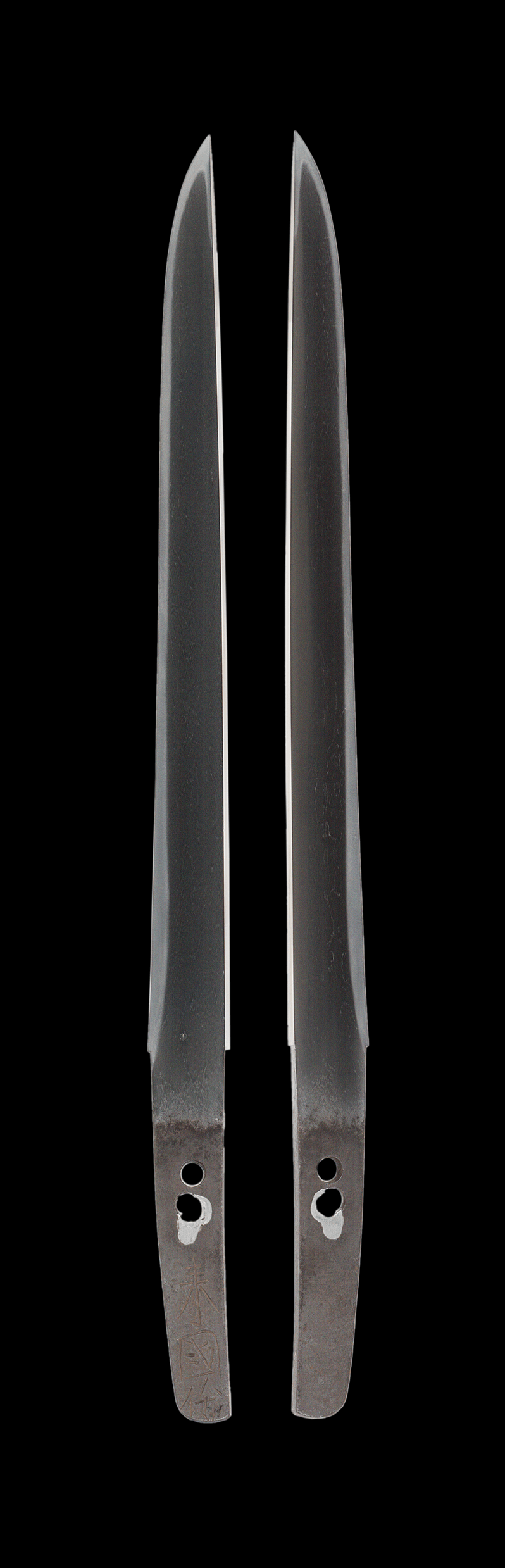
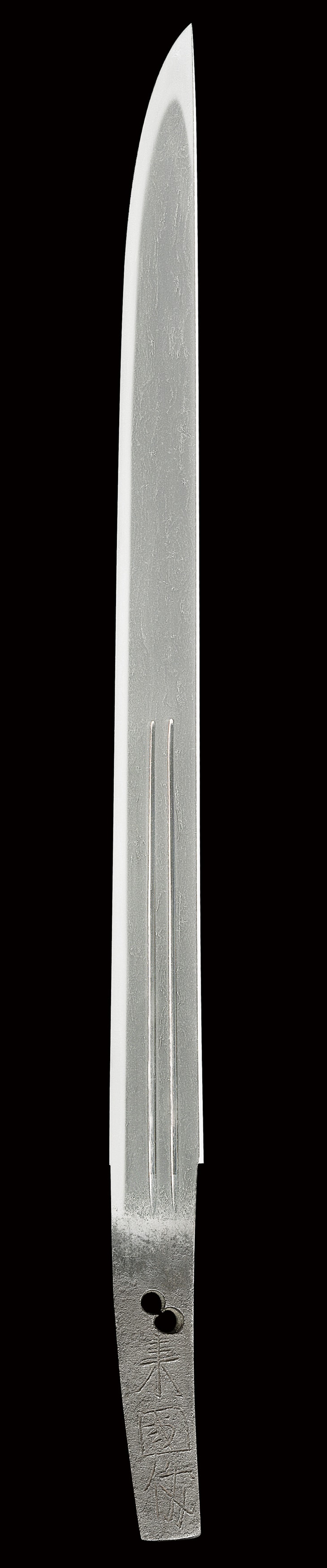
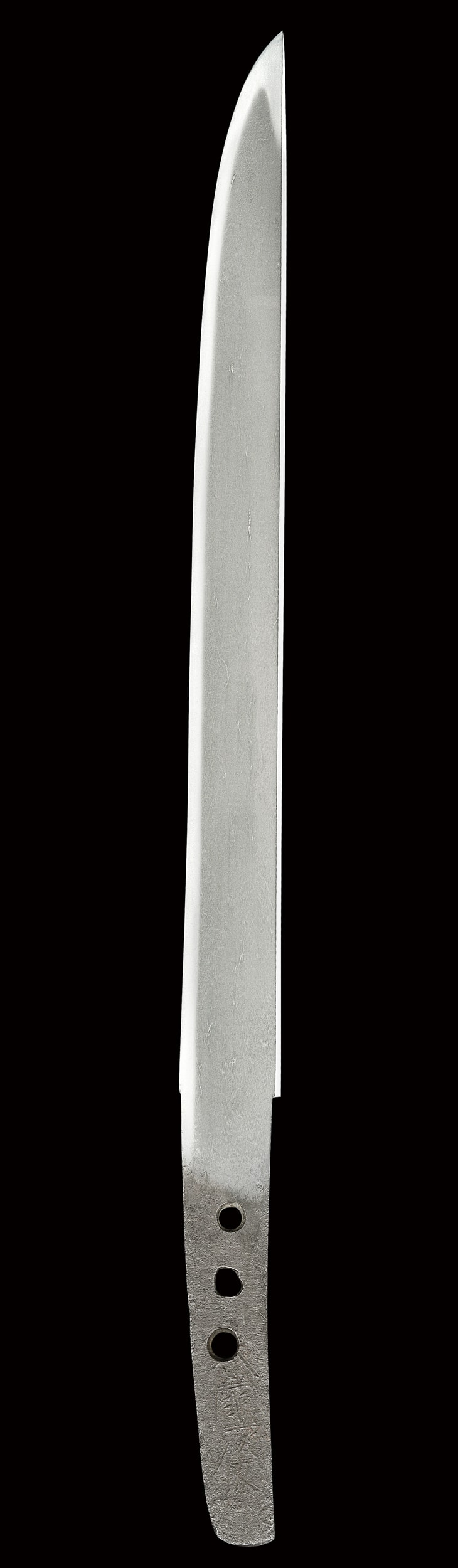
Description Keijo: Shinogi-zukuri, iori-mune; wide mihaba with thick kasane; although o-suriage, it retains somewhat deep koshizori; the chu-kissaki tightens in an ikubi-like manner, presenting a dignified and imposing overall form. Kitae: Tightly forged ko-itame-hada of refined texture; ji-nie enters well, and a light utsuri appears. Hamon: A suguha-based temper with ko-gunome and ko-notare intermingled; ko-ashi and yo are frequent; the nioi is deep, with thickly adhering ko-nie; kinsuji and sunagashi appear; the nioiguchi is bright and clear (saeru). Boshi: Tending to sugu, ending in yakizume; on the omote, a slight yubashiri-like nijuba is present. Horimono: Bo-hi are carved through (kaki-toshi) on both sides. Nakago: O-suriage; tip form indeterminate; four mekugi-ana; a confirming gold inlay (kiwame kinzogan) is present: on the omote, below the second mekugi-ana and extending through the lower half is “来国,” and on the ura, centered below the fourth mekugi-ana is “俊” with kao.
Artisan Rai Kunitoshi
Era Late Kamakura period
Explanation Regarding the relationship between the two-character “Kunitoshi” signature and the three-character “Rai Kunitoshi” signature, there are competing views—some holding them to be by the same smith, others by different individuals—and no definitive consensus has yet been reached. Nevertheless, a certain degree of divergence can be recognized between the respective styles, and it is possible to distinguish them on the basis of workmanship. Works bearing the two-character “Kunitoshi” signature are often of bold, grand manner, frequently with wide mihaba and ikubi-kissaki, and they tend to display flamboyant midare in which chōji stands out prominently. By contrast, those with the three-character “Rai Kunitoshi” signature are generally refined in execution, typically either slender with small kissaki, or of ordinary mihaba with chu-kissaki, and they characteristically show suguha, or suguha-based tempering with small-scale irregularity mixed in.
This katana bears a gold inlay attribution executed by Hon’ami Koson to Rai Kunitoshi. Though o-suriage, it has a somewhat broad mihaba with koshizori, and it tightens into an ikubi point, presenting an imposing and powerful form. The jihada is a refined assembly of tightly packed ko-itame with lively ji-nie activity, while the blade carries a suguha of deep nioi with thickly adhering ko-nie, and the nioiguchi is bright and clear. It displays the essential points for appreciation of Rai Kunitoshi and is of fine workmanship; accordingly, the traditional attribution is fully appropriate.




![Katana - Tokuho - 作 國俊 - 刀 [来国俊(大吉公)][日本美術刀剣保存協会]特別保存刀剣](/_next/image?url=https%3A%2F%2Fitbhfhyptogxcjbjfzwx.supabase.co%2Fstorage%2Fv1%2Fobject%2Fpublic%2Flisting-images%2Fworld-seiyudo%2FL31637%2F00.jpg&w=2560&q=90)
![Katana - Jūyō - 作 國俊 - 刀[無銘 来国俊][日本美術刀剣保存協会]重要刀剣](/_next/image?url=https%3A%2F%2Fitbhfhyptogxcjbjfzwx.supabase.co%2Fstorage%2Fv1%2Fobject%2Fpublic%2Flisting-images%2Fworld-seiyudo%2FL31708%2F00.jpg&w=2560&q=90)