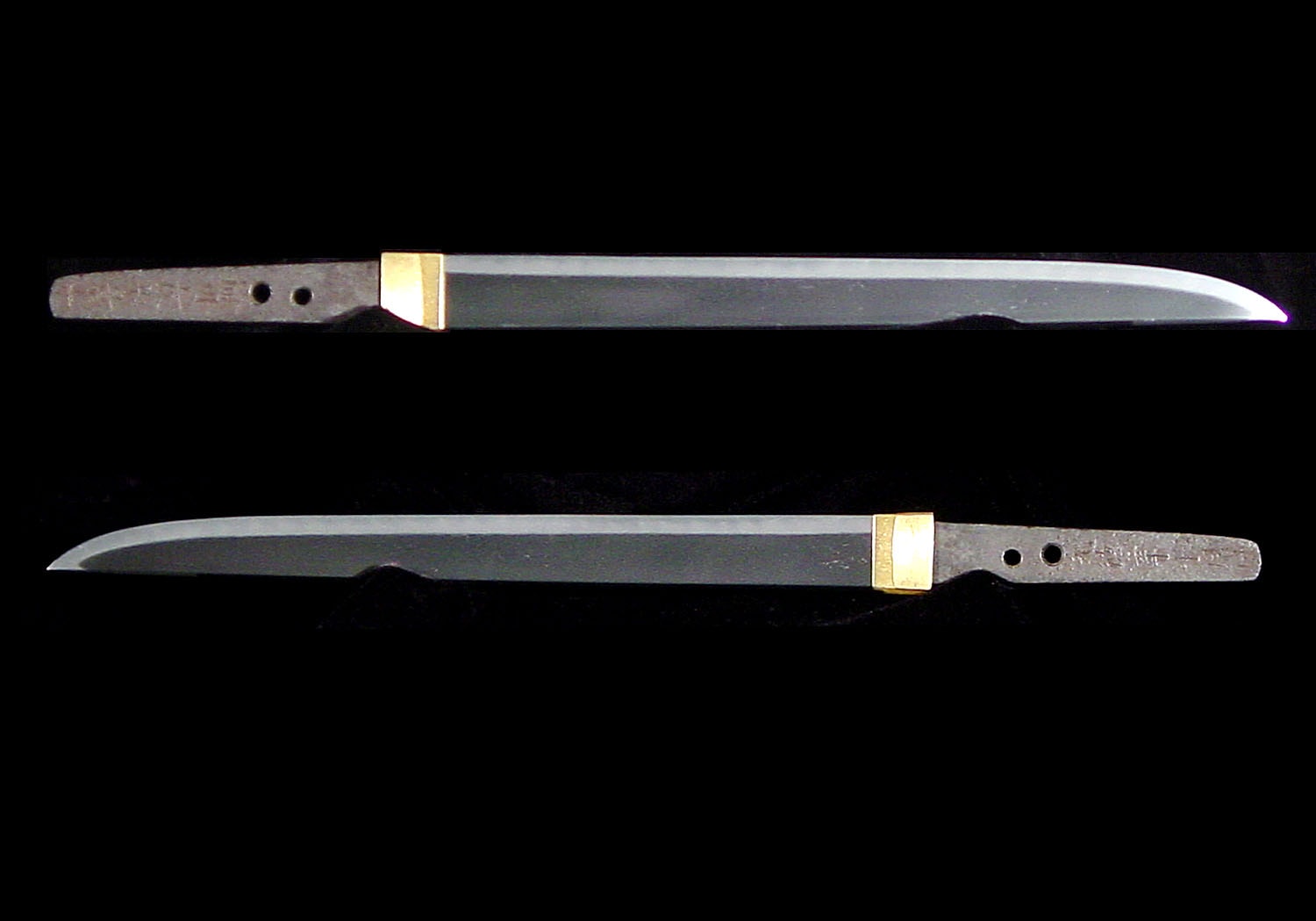
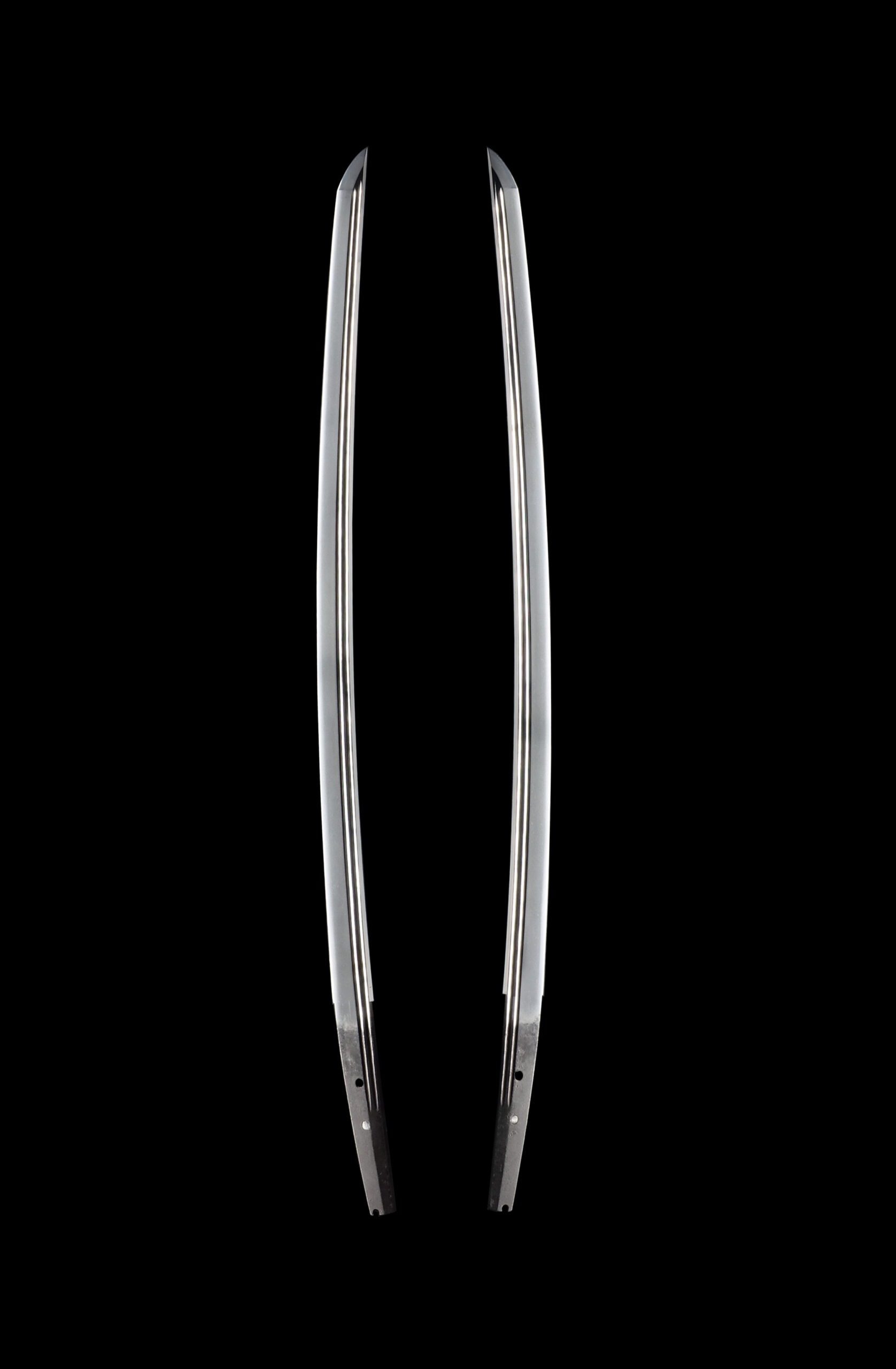
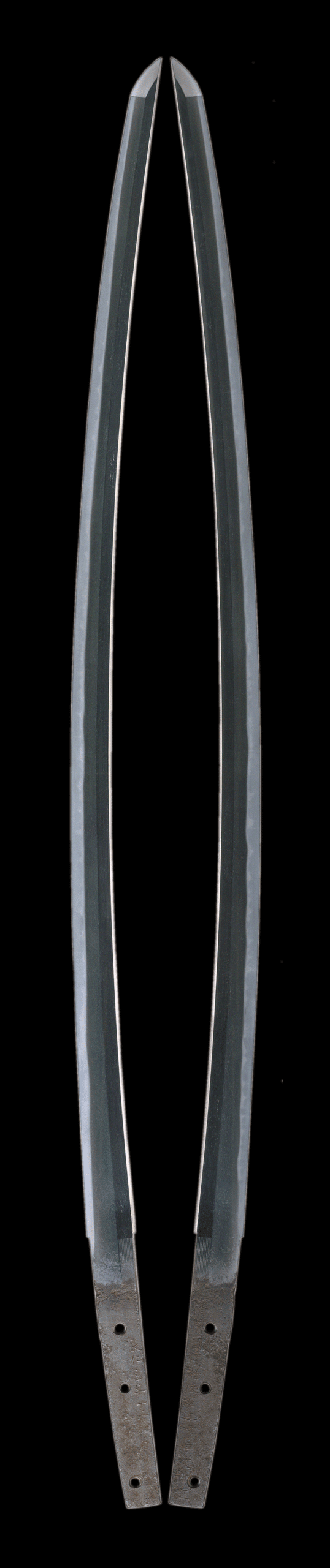
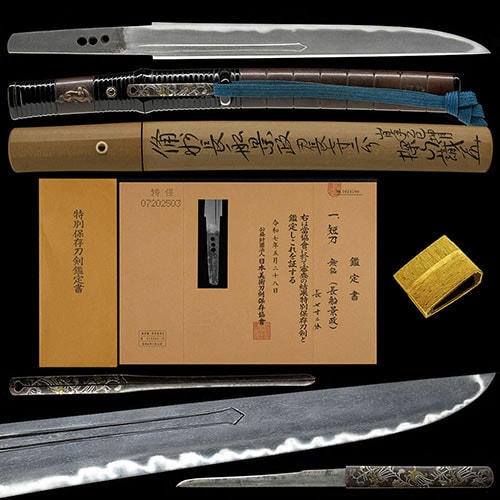
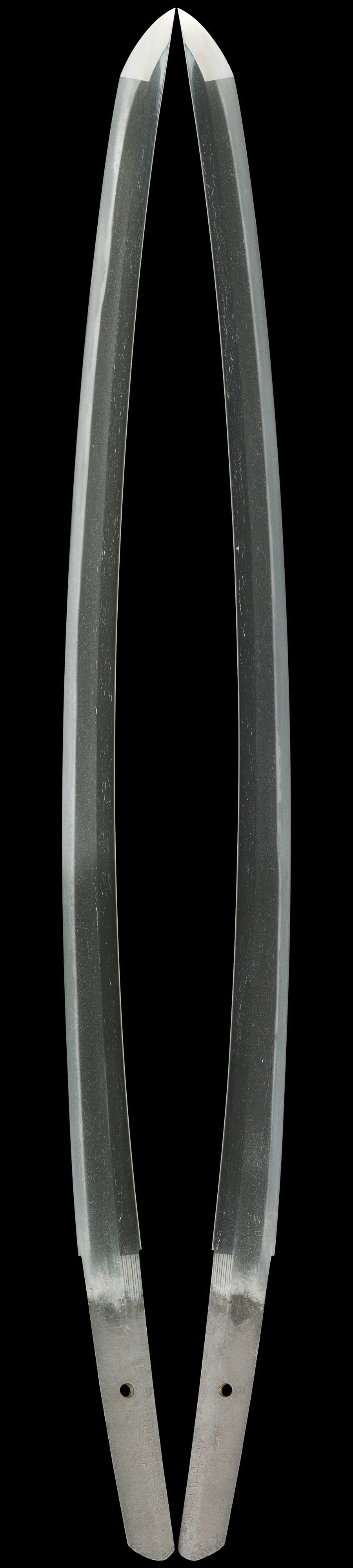
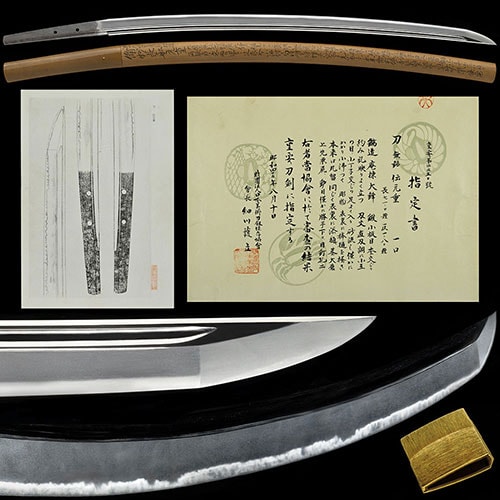
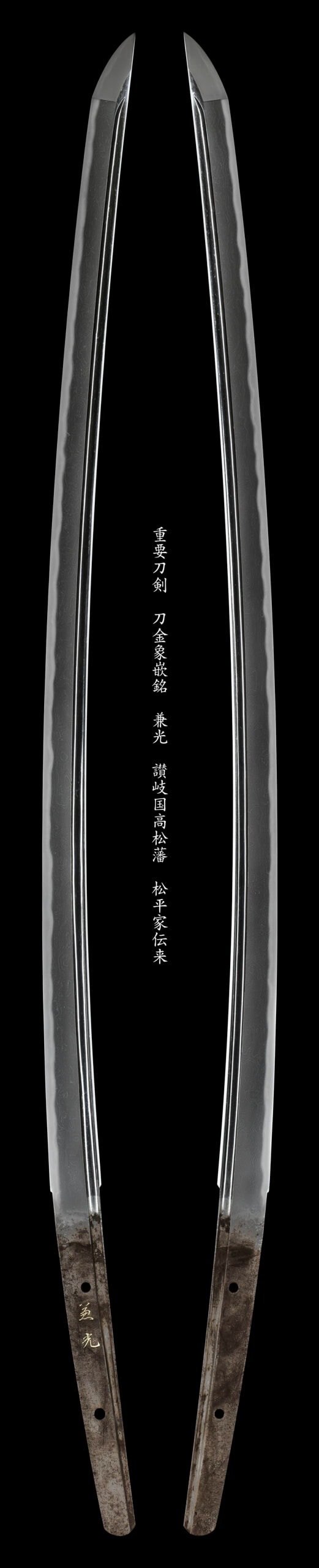
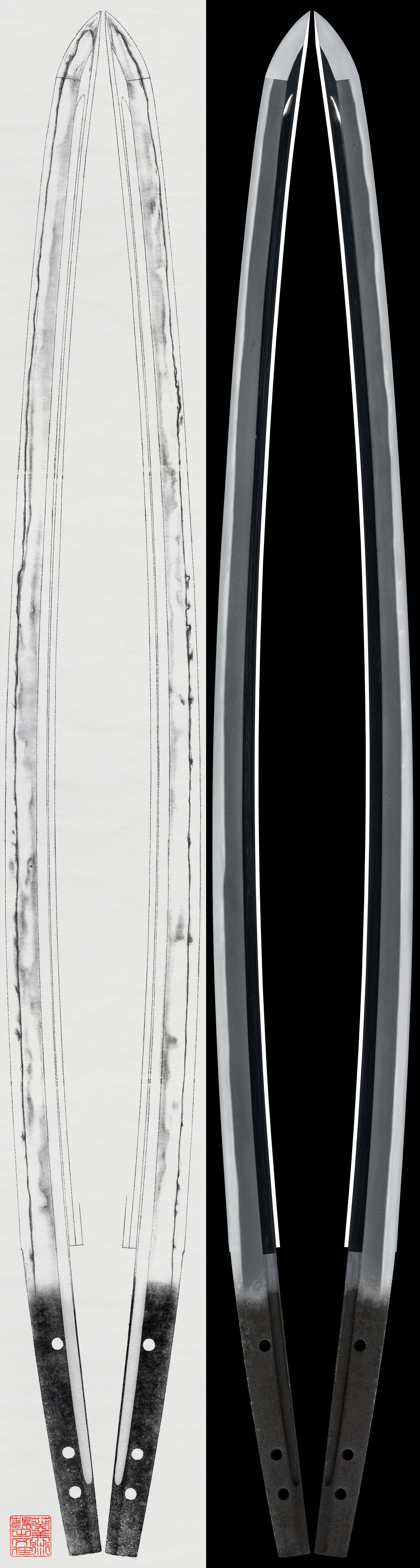
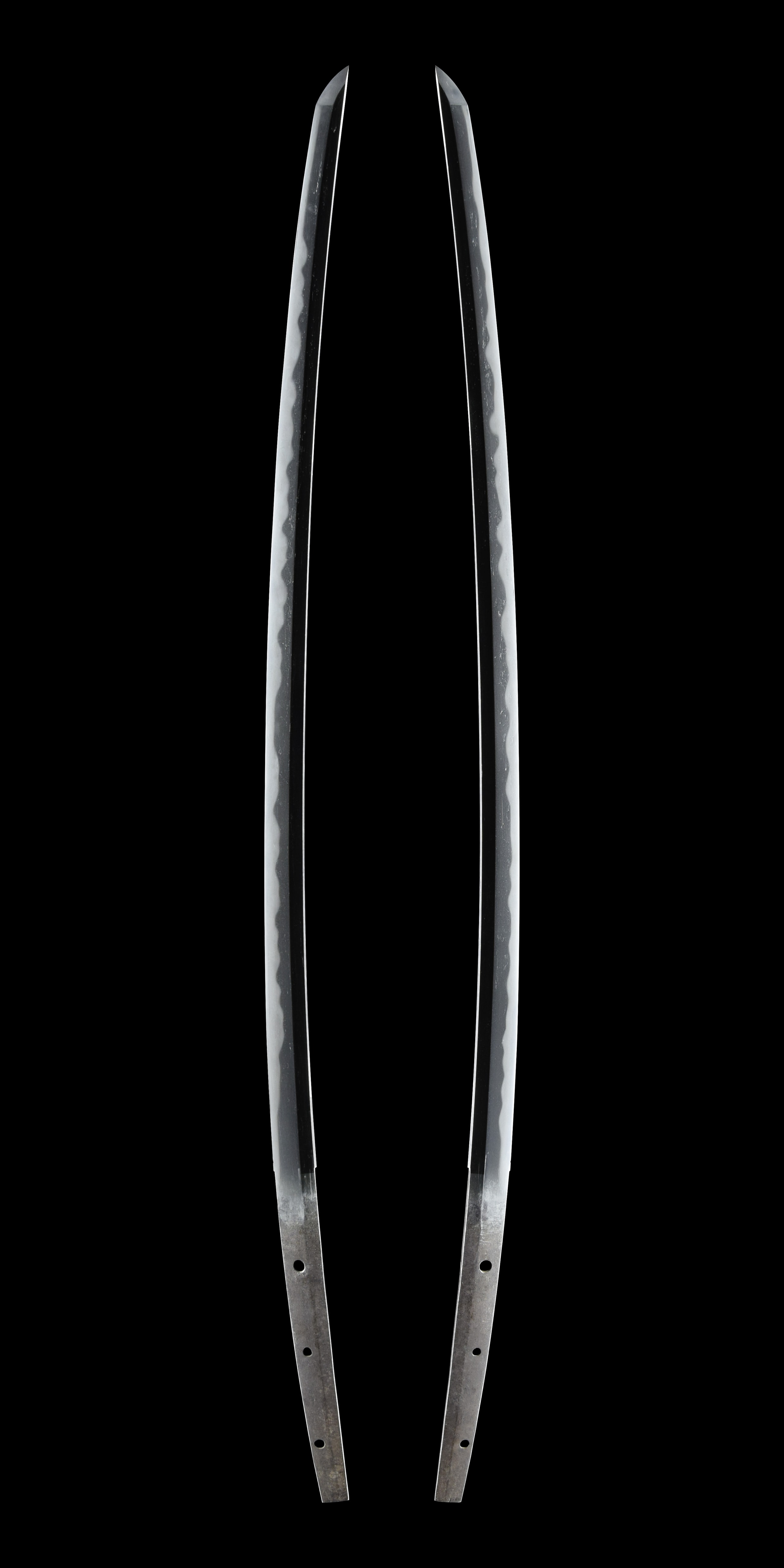
Kagehide is an smith of the middle-to-late period, known above all for one blade: the by the name Kuronbo-giri, cherished in the house of Date Masamune and designated an Important Cultural Property. The published sources open almost every entry the way, that Kagehide has been transmitted since old times as the younger brother of Mitsutada, the founding head of the school, though one record preserves the variant tradition that he was the elder brother. His signed works are few, and the judges call them rare and of high documentary value each time one appears. Where Mitsutada is the orthodox main line, Kagehide is its more wayward sibling, a hand that the commentaries say is rather to be appraised as aligning with the group.
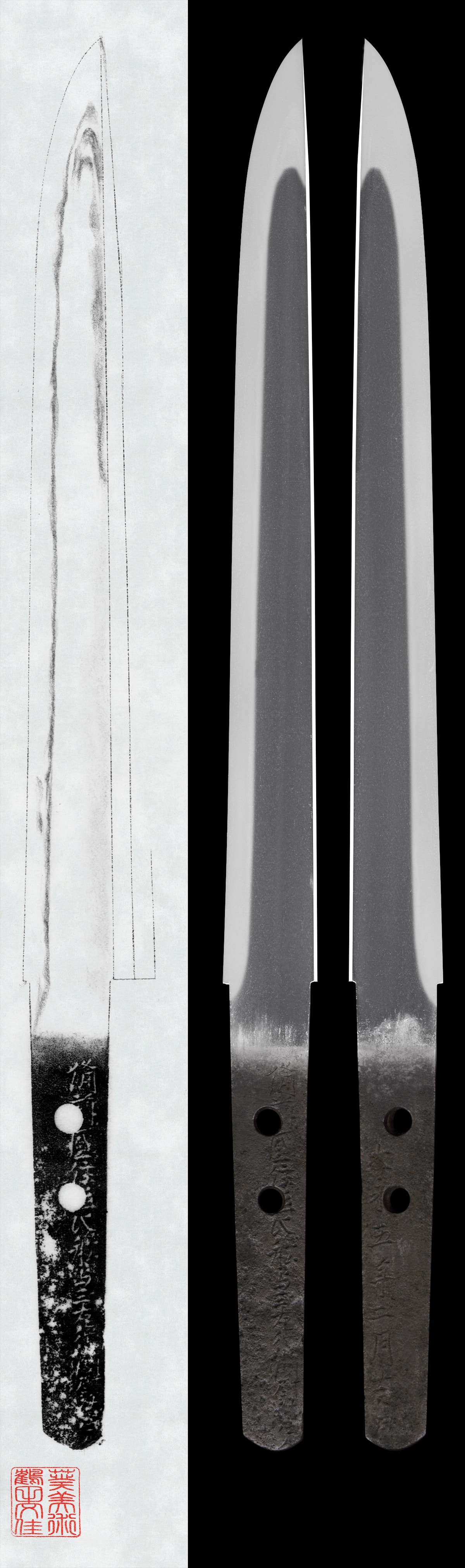
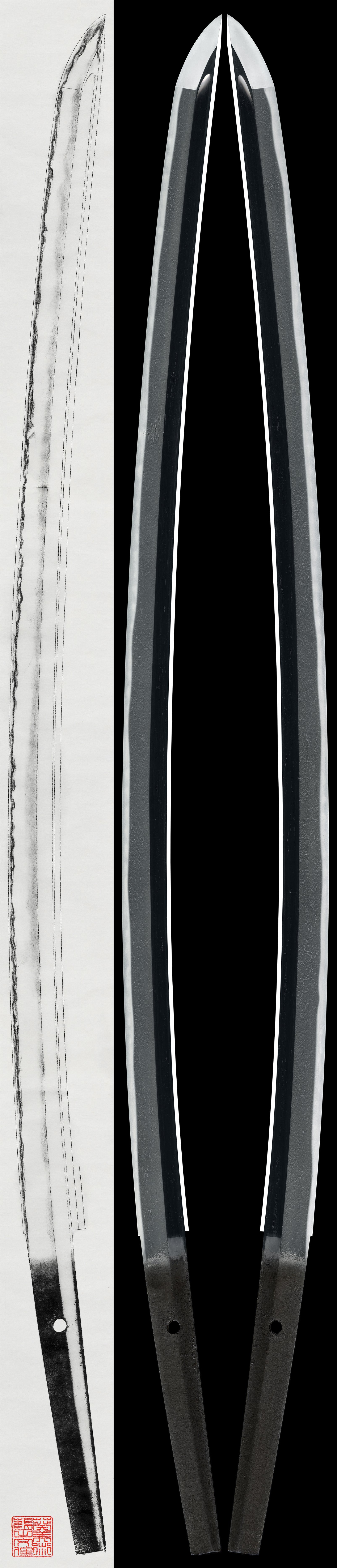
The feature that names him is the pointed set into his clove temper. Like Mitsutada he commands a flamboyant -dominant , the published sources writing that he too excelled in the showy manner, the wide and undulating, in places the crest of the temper rising so high that it reaches the . But where the two part company is exact and often repeated: compared with Mitsutada the intervals of the run closer, the pointed stand out, and the whole carries a faintly sooty cast the texts call susudoshii, so that one senses, in their phrase, a feeling of that kind. On his finest blades the is mixed with fukuro-chōji, - and angular , with interspersed, the conspicuously alternating wide and narrow. The judges read the conspicuous as the single point by which his work can be marked as his.
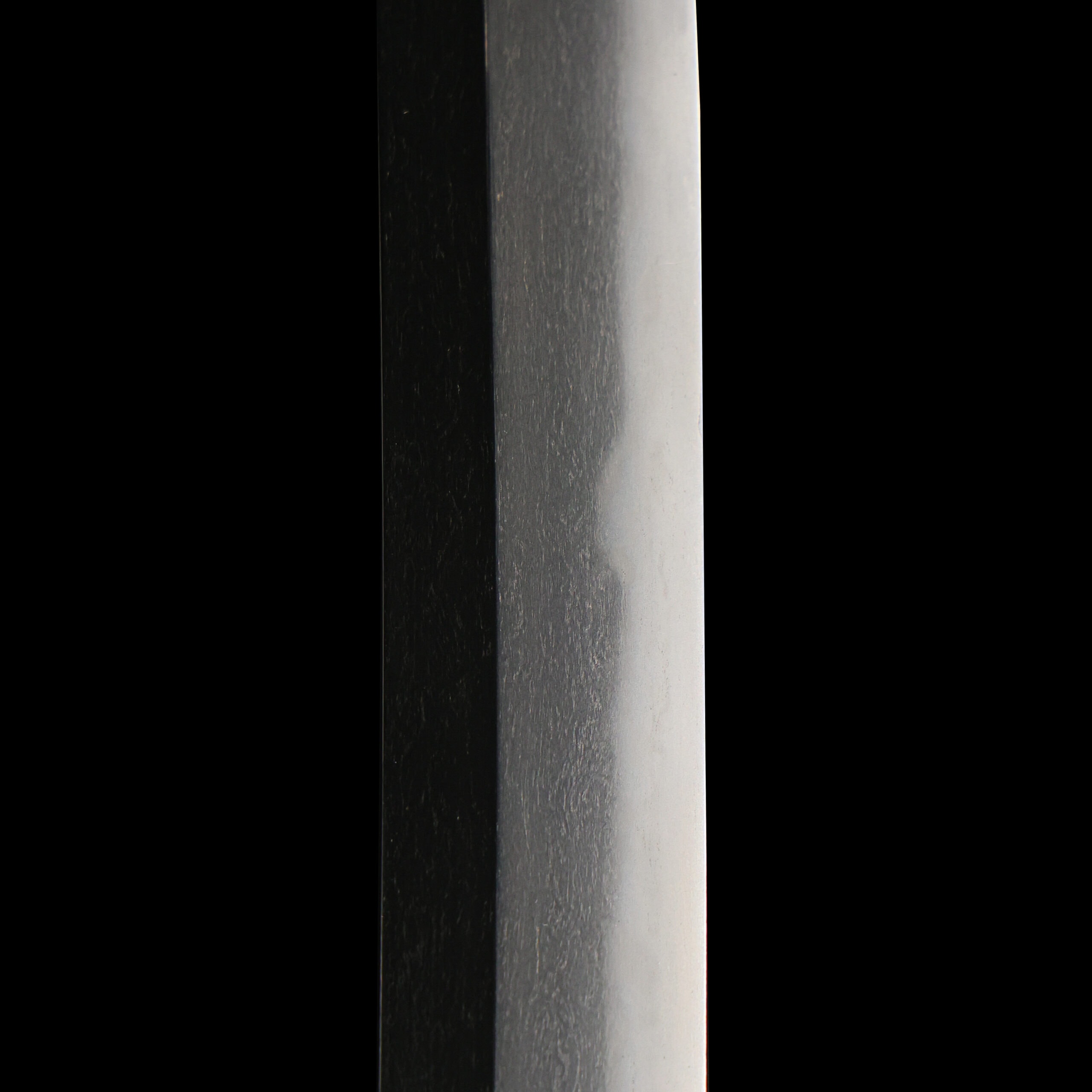
The constant beneath the temper is the . He forges an , at times a well-packed , mixed with and a flowing , well worked and carrying a fine, sometimes dust-fine , with entering and a clear standing across both his manners. Over that the is chiefly -based with adhering, and entering well, slight and running through, and on the best pieces a bright, clear . The runs into a turning back in , at times pointed with . It is a worked with care, the reflection of the period, over which the pointed clove temper does its distinguishing work.
His record divides into two registers rather than two periods. The first is the flamboyant Kuronbo-giri manner just described, his recognized prime, whose summit on paper is a great signed published in the Kōzan : the published sources call it the artistic territory as the Important Cultural Property , a work in which Kagehide's true strengths are brought forth without reserve, the finest among his works. The second is a calmer register, a or base mixed with , and very small , the pointed elements held back, the bright. The judges connect this quieter hand to the observation that early work by Mitsutada and Sanenaga can show a -like territory, noting of one such blade that its lower half is so classically refined it can at a glance recall a superior sword. His signatures survive only as two large characters, never longer, which the commentaries give as one reason a fully fixed standard for him is hard to set.
Within the early mainstream he stands beside Mitsutada, Nagamitsu and Sanenaga. The published sources separate his flamboyant from Mitsutada by exactly the closer-set and the standing-out , while reading his calmer pieces as nearer to Nagamitsu and Sanenaga; on a late whose temper centers on low-waisted they remark that the manner is closer to those two than to Mitsutada, yet the noticeable pointed elements keep the attribution his. His bright , his disposition and above all his are the traits by which the judges affirm his unsigned work from era and school, his attribution resting in the end on that pointed tell rather than on any signed standard. He is the brother who carried the name in his own slightly harsher voice.
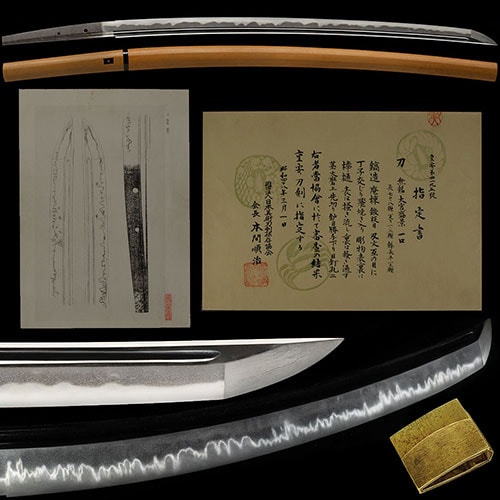
For the collector he is a rare early name. Fujishiro grades him Jō-jō . He has no National Treasures; his record runs instead through one Important Cultural Property, the Kuronbo-giri, together with a small group at the and tiers, twenty-two designated blades on record across those two ranks. His provenance roll is short but distinguished, the Kuronbo-giri held in the Date house, a Sekigahara reward blade inherited by the Tanegashima retainers of the Shimazu, and a signed formerly of the Mōri family among those of recorded whereabouts, with examples now at Futarasan Jinja and the Hayashibara Museum of Art. Most of his designated blades are held rather than traded, and signed Kagehide of form is among the scarcer things in the early field; a privately held example comes to light only seldom, and when one does it is a landmark, a document of the more individual side of the first generation.