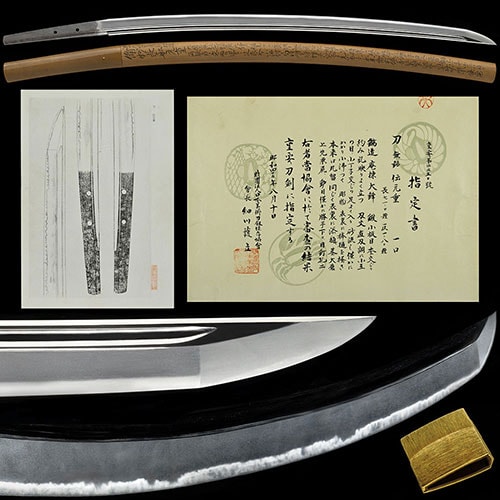
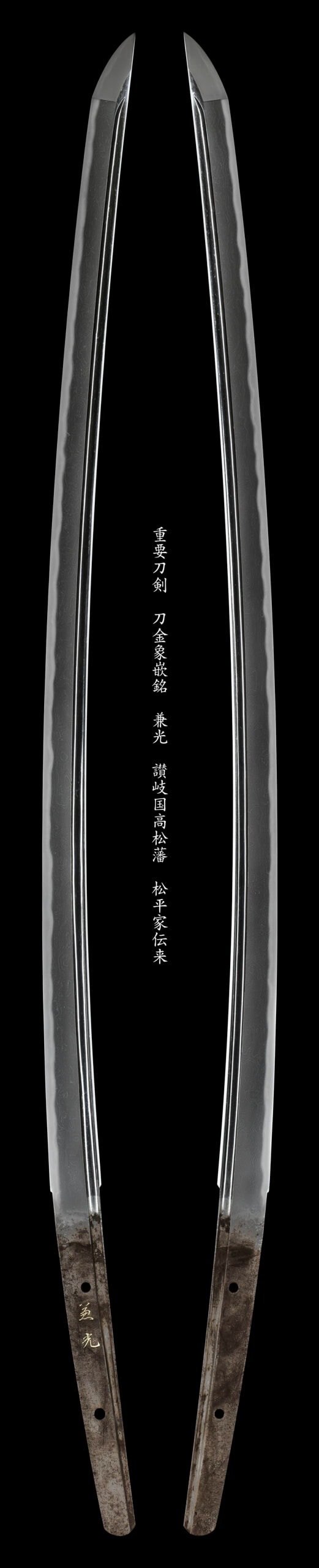
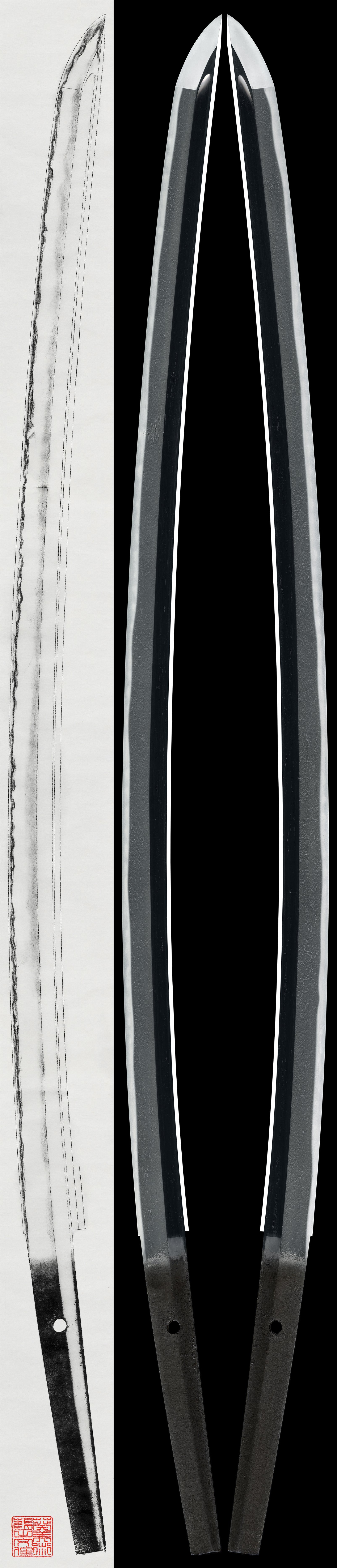
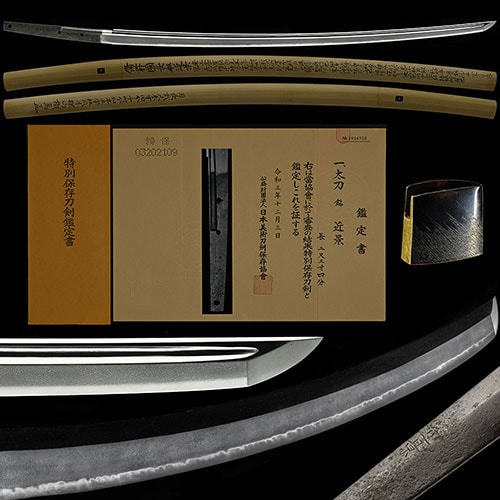
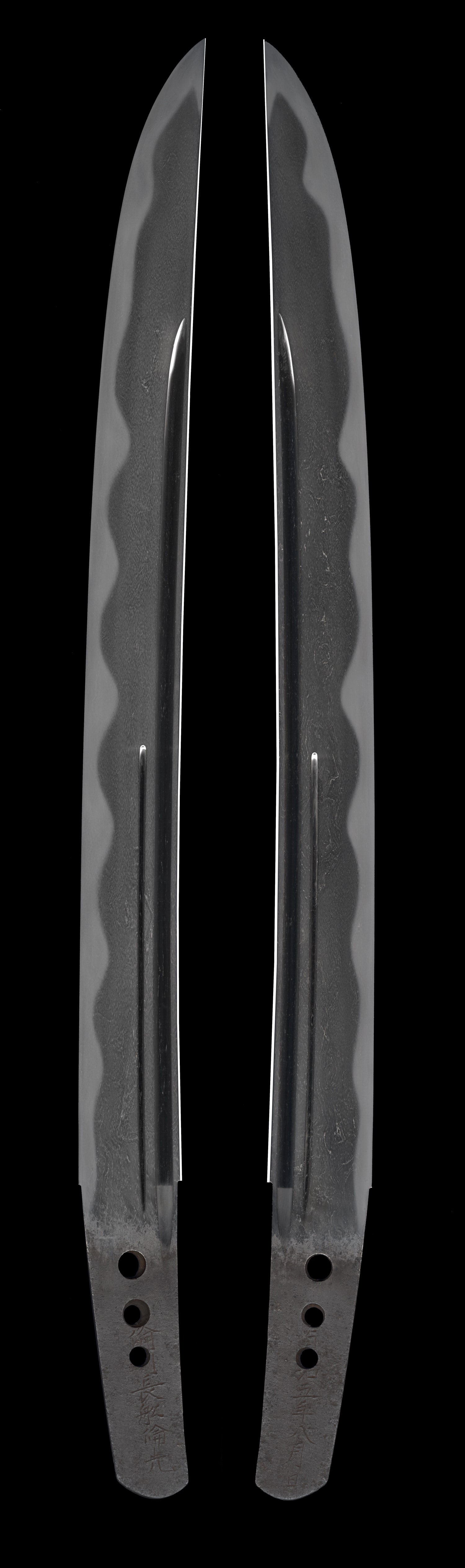
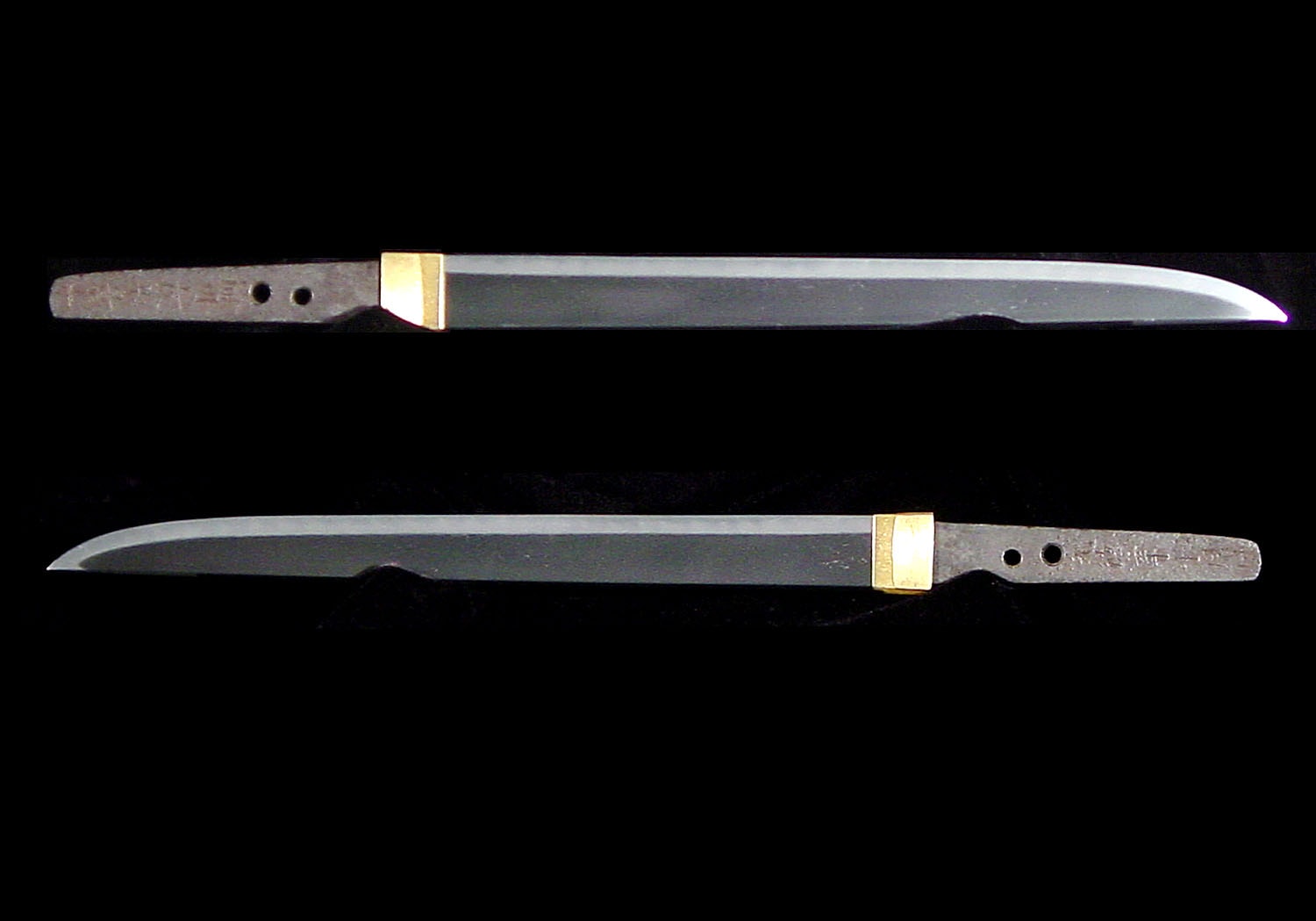
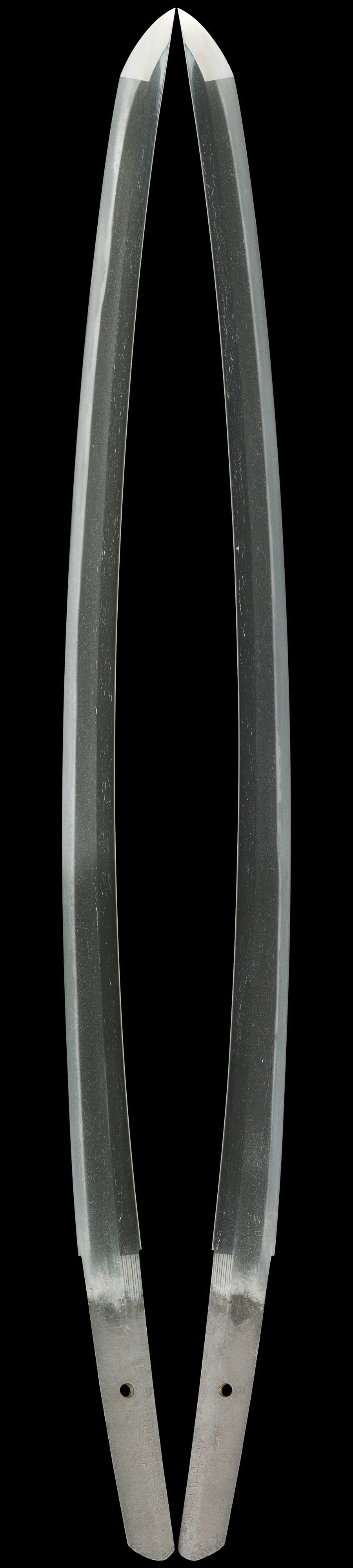
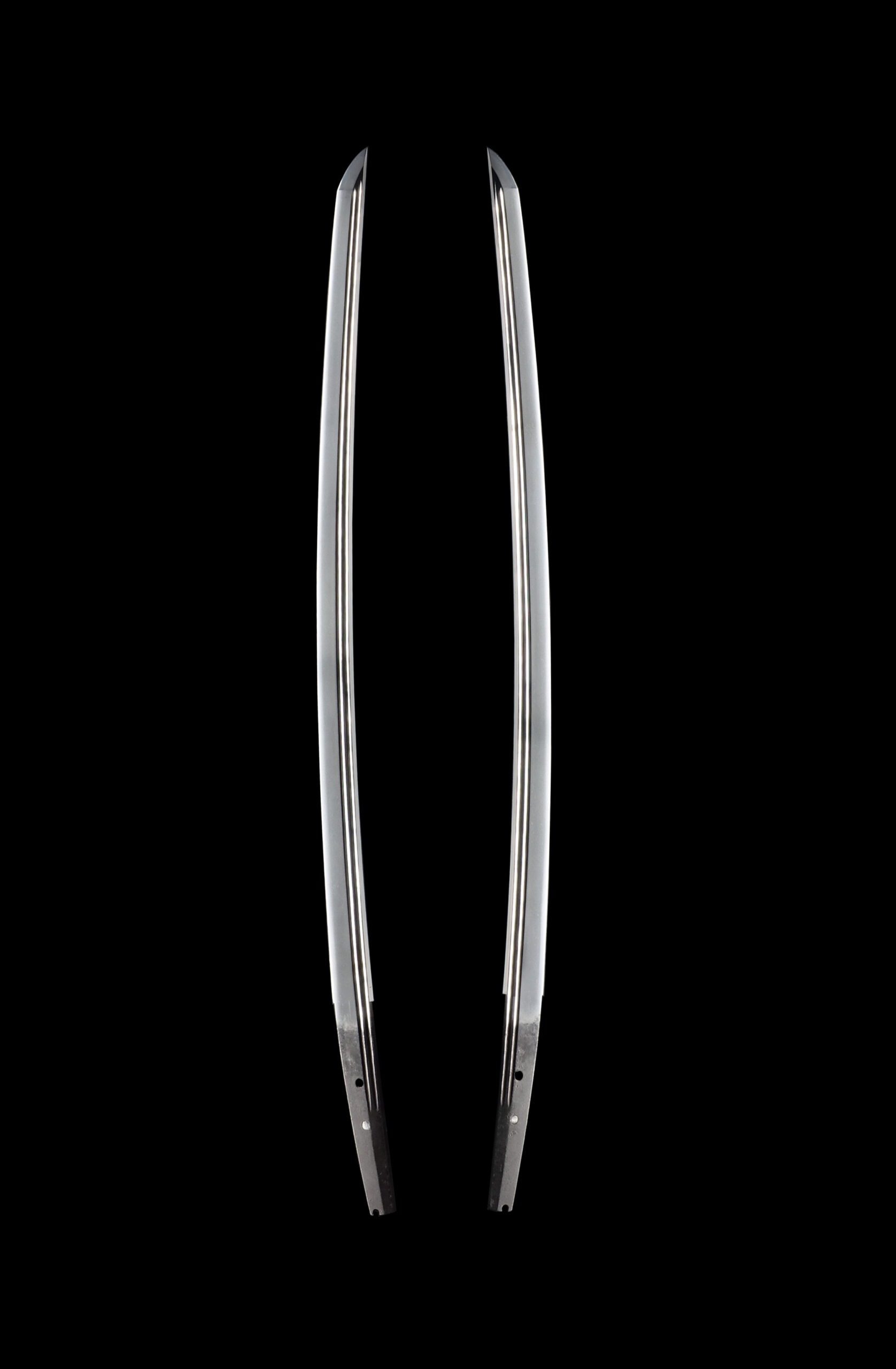
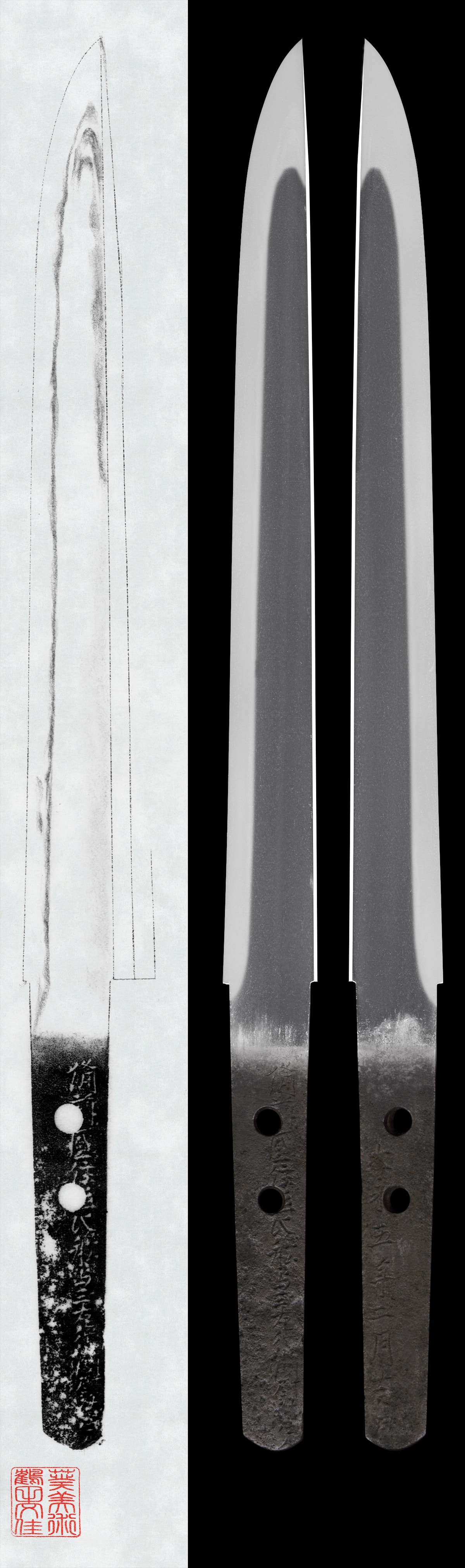
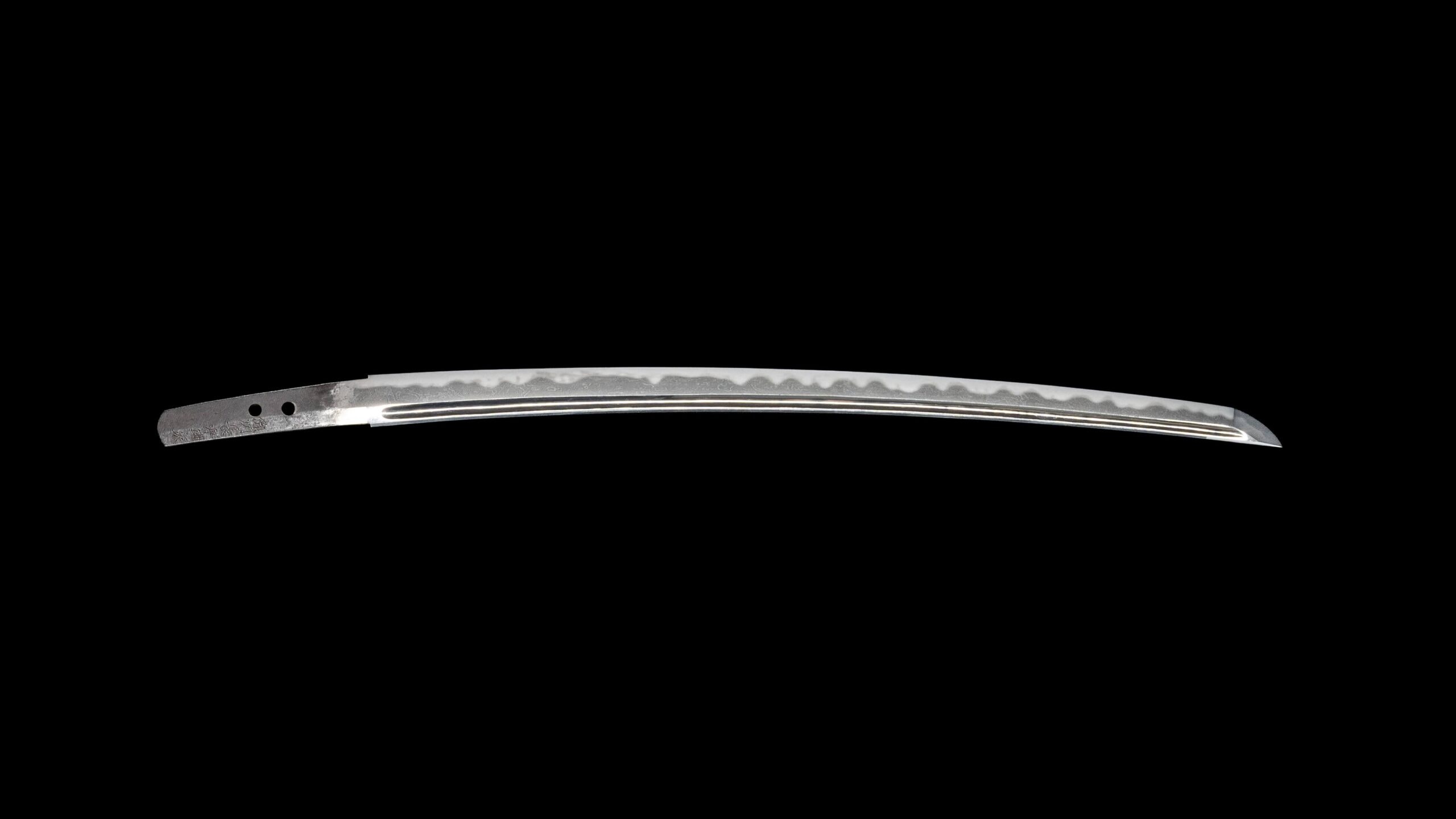
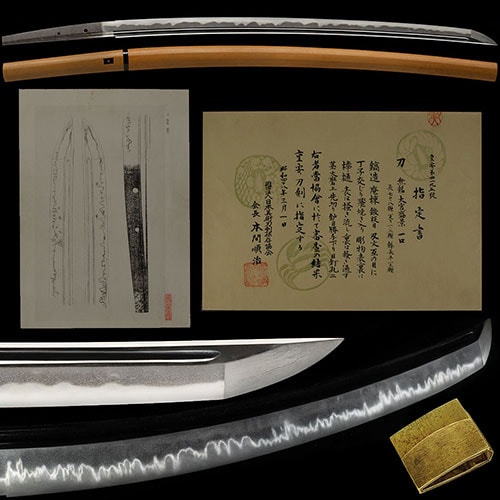
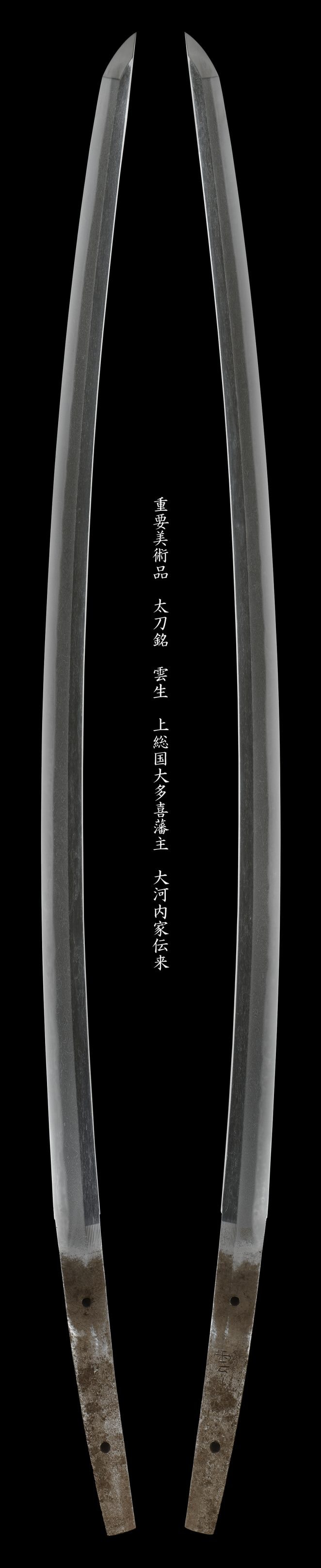
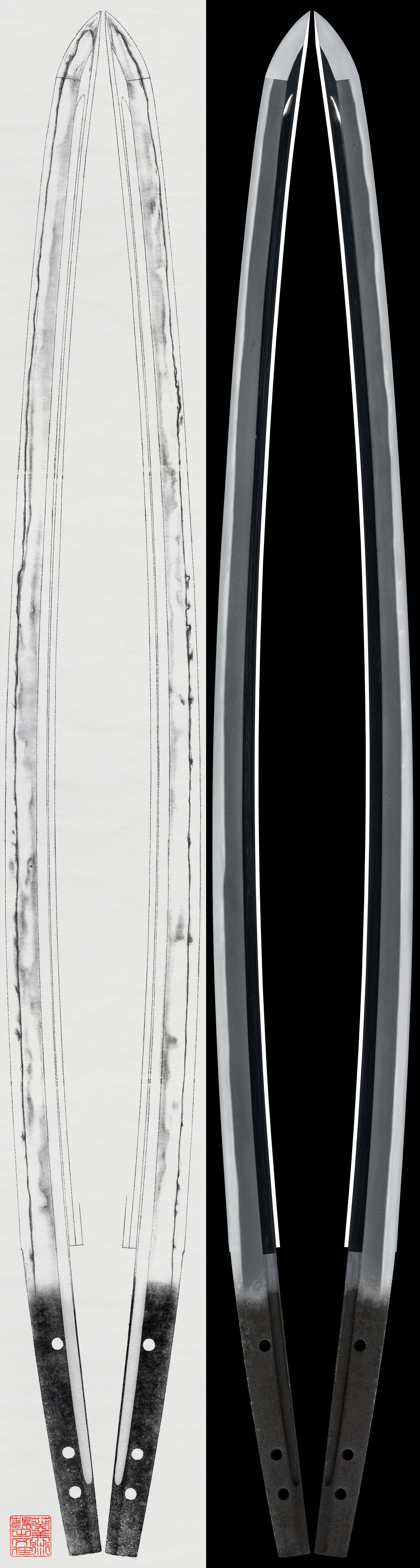
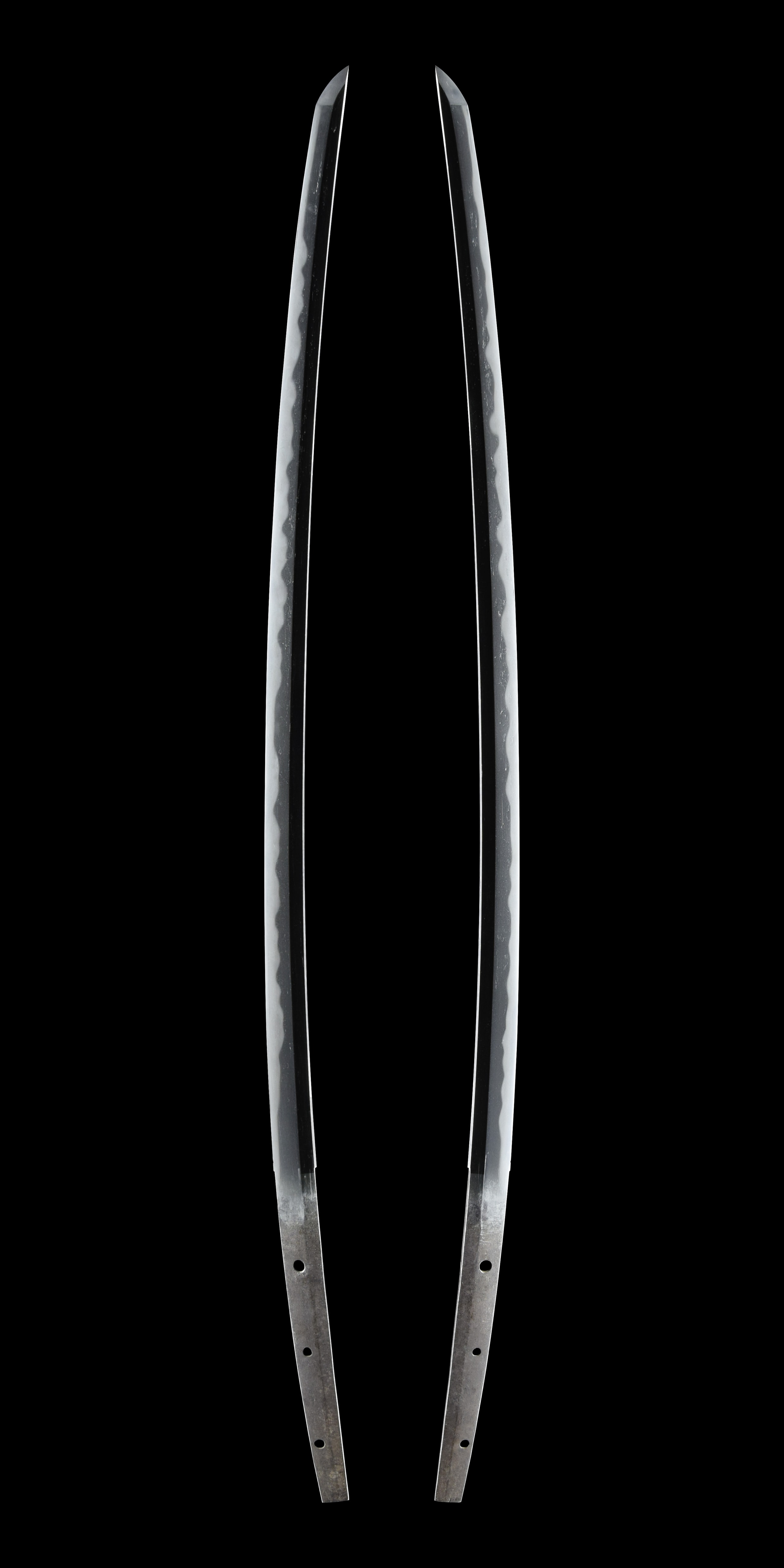
Among the dated by Masamitsu is one carved on the with a swelling-dragon and on the with a and , a thick- piece dated Eiwa 4 (1378) that the published record calls a representative superior work of his oeuvre and that has come down with the epithet Koryū Masamitsu, the Small Dragon Masamitsu. He was a smith of the mid- into the early period and one of the disciples of Kanemitsu, named in the published sources in one breath with his fellow students Tomomitsu and Motomitsu. His dated blades run from Enbun through Ōei, so that his working span is fixed with a clarity unusual for the late , and he carries his teacher's manner forward into the closing decades of the tradition.
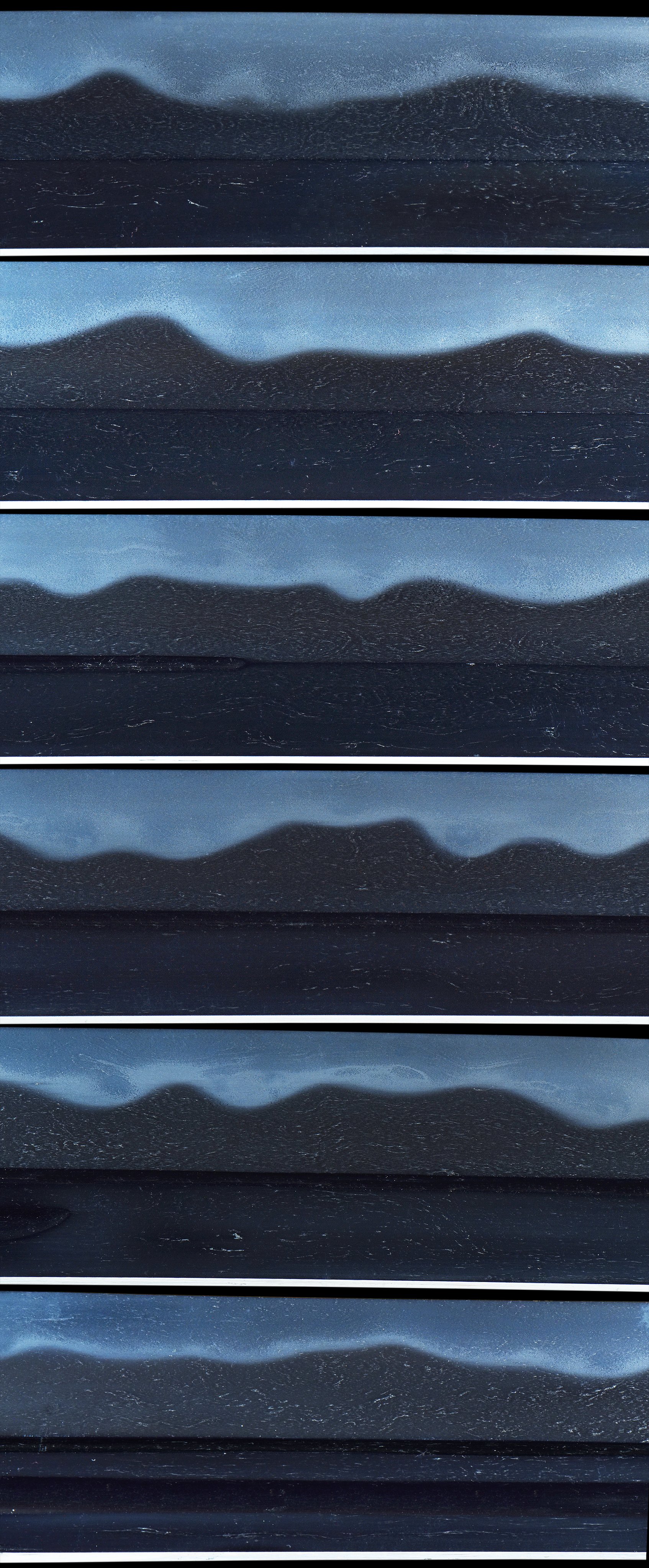
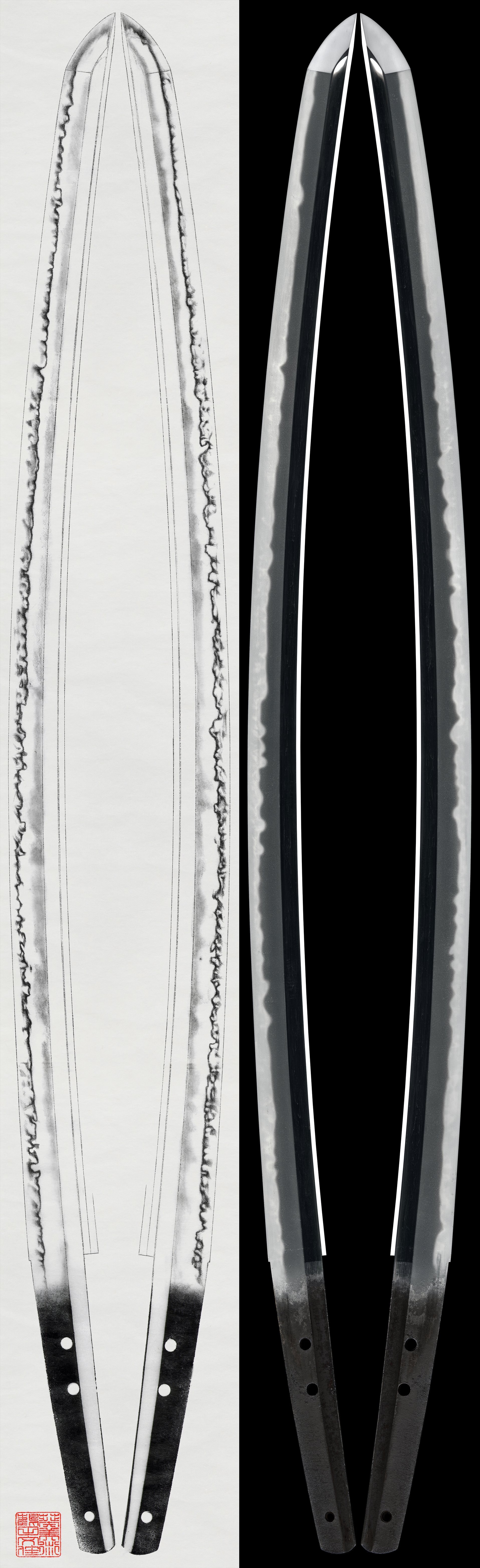
The tell of his hand is restraint. Following Kanemitsu he works , and alike, yet across the whole of his output the temper settles toward a small, subdued pattern, and the names this exactly: 「総じて刃文が小模様となるところに此の工の見どころがある」, the point of appreciation in his work is that the as a whole becomes small in scale. Over a well-forged he tempers a into which , , and pointed enter, the -dominant and tight, carrying with fine and , and on his finest , the Koryū Masamitsu among them, he sets a , the saw-tooth temper that is the Kanemitsu school's own inheritance. The and enter well; the activity is held within a quiet line rather than flung into towering clusters.
The is the constant beneath that quiet edge. His is well forged, often standing a little and mixed with , with a thick and fine , and over it stands a bright , the speckled reflection of old steel, that the published record finds on his signed and his attributed work alike. Where the forging tightens into a packed the only grows clearer; on the slender late pieces it can run as a straight or a instead. The answers the , entering in to a or finishing with a faintly pointed and , and on his he carves the devotional program of the school, with a gyō-form and with , the swelling-dragon motif that the published commentary traces to the distinctive of the line since the second-generation Nagamitsu.
His record falls into clear registers. The signed and dated work of the high is the core, cut on an tang with the full Bishū Masamitsu signature and a year date. The late work is the slender , ko- and of the Kakyō years at the very end of the period, narrower in body and tighter in the line, which the swordbooks gather as a class the published record describes thus: 「総称して江戸時代以来小反物と称している」, pieces collectively called since the period. Beside these stand the and attributed to him within the Kanemitsu circle. Running through all of it is the standing scholarly note that the name Masamitsu was borne by two generations, the of the Enbun through Eitoku years and the nidai of the Kakyō years, the swordbooks assigning individual pieces to each by year inscription and workmanship; on one signed second-generation the judges go so far as to write that the quality of its and is so good as to give 「殆んど兼光を見るような感がある」, almost the impression of looking at Kanemitsu himself.
What sets him apart within his own school is precisely that subdued line and that bright reflection. On the attributions the published record affirms the Kanemitsu-school and while granting candidly that the work resembles Kanemitsu yet falls a step short of him, seen in the slightly subdued temper and the less settled , so that the attribution rests on era and school as much as on a personal tell. Against his teacher's broader, more varied , Masamitsu is read by the smallness of his pattern and the tightness of his ; against the plainer late- hands he is held by the brightness of his and the on his edge. He stands among the last masters to keep the Kanemitsu manner intact before the school turned to the volume production of the Ōei years.
For the collector he is a knowable late- name carried on a substantial signed record. Fujishiro grades him Jō-jō . He has no National Treasures; his standing rests instead on two Important Cultural Property , two blades at the rank, and a wide spread at , and the published commentary singles out one , more complex and showy than his wont, as 「同作中出色の出来映え」, an outstanding example among his works. His blades are grounded in old provenance, the Tokugawa shogunal house among them, with the Koryū Masamitsu transmitted in the Ōmaeda family and once carrying a Kōtsune , and his work is held today in long-standing public and private collections, including the Kyushu National Museum, the Hayashibara Museum of Art and the Tokyo National Museum. With only a small number of blades in the and tiers and most of those long held rather than traded, a signed and dated Masamitsu of recorded whereabouts comes to light only from time to time, and a privately held example, ideally an -tang piece with its date intact, is a satisfying thing for a collector to encounter, a precisely datable document of how the great line carried its art to the close of the age.