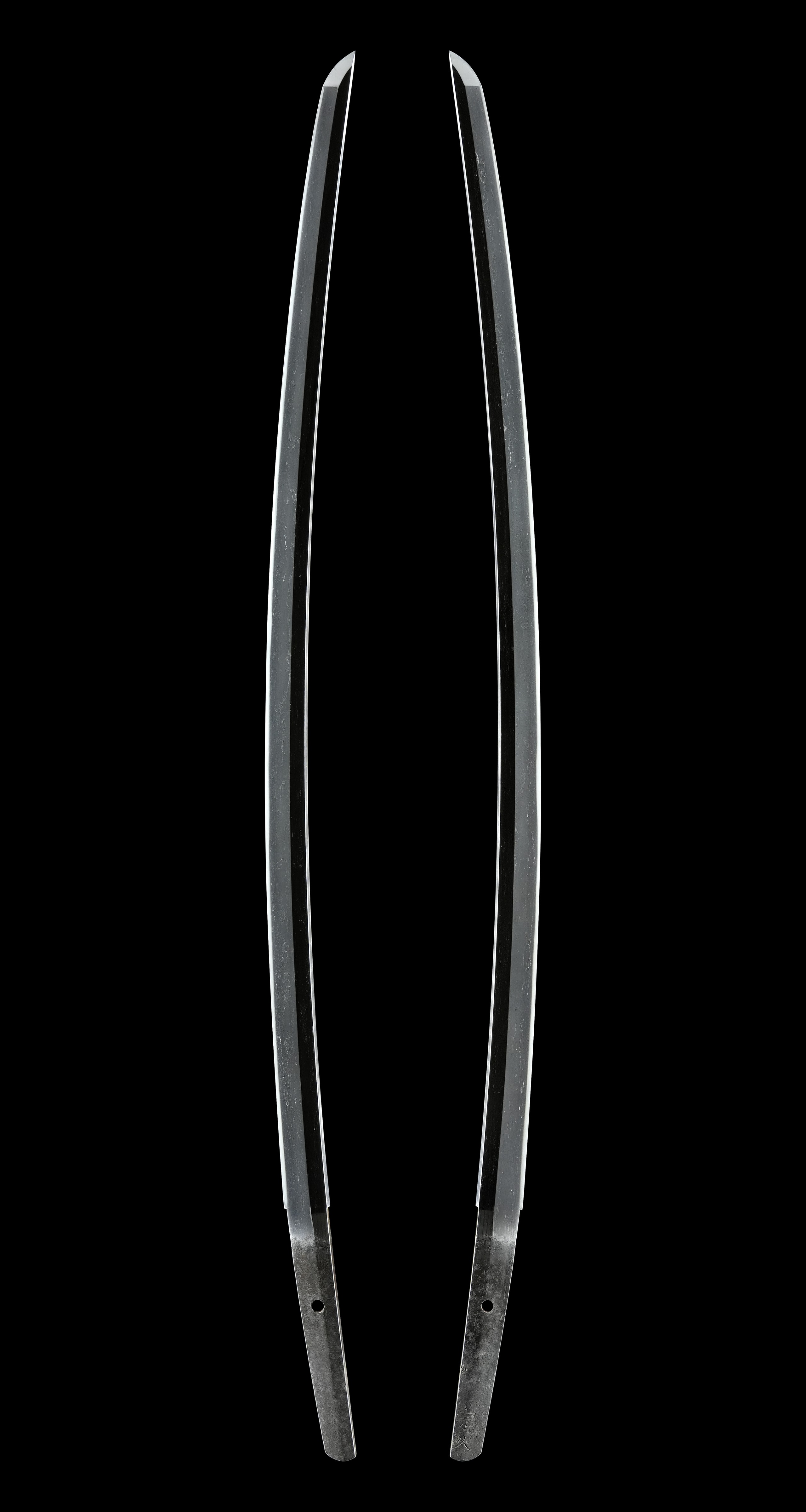
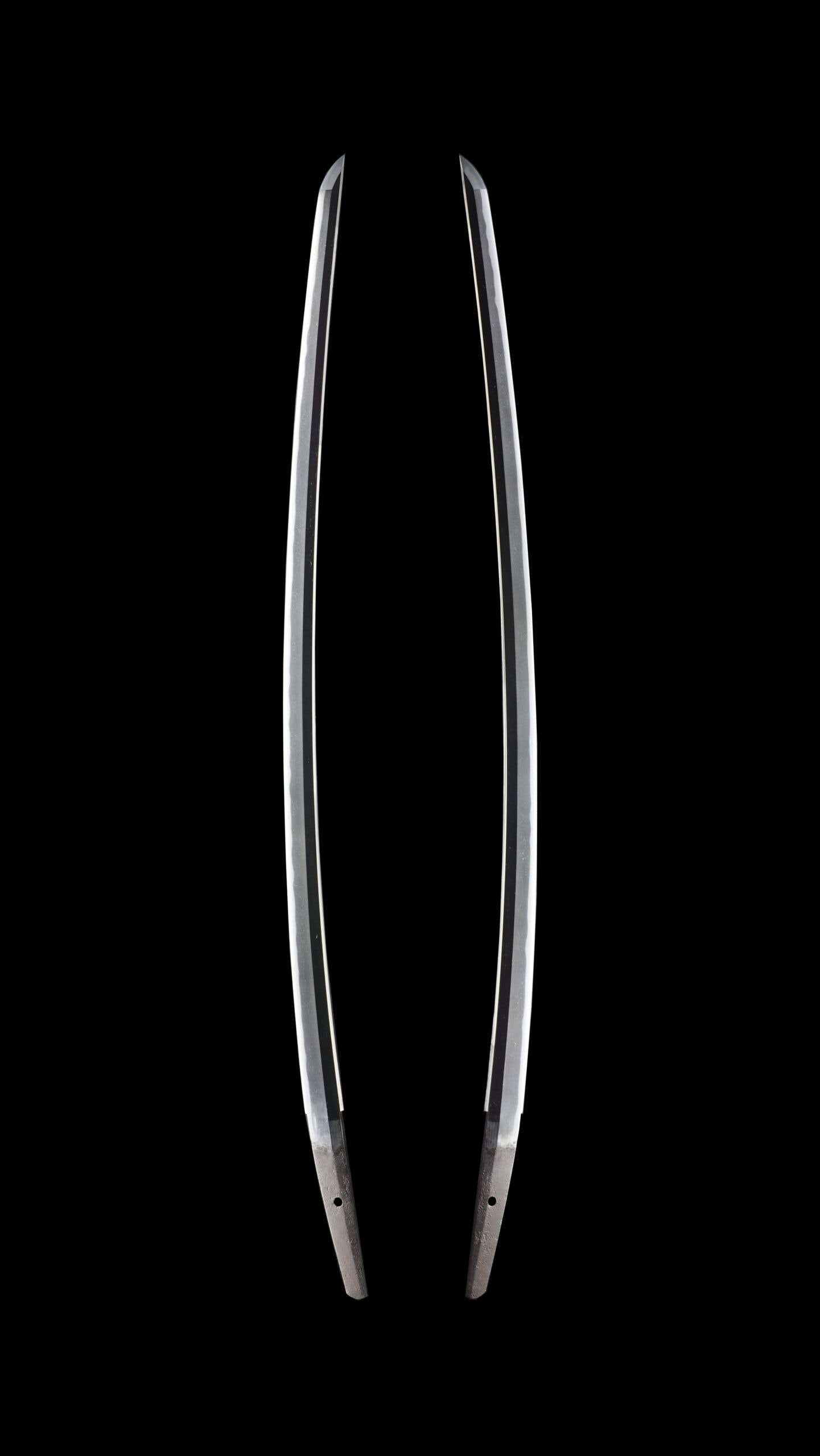
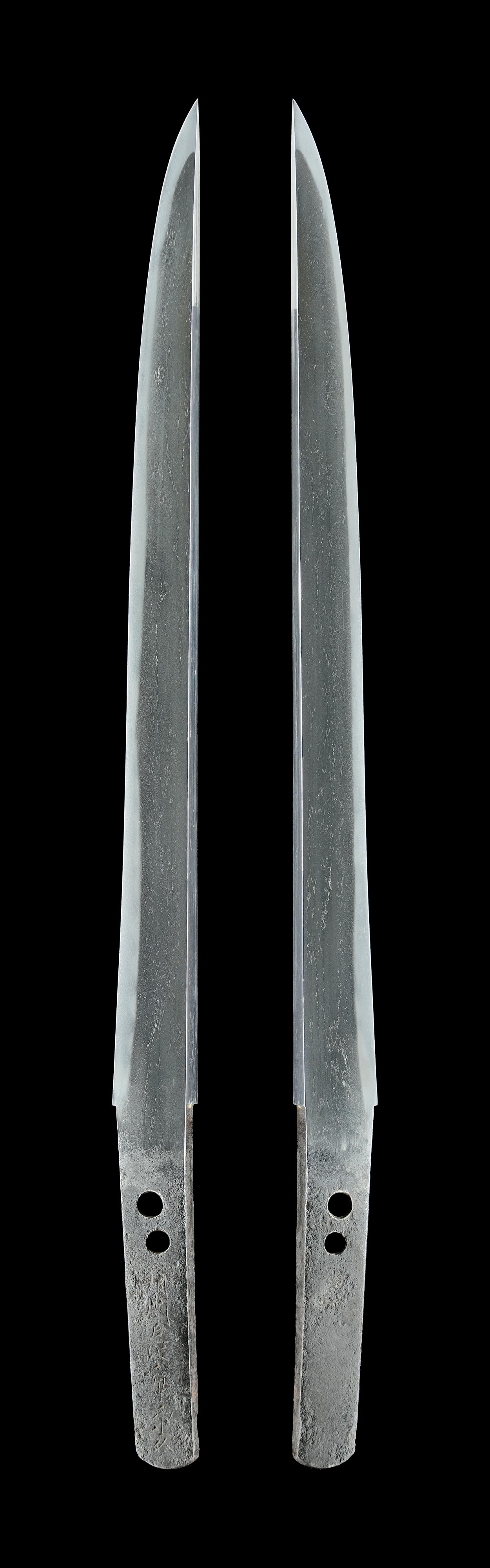
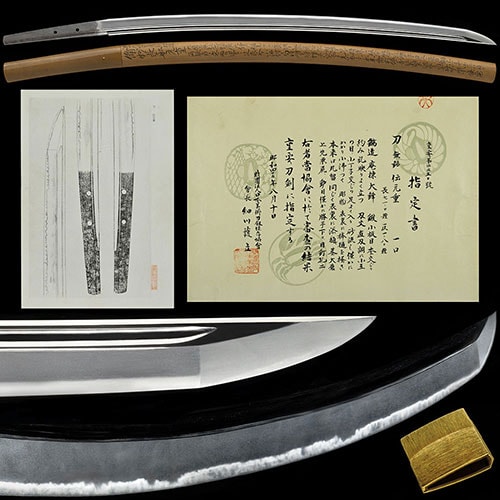
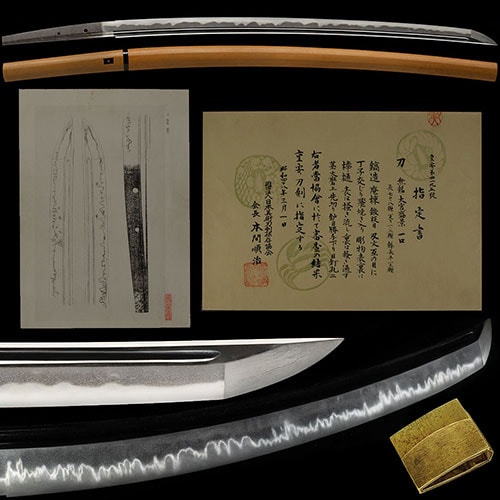
Hidemitsu signed and dated his blades, and the dates run in an unbroken file from the era through Eiwa, Eitoku, Shitoku, Kakei, Kōō, Meitoku and into the years, so that an , signed and dated survives from almost every reign of the late . He is a smith, and the published sources count him, in the words of one entry, among "the group of smiths known as the -", the periphery of late- that the institution defines by exclusion: the makers who do not belong to the Kanemitsu line, nor to Chōgi, Motoshige or the group. One account makes him a son of Motomitsu in the Kanemitsu line. The entries are careful about his generations: the places a first Hidemitsu around the Kenmu era but notes that works of that earliest generation are scarcely seen, then counts the name across some four generations down into Ōei, while warning that strict generation-by-generation differentiation remains a matter for further research. Each surviving blade is therefore read by its style and its date rather than firmly assigned to one hand.
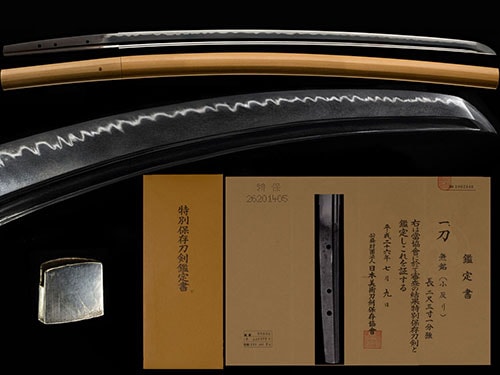
His characteristic work is a small-patterned irregular temper. The published sources put it plainly: his manner is "in the manner of Kanemitsu, yet with still finer and smaller patterning", and the words name the whole tell of his hand. Where the Kanemitsu line tempers a bolder , Hidemitsu reduces the idea to a small, subdued line, mixed with angular elements, pointed and open-valley , the and entering well, the temper -dominant with and overall , that subdued, drawn-in quality the entries return to again and again. The follows the edge into a that points or rounds to a . His often runs in a linked, continuous rhythm, and on one the published sources find him aligning the small in the uniform Yoshii-mono manner rather than the Kanemitsu one.
The is the constant. He forges an , frequently a well-packed mixed with and a flowing tendency, the grain standing a little, with laid finely and at times densely, fine sunk within it, and a rising clearly on his best blades. The published sources read the standing , the blackish -like iron and the subdued small as features common to the whole category rather than personal to him, and they grant that his finest forging is well-refined and of fine quality, bright and clear in both and . On his and pieces the reflection takes a different form, a or a straight running along the line of the .
Two further registers complete the picture. The first is the carving. His carry with , , , and devotional motifs of , and the gyō no ; on one Eiwa the published sources observe that the preserves the carving manner running, in their phrase, from the time of Nagamitsu through the and periods. The second is a quieter temper. A small minority of his blades abandon the for a bright, clear , the somewhat deep with slight ; on one such the mixes in with a reverse-slanting and pale, double--like , and the published sources liken the manner to "that of the neighbouring school", calling the blade "an outstanding example among this smith's works". The entries value such pure as documentary material for the working range of the smith and the group.
What sets the Hidemitsu in his place is exactly what the judges name. He is held apart from the Kanemitsu mainstream by the smaller, more subdued scale of his patterning and the somewhat lower rank the published sources assign the whole group, and apart from the next age by a single forward-looking detail: on a Meitoku the open-valley he tempers, in the entry's words, "already suggests an anticipation of the Ōei-period manner". He stands, then, on the threshold between the mainstream and the that would flower again in Ōei, a maker through whose dated, signed blades the late history of can be read year by year.
For the collector he is, above all, a documentary name. Hidemitsu has no National Treasures and no ; his record runs through three Important Cultural Properties and sixteen blades, almost all of them , signed and dated, which is the source of their value, for an carrying both signature and a reign date is repeatedly called extremely valuable reference material. The provenance is good: one descended in the Kuroda house with a Kōchū of Genroku 13 assessing it at fifteen gold pieces; another was among the personal effects of Tenshin'in, the lawful wife of the thirteenth shogun Tokugawa Iesada, who entered the Tokugawa house from the Takatsukasa family; further blades passed through the Tokugawa, Hōjō and Tani families. Most are held, not traded. Examples in the tier do come to light from time to time, more readily than the great mid- names but seldom even so, and a signed, dated Hidemitsu is a precise and legible document of how the school closed its age.