NihontoWatch Mon

NihontoWatchBETA

Market
Encyclopedia
NihontoWatch Mon

NihontoWatchBETA

Market
Encyclopedia

Description

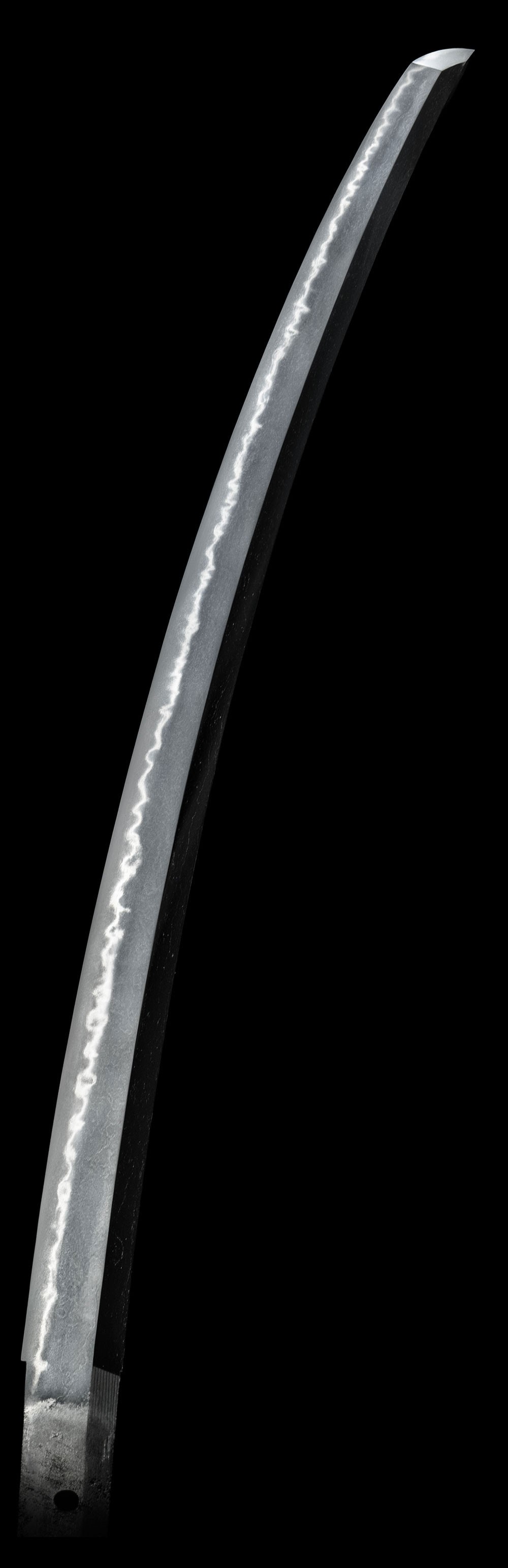
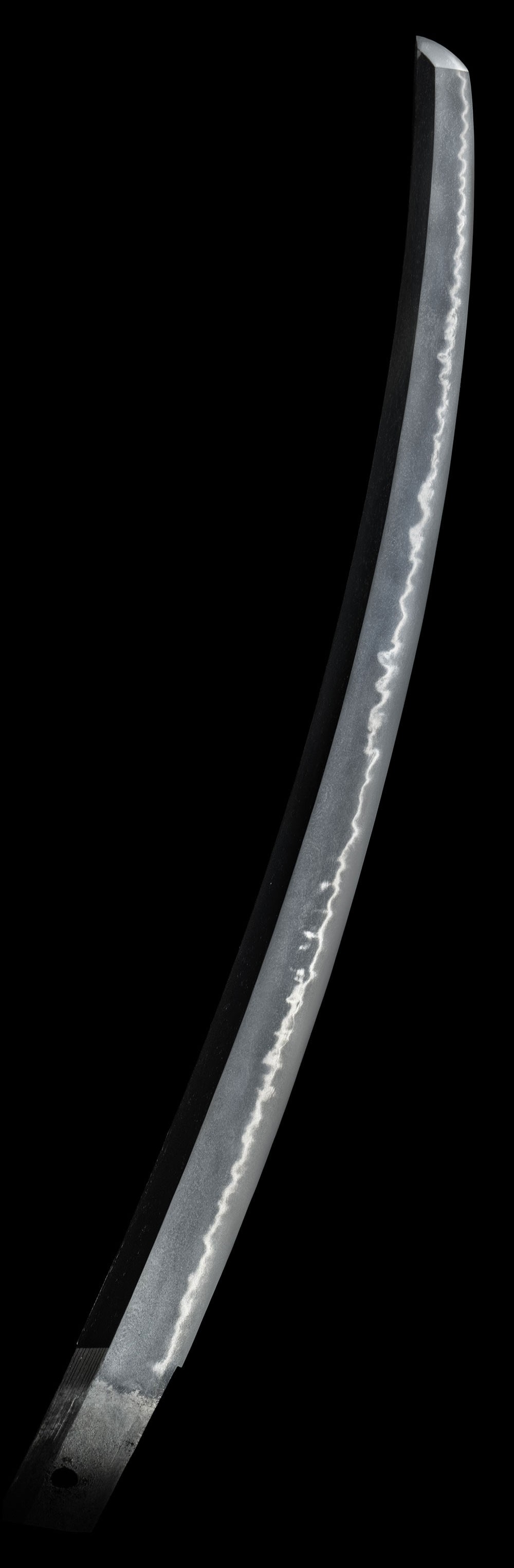
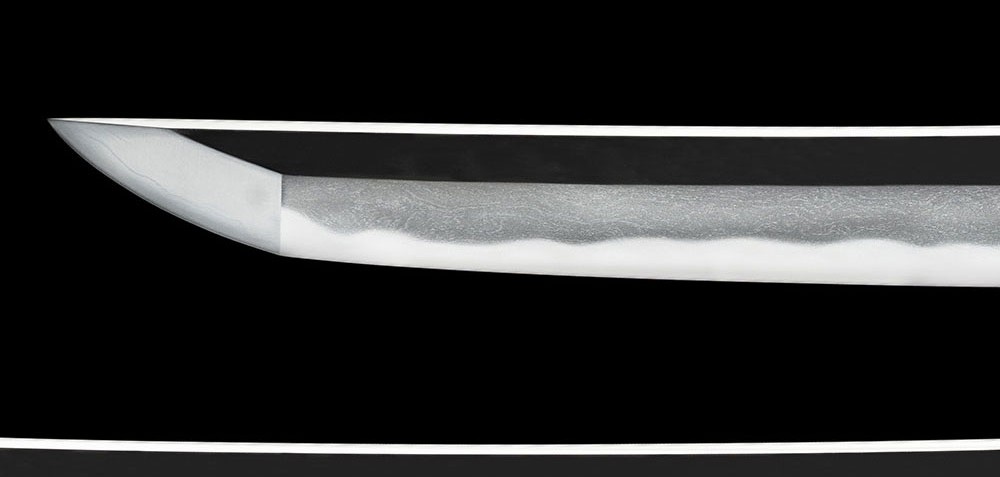
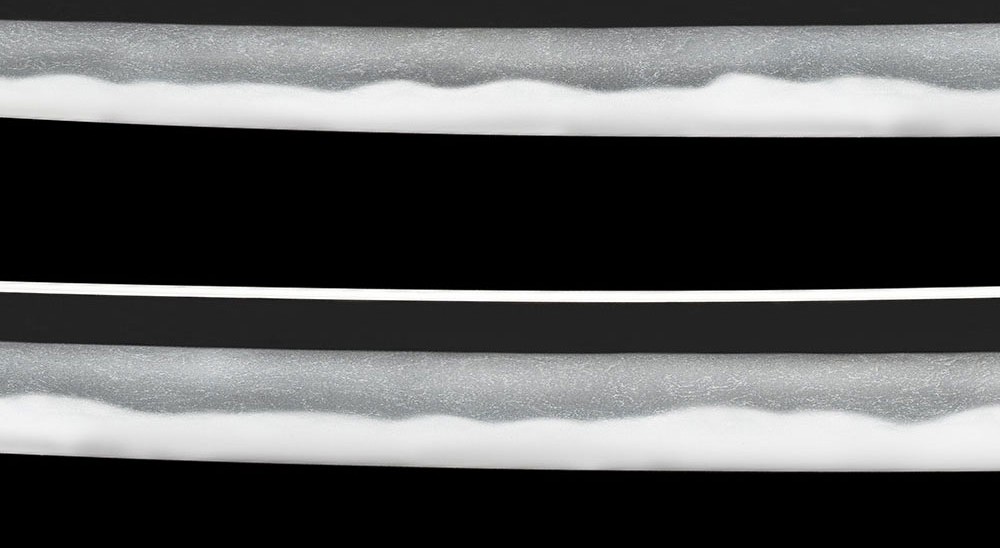
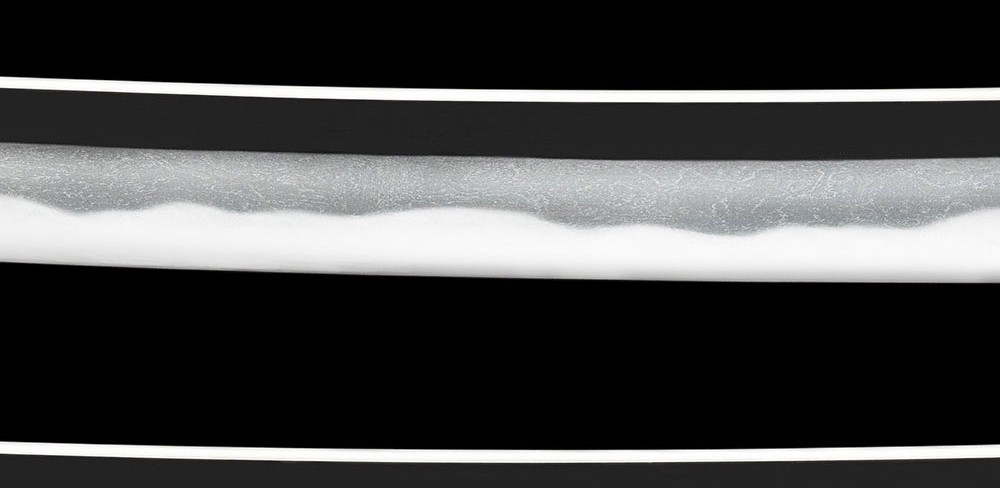
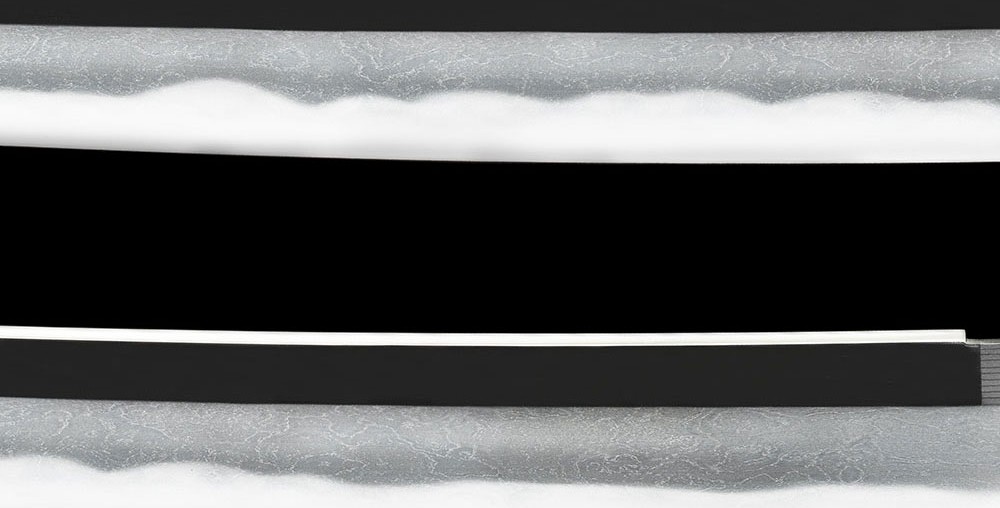
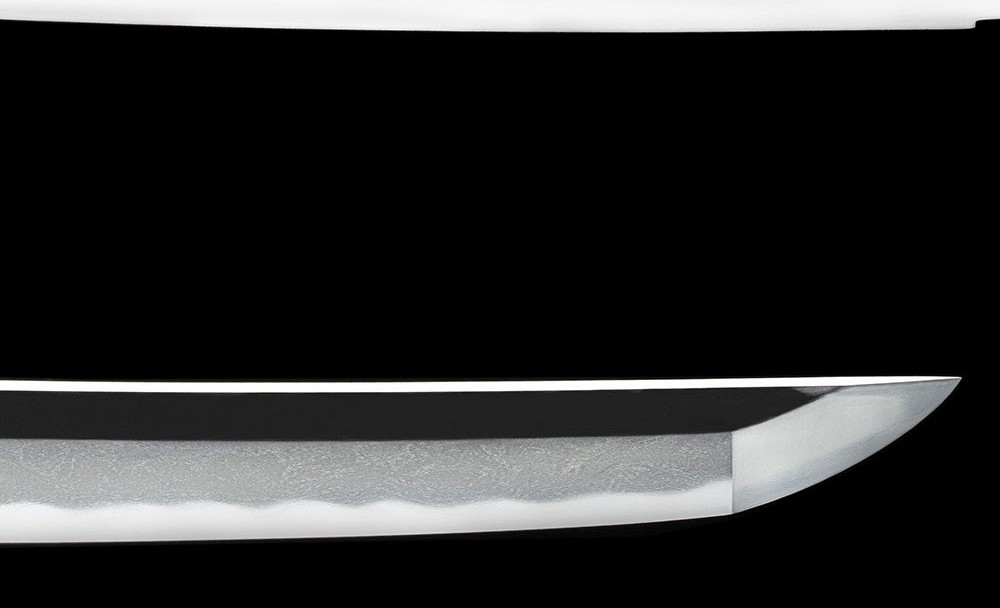
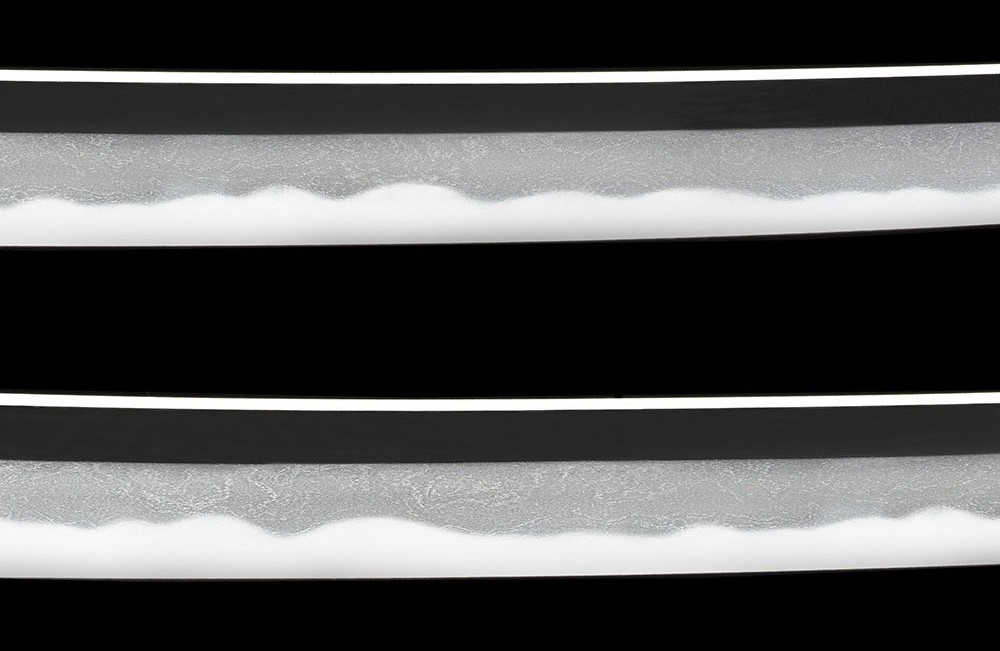
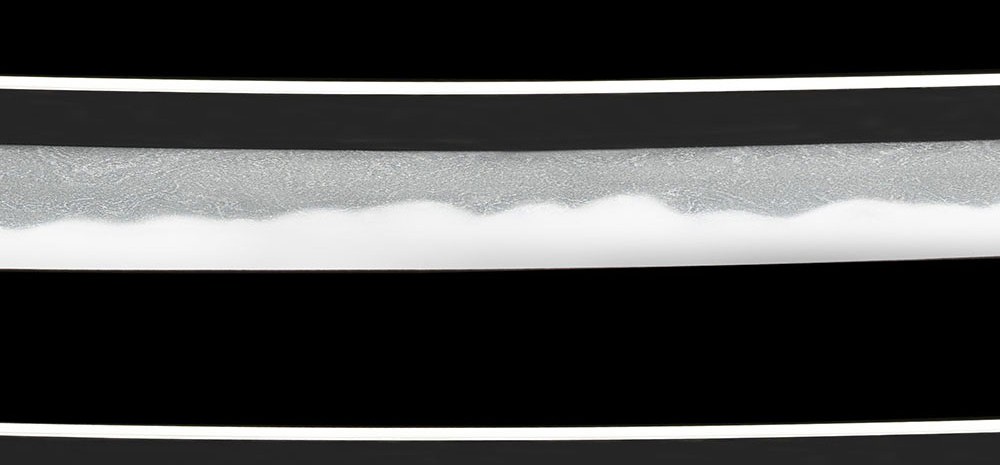
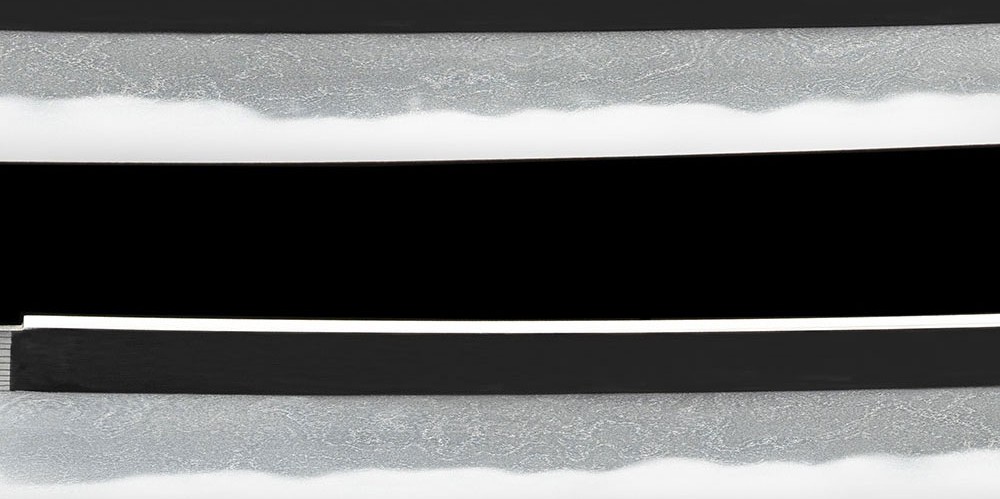
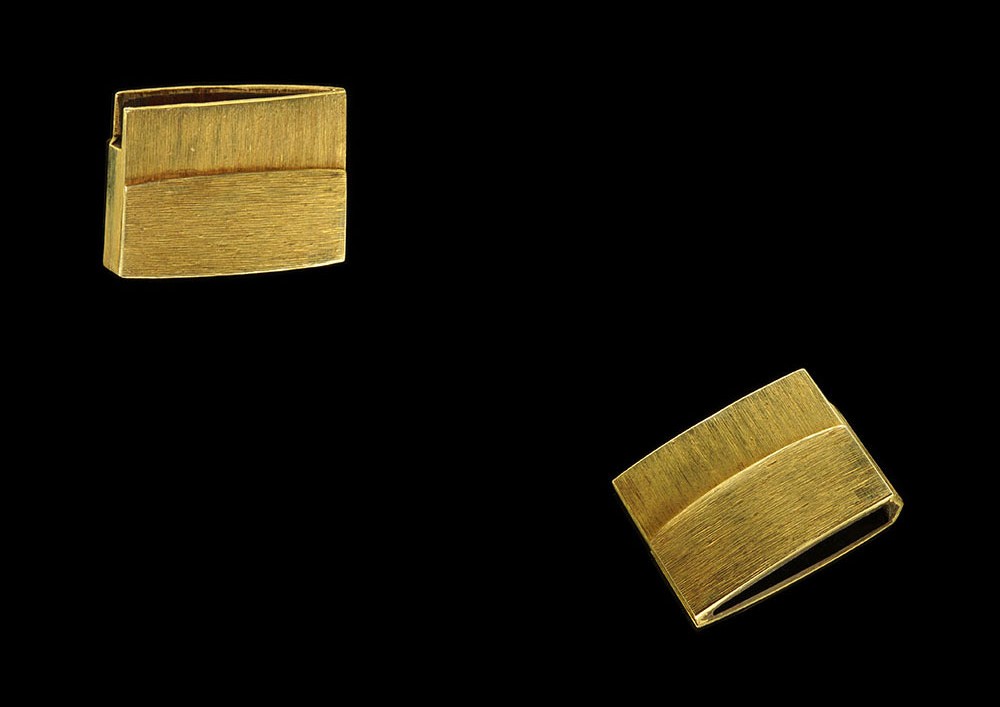
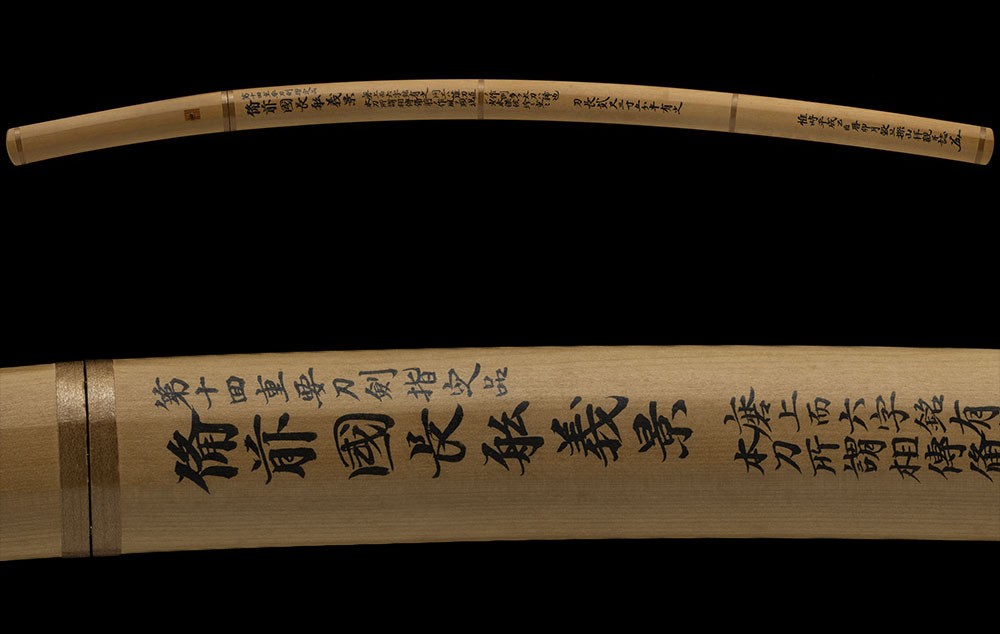
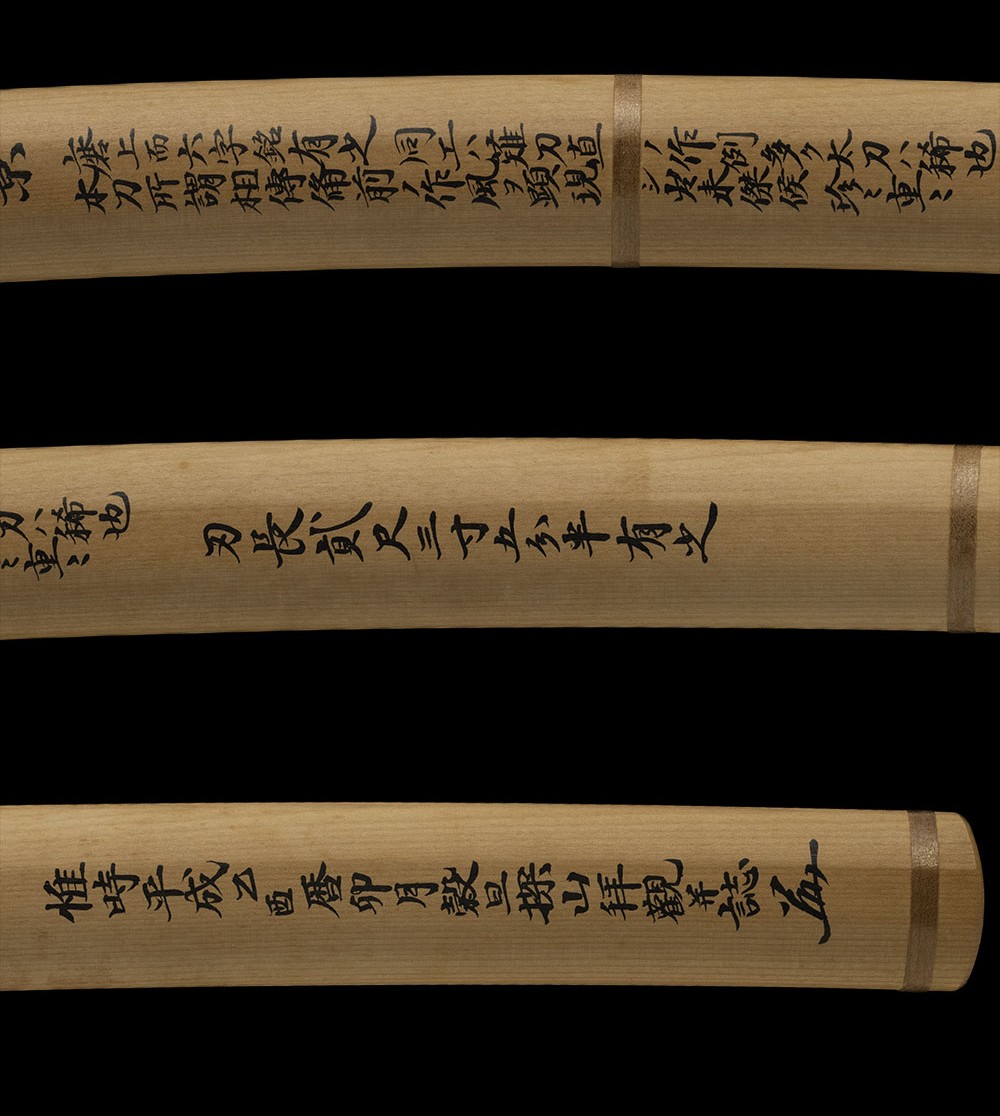
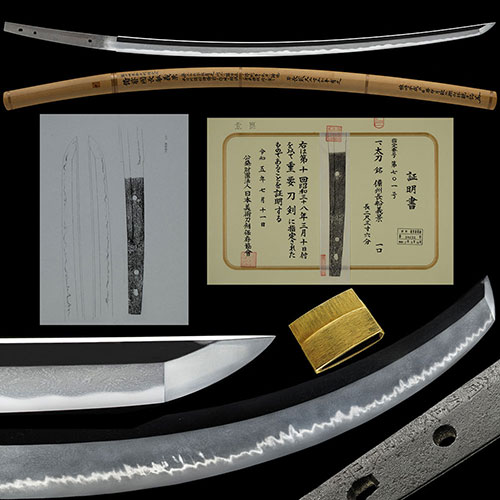
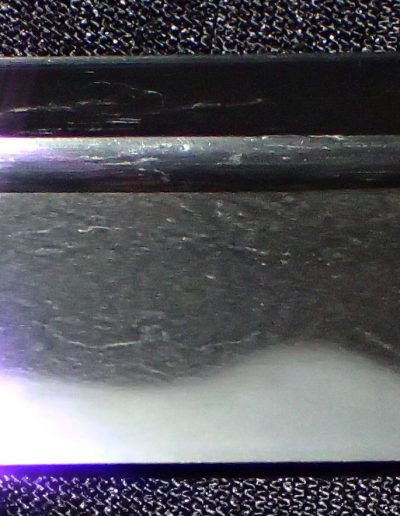
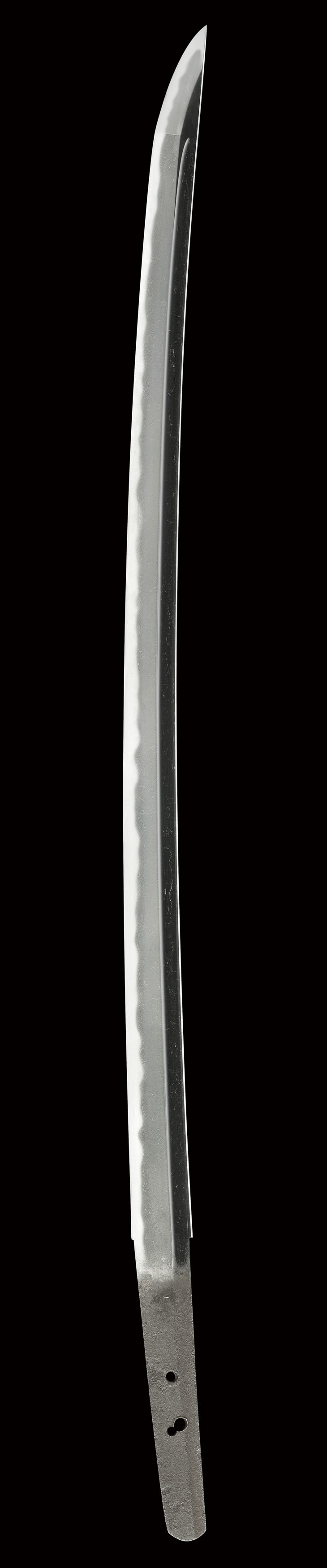
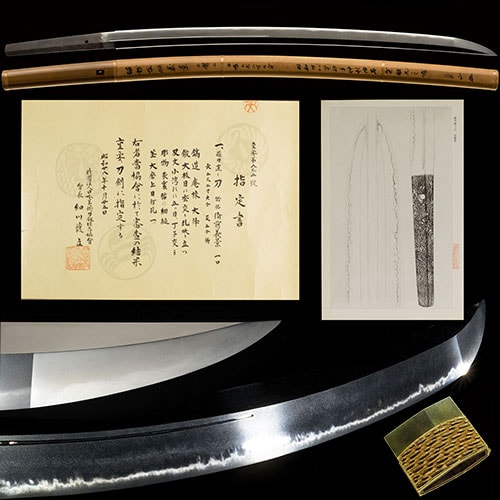
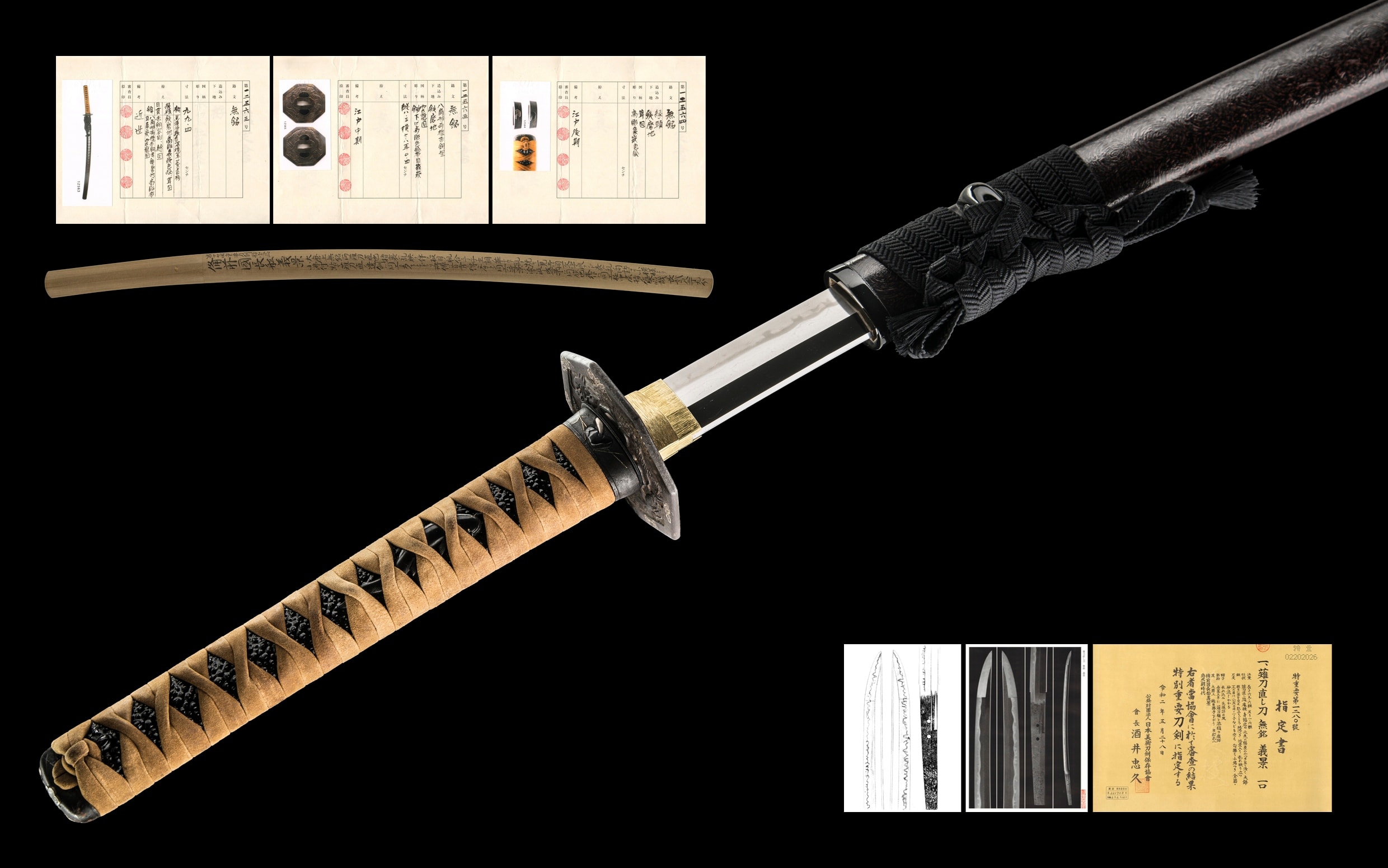
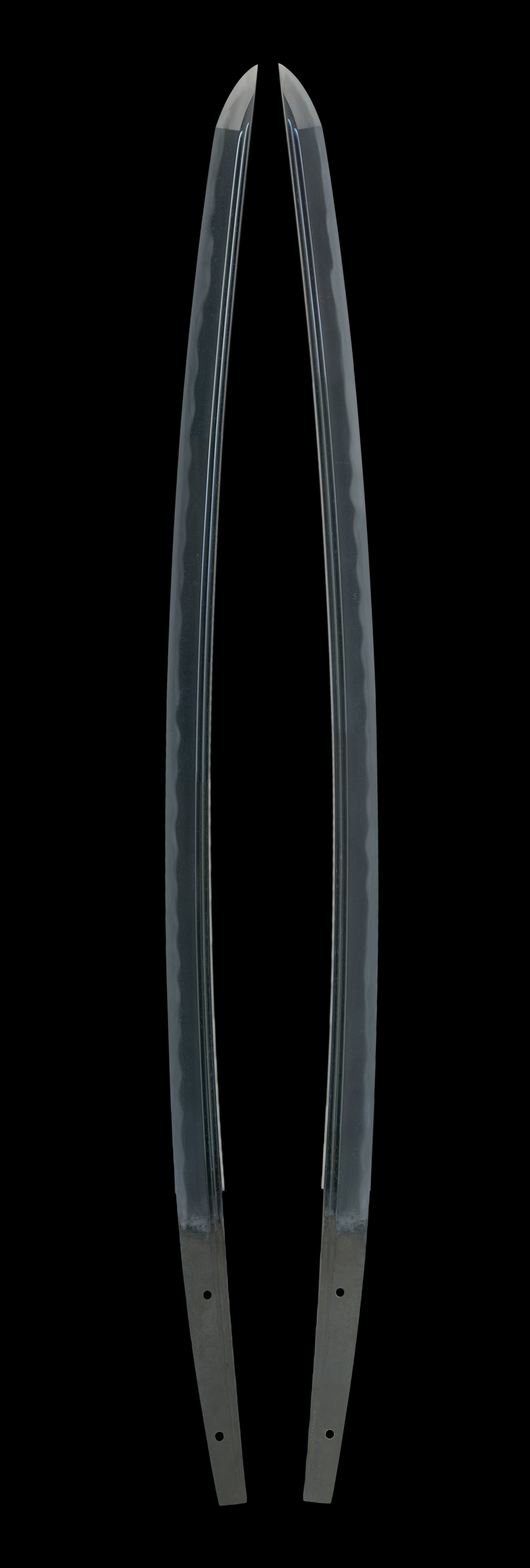
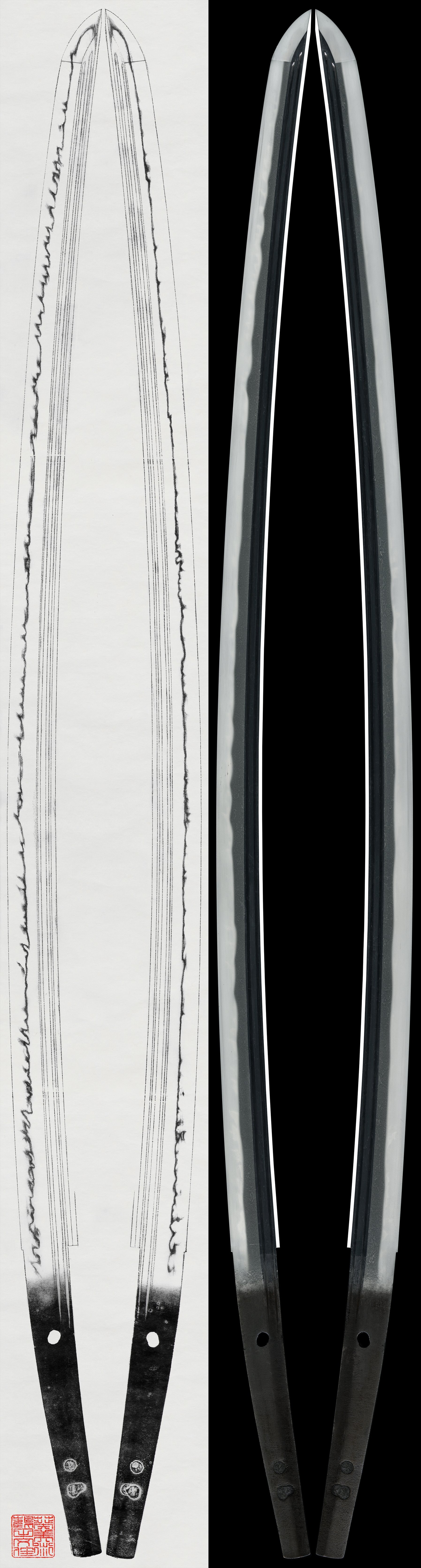
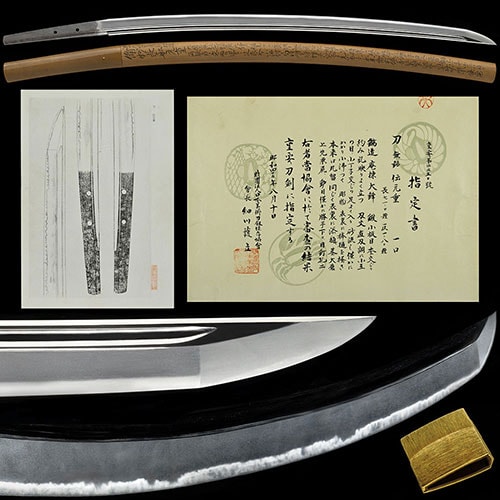
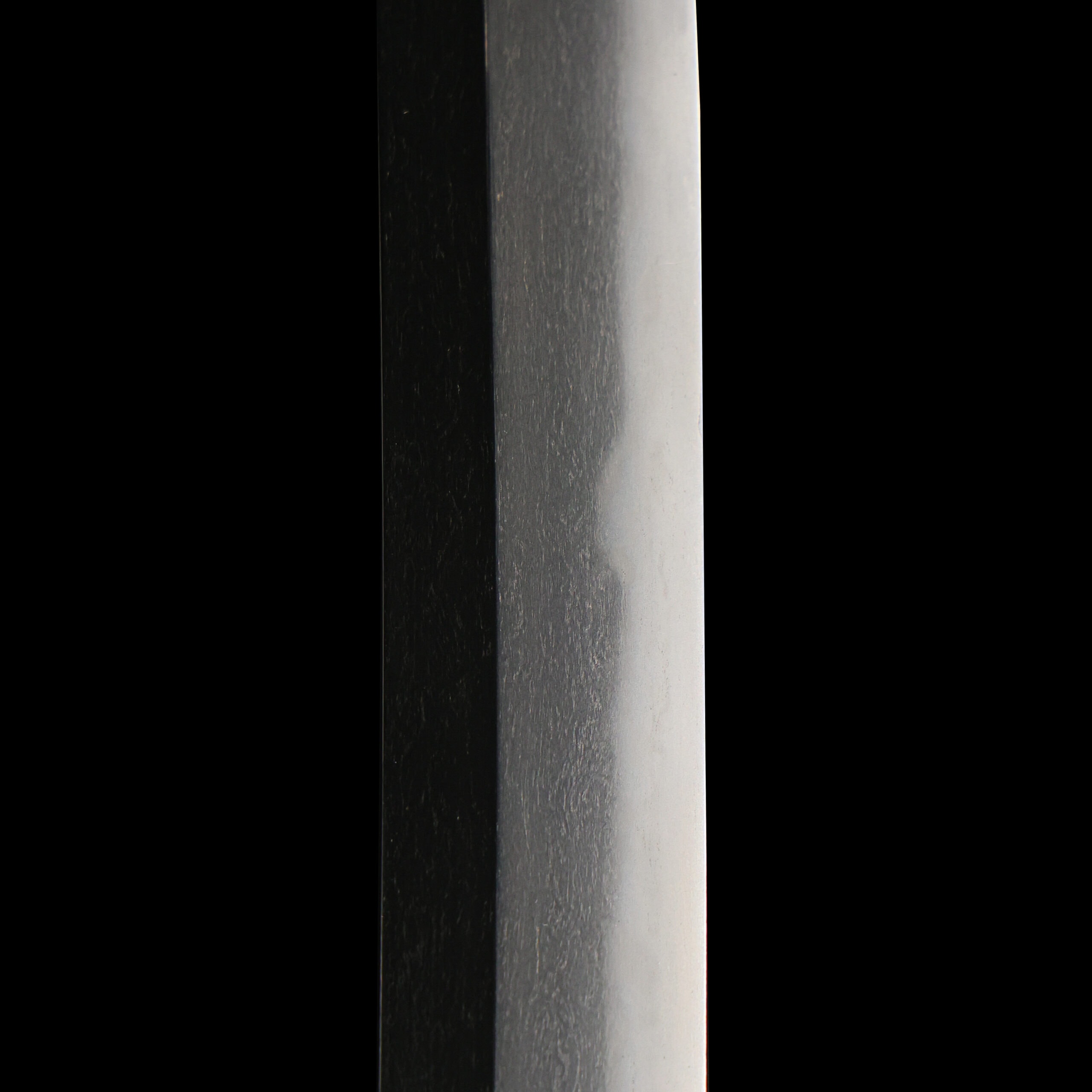
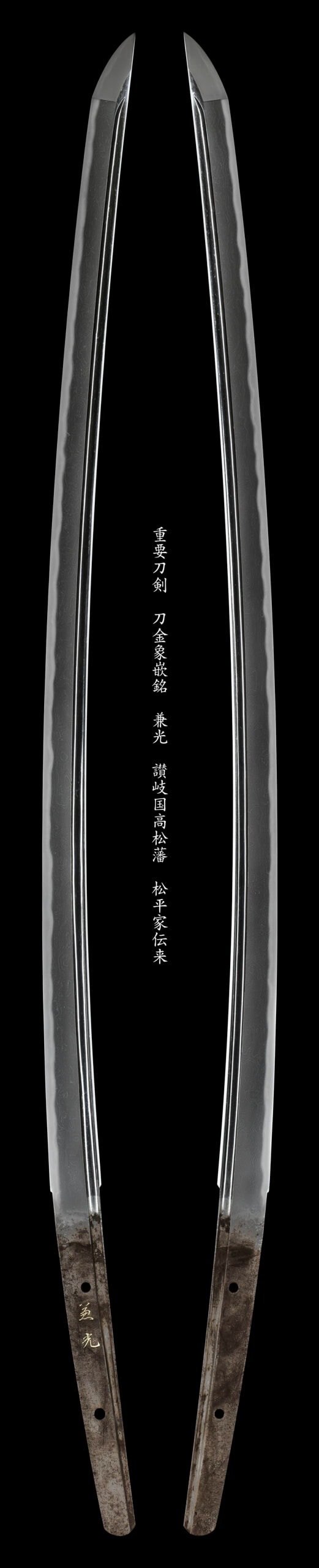
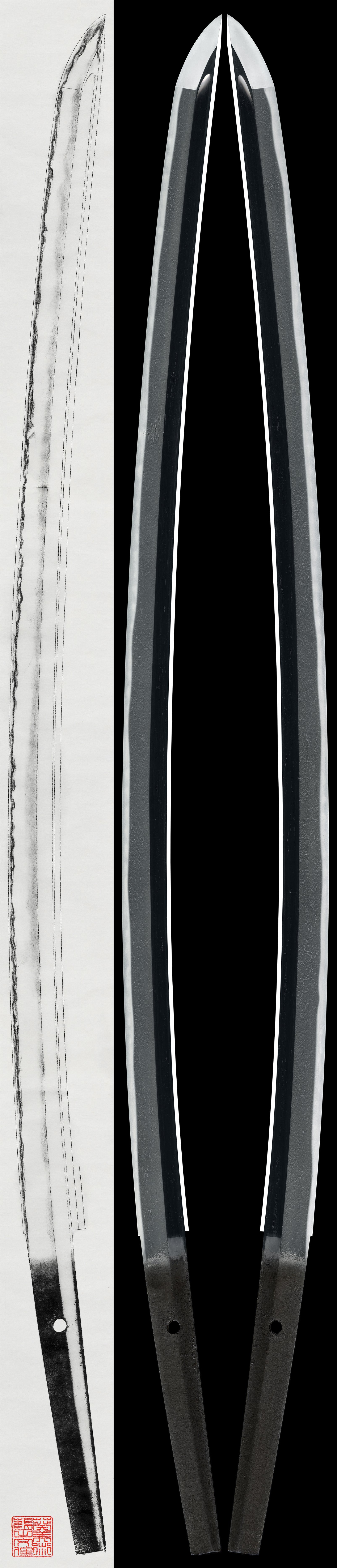
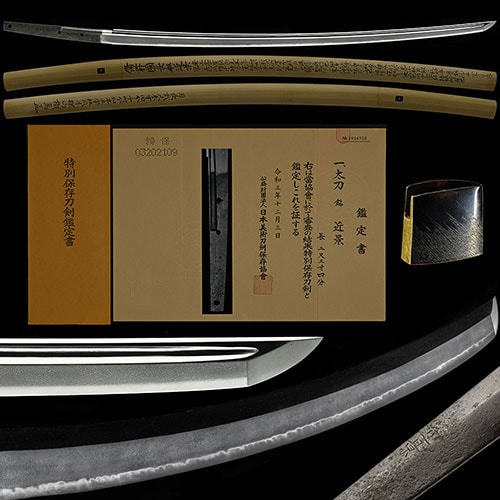
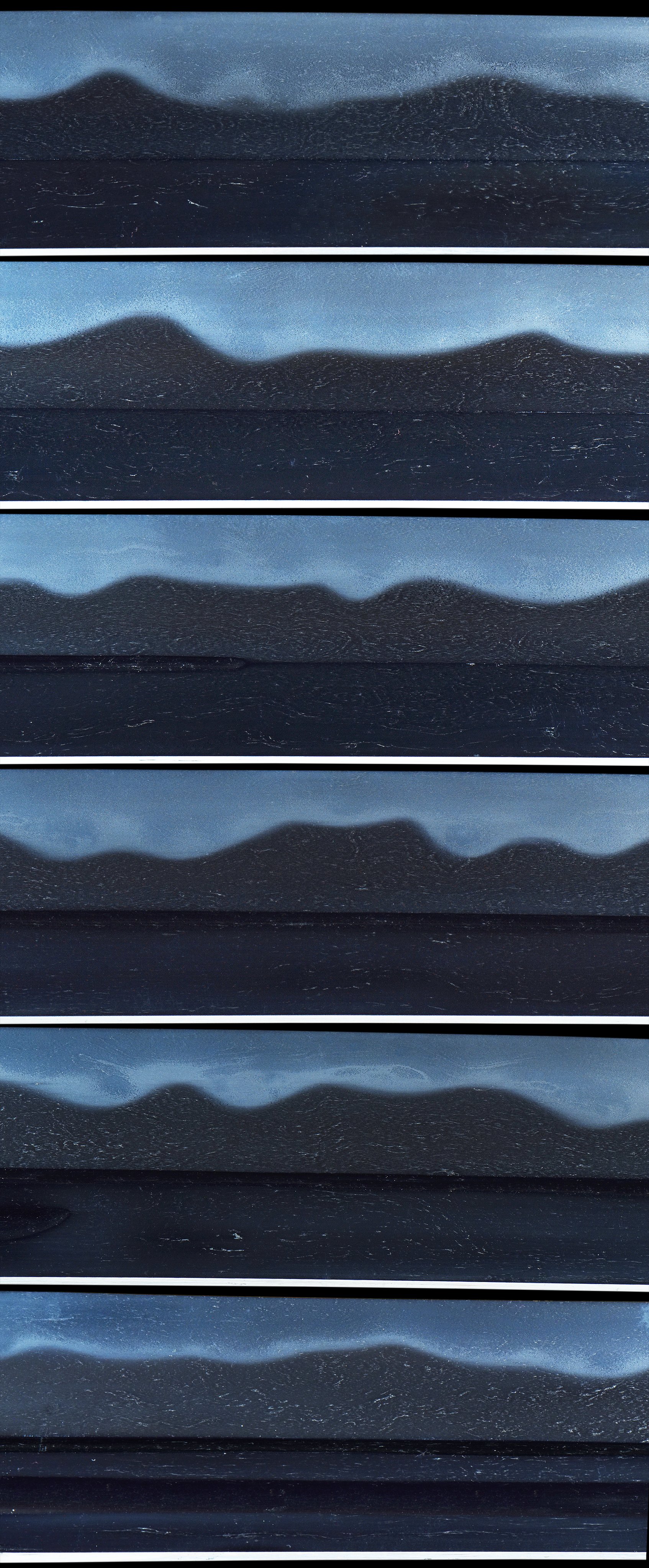
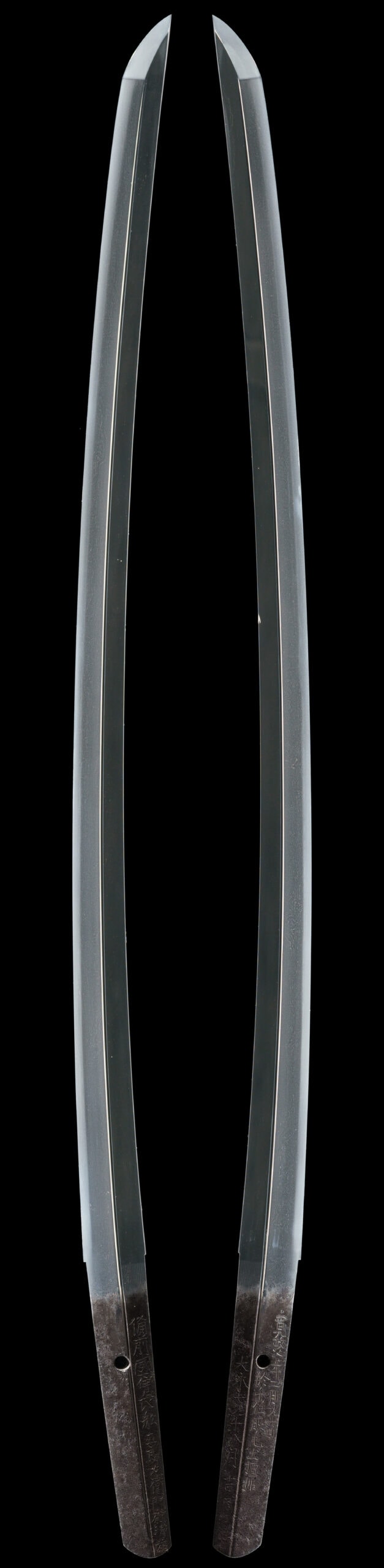
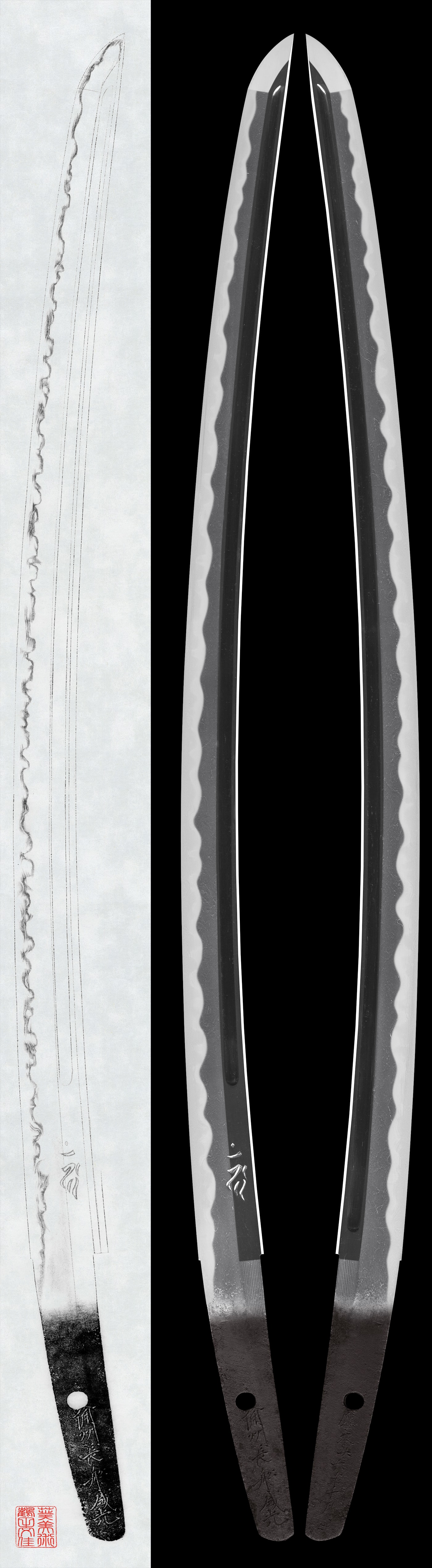
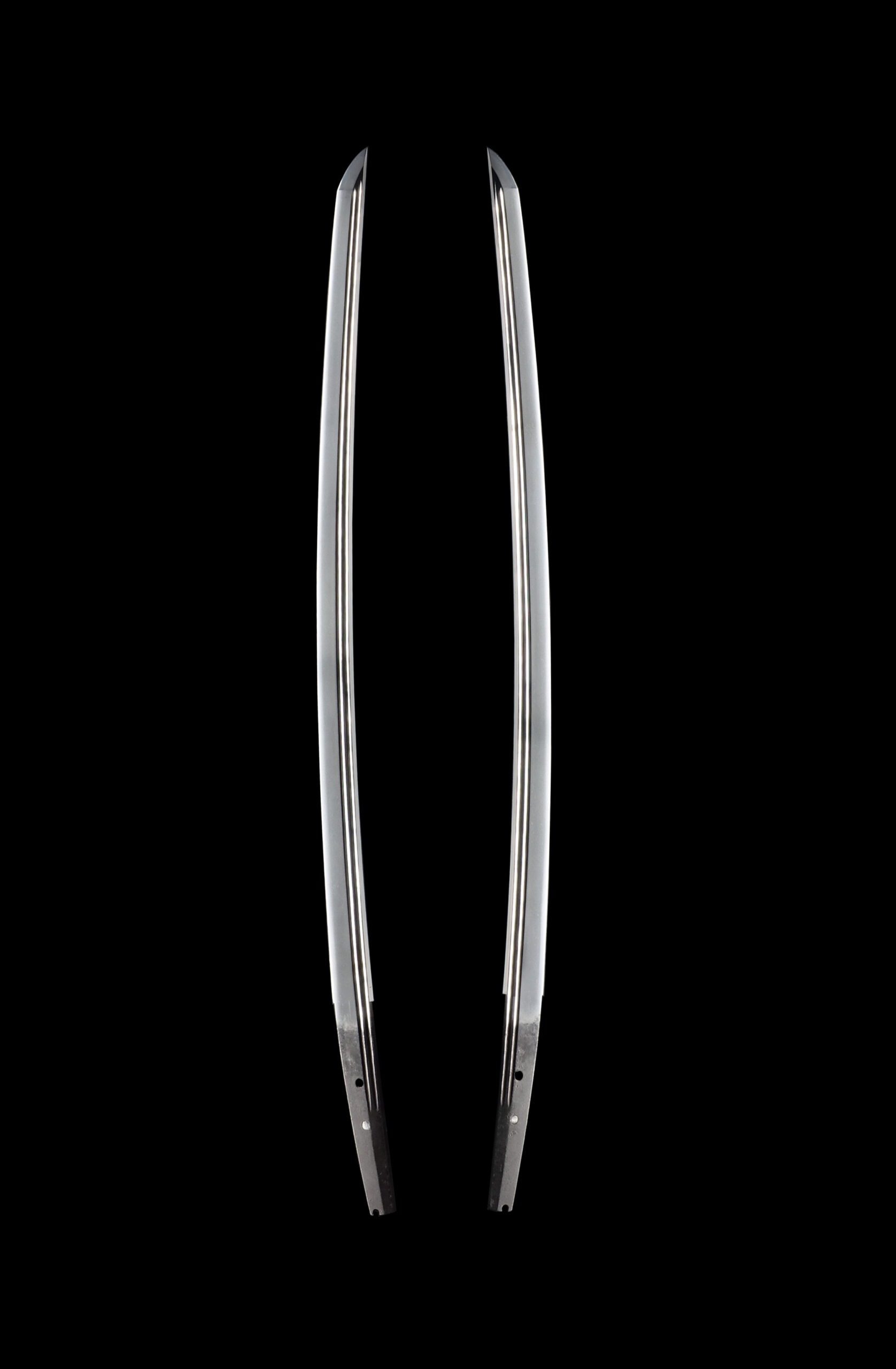
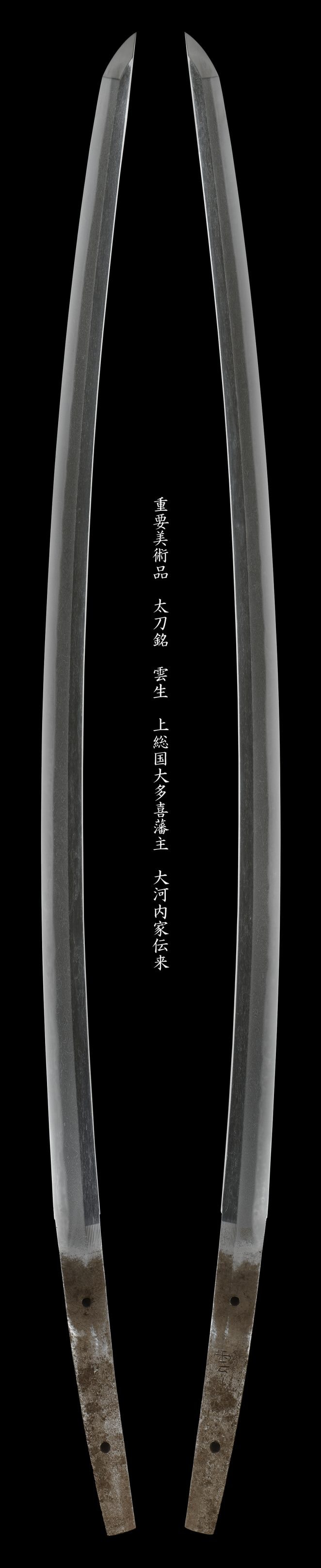
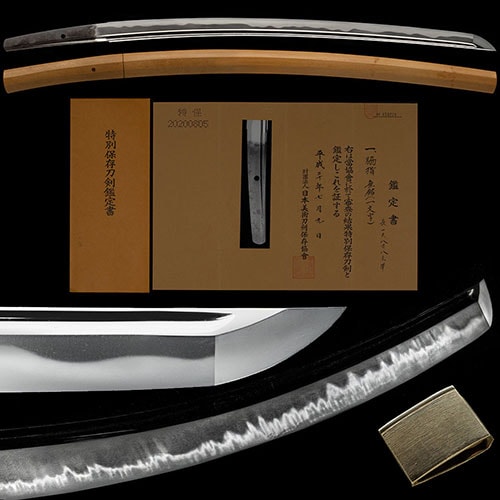
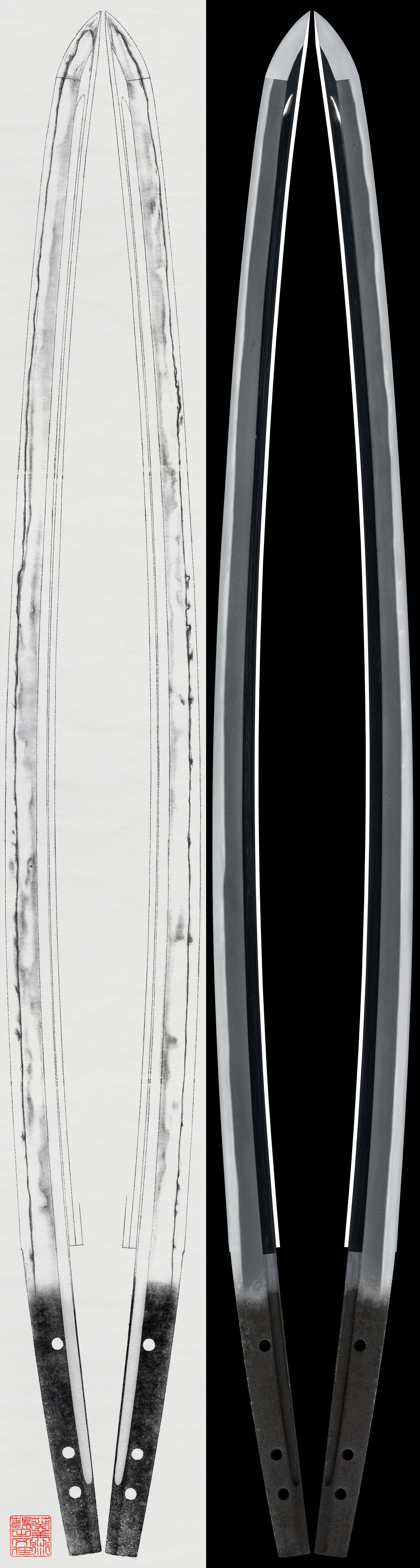
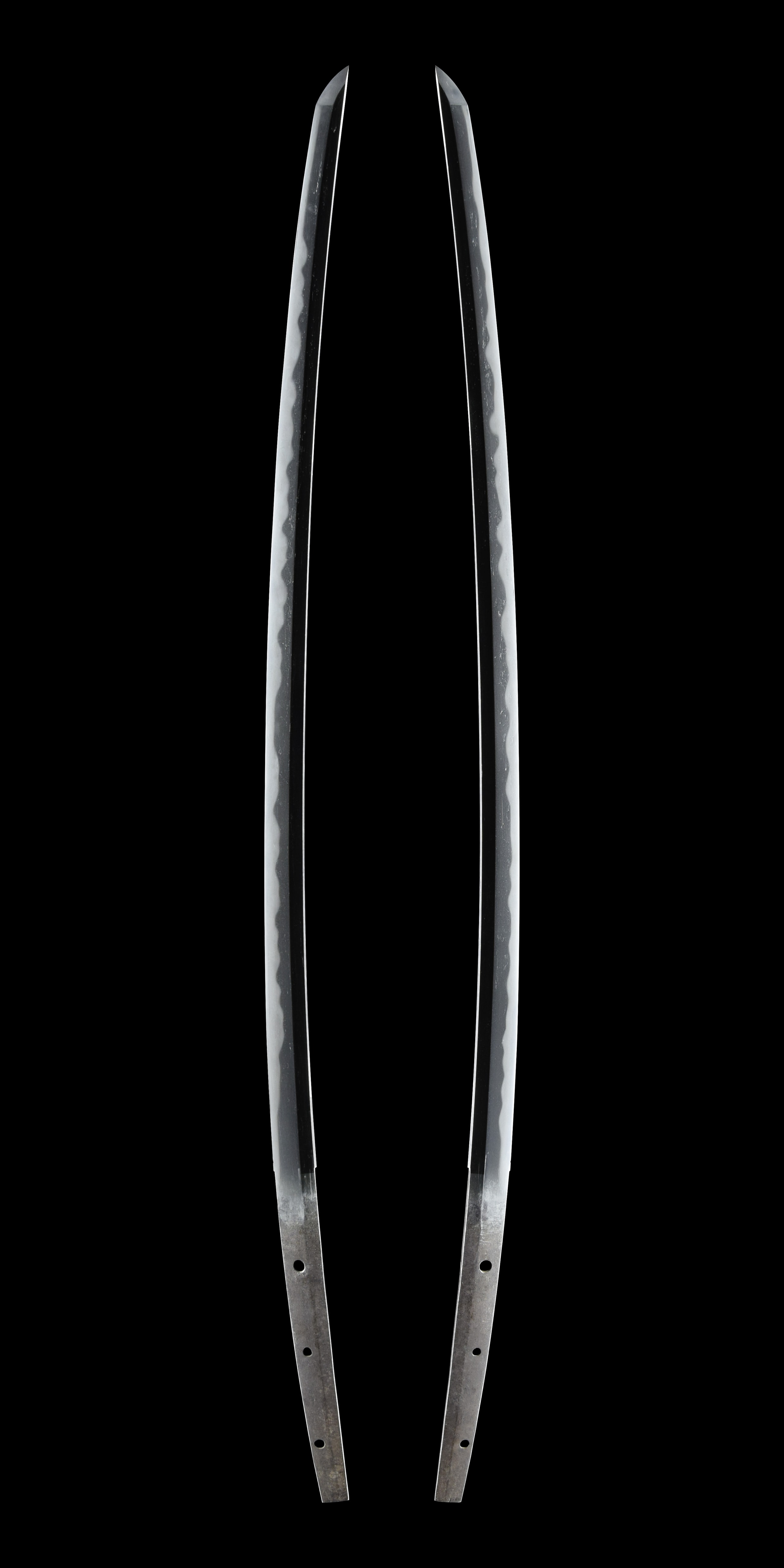
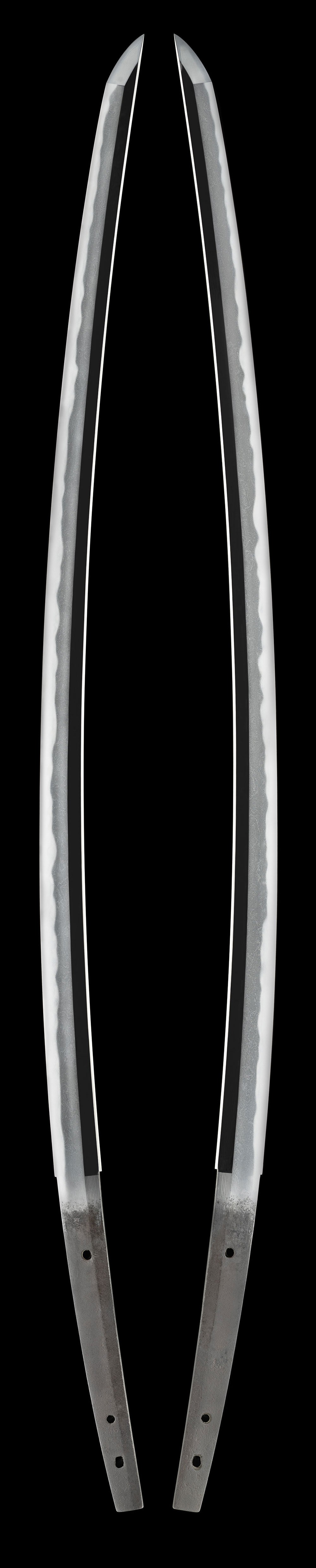
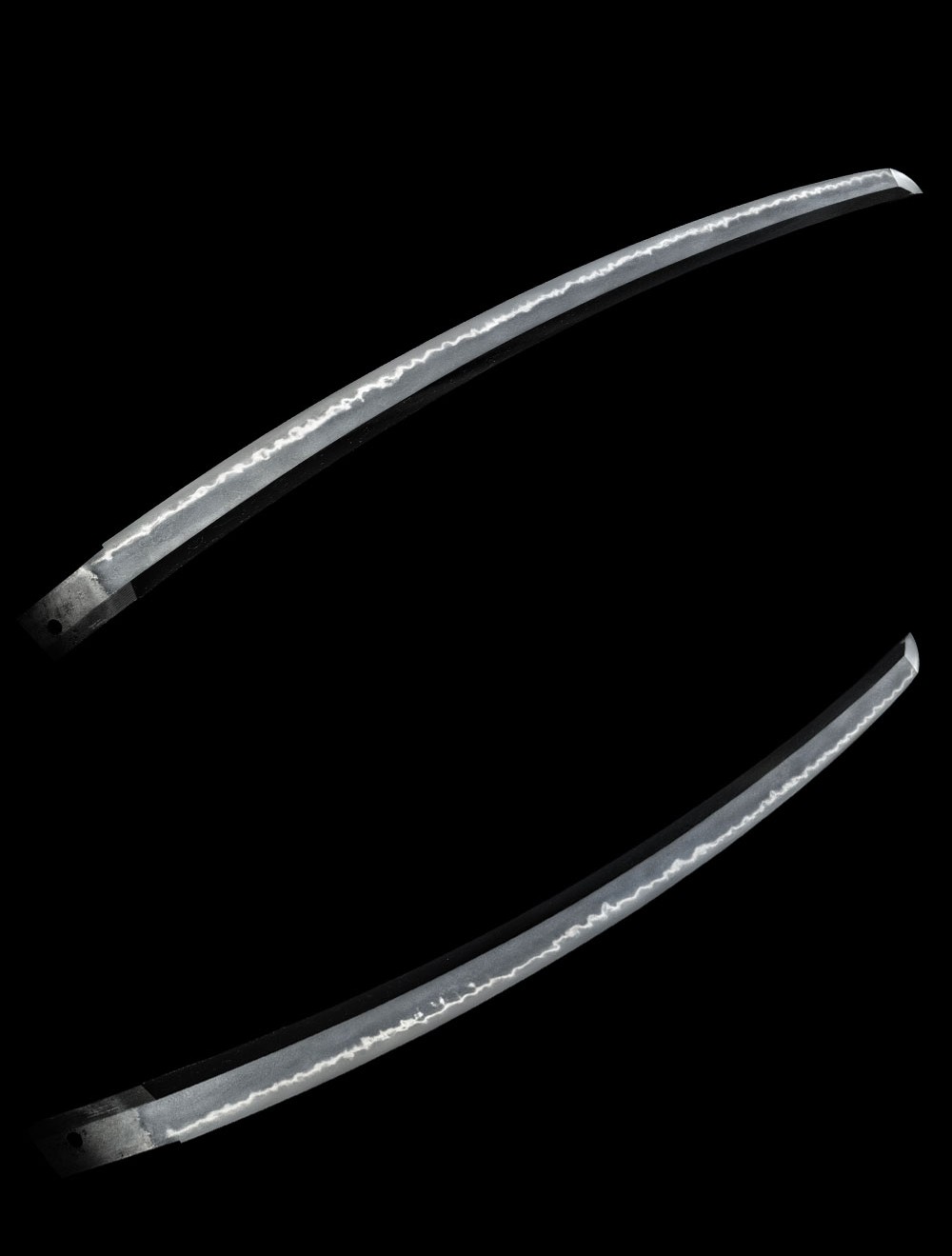
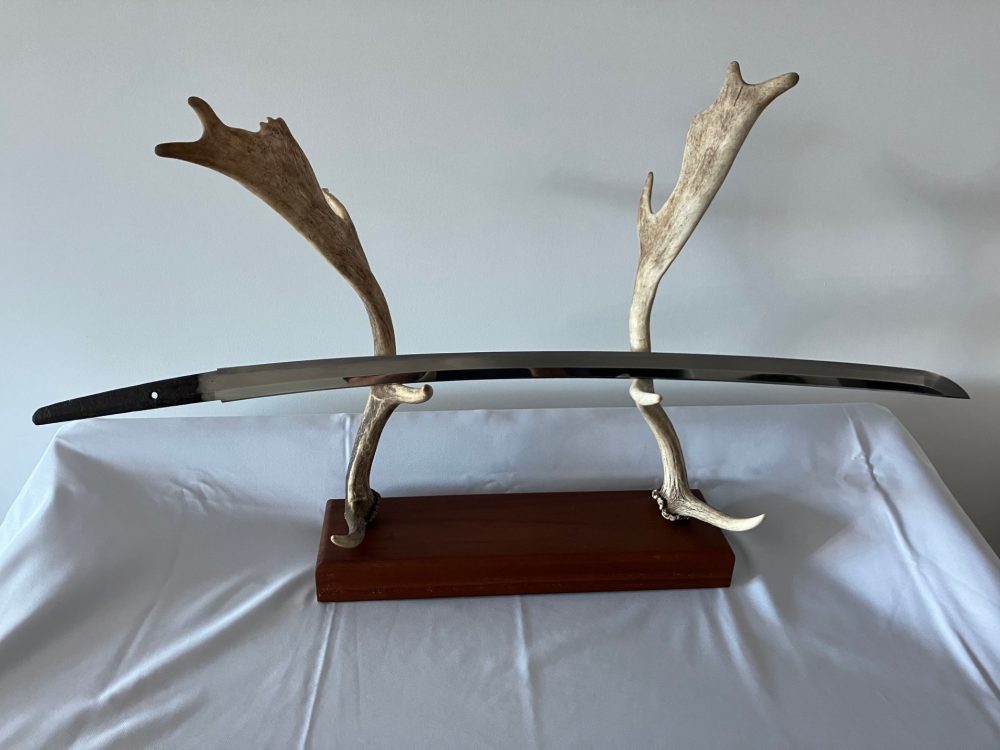
This is a magnificent Tachi by Yoshikage, designated as a Juyo Token. Yoshikage is considered a representative smith of Soden Bizen, known for his wide mihaba and koshi-zori form. The blade features a vibrant hamon with gunome-choji, tobiyaki, kinsuji, and sunagashi, showcasing the characteristics of the Soden Bizen tradition.

NBTHK Setsumei

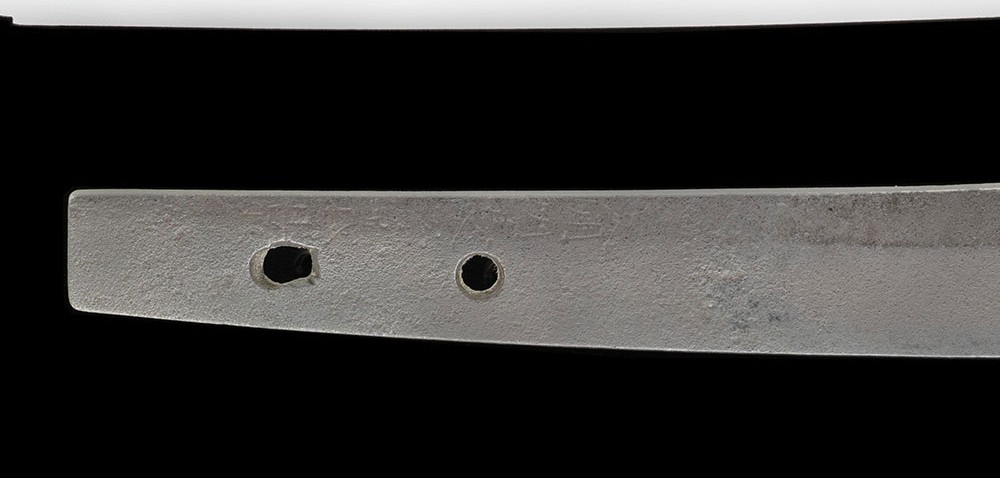
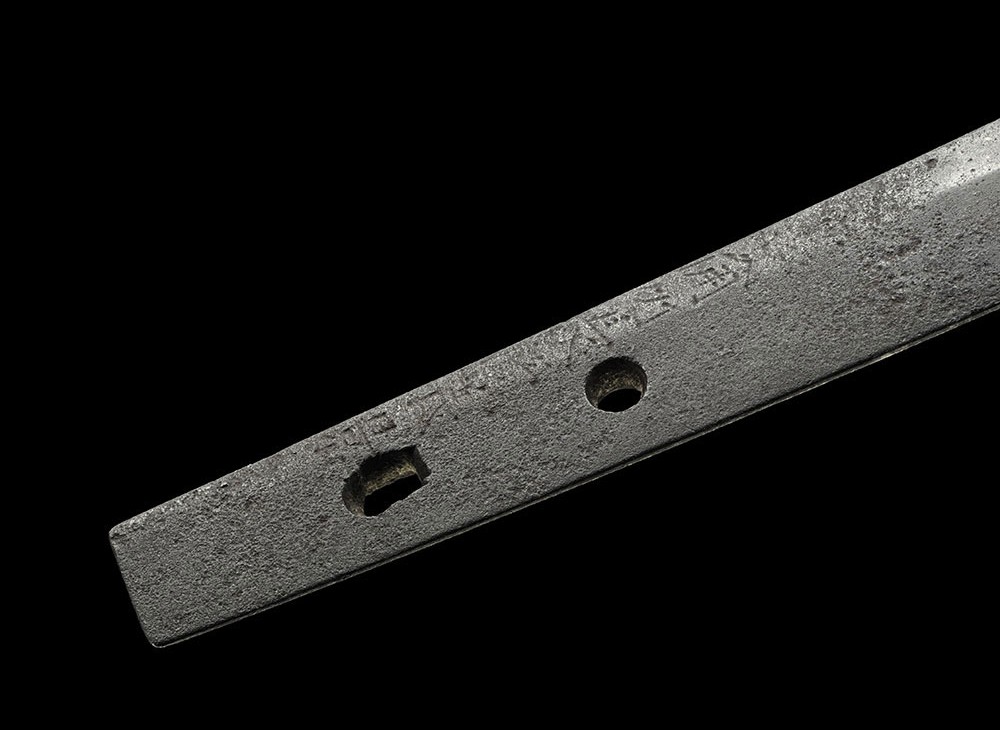
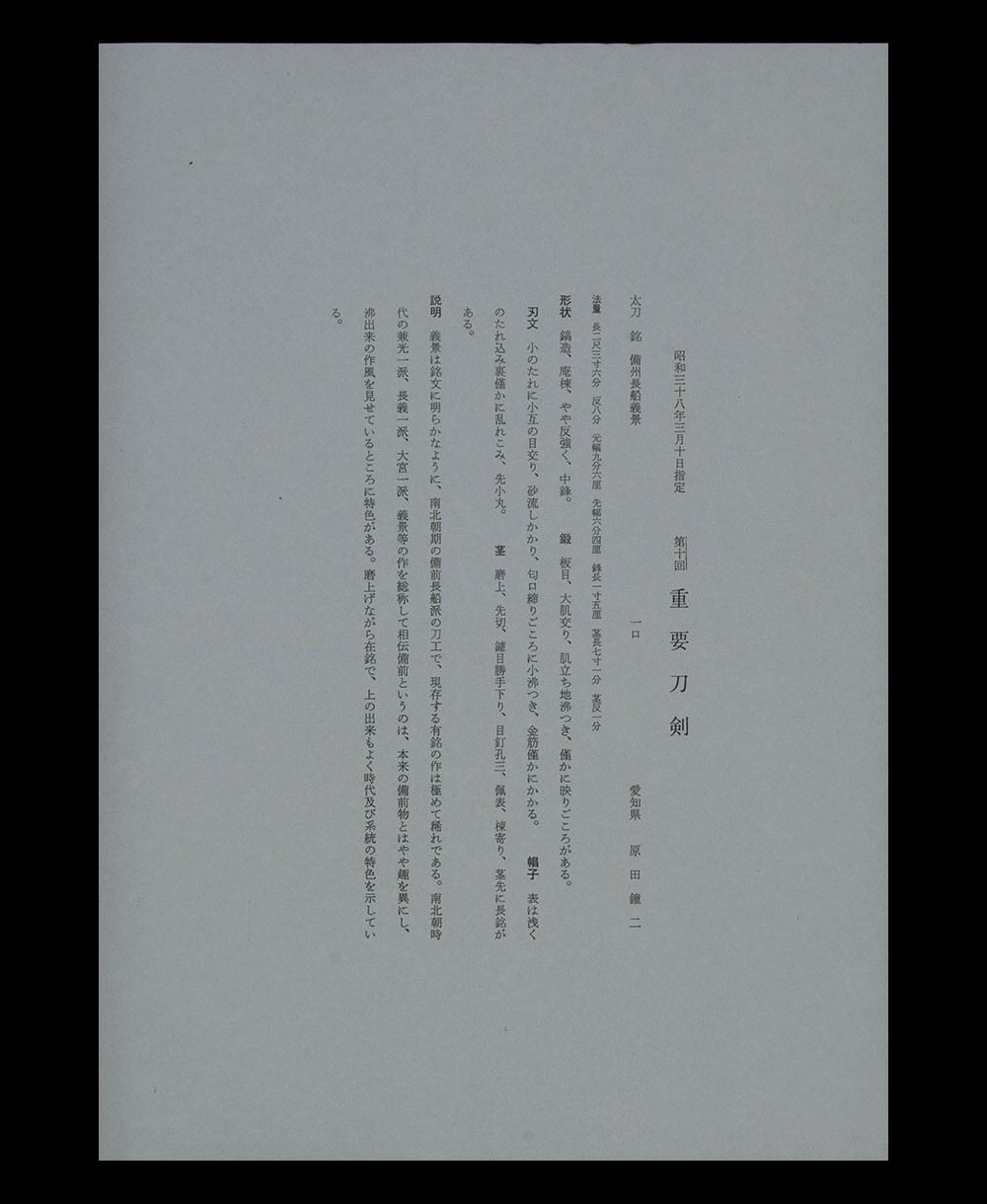
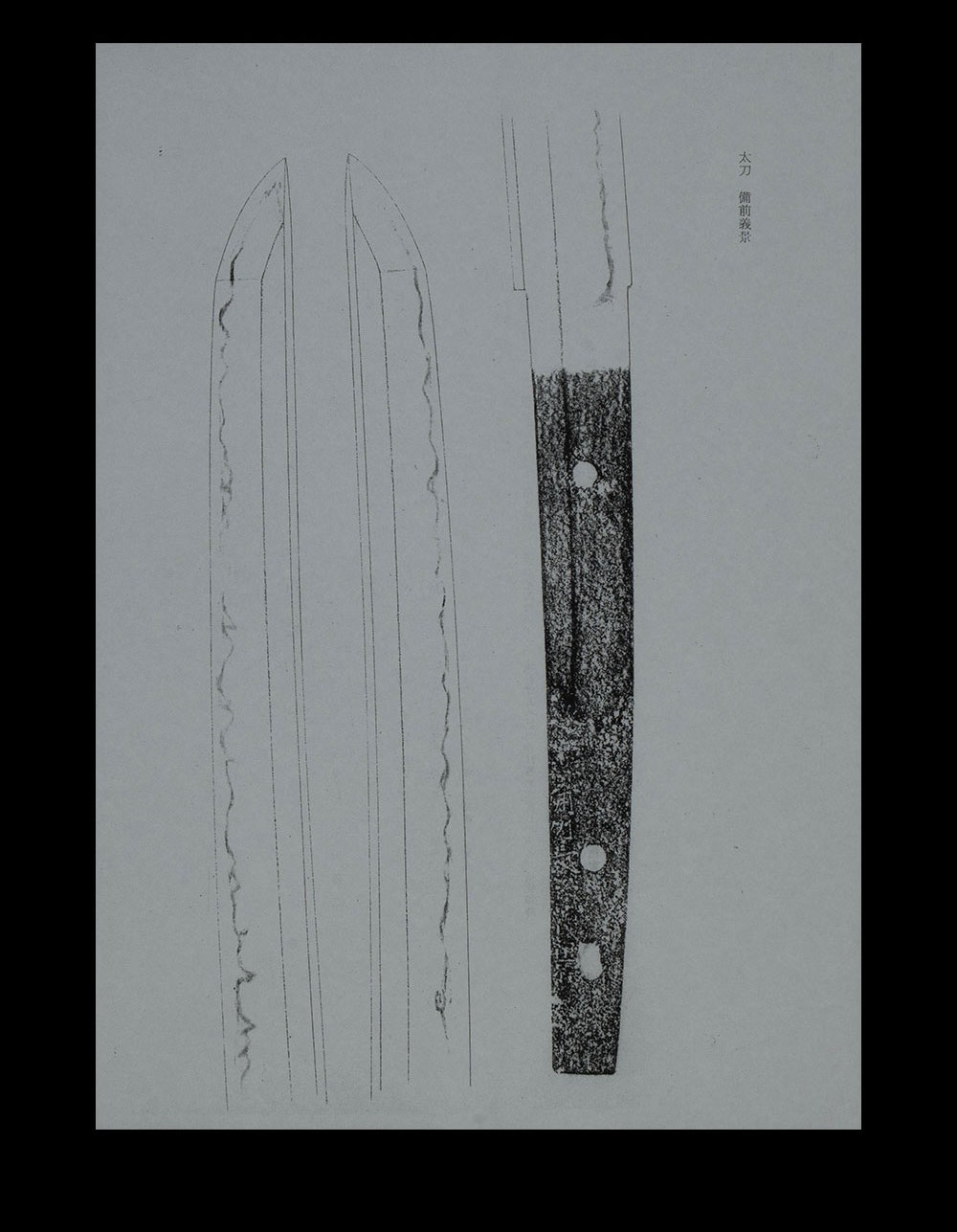
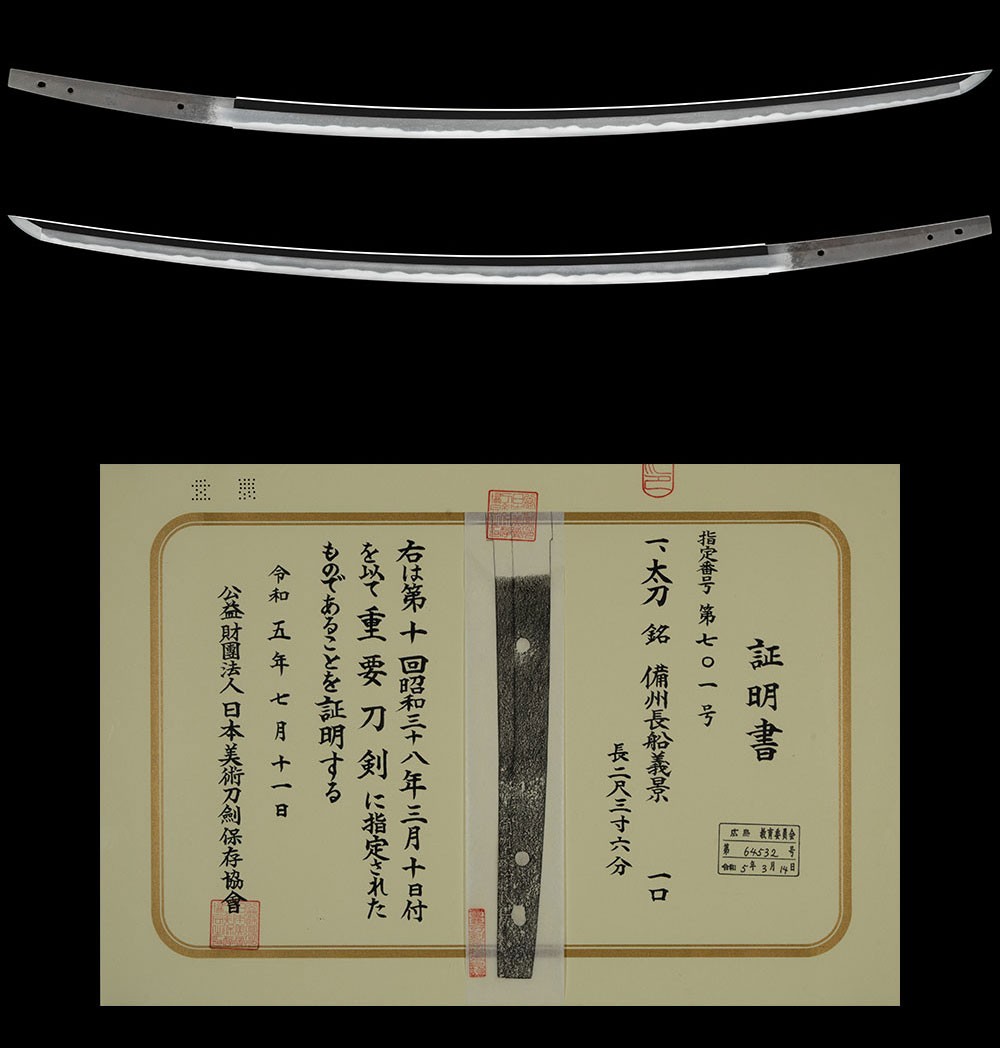
Jūyō-Tōken, 10th Session — Designated March 10, 1963 Tachi, mei: Bishū Osafune Yoshikage (備州長船義景) Measurements Nagasa 71.5 cm, sori 2.4 cm, motohaba 2.9 cm, sakihaba 1.9 cm, kissaki-nagasa 3.2 cm, nakago-nagasa 21.5 cm, nakago-sori 0.3 cm Description Keijō: shinogi-zukuri, iori-mune; somewhat strong curvature; chū-kissaki. Kitae: itame-hada mixed with conspicuous ō-hada; the grain stands (hada-dachi), with ji-nie; there is a faint suggestion of utsuri. Hamon: ko-notare mixed with ko-gunome; with sunagashi; the nioiguchi tends to be tight, with ko-nie; slight kinsuji appears. Bōshi: On the omote, a shallow notare-komi; on the ura, a slight midare-komi; the tip turns back in ko-maru. Horimono: None. Nakago: suriage; kiri-jiri; katte-sagari yasurime; three mekugi-ana; the long signature is on the ha-omote side, set toward the mune, close to the nakago-jiri. Artisan Osafune Yoshikage Era Nanbokuchō period Explanation As is clear from the inscription, Yoshikage was a swordsmith of the Bizen Osafune group in the Nanbokuchō period, and extant works bearing his signature are extremely rare. The collective term Sōden-Bizen refers to works of the Nanbokuchō period by the Kanemitsu lineage, the Chōgi lineage, the Ōmiya lineage, and by Yoshikage and others. These differ somewhat in character from “orthodox” Bizen works, and their distinctive feature is that they display a nie-deki style of workmanship. Although this blade has been shortened (suriage), it retains its signature; its workmanship is also good, and it shows the characteristic features of its period and lineage.

NihontoWatch MonNihontoWatchBETA
MarketEncyclopedia
Swords›Bizen-den›Osafune›Chogi›Sōden-Bizen›Yoshikage›Yoshikage Tachi Juyo Token
tachiJūyō
Chogi Yoshikage

Yoshikage Tachi Juyo Token

mei · Osafune · Nanbokucho · nagasa 71.3cm · sori 2.2cm

Price on request
Visit seller website →
Chogi Yoshikage — 1 of 22
Chogi Yoshikage — 2 of 22
Chogi Yoshikage — 3 of 22
Chogi Yoshikage — 4 of 22
Chogi Yoshikage — 5 of 22
Chogi Yoshikage — 6 of 22
Chogi Yoshikage — 7 of 22
Chogi Yoshikage — 8 of 22
Chogi Yoshikage — 9 of 22
Chogi Yoshikage — 10 of 22
Chogi Yoshikage — 11 of 22
Chogi Yoshikage — 12 of 22
Chogi Yoshikage — 13 of 22
Chogi Yoshikage — 14 of 22
Chogi Yoshikage — 15 of 22
Chogi Yoshikage — 16 of 22
Chogi Yoshikage — 17 of 22
Chogi Yoshikage — 18 of 22
Chogi Yoshikage — 19 of 22
Chogi Yoshikage — 20 of 22
Chogi Yoshikage — 21 of 22
Chogi Yoshikage — 22 of 22
1 / 22
1 / 22
Chogi Yoshikage — 1 of 22Chogi Yoshikage — 2 of 22Chogi Yoshikage — 3 of 22Chogi Yoshikage — 4 of 22Chogi Yoshikage — 5 of 22Chogi Yoshikage — 6 of 22Chogi Yoshikage — 7 of 22Chogi Yoshikage — 8 of 22Chogi Yoshikage — 9 of 22Chogi Yoshikage — 10 of 22Chogi Yoshikage — 11 of 22Chogi Yoshikage — 12 of 22Chogi Yoshikage — 13 of 22Chogi Yoshikage — 14 of 22Chogi Yoshikage — 15 of 22Chogi Yoshikage — 16 of 22Chogi Yoshikage — 17 of 22Chogi Yoshikage — 18 of 22Chogi Yoshikage — 19 of 22Chogi Yoshikage — 20 of 22Chogi Yoshikage — 21 of 22Chogi Yoshikage — 22 of 22
Measurements & details
Smith
Chogi Yoshikage
Type
Tachi
School
Chogi
Period
Around 1334–1363(Kenmu ND)
Province
Bizen
Signature
Signed(14% of this smith's designated works are signed)
Measurements
Nagasa 71.3cmSori 2.2cmMotohaba 3cmSakihaba 2cmKasane 0.5cmWeight 669g
Description

This is a magnificent Tachi by Yoshikage, designated as a Juyo Token. Yoshikage is considered a representative smith of Soden Bizen, known for his wide mihaba and koshi-zori form. The blade features a vibrant hamon with gunome-choji, tobiyaki, kinsuji, and sunagashi, showcasing the characteristics of the Soden Bizen tradition.

NBTHK Zufu Commentary

Juyo #10

AI translation — may contain errors

-, 10th Session — Designated March 10, 1963

, : Bishū Yoshikage (備州長船義景)

Measurements 71.5 cm, 2.4 cm, 2.9 cm, 1.9 cm, 3.2 cm, 21.5 cm, 0.3 cm

Description Keijō: , ; somewhat strong curvature; . : mixed with conspicuous ō-hada; the grain stands (), with ; there is a faint suggestion of . : mixed with ; with ; the tends to be tight, with ; slight appears. : On the , a shallow ; on the , a slight ; the tip turns back in . : None. : ; ; ; three ; the long signature is on the side, set toward the , close to the .

Artisan Yoshikage

Era period

Explanation As is clear from the inscription, Yoshikage was a swordsmith of the group in the period, and extant works bearing his signature are extremely rare.

The collective term Sōden-Bizen refers to works of the period by the Kanemitsu lineage, the Chōgi lineage, the lineage, and by Yoshikage and others. These differ somewhat in character from “orthodox” works, and their distinctive feature is that they display a style of workmanship.

Although this blade has been shortened (), it retains its signature; its workmanship is also good, and it shows the characteristic features of its period and lineage.

About the maker

Yoshikage

義景

Bizen Osafune, Soden-Bizen (a collateral Osafune line) · Bizen · around 1334-1363

Fujishiro Jo saku · Tōken Taikan top 5%

4 pieces on the market now

›

Two of Yoshikage's signed blades carry a date, one to Enbun 2 (1357) and one to Ōan 7 (1374), and on these few inscribed pieces the whole of his record rests. He is a Bizen Osafune smith of the Nanbokuchō period, counted among the makers the published sources call Sōden-Bizen (相伝備前), the Osafune hands who worked the Sōshū-influenced manner in Bizen beside the lines of Kanemitsu and Nagayoshi. His lineage has long been argued. The older books made him a second son of Kagemitsu, or a pupil of Kanemitsu, or a pupil of Nagayoshi; in recent years, on the close resemblance of his workmanship and the distinctive way he cut his signature with the reverse chisel, the prevailing view is that he was "a collateral Osafune smith of the same kin as Chikakage and Morikage"[[c:1]]. The sword registers transmit two generations, a first toward the end of Kamakura and a second around Jōji, and authentic signed works are so scarce that the two are not easily separated.

The hand the published sources describe is a small-patterned, varied midare rather than the orthodox Osafune clove-flower. Over the jigane he tempers a suguha base into which he mixes ko-gunome, ko-chōji, angular kakubaru-ba and pointed togariba, the elements kept small and the intervals of the undulation tight, so that the line reads as densely animated yet modest in pattern. Within it run abundant ashi, saka-ashi and yō, the temper nioi-dominant with ko-nie that gathers somewhat in clusters, with kinsuji and sunagashi worked through and a slight yubashiri-like tobiyaki intermingled. The nioiguchi tends to subside, and it is exactly there that the judges locate him: in the Sōden-Bizen group, the published sources hold, "where the hamon keeps to small clusters and the nioiguchi subsides lies the point that marks out Yoshikage"[[c:2]]. The bōshi runs midare-komi with a pointed tendency and hakikake, on one Tokubetsu Jūyō katana turning at the tip in a pointed manner that the commentary names as conspicuously his own.

The jigane is the constant beneath that quiet temper. It is an itame mixed with mokume that tends to stand, a hada-dachi into which fine ji-nie settles densely, chikei enters well, and a jifu-toned texture appears in places, with a midare-utsuri standing in the surface. On the broadest blades the ji-nie is laid mijin, dust-fine and thick, and the chikei runs strong. This strongly nie-laden forging, with its frequent kinsuji and sunagashi, is what the prewar connoisseurs read when they placed him without hesitation among the Sōshū-den smiths, and what the modern judges mean when they say a blade "manifests the working range of Sōden-Bizen."

His recognized prime is the broad Nanbokuchō blade in the height-of-period shape: wide in body with little taper from base to tip, the kasane often notably thick, ending in a large point, and surviving for the most part ō-suriage and mumei. Against this stand the rare signed pieces, which skew quieter: one Jūyō tachi is essentially suguha-chō, subdued in workmanship, that the published sources keep precisely because authentic signatures are so few and it is valuable as reference. A separate register is the naginata-naoshi, blades reshaped from the polearm, for the published sources call him "an old master of the naginata"[[c:3]] and a large share of his attributions take that form, wide-bodied and shallow in sori, the shinogi-ji planed down, sometimes keeping traces of the naginata-hi and soe-hi on the tang. The two dated signatures, of Enbun and Ōan, fix this varied output securely in the mid-to-late Nanbokuchō.

What separates Yoshikage from his neighbours is what the judges name on his own blades. Within Sōden-Bizen his temper is read as "neither Kanemitsu's nor Nagayoshi's"[[c:4]]: smaller in pattern than the orthodox Osafune chōji, more subdued in the nioiguchi than the showier Chōgi hand, and laid over a jigane that carries a step more sunagashi and kinsuji than the Kanemitsu work. His signature, cut with the reverse chisel, is read in the same breath as his kantei, the commentary treating "the distinctive signature cut with the reverse chisel"[[c:5]] as one of the marks that fixes both his hand and his kinship to the collateral Osafune line. He stands, in short, as the quiet, nie-laden member of the Sōden-Bizen circle, the one whose interest lies in restraint rather than in flame.

For the collector Yoshikage is a scarce name on which little can ever change hands. Fujishiro grades him Jō saku. He has no National Treasures; his record runs instead through two Important Cultural Properties, one a signed wakizashi dated Ōan 7 held at Tanzan Shrine in Nara, the other a signed tachi, together with three Tokubetsu Jūyō and some sixty Jūyō blades, and the prewar Jūyō Bijutsuhin. Of recorded whereabouts his blades pass through long-held hands rather than the open market: a tachi once in the Date family, another transmitted in the Arisugawa-no-miya house, a katana whose tang bears the gold-inlaid possession inscription of Ōkubo Shirōzaemon-no-jō. The published commentary singles out his finest naginata-naoshi as "foremost among works by the same hand"[[c:6]]. With reliably signed pieces extremely few and most survivors ō-suriage and mumei, a Yoshikage in private hands comes to light only from time to time, and seldom near the top of his range; when one does, it is a quiet document of how the Sōshū manner was carried into late Osafune.

Historical importance

Where Yoshikage stands among comparable artisans: across all of nihontō, and within tradition, era, and period. The tiers (Foremost · Leading · Major · Notable) weigh official designations from the NBTHK and Japan's Agency for Cultural Affairs, together with historical honors of lasting repute such as the Sansaku and Meibutsu-chō.

随一
Foremost
屈指
Leading
有数
Major
著名
Notable

Select a lens to see how it's measured.

Designation record
66 designated works
Jūyō Bunkazai
2
Jūyō Bijutsuhin
2
Tokubetsu Jūyō
3
Jūyō
59
4 works by Yoshikage on the market→
Yoshikage — full profileBizen Osafune, Soden-Bizen (a collateral Osafune line) school

Dated Works

Years he was demonstrably active, proven by signed-and-dated blades

Active period
1363Editorial estimate: 1334–1363
1 of 7 designated works carry a date
About the school

Chogi

長義

Bizen-den

Phase: Sōden-Bizen相伝備前· 1330–1394

9 pieces on the market now

›

The Soden Bizen school encompasses the group of Nanbokucho-period Osafune smiths in Bizen Province whose work absorbed the technical influence of the Soshu-den, producing a distinctive synthesis that stands apart from both orthodox Bizen and pure Sagami practice. Learn more →

4 recorded smiths284 designated works
Leading smiths
SmithEraDesignated
Chogi長義1356-1379108
Kanenaga兼長1362-138894
Yoshikage義景1334-136366
Nagashige長重1334-134216
Nagashige長重1356-13610
Explore the Chogi school →
NBTHK Certificate
Jūyō Tōken重要刀剣
Important Sword
›

A blade of top-grade workmanship and condition, formally judged to rank with a nationally recognized Important Art Object (Jūyō Bijutsuhin). Awarded only at the NBTHK’s competitive annual examination.

Of Japan’s roughly 2.5 million registered swords, only 12,307 (about 1 in 203) have ever attained Jūyō.

About the NBTHK›

The NBTHK (Nihon Bijutsu Tōken Hozon Kyōkai, the Society for the Preservation of Japanese Art Swords) is a public-interest incorporated foundation founded in 1948 and supervised by Japan’s Agency for Cultural Affairs (Bunkachō); it is based at the Japanese Sword Museum in Tokyo. Its expert panels physically examine each submitted work (shinsa) and issue a certificate (kanteishō) ranking it by artistic and historical merit. NBTHK papers are the most widely recognized standard of authentication for Japanese swords and fittings.

NBTHK official site→
Seller
E
Eirakudo
🇯🇵Ships from Japan
›
✓Verified dealereirakudo.shop
✓Ships worldwide✓English supportWire transferCredit card
Return policy

Returns/exchanges/cancellations not accepted after shipment except for significant defects; if defective, return/exchange possible within 3 days of arrival (return shipping paid by customer).

View all of Eirakudo’s listings→View this item on the dealer’s site→

More works by Chogi Yoshikage

View all →
Nihonto Australia
Tokujū
Katana - Tokuju - by Chogi Yoshikage - A Tokubetsu Juyo Masterpiece Yoshikage KatanaKatana - Tokuju - by Chogi Yoshikage - A Tokubetsu Juyo Masterpiece Yoshikage Katana

Katana

ByChogi Yoshikage
Ask
Samurai Nippon
Tokuho
Katana - Tokuho - by Chogi Yoshikage - Osafune Yoshikage (Mumei)Katana - Tokuho - by Chogi Yoshikage - Osafune Yoshikage (Mumei)

Katana

ByChogi Yoshikage
¥850,000
Nihonto Australia
Tokuho
Wakizashi - Tokuho - by Chogi Yoshikage - Yoshikage - with NBTHK Tokubetsu Hozon CertificateWakizashi - Tokuho - by Chogi Yoshikage - Yoshikage - with NBTHK Tokubetsu Hozon Certificate

Wakizashi

ByChogi Yoshikage
Ask

Previously sold by Chogi Yoshikage

Eirakudo
Jūyō
Katana - Jūyō - by Chogi Yoshikage - Bisyu Osafune Yoshikage - Juyo TokenKatana - Jūyō - by Chogi Yoshikage - Bisyu Osafune Yoshikage - Juyo Token
Sold

Katana

ByChogi Yoshikage
SOLD
Unique Japan
Tokujū
Katana - Tokuju - by Chogi Yoshikage - A Yoshikage Naginata-Naoshi KatanaKatana - Tokuju - by Chogi Yoshikage - A Yoshikage Naginata-Naoshi Katana
Sold

Katana

ByChogi Yoshikage
SOLD

More Sōden-Bizen works

View all →
Katanahanbai
Tokuho
Wakizashi - Tokuho - by Osafune Tomomitsu - Bishu Osafune Tomomitsu, Dated Teiji 5th Year, 8th MonthWakizashi - Tokuho - by Osafune Tomomitsu - Bishu Osafune Tomomitsu, Dated Teiji 5th Year, 8th Month

Wakizashi

ByOsafune Tomomitsu
¥4,800,000
Goushuya
Jūyō
Katana - Jūyō - by Osafune Kanemitsu - Kanemitsu with Gold Inlay InscriptionKatana - Jūyō - by Osafune Kanemitsu - Kanemitsu with Gold Inlay Inscription

Katana

ByOsafune Kanemitsu
Ask
Aoi Art
Tokuho
Katana - Tokuho - by Osafune Motomitsu - Mumei (Attributed to Osafune Motomitsu)Katana - Tokuho - by Osafune Motomitsu - Mumei (Attributed to Osafune Motomitsu)

Katana

ByOsafune Motomitsu
¥1,200,000
Iida Koendo
Jūyō
Tachi - Jūyō - by Osafune Shigezane - Bishu Osafune ju Shigezane, Enbun 3rd year, 12th monthTachi - Jūyō - by Osafune Shigezane - Bishu Osafune ju Shigezane, Enbun 3rd year, 12th month

Tachi

ByOsafune Shigezane
¥33,000,000
Eirakudo
Jūyō
Katana - Jūyō - by Motoshige - Motoshige - Juyo TokenKatana - Jūyō - by Motoshige - Motoshige - Juyo Token

Katana

ByMotoshige
¥6,000,000
Samurai Museum
Katana - by Osafune Kanemitsu - Antique Japanese Sword Katana Attributed to Den Osafune Kanemitsu NTHK Yushu Saku Kanteisho CertificateKatana - by Osafune Kanemitsu - Antique Japanese Sword Katana Attributed to Den Osafune Kanemitsu NTHK Yushu Saku Kanteisho Certificate

Katana

ByOsafune Kanemitsu
¥27,992
Choshuya
Jūyō
Tachi - Jūyō - by Osafune Motomitsu - Signed Bishu (ika kire) den Osafune MotomitsuTachi - Jūyō - by Osafune Motomitsu - Signed Bishu (ika kire) den Osafune Motomitsu

Tachi

ByOsafune Motomitsu
¥8,500,000
Eirakudo
Tokuho
Tachi - Tokuho - by Osafune Chikakage - Zaimei Chikakage Tachi - Tokubetsu Hozon TokenTachi - Tokuho - by Osafune Chikakage - Zaimei Chikakage Tachi - Tokubetsu Hozon Token

Tachi

ByOsafune Chikakage
¥5,500,000

More from the Chogi school

View all →
Nihonto Antiques
Jūyō
Katana - Jūyō - by Chogi - Den Chōgi (Nagayoshi) - JuyoKatana - Jūyō - by Chogi - Den Chōgi (Nagayoshi) - Juyo

Katana

ByChogi
Ask
Giuseppe Piva
Jūyō
Katana - Jūyō - by Kencho - Katana by Kencho, circa 1365 – Jūyō TōkenKatana - Jūyō - by Kencho - Katana by Kencho, circa 1365 – Jūyō Tōken

Katana

ByKencho
Ask
Toushin
Tokubetsu Kichō
Wakizashi - Tokubetsu Kichō - by Kencho - Mumei (Osafune Kanenaga)Wakizashi - Tokubetsu Kichō - by Kencho - Mumei (Osafune Kanenaga)

Wakizashi

ByKencho
¥880,000
Nihonto Australia
Katana - by Kencho - Kanenaga - Koto NambokuchoKatana - by Kencho - Kanenaga - Koto Nambokucho

Katana

ByKencho
¥11,000
Nipponto
Tokuho
Katana - Tokuho - by Kencho - Mumei Katana attributed to Osafune Kanenaga (student of Osafune Nagayoshi)Katana - Tokuho - by Kencho - Mumei Katana attributed to Osafune Kanenaga (student of Osafune Nagayoshi)

Katana

ByKencho
Ask

More from the Osafune school

View all →
Nihonto.com
Jūyō
Tanto - Jūyō - by Osafune Kagemitsu - Juyo Tanto by Bizen KagemitsuTanto - Jūyō - by Osafune Kagemitsu - Juyo Tanto by Bizen Kagemitsu

Tantō

ByOsafune Kagemitsu
¥89,500
Samurai Museum
Tokuho
Wakizashi - Tokuho - by Osafune Kagemitsu - Antique Japanese Sword Wakizashi Attributed to Den Osafune Kagemitsu NBTHK Tokubetsu Hozon CertificateWakizashi - Tokuho - by Osafune Kagemitsu - Antique Japanese Sword Wakizashi Attributed to Den Osafune Kagemitsu NBTHK Tokubetsu Hozon Certificate

Wakizashi

ByOsafune Kagemitsu
¥20,827
Iida Koendo
Jūyō
Tachi - Jūyō - by Osafune Nagamitsu - Bizenkoku Osafune ju Sakonshogen Nagamitsu tsukuru, Einin Gannen Junigatsu Hi (December 1293)Tachi - Jūyō - by Osafune Nagamitsu - Bizenkoku Osafune ju Sakonshogen Nagamitsu tsukuru, Einin Gannen Junigatsu Hi (December 1293)

Tachi

ByOsafune Nagamitsu
¥55,000,000
Eirakudo
Tokuho
Tachi - Tokuho - by Osafune Sanenaga - Sanenaga Tachi Tokubetsu Hozon TokenTachi - Tokuho - by Osafune Sanenaga - Sanenaga Tachi Tokubetsu Hozon Token

Tachi

ByOsafune Sanenaga
¥7,500,000
Tosa Touken Do
Tokujū
Tachi - Tokuju - by Osafune Kagemasa - Ko Osafune KagemasaTachi - Tokuju - by Osafune Kagemasa - Ko Osafune Kagemasa

Tachi

ByOsafune Kagemasa
Ask
Hyozaemon
Jūyō
Tachi - Jūyō - by Osafune Kagemitsu - Osafune KagemitsuTachi - Jūyō - by Osafune Kagemitsu - Osafune Kagemitsu

Tachi

ByOsafune Kagemitsu
Ask
Iida Koendo
Jūyō
Tachi - Jūyō - by Osafune Nagamitsu - NagamitsuTachi - Jūyō - by Osafune Nagamitsu - Nagamitsu

Tachi

ByOsafune Nagamitsu
¥33,000,000
Goushuya
Tokujū
Tachi - Tokuju - by Oei-Bizen Morimitsu - Morimitsu - Tokubetsu Juyo TokenTachi - Tokuju - by Oei-Bizen Morimitsu - Morimitsu - Tokubetsu Juyo Token

Tachi

ByOei-Bizen Morimitsu
Ask

More from the Bizen tradition

View all →
Tsuruginoya
Jūyō
Katana - Jūyō - by Fukuoka Ichimonji School - Mumei Fukuoka IchimonjiKatana - Jūyō - by Fukuoka Ichimonji School - Mumei Fukuoka Ichimonji

Katana

ByFukuoka Ichimonji School
¥10,000,000
Eirakudo
Jūyō
Tachi - Jūyō - by Fukuoka Ichimonji School - Fukuoka Ichimonji - Juyo TokenTachi - Jūyō - by Fukuoka Ichimonji School - Fukuoka Ichimonji - Juyo Token

Tachi

ByFukuoka Ichimonji School
Ask
Eirakudo
Jūyō Bijutsuhin
Katana - Jubi - by Chu-Aoe School - Aoe Sadatsugu - Juyo BijutsuhinKatana - Jubi - by Chu-Aoe School - Aoe Sadatsugu - Juyo Bijutsuhin

Katana

ByChu-Aoe School
Ask
Hyozaemon
Tokuho
Wakizashi - Tokuho - by Fukuoka Ichimonji Yoshifusa - Fukuoka Ichimonji YoshifusaWakizashi - Tokuho - by Fukuoka Ichimonji Yoshifusa - Fukuoka Ichimonji Yoshifusa

Wakizashi

ByFukuoka Ichimonji Yoshifusa
Ask
Goushuya
Jūyō Bijutsuhin
Tachi - Jubi - by Ukai Unsho - Kumoio - From the collection of the Okouchi family, lord of Otaki Domain, Kazusa ProvinceTachi - Jubi - by Ukai Unsho - Kumoio - From the collection of the Okouchi family, lord of Otaki Domain, Kazusa Province

Tachi

ByUkai Unsho
Ask
Aoi Art
Jūyō
Katana - Jūyō - by Yoshioka Ichimonji Sukemitsu - Ichi Bizen-koku Yoshioka Sakon Sho (Sukemitsu)Katana - Jūyō - by Yoshioka Ichimonji Sukemitsu - Ichi Bizen-koku Yoshioka Sakon Sho (Sukemitsu)

Katana

ByYoshioka Ichimonji Sukemitsu
¥9,500,000
Touken Matsumoto
Tokuho
Wakizashi - Tokuho - by Dotanuki Munehiro - Higo Dotanuki SunehiroWakizashi - Tokuho - by Dotanuki Munehiro - Higo Dotanuki Sunehiro

Wakizashi

ByDotanuki Munehiro
¥800,000
Eirakudo
Tokuho
Wakizashi - Tokuho - by Ichimonji School - Fukuoka Ichimonji Wakizashi - Tokubetsu Hozon TokenWakizashi - Tokuho - by Ichimonji School - Fukuoka Ichimonji Wakizashi - Tokubetsu Hozon Token

Wakizashi

ByIchimonji School
¥3,500,000

Swords

  • Katana
  • Wakizashi
  • Tantō
  • Tachi
  • Naginata
  • Yari

Fittings

  • Tsuba
  • Fuchi-Kashira
  • Kozuka
  • Menuki

Armor

  • Kabuto
  • Samurai Armor

By Certification

  • Tokujū
  • Jūyō
  • Tokuho
  • Hozon

Resources

  • Dealer Directory
  • Artist Directory
  • Glossary
  • Browse All
Nihontowatch© 2026
TermsPrivacyCookiesAbout

Description

This is a magnificent Tachi by Yoshikage, designated as a Juyo Token. Yoshikage is considered a representative smith of Soden Bizen, known for his wide mihaba and koshi-zori form. The blade features a vibrant hamon with gunome-choji, tobiyaki, kinsuji, and sunagashi, showcasing the characteristics of the Soden Bizen tradition.

NBTHK Setsumei

Jūyō-Tōken, 10th Session — Designated March 10, 1963 Tachi, mei: Bishū Osafune Yoshikage (備州長船義景) Measurements Nagasa 71.5 cm, sori 2.4 cm, motohaba 2.9 cm, sakihaba 1.9 cm, kissaki-nagasa 3.2 cm, nakago-nagasa 21.5 cm, nakago-sori 0.3 cm Description Keijō: shinogi-zukuri, iori-mune; somewhat strong curvature; chū-kissaki. Kitae: itame-hada mixed with conspicuous ō-hada; the grain stands (hada-dachi), with ji-nie; there is a faint suggestion of utsuri. Hamon: ko-notare mixed with ko-gunome; with sunagashi; the nioiguchi tends to be tight, with ko-nie; slight kinsuji appears. Bōshi: On the omote, a shallow notare-komi; on the ura, a slight midare-komi; the tip turns back in ko-maru. Horimono: None. Nakago: suriage; kiri-jiri; katte-sagari yasurime; three mekugi-ana; the long signature is on the ha-omote side, set toward the mune, close to the nakago-jiri. Artisan Osafune Yoshikage Era Nanbokuchō period Explanation As is clear from the inscription, Yoshikage was a swordsmith of the Bizen Osafune group in the Nanbokuchō period, and extant works bearing his signature are extremely rare. The collective term Sōden-Bizen refers to works of the Nanbokuchō period by the Kanemitsu lineage, the Chōgi lineage, the Ōmiya lineage, and by Yoshikage and others. These differ somewhat in character from “orthodox” Bizen works, and their distinctive feature is that they display a nie-deki style of workmanship. Although this blade has been shortened (suriage), it retains its signature; its workmanship is also good, and it shows the characteristic features of its period and lineage.

NihontoWatch MonNihontoWatchBETA
MarketEncyclopedia
Swords›Bizen-den›Osafune›Chogi›Sōden-Bizen›Yoshikage›Yoshikage Tachi Juyo Token
tachiJūyō
Chogi Yoshikage

Yoshikage Tachi Juyo Token

mei · Osafune · Nanbokucho · nagasa 71.3cm · sori 2.2cm

Price on request
Visit seller website →
Chogi Yoshikage — 1 of 22
Chogi Yoshikage — 2 of 22
Chogi Yoshikage — 3 of 22
Chogi Yoshikage — 4 of 22
Chogi Yoshikage — 5 of 22
Chogi Yoshikage — 6 of 22
Chogi Yoshikage — 7 of 22
Chogi Yoshikage — 8 of 22
Chogi Yoshikage — 9 of 22
Chogi Yoshikage — 10 of 22
Chogi Yoshikage — 11 of 22
Chogi Yoshikage — 12 of 22
Chogi Yoshikage — 13 of 22
Chogi Yoshikage — 14 of 22
Chogi Yoshikage — 15 of 22
Chogi Yoshikage — 16 of 22
Chogi Yoshikage — 17 of 22
Chogi Yoshikage — 18 of 22
Chogi Yoshikage — 19 of 22
Chogi Yoshikage — 20 of 22
Chogi Yoshikage — 21 of 22
Chogi Yoshikage — 22 of 22
1 / 22
1 / 22
Chogi Yoshikage — 1 of 22Chogi Yoshikage — 2 of 22Chogi Yoshikage — 3 of 22Chogi Yoshikage — 4 of 22Chogi Yoshikage — 5 of 22Chogi Yoshikage — 6 of 22Chogi Yoshikage — 7 of 22Chogi Yoshikage — 8 of 22Chogi Yoshikage — 9 of 22Chogi Yoshikage — 10 of 22Chogi Yoshikage — 11 of 22Chogi Yoshikage — 12 of 22Chogi Yoshikage — 13 of 22Chogi Yoshikage — 14 of 22Chogi Yoshikage — 15 of 22Chogi Yoshikage — 16 of 22Chogi Yoshikage — 17 of 22Chogi Yoshikage — 18 of 22Chogi Yoshikage — 19 of 22Chogi Yoshikage — 20 of 22Chogi Yoshikage — 21 of 22Chogi Yoshikage — 22 of 22
Measurements & details
Smith
Chogi Yoshikage
Type
Tachi
School
Chogi
Period
Around 1334–1363(Kenmu ND)
Province
Bizen
Signature
Signed(14% of this smith's designated works are signed)
Measurements
Nagasa 71.3cmSori 2.2cmMotohaba 3cmSakihaba 2cmKasane 0.5cmWeight 669g
Description

This is a magnificent Tachi by Yoshikage, designated as a Juyo Token. Yoshikage is considered a representative smith of Soden Bizen, known for his wide mihaba and koshi-zori form. The blade features a vibrant hamon with gunome-choji, tobiyaki, kinsuji, and sunagashi, showcasing the characteristics of the Soden Bizen tradition.

NBTHK Zufu Commentary

Juyo #10

AI translation — may contain errors

-, 10th Session — Designated March 10, 1963

, : Bishū Yoshikage (備州長船義景)

Measurements 71.5 cm, 2.4 cm, 2.9 cm, 1.9 cm, 3.2 cm, 21.5 cm, 0.3 cm

Description Keijō: , ; somewhat strong curvature; . : mixed with conspicuous ō-hada; the grain stands (), with ; there is a faint suggestion of . : mixed with ; with ; the tends to be tight, with ; slight appears. : On the , a shallow ; on the , a slight ; the tip turns back in . : None. : ; ; ; three ; the long signature is on the side, set toward the , close to the .

Artisan Yoshikage

Era period

Explanation As is clear from the inscription, Yoshikage was a swordsmith of the group in the period, and extant works bearing his signature are extremely rare.

The collective term Sōden-Bizen refers to works of the period by the Kanemitsu lineage, the Chōgi lineage, the lineage, and by Yoshikage and others. These differ somewhat in character from “orthodox” works, and their distinctive feature is that they display a style of workmanship.

Although this blade has been shortened (), it retains its signature; its workmanship is also good, and it shows the characteristic features of its period and lineage.

About the maker

Yoshikage

義景

Bizen Osafune, Soden-Bizen (a collateral Osafune line) · Bizen · around 1334-1363

Fujishiro Jo saku · Tōken Taikan top 5%

4 pieces on the market now

›

Two of Yoshikage's signed blades carry a date, one to Enbun 2 (1357) and one to Ōan 7 (1374), and on these few inscribed pieces the whole of his record rests. He is a Bizen Osafune smith of the Nanbokuchō period, counted among the makers the published sources call Sōden-Bizen (相伝備前), the Osafune hands who worked the Sōshū-influenced manner in Bizen beside the lines of Kanemitsu and Nagayoshi. His lineage has long been argued. The older books made him a second son of Kagemitsu, or a pupil of Kanemitsu, or a pupil of Nagayoshi; in recent years, on the close resemblance of his workmanship and the distinctive way he cut his signature with the reverse chisel, the prevailing view is that he was "a collateral Osafune smith of the same kin as Chikakage and Morikage"[[c:1]]. The sword registers transmit two generations, a first toward the end of Kamakura and a second around Jōji, and authentic signed works are so scarce that the two are not easily separated.

The hand the published sources describe is a small-patterned, varied midare rather than the orthodox Osafune clove-flower. Over the jigane he tempers a suguha base into which he mixes ko-gunome, ko-chōji, angular kakubaru-ba and pointed togariba, the elements kept small and the intervals of the undulation tight, so that the line reads as densely animated yet modest in pattern. Within it run abundant ashi, saka-ashi and yō, the temper nioi-dominant with ko-nie that gathers somewhat in clusters, with kinsuji and sunagashi worked through and a slight yubashiri-like tobiyaki intermingled. The nioiguchi tends to subside, and it is exactly there that the judges locate him: in the Sōden-Bizen group, the published sources hold, "where the hamon keeps to small clusters and the nioiguchi subsides lies the point that marks out Yoshikage"[[c:2]]. The bōshi runs midare-komi with a pointed tendency and hakikake, on one Tokubetsu Jūyō katana turning at the tip in a pointed manner that the commentary names as conspicuously his own.

The jigane is the constant beneath that quiet temper. It is an itame mixed with mokume that tends to stand, a hada-dachi into which fine ji-nie settles densely, chikei enters well, and a jifu-toned texture appears in places, with a midare-utsuri standing in the surface. On the broadest blades the ji-nie is laid mijin, dust-fine and thick, and the chikei runs strong. This strongly nie-laden forging, with its frequent kinsuji and sunagashi, is what the prewar connoisseurs read when they placed him without hesitation among the Sōshū-den smiths, and what the modern judges mean when they say a blade "manifests the working range of Sōden-Bizen."

His recognized prime is the broad Nanbokuchō blade in the height-of-period shape: wide in body with little taper from base to tip, the kasane often notably thick, ending in a large point, and surviving for the most part ō-suriage and mumei. Against this stand the rare signed pieces, which skew quieter: one Jūyō tachi is essentially suguha-chō, subdued in workmanship, that the published sources keep precisely because authentic signatures are so few and it is valuable as reference. A separate register is the naginata-naoshi, blades reshaped from the polearm, for the published sources call him "an old master of the naginata"[[c:3]] and a large share of his attributions take that form, wide-bodied and shallow in sori, the shinogi-ji planed down, sometimes keeping traces of the naginata-hi and soe-hi on the tang. The two dated signatures, of Enbun and Ōan, fix this varied output securely in the mid-to-late Nanbokuchō.

What separates Yoshikage from his neighbours is what the judges name on his own blades. Within Sōden-Bizen his temper is read as "neither Kanemitsu's nor Nagayoshi's"[[c:4]]: smaller in pattern than the orthodox Osafune chōji, more subdued in the nioiguchi than the showier Chōgi hand, and laid over a jigane that carries a step more sunagashi and kinsuji than the Kanemitsu work. His signature, cut with the reverse chisel, is read in the same breath as his kantei, the commentary treating "the distinctive signature cut with the reverse chisel"[[c:5]] as one of the marks that fixes both his hand and his kinship to the collateral Osafune line. He stands, in short, as the quiet, nie-laden member of the Sōden-Bizen circle, the one whose interest lies in restraint rather than in flame.

For the collector Yoshikage is a scarce name on which little can ever change hands. Fujishiro grades him Jō saku. He has no National Treasures; his record runs instead through two Important Cultural Properties, one a signed wakizashi dated Ōan 7 held at Tanzan Shrine in Nara, the other a signed tachi, together with three Tokubetsu Jūyō and some sixty Jūyō blades, and the prewar Jūyō Bijutsuhin. Of recorded whereabouts his blades pass through long-held hands rather than the open market: a tachi once in the Date family, another transmitted in the Arisugawa-no-miya house, a katana whose tang bears the gold-inlaid possession inscription of Ōkubo Shirōzaemon-no-jō. The published commentary singles out his finest naginata-naoshi as "foremost among works by the same hand"[[c:6]]. With reliably signed pieces extremely few and most survivors ō-suriage and mumei, a Yoshikage in private hands comes to light only from time to time, and seldom near the top of his range; when one does, it is a quiet document of how the Sōshū manner was carried into late Osafune.
Historical importance

Where Yoshikage stands among comparable artisans: across all of nihontō, and within tradition, era, and period. The tiers (Foremost · Leading · Major · Notable) weigh official designations from the NBTHK and Japan's Agency for Cultural Affairs, together with historical honors of lasting repute such as the Sansaku and Meibutsu-chō.

随一
Foremost
屈指
Leading
有数
Major
著名
Notable

Select a lens to see how it's measured.

Designation record
66 designated works
Jūyō Bunkazai
2
Jūyō Bijutsuhin
2
Tokubetsu Jūyō
3
Jūyō
59
4 works by Yoshikage on the market→
Yoshikage — full profileBizen Osafune, Soden-Bizen (a collateral Osafune line) school

Dated Works

Years he was demonstrably active, proven by signed-and-dated blades

Active period
1363Editorial estimate: 1334–1363
1 of 7 designated works carry a date
About the school

Chogi

長義

Bizen-den

Phase: Sōden-Bizen相伝備前· 1330–1394

9 pieces on the market now

›

The Soden Bizen school encompasses the group of Nanbokucho-period Osafune smiths in Bizen Province whose work absorbed the technical influence of the Soshu-den, producing a distinctive synthesis that stands apart from both orthodox Bizen and pure Sagami practice. Learn more →
4 recorded smiths284 designated works
Leading smiths
SmithEraDesignated
Chogi長義1356-1379108
Kanenaga兼長1362-138894
Yoshikage義景1334-136366
Nagashige長重1334-134216
Nagashige長重1356-13610
Explore the Chogi school →
NBTHK Certificate
Jūyō Tōken重要刀剣
Important Sword
›

A blade of top-grade workmanship and condition, formally judged to rank with a nationally recognized Important Art Object (Jūyō Bijutsuhin). Awarded only at the NBTHK’s competitive annual examination.

Of Japan’s roughly 2.5 million registered swords, only 12,307 (about 1 in 203) have ever attained Jūyō.

About the NBTHK›

The NBTHK (Nihon Bijutsu Tōken Hozon Kyōkai, the Society for the Preservation of Japanese Art Swords) is a public-interest incorporated foundation founded in 1948 and supervised by Japan’s Agency for Cultural Affairs (Bunkachō); it is based at the Japanese Sword Museum in Tokyo. Its expert panels physically examine each submitted work (shinsa) and issue a certificate (kanteishō) ranking it by artistic and historical merit. NBTHK papers are the most widely recognized standard of authentication for Japanese swords and fittings.

NBTHK official site→
Seller
E
Eirakudo
🇯🇵Ships from Japan
›
✓Verified dealereirakudo.shop
✓Ships worldwide✓English supportWire transferCredit card
Return policy

Returns/exchanges/cancellations not accepted after shipment except for significant defects; if defective, return/exchange possible within 3 days of arrival (return shipping paid by customer).

View all of Eirakudo’s listings→View this item on the dealer’s site→

More works by Chogi Yoshikage

View all →
Nihonto Australia
Tokujū
Katana - Tokuju - by Chogi Yoshikage - A Tokubetsu Juyo Masterpiece Yoshikage KatanaKatana - Tokuju - by Chogi Yoshikage - A Tokubetsu Juyo Masterpiece Yoshikage Katana

Katana

ByChogi Yoshikage
Ask
Samurai Nippon
Tokuho
Katana - Tokuho - by Chogi Yoshikage - Osafune Yoshikage (Mumei)Katana - Tokuho - by Chogi Yoshikage - Osafune Yoshikage (Mumei)

Katana

ByChogi Yoshikage
¥850,000
Nihonto Australia
Tokuho
Wakizashi - Tokuho - by Chogi Yoshikage - Yoshikage - with NBTHK Tokubetsu Hozon CertificateWakizashi - Tokuho - by Chogi Yoshikage - Yoshikage - with NBTHK Tokubetsu Hozon Certificate

Wakizashi

ByChogi Yoshikage
Ask

Previously sold by Chogi Yoshikage

Eirakudo
Jūyō
Katana - Jūyō - by Chogi Yoshikage - Bisyu Osafune Yoshikage - Juyo TokenKatana - Jūyō - by Chogi Yoshikage - Bisyu Osafune Yoshikage - Juyo Token
Sold

Katana

ByChogi Yoshikage
SOLD
Unique Japan
Tokujū
Katana - Tokuju - by Chogi Yoshikage - A Yoshikage Naginata-Naoshi KatanaKatana - Tokuju - by Chogi Yoshikage - A Yoshikage Naginata-Naoshi Katana
Sold

Katana

ByChogi Yoshikage
SOLD

More Sōden-Bizen works

View all →
Katanahanbai
Tokuho
Wakizashi - Tokuho - by Osafune Tomomitsu - Bishu Osafune Tomomitsu, Dated Teiji 5th Year, 8th MonthWakizashi - Tokuho - by Osafune Tomomitsu - Bishu Osafune Tomomitsu, Dated Teiji 5th Year, 8th Month

Wakizashi

ByOsafune Tomomitsu
¥4,800,000
Goushuya
Jūyō
Katana - Jūyō - by Osafune Kanemitsu - Kanemitsu with Gold Inlay InscriptionKatana - Jūyō - by Osafune Kanemitsu - Kanemitsu with Gold Inlay Inscription

Katana

ByOsafune Kanemitsu
Ask
Aoi Art
Tokuho
Katana - Tokuho - by Osafune Motomitsu - Mumei (Attributed to Osafune Motomitsu)Katana - Tokuho - by Osafune Motomitsu - Mumei (Attributed to Osafune Motomitsu)

Katana

ByOsafune Motomitsu
¥1,200,000
Iida Koendo
Jūyō
Tachi - Jūyō - by Osafune Shigezane - Bishu Osafune ju Shigezane, Enbun 3rd year, 12th monthTachi - Jūyō - by Osafune Shigezane - Bishu Osafune ju Shigezane, Enbun 3rd year, 12th month

Tachi

ByOsafune Shigezane
¥33,000,000
Eirakudo
Jūyō
Katana - Jūyō - by Motoshige - Motoshige - Juyo TokenKatana - Jūyō - by Motoshige - Motoshige - Juyo Token

Katana

ByMotoshige
¥6,000,000
Samurai Museum
Katana - by Osafune Kanemitsu - Antique Japanese Sword Katana Attributed to Den Osafune Kanemitsu NTHK Yushu Saku Kanteisho CertificateKatana - by Osafune Kanemitsu - Antique Japanese Sword Katana Attributed to Den Osafune Kanemitsu NTHK Yushu Saku Kanteisho Certificate

Katana

ByOsafune Kanemitsu
¥27,992
Choshuya
Jūyō
Tachi - Jūyō - by Osafune Motomitsu - Signed Bishu (ika kire) den Osafune MotomitsuTachi - Jūyō - by Osafune Motomitsu - Signed Bishu (ika kire) den Osafune Motomitsu

Tachi

ByOsafune Motomitsu
¥8,500,000
Eirakudo
Tokuho
Tachi - Tokuho - by Osafune Chikakage - Zaimei Chikakage Tachi - Tokubetsu Hozon TokenTachi - Tokuho - by Osafune Chikakage - Zaimei Chikakage Tachi - Tokubetsu Hozon Token

Tachi

ByOsafune Chikakage
¥5,500,000

More from the Chogi school

View all →
Nihonto Antiques
Jūyō
Katana - Jūyō - by Chogi - Den Chōgi (Nagayoshi) - JuyoKatana - Jūyō - by Chogi - Den Chōgi (Nagayoshi) - Juyo

Katana

ByChogi
Ask
Giuseppe Piva
Jūyō
Katana - Jūyō - by Kencho - Katana by Kencho, circa 1365 – Jūyō TōkenKatana - Jūyō - by Kencho - Katana by Kencho, circa 1365 – Jūyō Tōken

Katana

ByKencho
Ask
Toushin
Tokubetsu Kichō
Wakizashi - Tokubetsu Kichō - by Kencho - Mumei (Osafune Kanenaga)Wakizashi - Tokubetsu Kichō - by Kencho - Mumei (Osafune Kanenaga)

Wakizashi

ByKencho
¥880,000
Nihonto Australia
Katana - by Kencho - Kanenaga - Koto NambokuchoKatana - by Kencho - Kanenaga - Koto Nambokucho

Katana

ByKencho
¥11,000
Nipponto
Tokuho
Katana - Tokuho - by Kencho - Mumei Katana attributed to Osafune Kanenaga (student of Osafune Nagayoshi)Katana - Tokuho - by Kencho - Mumei Katana attributed to Osafune Kanenaga (student of Osafune Nagayoshi)

Katana

ByKencho
Ask

More from the Osafune school

View all →
Nihonto.com
Jūyō
Tanto - Jūyō - by Osafune Kagemitsu - Juyo Tanto by Bizen KagemitsuTanto - Jūyō - by Osafune Kagemitsu - Juyo Tanto by Bizen Kagemitsu

Tantō

ByOsafune Kagemitsu
¥89,500
Samurai Museum
Tokuho
Wakizashi - Tokuho - by Osafune Kagemitsu - Antique Japanese Sword Wakizashi Attributed to Den Osafune Kagemitsu NBTHK Tokubetsu Hozon CertificateWakizashi - Tokuho - by Osafune Kagemitsu - Antique Japanese Sword Wakizashi Attributed to Den Osafune Kagemitsu NBTHK Tokubetsu Hozon Certificate

Wakizashi

ByOsafune Kagemitsu
¥20,827
Iida Koendo
Jūyō
Tachi - Jūyō - by Osafune Nagamitsu - Bizenkoku Osafune ju Sakonshogen Nagamitsu tsukuru, Einin Gannen Junigatsu Hi (December 1293)Tachi - Jūyō - by Osafune Nagamitsu - Bizenkoku Osafune ju Sakonshogen Nagamitsu tsukuru, Einin Gannen Junigatsu Hi (December 1293)

Tachi

ByOsafune Nagamitsu
¥55,000,000
Eirakudo
Tokuho
Tachi - Tokuho - by Osafune Sanenaga - Sanenaga Tachi Tokubetsu Hozon TokenTachi - Tokuho - by Osafune Sanenaga - Sanenaga Tachi Tokubetsu Hozon Token

Tachi

ByOsafune Sanenaga
¥7,500,000
Tosa Touken Do
Tokujū
Tachi - Tokuju - by Osafune Kagemasa - Ko Osafune KagemasaTachi - Tokuju - by Osafune Kagemasa - Ko Osafune Kagemasa

Tachi

ByOsafune Kagemasa
Ask
Hyozaemon
Jūyō
Tachi - Jūyō - by Osafune Kagemitsu - Osafune KagemitsuTachi - Jūyō - by Osafune Kagemitsu - Osafune Kagemitsu

Tachi

ByOsafune Kagemitsu
Ask
Iida Koendo
Jūyō
Tachi - Jūyō - by Osafune Nagamitsu - NagamitsuTachi - Jūyō - by Osafune Nagamitsu - Nagamitsu

Tachi

ByOsafune Nagamitsu
¥33,000,000
Goushuya
Tokujū
Tachi - Tokuju - by Oei-Bizen Morimitsu - Morimitsu - Tokubetsu Juyo TokenTachi - Tokuju - by Oei-Bizen Morimitsu - Morimitsu - Tokubetsu Juyo Token

Tachi

ByOei-Bizen Morimitsu
Ask

More from the Bizen tradition

View all →
Tsuruginoya
Jūyō
Katana - Jūyō - by Fukuoka Ichimonji School - Mumei Fukuoka IchimonjiKatana - Jūyō - by Fukuoka Ichimonji School - Mumei Fukuoka Ichimonji

Katana

ByFukuoka Ichimonji School
¥10,000,000
Eirakudo
Jūyō
Tachi - Jūyō - by Fukuoka Ichimonji School - Fukuoka Ichimonji - Juyo TokenTachi - Jūyō - by Fukuoka Ichimonji School - Fukuoka Ichimonji - Juyo Token

Tachi

ByFukuoka Ichimonji School
Ask
Eirakudo
Jūyō Bijutsuhin
Katana - Jubi - by Chu-Aoe School - Aoe Sadatsugu - Juyo BijutsuhinKatana - Jubi - by Chu-Aoe School - Aoe Sadatsugu - Juyo Bijutsuhin

Katana

ByChu-Aoe School
Ask
Hyozaemon
Tokuho
Wakizashi - Tokuho - by Fukuoka Ichimonji Yoshifusa - Fukuoka Ichimonji YoshifusaWakizashi - Tokuho - by Fukuoka Ichimonji Yoshifusa - Fukuoka Ichimonji Yoshifusa

Wakizashi

ByFukuoka Ichimonji Yoshifusa
Ask
Goushuya
Jūyō Bijutsuhin
Tachi - Jubi - by Ukai Unsho - Kumoio - From the collection of the Okouchi family, lord of Otaki Domain, Kazusa ProvinceTachi - Jubi - by Ukai Unsho - Kumoio - From the collection of the Okouchi family, lord of Otaki Domain, Kazusa Province

Tachi

ByUkai Unsho
Ask
Aoi Art
Jūyō
Katana - Jūyō - by Yoshioka Ichimonji Sukemitsu - Ichi Bizen-koku Yoshioka Sakon Sho (Sukemitsu)Katana - Jūyō - by Yoshioka Ichimonji Sukemitsu - Ichi Bizen-koku Yoshioka Sakon Sho (Sukemitsu)

Katana

ByYoshioka Ichimonji Sukemitsu
¥9,500,000
Touken Matsumoto
Tokuho
Wakizashi - Tokuho - by Dotanuki Munehiro - Higo Dotanuki SunehiroWakizashi - Tokuho - by Dotanuki Munehiro - Higo Dotanuki Sunehiro

Wakizashi

ByDotanuki Munehiro
¥800,000
Eirakudo
Tokuho
Wakizashi - Tokuho - by Ichimonji School - Fukuoka Ichimonji Wakizashi - Tokubetsu Hozon TokenWakizashi - Tokuho - by Ichimonji School - Fukuoka Ichimonji Wakizashi - Tokubetsu Hozon Token

Wakizashi

ByIchimonji School
¥3,500,000

Swords

  • Katana
  • Wakizashi
  • Tantō
  • Tachi
  • Naginata
  • Yari

Fittings

  • Tsuba
  • Fuchi-Kashira
  • Kozuka
  • Menuki

Armor

  • Kabuto
  • Samurai Armor

By Certification

  • Tokujū
  • Jūyō
  • Tokuho
  • Hozon

Resources

  • Dealer Directory
  • Artist Directory
  • Glossary
  • Browse All
Nihontowatch© 2026
TermsPrivacyCookiesAbout
NihontoWatch Mon

NihontoWatchBETA

Market
Encyclopedia
NihontoWatch Mon

NihontoWatchBETA

Market
Encyclopedia