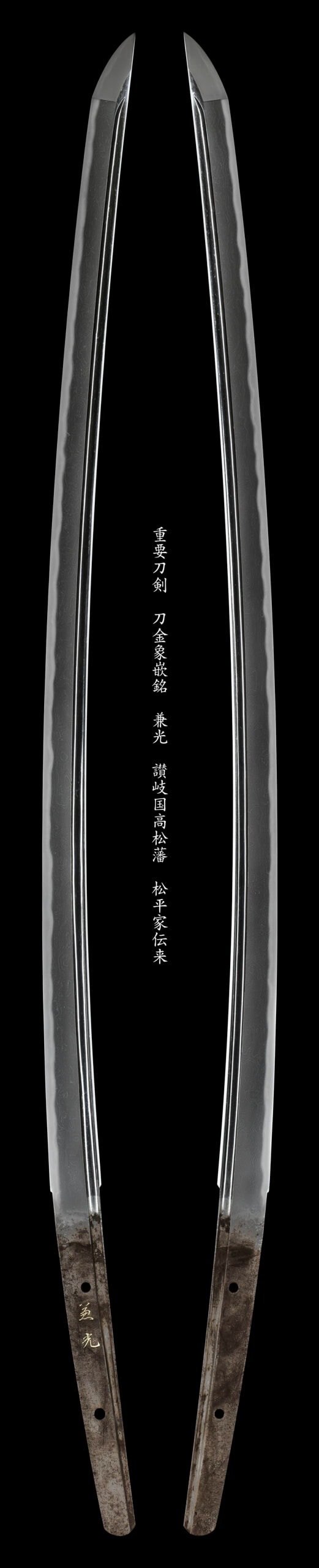
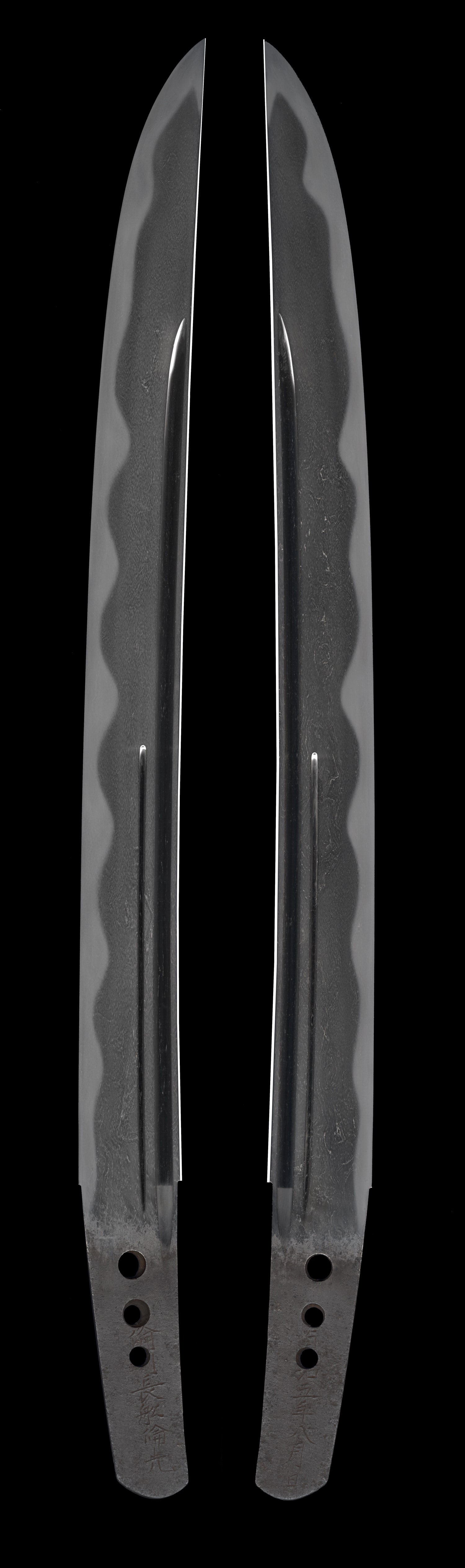
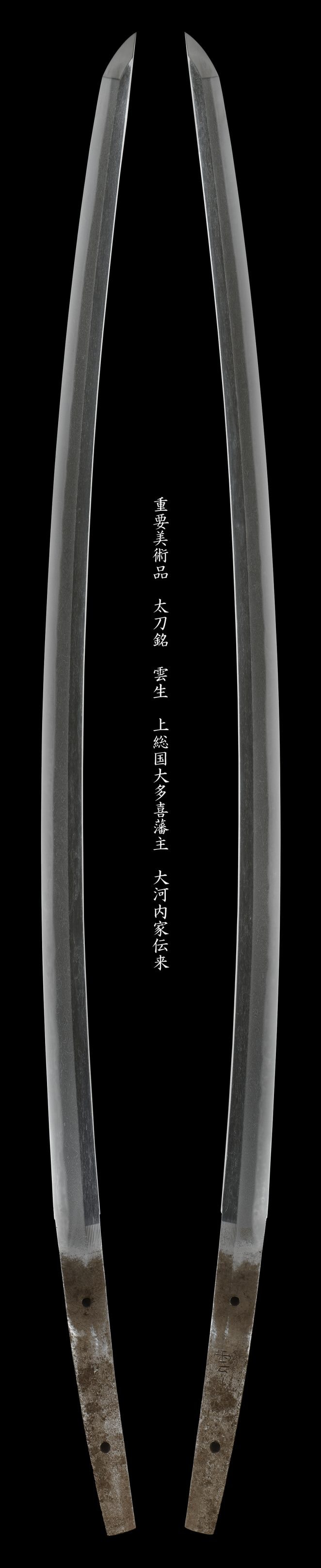
Two of Yoshikage's signed blades carry a date, one to Enbun 2 (1357) and one to 7 (1374), and on these few inscribed pieces the whole of his record rests. He is a smith of the period, counted among the makers the published sources call Sōden-Bizen (相伝備前), the hands who worked the -influenced manner in beside the lines of Kanemitsu and Nagayoshi. His lineage has long been argued. The older books made him a second son of Kagemitsu, or a pupil of Kanemitsu, or a pupil of Nagayoshi; in recent years, on the close resemblance of his workmanship and the distinctive way he cut his signature with the reverse chisel, the prevailing view is that he was "a collateral smith of the as Chikakage and Morikage". The sword registers transmit two generations, a first toward the end of and a second around Jōji, and authentic signed works are so scarce that the two are not easily separated.
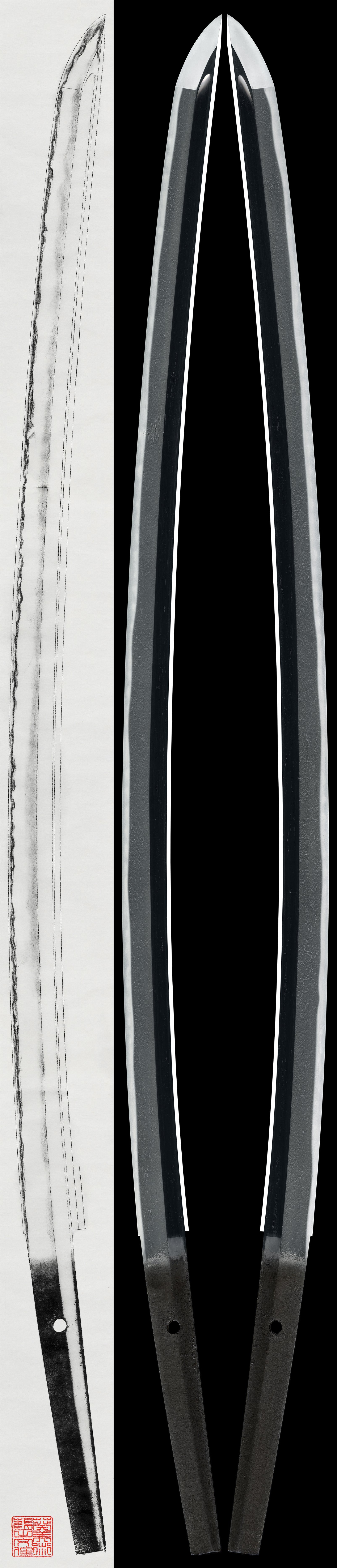
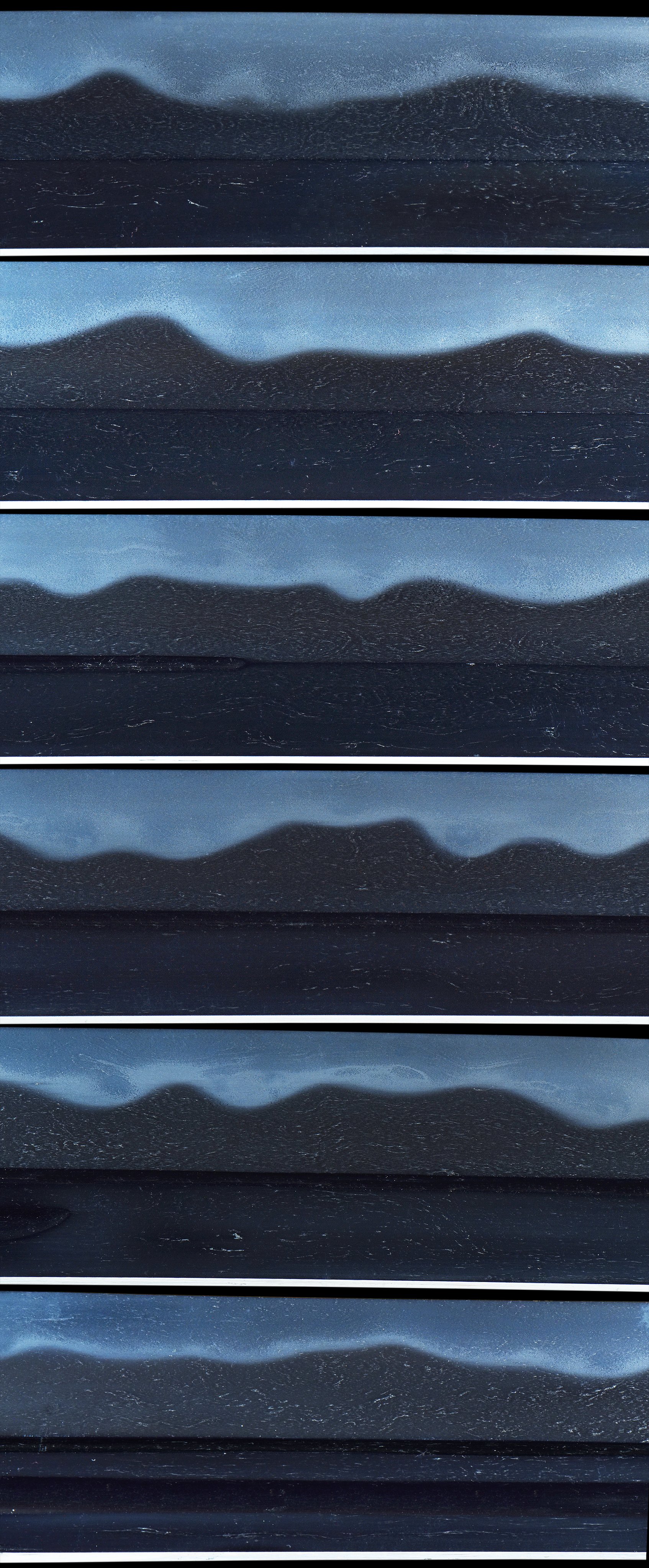
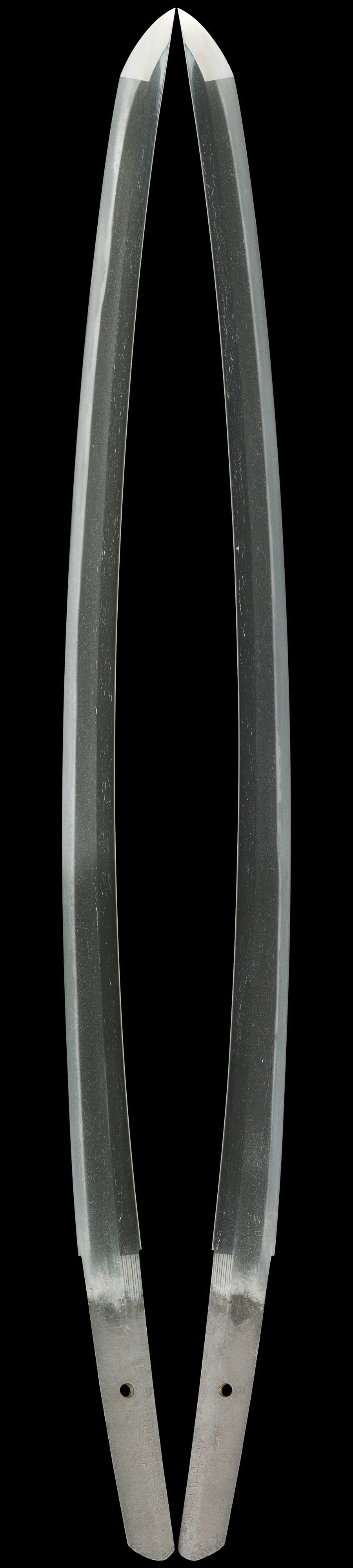
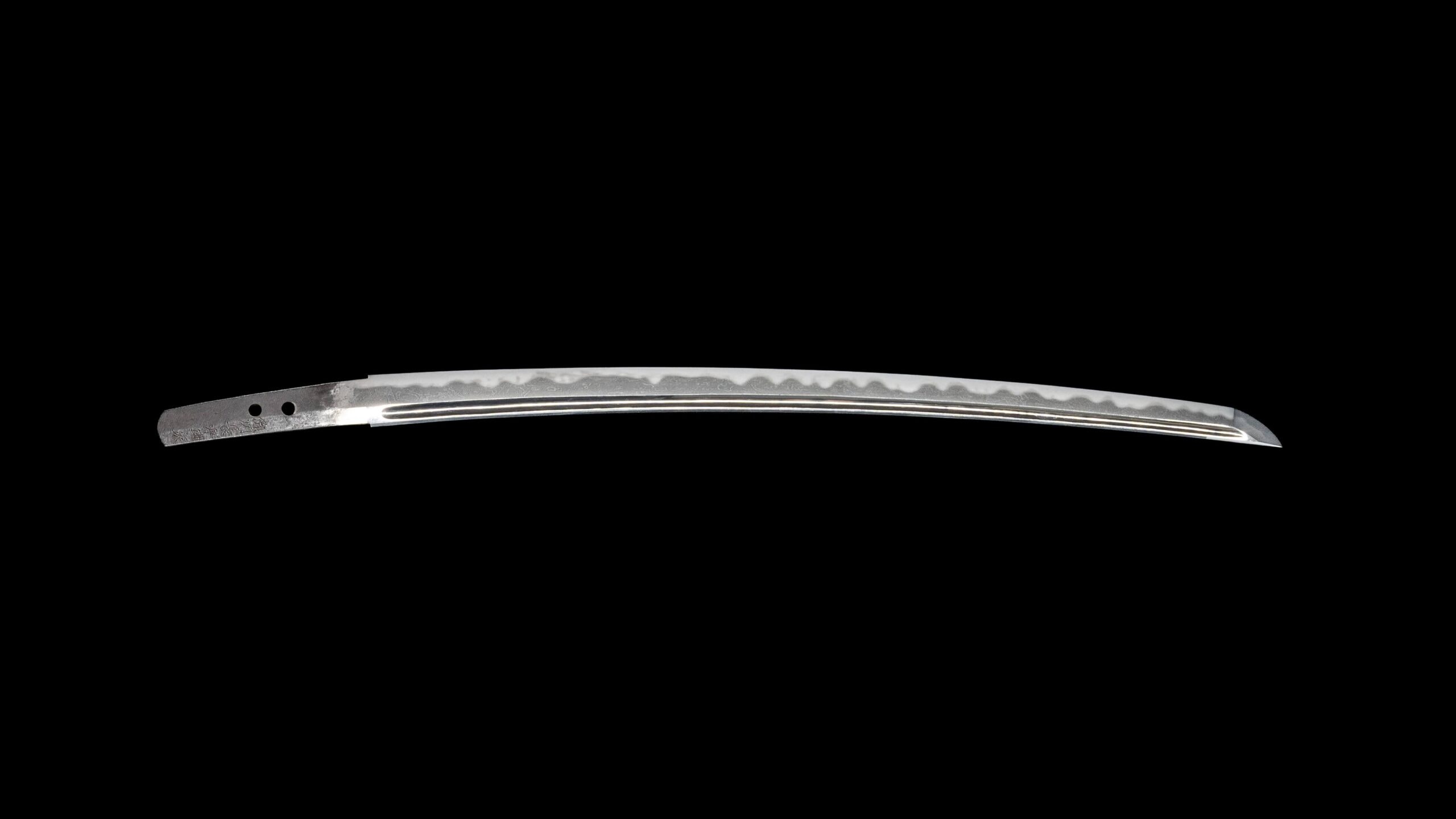
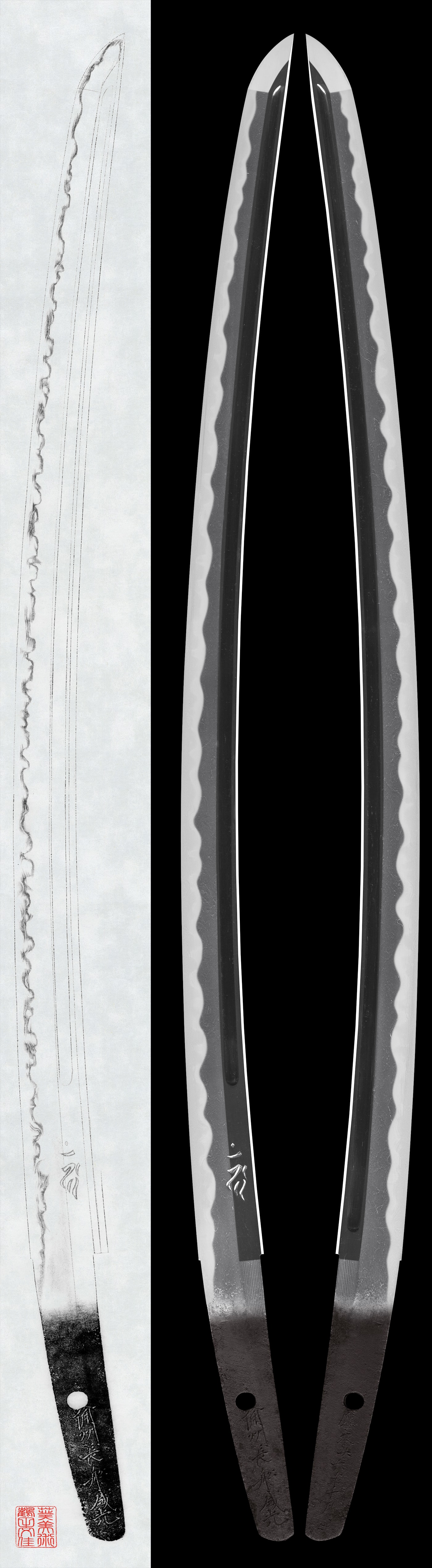
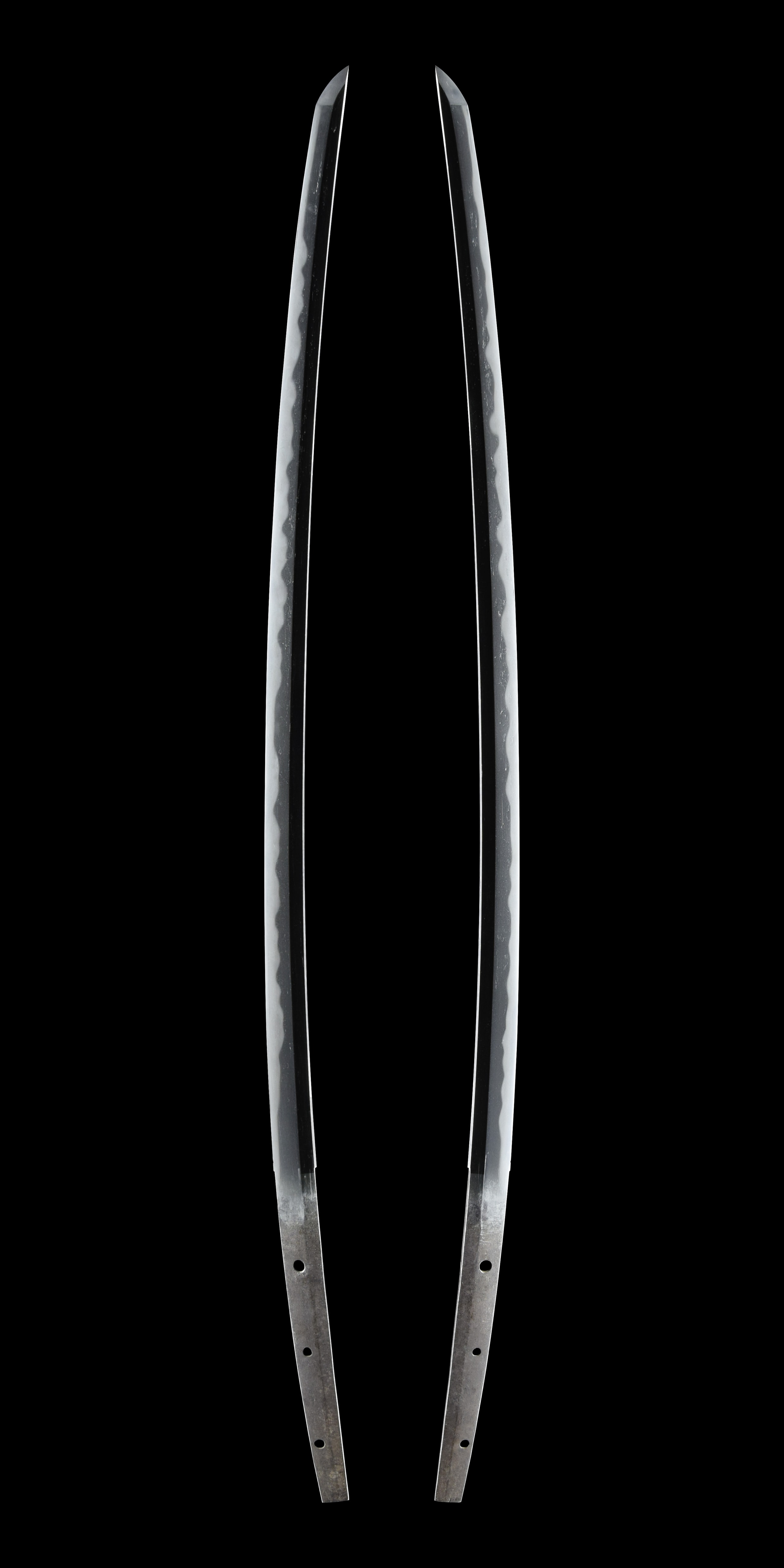
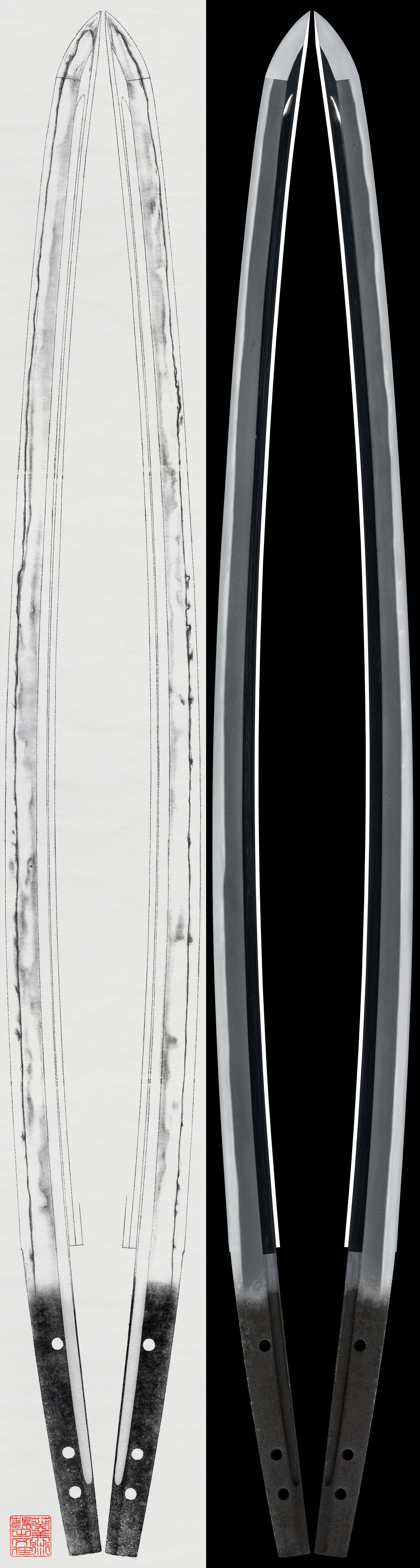
The hand the published sources describe is a small-patterned, varied rather than the orthodox clove-flower. Over the he tempers a base into which he mixes , , angular -ba and pointed , the elements kept small and the intervals of the undulation tight, so that the line reads as densely animated yet modest in pattern. Within it run abundant , and , the temper -dominant with that gathers somewhat in clusters, with and worked through and a slight -like intermingled. The tends to subside, and it is exactly there that the judges locate him: in the Sōden-Bizen group, the published sources hold, "where the keeps to small clusters and the subsides lies the point that marks out Yoshikage". The runs with a pointed tendency and , on one turning at the tip in a pointed manner that the commentary names as conspicuously his own.
The is the constant beneath that quiet temper. It is an mixed with that tends to stand, a into which fine settles densely, enters well, and a -toned texture appears in places, with a standing in the surface. On the broadest blades the is laid , dust-fine and thick, and the runs strong. This strongly -laden forging, with its frequent and , is what the prewar connoisseurs read when they placed him without hesitation among the Sōshū-den smiths, and what the modern judges mean when they say a blade "manifests the working range of Sōden-Bizen."
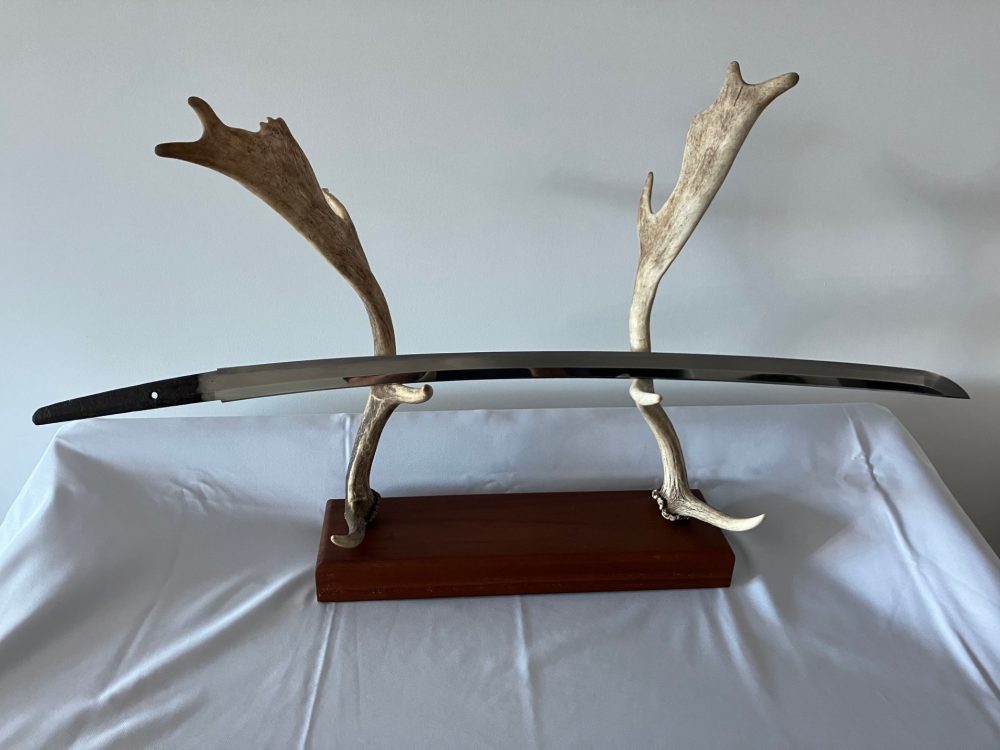
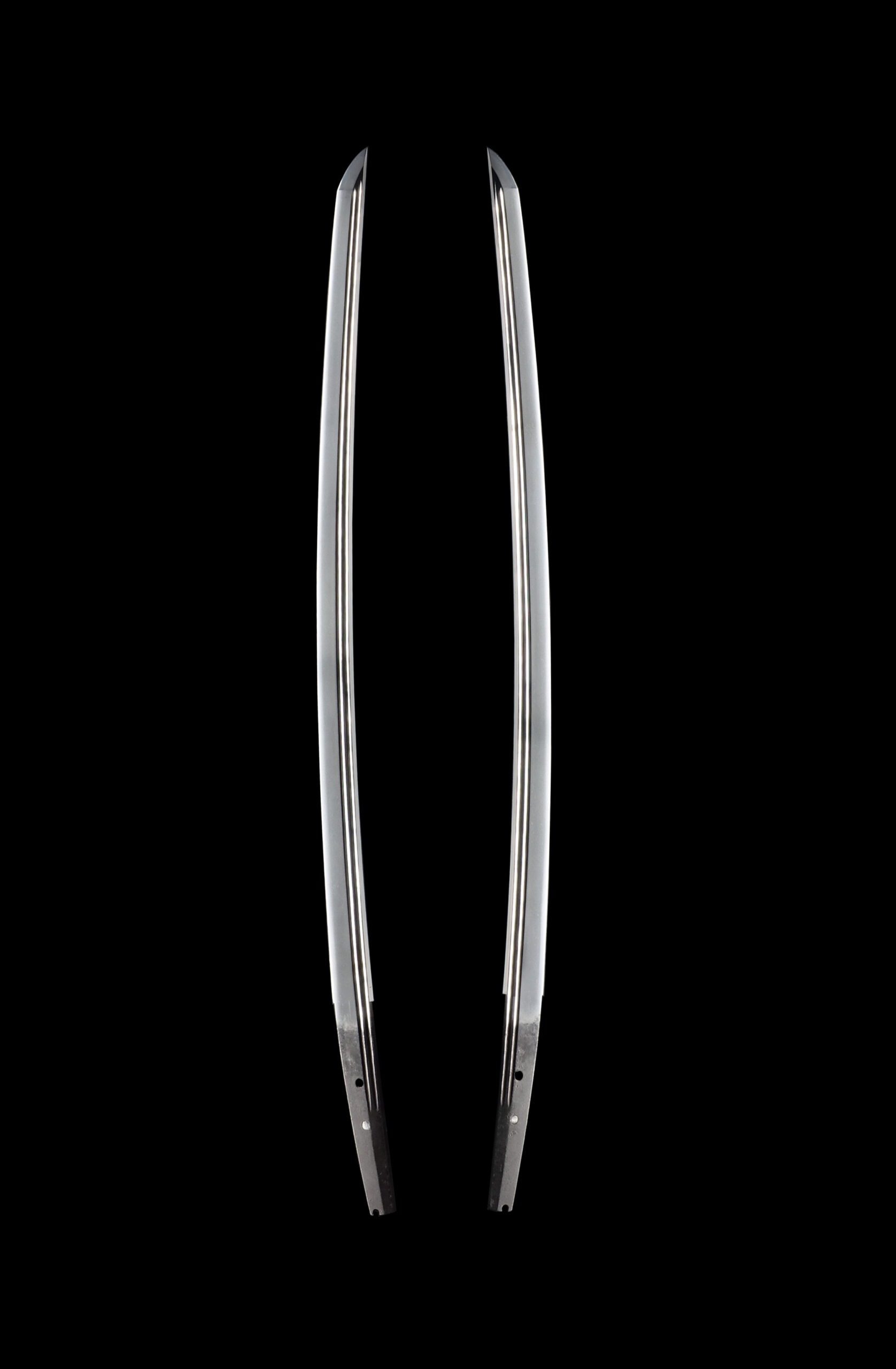
His recognized prime is the broad blade in the height-of-period shape: wide in body with little taper from base to tip, the often notably thick, ending in a large point, and surviving for the most part and . Against this stand the rare signed pieces, which skew quieter: one is essentially , subdued in workmanship, that the published sources keep precisely because authentic signatures are so few and it is valuable as reference. A separate register is the , blades reshaped from the polearm, for the published sources call him "an old master of the " and a large share of his attributions take that form, wide-bodied and shallow in , the planed down, sometimes keeping traces of the and on the tang. The two dated signatures, of Enbun and , fix this varied output securely in the mid-to-late .
What separates Yoshikage from his neighbours is what the judges name on his own blades. Within Sōden-Bizen his temper is read as "neither Kanemitsu's nor Nagayoshi's": smaller in pattern than the orthodox , more subdued in the than the showier Chōgi hand, and laid over a that carries a step more and than the Kanemitsu work. His signature, cut with the reverse chisel, is read in the breath as his , the commentary treating "the distinctive signature cut with the reverse chisel" as one of the marks that fixes both his hand and his kinship to the collateral line. He stands, in short, as the quiet, -laden member of the Sōden-Bizen circle, the one whose interest lies in restraint rather than in flame.
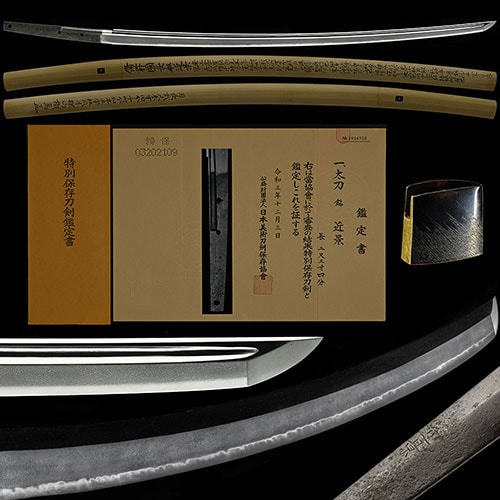
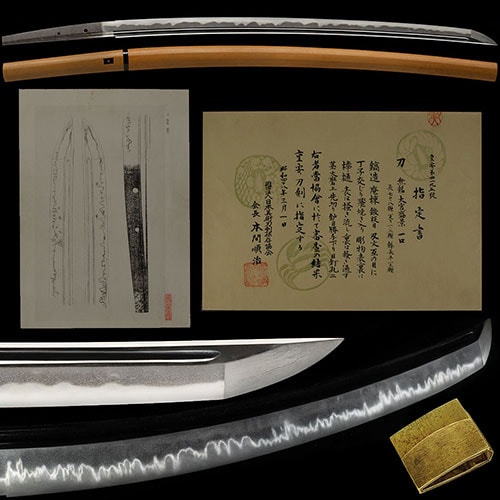
For the collector Yoshikage is a scarce name on which little can ever change hands. Fujishiro grades him Jō . He has no National Treasures; his record runs instead through two Important Cultural Properties, one a signed dated 7 held at Tanzan Shrine in Nara, the other a signed , together with three and some sixty blades, and the prewar Jūyō Bijutsuhin. Of recorded whereabouts his blades pass through long-held hands rather than the open market: a once in the Date family, another transmitted in the Arisugawa-no-miya house, a whose tang bears the gold-inlaid possession inscription of Ōkubo Shirōzaemon-no-jō. The published commentary singles out his finest as "foremost among works by the hand". With reliably signed pieces extremely few and most survivors and , a Yoshikage in private hands comes to light only from time to time, and seldom near the top of his range; when one does, it is a quiet document of how the manner was carried into late .