NihontoWatch MonNihontoWatchBETA
MarketEncyclopedia
NihontoWatch Mon

NihontoWatchBETA

Market
Encyclopedia
Overview·Kantei·Designations·Provenance·Blade Forms·Signatures·Lineage·School
OverviewKanteiDesignationsProvenanceBlade FormsSignaturesLineageSchool
  1. Schools
  2. Osafune
  3. Sue-Bizen
  4. Kiyomitsu

Kiyomitsu

清光

Tokujū
Vol. 23, No. 28 · Katana

Kiyomitsu

清光

19 ranked works

ProvinceBizenEraTenmon (1532–1555)PeriodMuromachiSchoolOsafune>KiyomitsuTraditionBizen-denToko Taikan600(top 21%)TypeSwordsmithCodeKIY173
1Tokubetsu Jūyō18Jūyō Tōken

Overview

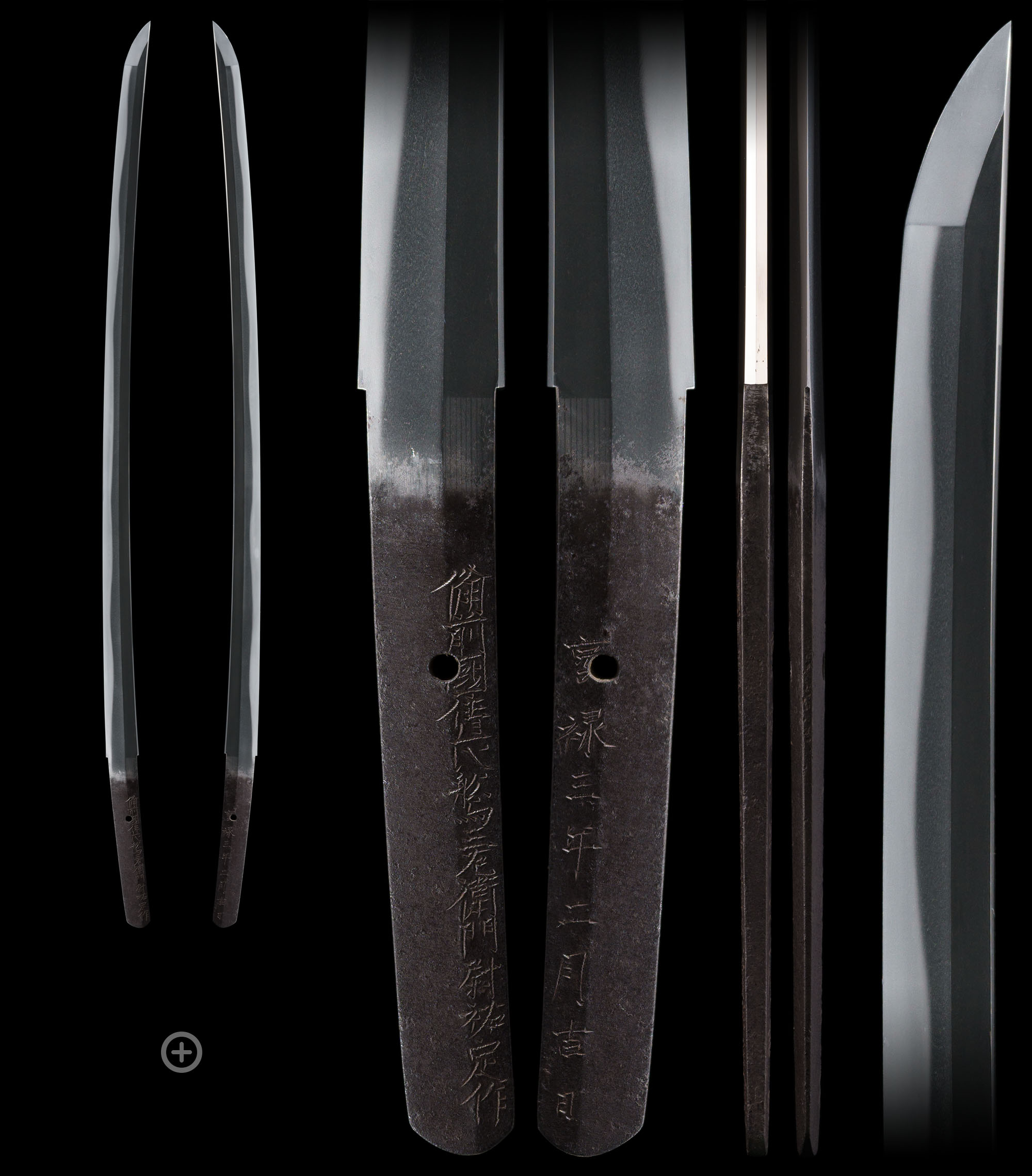
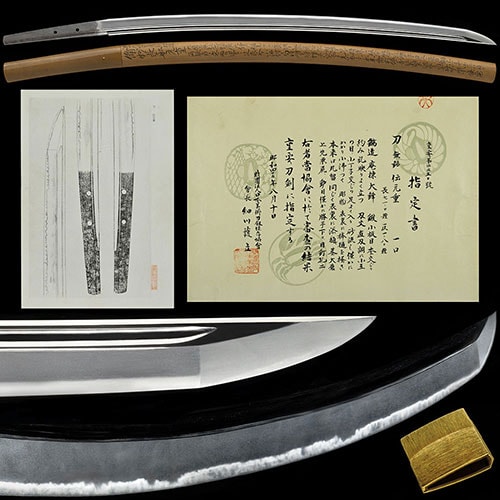
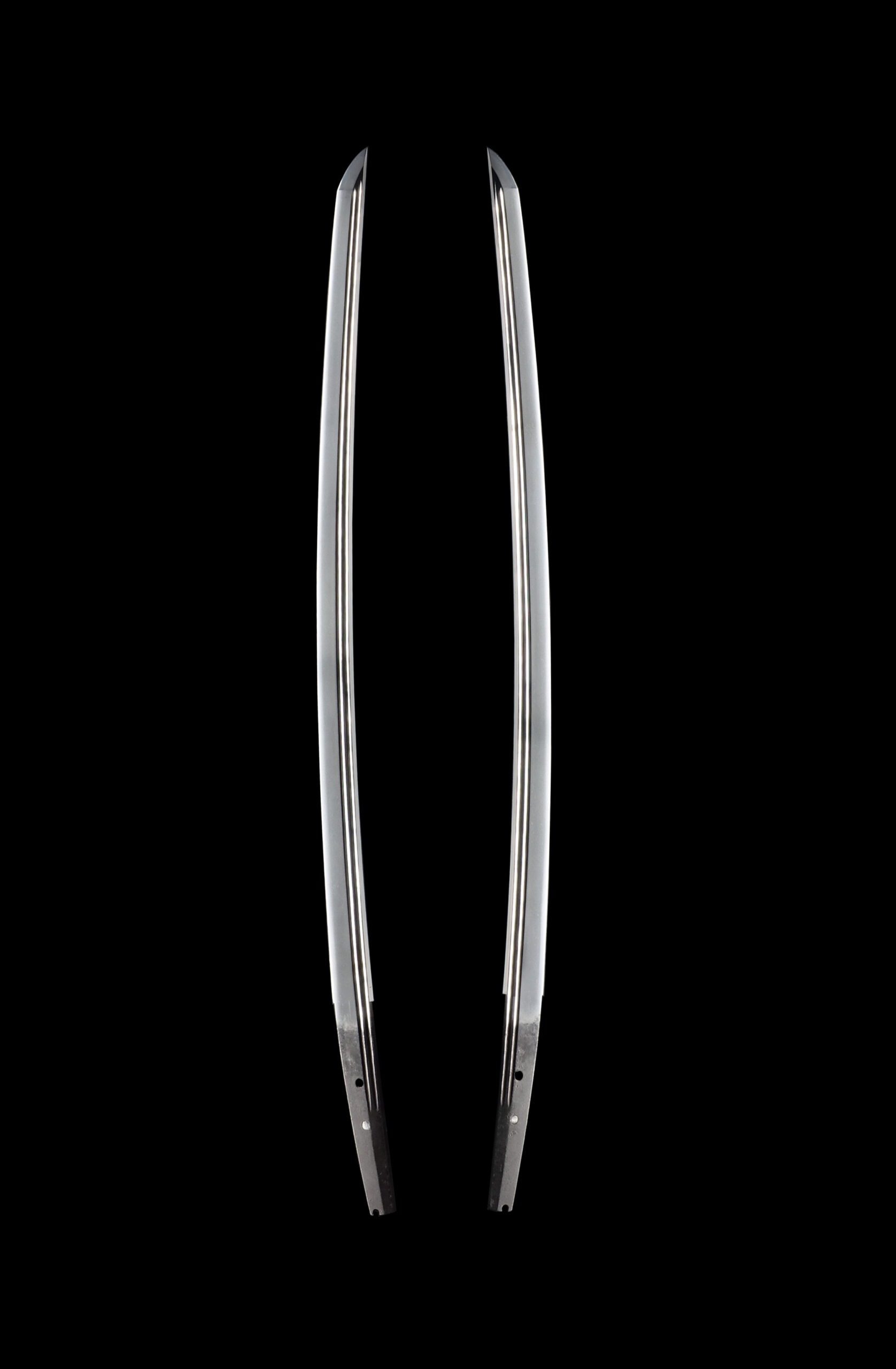
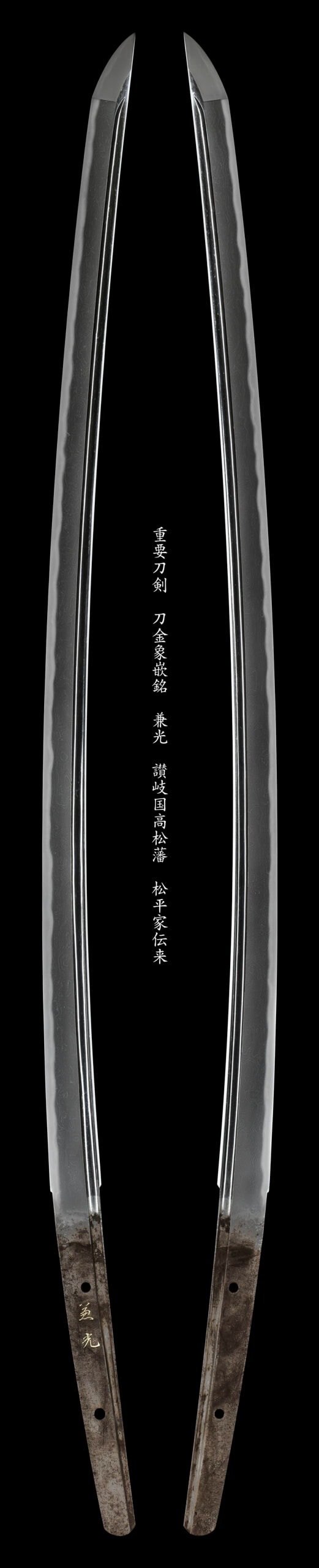
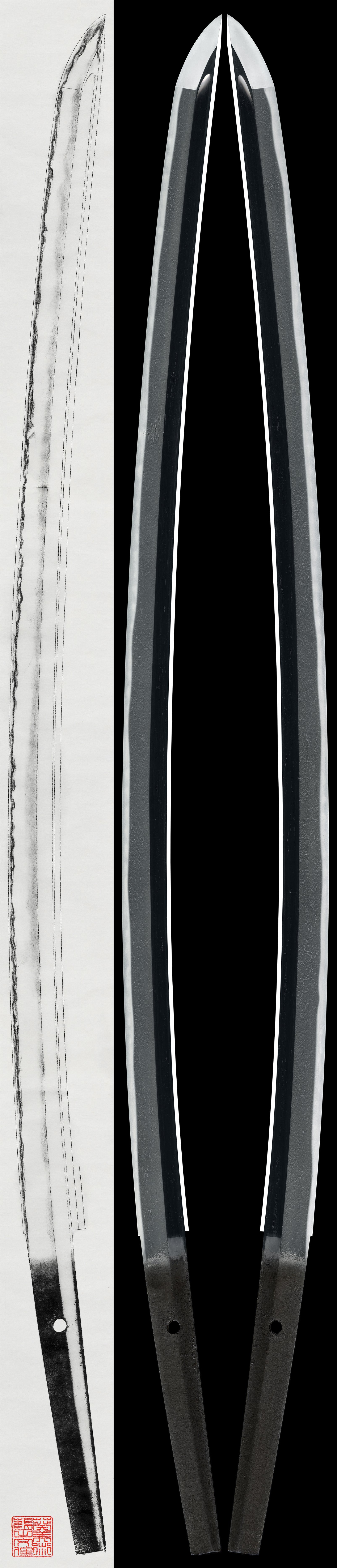
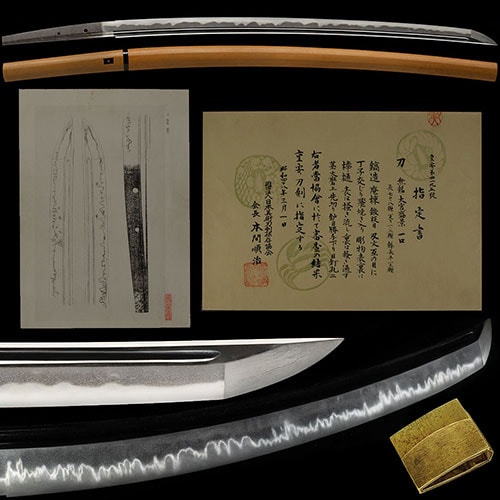
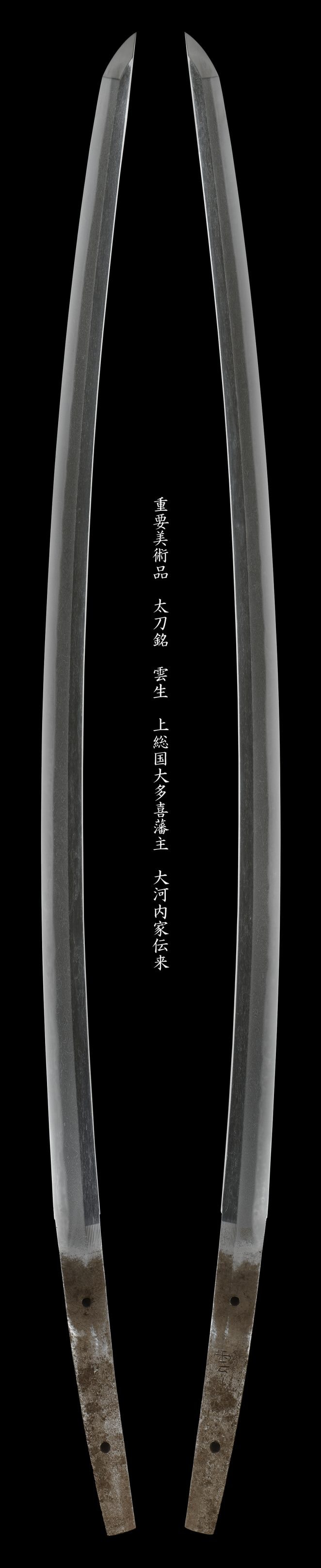
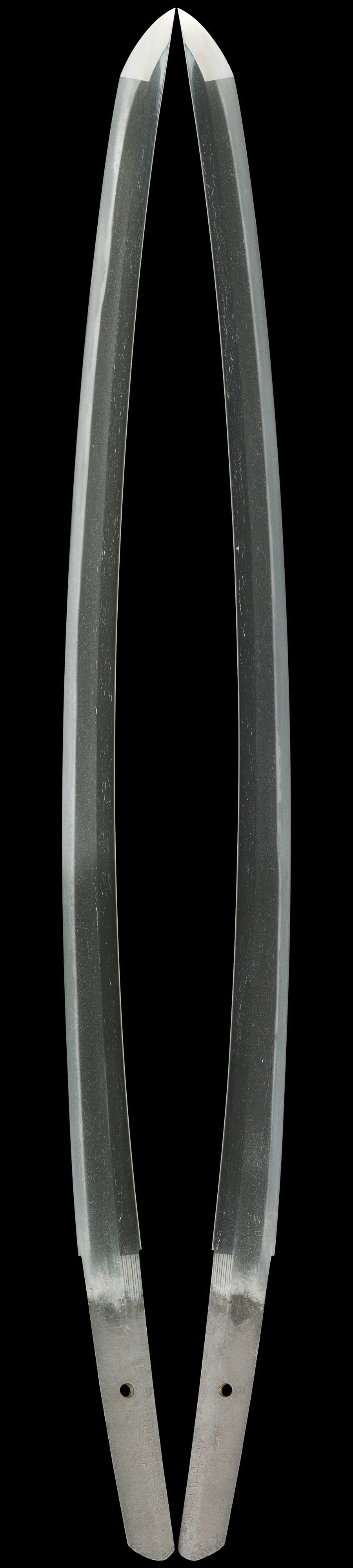
The single piece that anchors Kiyomitsu on record is the dated Tenmon twenty-three (1554) and signed at full length " no ju Kiyomitsu," raised to in 2014, a broad, deep-curved that carries no byname yet which the published sources read, from the breadth of its signature, as the work of Gorōzaemon-no-jō (「銘振りよりして、五郎左衛門尉と鑑せられる」). He is one of the leading names of , the term used for the late- workshops and their output collectively, and within that crowded field he is almost wholly knowable: every blade here carries an tang with a long signature and a date, most of them clustered in the Tenmon years between 1532 and 1555. The published record lists as many as ten smiths who signed Kiyomitsu in this period, bearing the bynames Gorōzaemon-no-jō, Magouemon-no-jō, Yosozaemon-no-jō, Hikobei and Magobei, and singles out Gorōzaemon-no-jō and Magouemon-no-jō as the two superior hands. It is the first, the Tenmon-dated Gorōzaemon, whose work fills this record, and whom the published sources place at the head of a line that runs on into a second generation of the byname in the Eiroku and Tenshō years.

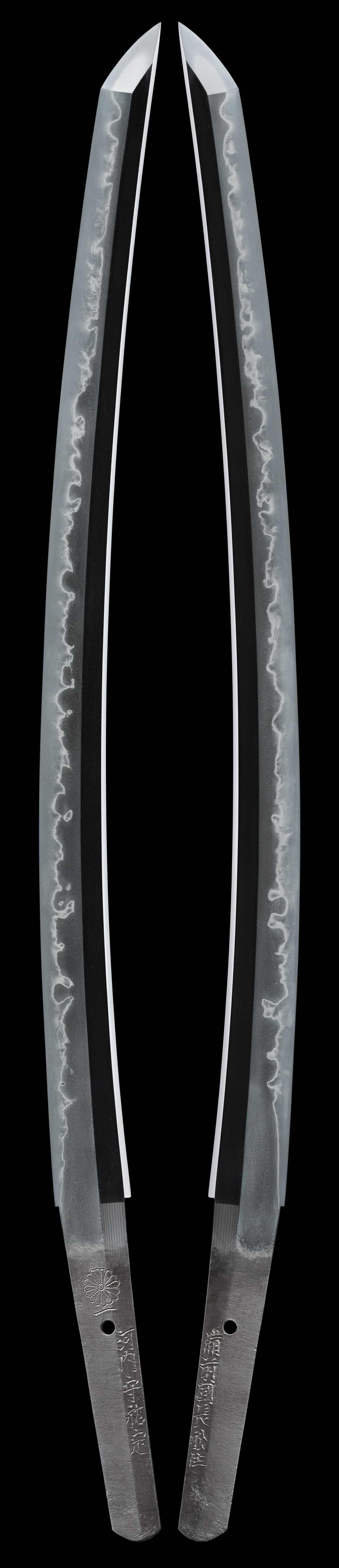
His reputation rests first on . The published sources name him, with Tadamitsu, as the master of the straight temper among the smiths (「忠光と並んで直刃の名手」), and call the wide the very signboard of the Kiyomitsu house (「清光家の看板であるところの広直刃」). His characteristic blade is a thick, sturdy , broad in the body with the heavy and the high, -zori standing toward a that extends a little, over which he lays a wide mixed with small and small . Within it the and enter freely, and the abundant the sources record as his typical tell, with fine and running and the bright and clear. A robust shape tempered in this manner, with the edge well worked and the shining, is what the published sources call the true heart of the smith who excelled at the straight temper (「直刃を得意とする清光の真骨頂」).

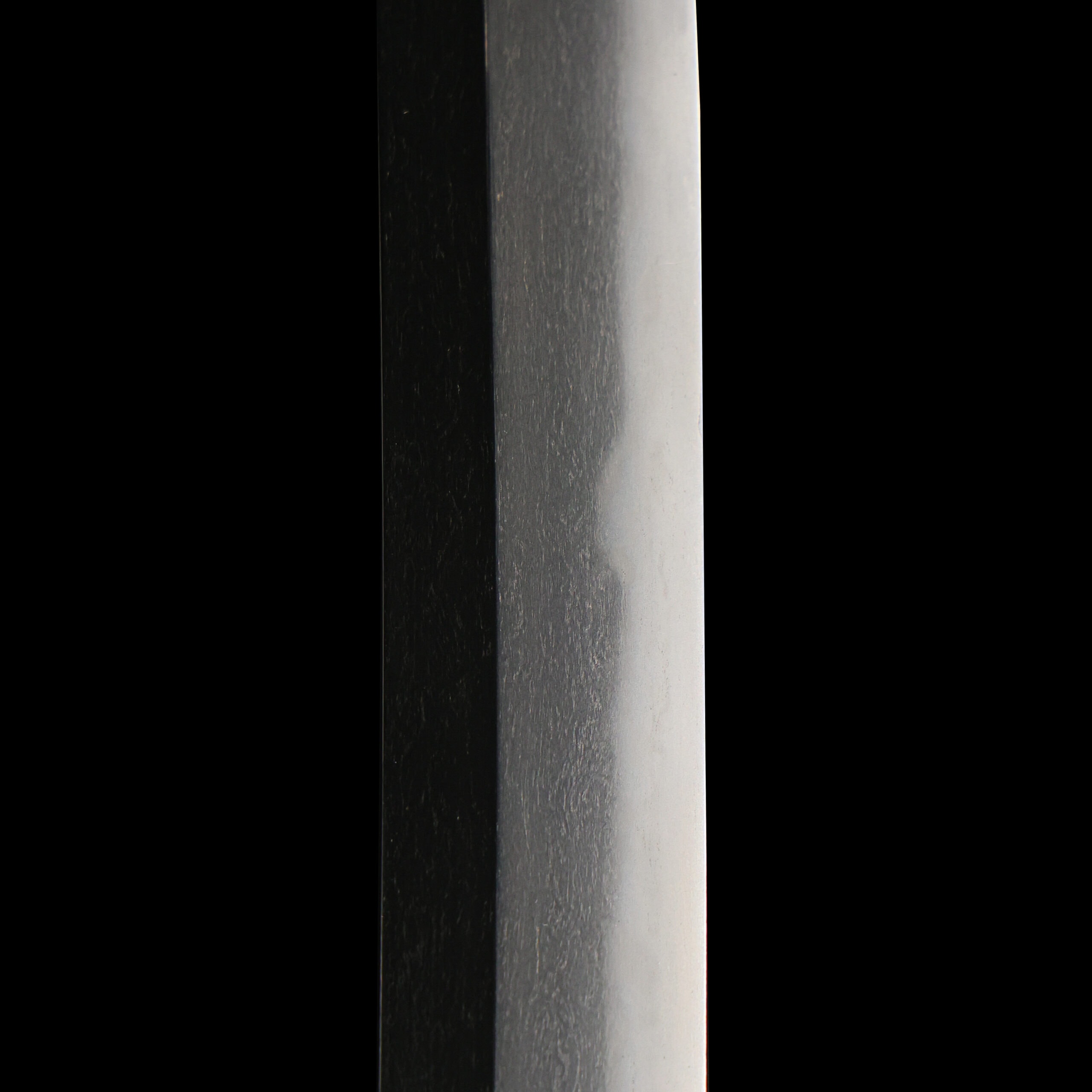
The beneath that temper is as much a part of his recognition. He forges a packed and with mixed in, applied in fine grain, entering, and a faint standing pale over the surface. The published sources distinguish his from that of Tadamitsu and of Yosozaemon Sukesada by its tendency to stand a little more, an in which the shows, so that on the run of his blades the is the slightly more open one of the three. The exception is telling: on his finest pieces, including the , the sources remark that the is unusually well packed and refined by contrast with his common work, its quality lifting those blades above the rest. The returns in a small round with a sweep of , and on the straight-tempered blades runs straight to that small round, in places pointing or doubling toward the back.

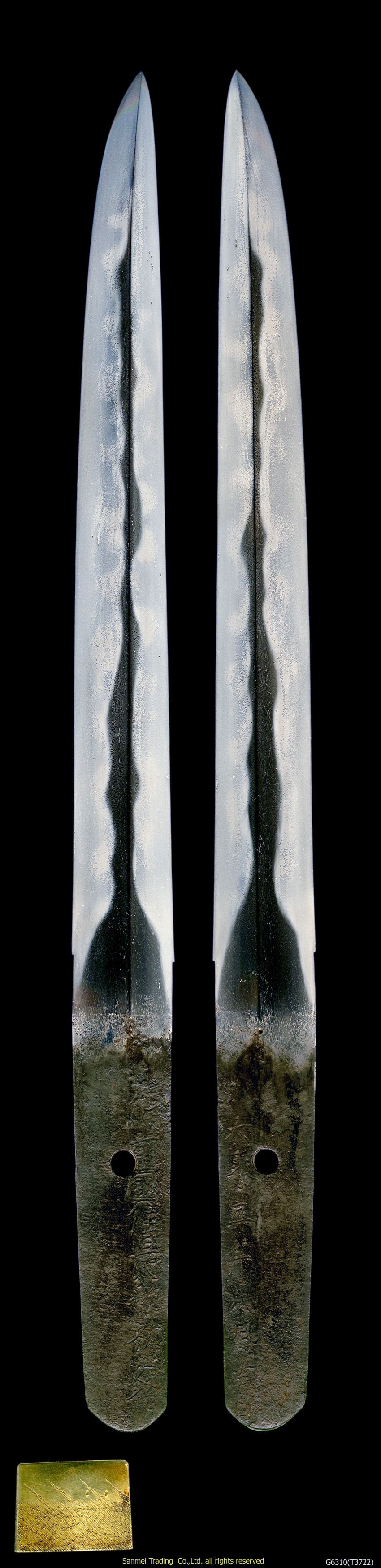
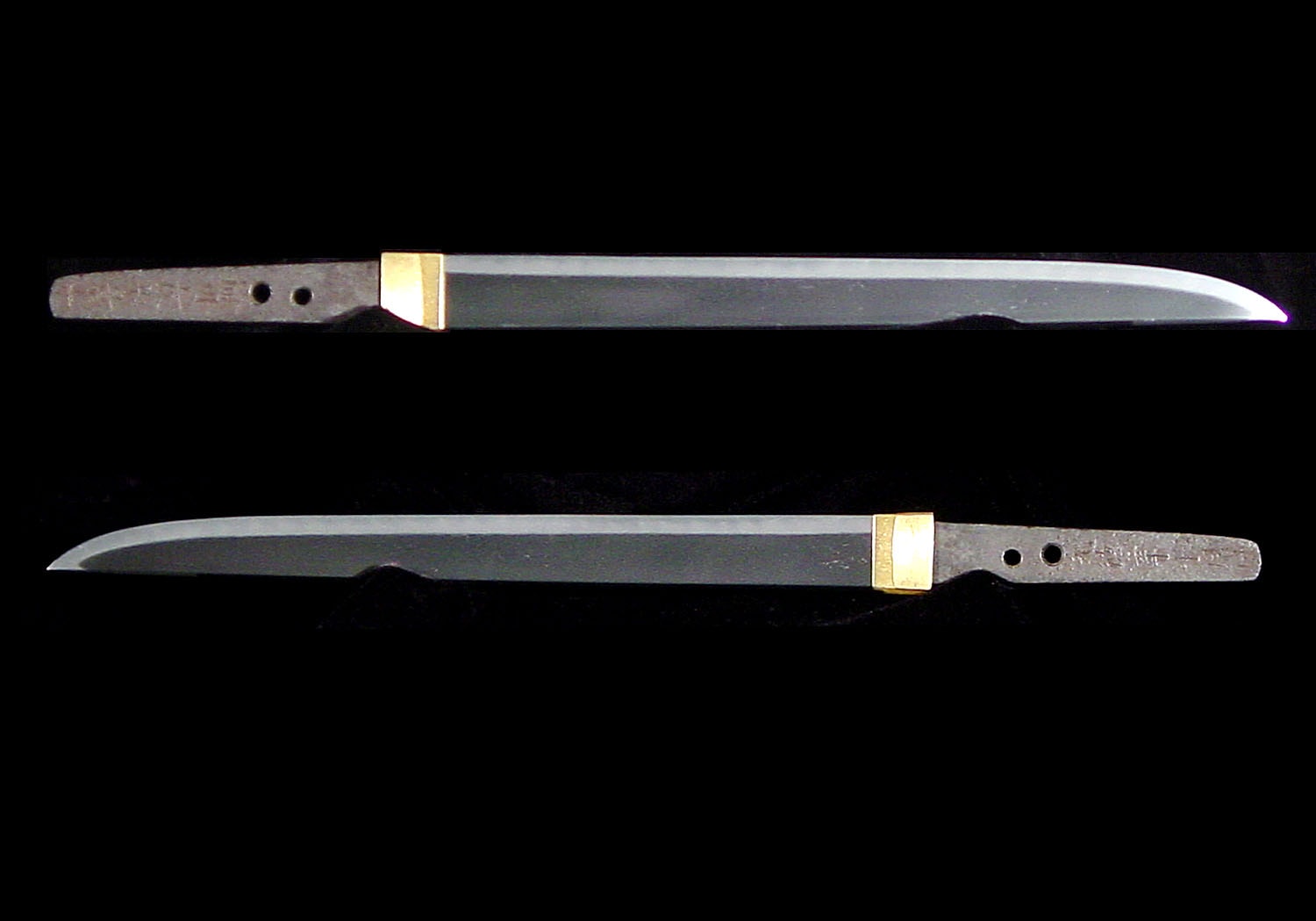
Against that calm register he forges two showier manners, and the published sources treat them as fully typical of him rather than as departures. The first is a whose mark is the , the opened at the base, mixed with and small over a base, and well in and running, which the sources read as bringing him near Yosozaemon-no-jō Sukesada (「与三左衛門尉祐定に近い」), the other great hand. The second is : the temper taken high, with and small , entering and running strongly until the whole edge takes a form, the laid strongly and running. Here the published sources name a structural tell: is generally thick in the , but a blade tempered in is necessarily made thinner (「皆焼を焼いた場合は必ず重ねが薄くなる」), so the thinned construction itself is the feature to watch, sometimes joined by a the school occasionally shows. The flamboyance appears on a blade and on a wide , the form varying while the hand stays constant.

What sets Gorōzaemon-no-jō apart within is read through his own work rather than by contrast. His bright wide with its abundant is the manner the sources tie to his name, the calmest of his three registers, while the and the -and- extend his range toward Sukesada and toward the showy late- taste; Tadamitsu shares the but not the , Sukesada the but not the straight temper held at full breadth. Several of his blades carry order-inscriptions that fix him in time and place, among them one forged below Tatsuno castle in Harima, which the published sources value as documentary evidence of the smith's movements, and one whose patron Masahide was a commander of the Urakami faction. The broad, deeply curved shapes, made for the wars of the period, are themselves part of the reading; the sources note of a wide that the temper of the warring age shows plainly even in its bearing (「戦国時代の気風が姿にもよくあらわれて」).

The weight of designation behind his name is steady rather than vast. One of his blades holds the rank and eighteen more are , with nothing on record in the highest designated tiers, so his is a record built in the upper-middle reaches of designation rather than at its summit. The Tōkō Taikan values him in the middle range of the masters, and his provenance, where it is recorded, runs through houses of consequence: one descends from the Matsudaira house of Shinobu (「忍の松平家伝来」), and another from the swordsmith-scholar Masahide. Genuine signed, dated Gorōzaemon-no-jō blades survive in fair number for a name, and an , signed example in its original form, of the kind the published sources hold up as an outstanding piece of his hand, is among the more attainable of the great late- smiths for a collector who waits, the tier appearing from time to time, the single a landmark when it does.

Kantei

one Sue-Bizen Gorozaemon-no-jo hand read across three manners on a single sturdy uchigatana shape: his signature wide suguha (the maker the sources call a master of the straight temper with Tadamitsu), a koshi-no-hiraita gunome-midare close to Yosozaemon Sukesada, and a hitatsura of tobiyaki and muneyaki over a thinned kasane

Kiyomitsu is one of the leading names of , the late- workshops, and within it the corpus on record is almost wholly that of Gorozaemon-no-jo Kiyomitsu, the smith the published sources rank with Magouemon-no-jo as the two superior hands among the many who signed the name. He is a signed, dated smith: every blade here carries an with a long signature and a date, the great run of them in the Tenmon years (1532-1555), and the published sources call the wide signature itself the means by which an unsuffixed 清光 is read as Gorozaemon. His reputation rests on , named alongside Tadamitsu as 's master of the straight temper: a wide on a thick, sturdy, -zori shape, with and well in, the bright, over a packed ground with and a faint . Against that calm register he also forges a close to that of Yosozaemon-no-jo Sukesada, and a of and laid over a deliberately thinned . The published sources note that his ground tends to stand more than that of Tadamitsu or Sukesada, an with mixed in.

Diagnostic discriminators

30% of his works · 3.0× vs the bare gunome of generic Sue-Bizen

unique vs his quiet suguha register

Observation by phase

The wide suguha (his signature manner)

the long signature (chomei) and date on an ubu nakago: every blade on record is signed and dated, and the published sources read an unsuffixed 清光 of broad signature as Gorozaemon-no-jo, the hand to whom the suguha honryo belongs

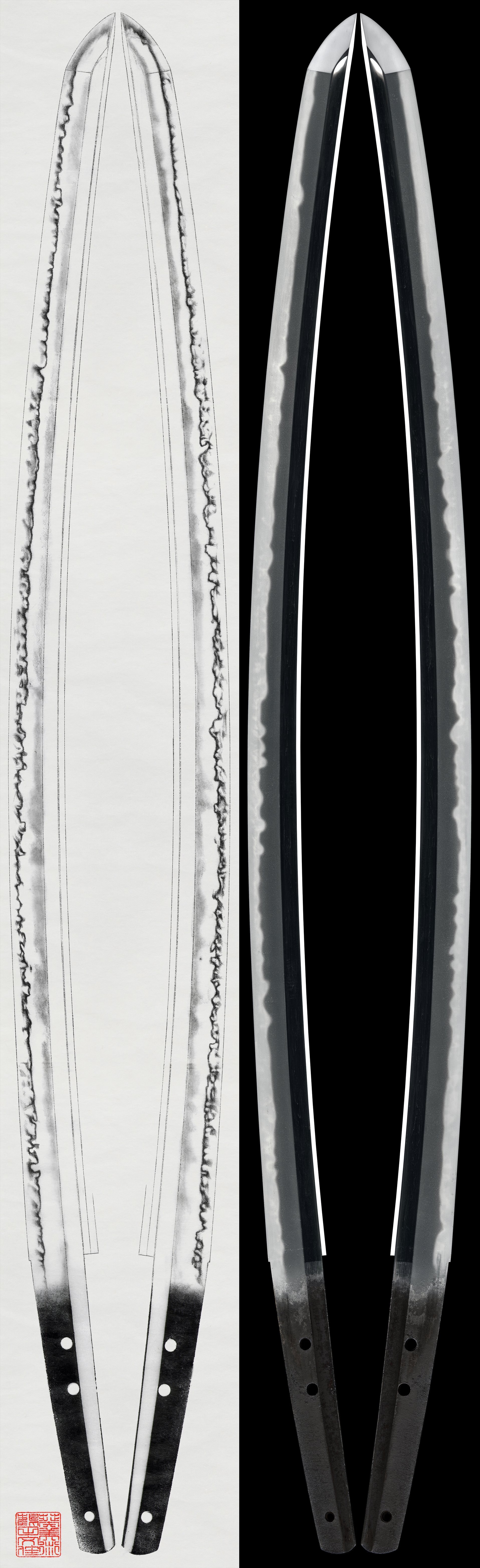
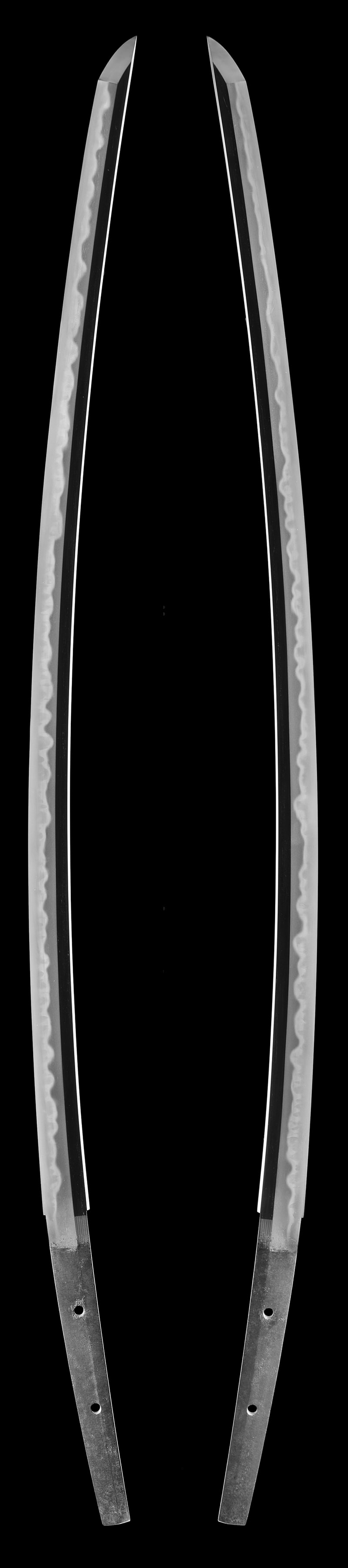
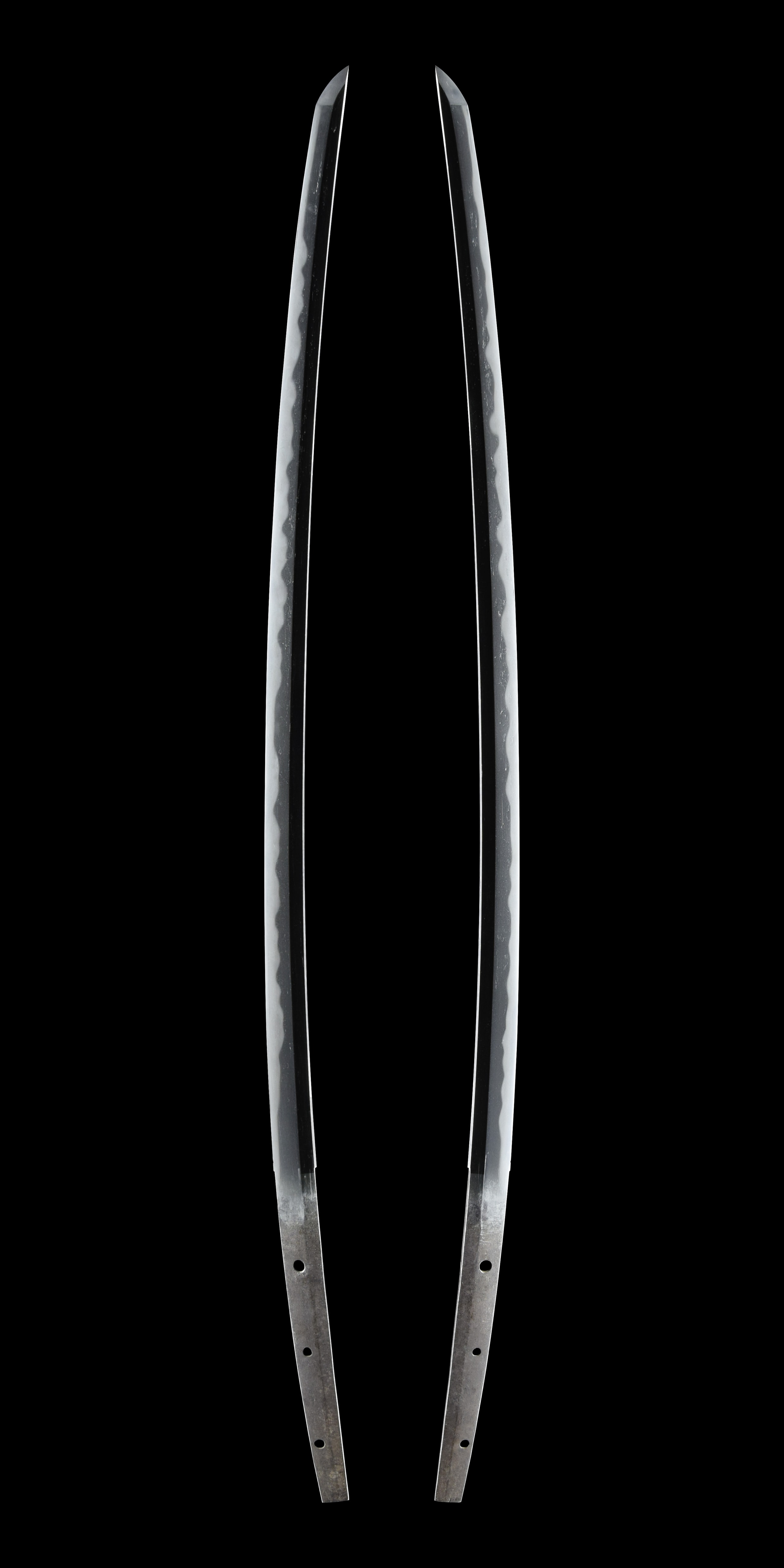
His recognized hand is the wide , the manner the published sources call Kiyomitsu's own and rank with that of Tadamitsu as the two masters of . On a thick, sturdy with width broad, the thick, the shinogi high and -zori standing, he sets a wide that mixes in small and small , with and well in, fine and running, gathered, the bright and clear. The runs straight to a small round with a sweep of . The ground is a packed and with mixed, laid, fine , and a faint standing. The published sources hold the abundant within the straight temper to be his typical tell, and call the bright and the well-worked and on a robust shape the very heart of the smith who excelled at .

Sugata 姿
Jigane 地鉄
Hamon 刃文
Bōshi 帽子

The koshi-no-hiraita gunome-midare (Yosozaemon Sukesada manner)

the gunome-midare register, the published sources' explicit comparand for him being Yosozaemon-no-jo Sukesada, the other great Sue-Bizen midare hand

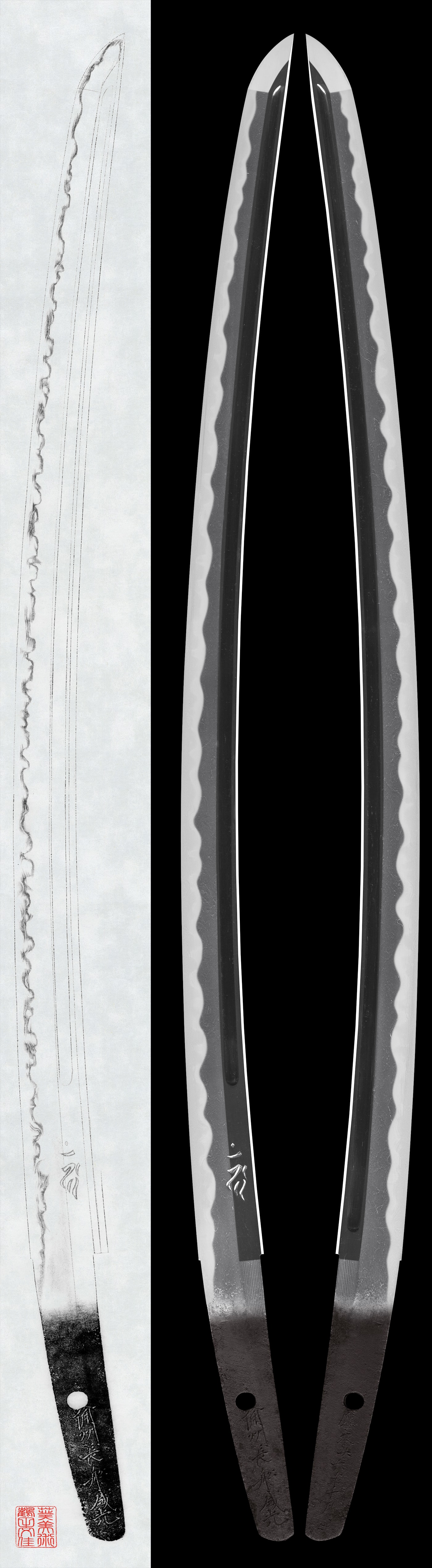
The second manner is a , which the published sources call typical of Gorozaemon as fully as the and explicitly liken to that of Yosozaemon-no-jo Sukesada. Its mark is the , the opened at the base, mixed with and small and a base, and well in, laid, running, the tending to tighten. On the broad the heads of the can take a complex, doubled form. The turns over in , in places running to a point or doubling toward the back. The published sources hold the to bring him near Yosozaemon Sukesada and call these blades representative, typical examples of the smith's work.

Hamon 刃文
Bōshi 帽子

The hitatsura over a thinned kasane (tobiyaki and muneyaki)

the thinned kasane: where Sue-Bizen is generally thick, the published sources call the necessarily thinner construction of a hitatsura blade the very feature to watch for

His third manner is the , which the published sources record as occasionally encountered in Gorozaemon's work. On these blades the temper is taken high, mixed with , small and small , with entering and running strongly until the whole takes a form, the laid strongly, running, the ground a packed with and a faint . The published sources note the maker's tell on these: where is generally thick in the , a blade tempered in is necessarily made thinner, the thinned construction itself being the point to watch, sometimes joined by a that the school occasionally shows. One -no-zukuri or example carries the showy .

Jigane 地鉄
Hamon 刃文
Bōshi 帽子
Scholarship

The published sources record that the Kiyomitsu name is borne by many late-Muromachi Bizen smiths, the early reference works listing as many as ten, of whom Gorozaemon-no-jo and Magouemon-no-jo are the standouts; that an unsuffixed 清光 of broad signature is read as Gorozaemon-no-jo; and that the Tenmon-dated work is the first generation while the same byname recurs in Eiroku and Tensho as a second.

On the suguha the published sources call him, with Tadamitsu, Sue-Bizen's master of the straight temper, his typical work a wide suguha with abundant yo and a bright nioiguchi on a robust shape; they add that a Jiemon-no-jo Kiyomitsu, not recorded in the Meikan, also appears, a Genki-dated blade supplying the gap in the record.

Designations

Kokuhō—
Jūyō Bunkazai—
Jūyō Bijutsuhin—
Gyobutsu—
Tokubetsu Jūyō1
Jūyō Tōken18

Elite Standing

0.09 across 19 designated works

Top 19% among smiths

Provenance

2 documented provenances across certified works by Kiyomitsu

Provenance Standing

0 works held in elite collections across 2 documented provenances

Top 61% among smiths

Raw score: 1.94 / 10

Blade Forms

Distribution across 19 ranked works

Signatures

Signature types across 19 ranked works

Currently Available

Lineage

Kiyomitsu
Student
  1. 1.Kiyomitsu清光4 for sale11designated

Kiyomitsu School

Other artisans of the Kiyomitsu school

  1. 1.Kiyomitsu清光4 for sale11designated