NihontoWatch MonNihontoWatch
Market
Encyclopedia
Kantei
NihontoWatch MonNihontoWatch
Market
Encyclopedia
Kantei

Description

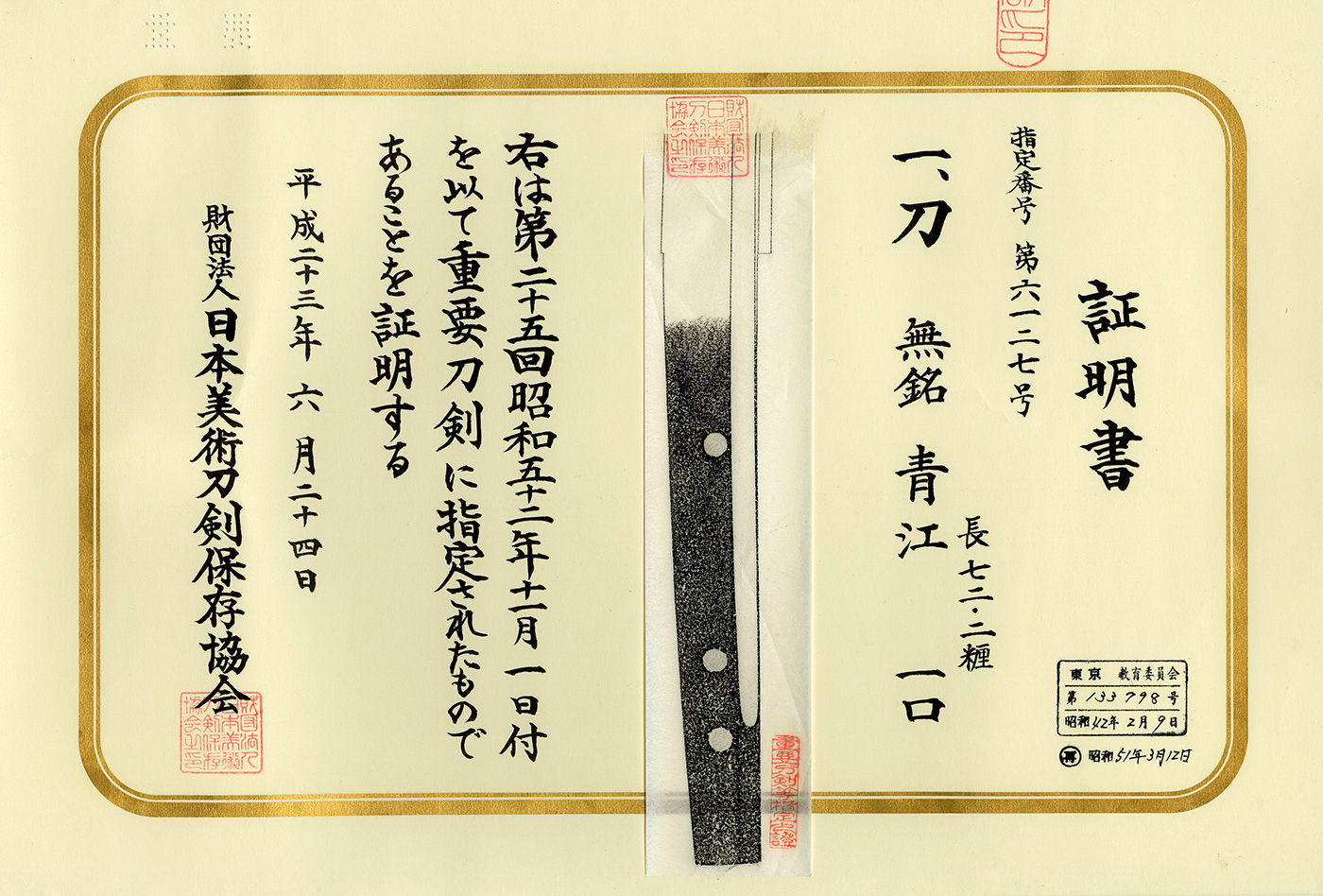
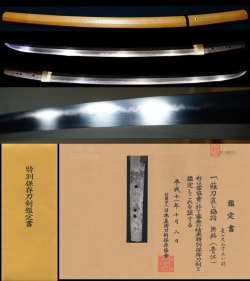
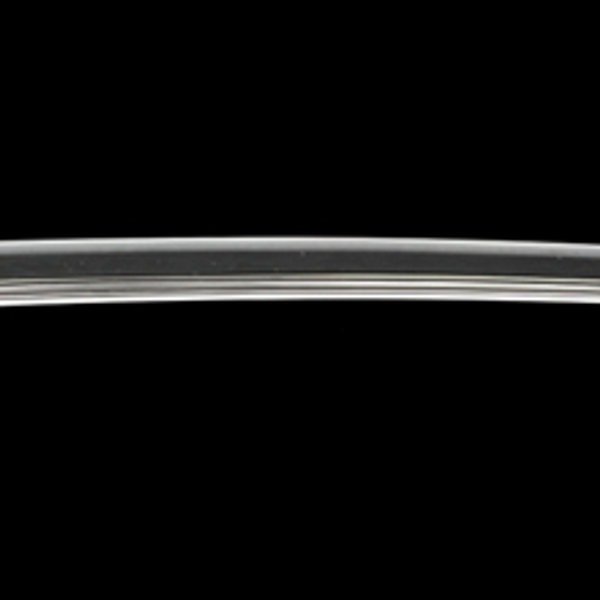
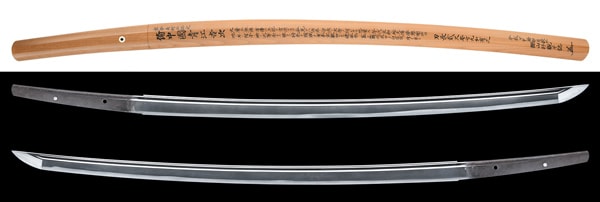
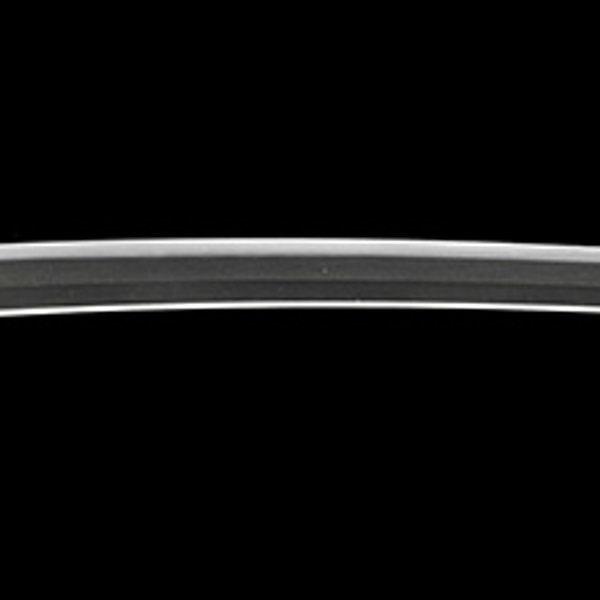
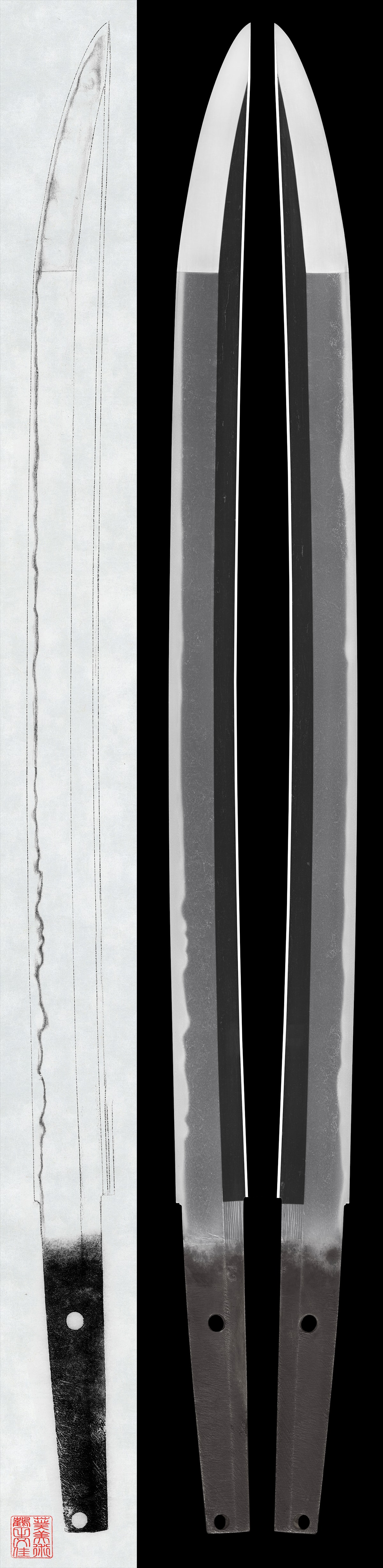
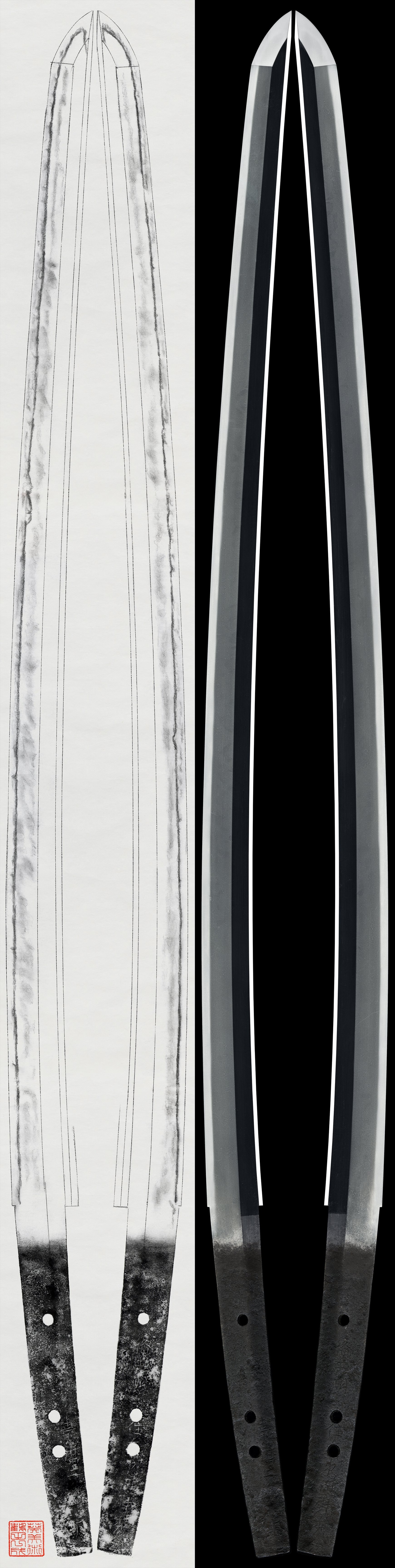
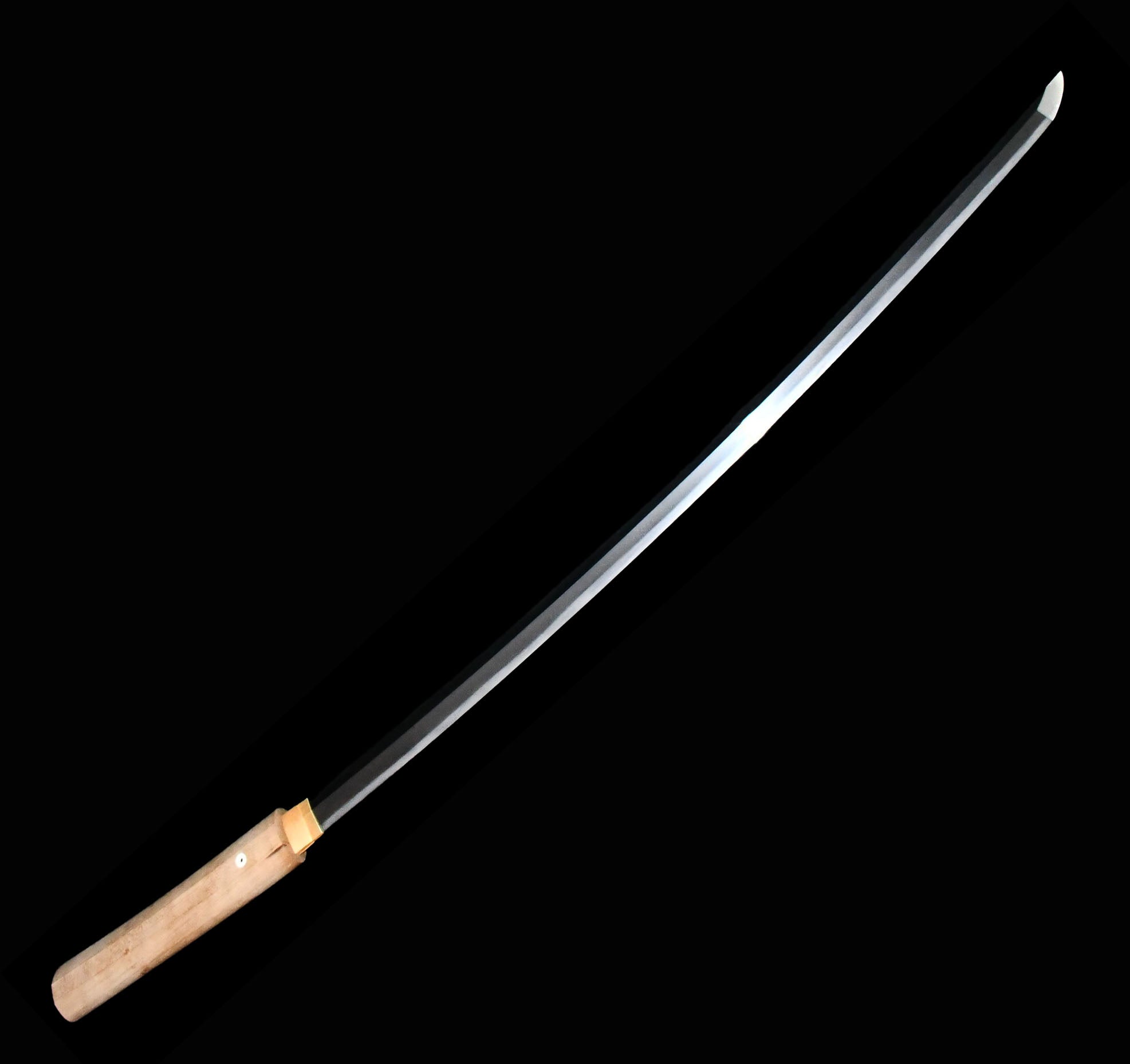
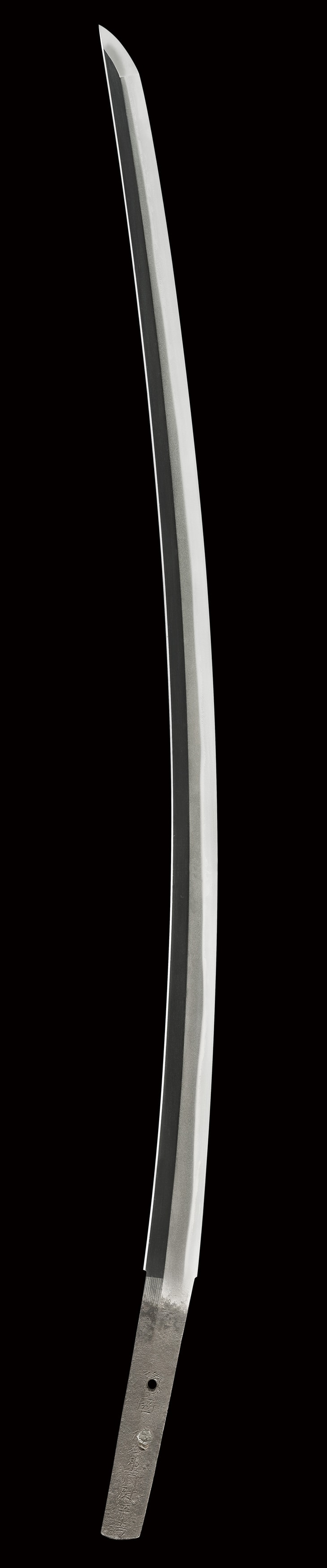
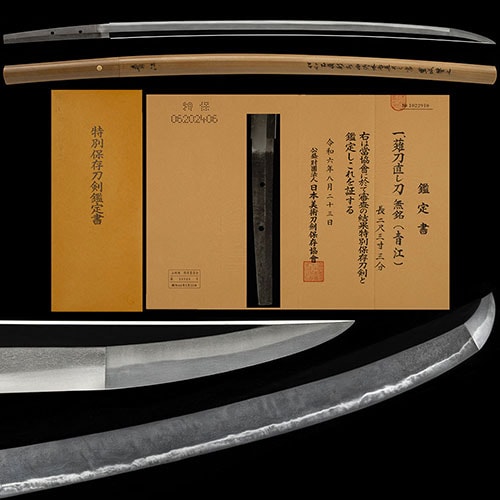
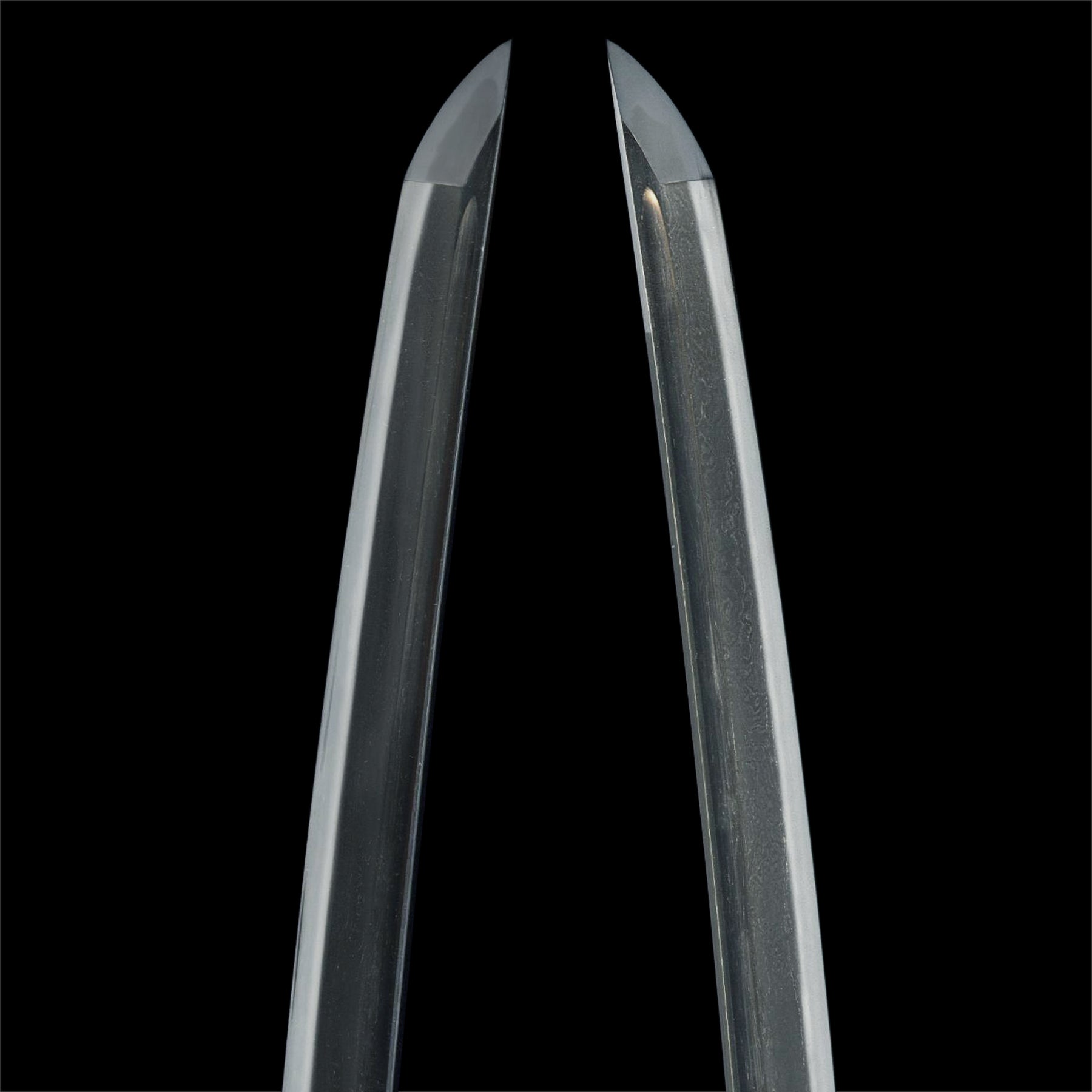
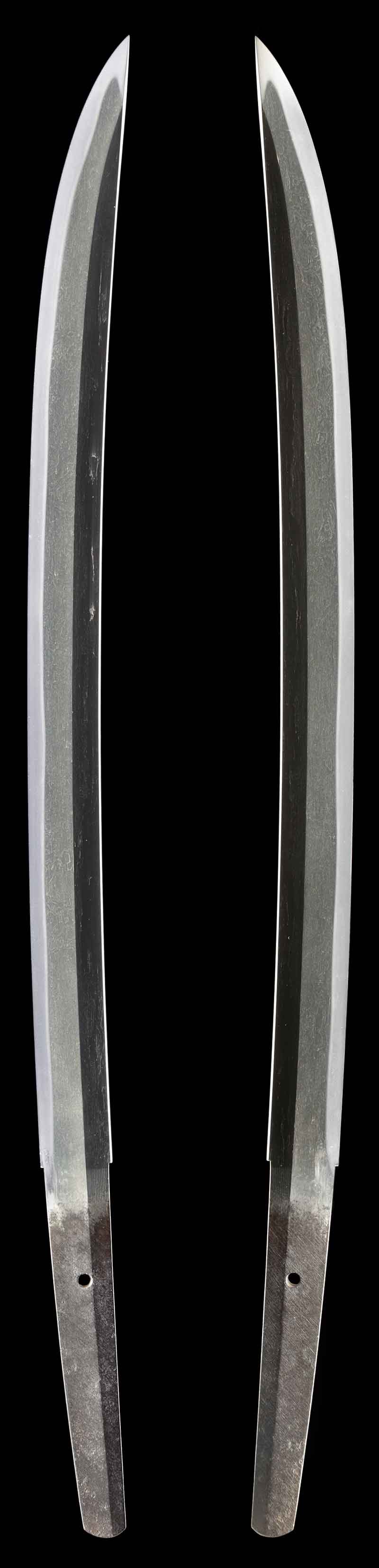
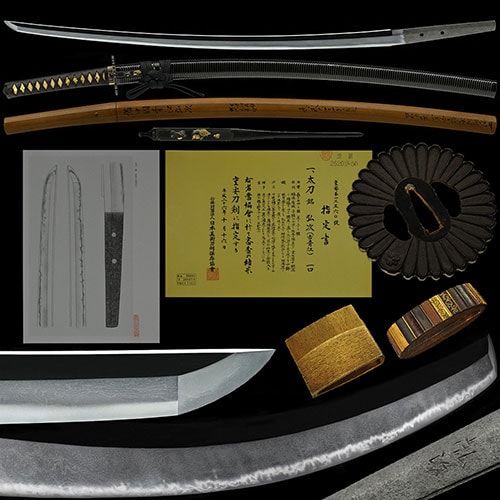
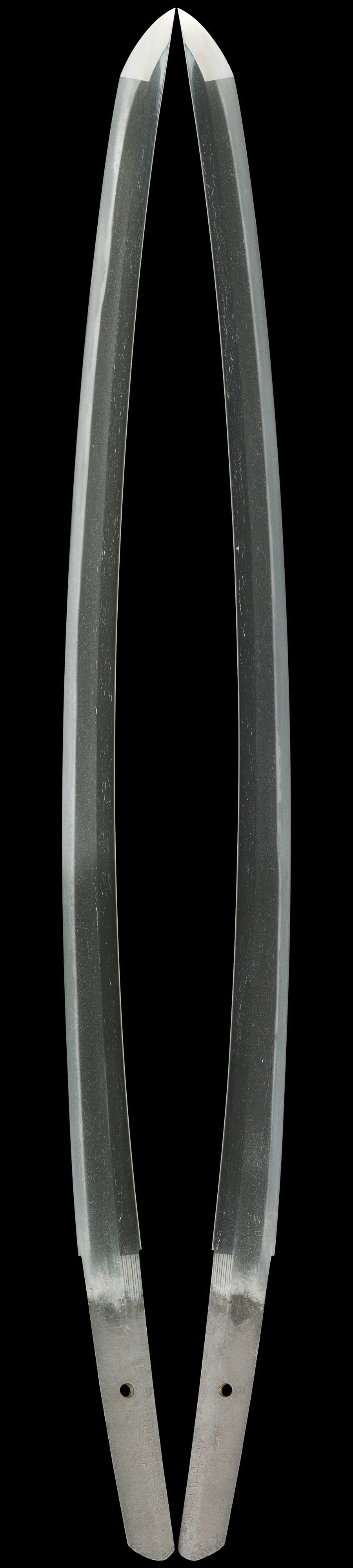
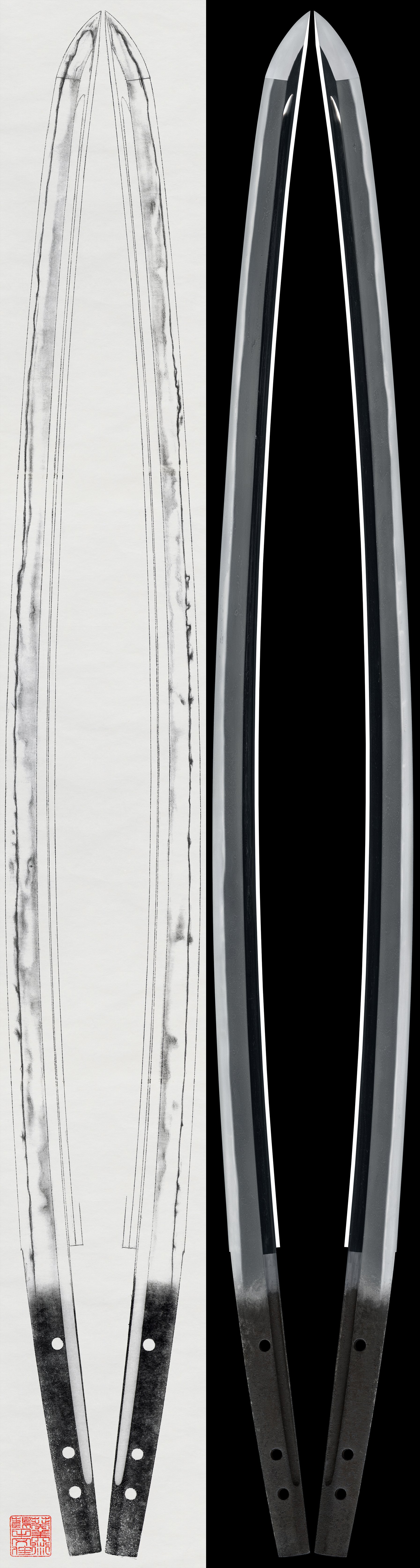
This is an unsigned Katana attributed to the Aoe school from the Nanbokucho period, mid to late 14th century. It is ranked as Saijyo Saku (top grade) among unsigned Aoe works and features a wide, thick blade with a large Kissaki. The blade exhibits Itame hada mixed with flowing grain pattern and Utsuri, with a Nioi-based tight suguha hamon with Ashi and Yo.

NBTHK Setsumei

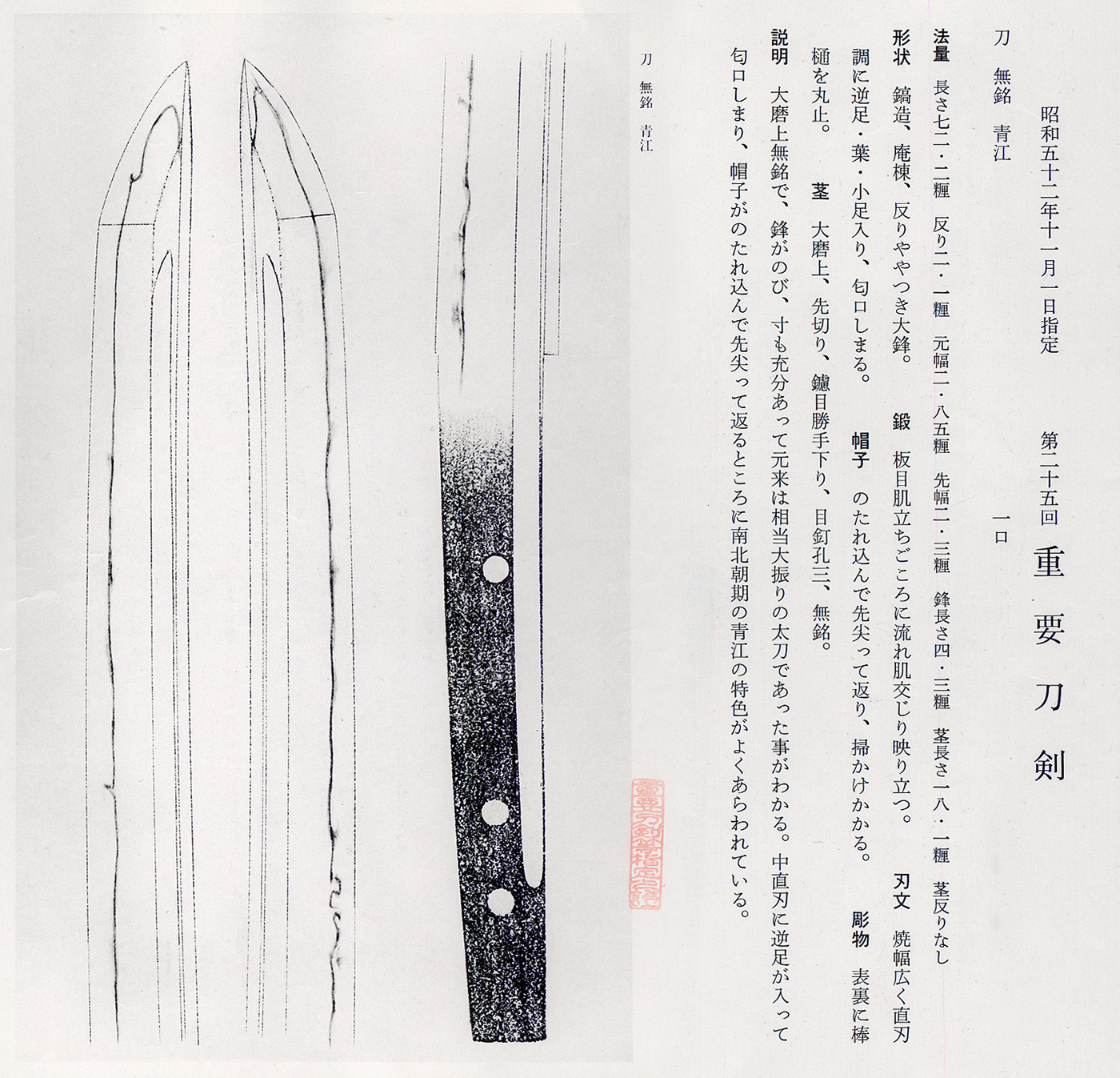
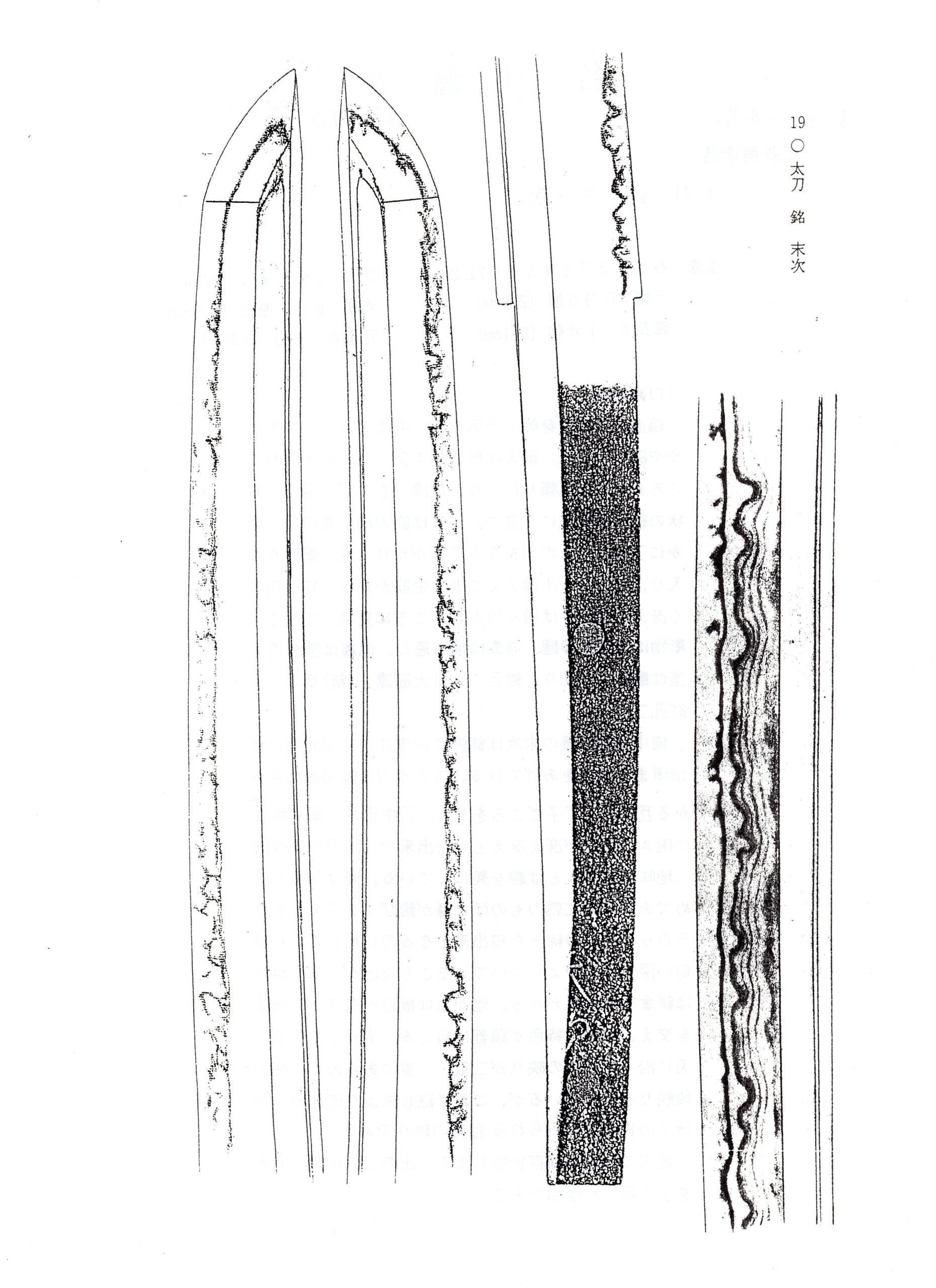
Jūyō-Tōken, 25th Session — Designated November 1, 1977 Katana, mumei: Aoe (青江) Measurements Nagasa 72.2 cm, sori 2.1 cm, motohaba 2.85 cm, sakihaba 2.3 cm, kissaki-nagasa 4.3 cm, nakago-nagasa 18.1 cm Description Keijō: shinogi-zukuri, iori-mune; slightly curved with an ō-kissaki. Kitae: itame-hada with a tendency toward hada-dachi, mixed with nagare-hada; utsuri appears. Hamon: Wide yakihaba in a suguha-chō style, incorporating saka-ashi, yō, and ko-ashi; the nioiguchi is tight. Bōshi: notare-komi, turning back with a pointed tip; hakikake is seen. Horimono: bō-hi on both sides, maru-dome. Nakago: Greatly shortened (ō-suriage), kiri-jiri; yasurime katte-sagari; three mekugi-ana; unsigned. Artisan Aoe school Era Nanbokuchō period Explanation This blade is greatly shortened (ō-suriage) and unsigned (mumei). The kissaki is elongated and the curvature is ample, showing that it was originally a considerably large tachi. The mid suguha with saka-ashi entering it, the tight nioiguchi, and the bōshi that runs in as notare and turns back with a pointed tip are features that clearly express the characteristic style of Aoe work of the Nanbokuchō period.

NihontoWatch MonNihontoWatch
MarketEncyclopediaKantei
Swords›Bizen-den›Aoe›Katana: Mumei (Aoe school) (25th Juyo Token)
katanaJūyō
Aoe School

Katana: Mumei (Aoe school) (25th Juyo Token)

mumei · Aoe · Nanbokucho · nagasa 72.4cm · sori 2.1cm

¥3,200,000
Visit seller website →
KatanaJūyō
Could you name the smith from the blade alone? Today’s kantei →
Aoe School — 1 of 5
Aoe School — 2 of 5
Aoe School — 3 of 5
Aoe School — 4 of 5
Aoe School — 5 of 5
1 / 5
1 / 5
Aoe School — 1 of 5Aoe School — 2 of 5Aoe School — 3 of 5Aoe School — 4 of 5Aoe School — 5 of 5
KatanaJūyō
Could you name the smith from the blade alone? Today’s kantei →
Measurements & details
Smith
Aoe School
Type
Katana
School
Aoe
Period
Nanbokucho(Late Heian)
Province
Bitchu
Signature
Unsigned(2% of this smith's designated works are signed)
Measurements
Nagasa 72.4cmSori 2.1cmMotohaba 2.96cmSakihaba 2.1cmKasane 0.73cmWeight 685g
Description

This is an unsigned Katana attributed to the Aoe school from the Nanbokucho period, mid to late 14th century. It is ranked as Saijyo Saku (top grade) among unsigned Aoe works and features a wide, thick blade with a large Kissaki. The blade exhibits Itame hada mixed with flowing grain pattern and Utsuri, with a Nioi-based tight suguha hamon with Ashi and Yo.

Official Catalog Translation

Juyo

-, 25th Session — Designated November 1, 1977

, : (青江)

Measurements 72.2 cm, 2.1 cm, 2.85 cm, 2.3 cm, 4.3 cm, 18.1 cm

Description Keijō: , ; slightly curved with an . : with a tendency toward , mixed with ; appears. : Wide in a style, incorporating , , and ; the is tight. : , turning back with a pointed tip; is seen. : on both sides, . : Greatly shortened (), ; ; three ; unsigned.

Artisan school

Era period

Explanation This blade is greatly shortened () and unsigned (). The is elongated and the curvature is ample, showing that it was originally a considerably large . The mid with entering it, the tight , and the that runs in as and turns back with a pointed tip are features that clearly express the characteristic style of work of the period.

Source: Yuhinkai Catalog
About the school

Aoe

青江

Bizen-den · Bitchu

24 pieces on the market now

›

The Aoe school arose in Bitchu Province, a region celebrated for iron production since antiquity. The early eleventh-century miscellany Shin Sarugaku-ki already lists "the swords of Bitchu" among the noted products of the provinces, and roughly two centuries later the Aoe swordsmiths emerged as heirs to that high reputation, flourishing chiefly in the lower basin of the Takahashi River in such locales as Koji and Manju. The school is traditionally said to have begun with Yasutsugu around the Shoan era, and thereafter it prospered greatly down to the later part of the Nanbokucho period. Within this lineage, works produced up through approximately the mid-Kamakura period are distinguished as Ko-Aoe, while those from the late Kamakura period onward through the Nanbokucho era are broadly termed Aoe. Representative smiths of the Nanbokucho phase include Tsugunao, Tsuguyoshi, Moritsugu, and Naotsugu, yet a great many surviving blades are mumei and attributed to the school collectively rather than to individual hands, reflecting the depth and continuity of the tradition as a whole. The NBTHK identifies two principal modes of Aoe workmanship. The first is a suguha-based temper in which the nioiguchi tends toward tightness, producing a bright and clear effect; the second is the distinctive saka-choji-midare that reached full maturity around the Enbun era (1356-1361), during the height of the Nanbokucho period. Ko-Aoe works are generally ko-nie-deki, with a somewhat shizumi (subdued) nioiguchi in suguha mixed with small undulations; by the late Kamakura period the nie becomes calmer, and in Nanbokucho pieces the nioiguchi tightens and the construction shifts to nioi-deki. It is specifically noted that whereas smiths of other provinces in this period display nie-deki under the influence of the Soshu tradition, Aoe works remain nioi-deki -- a hallmark distinction.

The forging characteristically shows ko-itame mixed with mokume, with finely standing grain producing the so-called chirimen-hada (crepe-like texture); jifu (patchy, mottled surface features) and sumihada (sooty-toned areas) are frequently intermingled. The jihada regularly exhibits midare-utsuri, and toward the cutting edge a layered, streak-like utsuri known as dan-utsuri is a major highlight of the school. Fine ji-nie adheres thickly, with chikei entering well. Overall, when compared with Bizen works of the same era, Aoe blades present a somewhat restrained and austere taste. Across the tradition's long arc from the late Heian period to the close of the Nanbokucho era, the NBTHK consistently praises Aoe works for the brightness and clarity of both ji and ha, frequently employing the term saeru (clear, brilliant) to describe the nioiguchi. Blades are commended for being kenzen (sound and well-preserved), for retaining ample nikuoki (blade "flesh"), and for conveying an atmosphere of sincerity and quiet elegance. The recurring evaluative language -- "the salient points of Aoe are conspicuously displayed," "an especially fine example even among works attributed to this school[[c:1]]" -- underscores the NBTHK's regard for the tradition as one producing consistently high-caliber work whose collective identity is immediately recognizable. The school's Nanbokucho-period output, with its wide mihaba, imposing o-kissaki, and bold boshi that rises and returns with a pointed tendency, conveys the powerful period character of that age, while earlier Ko-Aoe pieces are valued for their thoroughly archaic feeling and deep flavor. Taken together, the Aoe school represents one of the major traditions of western Japan, distinguished by its refined forging, luminous suguha, and the singular visual drama of its utsuri effects. Learn more →

4 recorded smiths257 designated works
Leading smiths
SmithEraDesignated
Aritsugu有次1278-12880
Kunitsugu国次1394-14660
Yukitsugu行次1249-12560
Yasuhiro安弘1264-12750
Saia西阿1288-13330
Explore the Aoe school →

Historical context

Bizen in the Nanbokuchō period

›

Sixty years of war between two courts drove blades long and broad, and Osafune met the demand: Kanemitsu and Chōgi led forges serving the provincial warriors who did the fighting, while Sōshū influence arrived with the armies to create Sōden-Bizen.

Bizen in the Nanbokuchō period →

NBTHK Certificate
Jūyō Tōken重要刀剣
Important Sword
›

A blade of top-grade workmanship and condition, formally judged to rank with a nationally recognized Important Art Object (Jūyō Bijutsuhin). Awarded only at the NBTHK’s competitive annual examination.

Of Japan’s roughly 2.5 million registered swords, only 12,307 (about 1 in 203) have ever attained Jūyō.

About the NBTHK›

The NBTHK (Nihon Bijutsu Tōken Hozon Kyōkai, the Society for the Preservation of Japanese Art Swords) is a public-interest incorporated foundation founded in 1948 and supervised by Japan’s Agency for Cultural Affairs (Bunkachō); it is based at the Japanese Sword Museum in Tokyo. Its expert panels physically examine each submitted work (shinsa) and issue a certificate (kanteishō) ranking it by artistic and historical merit. NBTHK papers are the most widely recognized standard of authentication for Japanese swords and fittings.

NBTHK official site→
Seller
A
Aoi Art
🇯🇵Ships from Japan
›
✓Verified dealeraoijapan.com
Settles in JPY
✓Ships worldwide✓English supportWire transferPayPalCredit card
Return policy

If you wish to return an item, please notify us within 3 days of receipt. After this period we cannot accept cancellations. Please ship the return to us within 5 business days. Cancellation is conditional on the item being kept in the same condition as at the time of sale, so please handle it with care.

View all of Aoi Art’s listings→View this item on the dealer’s site→

Previously sold — Aoe School

View all →
Choshuya
Tachi - by Aoe School - O-suriage Mumei AoeTachi - by Aoe School - O-suriage Mumei Aoe
Sold

Tachi

ByAoe School
SOLD
Aoi Art
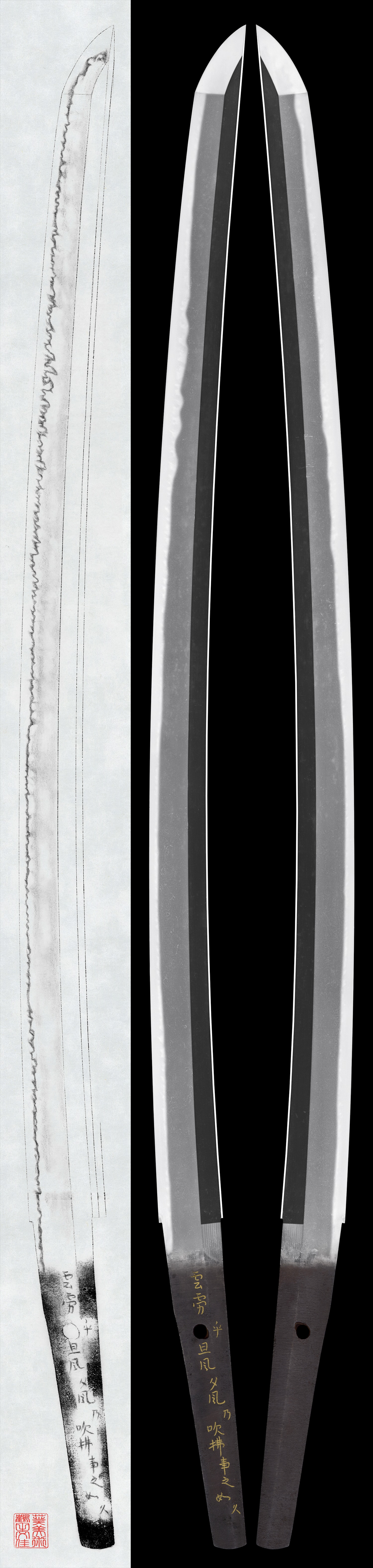
Wakizashi - by Aoe School - Mumei (attributed to Aoe) - Kin Zogan inscription: (Kumo kata yake asakaze yuukaze no fukiharau koto no gotoku)Wakizashi - by Aoe School - Mumei (attributed to Aoe) - Kin Zogan inscription: (Kumo kata yake asakaze yuukaze no fukiharau koto no gotoku)
Sold

Wakizashi

ByAoe School
SOLD
Kusanagi
Tokuho
Katana - Tokuho - by Aoe School - Tokubetsu Hozon Wakizashi by Aoe, Kamakura to Nanbokucho PeriodKatana - Tokuho - by Aoe School - Tokubetsu Hozon Wakizashi by Aoe, Kamakura to Nanbokucho Period
Sold

Katana

ByAoe School
SOLD
Choshuya
Katana - by Aoe School - O-suriage Mumei, Attributed to AoeKatana - by Aoe School - O-suriage Mumei, Attributed to Aoe
Sold

Katana

ByAoe School
SOLD
World Seiyudo
Jūyō Bijutsuhin
Katana - Jubi - by Aoe School - Mumei Attributed to Yoshitsugu (Aoe) - O-Wazamono, Tokubetsu Juyo TokenKatana - Jubi - by Aoe School - Mumei Attributed to Yoshitsugu (Aoe) - O-Wazamono, Tokubetsu Juyo Token
Sold

Katana

ByAoe School
SOLD
Choshuya
Wakizashi - by Aoe School - Gakumei Bitchu Kuni Junin Suketsugu SakuWakizashi - by Aoe School - Gakumei Bitchu Kuni Junin Suketsugu Saku
Sold

Wakizashi

ByAoe School
SOLD
Aoi Art
Wakizashi - by Aoe School - Mumei (Aoe) - NBTHK Tokubetsu Hozon TokenWakizashi - by Aoe School - Mumei (Aoe) - NBTHK Tokubetsu Hozon Token
Sold

Wakizashi

ByAoe School
SOLD
Aoi Art
Katana - by Aoe School - Bitchu Koku ju Saemon no Jo Hidetugu (Aoe school)Katana - by Aoe School - Bitchu Koku ju Saemon no Jo Hidetugu (Aoe school)
Sold

Katana

ByAoe School
SOLD

More from the Aoe school

View all →
Toyuukai
Jūyō
Katana - Jūyō - by Aoe School - Mumei (Aoe) - 51st Juyo TokenKatana - Jūyō - by Aoe School - Mumei (Aoe) - 51st Juyo Token

Katana

ByAoe School
¥5,500,000
Samurai Nippon
Jūyō
Kodachi - Jūyō - by Chu-Aoe Yoshitsugu - Kodachi: Bitchu no Kuni ju Uemonnojo Tairano Yoshitsugu (Aoe)Kodachi - Jūyō - by Chu-Aoe Yoshitsugu - Kodachi: Bitchu no Kuni ju Uemonnojo Tairano Yoshitsugu (Aoe)

Kodachi

ByChu-Aoe Yoshitsugu
¥6,500,000
Eirakudo
Tokuho
Tokuho - by Aoe School - Aoe Katana Tokubetsu Hozon TokenTokuho - by Aoe School - Aoe Katana Tokubetsu Hozon Token

Aoe Katana Tokubetsu Hozon Token

ByAoe School
¥2,380,000
Samurai Store
Tokuho
Katana - Tokuho - by Aoe School - Antique Katana sword in Ornate Mounting Kamakura Period NBTHK Tokubetsu Hozon certificatedKatana - Tokuho - by Aoe School - Antique Katana sword in Ornate Mounting Kamakura Period NBTHK Tokubetsu Hozon certificated

Katana

ByAoe School
¥2,700,000
Token-Net
Jūyō
Jūyō - by Aoe School - Naginata Naoshi Katana: Mumei (Aoe)Jūyō - by Aoe School - Naginata Naoshi Katana: Mumei (Aoe)

Naginata Naoshi Katana: Mumei (Aoe)

ByAoe School
¥3,200,000
Goushuya
Jūyō Bijutsuhin
Tachi - Jubi - by Ko-Aoe School - Important Art Object Tachi: Sueyoshi of Ko-Aoe, Passed down in the Naito Family, Lord of Murakami Domain, Echigo ProvinceTachi - Jubi - by Ko-Aoe School - Important Art Object Tachi: Sueyoshi of Ko-Aoe, Passed down in the Naito Family, Lord of Murakami Domain, Echigo Province

Tachi

ByKo-Aoe School
Ask
Tsuruginoya
Tokuho
Tokuho - by Aoe School - Naginata-naoshi Wakizashi: AoeTokuho - by Aoe School - Naginata-naoshi Wakizashi: Aoe

Naginata-naoshi Wakizashi: Aoe

ByAoe School
¥650,000
Eirakudo
Jūyō
Tachi - Jūyō - by Ko-Aoe Hirotsugu - Mei Hirotsugu - Juyo TokenTachi - Jūyō - by Ko-Aoe Hirotsugu - Mei Hirotsugu - Juyo Token

Tachi

ByKo-Aoe Hirotsugu
Ask

More from the Bizen tradition

View all →
Aoi Art
Jūyō Bijutsuhin
Daisho - Jubi - by Osafune Nagamitsu - Dai Sho: Katana (Important Art Object): Mumei (Attributed to Nagamitsu) / Wakizashi: Mumei (Attributed to Sekishu Naotsuna)Daisho - Jubi - by Osafune Nagamitsu - Dai Sho: Katana (Important Art Object): Mumei (Attributed to Nagamitsu) / Wakizashi: Mumei (Attributed to Sekishu Naotsuna)

Daishō

ByOsafune Nagamitsu
Ask
Nihonto.com
Jūyō
Tanto - Jūyō - by Osafune Kagemitsu - Juyo Tanto by Bizen KagemitsuTanto - Jūyō - by Osafune Kagemitsu - Juyo Tanto by Bizen Kagemitsu

Tantō

ByOsafune Kagemitsu
¥89,500
Tsuruginoya
Jūyō
Katana - Jūyō - by Fukuoka Ichimonji School - Mumei Fukuoka IchimonjiKatana - Jūyō - by Fukuoka Ichimonji School - Mumei Fukuoka Ichimonji

Katana

ByFukuoka Ichimonji School
Ask
Hyozaemon
Tokuho
Tokuho - by Fukuoka Ichimonji Yoshifusa - Naginata Naoshi Wakizashi by Fukuoka Ichimonji Yoshifusa, a Master of IchimonjiTokuho - by Fukuoka Ichimonji Yoshifusa - Naginata Naoshi Wakizashi by Fukuoka Ichimonji Yoshifusa, a Master of Ichimonji

Naginata Naoshi Wakizashi by Fukuoka Ichimonji Yoshifusa, a Master of Ichimonji

ByFukuoka Ichimonji Yoshifusa
Ask
Touken Matsumoto
Hozon
Wakizashi - Hozon - by Sukesada School - Bishu Osafune Sukesada, Eisho Juninen NigatsujitsuWakizashi - Hozon - by Sukesada School - Bishu Osafune Sukesada, Eisho Juninen Nigatsujitsu

Wakizashi

BySukesada School
¥650,000
Eirakudo
Tokuho
Katana - Tokuho - by Katayama Ichimonji School - Katayama Ichimonji - Tokubetsu Hozon TokenKatana - Tokuho - by Katayama Ichimonji School - Katayama Ichimonji - Tokubetsu Hozon Token

Katana

ByKatayama Ichimonji School
¥4,500,000
Eirakudo
Jūyō
Katana - Jūyō - by Motoshige - Motoshige - Juyo TokenKatana - Jūyō - by Motoshige - Motoshige - Juyo Token

Katana

ByMotoshige
¥6,000,000
Samurai Museum
Katana - by Osafune Kanemitsu - Antique Japanese Sword Katana Attributed to Den Osafune Kanemitsu NTHK Yushu Saku Kanteisho CertificateKatana - by Osafune Kanemitsu - Antique Japanese Sword Katana Attributed to Den Osafune Kanemitsu NTHK Yushu Saku Kanteisho Certificate

Katana

ByOsafune Kanemitsu
¥27,856

Swords

  • Katana
  • Wakizashi
  • Tantō
  • Tachi
  • Naginata
  • Yari
  • Japanese Swords
  • Samurai Swords

Fittings

  • Tsuba
  • Fuchi-Kashira
  • Kozuka
  • Menuki
  • Sword Guards (Tsuba)

Armor

  • Kabuto
  • Samurai Armor
  • All Samurai Armor

By Certification

  • Tokujū
  • Jūyō
  • Tokuho
  • Hozon

Resources

  • Dealer Directory
  • Artist Directory
  • The Daily Kantei
  • Glossary
  • Browse All
Nihontowatch© 2026
TermsPrivacyCookiesAbout

¥3,200,000

View on Aoi Art

Description

This is an unsigned Katana attributed to the Aoe school from the Nanbokucho period, mid to late 14th century. It is ranked as Saijyo Saku (top grade) among unsigned Aoe works and features a wide, thick blade with a large Kissaki. The blade exhibits Itame hada mixed with flowing grain pattern and Utsuri, with a Nioi-based tight suguha hamon with Ashi and Yo.

NBTHK Setsumei

Jūyō-Tōken, 25th Session — Designated November 1, 1977 Katana, mumei: Aoe (青江) Measurements Nagasa 72.2 cm, sori 2.1 cm, motohaba 2.85 cm, sakihaba 2.3 cm, kissaki-nagasa 4.3 cm, nakago-nagasa 18.1 cm Description Keijō: shinogi-zukuri, iori-mune; slightly curved with an ō-kissaki. Kitae: itame-hada with a tendency toward hada-dachi, mixed with nagare-hada; utsuri appears. Hamon: Wide yakihaba in a suguha-chō style, incorporating saka-ashi, yō, and ko-ashi; the nioiguchi is tight. Bōshi: notare-komi, turning back with a pointed tip; hakikake is seen. Horimono: bō-hi on both sides, maru-dome. Nakago: Greatly shortened (ō-suriage), kiri-jiri; yasurime katte-sagari; three mekugi-ana; unsigned. Artisan Aoe school Era Nanbokuchō period Explanation This blade is greatly shortened (ō-suriage) and unsigned (mumei). The kissaki is elongated and the curvature is ample, showing that it was originally a considerably large tachi. The mid suguha with saka-ashi entering it, the tight nioiguchi, and the bōshi that runs in as notare and turns back with a pointed tip are features that clearly express the characteristic style of Aoe work of the Nanbokuchō period.

NihontoWatch MonNihontoWatch
MarketEncyclopediaKantei
Swords›Bizen-den›Aoe›Katana: Mumei (Aoe school) (25th Juyo Token)
katanaJūyō
Aoe School

Katana: Mumei (Aoe school) (25th Juyo Token)

mumei · Aoe · Nanbokucho · nagasa 72.4cm · sori 2.1cm

¥3,200,000
Visit seller website →
KatanaJūyō
Could you name the smith from the blade alone? Today’s kantei →
Aoe School — 1 of 5
Aoe School — 2 of 5
Aoe School — 3 of 5
Aoe School — 4 of 5
Aoe School — 5 of 5
1 / 5
1 / 5
Aoe School — 1 of 5Aoe School — 2 of 5Aoe School — 3 of 5Aoe School — 4 of 5Aoe School — 5 of 5
KatanaJūyō
Could you name the smith from the blade alone? Today’s kantei →
Measurements & details
Smith
Aoe School
Type
Katana
School
Aoe
Period
Nanbokucho(Late Heian)
Province
Bitchu
Signature
Unsigned(2% of this smith's designated works are signed)
Measurements
Nagasa 72.4cmSori 2.1cmMotohaba 2.96cmSakihaba 2.1cmKasane 0.73cmWeight 685g
Description

This is an unsigned Katana attributed to the Aoe school from the Nanbokucho period, mid to late 14th century. It is ranked as Saijyo Saku (top grade) among unsigned Aoe works and features a wide, thick blade with a large Kissaki. The blade exhibits Itame hada mixed with flowing grain pattern and Utsuri, with a Nioi-based tight suguha hamon with Ashi and Yo.

Official Catalog Translation

Juyo

-, 25th Session — Designated November 1, 1977

, : (青江)

Measurements 72.2 cm, 2.1 cm, 2.85 cm, 2.3 cm, 4.3 cm, 18.1 cm

Description Keijō: , ; slightly curved with an . : with a tendency toward , mixed with ; appears. : Wide in a style, incorporating , , and ; the is tight. : , turning back with a pointed tip; is seen. : on both sides, . : Greatly shortened (), ; ; three ; unsigned.

Artisan school

Era period

Explanation This blade is greatly shortened () and unsigned (). The is elongated and the curvature is ample, showing that it was originally a considerably large . The mid with entering it, the tight , and the that runs in as and turns back with a pointed tip are features that clearly express the characteristic style of work of the period.

Source: Yuhinkai Catalog
About the school

Aoe

青江

Bizen-den · Bitchu

24 pieces on the market now

›

The Aoe school arose in Bitchu Province, a region celebrated for iron production since antiquity. The early eleventh-century miscellany Shin Sarugaku-ki already lists "the swords of Bitchu" among the noted products of the provinces, and roughly two centuries later the Aoe swordsmiths emerged as heirs to that high reputation, flourishing chiefly in the lower basin of the Takahashi River in such locales as Koji and Manju. The school is traditionally said to have begun with Yasutsugu around the Shoan era, and thereafter it prospered greatly down to the later part of the Nanbokucho period. Within this lineage, works produced up through approximately the mid-Kamakura period are distinguished as Ko-Aoe, while those from the late Kamakura period onward through the Nanbokucho era are broadly termed Aoe. Representative smiths of the Nanbokucho phase include Tsugunao, Tsuguyoshi, Moritsugu, and Naotsugu, yet a great many surviving blades are mumei and attributed to the school collectively rather than to individual hands, reflecting the depth and continuity of the tradition as a whole. The NBTHK identifies two principal modes of Aoe workmanship. The first is a suguha-based temper in which the nioiguchi tends toward tightness, producing a bright and clear effect; the second is the distinctive saka-choji-midare that reached full maturity around the Enbun era (1356-1361), during the height of the Nanbokucho period. Ko-Aoe works are generally ko-nie-deki, with a somewhat shizumi (subdued) nioiguchi in suguha mixed with small undulations; by the late Kamakura period the nie becomes calmer, and in Nanbokucho pieces the nioiguchi tightens and the construction shifts to nioi-deki. It is specifically noted that whereas smiths of other provinces in this period display nie-deki under the influence of the Soshu tradition, Aoe works remain nioi-deki -- a hallmark distinction.

The forging characteristically shows ko-itame mixed with mokume, with finely standing grain producing the so-called chirimen-hada (crepe-like texture); jifu (patchy, mottled surface features) and sumihada (sooty-toned areas) are frequently intermingled. The jihada regularly exhibits midare-utsuri, and toward the cutting edge a layered, streak-like utsuri known as dan-utsuri is a major highlight of the school. Fine ji-nie adheres thickly, with chikei entering well. Overall, when compared with Bizen works of the same era, Aoe blades present a somewhat restrained and austere taste. Across the tradition's long arc from the late Heian period to the close of the Nanbokucho era, the NBTHK consistently praises Aoe works for the brightness and clarity of both ji and ha, frequently employing the term saeru (clear, brilliant) to describe the nioiguchi. Blades are commended for being kenzen (sound and well-preserved), for retaining ample nikuoki (blade "flesh"), and for conveying an atmosphere of sincerity and quiet elegance. The recurring evaluative language -- "the salient points of Aoe are conspicuously displayed," "an especially fine example even among works attributed to this school[[c:1]]" -- underscores the NBTHK's regard for the tradition as one producing consistently high-caliber work whose collective identity is immediately recognizable. The school's Nanbokucho-period output, with its wide mihaba, imposing o-kissaki, and bold boshi that rises and returns with a pointed tendency, conveys the powerful period character of that age, while earlier Ko-Aoe pieces are valued for their thoroughly archaic feeling and deep flavor. Taken together, the Aoe school represents one of the major traditions of western Japan, distinguished by its refined forging, luminous suguha, and the singular visual drama of its utsuri effects. Learn more →

4 recorded smiths257 designated works
Leading smiths
SmithEraDesignated
Aritsugu有次1278-12880
Kunitsugu国次1394-14660
Yukitsugu行次1249-12560
Yasuhiro安弘1264-12750
Saia西阿1288-13330
Explore the Aoe school →

Historical context

Bizen in the Nanbokuchō period

›

Sixty years of war between two courts drove blades long and broad, and Osafune met the demand: Kanemitsu and Chōgi led forges serving the provincial warriors who did the fighting, while Sōshū influence arrived with the armies to create Sōden-Bizen.

Bizen in the Nanbokuchō period →

NBTHK Certificate
Jūyō Tōken重要刀剣
Important Sword
›

A blade of top-grade workmanship and condition, formally judged to rank with a nationally recognized Important Art Object (Jūyō Bijutsuhin). Awarded only at the NBTHK’s competitive annual examination.

Of Japan’s roughly 2.5 million registered swords, only 12,307 (about 1 in 203) have ever attained Jūyō.

About the NBTHK›

The NBTHK (Nihon Bijutsu Tōken Hozon Kyōkai, the Society for the Preservation of Japanese Art Swords) is a public-interest incorporated foundation founded in 1948 and supervised by Japan’s Agency for Cultural Affairs (Bunkachō); it is based at the Japanese Sword Museum in Tokyo. Its expert panels physically examine each submitted work (shinsa) and issue a certificate (kanteishō) ranking it by artistic and historical merit. NBTHK papers are the most widely recognized standard of authentication for Japanese swords and fittings.

NBTHK official site→
Seller
A
Aoi Art
🇯🇵Ships from Japan
›
✓Verified dealeraoijapan.com
Settles in JPY
✓Ships worldwide✓English supportWire transferPayPalCredit card
Return policy

If you wish to return an item, please notify us within 3 days of receipt. After this period we cannot accept cancellations. Please ship the return to us within 5 business days. Cancellation is conditional on the item being kept in the same condition as at the time of sale, so please handle it with care.

View all of Aoi Art’s listings→View this item on the dealer’s site→

Previously sold — Aoe School

View all →
Choshuya
Tachi - by Aoe School - O-suriage Mumei AoeTachi - by Aoe School - O-suriage Mumei Aoe
Sold

Tachi

ByAoe School
SOLD
Aoi Art
Wakizashi - by Aoe School - Mumei (attributed to Aoe) - Kin Zogan inscription: (Kumo kata yake asakaze yuukaze no fukiharau koto no gotoku)Wakizashi - by Aoe School - Mumei (attributed to Aoe) - Kin Zogan inscription: (Kumo kata yake asakaze yuukaze no fukiharau koto no gotoku)
Sold

Wakizashi

ByAoe School
SOLD
Kusanagi
Tokuho
Katana - Tokuho - by Aoe School - Tokubetsu Hozon Wakizashi by Aoe, Kamakura to Nanbokucho PeriodKatana - Tokuho - by Aoe School - Tokubetsu Hozon Wakizashi by Aoe, Kamakura to Nanbokucho Period
Sold

Katana

ByAoe School
SOLD
Choshuya
Katana - by Aoe School - O-suriage Mumei, Attributed to AoeKatana - by Aoe School - O-suriage Mumei, Attributed to Aoe
Sold

Katana

ByAoe School
SOLD
World Seiyudo
Jūyō Bijutsuhin
Katana - Jubi - by Aoe School - Mumei Attributed to Yoshitsugu (Aoe) - O-Wazamono, Tokubetsu Juyo TokenKatana - Jubi - by Aoe School - Mumei Attributed to Yoshitsugu (Aoe) - O-Wazamono, Tokubetsu Juyo Token
Sold

Katana

ByAoe School
SOLD
Choshuya
Wakizashi - by Aoe School - Gakumei Bitchu Kuni Junin Suketsugu SakuWakizashi - by Aoe School - Gakumei Bitchu Kuni Junin Suketsugu Saku
Sold

Wakizashi

ByAoe School
SOLD
Aoi Art
Wakizashi - by Aoe School - Mumei (Aoe) - NBTHK Tokubetsu Hozon TokenWakizashi - by Aoe School - Mumei (Aoe) - NBTHK Tokubetsu Hozon Token
Sold

Wakizashi

ByAoe School
SOLD
Aoi Art
Katana - by Aoe School - Bitchu Koku ju Saemon no Jo Hidetugu (Aoe school)Katana - by Aoe School - Bitchu Koku ju Saemon no Jo Hidetugu (Aoe school)
Sold

Katana

ByAoe School
SOLD

More from the Aoe school

View all →
Toyuukai
Jūyō
Katana - Jūyō - by Aoe School - Mumei (Aoe) - 51st Juyo TokenKatana - Jūyō - by Aoe School - Mumei (Aoe) - 51st Juyo Token

Katana

ByAoe School
¥5,500,000
Samurai Nippon
Jūyō
Kodachi - Jūyō - by Chu-Aoe Yoshitsugu - Kodachi: Bitchu no Kuni ju Uemonnojo Tairano Yoshitsugu (Aoe)Kodachi - Jūyō - by Chu-Aoe Yoshitsugu - Kodachi: Bitchu no Kuni ju Uemonnojo Tairano Yoshitsugu (Aoe)

Kodachi

ByChu-Aoe Yoshitsugu
¥6,500,000
Eirakudo
Tokuho
Tokuho - by Aoe School - Aoe Katana Tokubetsu Hozon TokenTokuho - by Aoe School - Aoe Katana Tokubetsu Hozon Token

Aoe Katana Tokubetsu Hozon Token

ByAoe School
¥2,380,000
Samurai Store
Tokuho
Katana - Tokuho - by Aoe School - Antique Katana sword in Ornate Mounting Kamakura Period NBTHK Tokubetsu Hozon certificatedKatana - Tokuho - by Aoe School - Antique Katana sword in Ornate Mounting Kamakura Period NBTHK Tokubetsu Hozon certificated

Katana

ByAoe School
¥2,700,000
Token-Net
Jūyō
Jūyō - by Aoe School - Naginata Naoshi Katana: Mumei (Aoe)Jūyō - by Aoe School - Naginata Naoshi Katana: Mumei (Aoe)

Naginata Naoshi Katana: Mumei (Aoe)

ByAoe School
¥3,200,000
Goushuya
Jūyō Bijutsuhin
Tachi - Jubi - by Ko-Aoe School - Important Art Object Tachi: Sueyoshi of Ko-Aoe, Passed down in the Naito Family, Lord of Murakami Domain, Echigo ProvinceTachi - Jubi - by Ko-Aoe School - Important Art Object Tachi: Sueyoshi of Ko-Aoe, Passed down in the Naito Family, Lord of Murakami Domain, Echigo Province

Tachi

ByKo-Aoe School
Ask
Tsuruginoya
Tokuho
Tokuho - by Aoe School - Naginata-naoshi Wakizashi: AoeTokuho - by Aoe School - Naginata-naoshi Wakizashi: Aoe

Naginata-naoshi Wakizashi: Aoe

ByAoe School
¥650,000
Eirakudo
Jūyō
Tachi - Jūyō - by Ko-Aoe Hirotsugu - Mei Hirotsugu - Juyo TokenTachi - Jūyō - by Ko-Aoe Hirotsugu - Mei Hirotsugu - Juyo Token

Tachi

ByKo-Aoe Hirotsugu
Ask

More from the Bizen tradition

View all →
Aoi Art
Jūyō Bijutsuhin
Daisho - Jubi - by Osafune Nagamitsu - Dai Sho: Katana (Important Art Object): Mumei (Attributed to Nagamitsu) / Wakizashi: Mumei (Attributed to Sekishu Naotsuna)Daisho - Jubi - by Osafune Nagamitsu - Dai Sho: Katana (Important Art Object): Mumei (Attributed to Nagamitsu) / Wakizashi: Mumei (Attributed to Sekishu Naotsuna)

Daishō

ByOsafune Nagamitsu
Ask
Nihonto.com
Jūyō
Tanto - Jūyō - by Osafune Kagemitsu - Juyo Tanto by Bizen KagemitsuTanto - Jūyō - by Osafune Kagemitsu - Juyo Tanto by Bizen Kagemitsu

Tantō

ByOsafune Kagemitsu
¥89,500
Tsuruginoya
Jūyō
Katana - Jūyō - by Fukuoka Ichimonji School - Mumei Fukuoka IchimonjiKatana - Jūyō - by Fukuoka Ichimonji School - Mumei Fukuoka Ichimonji

Katana

ByFukuoka Ichimonji School
Ask
Hyozaemon
Tokuho
Tokuho - by Fukuoka Ichimonji Yoshifusa - Naginata Naoshi Wakizashi by Fukuoka Ichimonji Yoshifusa, a Master of IchimonjiTokuho - by Fukuoka Ichimonji Yoshifusa - Naginata Naoshi Wakizashi by Fukuoka Ichimonji Yoshifusa, a Master of Ichimonji

Naginata Naoshi Wakizashi by Fukuoka Ichimonji Yoshifusa, a Master of Ichimonji

ByFukuoka Ichimonji Yoshifusa
Ask
Touken Matsumoto
Hozon
Wakizashi - Hozon - by Sukesada School - Bishu Osafune Sukesada, Eisho Juninen NigatsujitsuWakizashi - Hozon - by Sukesada School - Bishu Osafune Sukesada, Eisho Juninen Nigatsujitsu

Wakizashi

BySukesada School
¥650,000
Eirakudo
Tokuho
Katana - Tokuho - by Katayama Ichimonji School - Katayama Ichimonji - Tokubetsu Hozon TokenKatana - Tokuho - by Katayama Ichimonji School - Katayama Ichimonji - Tokubetsu Hozon Token

Katana

ByKatayama Ichimonji School
¥4,500,000
Eirakudo
Jūyō
Katana - Jūyō - by Motoshige - Motoshige - Juyo TokenKatana - Jūyō - by Motoshige - Motoshige - Juyo Token

Katana

ByMotoshige
¥6,000,000
Samurai Museum
Katana - by Osafune Kanemitsu - Antique Japanese Sword Katana Attributed to Den Osafune Kanemitsu NTHK Yushu Saku Kanteisho CertificateKatana - by Osafune Kanemitsu - Antique Japanese Sword Katana Attributed to Den Osafune Kanemitsu NTHK Yushu Saku Kanteisho Certificate

Katana

ByOsafune Kanemitsu
¥27,856

Swords

  • Katana
  • Wakizashi
  • Tantō
  • Tachi
  • Naginata
  • Yari
  • Japanese Swords
  • Samurai Swords

Fittings

  • Tsuba
  • Fuchi-Kashira
  • Kozuka
  • Menuki
  • Sword Guards (Tsuba)

Armor

  • Kabuto
  • Samurai Armor
  • All Samurai Armor

By Certification

  • Tokujū
  • Jūyō
  • Tokuho
  • Hozon

Resources

  • Dealer Directory
  • Artist Directory
  • The Daily Kantei
  • Glossary
  • Browse All
Nihontowatch© 2026
TermsPrivacyCookiesAbout

¥3,200,000

View on Aoi Art
NihontoWatch MonNihontoWatch
Market
Encyclopedia
Kantei
NihontoWatch MonNihontoWatch
Market
Encyclopedia
Kantei