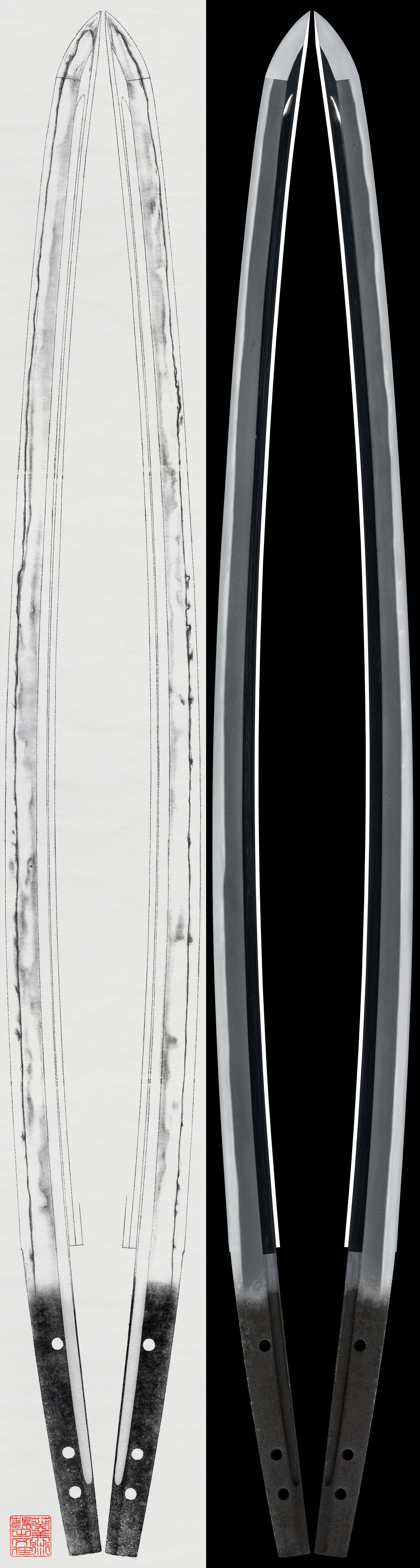
Sixty years of war between two courts drove blades long and broad, and Osafune met the demand: Kanemitsu and Chōgi led forges serving the provincial warriors who did the fighting, while Sōshū influence arrived with the armies to create Sōden-Bizen.
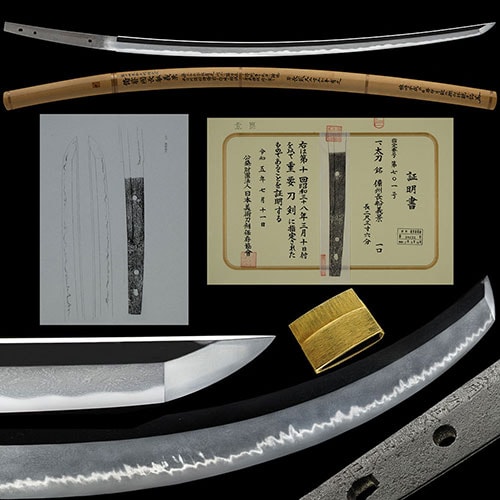
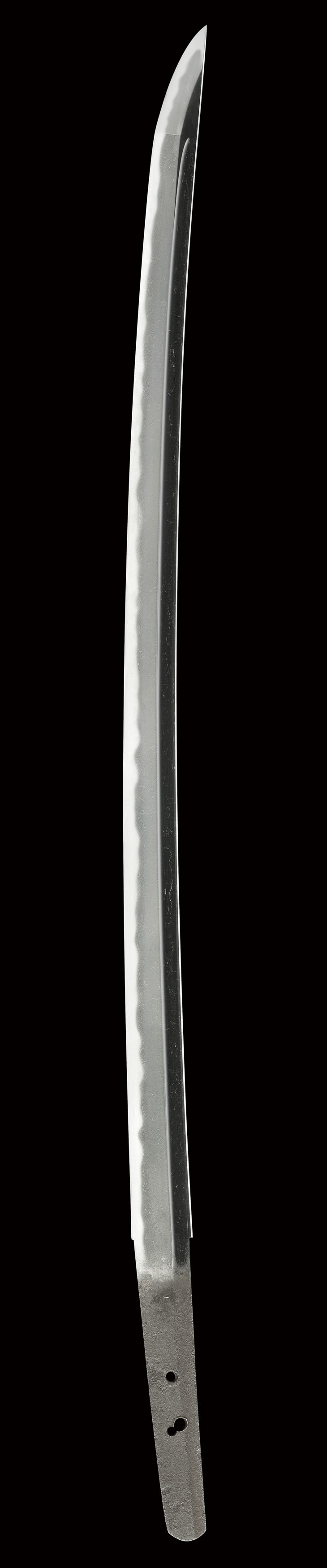
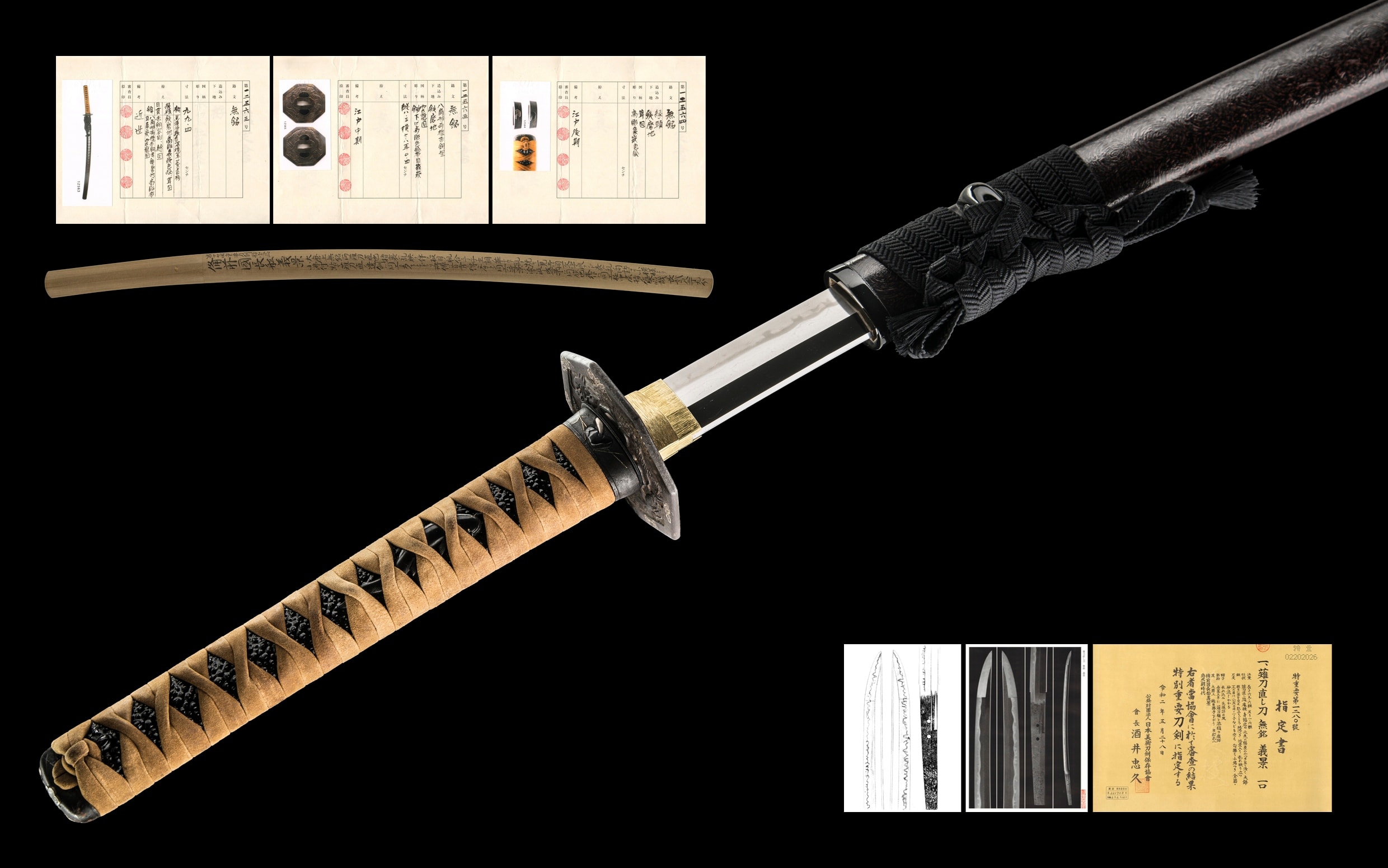
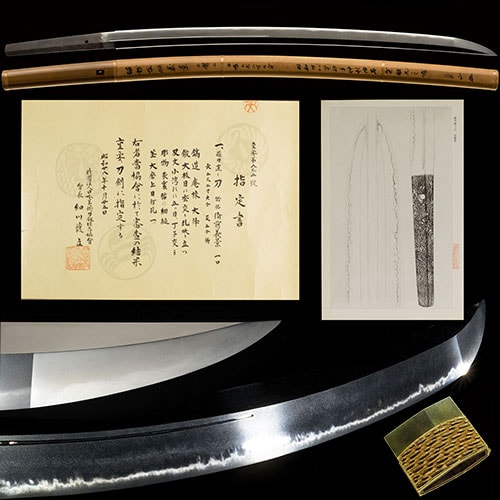
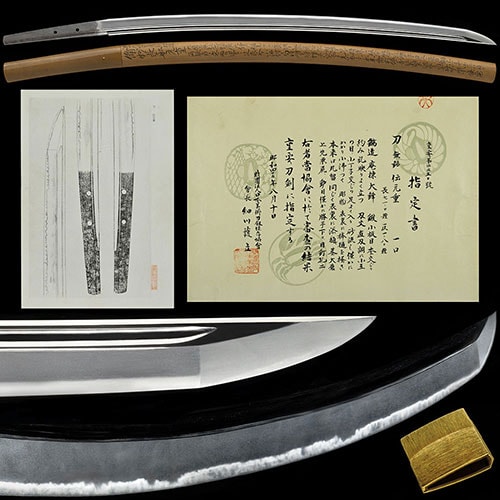
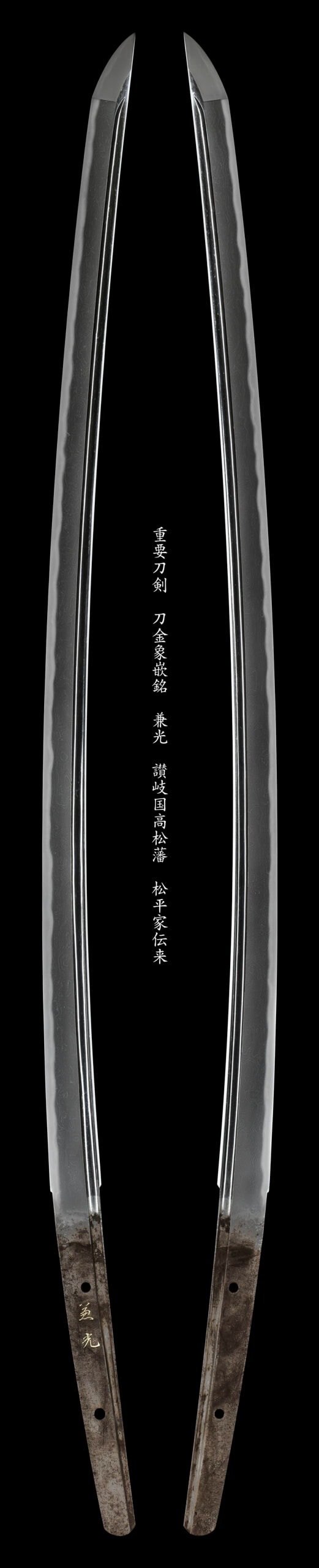
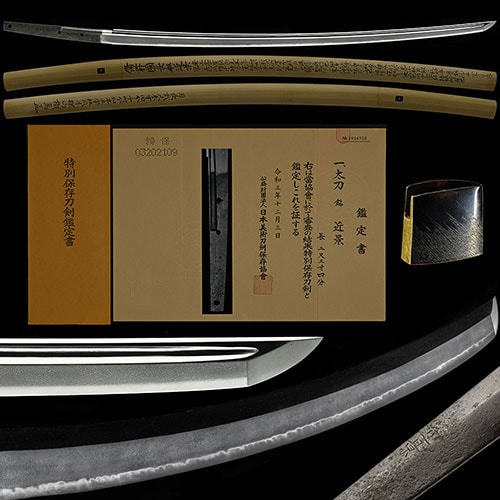
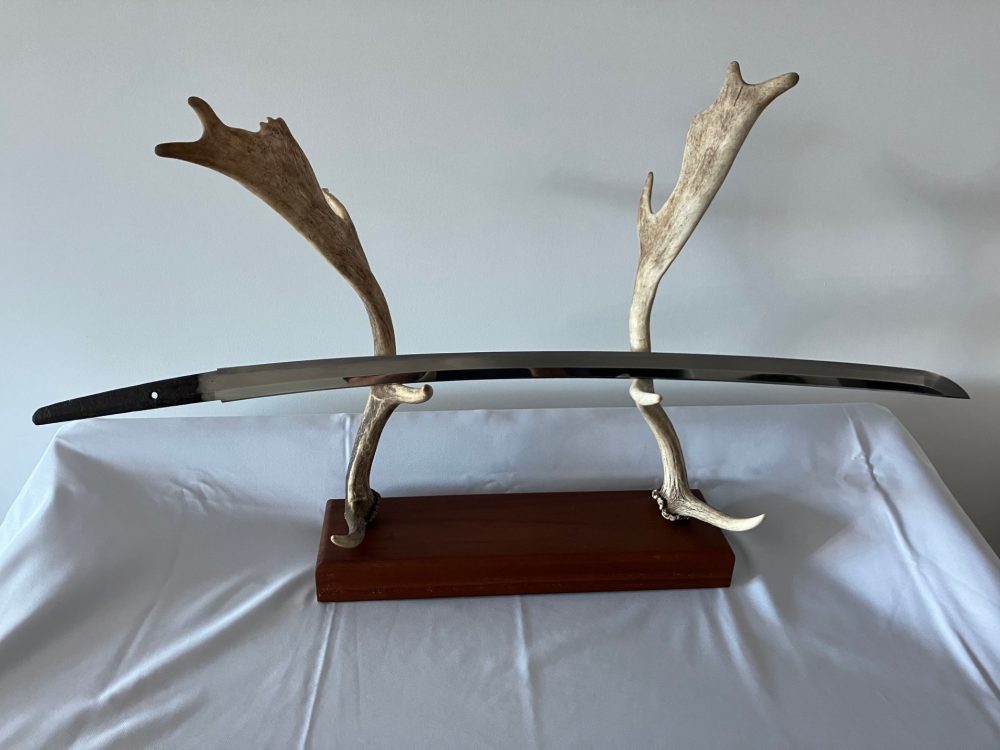
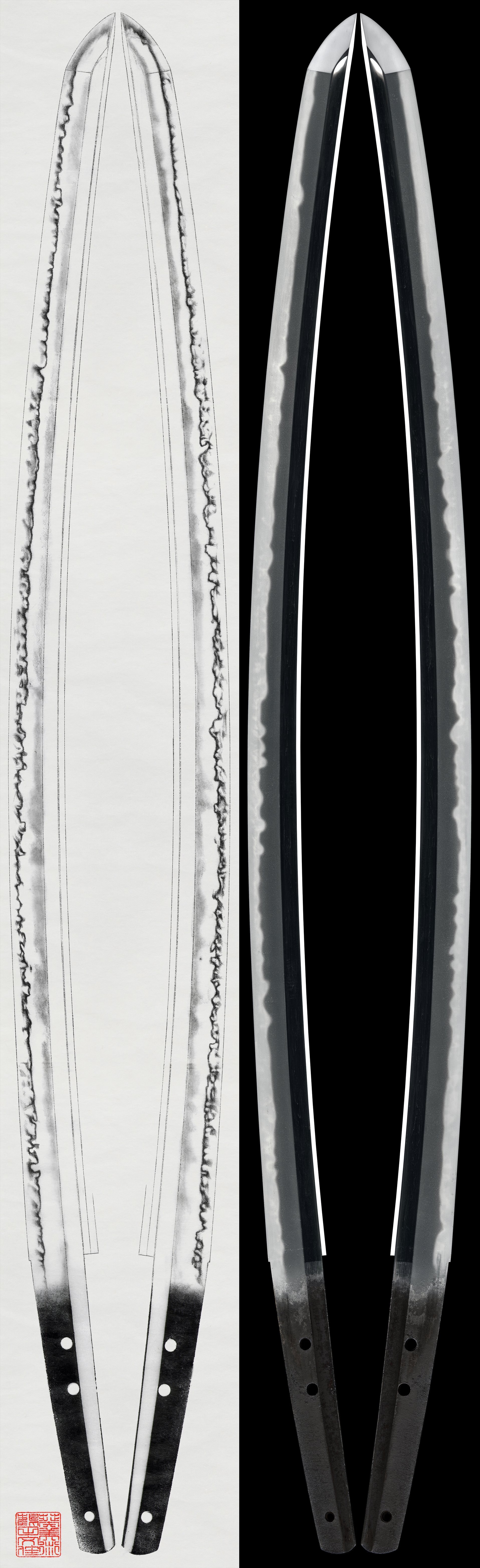
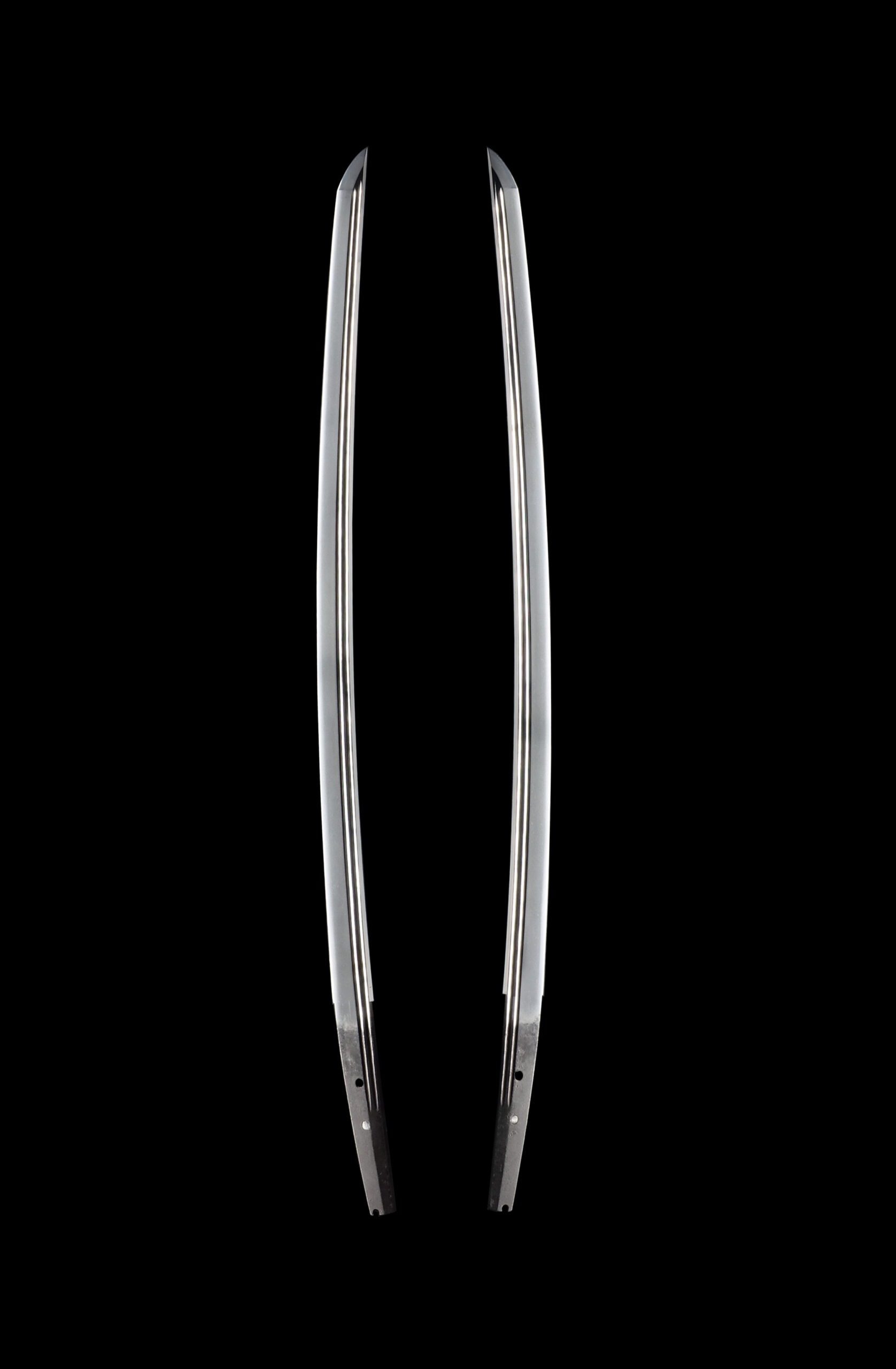
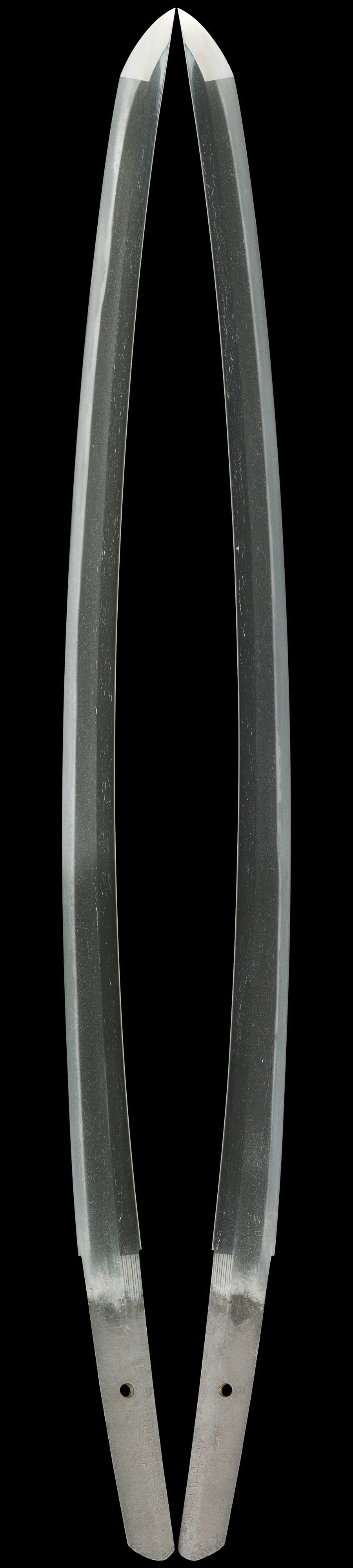
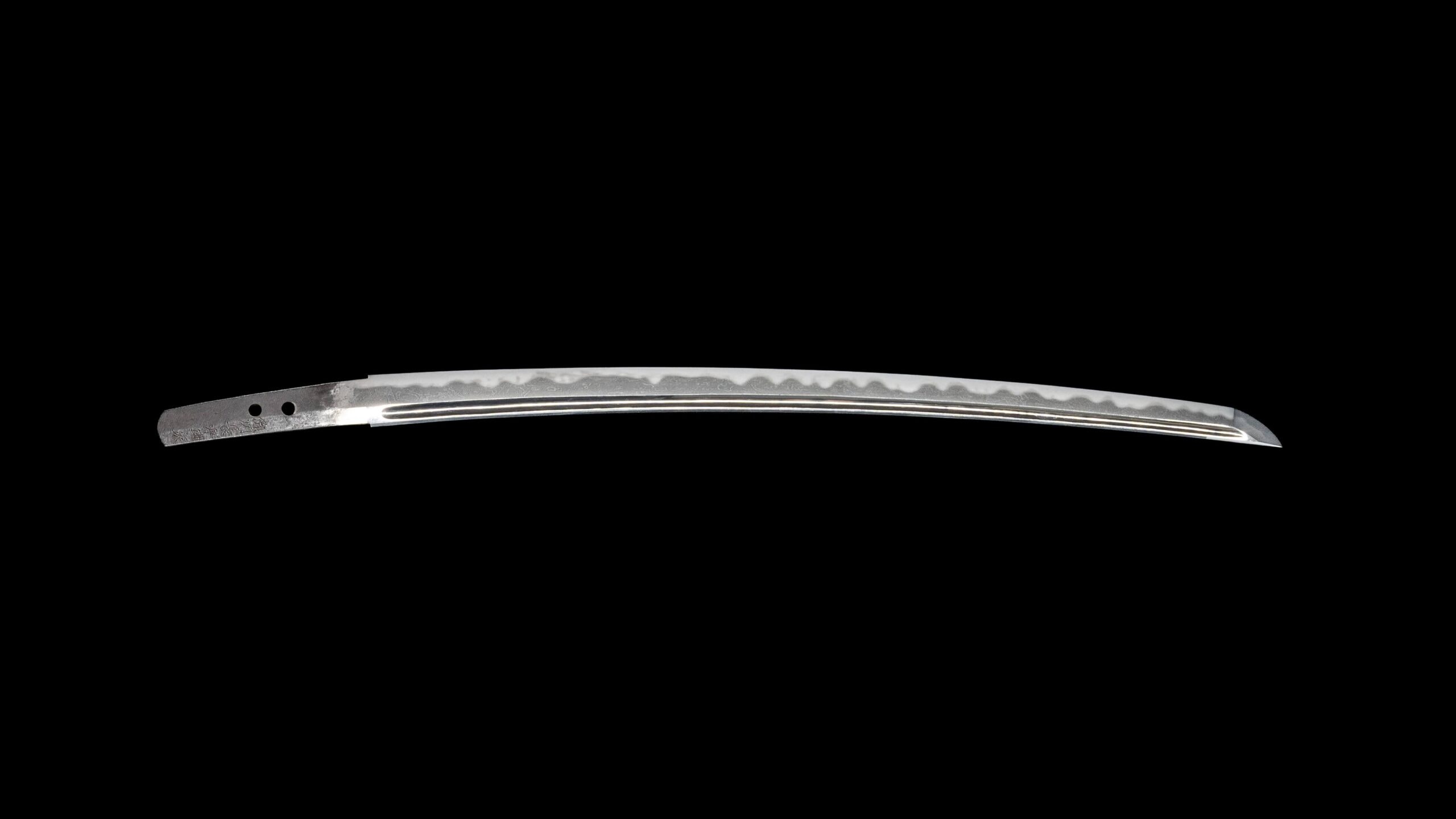
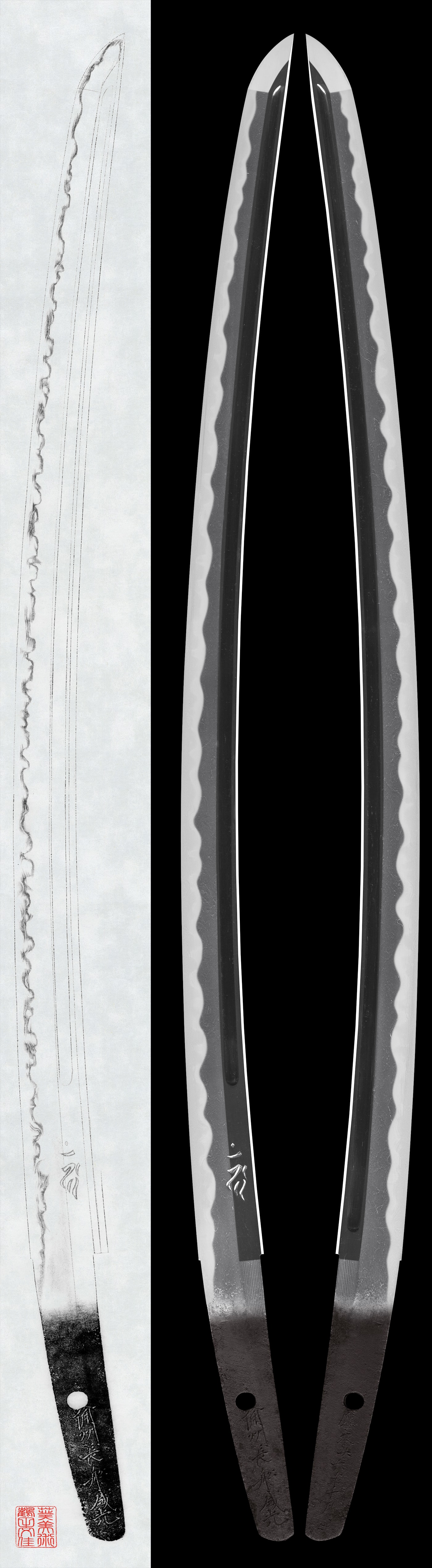
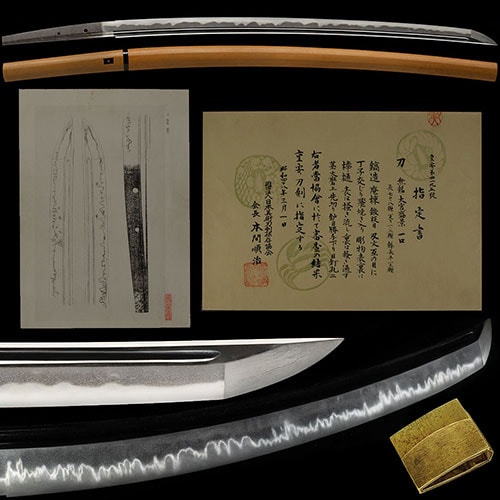
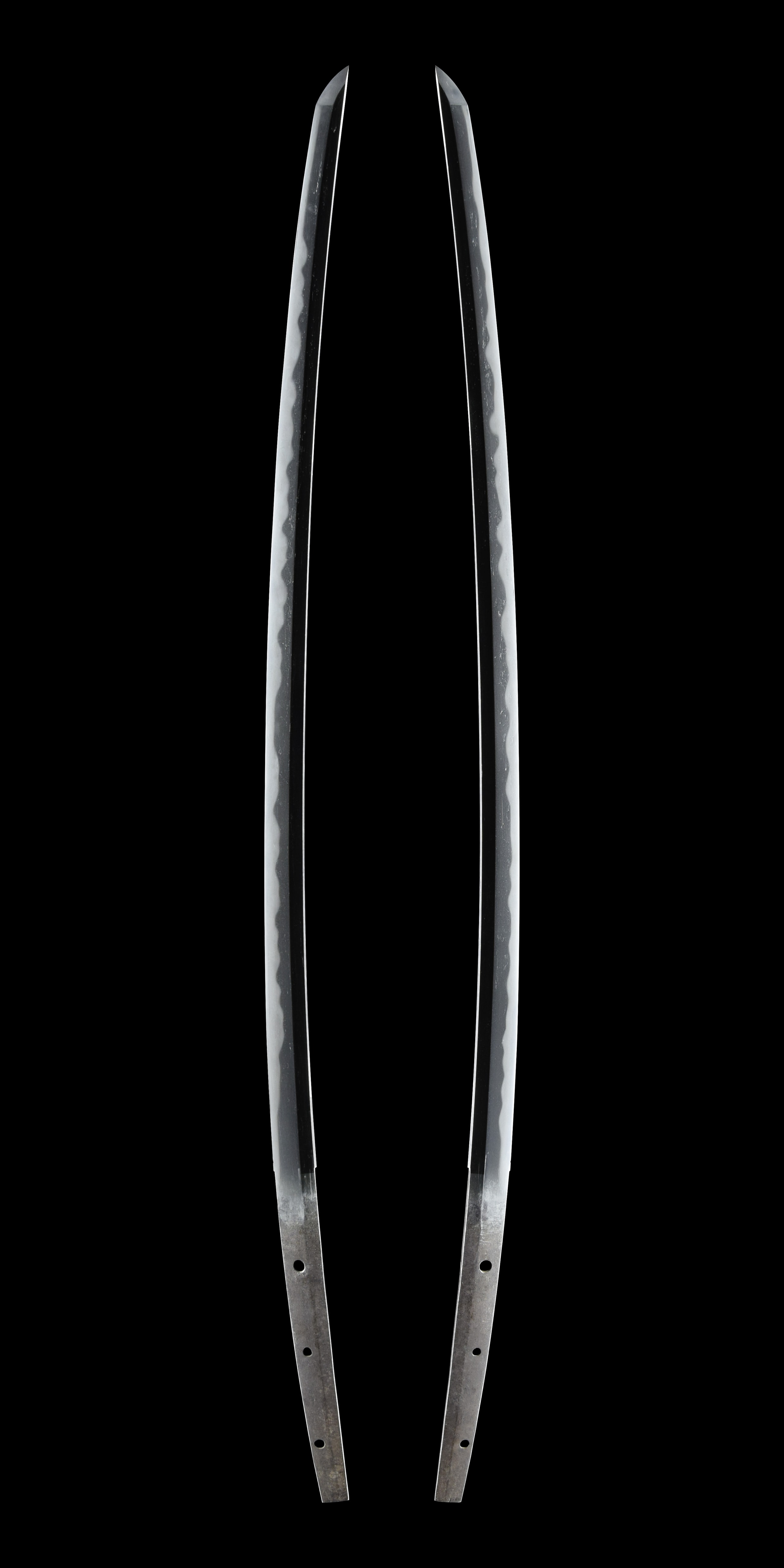
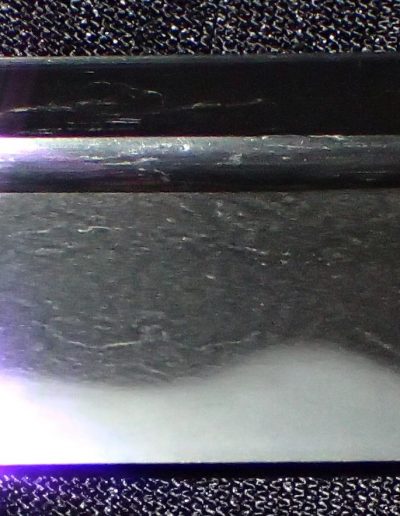
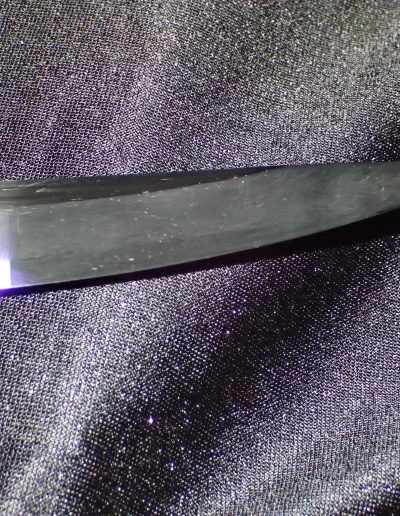
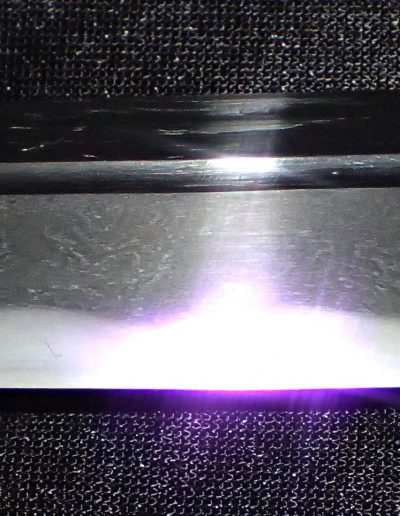
This is a Yoshikage wakizashi from the Nanbokucho period. It comes with an NBTHK Tokubetsu Hozon Certificate.
 NihontoWatch
mei · Nanbokucho
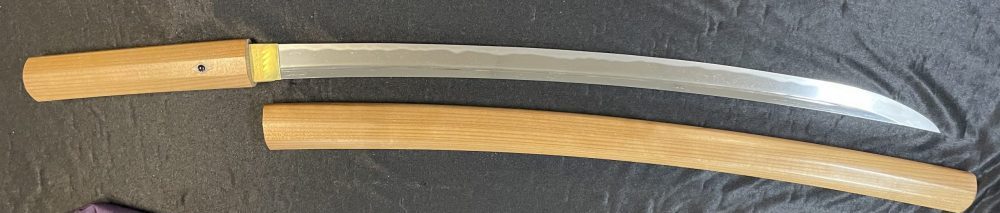
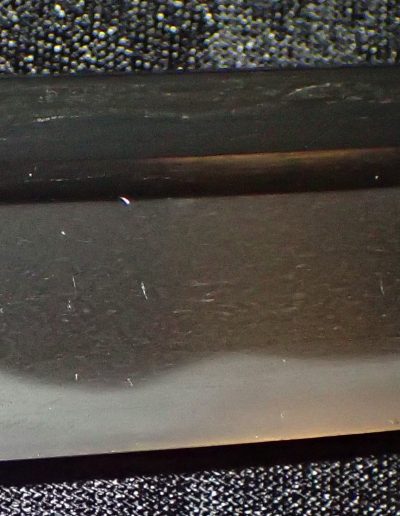
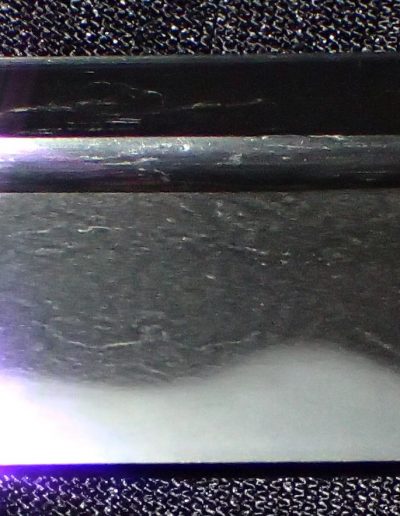
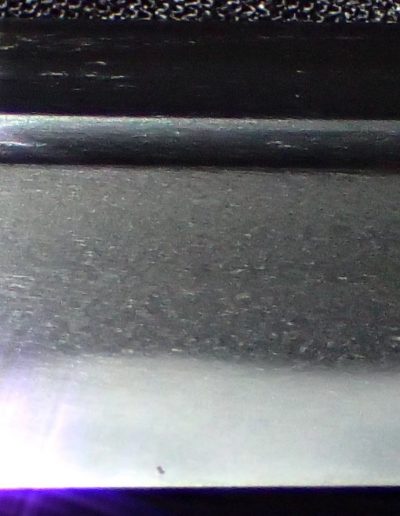
Bizen Osafune, Soden-Bizen (a collateral Osafune line) · Bizen · around 1334-1363
Fujishiro Jo saku · Tōken Taikan top 5%
4 pieces on the market now
Two of Yoshikage's signed blades carry a date, one to Enbun 2 (1357) and one to Ōan 7 (1374), and on these few inscribed pieces the whole of his record rests. He is a Bizen Osafune smith of the Nanbokuchō period, counted among the makers the published sources call Sōden-Bizen (相伝備前), the Osafune hands who worked the Sōshū-influenced manner in Bizen beside the lines of Kanemitsu and Nagayoshi. His lineage has long been argued. The older books made him a second son of Kagemitsu, or a pupil of Kanemitsu, or a pupil of Nagayoshi; in recent years, on the close resemblance of his workmanship and the distinctive way he cut his signature with the reverse chisel, the prevailing view is that he was "a collateral Osafune smith of the same kin as Chikakage and Morikage"[[c:1]]. The sword registers transmit two generations, a first toward the end of Kamakura and a second around Jōji, and authentic signed works are so scarce that the two are not easily separated.
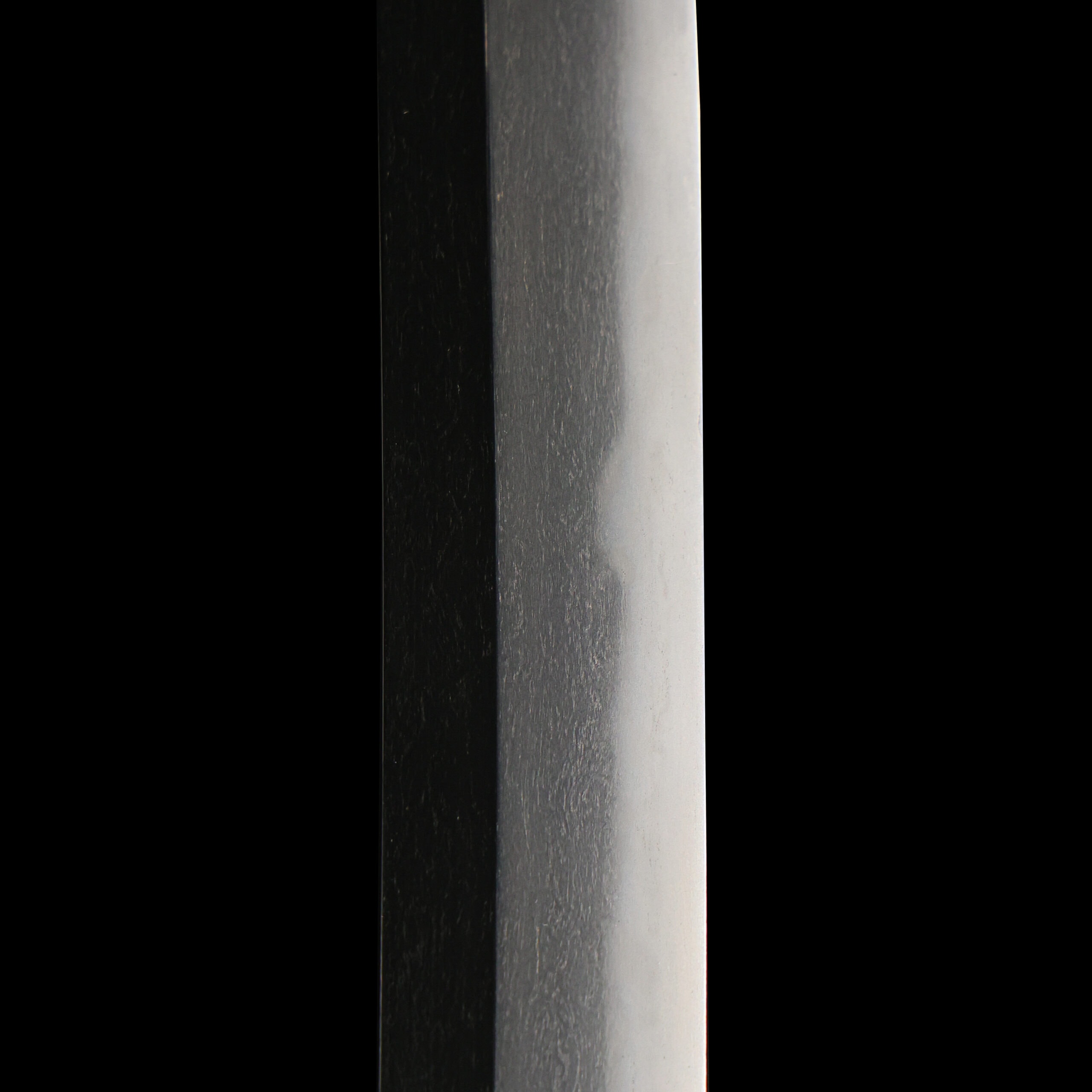
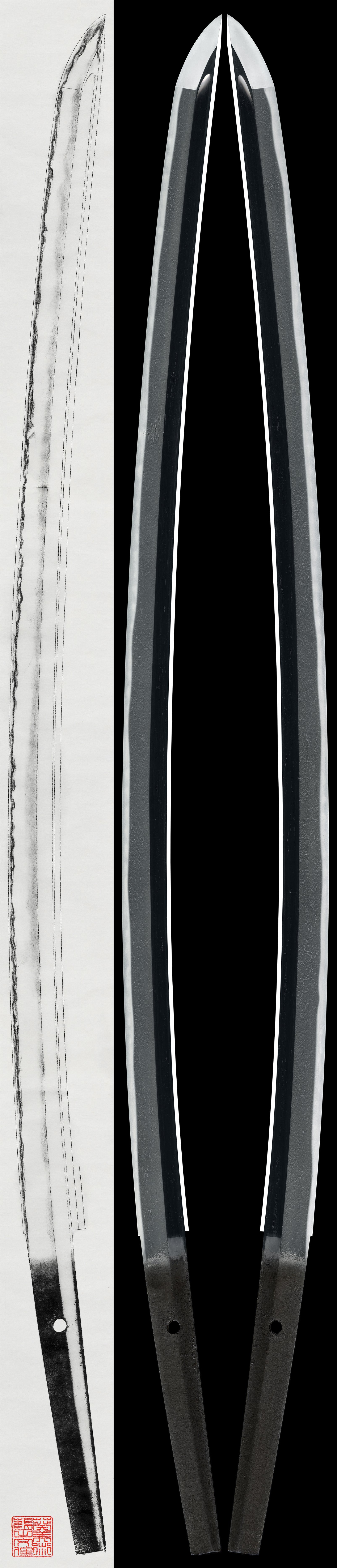
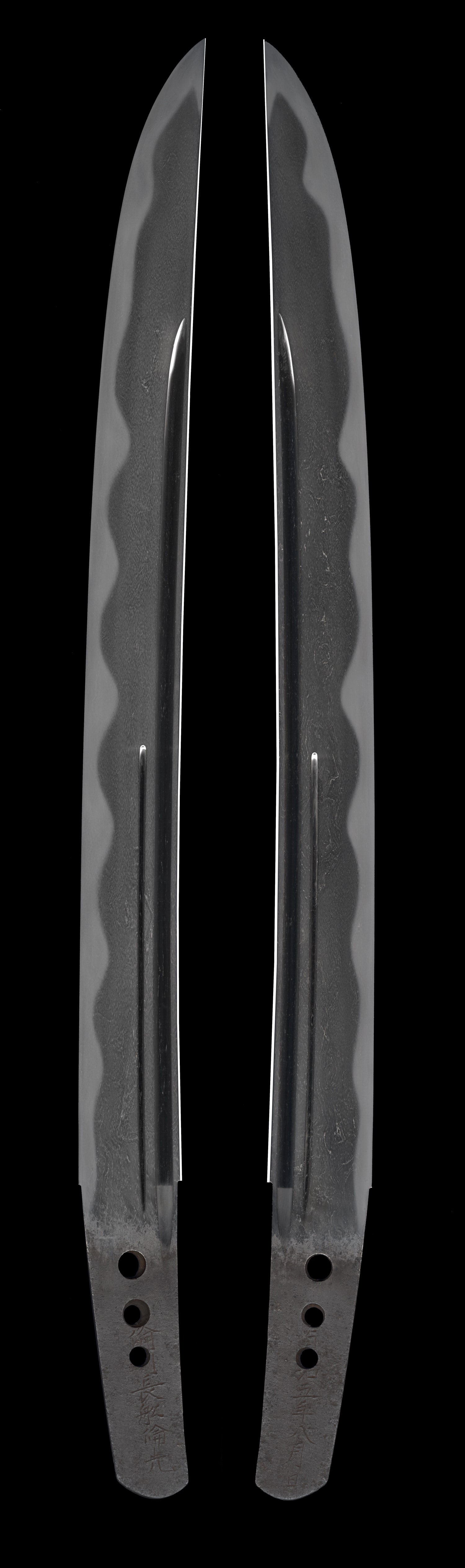
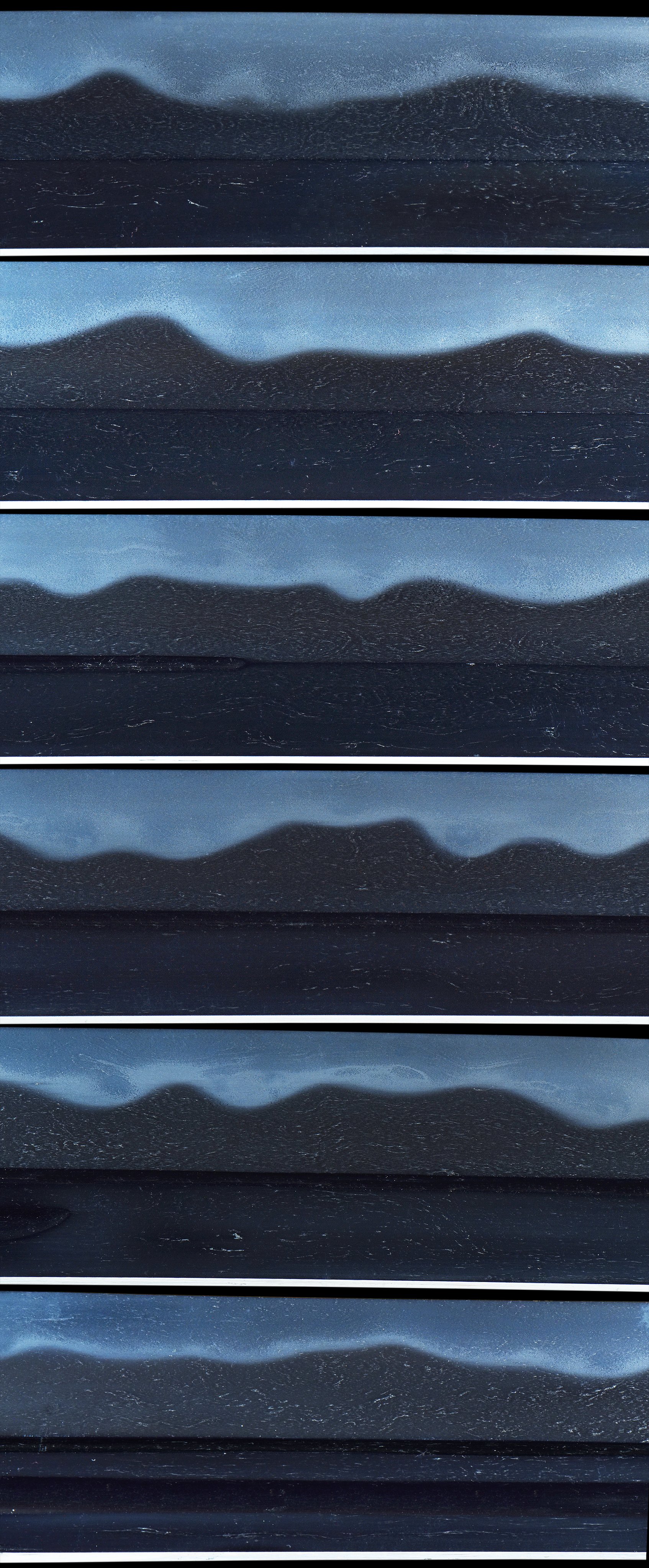
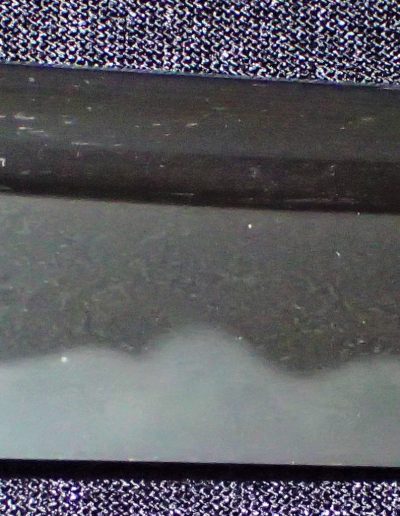
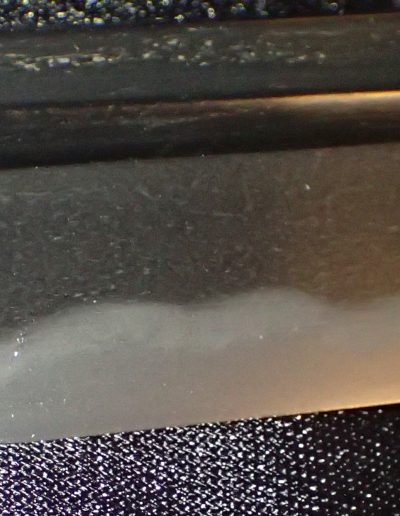
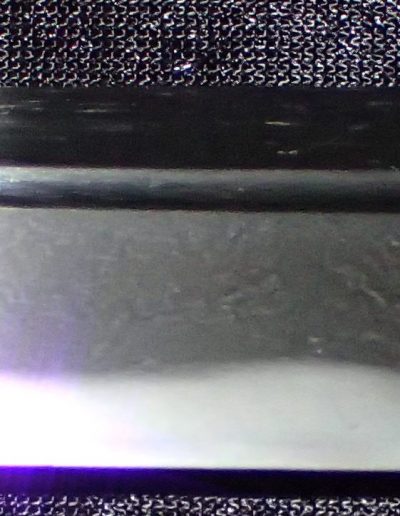
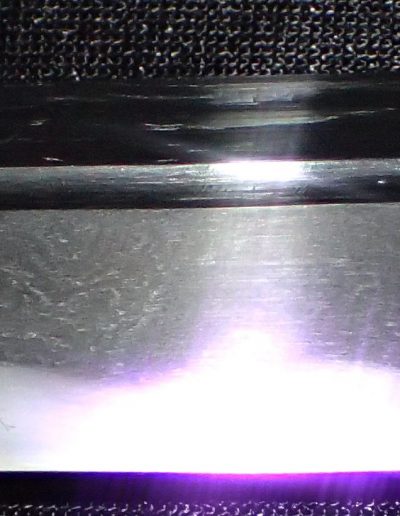
The hand the published sources describe is a small-patterned, varied midare rather than the orthodox Osafune clove-flower. Over the jigane he tempers a suguha base into which he mixes ko-gunome, ko-chōji, angular kakubaru-ba and pointed togariba, the elements kept small and the intervals of the undulation tight, so that the line reads as densely animated yet modest in pattern. Within it run abundant ashi, saka-ashi and yō, the temper nioi-dominant with ko-nie that gathers somewhat in clusters, with kinsuji and sunagashi worked through and a slight yubashiri-like tobiyaki intermingled. The nioiguchi tends to subside, and it is exactly there that the judges locate him: in the Sōden-Bizen group, the published sources hold, "where the hamon keeps to small clusters and the nioiguchi subsides lies the point that marks out Yoshikage"[[c:2]]. The bōshi runs midare-komi with a pointed tendency and hakikake, on one Tokubetsu Jūyō katana turning at the tip in a pointed manner that the commentary names as conspicuously his own.
The jigane is the constant beneath that quiet temper. It is an itame mixed with mokume that tends to stand, a hada-dachi into which fine ji-nie settles densely, chikei enters well, and a jifu-toned texture appears in places, with a midare-utsuri standing in the surface. On the broadest blades the ji-nie is laid mijin, dust-fine and thick, and the chikei runs strong. This strongly nie-laden forging, with its frequent kinsuji and sunagashi, is what the prewar connoisseurs read when they placed him without hesitation among the Sōshū-den smiths, and what the modern judges mean when they say a blade "manifests the working range of Sōden-Bizen."
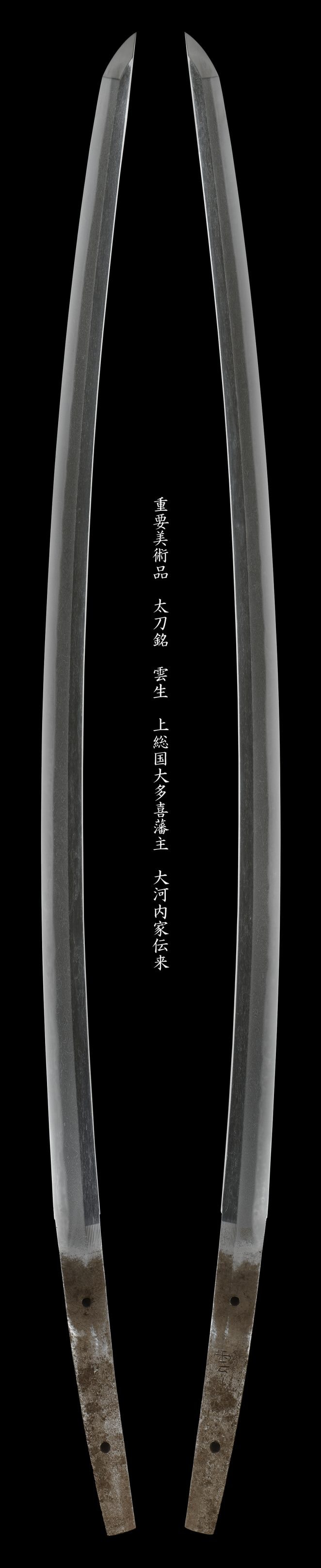
His recognized prime is the broad Nanbokuchō blade in the height-of-period shape: wide in body with little taper from base to tip, the kasane often notably thick, ending in a large point, and surviving for the most part ō-suriage and mumei. Against this stand the rare signed pieces, which skew quieter: one Jūyō tachi is essentially suguha-chō, subdued in workmanship, that the published sources keep precisely because authentic signatures are so few and it is valuable as reference. A separate register is the naginata-naoshi, blades reshaped from the polearm, for the published sources call him "an old master of the naginata"[[c:3]] and a large share of his attributions take that form, wide-bodied and shallow in sori, the shinogi-ji planed down, sometimes keeping traces of the naginata-hi and soe-hi on the tang. The two dated signatures, of Enbun and Ōan, fix this varied output securely in the mid-to-late Nanbokuchō.
What separates Yoshikage from his neighbours is what the judges name on his own blades. Within Sōden-Bizen his temper is read as "neither Kanemitsu's nor Nagayoshi's"[[c:4]]: smaller in pattern than the orthodox Osafune chōji, more subdued in the nioiguchi than the showier Chōgi hand, and laid over a jigane that carries a step more sunagashi and kinsuji than the Kanemitsu work. His signature, cut with the reverse chisel, is read in the same breath as his kantei, the commentary treating "the distinctive signature cut with the reverse chisel"[[c:5]] as one of the marks that fixes both his hand and his kinship to the collateral Osafune line. He stands, in short, as the quiet, nie-laden member of the Sōden-Bizen circle, the one whose interest lies in restraint rather than in flame.
For the collector Yoshikage is a scarce name on which little can ever change hands. Fujishiro grades him Jō saku. He has no National Treasures; his record runs instead through two Important Cultural Properties, one a signed wakizashi dated Ōan 7 held at Tanzan Shrine in Nara, the other a signed tachi, together with three Tokubetsu Jūyō and some sixty Jūyō blades, and the prewar Jūyō Bijutsuhin. Of recorded whereabouts his blades pass through long-held hands rather than the open market: a tachi once in the Date family, another transmitted in the Arisugawa-no-miya house, a katana whose tang bears the gold-inlaid possession inscription of Ōkubo Shirōzaemon-no-jō. The published commentary singles out his finest naginata-naoshi as "foremost among works by the same hand"[[c:6]]. With reliably signed pieces extremely few and most survivors ō-suriage and mumei, a Yoshikage in private hands comes to light only from time to time, and seldom near the top of his range; when one does, it is a quiet document of how the Sōshū manner was carried into late Osafune.
Where Yoshikage stands among comparable artisans: across all of nihontō, and within tradition, era, and period. The tiers (Foremost · Leading · Major · Notable) weigh official designations from the NBTHK and Japan's Agency for Cultural Affairs, together with historical honors of lasting repute such as the Sansaku and Meibutsu-chō.
Select a lens to see how it's measured.
Years he was demonstrably active, proven by signed-and-dated blades
Bizen-den
Phase: Sōden-Bizen相伝備前· 1330–1394
8 pieces on the market now
The Soden Bizen school encompasses the group of Nanbokucho-period Osafune smiths in Bizen Province whose work absorbed the technical influence of the Soshu-den, producing a distinctive synthesis that stands apart from both orthodox Bizen and pure Sagami practice. The school divides into two principal lineages: the Kanemitsu group, representing the direct main line of Osafune that descends from Mitsutada through Nagamitsu and Kagemitsu; and the Chogi group, a collateral branch whose members carried the Soshu idiom to its most expressive extremes within Bizen. Kanemitsu, the chakuryu heir of Kagemitsu, pioneered the broad, relaxed notare-based midare that defines the mature Nanbokucho Osafune manner, while Chogi -- described by the NBTHK as the smith "who departs furthest from Bizen" among Bizen makers -- pushed nie-dominant forging to a level that rivals the output of the great Sagami smiths themselves. Together with disciples and contemporaries including Tomomitsu, Motomitsu, Masamitsu, Yoshimitsu, Kanenaga, Nagashige, and Nagamori, they constitute one of the most prolific and technically accomplished groups in the history of Japanese swordsmithing. The school's collective technical identity is anchored in a shared jigane of itame-hada mixed with mokume, with fine ji-nie adhering thickly, chikei entering well, and midare-utsuri standing out -- a persistent Bizen hallmark that survives even in the most Soshu-inflected work. The sugata overwhelmingly reflects the grand Nanbokucho taihai: wide mihaba with little taper between base and tip, and an extended chu-kissaki or o-kissaki conveying martial vigor. Within this shared framework, two distinct temperaments emerge.
" Yoshimitsu likewise inherits the small-pattern tendency, producing ko-gunome mixed with ko-choji whose restraint the NBTHK praises as "upper rank" Soden Bizen. The Chogi lineage, by contrast, emphasizes powerful nie in both ji and ha: Chogi's flamboyant large-scale midare weaves together gunome, choji, togariba, and koshi-hiraki forms with tobiyaki and yubashiri scattering freely, while kinsuji and sunagashi streak through the hardened edge. " Nagashige, now thought to be Chogi's elder brother rather than his junior, works a gentler, smaller-patterned midare yet with nie so strong as to "even surpass Chogi," while Nagamori occupies an intermediate position, his "somewhat smaller patterning" accompanied by rich internal activity. The historical significance of the Soden Bizen school lies in its demonstration that the Soshu influence, far from merely displacing Bizen conventions, catalyzed an extraordinary expansion of the Osafune repertoire. " The NBTHK's evaluative language across the school converges on consistent themes: the forging is "meticulous" and "excellent-quality," the nioiguchi "bright and clear," and the finest examples display a kenzen condition that attests to the soundness of Bizen steel at its peak. The abundance of dated inscriptions -- from Kanemitsu's forty-five-year span through Masamitsu's four-decade career extending into the early Muromachi period -- provides an unusually well-documented chronological framework, with later works by Masamitsu and Yoshimitsu pointing toward the subsequent development of Oei Bizen. Within the broader canon, the Soden Bizen school stands as the fullest realization of the creative possibilities that emerged when two of Japan's greatest forging traditions met and merged. Learn more →
| Smith | Era | Designated |
|---|---|---|
| Chogi長義 | 1356-1379 | 108 |
| Kanenaga兼長 | 1362-1388 | 94 |
| Nagashige長重 | 1334-1342 | 16 |
| Yoshikage義景 | 1334-1363 | 66 |
| Nagashige長重 | 1356-1361 | 0 |
Bizen in the Nanbokuchō period
Sixty years of war between two courts drove blades long and broad, and Osafune met the demand: Kanemitsu and Chōgi led forges serving the provincial warriors who did the fighting, while Sōshū influence arrived with the armies to create Sōden-Bizen.
A Hozon-certified blade judged to show notably superior workmanship and a better state of preservation. The bar is higher: re-tempered blades and most unsigned Muromachi/Edo works are excluded.
The NBTHK (Nihon Bijutsu Tōken Hozon Kyōkai, the Society for the Preservation of Japanese Art Swords) is a public-interest incorporated foundation founded in 1948 and supervised by Japan’s Agency for Cultural Affairs (Bunkachō); it is based at the Japanese Sword Museum in Tokyo. Its expert panels physically examine each submitted work (shinsa) and issue a certificate (kanteishō) ranking it by artistic and historical merit. NBTHK papers are the most widely recognized standard of authentication for Japanese swords and fittings.
NBTHK official site
Price on request
This is a Yoshikage wakizashi from the Nanbokucho period. It comes with an NBTHK Tokubetsu Hozon Certificate.
NihontoWatchmei · Nanbokucho
Bizen Osafune, Soden-Bizen (a collateral Osafune line) · Bizen · around 1334-1363
Fujishiro Jo saku · Tōken Taikan top 5%
4 pieces on the market now
Two of Yoshikage's signed blades carry a date, one to Enbun 2 (1357) and one to Ōan 7 (1374), and on these few inscribed pieces the whole of his record rests. He is a Bizen Osafune smith of the Nanbokuchō period, counted among the makers the published sources call Sōden-Bizen (相伝備前), the Osafune hands who worked the Sōshū-influenced manner in Bizen beside the lines of Kanemitsu and Nagayoshi. His lineage has long been argued. The older books made him a second son of Kagemitsu, or a pupil of Kanemitsu, or a pupil of Nagayoshi; in recent years, on the close resemblance of his workmanship and the distinctive way he cut his signature with the reverse chisel, the prevailing view is that he was "a collateral Osafune smith of the same kin as Chikakage and Morikage"[[c:1]]. The sword registers transmit two generations, a first toward the end of Kamakura and a second around Jōji, and authentic signed works are so scarce that the two are not easily separated.
The hand the published sources describe is a small-patterned, varied midare rather than the orthodox Osafune clove-flower. Over the jigane he tempers a suguha base into which he mixes ko-gunome, ko-chōji, angular kakubaru-ba and pointed togariba, the elements kept small and the intervals of the undulation tight, so that the line reads as densely animated yet modest in pattern. Within it run abundant ashi, saka-ashi and yō, the temper nioi-dominant with ko-nie that gathers somewhat in clusters, with kinsuji and sunagashi worked through and a slight yubashiri-like tobiyaki intermingled. The nioiguchi tends to subside, and it is exactly there that the judges locate him: in the Sōden-Bizen group, the published sources hold, "where the hamon keeps to small clusters and the nioiguchi subsides lies the point that marks out Yoshikage"[[c:2]]. The bōshi runs midare-komi with a pointed tendency and hakikake, on one Tokubetsu Jūyō katana turning at the tip in a pointed manner that the commentary names as conspicuously his own.
The jigane is the constant beneath that quiet temper. It is an itame mixed with mokume that tends to stand, a hada-dachi into which fine ji-nie settles densely, chikei enters well, and a jifu-toned texture appears in places, with a midare-utsuri standing in the surface. On the broadest blades the ji-nie is laid mijin, dust-fine and thick, and the chikei runs strong. This strongly nie-laden forging, with its frequent kinsuji and sunagashi, is what the prewar connoisseurs read when they placed him without hesitation among the Sōshū-den smiths, and what the modern judges mean when they say a blade "manifests the working range of Sōden-Bizen."
His recognized prime is the broad Nanbokuchō blade in the height-of-period shape: wide in body with little taper from base to tip, the kasane often notably thick, ending in a large point, and surviving for the most part ō-suriage and mumei. Against this stand the rare signed pieces, which skew quieter: one Jūyō tachi is essentially suguha-chō, subdued in workmanship, that the published sources keep precisely because authentic signatures are so few and it is valuable as reference. A separate register is the naginata-naoshi, blades reshaped from the polearm, for the published sources call him "an old master of the naginata"[[c:3]] and a large share of his attributions take that form, wide-bodied and shallow in sori, the shinogi-ji planed down, sometimes keeping traces of the naginata-hi and soe-hi on the tang. The two dated signatures, of Enbun and Ōan, fix this varied output securely in the mid-to-late Nanbokuchō.
What separates Yoshikage from his neighbours is what the judges name on his own blades. Within Sōden-Bizen his temper is read as "neither Kanemitsu's nor Nagayoshi's"[[c:4]]: smaller in pattern than the orthodox Osafune chōji, more subdued in the nioiguchi than the showier Chōgi hand, and laid over a jigane that carries a step more sunagashi and kinsuji than the Kanemitsu work. His signature, cut with the reverse chisel, is read in the same breath as his kantei, the commentary treating "the distinctive signature cut with the reverse chisel"[[c:5]] as one of the marks that fixes both his hand and his kinship to the collateral Osafune line. He stands, in short, as the quiet, nie-laden member of the Sōden-Bizen circle, the one whose interest lies in restraint rather than in flame.
For the collector Yoshikage is a scarce name on which little can ever change hands. Fujishiro grades him Jō saku. He has no National Treasures; his record runs instead through two Important Cultural Properties, one a signed wakizashi dated Ōan 7 held at Tanzan Shrine in Nara, the other a signed tachi, together with three Tokubetsu Jūyō and some sixty Jūyō blades, and the prewar Jūyō Bijutsuhin. Of recorded whereabouts his blades pass through long-held hands rather than the open market: a tachi once in the Date family, another transmitted in the Arisugawa-no-miya house, a katana whose tang bears the gold-inlaid possession inscription of Ōkubo Shirōzaemon-no-jō. The published commentary singles out his finest naginata-naoshi as "foremost among works by the same hand"[[c:6]]. With reliably signed pieces extremely few and most survivors ō-suriage and mumei, a Yoshikage in private hands comes to light only from time to time, and seldom near the top of his range; when one does, it is a quiet document of how the Sōshū manner was carried into late Osafune.
Where Yoshikage stands among comparable artisans: across all of nihontō, and within tradition, era, and period. The tiers (Foremost · Leading · Major · Notable) weigh official designations from the NBTHK and Japan's Agency for Cultural Affairs, together with historical honors of lasting repute such as the Sansaku and Meibutsu-chō.
Select a lens to see how it's measured.
Years he was demonstrably active, proven by signed-and-dated blades
Bizen-den
Phase: Sōden-Bizen相伝備前· 1330–1394
8 pieces on the market now
The Soden Bizen school encompasses the group of Nanbokucho-period Osafune smiths in Bizen Province whose work absorbed the technical influence of the Soshu-den, producing a distinctive synthesis that stands apart from both orthodox Bizen and pure Sagami practice. The school divides into two principal lineages: the Kanemitsu group, representing the direct main line of Osafune that descends from Mitsutada through Nagamitsu and Kagemitsu; and the Chogi group, a collateral branch whose members carried the Soshu idiom to its most expressive extremes within Bizen. Kanemitsu, the chakuryu heir of Kagemitsu, pioneered the broad, relaxed notare-based midare that defines the mature Nanbokucho Osafune manner, while Chogi -- described by the NBTHK as the smith "who departs furthest from Bizen" among Bizen makers -- pushed nie-dominant forging to a level that rivals the output of the great Sagami smiths themselves. Together with disciples and contemporaries including Tomomitsu, Motomitsu, Masamitsu, Yoshimitsu, Kanenaga, Nagashige, and Nagamori, they constitute one of the most prolific and technically accomplished groups in the history of Japanese swordsmithing. The school's collective technical identity is anchored in a shared jigane of itame-hada mixed with mokume, with fine ji-nie adhering thickly, chikei entering well, and midare-utsuri standing out -- a persistent Bizen hallmark that survives even in the most Soshu-inflected work. The sugata overwhelmingly reflects the grand Nanbokucho taihai: wide mihaba with little taper between base and tip, and an extended chu-kissaki or o-kissaki conveying martial vigor. Within this shared framework, two distinct temperaments emerge.
" Yoshimitsu likewise inherits the small-pattern tendency, producing ko-gunome mixed with ko-choji whose restraint the NBTHK praises as "upper rank" Soden Bizen. The Chogi lineage, by contrast, emphasizes powerful nie in both ji and ha: Chogi's flamboyant large-scale midare weaves together gunome, choji, togariba, and koshi-hiraki forms with tobiyaki and yubashiri scattering freely, while kinsuji and sunagashi streak through the hardened edge. " Nagashige, now thought to be Chogi's elder brother rather than his junior, works a gentler, smaller-patterned midare yet with nie so strong as to "even surpass Chogi," while Nagamori occupies an intermediate position, his "somewhat smaller patterning" accompanied by rich internal activity. The historical significance of the Soden Bizen school lies in its demonstration that the Soshu influence, far from merely displacing Bizen conventions, catalyzed an extraordinary expansion of the Osafune repertoire. " The NBTHK's evaluative language across the school converges on consistent themes: the forging is "meticulous" and "excellent-quality," the nioiguchi "bright and clear," and the finest examples display a kenzen condition that attests to the soundness of Bizen steel at its peak. The abundance of dated inscriptions -- from Kanemitsu's forty-five-year span through Masamitsu's four-decade career extending into the early Muromachi period -- provides an unusually well-documented chronological framework, with later works by Masamitsu and Yoshimitsu pointing toward the subsequent development of Oei Bizen. Within the broader canon, the Soden Bizen school stands as the fullest realization of the creative possibilities that emerged when two of Japan's greatest forging traditions met and merged. Learn more →
| Smith | Era | Designated |
|---|---|---|
| Chogi長義 | 1356-1379 | 108 |
| Kanenaga兼長 | 1362-1388 | 94 |
| Nagashige長重 | 1334-1342 | 16 |
| Yoshikage義景 | 1334-1363 | 66 |
| Nagashige長重 | 1356-1361 | 0 |
Bizen in the Nanbokuchō period
Sixty years of war between two courts drove blades long and broad, and Osafune met the demand: Kanemitsu and Chōgi led forges serving the provincial warriors who did the fighting, while Sōshū influence arrived with the armies to create Sōden-Bizen.
A Hozon-certified blade judged to show notably superior workmanship and a better state of preservation. The bar is higher: re-tempered blades and most unsigned Muromachi/Edo works are excluded.
The NBTHK (Nihon Bijutsu Tōken Hozon Kyōkai, the Society for the Preservation of Japanese Art Swords) is a public-interest incorporated foundation founded in 1948 and supervised by Japan’s Agency for Cultural Affairs (Bunkachō); it is based at the Japanese Sword Museum in Tokyo. Its expert panels physically examine each submitted work (shinsa) and issue a certificate (kanteishō) ranking it by artistic and historical merit. NBTHK papers are the most widely recognized standard of authentication for Japanese swords and fittings.
NBTHK official sitePrice on request