NihontoWatch Mon

NihontoWatch

Market
Encyclopedia
Kantei
NihontoWatch Mon

NihontoWatch

Market
Encyclopedia
Kantei

Description

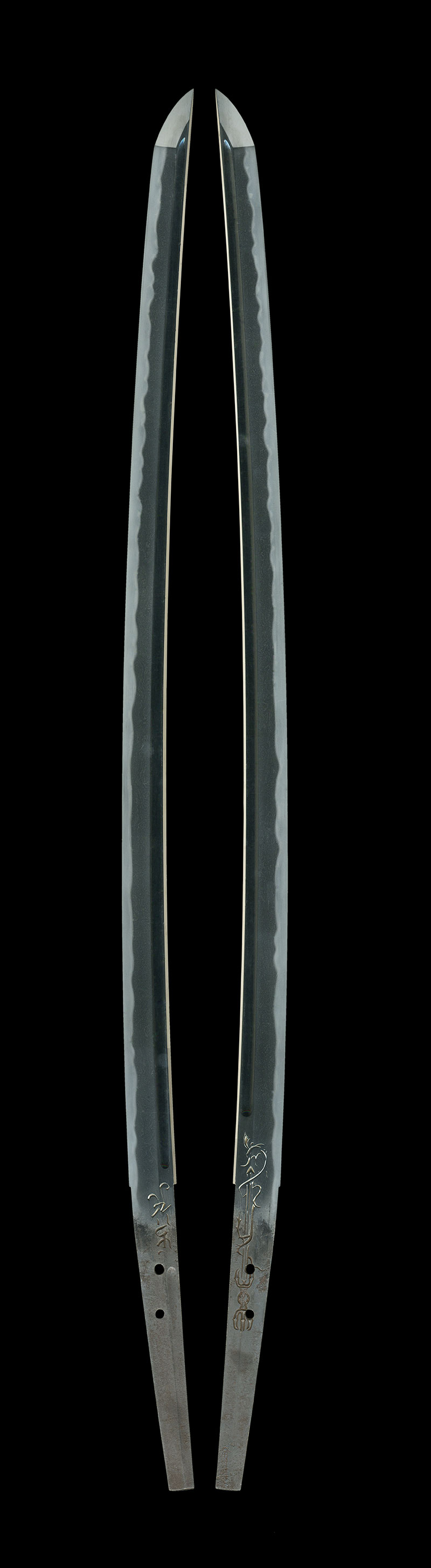
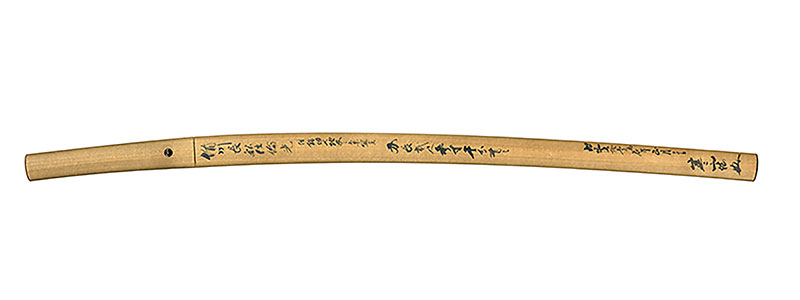
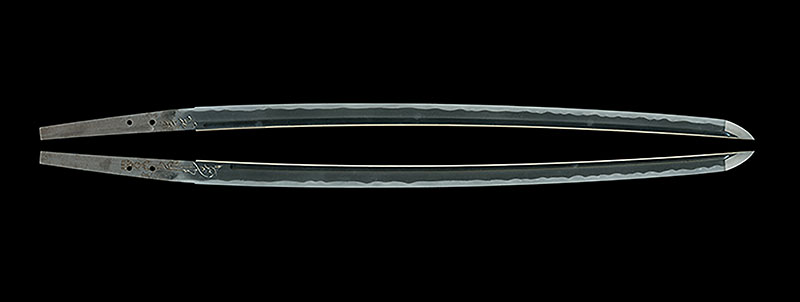
This is a Juyo Token designated tachi by Tomomitsu of the Osafune school, active in Bizen Province during the Nanbokucho period. Tomomitsu is known for works similar to his father or master, Kanemitsu, with extant pieces from 1345-1375. This rare signed example features a wide body, large kissaki typical of the Nanbokucho era, with a hamon of ko-notare mixed with gunome, and a beautiful healthy jigane of itame and mokume with faint utsuri. The kurikara carving near the base is also well-preserved.

NBTHK Setsumei

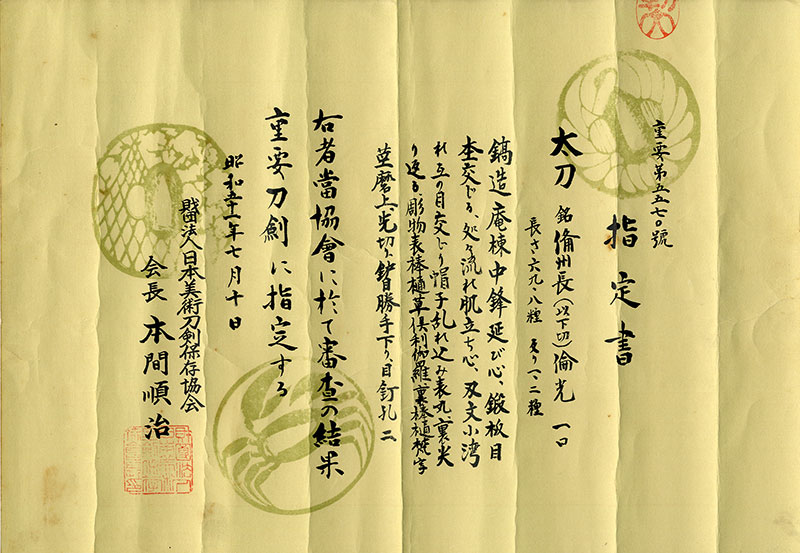
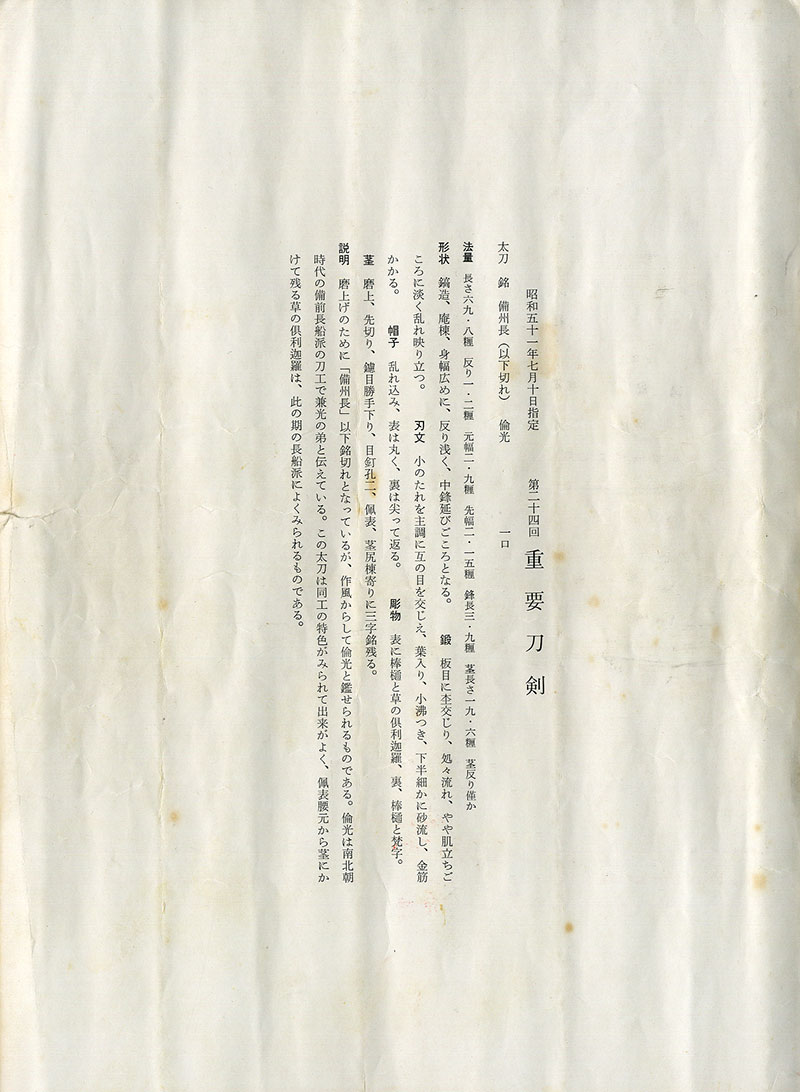
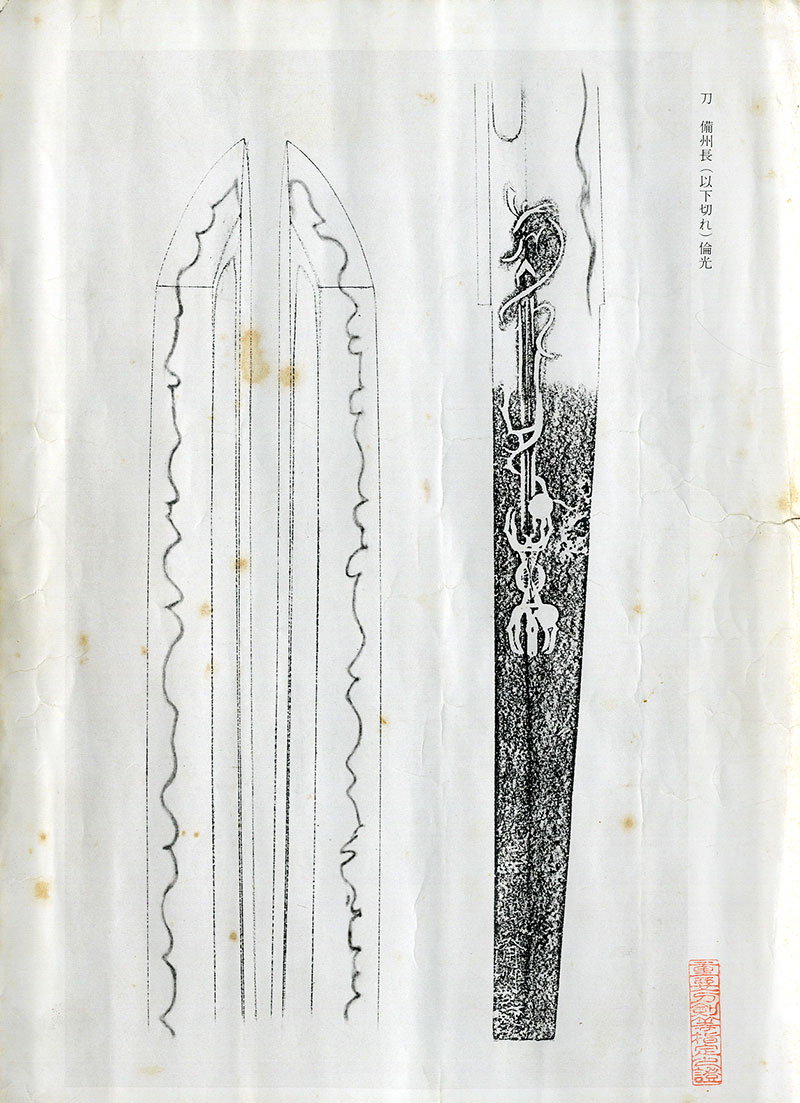
Jūyō-Tōken, 24th Session — Designated July 10, 1976 Tachi, mei: Tomomitsu (倫光) Measurements Nagasa 69.8 cm, sori 1.2 cm, motohaba 2.9 cm, sakihaba 2.15 cm, kissaki-nagasa 3.9 cm, nakago-nagasa 19.6 cm, nakago-sori slight Description Keijō: shinogi-zukuri, iori-mune; somewhat wide mihaba, shallow sori, and an extended chū-kissaki impression. Kitae: itame-hada mixed with mokume; with flowing areas in places; somewhat hada-dachi tendency, and a faintly standing midare-utsuri. Hamon: Principally ko-notare mixed with gunome; with ha; ko-nie attaches; in the lower half fine sunagashi appears, and kinsuji run through. Bōshi: midare-komi; on the omote it turns back round, and on the ura it returns pointed. Horimono: Omote: bō-hi and a “grass-style” kurikara; ura: bō-hi and bonji. Nakago: suriage; tip kiri; file marks katte-sagari; two mekugi-ana; on the tachi-omote, a three-character signature remains near the nakago-jiri toward the mune. Artisan Bizen Osafune Tomomitsu (備前長船倫光) Era Nanbokuchō period Explanation Because the blade has been shortened (suriage), the inscription reading “Bishū Chō—” (備州長—) is cut off below; however, on the basis of the workmanship it is appraised as Tomomitsu. Tomomitsu was a Bizen Osafune smith of the Nanbokuchō period and is transmitted as the younger brother of Kanemitsu. This tachi displays the characteristic features of Tomomitsu and is well made. Moreover, the “grass-style” kurikara that remains from the waist area on the tachi-omote down into the tang is a carving frequently encountered among Osafune works of this period.

NihontoWatch MonNihontoWatch
MarketEncyclopediaKantei
Swords›Bizen-den›Osafune›Sōden-Bizen›Tomomitsu›Tachi: Bishu Osafune Tomomitsu
tachiJūyō
Osafune Tomomitsu

Tachi: Bishu Osafune Tomomitsu

mei · Osafune · Nanbokucho · nagasa 69.4cm · sori 1.2cm

SOLD
Osafune Tomomitsu — 1 of 6
Osafune Tomomitsu — 2 of 6
Osafune Tomomitsu — 3 of 6
Osafune Tomomitsu — 4 of 6
Osafune Tomomitsu — 5 of 6
Osafune Tomomitsu — 6 of 6
1 / 6
1 / 6
Osafune Tomomitsu — 1 of 6Osafune Tomomitsu — 2 of 6Osafune Tomomitsu — 3 of 6Osafune Tomomitsu — 4 of 6Osafune Tomomitsu — 5 of 6Osafune Tomomitsu — 6 of 6
Measurements & details
Smith
Osafune Tomomitsu
Type
Tachi
School
Osafune
Period
Around 1345–1370(Teiwa ND)
Province
Bizen
Signature
Signed(44% of this smith's designated works are signed)
Measurements
Nagasa 69.4cmSori 1.2cmMotohaba 2.9cmSakihaba 2.1cmKasane 0.6cm
Description

This is a Juyo Token designated tachi by Tomomitsu of the Osafune school, active in Bizen Province during the Nanbokucho period. Tomomitsu is known for works similar to his father or master, Kanemitsu, with extant pieces from 1345-1375. This rare signed example features a wide body, large kissaki typical of the Nanbokucho era, with a hamon of ko-notare mixed with gunome, and a beautiful healthy jigane of itame and mokume with faint utsuri. The kurikara carving near the base is also well-preserved.

NBTHK Zufu Commentary

Juyo #24

AI translation — may contain errors

-, 24th Session — Designated July 10, 1976

, : Tomomitsu (倫光)

Measurements 69.8 cm, 1.2 cm, 2.9 cm, 2.15 cm, 3.9 cm, 19.6 cm, slight

Description Keijō: , ; somewhat wide , shallow , and an extended impression. : mixed with ; with flowing areas in places; somewhat tendency, and a faintly standing . : Principally mixed with ; with ; attaches; in the lower half fine appears, and run through. : ; on the it turns back round, and on the it returns pointed. : : and a “grass-style” ; : and . : ; tip ; file marks ; two ; on the , a three-character signature remains near the toward the .

Artisan Tomomitsu (備前長船倫光)

Era period

Explanation Because the blade has been shortened (), the inscription reading “Bishū Chō—” (備州長—) is cut off below; however, on the basis of the workmanship it is appraised as Tomomitsu. Tomomitsu was a smith of the period and is transmitted as the younger brother of Kanemitsu.

This displays the characteristic features of Tomomitsu and is well made. Moreover, the “grass-style” that remains from the waist area on the down into the tang is a carving frequently encountered among works of this period.

About the maker

Tomomitsu

倫光

Osafune (Kanemitsu school) · Bizen · around 1345-1370

Fujishiro Jo-jo saku · Tōken Taikan top 10%

1 piece on the market now

›

The largest of Tomomitsu's signed works is the great odachi of Futarasan Shrine in Nikko, a National Treasure dated Joji 5 (1366). The published record cites it from the first Juyo session as "the largest of his signed works"[[c:1]] and in the most recent as "the pinnacle of Osafune Tomomitsu"[[c:2]], anchoring the carving of new submissions against it. Tomomitsu (倫光) was a swordsmith of the Bizen Osafune mainline in the Nanbokucho period, introduced by the NBTHK with one unvarying sentence: "one of the students of Kanemitsu, and by one tradition even said to have been Kanemitsu's younger brother"[[c:3]]. The modern formula runs his dated work from Jowa to Eiwa, 1345 to 1379; the dated blades on the official record carry nengo from Bunna through Oan. The same formula places him within the school: closest of all to Kanemitsu's manner, his rank of work "pressing the master himself"[[c:4]]. Fujishiro grades him Jo-jo saku.

His own hand, the published sources repeat, is "the easygoing, gentle midare led by notare"[[c:5]], most often a ko-notare mixing gunome, ko-gunome, pointed and somewhat angular teeth. The criterion is given in so many words: such a blade "is to be judged Tomomitsu from the point that the crests of the notare tend slightly to points"[[c:6]]. Ashi and yo enter, the temper leans to nioi with ko-nie, and kinsuji and sunagashi work through it; the boshi runs midare-komi, usually finishing pointed, at times swept with hakikake. Horimono mark his blades far more often than the rest of the school: beyond the bo-hi the record draws bonji, gomabashi, paired futasuji-hi, the three-pronged ken and above all the kurikara, the grass-style form of which "is a peculiar carving scarcely met with outside this smith and Kanemitsu"[[c:7]]; the Futarasan odachi and a signed tachi in the Kurokawa Institute of Ancient Cultures carry the reference examples.

The jigane is itame mixed with mokume, ji-nie attaching and fine chikei entering; on the tachi and katana a midare-utsuri rises, while the hira-zukuri pieces lean to a sugu-style or bo-utsuri. Here the published sources separate him from his master with unusual candor: the first Juyo session records that "compared with Kanemitsu his jigane is inferior, and many works tend somewhat to stand"[[c:8]], and the recent formula repeats the division in kinder terms: close to Kanemitsu, yet marked as Tomomitsu by the slightly standing jigane and the unhurried notare base.

The shape of what survives was set out in the first session: "tanto and short wakizashi survive signed in comparative numbers, but the tachi are almost all unsigned"[[c:9]]. His tachi were mostly the long blades of the Enbun-Joji fashion, wide, with little taper and an extended chu-kissaki, and they come down as o-suriage mumei katana; the signed and dated work concentrates in the wide, sunnobi, hira-zukuri tanto and wakizashi, two carrying the incised invocation Hachiman Daibosatsu[[c:10]]. The signature is the six-character long mei Bishu Osafune Tomomitsu[[c:11]], smallish, often in a fine chisel, set toward the mune, with the date on the ura; twenty-eight of the designated blades are signed against thirty-one unsigned. The gold inlays on the shortened blades, kinzogan-mei of Hon'ami Kojo, Koyu and Sato Kanzan and a kinpun-mei of Hon'ami Koson, are attributions by later appraisers, not signatures; one Juyo katana keeps its original mei folded back as an orikaeshi-mei. An early entry raises, and leaves open, the question of two generations of the same name[[c:12]].

Two side manners flank the notare. On signed work of Joji and Oan he also worked the older spine of the school: a midare led by kataochi-gunome or squared, angular teeth; the sources hold such a tachi against his notare masterpieces and call it proof of "the breadth of his working range and the sureness of his technique"[[c:13]], while a small kataochi tanto recalls Kagemitsu and Kanemitsu and "at first sight could be mistaken for a Kamakura-period piece"[[c:14]]. Among the unsigned attributions stands a markedly nie-strong group[[c:15]], where yubashiri and small tobiyaki appear along the temper and the pointed boshi completes what the record names "the Soden-Bizen character"[[c:16]]. Its emblem is the great hocho-gata wakizashi of Yasukuni Shrine, recorded with its koshirae in Matsudaira Sadanobu's Shuko-jisshu (集古十種) as the sword of Egara Tenmangu in Kamakura, handed down of old as a work of Masamune, "a celebrated piece famous since antiquity"[[c:17]]; the modern judges read its vivid utsuri, notare-led midare and pointed boshi as a Bizen smith under Soshu influence; its kurikara, close to that of the Futarasan odachi, settles the attribution. In inverse, the kataochi-gunome that defines Kagemitsu and Kanemitsu recedes in him, and suguha falls away almost entirely. The record sets him beside the other Kanemitsu students, Hidemitsu, Masamitsu and Motomitsu, whose works resemble the master while falling a step short; no successor line is drawn for him.

Sixty-four designated works stand on the official record: the Futarasan National Treasure, two Important Cultural Properties, eight Tokubetsu Juyo and fifty-one Juyo, fifty-nine in the Tokubetsu Juyo and Juyo tiers. The provenance roll runs through the great houses: the first Juyo session's signed tachi of Oan 6 came down in the Yamauchi family, lords of Tosa; the Tokubetsu Juyo katana with the gold-inlaid attribution descended in the Echizen Matsudaira family as the reputed sword of Matsudaira Shungaku, with a Genroku 7 (1694) origami of Hon'ami Kojo; another katana, bestowed by Ii Naomasa on his retainer Suzuki Iwami no Kami Shigeyoshi, was later presented to the Mito Tokugawa family; other pieces passed through the Okubo lords of Odawara and the statesman Ito Miyoji. The National Treasure and the Important Cultural Properties, three blades, are patrimony held permanently outside the market, the odachi at Futarasan Shrine and the wakizashi at Yasukuni with its Shuko-jisshu koshirae. What a private collector may realistically encounter lies in the Tokubetsu Juyo and Juyo tiers, most of it the o-suriage mumei katana cut down from his grand tachi; a signed and dated tanto or wakizashi is the rarer event, and an ubu signed tachi rarer still; the first session already observed that tachi of ordinary length were few from his hand. A Tomomitsu reaches the market only from time to time, recognized when it does by the easy notare whose crests tend slightly to points.

Historical importance

Where Tomomitsu stands among comparable artisans: across all of nihontō, and within tradition, era, and period. The tiers (Foremost · Leading · Major · Notable) weigh official designations from the NBTHK and Japan's Agency for Cultural Affairs, together with historical honors of lasting repute such as the Sansaku and Meibutsu-chō.

随一
Foremost
屈指
Leading
有数
Major
著名
Notable

Select a lens to see how it's measured.

Designation record
61 designated works
Kokuhō (National Treasure)
1
Jūyō Bunkazai
2
Jūyō Bijutsuhin
2
Tokubetsu Jūyō
8
Jūyō
48
1 work by Tomomitsu on the market→
Tomomitsu — full profileOsafune (Kanemitsu school) school

Dated Works

Years he was demonstrably active, proven by signed-and-dated blades

Active period
1358–1370Editorial estimate: 1345–1370
11 of 25 designated works carry a date
1350
1360
1370
About the school

Osafune

長船

Bizen-den · Bizen

Phase: Sōden-Bizen相伝備前· 1330–1394

235 pieces on the market now

›

The Soden Bizen school encompasses the group of Nanbokucho-period Osafune smiths in Bizen Province whose work absorbed the technical influence of the Soshu-den, producing a distinctive synthesis that stands apart from both orthodox Bizen and pure Sagami practice. The school divides into two principal lineages: the Kanemitsu group, representing the direct main line of Osafune that descends from Mitsutada through Nagamitsu and Kagemitsu; and the Chogi group, a collateral branch whose members carried the Soshu idiom to its most expressive extremes within Bizen. Kanemitsu, the chakuryu heir of Kagemitsu, pioneered the broad, relaxed notare-based midare that defines the mature Nanbokucho Osafune manner, while Chogi -- described by the NBTHK as the smith "who departs furthest from Bizen" among Bizen makers -- pushed nie-dominant forging to a level that rivals the output of the great Sagami smiths themselves. Together with disciples and contemporaries including Tomomitsu, Motomitsu, Masamitsu, Yoshimitsu, Kanenaga, Nagashige, and Nagamori, they constitute one of the most prolific and technically accomplished groups in the history of Japanese swordsmithing. The school's collective technical identity is anchored in a shared jigane of itame-hada mixed with mokume, with fine ji-nie adhering thickly, chikei entering well, and midare-utsuri standing out -- a persistent Bizen hallmark that survives even in the most Soshu-inflected work. The sugata overwhelmingly reflects the grand Nanbokucho taihai: wide mihaba with little taper between base and tip, and an extended chu-kissaki or o-kissaki conveying martial vigor. Within this shared framework, two distinct temperaments emerge.

" Yoshimitsu likewise inherits the small-pattern tendency, producing ko-gunome mixed with ko-choji whose restraint the NBTHK praises as "upper rank" Soden Bizen. The Chogi lineage, by contrast, emphasizes powerful nie in both ji and ha: Chogi's flamboyant large-scale midare weaves together gunome, choji, togariba, and koshi-hiraki forms with tobiyaki and yubashiri scattering freely, while kinsuji and sunagashi streak through the hardened edge. " Nagashige, now thought to be Chogi's elder brother rather than his junior, works a gentler, smaller-patterned midare yet with nie so strong as to "even surpass Chogi," while Nagamori occupies an intermediate position, his "somewhat smaller patterning" accompanied by rich internal activity. The historical significance of the Soden Bizen school lies in its demonstration that the Soshu influence, far from merely displacing Bizen conventions, catalyzed an extraordinary expansion of the Osafune repertoire. " The NBTHK's evaluative language across the school converges on consistent themes: the forging is "meticulous" and "excellent-quality," the nioiguchi "bright and clear," and the finest examples display a kenzen condition that attests to the soundness of Bizen steel at its peak. The abundance of dated inscriptions -- from Kanemitsu's forty-five-year span through Masamitsu's four-decade career extending into the early Muromachi period -- provides an unusually well-documented chronological framework, with later works by Masamitsu and Yoshimitsu pointing toward the subsequent development of Oei Bizen. Within the broader canon, the Soden Bizen school stands as the fullest realization of the creative possibilities that emerged when two of Japan's greatest forging traditions met and merged. Learn more →

113 recorded smiths2013 designated works
Leading smiths
SmithEraDesignated
Mitsutada光忠1238-123960
Nagamitsu長光1274-1304244
Kagemitsu景光1303-1336143
Kanemitsu兼光1323-1370231
Sanenaga眞長1299-130964
Explore the Osafune school →

Historical context

Sixty years of war between two courts drove blades long and broad, and Osafune met the demand: Kanemitsu and Chōgi led forges serving the provincial warriors who did the fighting, while Sōshū influence arrived with the armies to create Sōden-Bizen.

Bizen in the Nanbokuchō period →

NBTHK Certificate
Jūyō Tōken重要刀剣
Important Sword
›

A blade of top-grade workmanship and condition, formally judged to rank with a nationally recognized Important Art Object (Jūyō Bijutsuhin). Awarded only at the NBTHK’s competitive annual examination.

Of Japan’s roughly 2.5 million registered swords, only 12,307 (about 1 in 203) have ever attained Jūyō.

About the NBTHK›

The NBTHK (Nihon Bijutsu Tōken Hozon Kyōkai, the Society for the Preservation of Japanese Art Swords) is a public-interest incorporated foundation founded in 1948 and supervised by Japan’s Agency for Cultural Affairs (Bunkachō); it is based at the Japanese Sword Museum in Tokyo. Its expert panels physically examine each submitted work (shinsa) and issue a certificate (kanteishō) ranking it by artistic and historical merit. NBTHK papers are the most widely recognized standard of authentication for Japanese swords and fittings.

NBTHK official site→
Seller
I
Iida Koendo
Established 1880 · 146 yrs on the market
🇯🇵Ships from Japan
›
✓Verified dealeriidakoendo.com
✓Ships worldwide✓English supportWire transfer
Return policy

Customer-initiated returns accepted within two days of arrival; return shipping paid by customer and fees non-refundable. Returns/refunds unavailable for overseas deliveries.

View all of Iida Koendo’s listings→View this item on the dealer’s site→

More works by Osafune Tomomitsu

View all →
Katanahanbai
Tokuho
Wakizashi - Tokuho - by Osafune Tomomitsu - Bishu Osafune Tomomitsu - Teiji 5th Year, 8th MonthWakizashi - Tokuho - by Osafune Tomomitsu - Bishu Osafune Tomomitsu - Teiji 5th Year, 8th Month

Wakizashi

ByOsafune Tomomitsu
¥4,800,000

Previously sold by Osafune Tomomitsu

Tsuruginoya
Tokujū
Tachi - Tokuju - by Osafune Tomomitsu - Bizen Osafune TomomitsuTachi - Tokuju - by Osafune Tomomitsu - Bizen Osafune Tomomitsu
Sold

Tachi

ByOsafune Tomomitsu
SOLD
World Seiyudo
Tokuho
Wakizashi - Tokuho - by Osafune Tomomitsu - Bishu Osafune Tomomitsu - NBTHK Tokubetsu Hozon TokenWakizashi - Tokuho - by Osafune Tomomitsu - Bishu Osafune Tomomitsu - NBTHK Tokubetsu Hozon Token
Sold

Wakizashi

ByOsafune Tomomitsu
SOLD
Ikeda Art
Katana - by Osafune Tomomitsu - Bishu Osafune Norimitsu, 68.0cm, For Appreciation, Iaido, and Test Cutting!!!Katana - by Osafune Tomomitsu - Bishu Osafune Norimitsu, 68.0cm, For Appreciation, Iaido, and Test Cutting!!!
Sold

Katana

ByOsafune Tomomitsu
SOLD
Samurai Museum
Katana - by Osafune Tomomitsu - Antique Japanese Sword Katana Attributed to Bizen Osafune Tomomitsu NTHK Kanteisho CertificateKatana - by Osafune Tomomitsu - Antique Japanese Sword Katana Attributed to Bizen Osafune Tomomitsu NTHK Kanteisho Certificate
Sold

Katana

ByOsafune Tomomitsu
SOLD
Ikeda Art
Katana - by Osafune Tomomitsu - Bishu Osafune Ju Norimitsu, 68.0cm, For Appreciation, Iaido, and Test Cutting!!!Katana - by Osafune Tomomitsu - Bishu Osafune Ju Norimitsu, 68.0cm, For Appreciation, Iaido, and Test Cutting!!!
Sold

Katana

ByOsafune Tomomitsu
SOLD
Samurai Nippon
Jūyō
Tachi - Jūyō - by Osafune Tomomitsu - Bishu Osafune TomomitsuTachi - Jūyō - by Osafune Tomomitsu - Bishu Osafune Tomomitsu
Sold

Tachi

ByOsafune Tomomitsu
SOLD

More Sōden-Bizen works

View all →
Goushuya
Jūyō
Katana - Jūyō - by Osafune Kanemitsu - Kanemitsu with Gold Inlay InscriptionKatana - Jūyō - by Osafune Kanemitsu - Kanemitsu with Gold Inlay Inscription

Katana

ByOsafune Kanemitsu
Ask
Samurai Museum
Katana - by Osafune Kanemitsu - Attributed to Den Osafune Kanemitsu - NTHK Yushu Saku Kanteisho CertificateKatana - by Osafune Kanemitsu - Attributed to Den Osafune Kanemitsu - NTHK Yushu Saku Kanteisho Certificate

Katana

ByOsafune Kanemitsu
¥27,052
Eirakudo
Jūyō
Katana - Jūyō - by Motoshige - Motoshige - Juyo TokenKatana - Jūyō - by Motoshige - Motoshige - Juyo Token

Katana

ByMotoshige
¥6,000,000
Eirakudo
Tokuho
Tachi - Tokuho - by Osafune Chikakage - Chikakage - Tokubetsu Hozon TokenTachi - Tokuho - by Osafune Chikakage - Chikakage - Tokubetsu Hozon Token

Tachi

ByOsafune Chikakage
¥5,500,000
Nihonto Antiques
Jūyō
Katana - Jūyō - by Chogi - Den Chōgi (Nagayoshi) - JuyoKatana - Jūyō - by Chogi - Den Chōgi (Nagayoshi) - Juyo

Katana

ByChogi
Ask
Iida Koendo
Jūyō
Katana - Jūyō - by Osafune Kanemitsu - KanemitsuKatana - Jūyō - by Osafune Kanemitsu - Kanemitsu

Katana

ByOsafune Kanemitsu
¥11,000,000
Choshuya
Jūyō
Tachi - Jūyō - by Osafune Masamitsu - Bishu Osafune (Ika-kire Masamitsu) Meitoku 3 nen 8 gatsu (Ika-kire)Tachi - Jūyō - by Osafune Masamitsu - Bishu Osafune (Ika-kire Masamitsu) Meitoku 3 nen 8 gatsu (Ika-kire)

Tachi

ByOsafune Masamitsu
¥4,300,000
Tsuruginoya
Jūyō
Tachi - Jūyō - by Osafune Masamitsu - Bizen Osafune MasamitsuTachi - Jūyō - by Osafune Masamitsu - Bizen Osafune Masamitsu

Tachi

ByOsafune Masamitsu
¥4,800,000

More from the Osafune school

View all →
Aoi Art
Jūyō Bijutsuhin
Daisho - Jubi - by Osafune Nagamitsu - Dai Sho: Katana (Important Art Object): Mumei (Den Nagamitsu) / Wakizashi: Mumei (Sekishu Naotsuna)Daisho - Jubi - by Osafune Nagamitsu - Dai Sho: Katana (Important Art Object): Mumei (Den Nagamitsu) / Wakizashi: Mumei (Sekishu Naotsuna)

Daishō

ByOsafune Nagamitsu
Ask
Nihonto.com
Jūyō
Tanto - Jūyō - by Osafune Kagemitsu - Juyo Tanto by Bizen KagemitsuTanto - Jūyō - by Osafune Kagemitsu - Juyo Tanto by Bizen Kagemitsu

Tantō

ByOsafune Kagemitsu
¥89,500
Eirakudo
Hozon
Katana - Hozon - by Sukesada - Yosouzaemonnojo Sukesada - Hozon TokenKatana - Hozon - by Sukesada - Yosouzaemonnojo Sukesada - Hozon Token

Katana

BySukesada
¥3,800,000
Samurai Museum
Tokuho
Wakizashi - Tokuho - by Osafune Kagemitsu - Antique Japanese Sword Wakizashi attributed to Den Osafune Kagemitsu NBTHK Tokubetsu Hozon CertificateWakizashi - Tokuho - by Osafune Kagemitsu - Antique Japanese Sword Wakizashi attributed to Den Osafune Kagemitsu NBTHK Tokubetsu Hozon Certificate

Wakizashi

ByOsafune Kagemitsu
¥20,748
Choshuya
Tokuho
Katana - Tokuho - by Katsumitsu - Bishu Osafune Katsumitsu - Bunmei 18 nen 2 gatsujitsu (O Wazamono)Katana - Tokuho - by Katsumitsu - Bishu Osafune Katsumitsu - Bunmei 18 nen 2 gatsujitsu (O Wazamono)

Katana

ByKatsumitsu
¥1,200,000
World Seiyudo
Tokuho
Wakizashi - Tokuho - by Sukesada - Kawachi-No-Kami SukesadaWakizashi - Tokuho - by Sukesada - Kawachi-No-Kami Sukesada

Wakizashi

BySukesada
¥1,400,000
Tosa Touken Do
Tokujū
Tachi - Tokuju - by Osafune Kagemasa - Ko Osafune KagemasaTachi - Tokuju - by Osafune Kagemasa - Ko Osafune Kagemasa

Tachi

ByOsafune Kagemasa
Ask
Iida Koendo
Jūyō
Tachi - Jūyō - by Osafune Nagamitsu - Bizenkoku Osafune ju Sakonshogen Nagamitsu tsukuru, Einin Gannen Junigatsu HiTachi - Jūyō - by Osafune Nagamitsu - Bizenkoku Osafune ju Sakonshogen Nagamitsu tsukuru, Einin Gannen Junigatsu Hi

Tachi

ByOsafune Nagamitsu
¥55,000,000

More from the Bizen tradition

View all →
Aoi Art
Jūyō
Jūyō - by Ichimonji School - Naginata-Naoshi Katana: Mumei (Ichimonji)Jūyō - by Ichimonji School - Naginata-Naoshi Katana: Mumei (Ichimonji)

Naginata-Naoshi Katana: Mumei (Ichimonji)

ByIchimonji School
Starting Bid¥9,500,000
Tsuruginoya
Jūyō
Katana - Jūyō - by Fukuoka Ichimonji School - Mumei Fukuoka IchimonjiKatana - Jūyō - by Fukuoka Ichimonji School - Mumei Fukuoka Ichimonji

Katana

ByFukuoka Ichimonji School
Ask
Eirakudo
Jūyō Bijutsuhin
Katana - Jubi - by Chu-Aoe School - Aoe Sadatsugu Katana Juyo BijutsuhinKatana - Jubi - by Chu-Aoe School - Aoe Sadatsugu Katana Juyo Bijutsuhin

Katana

ByChu-Aoe School
Ask
Toyuukai
Jūyō
Katana - Jūyō - by Aoe School - Mumei (Aoe) - 51st Juyo TokenKatana - Jūyō - by Aoe School - Mumei (Aoe) - 51st Juyo Token

Katana

ByAoe School
¥5,500,000
Aoi Art
Tokuho
Tanto - Tokuho - by Yoshii Morinori - Bishu-koku Yoshii Morinori (November 1419)Tanto - Tokuho - by Yoshii Morinori - Bishu-koku Yoshii Morinori (November 1419)

Tantō

ByYoshii Morinori
Starting Bid¥400,000
Goushuya
Jūyō Bijutsuhin
Tachi - Jubi - by Ukai Unsho - Kumoio - From the collection of the Okouchi family, lord of Otaki Domain, Kazusa ProvinceTachi - Jubi - by Ukai Unsho - Kumoio - From the collection of the Okouchi family, lord of Otaki Domain, Kazusa Province

Tachi

ByUkai Unsho
Ask
Eirakudo
Tokuho
Wakizashi - Tokuho - by Ichimonji School - Fukuoka Ichimonji Wakizashi - Tokubetsu Hozon TokenWakizashi - Tokuho - by Ichimonji School - Fukuoka Ichimonji Wakizashi - Tokubetsu Hozon Token

Wakizashi

ByIchimonji School
¥3,500,000
Token-Net
Jūyō
Wakizashi - Jūyō - by Ukai Unji - Mumei (Unji) (Bizen)Wakizashi - Jūyō - by Ukai Unji - Mumei (Unji) (Bizen)

Wakizashi

ByUkai Unji
¥2,500,000

Swords

  • Katana
  • Wakizashi
  • Tantō
  • Tachi
  • Naginata
  • Yari

Fittings

  • Tsuba
  • Fuchi-Kashira
  • Kozuka
  • Menuki

Armor

  • Kabuto
  • Samurai Armor

By Certification

  • Tokujū
  • Jūyō
  • Tokuho
  • Hozon

Resources

  • Dealer Directory
  • Artist Directory
  • The Daily Kantei
  • Glossary
  • Browse All
Nihontowatch© 2026
TermsPrivacyCookiesAbout

Description

This is a Juyo Token designated tachi by Tomomitsu of the Osafune school, active in Bizen Province during the Nanbokucho period. Tomomitsu is known for works similar to his father or master, Kanemitsu, with extant pieces from 1345-1375. This rare signed example features a wide body, large kissaki typical of the Nanbokucho era, with a hamon of ko-notare mixed with gunome, and a beautiful healthy jigane of itame and mokume with faint utsuri. The kurikara carving near the base is also well-preserved.

NBTHK Setsumei

Jūyō-Tōken, 24th Session — Designated July 10, 1976 Tachi, mei: Tomomitsu (倫光) Measurements Nagasa 69.8 cm, sori 1.2 cm, motohaba 2.9 cm, sakihaba 2.15 cm, kissaki-nagasa 3.9 cm, nakago-nagasa 19.6 cm, nakago-sori slight Description Keijō: shinogi-zukuri, iori-mune; somewhat wide mihaba, shallow sori, and an extended chū-kissaki impression. Kitae: itame-hada mixed with mokume; with flowing areas in places; somewhat hada-dachi tendency, and a faintly standing midare-utsuri. Hamon: Principally ko-notare mixed with gunome; with ha; ko-nie attaches; in the lower half fine sunagashi appears, and kinsuji run through. Bōshi: midare-komi; on the omote it turns back round, and on the ura it returns pointed. Horimono: Omote: bō-hi and a “grass-style” kurikara; ura: bō-hi and bonji. Nakago: suriage; tip kiri; file marks katte-sagari; two mekugi-ana; on the tachi-omote, a three-character signature remains near the nakago-jiri toward the mune. Artisan Bizen Osafune Tomomitsu (備前長船倫光) Era Nanbokuchō period Explanation Because the blade has been shortened (suriage), the inscription reading “Bishū Chō—” (備州長—) is cut off below; however, on the basis of the workmanship it is appraised as Tomomitsu. Tomomitsu was a Bizen Osafune smith of the Nanbokuchō period and is transmitted as the younger brother of Kanemitsu. This tachi displays the characteristic features of Tomomitsu and is well made. Moreover, the “grass-style” kurikara that remains from the waist area on the tachi-omote down into the tang is a carving frequently encountered among Osafune works of this period.

NihontoWatch MonNihontoWatch
MarketEncyclopediaKantei
Swords›Bizen-den›Osafune›Sōden-Bizen›Tomomitsu›Tachi: Bishu Osafune Tomomitsu
tachiJūyō
Osafune Tomomitsu

Tachi: Bishu Osafune Tomomitsu

mei · Osafune · Nanbokucho · nagasa 69.4cm · sori 1.2cm

SOLD
Osafune Tomomitsu — 1 of 6
Osafune Tomomitsu — 2 of 6
Osafune Tomomitsu — 3 of 6
Osafune Tomomitsu — 4 of 6
Osafune Tomomitsu — 5 of 6
Osafune Tomomitsu — 6 of 6
1 / 6
1 / 6
Osafune Tomomitsu — 1 of 6Osafune Tomomitsu — 2 of 6Osafune Tomomitsu — 3 of 6Osafune Tomomitsu — 4 of 6Osafune Tomomitsu — 5 of 6Osafune Tomomitsu — 6 of 6
Measurements & details
Smith
Osafune Tomomitsu
Type
Tachi
School
Osafune
Period
Around 1345–1370(Teiwa ND)
Province
Bizen
Signature
Signed(44% of this smith's designated works are signed)
Measurements
Nagasa 69.4cmSori 1.2cmMotohaba 2.9cmSakihaba 2.1cmKasane 0.6cm
Description

This is a Juyo Token designated tachi by Tomomitsu of the Osafune school, active in Bizen Province during the Nanbokucho period. Tomomitsu is known for works similar to his father or master, Kanemitsu, with extant pieces from 1345-1375. This rare signed example features a wide body, large kissaki typical of the Nanbokucho era, with a hamon of ko-notare mixed with gunome, and a beautiful healthy jigane of itame and mokume with faint utsuri. The kurikara carving near the base is also well-preserved.

NBTHK Zufu Commentary

Juyo #24

AI translation — may contain errors

-, 24th Session — Designated July 10, 1976

, : Tomomitsu (倫光)

Measurements 69.8 cm, 1.2 cm, 2.9 cm, 2.15 cm, 3.9 cm, 19.6 cm, slight

Description Keijō: , ; somewhat wide , shallow , and an extended impression. : mixed with ; with flowing areas in places; somewhat tendency, and a faintly standing . : Principally mixed with ; with ; attaches; in the lower half fine appears, and run through. : ; on the it turns back round, and on the it returns pointed. : : and a “grass-style” ; : and . : ; tip ; file marks ; two ; on the , a three-character signature remains near the toward the .

Artisan Tomomitsu (備前長船倫光)

Era period

Explanation Because the blade has been shortened (), the inscription reading “Bishū Chō—” (備州長—) is cut off below; however, on the basis of the workmanship it is appraised as Tomomitsu. Tomomitsu was a smith of the period and is transmitted as the younger brother of Kanemitsu.

This displays the characteristic features of Tomomitsu and is well made. Moreover, the “grass-style” that remains from the waist area on the down into the tang is a carving frequently encountered among works of this period.

About the maker

Tomomitsu

倫光

Osafune (Kanemitsu school) · Bizen · around 1345-1370

Fujishiro Jo-jo saku · Tōken Taikan top 10%

1 piece on the market now

›

The largest of Tomomitsu's signed works is the great odachi of Futarasan Shrine in Nikko, a National Treasure dated Joji 5 (1366). The published record cites it from the first Juyo session as "the largest of his signed works"[[c:1]] and in the most recent as "the pinnacle of Osafune Tomomitsu"[[c:2]], anchoring the carving of new submissions against it. Tomomitsu (倫光) was a swordsmith of the Bizen Osafune mainline in the Nanbokucho period, introduced by the NBTHK with one unvarying sentence: "one of the students of Kanemitsu, and by one tradition even said to have been Kanemitsu's younger brother"[[c:3]]. The modern formula runs his dated work from Jowa to Eiwa, 1345 to 1379; the dated blades on the official record carry nengo from Bunna through Oan. The same formula places him within the school: closest of all to Kanemitsu's manner, his rank of work "pressing the master himself"[[c:4]]. Fujishiro grades him Jo-jo saku.

His own hand, the published sources repeat, is "the easygoing, gentle midare led by notare"[[c:5]], most often a ko-notare mixing gunome, ko-gunome, pointed and somewhat angular teeth. The criterion is given in so many words: such a blade "is to be judged Tomomitsu from the point that the crests of the notare tend slightly to points"[[c:6]]. Ashi and yo enter, the temper leans to nioi with ko-nie, and kinsuji and sunagashi work through it; the boshi runs midare-komi, usually finishing pointed, at times swept with hakikake. Horimono mark his blades far more often than the rest of the school: beyond the bo-hi the record draws bonji, gomabashi, paired futasuji-hi, the three-pronged ken and above all the kurikara, the grass-style form of which "is a peculiar carving scarcely met with outside this smith and Kanemitsu"[[c:7]]; the Futarasan odachi and a signed tachi in the Kurokawa Institute of Ancient Cultures carry the reference examples.

The jigane is itame mixed with mokume, ji-nie attaching and fine chikei entering; on the tachi and katana a midare-utsuri rises, while the hira-zukuri pieces lean to a sugu-style or bo-utsuri. Here the published sources separate him from his master with unusual candor: the first Juyo session records that "compared with Kanemitsu his jigane is inferior, and many works tend somewhat to stand"[[c:8]], and the recent formula repeats the division in kinder terms: close to Kanemitsu, yet marked as Tomomitsu by the slightly standing jigane and the unhurried notare base.

The shape of what survives was set out in the first session: "tanto and short wakizashi survive signed in comparative numbers, but the tachi are almost all unsigned"[[c:9]]. His tachi were mostly the long blades of the Enbun-Joji fashion, wide, with little taper and an extended chu-kissaki, and they come down as o-suriage mumei katana; the signed and dated work concentrates in the wide, sunnobi, hira-zukuri tanto and wakizashi, two carrying the incised invocation Hachiman Daibosatsu[[c:10]]. The signature is the six-character long mei Bishu Osafune Tomomitsu[[c:11]], smallish, often in a fine chisel, set toward the mune, with the date on the ura; twenty-eight of the designated blades are signed against thirty-one unsigned. The gold inlays on the shortened blades, kinzogan-mei of Hon'ami Kojo, Koyu and Sato Kanzan and a kinpun-mei of Hon'ami Koson, are attributions by later appraisers, not signatures; one Juyo katana keeps its original mei folded back as an orikaeshi-mei. An early entry raises, and leaves open, the question of two generations of the same name[[c:12]].

Two side manners flank the notare. On signed work of Joji and Oan he also worked the older spine of the school: a midare led by kataochi-gunome or squared, angular teeth; the sources hold such a tachi against his notare masterpieces and call it proof of "the breadth of his working range and the sureness of his technique"[[c:13]], while a small kataochi tanto recalls Kagemitsu and Kanemitsu and "at first sight could be mistaken for a Kamakura-period piece"[[c:14]]. Among the unsigned attributions stands a markedly nie-strong group[[c:15]], where yubashiri and small tobiyaki appear along the temper and the pointed boshi completes what the record names "the Soden-Bizen character"[[c:16]]. Its emblem is the great hocho-gata wakizashi of Yasukuni Shrine, recorded with its koshirae in Matsudaira Sadanobu's Shuko-jisshu (集古十種) as the sword of Egara Tenmangu in Kamakura, handed down of old as a work of Masamune, "a celebrated piece famous since antiquity"[[c:17]]; the modern judges read its vivid utsuri, notare-led midare and pointed boshi as a Bizen smith under Soshu influence; its kurikara, close to that of the Futarasan odachi, settles the attribution. In inverse, the kataochi-gunome that defines Kagemitsu and Kanemitsu recedes in him, and suguha falls away almost entirely. The record sets him beside the other Kanemitsu students, Hidemitsu, Masamitsu and Motomitsu, whose works resemble the master while falling a step short; no successor line is drawn for him.

Sixty-four designated works stand on the official record: the Futarasan National Treasure, two Important Cultural Properties, eight Tokubetsu Juyo and fifty-one Juyo, fifty-nine in the Tokubetsu Juyo and Juyo tiers. The provenance roll runs through the great houses: the first Juyo session's signed tachi of Oan 6 came down in the Yamauchi family, lords of Tosa; the Tokubetsu Juyo katana with the gold-inlaid attribution descended in the Echizen Matsudaira family as the reputed sword of Matsudaira Shungaku, with a Genroku 7 (1694) origami of Hon'ami Kojo; another katana, bestowed by Ii Naomasa on his retainer Suzuki Iwami no Kami Shigeyoshi, was later presented to the Mito Tokugawa family; other pieces passed through the Okubo lords of Odawara and the statesman Ito Miyoji. The National Treasure and the Important Cultural Properties, three blades, are patrimony held permanently outside the market, the odachi at Futarasan Shrine and the wakizashi at Yasukuni with its Shuko-jisshu koshirae. What a private collector may realistically encounter lies in the Tokubetsu Juyo and Juyo tiers, most of it the o-suriage mumei katana cut down from his grand tachi; a signed and dated tanto or wakizashi is the rarer event, and an ubu signed tachi rarer still; the first session already observed that tachi of ordinary length were few from his hand. A Tomomitsu reaches the market only from time to time, recognized when it does by the easy notare whose crests tend slightly to points.
Historical importance

Where Tomomitsu stands among comparable artisans: across all of nihontō, and within tradition, era, and period. The tiers (Foremost · Leading · Major · Notable) weigh official designations from the NBTHK and Japan's Agency for Cultural Affairs, together with historical honors of lasting repute such as the Sansaku and Meibutsu-chō.

随一
Foremost
屈指
Leading
有数
Major
著名
Notable

Select a lens to see how it's measured.

Designation record
61 designated works
Kokuhō (National Treasure)
1
Jūyō Bunkazai
2
Jūyō Bijutsuhin
2
Tokubetsu Jūyō
8
Jūyō
48
1 work by Tomomitsu on the market→
Tomomitsu — full profileOsafune (Kanemitsu school) school

Dated Works

Years he was demonstrably active, proven by signed-and-dated blades

Active period
1358–1370Editorial estimate: 1345–1370
11 of 25 designated works carry a date
1350
1360
1370
About the school

Osafune

長船

Bizen-den · Bizen

Phase: Sōden-Bizen相伝備前· 1330–1394

235 pieces on the market now

›

The Soden Bizen school encompasses the group of Nanbokucho-period Osafune smiths in Bizen Province whose work absorbed the technical influence of the Soshu-den, producing a distinctive synthesis that stands apart from both orthodox Bizen and pure Sagami practice. The school divides into two principal lineages: the Kanemitsu group, representing the direct main line of Osafune that descends from Mitsutada through Nagamitsu and Kagemitsu; and the Chogi group, a collateral branch whose members carried the Soshu idiom to its most expressive extremes within Bizen. Kanemitsu, the chakuryu heir of Kagemitsu, pioneered the broad, relaxed notare-based midare that defines the mature Nanbokucho Osafune manner, while Chogi -- described by the NBTHK as the smith "who departs furthest from Bizen" among Bizen makers -- pushed nie-dominant forging to a level that rivals the output of the great Sagami smiths themselves. Together with disciples and contemporaries including Tomomitsu, Motomitsu, Masamitsu, Yoshimitsu, Kanenaga, Nagashige, and Nagamori, they constitute one of the most prolific and technically accomplished groups in the history of Japanese swordsmithing. The school's collective technical identity is anchored in a shared jigane of itame-hada mixed with mokume, with fine ji-nie adhering thickly, chikei entering well, and midare-utsuri standing out -- a persistent Bizen hallmark that survives even in the most Soshu-inflected work. The sugata overwhelmingly reflects the grand Nanbokucho taihai: wide mihaba with little taper between base and tip, and an extended chu-kissaki or o-kissaki conveying martial vigor. Within this shared framework, two distinct temperaments emerge.

" Yoshimitsu likewise inherits the small-pattern tendency, producing ko-gunome mixed with ko-choji whose restraint the NBTHK praises as "upper rank" Soden Bizen. The Chogi lineage, by contrast, emphasizes powerful nie in both ji and ha: Chogi's flamboyant large-scale midare weaves together gunome, choji, togariba, and koshi-hiraki forms with tobiyaki and yubashiri scattering freely, while kinsuji and sunagashi streak through the hardened edge. " Nagashige, now thought to be Chogi's elder brother rather than his junior, works a gentler, smaller-patterned midare yet with nie so strong as to "even surpass Chogi," while Nagamori occupies an intermediate position, his "somewhat smaller patterning" accompanied by rich internal activity. The historical significance of the Soden Bizen school lies in its demonstration that the Soshu influence, far from merely displacing Bizen conventions, catalyzed an extraordinary expansion of the Osafune repertoire. " The NBTHK's evaluative language across the school converges on consistent themes: the forging is "meticulous" and "excellent-quality," the nioiguchi "bright and clear," and the finest examples display a kenzen condition that attests to the soundness of Bizen steel at its peak. The abundance of dated inscriptions -- from Kanemitsu's forty-five-year span through Masamitsu's four-decade career extending into the early Muromachi period -- provides an unusually well-documented chronological framework, with later works by Masamitsu and Yoshimitsu pointing toward the subsequent development of Oei Bizen. Within the broader canon, the Soden Bizen school stands as the fullest realization of the creative possibilities that emerged when two of Japan's greatest forging traditions met and merged. Learn more →

113 recorded smiths2013 designated works
Leading smiths
SmithEraDesignated
Mitsutada光忠1238-123960
Nagamitsu長光1274-1304244
Kagemitsu景光1303-1336143
Kanemitsu兼光1323-1370231
Sanenaga眞長1299-130964
Explore the Osafune school →

Historical context

Sixty years of war between two courts drove blades long and broad, and Osafune met the demand: Kanemitsu and Chōgi led forges serving the provincial warriors who did the fighting, while Sōshū influence arrived with the armies to create Sōden-Bizen.

Bizen in the Nanbokuchō period →

NBTHK Certificate
Jūyō Tōken重要刀剣
Important Sword
›

A blade of top-grade workmanship and condition, formally judged to rank with a nationally recognized Important Art Object (Jūyō Bijutsuhin). Awarded only at the NBTHK’s competitive annual examination.

Of Japan’s roughly 2.5 million registered swords, only 12,307 (about 1 in 203) have ever attained Jūyō.

About the NBTHK›

The NBTHK (Nihon Bijutsu Tōken Hozon Kyōkai, the Society for the Preservation of Japanese Art Swords) is a public-interest incorporated foundation founded in 1948 and supervised by Japan’s Agency for Cultural Affairs (Bunkachō); it is based at the Japanese Sword Museum in Tokyo. Its expert panels physically examine each submitted work (shinsa) and issue a certificate (kanteishō) ranking it by artistic and historical merit. NBTHK papers are the most widely recognized standard of authentication for Japanese swords and fittings.

NBTHK official site→
Seller
I
Iida Koendo
Established 1880 · 146 yrs on the market
🇯🇵Ships from Japan
›
✓Verified dealeriidakoendo.com
✓Ships worldwide✓English supportWire transfer
Return policy

Customer-initiated returns accepted within two days of arrival; return shipping paid by customer and fees non-refundable. Returns/refunds unavailable for overseas deliveries.

View all of Iida Koendo’s listings→View this item on the dealer’s site→

More works by Osafune Tomomitsu

View all →
Katanahanbai
Tokuho
Wakizashi - Tokuho - by Osafune Tomomitsu - Bishu Osafune Tomomitsu - Teiji 5th Year, 8th MonthWakizashi - Tokuho - by Osafune Tomomitsu - Bishu Osafune Tomomitsu - Teiji 5th Year, 8th Month

Wakizashi

ByOsafune Tomomitsu
¥4,800,000

Previously sold by Osafune Tomomitsu

Tsuruginoya
Tokujū
Tachi - Tokuju - by Osafune Tomomitsu - Bizen Osafune TomomitsuTachi - Tokuju - by Osafune Tomomitsu - Bizen Osafune Tomomitsu
Sold

Tachi

ByOsafune Tomomitsu
SOLD
World Seiyudo
Tokuho
Wakizashi - Tokuho - by Osafune Tomomitsu - Bishu Osafune Tomomitsu - NBTHK Tokubetsu Hozon TokenWakizashi - Tokuho - by Osafune Tomomitsu - Bishu Osafune Tomomitsu - NBTHK Tokubetsu Hozon Token
Sold

Wakizashi

ByOsafune Tomomitsu
SOLD
Ikeda Art
Katana - by Osafune Tomomitsu - Bishu Osafune Norimitsu, 68.0cm, For Appreciation, Iaido, and Test Cutting!!!Katana - by Osafune Tomomitsu - Bishu Osafune Norimitsu, 68.0cm, For Appreciation, Iaido, and Test Cutting!!!
Sold

Katana

ByOsafune Tomomitsu
SOLD
Samurai Museum
Katana - by Osafune Tomomitsu - Antique Japanese Sword Katana Attributed to Bizen Osafune Tomomitsu NTHK Kanteisho CertificateKatana - by Osafune Tomomitsu - Antique Japanese Sword Katana Attributed to Bizen Osafune Tomomitsu NTHK Kanteisho Certificate
Sold

Katana

ByOsafune Tomomitsu
SOLD
Ikeda Art
Katana - by Osafune Tomomitsu - Bishu Osafune Ju Norimitsu, 68.0cm, For Appreciation, Iaido, and Test Cutting!!!Katana - by Osafune Tomomitsu - Bishu Osafune Ju Norimitsu, 68.0cm, For Appreciation, Iaido, and Test Cutting!!!
Sold

Katana

ByOsafune Tomomitsu
SOLD
Samurai Nippon
Jūyō
Tachi - Jūyō - by Osafune Tomomitsu - Bishu Osafune TomomitsuTachi - Jūyō - by Osafune Tomomitsu - Bishu Osafune Tomomitsu
Sold

Tachi

ByOsafune Tomomitsu
SOLD

More Sōden-Bizen works

View all →
Goushuya
Jūyō
Katana - Jūyō - by Osafune Kanemitsu - Kanemitsu with Gold Inlay InscriptionKatana - Jūyō - by Osafune Kanemitsu - Kanemitsu with Gold Inlay Inscription

Katana

ByOsafune Kanemitsu
Ask
Samurai Museum
Katana - by Osafune Kanemitsu - Attributed to Den Osafune Kanemitsu - NTHK Yushu Saku Kanteisho CertificateKatana - by Osafune Kanemitsu - Attributed to Den Osafune Kanemitsu - NTHK Yushu Saku Kanteisho Certificate

Katana

ByOsafune Kanemitsu
¥27,052
Eirakudo
Jūyō
Katana - Jūyō - by Motoshige - Motoshige - Juyo TokenKatana - Jūyō - by Motoshige - Motoshige - Juyo Token

Katana

ByMotoshige
¥6,000,000
Eirakudo
Tokuho
Tachi - Tokuho - by Osafune Chikakage - Chikakage - Tokubetsu Hozon TokenTachi - Tokuho - by Osafune Chikakage - Chikakage - Tokubetsu Hozon Token

Tachi

ByOsafune Chikakage
¥5,500,000
Nihonto Antiques
Jūyō
Katana - Jūyō - by Chogi - Den Chōgi (Nagayoshi) - JuyoKatana - Jūyō - by Chogi - Den Chōgi (Nagayoshi) - Juyo

Katana

ByChogi
Ask
Iida Koendo
Jūyō
Katana - Jūyō - by Osafune Kanemitsu - KanemitsuKatana - Jūyō - by Osafune Kanemitsu - Kanemitsu

Katana

ByOsafune Kanemitsu
¥11,000,000
Choshuya
Jūyō
Tachi - Jūyō - by Osafune Masamitsu - Bishu Osafune (Ika-kire Masamitsu) Meitoku 3 nen 8 gatsu (Ika-kire)Tachi - Jūyō - by Osafune Masamitsu - Bishu Osafune (Ika-kire Masamitsu) Meitoku 3 nen 8 gatsu (Ika-kire)

Tachi

ByOsafune Masamitsu
¥4,300,000
Tsuruginoya
Jūyō
Tachi - Jūyō - by Osafune Masamitsu - Bizen Osafune MasamitsuTachi - Jūyō - by Osafune Masamitsu - Bizen Osafune Masamitsu

Tachi

ByOsafune Masamitsu
¥4,800,000

More from the Osafune school

View all →
Aoi Art
Jūyō Bijutsuhin
Daisho - Jubi - by Osafune Nagamitsu - Dai Sho: Katana (Important Art Object): Mumei (Den Nagamitsu) / Wakizashi: Mumei (Sekishu Naotsuna)Daisho - Jubi - by Osafune Nagamitsu - Dai Sho: Katana (Important Art Object): Mumei (Den Nagamitsu) / Wakizashi: Mumei (Sekishu Naotsuna)

Daishō

ByOsafune Nagamitsu
Ask
Nihonto.com
Jūyō
Tanto - Jūyō - by Osafune Kagemitsu - Juyo Tanto by Bizen KagemitsuTanto - Jūyō - by Osafune Kagemitsu - Juyo Tanto by Bizen Kagemitsu

Tantō

ByOsafune Kagemitsu
¥89,500
Eirakudo
Hozon
Katana - Hozon - by Sukesada - Yosouzaemonnojo Sukesada - Hozon TokenKatana - Hozon - by Sukesada - Yosouzaemonnojo Sukesada - Hozon Token

Katana

BySukesada
¥3,800,000
Samurai Museum
Tokuho
Wakizashi - Tokuho - by Osafune Kagemitsu - Antique Japanese Sword Wakizashi attributed to Den Osafune Kagemitsu NBTHK Tokubetsu Hozon CertificateWakizashi - Tokuho - by Osafune Kagemitsu - Antique Japanese Sword Wakizashi attributed to Den Osafune Kagemitsu NBTHK Tokubetsu Hozon Certificate

Wakizashi

ByOsafune Kagemitsu
¥20,748
Choshuya
Tokuho
Katana - Tokuho - by Katsumitsu - Bishu Osafune Katsumitsu - Bunmei 18 nen 2 gatsujitsu (O Wazamono)Katana - Tokuho - by Katsumitsu - Bishu Osafune Katsumitsu - Bunmei 18 nen 2 gatsujitsu (O Wazamono)

Katana

ByKatsumitsu
¥1,200,000
World Seiyudo
Tokuho
Wakizashi - Tokuho - by Sukesada - Kawachi-No-Kami SukesadaWakizashi - Tokuho - by Sukesada - Kawachi-No-Kami Sukesada

Wakizashi

BySukesada
¥1,400,000
Tosa Touken Do
Tokujū
Tachi - Tokuju - by Osafune Kagemasa - Ko Osafune KagemasaTachi - Tokuju - by Osafune Kagemasa - Ko Osafune Kagemasa

Tachi

ByOsafune Kagemasa
Ask
Iida Koendo
Jūyō
Tachi - Jūyō - by Osafune Nagamitsu - Bizenkoku Osafune ju Sakonshogen Nagamitsu tsukuru, Einin Gannen Junigatsu HiTachi - Jūyō - by Osafune Nagamitsu - Bizenkoku Osafune ju Sakonshogen Nagamitsu tsukuru, Einin Gannen Junigatsu Hi

Tachi

ByOsafune Nagamitsu
¥55,000,000

More from the Bizen tradition

View all →
Aoi Art
Jūyō
Jūyō - by Ichimonji School - Naginata-Naoshi Katana: Mumei (Ichimonji)Jūyō - by Ichimonji School - Naginata-Naoshi Katana: Mumei (Ichimonji)

Naginata-Naoshi Katana: Mumei (Ichimonji)

ByIchimonji School
Starting Bid¥9,500,000
Tsuruginoya
Jūyō
Katana - Jūyō - by Fukuoka Ichimonji School - Mumei Fukuoka IchimonjiKatana - Jūyō - by Fukuoka Ichimonji School - Mumei Fukuoka Ichimonji

Katana

ByFukuoka Ichimonji School
Ask
Eirakudo
Jūyō Bijutsuhin
Katana - Jubi - by Chu-Aoe School - Aoe Sadatsugu Katana Juyo BijutsuhinKatana - Jubi - by Chu-Aoe School - Aoe Sadatsugu Katana Juyo Bijutsuhin

Katana

ByChu-Aoe School
Ask
Toyuukai
Jūyō
Katana - Jūyō - by Aoe School - Mumei (Aoe) - 51st Juyo TokenKatana - Jūyō - by Aoe School - Mumei (Aoe) - 51st Juyo Token

Katana

ByAoe School
¥5,500,000
Aoi Art
Tokuho
Tanto - Tokuho - by Yoshii Morinori - Bishu-koku Yoshii Morinori (November 1419)Tanto - Tokuho - by Yoshii Morinori - Bishu-koku Yoshii Morinori (November 1419)

Tantō

ByYoshii Morinori
Starting Bid¥400,000
Goushuya
Jūyō Bijutsuhin
Tachi - Jubi - by Ukai Unsho - Kumoio - From the collection of the Okouchi family, lord of Otaki Domain, Kazusa ProvinceTachi - Jubi - by Ukai Unsho - Kumoio - From the collection of the Okouchi family, lord of Otaki Domain, Kazusa Province

Tachi

ByUkai Unsho
Ask
Eirakudo
Tokuho
Wakizashi - Tokuho - by Ichimonji School - Fukuoka Ichimonji Wakizashi - Tokubetsu Hozon TokenWakizashi - Tokuho - by Ichimonji School - Fukuoka Ichimonji Wakizashi - Tokubetsu Hozon Token

Wakizashi

ByIchimonji School
¥3,500,000
Token-Net
Jūyō
Wakizashi - Jūyō - by Ukai Unji - Mumei (Unji) (Bizen)Wakizashi - Jūyō - by Ukai Unji - Mumei (Unji) (Bizen)

Wakizashi

ByUkai Unji
¥2,500,000

Swords

  • Katana
  • Wakizashi
  • Tantō
  • Tachi
  • Naginata
  • Yari

Fittings

  • Tsuba
  • Fuchi-Kashira
  • Kozuka
  • Menuki

Armor

  • Kabuto
  • Samurai Armor

By Certification

  • Tokujū
  • Jūyō
  • Tokuho
  • Hozon

Resources

  • Dealer Directory
  • Artist Directory
  • The Daily Kantei
  • Glossary
  • Browse All
Nihontowatch© 2026
TermsPrivacyCookiesAbout
NihontoWatch Mon

NihontoWatch

Market
Encyclopedia
Kantei
NihontoWatch Mon

NihontoWatch

Market
Encyclopedia
Kantei