NihontoWatch MonNihontoWatchBETA
MarketEncyclopedia
NihontoWatch Mon

NihontoWatchBETA

Market
Encyclopedia
Overview·Kantei·Designations·Provenance·Blade Forms·Signatures·Lineage·School
OverviewKanteiDesignationsProvenanceBlade FormsSignaturesLineageSchool
  1. Schools
  2. Osafune
  3. Sōden-Bizen
  4. Tomomitsu

Osafune Tomomitsu

倫光

Tokujū
Vol. 23, No. 24 · Tachi

Osafune Tomomitsu

倫光

64 ranked works

ProvinceBizenEraTeiwa (1345–1350)PeriodNanbokuchōSchoolOsafuneTraditionBizen-denGeneration1stTeacherKanemitsuFujishiroJo-jo sakuToko Taikan900(top 10%)TypeSwordsmithCodeTOM433
1Kokuhō
2Jūyō Bunkazai
2Jūyō Bijutsuhin
8Tokubetsu Jūyō51Jūyō Tōken

Overview

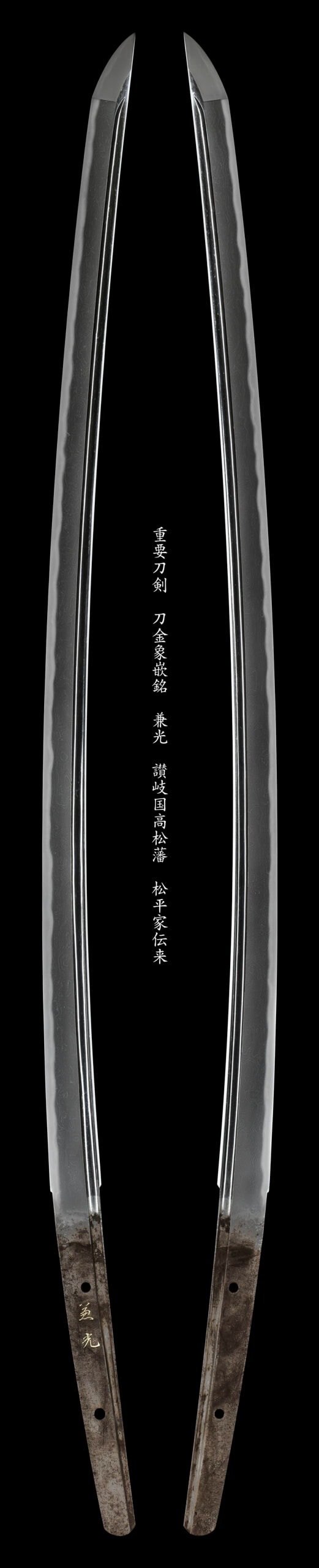
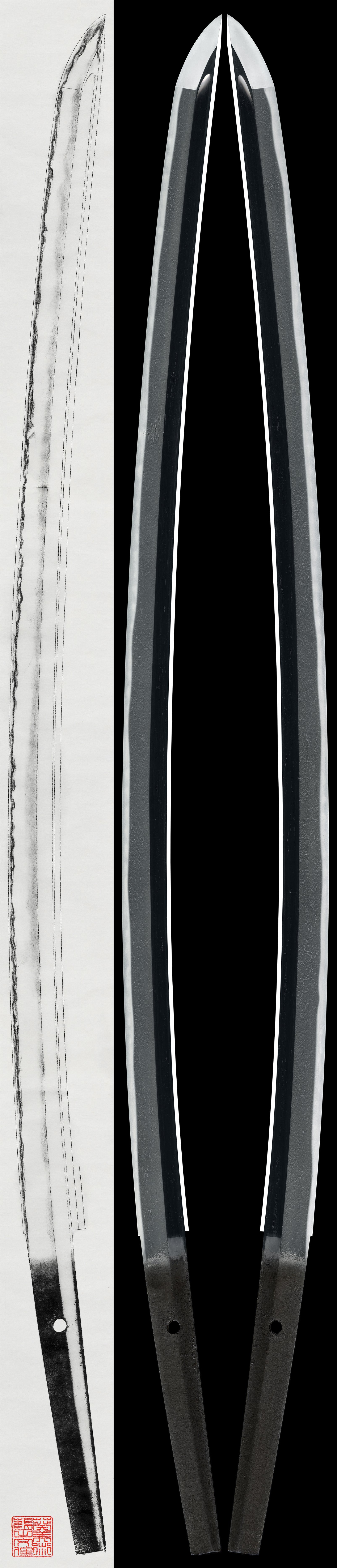
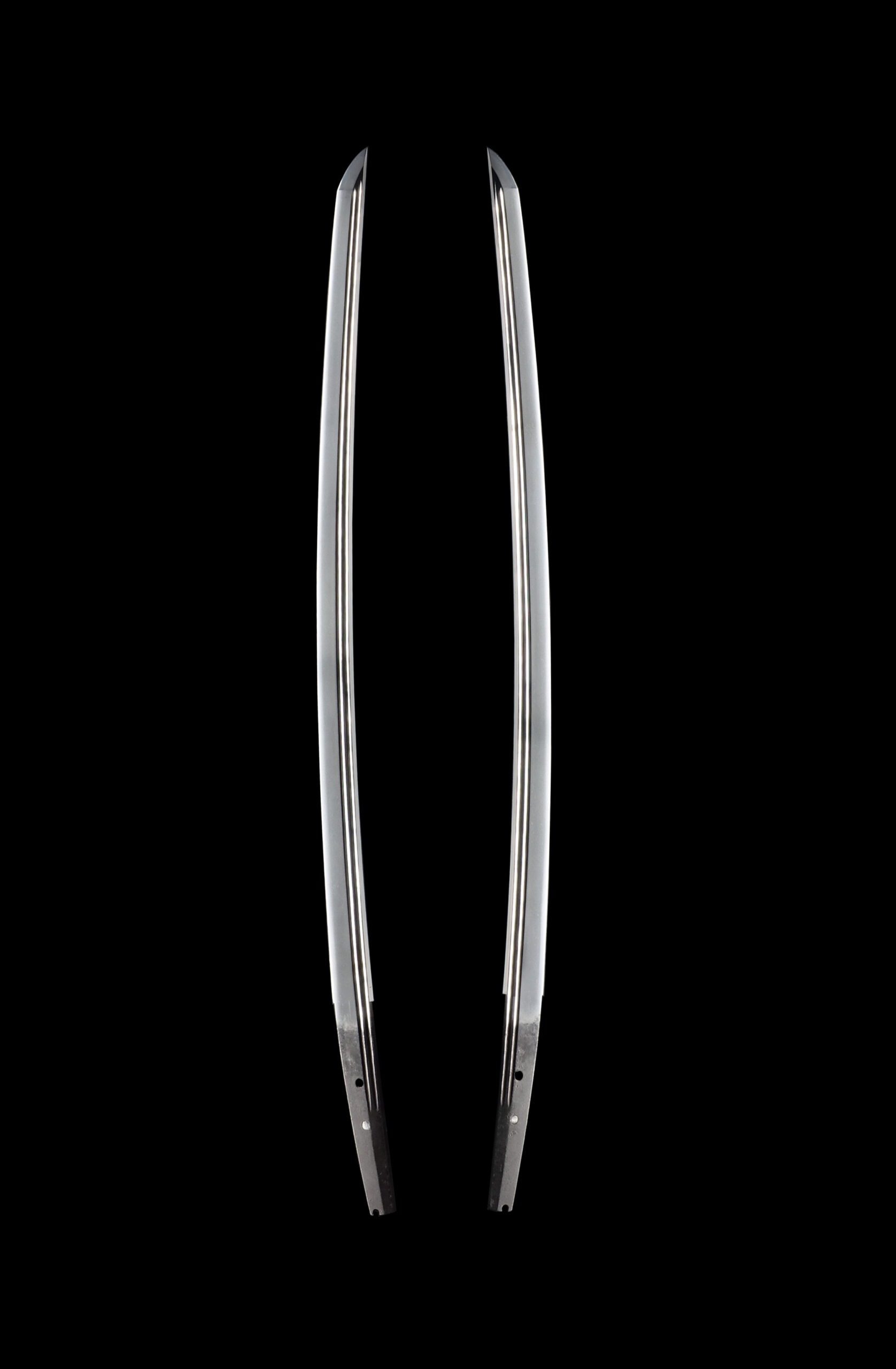
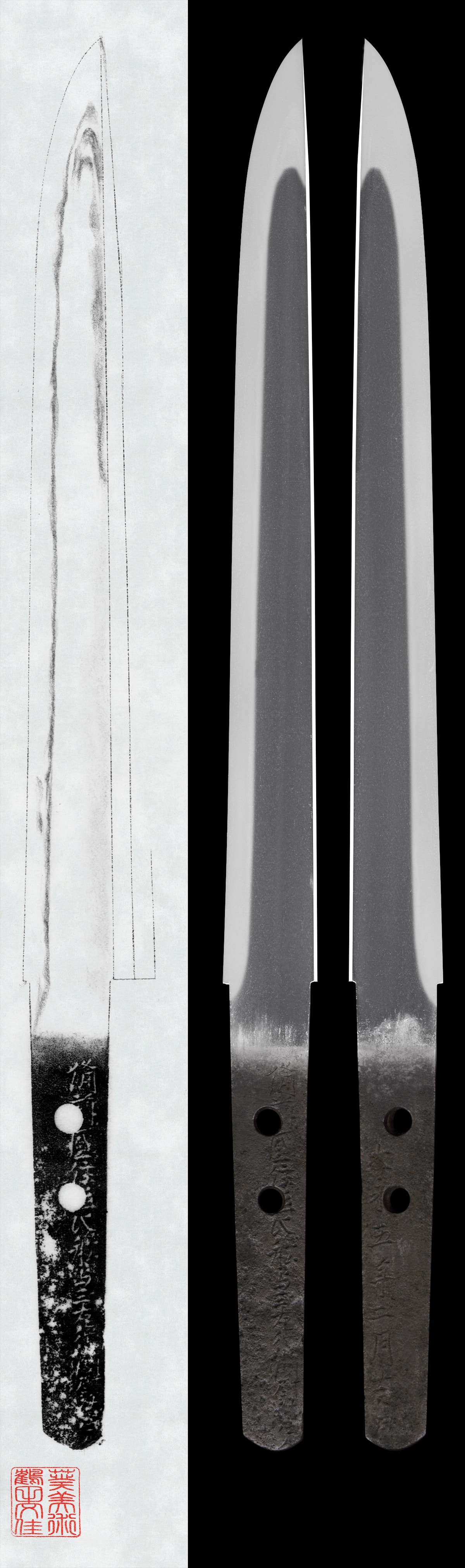
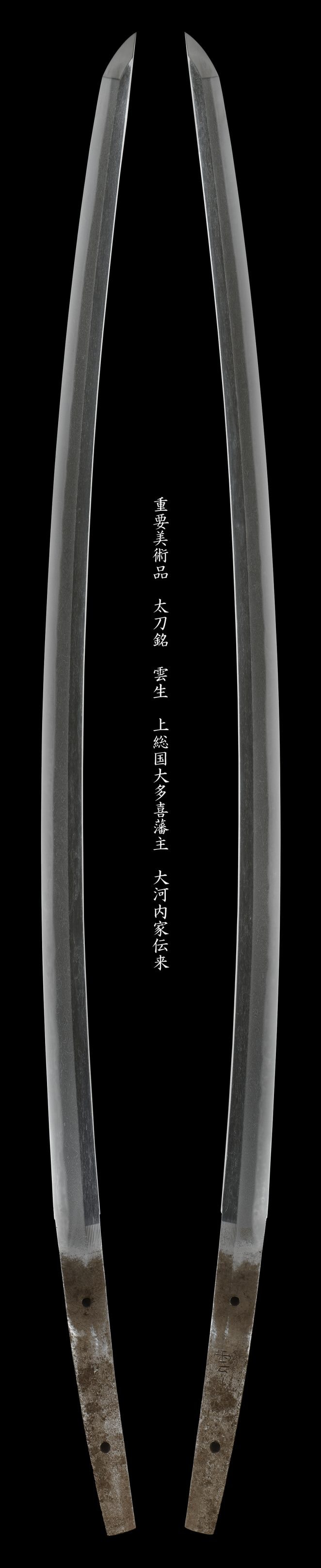
The largest of Tomomitsu's signed works is the great of Futarasan Shrine in Nikko, a National Treasure dated Joji 5 (1366). The published record cites it from the first session as "the largest of his signed works" (有銘中最大のもの) and in the most recent as "the pinnacle of Tomomitsu" (長船倫光の最高峰), anchoring the carving of new submissions against it. Tomomitsu (倫光) was a swordsmith of the mainline in the period, introduced by the with one unvarying sentence: "one of the students of Kanemitsu, and by one tradition even said to have been Kanemitsu's younger brother" (兼光門下の一人であり、一説に兼光の弟とも伝えている). The modern formula runs his dated work from Jowa to Eiwa, 1345 to 1379; the dated blades on the official record carry nengo from Bunna through . The formula places him within the school: closest of all to Kanemitsu's manner, his rank of work "pressing the master himself" (作位的にも師に迫るものがある). Fujishiro grades him Jo-jo .

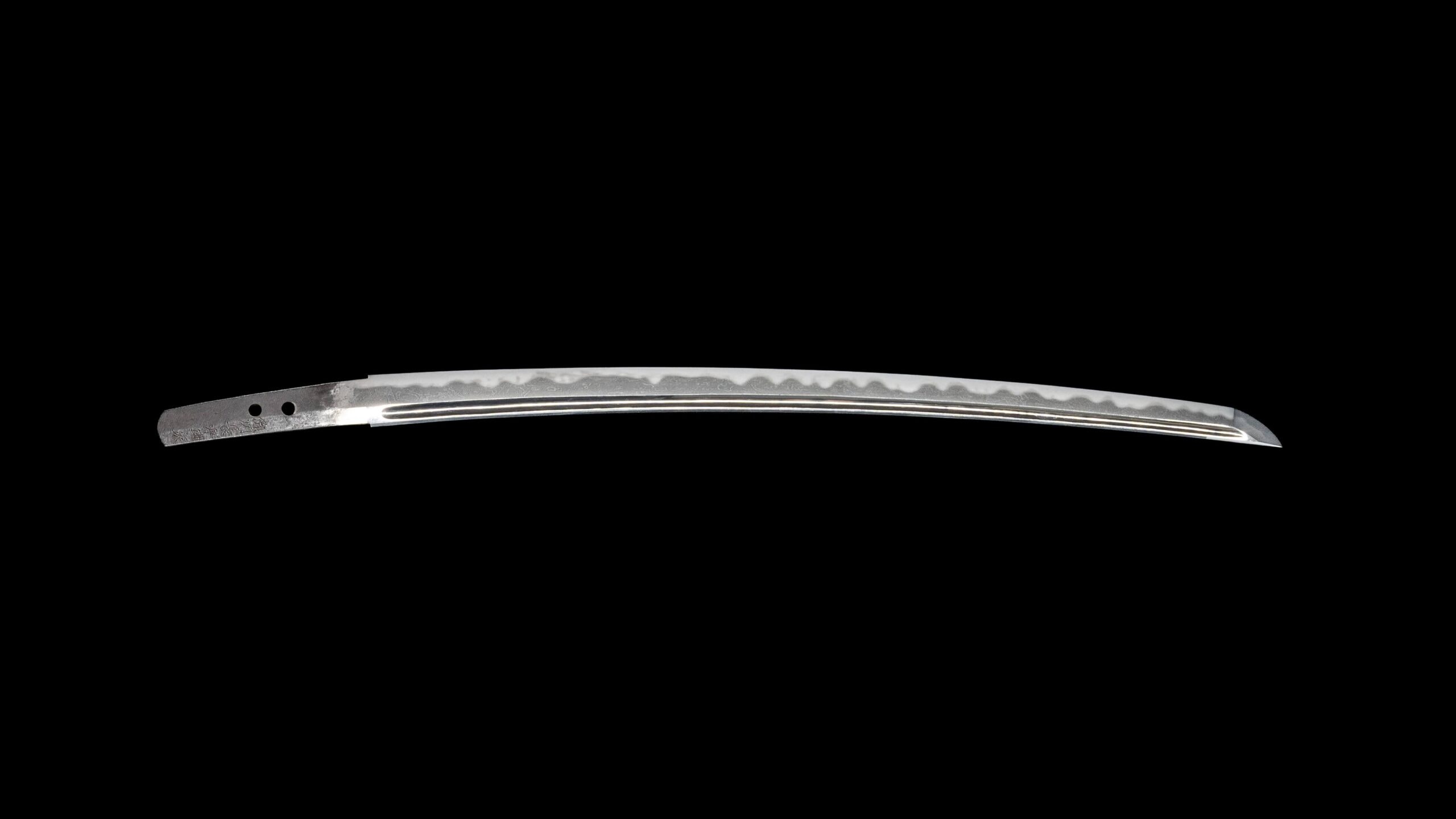
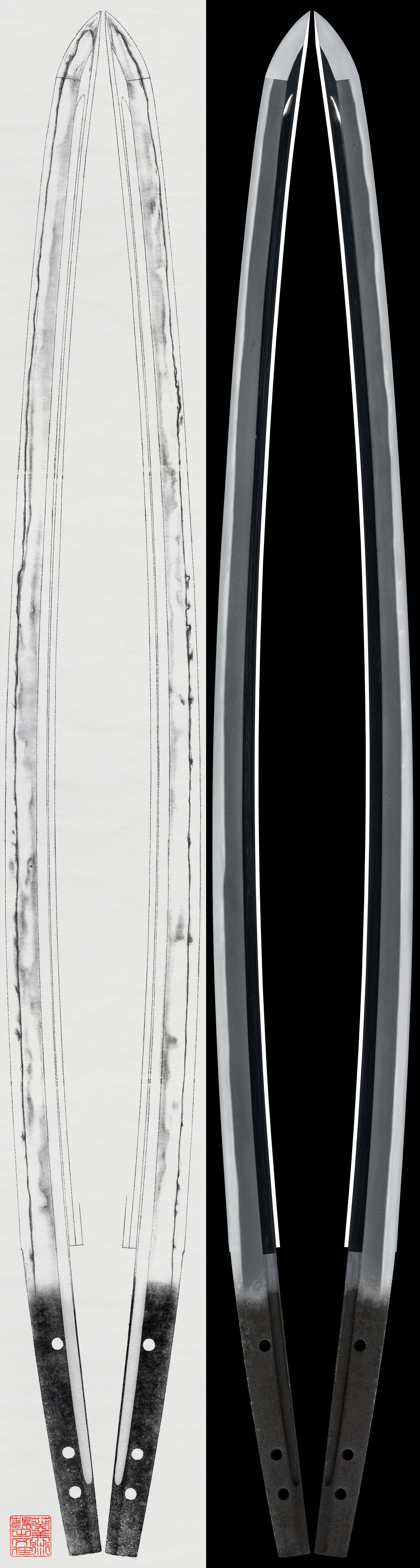
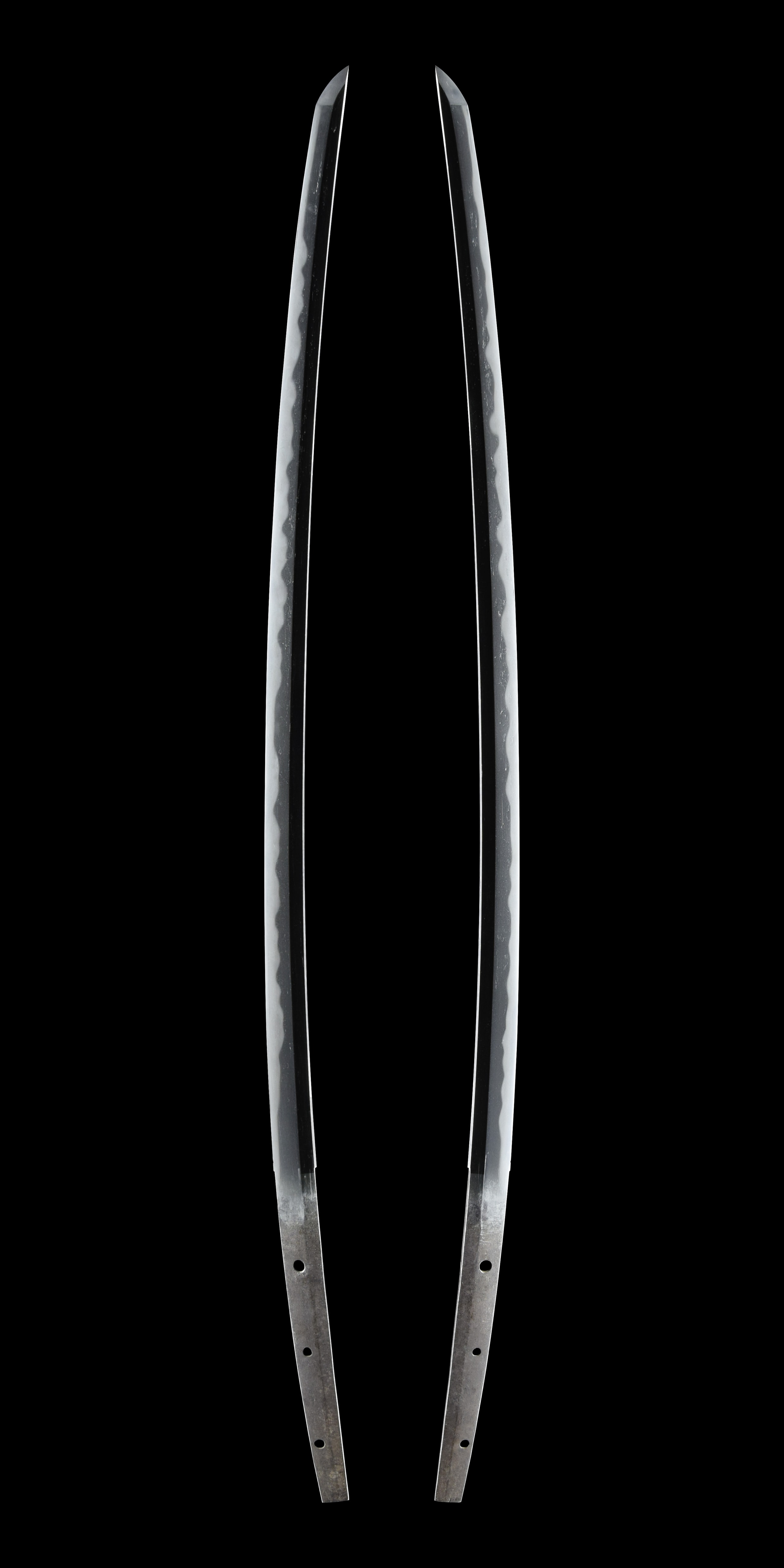
His own hand, the published sources repeat, is "the easygoing, gentle led by " (おおどかなのたれ主調の乱れ), most often a mixing , , pointed and somewhat angular teeth. The criterion is given in so many words: such a blade "is to be judged Tomomitsu from the point that the crests of the tend slightly to points" (のたれの頭がやや尖る). and enter, the temper leans to with , and and work through it; the runs , usually finishing pointed, at times swept with . mark his blades far more often than the rest of the school: beyond the the record draws , , paired , the three-pronged and above all the , the grass-style form of which "is a peculiar carving scarcely met with outside this smith and Kanemitsu" (此の工と兼光以外にはあまり経眼しない); the Futarasan and a signed in the Kurokawa Institute of Ancient Cultures carry the reference examples.

The is mixed with , attaching and fine entering; on the and a rises, while the pieces lean to a -style or . Here the published sources separate him from his master with unusual candor: the first session records that "compared with Kanemitsu his is inferior, and many works tend somewhat to stand" (地がねが劣り、やや肌立つものが多い), and the recent formula repeats the division in kinder terms: close to Kanemitsu, yet marked as Tomomitsu by the slightly standing and the unhurried notare base.

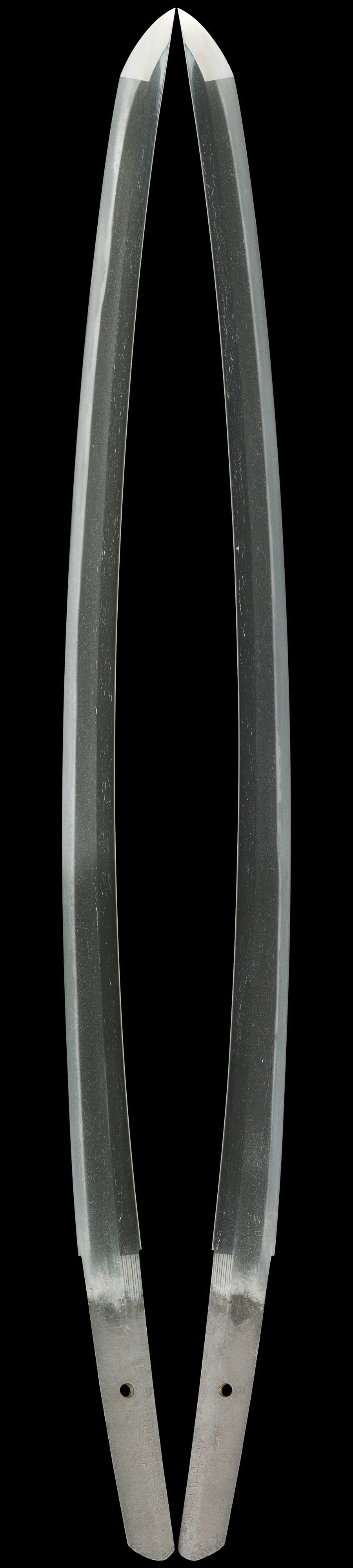
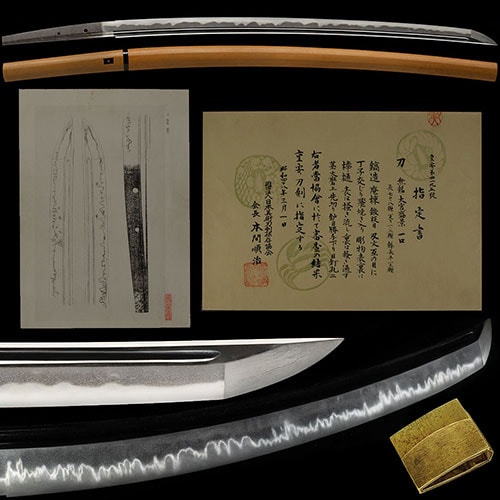
The shape of what survives was set out in the first session: " and short survive signed in comparative numbers, but the are almost all unsigned" (短刀、小脇指は比較的多く有銘のものが現存するが、太刀は殆ど無銘物である). His were mostly the long blades of the Enbun-Joji fashion, wide, with little taper and an extended , and they come down as ; the signed and dated work concentrates in the wide, , and , two carrying the incised invocation (八幡大菩薩). The signature is the six-character long Bishu Tomomitsu (備州長船倫光), smallish, often in a fine chisel, set toward the , with the date on the ; twenty-eight of the designated blades are signed against thirty-one unsigned. The gold inlays on the shortened blades, of Kojo, Koyu and Sato Kanzan and a of Koson, are attributions by later appraisers, not signatures; one keeps its original folded back as an . An early entry raises, and leaves open, the question of two generations of the name (同名二代あるもののごとく).

Two side manners flank the . On signed work of Joji and he also worked the older spine of the school: a led by or squared, angular teeth; the sources hold such a against his masterpieces and call it proof of "the breadth of his working range and the sureness of his technique" (作域の広さ), while a small recalls Kagemitsu and Kanemitsu and "at first sight could be mistaken for a -period piece" (一見鎌倉期のものにも見紛う). Among the unsigned attributions stands a markedly -strong group (一段と沸の強い出来口), where and small appear along the temper and the pointed completes what the record names "the Soden- character" (相伝備前の特色). Its emblem is the great hocho-gata of Yasukuni Shrine, recorded with its in Matsudaira Sadanobu's Shuko-jisshu (集古十種) as the sword of Egara Tenmangu in , handed down of old as a work of Masamune, "a celebrated piece famous since antiquity" (古来世に喧伝された名品); the modern judges read its vivid , -led and pointed as a smith under influence; its , close to that of the Futarasan , settles the attribution. In inverse, the that defines Kagemitsu and Kanemitsu recedes in him, and falls away almost entirely. The record sets him beside the other Kanemitsu students, Hidemitsu, Masamitsu and Motomitsu, whose works resemble the master while falling a step short; no successor line is drawn for him.

Sixty-four designated works stand on the official record: the Futarasan National Treasure, two Important Cultural Properties, eight and fifty-one , fifty-nine in the and tiers. The provenance roll runs through the great houses: the first session's signed of 6 came down in the Yamauchi family, lords of Tosa; the with the gold-inlaid attribution descended in the Matsudaira family as the reputed sword of Matsudaira Shungaku, with a Genroku 7 (1694) of Kojo; another , bestowed by Ii Naomasa on his retainer Suzuki Iwami no Kami Shigeyoshi, was later presented to the Mito Tokugawa family; other pieces passed through the Okubo lords of Odawara and the statesman Miyoji. The National Treasure and the Important Cultural Properties, three blades, are patrimony held permanently outside the market, the at Futarasan Shrine and the at Yasukuni with its Shuko-jisshu . What a private collector may realistically encounter lies in the and tiers, most of it the cut down from his grand ; a signed and dated or is the rarer event, and an signed rarer still; the first session already observed that of ordinary length were few from his hand. A Tomomitsu reaches the market only from time to time, recognized when it does by the easy whose crests tend slightly to points.
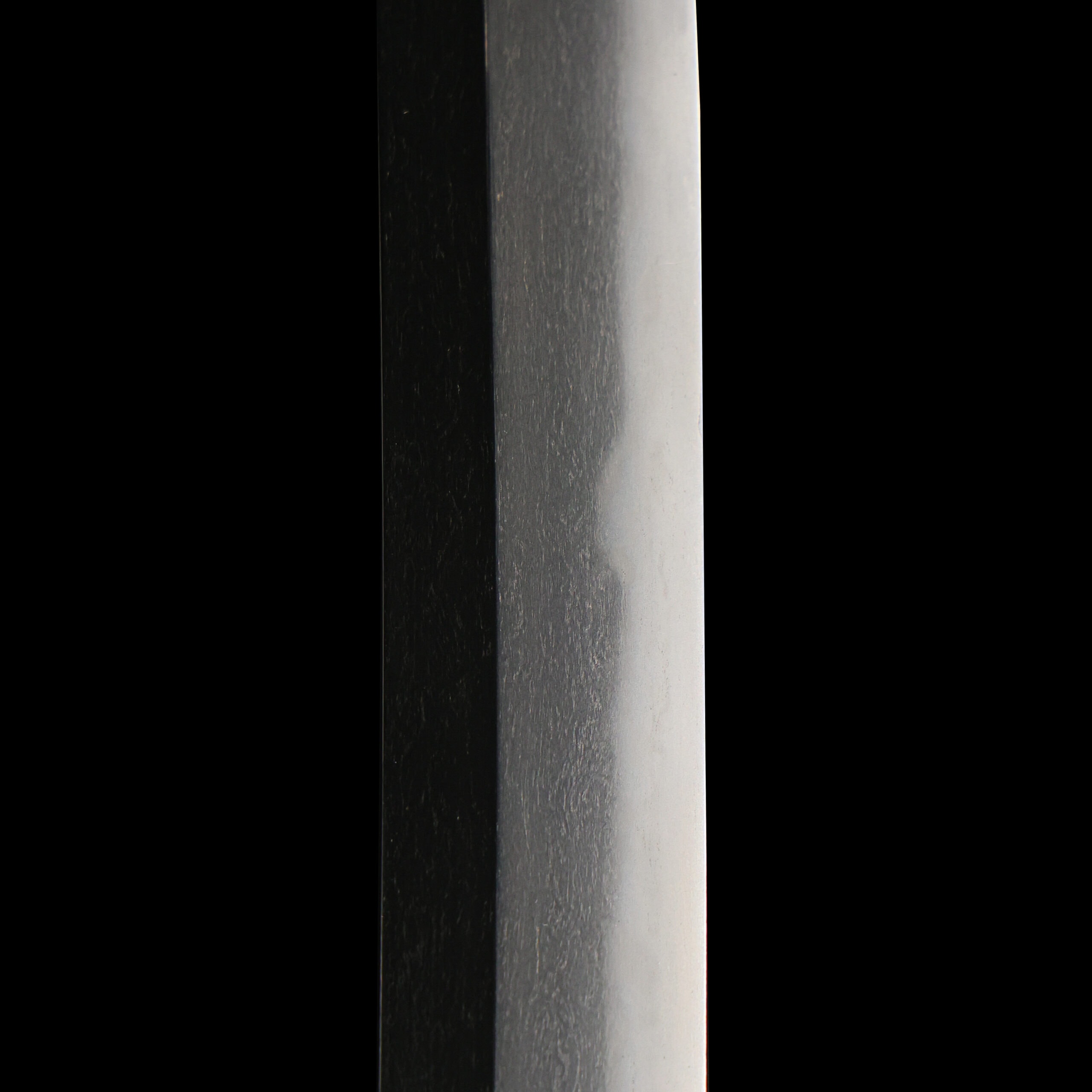
Kantei

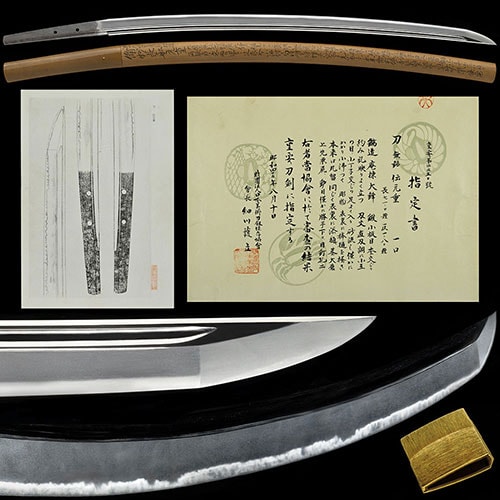
one prime notare manner carrying two form registers as the corpus splits (the signed hira-zukuri sunnobi tanto and wakizashi, and the o-suriage mumei katana cut down from the grand tachi), flanked by two side manners the texts themselves draw: the school's kataochi-gunome hand they call proof of the breadth of his range, and a markedly nie-strong group they expressly name Soden-Bizen

Tomomitsu is a smith of the mainline, one of Kanemitsu's students and by one tradition his younger brother, with dated works running from Jowa (by some texts Bunna) to Eiwa, 1345 to 1379. Of the whole school the records place him closest to Kanemitsu, his rank of work pressing the master himself. His own manner is the easygoing, gentle -centred , most often a whose crests tend slightly to points, -leaning with , over an that stands out more than Kanemitsu's, and a that runs in disorder to a pointed tip. and short survive signed in comparative numbers, while his were mostly the grand long blades of the Enbun-Joji fashion and come down as ; the largest signed work of all is the National Treasure of Futarasan Shrine in Nikko, dated Joji 5. , , and the in particular, mark his work far more often than the rest of the school.

Diagnostic discriminators

63% of his works · 2.0× vs Kanemitsu (master)

46% of his works · 1.5× vs Kanemitsu (master)

34% of his works · 2.4× vs Kanemitsu (master)

7% of his works · 0.3× vs Kanemitsu (master)

Observation by phase

Prime manner, the gentle notare-centred midare

keyed to the six-character long signature Bishu Osafune Tomomitsu with the date on the ura, a smallish mei, often in a fine chisel, set toward the mune; 16 of 68 records are signed, 27 keep an ubu nakago, and the signed pieces concentrate in the hira-zukuri tanto and wakizashi

The manner the records key his name to: a wide blade of the Enbun-Joji fashion, little tapering, with a large or extended . The forging is mixing , with a tendency to stand out, and fine entering, and a rising on the and while the pieces lean to a or . The temper is the easygoing , mostly with , , pointed and angular teeth mixing in, the crests of the undulation tending slightly to points, and entering, -leaning with , and working through. The runs , the tip pointed more often than not, at times swept with . are frequent: , , , , three-pronged and the .

Sugata 姿
Jigane 地鉄
Hamon 刃文
Bōshi 帽子
The o-suriage mumei katana from the grand tachi— his tachi were mostly long blades of the period fashion, so the surviving katana are predominantly o-suriage mumei with a wide body and large kissaki, and the attributions rest on the notare-centred temper and the school look
The signed hira-zukuri sunnobi tanto and wakizashi— wide, thin-kasane, slightly curved hira-zukuri blades of the Nanbokucho fashion, where his signed and dated work concentrates; the utsuri here leans sugu or bo, the boshi often thrusts up to a point, and two pieces carry the carved invocation Hachiman Daibosatsu

The Kanemitsu-school gunome hand, kataochi and angular

less firmly establisheddrawn by the texts on signed, dated work of Joji and Oan, a tachi and tanto among them; the tanto with kataochi-gunome is said to recall Kagemitsu and Kanemitsu and at first glance the Kamakura age

Beside the he worked the older spine of the school: a led by or by squared, angular , mixing --like and pointed teeth, the disorder in places taking a slanting cast or squaring off, and entering, -leaning. The records, holding such a against his masterpieces, conclude that he finished this manner skilfully too, calling it proof of the breadth of his working range and the sureness of his technique. On one the squared runs in ranks; on a small the is judged to recall Kagemitsu and Kanemitsu and, at first sight, the period itself.

Jigane 地鉄
Hamon 刃文
Bōshi 帽子

The nie-strong Soden-Bizen group

less firmly establishedconcentrated in the attributed mumei work: the texts call certain pieces a markedly nie-strong class among his attributions, and on them they name the Soden-Bizen character expressly

A group within his attributions where the deepens: the temper, still notare-based with , takes on abundant , and small appear along the burn, and work busily, in places the brightens, and the pointed completes what the records expressly call the Soden- character. Its emblem is the great hocho-gata of Yasukuni Shrine recorded in the Shuko-jisshu, which the old tradition handed down as a work of Masamune; the modern texts read its vivid , its -led and its pointed as the smith under influence, and confirm the Tomomitsu attribution.

Jigane 地鉄
Hamon 刃文
Bōshi 帽子
Scholarship

His dated works are the chronological frame the texts repeat: from Jowa to Eiwa in the modern formula, from Bunna to Eiwa in the older entries, spanning the height and close of the Nanbokucho.

One early entry raises a generation question, judging that there appear to have been two smiths of the same name, both active in the Nanbokucho; the later records do not pursue it, and the point stands as the texts leave it.

Whether student or younger brother of Kanemitsu is itself the standing biographical note: the formula reports him as one of the school with the brother tradition expressly marked as one account.

Designations

Kokuhō1
Jūyō Bunkazai2
Jūyō Bijutsuhin2
Gyobutsu—
Tokubetsu Jūyō8
Jūyō Tōken51

Elite Standing

0.46 across 64 designated works

Top 6% among smiths

Provenance

17 documented provenances across certified works by Tomomitsu

Provenance Standing

7 works held in elite collections across 17 documented provenances

Top 9% among smiths

Raw score: 2.58 / 10

Blade Forms

Distribution across 64 ranked works

Signatures

Signature types across 64 ranked works

Currently Available

Lineage

TeacherKanemitsu
Tomomitsu
Students (10)
  1. 1.Chogi長義1 for sale109designated
  2. 2.Kanemitsu兼光4 for sale237designated
  3. 3.Morimitsu盛光6 for sale61designated
  4. 4.Yoshikage義景3 for sale67designated
  5. 5.Masamitsu政光4 for sale84designated
  6. 6.Motomitsu基光3 for sale41designated
  7. 7.Moromitsu師光17designated
  8. 8.Moromitsu師光1 for sale7designated
  9. 9.Morimitsu守光
  10. 10.Tomokuni友國

Osafune School

Other artisans of the Osafune school

  1. 1.Mitsutada光忠61designated
  2. 2.Nagamitsu長光2 for sale253designated
  3. 3.Kagemitsu景光1 for sale146designated
  4. 4.Kanemitsu兼光4 for sale237designated
  5. 5.Sanenaga眞長64designated
  6. 6.Chikakage近景4 for sale86designated
  7. 7.Kagemasa景政2 for sale22designated
  8. 8.Masamitsu政光4 for sale84designated
  9. 9.Motomitsu基光3 for sale41designated
  10. 10.Kagehide景秀23designated
  11. 11.Yoshimitsu義光35designated
  12. 12.Shigezane重眞1 for sale45designated