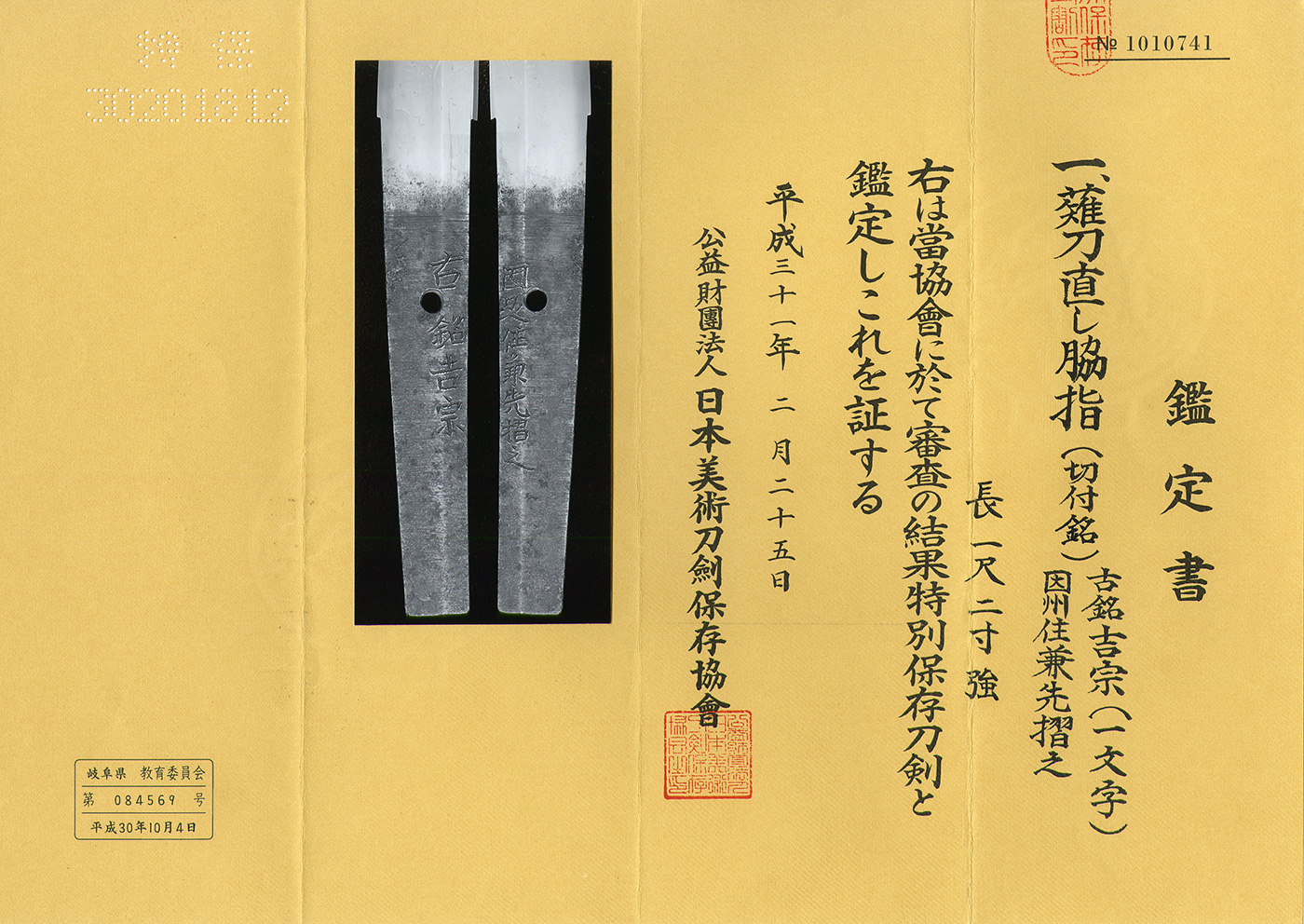
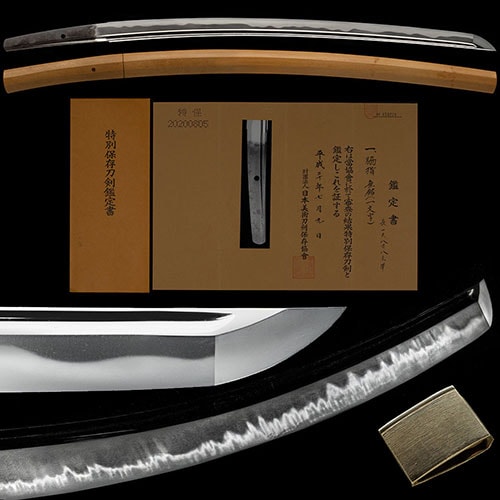
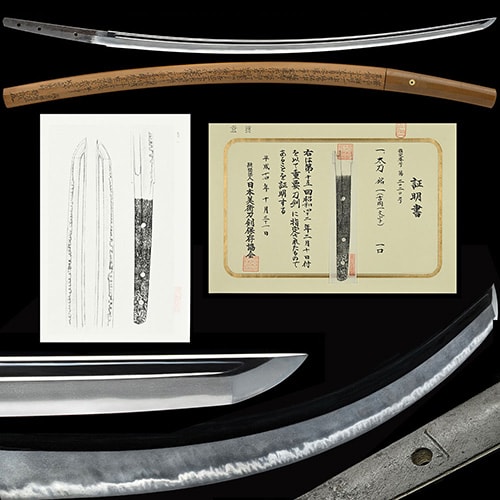
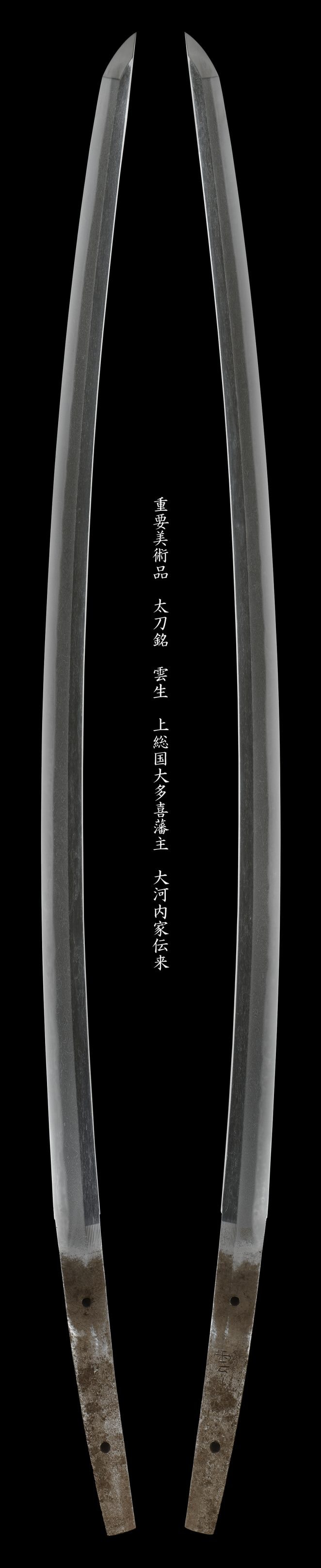
Yoshimune is a Fukuoka Ichimonji smith of mid-Kamakura Bizen whose surviving signed work is so scarce that the published sources treat each designated blade as a record of a hand otherwise known chiefly through one famous piece. The best-known of his works is the tachi preserved at Tsukubasan Jinja, an Important Cultural Property, and the institution names it expressly as such, observing that he "is represented by few extant works, the most famous being the tachi held at Tsukubasan Jinja" (現存する作刀が少なく ... 最も著名なものとして筑波山神社蔵の太刀). The school itself, founded by Norimune, arose in the early Kamakura period and flowered through the middle of it, and the published sources place this signature with the Fukuoka branch at exactly that peak, when the school reached its most brilliant and dynamic large chōji-midare. The name was carried by more than one smith, which is the central problem of his identity, but the blades judged his own are read consistently as the mature Fukuoka manner brought to full flamboyance.
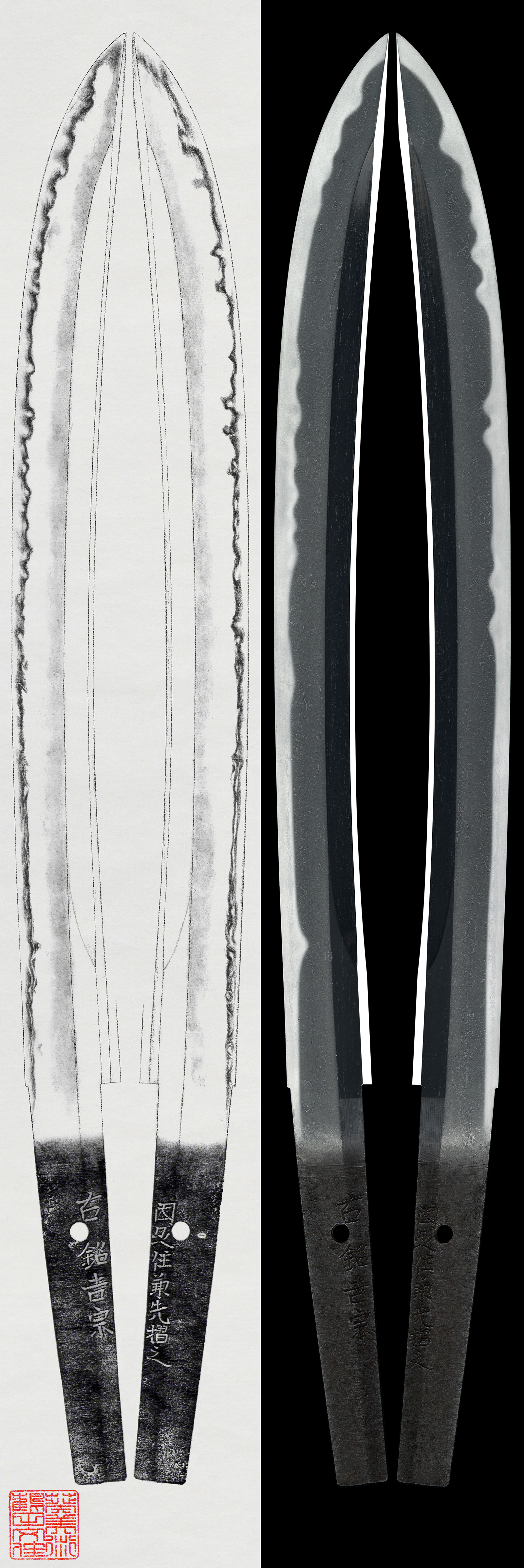
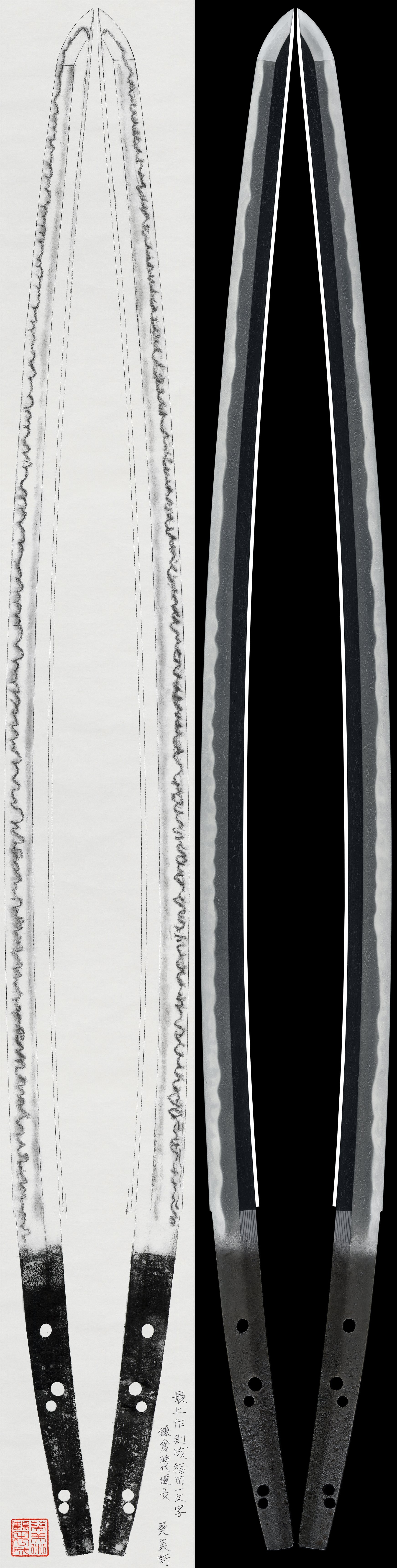
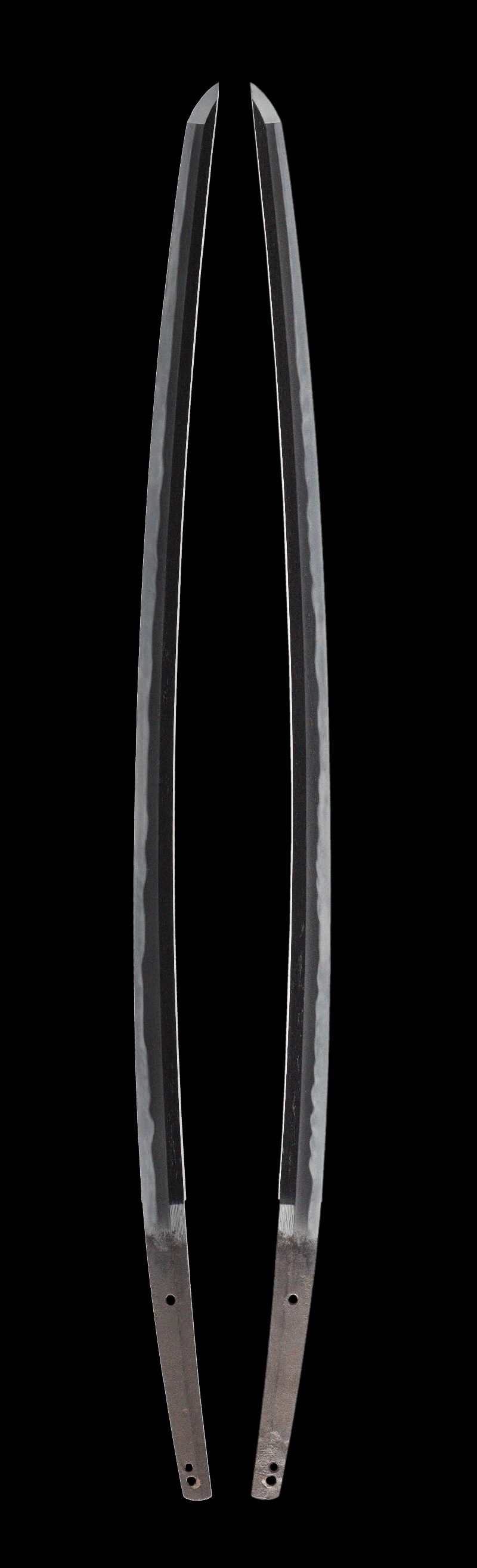
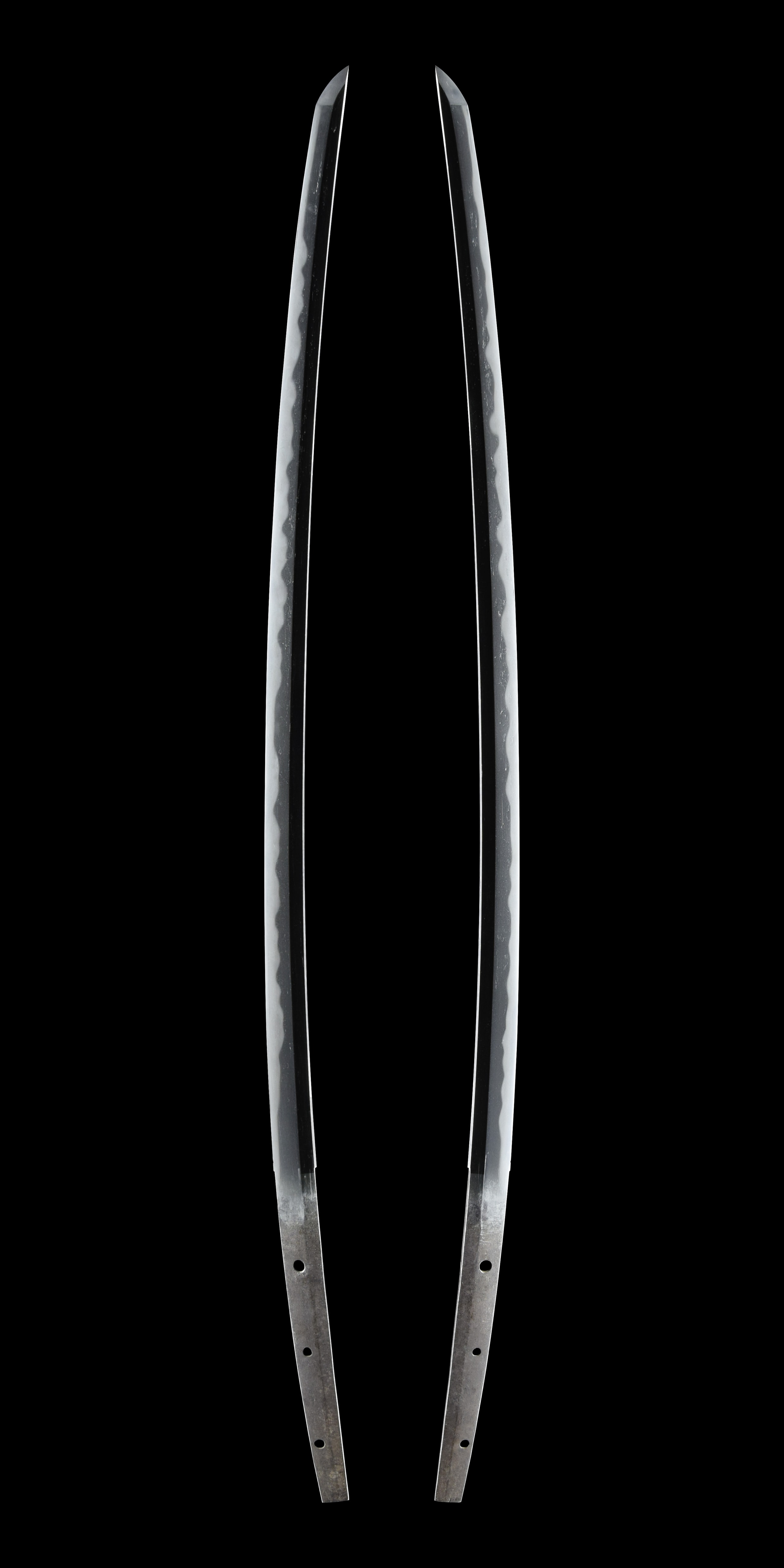
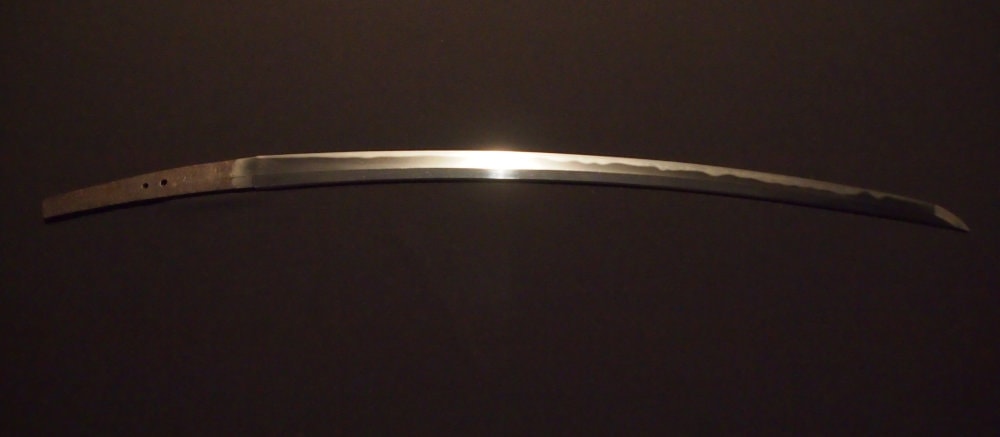
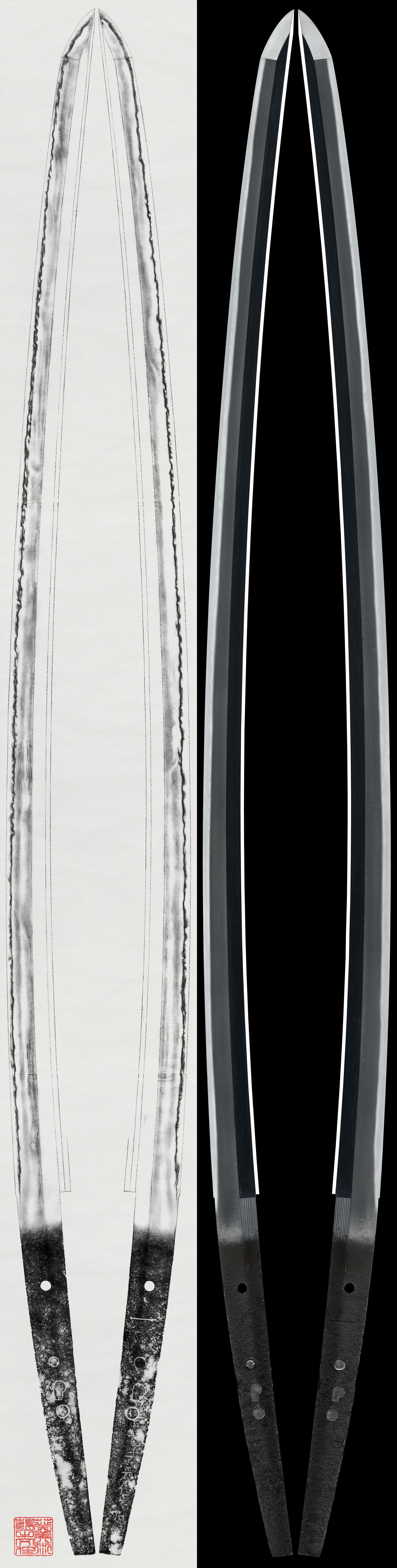
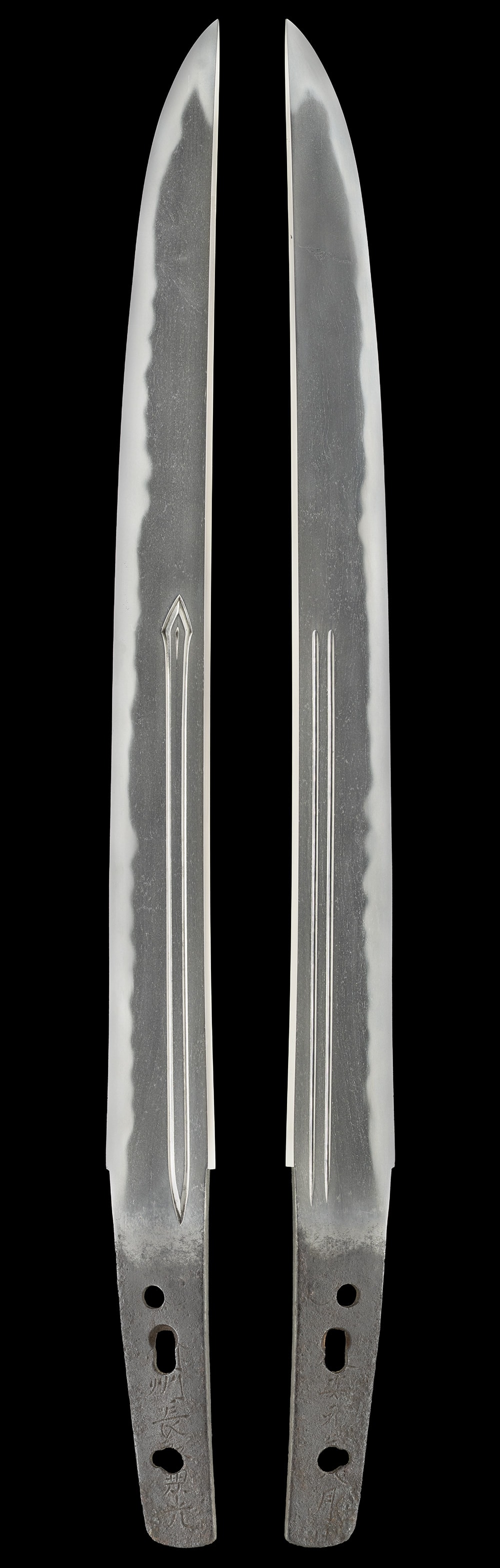
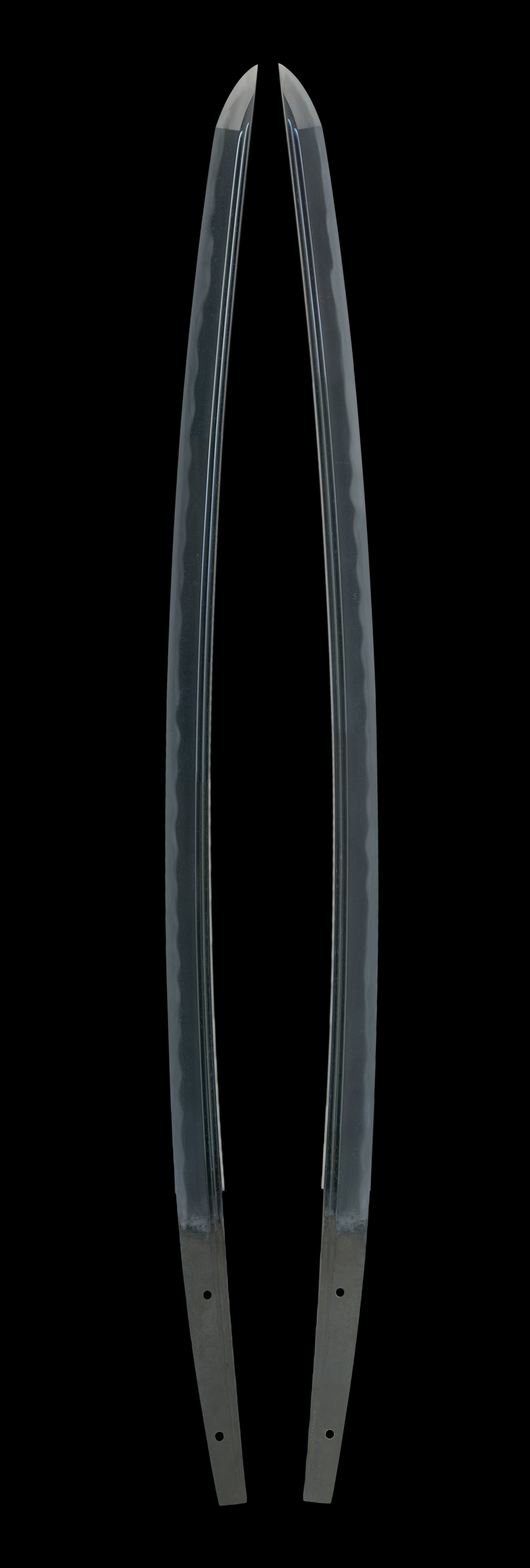
His characteristic hand is a full chōji-midare with no quieter base beneath it. Over an itame jigane he tempers a clove pattern mixed with small chōji and gunome, and on his finest works it rises into large tassel-headed ō-busa-chōji and sack-shaped fukuro-chōji with pointed togari-ba mixed in, the yakiba undulating with marked height variation. Ashi and yō enter the ha freely, the nioi runs deep with ko-nie, and fine kinsuji and sunagashi play through it, the nioiguchi bright. The Tokubetsu-Jūyō tachi gathers this into the school's defining statement, that at the mid-Kamakura peak "the magnificently developed style, brilliant and full of dynamism, of large chōji-midare is displayed in splendid fashion"[[c:1]]. It is this temper, never a suguha-toned hand, that the appraisers use to part his blades from the quieter members of the same school.
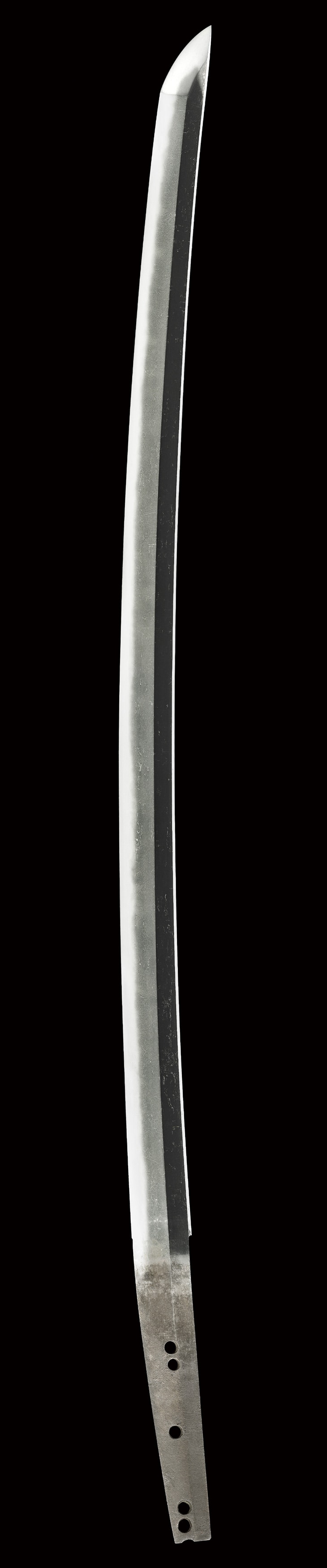
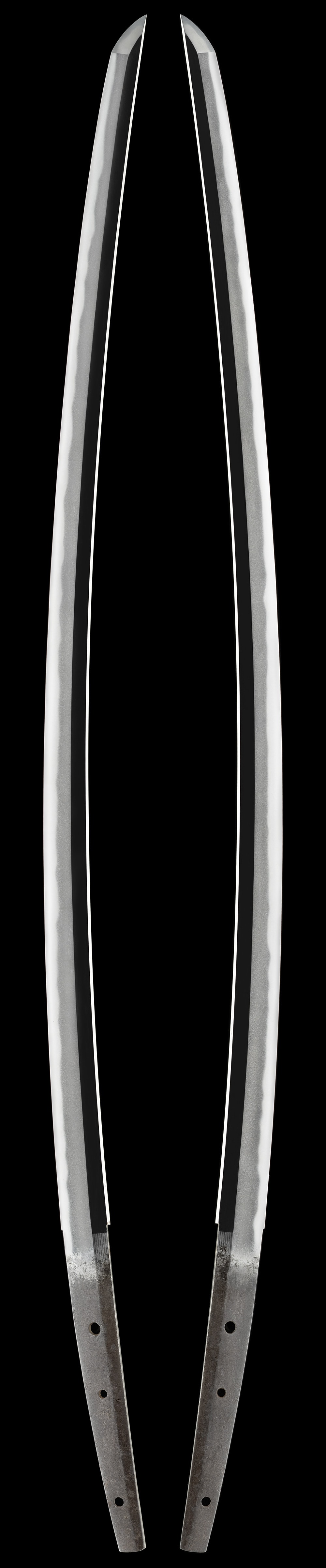
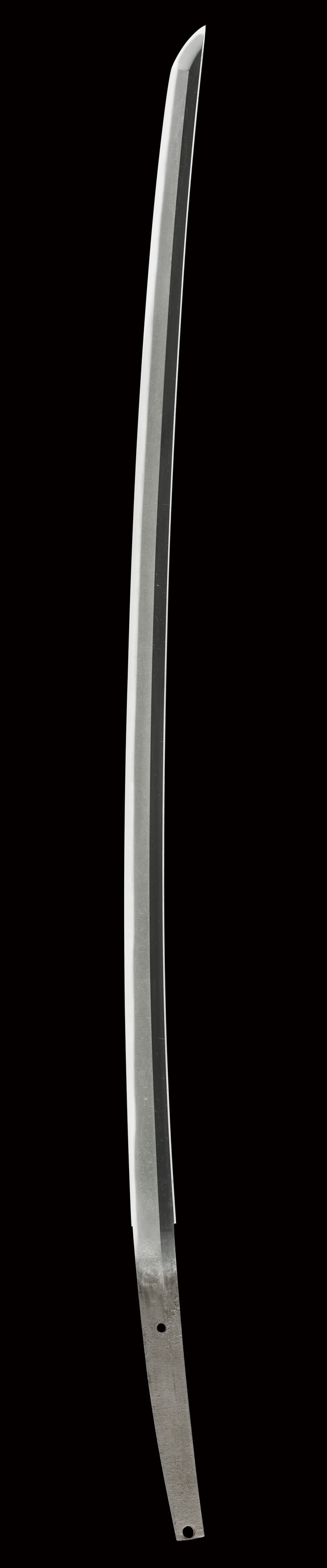
The jigane is the proper Ichimonji steel and the constant that holds across all of his signed work. The forging is an itame mixed with mokume, tending a little toward standing grain (hada-tachi), with ji-nie well risen and, on the most tightly forged pieces, fine chikei entering. Over this stands a vivid midare-utsuri, the speckled reflection of old Bizen steel, which appears on every blade given to him and is as much a part of the recognition as the temper above it. The bōshi answers the ha: most often a small round (ko-maru), at the point sometimes turning with a pointed tendency or a little hakikake, and on the most flamboyant blade running into the point as a midare-komi. Carving is rare but present, the Jūyō tachi of 2003 bearing a bonji and a short bō-hi with accompanying soe-hi, and below them a suken cut kaki-nagashi.
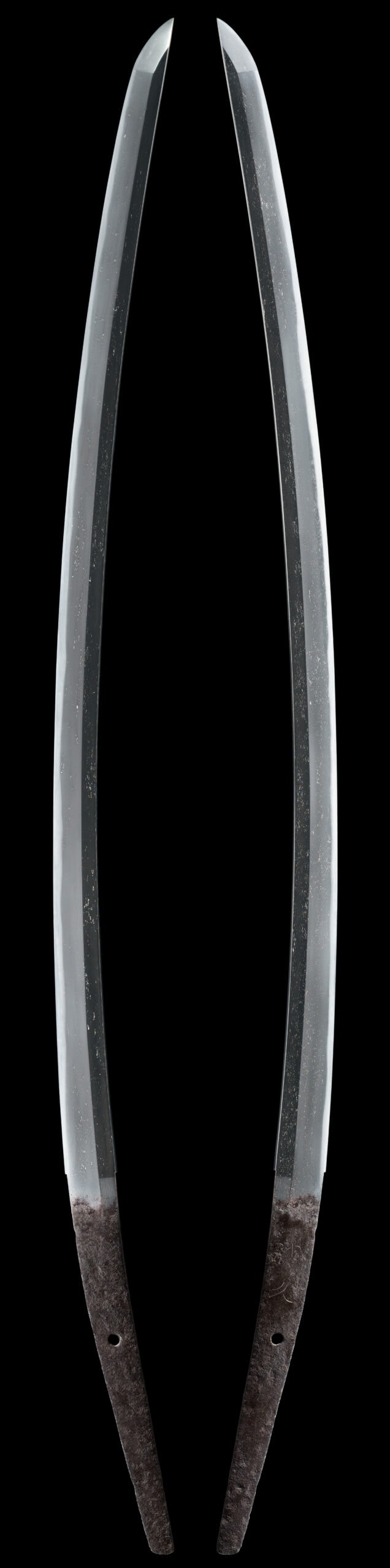
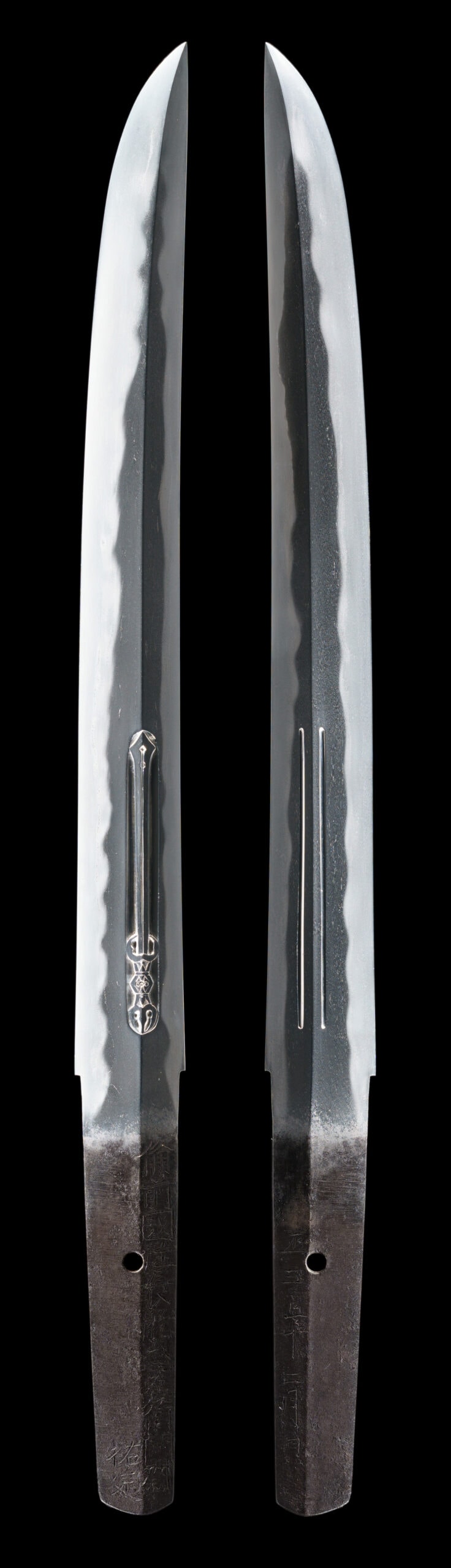
The corpus draws a single mature manner pitched at two levels of display rather than a sequence of periods. On his prime works the clove pattern breaks into the large tassel-headed forms, and the gaku-mei wakizashi shows the same large chōji-midare with fukuro-chōji and pointed elements over an itame with thick ji-nie and fine chikei; the published sources judge such a blade to express the workmanship of the Fukuoka Ichimonji school at its height, finding that "the style of the Fukuoka Ichimonji school at its peak is well displayed"[[c:2]] in its splendid "flamboyant midare of chōji mixed with ō-busa-chōji"[[c:3]]. On other signed tachi the same hand runs at a more measured pitch, the chōji mixed with ko-chōji and gunome and the yakiba lower, sound in ji and ha though calmer in finish. The question of how many generations carried the name is left open: the published record states that registers list smiths of this name in the Jōkyū, Shōgen and Kōan eras and that "the precise division by generation remains a topic for further study"[[c:4]].
His standing in the school is fixed by the kantei reasoning that recovers his blades from the crowd of namesakes. Because the name was shared among Ko-Bizen, Fukuoka Ichimonji, Yoshioka Ichimonji and Osafune smiths, the appraisers sort each blade by its own workmanship and the manner of its signature, and they assign this signature to the mid-Kamakura Fukuoka hand whose individuality showed most clearly in the brilliant large chōji-midare of the period. The judgment is made on the work itself: of the Jūyō wakizashi the published sources find that "both ji and ha strongly display the distinctive features of the Fukuoka Ichimonji school"[[c:5]], the midare-utsuri clear in the itame and the large chōji sharp with height variation. He stands among the brilliant mid-Kamakura masters of the mature Fukuoka school alongside Yoshifusa and Norikane, his bright utsuri and showy ō-busa-chōji setting him with the flamboyant rather than the restrained side of the school, against the deliberately quiet chōji of his schoolmate Yoshimochi.
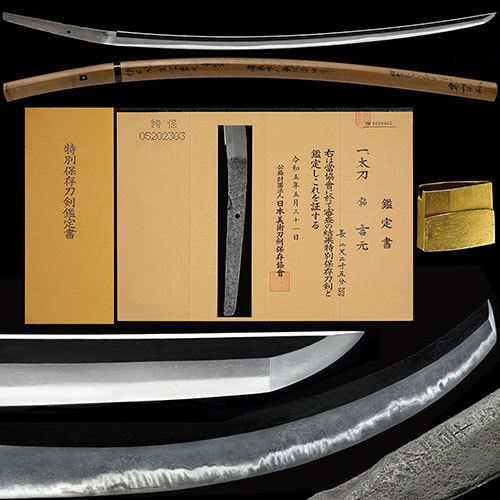
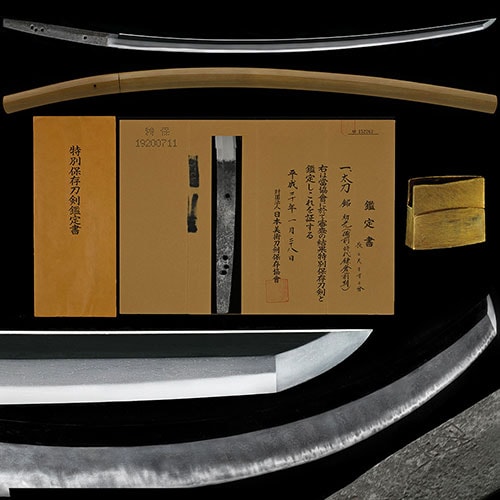
Fujishiro grades him Jō-jō saku. The connoisseurship of Yoshimune is governed by scarcity: his signed work is genuinely few, and the designated blades that survive are valued, in the words of the published record, as rare material for understanding the scope of his craftsmanship. A handful of his blades stand in the Tokubetsu-Jūyō and Jūyō tiers, with the Tsukubasan Jinja tachi, an Important Cultural Property, the most famous of all and held as patrimony in the shrine that has long kept it. Where provenance is recorded it runs to institutional rather than private hands, and the published commentary names the Tsukubasan Jinja blade as the reference point against which his other works are read. For the collector this is a smith met rarely. A signed Yoshimune is not held in perpetuity in the way the school's most exalted designations are, and so it is not wholly beyond reach; but with so small a signed corpus, and most of it long settled, an example comes to market only from time to time, and an ubu, signed tachi in sound condition is a landmark when one appears.