天下統一は大量の市場を閉じ、関の鍛冶は新しい富の在り処へ移った。三品の一門は受領名を得て京に、大道系は諸国の城下町に。美濃は新刀時代の最大の祖先となった。
 NihontoWatchNihontoWatch
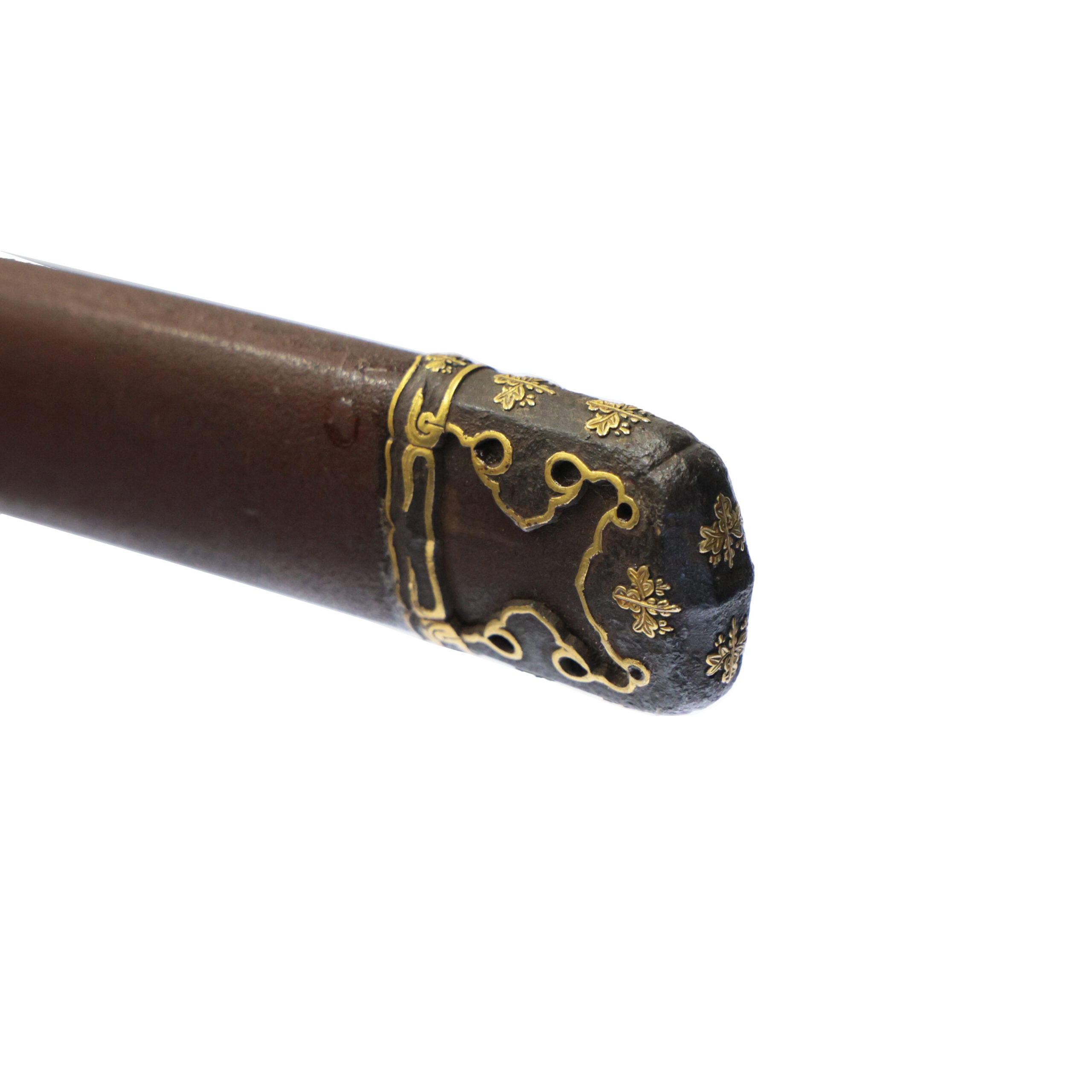
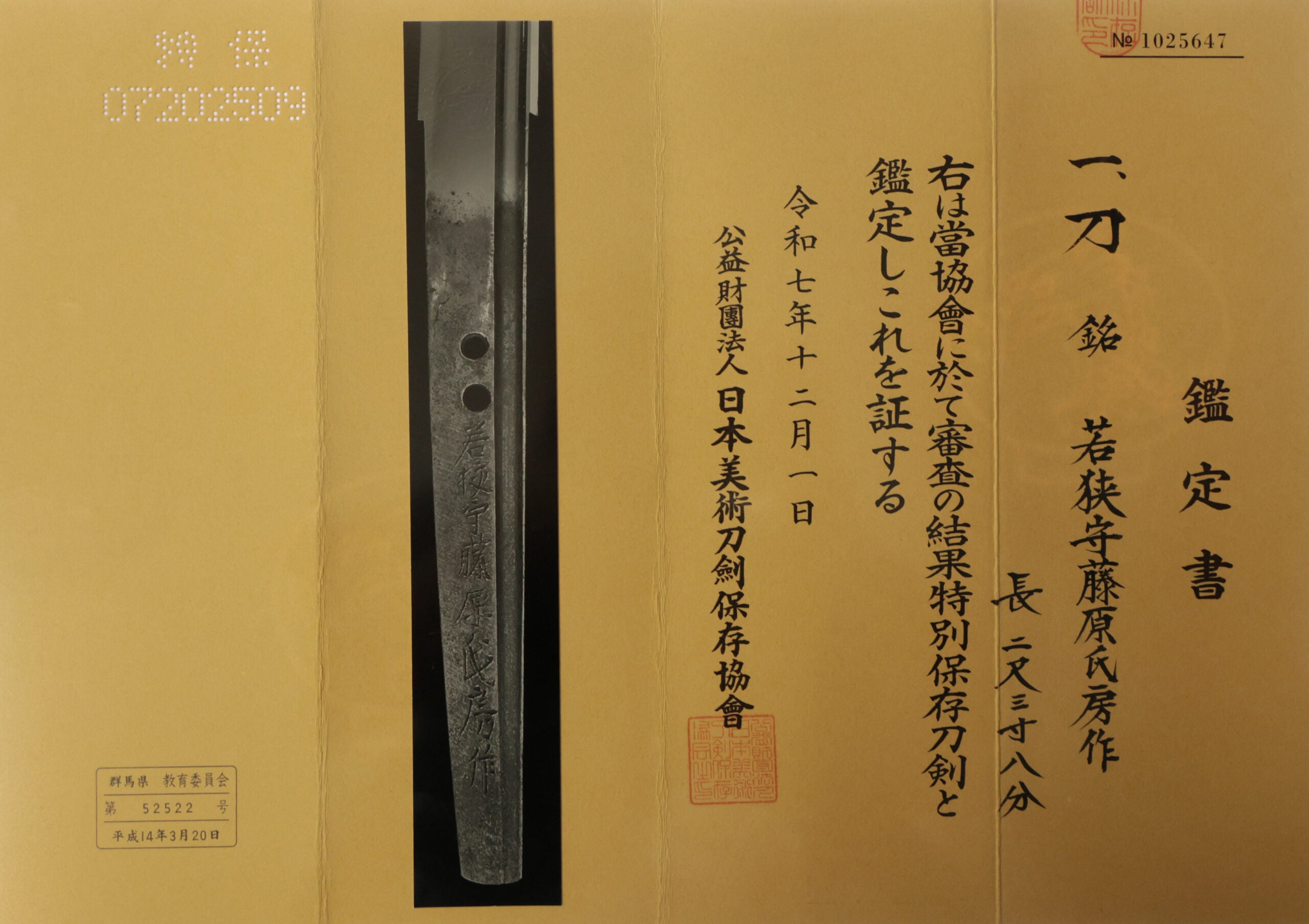
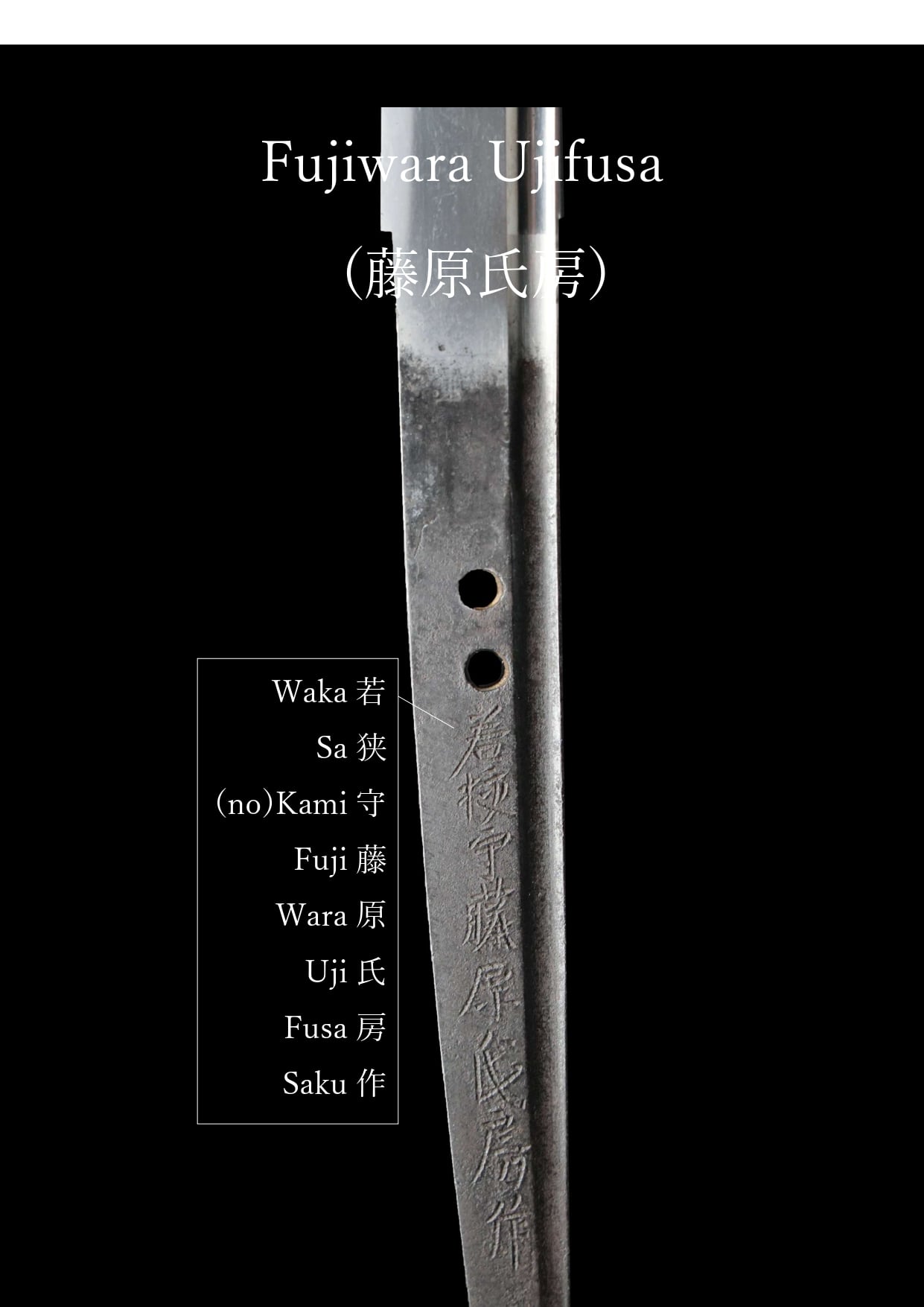
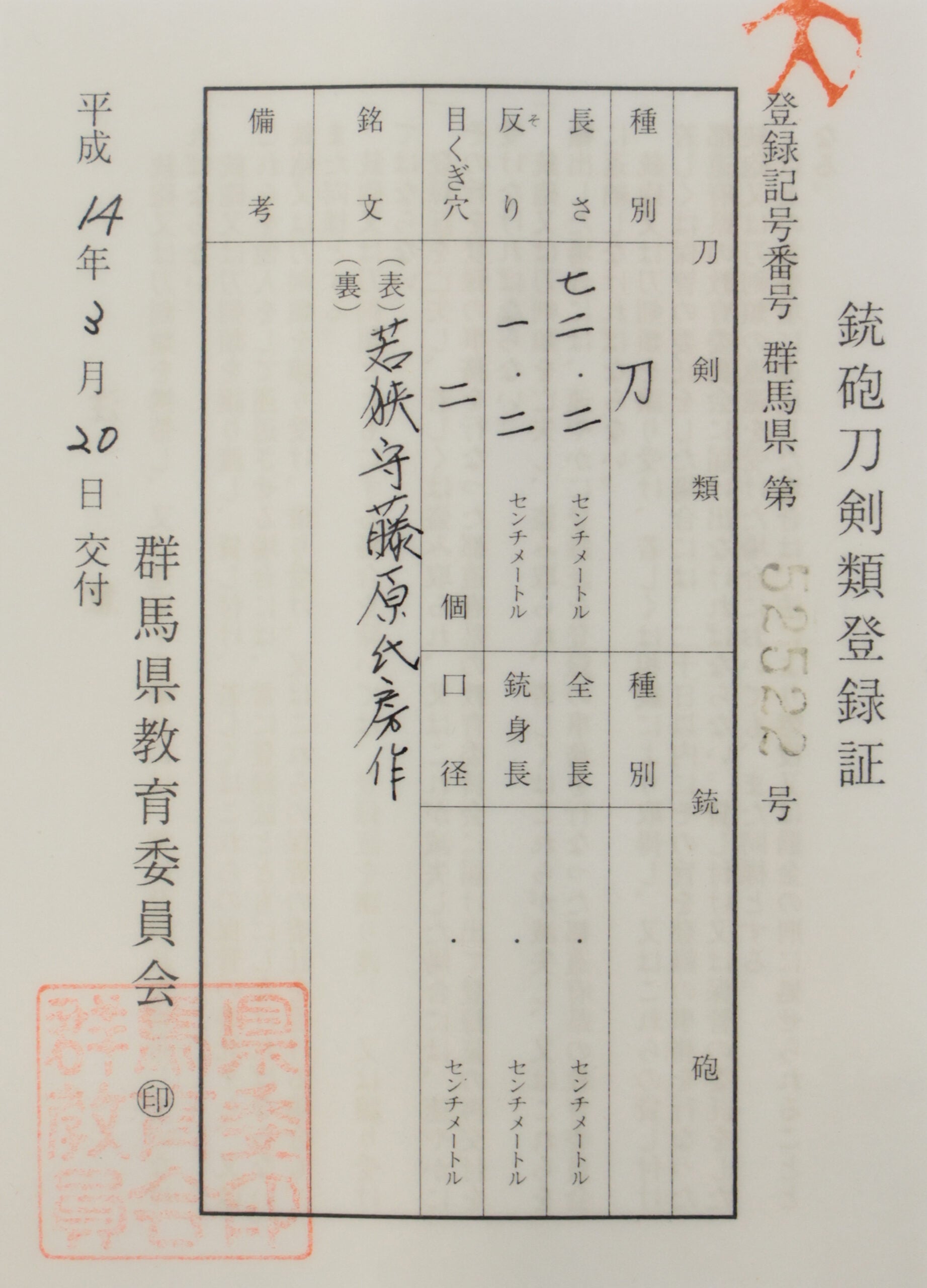
Summary This blade was signed “Wakasa no Kami Fujiwara Ujifusa” (若狭守藤原氏房), a prominent swordsmith active from the Sengoku period to the Azuchi–Momoyama period. Ujifusa was born in 1534 in Mino Province (present-day Gifu Prefecture) as the third son of the renowned swordsmith Kanefusa, famous for the distinctive “Kenbō-midare” temper pattern. His birth name was Kawamura Saburō, later known as Seizaemon. From an early age, he trained under his father and initially worked under the Kanefusa name. He was later invited by Imagawa Ujizane, the ruler of Suruga Province (present-day central Shizuoka), where he forged swords in Sunpu (today’s Shizuoka City). In recognition of his service, he was granted the character “Uji” (氏) and adopted the name Ujifusa. In 1570, he was appointed to the court titles Saemon no Shōjō and Wakasa no Kami, thereafter signing his works as “Wakasa no Kami Fujiwara Ujifusa.” He eventually became a swordsmith in the service of Oda Nobunaga(織田信長) and relocated to key political centers such as Kiyosu Castle (Owari Province, present-day Aichi) and later Azuchi Castle (Ōmi Province, present-day Shiga). Following the death of Oda Nobunaga in the Honnō-ji Incident of 1582, Ujifusa returned briefly to Mino before settling again in Kiyosu. In his later years, he trained his son, Hida no Kami Ujifusa, who continued the family tradition. Ujifusa became a leading figure among Owari swordsmiths and passed away in 1590 at the age of 57. Oda Nobunaga Oda Nobunaga (1534–1582) is one of the most famous and influential figures in Japanese history. He was one of the three great unifiers of Japan during the turbulent Sengoku period, and his campaigns laid much of the foundation for the eventual unification of the country. Born in Owari Province (present-day Aichi Prefecture), Nobunaga succeeded his father as head of the Oda clan at a young age. Although he was initially regarded by some of his contemporaries as an eccentric and unconventional young lord, he quickly established himself as a highly capable military leader. Unlike many traditional warlords, Nobunaga personally took part in battles and was often at the forefront of his armies. Nobunaga was also a remarkably progressive leader for his time. He reorganized his military forces, promoted talented men regardless of their social background, encouraged commerce, and actively engaged in trade with foreign merchants. His willingness to adopt new ideas and technologies, most famously the effective use of firearms, helped him build one of the most powerful forces of the Sengoku period. Nobunaga’s rise came to an abrupt end in 1582, when his own vassal Akechi Mitsuhide betrayed him and attacked him at Honno-ji Temple in Kyoto. Nobunaga died at the age of 48, before completing his ambition to unify Japan. His legacy, however, remains enormous, and he is still one of the most widely recognized samurai figures in Japan and around the world. For a sword collector, Nobunaga’s connection with a swordsmith is particularly significant. The fact that Wakasa no Kami Ujifusa served as a swordsmith under Oda Nobunaga places Ujifusa within the world of one of the most powerful and celebrated warlords of the Sengoku period.7 Historical Background Ujifusa’s lifetime (1534–1590) spans a critical transition in Japanese history—from the Sengoku period (Warring States period) to the Azuchi–Momoyama period. This era was characterized by constant warfare, political upheaval, and the rise of powerful warlords such as Oda Nobunaga, who, notably, was born in the same year as Ujifusa. During this time, swords were indispensable not only as weapons but also as symbols of a samurai’s authority and identity. As warfare intensified, the demand for high-quality blades increased significantly, and skilled swordsmiths like Ujifusa were highly valued by feudal lords (daimyō) for their craftsmanship, which combined practical performance with refined aesthetics. It is appraised as a Tokubetsu Hozon Token (特別保存刀剣) issued by NBTHK (Nihon Bijutsu Touken Hozon Kyokai:日本美術刀剣保存協会). *Please keep in mind that there are a couple of Kitae Kizu the blade. Fuchi-Kashira The theme of this Fuchi-Kashira features the Gosan no Kiri (五三の桐) motif. The Gosan-no-Kiri design, depicting paulownia leaves and flowers, has long been a popular and auspicious pattern in Japan. Historically, it was used by the imperial family and high-ranking authorities. Today, its use is permitted more broadly and it is widely appreciated as a family crest. According to tradition, the hōō (鳳凰, also known as the Fenghuang, a mythical phoenix-like bird) is said to alight only on the paulownia tree, further enhancing the motif’s association with nobility and auspicious symbolism. Tsuka and Menuki The motif of this Menuki is the Ryū (龍, dragon). The dragon is an imaginary creature originating in ancient Chinese mythology and has long been revered as a symbol of auspicious power. Its form is traditionally described as a composite of nine animals: antlers of a deer, a camel’s head, demon-like eyes, a snake’s neck, the belly of a mizuchi (蛟, a mythical Japanese water creature resembling a horned serpent), fish scales, falcon-like claws, tiger-like paws, and the ears of an ox. Because of this extraordinary and otherworldly appearance, the dragon was believed to reign supreme over all animals. In ancient China, the dragon motif was strictly reserved for the emperor, and even details such as its form and the number of claws were carefully regulated according to rank. In contrast, Japanese representations of dragons were not governed by rigid class-based rules. Nevertheless, the motif retained its significance as a universally auspicious symbol, associated with power, protection, and good fortune. In Japan, dragons have also been venerated as water deities under the belief known as Ryūjin Shinkō (竜神信仰, dragon-god worship). As rice cultivation has long been central to Japanese society, water has always been an essential and sacred resource. For this reason, the dragon motif—symbolizing rain, water, and life-giving force—has been deeply familiar to the Japanese people since ancient times. Tsuba and Habaki This Tsuba is mokkō-shaped (木瓜型, mokkō-gata), a form resembling either the cross-section of a gourd or the flower of the Japanese quince. It was a popular shape for sword guards from the Muromachi through the Edo period (15th–19th centuries). Like the Fuchi-Kashira, its surface is scattered with the Go-san no Kiri crest (五三桐紋), a stylized paulownia design featuring three flower clusters above leaves arranged in groups of five, three, and five. The matching motif creates a harmonious sense of unity throughout the sword fittings. Saya The surface of this Saya is decorated with the Ishime-Ji (石目地). Its base was hit by Tagane (鏨, chisel for metalworking), and it makes a rough surface that seems stone. Authentication Paper They authenticated the blade on December 1st in the 7th year of Reiwa (2025). They appraised it as Tokubetsu Hozon Touken, the blade especially worth preserving for Japanese society.

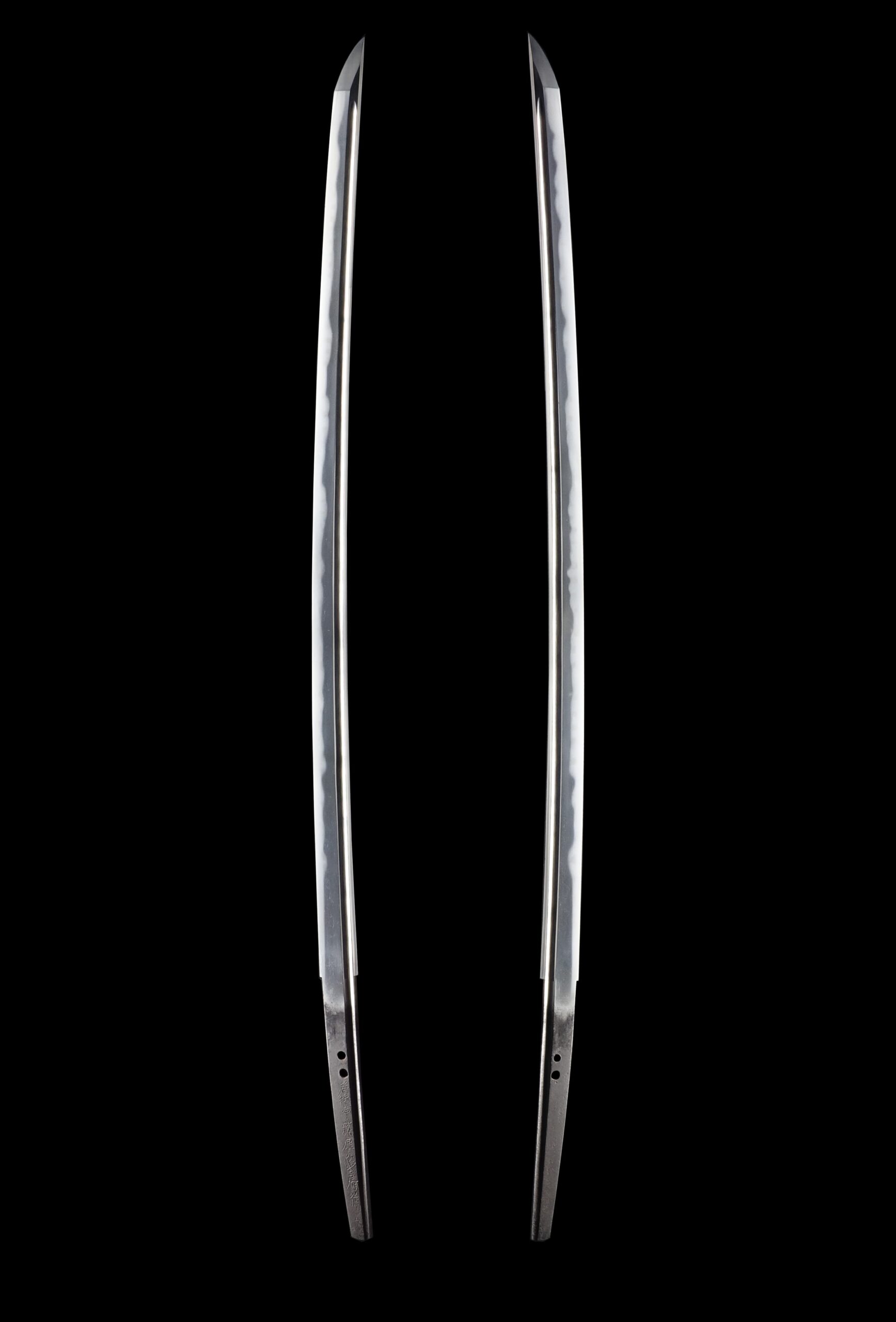
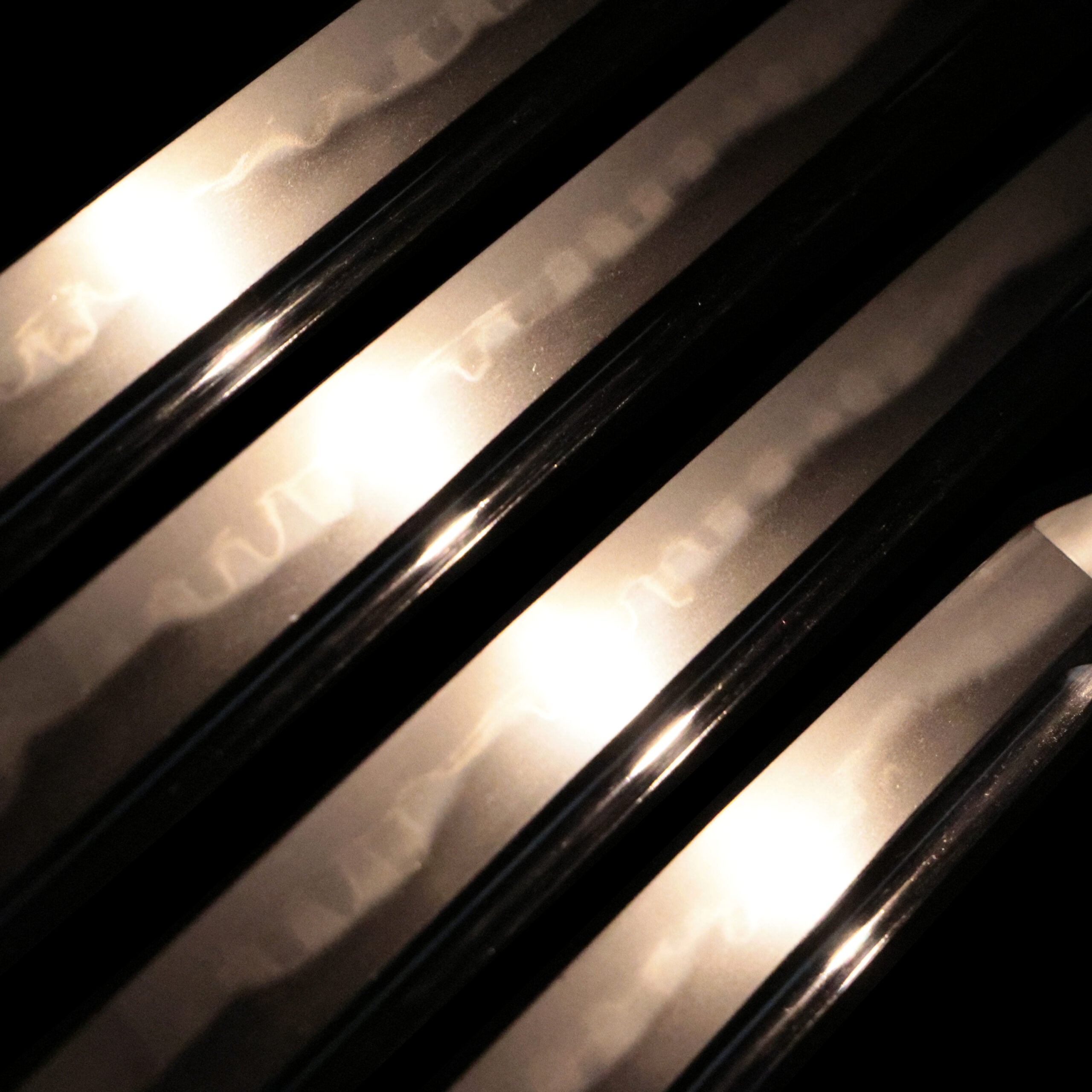
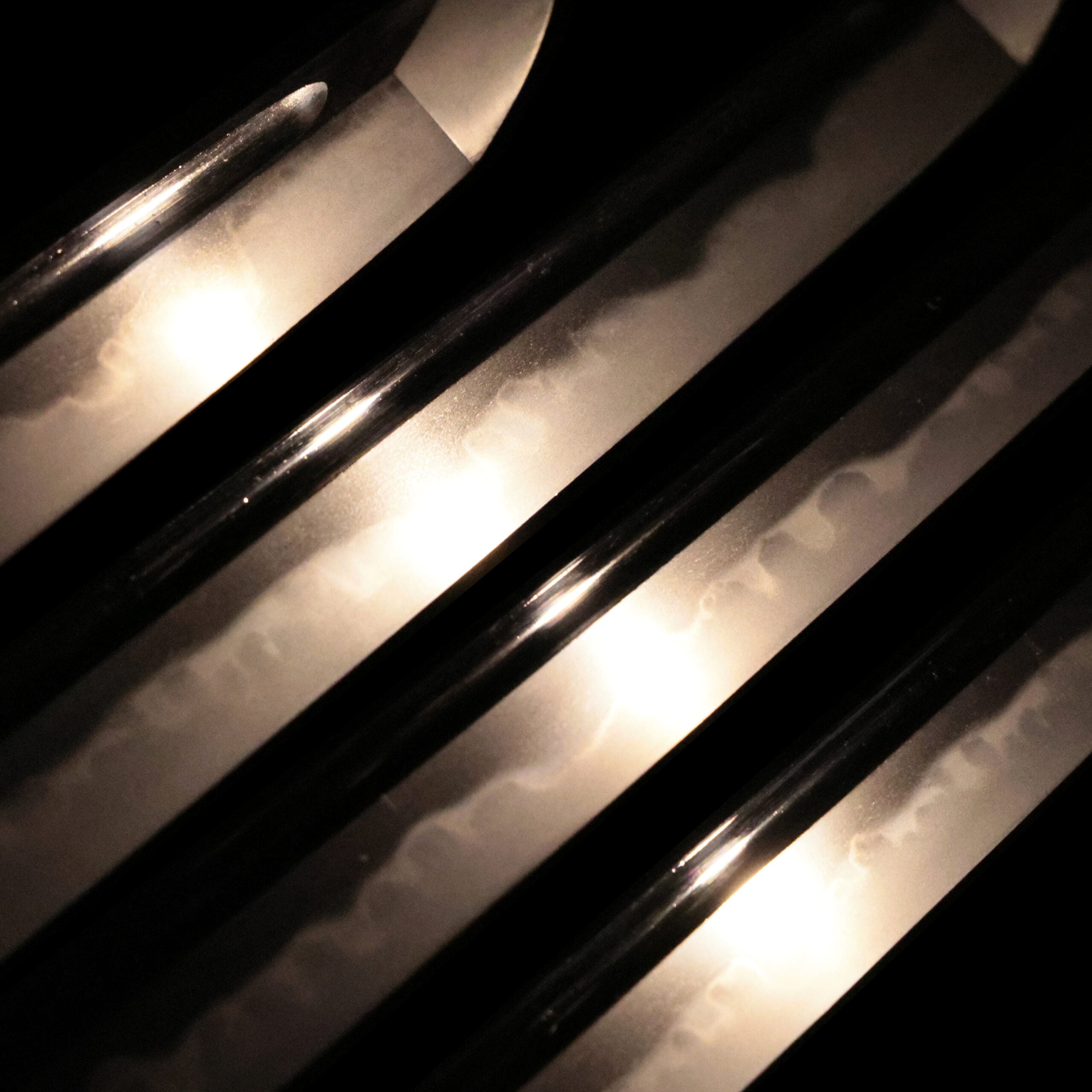
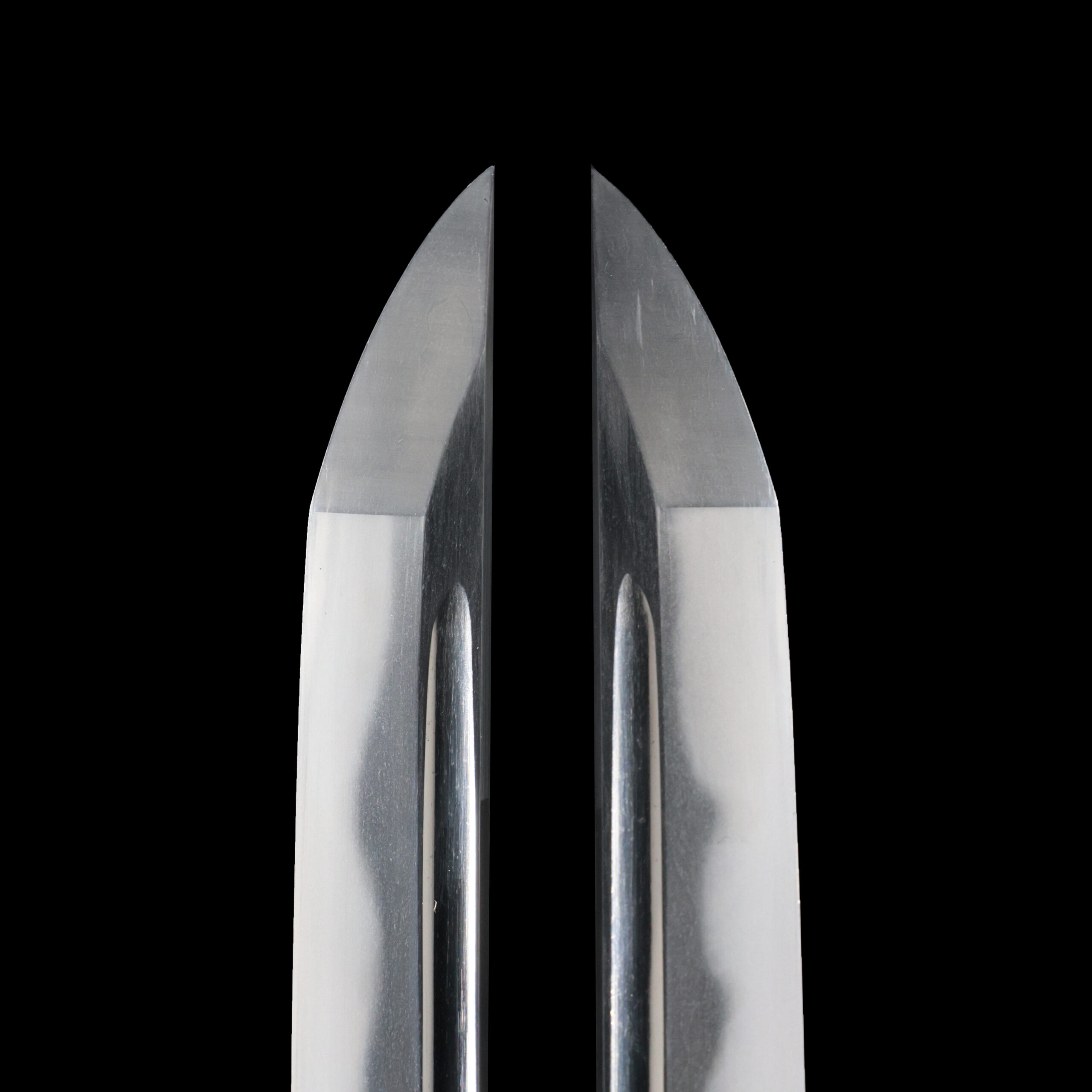
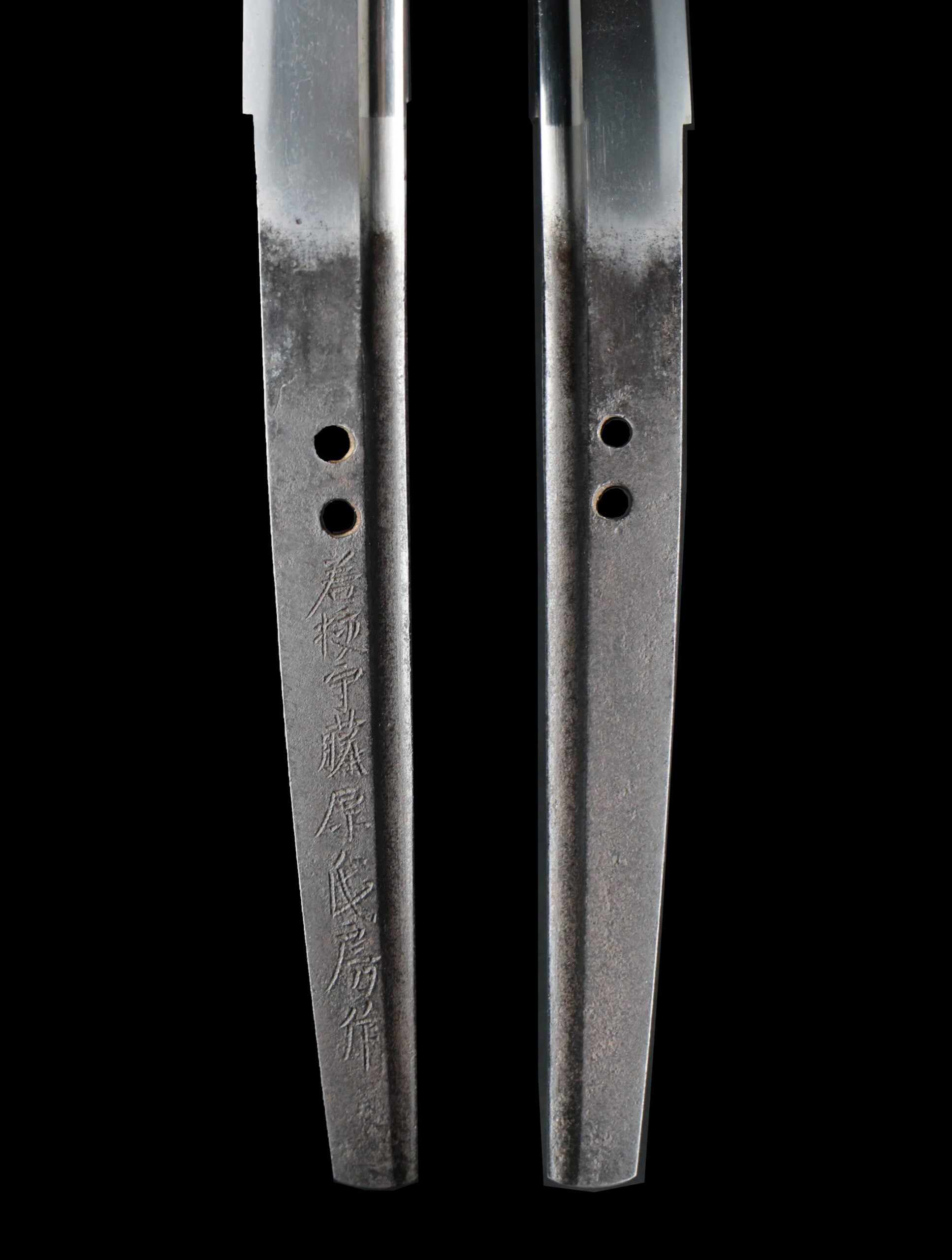
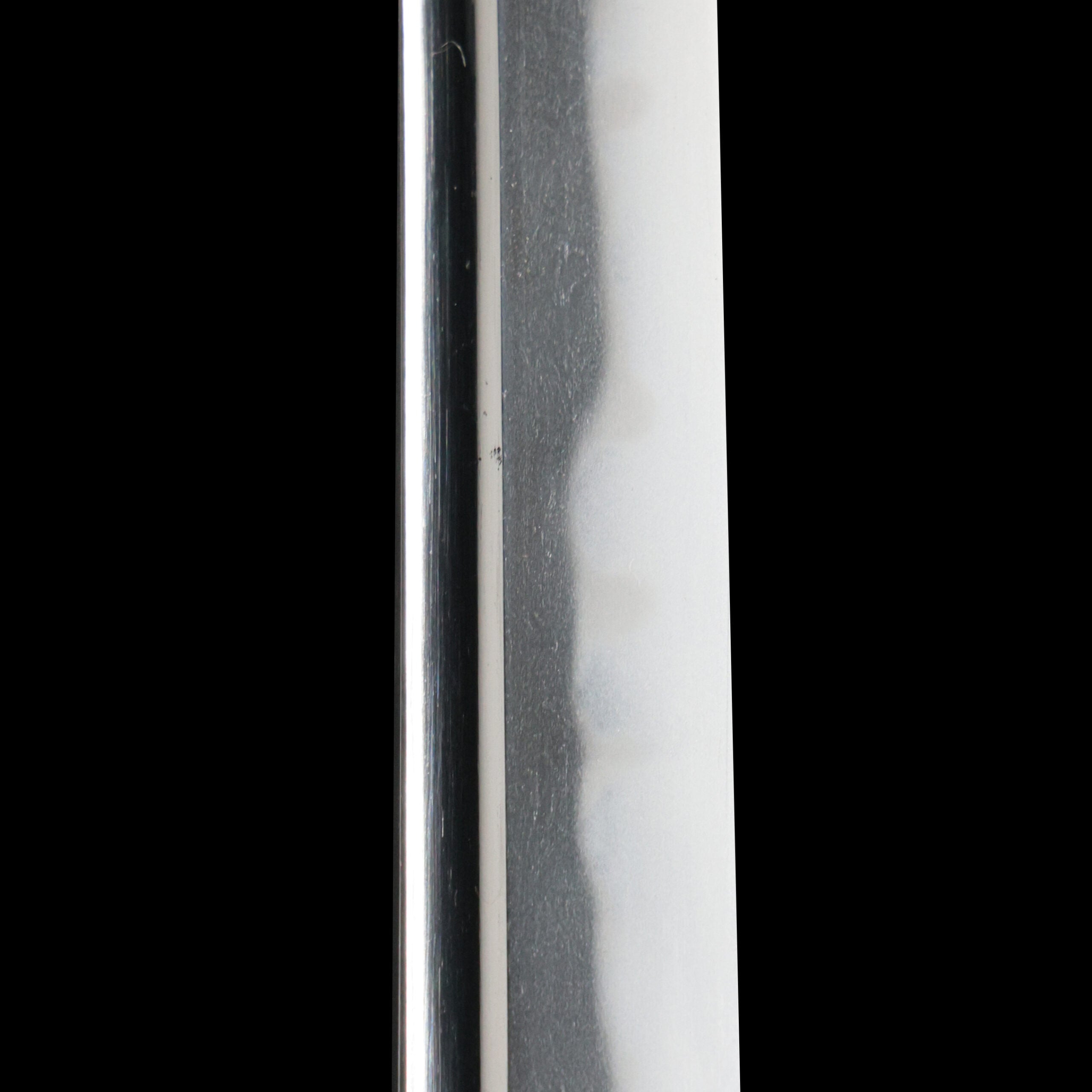
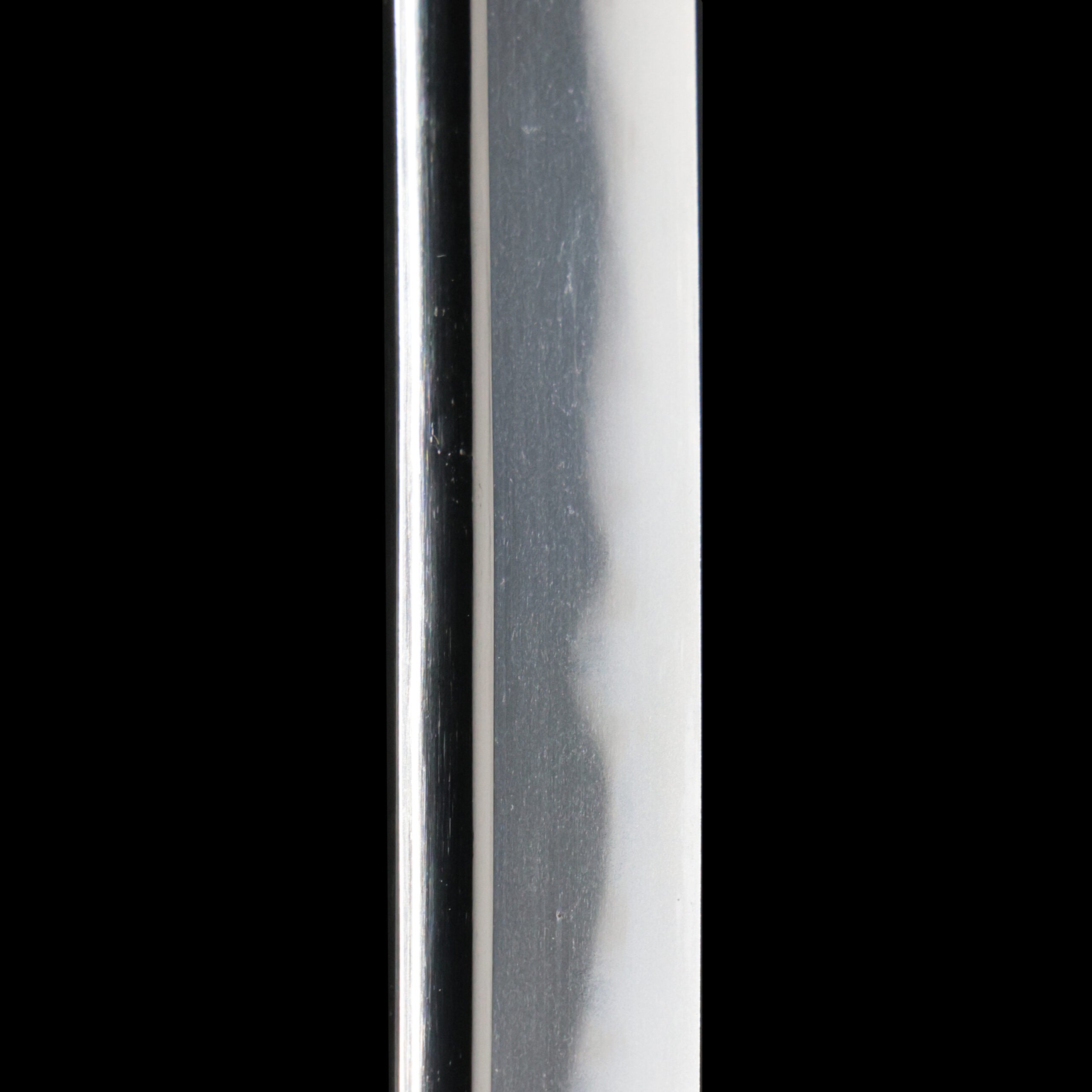
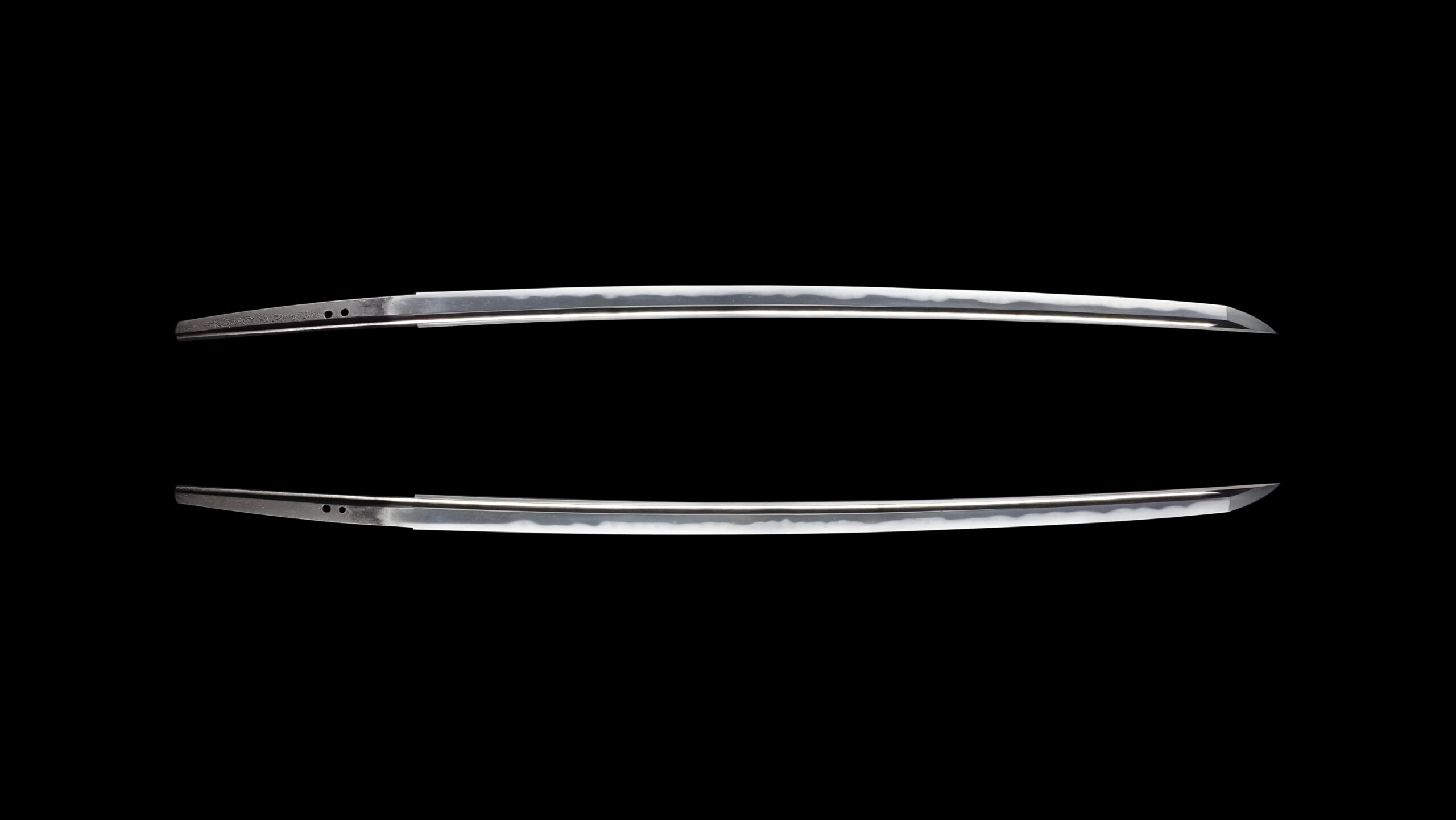
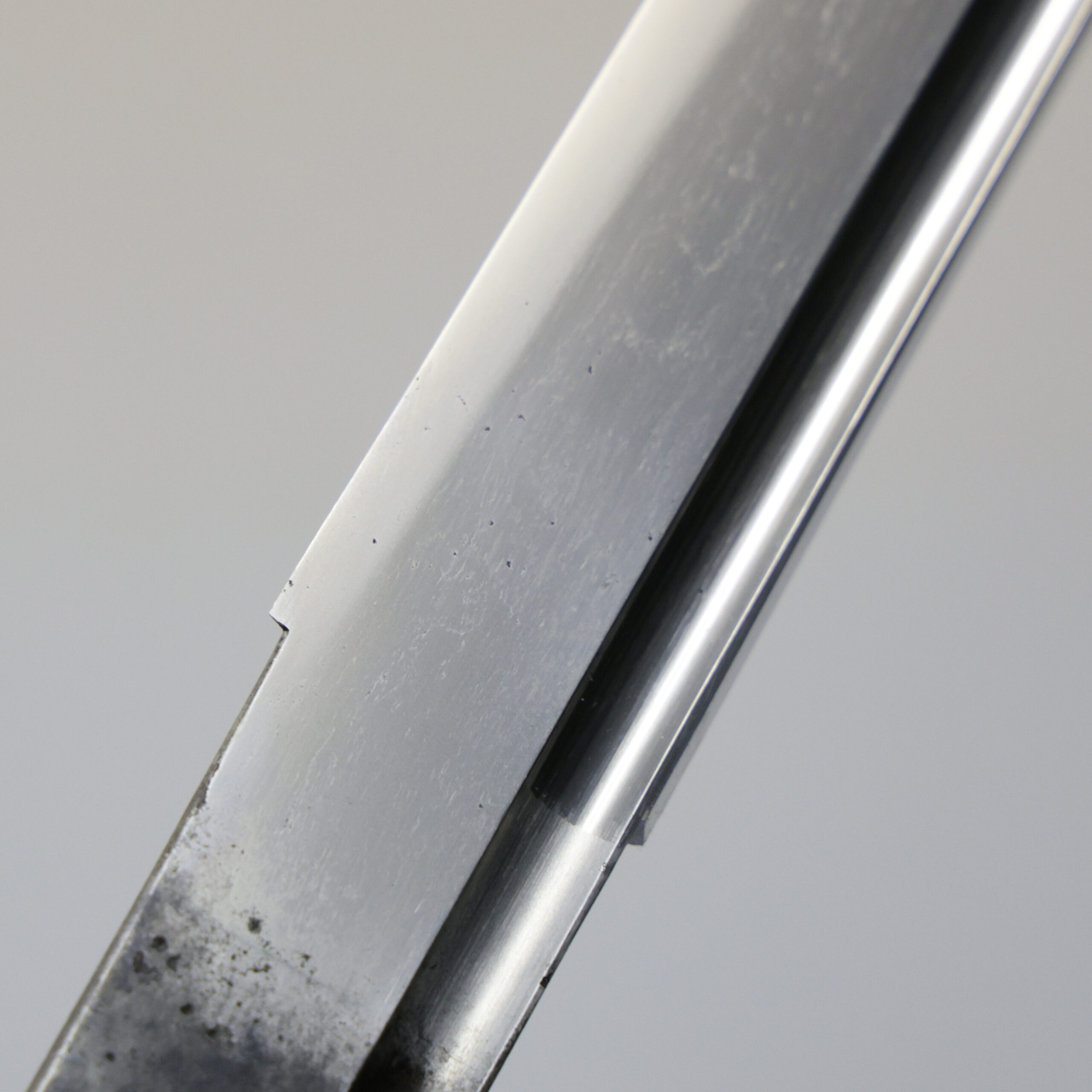
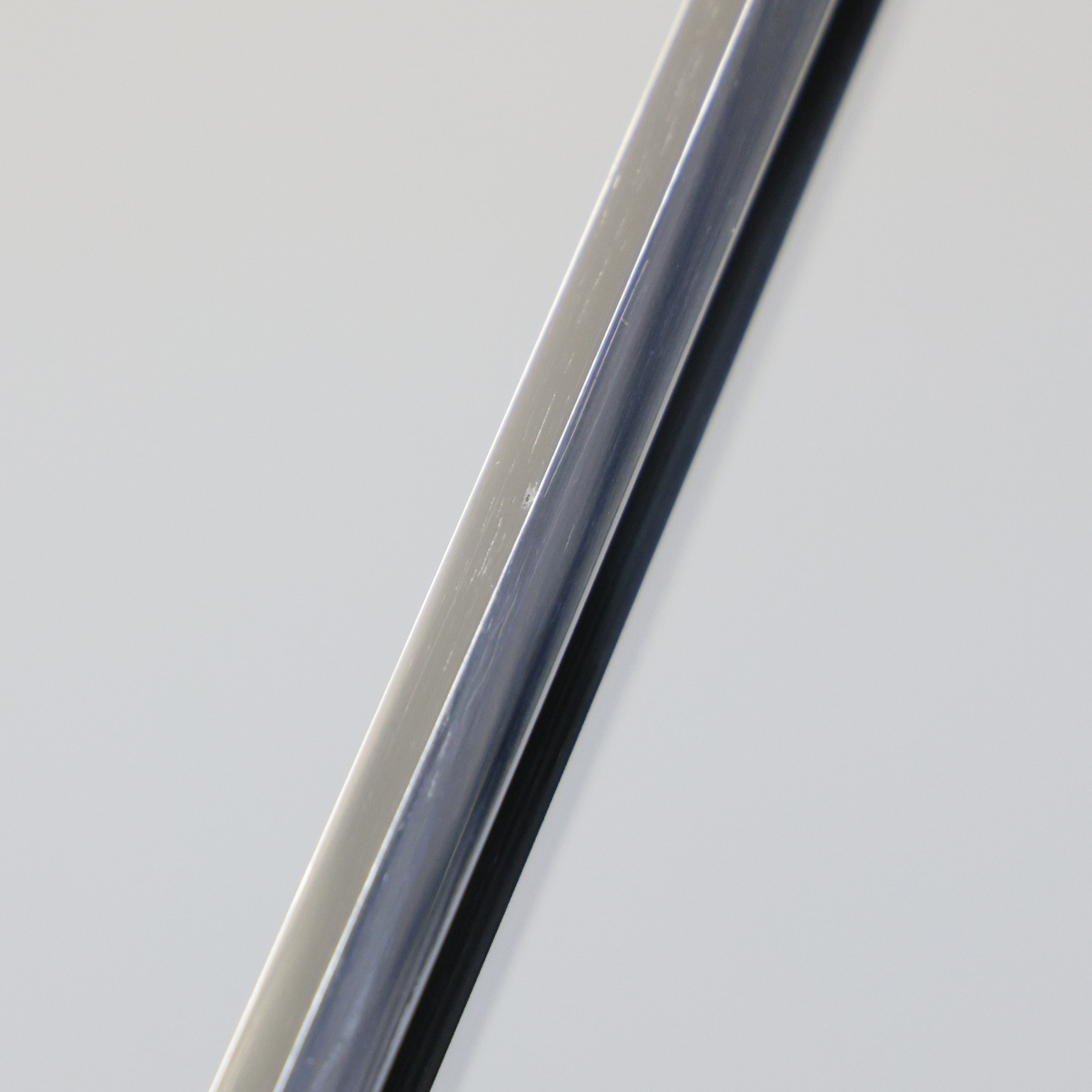
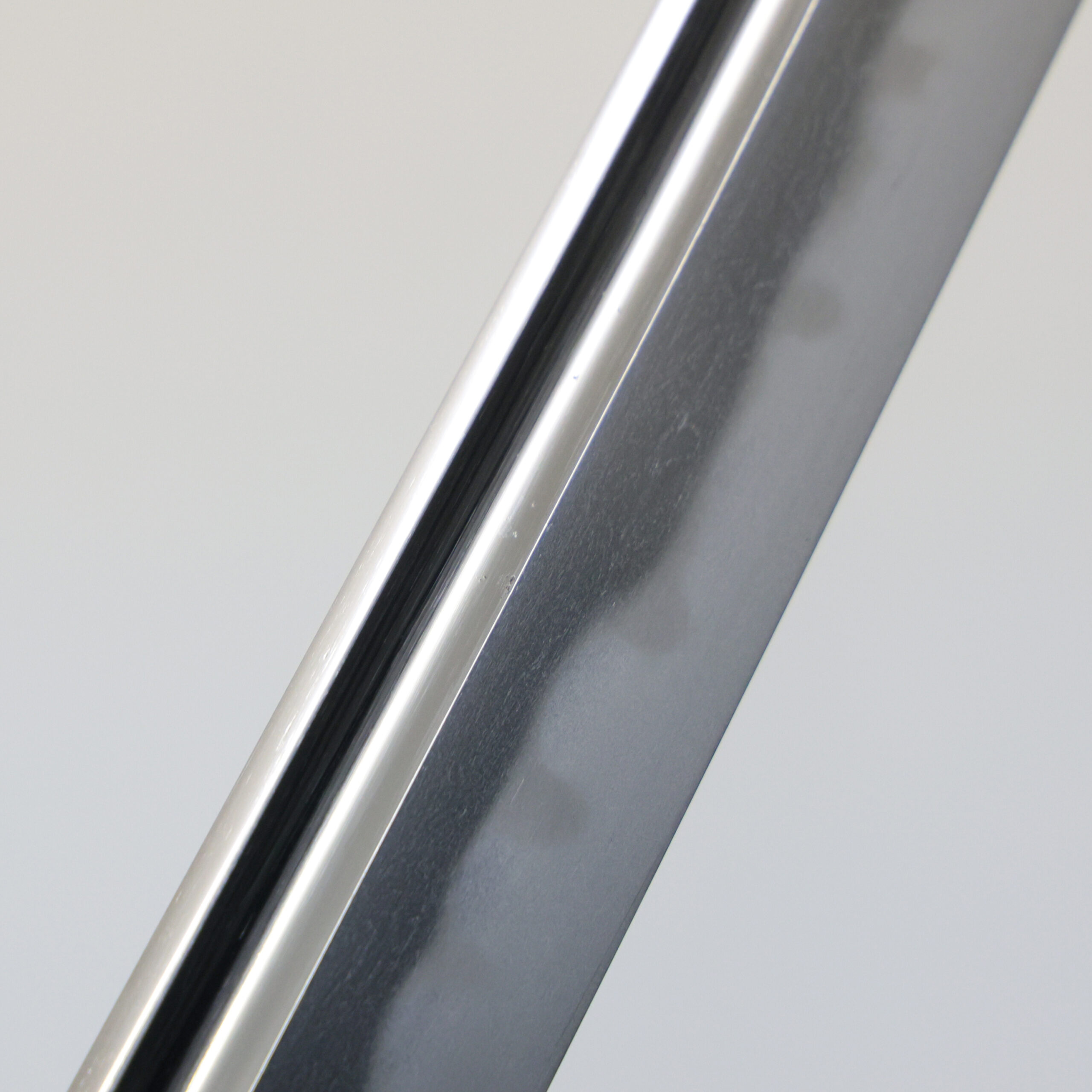
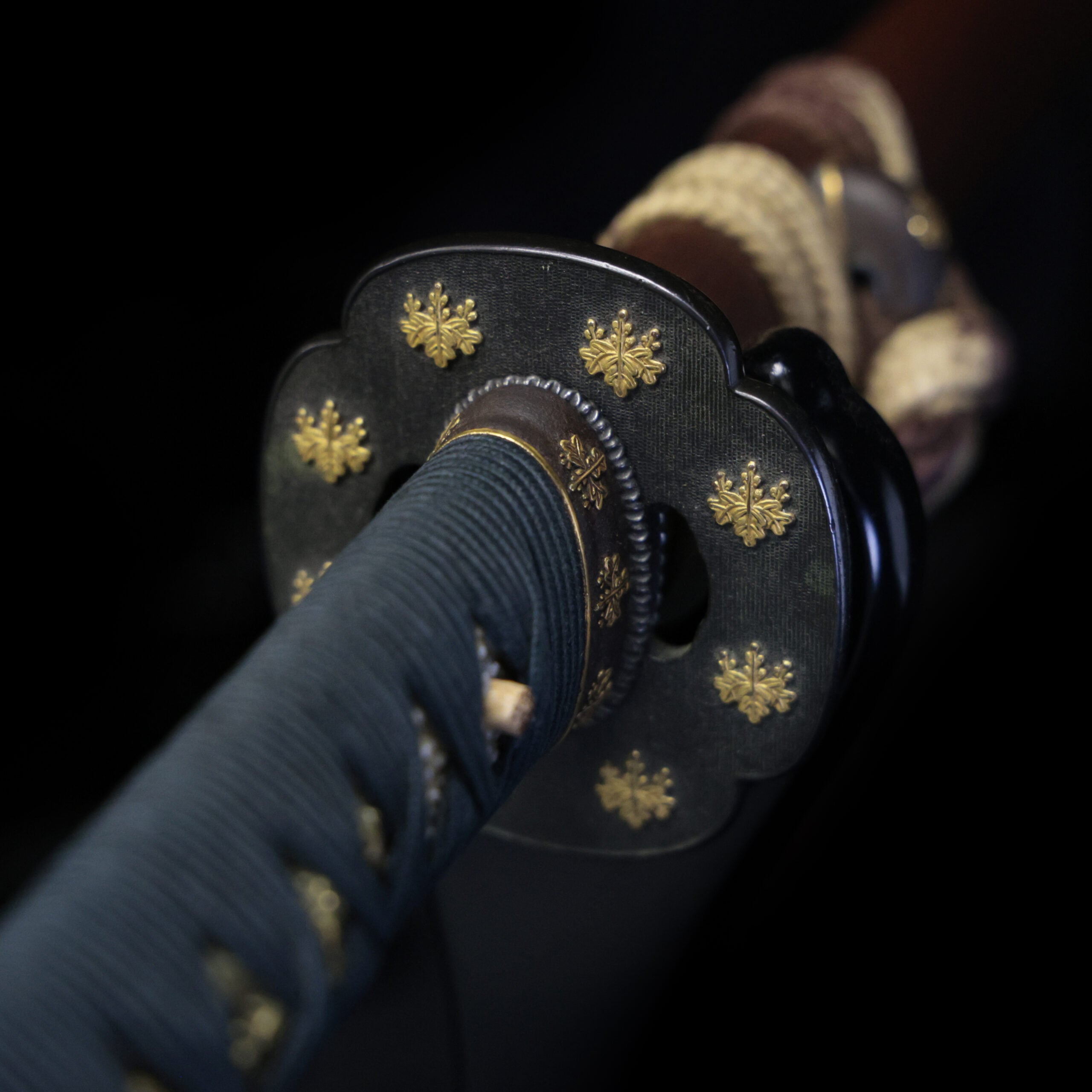
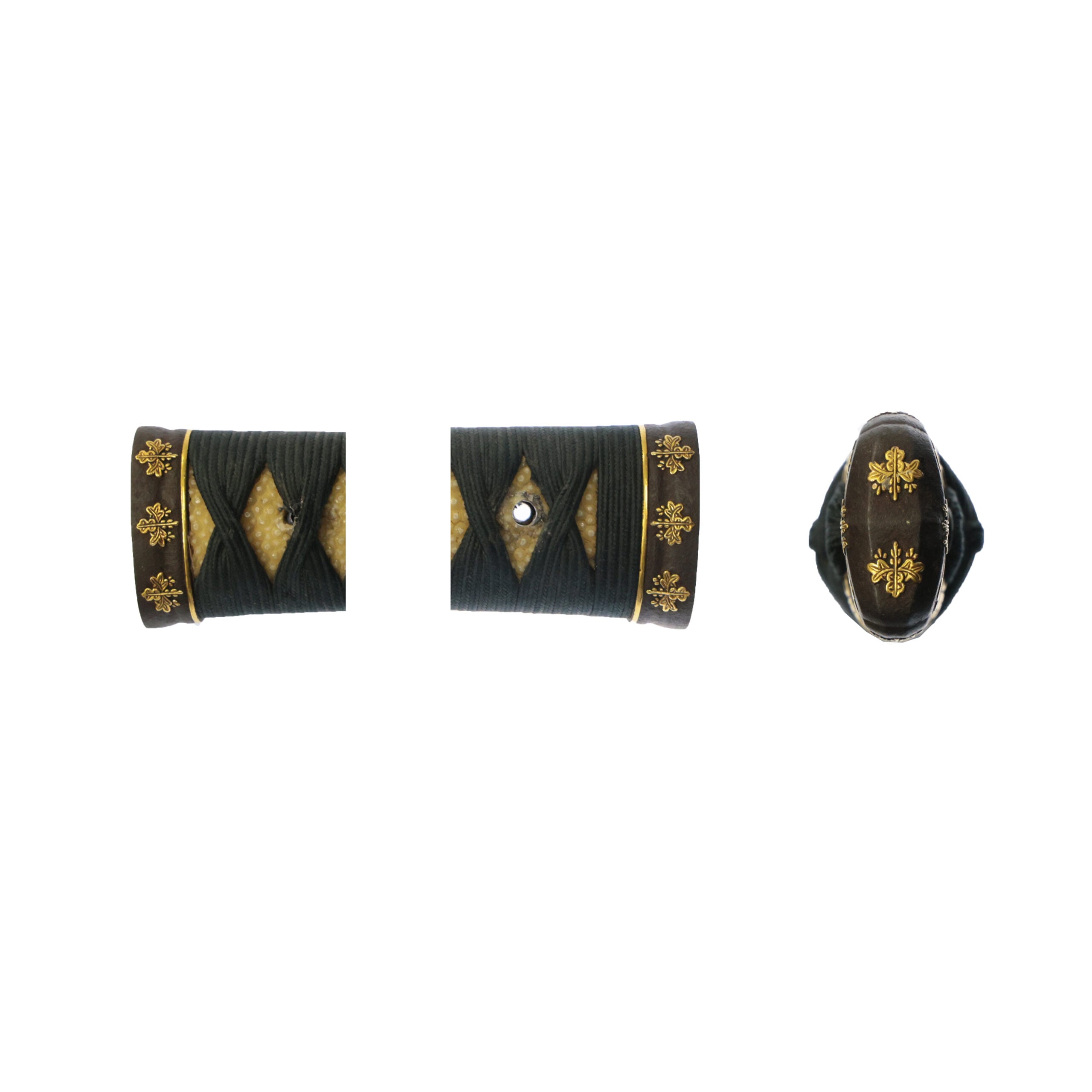
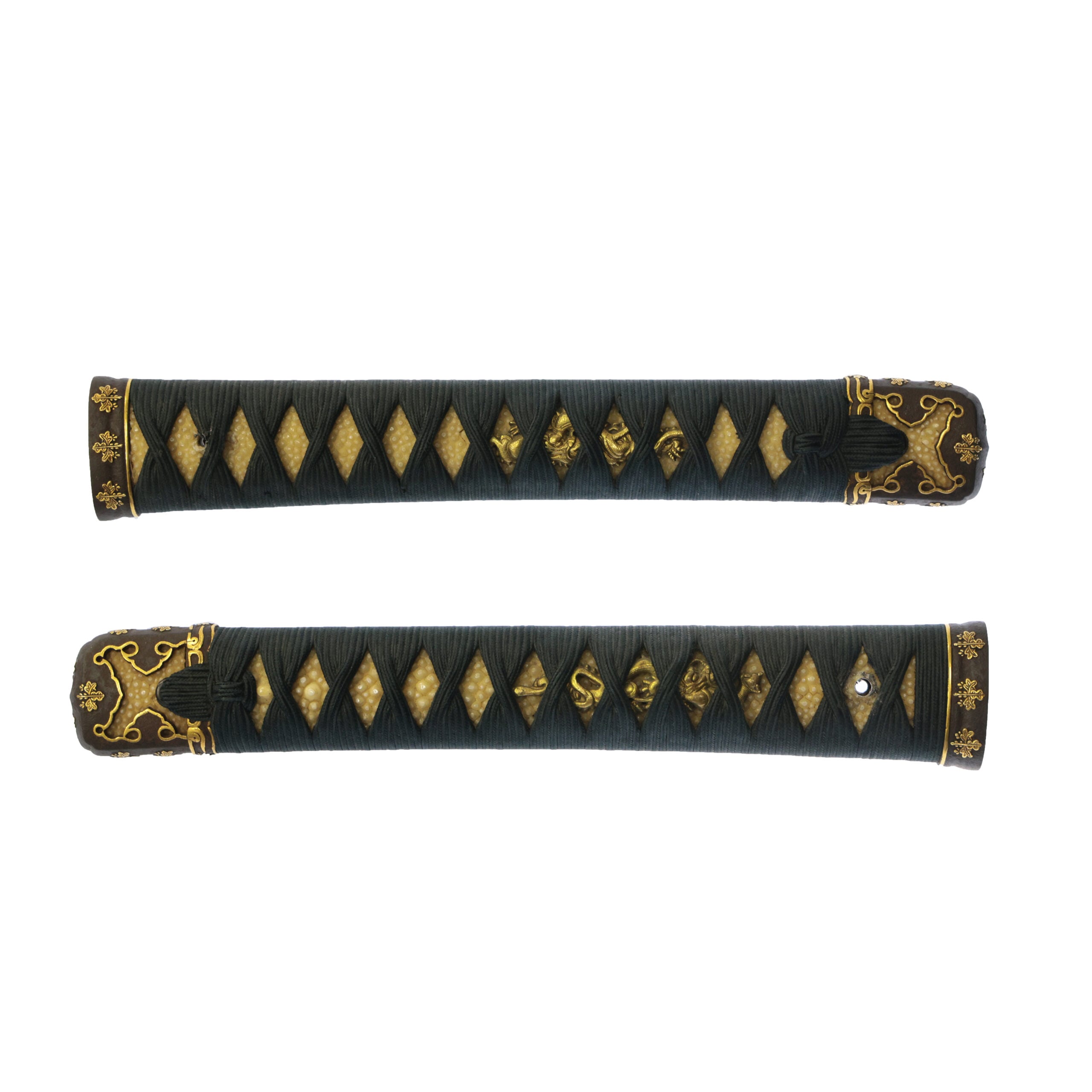
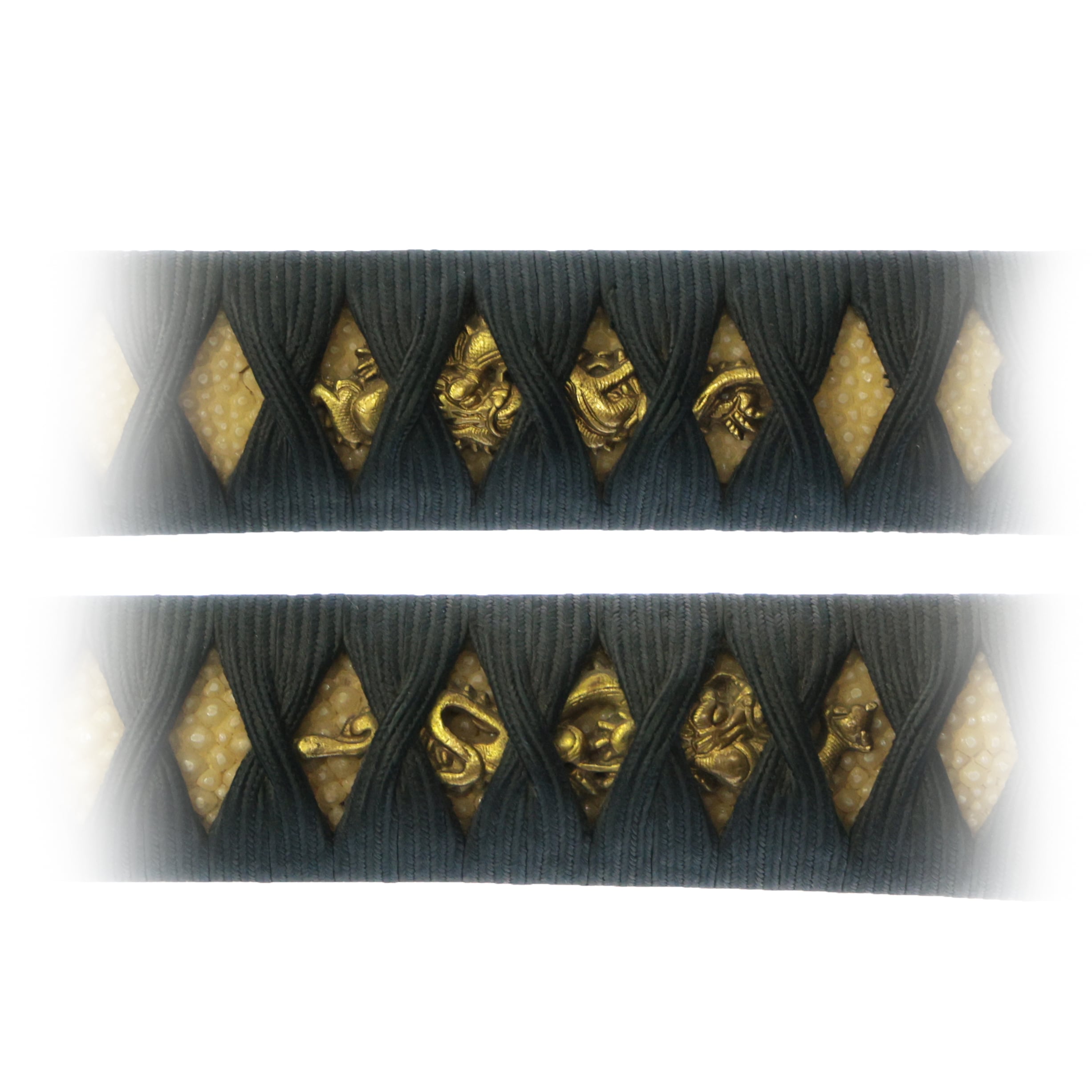
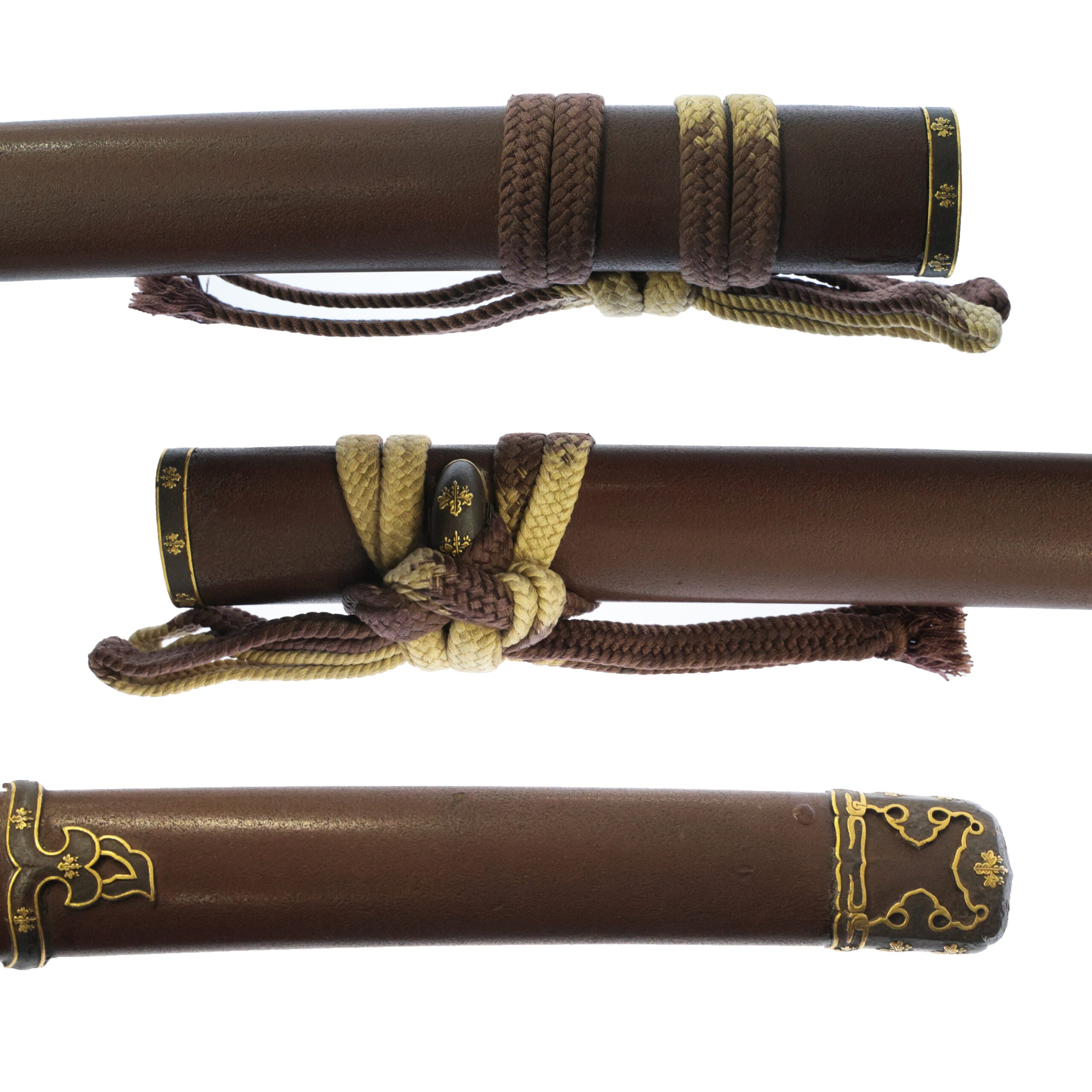
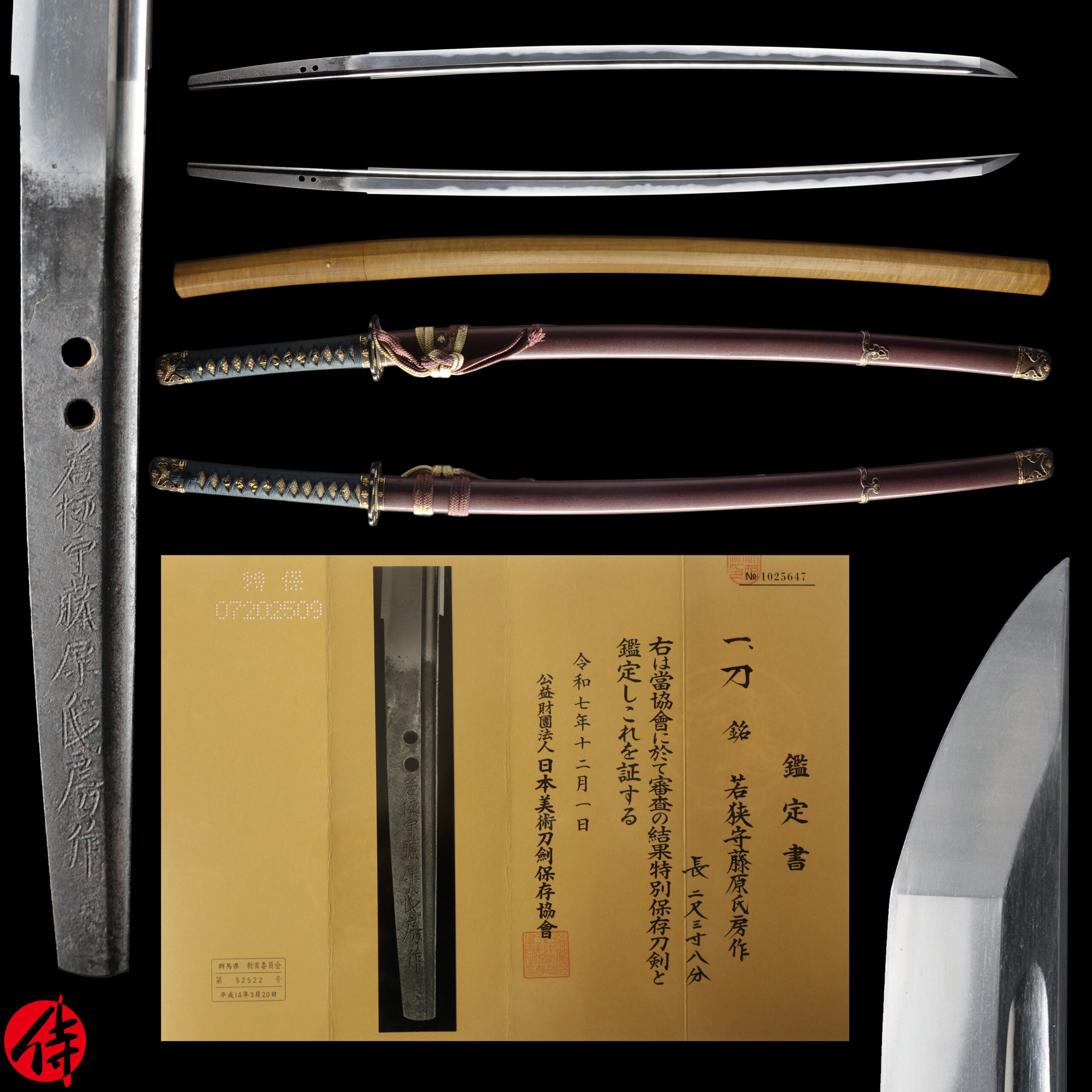
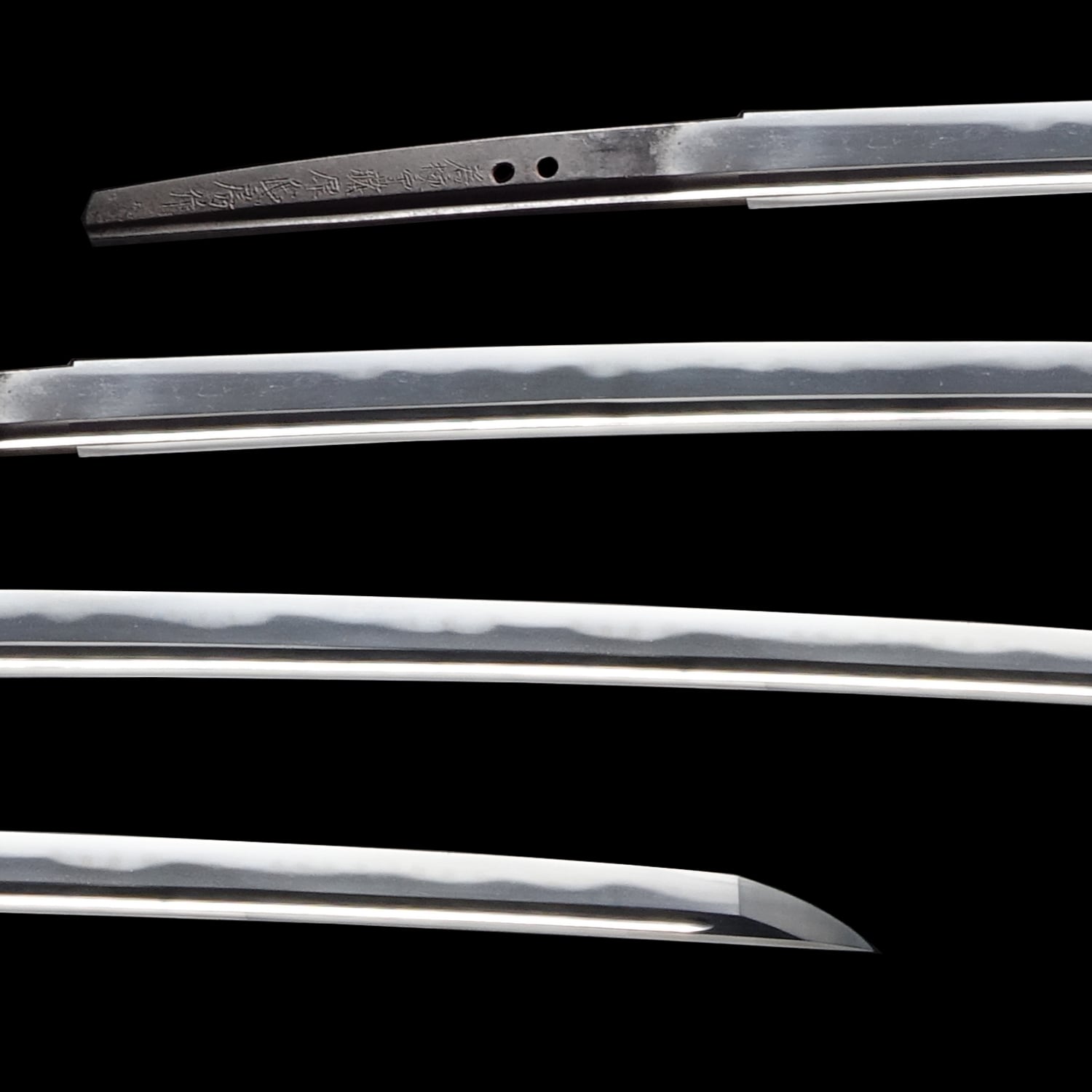
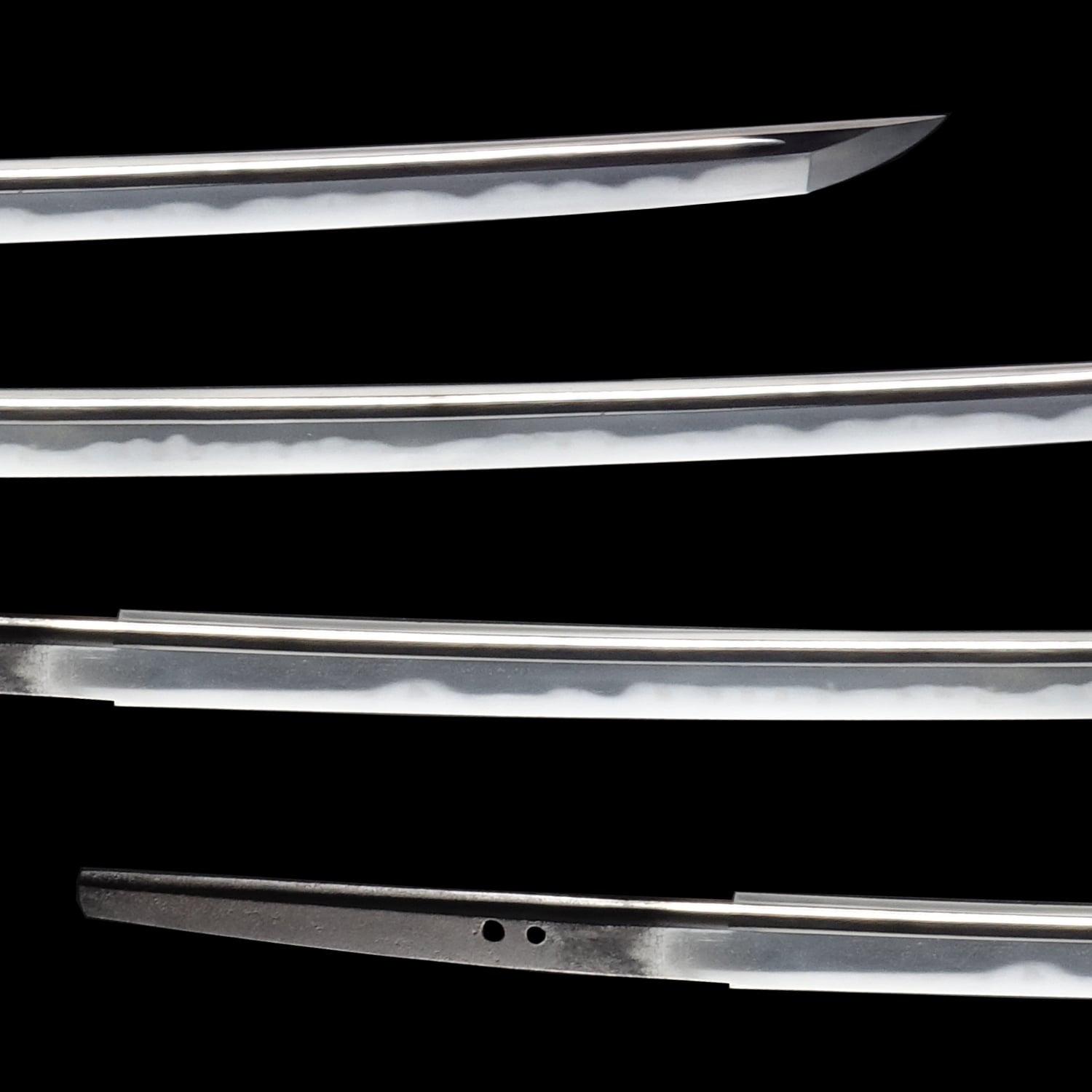
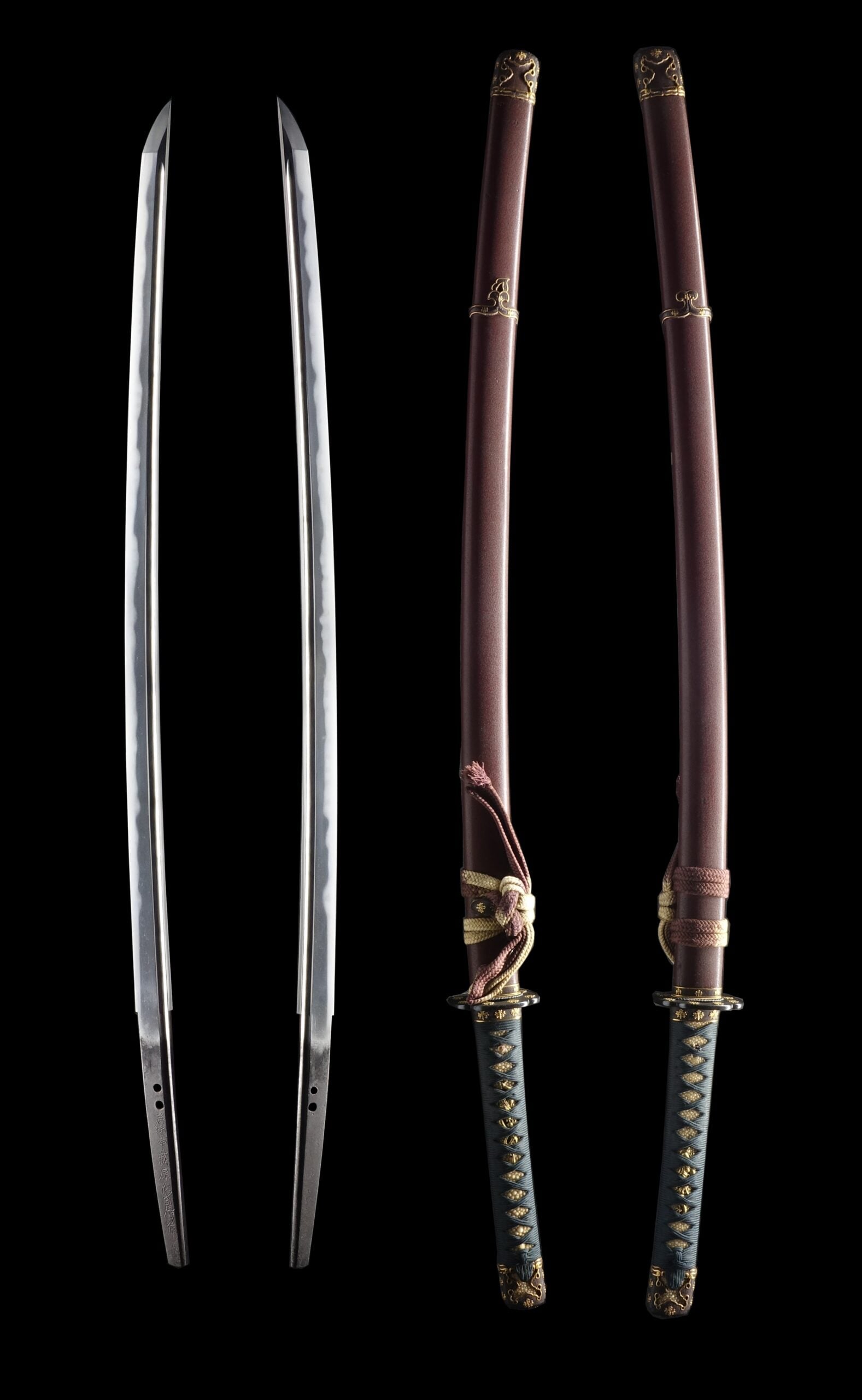
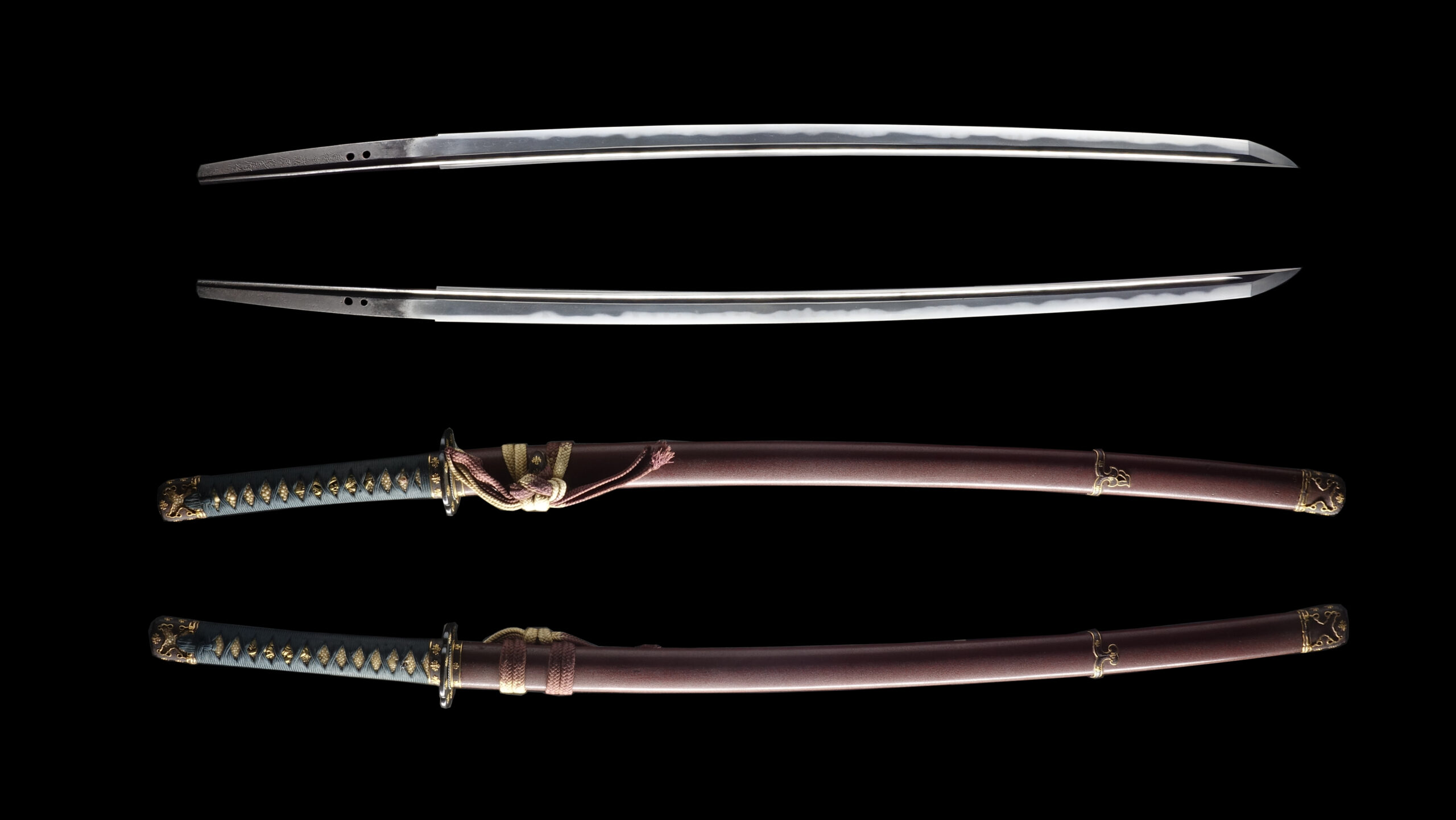
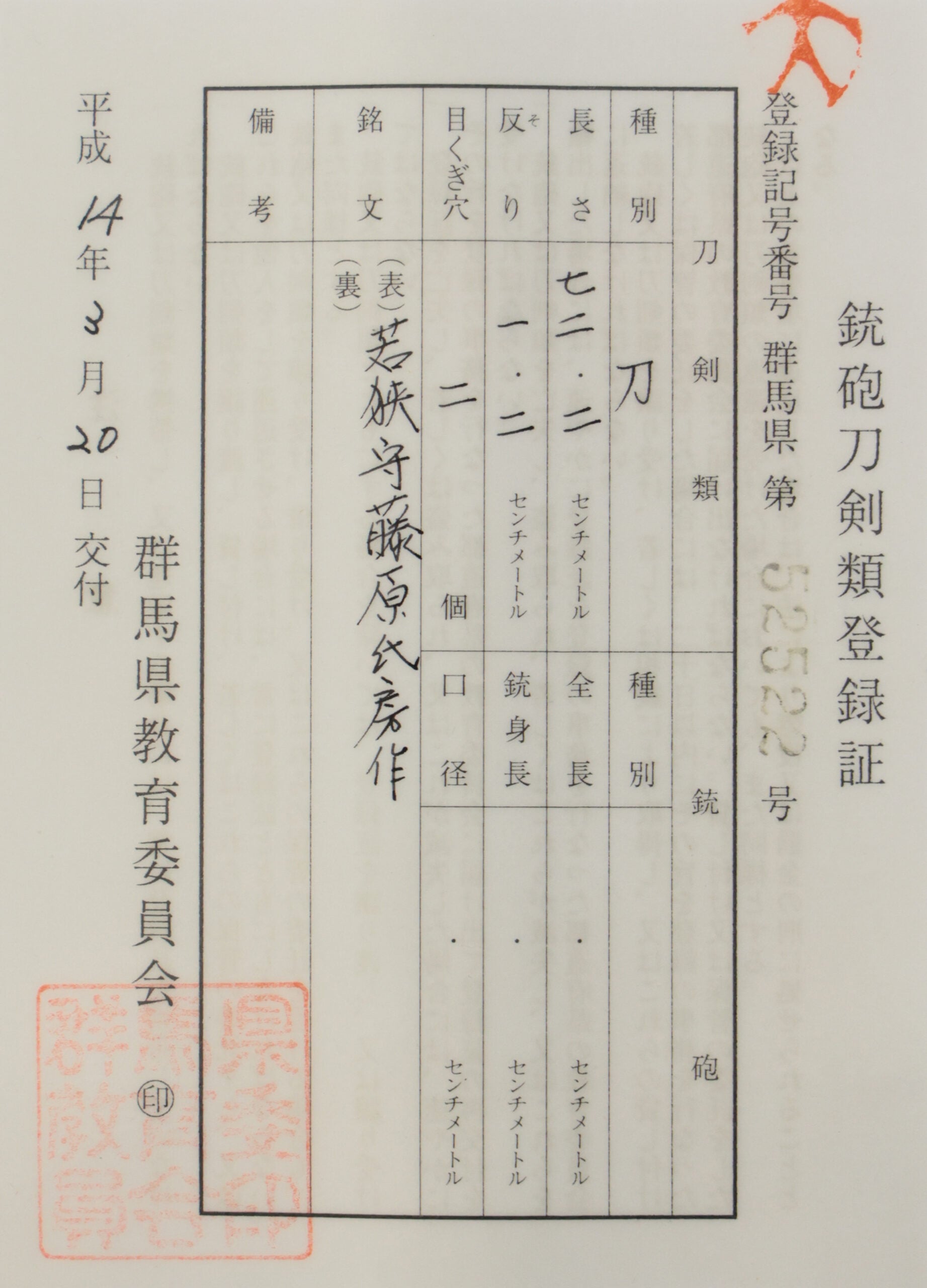
販売店の記載のまま
関(末関、若狭守の手、兼房の子) · 美濃 · 1571-1592頃
藤代 上作
現在4点販売中
若狭守氏房は十六世紀後半の元亀・天正年間に美濃の関で鍛刀した工で、説明書は彼を美濃の伝統の最後で最大の一群たる末関を代表する刀工の一人に数える。関兼房の子であり、説明書はその名にまつわる一事を伝える。始めは父の兼房を襲名し、後に氏房と改めたのは、今川氏真から「氏」の一字を賜ったものともいうのである。若狭守の受領は永禄十三年といい、令和に指定されたある刀には今なお「尾州清須住」の居住地銘があって、晩年に関から尾州清須へ移居した記録を留める。この移居は彼自身の作にとどまらぬ意味を持つ。その子が尾張氏房派の祖たる飛騨守氏房、尾張新刀の三祖の一人であり、父は古い美濃の伝統が新たな尾張の作へと移る蝶番に立つ。
その代表作は大らかな刀で、元亀年紀の一口がその典型である。鎬造・庵棟、身幅広く中鋒あるいは大鋒、延びるものや僅かに磨上げたものもあり、説明書はこの体配を、元亀の頃には打刀が太刀に替って長大となり両手で使用されたことの証と読む。この姿にのたれあるいは大互の目を焼き、美濃の尖り刃を交え、足・葉入り、匂口は締り沈みごころから明るきに至り、小沸ついて砂流し・処々飛焼を交える。大らかな乱れに交える尖り刃は平生の刀の美濃の見どころで、彼を関の本流に据える特徴である。説明書はかかる一口を「この刀は氏房の代表作で、豪壮な造込で大どかな刃文を焼き」[[c:1]]と評し、出来がよいとする、説明書が惜しんで用いる静かな賛である。
地鉄も同じ関の性を帯びる。板目は緊まらず肌立ちごころとなり、処々流れて流れ肌となり鎬地は柾に流れ、地沸つき、力強い作には地景も入る。この肌立って流れた地が末関の地であり、彼の沸や飛焼を載せる床である。近年の刀に説明書は元亀・天正の力強い体配に豪快な乱れ刃を読み、匂口明るく沸よくつき、地刃の保存も頗る良いとする。帽子は下の刃に応じて多く乱れ込んで小丸となり、尖りごころに掃きかけるものもあるが、焼が帽子全体へ及んで一枚となるものも少なからずあり、令和指定の一口を説明書は「帽子一枚となり返りを長く焼下げる」[[c:2]]とし、昭和指定の一口を「帽子殆んど一枚風に乱れ込み、先小丸」[[c:3]]と読む。彫物は棒樋を掻通す。これらは工房平均の冷たく整った関物ではなく、伝統のより豪快で奔放な端であり、ゆえに説明書はこの出来のものを稀れとする。
この大らかな刀の手に対し、第二の稀な面が短刀に見える。山城物写しである。天正年紀の平造の短刀がその遺例で、寸に比して身幅やや広く重ね厚く内反りとなり、総体に流れた小板目に指表は殊に柾気つよく、地沸細かにつき、地に白気を帯びたうつりが立つ。刃文は細直刃、匂勝ちに匂口締まりごころとなって小沸つき、帽子は直ぐに静かな小丸、彫物は表に護摩箸、裏に腰樋。この手について説明書は「この期の関物にはよく山城物写しがみられる」[[c:4]]とし、本作を「いかにも品よくまとまっており、氏房中の上々作」[[c:5]]と評する。彫物は造込みに連動し、刀が棒樋を掻通すのに対し、護摩箸や腰樋は平造の短刀に属する。
その一門の中の位置は、借りた比較よりも彼自身の地に即した特徴から取るのがよい。彼は末関の工で、その手は肌立った板目、大らかなのたれ・大互の目に折り込んだ尖り刃、時に錬れた山城物写しの直刃に認められる。明るい乱れと棒樋の刀がその背骨、静かな白け映りの短刀がその風情である。系譜は彼を通って清らかに流れる。父兼房より美濃の体を受け、清須への移居とともにそれを尾張の閾へと運び、子飛騨守氏房がその大らかなのたれを落ち着いた尾張新刀の手に錬り上げ、政常・信高と共に同派の三祖の一人に数えられる。説明書は同名数代続いたことを記し、父はその出自の根である。
氏房はすべて重要刀剣の格に残り、国宝も重要文化財も記録されず、その作は美術館の群よりは数寄者の手の届く側にある。指定の記録は在銘の刀八口と在銘の短刀一口をその指定作に擁し、いずれも極めではなく在銘の作で、元亀・天正の年紀を有するものが幾口かあり、一口は説明書が晩年の尾張期研究の好資料として貴ぶ「尾州清須住」の居住地銘を帯びる。これらの刀に大名の伝来も所蔵機関も記録されず、説明書はその現存作、就中打刀が比較的に少く、これ程までに出来の優れたものは稀れと率直に記す。在銘年紀の大らかな元亀・天正型の若狭守氏房の刀に出会うのは稀なことで、数寄者はこれを折にふれ、忍耐をもって、その最も優れたものを末関の領分の頂で見るに過ぎない。説明書はその佳品を平らかに評し、ある一口を豪壮な造込の代表作とし、ある一口を「室町末期の関物の典型的且つ代表作の一口」[[c:6]]とし、品よき直刃の短刀を上々作とする。
氏房の位置づけを、日本刀全体および伝法・時代・時期ごとに示します。各区分(随一・屈指・有数・著名)は、日刀保および文化庁による指定に加え、三作や名物帳などの歴史的栄誉を加味したものです。
各項目を選ぶと評価方法が表示されます。
在銘年紀作が示す、確実に活動していた年代
美濃伝 · 尾張
現在17点販売中
氏房は尾張国に興った一門で、その作は桃山末から江戸初期、いわゆる新古境いの時代に位置づけられる。説示は若狭守氏房・飛騨守氏房を本流の手本として繰り返し挙げ、これに連なる工として、若狭守氏房の次男と伝える越後守氏恒、初代氏房の子と伝える出雲守氏貞らを記す。氏恒は河村平十郎、初銘を氏重とし、元和六年に越後守を受領、明暦二年に尾州名古屋にて歿したと美濃刀大鑑が伝える。氏貞は出雲守を受領し、左近少将あるいは権少将と銘した。一門は美濃を根として尾張に移り、徳川・尾張の地で代々その作風を継いだ。 作風は美濃伝を基調とする。鍛えは板目がつみ、杢や流れ肌を交え、地沸が微塵に厚くつき、地景が細かに入る。刃文は直ぐの焼出しごころを見せたうえ、下半は浅いのたれを基調に小互の目を連れて交え、上半は小のたれに大互の目や尖りごころの互の目を交える。のたれが角がかり、小足・葉が入り、沸がつき、処々荒めの沸を交えてむらづき、金筋・砂流しがかかり、随処に飛焼・棟焼を交えて匂口が幾分沈みごころとなる。帽子は焼深く、三品風に先が尖り、あるいは一枚風となって長く焼き下げ、掃きかける。短刀には平造に草の倶利迦羅や護摩箸に蓮台の彫物を加えるものがあり、師伝をよく踏襲する。大きくのたれた刃に大乱れを焼き、飛焼を交えて皆焼風となる一類もある。見分けは、のたれの角がかりと沸のむらづき、匂口の沈みごころ、そして三品風に先の尖る帽子に求められる。 伝来し指定された作には、越後守氏恒の幅広・大鋒で重ね厚く長寸の豪壮な刀、左近権少将氏貞の天正五年紀を切る彫物入りの短刀、氏貞の皆焼風を示す刀などがある。鑑定の要点は、若狭守及び飛騨守氏房の作柄を髣髴とさせる地刃の総体にあり、肉置き豊かな体配と大模様の刃文が相俟って迫力ある一作風を成す。寡作の工にあっても抜群の出来を示し、長大な姿にして破綻のないところに、この一門の力量がうかがわれる。 詳しく見る →
桃山時代の美濃
天下統一は大量の市場を閉じ、関の鍛冶は新しい富の在り処へ移った。三品の一門は受領名を得て京に、大道系は諸国の城下町に。美濃は新刀時代の最大の祖先となった。
保存刀剣のうち、出来が一層優れ、保存状態も良好と認められたものです。再刃や、室町・江戸期の多くの無銘作は対象外となり、保存刀剣より高い基準が課されます。
日本美術刀剣保存協会(日刀保)は、1948年に設立され、文化庁の監督を受ける公益財団法人で、東京・刀剣博物館に本部を置きます。専門の審査員が出品作を直接審査し、美術的・歴史的価値に応じた鑑定書を発行します。日刀保の鑑定書は、日本刀および刀装具の真正性を示す最も広く認知された基準です。
日刀保公式サイトReturns/exchanges limited to defects caused by shipping (except willful misconduct or gross negligence by the company); customers must contact within 72 hours of receiving the product.