相州伝は新興の都市に生まれた。武家政権の都、身分高い注文主のひしめく鎌倉である。伝えでは名工が東に召され、その門流から新藤五国光が、次いで正宗が出た。
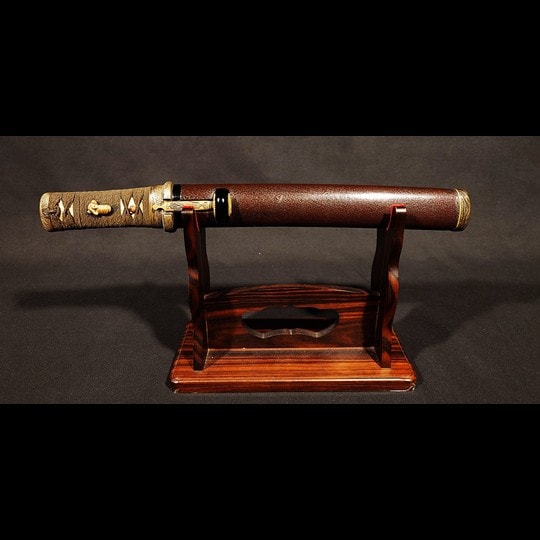
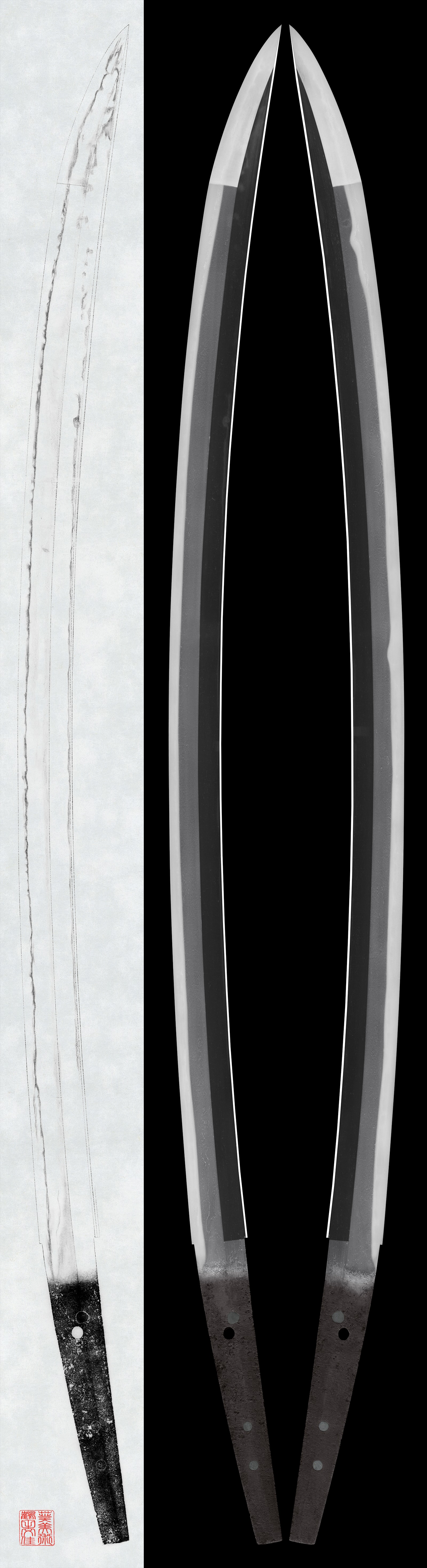
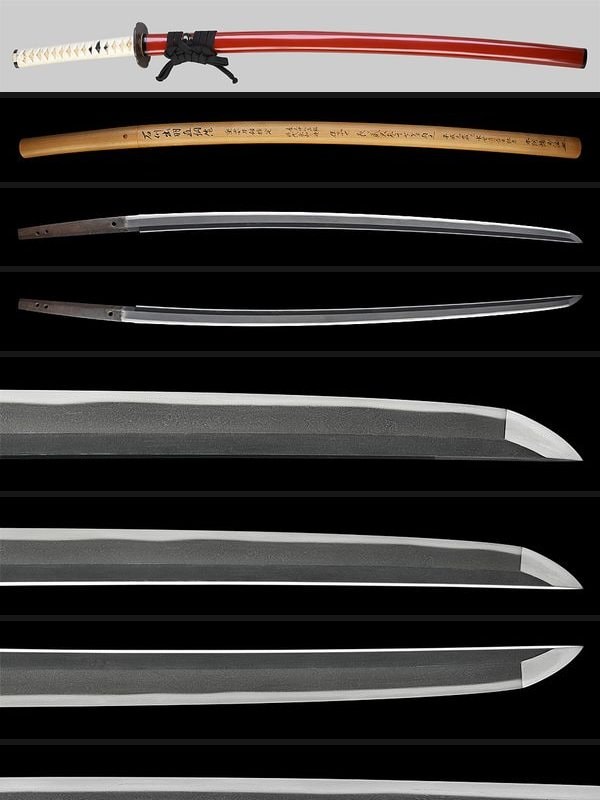
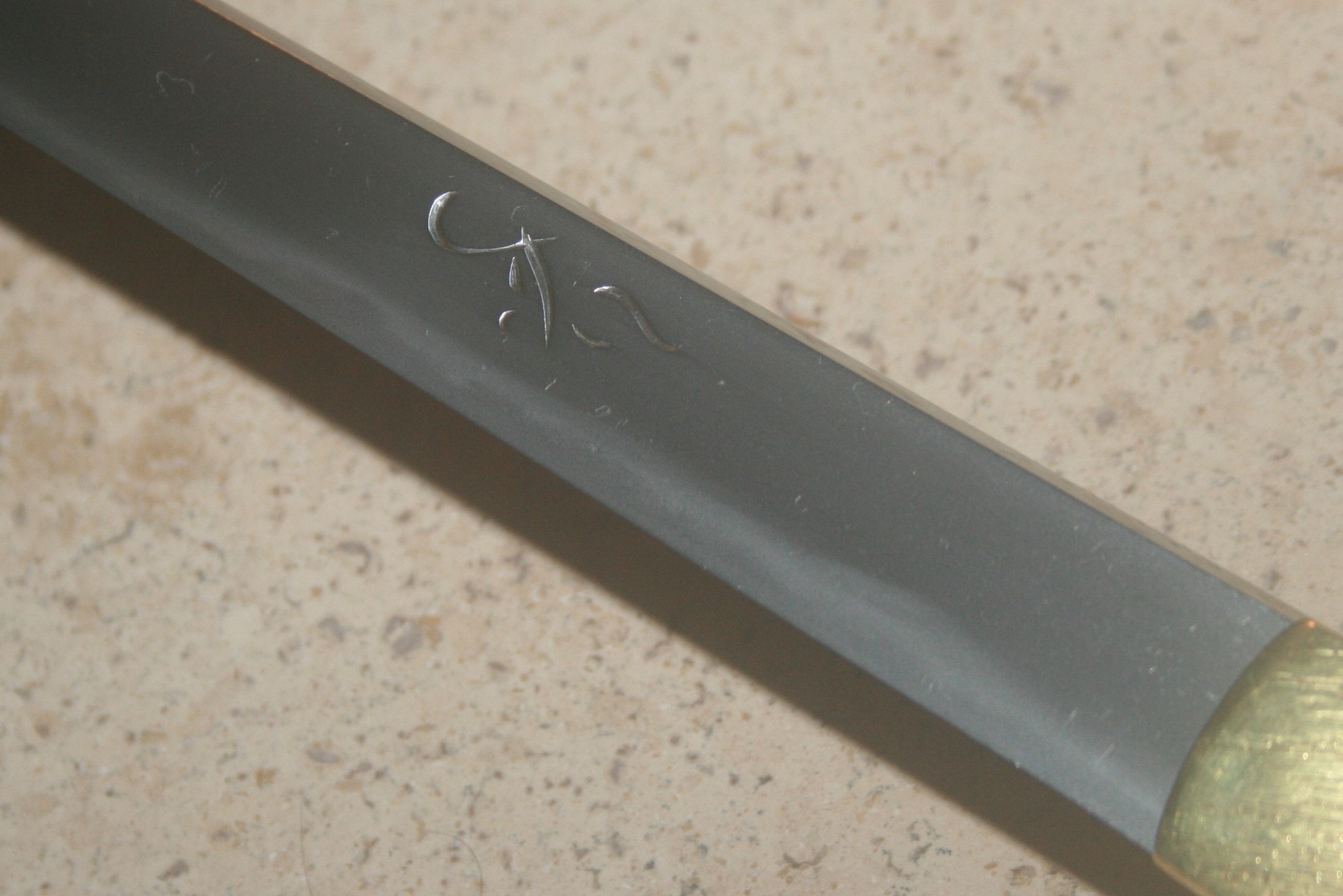
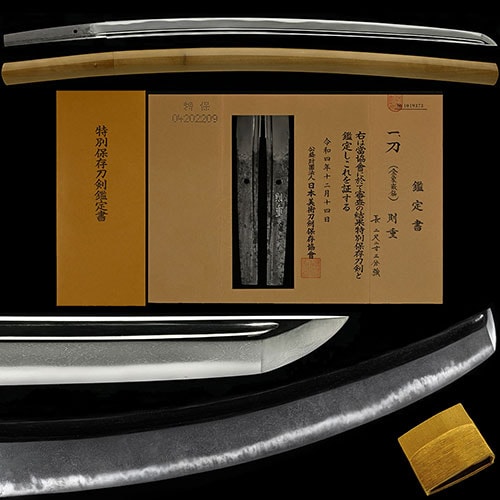
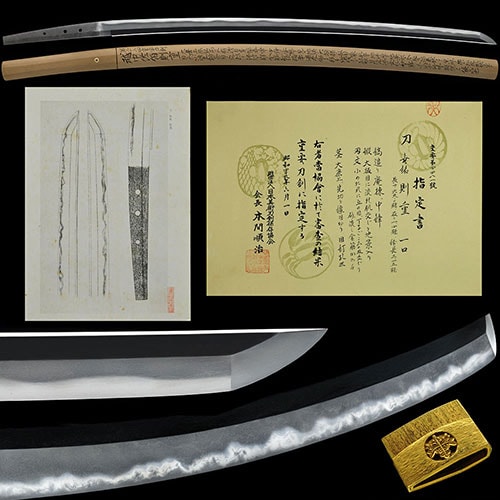
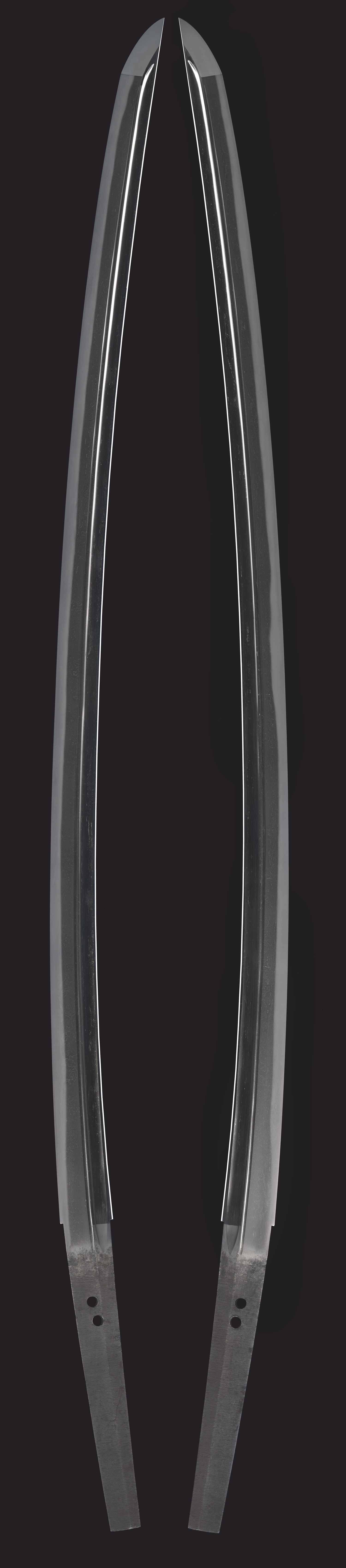
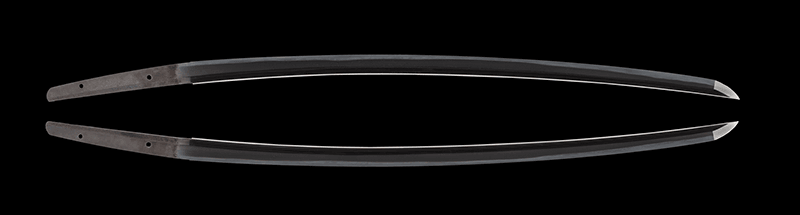
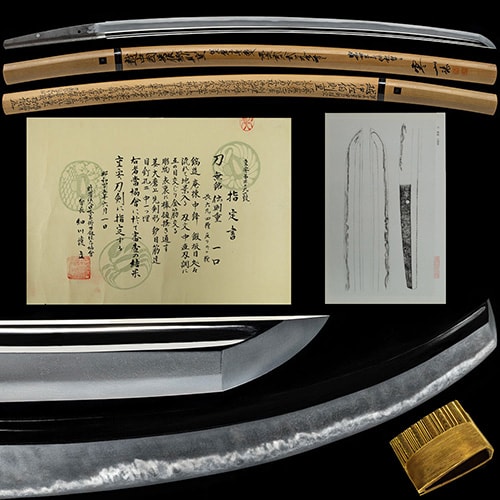
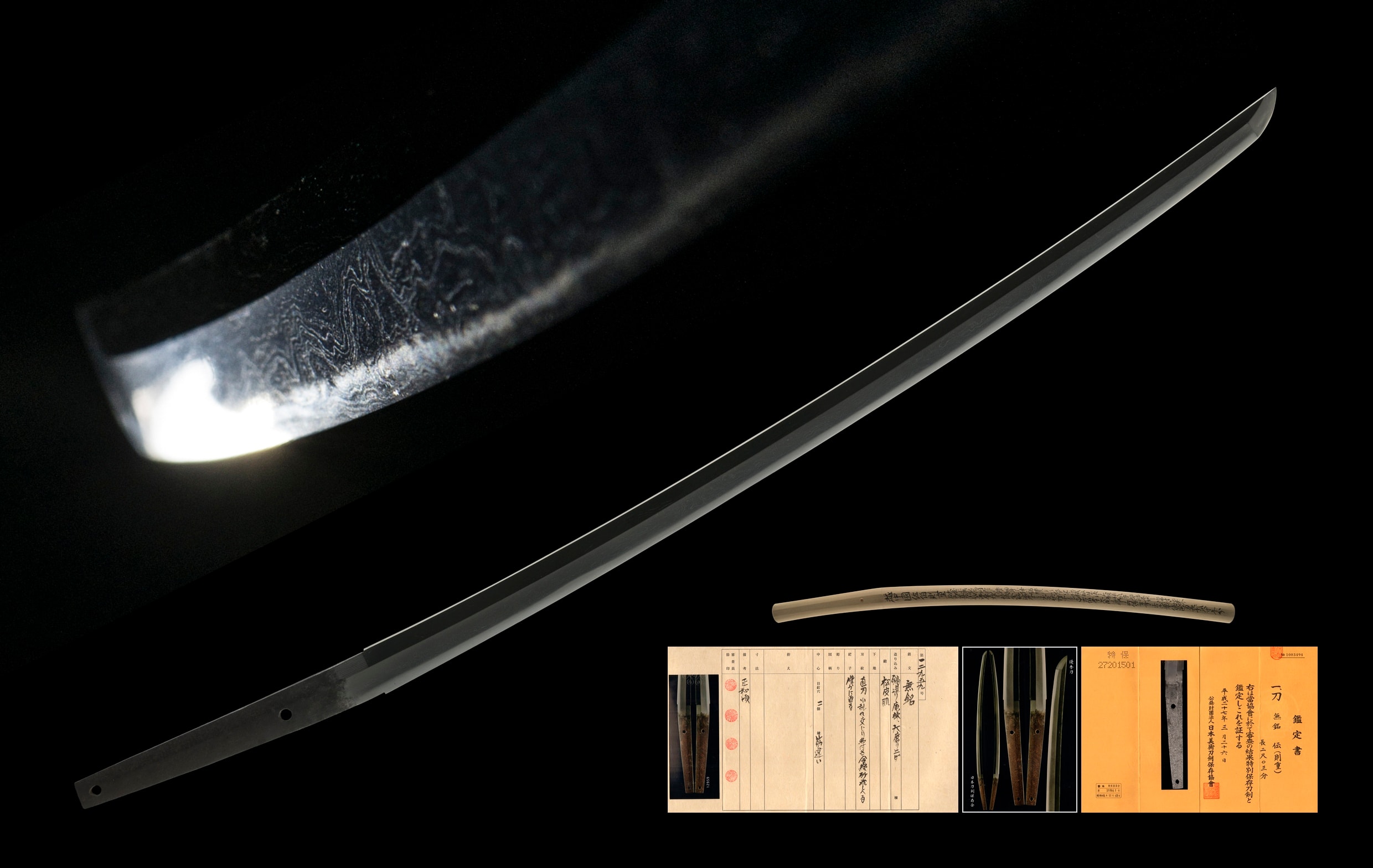
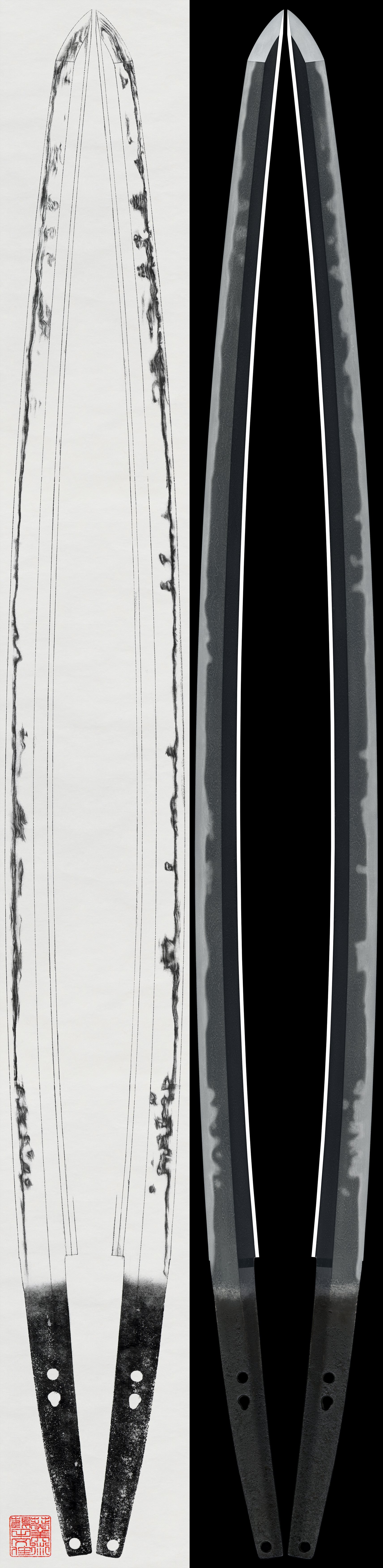
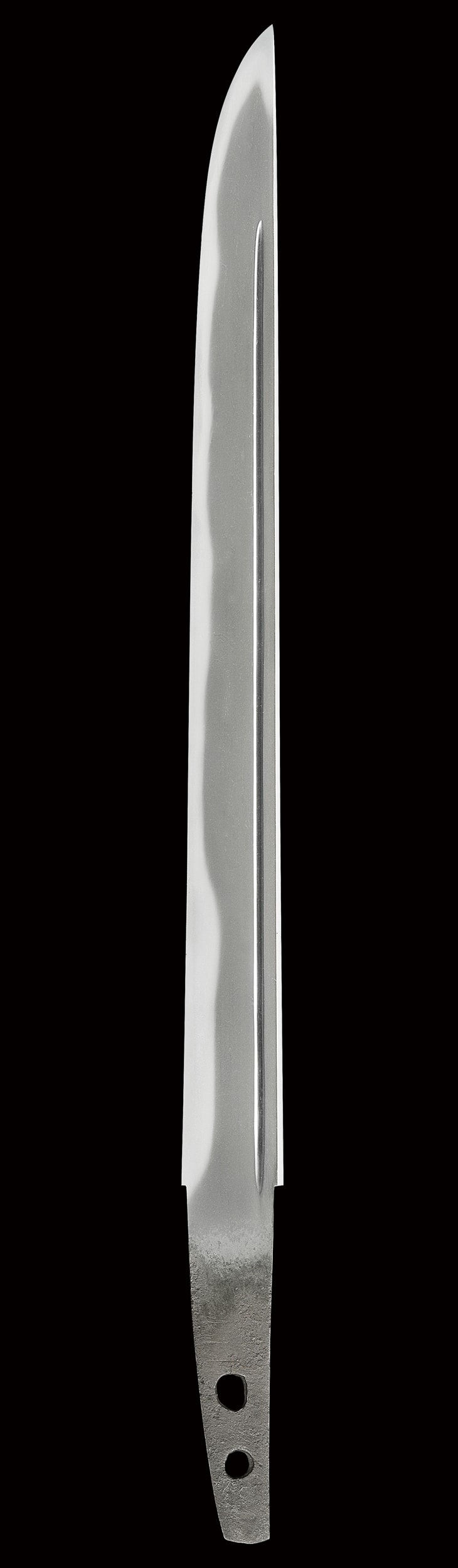
商品番号 UJKA470 – 売約済 則重 大刀 (則重) 越中国の佐伯則重は、鎌倉時代末期の延慶(1308年)頃から元弘年間にかけて活躍した、日本刀史上屈指の名工です。江戸時代の伝書では「正宗十哲」の一人に数えられることもありますが、近年の研究では、正宗や行光らと共に相州伝の祖・新藤五国光の門下で学んだ同門の兄弟子とする説が有力視されています。則重の最大の見どころは「松皮肌」と称される独特の肌合いです。大きく流れるような板目肌に層状の模様が浮き出し、激しく入る地景が相まって、他の追随を許さない力強く触知的な質感を呈します。刃文は変化に富み、ゆったりとした湾れに互の目や丁子を交え、厚くついた沸が激しい砂流しや金筋、沸崩れとなって現れます。帽子は力強い掃き掛けを伴うのが特徴です。 本作は、則重の技量が頂点に達した円熟期の傑作です。深い反りを持ち、地鉄には力強い松皮肌と鮮明な地景が全体に現れています。潤いのある地鉄の質感は、本作の保存状態の良さを如実に物語っています。刃文は湾れに互の目・丁子を交え、厚く沸づいた刃中に砂流しや金筋が幾重にも重なり、覇気溢れるリズムを刻んでいます。まさに名工の真髄を示す出来映えです。大磨上ながら、2024年の第28回特別重要刀剣等審査において「特別重要刀剣」に指定されており、日本の至宝と呼ぶに相応しい格調を備えています。 茎には、20世紀を代表する刀剣学者であり日本美術刀剣保存協会(NBTHK)の重鎮であった本間薫山先生による鑑定銘が、金象嵌で施されています。この象嵌は人間国宝である二代月山貞一の手によるもので、学術的な権威のみならず、美術的価値も極めて高い意匠となっています。白鞘には昭和51年(1976年)8月付の薫山先生による鞘書きがあり、さらに…
 NihontoWatch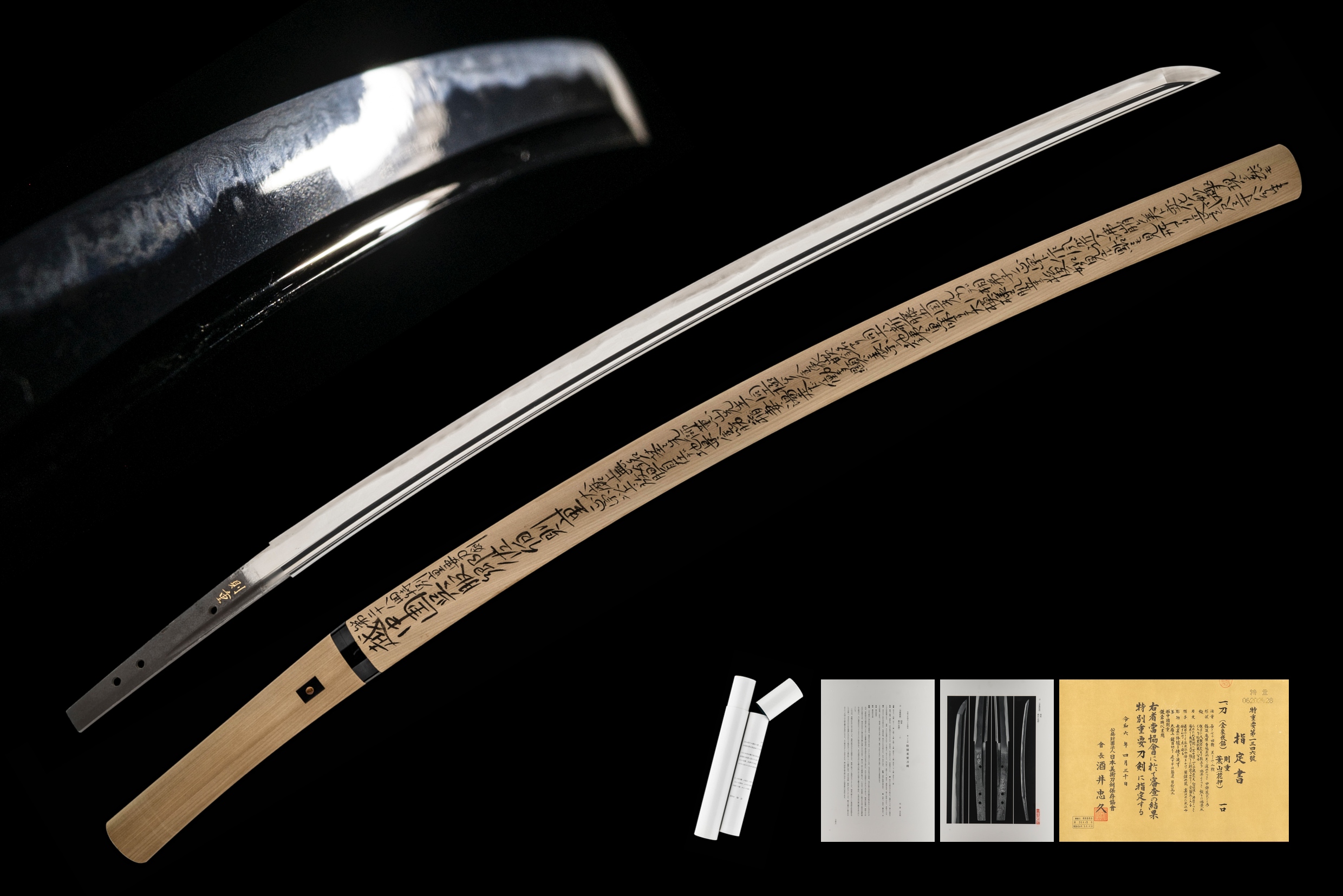
Soshu / Etchu · 越中 · 1308-1314頃
藤代 最上作 · 刀剣大鑑 上位2%
現在6点販売中
則重は鎌倉時代末期の越中の工で、新藤五国光の門人、行光・正宗とは兄弟弟子として相州伝を完成へ導いた。『古今銘尽』など江戸期の刀剣書は正宗十哲の一人に挙げるが、現存する正和・元応などの年紀や太刀・短刀の姿形からすれば、室町期の刀剣書のいう新藤五国光門下説が妥当で、正宗とは相弟子、あるいはやや先行とみるべきである。
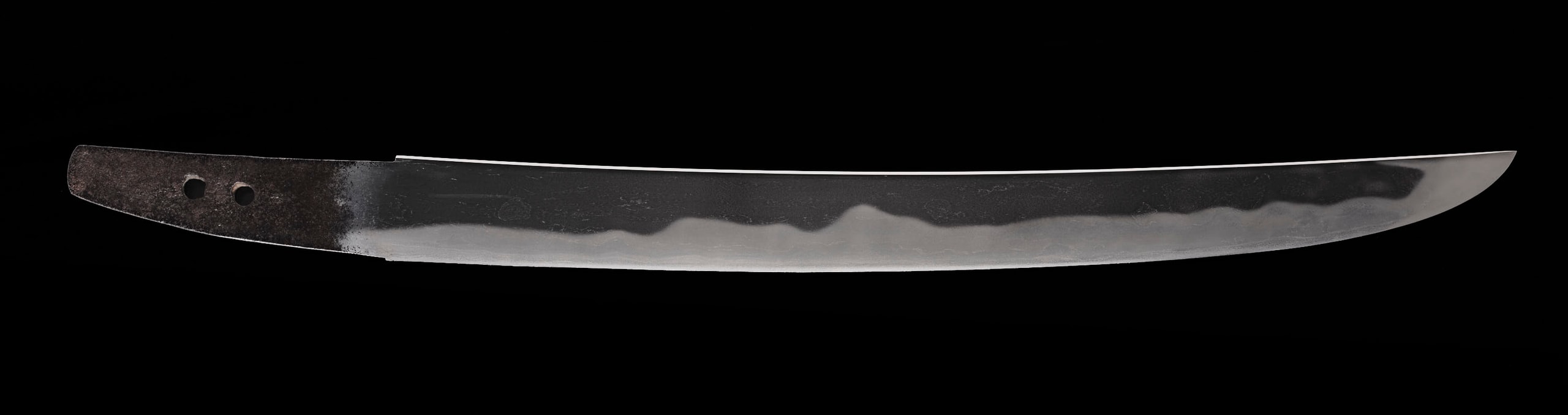
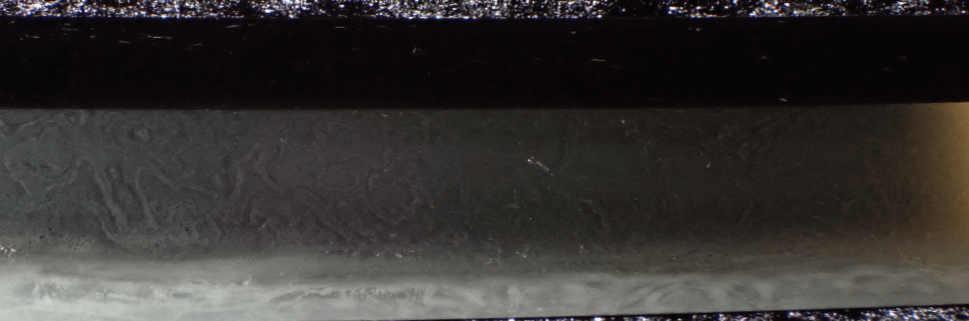
常の作風はその名を負う松皮肌である。板目が大模様に肌立ち、杢を交え、太い地景が頻りに入って松皮の如き肌をなし、地沸厚く、かねは黒みを帯びる。諸書は相州上工中もっとも正宗に近いとしつつ、「正宗以上に沸の変化を露に表現」[[c:1]]したものが多いとし、刃中・地鉄ともに「千変万化の沸の働き」[[c:2]]をあらわすという。刃文はのたれに互の目を交えた沸出来で、匂口は沈みごころ、金筋・砂流しが烈しく働き、二重刃・湯走りを交える。帽子は単なる小丸ではなく、掃きかけて乱れ込み、時に尖り・焼詰め風となる。
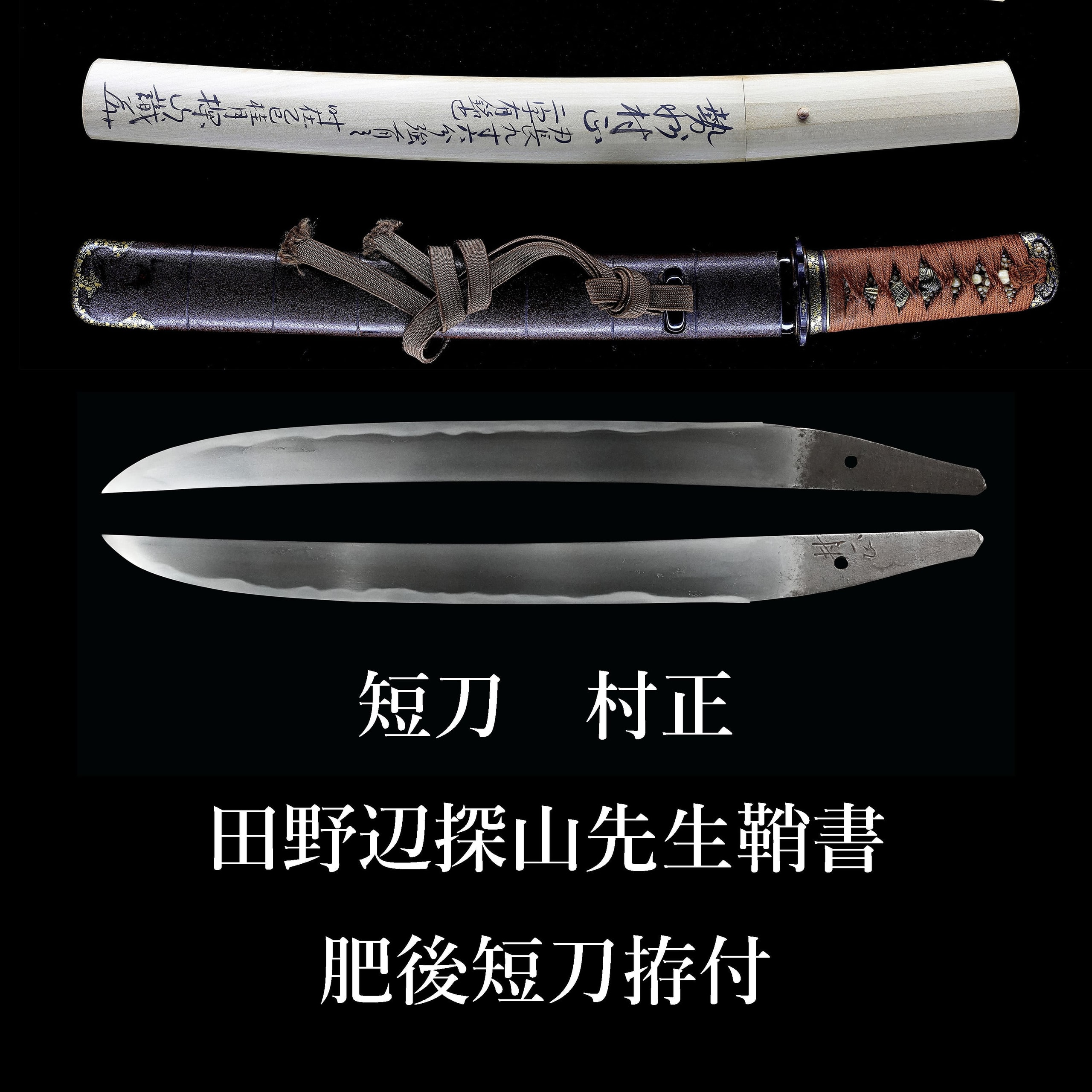
いま一つ、精到で珍重される作風がある。在銘の太刀や前期の在銘短刀では地肌が常ほど肌立たず、整った小板目に締まって地刃ともに穏やかとなり、かねは一段と明るく冴え、地景・金筋は静かである。ある在銘太刀は「常の則重の作に比べて地刃共に穏やか」[[c:3]]と評され、小のたれ主調の底に則重特有の渦巻肌と地景を沈めてよく冴える。正和三年紀の在銘短刀は肌立たず明るく、「新藤五国光や行光につながる出来」[[c:4]]として前期作とされる。これは松皮肌の崩れではなく、別個の、そして高く評価される一面である。
鑑別の核は二様に共通する。太い地景、沈みごころの匂口、烈しい金筋・砂流し、そして掃きかける帽子である。沈む匂口は明るい備前と分かち、沸の変化の激しさと肌立ちは正宗と分かつ。藤代は最上作に列し、特別重要刀剣の指定数は全工中でも上位に位置する。在銘作は短刀が主で、太刀については、かつて「太刀は僅かに二口をかぞえるのみである」[[c:5]]と記されたが、指定品では今日、重要文化財二口・特別重要刀剣二口の計四口の在銘太刀が知られる。名物は豊臣秀吉より徳川綱吉を経て柳沢家へ、ほかに島津・前田・細川・井伊などの諸家を歴とし、国宝・重要文化財として動かぬものも多い。松皮肌は門人為継により越中へ受け継がれた。
則重の位置づけを、日本刀全体および伝統・時代・時期ごとに示します。各位(随一・屈指・有数・著名)は、NBTHK および文化庁による指定に加え、三作や名物帳などの歴史的栄誉を加味したものです。
各項目を選ぶと評価方法が表示されます。
在銘年紀作が示す、確実に活動していた年代
相州伝 · 相模
時期区分: 相州· 1288–1385
現在45点販売中
板目に杢を交えた地鉄に地沸が微塵に厚くつき、地景が頻りに織りなされて明るく冴える鍛え、これが相州(鎌倉後期から南北朝期にかけての相州伝の古典的全盛期)を貫く核である。この区分は始祖新藤五国光が粟田口由来の精緻な小板目と直刃の基盤の上に、地刃ともに沸を主体とする鍛えを据えたところに始まる。国光の門から行光、正宗、則重が出て技術が大成し、続いて正宗の系から養子貞宗、越中の郷義弘が出て、伝統が頂点に達した。さらに南北朝期に入ると相模国にあって時代的にも技術的にも貞宗の次に位置する広光と秋広が現れ、十四世紀後半まで本流が続く。鎌倉幕府の府たる鎌倉を母体とし、その滅亡から南北朝の動乱という時代背景のなかで、姿は身幅広く寸延びた豪壮なものへと推移していった。 作風は説示にいう板目に杢交じり、地沸厚くつき、地景頻りに入る鍛えを土台とし、刃文はのたれを基調に互の目を交え、匂口深く沸厚くつき、金筋・沸筋・砂流しが頻りにかかって匂口明るく冴える点にある。郷義弘の作では、正宗・則重に比べて地景・金筋は穏やかながら、刃中に沸足がよく働き、地刃が一段と明るく冴え、肌合に柾ごころを交え、帽子を一枚風に深く焼くのが見どころとされる。広光・秋広に至ると、板目が肌立ちごころとなり、丁子に互の目を交え、飛焼・棟焼を交えて皆焼となり、頭の丸い団子丁子を交える刃文がこの時代に始まる。これらは母体である粟田口の抑制された直刃の源流からは遠く隔たり、沸の働きを前面に押し出した展開である。一方、後続の末相州(室町期の継続と衰退)が、こうした皆焼や帽子の一枚焼きといった形を継承しつつ地刃の冴えと沸の質を次第に薄めていくのに対し、本区分は地刃ともに明るく冴え、働きが豊富である点で截然と区別される。秋広の彫物が後の正広・広正、さらに室町末期の相州鍛冶の先駆となったことも、本区分が型を確立した側であることを示す。 収集家がこの区分を別格とするのは、正宗を頂点に、貞宗、そして正宗十哲の筆頭に挙げられる郷義弘という頂の刀工を擁するからである。鑑定上の要点は、郷義弘・貞宗ともに在銘作が皆無であるため、地刃の明るい冴え、沸足の働き、柾ごころ、一枚風に深く焼く帽子といった作域から極めることにある。代表作には金象嵌銘の兜切り江や名物中川江があり、宇和島伊達家、小田原藩大久保家、薩摩の島津家など大名家への伝来が説示に記される。秋広には延文二年から至徳四年に及ぶ年紀作があり、銘の切り方の変遷とともに資料的価値を支えている。 詳しく見る →
鎌倉時代の相州
相州伝は新興の都市に生まれた。武家政権の都、身分高い注文主のひしめく鎌倉である。伝えでは名工が東に召され、その門流から新藤五国光が、次いで正宗が出た。
重要刀剣の中でも出来が際立ち、資料的価値が極めて高く、国指定の重要文化財に準ずると判断された、NBTHK鑑定の最高位です。
最高峰であり、特別重要刀剣に到達した刀剣はわずか1,211口、登録刀剣の約2,064口に1口にすぎません。
日本美術刀剣保存協会(NBTHK)は、1948年に設立され、文化庁の監督を受ける公益財団法人で、東京・刀剣博物館に本部を置きます。専門の審査員が出品作を直接審査し、美術的・歴史的価値に応じた鑑定書を発行します。NBTHKの鑑定書は、日本刀および刀装具の真正性を示す最も広く認知された基準です。
NBTHK公式サイトAll swords come with a three-day inspection period beginning from the date of delivery. If not satisfied, the sword may be returned within this period for a full refund of the purchase price. Outside of this period, all sales are final. Swords purchased on a layaway payment plan are not eligible for the three-day inspection period.
商品番号 UJKA470 – 売約済 則重 大刀 (則重) 越中国の佐伯則重は、鎌倉時代末期の延慶(1308年)頃から元弘年間にかけて活躍した、日本刀史上屈指の名工です。江戸時代の伝書では「正宗十哲」の一人に数えられることもありますが、近年の研究では、正宗や行光らと共に相州伝の祖・新藤五国光の門下で学んだ同門の兄弟子とする説が有力視されています。則重の最大の見どころは「松皮肌」と称される独特の肌合いです。大きく流れるような板目肌に層状の模様が浮き出し、激しく入る地景が相まって、他の追随を許さない力強く触知的な質感を呈します。刃文は変化に富み、ゆったりとした湾れに互の目や丁子を交え、厚くついた沸が激しい砂流しや金筋、沸崩れとなって現れます。帽子は力強い掃き掛けを伴うのが特徴です。 本作は、則重の技量が頂点に達した円熟期の傑作です。深い反りを持ち、地鉄には力強い松皮肌と鮮明な地景が全体に現れています。潤いのある地鉄の質感は、本作の保存状態の良さを如実に物語っています。刃文は湾れに互の目・丁子を交え、厚く沸づいた刃中に砂流しや金筋が幾重にも重なり、覇気溢れるリズムを刻んでいます。まさに名工の真髄を示す出来映えです。大磨上ながら、2024年の第28回特別重要刀剣等審査において「特別重要刀剣」に指定されており、日本の至宝と呼ぶに相応しい格調を備えています。 茎には、20世紀を代表する刀剣学者であり日本美術刀剣保存協会(NBTHK)の重鎮であった本間薫山先生による鑑定銘が、金象嵌で施されています。この象嵌は人間国宝である二代月山貞一の手によるもので、学術的な権威のみならず、美術的価値も極めて高い意匠となっています。白鞘には昭和51年(1976年)8月付の薫山先生による鞘書きがあり、さらに…
NihontoWatchSoshu / Etchu · 越中 · 1308-1314頃
藤代 最上作 · 刀剣大鑑 上位2%
現在6点販売中
則重は鎌倉時代末期の越中の工で、新藤五国光の門人、行光・正宗とは兄弟弟子として相州伝を完成へ導いた。『古今銘尽』など江戸期の刀剣書は正宗十哲の一人に挙げるが、現存する正和・元応などの年紀や太刀・短刀の姿形からすれば、室町期の刀剣書のいう新藤五国光門下説が妥当で、正宗とは相弟子、あるいはやや先行とみるべきである。
常の作風はその名を負う松皮肌である。板目が大模様に肌立ち、杢を交え、太い地景が頻りに入って松皮の如き肌をなし、地沸厚く、かねは黒みを帯びる。諸書は相州上工中もっとも正宗に近いとしつつ、「正宗以上に沸の変化を露に表現」[[c:1]]したものが多いとし、刃中・地鉄ともに「千変万化の沸の働き」[[c:2]]をあらわすという。刃文はのたれに互の目を交えた沸出来で、匂口は沈みごころ、金筋・砂流しが烈しく働き、二重刃・湯走りを交える。帽子は単なる小丸ではなく、掃きかけて乱れ込み、時に尖り・焼詰め風となる。
いま一つ、精到で珍重される作風がある。在銘の太刀や前期の在銘短刀では地肌が常ほど肌立たず、整った小板目に締まって地刃ともに穏やかとなり、かねは一段と明るく冴え、地景・金筋は静かである。ある在銘太刀は「常の則重の作に比べて地刃共に穏やか」[[c:3]]と評され、小のたれ主調の底に則重特有の渦巻肌と地景を沈めてよく冴える。正和三年紀の在銘短刀は肌立たず明るく、「新藤五国光や行光につながる出来」[[c:4]]として前期作とされる。これは松皮肌の崩れではなく、別個の、そして高く評価される一面である。
鑑別の核は二様に共通する。太い地景、沈みごころの匂口、烈しい金筋・砂流し、そして掃きかける帽子である。沈む匂口は明るい備前と分かち、沸の変化の激しさと肌立ちは正宗と分かつ。藤代は最上作に列し、特別重要刀剣の指定数は全工中でも上位に位置する。在銘作は短刀が主で、太刀については、かつて「太刀は僅かに二口をかぞえるのみである」[[c:5]]と記されたが、指定品では今日、重要文化財二口・特別重要刀剣二口の計四口の在銘太刀が知られる。名物は豊臣秀吉より徳川綱吉を経て柳沢家へ、ほかに島津・前田・細川・井伊などの諸家を歴とし、国宝・重要文化財として動かぬものも多い。松皮肌は門人為継により越中へ受け継がれた。
則重の位置づけを、日本刀全体および伝統・時代・時期ごとに示します。各位(随一・屈指・有数・著名)は、NBTHK および文化庁による指定に加え、三作や名物帳などの歴史的栄誉を加味したものです。
各項目を選ぶと評価方法が表示されます。
在銘年紀作が示す、確実に活動していた年代
相州伝 · 相模
時期区分: 相州· 1288–1385
現在45点販売中
板目に杢を交えた地鉄に地沸が微塵に厚くつき、地景が頻りに織りなされて明るく冴える鍛え、これが相州(鎌倉後期から南北朝期にかけての相州伝の古典的全盛期)を貫く核である。この区分は始祖新藤五国光が粟田口由来の精緻な小板目と直刃の基盤の上に、地刃ともに沸を主体とする鍛えを据えたところに始まる。国光の門から行光、正宗、則重が出て技術が大成し、続いて正宗の系から養子貞宗、越中の郷義弘が出て、伝統が頂点に達した。さらに南北朝期に入ると相模国にあって時代的にも技術的にも貞宗の次に位置する広光と秋広が現れ、十四世紀後半まで本流が続く。鎌倉幕府の府たる鎌倉を母体とし、その滅亡から南北朝の動乱という時代背景のなかで、姿は身幅広く寸延びた豪壮なものへと推移していった。 作風は説示にいう板目に杢交じり、地沸厚くつき、地景頻りに入る鍛えを土台とし、刃文はのたれを基調に互の目を交え、匂口深く沸厚くつき、金筋・沸筋・砂流しが頻りにかかって匂口明るく冴える点にある。郷義弘の作では、正宗・則重に比べて地景・金筋は穏やかながら、刃中に沸足がよく働き、地刃が一段と明るく冴え、肌合に柾ごころを交え、帽子を一枚風に深く焼くのが見どころとされる。広光・秋広に至ると、板目が肌立ちごころとなり、丁子に互の目を交え、飛焼・棟焼を交えて皆焼となり、頭の丸い団子丁子を交える刃文がこの時代に始まる。これらは母体である粟田口の抑制された直刃の源流からは遠く隔たり、沸の働きを前面に押し出した展開である。一方、後続の末相州(室町期の継続と衰退)が、こうした皆焼や帽子の一枚焼きといった形を継承しつつ地刃の冴えと沸の質を次第に薄めていくのに対し、本区分は地刃ともに明るく冴え、働きが豊富である点で截然と区別される。秋広の彫物が後の正広・広正、さらに室町末期の相州鍛冶の先駆となったことも、本区分が型を確立した側であることを示す。 収集家がこの区分を別格とするのは、正宗を頂点に、貞宗、そして正宗十哲の筆頭に挙げられる郷義弘という頂の刀工を擁するからである。鑑定上の要点は、郷義弘・貞宗ともに在銘作が皆無であるため、地刃の明るい冴え、沸足の働き、柾ごころ、一枚風に深く焼く帽子といった作域から極めることにある。代表作には金象嵌銘の兜切り江や名物中川江があり、宇和島伊達家、小田原藩大久保家、薩摩の島津家など大名家への伝来が説示に記される。秋広には延文二年から至徳四年に及ぶ年紀作があり、銘の切り方の変遷とともに資料的価値を支えている。 詳しく見る →
鎌倉時代の相州
相州伝は新興の都市に生まれた。武家政権の都、身分高い注文主のひしめく鎌倉である。伝えでは名工が東に召され、その門流から新藤五国光が、次いで正宗が出た。
重要刀剣の中でも出来が際立ち、資料的価値が極めて高く、国指定の重要文化財に準ずると判断された、NBTHK鑑定の最高位です。
最高峰であり、特別重要刀剣に到達した刀剣はわずか1,211口、登録刀剣の約2,064口に1口にすぎません。
日本美術刀剣保存協会(NBTHK)は、1948年に設立され、文化庁の監督を受ける公益財団法人で、東京・刀剣博物館に本部を置きます。専門の審査員が出品作を直接審査し、美術的・歴史的価値に応じた鑑定書を発行します。NBTHKの鑑定書は、日本刀および刀装具の真正性を示す最も広く認知された基準です。
NBTHK公式サイトAll swords come with a three-day inspection period beginning from the date of delivery. If not satisfied, the sword may be returned within this period for a full refund of the purchase price. Outside of this period, all sales are final. Swords purchased on a layaway payment plan are not eligible for the three-day inspection period.







![Wakizashi - Tokuho - 作 廣次 - 平造脇差 銘 [相][州]住廣次作](/_next/image?url=https%3A%2F%2Fitbhfhyptogxcjbjfzwx.supabase.co%2Fstorage%2Fv1%2Fobject%2Fpublic%2Flisting-images%2Fchoshuya%2FL894767%2F00.jpg&w=2560&q=90)