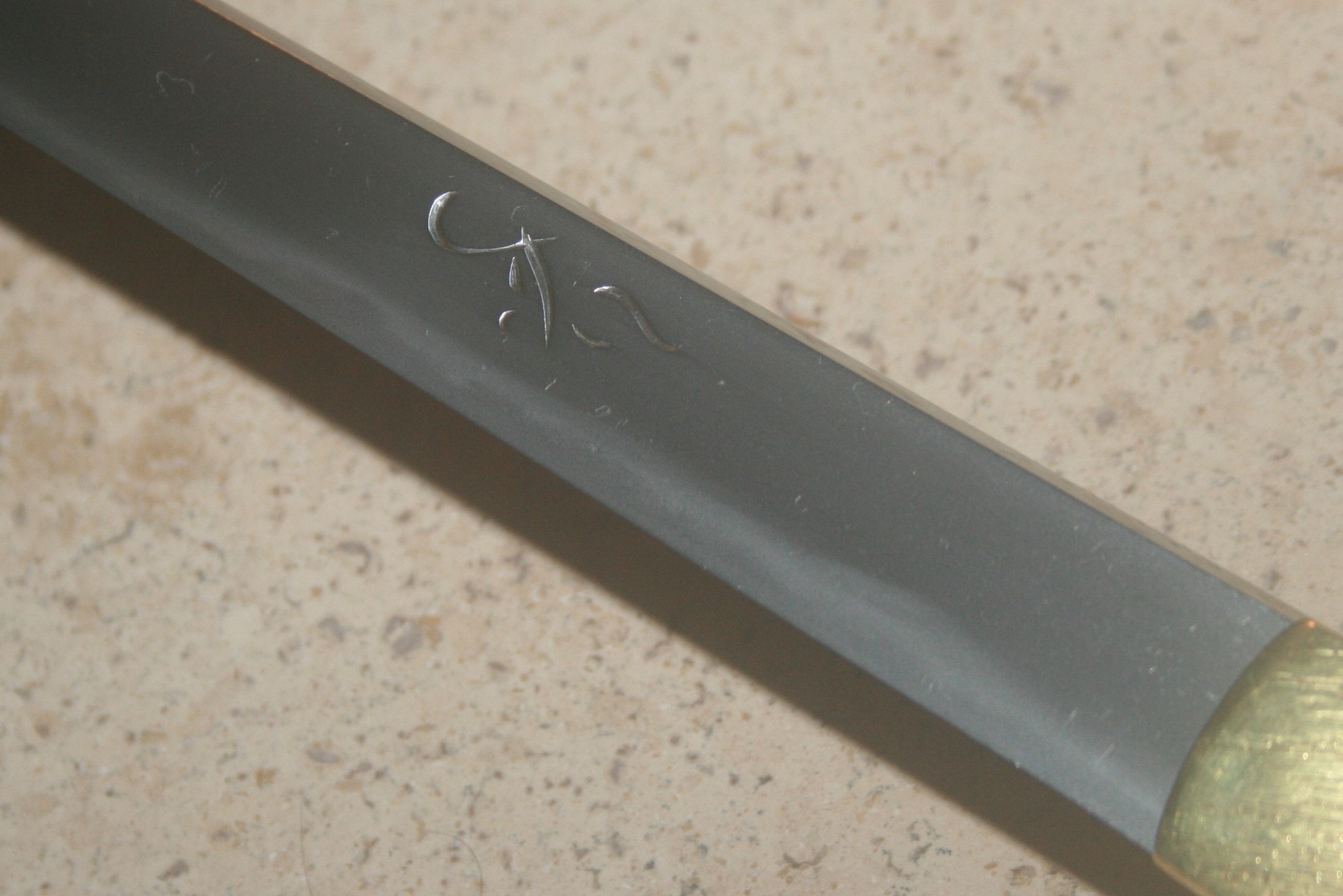
Akihiro worked in in the period, and the published sources place him with Hiromitsu as the two pillars of late . In of that age, they write, the smiths who stand next after Sadamune in both period and technique are Hiromitsu and Akihiro, the pair who drew the daring that earlier work had never shown. His person is transmitted three ways, as Hiromitsu's son, his younger brother, or a pupil of Sadamune, but the dated works settle the order: read against Hiromitsu's, his blades are certainly the later, and the line is left open while the ranking is not.
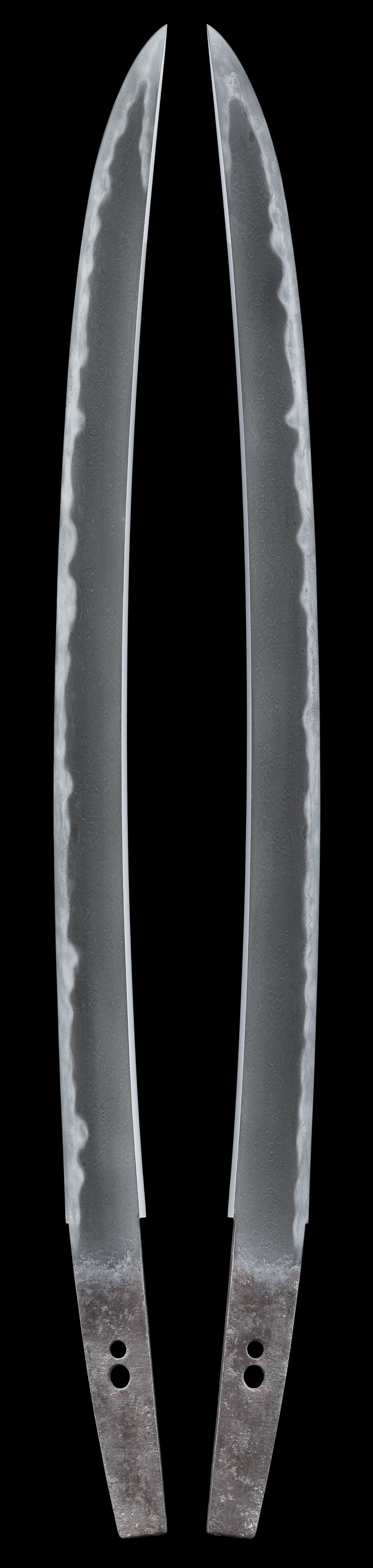
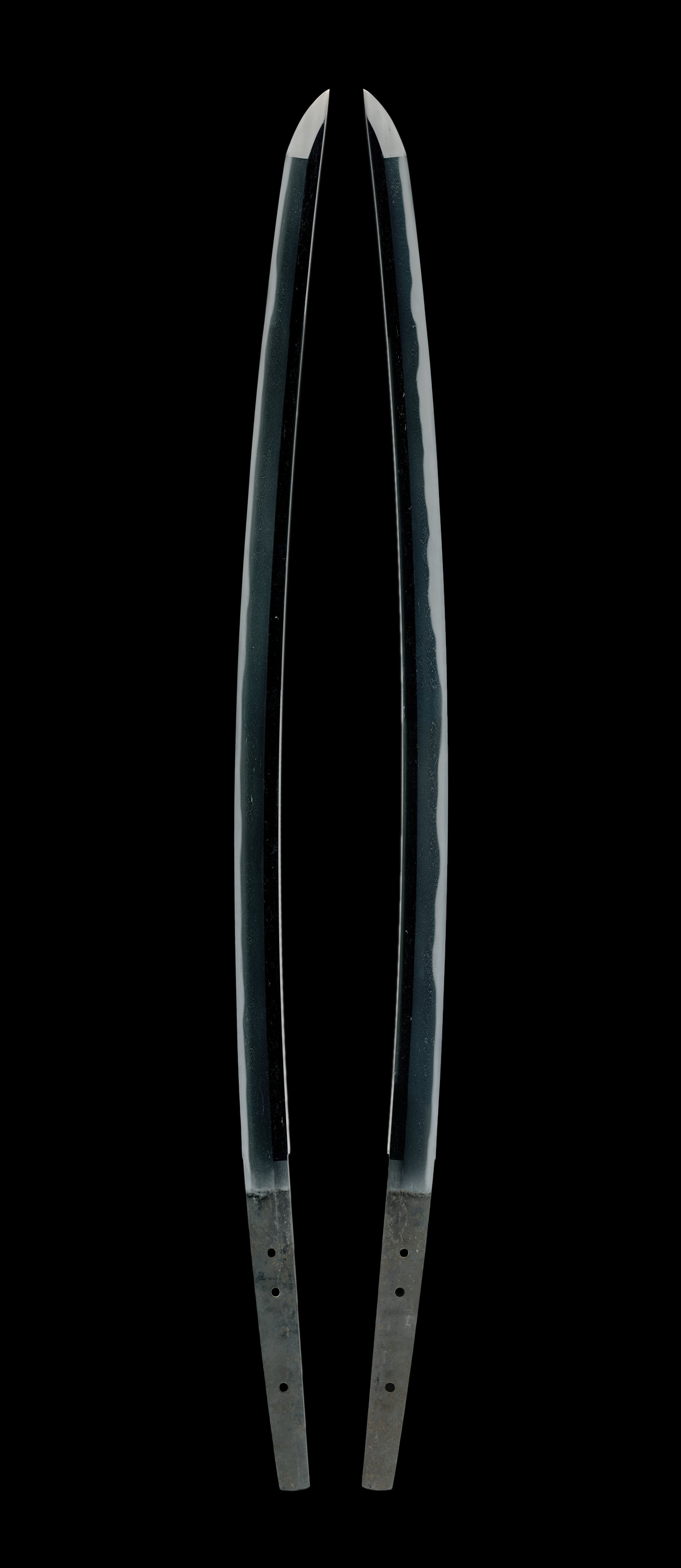
The form is the period itself. He worked almost entirely in the wide, somewhat elongated and with and shallow , and of the the sources record that almost none reliably signed survives. The is a standing mixed with , large in pattern, the grain rising and flowing in places, with thick , frequent , and at times a faint . Within the pair this is the first tell: his stands out more than Hiromitsu's, somewhat rougher, at times with an untamed look, the steel left more openly active than his partner's.
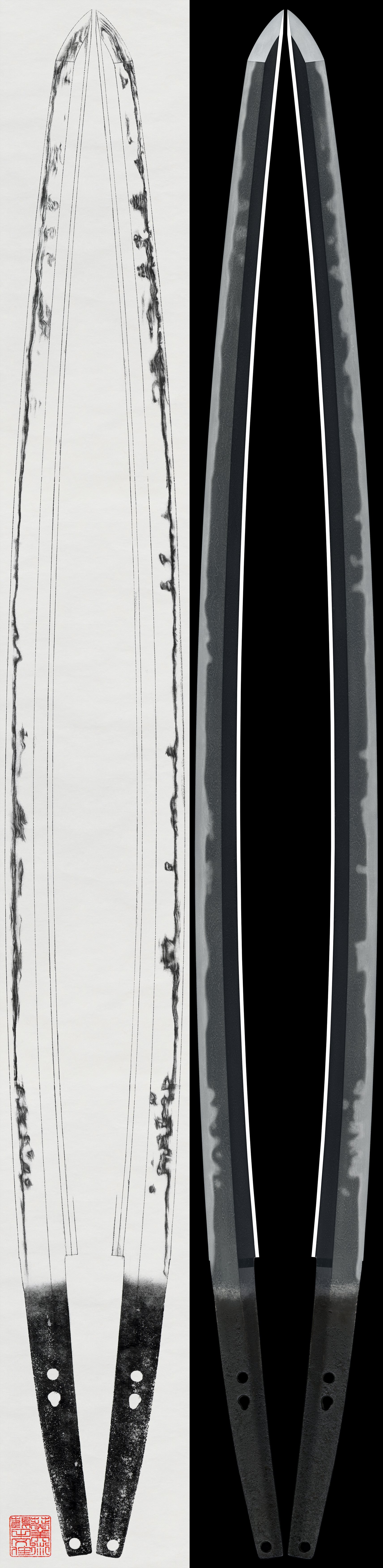
What carries his name is . Over that standing he tempers a of , and , deep in and thick in , with frequent and , while , and work up over the and until the whole blade becomes the full temper. The runs with , often pointed, the return burned down long to join the , and on the most flamboyant pieces it breaks into a flame-like . The bright, clear over a -rich standing , with the temper escaping into the , is the recognition core that the published record returns to again and again, naming the the area both men did best.
He is not a single register, and the published sources widen the reading deliberately. His usual pieces run smaller than Hiromitsu's, the subdued and the somewhat small for the width of the blade, which is named as the very place an Akihiro attribution is read against his partner. A few grand dated of the Joji and years overturn that contrast, larger even than Hiromitsu and showing the round dango-choji, so that the sources call them the image of Hiromitsu. At the other pole stand quiet works in with where the and hardly show, one Important Art Object called rare for not being , so that the attribution does not rest on the full temper alone.
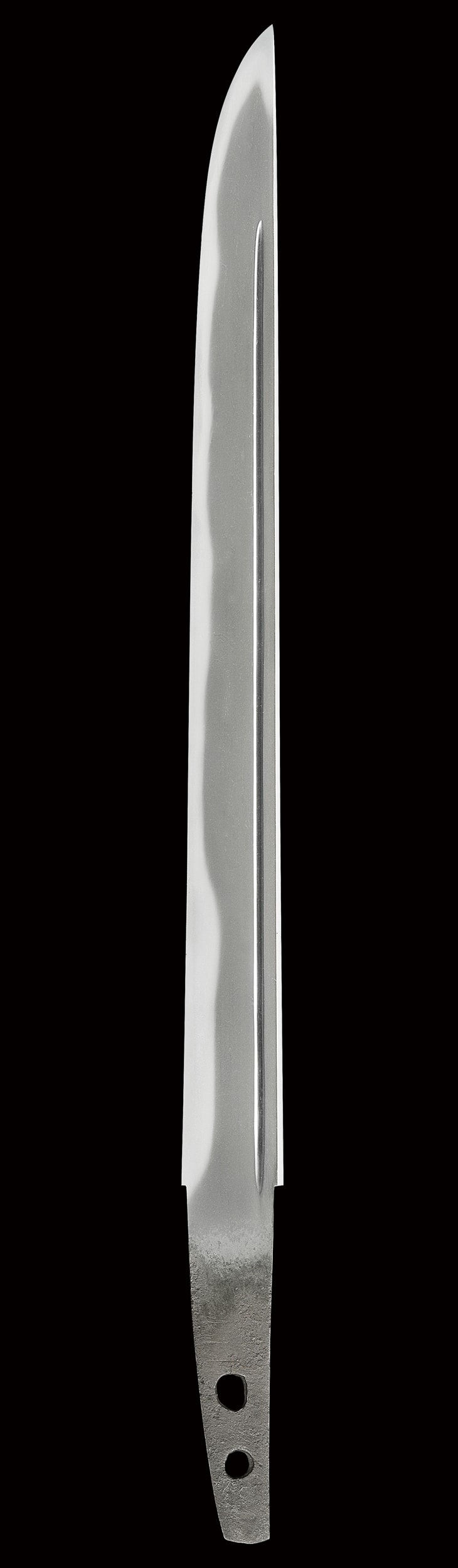
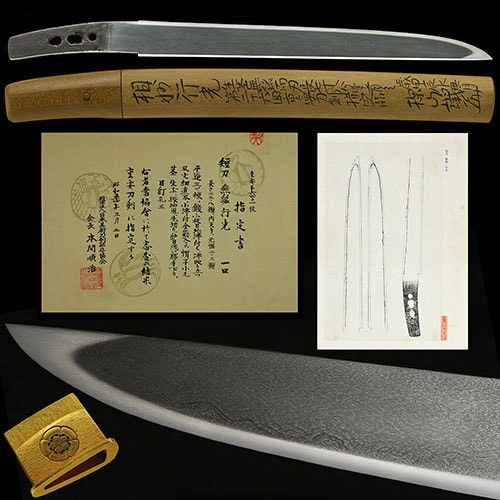
The late line turns quiet again. The dated Shitoku 4, near his lower limit, is a stubby, kitchen-knife build, thick in and short for its width, tempered in a calm with and pointed and reverse-tendency elements, with only slight . The published sources read this as carrying on the style of Sadamune, note that Hiromitsu shows no such register, and ask whether Akihiro alone inherited it. The Buddhist carvings of these pieces, a grass-style and a sanko-hilted , are called the forerunners of Masahiro and Hiromasa, with their influence reaching the smiths of the late period. The is a rule of its own: he signs ju Akihiro in five characters, the Enbun dates cut in full like Hiromitsu, the abbreviating hand appearing from Joji, and from Eiwa onward the month and day dropped without exception, so the form of the date itself helps fix the year.
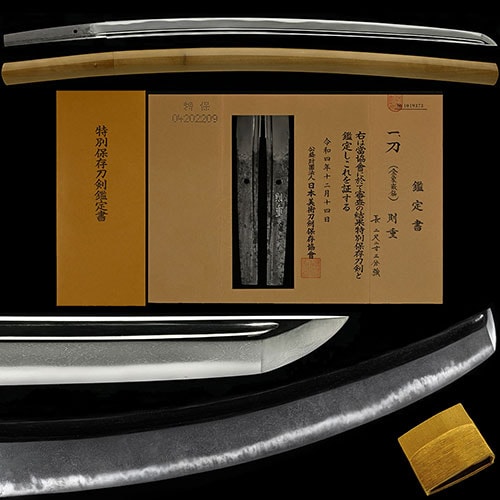
For the collector Akihiro is, among the masters, reachable. Fujishiro grades him Sai-jo , and his dated works run from Enbun 2 to Meitoku 3. No National Treasure is recorded under his name, but Important Cultural Properties and a strong run of and blades stand to him, two of the recognized as Important Art Objects before the war, of one of which the published sources write that its powerful -woven forging and leaping make it a fine work whose Important Art Object rank is convincing. His blades descend in the great houses: a Joji in the Kuroda of , the in the Date of Uwajima with a Kojo , Tokuju pieces in the Shimazu of Satsuma, and others held at the Okura Museum, the Kurokawa Institute, the Kyoto National Museum and Kagoshima Jingu. A signed Akihiro does come to market, and when one does it is among the few honest ways to hold the late- fire at first hand.