大和を支えた大寺の力は室町を通じて衰え、諸派もこれとともに細った。末手掻が古風な柾目を量産のうちに伝えている。1567年の東大寺大仏殿の炎上が、寺院の時代の幕を引いた。
 NihontoWatchNihontoWatch
The Mihara school of Bingo province was founded by Masaie at the end of the Kamakura period. The Masahiro line followed in three recorded generations: the first around the Kenmu era (1334-1338), the second around the Jôji era (1362-1368), and the third in the Ôei era (1394-1428), to whom this katana is attributed. Bingo was known for high-quality iron, and close ties with Yamato province left a strong Yamato influence on Mihara work, with suguha as the base and a grain often mixed with masame. This is a striking ô-suriage blade, mumei, with a nagasa of 62.8cm and a powerful 9.3cm ô-kissaki that strongly suggests a nagamaki origin from the Nanbokuchô period. Such blades were commonly shortened into katana after the Edo shogunate restricted long swords, a process known as nagamaki-naoshi, and reworked examples earned a reputation for exceptional quality. The jihada is a well-forged ko-mokume mixed with ô-hada, with sparkling ji-nie, plentiful chikei and a vibrant shirake-utsuri. The hamon is a bright, precise hoso-suguha with sections of ko-notare, tiny nezumi-ashi and subtle kuichi-gaiba, all in clean nioi-deki. The boshi turns back deeply in ko-maru. Stable hada-ware on the lower blade runs parallel to the grain and adds character to a sword some 600 years old. It carries NBTHK Tokubetsu Hozon, issued in Reiwa 7 (2025) to Mihara Masahiro, Ôei-goro. Nozomi-san, a shodô artist, inscribed the shirasaya with sayagaki and tsunagi-gaki in September 2026. The late Edo period uchigatana-koshirae is a delight. The saya is finished in zen-like swirls of red and black lacquer, the tsuka is wrapped in dark chocolate brown ito over black-lacquered samekawa, and white heron menuki shine through the wrap. The focal point is the iron tsuba attributed to Toyonobu, 7th generation of the Okamoto school of Chôshû, carved in sukidashi-bori with a gold moon reflected in the paddies, the motif of tagoto-no-tsuki. The shibuichi fuchi-kashira by the Mito school captures Yodo Castle in deep high relief with gold inlay and holds its own NBTHK Hozon. A samurai-spirited katana with history in every detail.
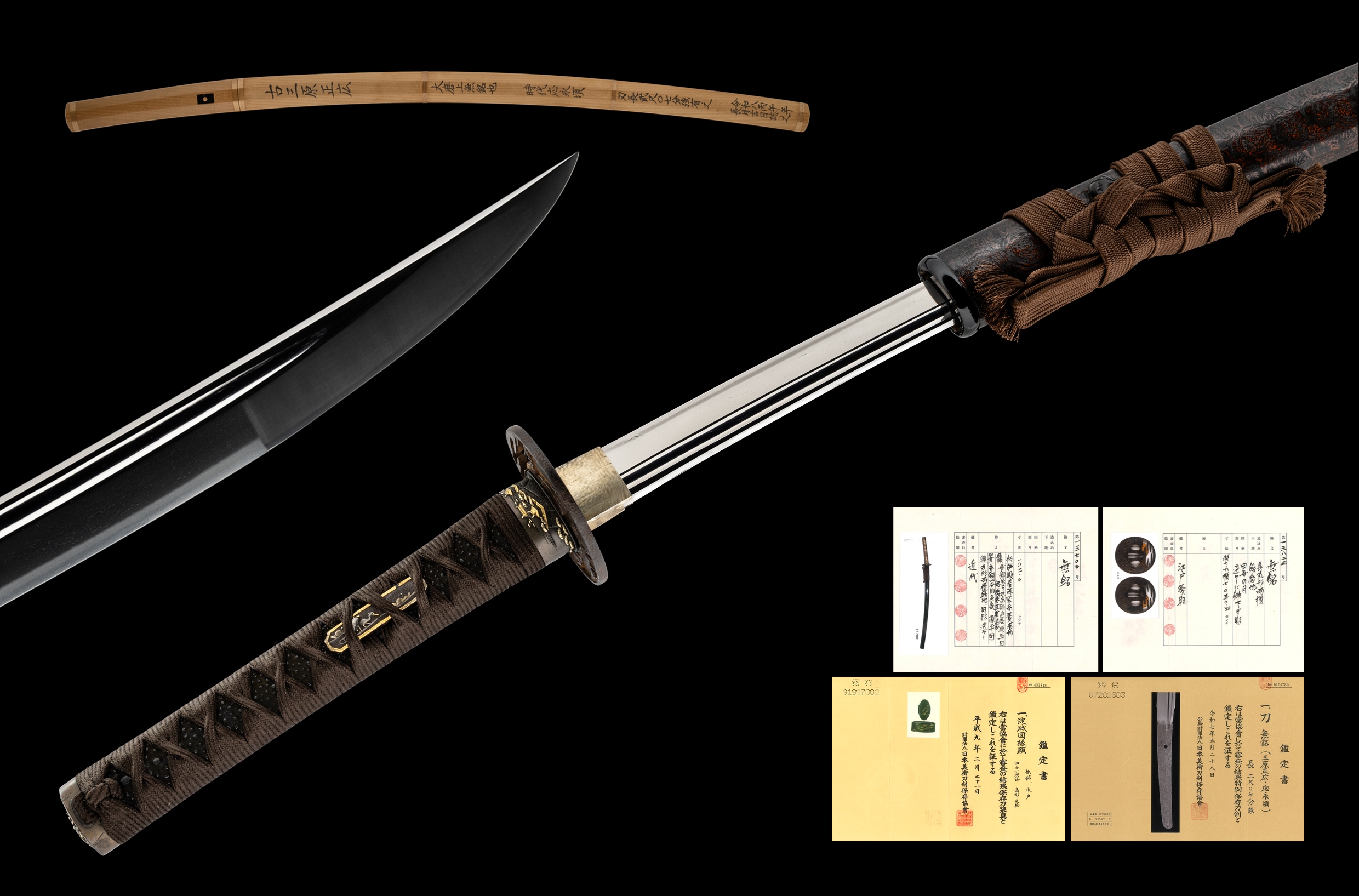
販売店の記載のまま
大和伝 · 備後 · 1394-1428頃
刀剣大鑑 上位31%
正廣の位置づけを、日本刀全体および伝法・時代・時期ごとに示します。各区分(随一・屈指・有数・著名)は、NBTHK および文化庁による指定に加え、三作や名物帳などの歴史的栄誉を加味したものです。
各項目を選ぶと評価方法が表示されます。
在銘年紀作が示す、確実に活動していた年代
大和伝 · 備後
時期区分: 古三原· 1288–1393
現在6点販売中
備後国三原派は鎌倉時代末期に興り、室町時代末期に至るまで連綿と作刀を続けたが、その一派のうち鎌倉末期より南北朝期にかけてのものを古三原と汎称し、正家・正広を双璧として、ほかに正信・親次らの工が知られる。同派の繁栄した三原の地には、東寺・蓮華王院をはじめとする大和中央の大社寺の荘園が多く置かれ、畿内中央との交流が頻繁に行われていた。それゆえ三原派の作風には大和気質が色濃く窺われ、初期の工はこの大和の影響を受けて南北朝の動乱期に一派の基礎を築いた。一方で隣国備中の青江風を示した出来も見られ、地理的な交わりのなかから独自の作域を養った点に、この区分の成り立ちがある。 この区分の作は、大和伝を母胎としながらも清雅かつ精良な初期の持ち味を備えている。鍛えは板目に杢目や流れ肌が交じって柾がかり、総体に肌立ちごころとなり、地沸が微塵によくつき、地景が細かに入って、淡く白け映りが立つ。刃文は中直刃を基調に小互の目や小乱れを交え、小足・葉がよく入り、刃縁には細かなほつれ・喰違い刃を交えて、洗練された直刃に変化を見せる。匂口は締まりごころに小沸がよくつき、金筋・砂流しがかかり、帽子は直ぐ調に焼詰め風あるいは掃きかけとなって穏やかに返るのが常である。大和本国のものに比して地刃の沸がやや弱く、白けごころを帯びる点も見どころとなる。後代の末三原が次第に作域を狭め質を落としていくのに対し、古三原は地刃の働きが豊かで、匂口の冴えと地鉄の精良さにおいて一段と清雅・精良であり、ここに両区分の差がはっきりとあらわれる。 鑑定にあたっては、まず大和奈良の諸派との別が要点となる。鎬の高い造込みや直刃調の作風は手白沢や保昌などと紛れやすいが、地鉄に杢が一際目立ち、白け映りが立ち、匂口が締まって沈みごころとなる点に三原物の見どころが示される。あわせて末三原との見極めも肝要で、初期の清雅な地刃と後代のやや緩んだ出来との差を読むことになる。主要工は正家と正広で、正家には豪壮な大鋒の作例が多く、正広には中鋒の尋常なものが多いと伝える。同派は大和気質ゆえに在銘の遺例が乏しく、無銘の大磨上げを正家・正広と極めたものが多く伝わり、本阿弥光徳の金象嵌銘を施した一口など、後世の鑑識を経て価値を保ってきた作が知られる。伝来の面でも靖國神社の蔵刀や伊達家旧蔵の作、近衛家を経て陽明文庫に伝わったものなどがあり、古三原が長く重んじられてきた一派であることを物語っている。 詳しく見る →
室町時代の大和
大和を支えた大寺の力は室町を通じて衰え、諸派もこれとともに細った。末手掻が古風な柾目を量産のうちに伝えている。1567年の東大寺大仏殿の炎上が、寺院の時代の幕を引いた。
保存刀剣のうち、出来が一層優れ、保存状態も良好と認められたものです。再刃や、室町・江戸期の多くの無銘作は対象外となり、保存刀剣より高い基準が課されます。
日本美術刀剣保存協会(NBTHK)は、1948年に設立され、文化庁の監督を受ける公益財団法人で、東京・刀剣博物館に本部を置きます。専門の審査員が出品作を直接審査し、美術的・歴史的価値に応じた鑑定書を発行します。NBTHKの鑑定書は、日本刀および刀装具の真正性を示す最も広く認知された基準です。
NBTHK公式サイトAll swords come with a three-day inspection period beginning from the date of delivery. If not satisfied, the sword may be returned within this period for a full refund of the purchase price. Outside of this period, all sales are final. Swords purchased on a layaway payment plan are not eligible for the three-day inspection period.