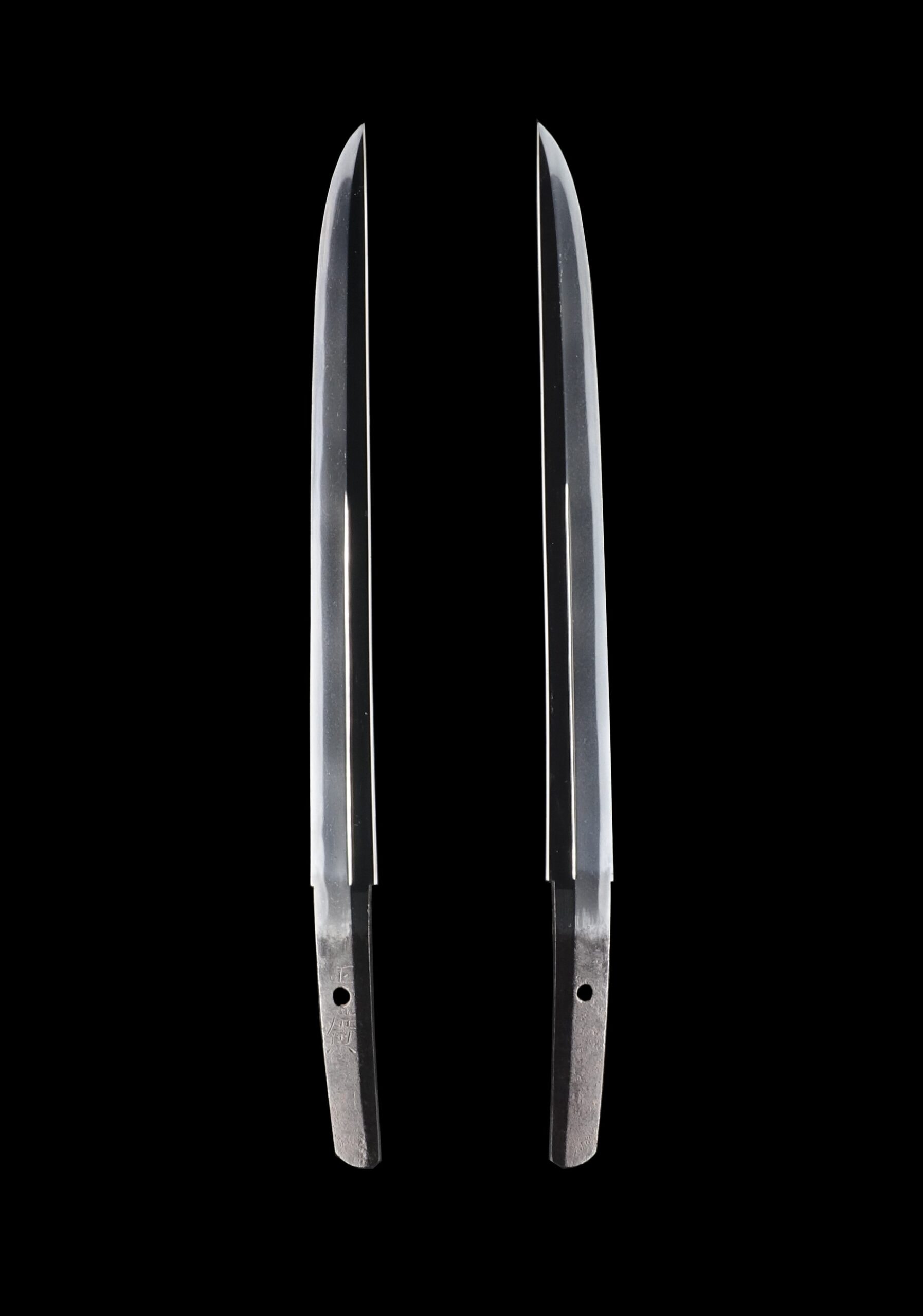
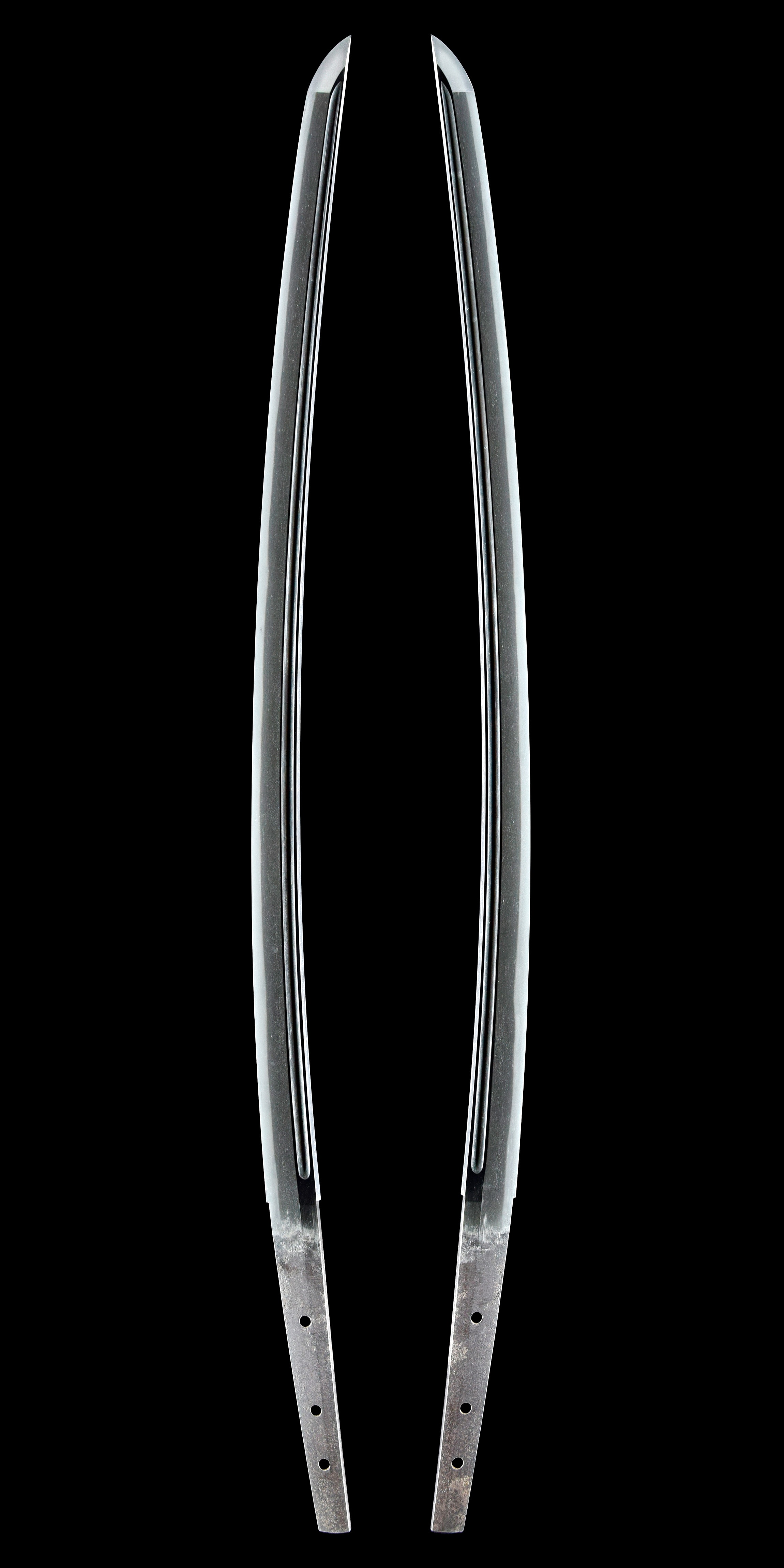
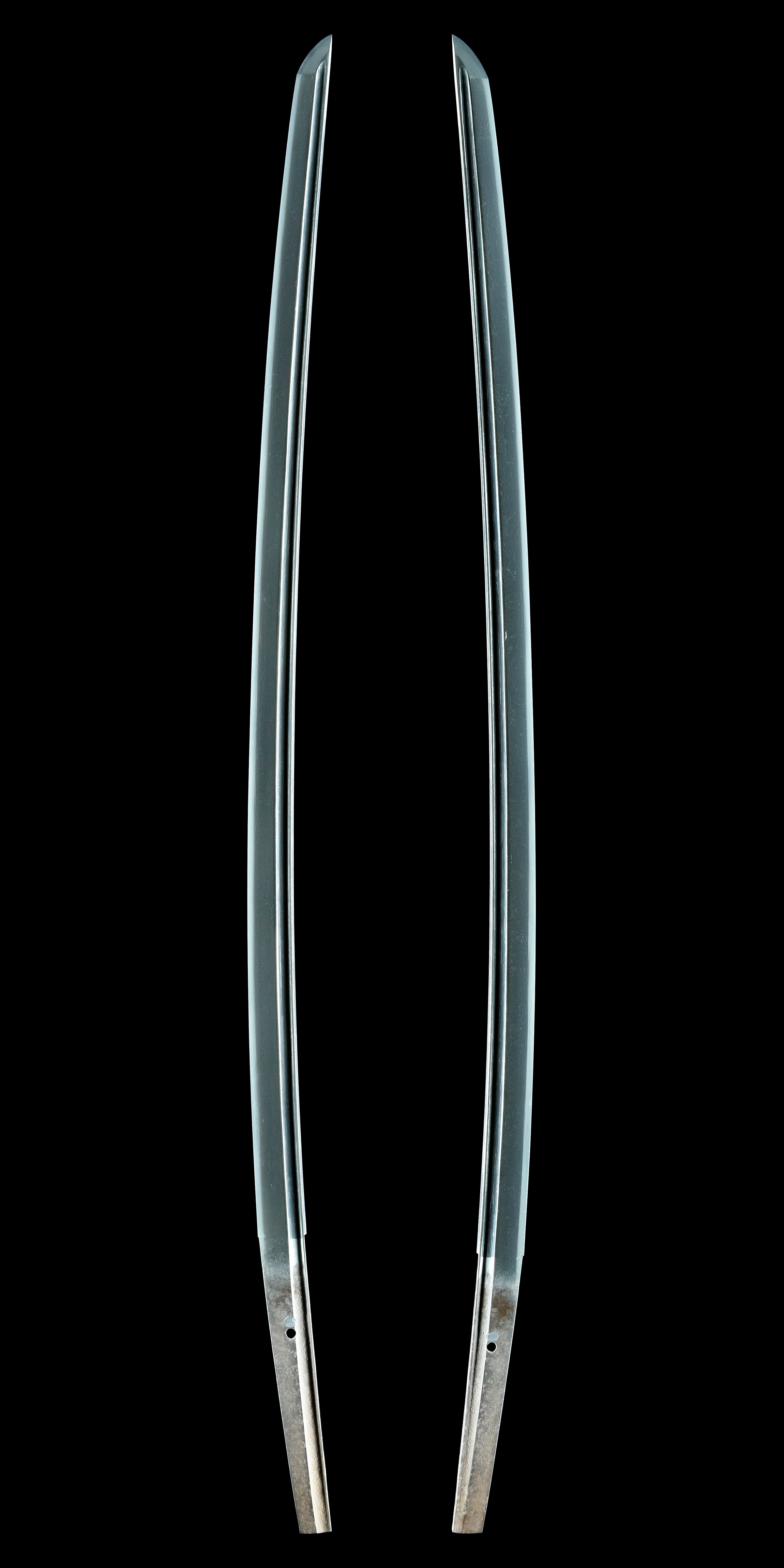
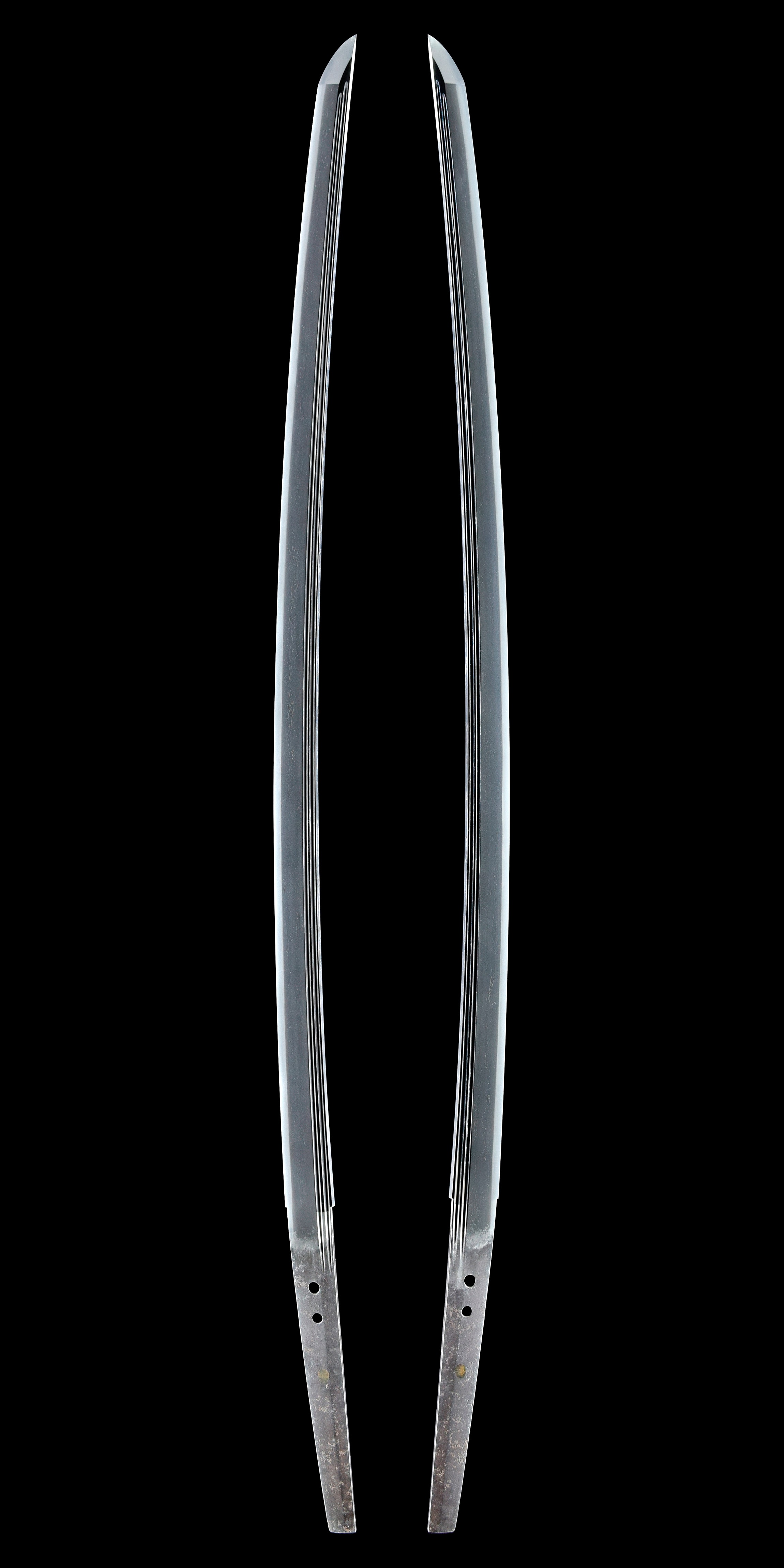
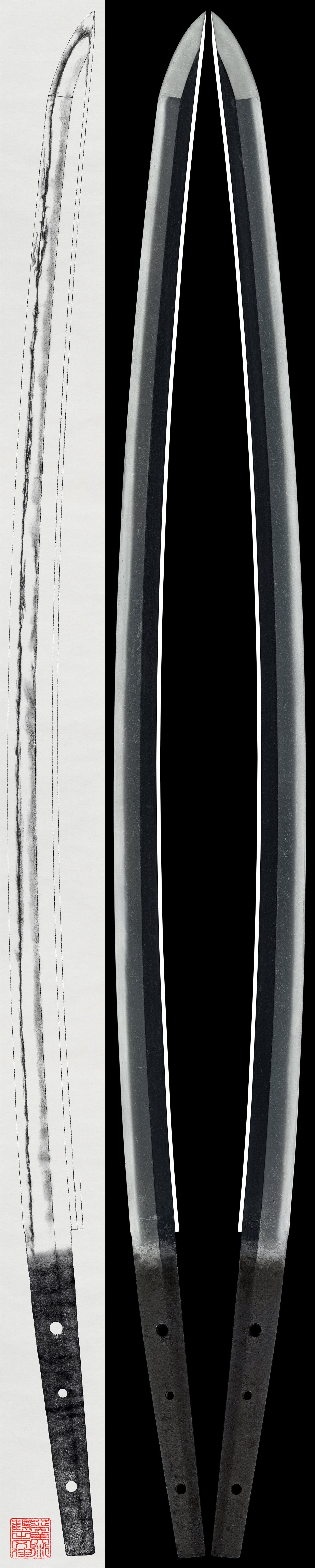
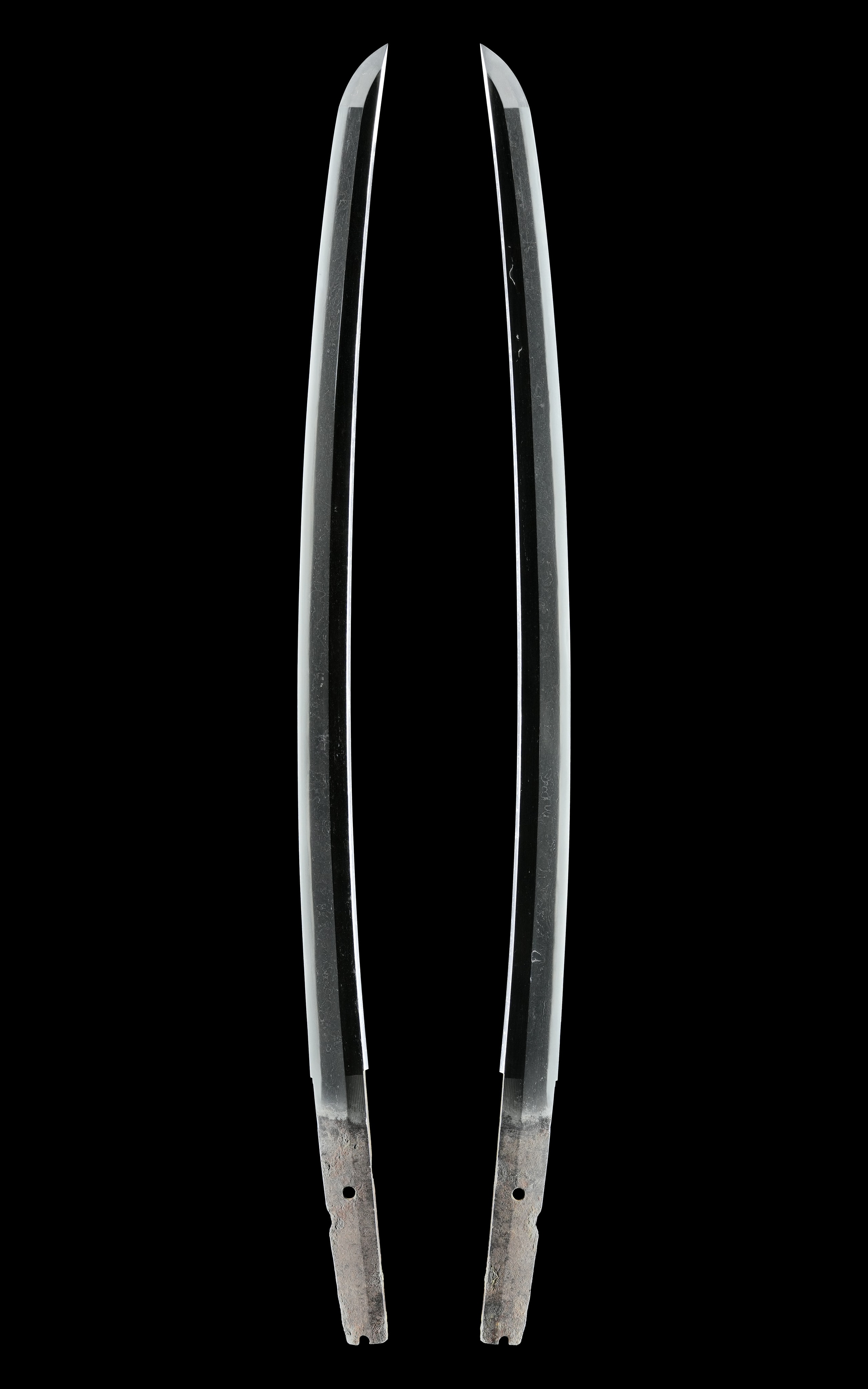
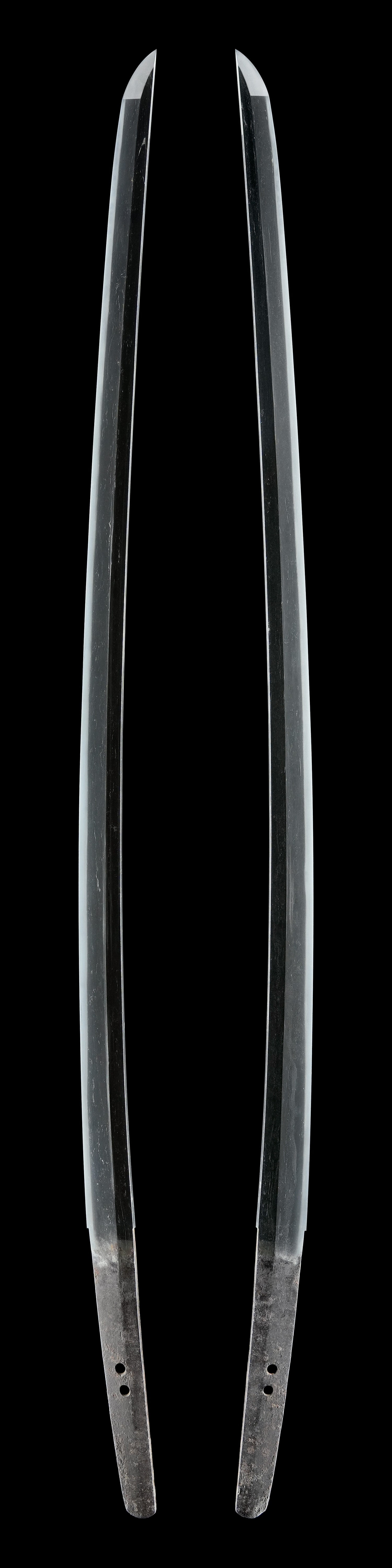
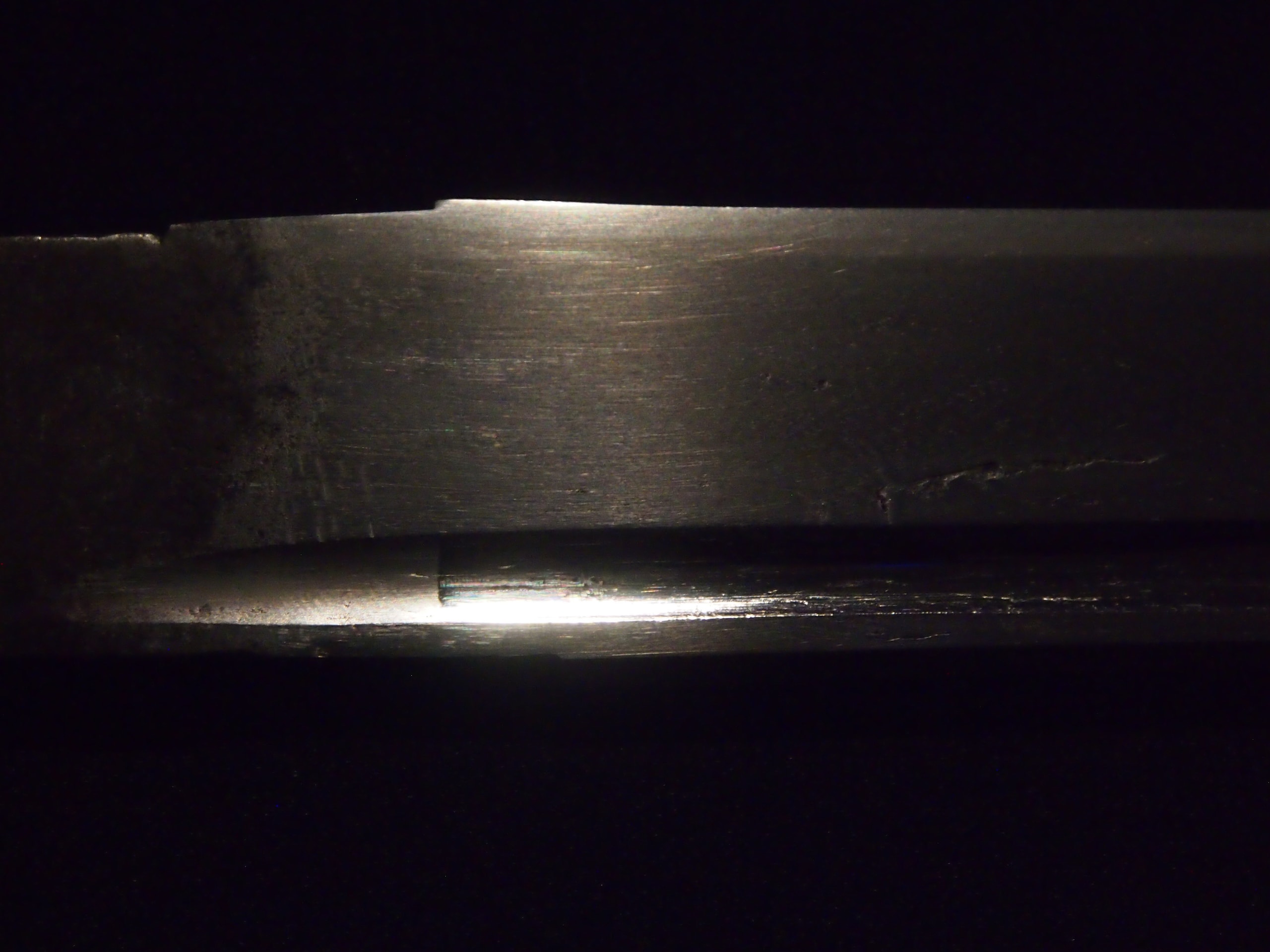
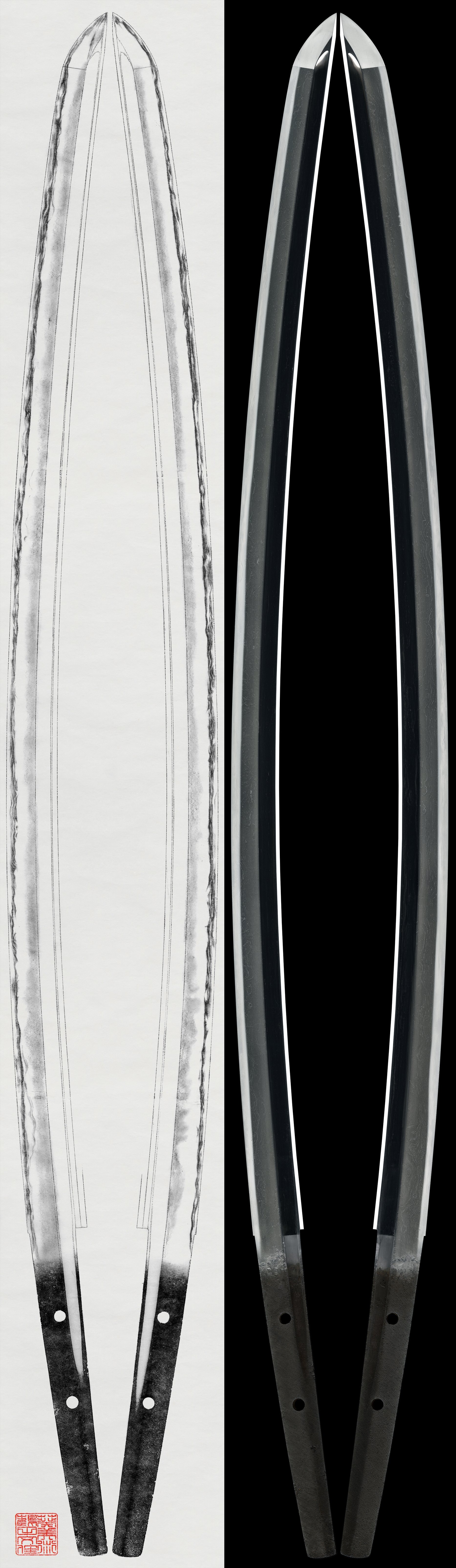
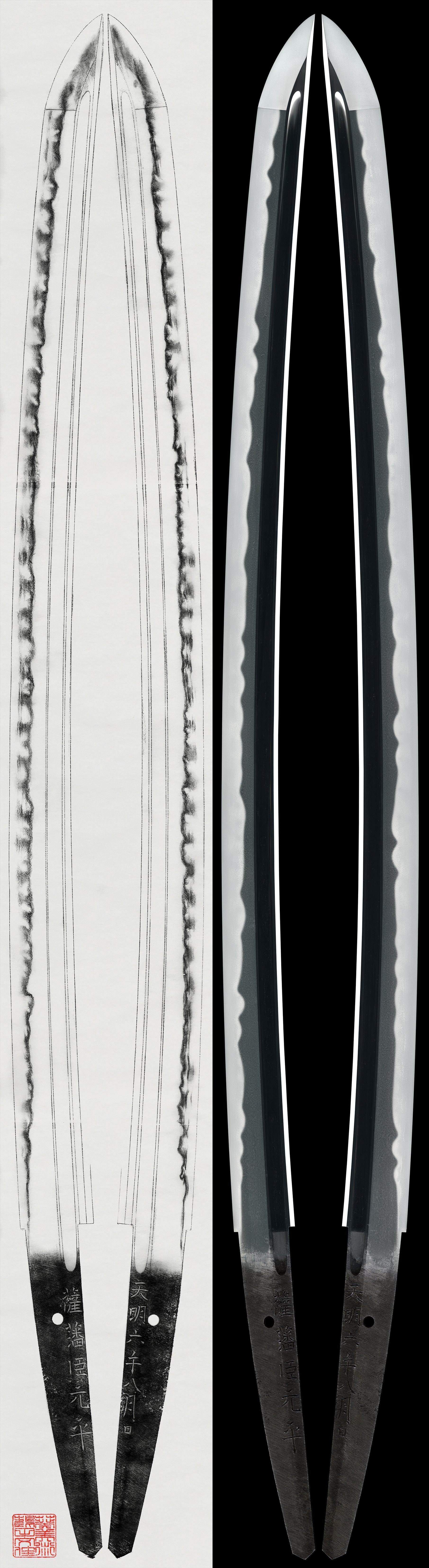
Masaie of in Bingo Province is, with Masahiro, one of the two foremost smiths of Ko-, the term the published sources give to the group that worked at from the end of the period through . Tradition makes him the head of the school, its founder, and Masahiro his son. The published record qualifies that tradition from the blades themselves: signed Masahiro reads the more archaic of the two, and the name is not a single hand. Honma observed that "neither Masaie nor Masahiro existed only as a single-generation lineage", so the dated work, falling between Bunna and Enbun of the mid , is gathered under the one name without splitting the generations. The longest of the surviving pieces is an over a meter, held by Yasukuni Shrine, signed only with the two characters 正家 high on an unshortened tang.
The hand the published descriptions assign to him is Yamato cast in Bingo steel. Over a flowing, standing the temper is a , narrow and quiet, mixing in , a slight tendency and a little , with and entering and the finely frayed into , and a niju-ba effect. What separates the school from Yamato proper, the sources state plainly, is that "compared with the work of the Yamato homeland the of and is weaker"; the steel tends whitish, the tightens, and the turns gently rather than running out. Against this restrained manner the published record sets Masaie apart from Masahiro by scale: "in general Masahiro's works have many ordinary pieces with , whereas Masaie has many bold examples with ". The bold point is his signature, and a wide blade closing in a great is the first thing the judges read toward him.
The is , flowing toward the and standing across the surface, with conspicuous moku entering and, near the edge, a tendency to lean . Fine gathers and run through it. The defining feature of the is a pale , a whitish reflection that rises in over half the surviving blades and stands out most on the pieces, the steel sometimes reading dark and kana-colored beneath it. The runs to a gentle , often brushed with and returning long, and it burns on only the rarest piece. On his finest work the temper does not stay subdued: of the the published sources single out that "the bright, clear is a point worthy of special note", where the rises sharp over the whitened .
The corpus divides into two registers of the one manner. On one side are the signed and blades, the , and , cut with a small-chisel long signature, 備州住正家作 or 備後国住右衛門尉正家作, and on the rarer of these a date of Bunna, Joji or Enbun. The published record prizes these dated pieces: signed work is scarce, owing to the Yamato discipline of the school, and "signed work is few, and a piece bearing a date like the present one is also a rare thing", so the surviving nengo blades are valued as historical material on the school. On the other side stand the , settled onto the name by later connoisseurs, several by gold inlay; one such bears the attribution of Kotoku, the appraiser's hand recorded in the compendia. A second, recurrent face leans toward neighboring : a burning bright and clear over black-tinged steel with a standing in the , the pointing and returning deep, so that "at a glance it could be mistaken for ". The sources name the two pulls on the school, the Yamato manner carried in through the temple estates and the -like cast of the adjacent province.
What overrides the resemblance and gives the work back to is the Yamato temperament the judges name in detail: the high and broad , the conspicuous moku and flowing grain standing across the , and the and along the . On the bright the published commentary states that here "the points of recognition for Ko- are displayed", and then narrows the attribution within the school: "among the school the workmanship of and is superior, and with the form it is reasonable to appraise it, narrowing in particular, as Masaie". The bold point and the superior are the two criteria on which a Ko- is settled onto Masaie himself, where the moderate point reads Masahiro. The school's stream runs on from Ko- through and - down to the Sue- of late , where the Masaie name is cut again in Bingo.
Masaie is Jo-jo in Fujishiro's grading. The weight of designation behind the name lies not in the highest national tiers, of which he holds none, but in a substantial and record: three blades at and twenty-one at , twenty-four in the two tiers together, with a further handful recognized Bijutsuhin in the prewar rounds. The longest , over a meter and preserved unshortened, drew the highest praise the published record gives him: for so long a blade "the forging shows not the slightest looseness, and the high level of forging skill is apparent", a piece the judges call this smith's most distinguished work. The provenance recorded against his blades carries the great holders, the Tokugawa, the Date and the Shimazu families and the Imperial House among them; of recorded whereabouts two are institutional, the Yasukuni Shrine and a blade in the Tokugawa Art Museum. None of his work sits in the highest national tiers that never trade, so a Masaie is not wholly beyond reach in the way a top name is; but most of the designated blades, signed and unsigned alike, are held rather than traded, and a dated, signed example, scarce to begin with, is among the rarer things a collector of Bingo work could hope to encounter, coming forward only from time to time and with patience.