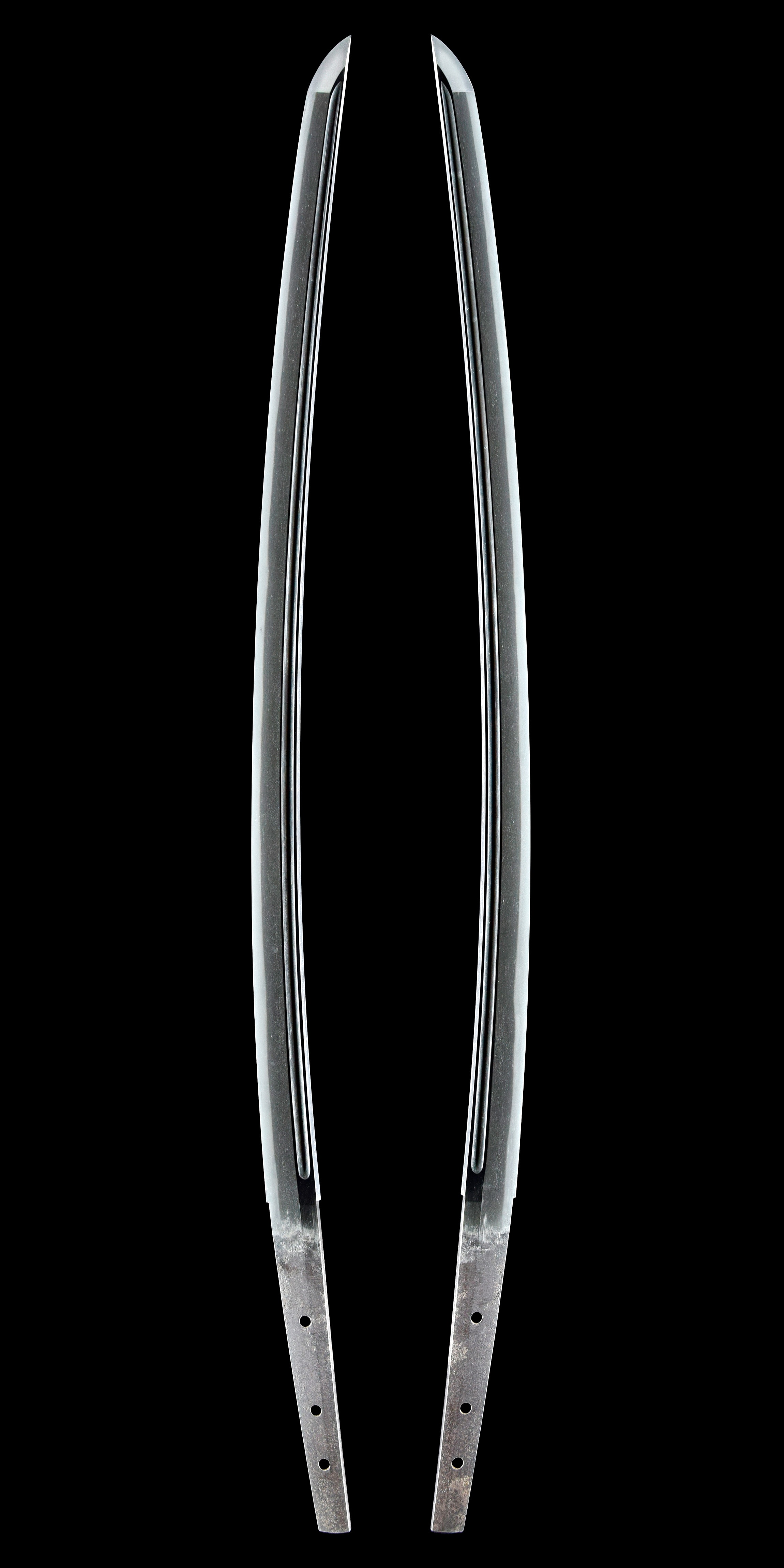
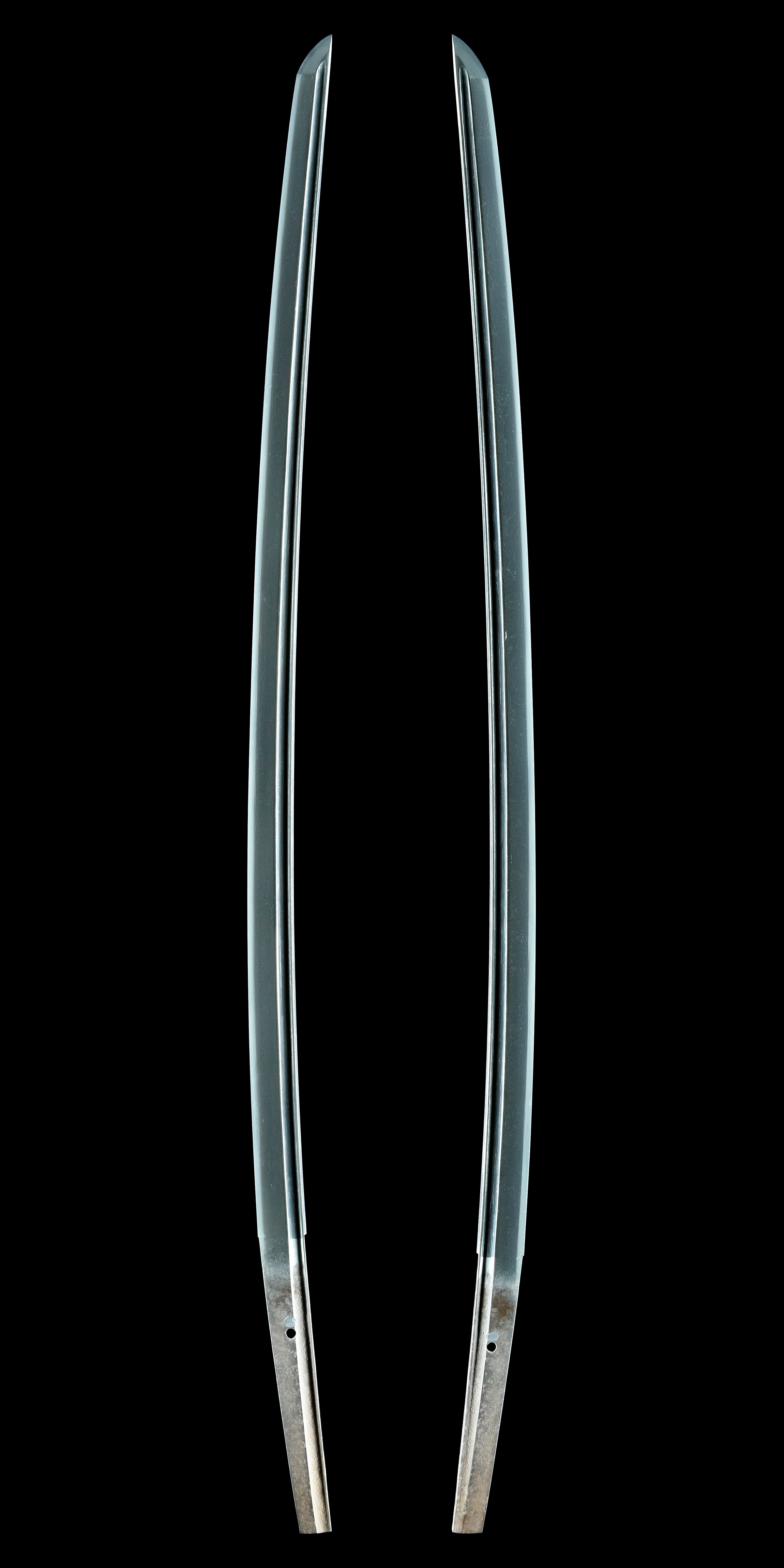
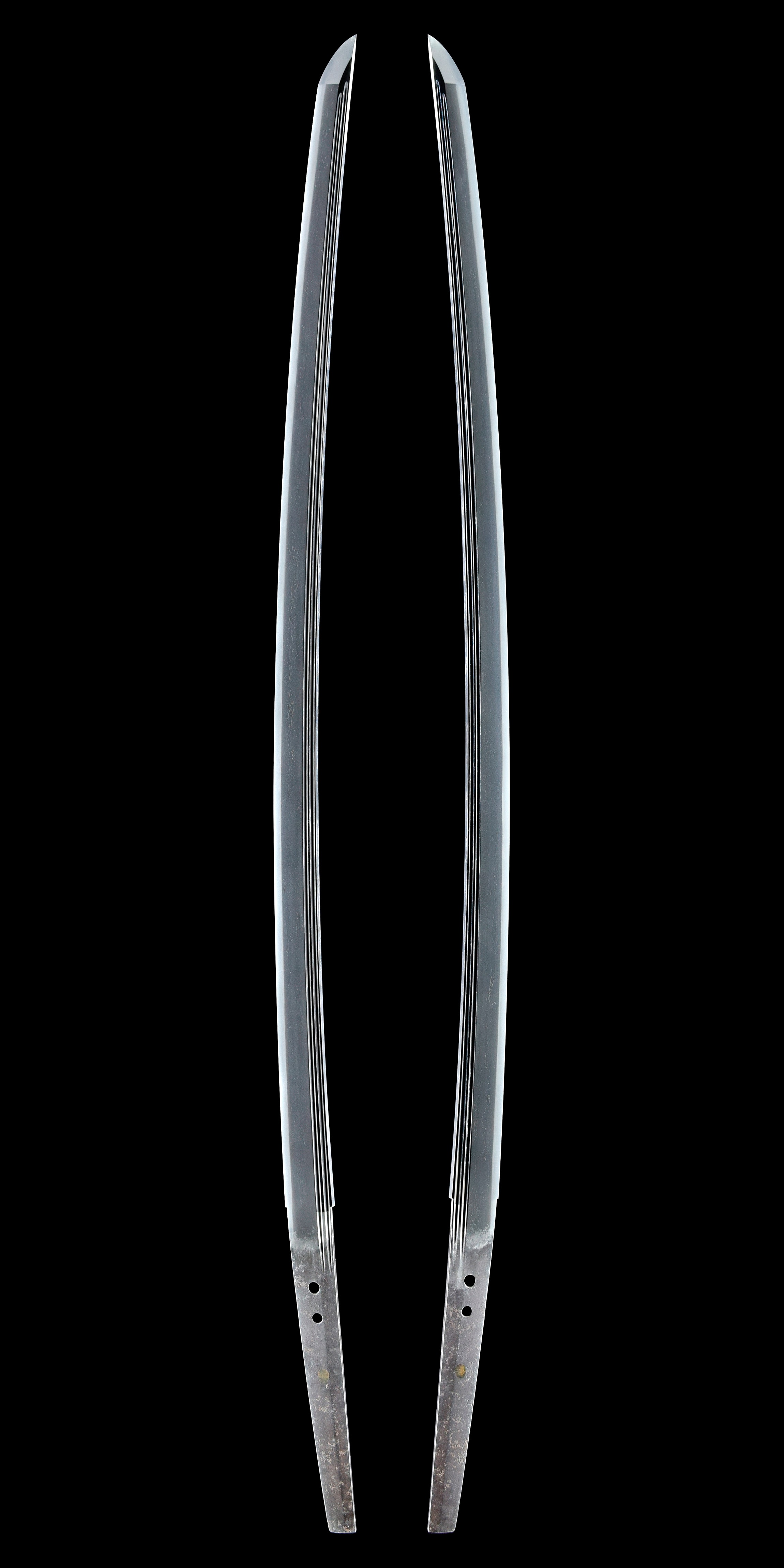
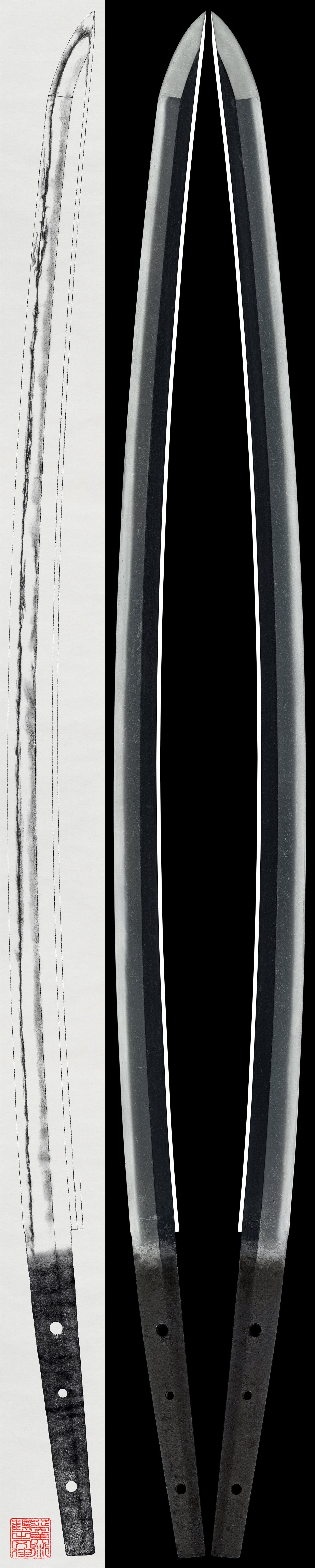
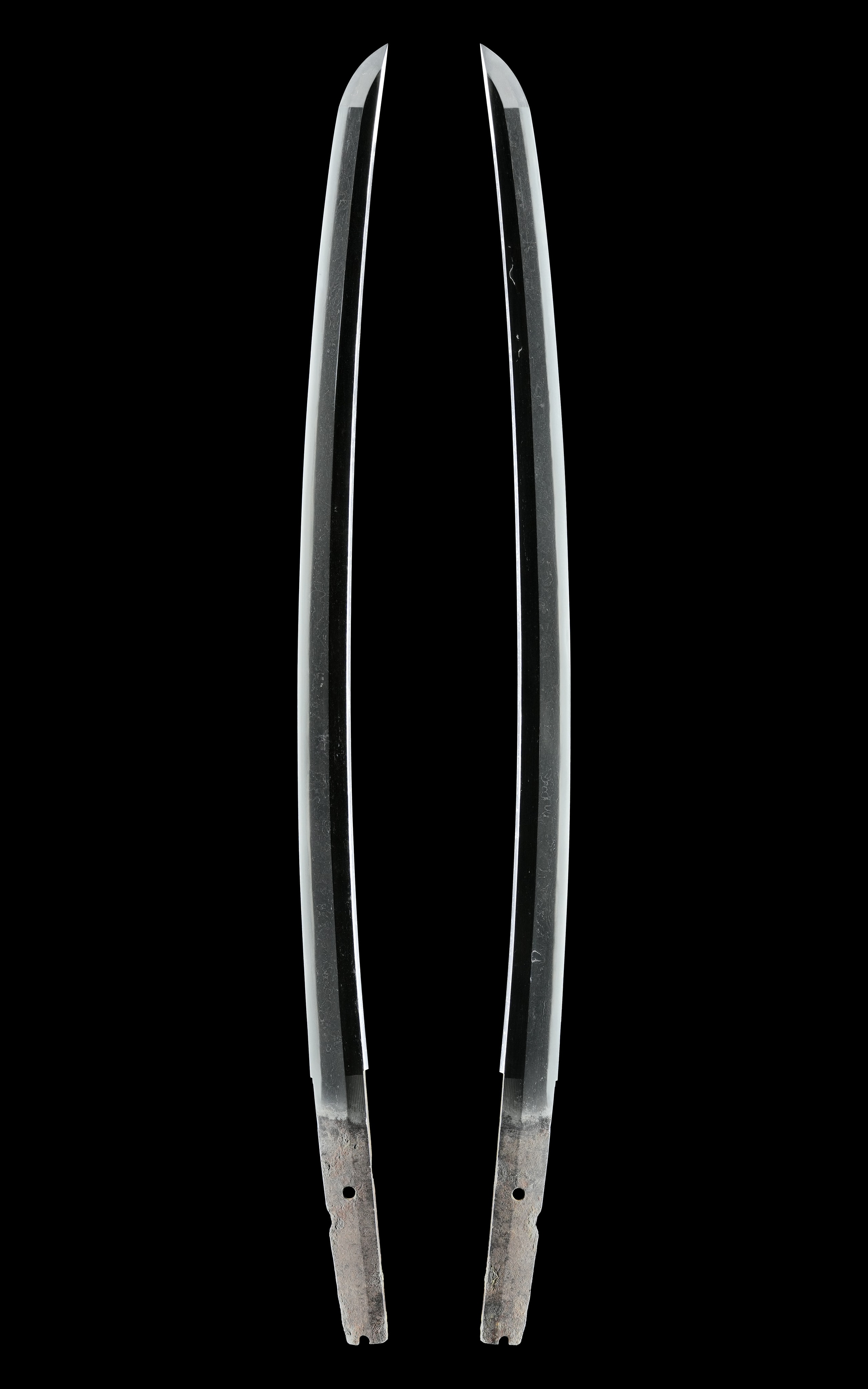
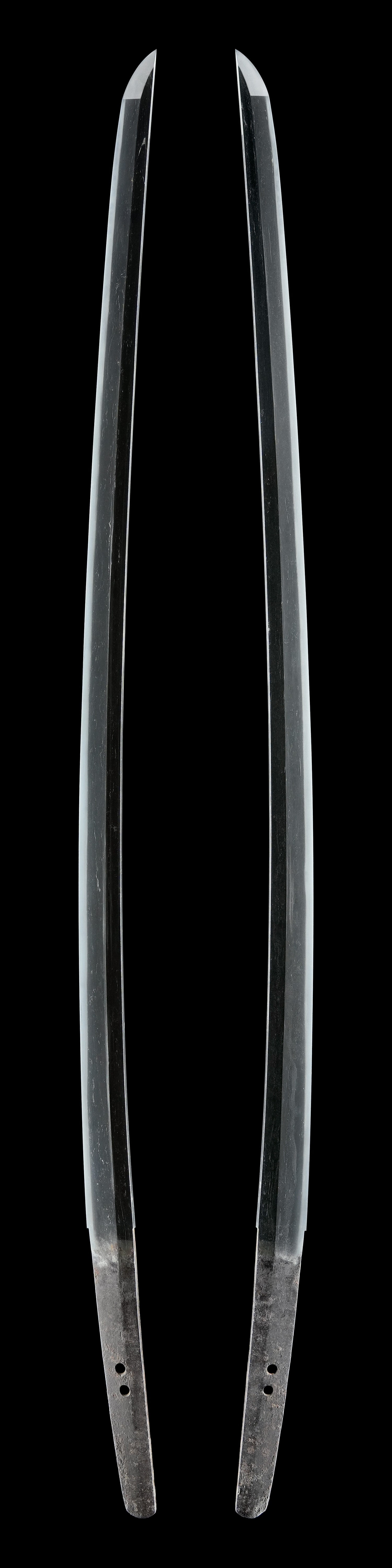
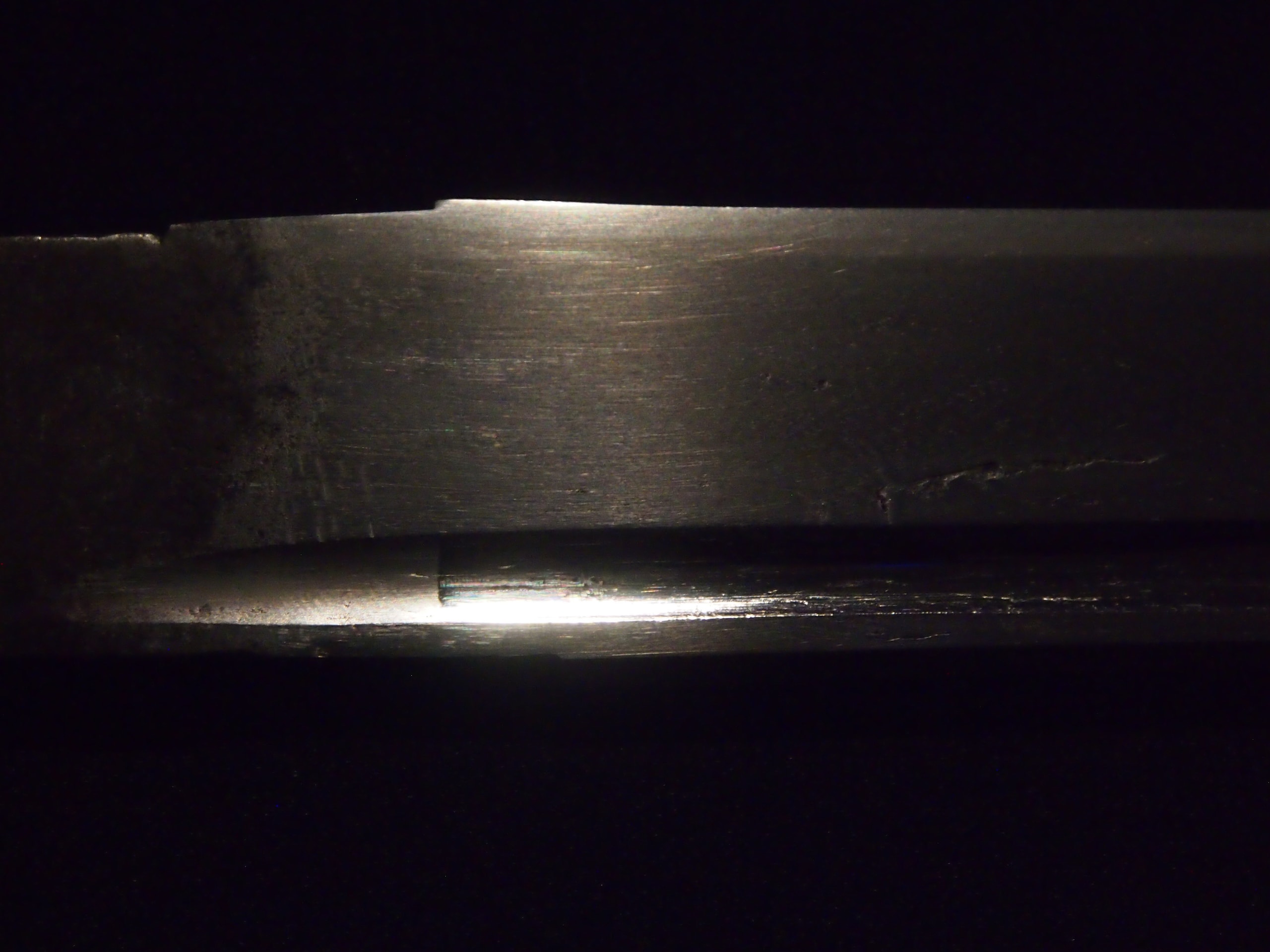
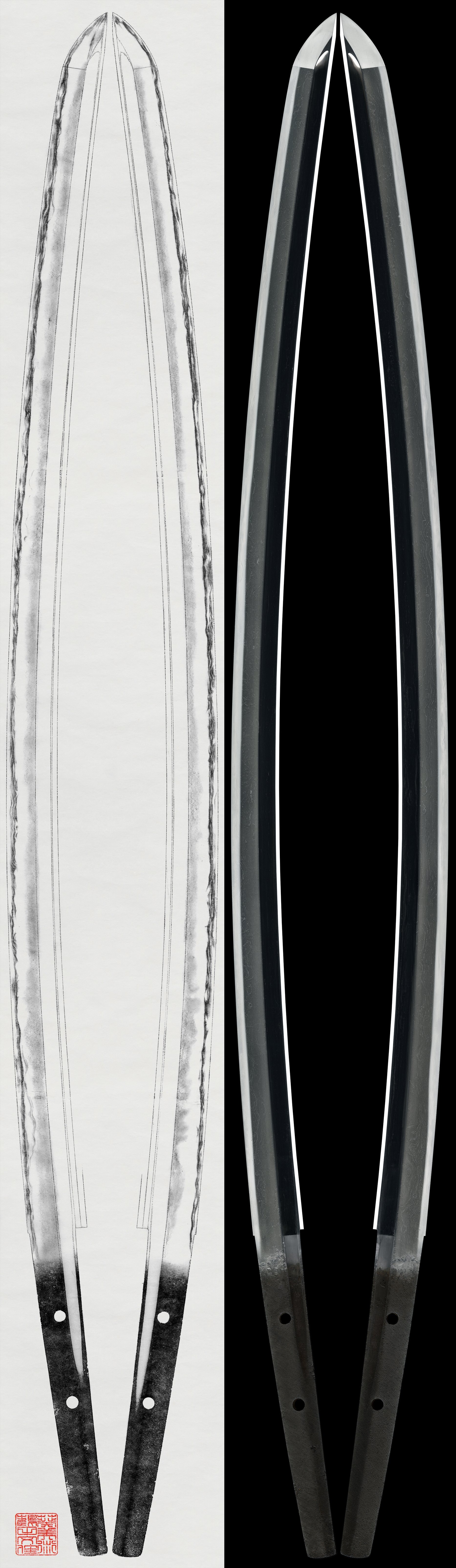
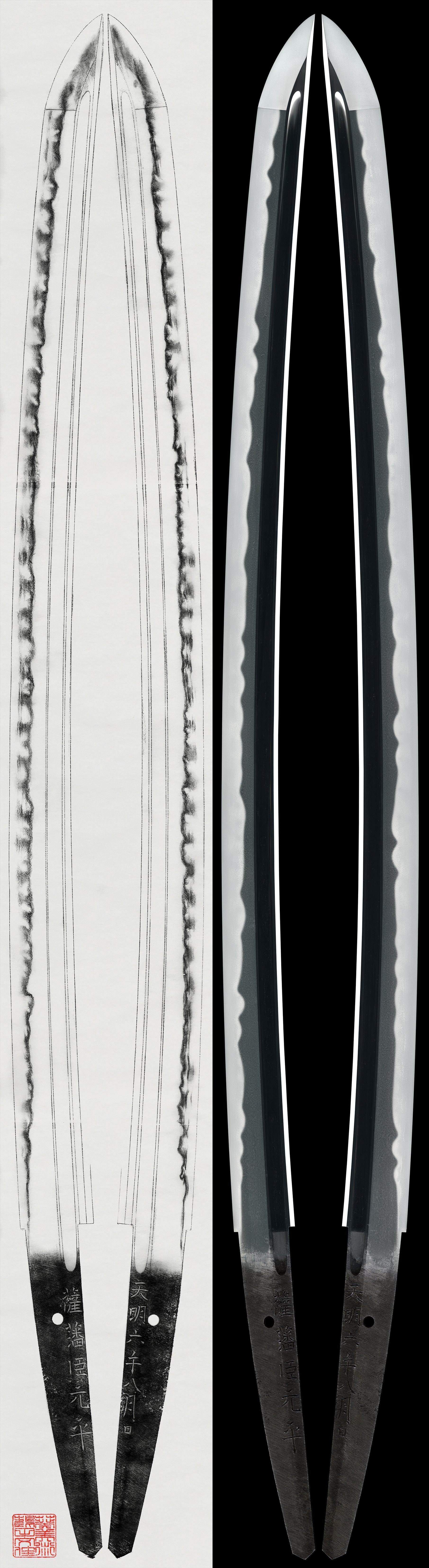
At the second session, in 1973, the designated a signed Bishu ju Masahiro, recording it as the blade of this name whose and are of the finest workmanship. Masahiro of in Bingo province stands with Masaie as one of the two representative smiths of Ko-, the collective name for the school's work from the end of through . "Masahiro is traditionally regarded as a son of Ko- Masaie", in other texts a pupil, yet the sources repeatedly invert the chronology: "judged from the workmanship, Masahiro reads older in style than Masaie", several signed being appraised as late work. The name itself is collective. The signature references list six smiths called Masahiro in Bingo, the recorded dates opening in Joji 3 (1364) and running through Shitoku, Kakei and Oei, and "the Oei work is regarded as a second generation" (応永は二代とみられている). Extant dated blades are rare, only Shitoku and Oei examples being known, and the treats the name collectively, several generations under one attribution.
His manner is Yamato carried into Bingo steel. Bingo held many estates of the central temples, Toji and the Rengeoin among them, and the published sources read the style as the product of that exchange: -based work over a flowing . The sources separate him from Yamato proper in one recurring formula: "compared with works from Yamato proper, the of and is as a rule weaker, the forging stands out in moku, the whitish is conspicuous, the is a whose tends to tightness, and the turns back gently in a rounded manner". A pale rises in the on nearly half of his recorded works; his runs straight to a gentle return, often with , never to the that defines the Yamato schools; and his flows and stands without resolving into their full .
In detail the forging is mixed with moku and , standing in places, with very fine , entering finely, and patches of . Over it the is a medium or mixed with and , with and entering well; the frays into , and work through the , and the stays tight or subdued with thick rather than bright heavy . The work divides into two registers. The signed , mostly though several keep their , carry the in large slender-chisel characters: the first generation signs invariably Bishu ju (備州住) and never Bingo no ju, beside rarer three-character reading Masahiro (正広作) and two-character . The sanji- pieces read oldest; one has its recorded in the Ojakusho (往昔抄), the compendium of sword rubbings. Beside them stands the register, attributed by , several settled by attribution inscriptions rather than signatures; the examples run wide in with , one of them "originally a of nearly three ".
Within the one discipline distinct strains stand out. The dated Shitoku 1 (1384), a 79.6 cm blade with its nagamei intact, keeps the base but takes throughout, running hard along the upper half into niju and sanju-ba effects, and is singled out as "showing, within his oeuvre, a manner strong in the of and "; a later designation links a sanji- of the end to it by the and . The Oei work, read as the second generation, leans toward the neighbors. The dated Oei 6 (1399) shows "a manner that could at first sight be mistaken for the school of Yamashiro" (一見山城国来派の作に見紛う作風), only the slight -zori betraying the period. The dated Oei 22 (1415), the one blade in the record signed Bingo no ju Masahiro (備後国住正広), goes the other way toward : a slanting lean enters the of its , a stands in the with , and "the burns its return deeply downward in waterfall fashion, the so-called -" (帽子は返りを滝落し風に深く焼下げる所謂三原帽子となっている). A of the years lines up round-topped that the sources liken to the Hokke Kaneyasu (法華兼安) of the province. The adjacency is old: the treatise Shinkan Hidensho already wrote that the school's face "resembles a ".
Against Masaie, the school's other master, the record draws the line through the . In Honma Junji's adjudication, "Masaie's is almost invariably an orderly , while Masahiro more often shows pieces with a degree of feeling and many activities within the ", the likewise not uniformly round but at times tending to midare or . The divides the two as well: "Masaie has many works with , while Masahiro shows comparatively many with a moderate ". The school's stream runs to the end of , and the deep-returning of his side is anchored by its celebrated blade, the O-, a designated Important Cultural Property, invoked for the strikingly deep turnback seen within his work.
Fujishiro rates him Jo-jo . The official record carries thirty-seven designated works: one Important Cultural Property, the O- itself, three , twenty-five and eight Bijutsuhin, twenty-six of them signed against seven , with four more carrying attribution inscriptions. Seven blades hold recorded provenance, among them a Jubi whose cut signature reads Bingo ju Masa (備後住正), passed from Prince Konoe Fumimaro to the Yomei Bunko, Kyoto, and another held by Asano no Kami. The Important Cultural Property is patrimony, permanently held; recorded institutional holders are the Tokyo National Museum, the Tsukamoto Museum and the Yomei Bunko, the rest in private hands. For the collector the realistic field is the twenty-eight blades of the and tiers: not beyond reach in the way the great and names are, but coming to market only from time to time. The signed with the slender-chisel nagamei carry the chronology of the school; of one such the closes its notice praising not only the work but the unforced, gentle character of the signature itself.