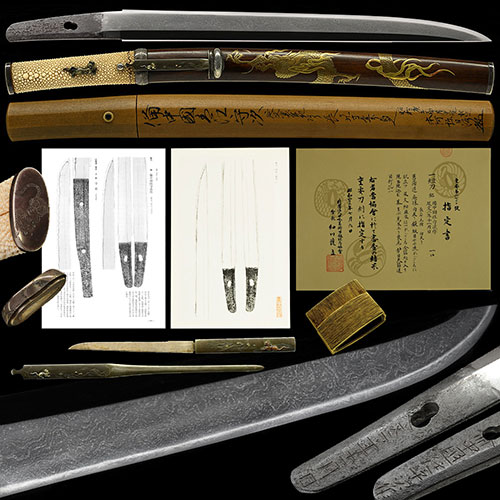
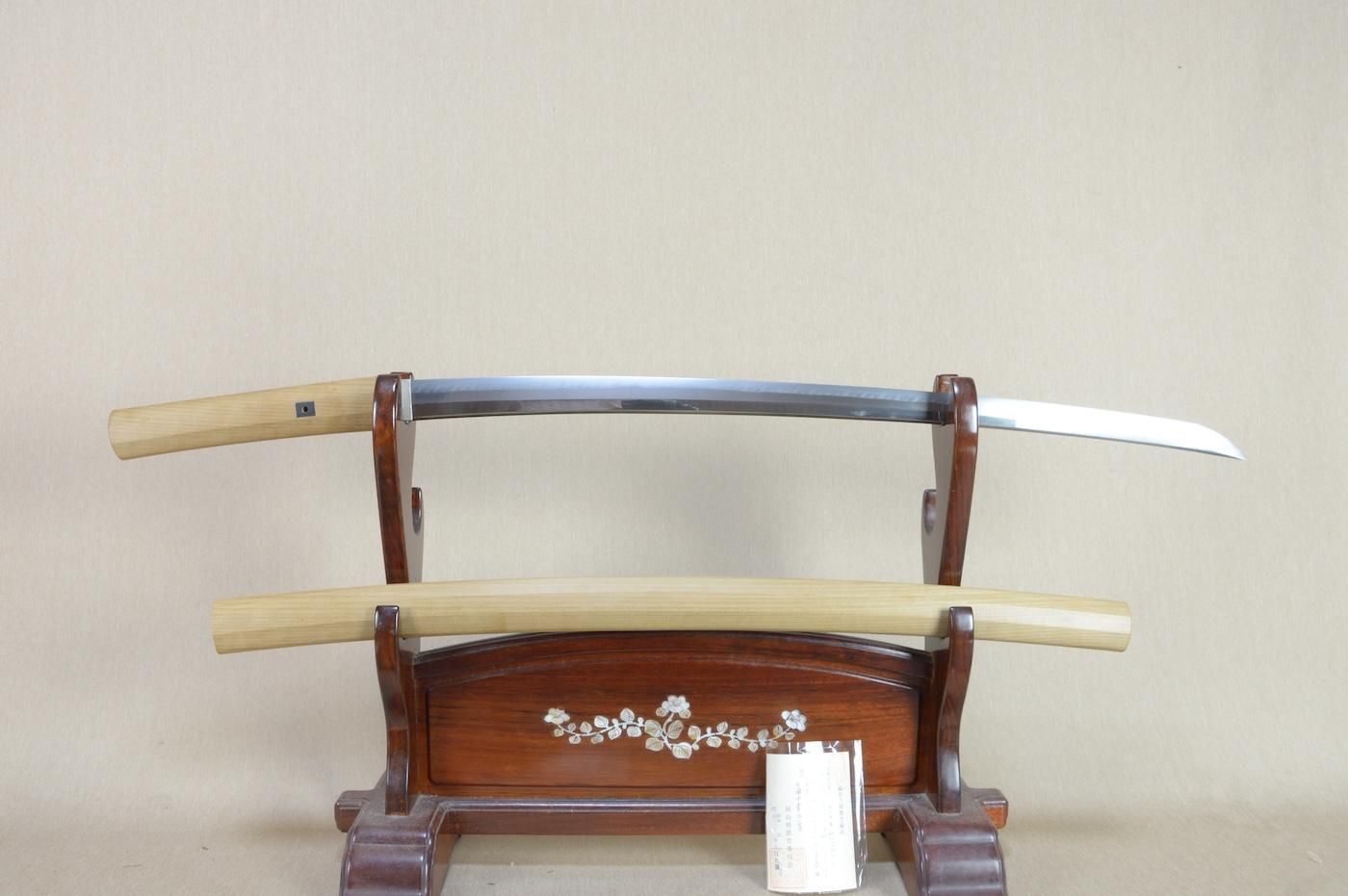
Moritsugu is an Aoe smith of Bitchū, his name traditionally derived from Yasutsugu, the founder of the Aoe lineage, and carried by several hands from the Ko-Aoe period down into the Nanbokuchō. The published sources are careful with the name: the Meikan lists more than one smith called Moritsugu even within Ko-Aoe, and the name passed on afterward, so that surviving works range from blades judged to the end of Kamakura through dated pieces of the Bunwa and Enbun years in the middle of the Nanbokuchō. His record falls into two faces, an early powerful tachi and a group of dated late tantō, and of the latter the commentary on one Enbun piece says plainly that this is the work of the last bearer of the name, 'the Moritsugu who brought that tradition to its close'[[c:1]].
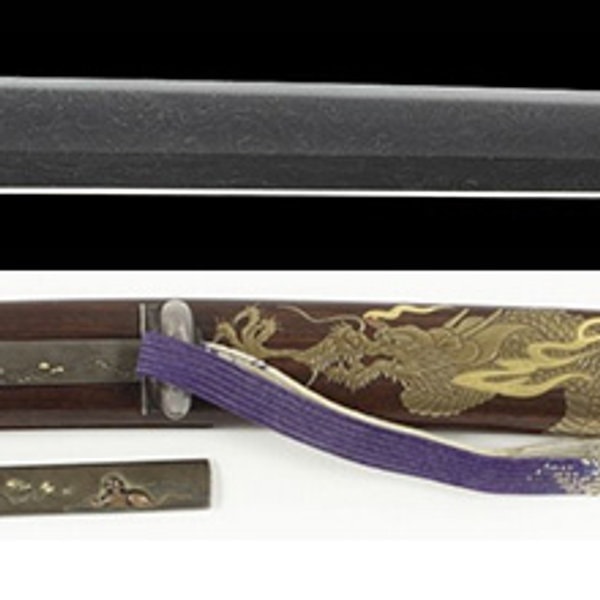
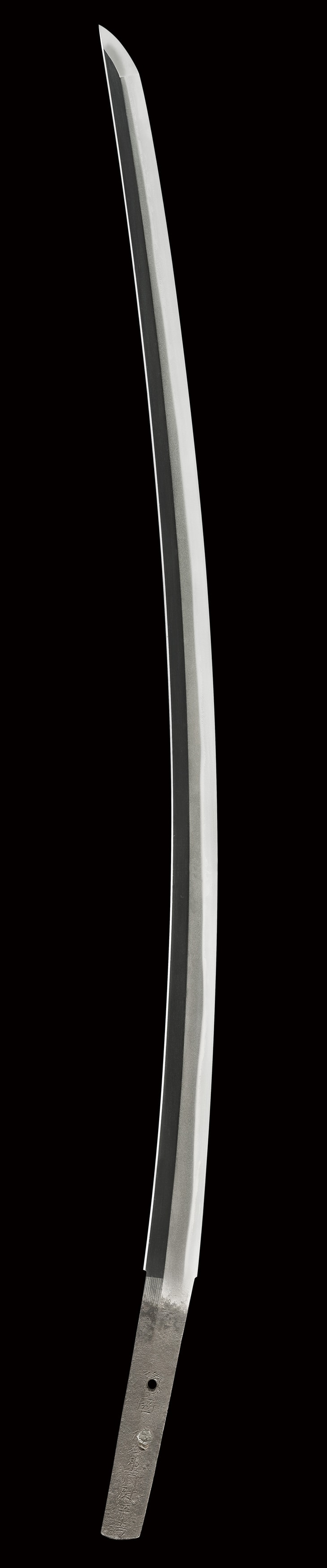
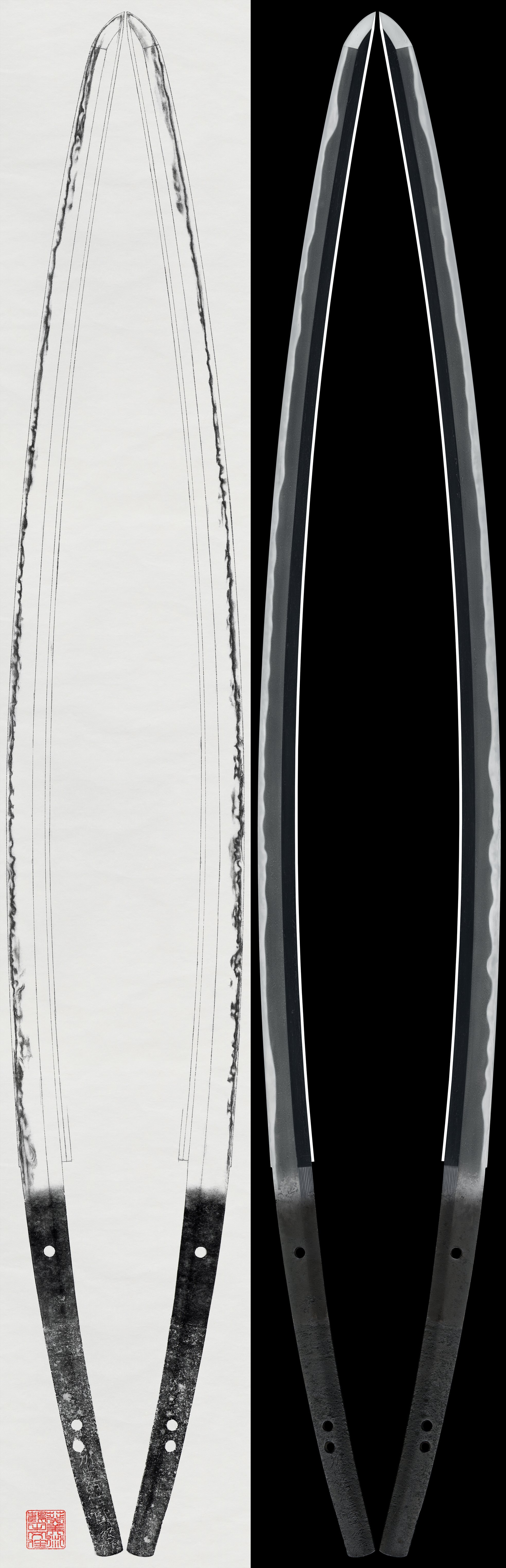
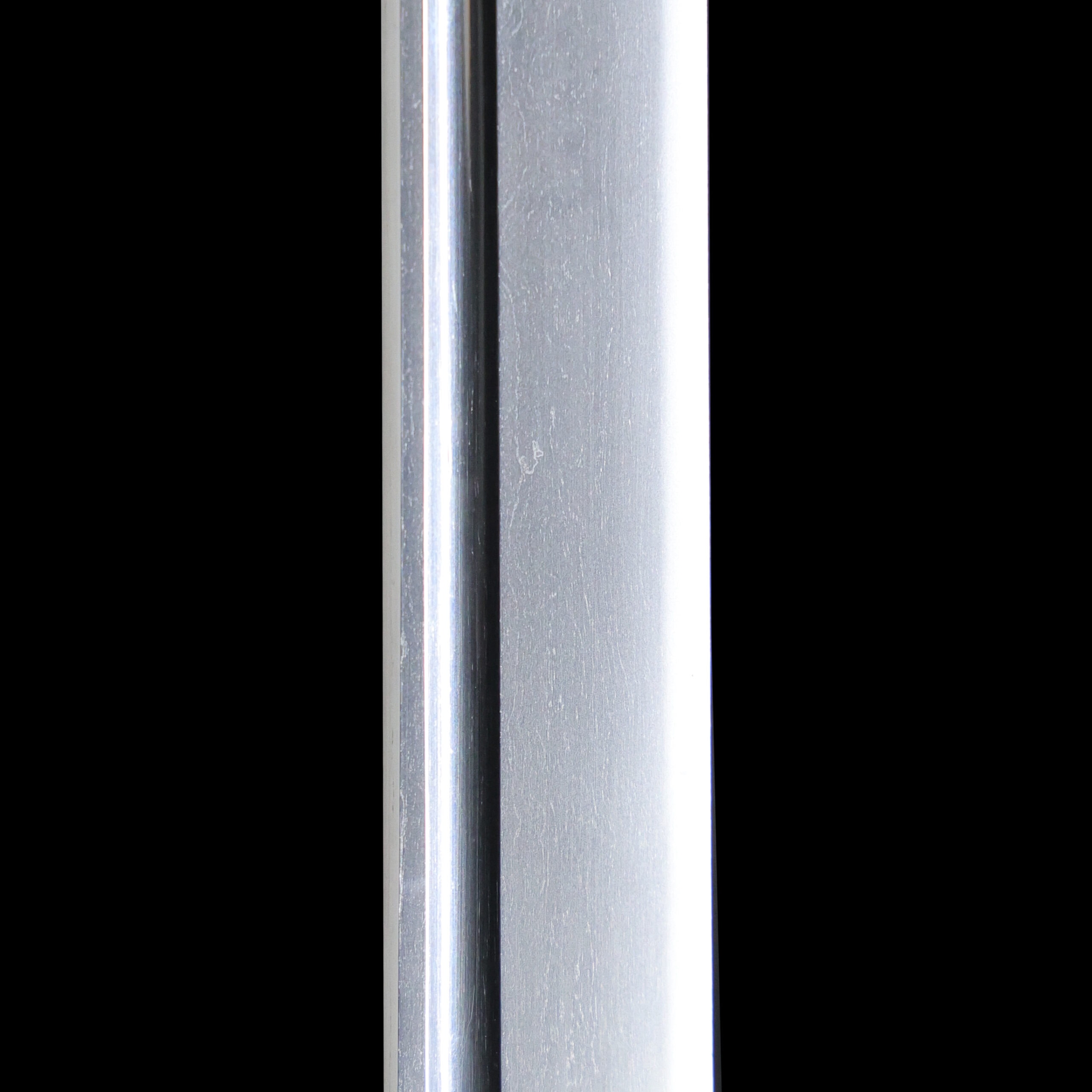
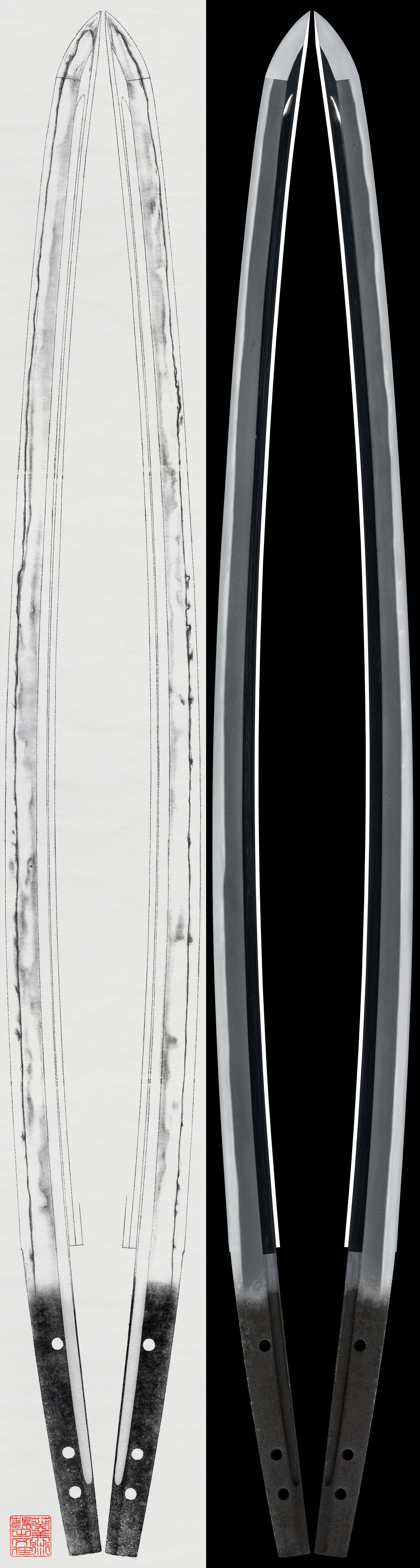
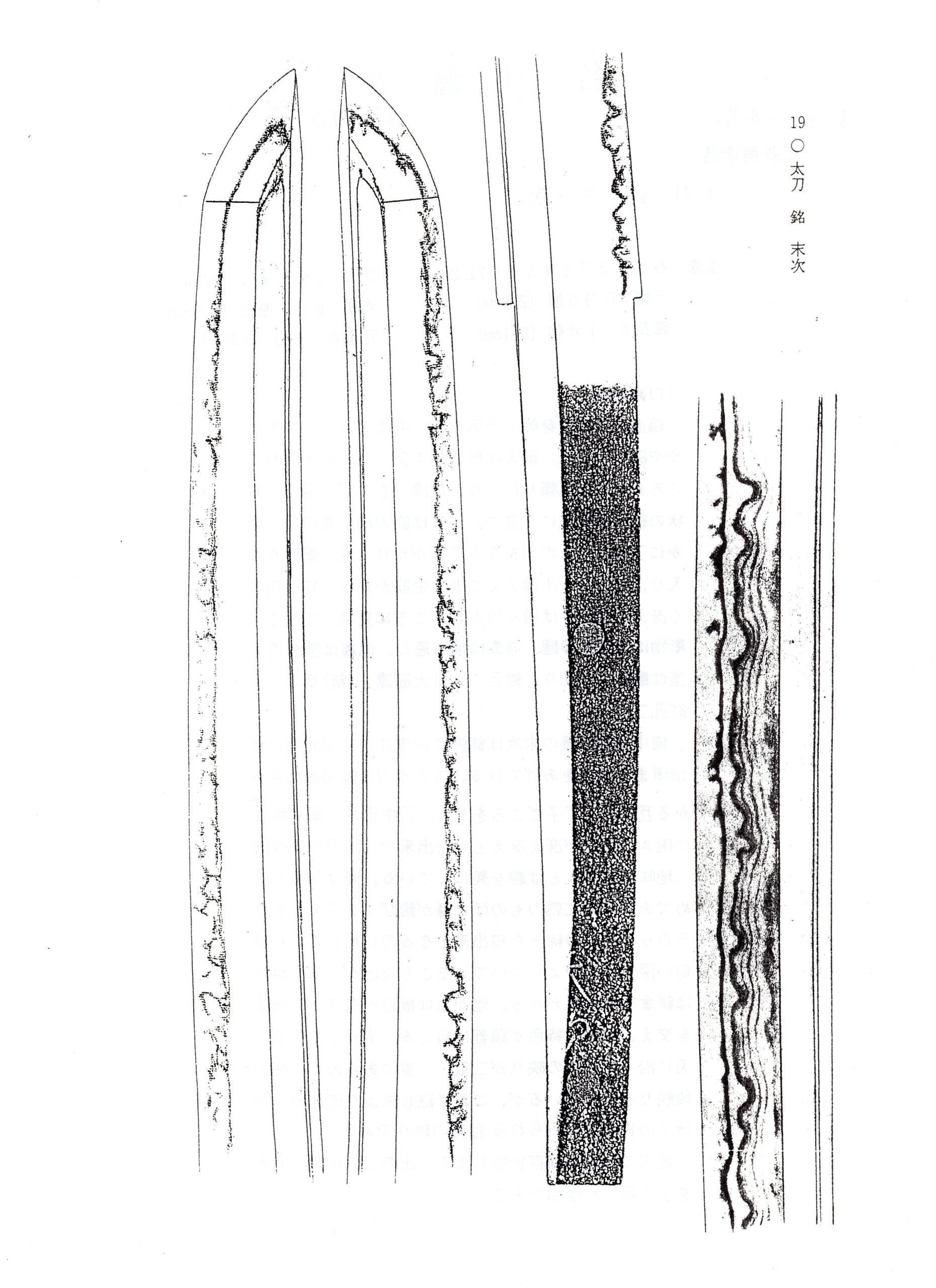
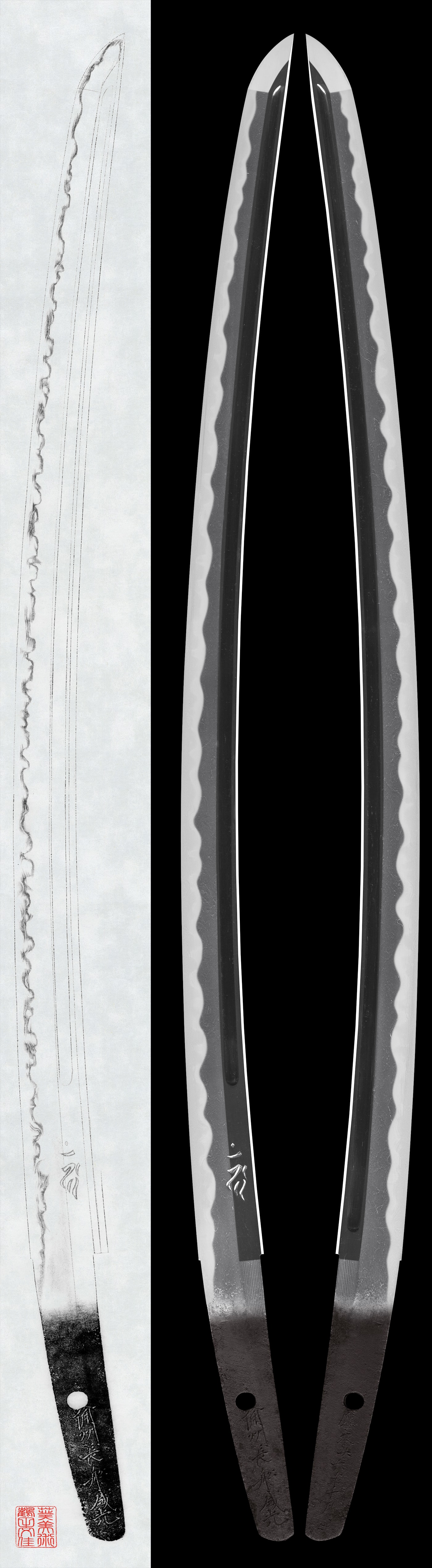
The hand that runs through both faces is a calm, bright suguha. On the late tantō the temper is nioi-dominant and clear, the nioiguchi drawn tight, ko-nie gathered along it; one Bunwa tantō the published record calls a textbook of Nanbokuchō Aoe suguha work. On the early tachi the same line is a suguha base into which ko-gunome and ko-chōji are set, ko-ashi entering, fine kinsuji running, the nioiguchi bright. The judges single out this quality above all: the way a tight, bright suguha is tempered to produce a deep shio-ai, a salt-like depth in the hardened edge, they call 'superb'[[c:2]], and from it 'the high technical level of Moritsugu can be perceived'[[c:3]].
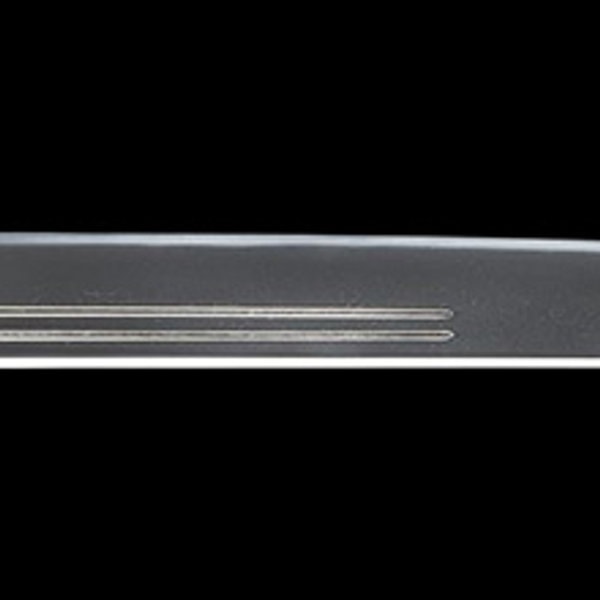
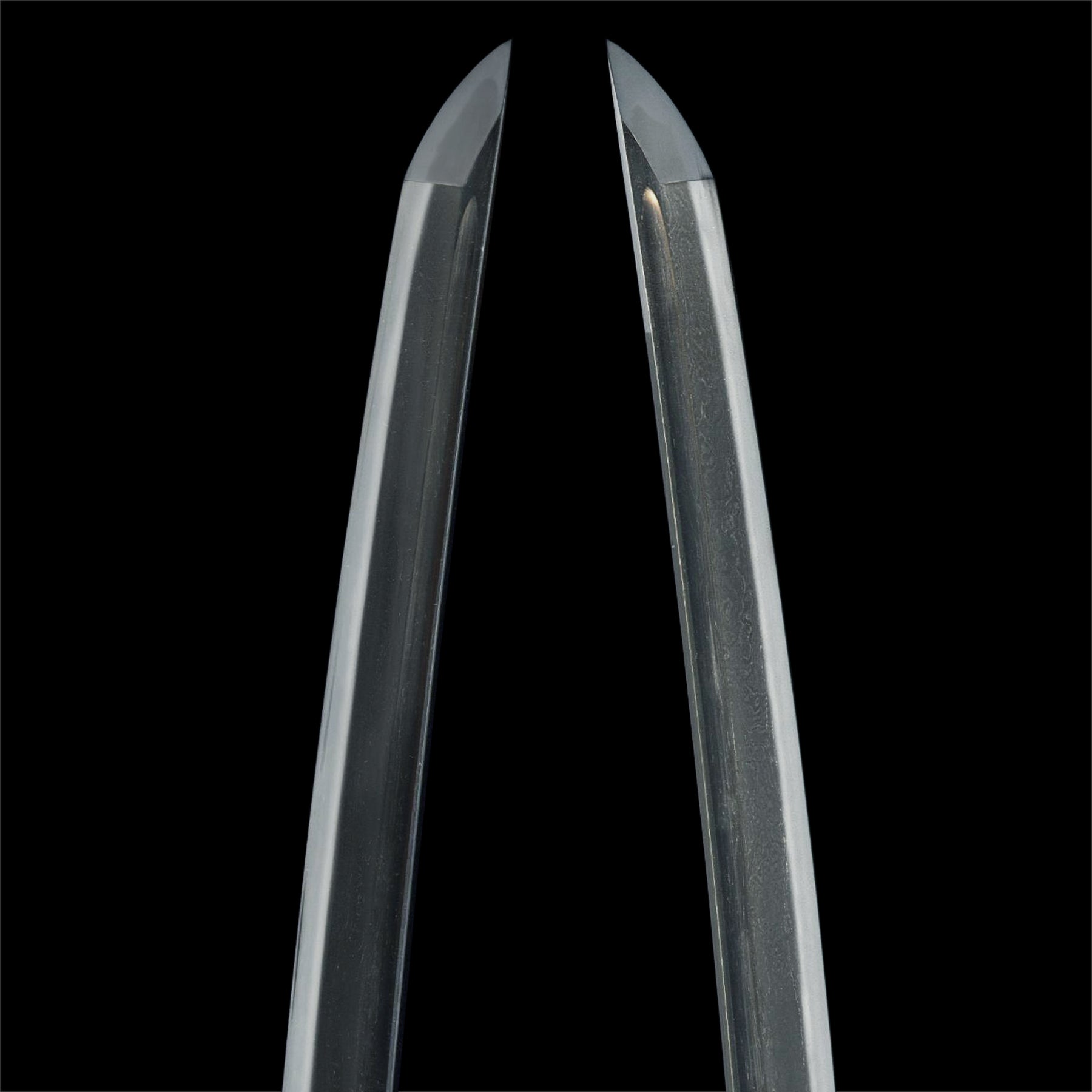
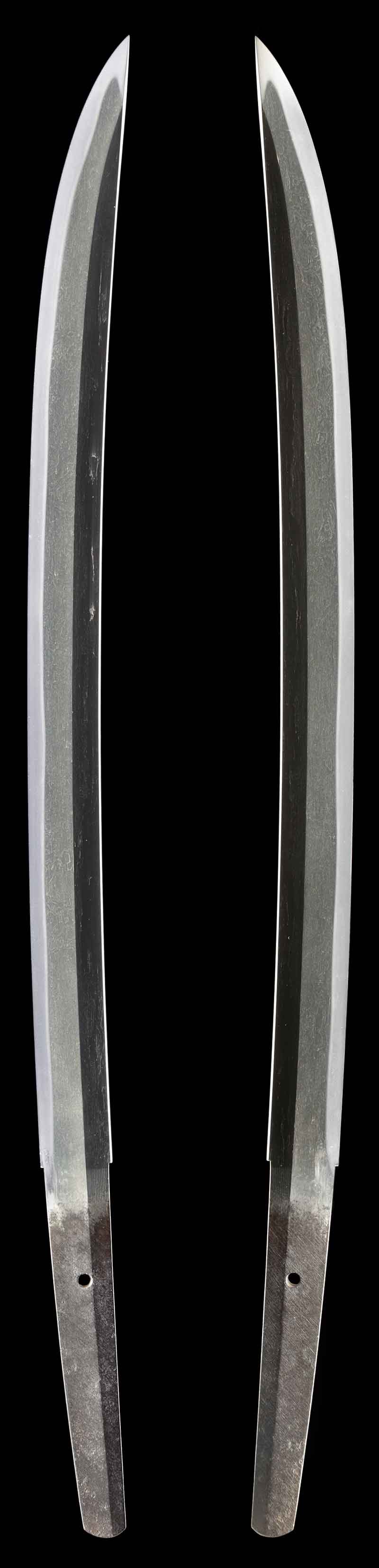
The jigane is the Aoe steel at two strengths. On the early two-character tachi it is a ko-itame mixed with ko-mokume, the grain finely standing, ji-nie adhering throughout in fine particles, chikei entering, and from the hamon boundary a somewhat faint midare-utsuri rising, the most refined jigane in his record. On the dated tantō the forging stands a little more, an itame that at times flows, mixed with jifu and chihan-like mottling, with a clear utsuri over it. The bōshi on both is essentially straight, turning back in a ko-maru, sometimes with hakikake, and on the tachi a bō-hi is carved through into the tang.
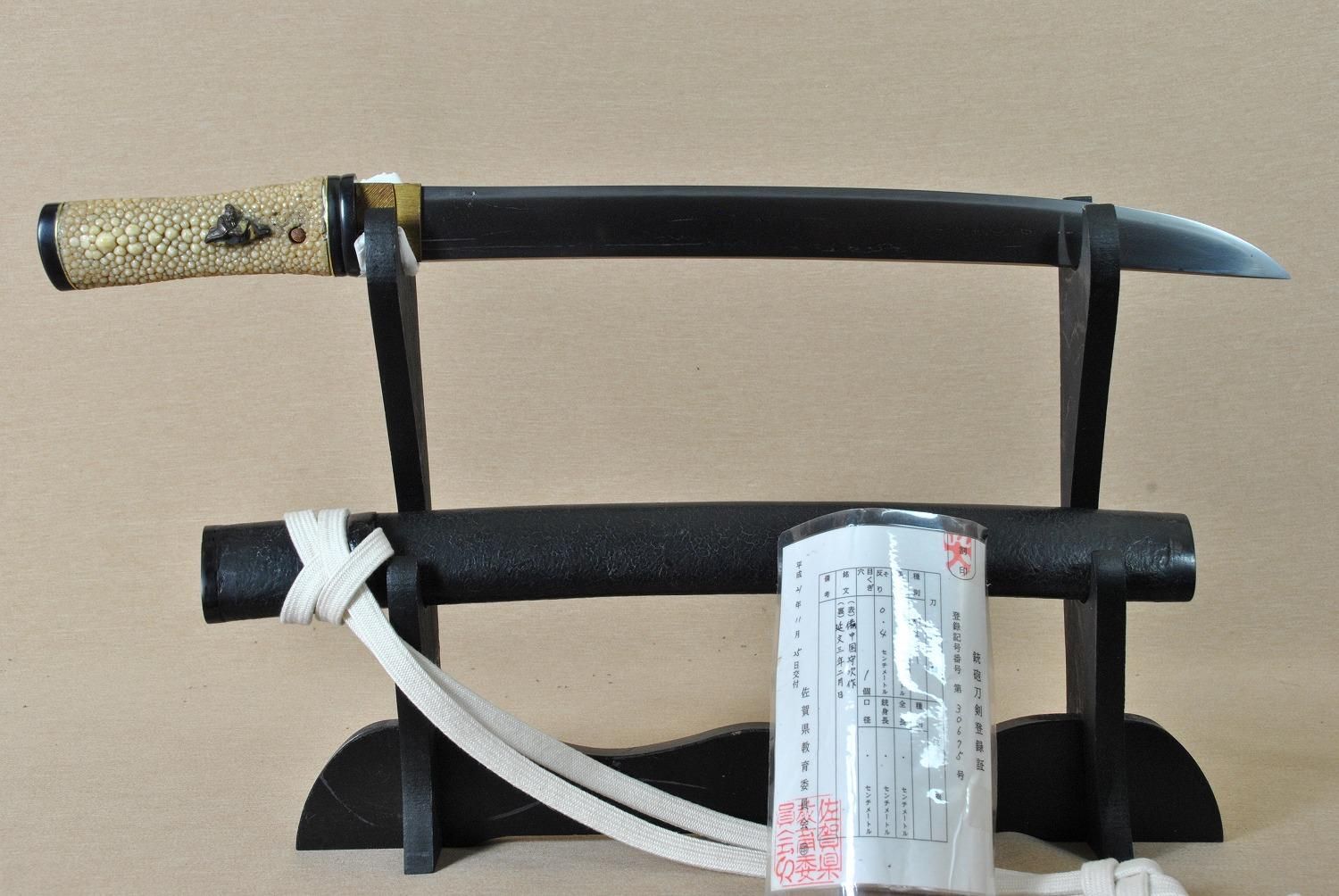
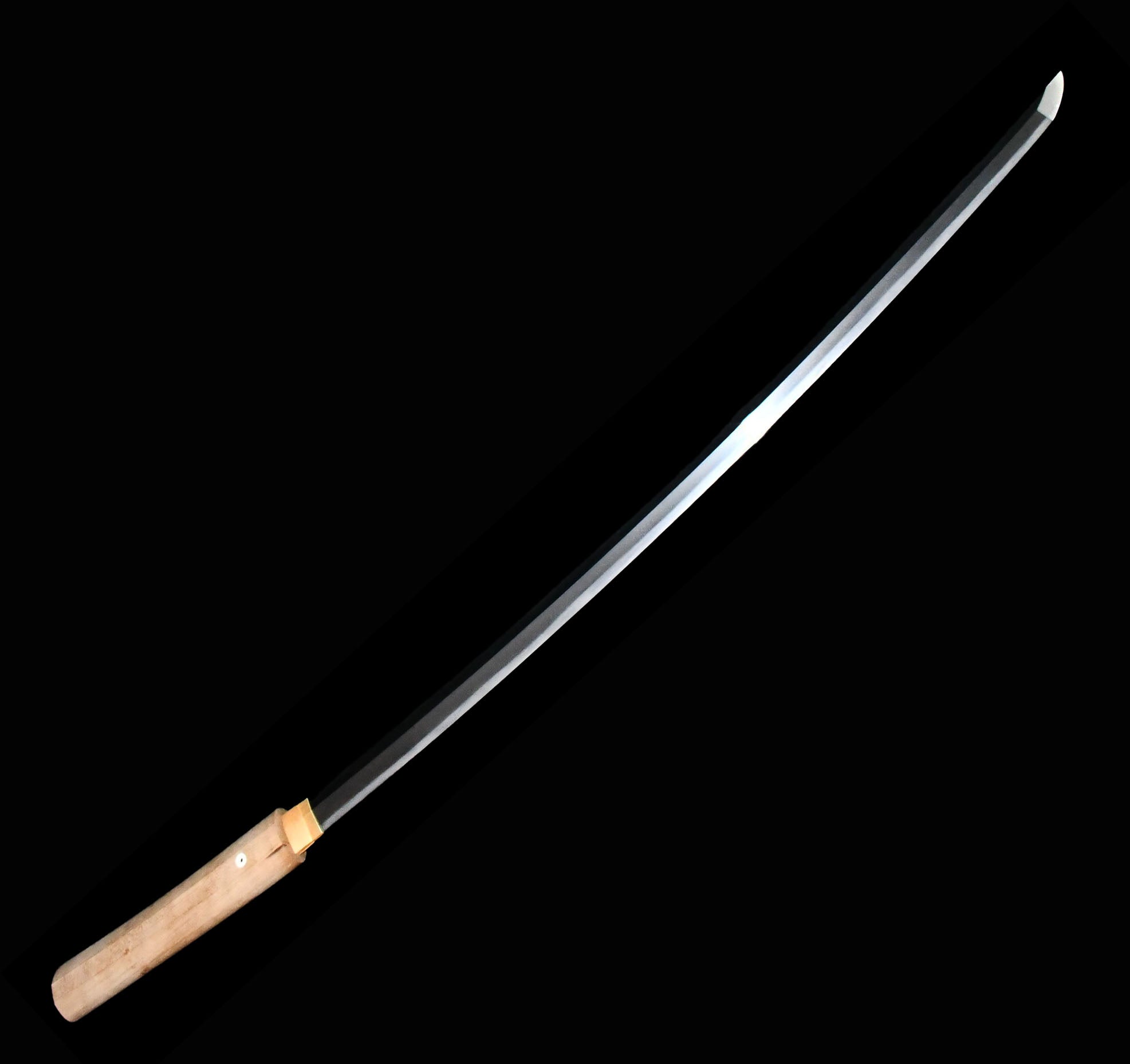
Within the dated work the published sources draw the period's central observation. The Aoe of this generation, they note, shows little conspicuous nie and becomes for the most part nioi-deki, and in it 'there are two manners, the traditional suguha and a splendid saka-chōji not seen before'[[c:4]]. Moritsugu's own work belongs to the first of these, the traditional suguha; the second, the reverse-slanting line, touches his hand only in the saka-inclined gunome of his Jūyō Bijutsuhin tantō, where the temper is a moist nioi-deki with reverse-leaning gunome mixed in. His shapes are of their moment: the early tachi wide and powerful with high koshizori, thick kasane and funbari in the Kenmu manner, the tantō hira-zukuri with a sun-nobi feeling or a faint uchizori, and one rare shōbu-zukuri piece the sources note as unusual for the smith and the school alike. Several of the tantō carry a sankō-ken or goma-bashi devotional carving in the groove.
What sets him within the school is the very thing the judges name. Against the flamboyant saka-chōji the late Aoe was then inventing, Moritsugu keeps the school's older line, a bright midare-utsuri over a fine ko-itame and a tight, luminous suguha. His powerful early tachi belongs to the classic Aoe manner of suguha and utsuri, while the dated tantō bring the long Moritsugu name to its end; one of his blades is judged so close in workmanship to the school's standard that its claim rests on era and lineage as much as on a personal tell. The strongest external anchor is documentary: the published sources find that the manner of cutting the signature on his finest tachi matches exactly the hand of the tachi long held by the Uesugi family, the Important Cultural Property known as the Rinpō Tachi, differing only in that his bō-hi carried through the tang forced the signature onto the hira-ji rather than toward the mune.
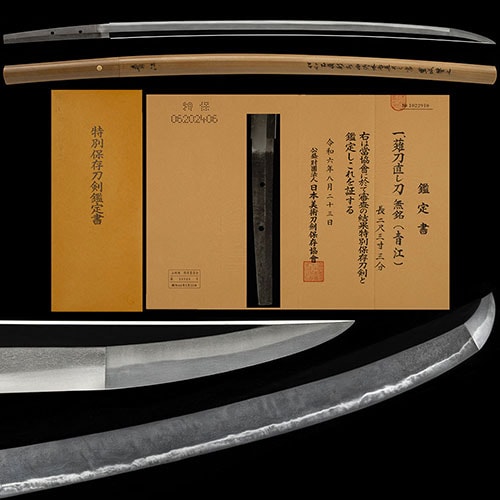
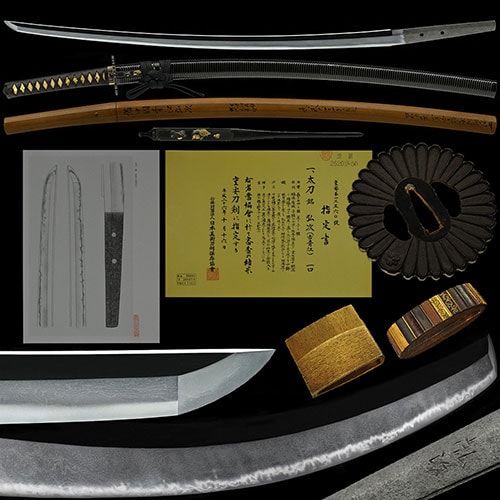
For the collector he is a rare and quiet name. Fujishiro grades him Jō saku; the Tōkō Taikan values his work in the upper-middle range. He has no National Treasures. His record runs instead through the Important Cultural Property tier, three blades among them, one Special Jūyō tachi and four Jūyō, with a single prewar Jūyō Bijutsuhin tantō, so that nine designated works stand on record. The most storied of them, the Rinpō Tachi descended through Uesugi Kenshin and his house, is preserved in the Tokyo National Museum, patrimony rather than property; the Jūyō Bijutsuhin tantō was certified in the Suzuki collection of Yamagata. Of the remainder the Special Jūyō and Jūyō tachi are the pieces that survive in private and recorded hands, and even these come to light only seldom, since extant Moritsugu of this period are few. A signed Aoe Moritsugu reaching a collector is an uncommon event, and a document of how the Aoe school carried its old suguha down to the close of its line.