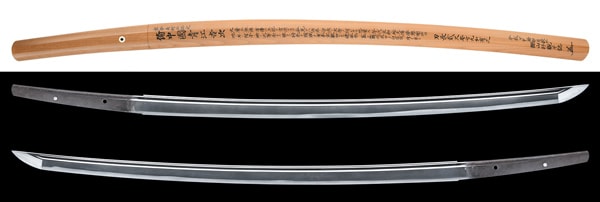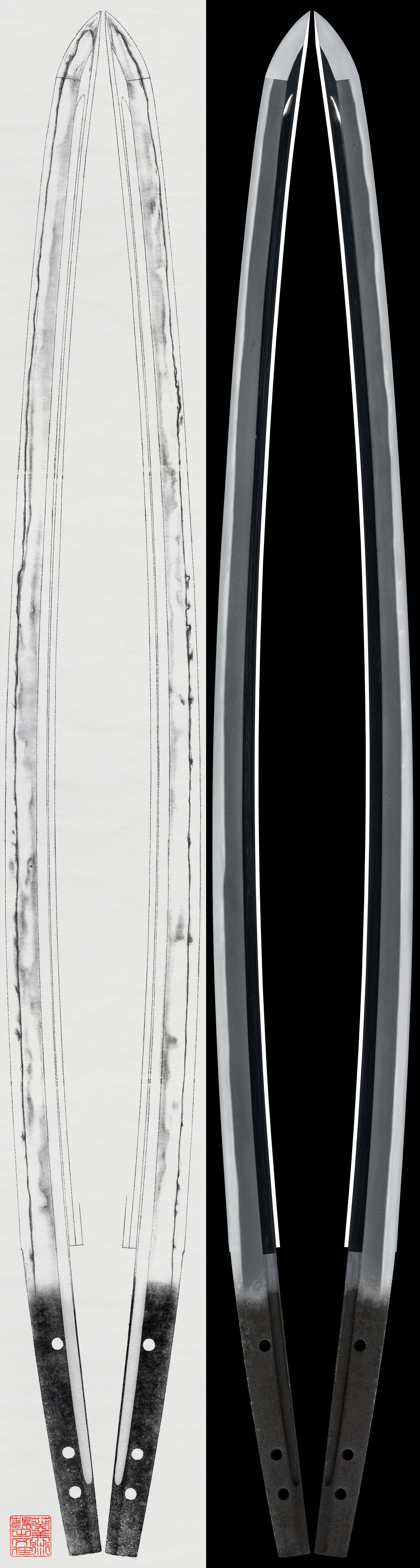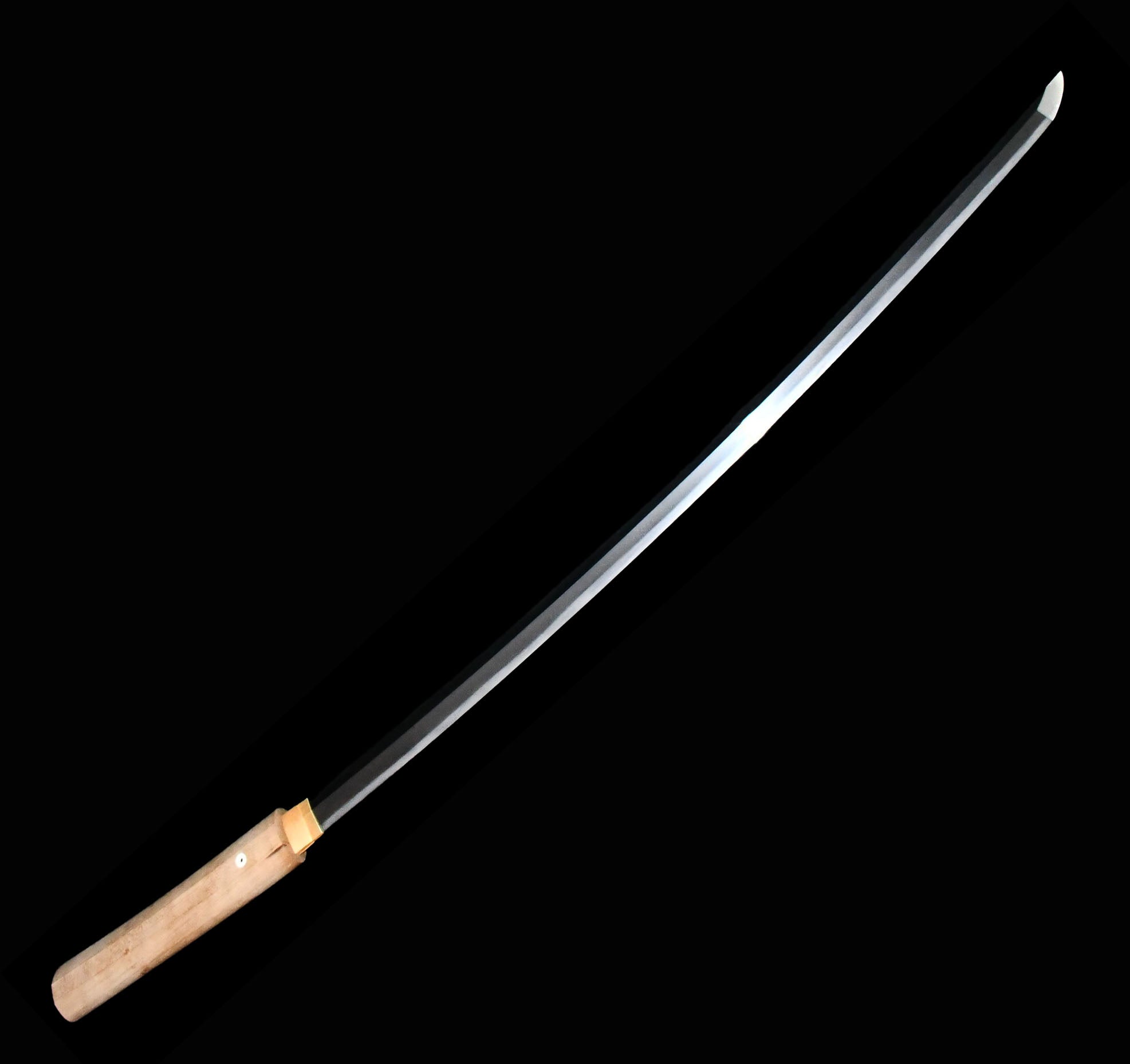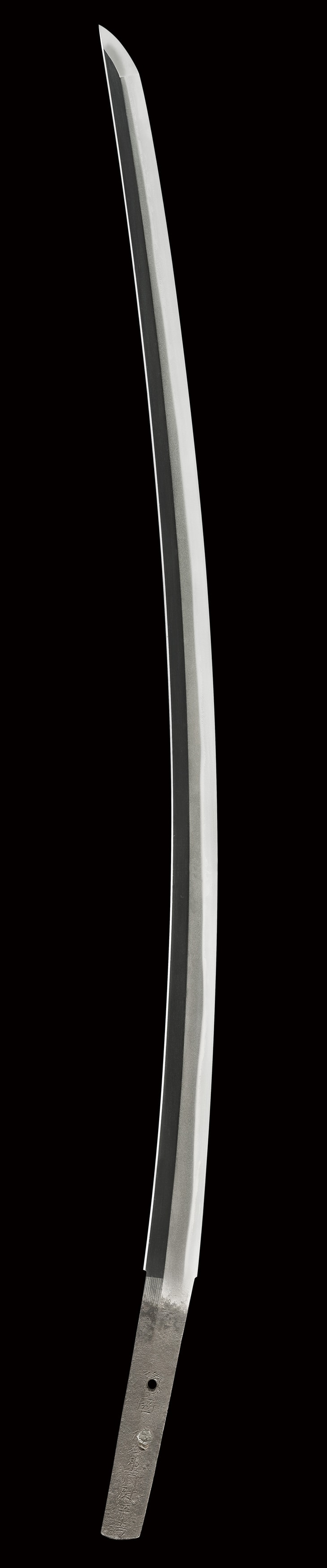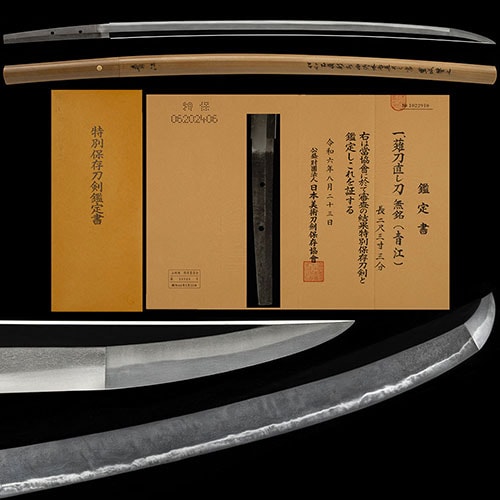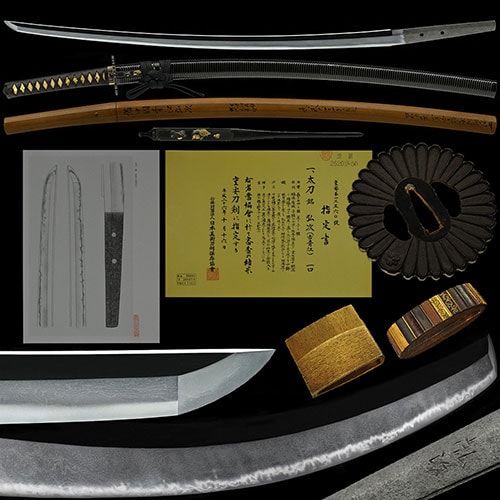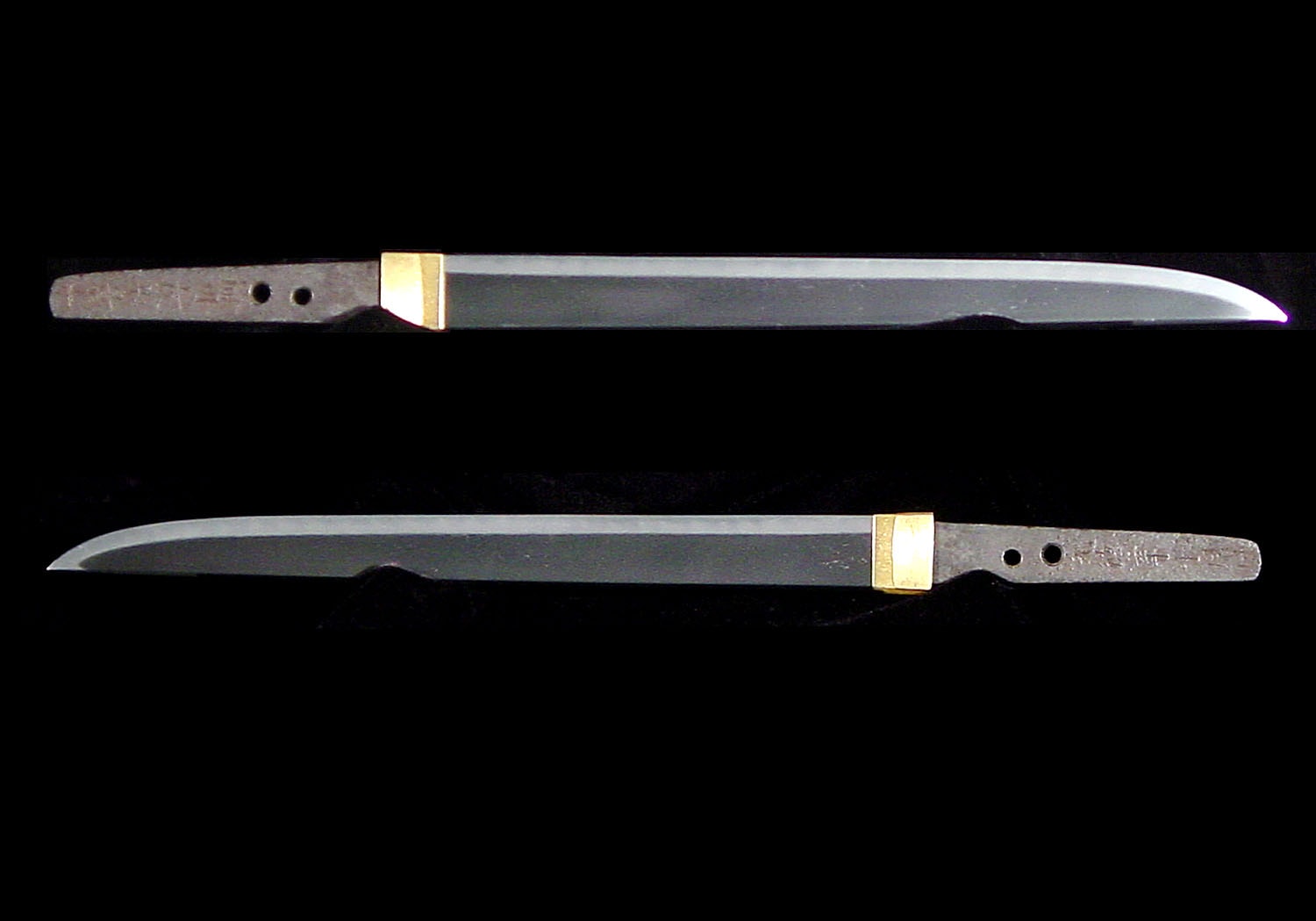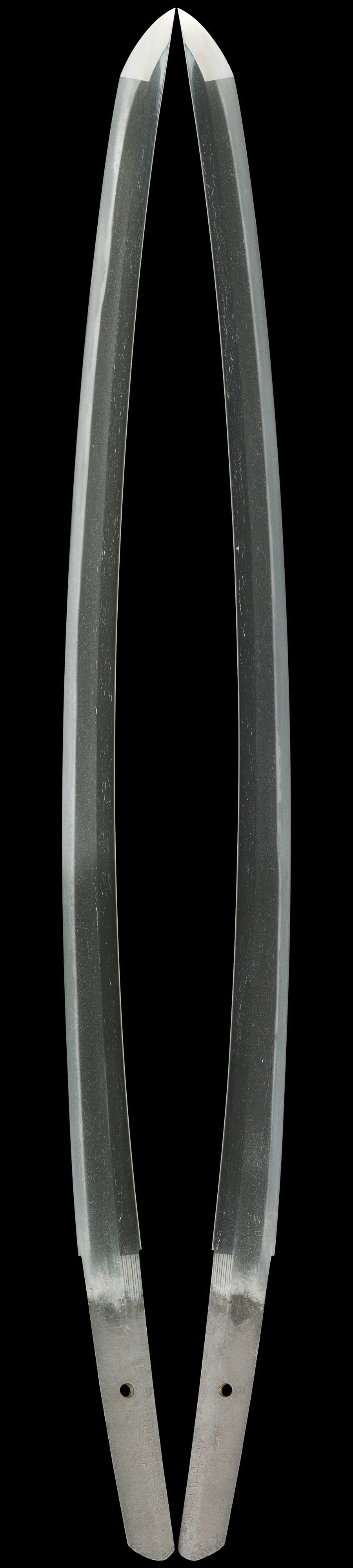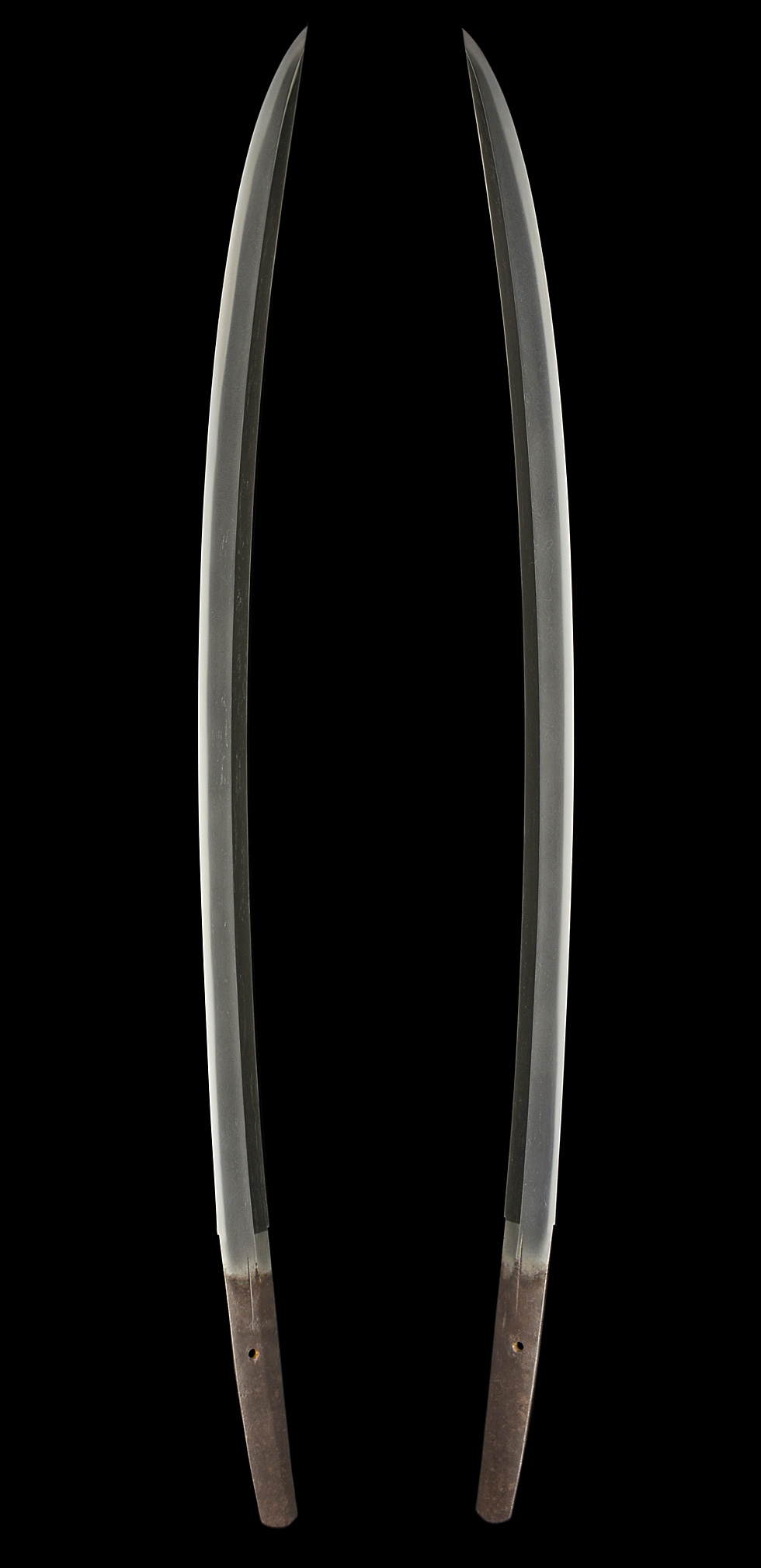
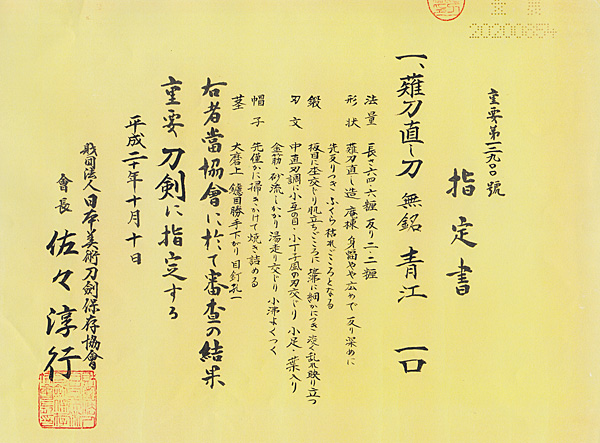
-, 54th Session — Designated October 10, 2008
, : school (青江)
by Hamazaki Yoshihiro (濱崎善弘)
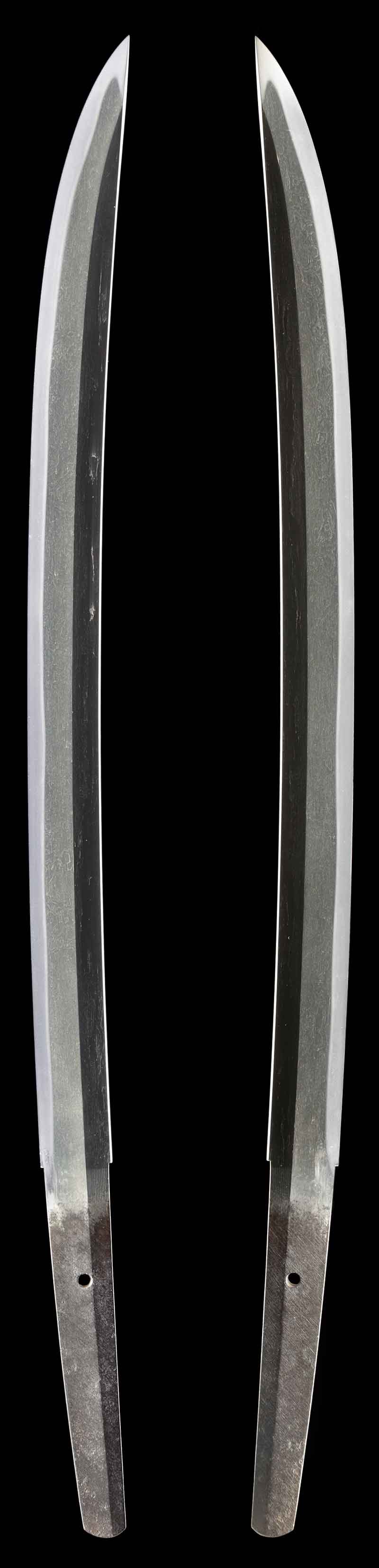
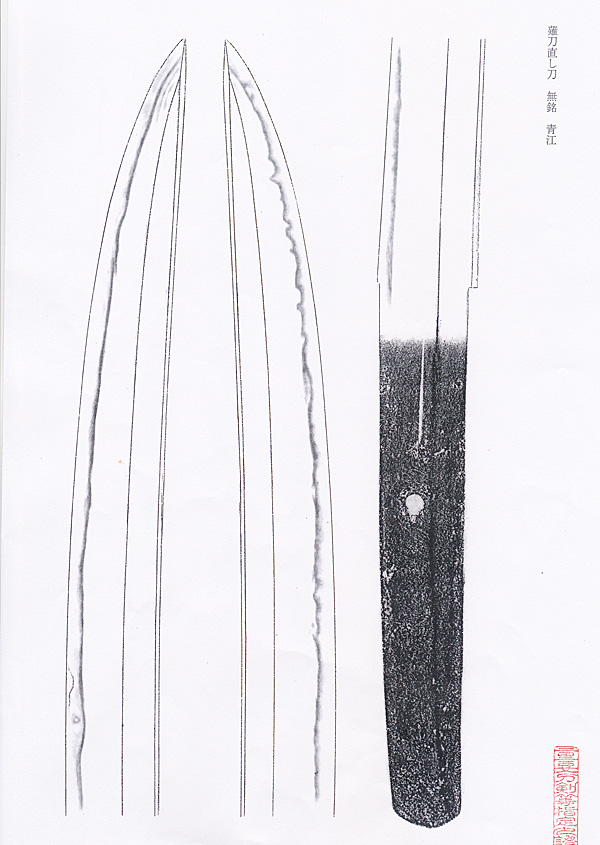
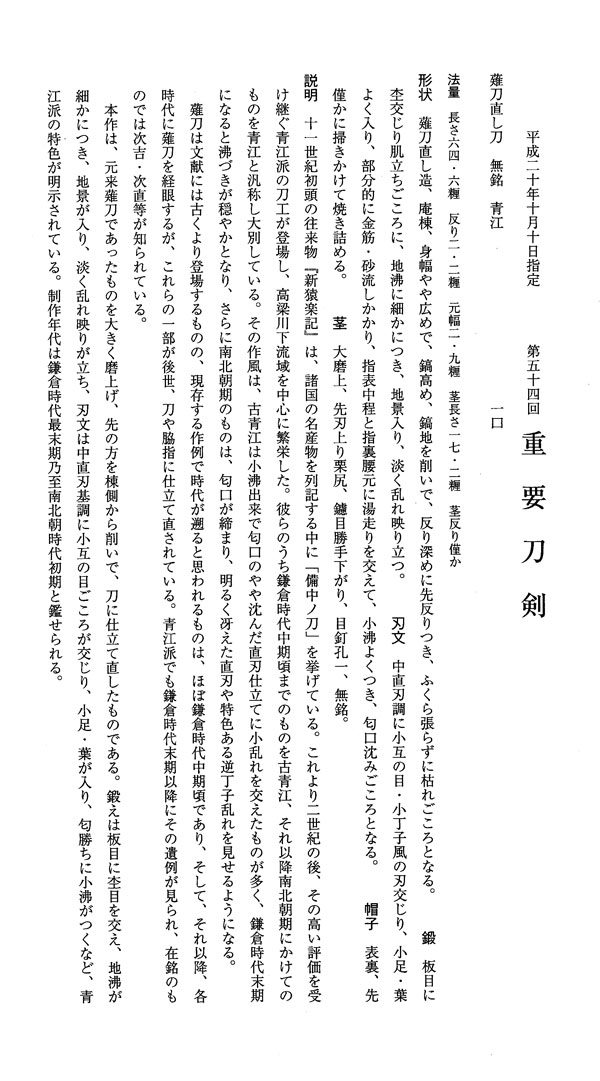
Measurements 64.6 cm, 2.2 cm, 2.9 cm, 17.2 cm, slight
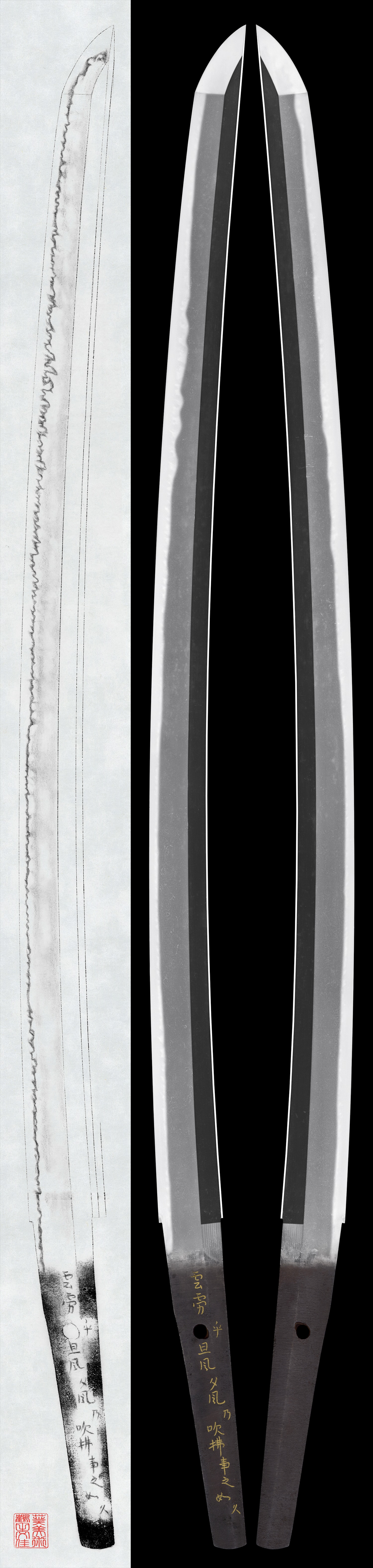
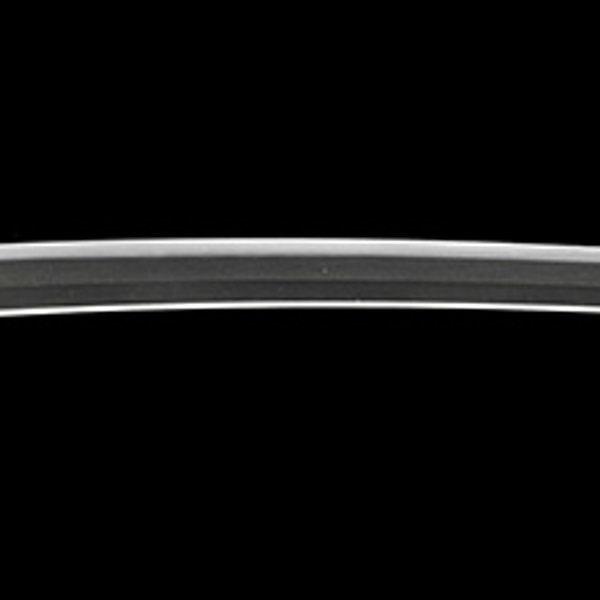
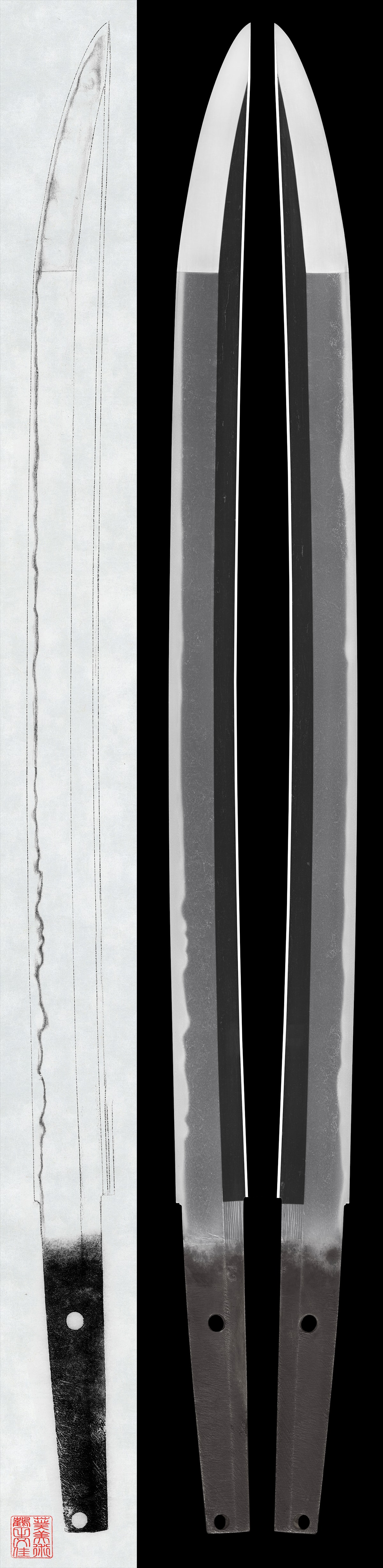
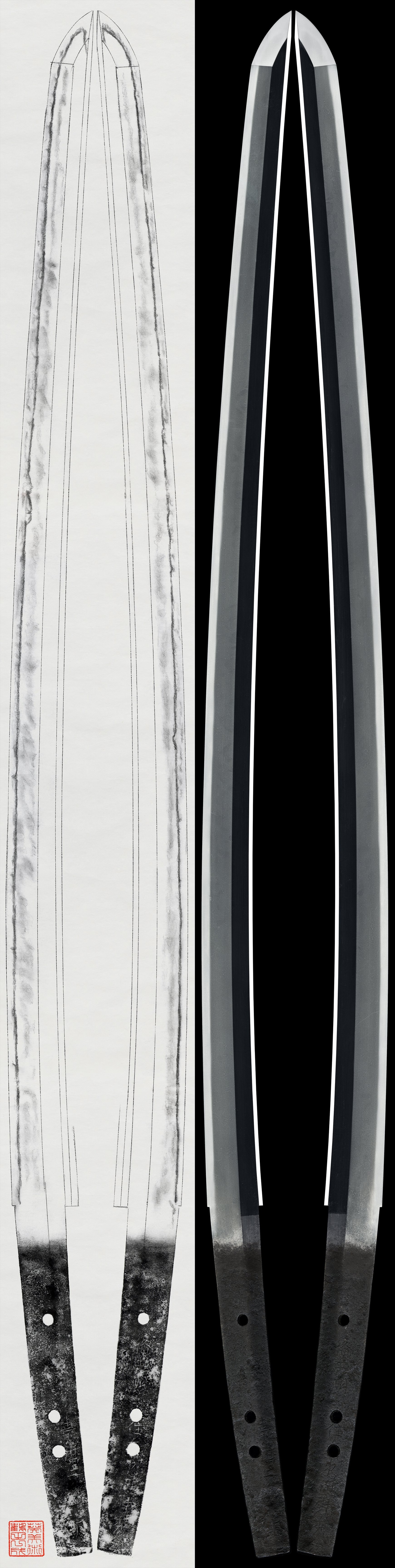
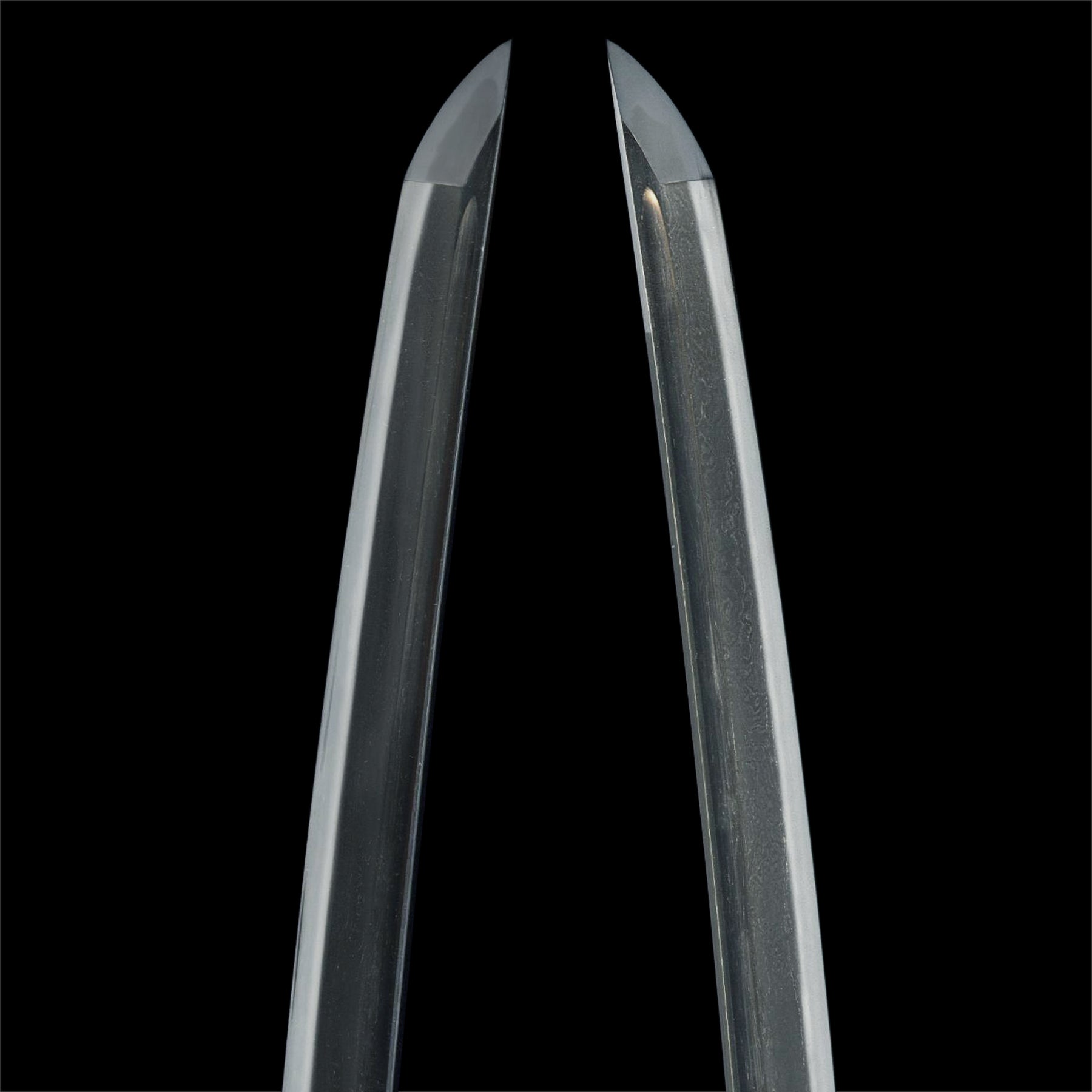
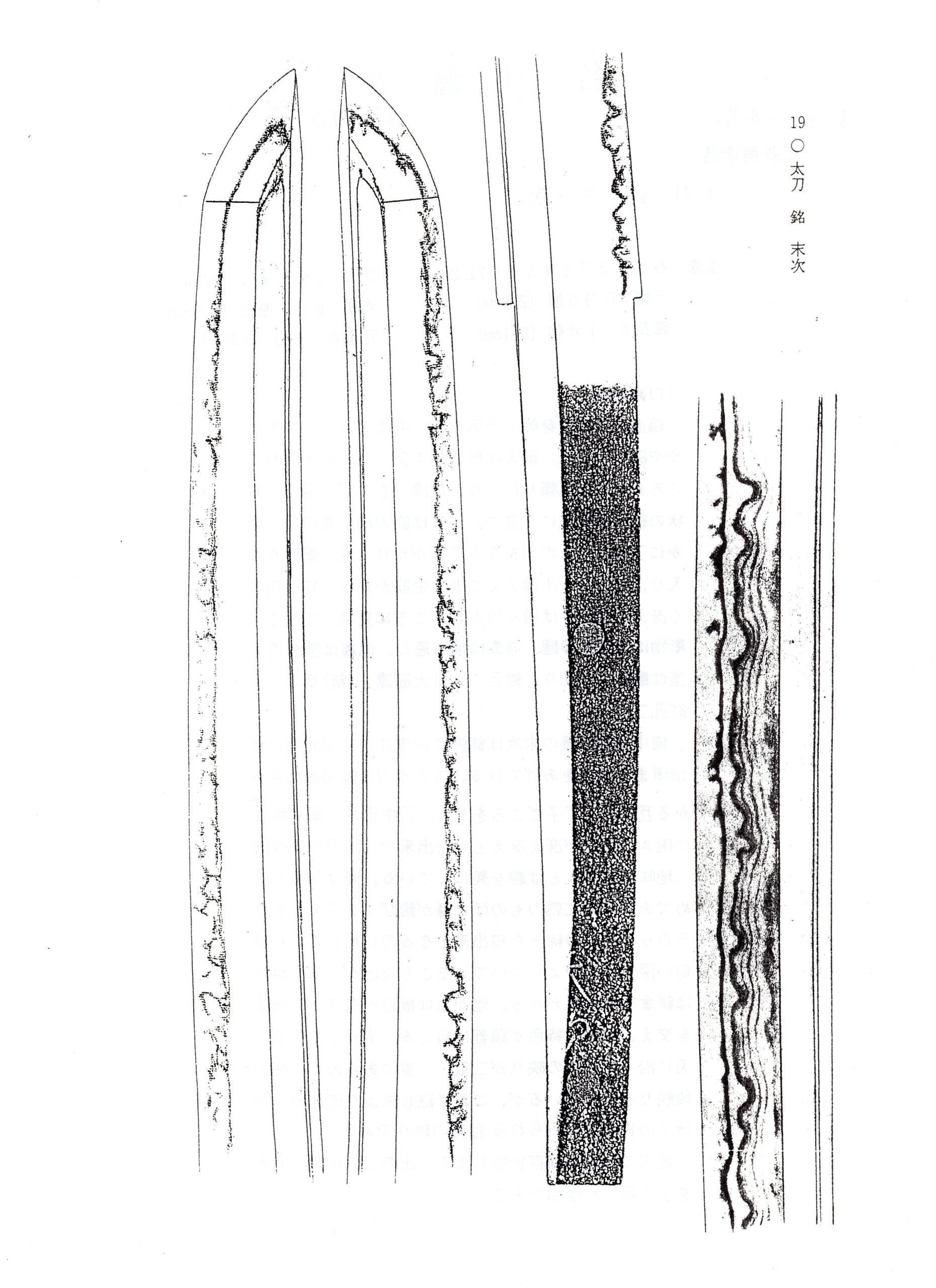
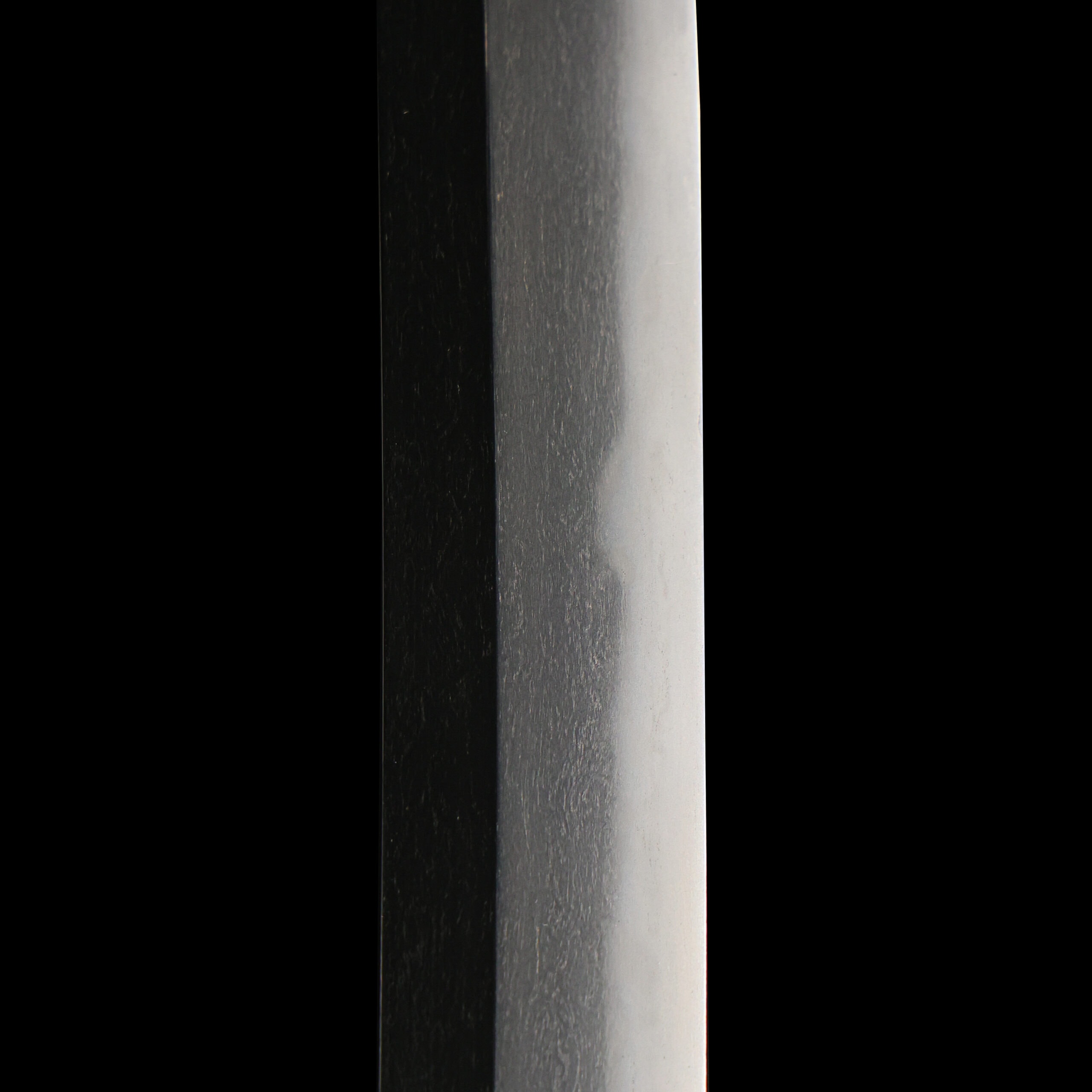
Description Keijō: construction; ; somewhat wide with a relatively high ; the is planed down; deep curvature with marked ; the is not rounded, giving an austere () impression. : mixed with , tending toward ; fine forms, with appearing; a faint stands out. : A foundation, mixed with and -like elements; and enter well; in places and appear; is intermingled around the middle on the and near the on the ; adheres well in a -dominant manner, and the shows a (subdued) tendency. : On both sides, slightly , and . : None. : Greatly shortened (); ; are ; one ; unsigned.
Artisan school (青江)
Era Late period to early period
Explanation The early-eleventh-century itinerant compendium Sarugaku-ki (新猿楽記), in listing noteworthy products of the various provinces, includes “ swords” (備中ノ刀). Two centuries later, swordsmiths of the lineage emerged inheriting this high reputation, flourishing chiefly in the lower basin of the Takahashi River. Works up through roughly the mid- period are classified as (古青江), while those thereafter through the period are broadly grouped as (青江), and the school is generally divided along these lines.
In terms of style, frequently shows with a straight temper () whose is somewhat subdued, with small irregularities mixed in. By the late period, the becomes calmer, and in works of the period the tightens and becomes brighter and clearer, and one begins to see luminous as well as distinctive saka-chōji-midare (reverse irregularity).
Although the appears in written sources from early times, extant examples that can be thought to date back the furthest are largely from around the mid- period. Thereafter, were produced in each period, and some portion of them were later remade into or . Within the school as well, surviving examples of this practice are found from the late period onward; among signed examples, works by Tsugiyoshi (次吉) and Tsugunao (次直), among others, are known.
This blade was originally a , later greatly shortened and then reshaped into a by planing the forward portion from the spine side. The forging shows mixed with , with fine , , and a faint . The temperline is based on with a tendency mixed in; and are present, and there is a -dominant character with adhering. These features clearly express the characteristics of the school. The period of manufacture is appraised as the very end of the period to the early period.