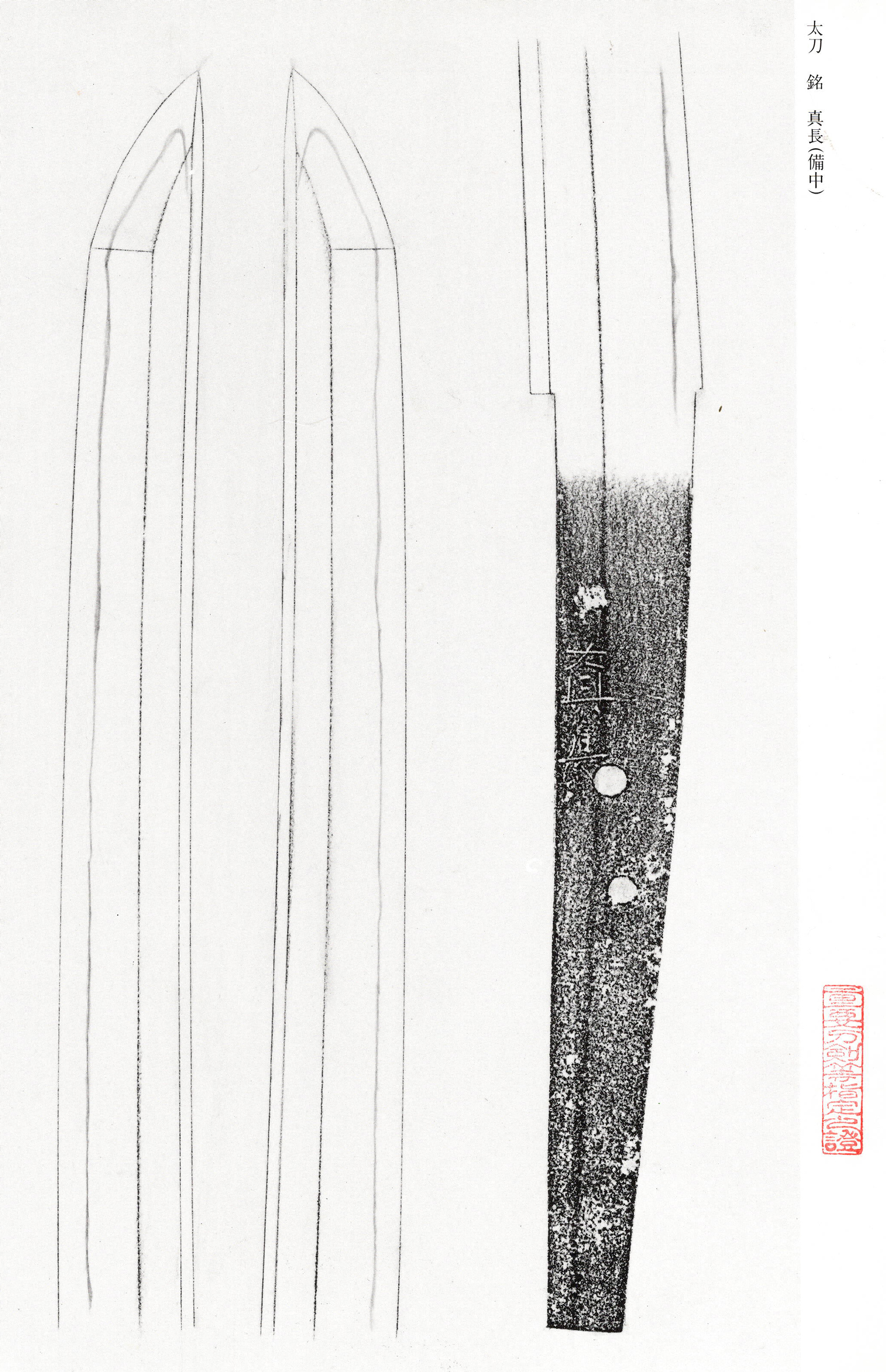
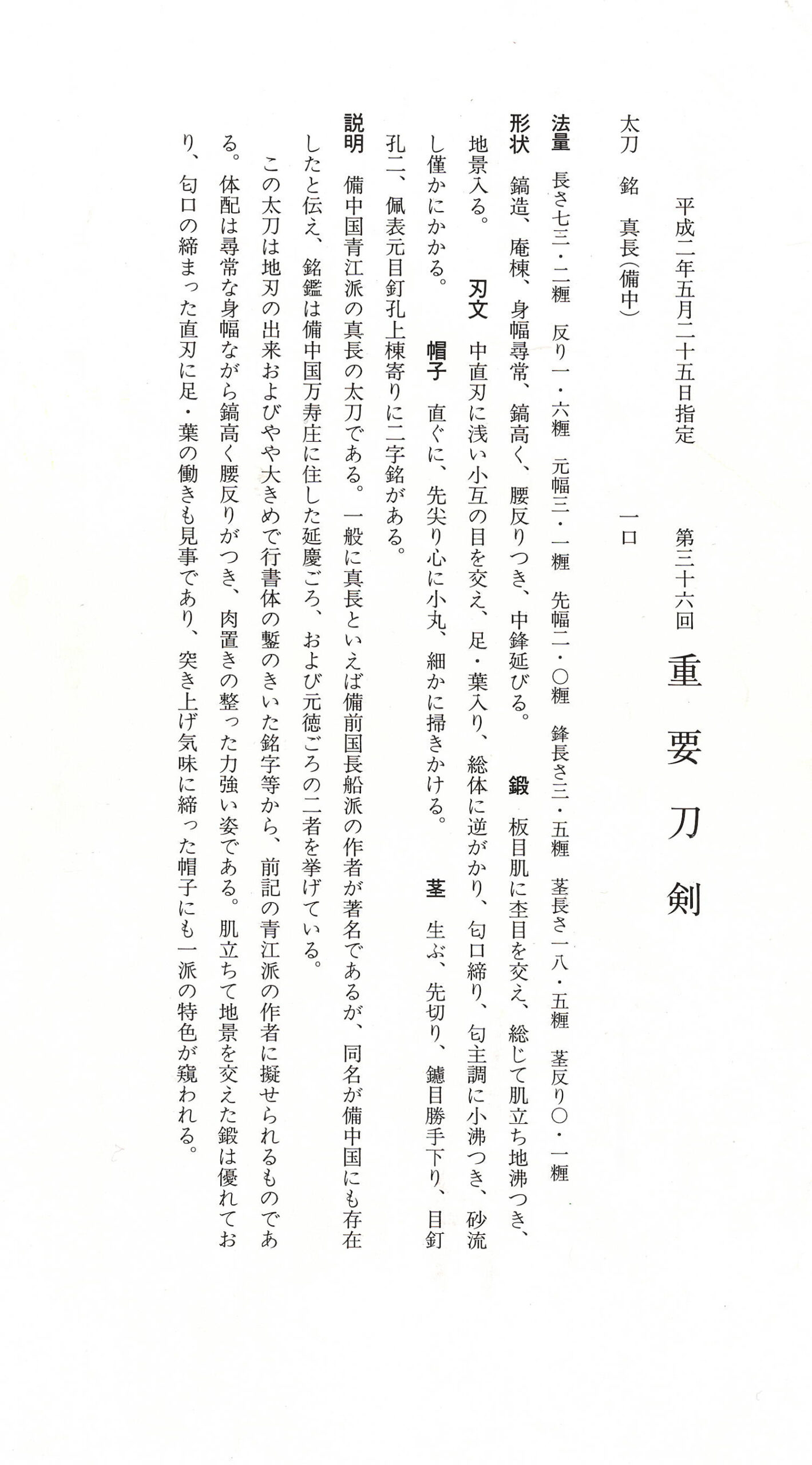
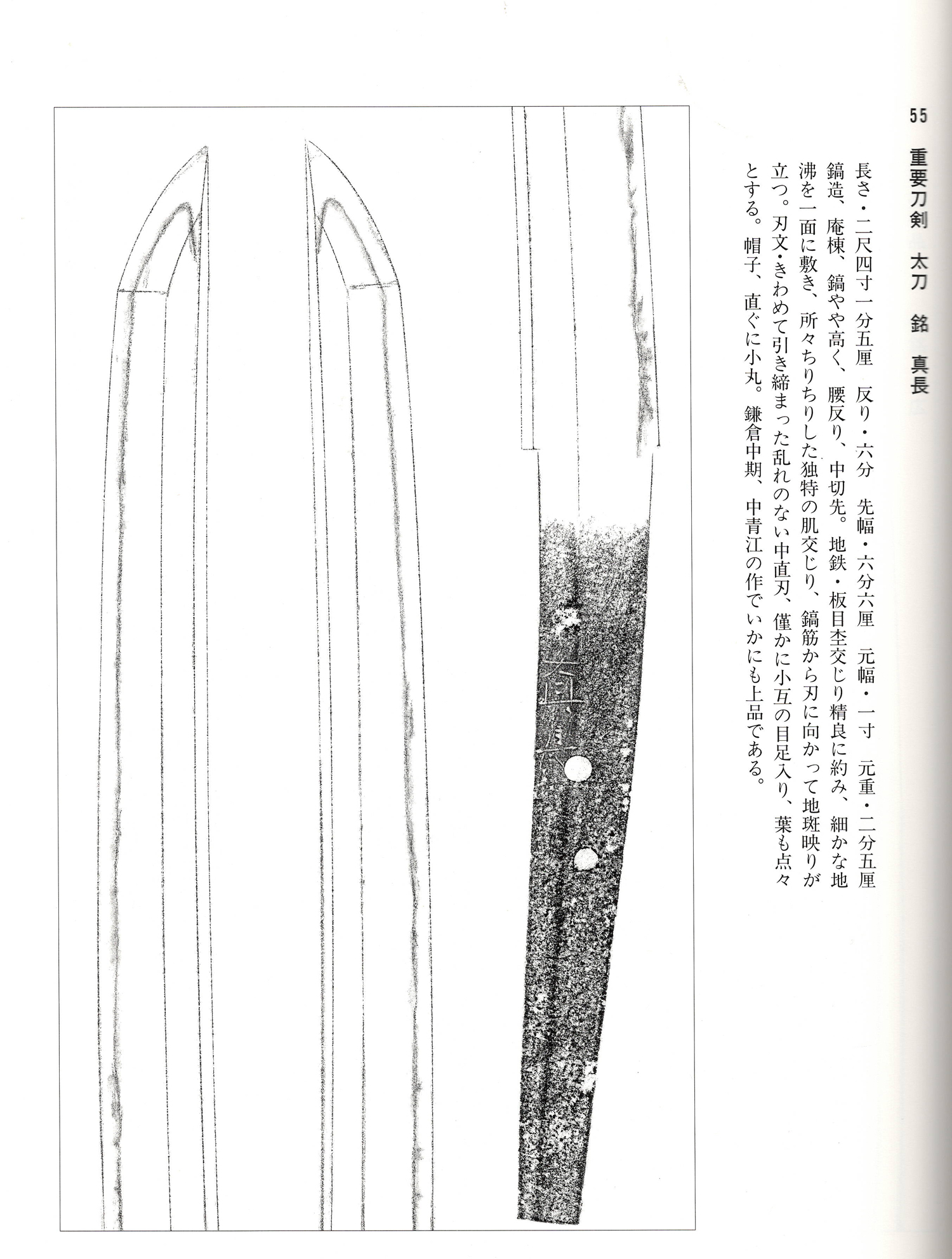
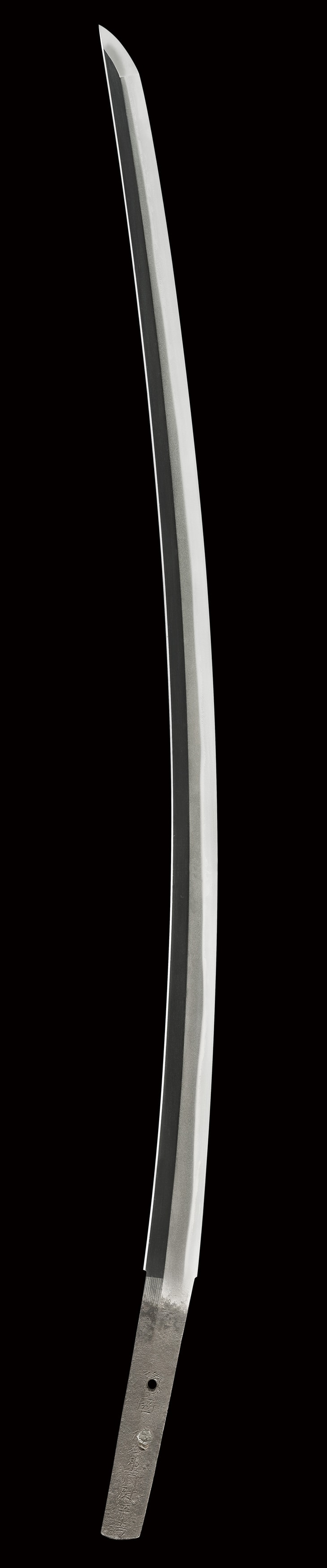
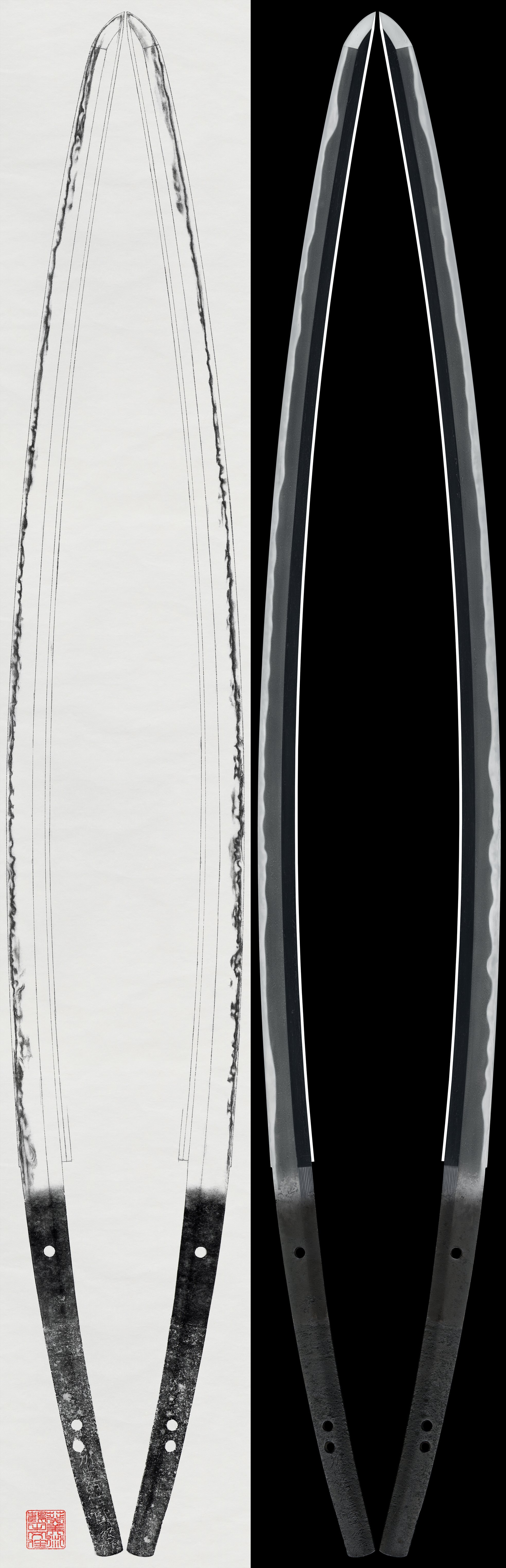
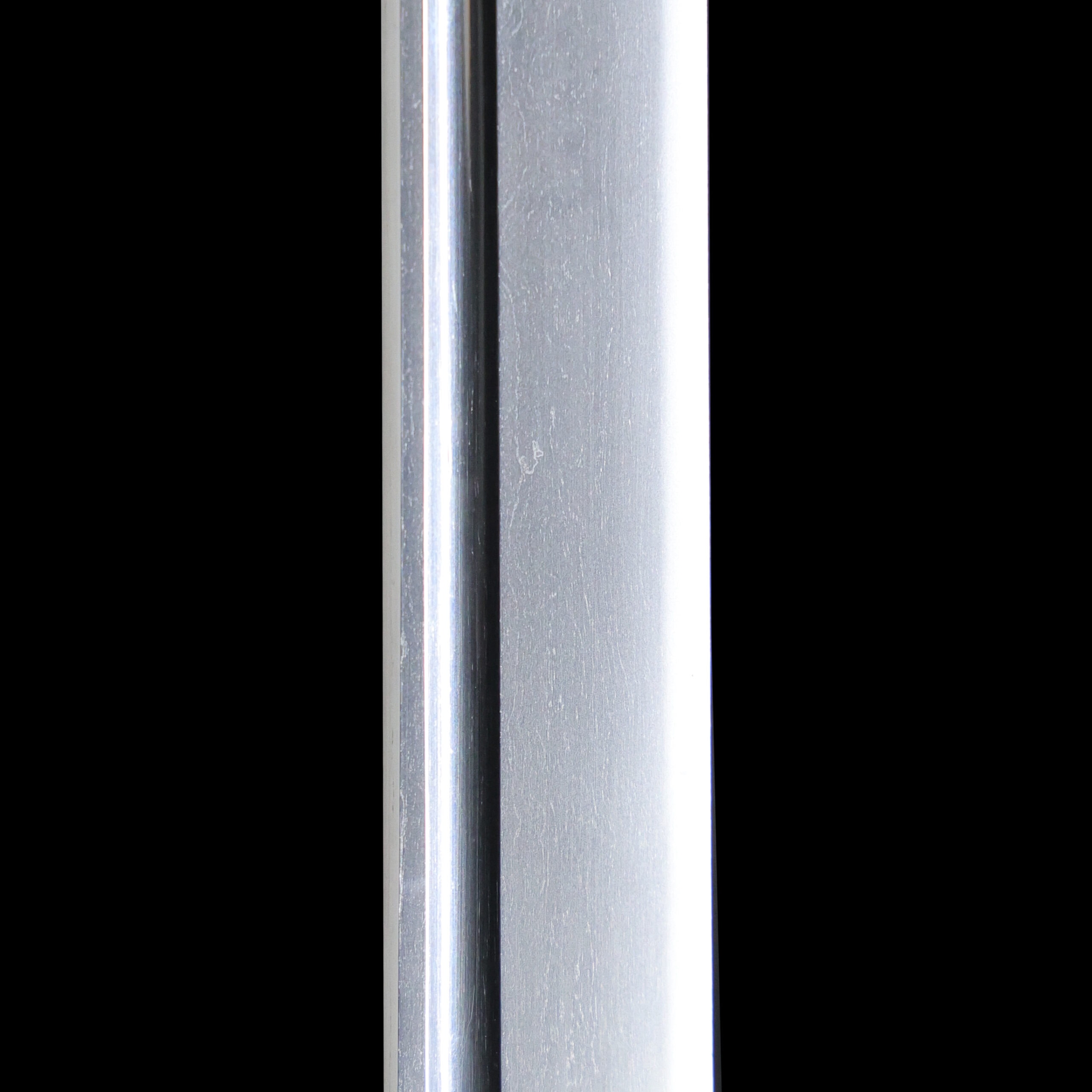
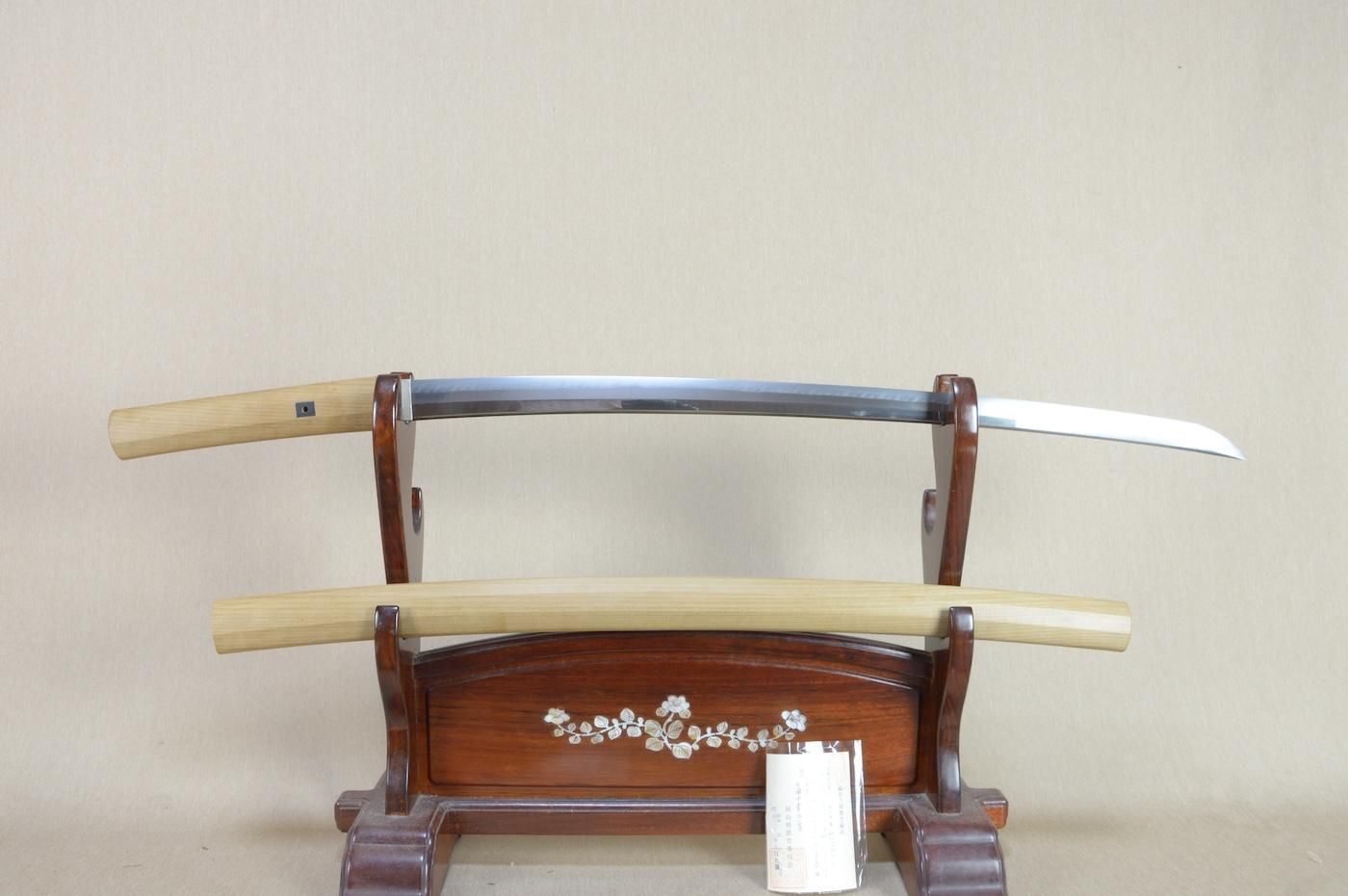
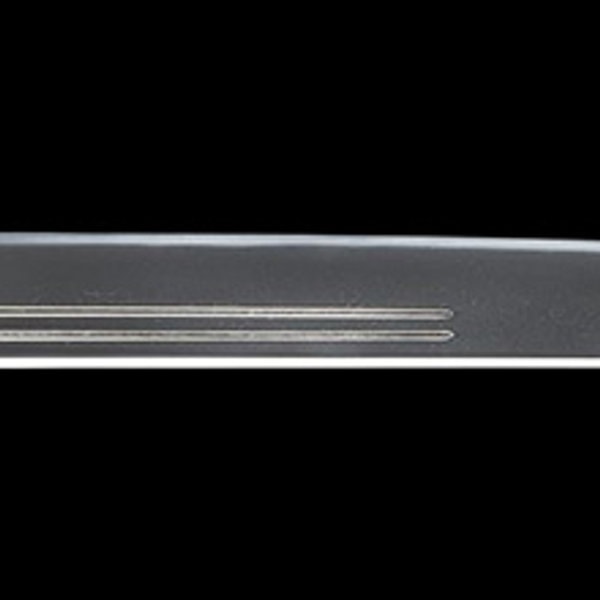
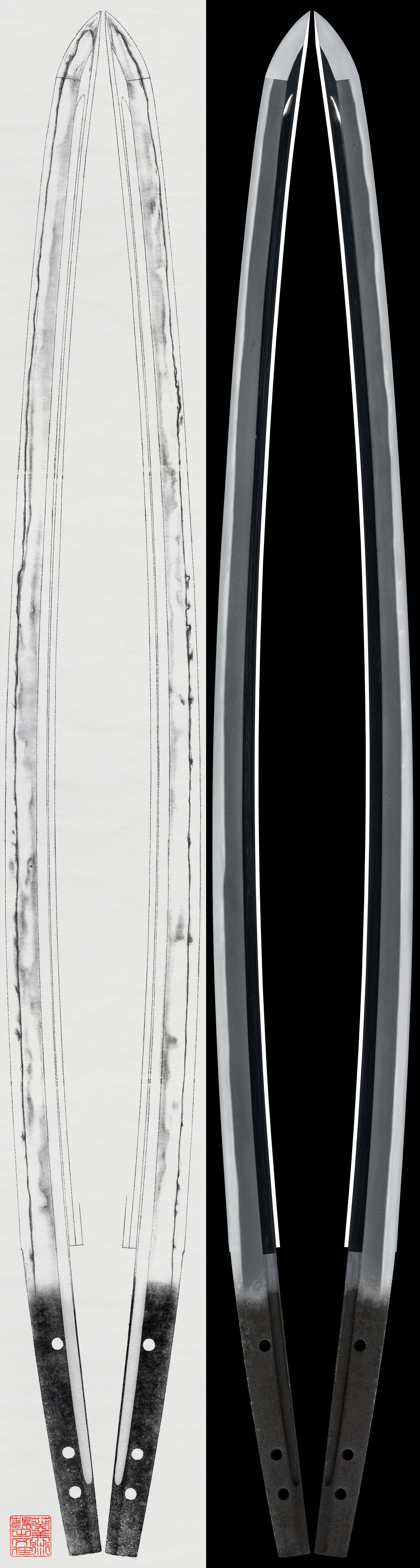
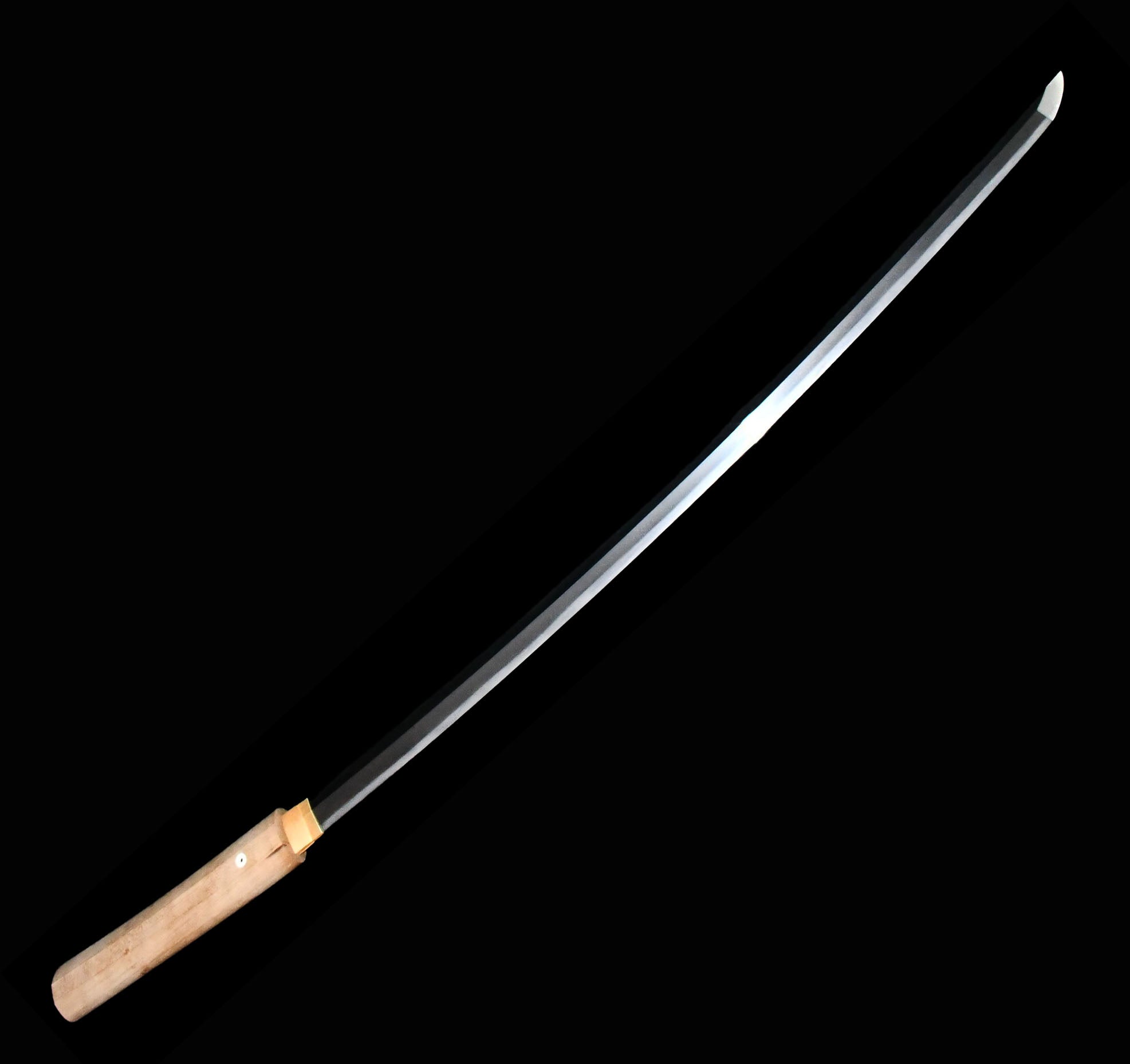
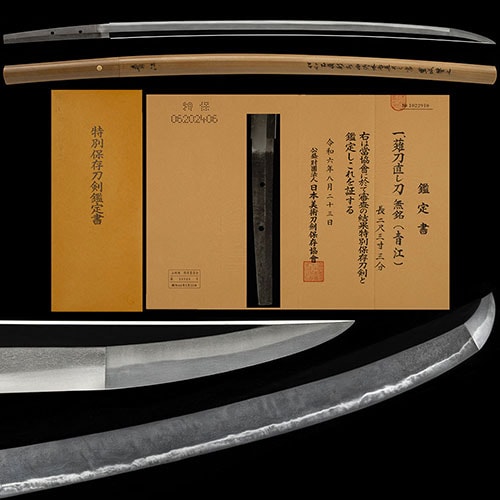
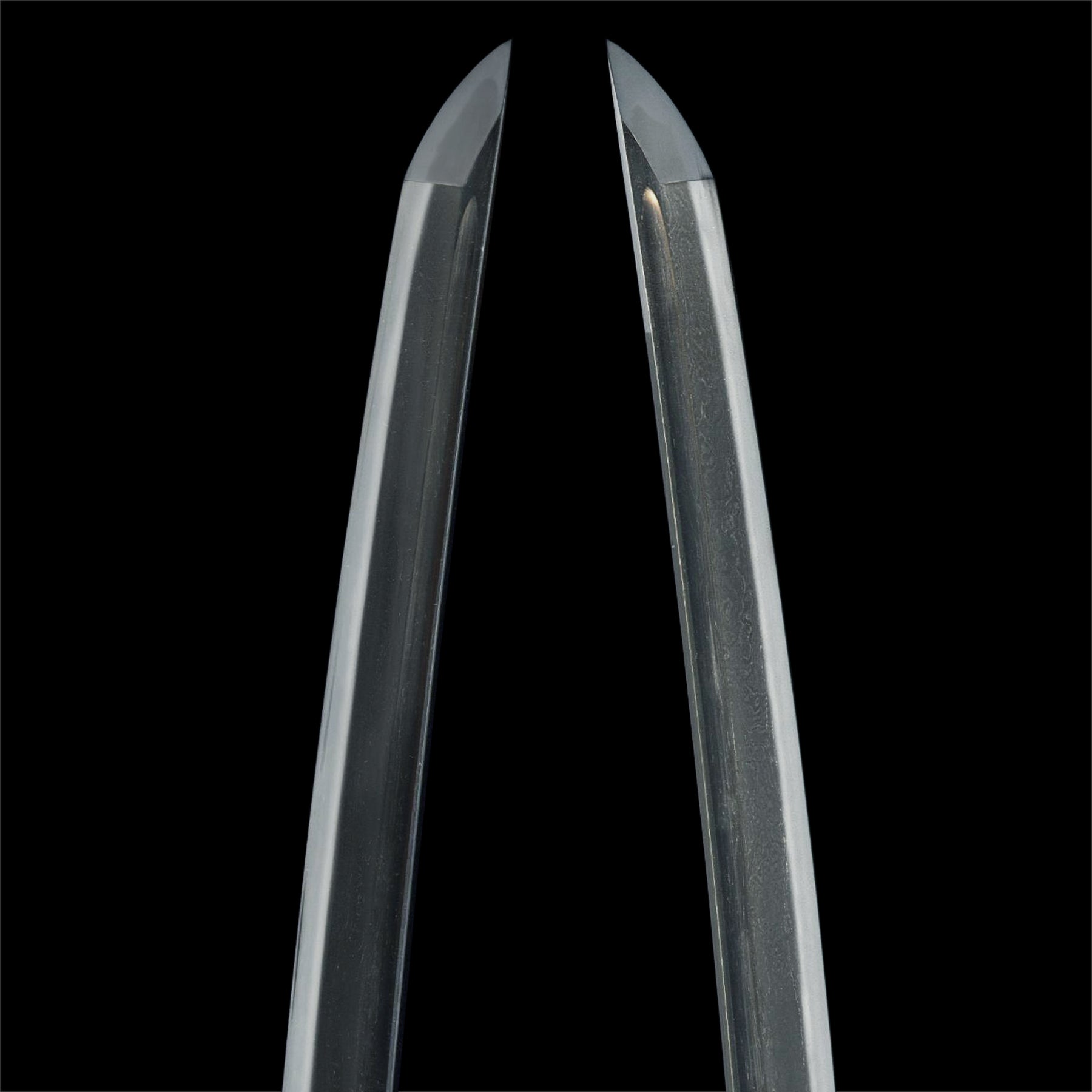
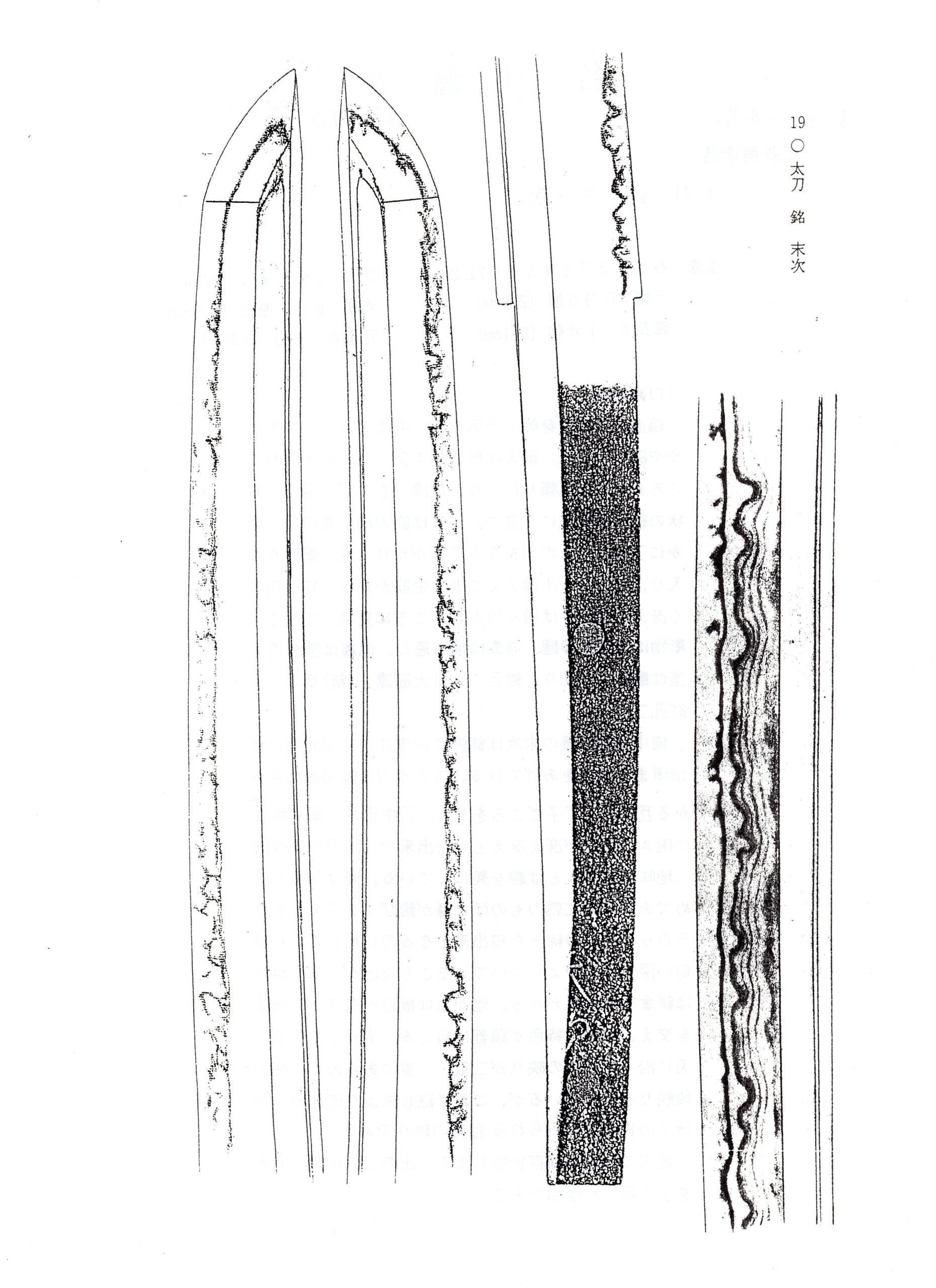
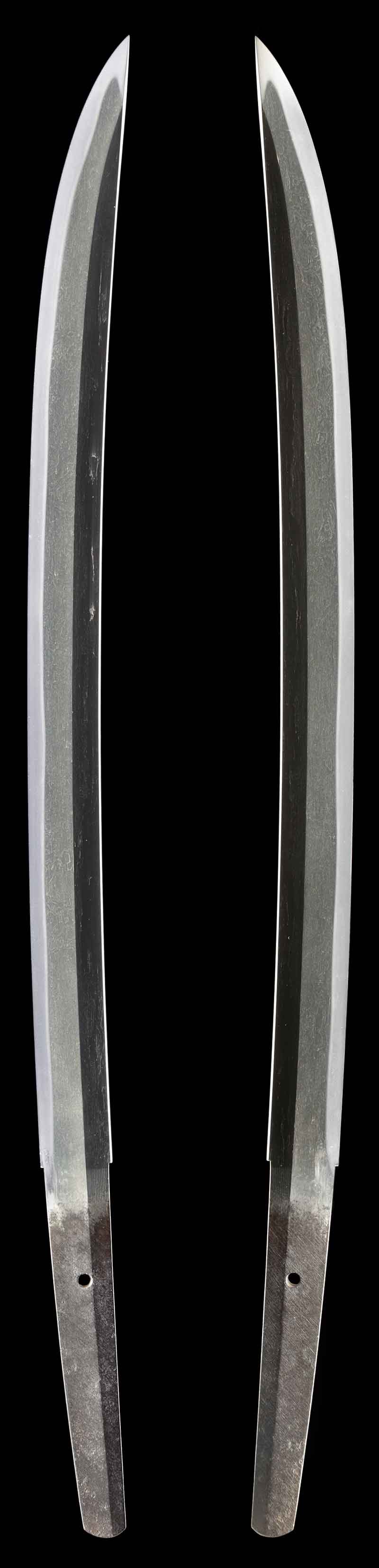
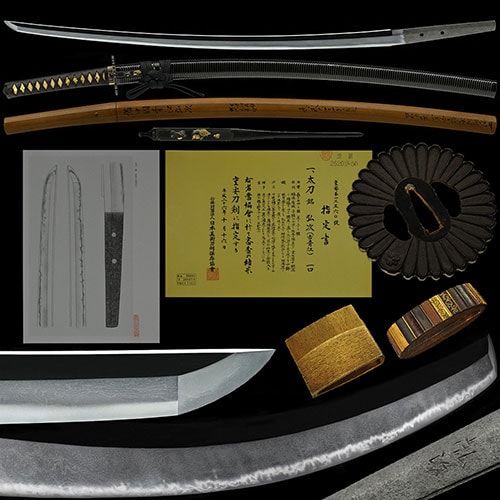
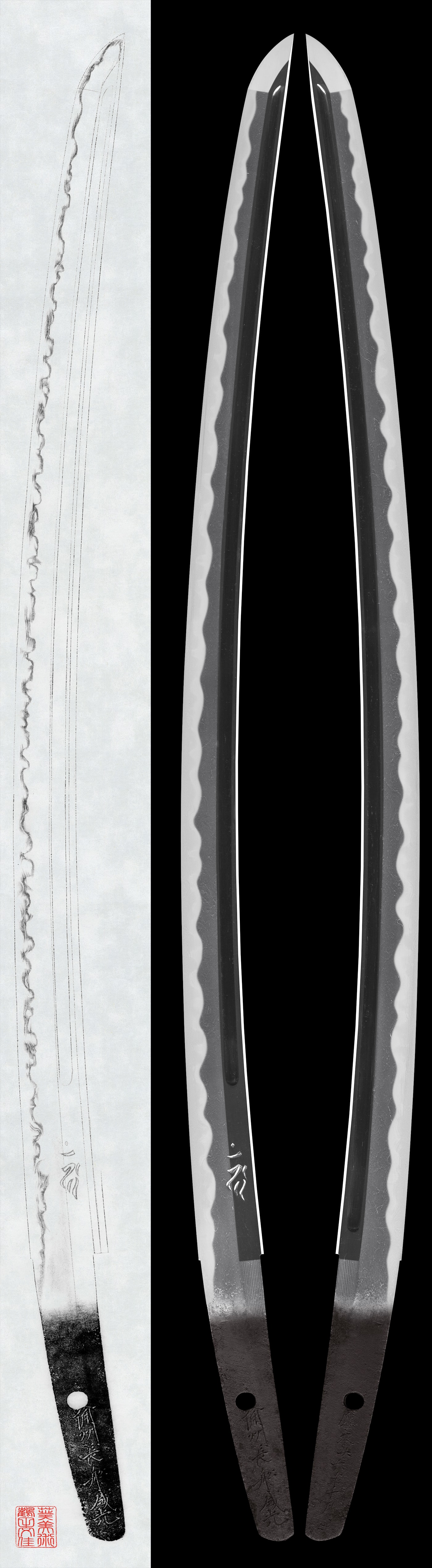
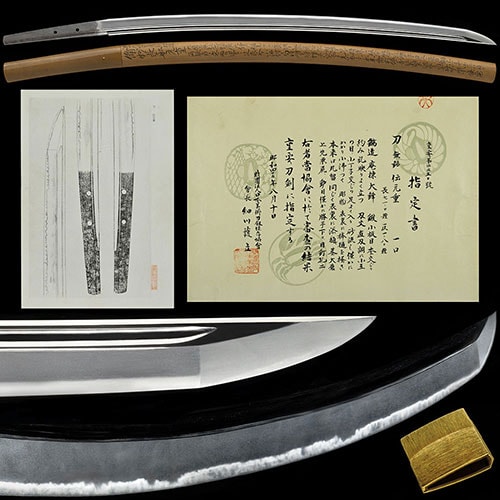
The Chu-Aoe school represents the middle and culminating phase of the Aoe tradition of Bitchu Province, encompassing smiths active from the late Kamakura period through the Nanbokucho era. The lineage traces its origins to an ancient swordmaking heritage in the lower basin of the Takahashi River, a tradition already celebrated in the eleventh-century Shin Sarugakki, which counted "the swords of Bitchu" among the notable products of the provinces. Scholars conventionally distinguish earlier Ko-Aoe production, extending through the mid-Kamakura period, from the Chu-Aoe and later Sue-Aoe phases that carried the tradition forward. The name Sadatsugu -- transmitted since the Kanchiin-bon Meizukushi as one of the goban-kaji appointed to serve Retired Emperor Gotoba and accorded the highest valuation in the Shinkan Hiden-sho -- stands as the school's most prestigious lineage name, while Yoshitsugu, Naotsugu, Tsunetsugu, and Hidetsugu represent the principal working smiths whose signed and dated examples anchor the chronology of the late Kamakura Aoe group. With the transition into the Nanbokucho period, a second flowering emerged under Tsugunao, Tsuguyoshi, and Moritsugu, who are consistently identified by the NBTHK as the representative smiths of Aoe in that era. The technical identity of Chu-Aoe is defined by a constellation of traits that recur with remarkable consistency across the school's members. The forging characteristically displays tightly packed ko-itame-hada mixed with mokume, upon which extremely fine ji-nie adheres thickly and delicate chikei are interwoven. A mottled, patch-like jifu texture frequently appears, and the distinctive crepe-like surface known as chirimen-hada is encountered among several smiths. Most diagnostic of all is the school's utsuri, which manifests in multiple forms: midare-utsuri, the stepped dan-utsuri in which linear utsuri near the edge transitions to midare-utsuri toward the mune, and the dark-toned sumihada. The hamon is fundamentally suguha-based, ranging from narrow hoso-suguha to medium chu-suguha with shallow notare, into which ko-gunome, ko-choji, and saka-ashi are mixed. The nioiguchi is universally described as tight, bright, and clear -- the single most defining quality of the school -- producing a deep shio-ai that is repeatedly praised in NBTHK assessments.
The boshi characteristically runs straight, turning back in ko-maru with a tendency toward a pointed tip. A critical stylistic evolution occurred within the Nanbokucho period: while the late Kamakura smiths worked predominantly in suguha, the later generation developed a splendid, flamboyant saka-choji-midare that became the school's most celebrated mode. Tsugunao is recognized as "a master of saka-choji," producing tempering of such florid brilliance that the NBTHK characterizes it as "the exclusive forte of this group" -- an emblematic and highly individual domain. The reverse-slanting tendencies visible in earlier Kamakura-period works are understood as precursors to this splendid later development. The Chu-Aoe school occupies a position of enduring prestige within the Japanese sword canon. The Hon'ami family developed a longstanding practice of rendering Sadatsugu appraisals for unsigned Aoe works of particularly fine workmanship, treating the name as a mark of the highest quality within the tradition. Naotsugu and Yoshitsugu, whose signed examples bearing official court titles and era dates from Gentoku through Kanno survive in exceptional condition, furnish irreplaceable documentary material for the study of Bitchu swordmaking. Works from the school have been transmitted through distinguished collections -- the Choshu Mori, the Nabeshima of Hizen, the Uesugi, and the Maeda of Kaga -- attesting to sustained appreciation across centuries. Naotsugu occupies a pivotal position at the transition from the ko-nie-deki manner of the Kamakura period to the tighter, brighter nioi-deki workmanship of the Nanbokucho era, while Moritsugu's rare surviving works bridge the late Kamakura and early Nanbokucho phases with tanto displaying both the traditional suguha and a saka-choji not previously encountered in the school. In both the quiet restraint of their suguha and the gorgeous brilliance of their saka-choji-midare, the smiths of Chu-Aoe demonstrate the Bitchu tradition at its most refined and accomplished -- a school whose tightly forged steel, luminous nioiguchi, and distinctive utsuri constitute an aesthetic achievement of the first order. Learn more →