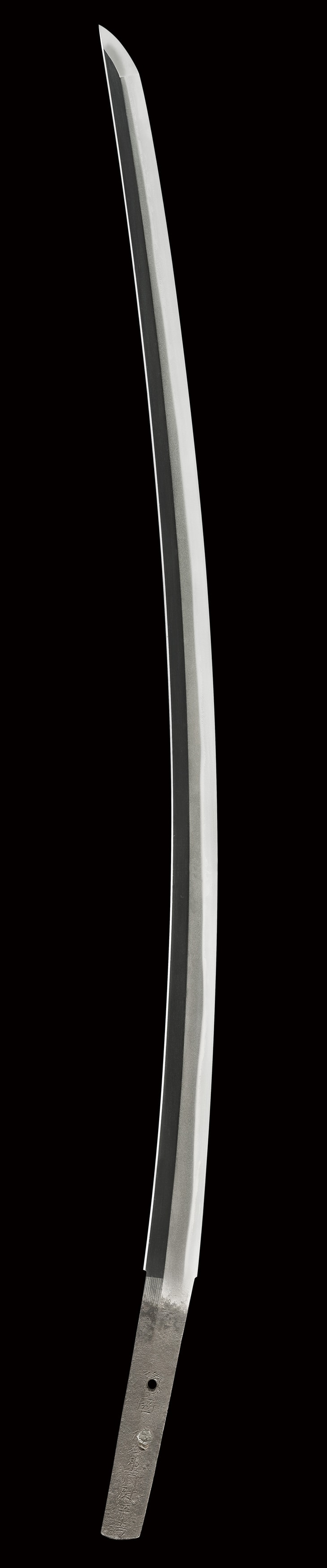
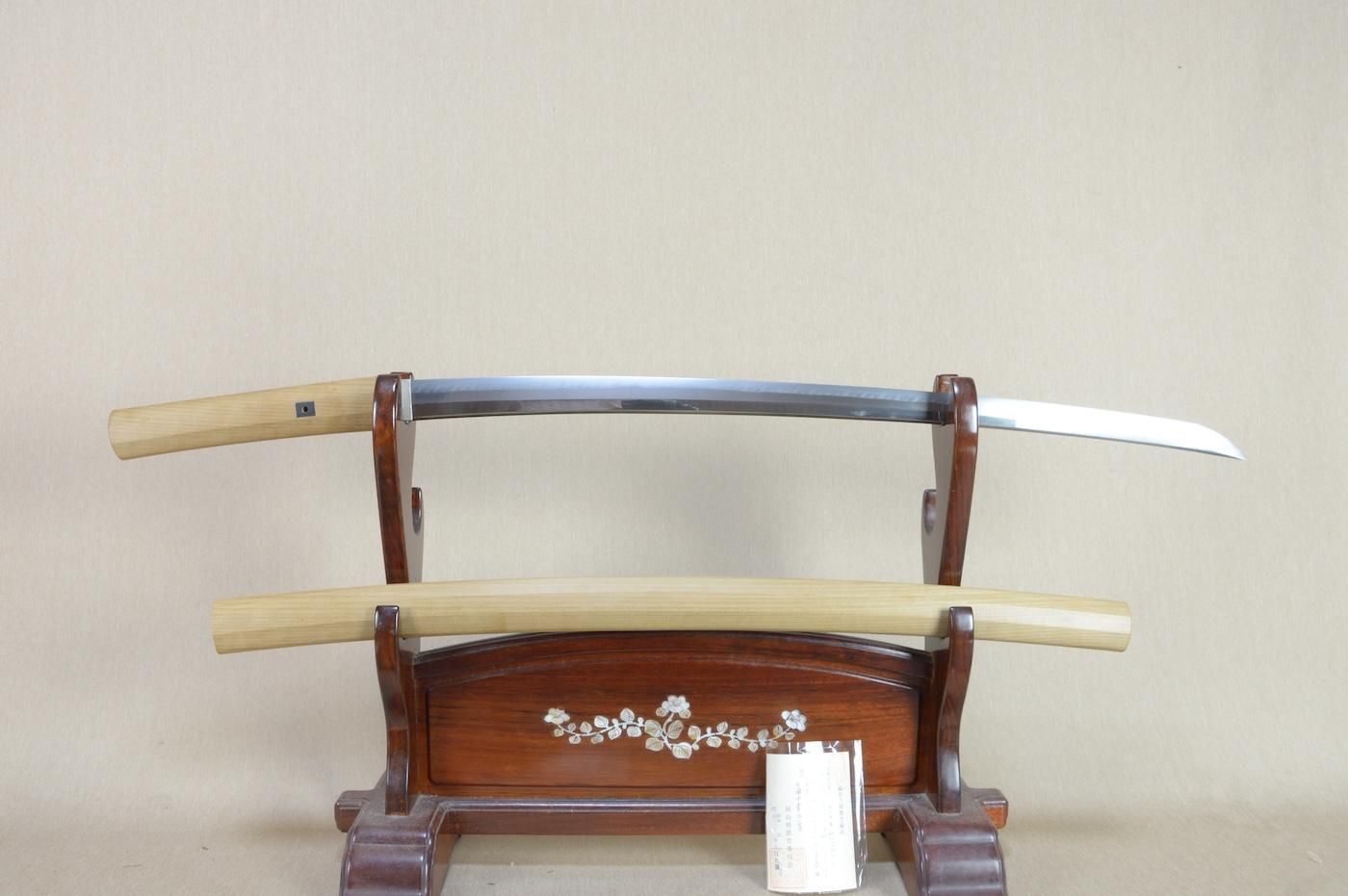
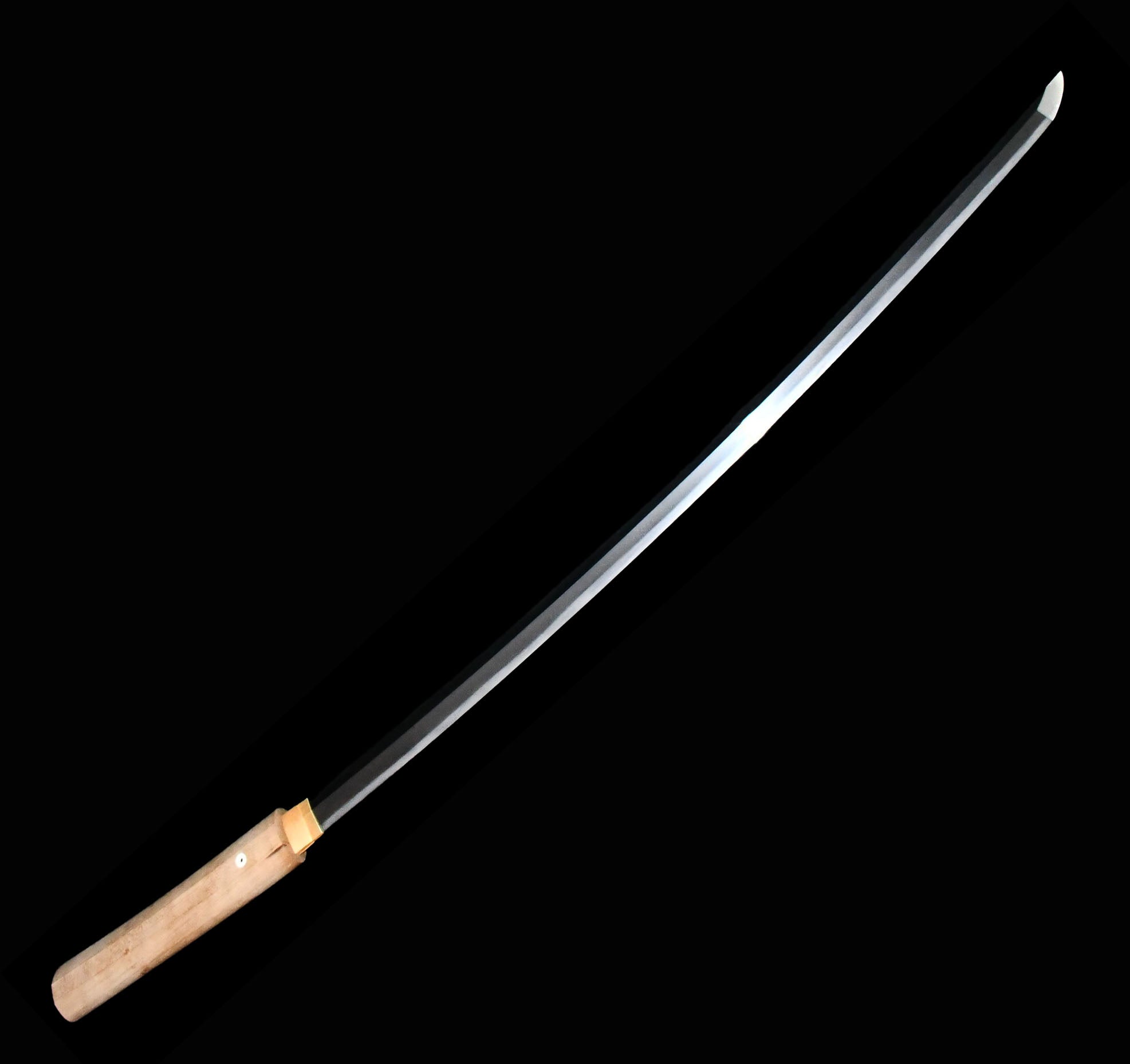
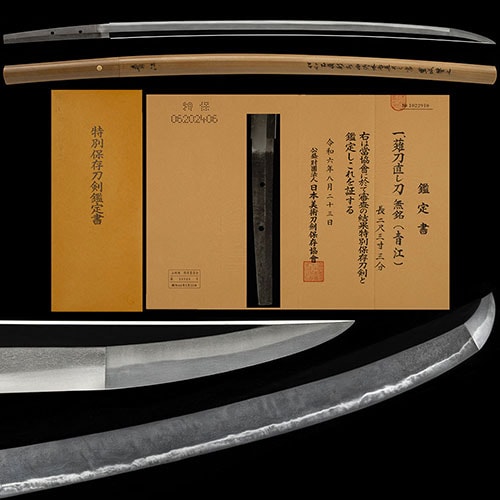
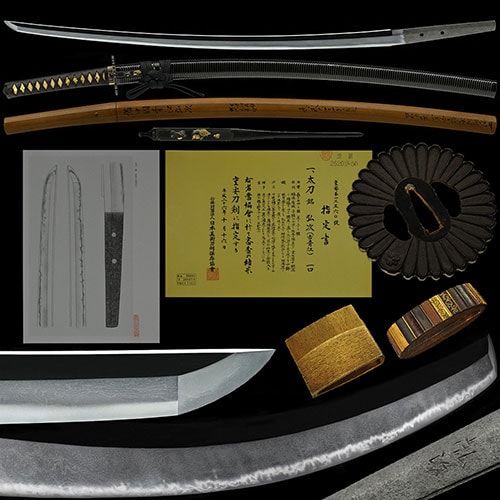
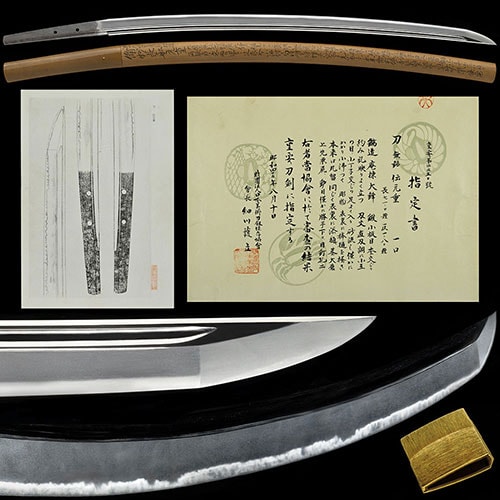
Sadatsugu is one of the most celebrated names of the school of Province. Transmitted since the Kanchiin-bon Meizukushi as a smith selected among the appointed to serve Retired Emperor Go-Toba, Sadatsugu is accorded the highest valuation in the Shinkan Hiden-sho, recorded as " objects, supreme: fifteen ," and has thus long been regarded as first rank even among works. The name was carried on from the early period through the period, encompassing multiple generations. So great was the esteem attached to this lineage that the family developed a longstanding tendency, when encountering well-made unsigned works that display a typical manner and particularly fine workmanship, to render Sadatsugu appraisals in the sense of denoting an piece of superior quality.
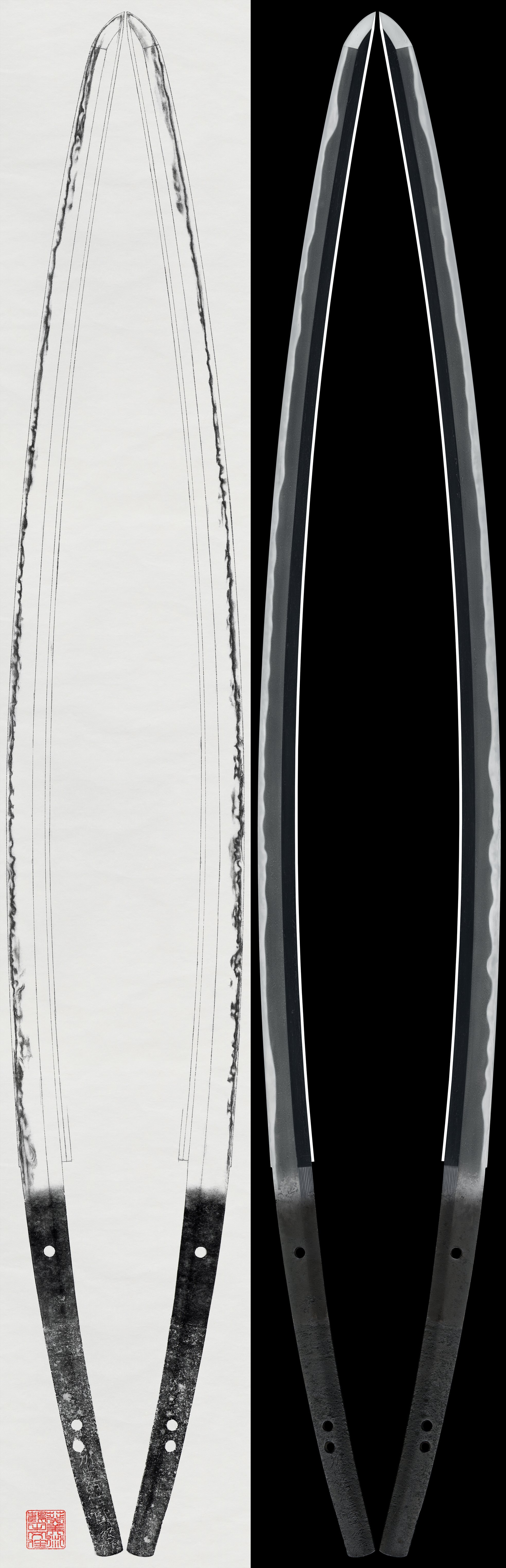
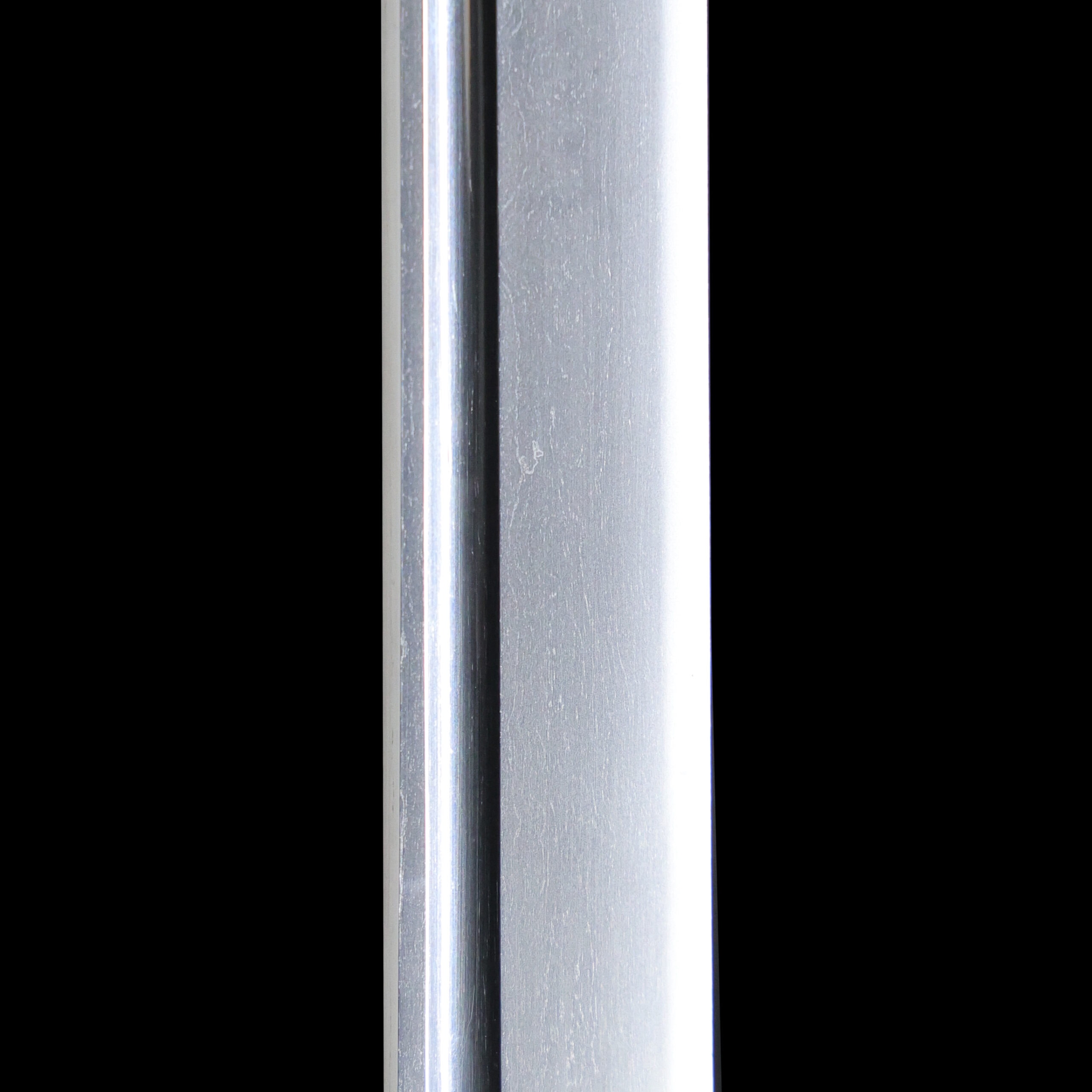
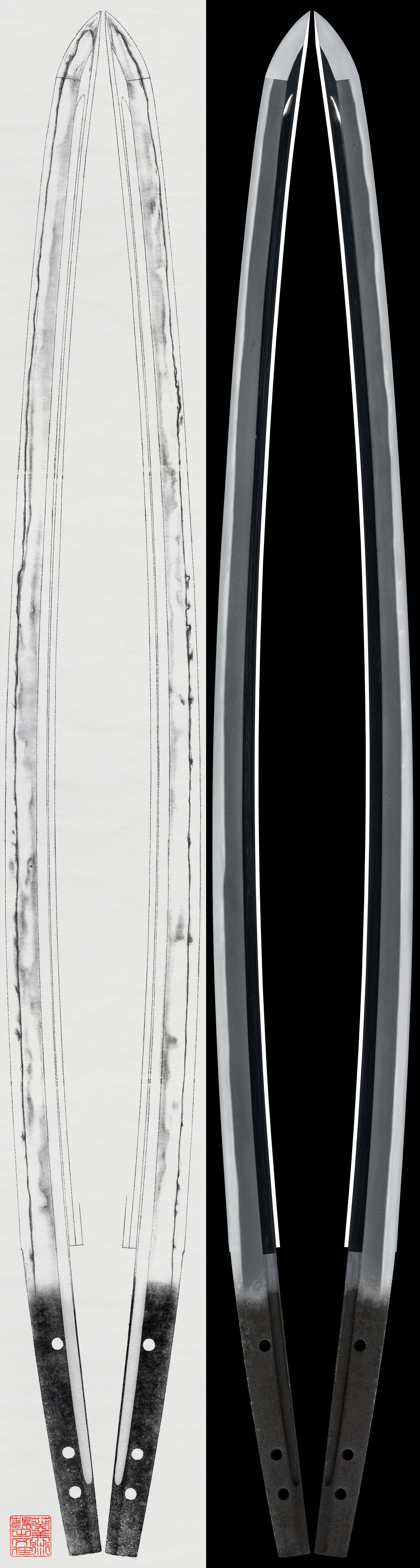
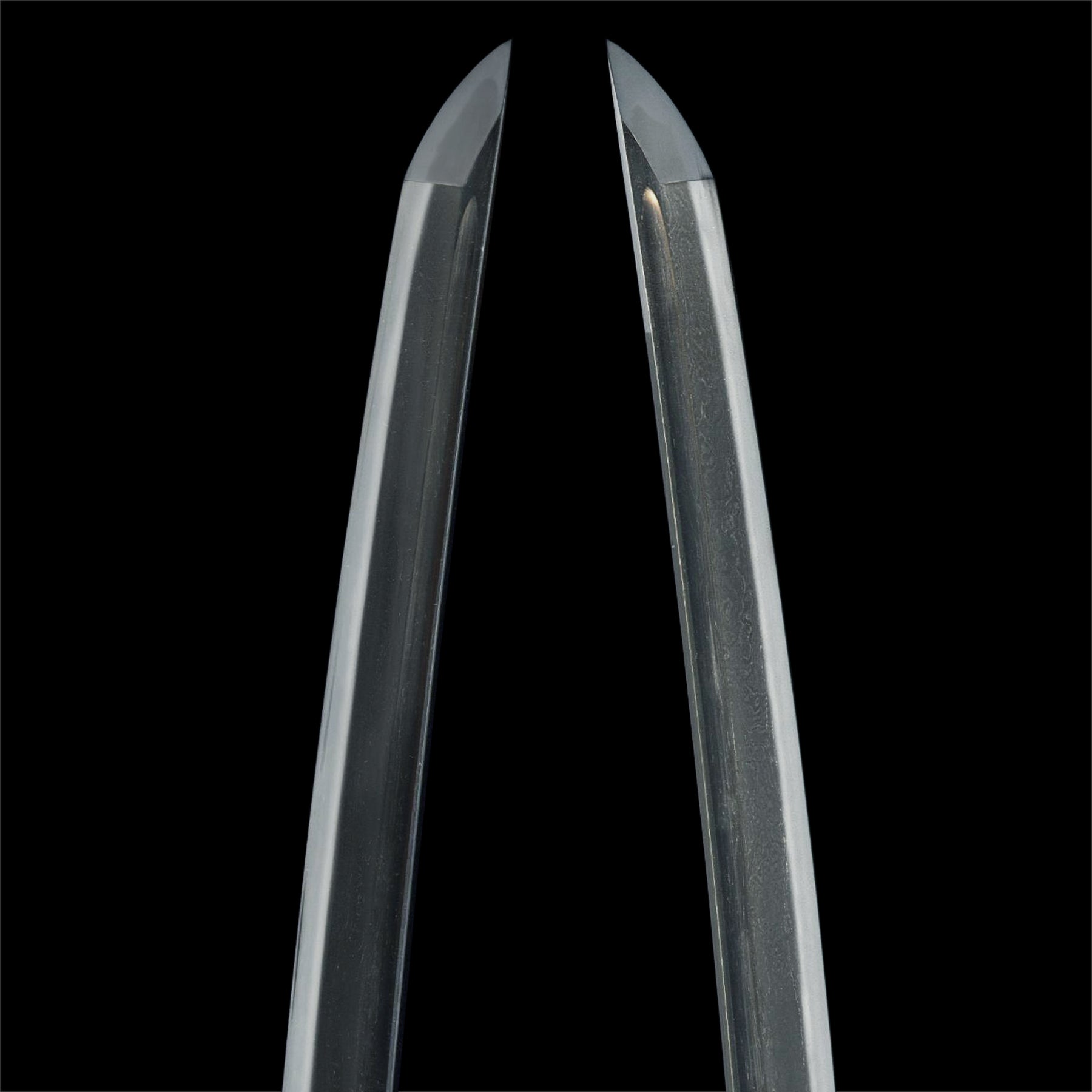
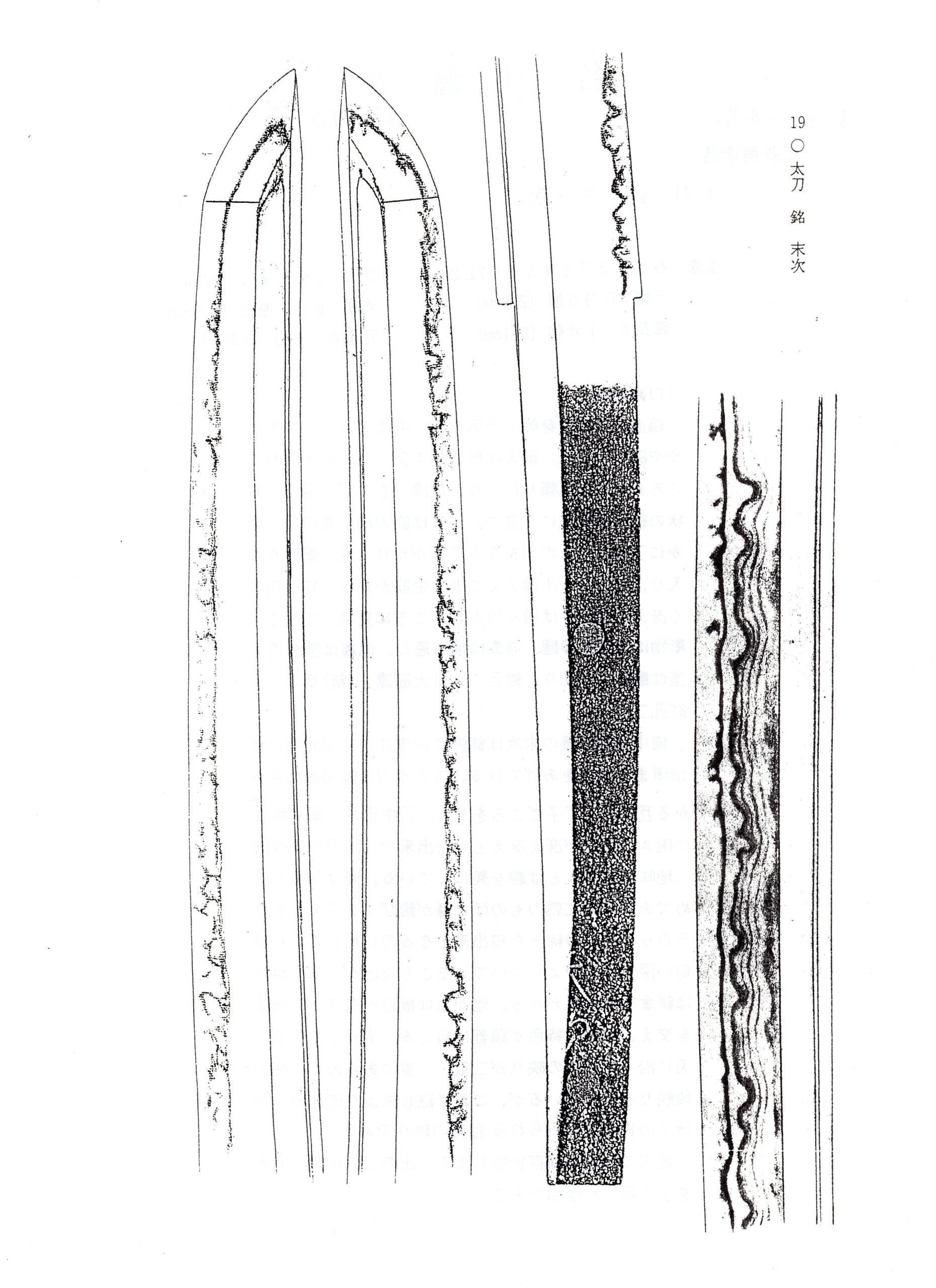
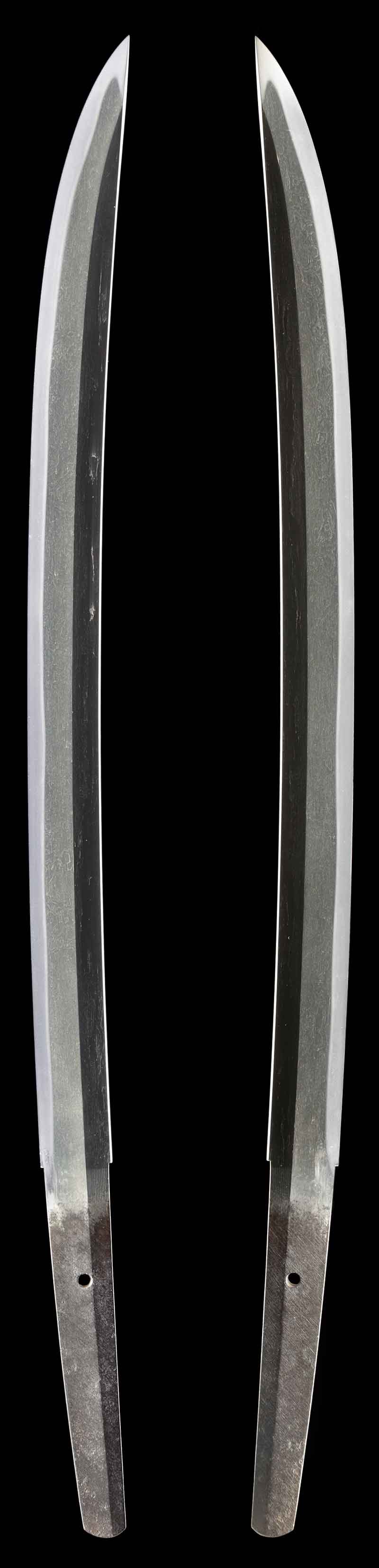
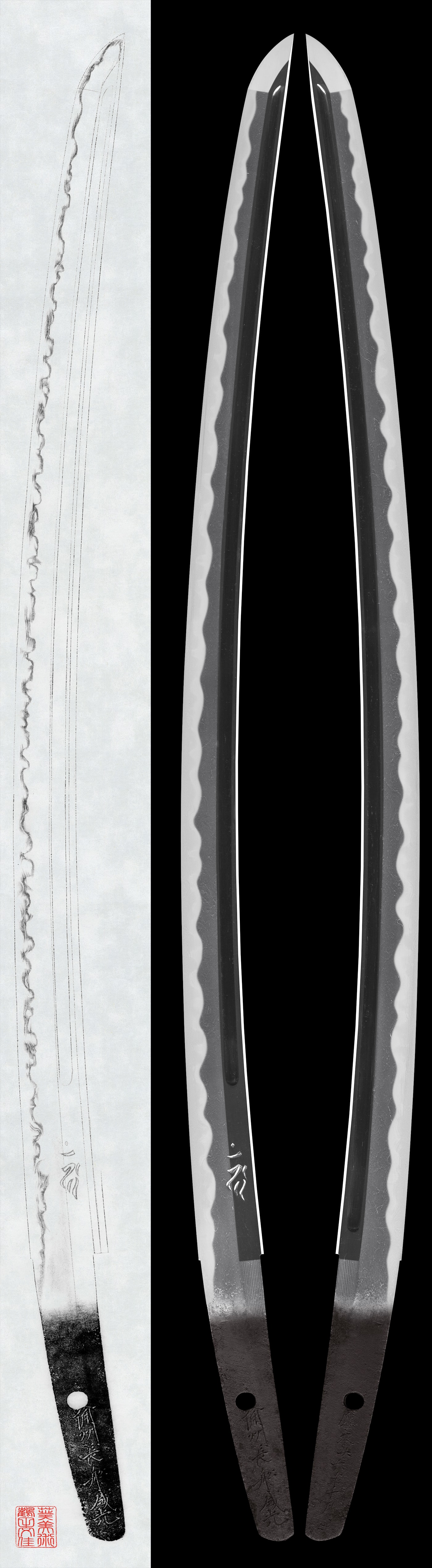
The technical character of works attributed to Sadatsugu is firmly rooted in the idiom of the late period. The forging presents mixed with in which the grain stands out finely; extremely fine adheres, and vivid appears conspicuously. The is fundamentally , mixed with , , , and small ; a distinctive tendency toward can be observed throughout. In the lower half of the blade, the temper characteristically becomes irregular and lively, with and entering vigorously, predominating with , and fine and running through a that is bright and clear. The typically shows a shallow with an upward-tending rise, becoming pointed at the tip with a rather long , revealing a distinctive workmanship.
The scholarly significance of Sadatsugu attributions lies in their role as markers of the highest quality within the tradition. The has repeatedly observed that the , , and of these works "conspicuously manifest the distinctive characteristics of the group in the late period," and that the reverse-slanting tendencies visible in the call to mind a precursor to the brilliant - that flourished in the subsequent period. The internal scenery of the temper displays variety; the is bright and clear; and, combined with the robust form featuring thick and abundant , these works are consistently recognized as representative superior exemplars of the school.