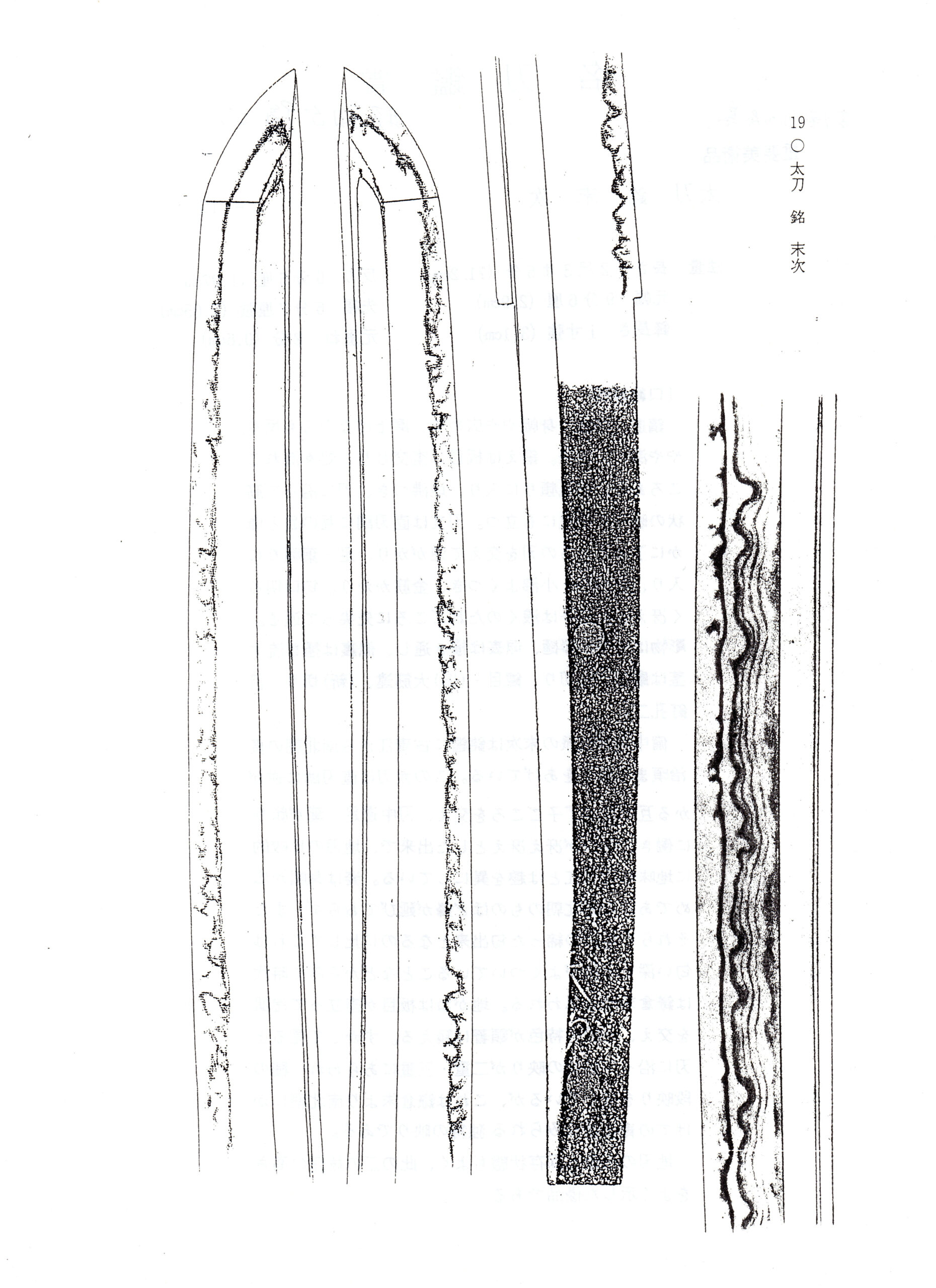
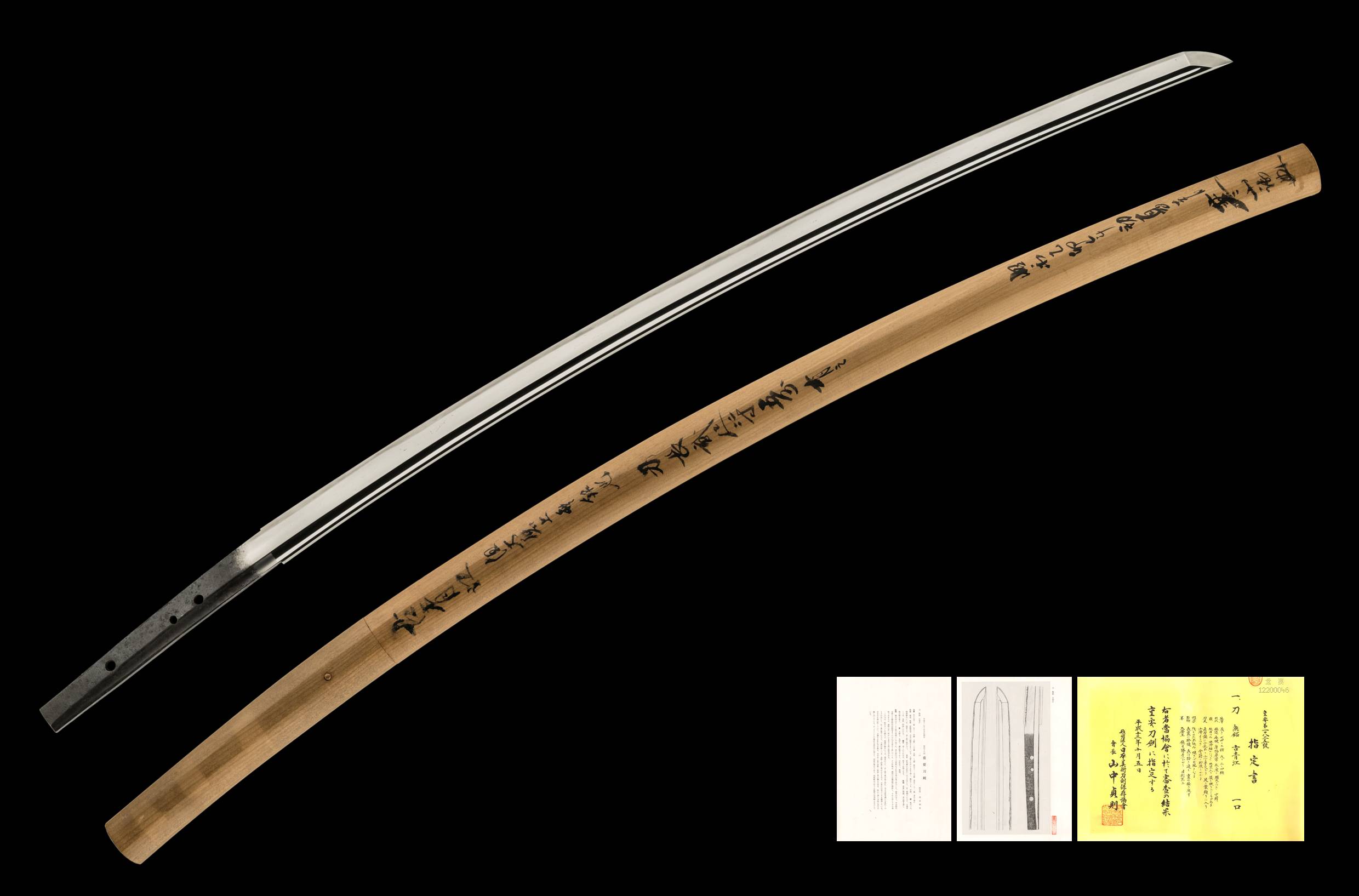
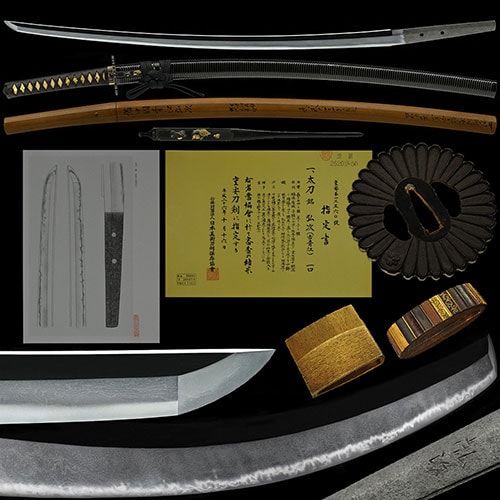
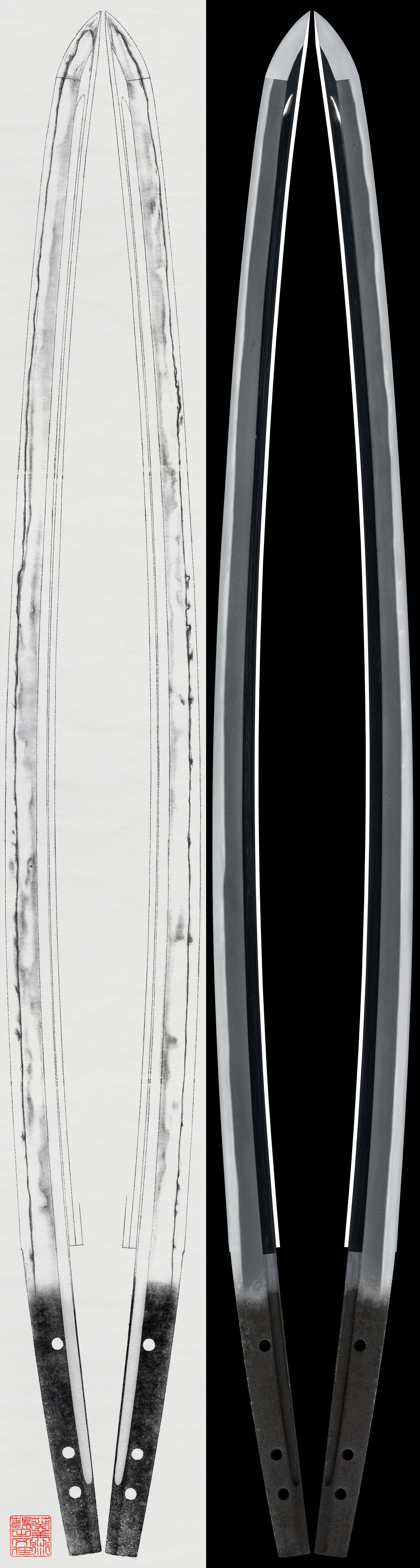
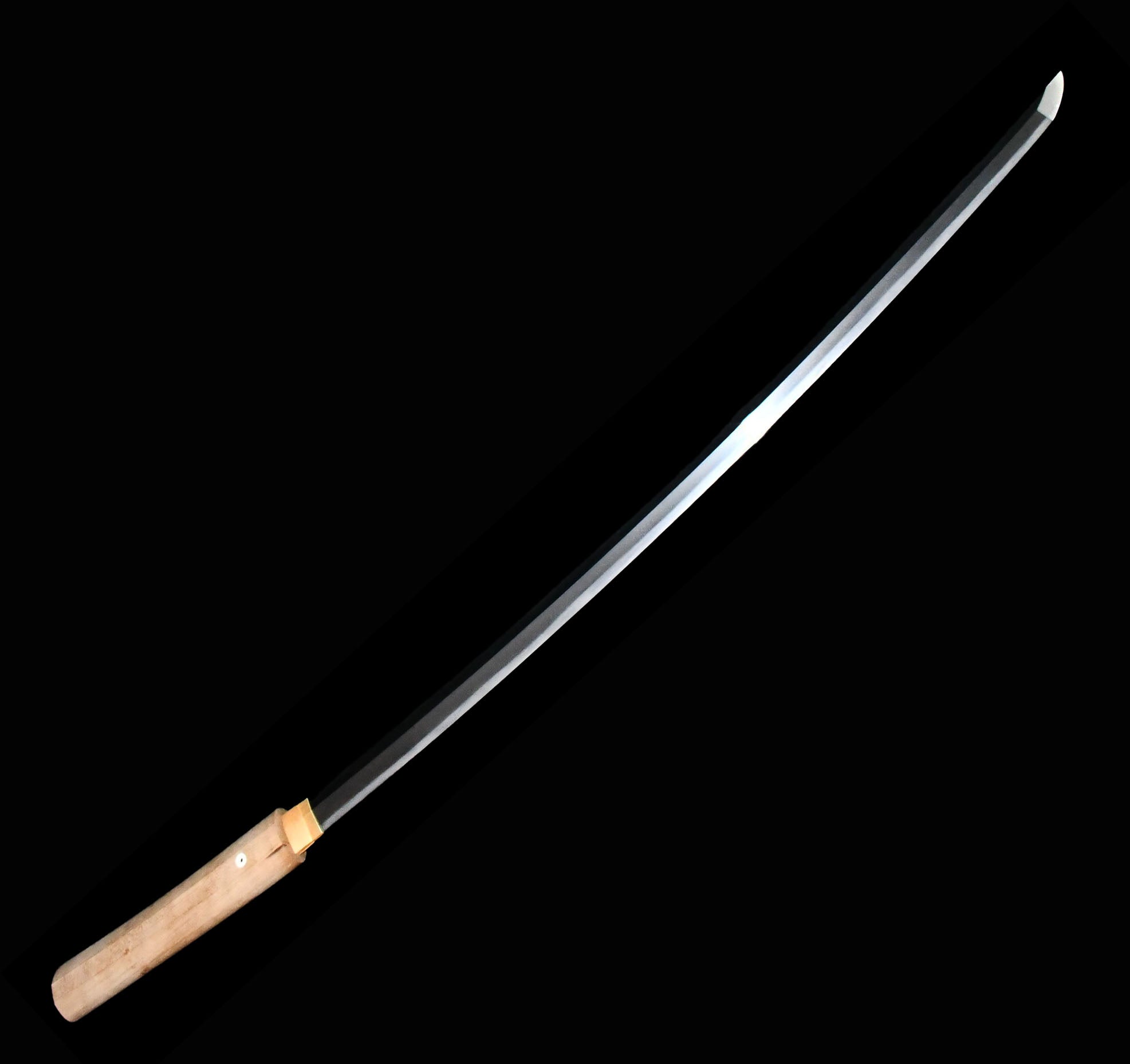
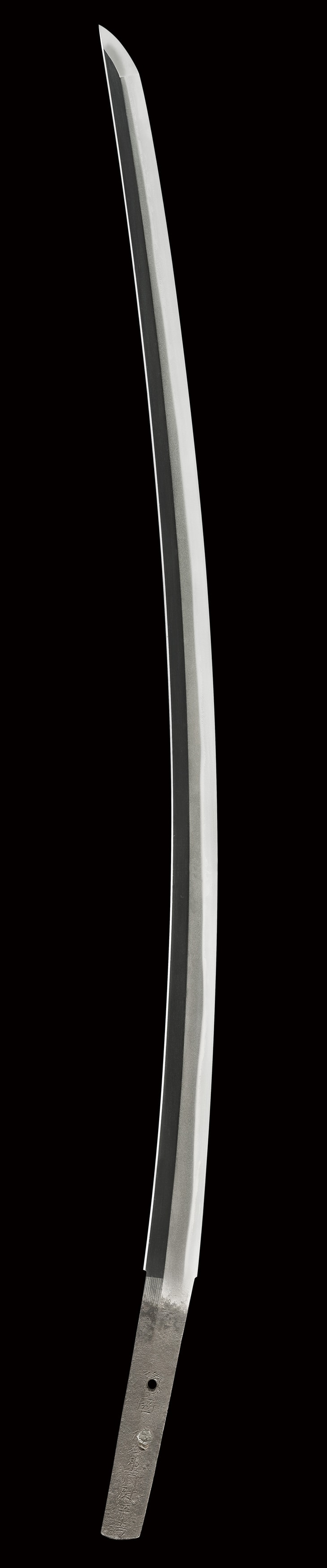
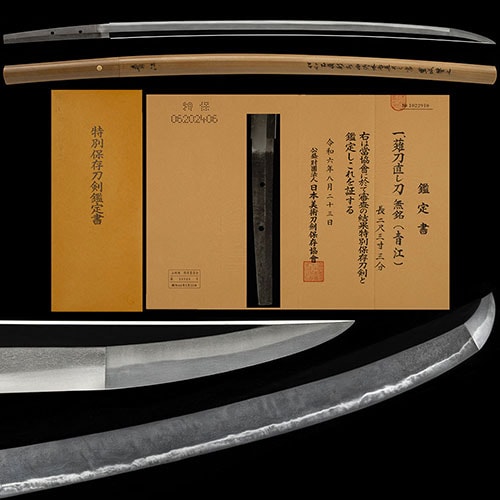
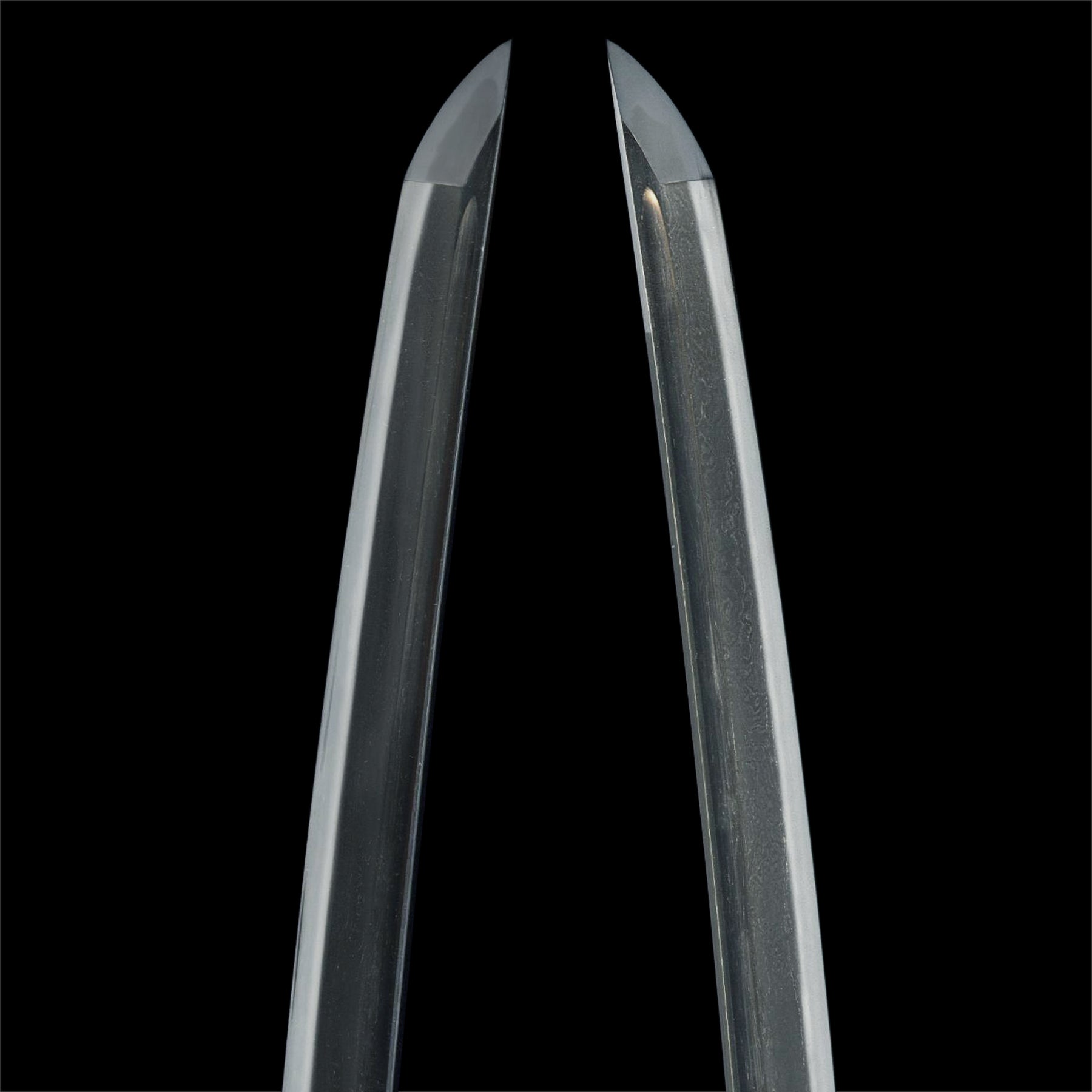
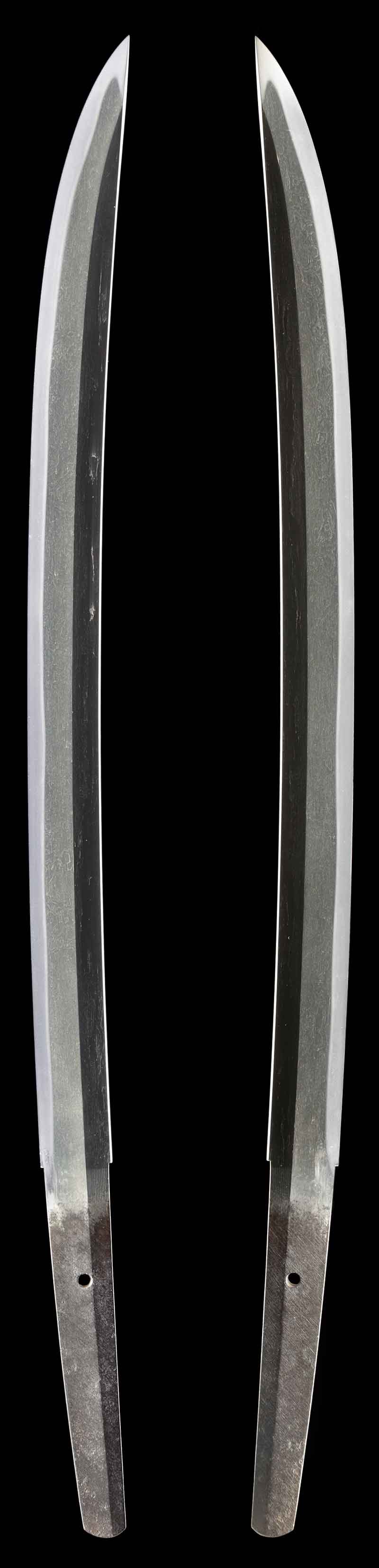
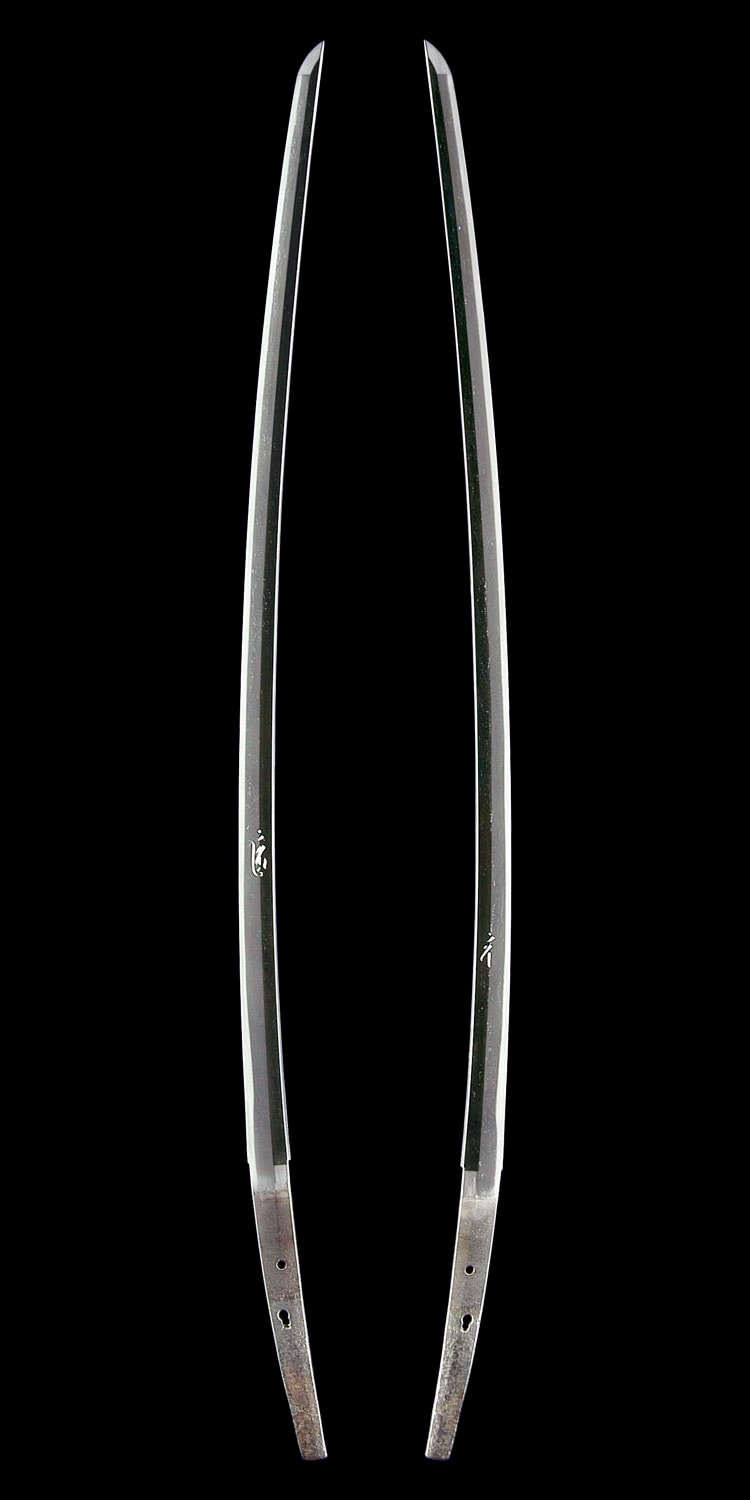
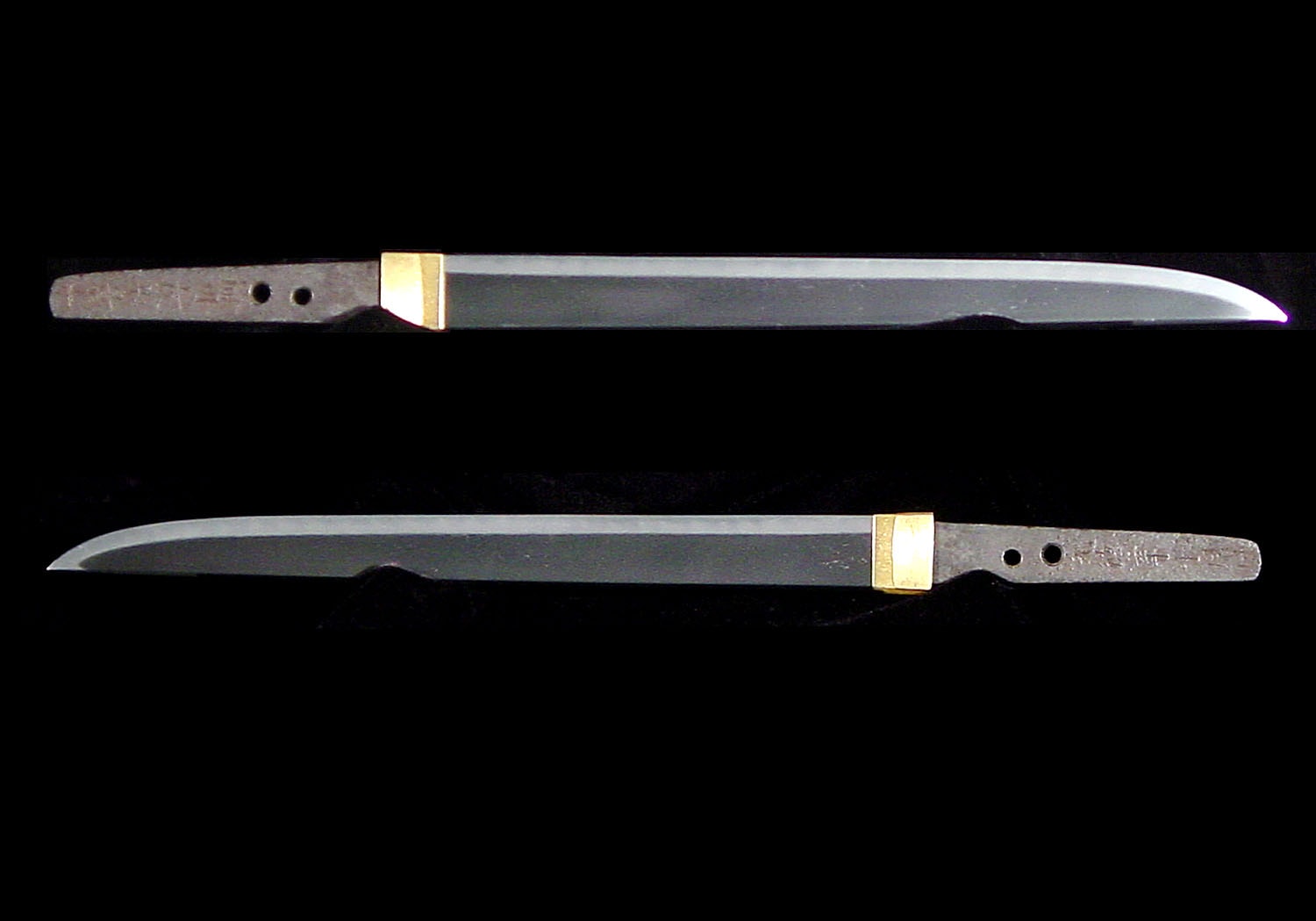
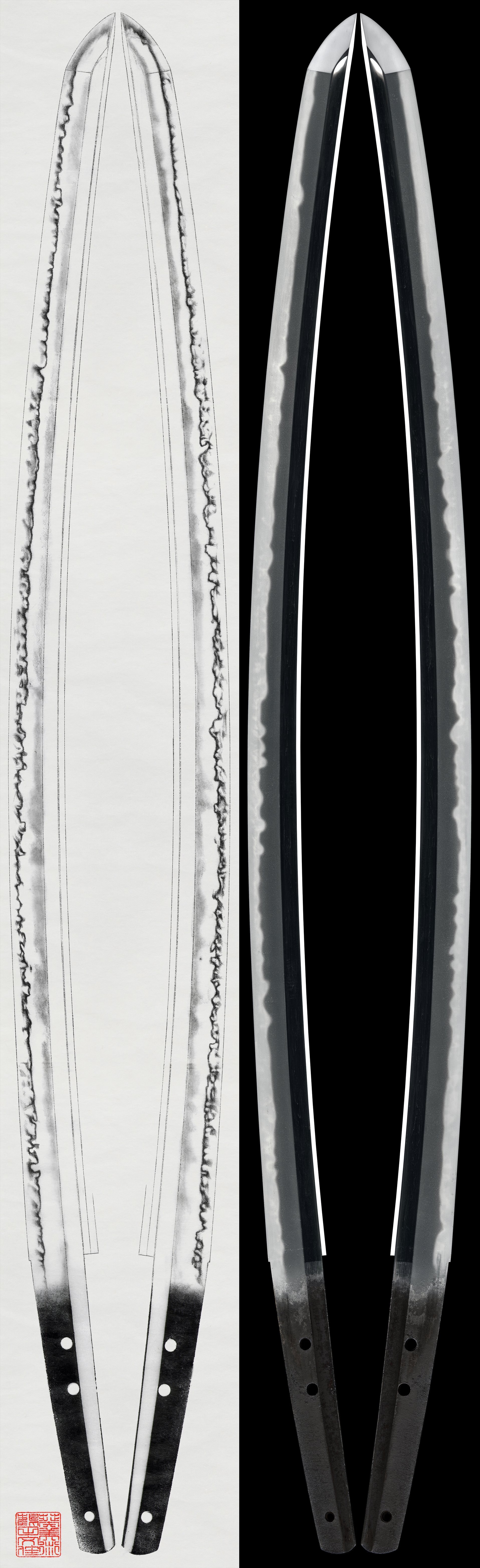
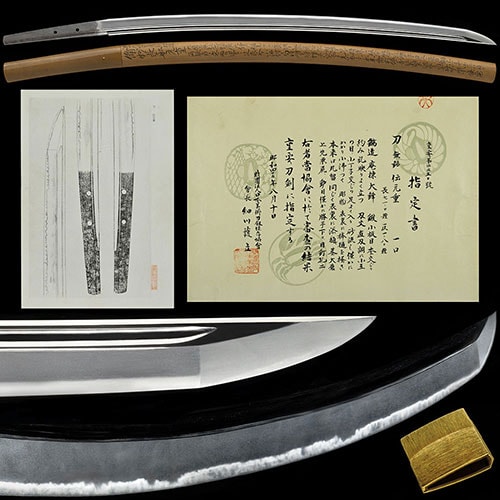
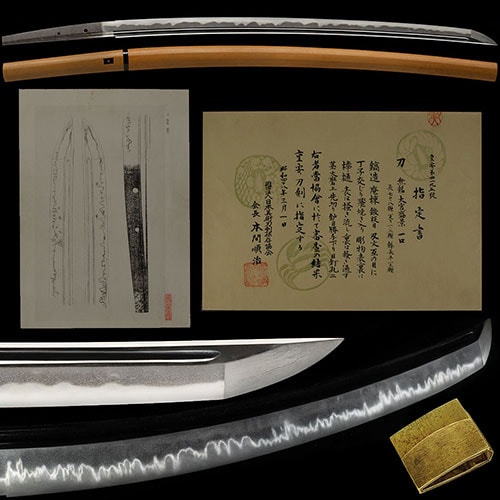
The Ko-Aoe school flourished in the lower basin of the Takahashi River in Bitchu Province, forging swords at the districts of Koi and Manju in a region long renowned as a source of iron. The school is traditionally held to have begun with Yasutsugu around the Joan era (1171-1175), and works produced from the end of the Heian period through approximately the mid-Kamakura period are distinguished as Ko-Aoe, with production continuing under the broader Aoe designation through the late Nanbokucho era. The representative smiths of this early lineage -- Yasutsugu, Moritsugu, Sadatsugu, Tsunetsugu, Kanetsugu, Toshitsugu, Suketsugu, Tametsugu, Shigetsugu, and Tsugutada among them -- share the character "tsugu" as a common element in their names, forming an unusually cohesive dynastic identity. A distinct sub-lineage, the Senoo group, stood apart from this main line: led by Masatsune and Yukizane, the Senoo smiths forged to the east toward Bizen and rarely incorporated the "tsugu" character. " The Ko-Aoe technical vocabulary is remarkably consistent across its many smiths. The kitae is built on itame-hada intermixed with mokume, the grain standing conspicuously to produce chirimen-hada -- the tightly compressed, crepe-like surface texture that is the school's most recognizable trait. Patches of jifu and ji-madara mottle the ground steel, while fine ji-nie adheres thickly with chikei interwoven; a dark-toned sumi-hada may appear amid the standing grain. Utsuri manifests in several forms across the school's corpus: midare-utsuri, jifu-utsuri, and in certain works by Tsunetsugu, tiered bands suggestive of dan-utsuri. The hamon is predominantly suguha-based, mixed with ko-midare, ko-choji, and ko-gunome; ko-nie adheres well, and fine kinsuji and sunagashi run through the hardened edge, while the nioiguchi characteristically tends toward shizumi -- a subdued, sinking quality -- or in certain smiths appears bright and clear.
The boshi typically turns in ko-maru, sometimes with hakikake. Tang conventions provide critical diagnostic markers distinguishing Ko-Aoe from contemporary Ko-Bizen: bold o-sujikai file marks, deeply cut machi, and signatures placed on the haki-ura side in characteristically thick chisel work. The NBTHK consistently observes that compared with Bizen works of the same era, Ko-Aoe productions "convey a somewhat quieter and more subdued taste" -- the restrained, astringent shibui character that defines the school's aesthetic. Yet within this disciplined restraint, individual members demonstrated striking range. Yasutsugu's most celebrated tachi -- transmitted as an heirloom of the Shimazu family and counted among the legendary Tenka Goken -- displays a flamboyant midare-ba of extraordinary vitality that rivals anything produced in the Bizen tradition, while Sadatsugu's finest works invite comparison with National Treasure-class examples. The later Osumi no Gon no Suke Sadatsugu developed a bold personal manner, broadening the yakihaba, concentrating nie to produce shima-ba-like scenery, and tempering the boshi with deep kaeri -- features that overflow with vigor. Kanetsugu is praised for almost no unevenness of workmanship across his corpus, while Moritoshi's forging is singled out as tighter and better refined than is typical even within this exacting school. The Senoo branch, represented by Masatsune and Yukizane, carried a flavor somewhat resembling Bizen work while maintaining the characteristic chirimen-hada and o-sujikai file marks that identify the hand as unmistakably Bitchu. Across its full productive span, the Ko-Aoe school stands as one of the foundational pillars of the Japanese sword tradition: a lineage whose refined suguha aesthetic, distinguished crepe-textured forging, and quietly astringent taste secured Bitchu swords their ancient reputation and continue to command the deepest respect in the study of classical swordsmithing. Learn more →