In the eleventh month of Karyaku 3 (1328) Yoshitsugu (吉次) of signed an " no jū Uemon no jō Taira Yoshitsugu ", an inscription the judges of high documentary value. He belongs to the school, which flourished along the lower Takahashi river in a province the early eleventh-century Sarugakuki already names for "the swords of "; work to about mid- is called , what follows simply . The records name him, "together with Suketsugu, Yoritsugu and Naotsugu, one of the representative smiths of the school in this era", and an older record calls him outright "the representative smith of the chū-". His dated works carry Karyaku (1326-29) and Gentoku (1329-31), and the residence in his long signatures is written now " no jū", now "Bishū Manju jū", a divergence the records expressly point out.
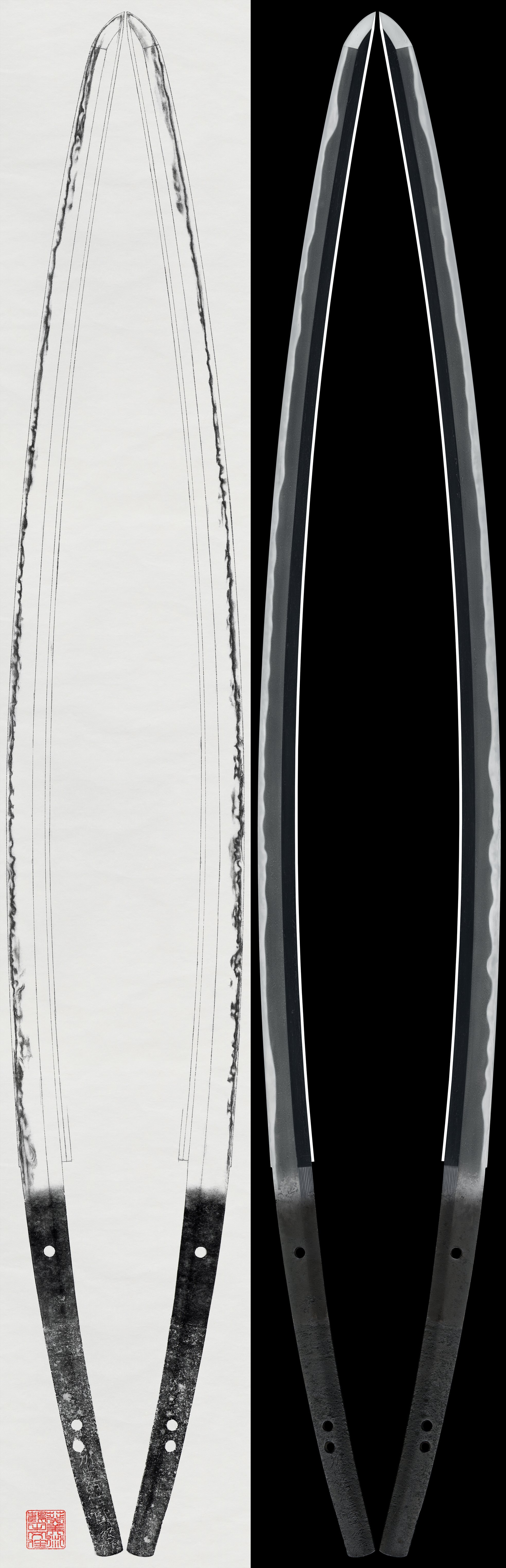
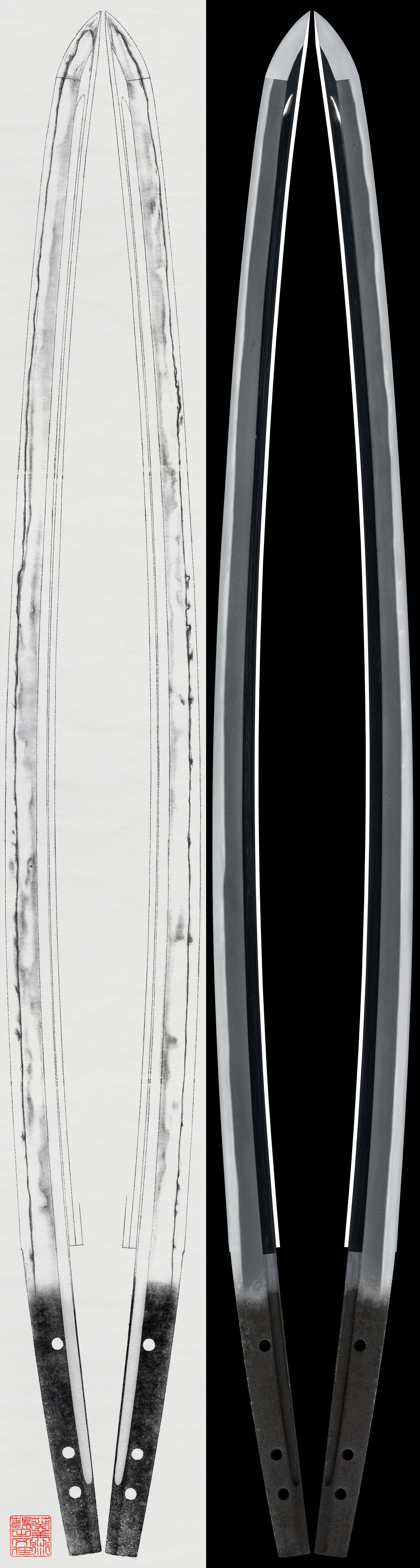
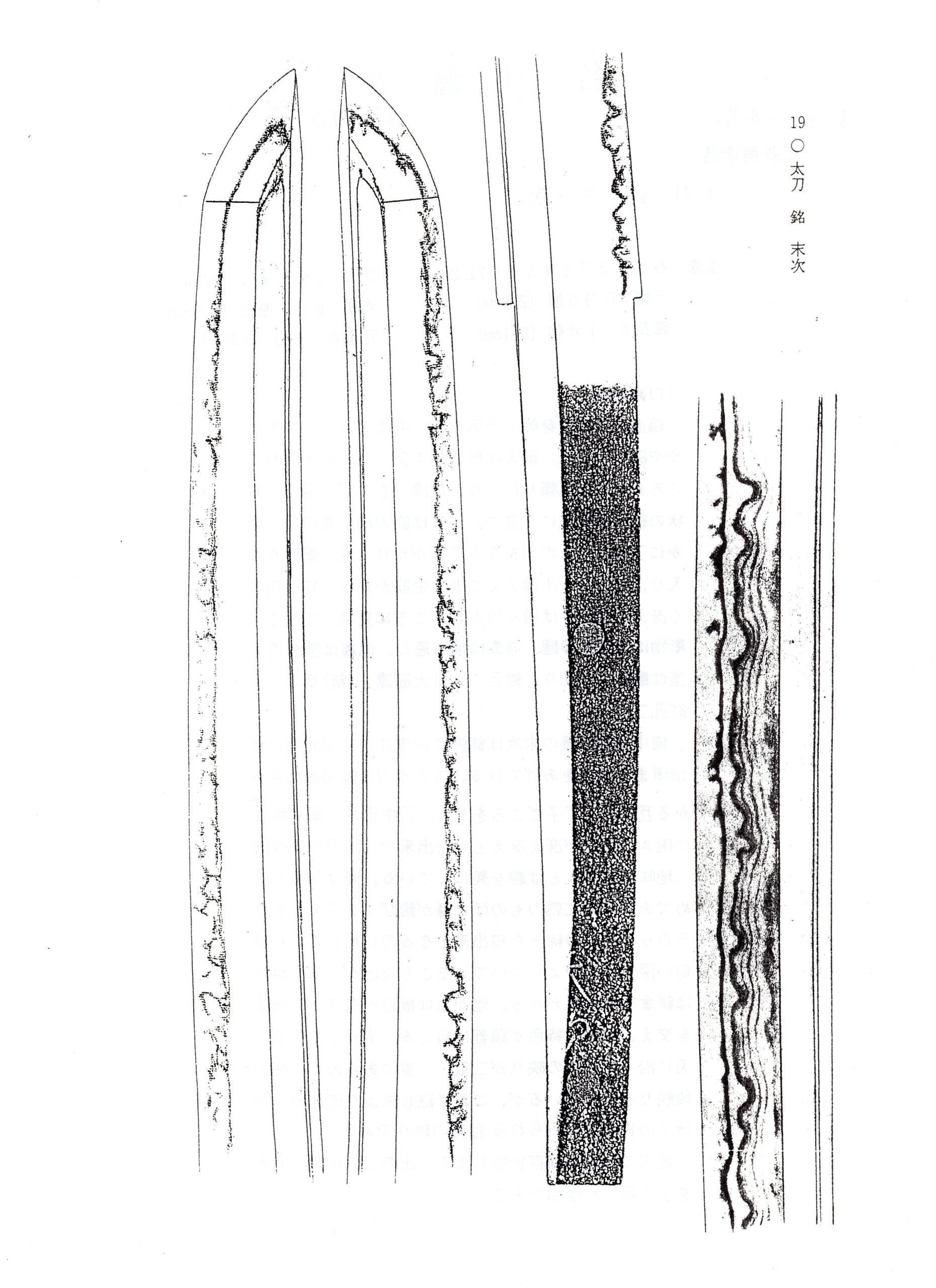
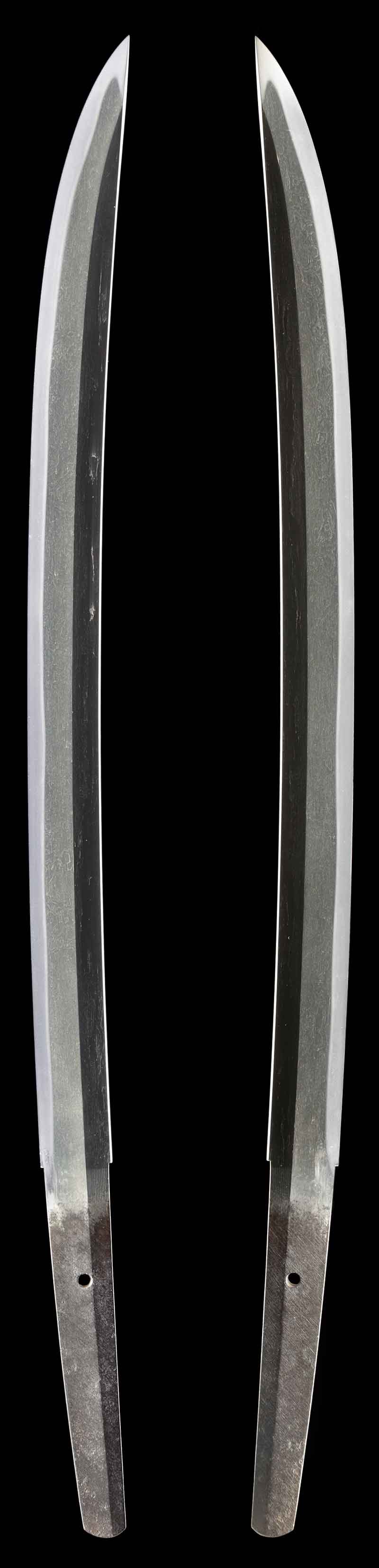
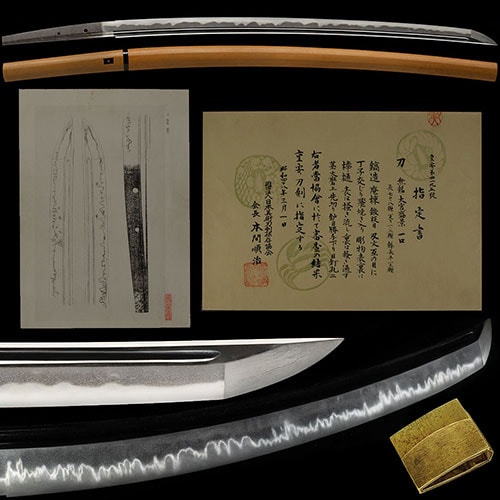
His foundation, and his declared strength, is the of this generation at its calmest. Of the Karyaku 3 the judges write that it is "a blade in which the true mettle of Yoshitsugu, a smith whose forte is , is displayed without reserve". The line is a , undulating shallowly in places, mixing , and ; and enter with among them, yet the slanting habit that marks the shows in him only partially, here and there. The tightens, carries , and is bright and clear; fine and run through, and intermittent near the base raises a -like effect. On the the line narrows to a with fine , the temper carried down through the , a habit shared also by the Gentoku 1 of Sahyōe no jō Naotsugu; of the Karyaku 3 the record writes that the quiet "overflows with a deep savor".
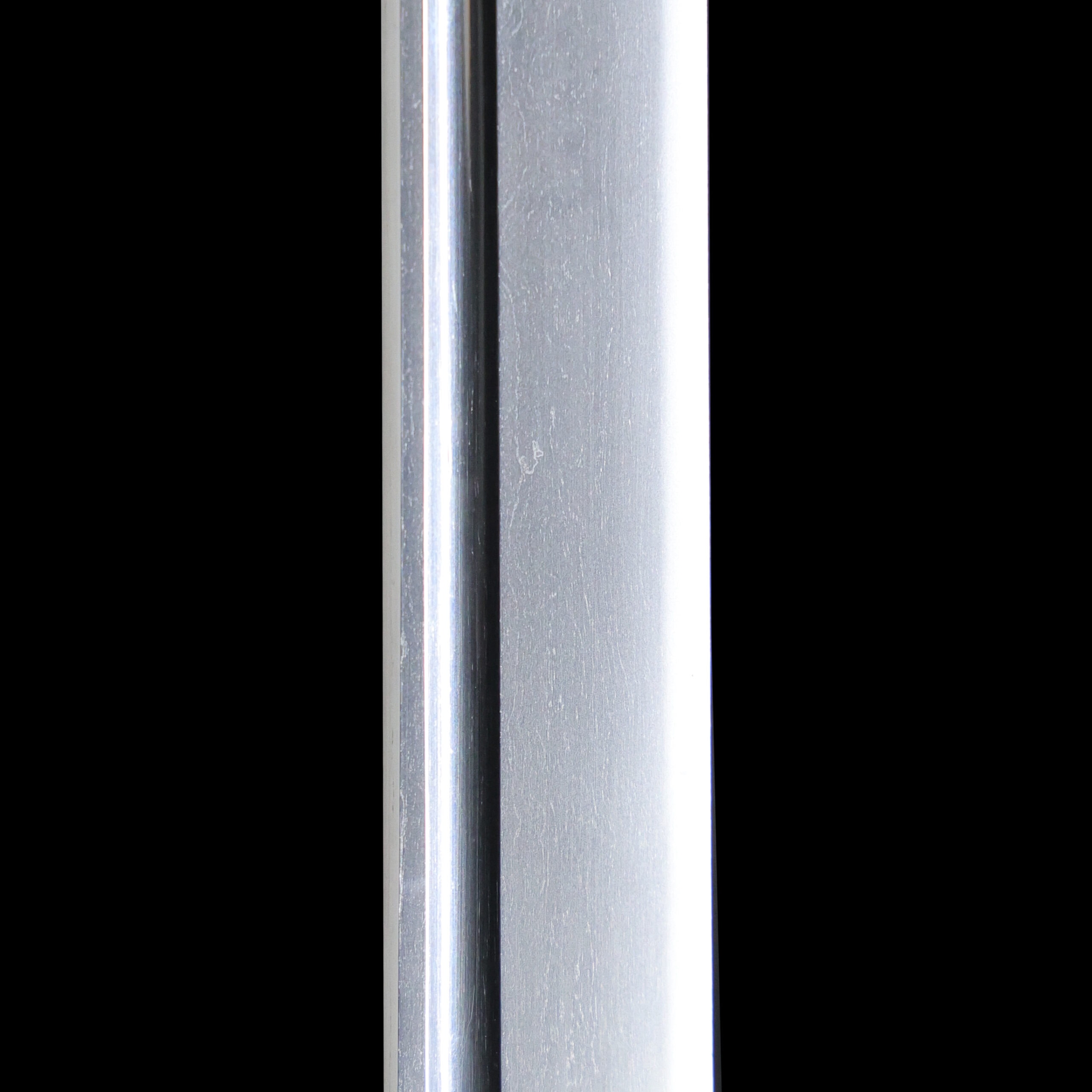
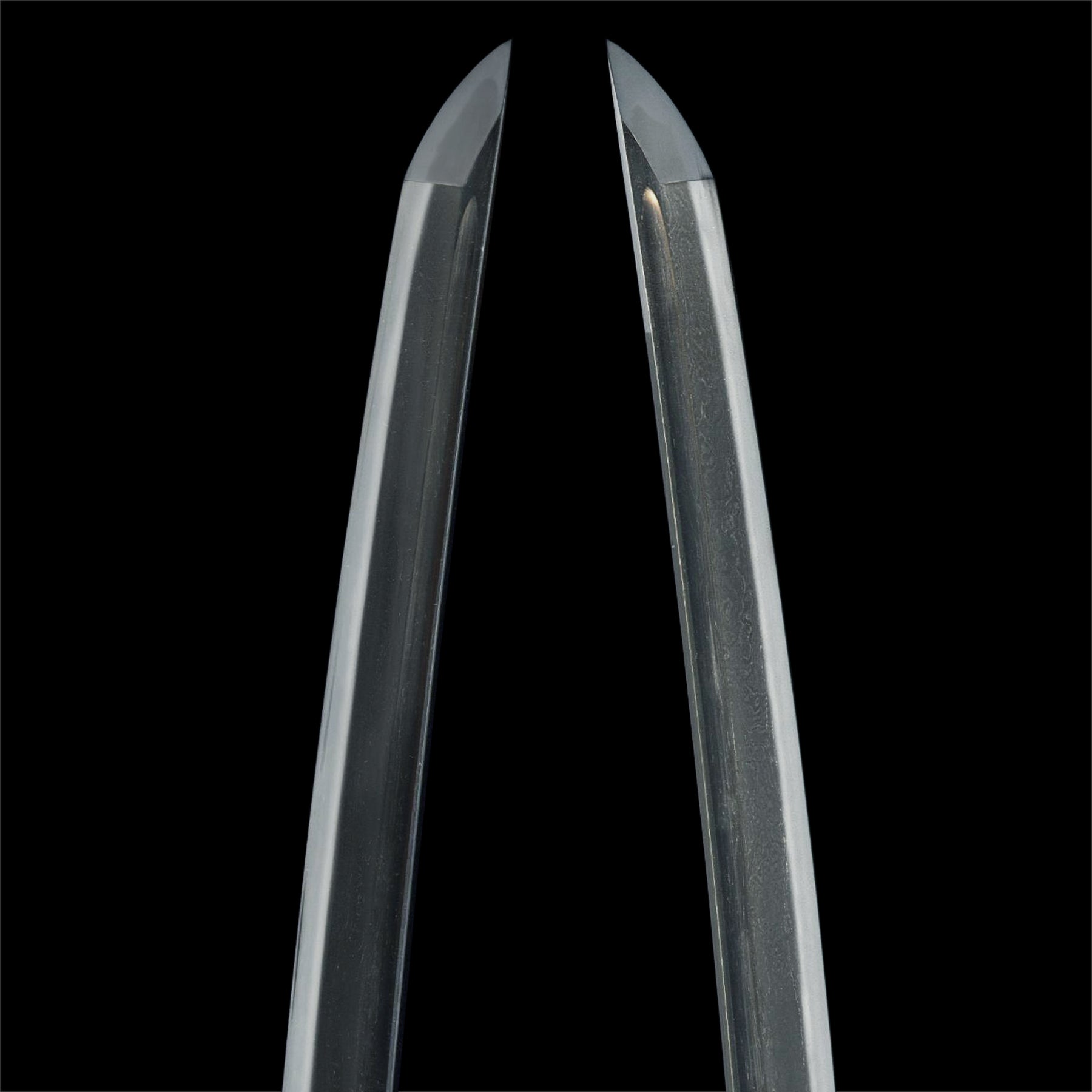
The is 's own. He forges a well-knit mixed with and flowing , the thick and extremely fine, minute entering; (地斑) recurs blade after blade, the clear (澄肌) of the school appears, and on the gold-inlaid Nabeshima the finely standing takes on a crepe-like complexion. Over this a faint rises, and on the small works the divides, "a toward the and a linear toward the ", the so-called (段映り). The runs straight to a return, at times tending to a point or lightly brushed with . Of the niji- the judges write that the scenery of the and the tight, bright of the are " through and through".
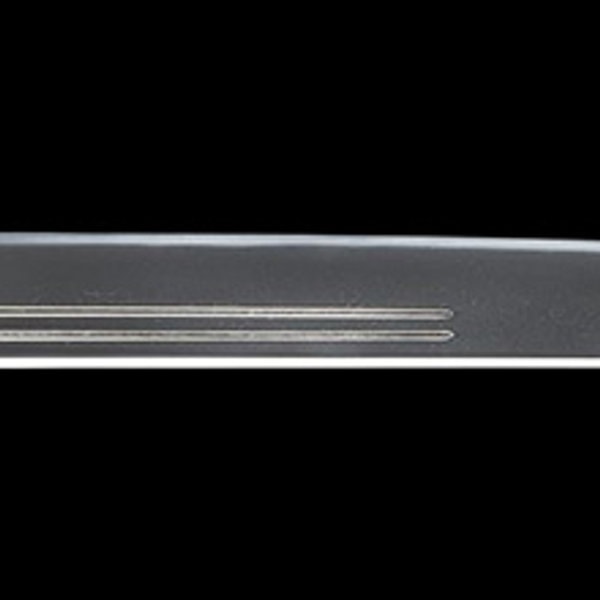
The signed and dated core of his work is anchored on the title. He often cut long signatures headed Uemon no jō with the Taira clan name; among the signed reference works the published sources name a in the Tokyo National Museum dated Gentoku 2 and a blade at Hie Shrine, both Important Cultural Properties. His small works are rare survivals, "surviving examples of Yoshitsugu's are exceedingly rare", and the signed is likewise a form seldom seen in the school. A two-character cut on the of one slender is read as his earlier work, predating the long-signature pieces. At the far edge of the name stands a generation question: the Jūyō Bijutsuhin record matches the folded-signature of the Owari Tokugawa, a wide work in -, to the Yoshitsugu the places in around Jōwa (1345-50), and calls the smith of the Karyaku "presumably his predecessor"; Honma adds the caveat that "appraisals to individual names within will always invite both assent and dissent". The designation records meanwhile draw the line by manner, noting of his quiet that "they differ in feeling from the works of the school of the period".
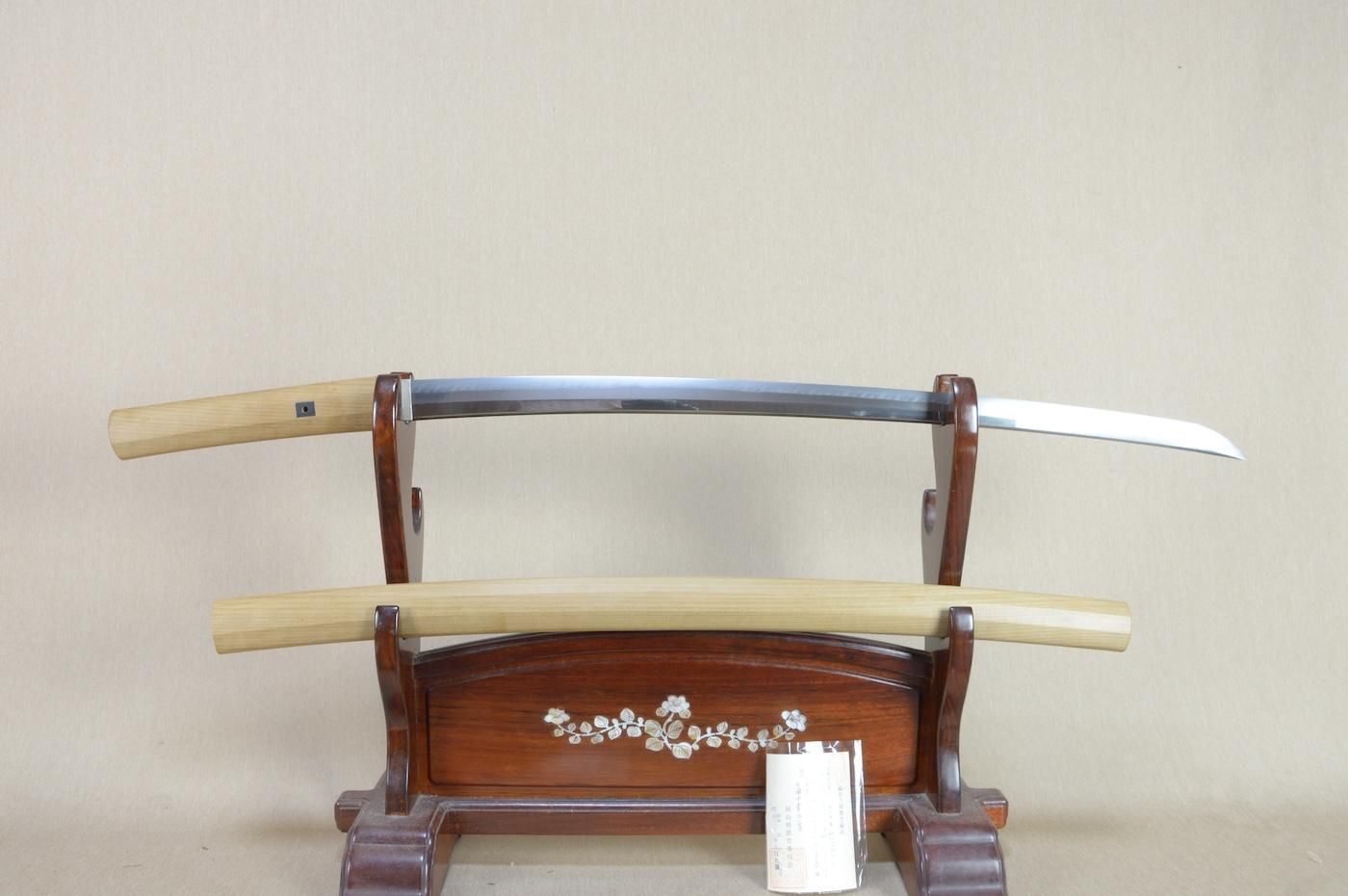
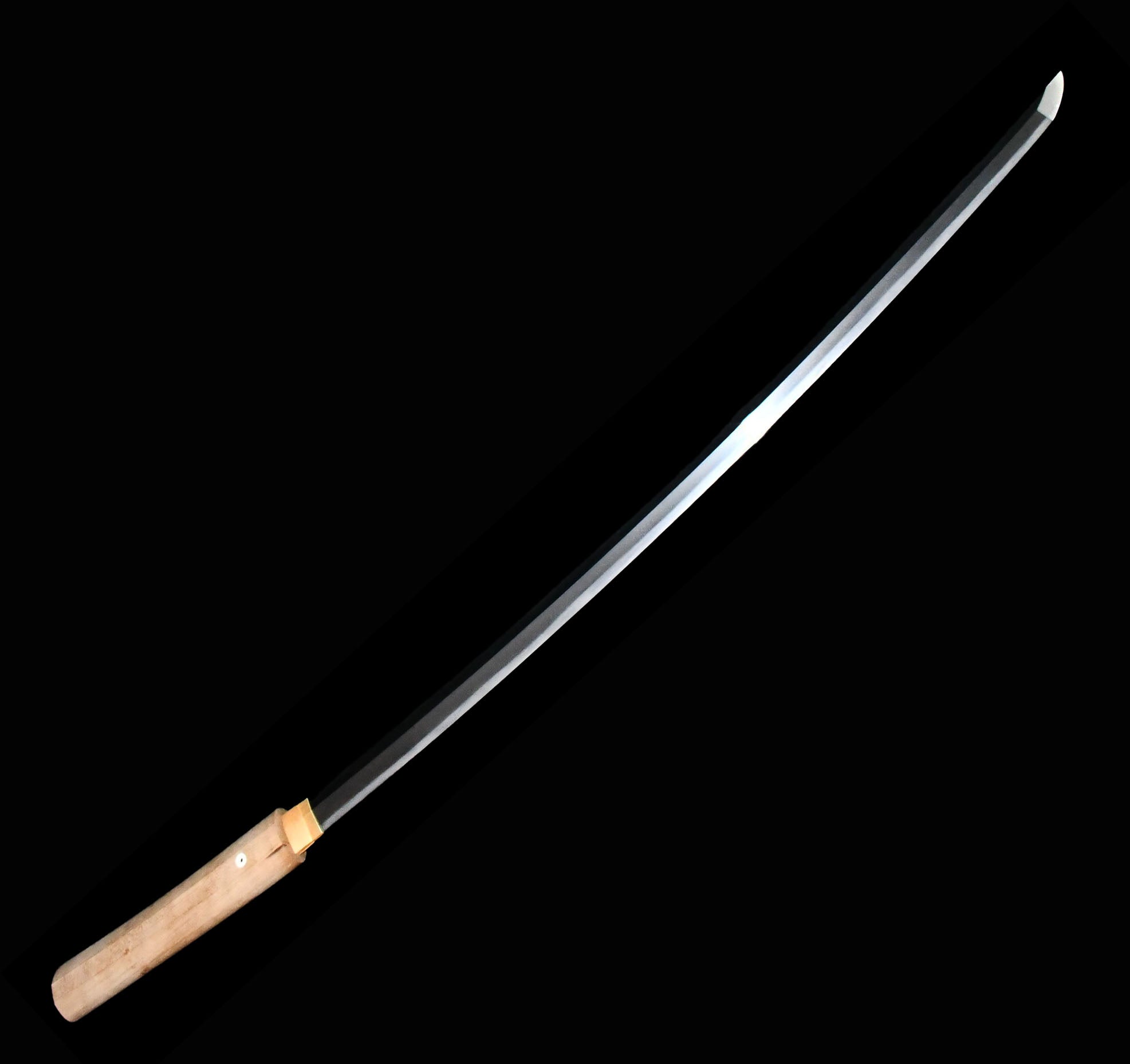
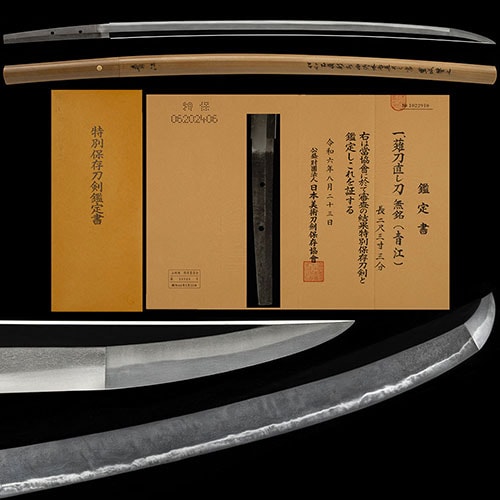
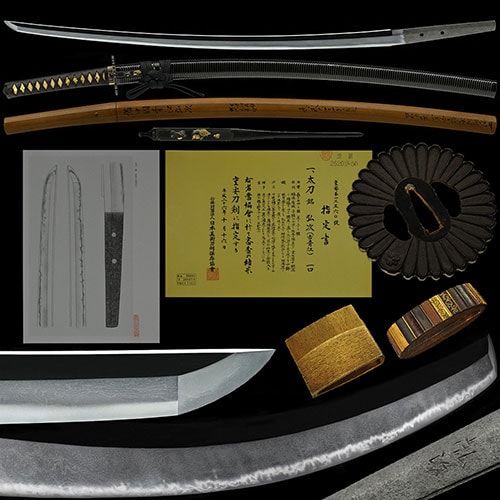
A second register stands on . of deep curvature and ample carry his attribution. The Nabeshima bears a gold-inlaid attribution, not a signature, recording its shortening in Genna 5 (1619), and its workmanship is judged "the typical late- make of the school in both and ". The under a Kyōhō 9 (1724) of Kōchū, valued at 150 , is judged "an outstanding piece even among the Yoshitsugu attributions", "a robust figure, heavy in the hand". The are honest: of the descended in the Naitō family the judges write that at a glance it might also be appraised as Motoshige or the like, "and it is difficult to assert Yoshitsugu definitively", while holding it a late- blade. Within the school his place is the quiet pole of the generation: where Naotsugu signs Sahyōe no jō, Yoshitsugu answers with Uemon no jō (右衛門尉) and the Taira name, and where the slanting of comes out in force elsewhere, his blades keep the calm bright line, the element only glimpsed.
He is rated Jō-jō by Fujishiro, and seventeen designated works stand on the official record: two and ten , twelve blades in those two tiers; three Jūyō Bijutsuhin; one Important Cultural Property, a signed blade preserved at Fujishima Jinja; and a signed blade, once of the Imperial Family and the Mōri family, now in the Kyoto National Museum. Eleven of the seventeen carry a , five are under , and the Nabeshima carries its attribution in gold inlay. The provenance runs through great houses: the gold-inlaid descended in the Ogi branch of the Nabeshima family, recorded in the Tsuchiya as "an ancestral sword worn at the first assault on Hara castle", the blade of the Shimabara rising; the Naitō of Murakami carries the family tradition " Yoshitsugu bestowed by the Taikō", received from Hideyoshi at the Odawara campaign of 1590; the folded-signature descended in the Owari Tokugawa and remains with the Tokugawa Reimeikai; the Karyaku-dated Jūyō Bijutsuhin now belongs to the Sano Art Museum. The Important Cultural Property and the shrine and museum pieces are preserved as cultural patrimony and will not trade; a collector may realistically encounter the and tier, twelve blades among them the dated and and the quiet under , and one comes to the open market only rarely, a quiet masterpiece of the at its calmest when it does.