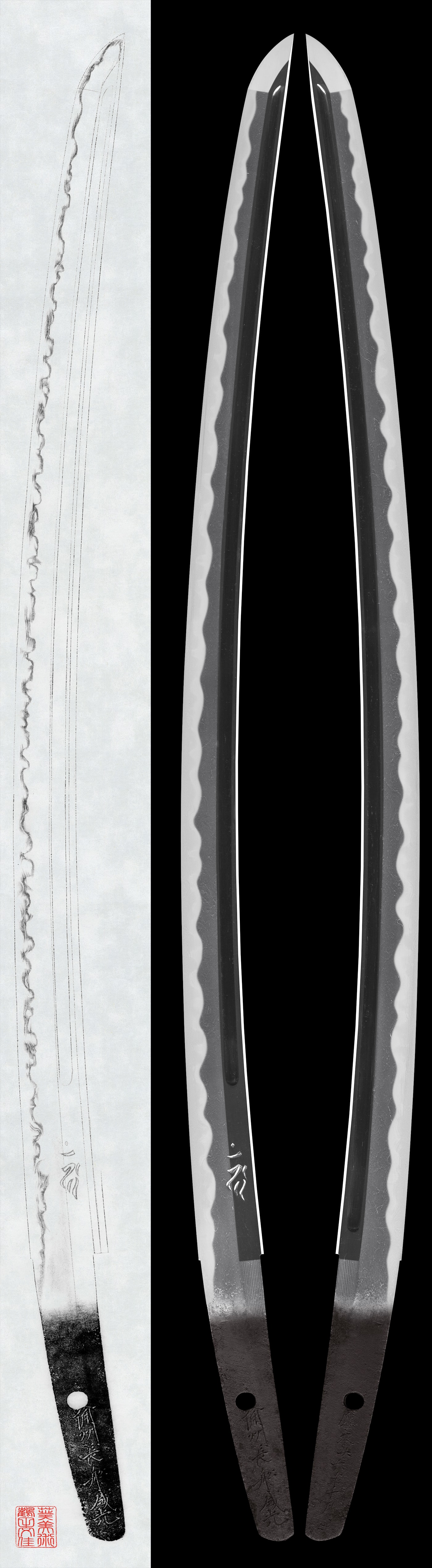
Sixty years of war between two courts drove blades long and broad, and Osafune met the demand: Kanemitsu and Chōgi led forges serving the provincial warriors who did the fighting, while Sōshū influence arrived with the armies to create Sōden-Bizen.
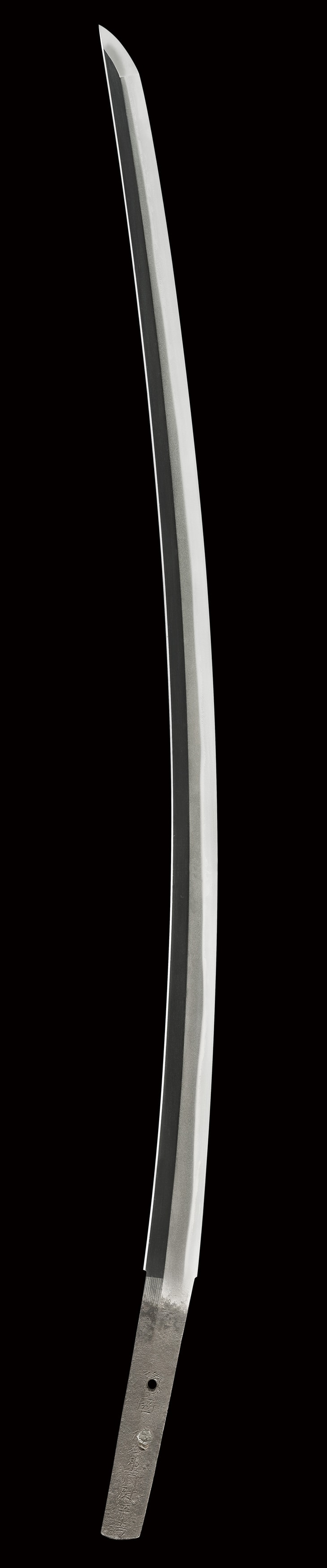
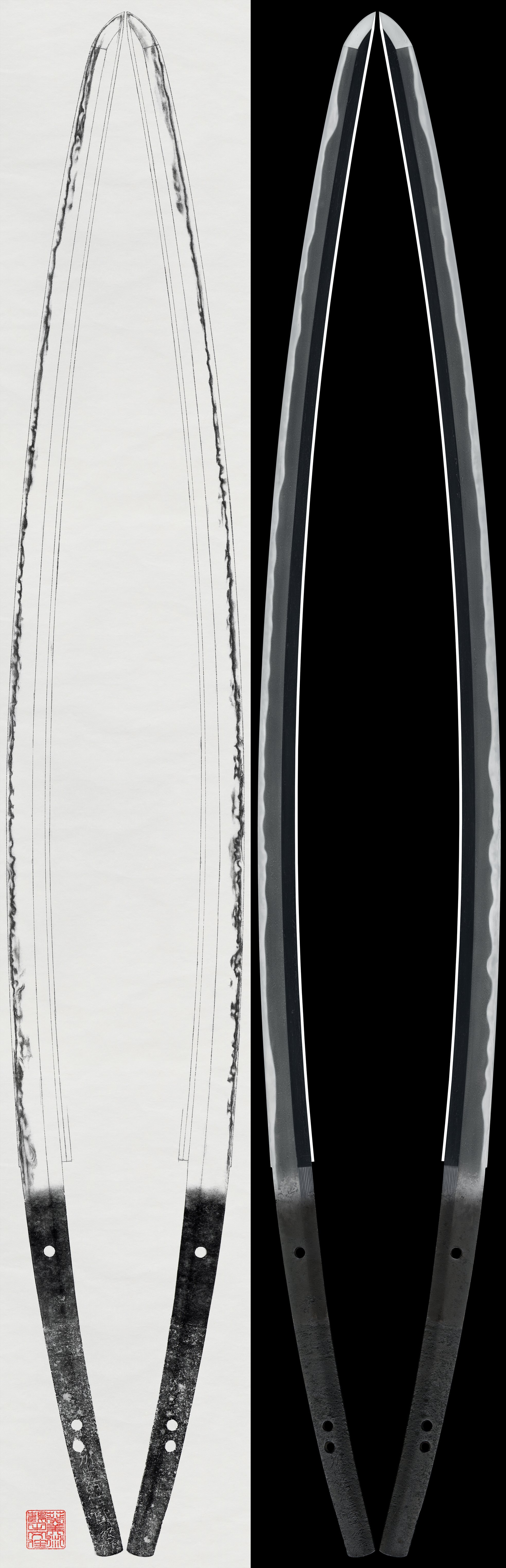
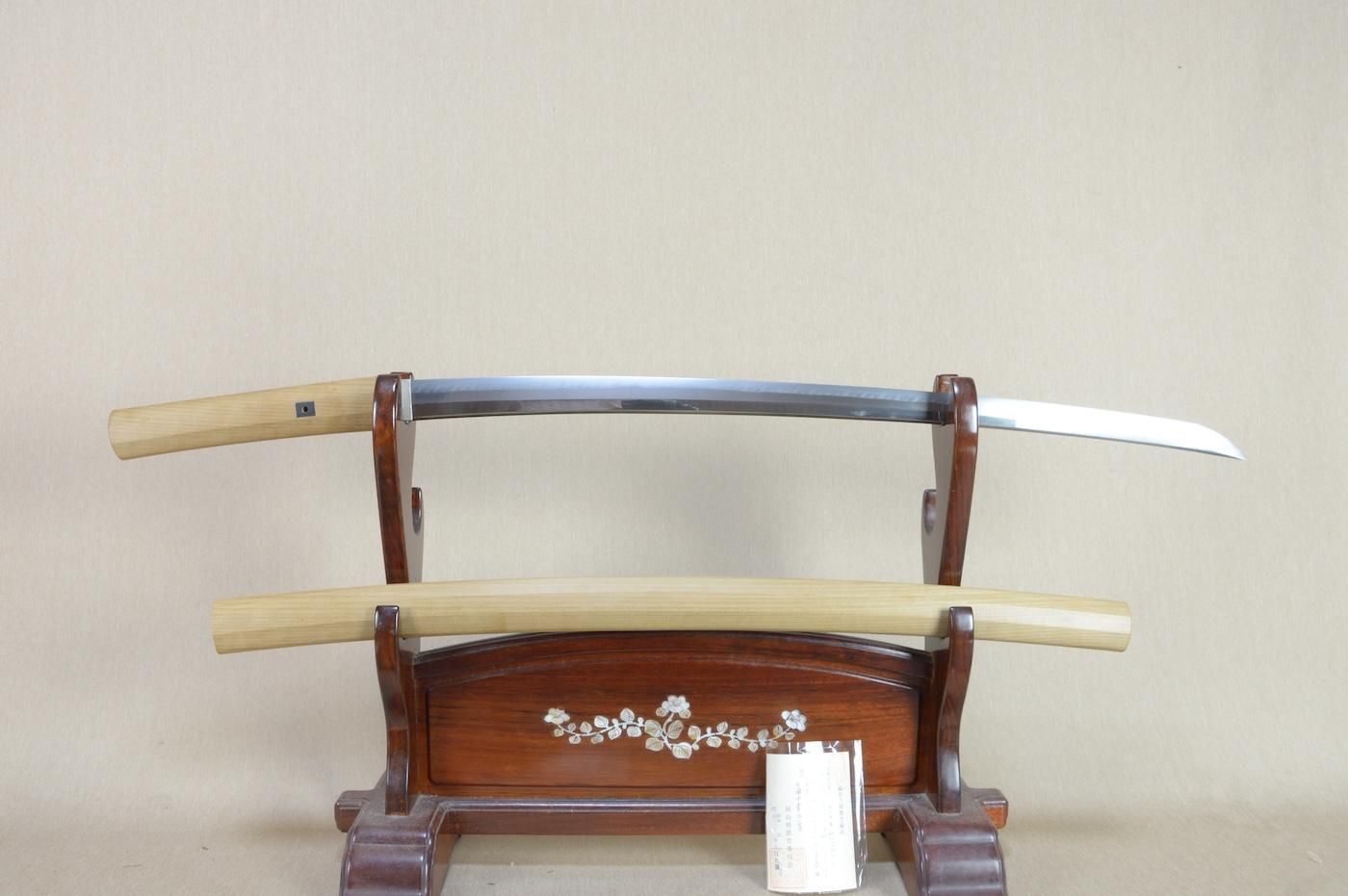
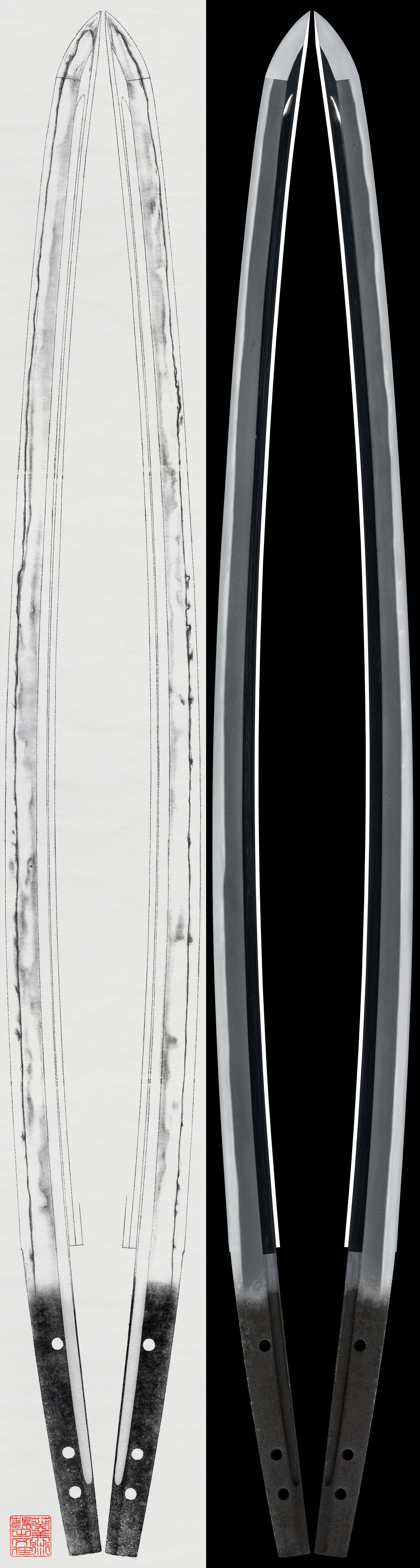
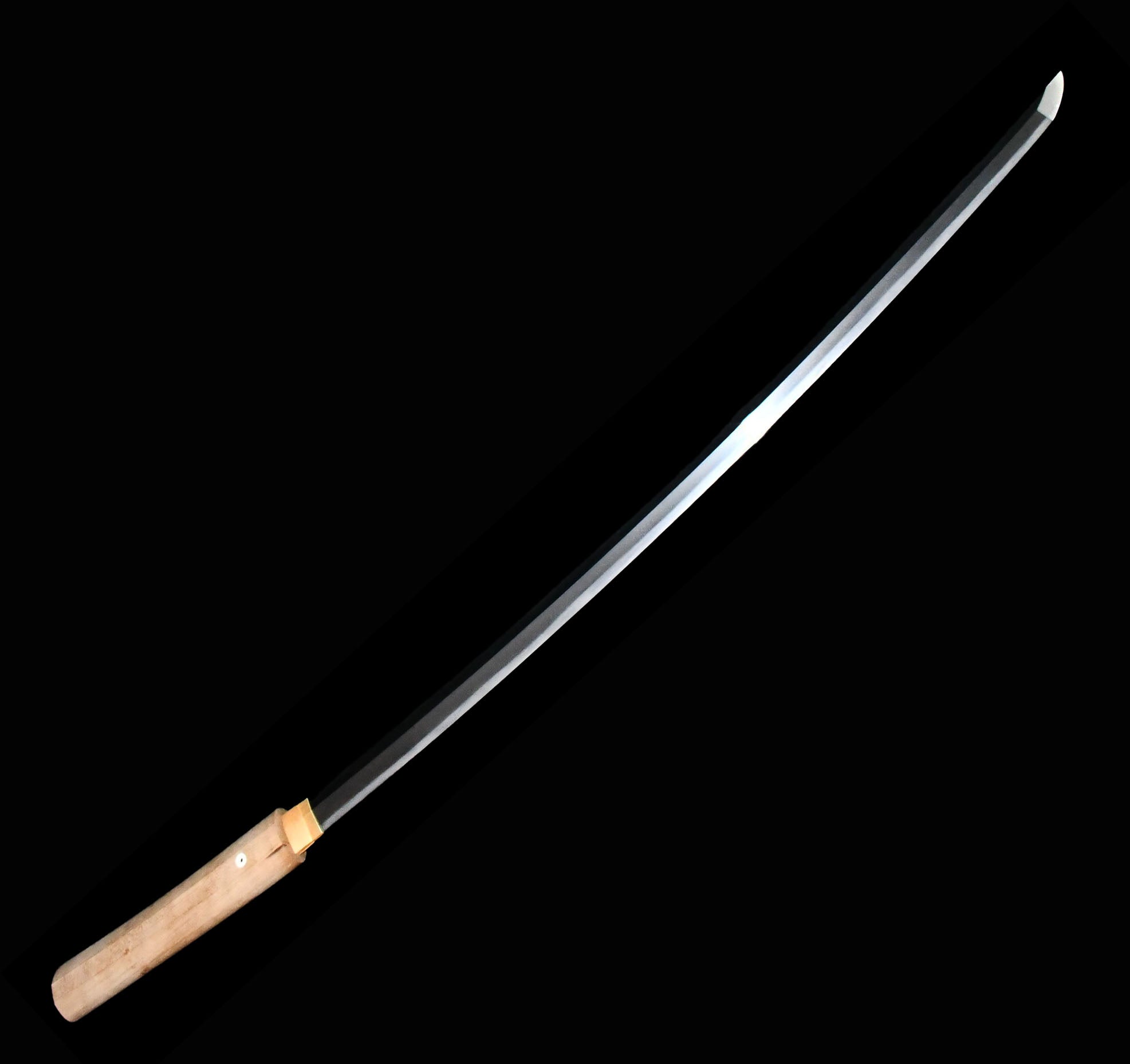
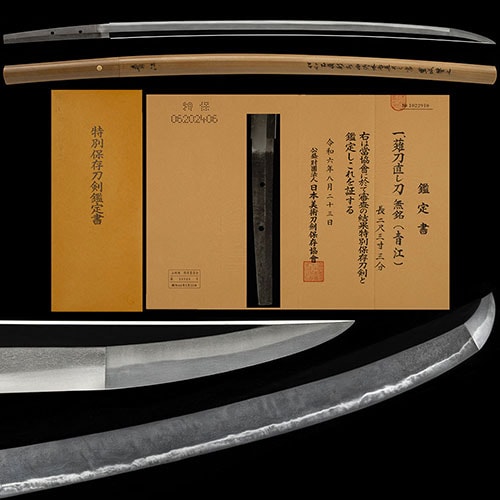
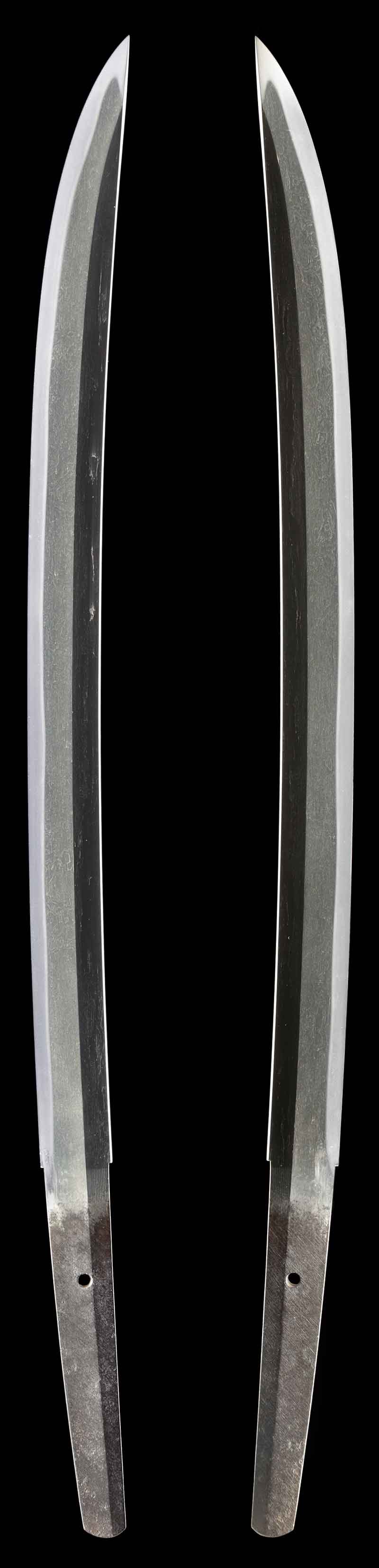
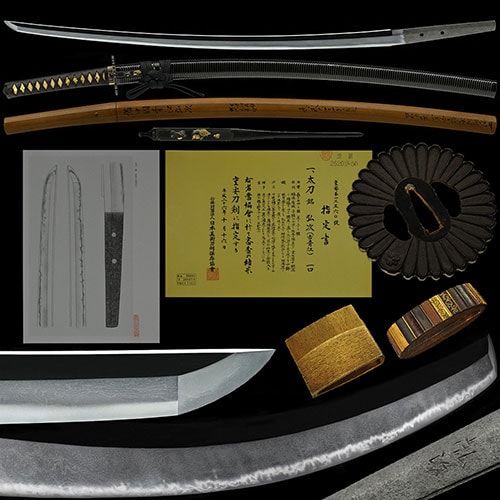
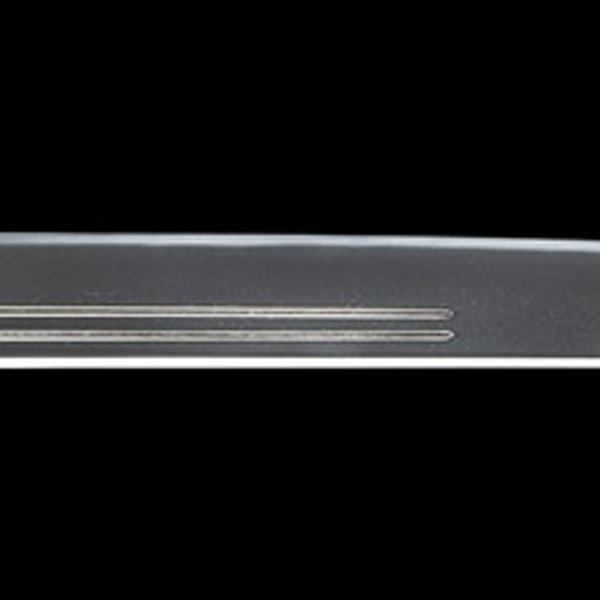
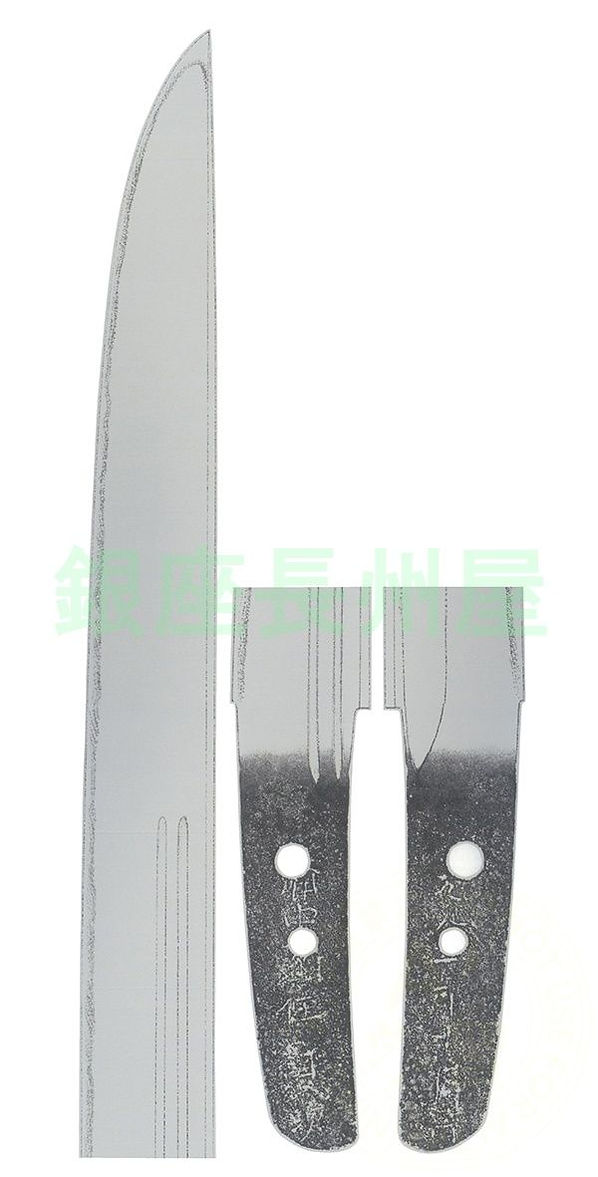
This is a tanto signed by Sadatsugu, with a faint date of Genko 2 or 3, October. Sadatsugu smiths, starting with Ko-Aoe Sadatsugu who served Emperor Go-Toba, were active from the Kamakura to Nanbokucho periods. The Hon'ami family often attributed the name Sadatsugu to high-quality Aoe works.
 NihontoWatch
mei · Aoe · Nanbokucho
Bizen-den · Bitchu · around 1334-1338
Fujishiro Jo-jo saku · Tōken Taikan top 5%
2 pieces on the market now
Sadatsugu is one of the most celebrated names of the Aoe school of Bitchu Province. Transmitted since the Kanchiin-bon Meizukushi as a smith selected among the ban-kaji appointed to serve Retired Emperor Go-Toba, Sadatsugu is accorded the highest valuation in the Shinkan Hiden-sho, recorded as "Bitchu objects, supreme: fifteen kan,"[[c:1]] and has thus long been regarded as first rank even among Aoe works. The name was carried on from the early Kamakura period through the Nanbokucho period, encompassing multiple generations. So great was the esteem attached to this lineage that the Hon'ami family developed a longstanding tendency, when encountering well-made unsigned Aoe works that display a typical manner and particularly fine workmanship, to render Sadatsugu appraisals in the sense of denoting an Aoe piece of superior quality.
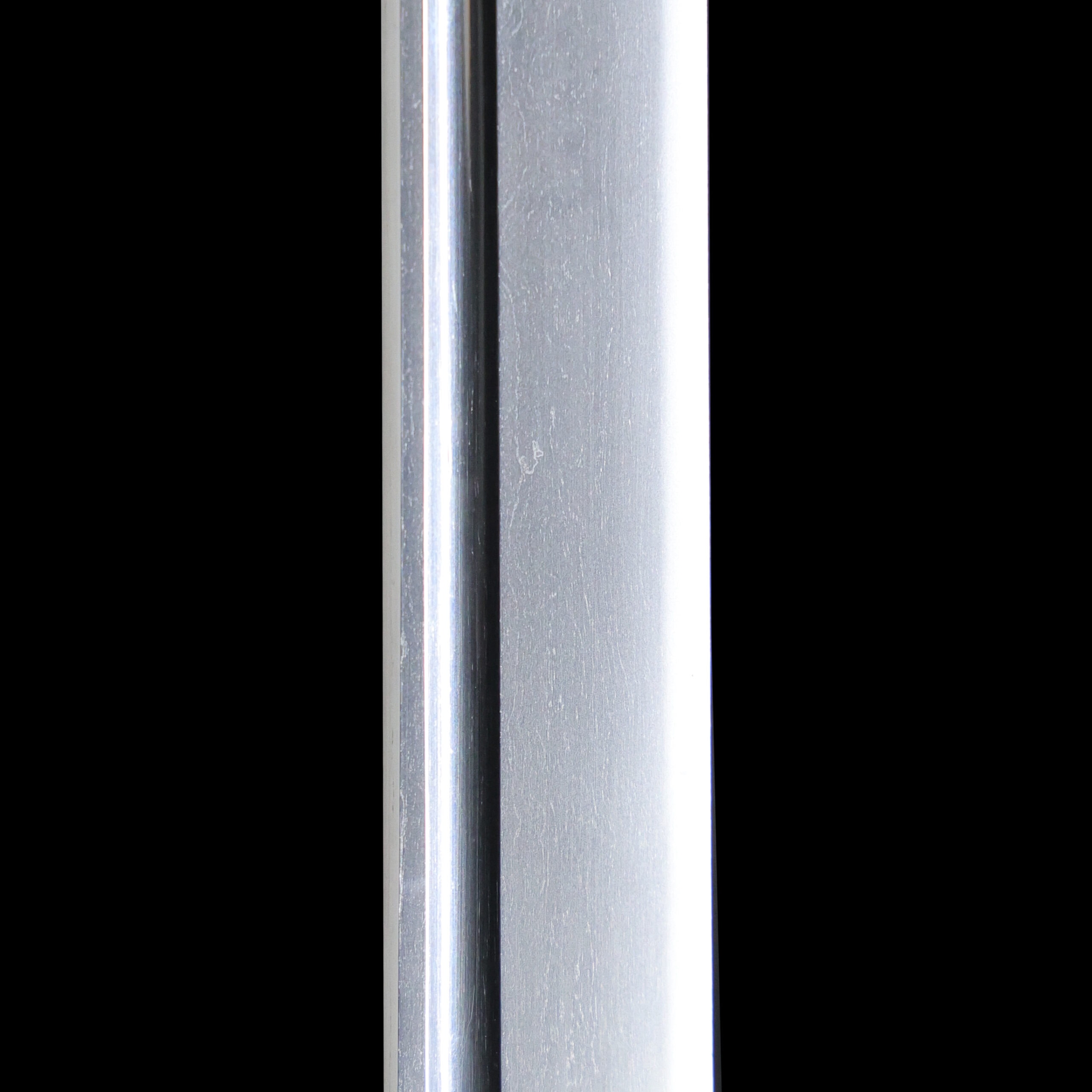
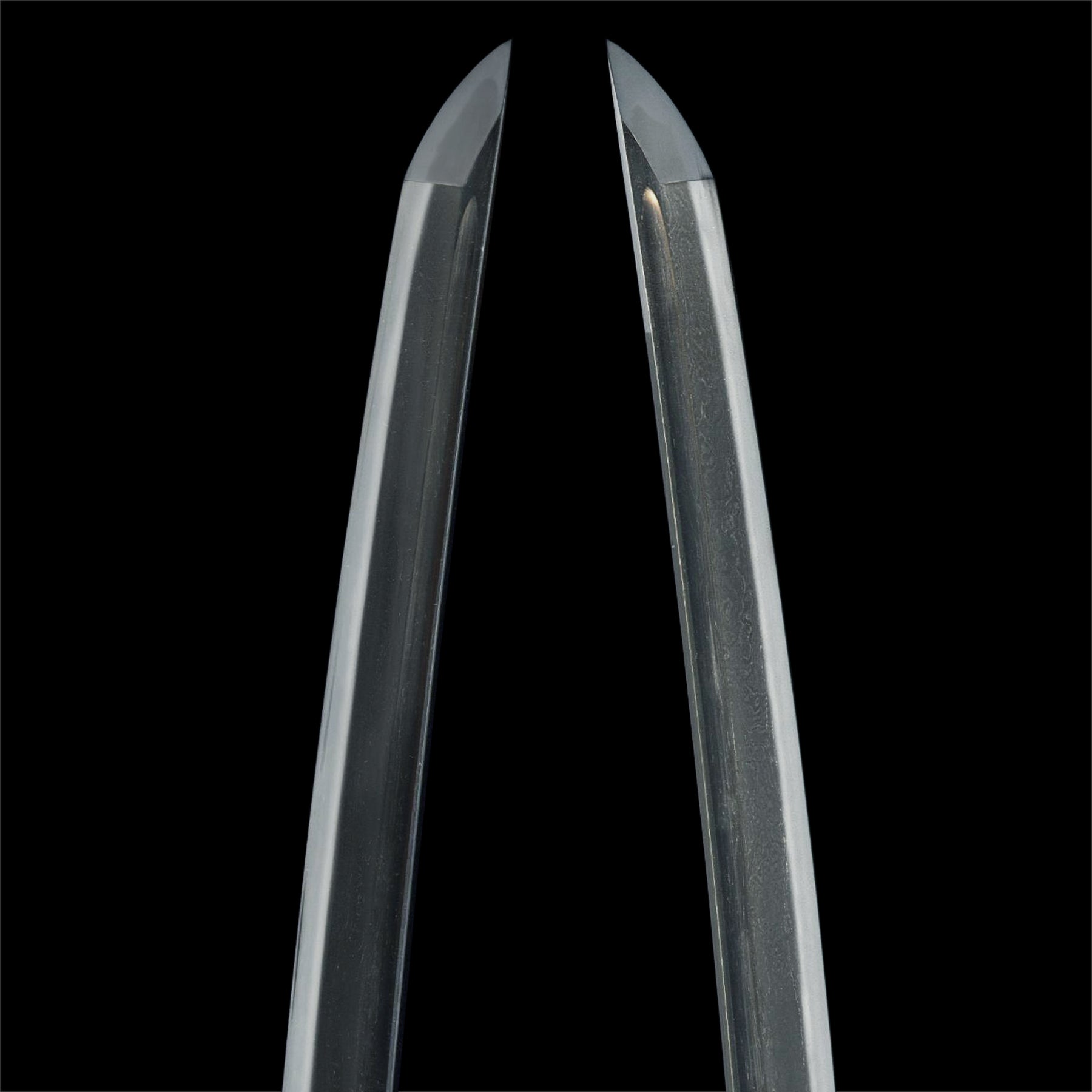
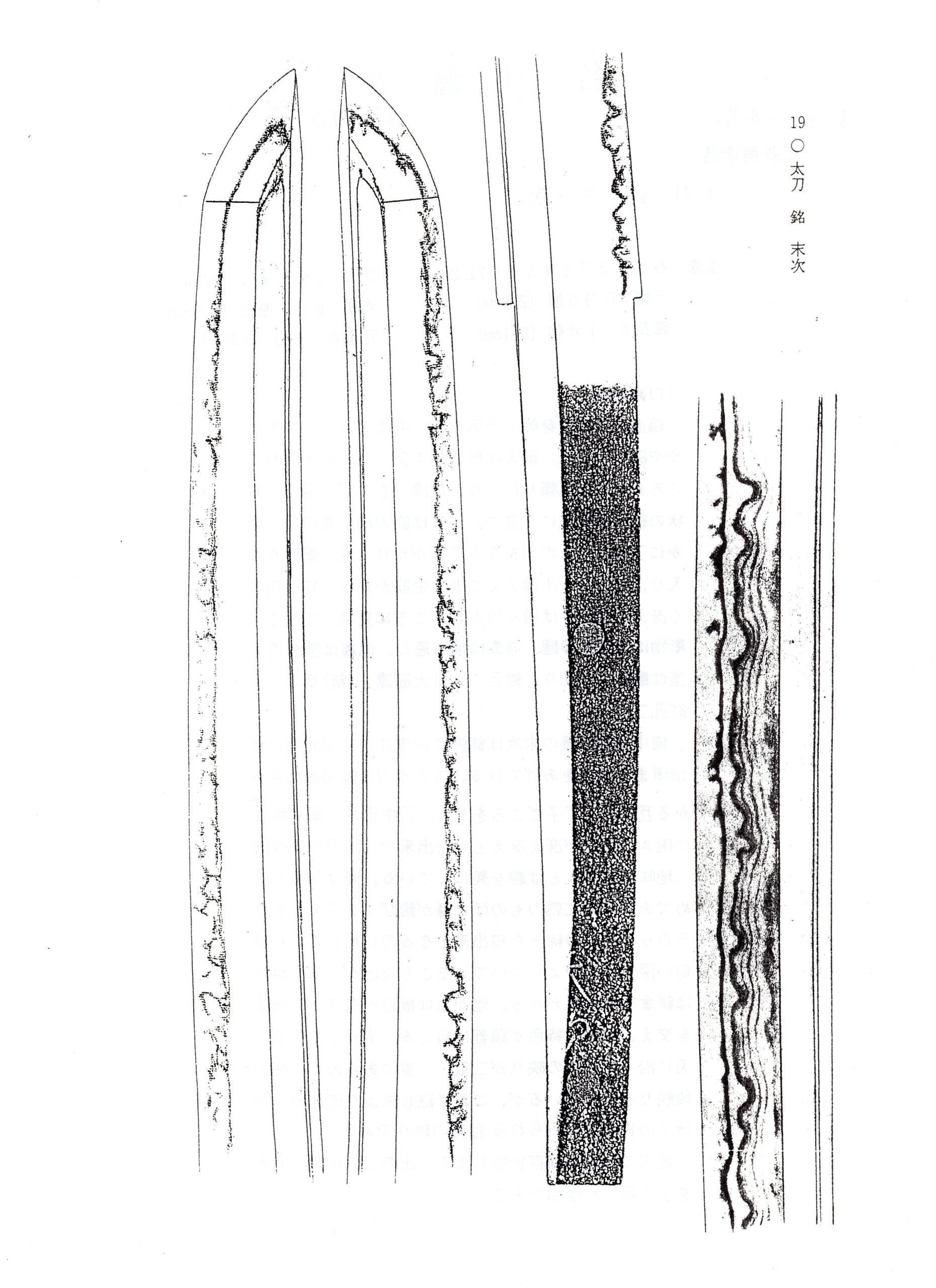
The technical character of works attributed to Sadatsugu is firmly rooted in the Aoe idiom of the late Kamakura period. The forging presents itame-hada mixed with mokume in which the grain stands out finely; extremely fine ji-nie adheres, and vivid midare-utsuri appears conspicuously. The hamon is fundamentally suguha, mixed with choji, ko-choji, ko-gunome, and small gunome; a distinctive tendency toward saka-ashi can be observed throughout. In the lower half of the blade, the temper characteristically becomes irregular and lively, with ashi and yo entering vigorously, nioi predominating with ko-nie, and fine kinsuji and sunagashi running through a nioiguchi that is bright and clear. The boshi typically shows a shallow notare with an upward-tending rise, becoming pointed at the tip with a rather long kaeri, revealing a distinctive workmanship.
The scholarly significance of Sadatsugu attributions lies in their role as markers of the highest quality within the Aoe tradition. The NBTHK has repeatedly observed that the jihada, hamon, and boshi of these works "conspicuously manifest the distinctive characteristics of the Aoe group in the late Kamakura period," and that the reverse-slanting tendencies visible in the yakiba call to mind a precursor to the brilliant saka-choji midare that flourished in the subsequent Nanbokucho period. The internal scenery of the temper displays variety; the nioiguchi is bright and clear; and, combined with the robust form featuring thick kasane and abundant nikuoki, these works are consistently recognized as representative superior exemplars of the school.
Where Sadatsugu stands among comparable artisans: across all of nihontō, and within tradition, era, and period. The tiers (Foremost · Leading · Major · Notable) weigh official designations from the NBTHK and Japan's Agency for Cultural Affairs, together with historical honors of lasting repute such as the Sansaku and Meibutsu-chō.
Select a lens to see how it's measured.
Bizen-den · Bitchu
Phase: Chū-Aoe中青江· 1235–1334
8 pieces on the market now
The Chu-Aoe school represents the middle and culminating phase of the Aoe tradition of Bitchu Province, encompassing smiths active from the late Kamakura period through the Nanbokucho era. The lineage traces its origins to an ancient swordmaking heritage in the lower basin of the Takahashi River, a tradition already celebrated in the eleventh-century Shin Sarugakki, which counted "the swords of Bitchu" among the notable products of the provinces. Scholars conventionally distinguish earlier Ko-Aoe production, extending through the mid-Kamakura period, from the Chu-Aoe and later Sue-Aoe phases that carried the tradition forward. The name Sadatsugu -- transmitted since the Kanchiin-bon Meizukushi as one of the goban-kaji appointed to serve Retired Emperor Gotoba and accorded the highest valuation in the Shinkan Hiden-sho -- stands as the school's most prestigious lineage name, while Yoshitsugu, Naotsugu, Tsunetsugu, and Hidetsugu represent the principal working smiths whose signed and dated examples anchor the chronology of the late Kamakura Aoe group. With the transition into the Nanbokucho period, a second flowering emerged under Tsugunao, Tsuguyoshi, and Moritsugu, who are consistently identified by the NBTHK as the representative smiths of Aoe in that era. The technical identity of Chu-Aoe is defined by a constellation of traits that recur with remarkable consistency across the school's members. The forging characteristically displays tightly packed ko-itame-hada mixed with mokume, upon which extremely fine ji-nie adheres thickly and delicate chikei are interwoven. A mottled, patch-like jifu texture frequently appears, and the distinctive crepe-like surface known as chirimen-hada is encountered among several smiths. Most diagnostic of all is the school's utsuri, which manifests in multiple forms: midare-utsuri, the stepped dan-utsuri in which linear utsuri near the edge transitions to midare-utsuri toward the mune, and the dark-toned sumihada. The hamon is fundamentally suguha-based, ranging from narrow hoso-suguha to medium chu-suguha with shallow notare, into which ko-gunome, ko-choji, and saka-ashi are mixed. The nioiguchi is universally described as tight, bright, and clear -- the single most defining quality of the school -- producing a deep shio-ai that is repeatedly praised in NBTHK assessments.
The boshi characteristically runs straight, turning back in ko-maru with a tendency toward a pointed tip. A critical stylistic evolution occurred within the Nanbokucho period: while the late Kamakura smiths worked predominantly in suguha, the later generation developed a splendid, flamboyant saka-choji-midare that became the school's most celebrated mode. Tsugunao is recognized as "a master of saka-choji," producing tempering of such florid brilliance that the NBTHK characterizes it as "the exclusive forte of this group" -- an emblematic and highly individual domain. The reverse-slanting tendencies visible in earlier Kamakura-period works are understood as precursors to this splendid later development. The Chu-Aoe school occupies a position of enduring prestige within the Japanese sword canon. The Hon'ami family developed a longstanding practice of rendering Sadatsugu appraisals for unsigned Aoe works of particularly fine workmanship, treating the name as a mark of the highest quality within the tradition. Naotsugu and Yoshitsugu, whose signed examples bearing official court titles and era dates from Gentoku through Kanno survive in exceptional condition, furnish irreplaceable documentary material for the study of Bitchu swordmaking. Works from the school have been transmitted through distinguished collections -- the Choshu Mori, the Nabeshima of Hizen, the Uesugi, and the Maeda of Kaga -- attesting to sustained appreciation across centuries. Naotsugu occupies a pivotal position at the transition from the ko-nie-deki manner of the Kamakura period to the tighter, brighter nioi-deki workmanship of the Nanbokucho era, while Moritsugu's rare surviving works bridge the late Kamakura and early Nanbokucho phases with tanto displaying both the traditional suguha and a saka-choji not previously encountered in the school. In both the quiet restraint of their suguha and the gorgeous brilliance of their saka-choji-midare, the smiths of Chu-Aoe demonstrate the Bitchu tradition at its most refined and accomplished -- a school whose tightly forged steel, luminous nioiguchi, and distinctive utsuri constitute an aesthetic achievement of the first order. Learn more →
| Smith | Era | Designated |
|---|---|---|
| Tsugunao次直 | 1345-1361 | 25 |
| Naotsugu直次 | 1335-1364 | 15 |
| Yoshitsugu吉次 | 1326-1332 | 17 |
| Moritsugu守次 | 1356-1361 | 9 |
| Tsuguyoshi次吉 | 1338-1358 | 19 |
Bizen in the Nanbokuchō period
Sixty years of war between two courts drove blades long and broad, and Osafune met the demand: Kanemitsu and Chōgi led forges serving the provincial warriors who did the fighting, while Sōshū influence arrived with the armies to create Sōden-Bizen.
We could not find an authenticity certificate on the seller’s listing. Japanese swords and fittings are normally papered by the NBTHK (or the NTHK). Without one, the attribution is the seller’s own assessment and has not been independently verified — treat it with caution and ask the dealer about certification before buying.
If, due to our fault, the item differs significantly from its proper condition, the item may be returned. Cooling-off is within one week of the item's arrival.

Price on request
This is a tanto signed by Sadatsugu, with a faint date of Genko 2 or 3, October. Sadatsugu smiths, starting with Ko-Aoe Sadatsugu who served Emperor Go-Toba, were active from the Kamakura to Nanbokucho periods. The Hon'ami family often attributed the name Sadatsugu to high-quality Aoe works.
NihontoWatchmei · Aoe · Nanbokucho
Bizen-den · Bitchu · around 1334-1338
Fujishiro Jo-jo saku · Tōken Taikan top 5%
2 pieces on the market now
Sadatsugu is one of the most celebrated names of the Aoe school of Bitchu Province. Transmitted since the Kanchiin-bon Meizukushi as a smith selected among the ban-kaji appointed to serve Retired Emperor Go-Toba, Sadatsugu is accorded the highest valuation in the Shinkan Hiden-sho, recorded as "Bitchu objects, supreme: fifteen kan,"[[c:1]] and has thus long been regarded as first rank even among Aoe works. The name was carried on from the early Kamakura period through the Nanbokucho period, encompassing multiple generations. So great was the esteem attached to this lineage that the Hon'ami family developed a longstanding tendency, when encountering well-made unsigned Aoe works that display a typical manner and particularly fine workmanship, to render Sadatsugu appraisals in the sense of denoting an Aoe piece of superior quality.
The technical character of works attributed to Sadatsugu is firmly rooted in the Aoe idiom of the late Kamakura period. The forging presents itame-hada mixed with mokume in which the grain stands out finely; extremely fine ji-nie adheres, and vivid midare-utsuri appears conspicuously. The hamon is fundamentally suguha, mixed with choji, ko-choji, ko-gunome, and small gunome; a distinctive tendency toward saka-ashi can be observed throughout. In the lower half of the blade, the temper characteristically becomes irregular and lively, with ashi and yo entering vigorously, nioi predominating with ko-nie, and fine kinsuji and sunagashi running through a nioiguchi that is bright and clear. The boshi typically shows a shallow notare with an upward-tending rise, becoming pointed at the tip with a rather long kaeri, revealing a distinctive workmanship.
The scholarly significance of Sadatsugu attributions lies in their role as markers of the highest quality within the Aoe tradition. The NBTHK has repeatedly observed that the jihada, hamon, and boshi of these works "conspicuously manifest the distinctive characteristics of the Aoe group in the late Kamakura period," and that the reverse-slanting tendencies visible in the yakiba call to mind a precursor to the brilliant saka-choji midare that flourished in the subsequent Nanbokucho period. The internal scenery of the temper displays variety; the nioiguchi is bright and clear; and, combined with the robust form featuring thick kasane and abundant nikuoki, these works are consistently recognized as representative superior exemplars of the school.
Where Sadatsugu stands among comparable artisans: across all of nihontō, and within tradition, era, and period. The tiers (Foremost · Leading · Major · Notable) weigh official designations from the NBTHK and Japan's Agency for Cultural Affairs, together with historical honors of lasting repute such as the Sansaku and Meibutsu-chō.
Select a lens to see how it's measured.
Bizen-den · Bitchu
Phase: Chū-Aoe中青江· 1235–1334
8 pieces on the market now
The Chu-Aoe school represents the middle and culminating phase of the Aoe tradition of Bitchu Province, encompassing smiths active from the late Kamakura period through the Nanbokucho era. The lineage traces its origins to an ancient swordmaking heritage in the lower basin of the Takahashi River, a tradition already celebrated in the eleventh-century Shin Sarugakki, which counted "the swords of Bitchu" among the notable products of the provinces. Scholars conventionally distinguish earlier Ko-Aoe production, extending through the mid-Kamakura period, from the Chu-Aoe and later Sue-Aoe phases that carried the tradition forward. The name Sadatsugu -- transmitted since the Kanchiin-bon Meizukushi as one of the goban-kaji appointed to serve Retired Emperor Gotoba and accorded the highest valuation in the Shinkan Hiden-sho -- stands as the school's most prestigious lineage name, while Yoshitsugu, Naotsugu, Tsunetsugu, and Hidetsugu represent the principal working smiths whose signed and dated examples anchor the chronology of the late Kamakura Aoe group. With the transition into the Nanbokucho period, a second flowering emerged under Tsugunao, Tsuguyoshi, and Moritsugu, who are consistently identified by the NBTHK as the representative smiths of Aoe in that era. The technical identity of Chu-Aoe is defined by a constellation of traits that recur with remarkable consistency across the school's members. The forging characteristically displays tightly packed ko-itame-hada mixed with mokume, upon which extremely fine ji-nie adheres thickly and delicate chikei are interwoven. A mottled, patch-like jifu texture frequently appears, and the distinctive crepe-like surface known as chirimen-hada is encountered among several smiths. Most diagnostic of all is the school's utsuri, which manifests in multiple forms: midare-utsuri, the stepped dan-utsuri in which linear utsuri near the edge transitions to midare-utsuri toward the mune, and the dark-toned sumihada. The hamon is fundamentally suguha-based, ranging from narrow hoso-suguha to medium chu-suguha with shallow notare, into which ko-gunome, ko-choji, and saka-ashi are mixed. The nioiguchi is universally described as tight, bright, and clear -- the single most defining quality of the school -- producing a deep shio-ai that is repeatedly praised in NBTHK assessments.
The boshi characteristically runs straight, turning back in ko-maru with a tendency toward a pointed tip. A critical stylistic evolution occurred within the Nanbokucho period: while the late Kamakura smiths worked predominantly in suguha, the later generation developed a splendid, flamboyant saka-choji-midare that became the school's most celebrated mode. Tsugunao is recognized as "a master of saka-choji," producing tempering of such florid brilliance that the NBTHK characterizes it as "the exclusive forte of this group" -- an emblematic and highly individual domain. The reverse-slanting tendencies visible in earlier Kamakura-period works are understood as precursors to this splendid later development. The Chu-Aoe school occupies a position of enduring prestige within the Japanese sword canon. The Hon'ami family developed a longstanding practice of rendering Sadatsugu appraisals for unsigned Aoe works of particularly fine workmanship, treating the name as a mark of the highest quality within the tradition. Naotsugu and Yoshitsugu, whose signed examples bearing official court titles and era dates from Gentoku through Kanno survive in exceptional condition, furnish irreplaceable documentary material for the study of Bitchu swordmaking. Works from the school have been transmitted through distinguished collections -- the Choshu Mori, the Nabeshima of Hizen, the Uesugi, and the Maeda of Kaga -- attesting to sustained appreciation across centuries. Naotsugu occupies a pivotal position at the transition from the ko-nie-deki manner of the Kamakura period to the tighter, brighter nioi-deki workmanship of the Nanbokucho era, while Moritsugu's rare surviving works bridge the late Kamakura and early Nanbokucho phases with tanto displaying both the traditional suguha and a saka-choji not previously encountered in the school. In both the quiet restraint of their suguha and the gorgeous brilliance of their saka-choji-midare, the smiths of Chu-Aoe demonstrate the Bitchu tradition at its most refined and accomplished -- a school whose tightly forged steel, luminous nioiguchi, and distinctive utsuri constitute an aesthetic achievement of the first order. Learn more →
| Smith | Era | Designated |
|---|---|---|
| Tsugunao次直 | 1345-1361 | 25 |
| Naotsugu直次 | 1335-1364 | 15 |
| Yoshitsugu吉次 | 1326-1332 | 17 |
| Moritsugu守次 | 1356-1361 | 9 |
| Tsuguyoshi次吉 | 1338-1358 | 19 |
Bizen in the Nanbokuchō period
Sixty years of war between two courts drove blades long and broad, and Osafune met the demand: Kanemitsu and Chōgi led forges serving the provincial warriors who did the fighting, while Sōshū influence arrived with the armies to create Sōden-Bizen.
We could not find an authenticity certificate on the seller’s listing. Japanese swords and fittings are normally papered by the NBTHK (or the NTHK). Without one, the attribution is the seller’s own assessment and has not been independently verified — treat it with caution and ask the dealer about certification before buying.
If, due to our fault, the item differs significantly from its proper condition, the item may be returned. Cooling-off is within one week of the item's arrival.
Price on request