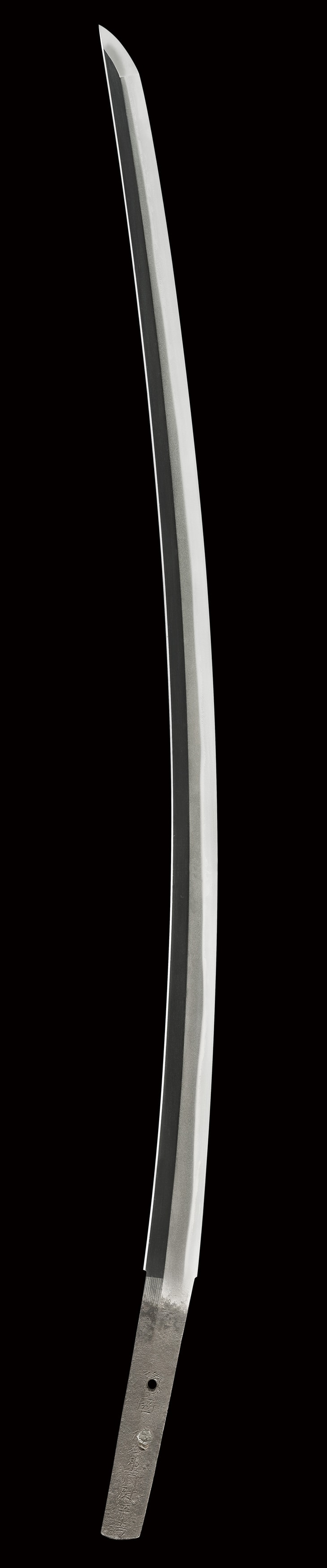
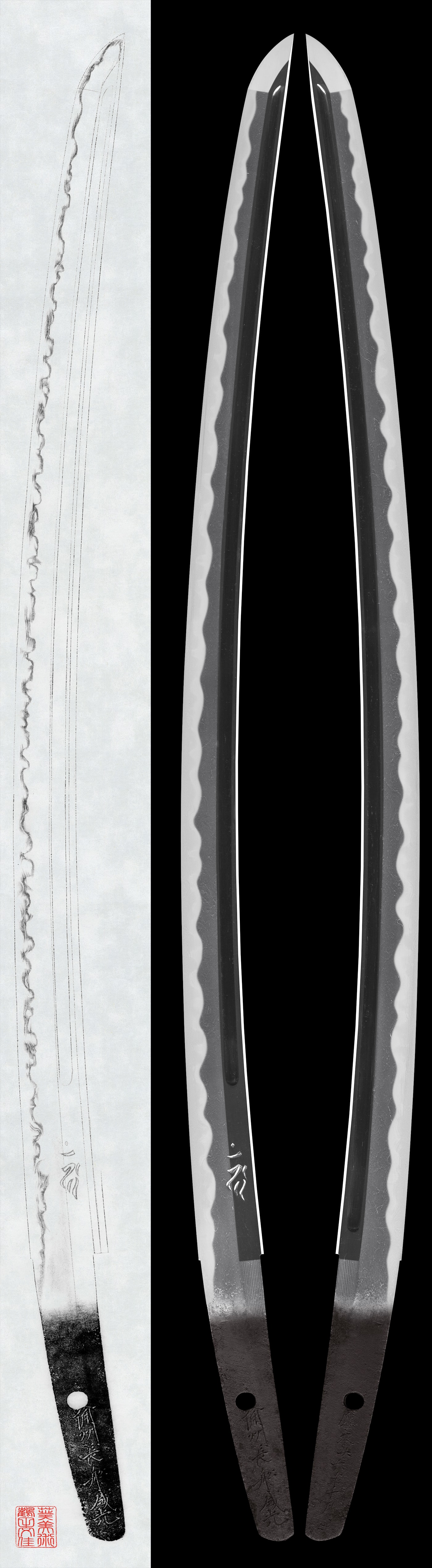
Tsuguyoshi is an smith of Province, working in the period, whom the published sources rank alongside Tsugunao and Moritsugu as "one of the representative smiths of the school in the mid- period." The blades gathered under his name are signed and dated across the 1340s and 1350s, the years of Ryakuō, Jōwa, Kōō and Enbun, and the published commentary treats these dated, pieces as valuable documentary material for the study of the smith and his school. He stands at a turning point in the long story the sources recall, in which the early-eleventh-century travel miscellany Sarugakki already named "the swords of " among the noted products of the provinces, and the smiths who flourished along the lower Takahashi River two centuries later inherited that reputation. Where their late- work calmed and the work tightened, Tsuguyoshi is one of the hands in whom the school's clear, bright temper reaches its height.
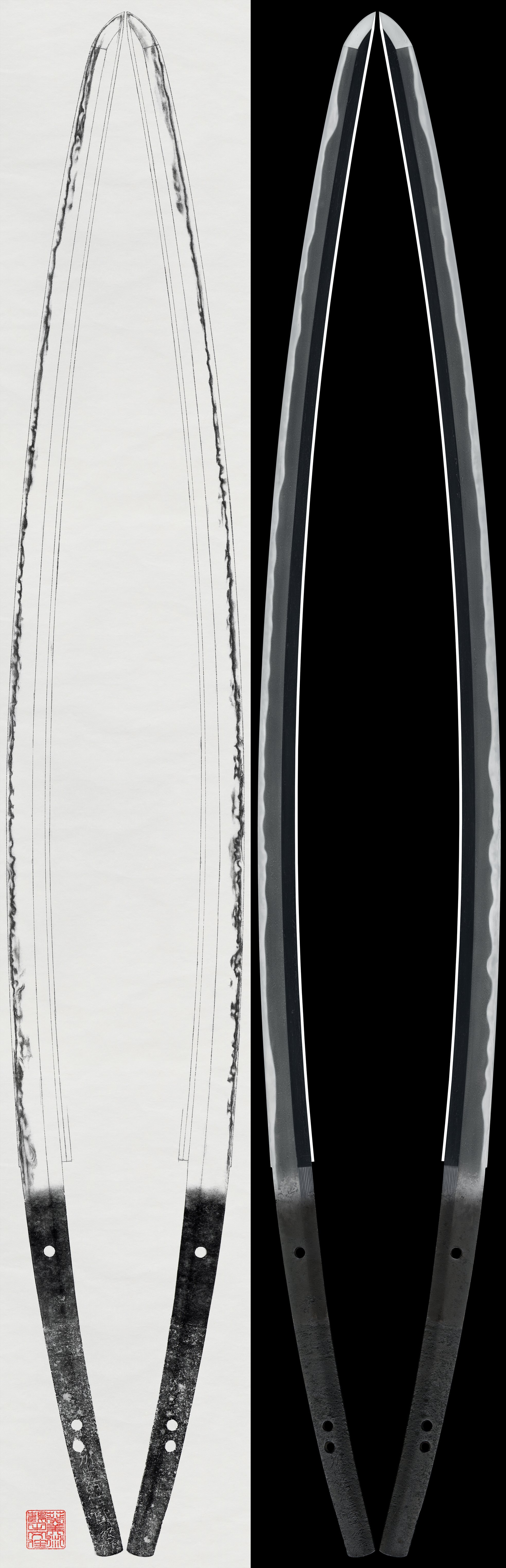
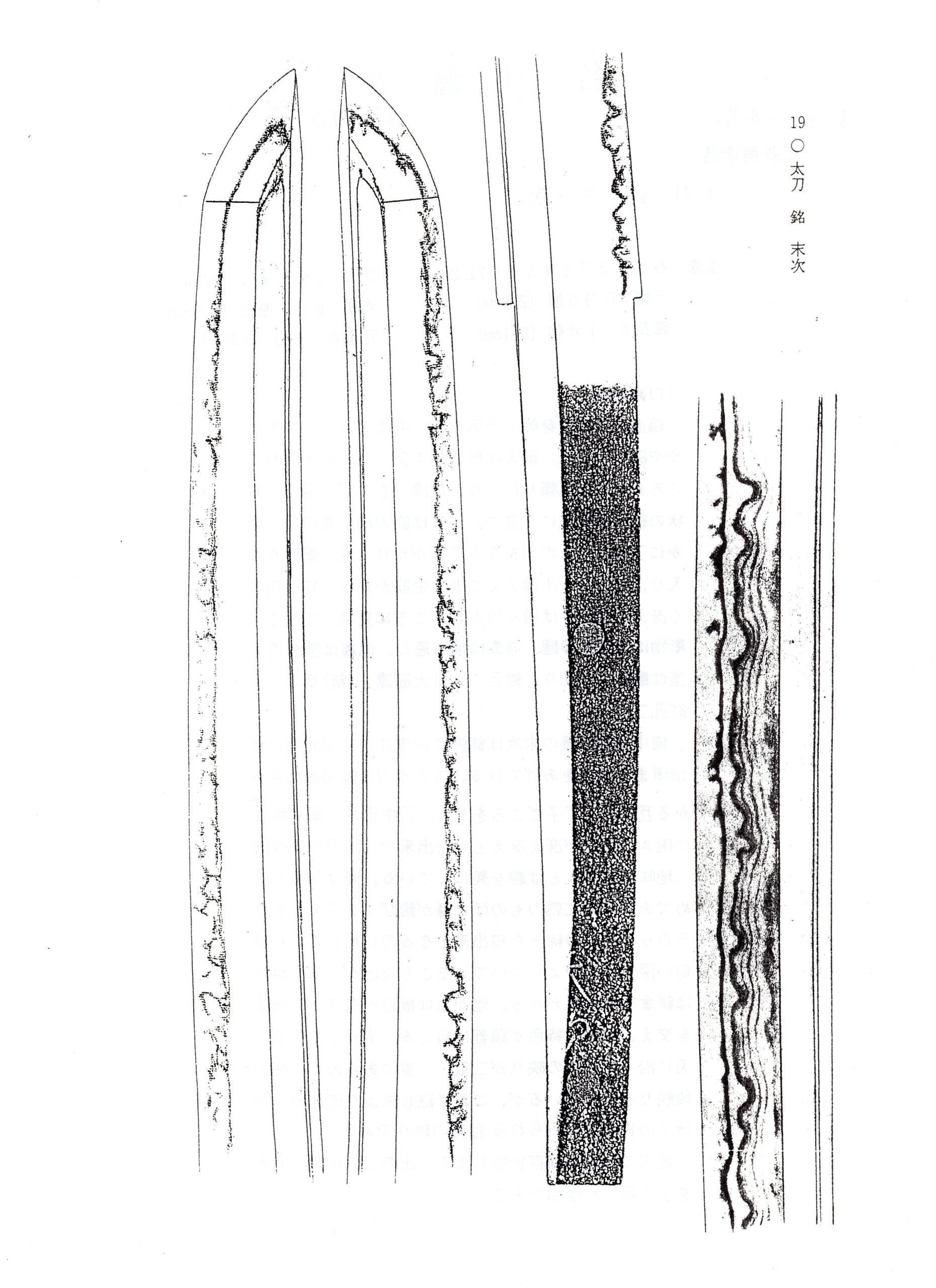
His characteristic manner is the , and the sources make the point as a plain rule of : broadly "Tsuguyoshi tends to produce , while Tsugunao more frequently shows reverse ", with a tight, bright shared between the two. His is a or a slender , shallowly , into which small , occasional and angular elements enter, carried by , and a faint reverse-slanting tendency. The temper is -dominant with , fine and running within, and above all the is bright and clear. One is called a typical example of the associated with him, and of his signed the published sources say it shows "the working range of in which the smith fully demonstrates his forte", the entering more conspicuously than in his usual production. The runs straight into a , at times rising above the , occasionally finishing in or .
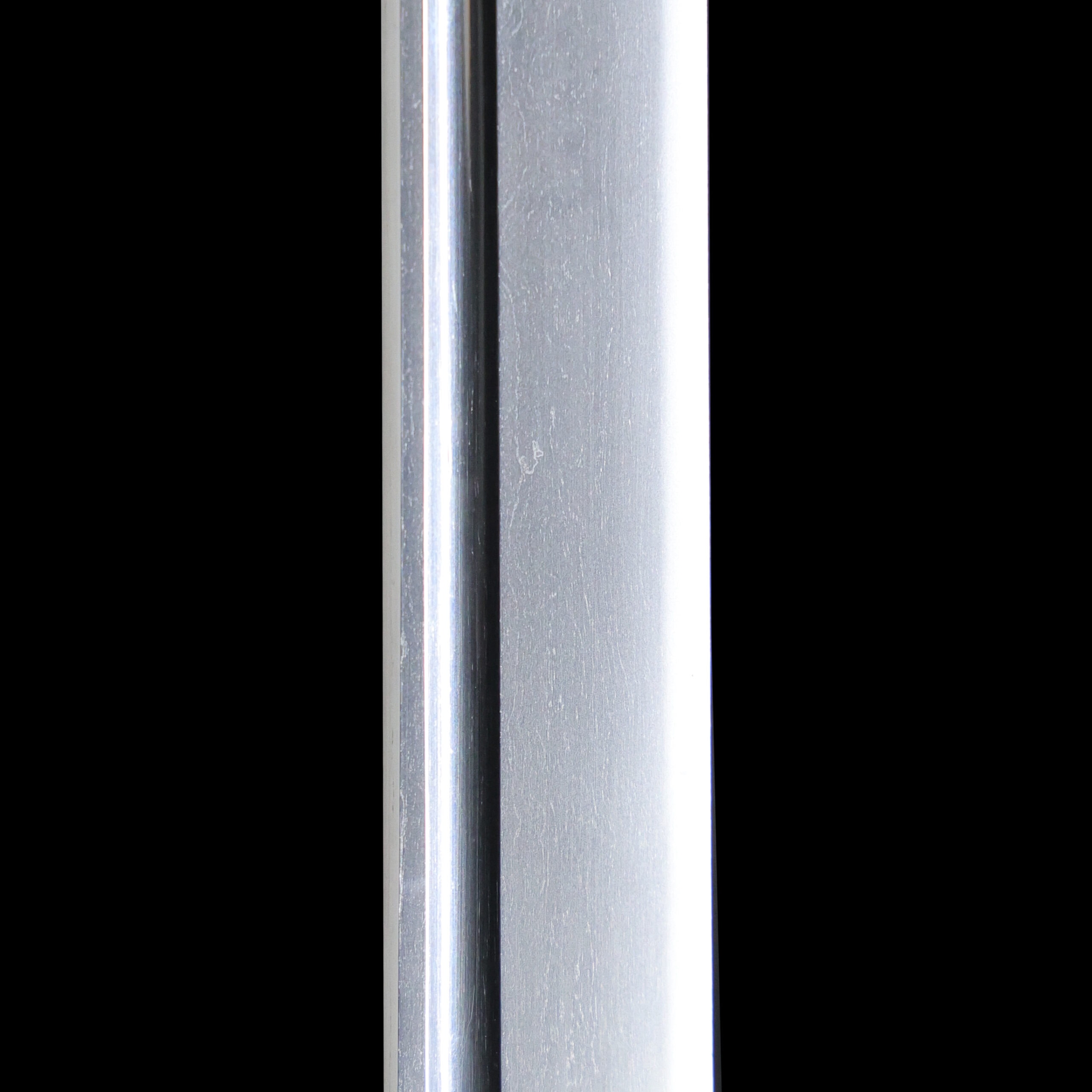
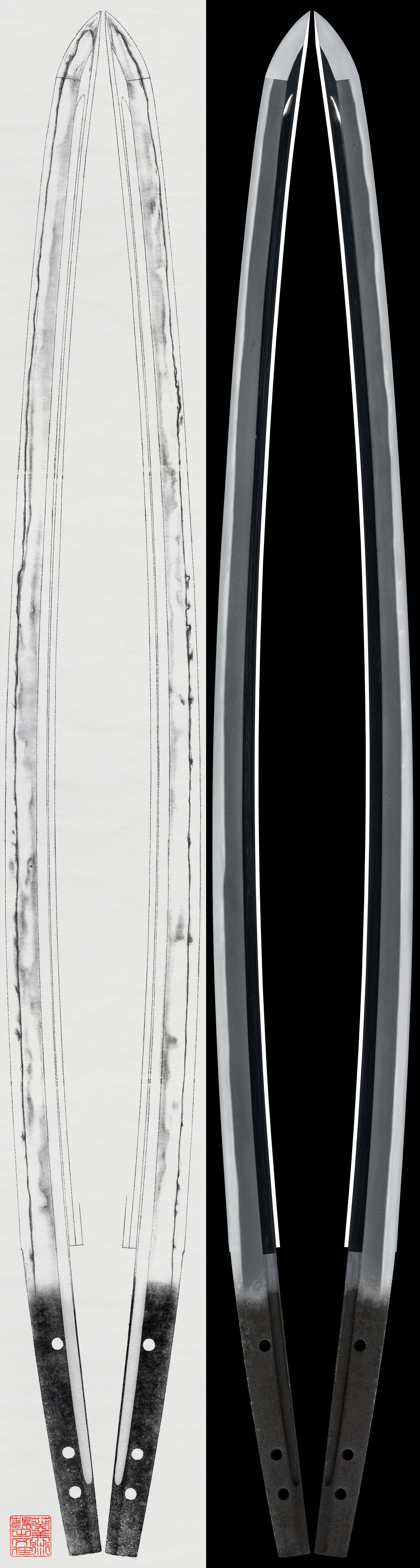
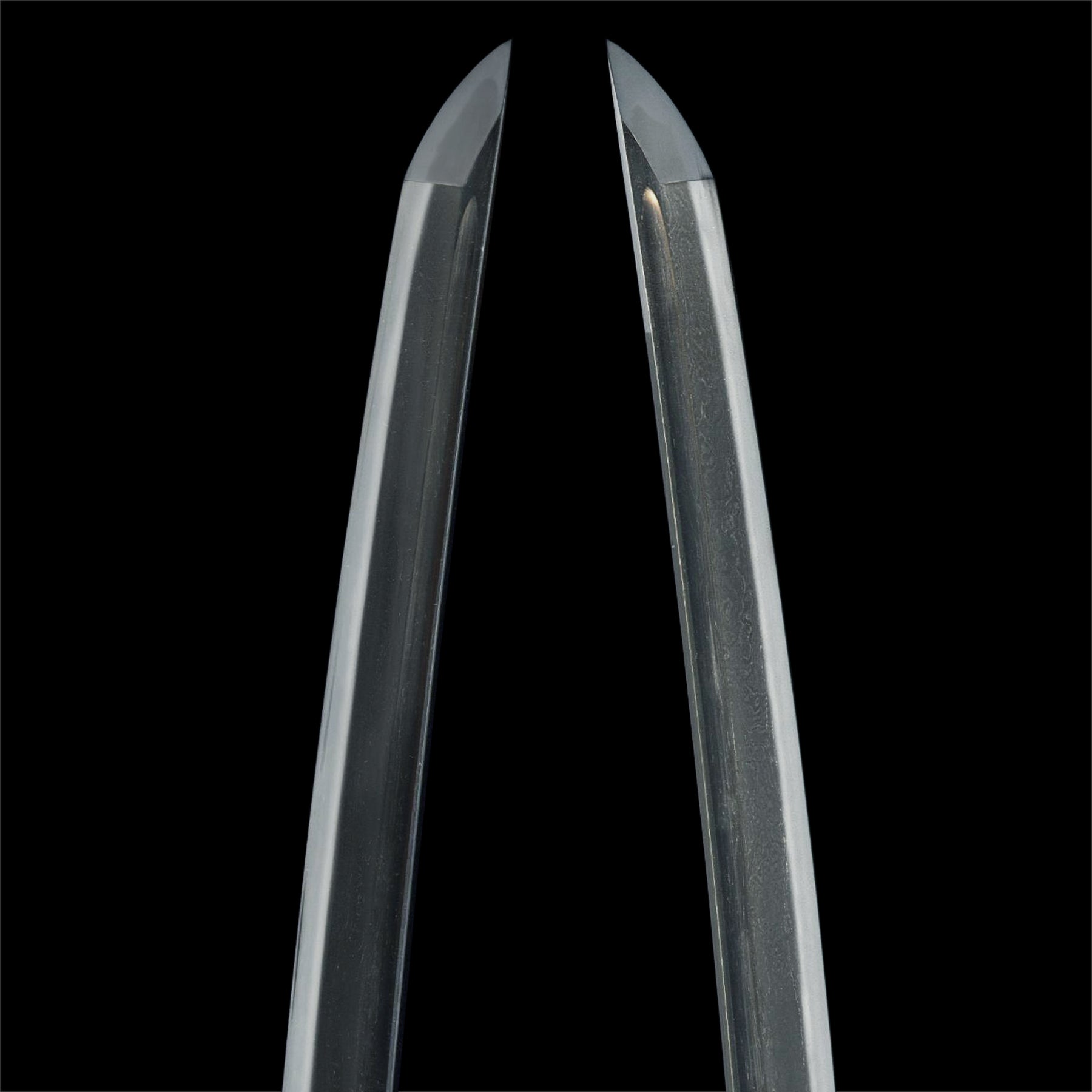
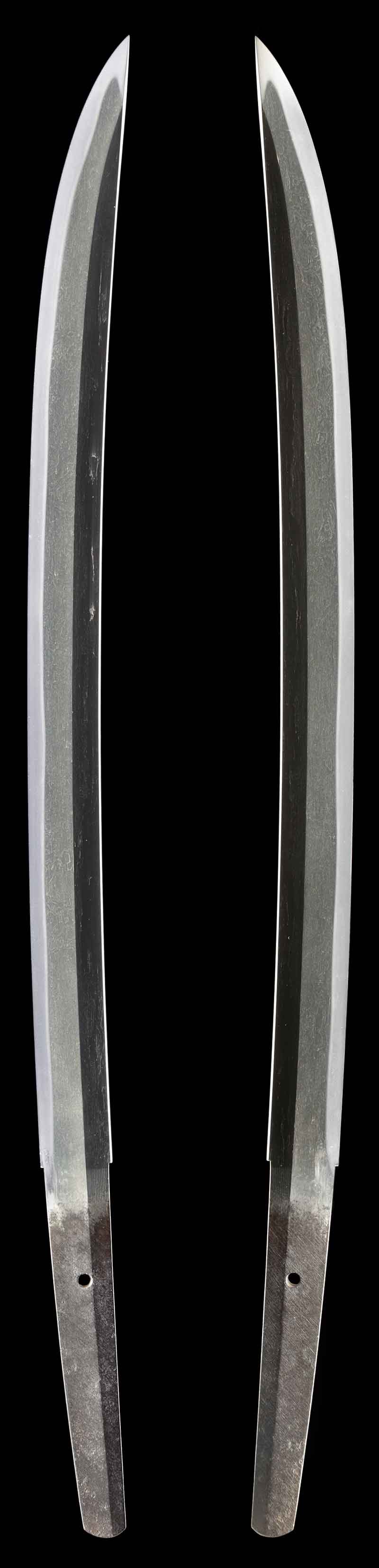
The is the constant. He forges a well-packed mixed with , the grain at times finely standing, with very fine set thickly in and delicate entering well; in places a -like complexion and patches of appear, the speckled tells of the . Over it a stands toward the , and on his finest blades parallel streaks of suji- rise near the edge as well, the two layering into a banded . The published sources name this their distinctive mark: of one dated Jōwa they write that "the appearing close to the cutting edge is a hallmark peculiar to this tradition". It is the , more than any flourish in the temper, that carries the eye on his blades.
Within his record the sources draw two further faces. One is a small group of pieces judged not from the school's height but from the very end of into the early : of standard with little taper, the curvature high with and added -zori, the not yet greatly extended, a form read as marking the entry into the new age, the tight and over a closely packed . The other is the reverse-leaning touch. The flamboyant saka-chōji-midare the sources hold more characteristic of Tsugunao is largely absent from his own blades, yet a reverse tendency enters his as and a gyaku- flavor: one attributed to him widens into a with reverse-slanting and gyaku- and a that rises to a pointed turn, and the Important Cultural Property recorded under his name, a long signed and dated blade, is described with a and gyaku- temper, the most pronounced of its kind on his record.
What sets him within the school is exactly what the judges name. His tang is filed in the of the convention, the long signature often cut on the toward the with the date written descending, a habit the sources call typical of work. Against Tsugunao he is the hand; against , whose is with a somewhat subdued, , his is the brighter, tighter, clearer temper of the later school. The published sources gather him with Tsugunao and Moritsugu as "one of the representative smiths of the mid- school", and praise the broad, unhurried temper of one as full of commanding spirit, a work in which "the highlights of this smith, who excelled in , are shown without omission".
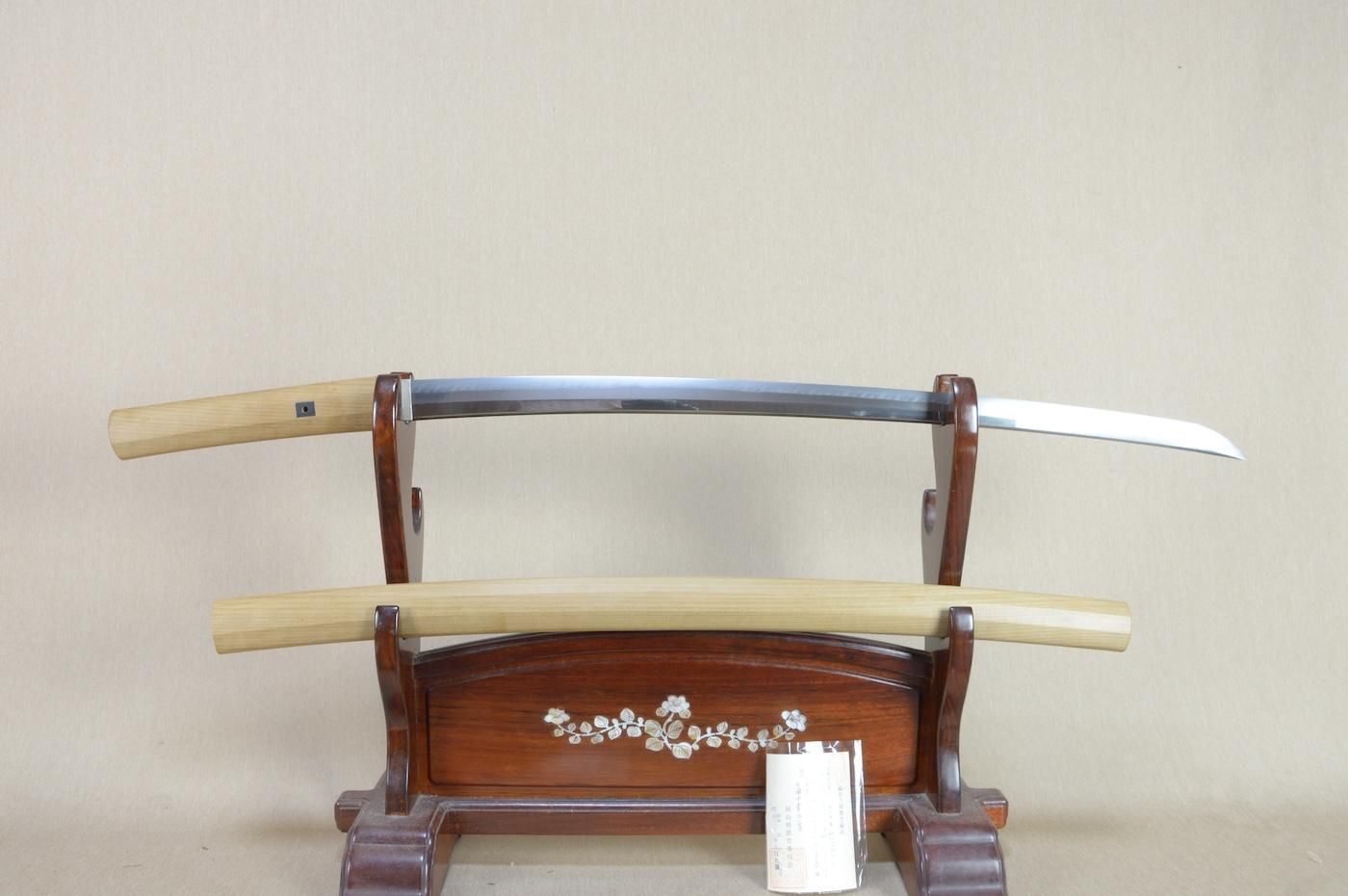
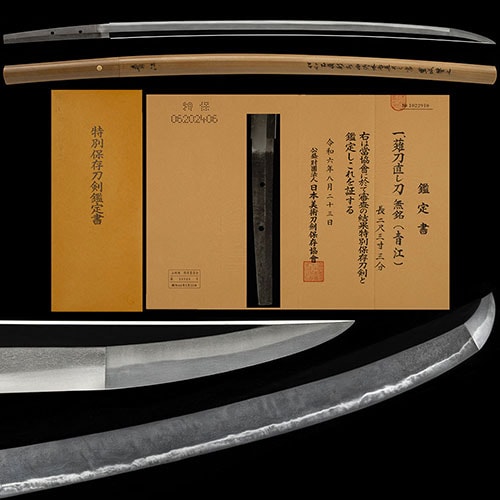
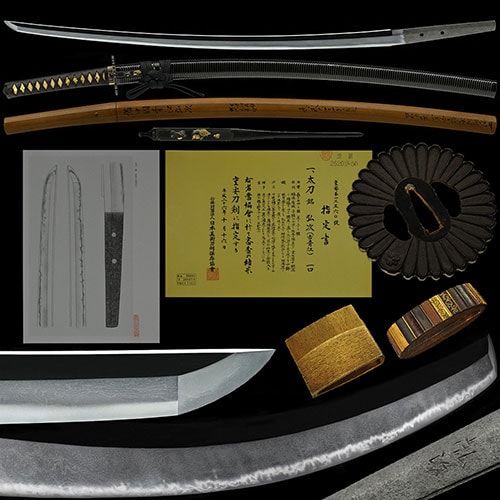
For the collector he is a documented name whose signed, dated blades survive in fair number. Fujishiro's rating is not recorded; the Tōkō Taikan values him in the upper-middle range. He has no National Treasures. His record runs instead through one Important Cultural Property, a long signed and dated , and the higher modern tiers, one blade papered to the and some eighteen to . His provenance is sparing and honestly so: an attributed to him was transmitted in the Mito Tokugawa family, and the rest are held in private and institutional collections of recorded but partial whereabouts. Of the blades that can change hands, most are held rather than traded, so a signed Tsuguyoshi comes to market only from time to time and a dated, example is a notable thing to encounter, valued, as the sources repeat, as reference material for understanding the range of his work.