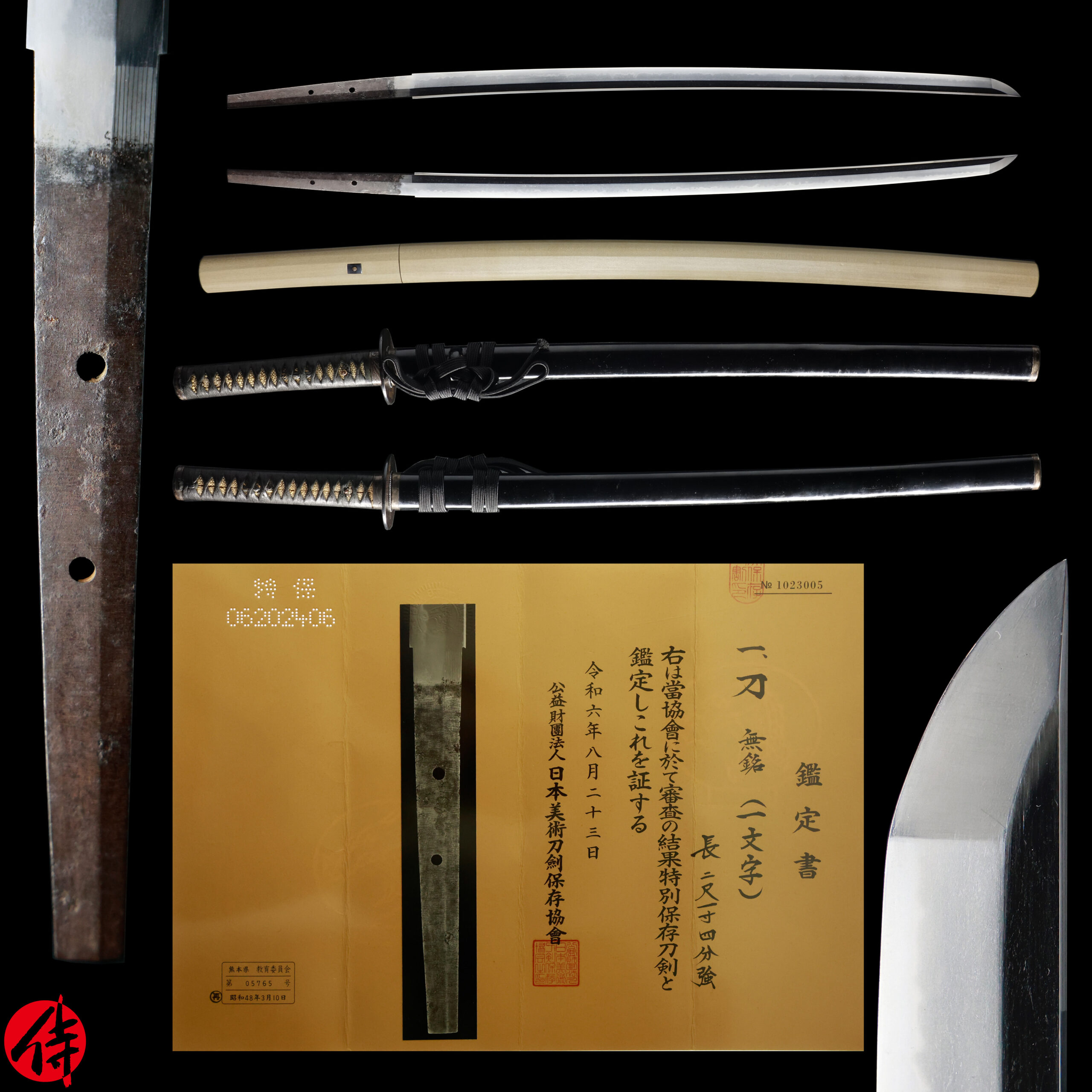
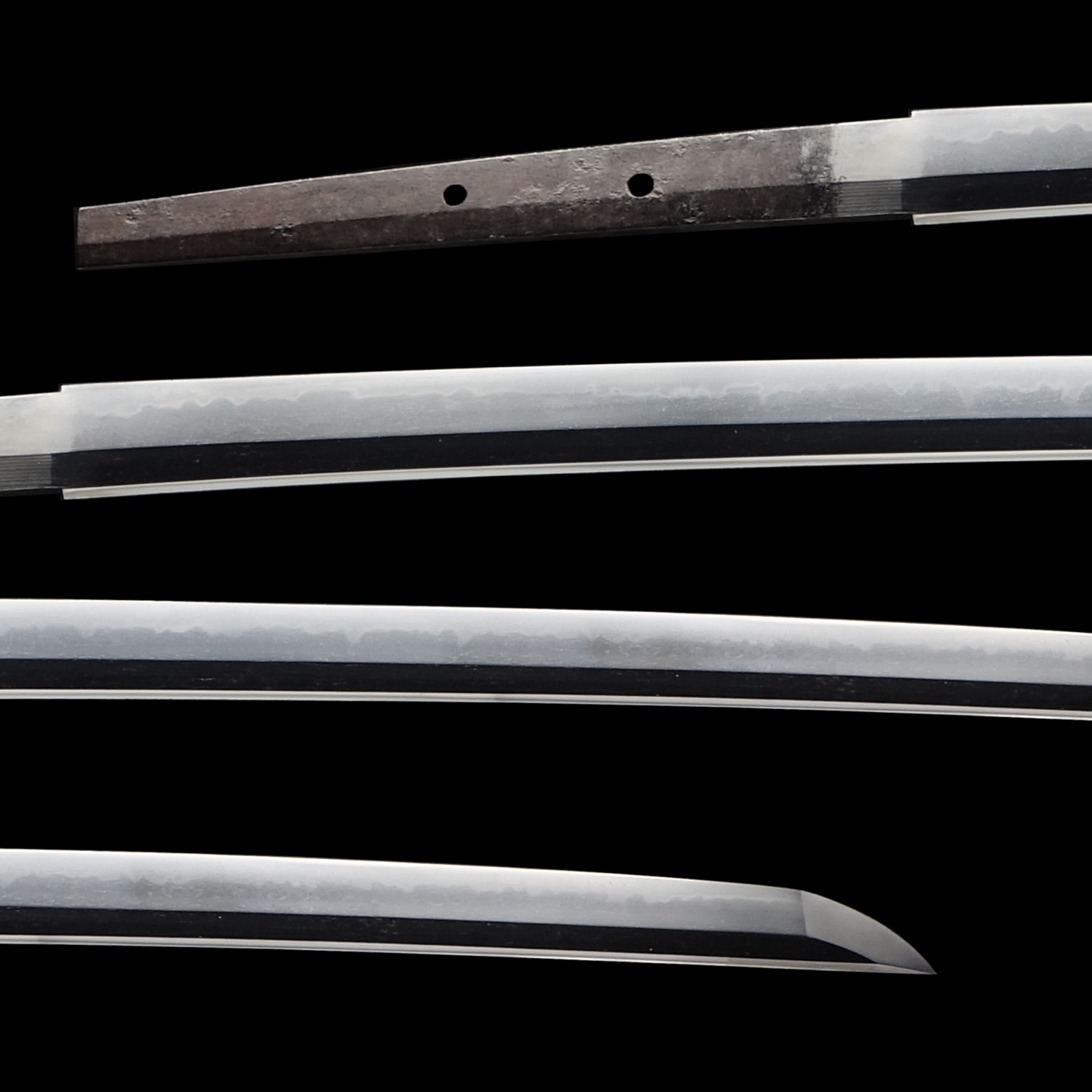
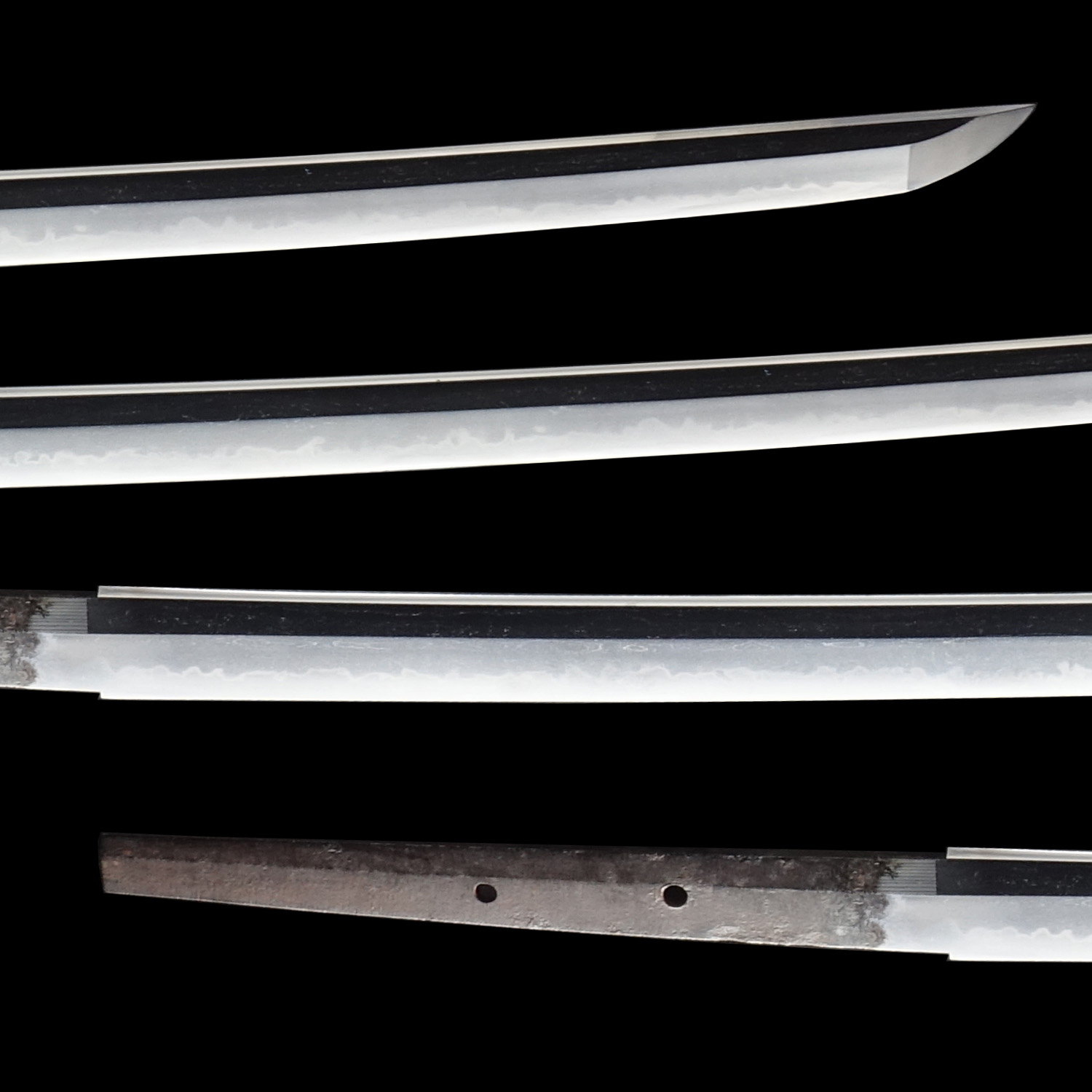
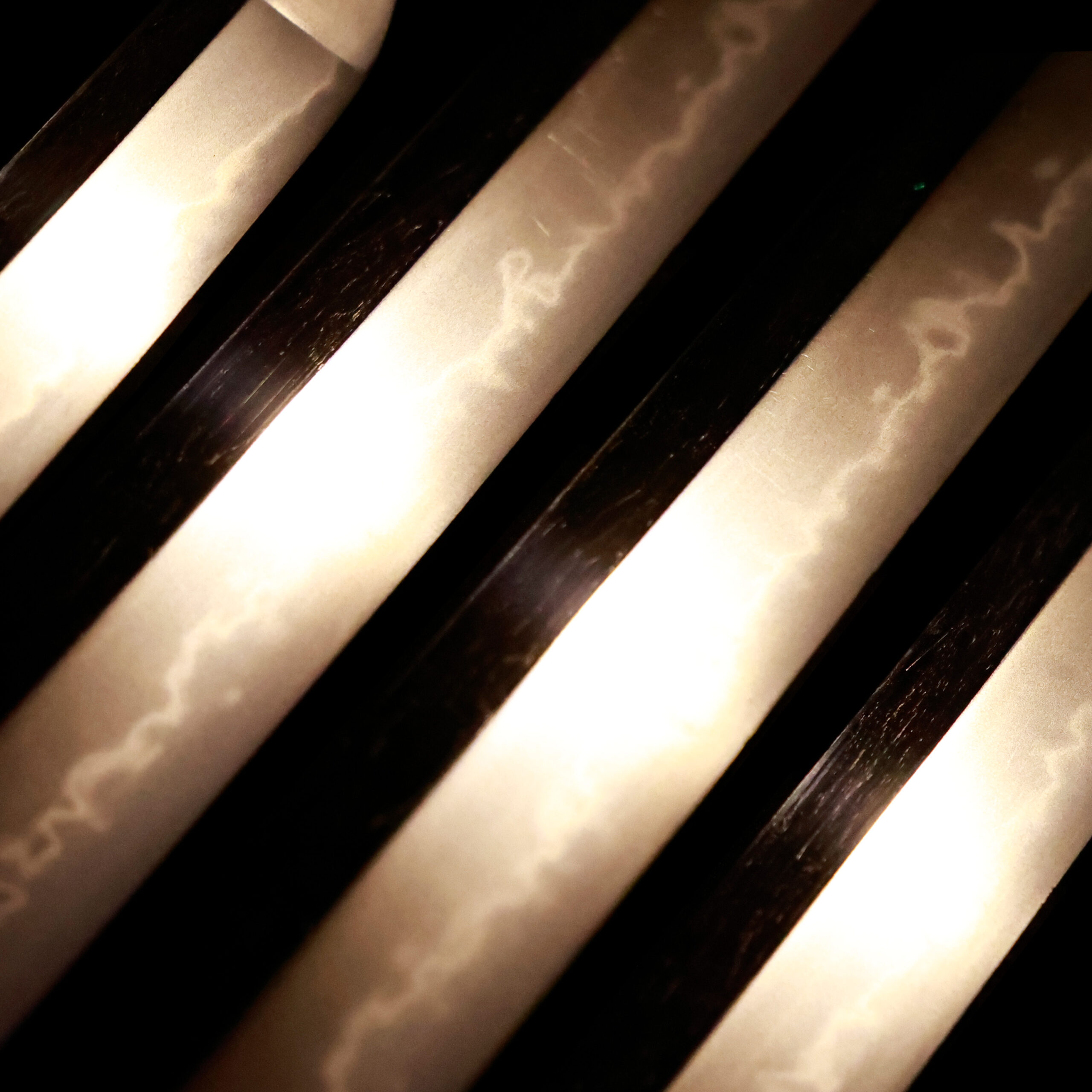
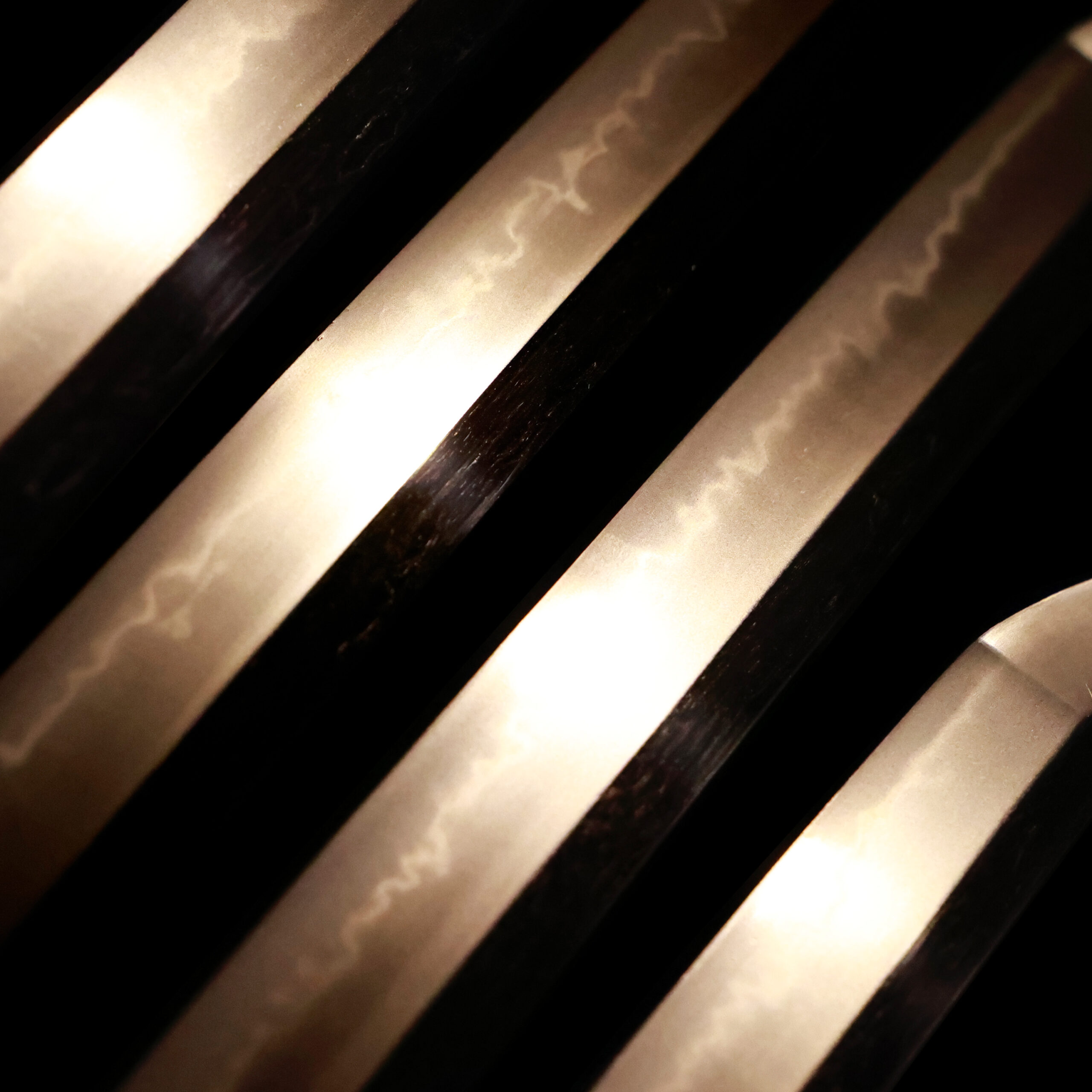
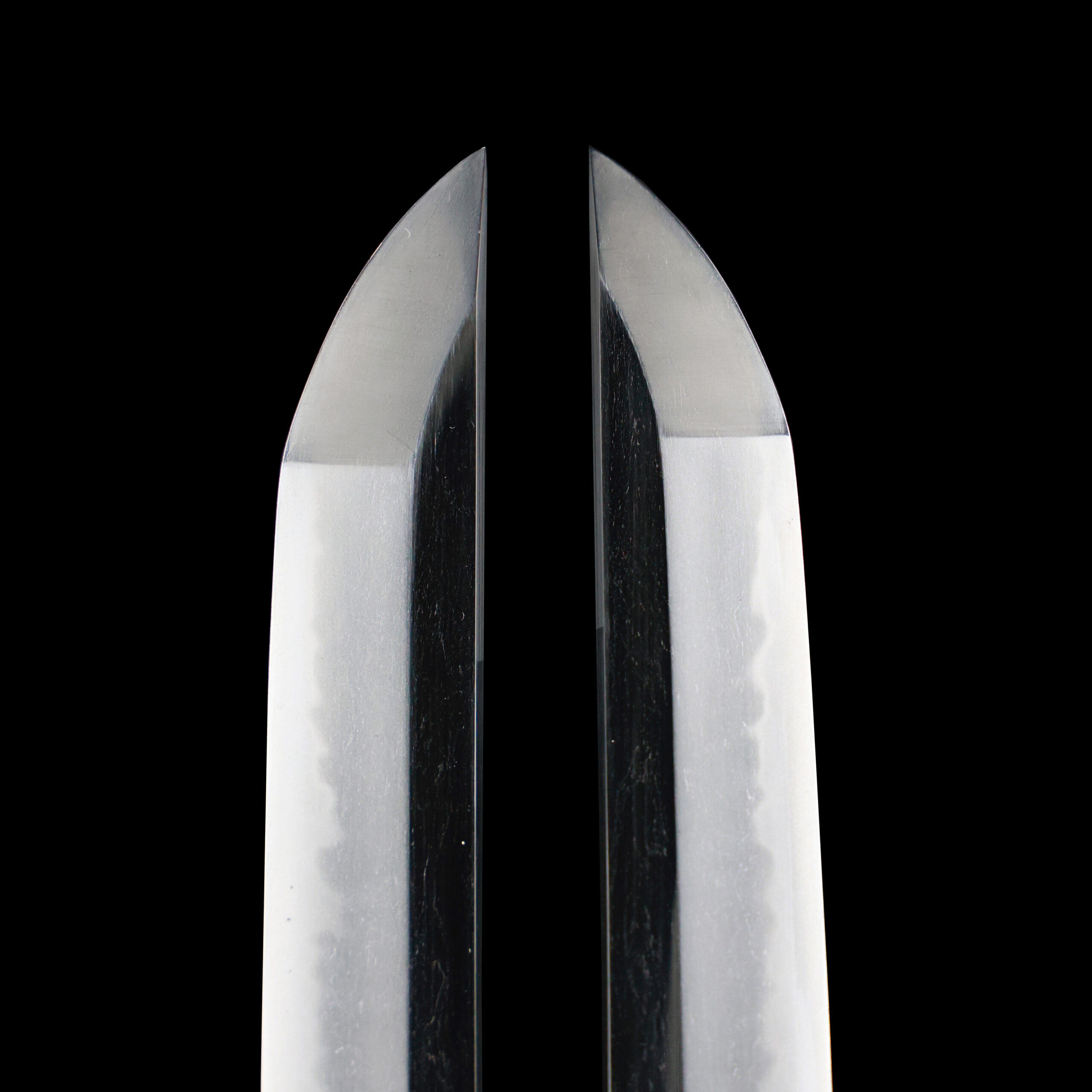
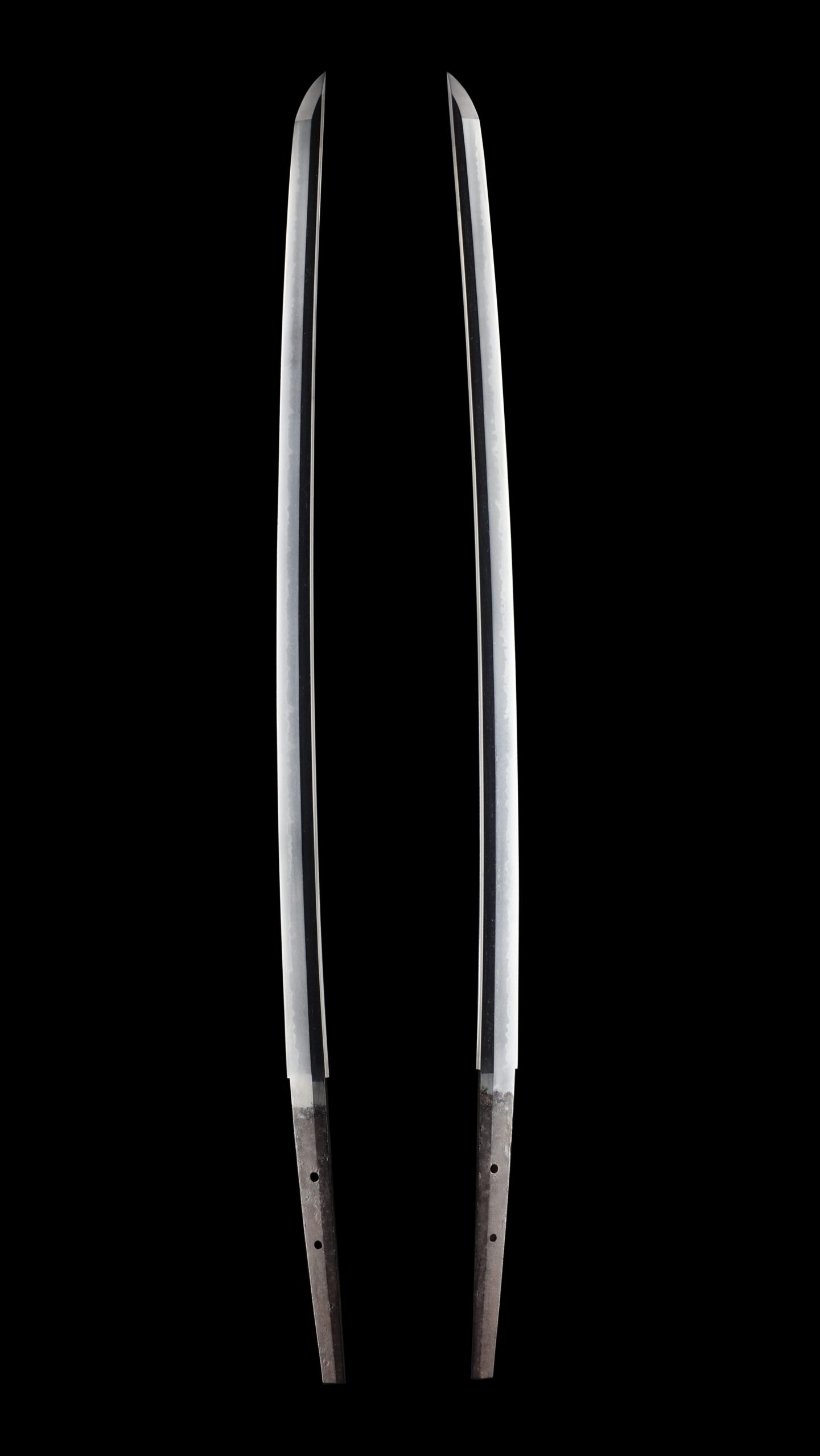
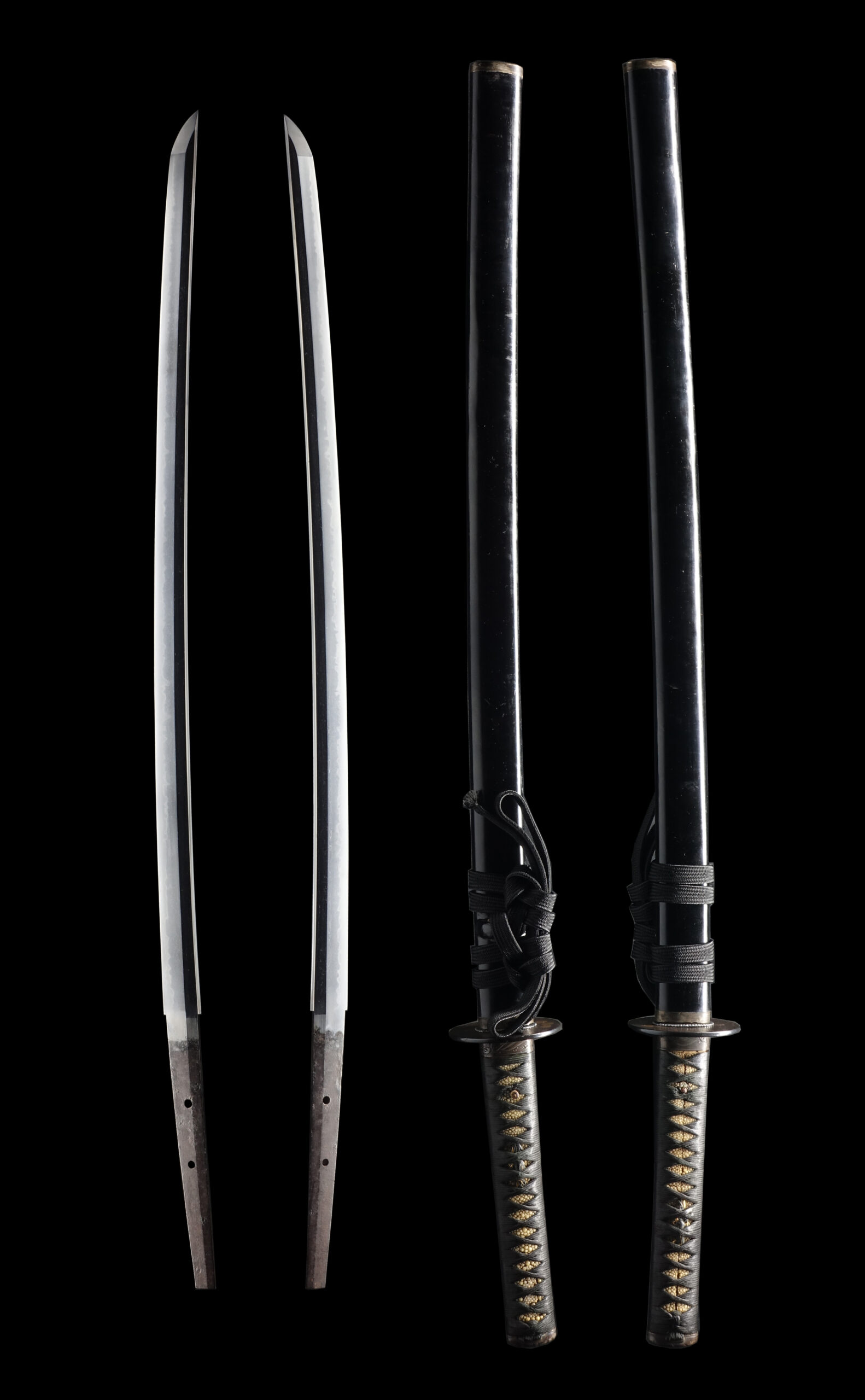
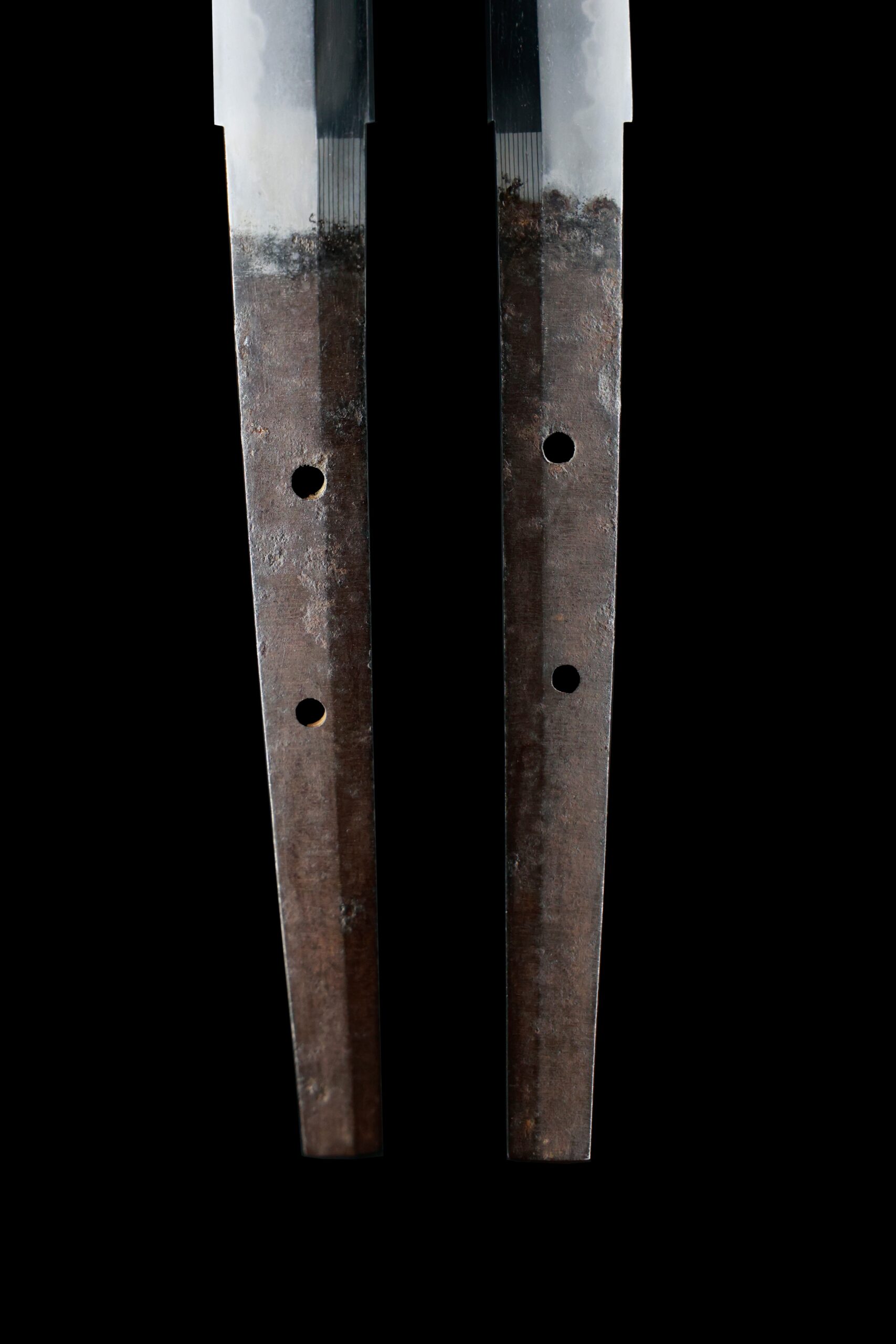
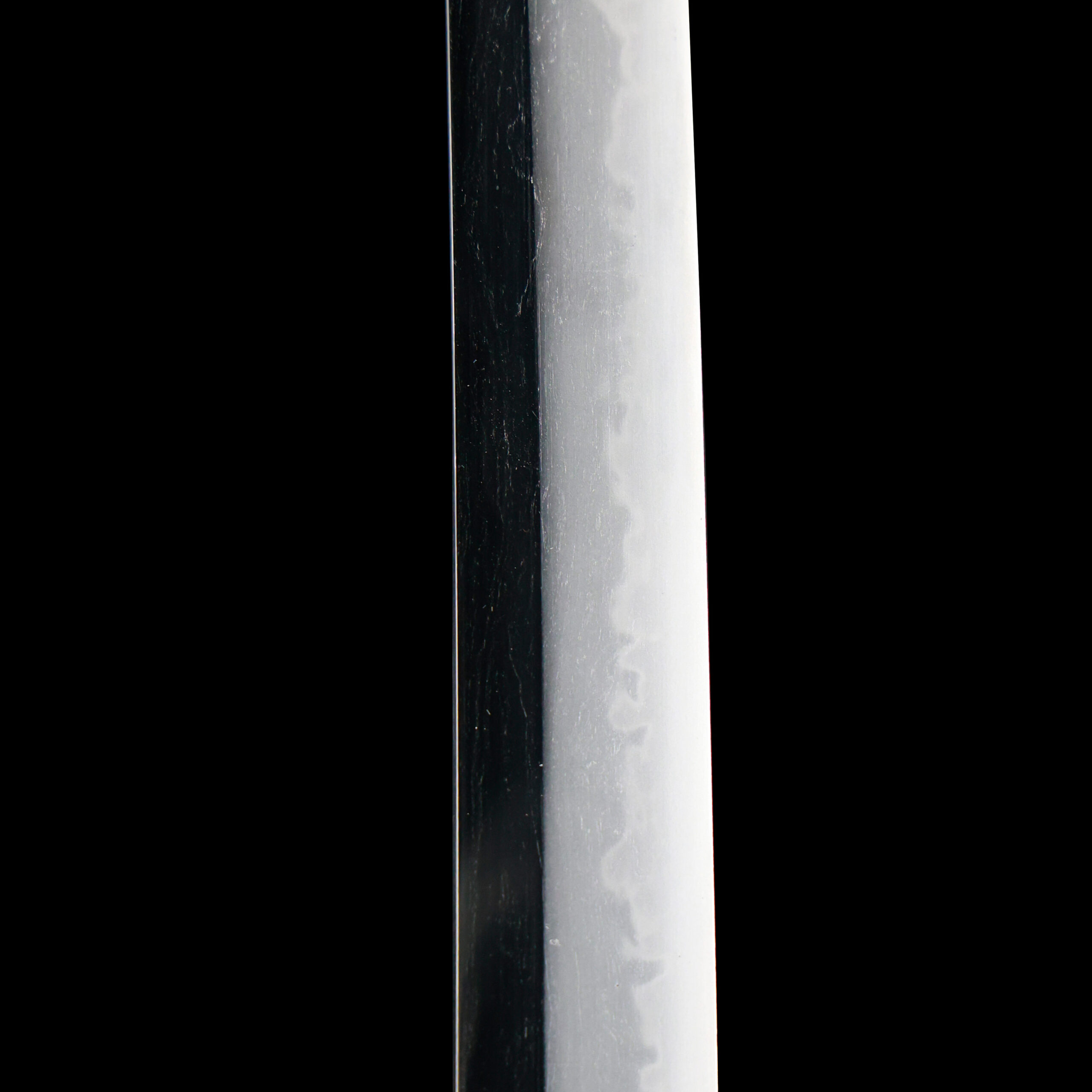
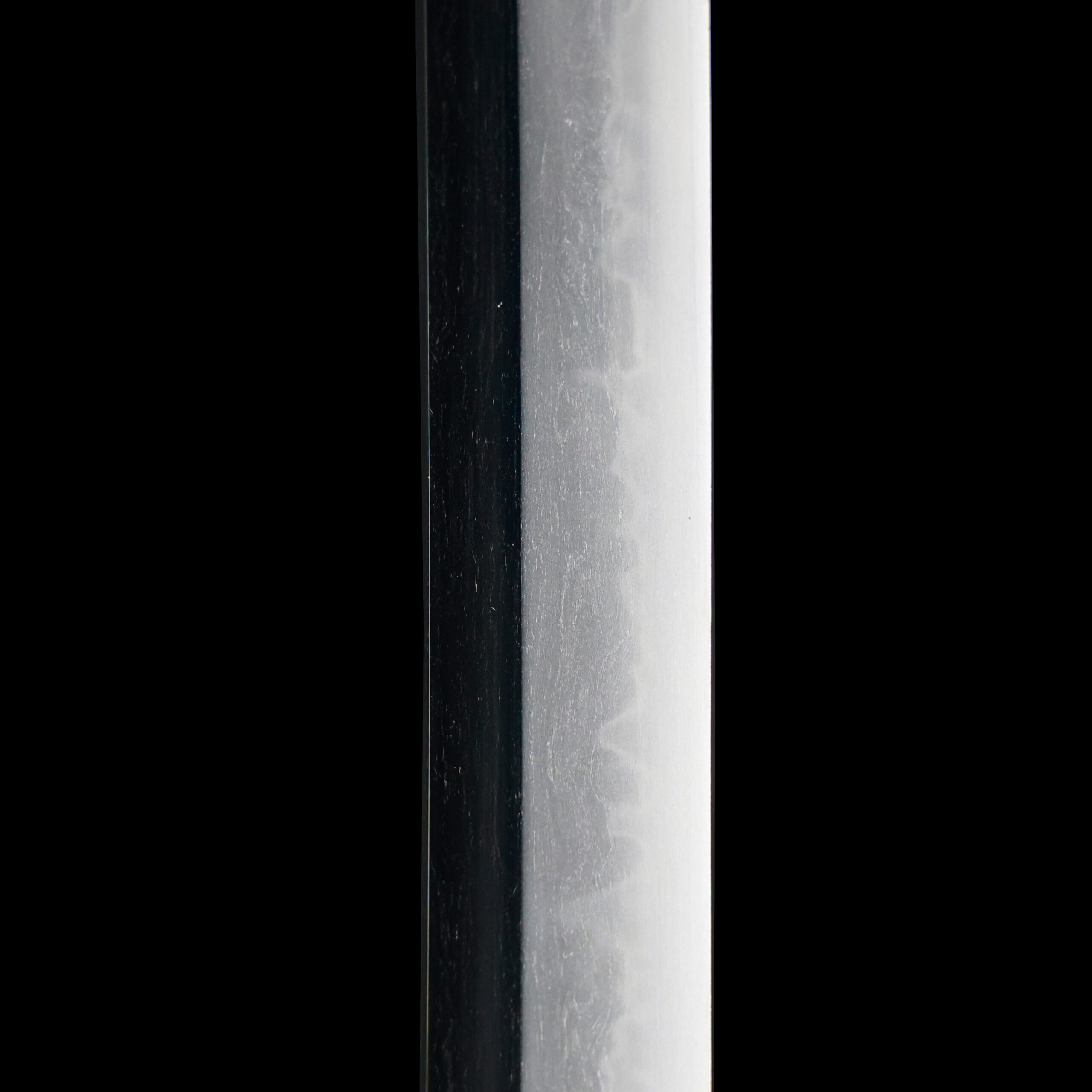
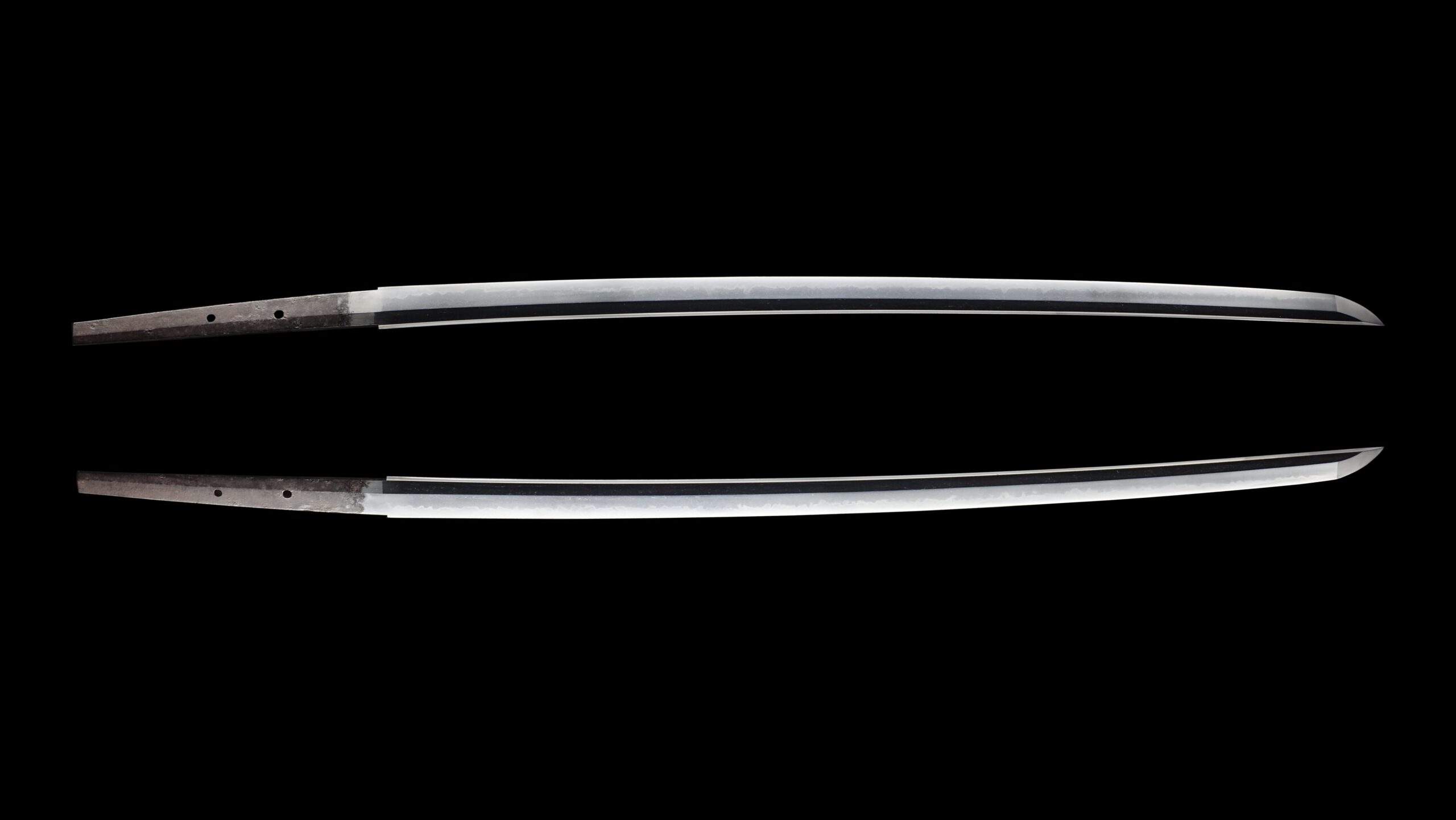
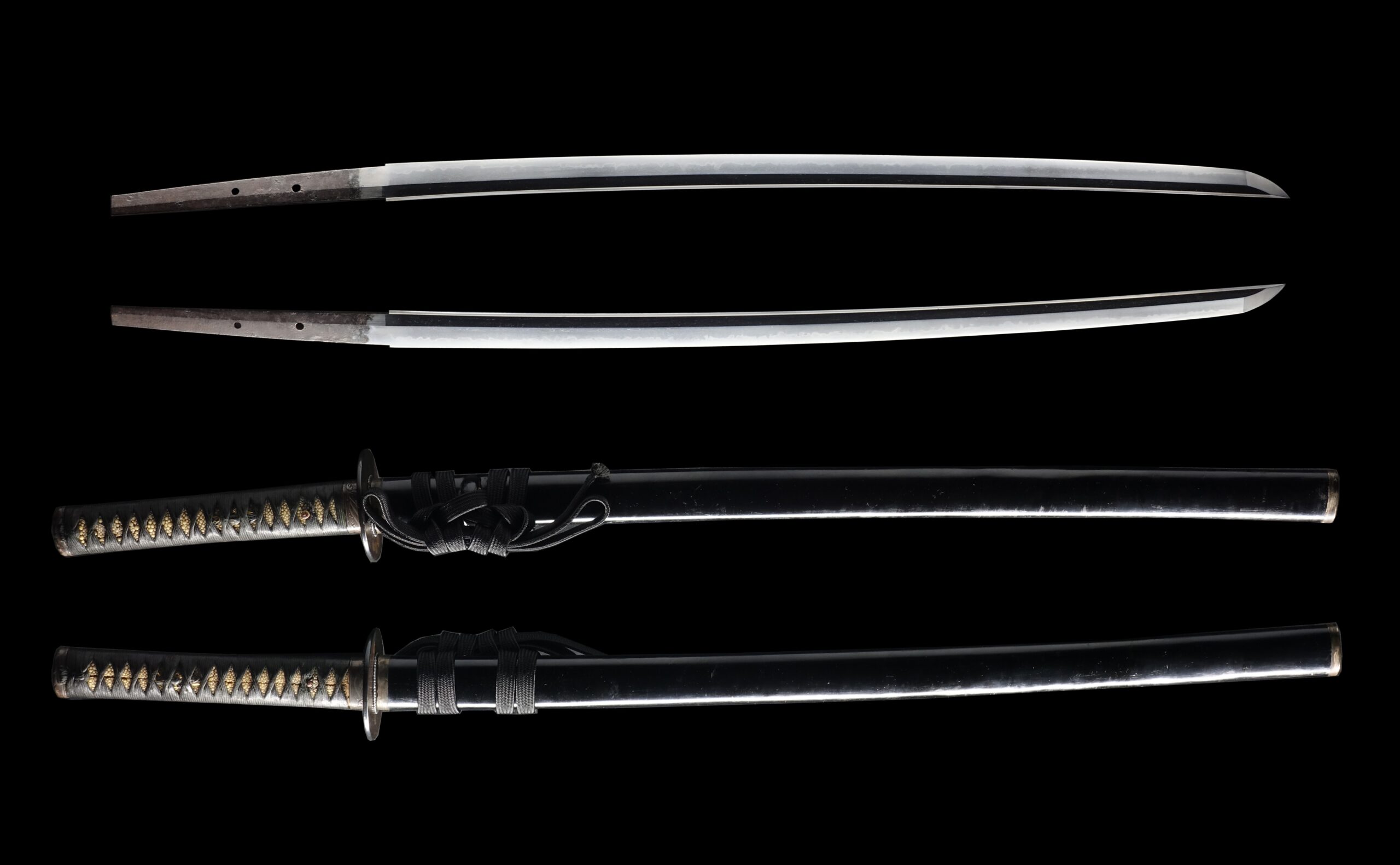
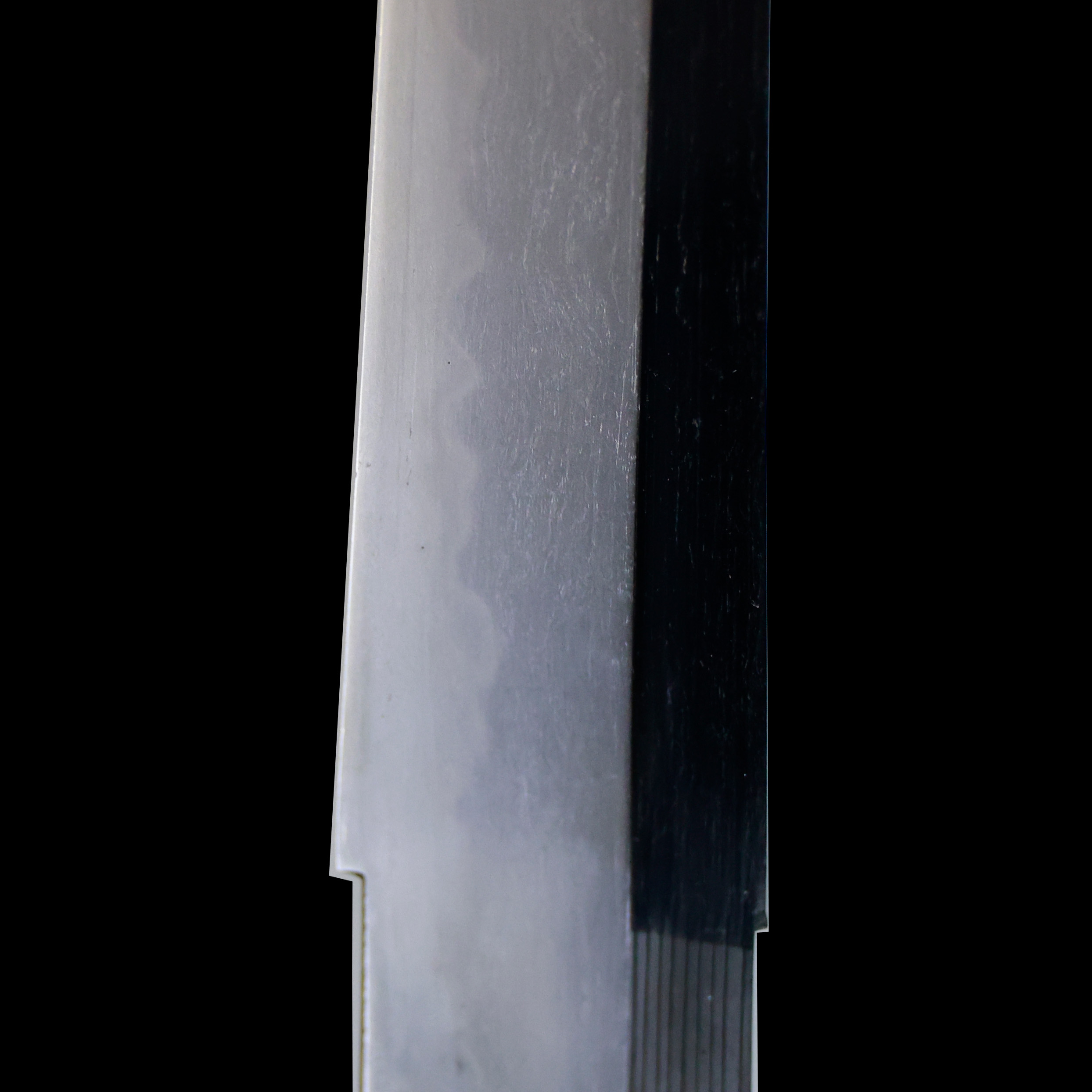
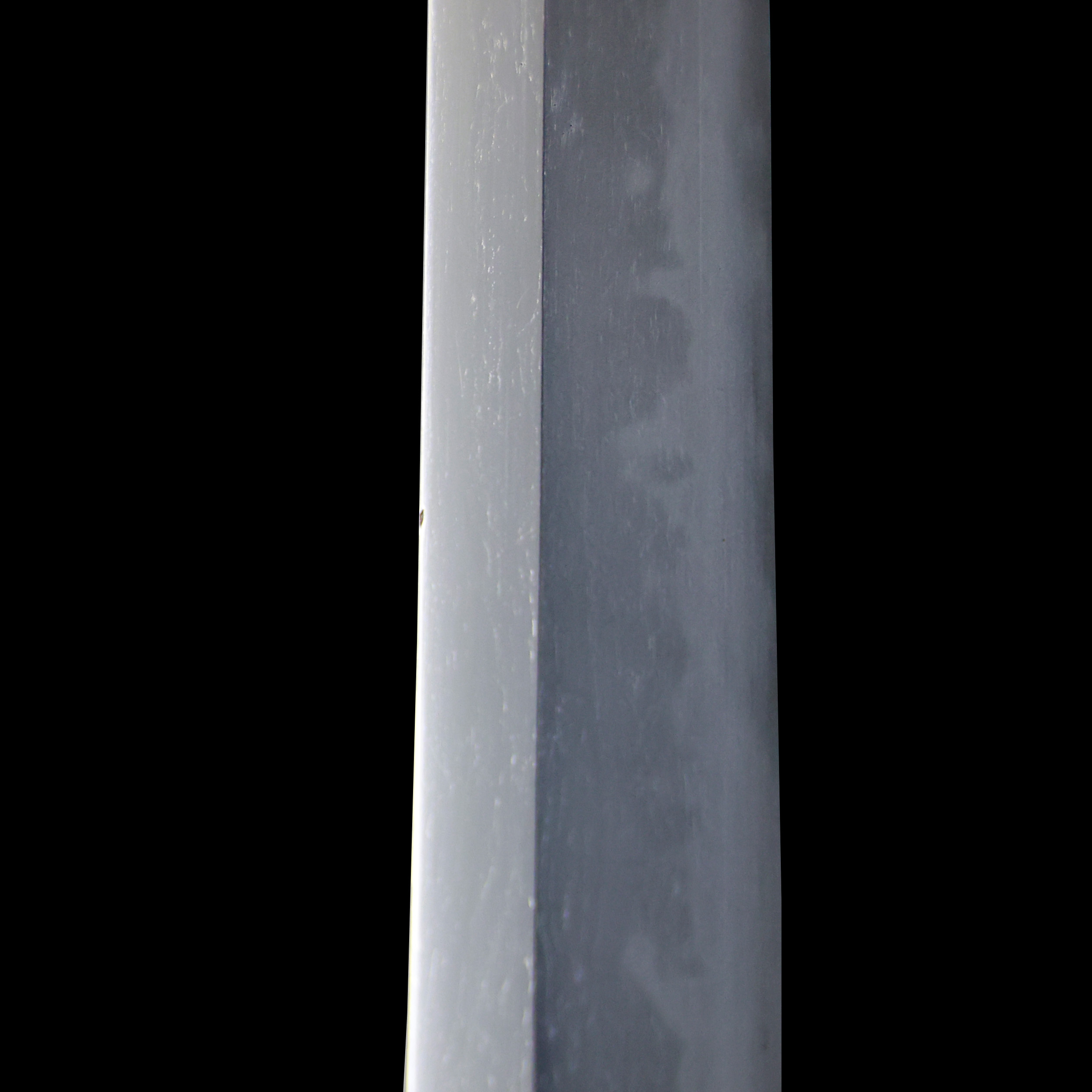
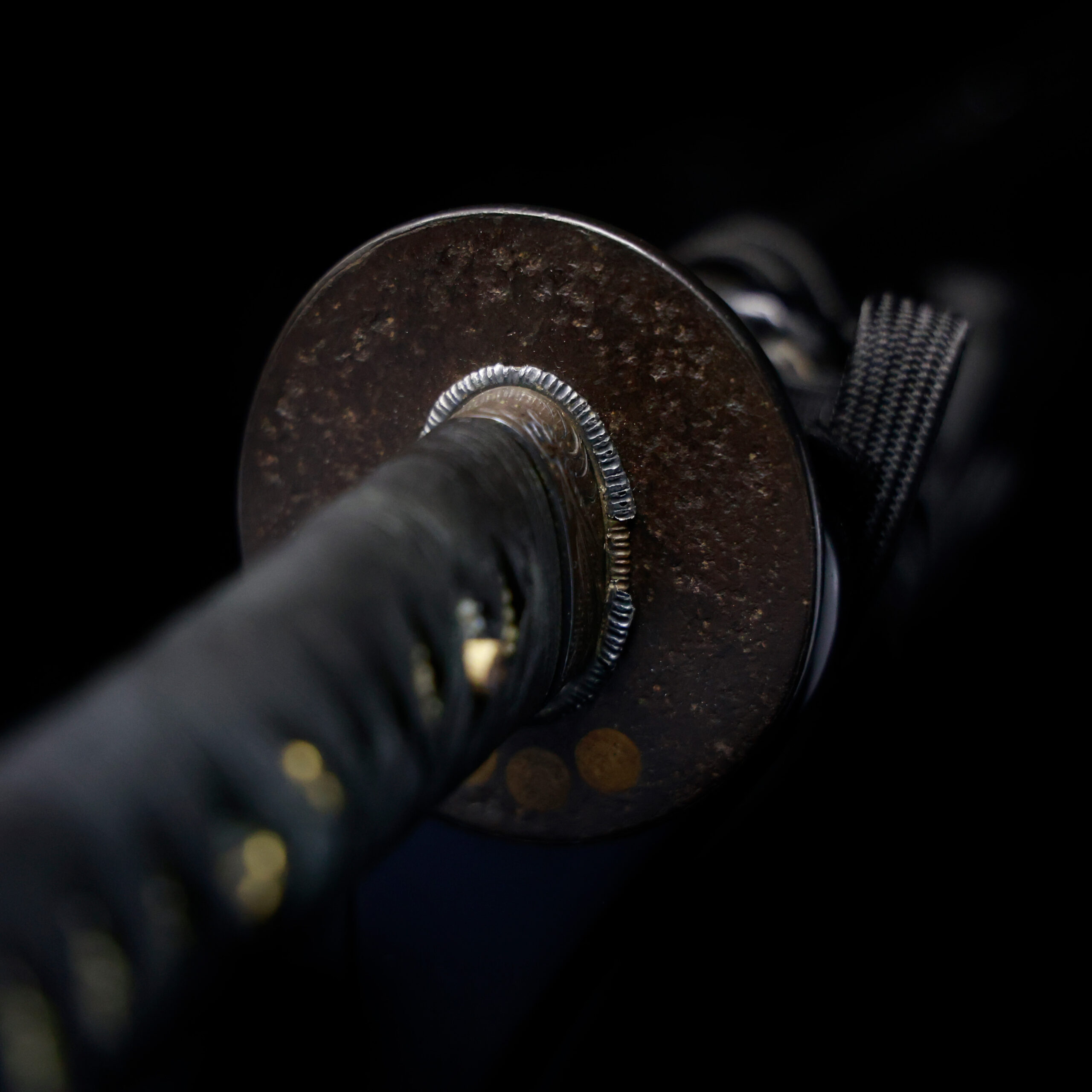
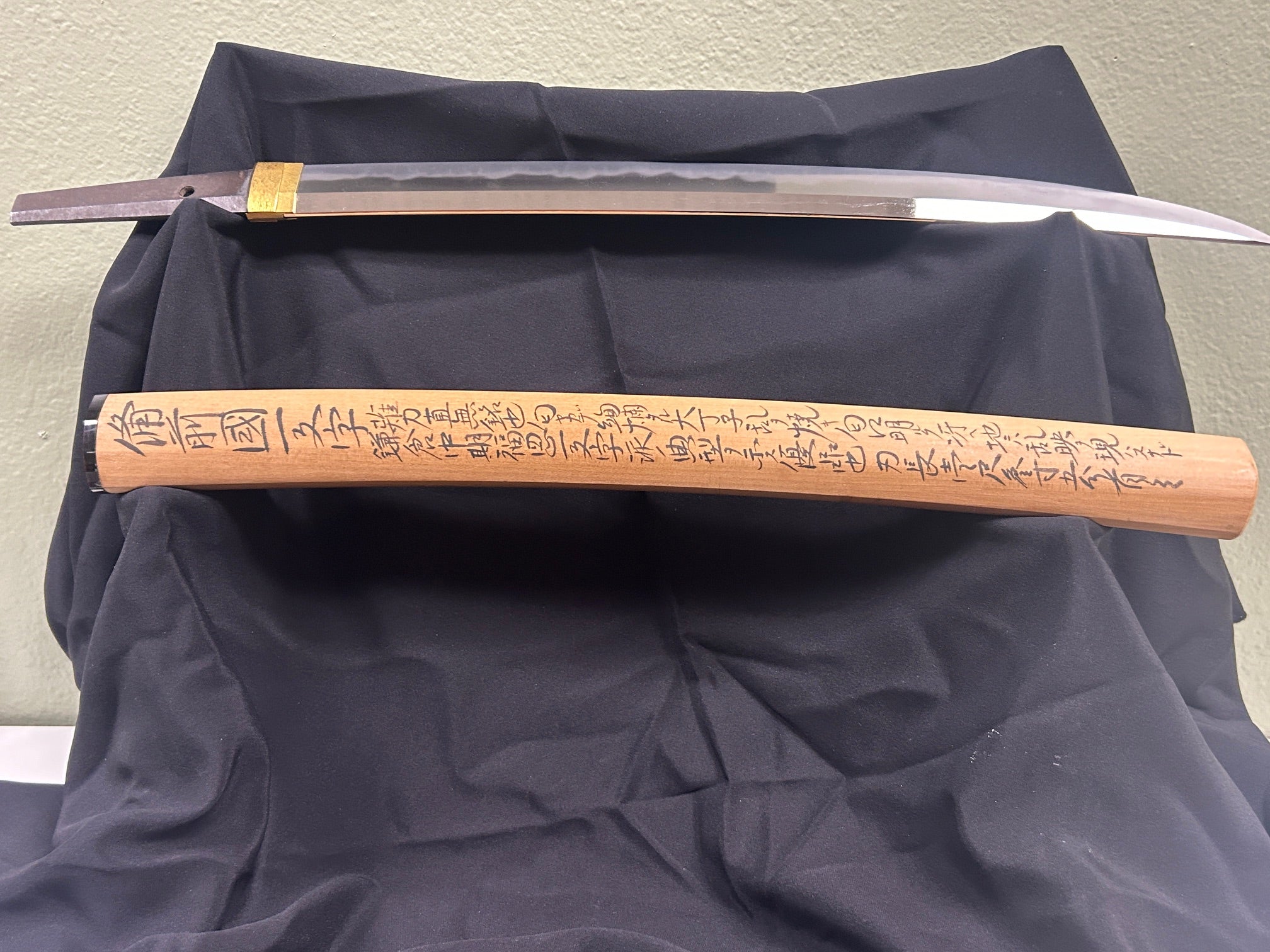
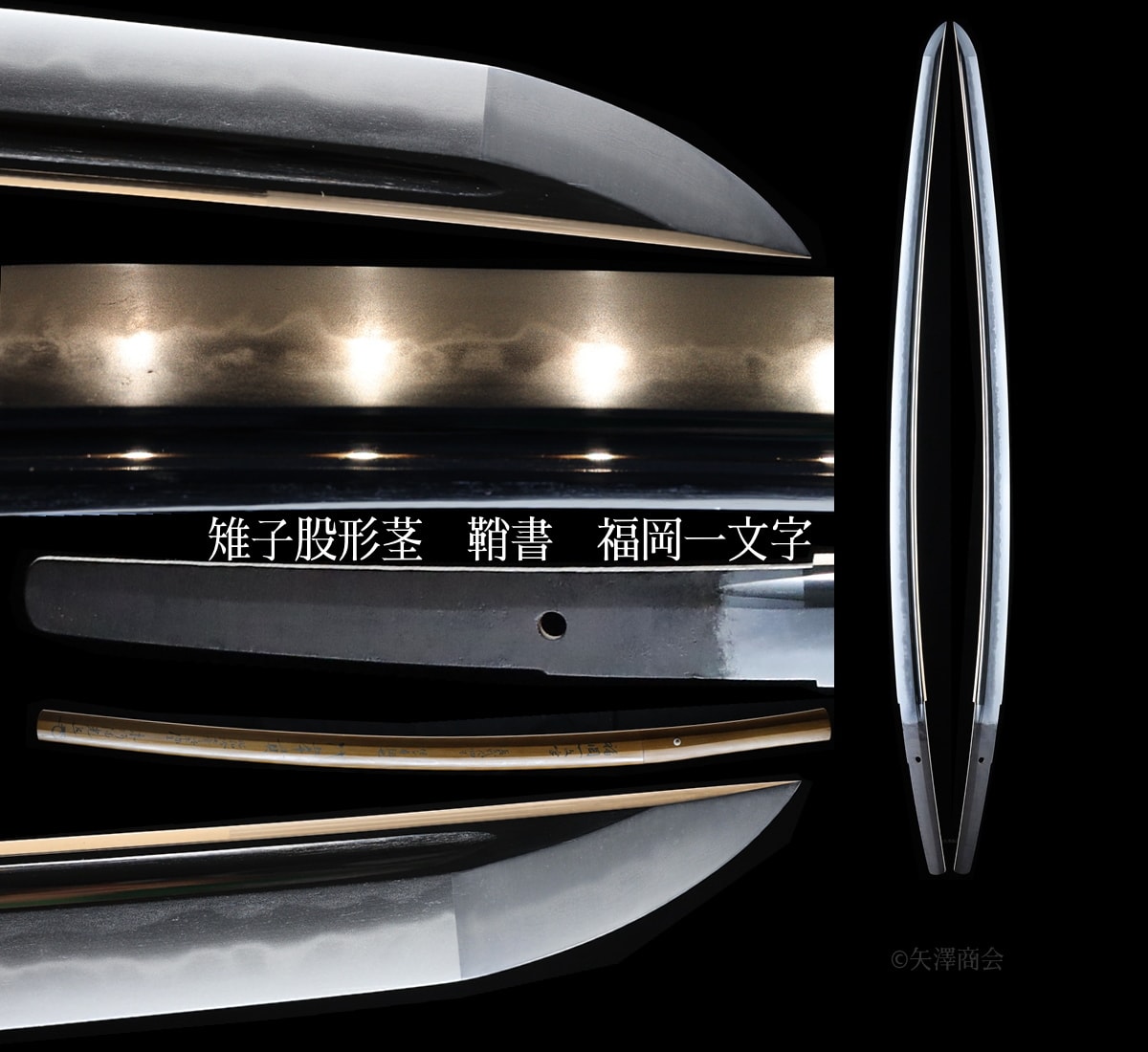
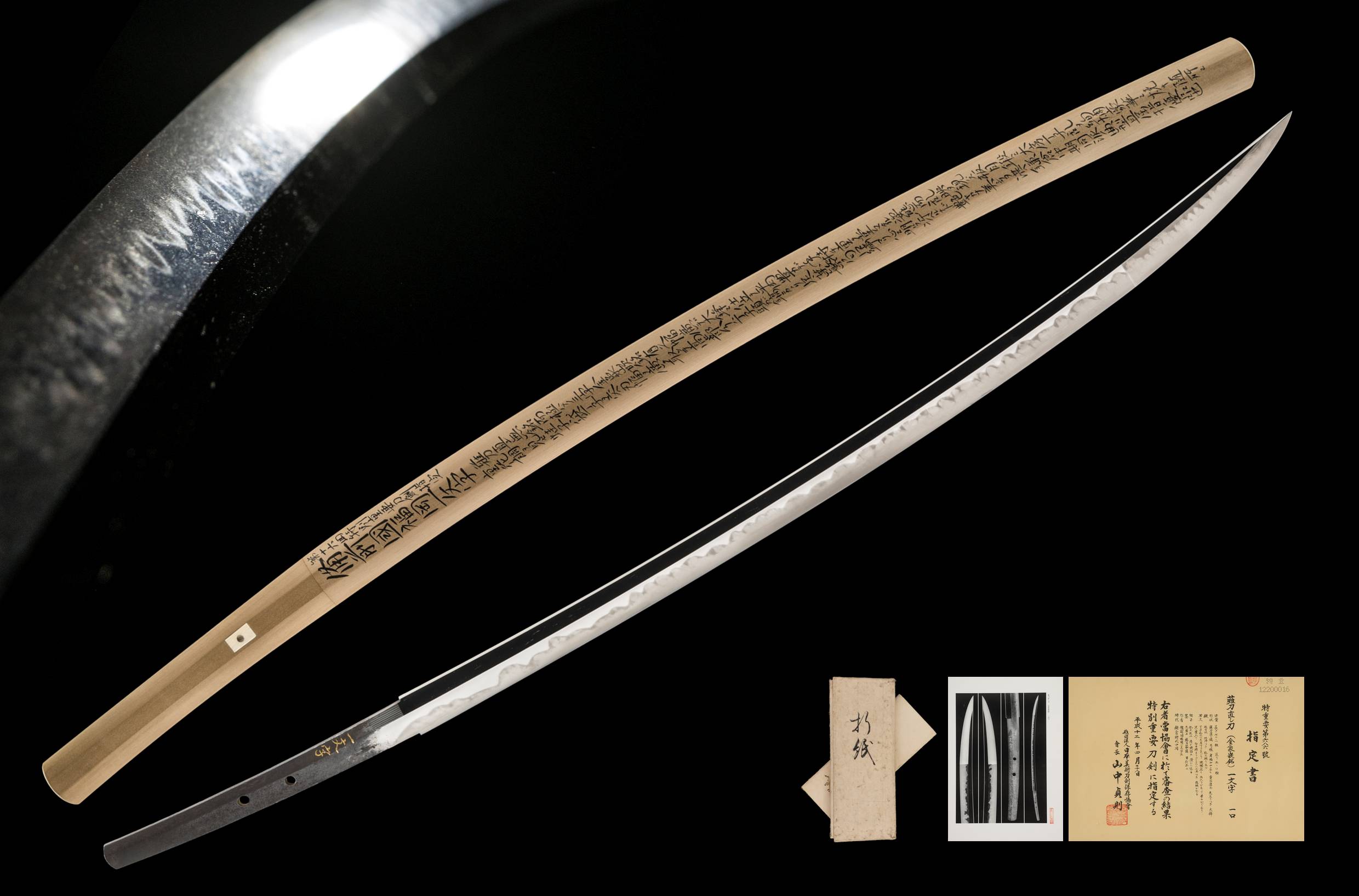
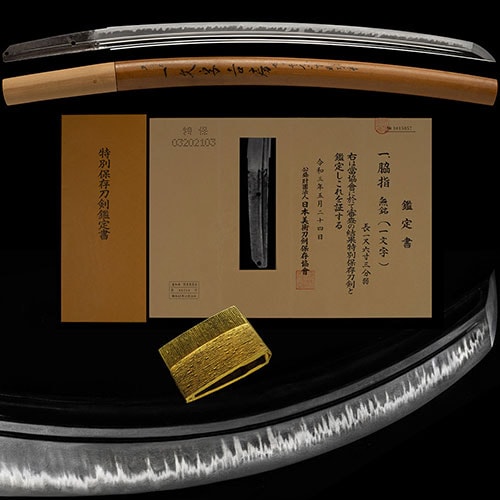
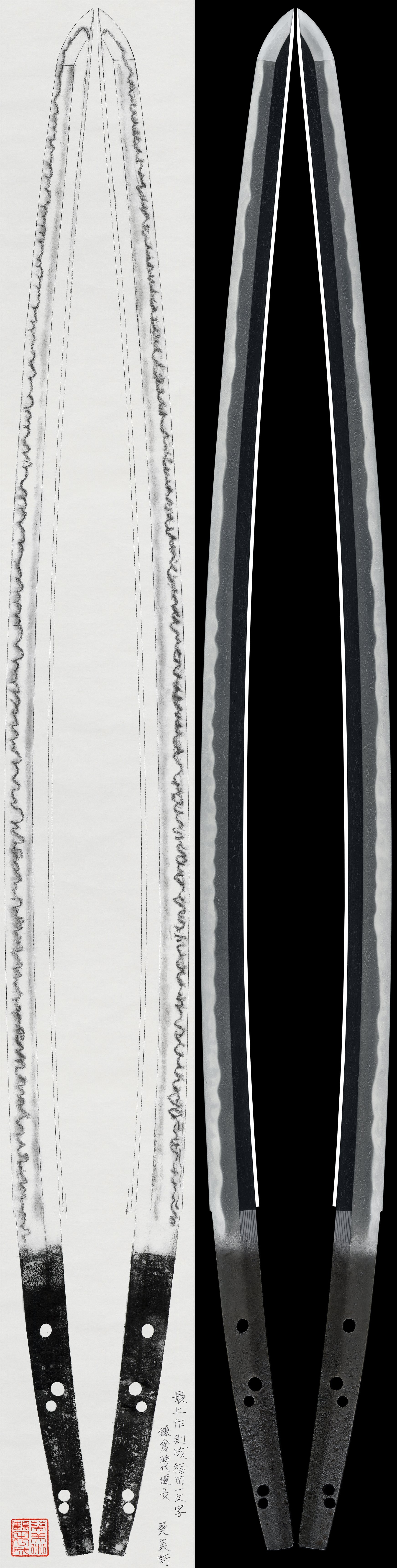
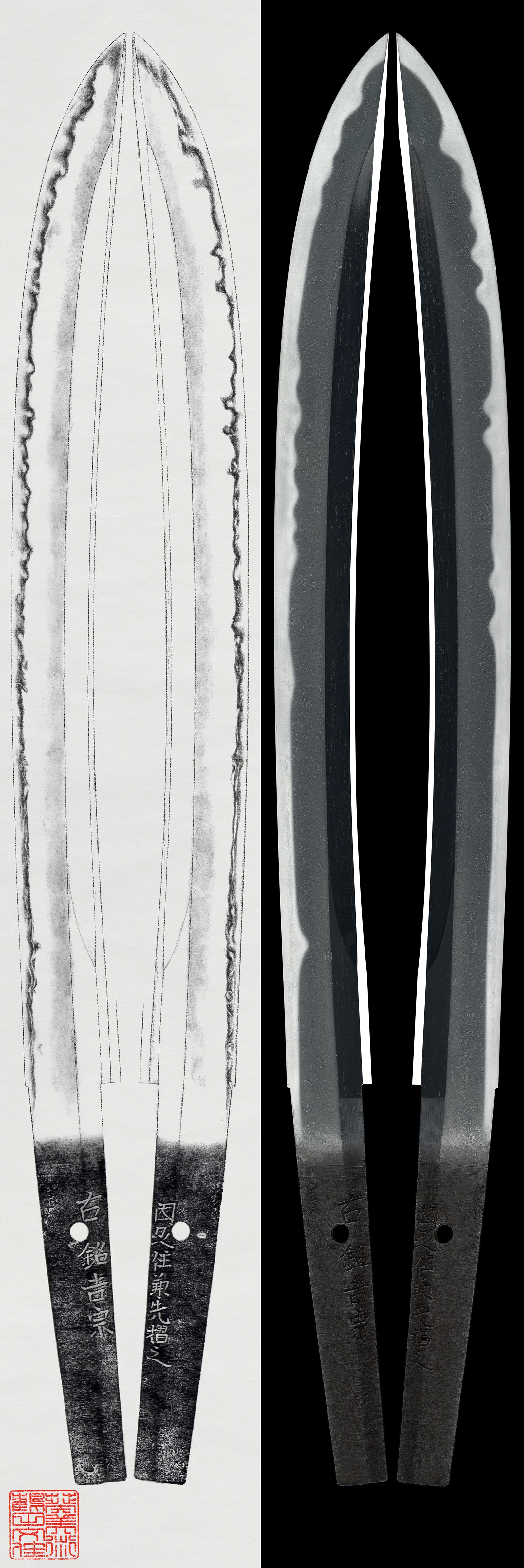
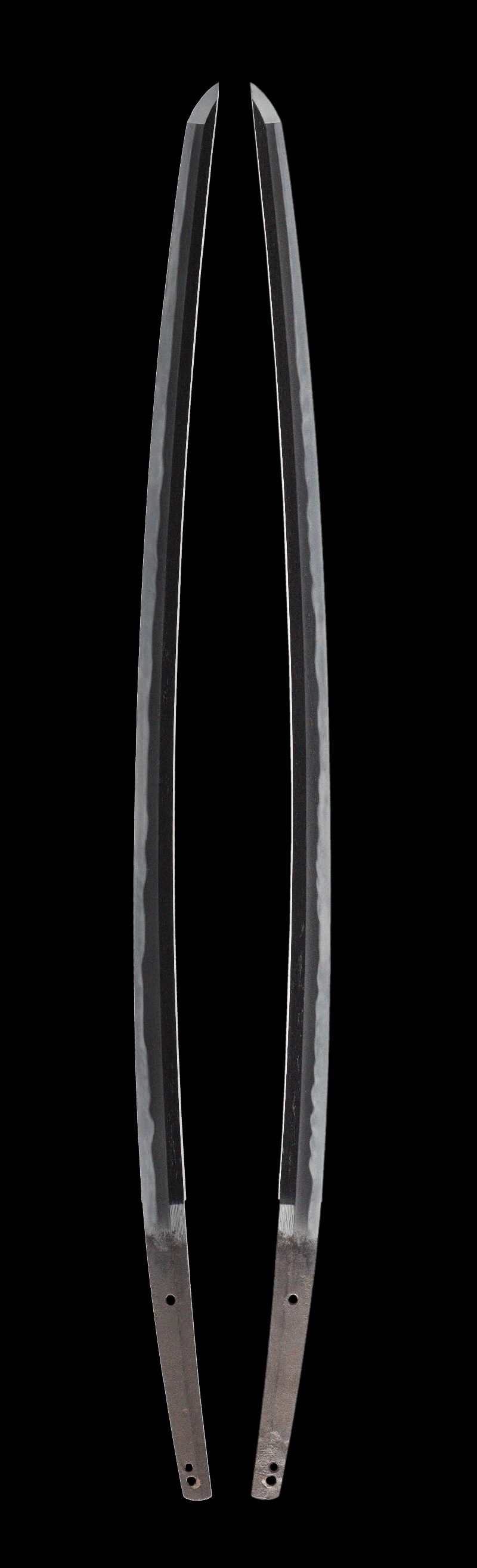
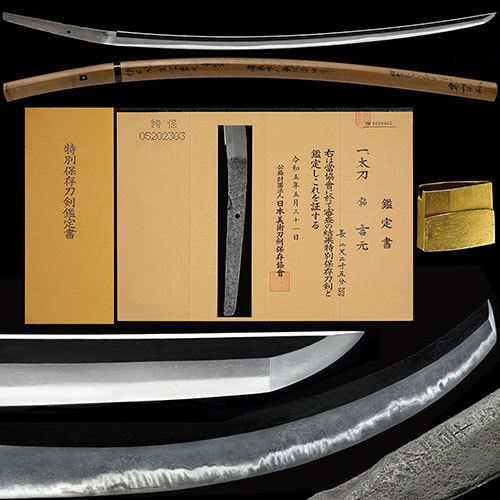
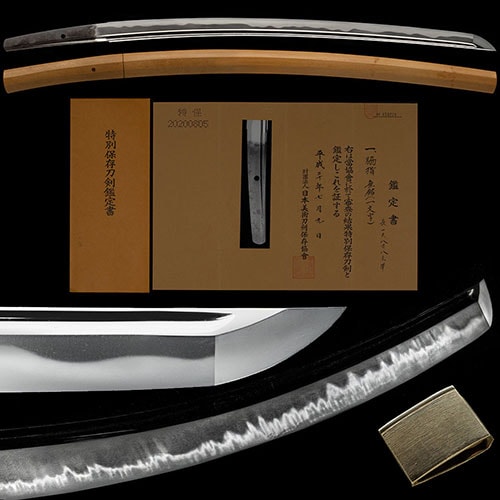
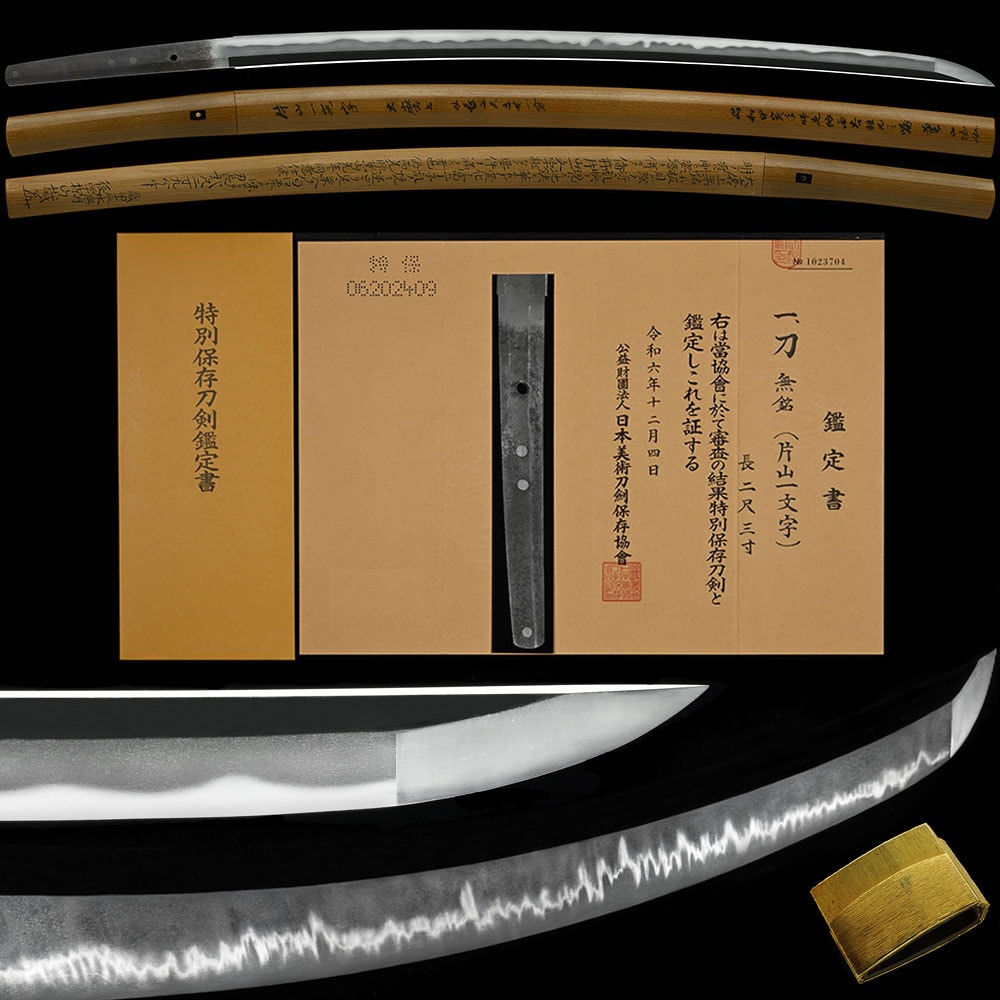
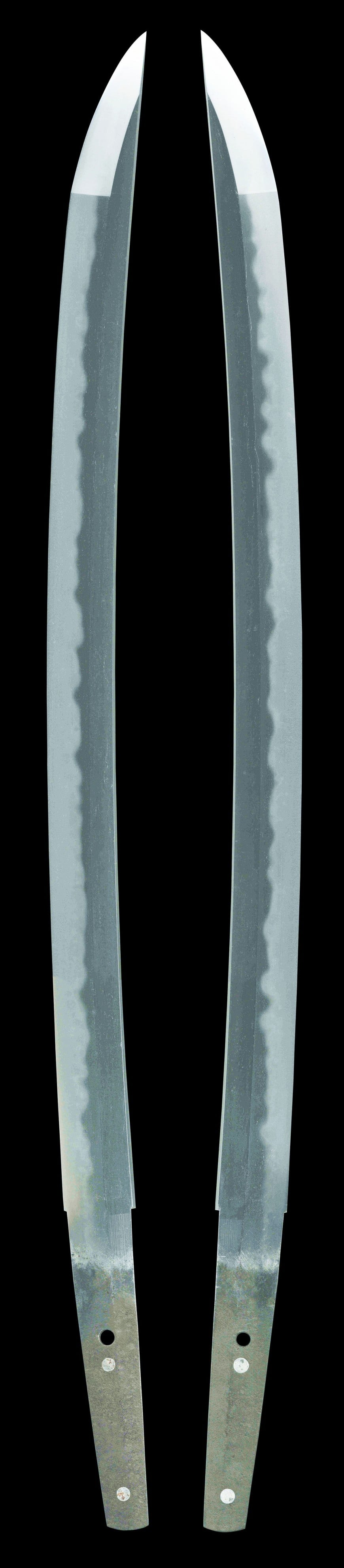
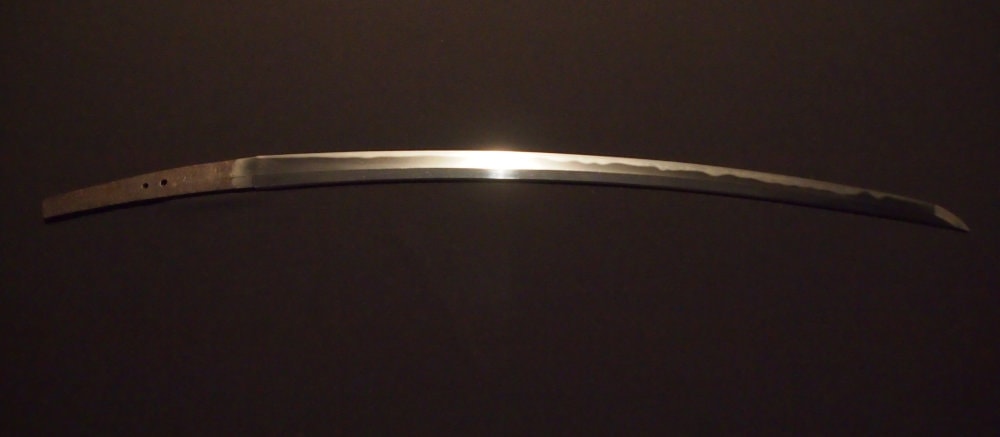
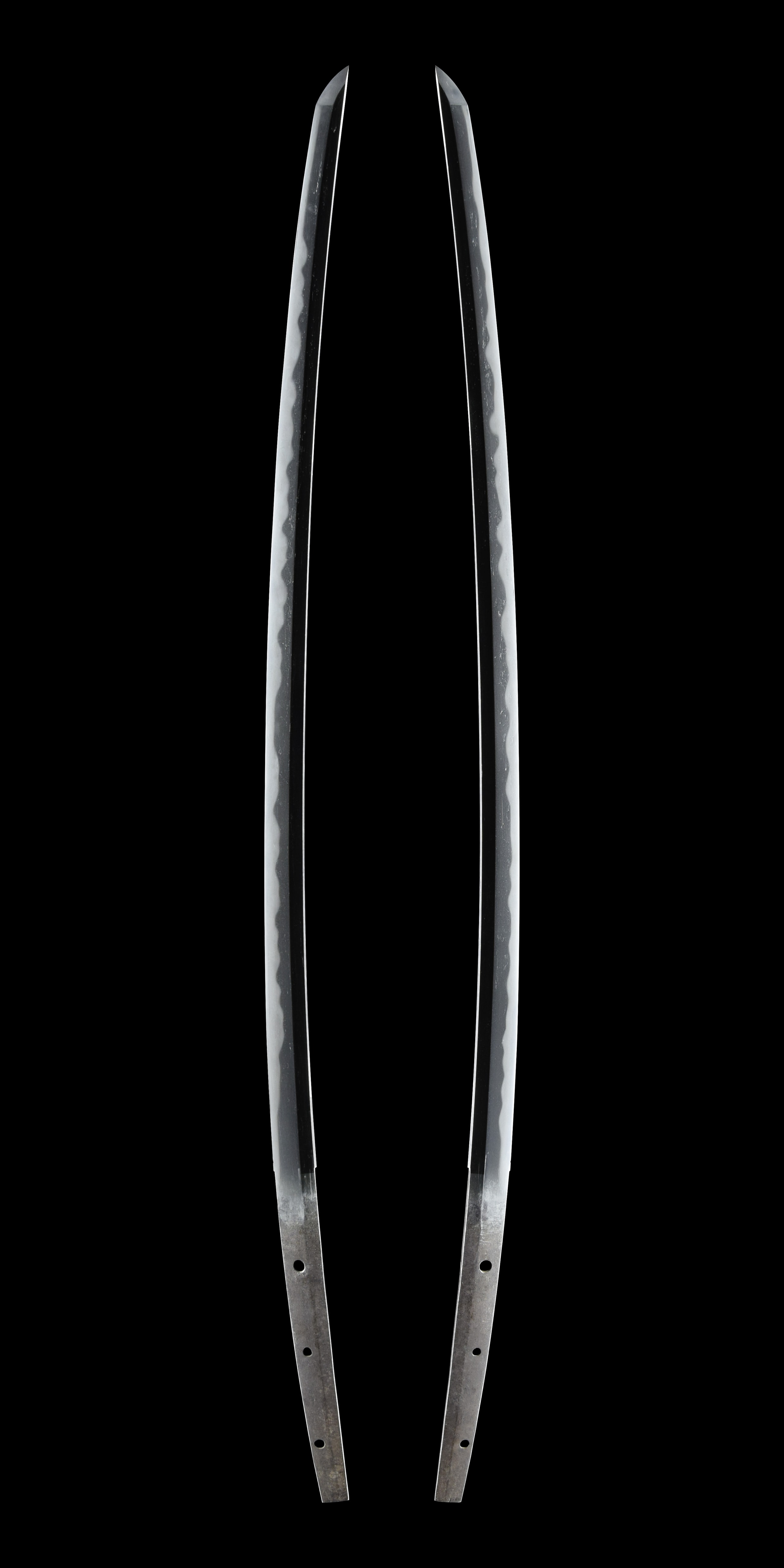
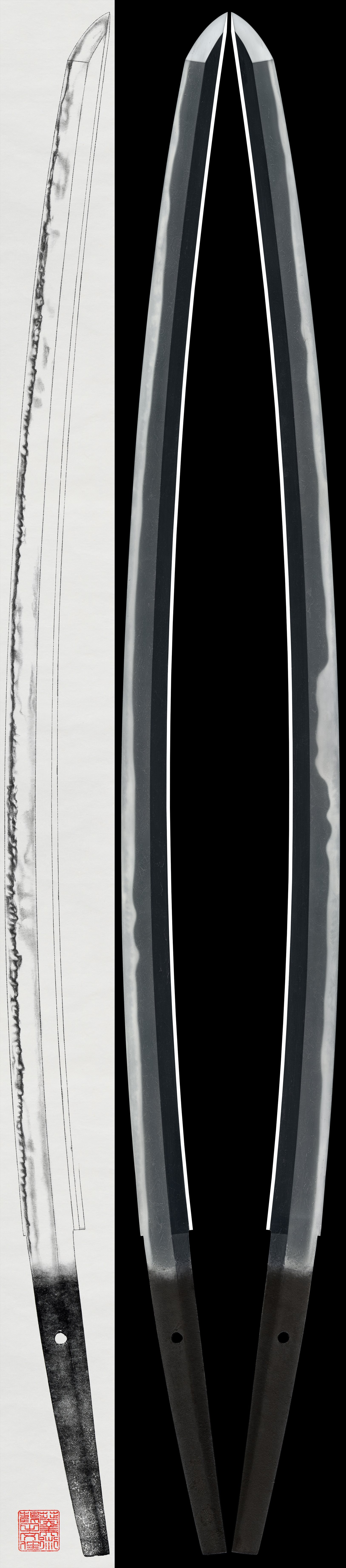
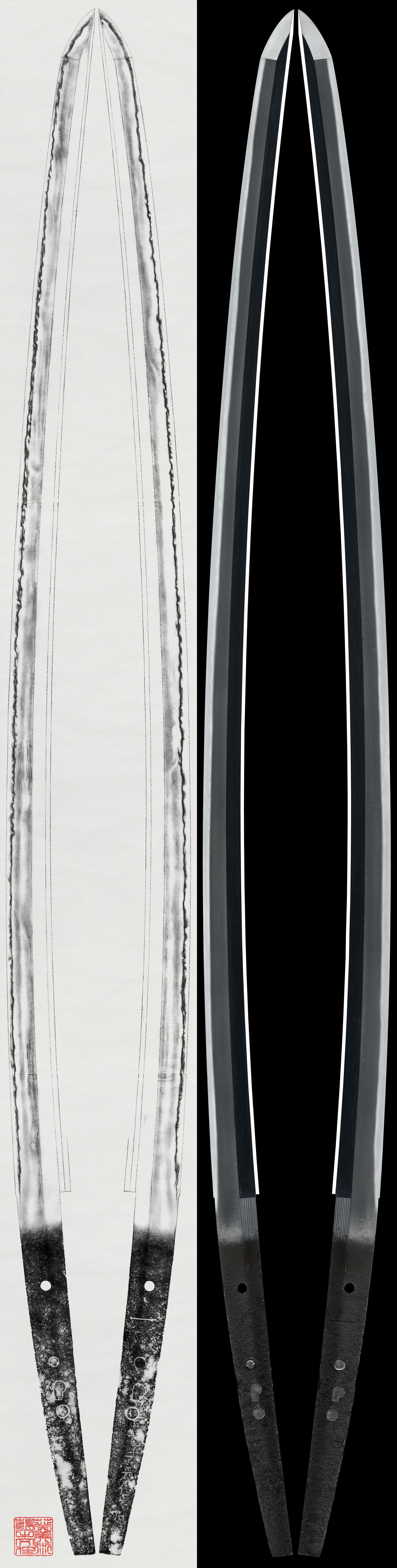
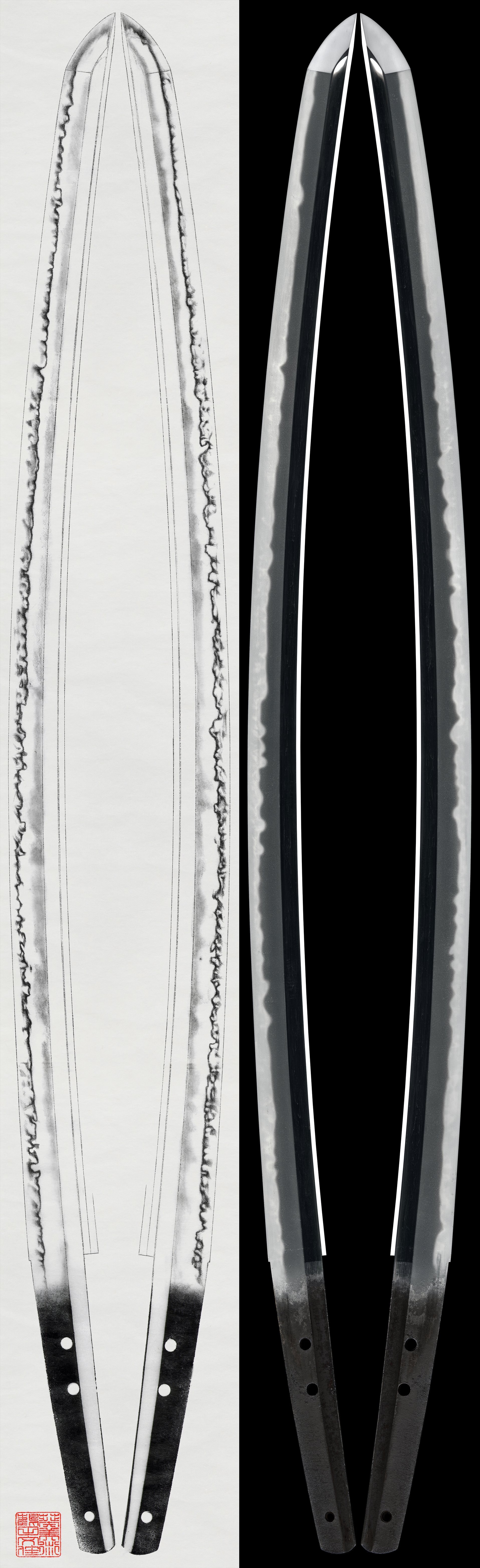
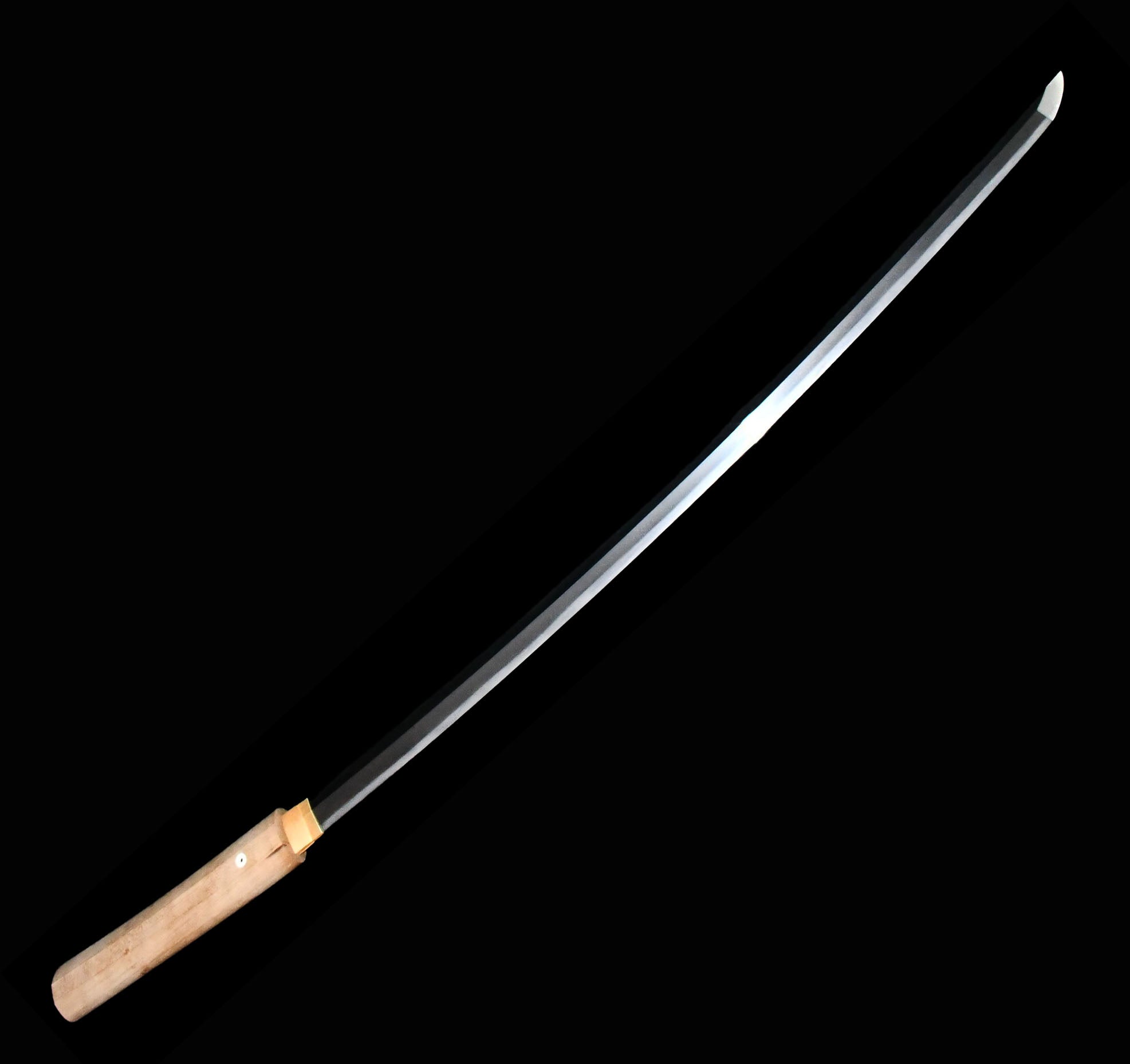
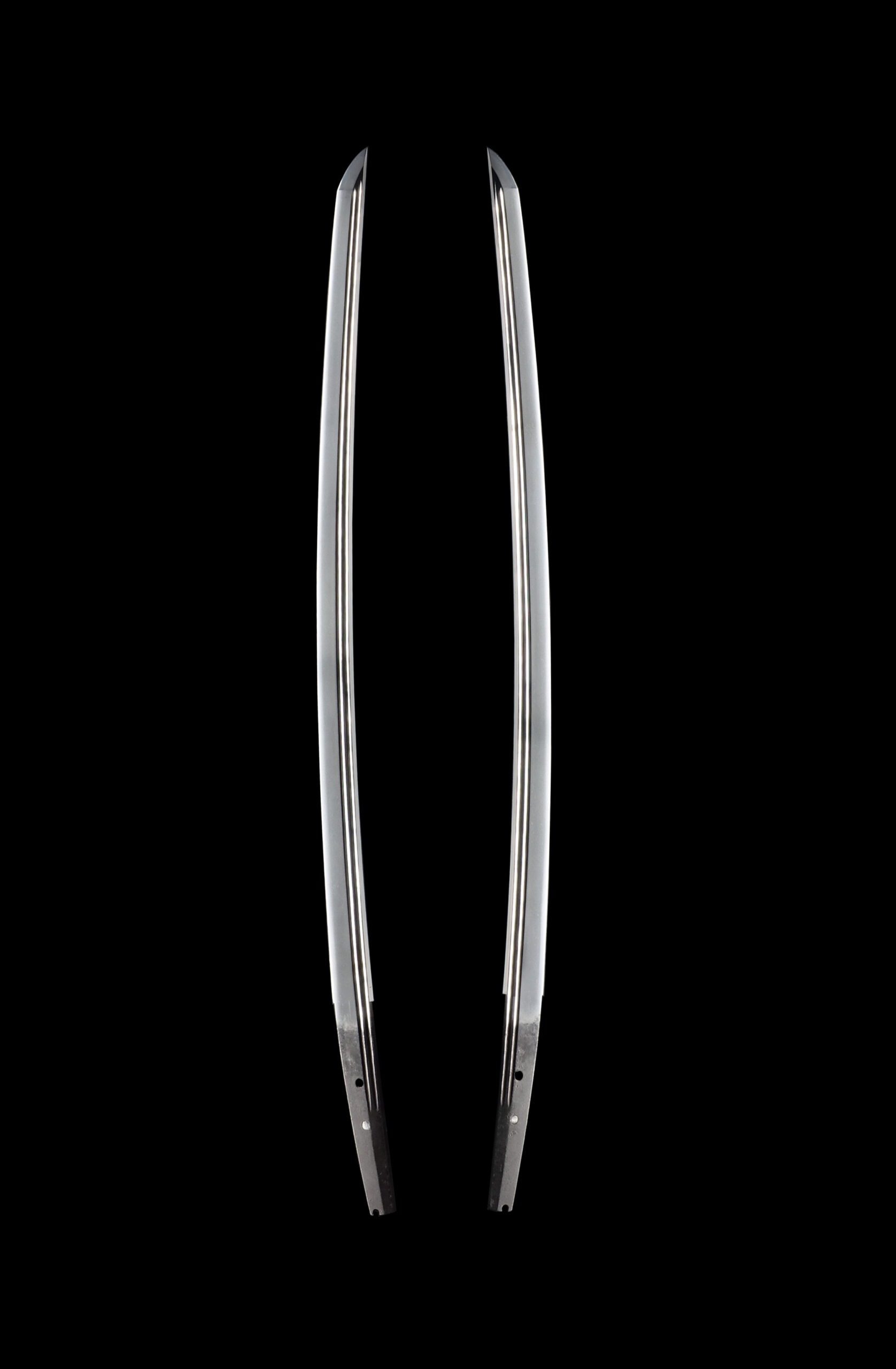
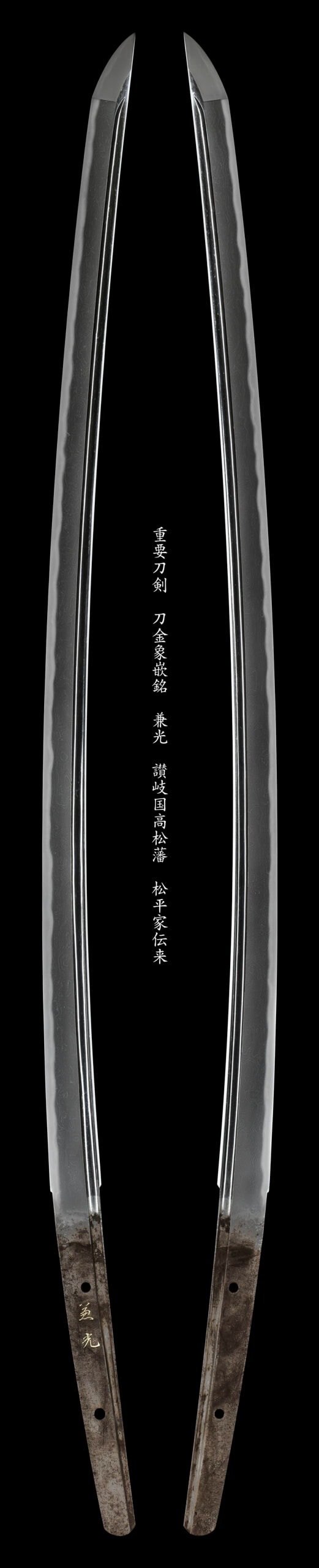
At Fukuoka in Bizen, in the opening decades of the Kamakura period, the smiths who cut the single character ichi (一) above their signatures gathered into the line that bears the village name. The published sources name Norimune as the founder, one of the goban-kaji summoned in monthly rotation to the forge of the retired Emperor Go-Toba, and Nobufusa among the same court roster a generation alongside him. These earliest hands, the Ko-Ichimonji of Norimune, Nobufusa, Sanetoshi, Tamekiyo and the archaic side of Sukeyoshi, work at the very threshold of Ko-Bizen: a slender tachi of high koshizori and ko-kissaki, a suguha base broken by ko-midare and ko-choji, so close to the older Bizen manner that the two are read apart only with difficulty. What already separates them is the jigane, a tightly forged ko-itame over which a clear midare-utsuri rises, the bright reflection the utsuri-less Ko-Bizen ground does not carry. From this calm root the school grew toward the flamboyance for which it is now known, and the smiths who followed kept that reflection as their constant signature in steel. By the middle of the period the manner had opened into its full splendour, and the descriptions converge on a single shared vocabulary. The mid-Kamakura masters, named together as Yoshifusa, Sukezane and Norifusa and extended in the same breath to Yoshihira, Norikane, Sukekane and Yoshimune, temper a large-pattern choji-midare of marked height variation: clusters of differing size rising and falling across the blade, with the tassel-headed o-busa-choji, the sack-shaped fukuro-choji (named Yoshifusa's specialty), the layered juka-choji and the tadpole-headed kawazu-ko-choji mixed in, ashi and yo entering freely, the temper nioi-dominant with ko-nie and a nioiguchi the sources repeatedly call bright and clear. Beneath it lies itame mixed with mokume, often standing a little, carrying ji-nie and chikei, and again the vivid midare-utsuri that anchors every blade to Bizen and to this branch. Within that one manner the generations and registers diverge.
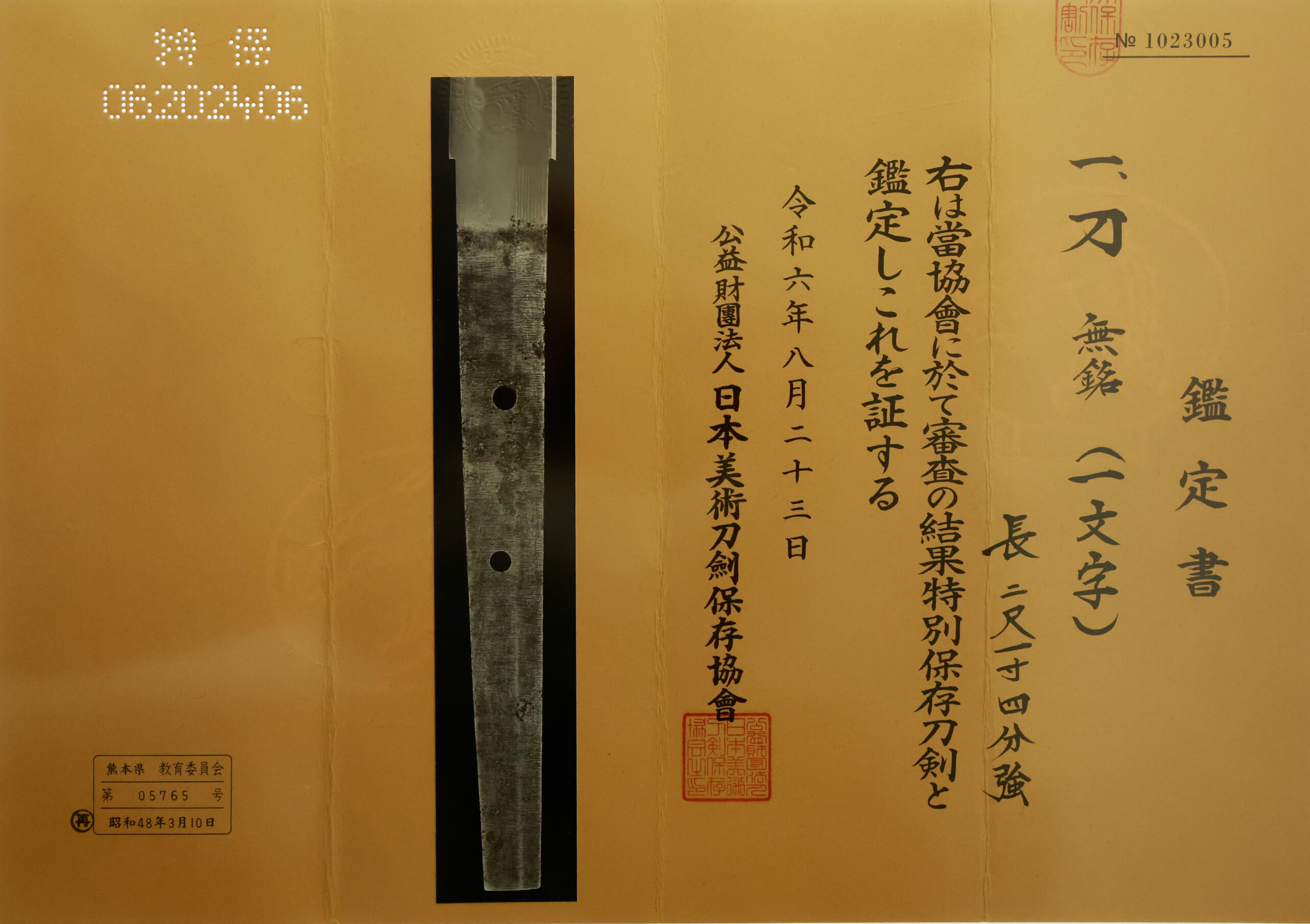
Sukezane shows a ji and ha stronger than his fellows, his edge threaded with kinsuji and sunagashi, a forcefulness that points beyond the school; tradition moves him to Sagami at the shogunate's order, so that the term Kamakura Ichimonji attaches to his hand and he stands where Bizen choji turns toward Soshu-den. Against the showy mainstream the school also kept a quiet wing. Yoshimochi works a deliberately subdued small choji over a suguha-toned base; Naganori, alone among the line cutting Fukuoka-ju in his signature, tempers low in a suguha with linked ko-choji the judges align with Osafune Kagemitsu and Chikakage; and Tameto of the Karakawa border works a moist suguha in a gunome manner. The flamboyant peak fed the later branches as well, the Yoshioka, Katayama and Iwato lines that carried the ichi mark forward, with Sukeyoshi recorded by one account as a Yoshioka founder. For the collector the school is read first from the jigane: a clear midare-utsuri over well-forged itame places a blade in Bizen, and the gathering of choji on the edge with bright nioi and ko-nie marks it Ichimonji rather than the plainer Ko-Bizen or the later Nanbokucho work. The bare 一 on a tang, where the individual hand cannot be fixed, rests the attribution on era, school and the manner of the inscription; the named hands are then sorted by their own tells, Sukezane's deeper nie and pointed hakikake boshi, Yoshifusa's fukuro-choji and marked rise and fall, Norimune's restrained archaic suguha. The standing of the best is fixed by the work itself, the National Treasures cited as proof that Yoshifusa's and Sukezane's technique reached an exceptional level, with provenance running through the houses that held the country, Hideyoshi, the Tokugawa, the Uesugi, the Mori and the Imperial Family, and the Nikko Sukezane favoured by Ieyasu among the archetypes. A great many surviving blades are o-suriage mumei, attributed by the Hon'ami and at times carrying their gold-inlay appraisals, while signed, dated pieces such as Naganori's and Tameto's serve as the yardsticks against which the unsigned are judged. Its influence runs forward on two paths, into the Osafune mainline whose smiths the calmer Ichimonji hands anticipate, and into Soshu through Sukezane, so that the Fukuoka manner sits at the centre of how Kamakura Bizen is recognised and of where two later traditions begin. Learn more →