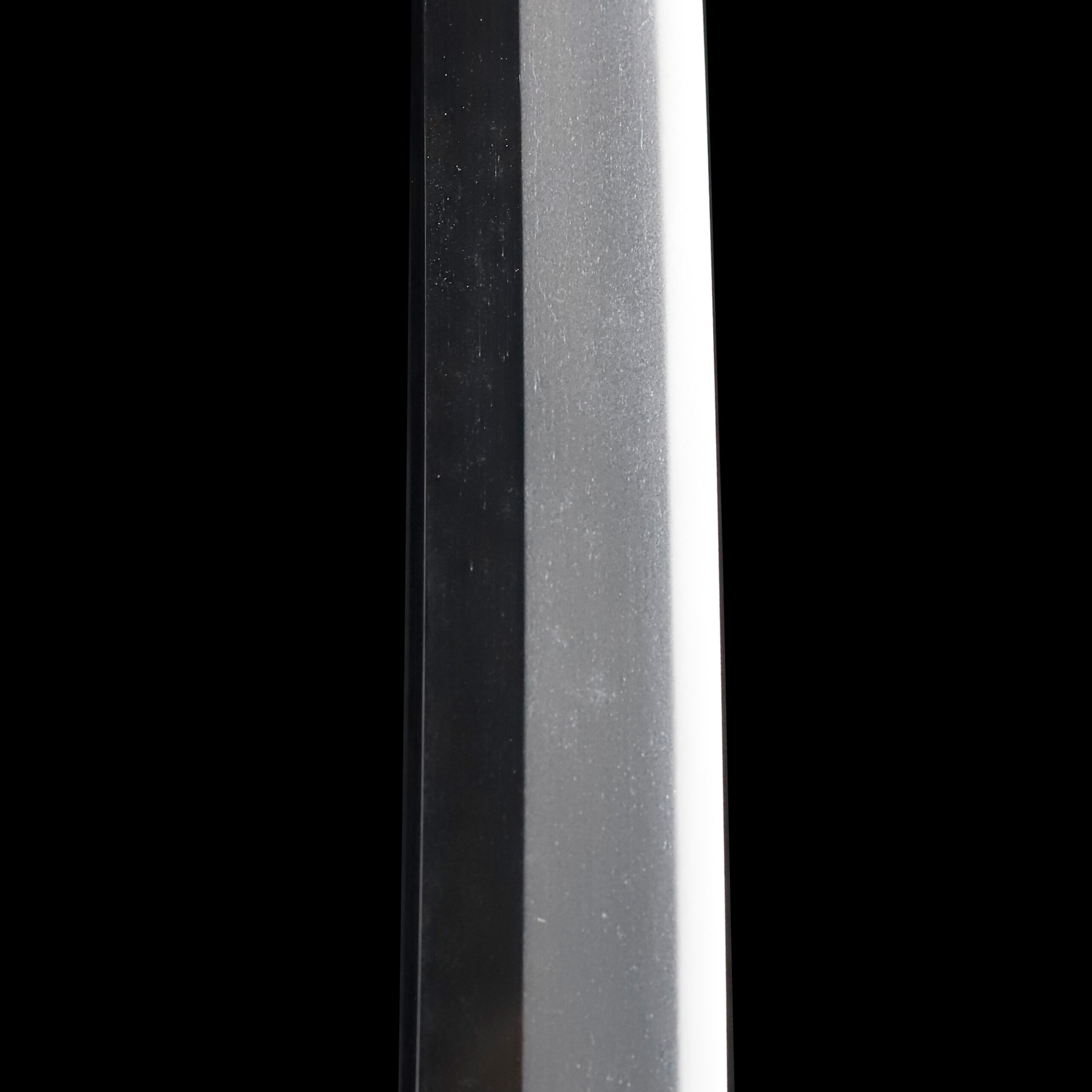
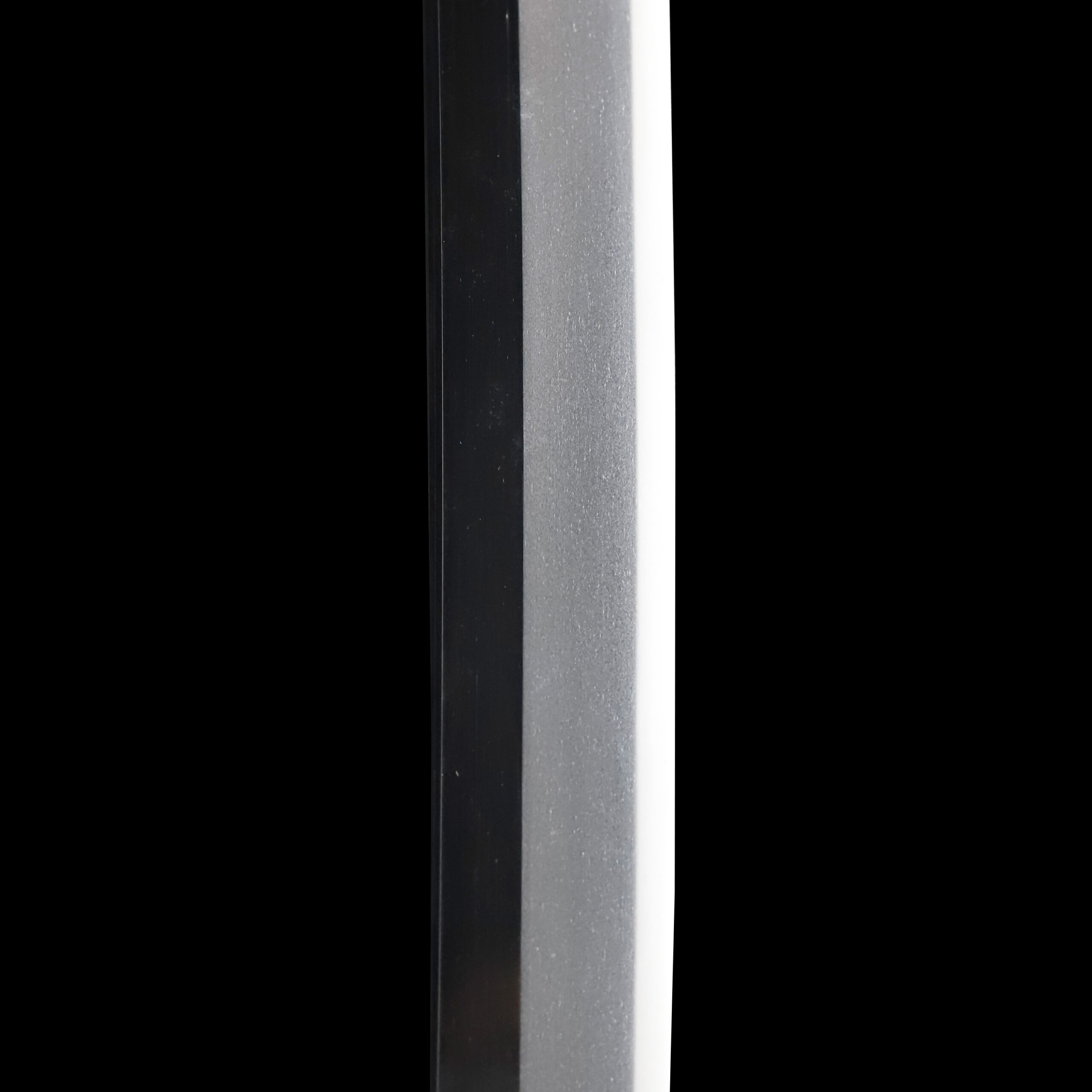
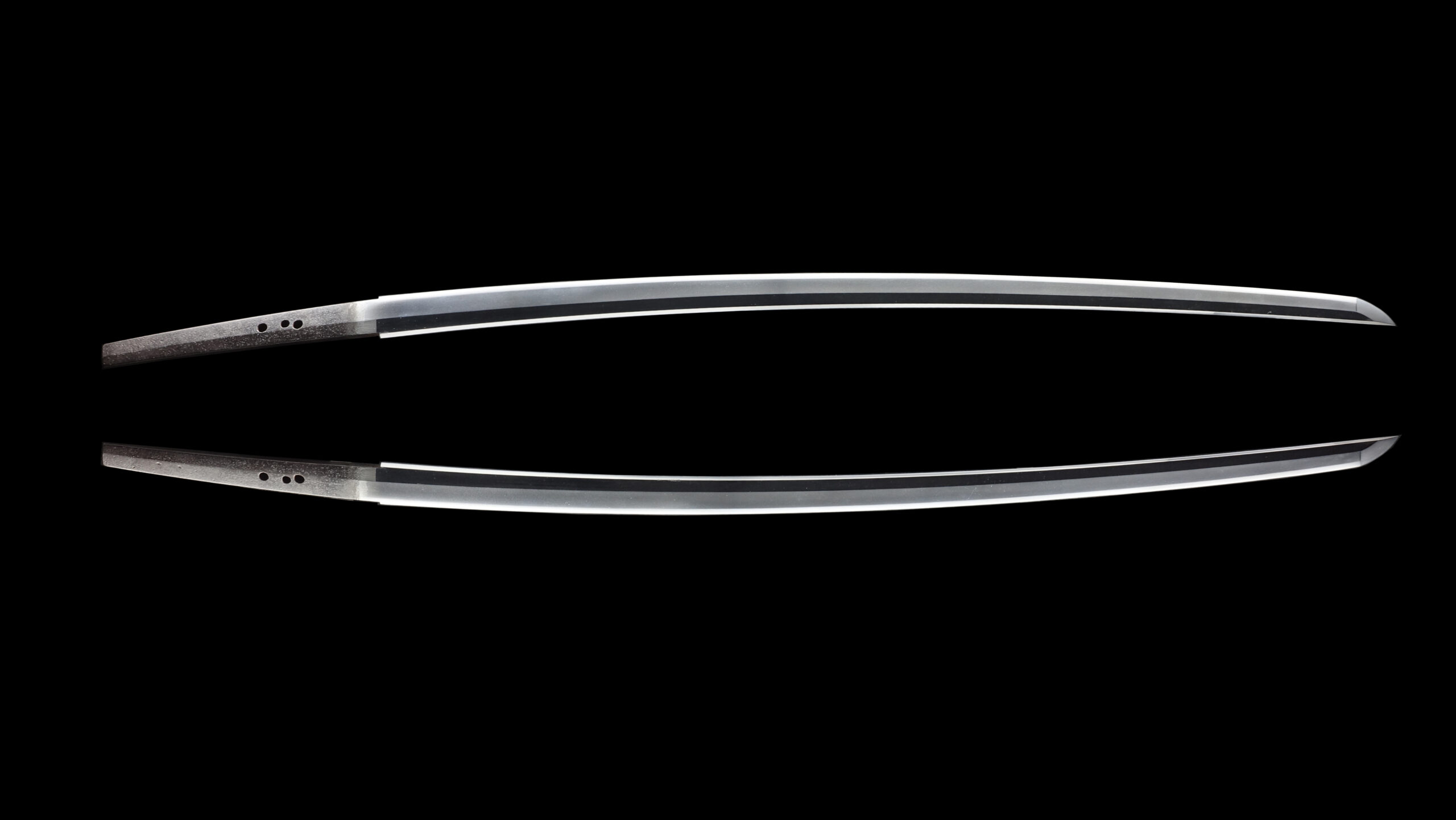
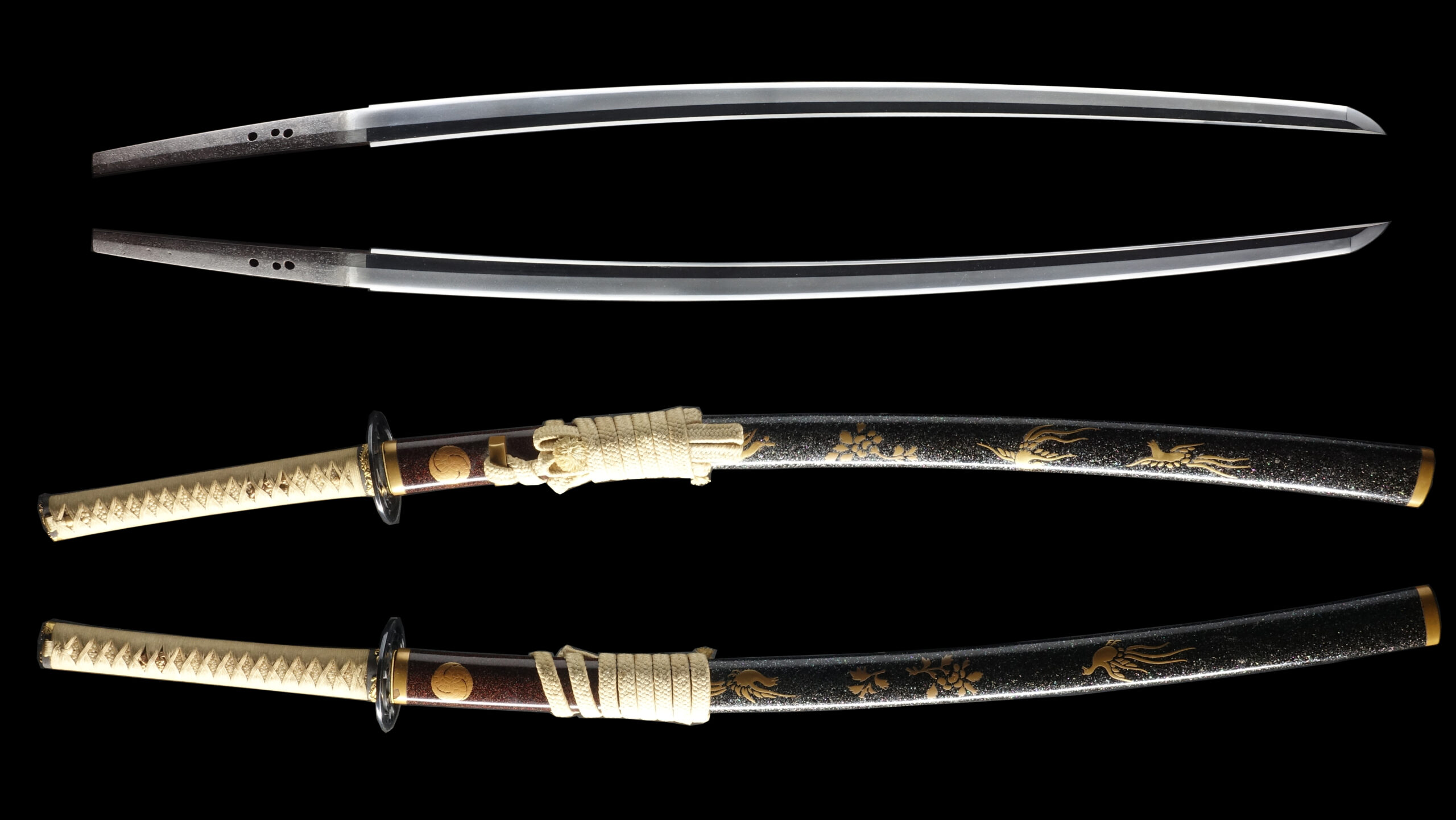
Sixty years of war between two courts drove blades long and broad, and Osafune met the demand: Kanemitsu and Chōgi led forges serving the provincial warriors who did the fighting, while Sōshū influence arrived with the armies to create Sōden-Bizen.
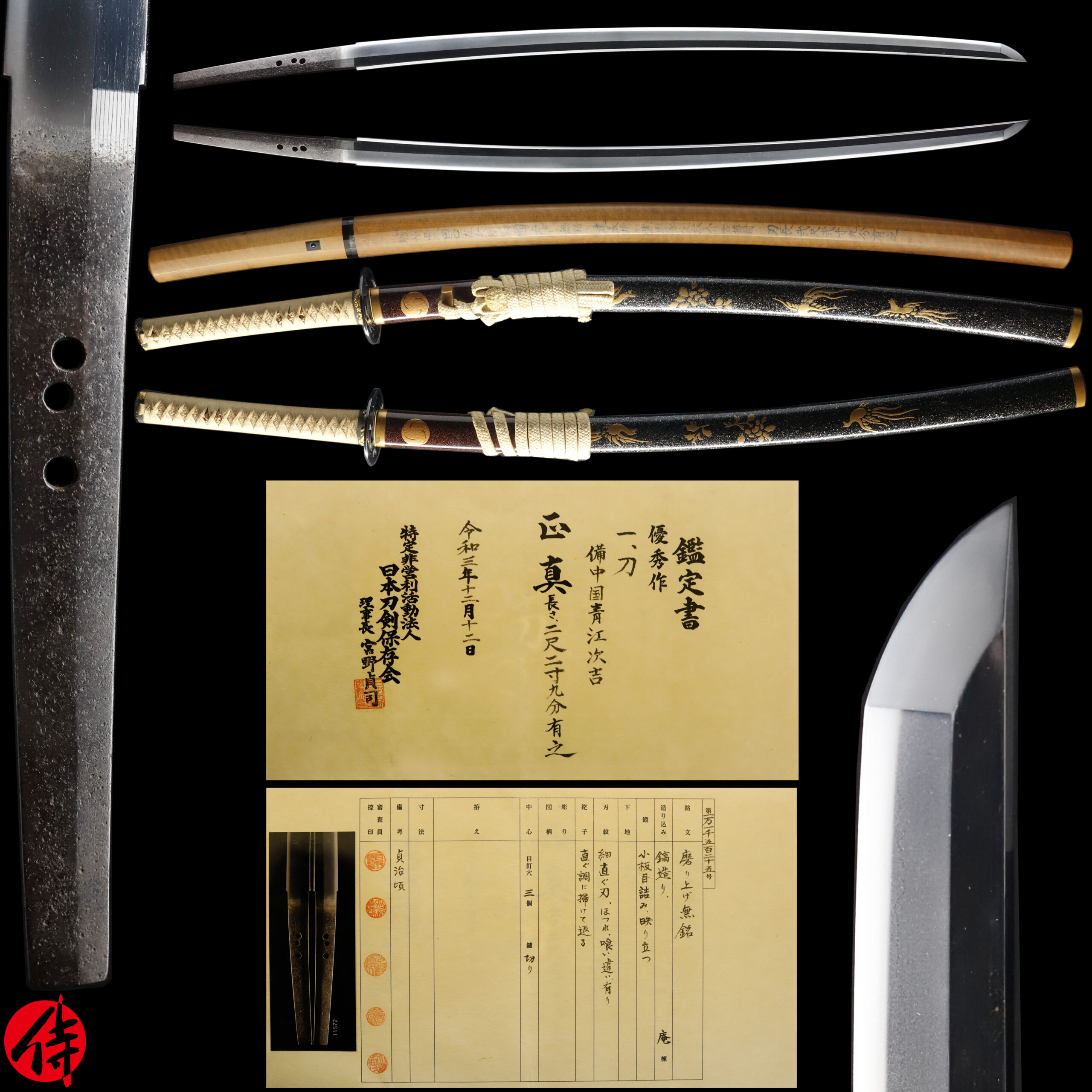
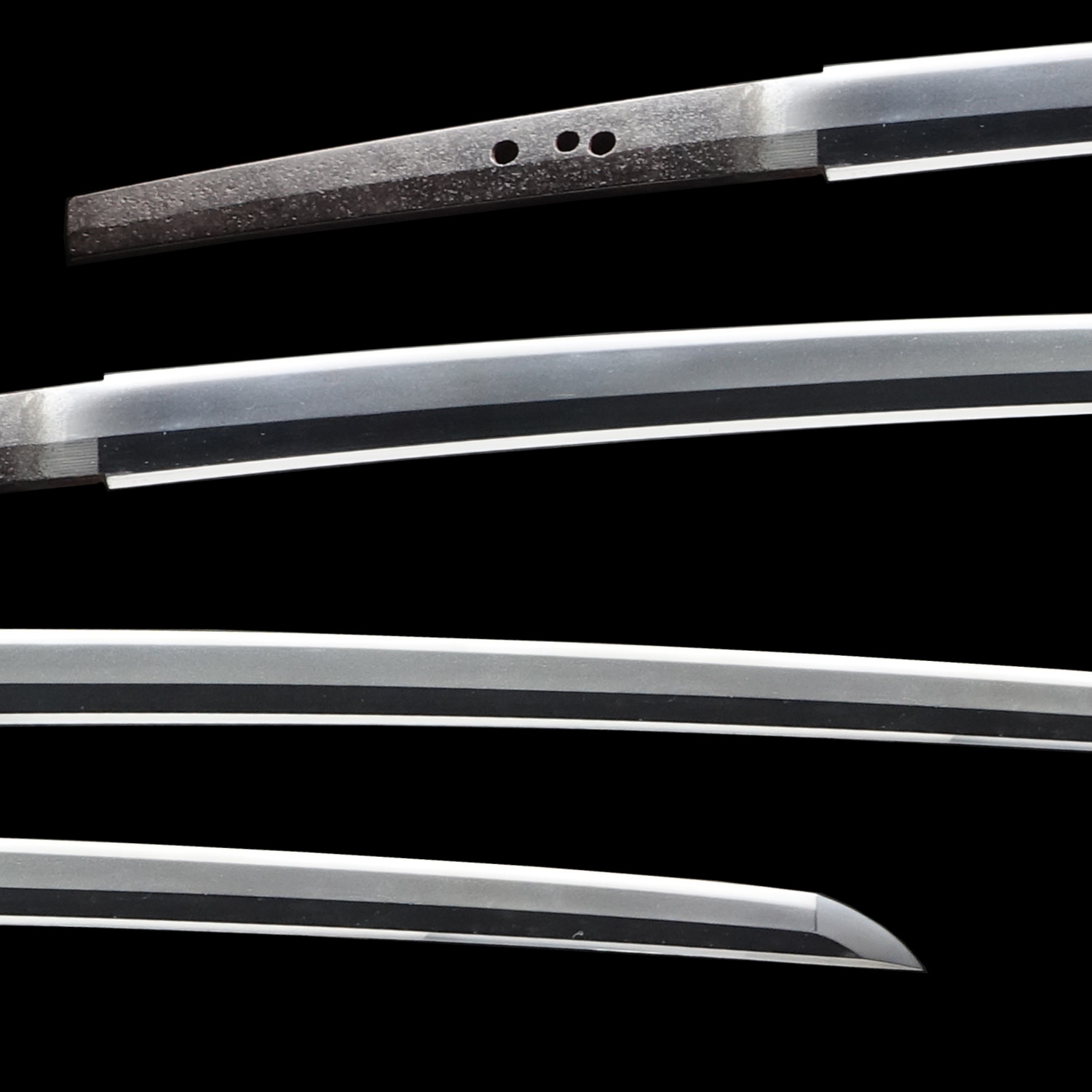
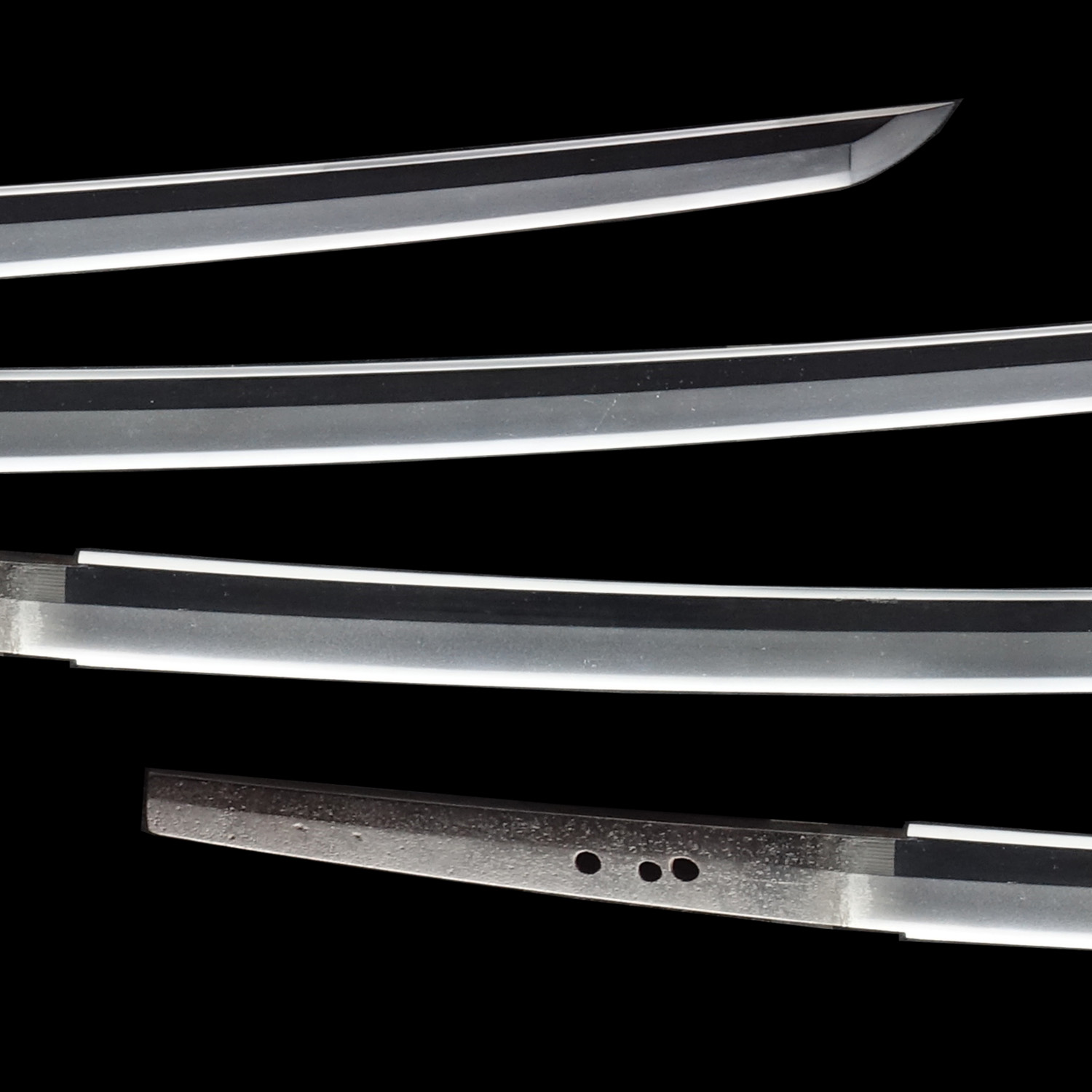
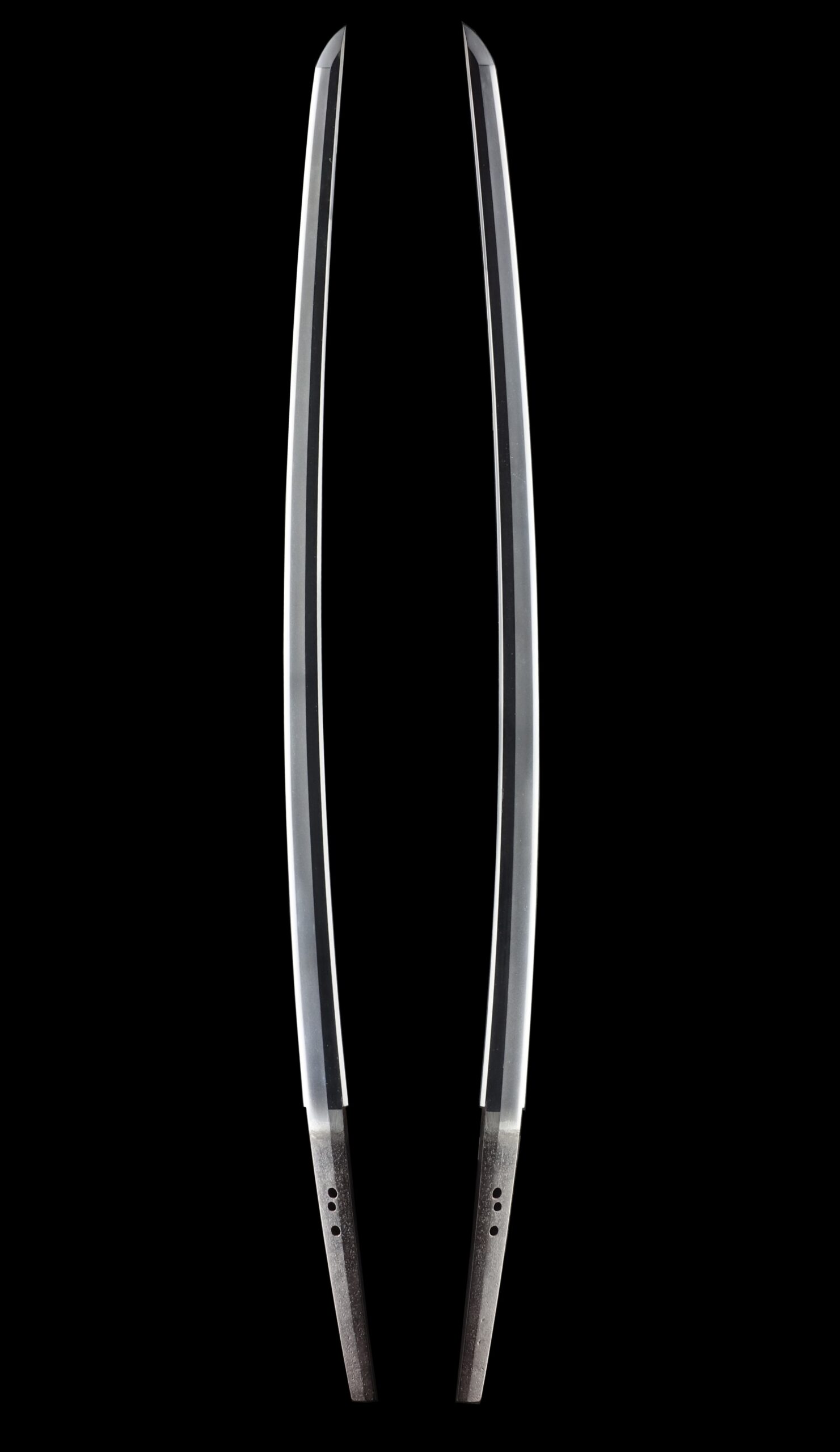
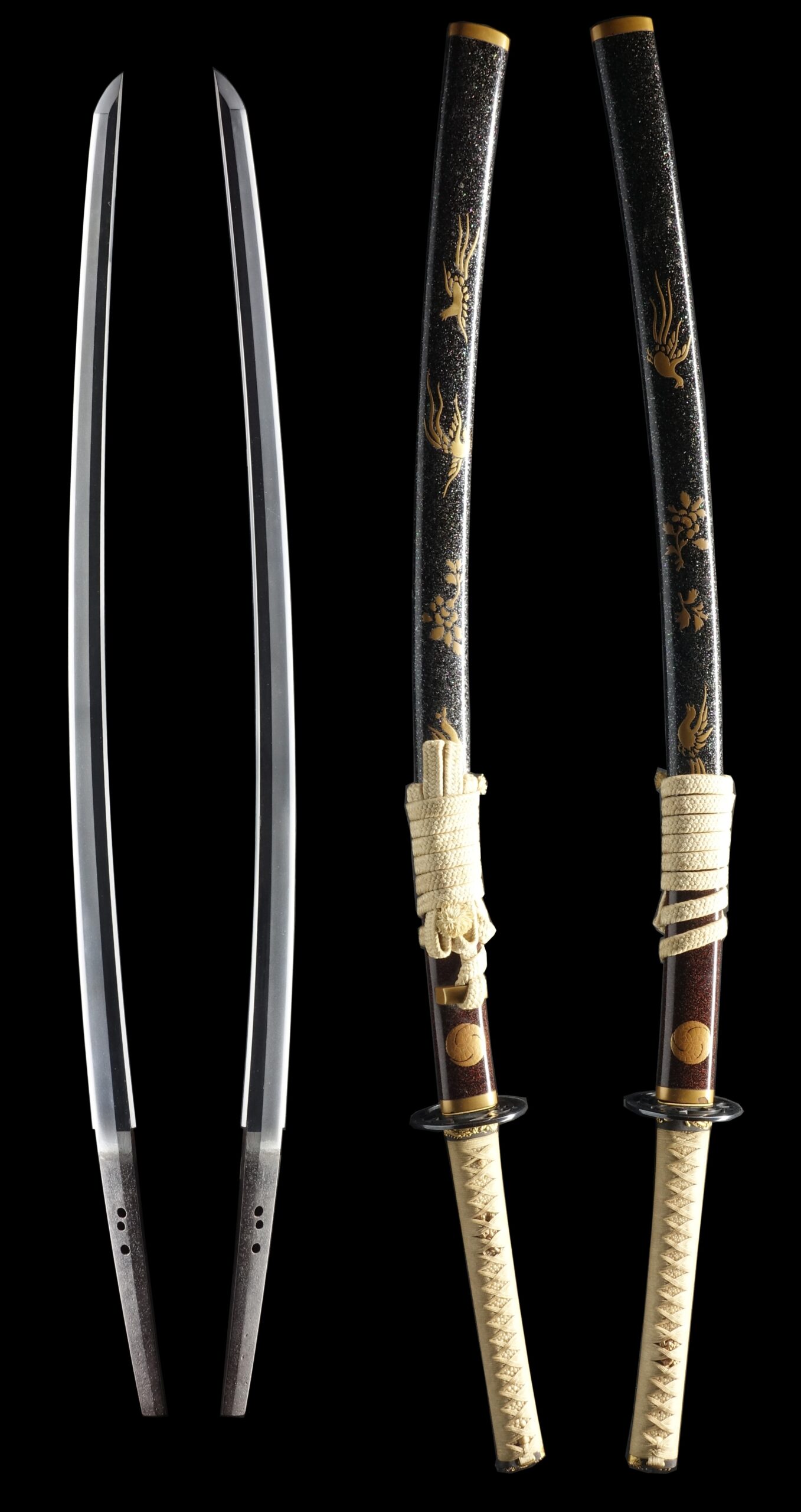
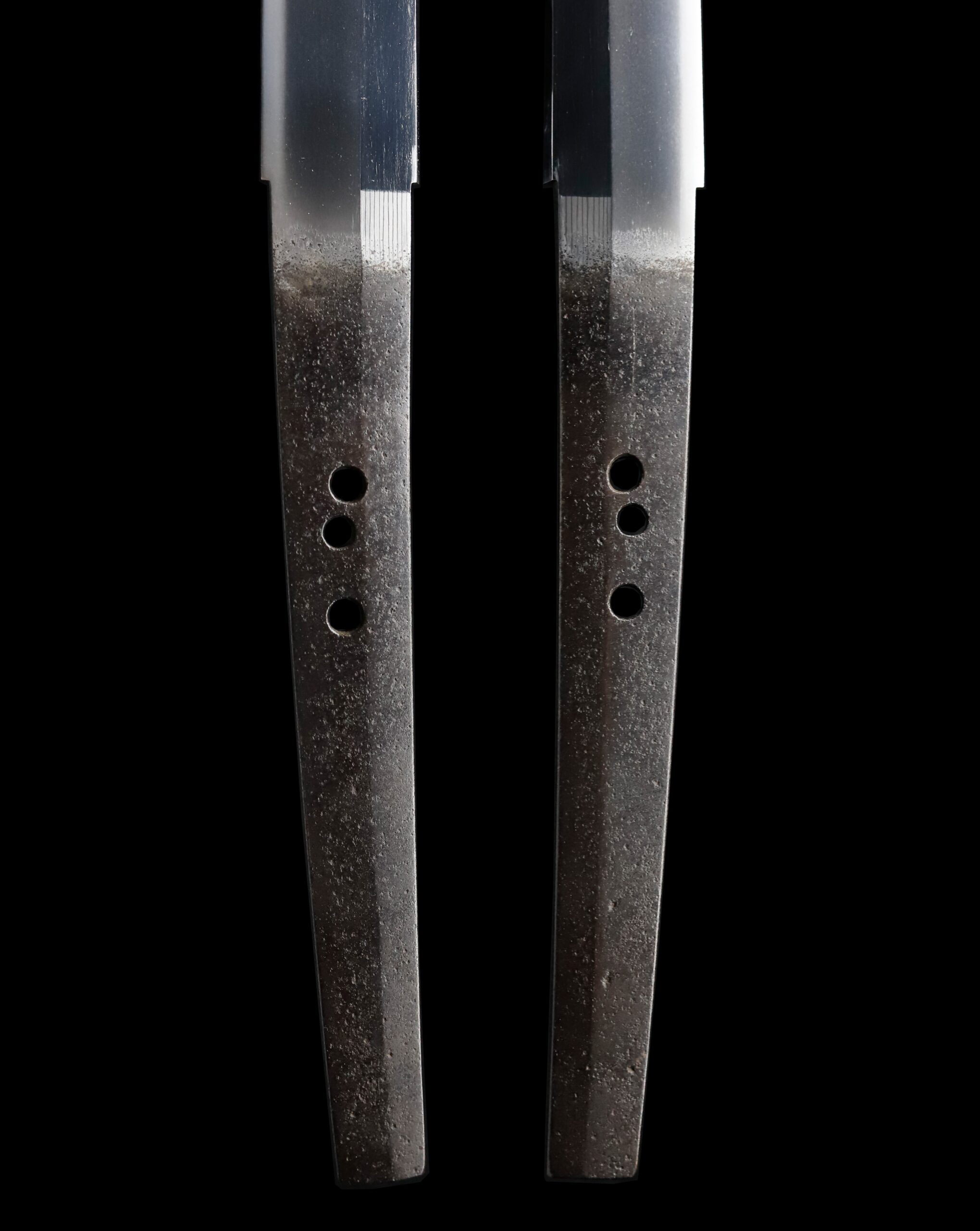
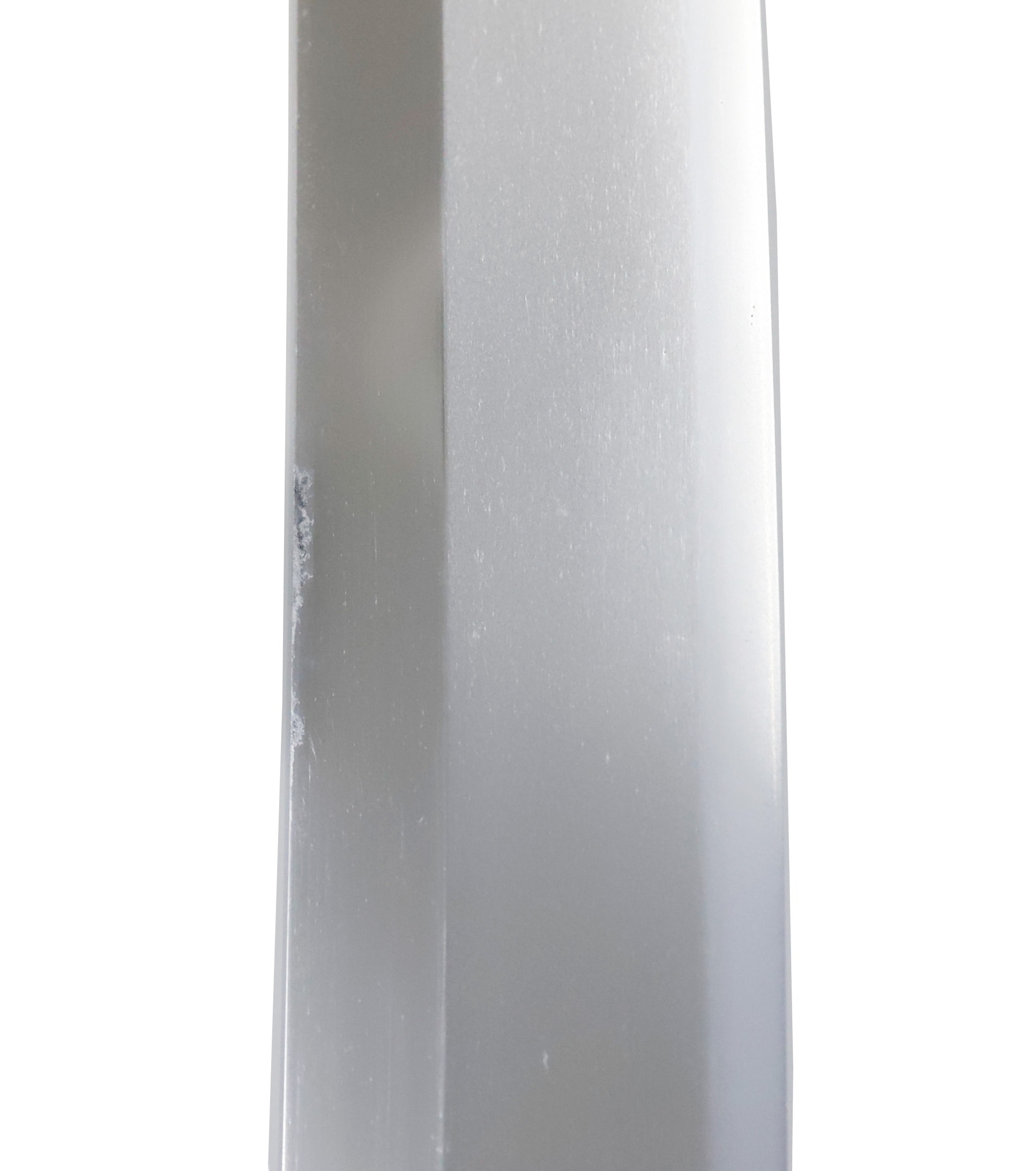
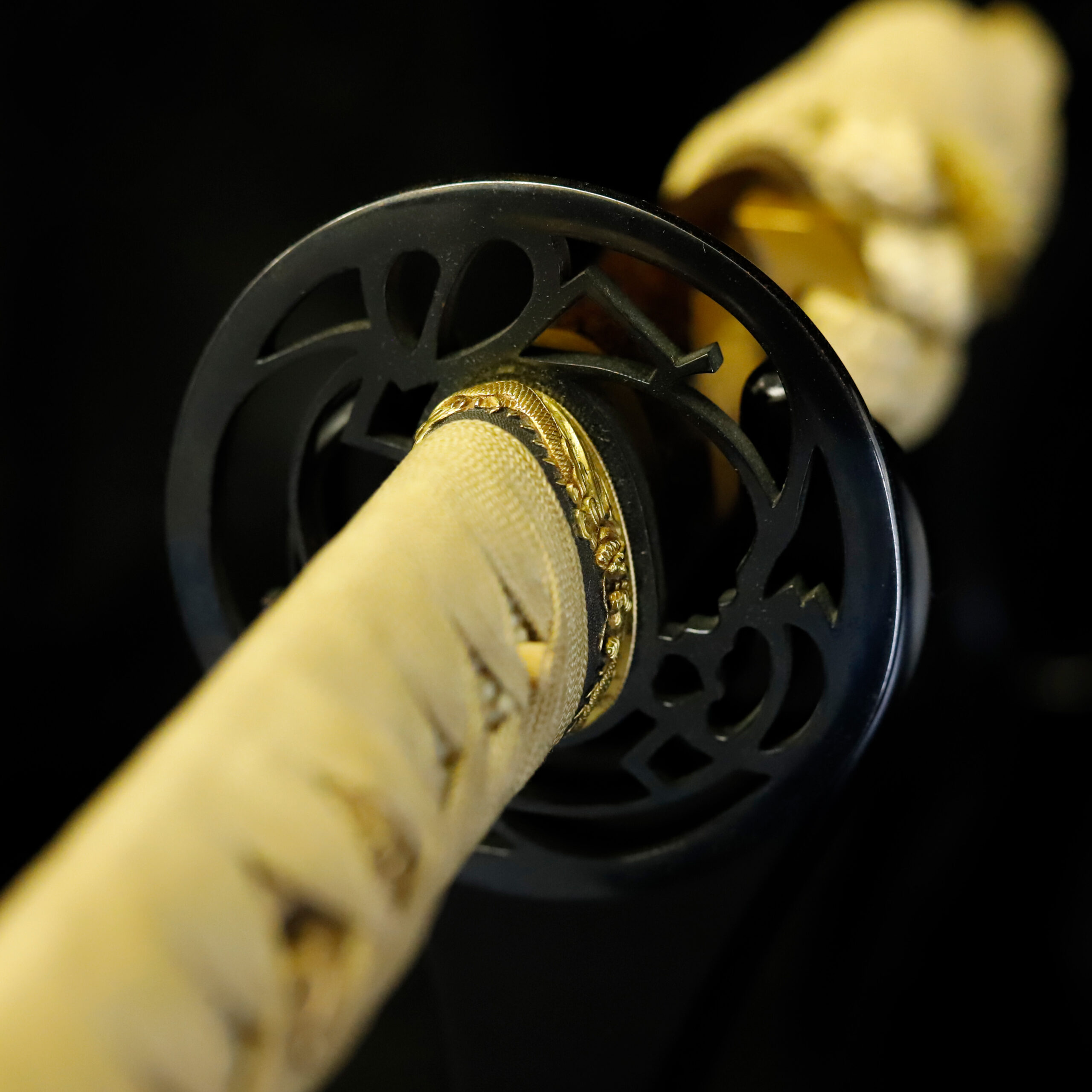
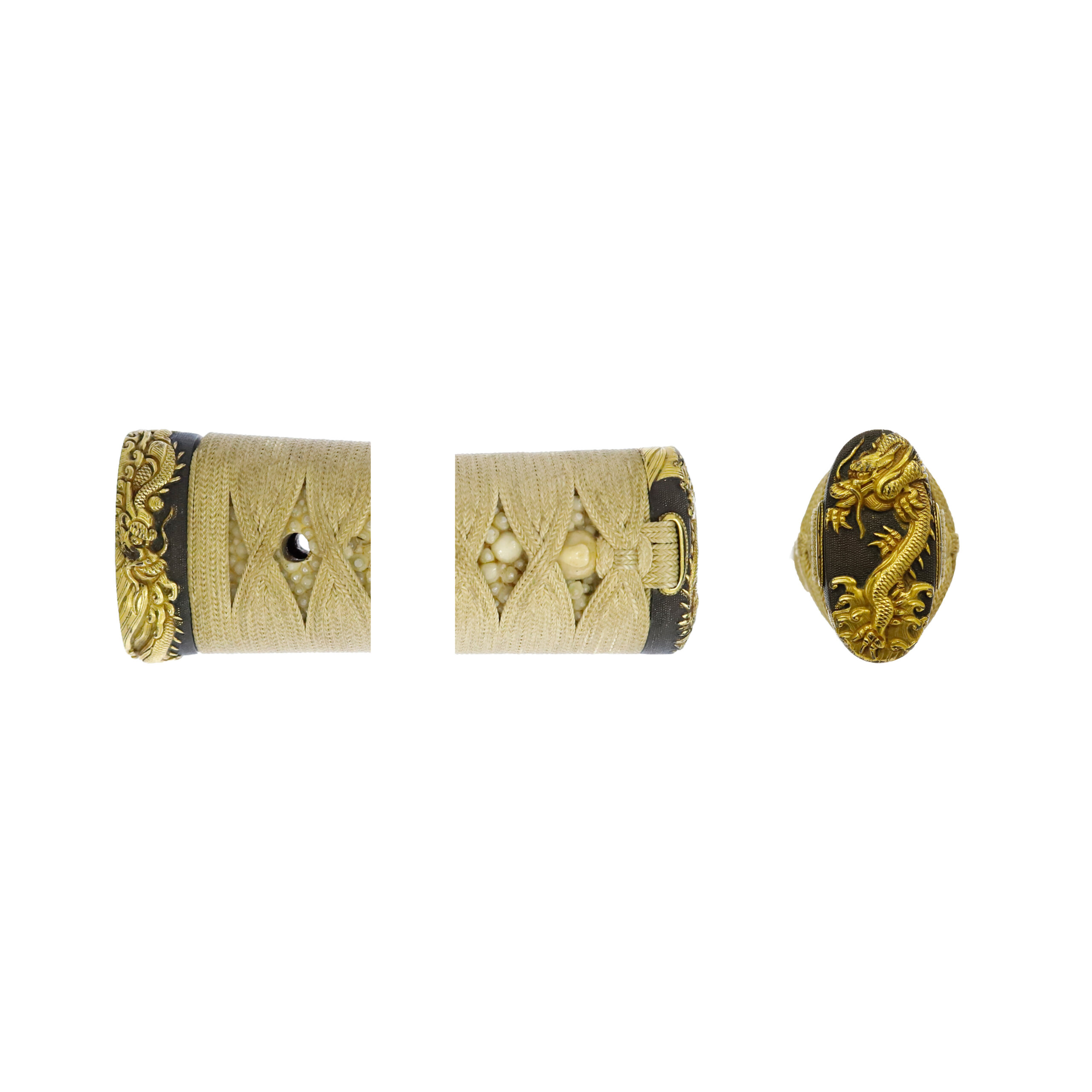
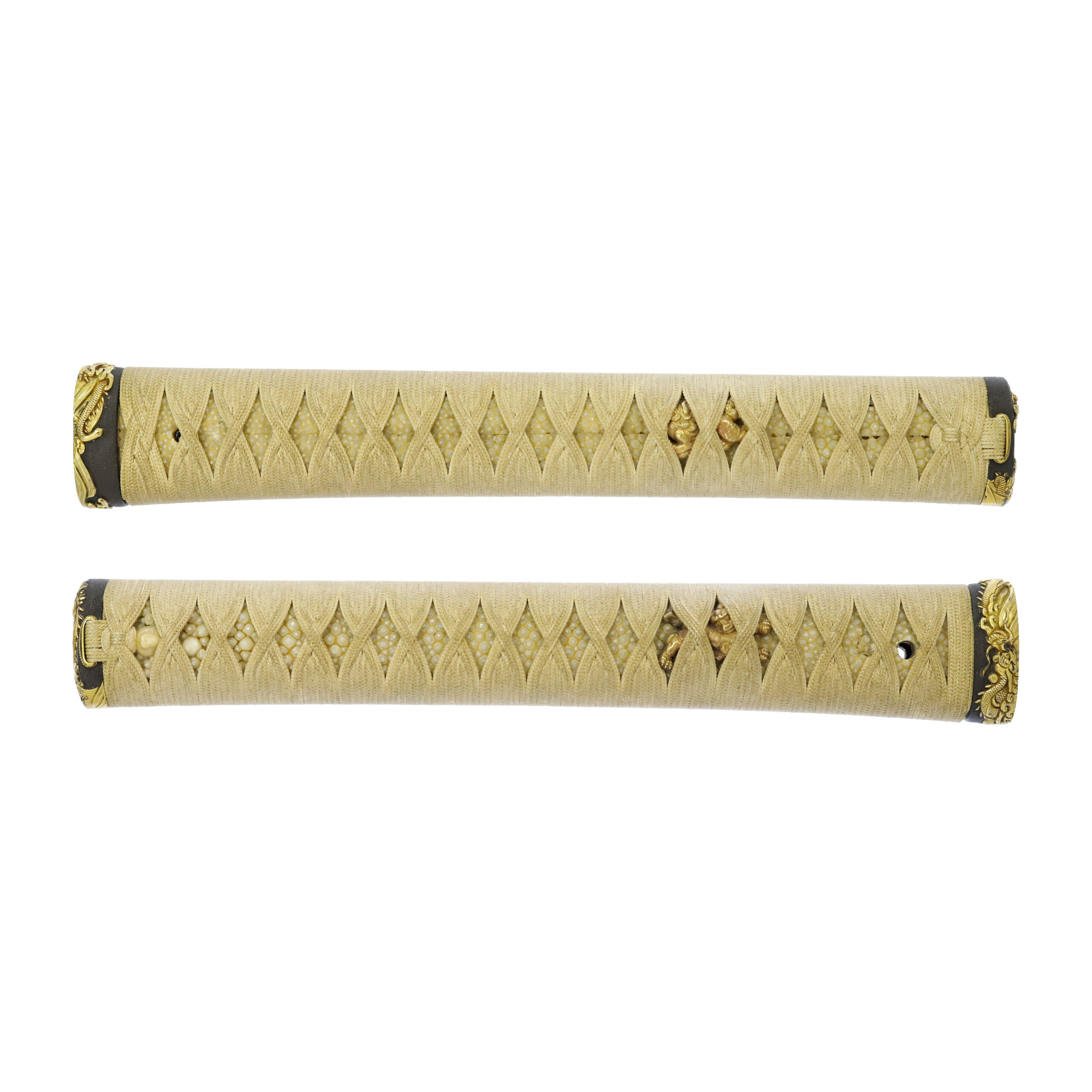
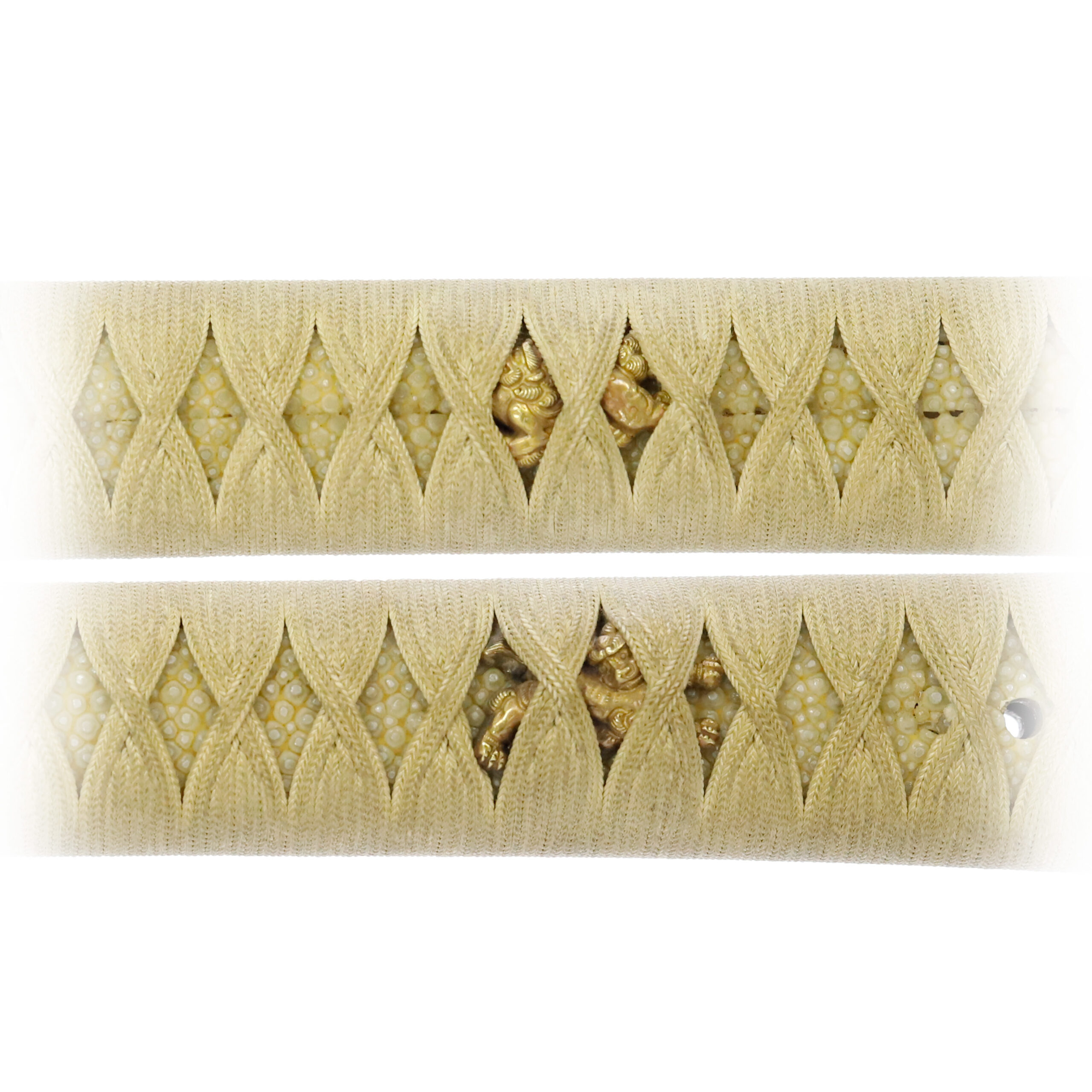
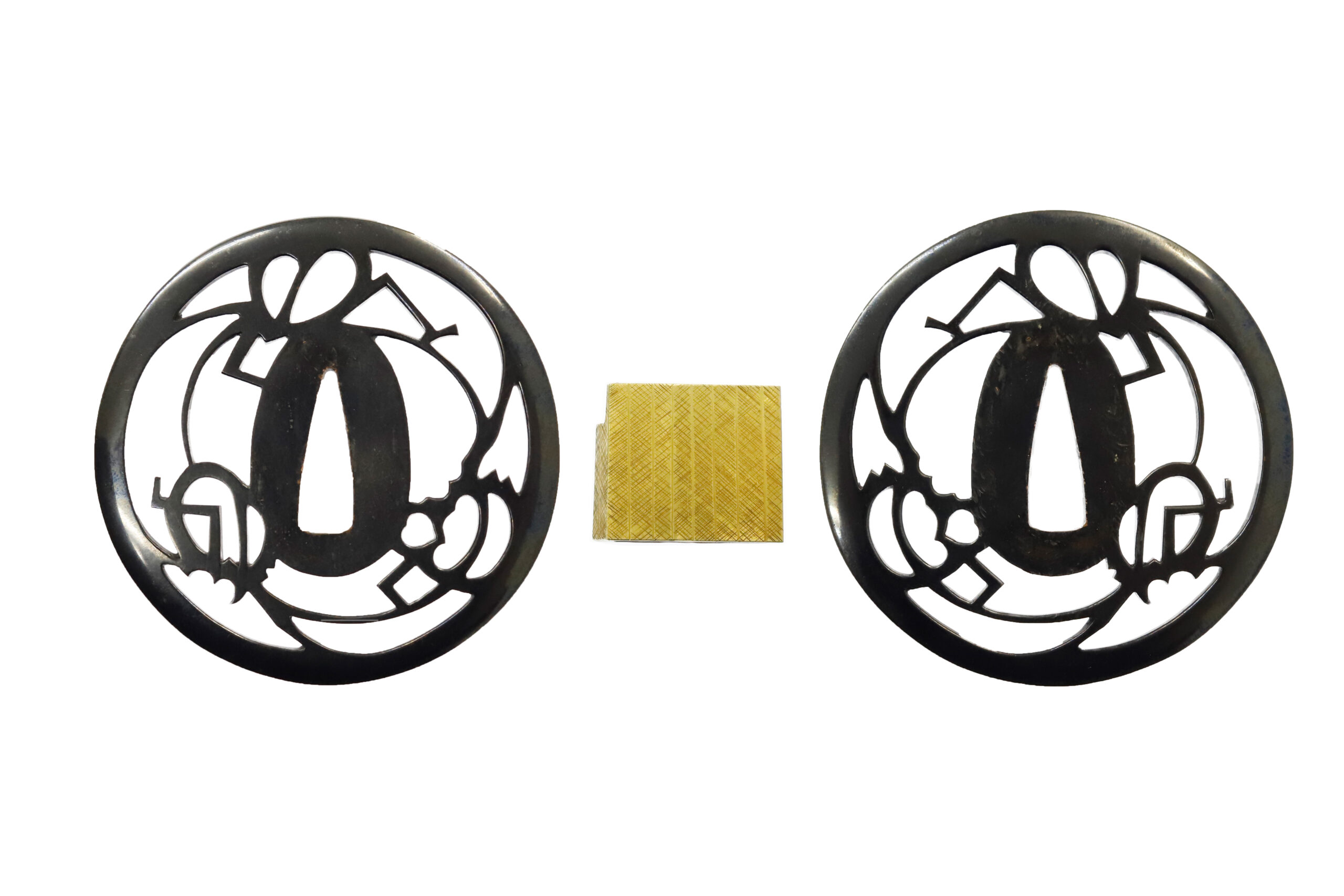
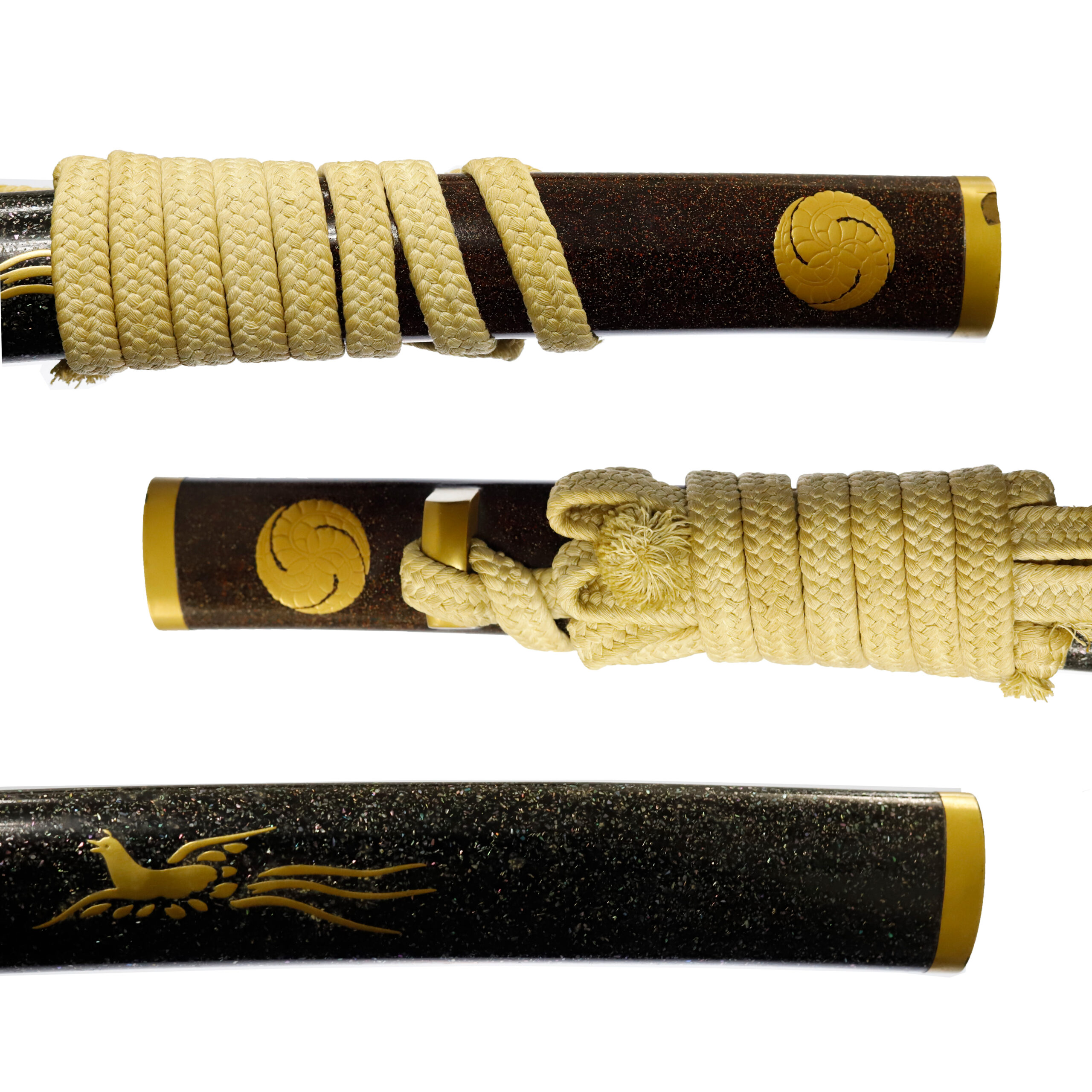
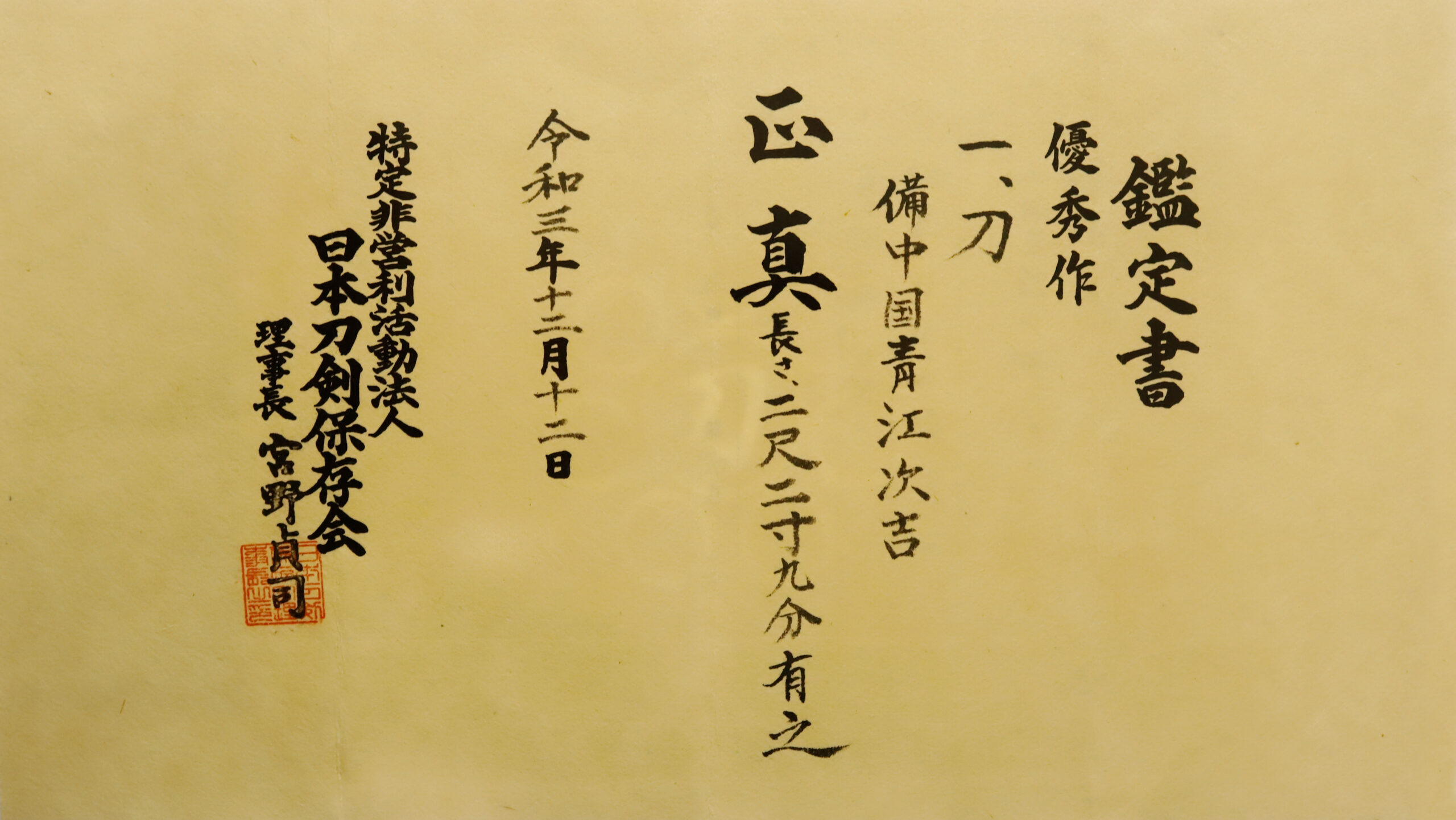
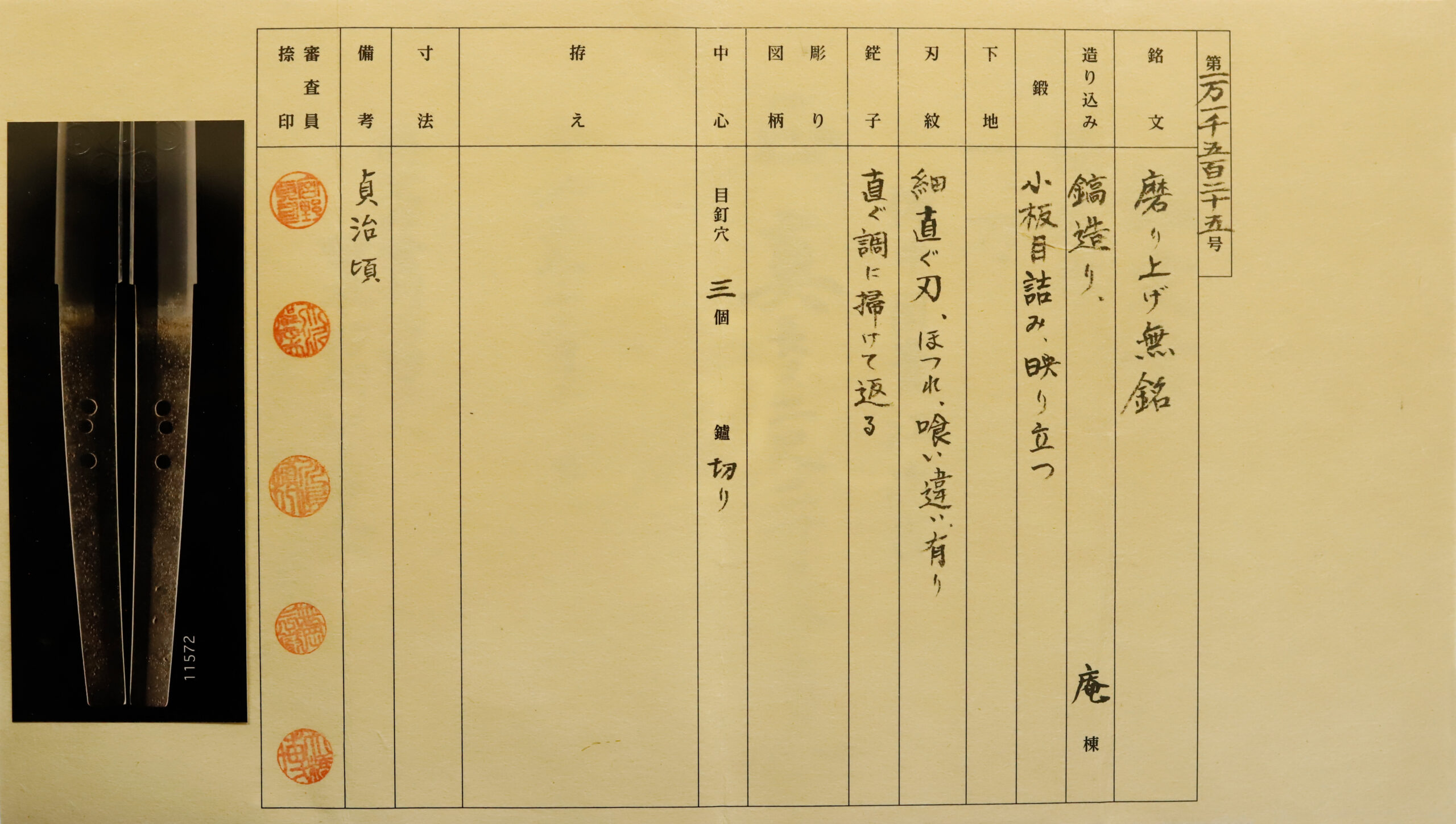
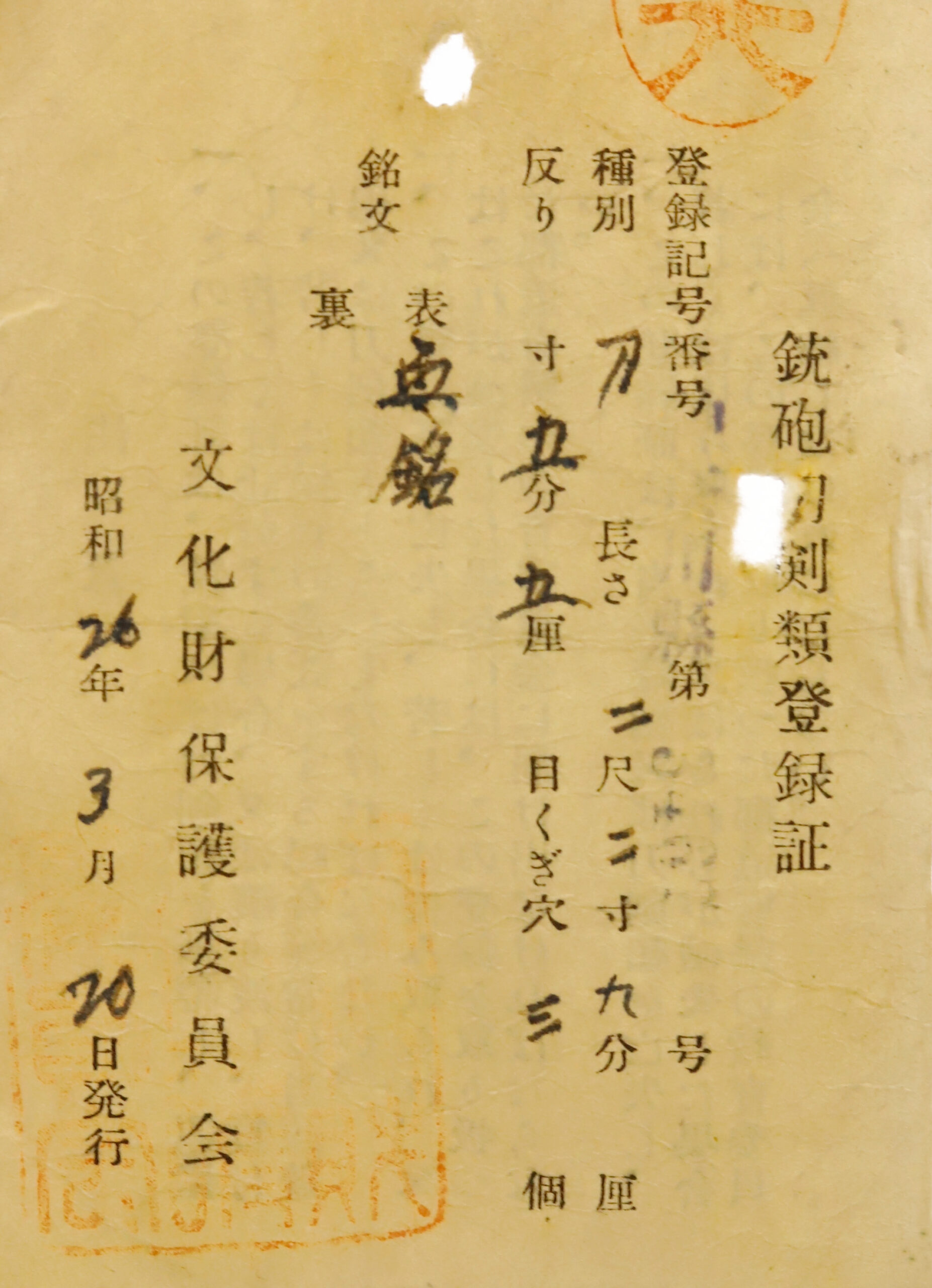
This blade is attributed to Bitchu Aoe Tsuguyoshi (備中青江次吉) in the Joji era (1362-1368: Mid Nanbokucho period), according to its NTHK appraisal. Bitchu is the province in today’s Okayama prefecture, and Aoe is the school to which Tusuguyoshi belonged. Tsuguyoshi was one of the most prominent figures in this school during the mid-Nanbokucho period. Aoe school was founded by Yasutsugu (安次) during the late Heian period (Early 12th century), and it was located in today’s Kurashiki town, Okayama prefecture. In Bitchu province, there were two prestigious schools during that time. One is Aoe school, and the other is Seno school, established by Noritaka (則高). Aoe school was prosperous from the late Heian to the late Nanbokucho period. Aoe school is divided into three categories in Japanese sword terminology depending on the period. When the blade is from the late Heian-mid Kamakura period, it is called *Ko-Aoe (Old Mihara). It is called Chu Mihara(Middle Aoe) for those forged in the mid Kamakura-early Nanbokucho period. Finally, Sue-Aoe (Late Aoe) is used for the late Nanbokucho period or later. Based on the NTHK appraisal of this blade, we believe it is categorized as Chu Aoe or Sue Aoe. One of the most famous figures in Aoe school is Moritsugu, who trained Sadatsugu, Tsuguie, and Tsunetsugu. These three swordsmiths were famous for Gobankaji (御番鍛冶). Gobankaji is a unique system created by the retired emperor Go-Toba (後鳥羽上皇), who was enthusiastic about the Japanese sword-forging. He summoned twelve of the finest swordsmiths nationwide, and one swordsmith forged a blade for the emperor each month. Tsuguyoshi was the son of Tusuguie, who must have mastered superb craftsmanship. Bitchu is located near the Chugoku Mountains, where iron sands, one of the essential materials for making Japanese swords, were abundant. Furthermore, BIZEN swordsmiths had close access to the Takahashi River, where they could find water and charcoal. This geological location contributed to the swordsmiths forging high-quality refined blades. When Aoe school flourished in the Nanbokucho period, Japan was tumultuous because the imperial court was split into two sides(south and north). There were many conflicts, and many Samurai were deployed. The Aoe school must have dedicated itself to forging high-quality blades for those Samurai who fought in battles. It is said that they were land owners and Samurai as well. They served the southern imperial court, which ended up losing the battle against the northern imperial court. After the southern side was lost, the school’s property was ended. However, the descendants of a member of Aoe school established another school called Mizuta school in the Muromachi period, and lasted during the Edo period. *Please keep in mind that there is one Kitae Kizu on the Shinogiji. Fuchi-Kashira The surface of this Fuchi Kashira is decorated with the Nanako-Ji (魚子地) technique. This process makes a uniform minimal protrusions pattern by hitting the Nanako-Ji Tagane (魚子地鏨, a chisel for this technique) on a metal surface. This decorative technique is often seen on sword mountings. You would find the figure of a dragon is engraved on each Fuchi and Kashira part. Golden paint is applied to them, and its bright color adds decorativeness to this work. The dragons jump out of the water, showing off their slender, snake-like bodies, and the figures of these dragons are carefully sculpted down to the smallest detail. For example, we could see every detail of their facial expressions, toes, and scales. As mentioned above, the dragons in this work are designed in combination with water. In Japan, there is a belief that worships dragons are water gods. Since rice cultivation has flourished in this country, water is always an essential resource. Therefore, the dragon motif has been familiar to Japanese people for a long time. Initially, dragons were imaginary creatures found in ancient foreign traditions and myths. Furthermore, it is regarded as a symbolic beast of auspicious signs. Its body is likened to nine animals: antlers are deer, the head is a camel, eyes are demons, the neck is a snake, the belly is the Mizuchi (蛟, a mythical animal in Japan that looks like a snake and has a horn and four legs), scales are fish, claws are falcons, palms are tigers, and ears are cows. It was thought that the dragon would reign at the top of all animals because of its odd-looking appearance. Based on our experiences, there are lots of dragon-design sword mountings. We believe many Samurai cherished this beast motif due to its dignified look and probably also religious view. Tsuka and Menuki If you focus on Menuki, you will see the animal. We believe it is the Karajishi (唐獅子). The Shishi (獅子) means a lion in Japanese, and the Karajishi is a lion brought from the continent to Japan in the Toh period (唐, Tang dynasty, 618-907). The same as the Fuchi Kashira, this Menuki is also colored with shiny golden paint. It makes this work look gorgeous and enhances the elegant impression of the entire handle part. The Karajishi typically has curly hair for its head, neck, body, and tail, as seen on this work. In Buddhism, the Karajishi is regarded as a symbol of wisdom, and Monju Bosatu (文殊菩薩, Manjushri Bodhisattva) rides lions. According to a theory, the Karajishi is the origin of Komainu (狛犬, stone guardian dogs that exorcize evil spirits). It shows this animal motif has been familiar to Japanese people since ancient times. Dragons and Karajishis, this handle part is decorated with such auspicious beast motifs. Tsuba and Habaki About the design, we estimate some insects are engraved on this Tsuba. It seems we could find the figure of three insects depicted with an abstract design. Despite no gold or silver decorations, this Tsuba has an attractive beauty of black metal material. We are still determining what type of insects are designed here. We assume they are crickets, dung beetles, or something else. However, we would say that we often find sword mountings with insect patterns. For example, butterflies and dragonflies were cherished by many samurai as lucky charms. Since butterflies change their looks from larvas to chrysalis, it symbolizes being reborn; therefore, the same as the dragonfly, Samurai loved this design. Dragonflies bag preys quickly; their heroic figures were sometimes the object of belief. During the Warring States period, a dragonfly was called the Kachimushi (勝ち虫, winning insect) because of its fearless character; it moves only forward, not backward. In this way, Japanese people have favored some insect designs for a long time. This Tsuba is one of those items that shows such popularity. Saya There is a chipping on this scabbard, it is at the Koikuchi (鯉口) part. Please check the attached photo. About the design, you would find the family crests are designed on it. This crest is called the Jikutsuki Migi Mitsu Fuji Domoe Mon (軸付き右三つ藤巴紋). It is a type of the Fuji (藤, Japanese wisteria) pattern. In addition, a bird figure is also depicted on this scabbard. We would like to propose two possibilities for its model: the Suzaku (朱雀) or the Houou (鳳凰, Fenguang). Suzaku is a member of Shijin (四神, four gods) with Seiryu (青龍), Byakko (白虎), and Genbu (玄武). These spiritual beasts protect the four directions: east, west, south, and north. Houou is a member of four fantasy animals, which is called “Shirei (四霊)” with Kirin (麒麟, Qilin), Kame (亀, Turtle), and Ryu (龍, Dragon), and it is a god beast looks like a combination of chicken and peacock. Houou was considered an auspicious sign in ancient China, and it was believed that Houou would show up when the brilliant emperor appeared. People appreciate its graceful shape in Japan. Authentication Paper NTHK, also known as NPO Nihon Touken Hozon Kai, is the oldest organization for sword authentication of Japanese swords in modern times. It was established in 1889 during the post-Samurai era. They authenticated the blade on Dec 12th in the 3rd year of Reiwa (2021) as Yushu To, which is the highest appraisal in NTHK.
Offered by Samurai Museum


Aoe (Bicchu) · Bitchu · around 1357-1368
Fujishiro Jo-jo saku
The early eleventh-century travel-text Shin Sarugakki, listing the famous products of the provinces, already names "the swords of Bitchū," and it was the Aoe smiths, flourishing along the lower reaches of the Takahashi River, who inherited that reputation. Tsuguyoshi works at the Nanbokuchō height of the line, and the published sources count him, together with Tsugunao and Moritsugu, among the representative Aoe smiths of the mid-fourteenth century. His dated, signed blades run across the Enbun, Jōji and Kōan years of the 1350s and 1360s, almost all of them tantō and sun-nobi wakizashi: wide in body, thin in kasane, shallow in sori, the period shape stated without ornament. Several are still ubu, carrying a long signature on the omote and a date on the reverse, so his hand can be followed year by year.
His manner is the one the published sources draw most carefully, because it divides cleanly in two. He works in a tight, bright suguha and in a flamboyant saka-chōji-midare, and the judges return again and again to the same distinction between the two Aoe masters: "as a rule Tsuguyoshi runs to suguha, Tsugunao to saka-chōji-midare,[[c:1]]" while in either temper the nioiguchi is tight and clear. The suguha is by far his own register. On these blades he tempers a chū-suguha or a narrow hoso-suguha, in places a shallow notare, into which small ko-ashi, yō and a reversed saka-ashi tendency enter, the temper nioi-dominant with ko-nie, fine kinsuji running within, the nioiguchi tight and notably bright. It is this clarity that the published sources name his and the school's chief point of appreciation, the nioiguchi that "is tight, and bright and clear.[[c:2]]"
The jigane carries the rest of the Aoe signature. Over a well-packed ko-itame, at times mixed with ko-mokume and standing a little, lie fine ji-nie set in minute density and delicate chikei, with the speckled ji-madara the sources also call chirimen-hada and patches of clear sumihada. A midare-utsuri stands toward the mune, and on his finest blades a further linear utsuri runs along the edge so that the two layer into a banded dan-utsuri, the steel left clear. The bōshi runs straight to a ko-maru, frequently with a pointed turn, sometimes with a long kaeri or a little hakikake; and the tang is filed, by the school's rule, in ō-sujikai. On one Kōan tantō the judges single out a kaeri "boldly tempered down deep to the machi,[[c:3]]" an unusual flourish in a suguha work that they hold sharpens rather than coarsens the blade.
The second register is the rarer face. On a small number of pieces the temper opens into a showy saka-chōji-midare mixed with gunome, the ashi reversed and yō entering, nioi-dominant with ko-nie and fine kinsuji, the bōshi entering as midare and turning with a pointed flavor; the midare-utsuri on the same blades stands conspicuously. The judges call one such wakizashi a representative work whose saka-chōji and utsuri together show the school plainly, and on a dated tantō of this kind they record an oral remark of Honma's that, within this Nanbokuchō line, "the smith who tempers the clove pattern in a tantō with the clearest nioiguchi is this craftsman, or else Tsugunao.[[c:4]]" Beyond the signed work stands a third record, the ō-suriage mumei katana attributed to him, a wide blade of imposing shape that keeps a 1657 Hon'ami origami naming Tsuguyoshi; its itame jigane with emerging jifu and its nioi-deki suguha with saka-ashi let the judges affirm it as his from the jihada and hamon rather than from any personal tell.
What sets Tsuguyoshi apart within his own school is exactly this balance. Against Tsugunao, whose hand leans to the brilliant reverse clove pattern, his work is read as the suguha master of the pair, the nioiguchi tight and bright on both their hands but the quiet temper his by preference. Against the earlier Ko-Aoe, whose suguha the published sources describe as ko-nie-deki with a somewhat subdued nioiguchi, his is the Nanbokuchō clarity, the line tightened and brightened. The judges call the suguha his family specialty, the manner in which "he displays his true capabilities," and name his best blades the outstanding examples among his surviving work.
For the collector he is a Nanbokuchō name of real standing rather than a rarity beyond reach. Fujishiro grades him Jō-jō saku. He has no National Treasures and no Important Cultural Properties; his record runs instead through the modern designations, fourteen of his blades falling in the Tokubetsu Jūyō and Jūyō tiers, two of them at Tokubetsu Jūyō. The published sources prize his ubu, dated, signed pieces as reference material for the study of the smith, and name one Tokubetsu Jūyō wakizashi outstanding among his works. His provenance runs through the daimyō houses: a Tokubetsu Jūyō wakizashi transmitted in the Maeda family with a black-lacquer aikuchi koshirae bearing eight gold umebachi crests, a tantō held in the Kan'in-no-miya princely house with its Hon'ami origami and crested storage box, and further blades recorded with the Maeda and Arima families. A signed Tsuguyoshi is not often offered, and most designated examples are held rather than traded, but a Jūyō tantō or wakizashi of his does appear from time to time, and a dated, signed one is among the more knowable things a collector of Bitchū Aoe could hope to encounter.
Where Tsuguyoshi stands among comparable artisans: across all of nihontō, and within tradition, era, and period. The tiers (Foremost · Leading · Major · Notable) weigh official designations from the NBTHK and Japan's Agency for Cultural Affairs, together with historical honors of lasting repute such as the Sansaku and Meibutsu-chō.
Select a lens to see how it's measured.
Years he was demonstrably active, proven by signed-and-dated blades
Bizen-den · Bitchu
Phase: Sue-Aoe末青江· 1334–1500
19 pieces on the market now
Sue-Aoe names the closing chapter of the Bitchū tradition, the work made after the Aoe smiths reached the height of their powers in the Nanbokuchō era and then carried the lineage forward into Muromachi decline. The window is anchored by the hands the NBTHK repeatedly groups together as the representative smiths of the period: Tsuguyoshi (次吉), Tsugunao or Tsuginao (次直), and Moritsugu (守次), with Naotsugu (直次), Yoshitsugu (吉次), and a Sadatsugu (貞次) name carried down from the late Kamakura masters into this later age. Dated blades fix the chronology firmly, from a Moritsugu tantō of Enbun 3 (1358) and a Naotsugu in the Ryakuō years through Tsuguyoshi pieces of Teiji 2 (1363) and Kōan 2 (1362). These men succeeded the late-Kamakura-into-early-Nanbokuchō generation that produced Sadatsugu and the earlier Moritsugu, and they worked at the moment the Southern Court's fortunes were turning, after which the school thinned out. The very tail of the line surfaces in obscure later Bitchū hands such as Munesada and Sōtei of Kasaoka, dated Bunmei 13 (1481), whose lineage the records leave unknown and whose work the setsumei describe as nearly indistinguishable from late Bizen. Sugata is the first tell. Setsumei after setsumei records a wide mihaba with little taper from base to tip, thin kasane, sun-nobi proportion in the tantō and an extended chū-kissaki or outright ō-kissaki in the larger blades, the broad Nanbokuchō build that the earlier Aoe never carried. The jihada keeps the school signature of ko-itame mixed with mokume, finely standing, with mottled jifu and patches of sumihada drifting through the steel. Above all the period is read in its utsuri: streak-like suji-utsuri rises near the edge and stacks into the layered dan-utsuri the catalogues prize, seen plainly on the Tsugiyoshi tachi of Tokuju 21 and the dated Tsuguyoshi tantō of Juyo 58.
Two tempers divide the leading hands. Tsuguyoshi favors a tight, bright suguha with ko-ashi and saka-ashi; Tsugunao favors the flamboyant saka-chōji-midare with its reverse slant, ashi and yō pouring in, that matured around Enbun. Against this the Ko-Aoe of the mid-Kamakura ran ko-nie-deki with a subdued, shizumi nioiguchi over a refined chirimen-hada, while the late-Kamakura Chū-Aoe of Sadatsugu and Moritsugu stood between, the nie growing calmer and the reverse-slanting yakiba only beginning to foreshadow the later drama. Crucially the period remained nioi-deki where other provinces took up Sōshū nie, a holding distinction the setsumei mark out by name. For kantei the cluster reads together. A broad Nanbokuchō sugata, dan-utsuri over sumihada, ō-sujikai file marks on the tang, and a nioiguchi that is tight and clear point to this window rather than to Bizen of the same age; the choice between bright suguha and reverse saka-chōji then separates Tsuguyoshi from Tsugunao, while Naotsugu's forceful reverse-chisel mei and nezumi-ashi, and Moritsugu's kinsuji in a tight suguha, mark their own hands. The named masters carry strong provenance: a Tsugiyoshi wakizashi dated Enbun 2 descended in the Maeda family, a Yoshitsugu tantō passed to the Sakai of Himeji by gift of Tokugawa Ietsuna, and an ō-suriage den Tsuguyoshi katana ran through the Yanagisawa house with Hon'ami origami from Mitsuatsu. Honma's own remark singling out Tsugiyoshi and Tsuginao as the makers of the clearest chōji in tantō fixes their standing at the close of the Aoe story. Learn more →
| Smith | Era | Designated |
|---|---|---|
| Tsugunao次直 | 1345-1361 | 26 |
| Masatsune正恒 | 1213-1219 | 31 |
| Naotsugu直次 | 1288-1350 | 20 |
| Yasutsugu康次 | 1211-1213 | 10 |
| Kanetsugu包次 | 1211-1213 | 9 |
Bizen in the Nanbokuchō period
Sixty years of war between two courts drove blades long and broad, and Osafune met the demand: Kanemitsu and Chōgi led forges serving the provincial warriors who did the fighting, while Sōshū influence arrived with the armies to create Sōden-Bizen.
The NTHK’s highest distinction, awarded at its once-a-year examination to a blade of outstanding artistry, condition, and academic importance. It ranks above the standard Kanteishō.
The NTHK (Nihon Tōken Hozon Kai, the Society for the Preservation of the Japanese Sword) is the oldest of Japan’s sword-appraisal bodies, founded in 1910, decades before the NBTHK. After the death of its long-serving head it divided into two successor societies, the NTHK and the NTHK-NPO, both of which continue to hold shinsa. NTHK certificates are known for a detailed worksheet that records a numerical point score alongside the judges’ written opinion, and the society is especially respected for its attribution of unsigned (mumei) work.
Returns/exchanges limited to defects caused by shipping (except willful misconduct or gross negligence by the company); customers must contact within 72 hours of receiving the product.