NihontoWatch Mon

NihontoWatch

MarketAuctions
Encyclopedia
NihontoWatch Mon

NihontoWatch

MarketAuctions
Encyclopedia

Description

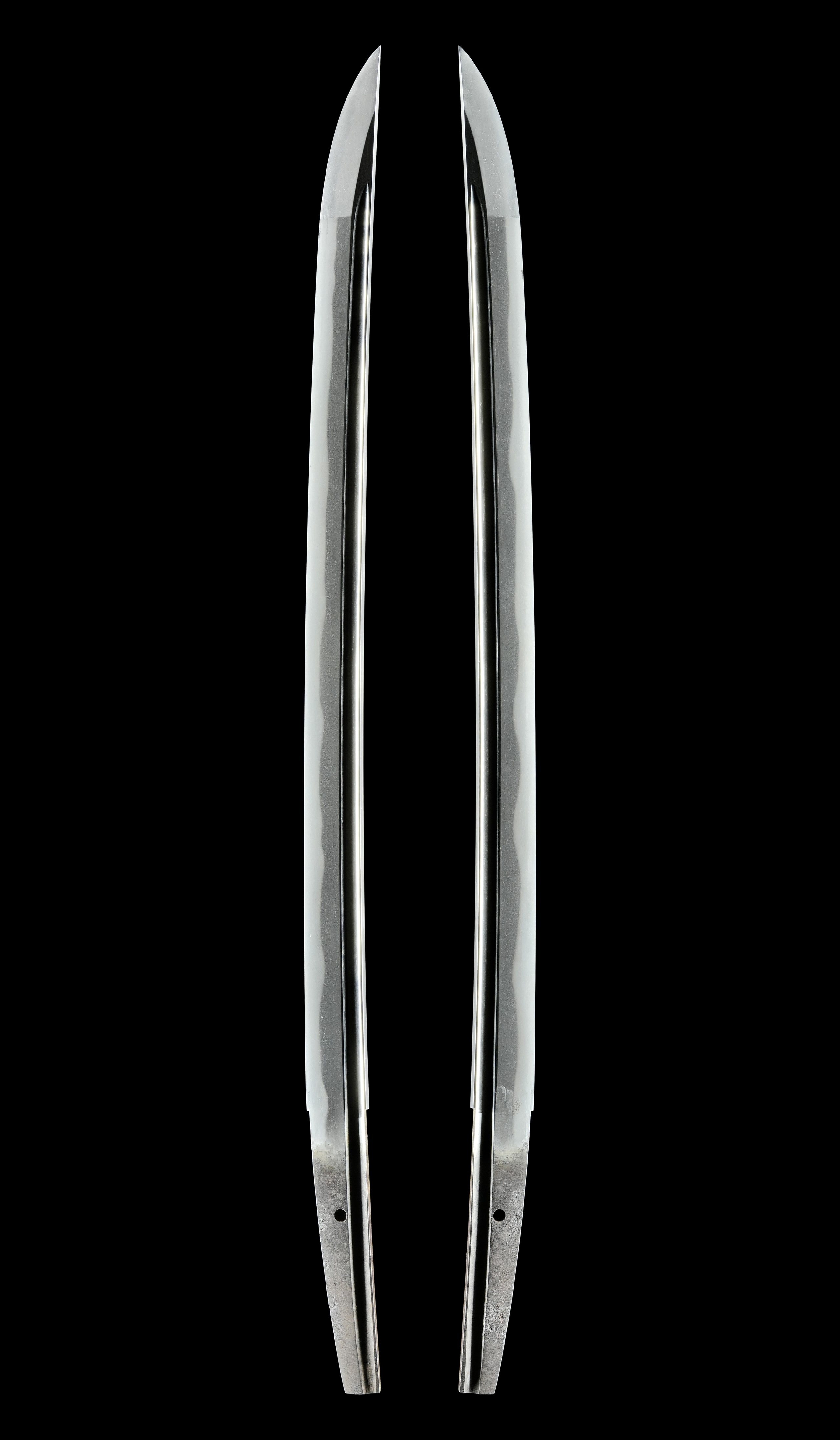
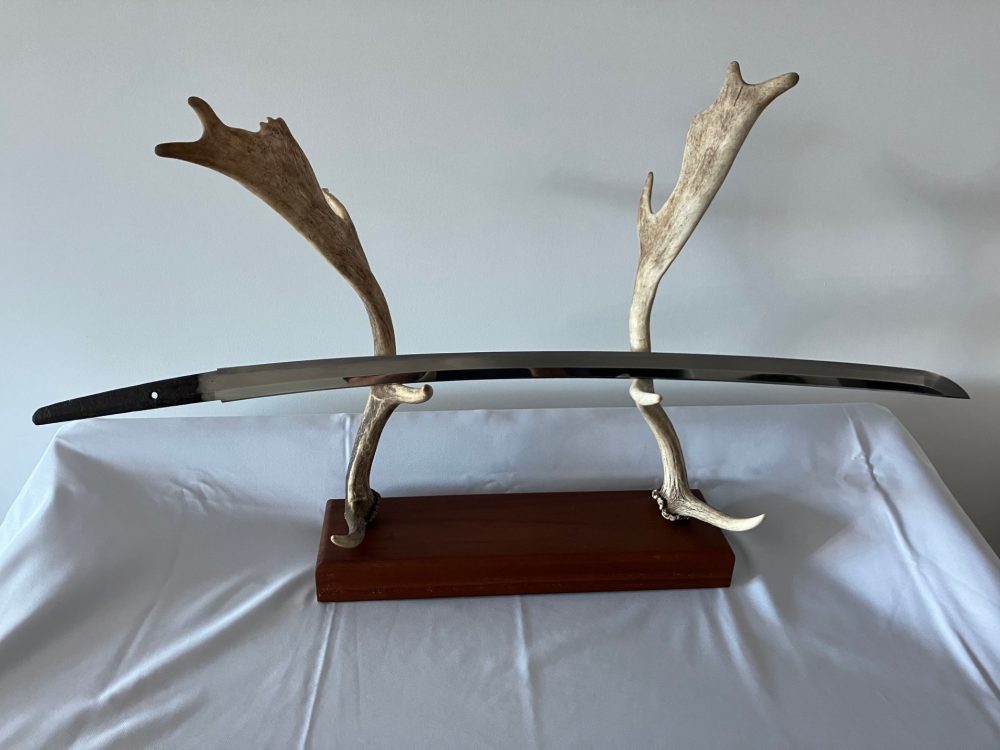
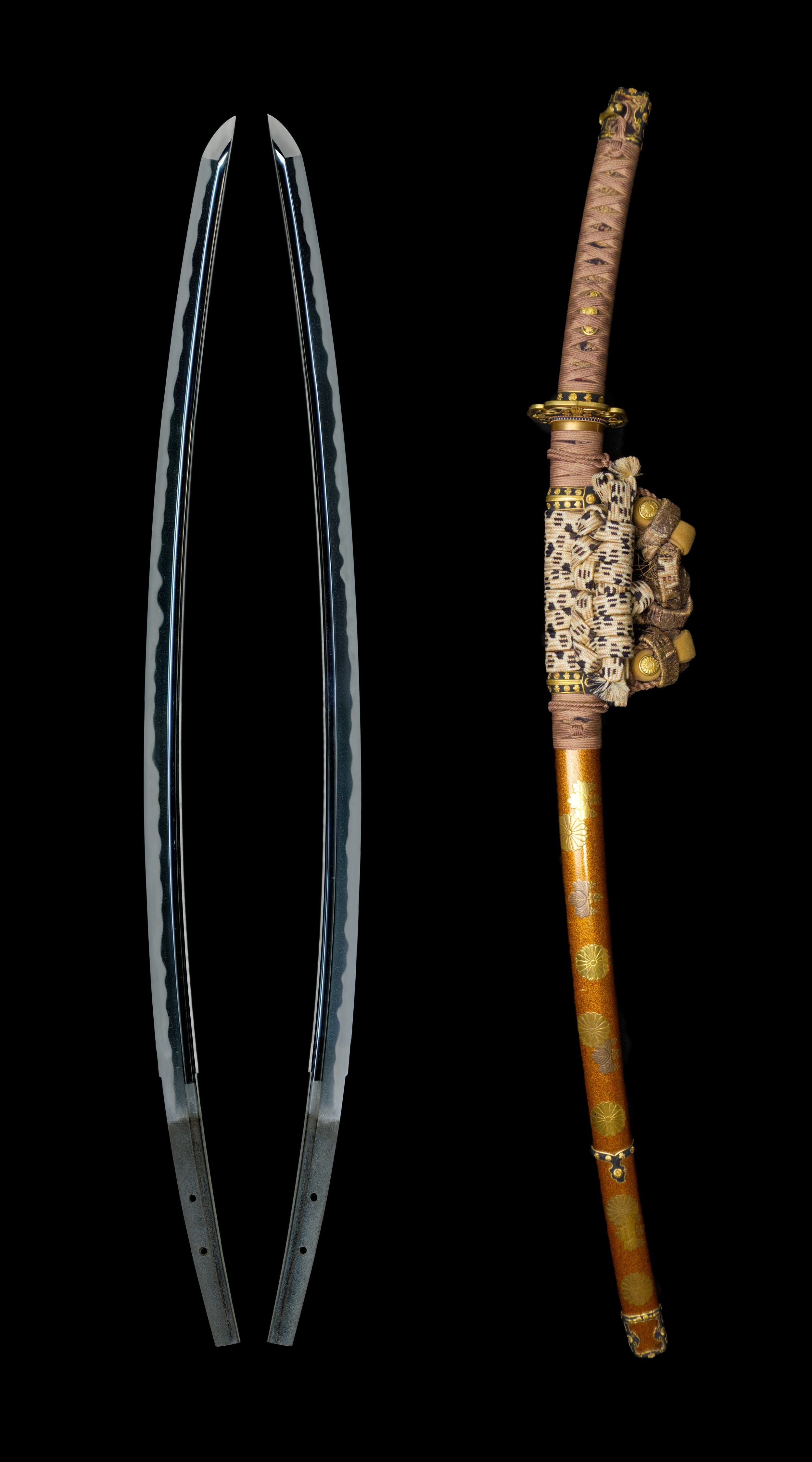
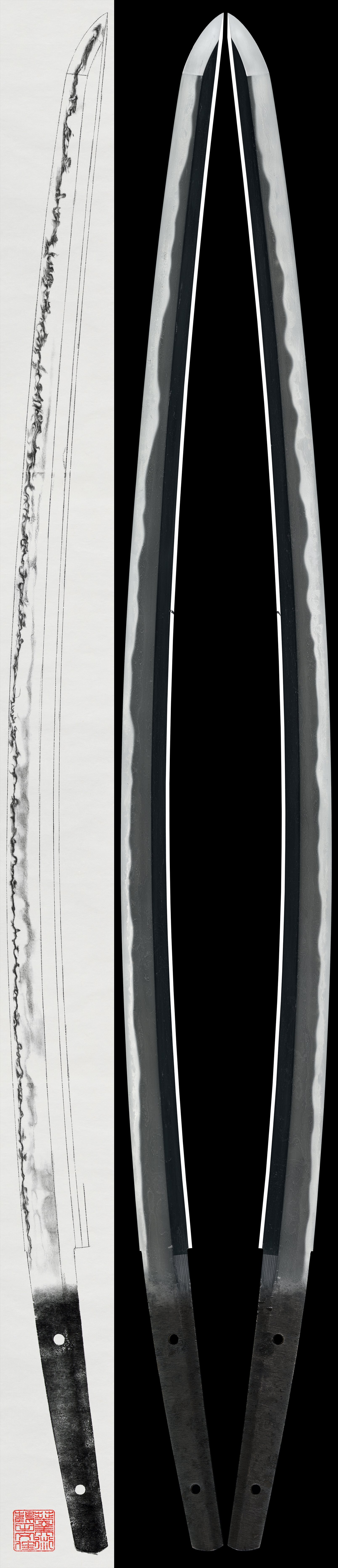
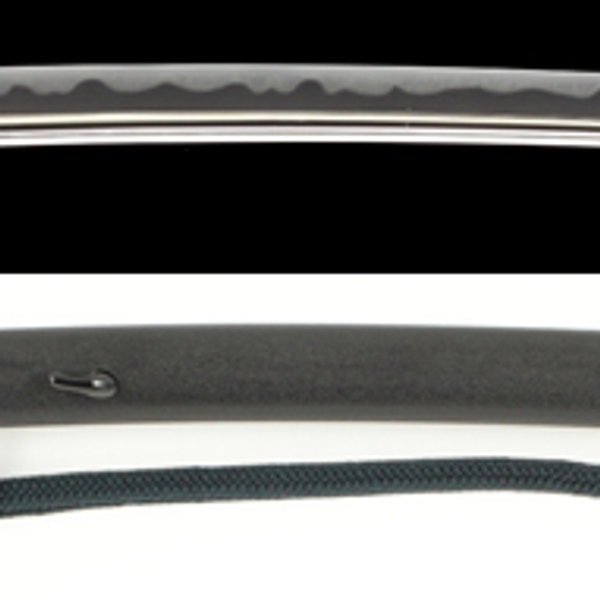
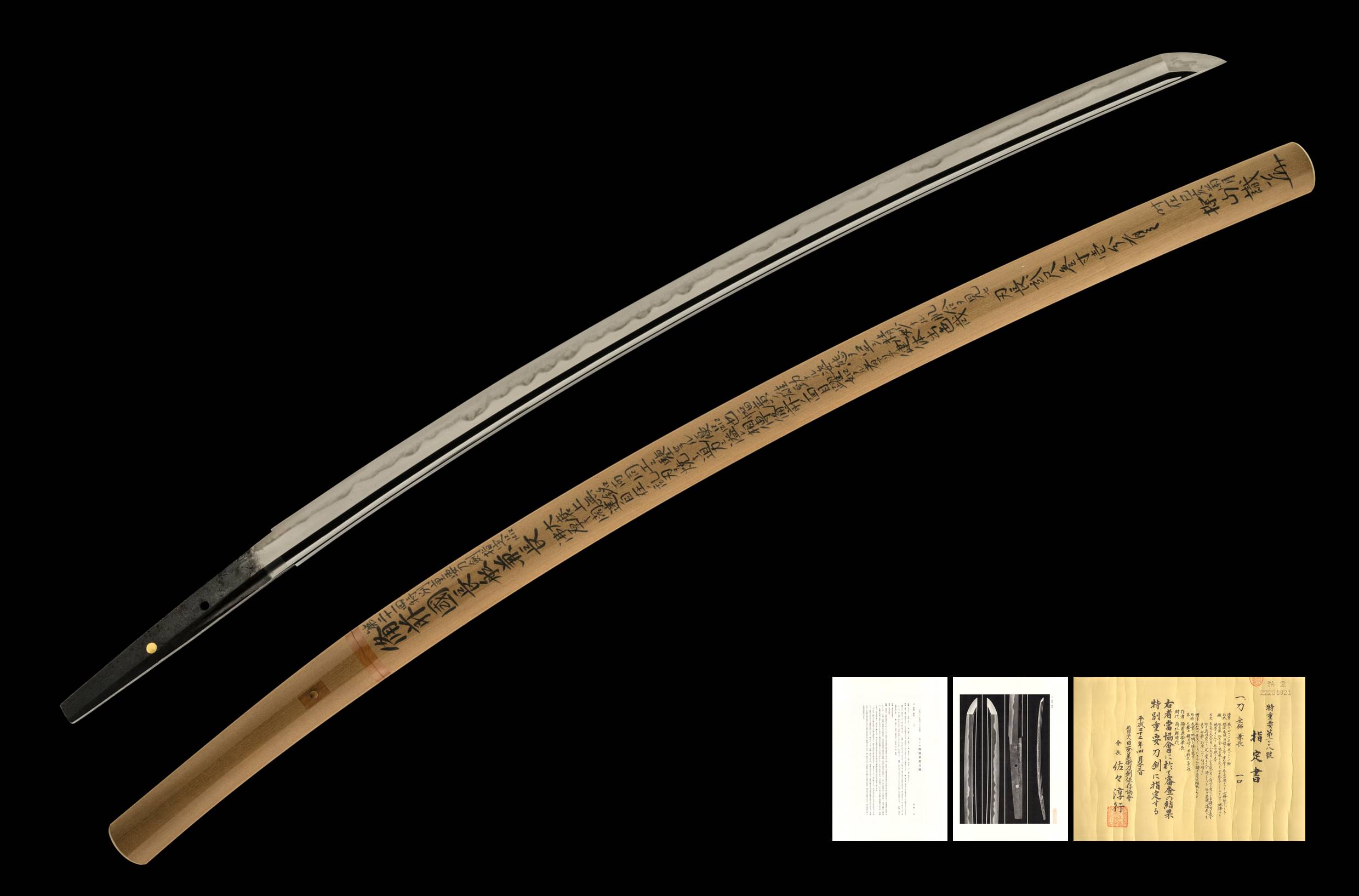
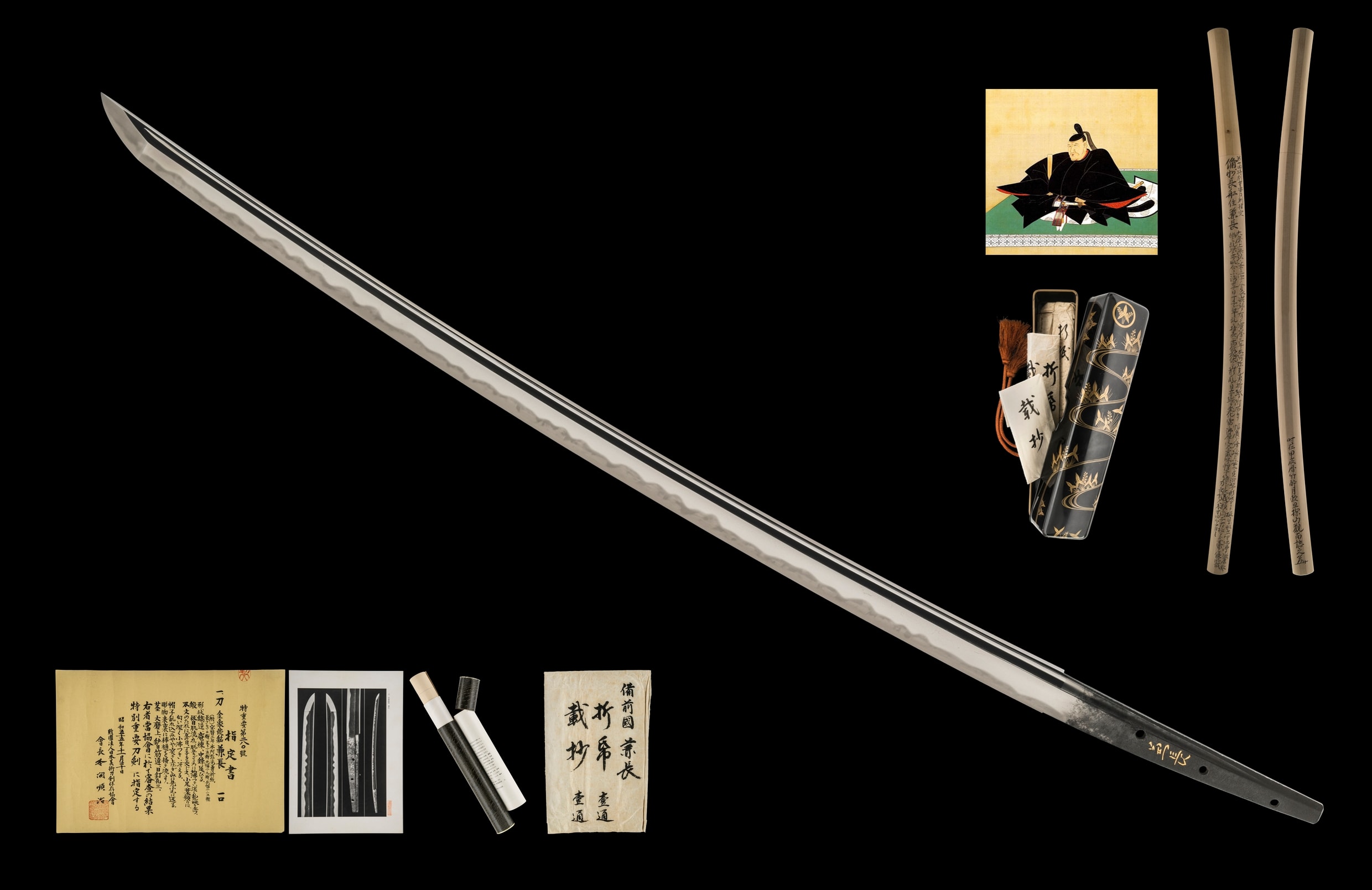
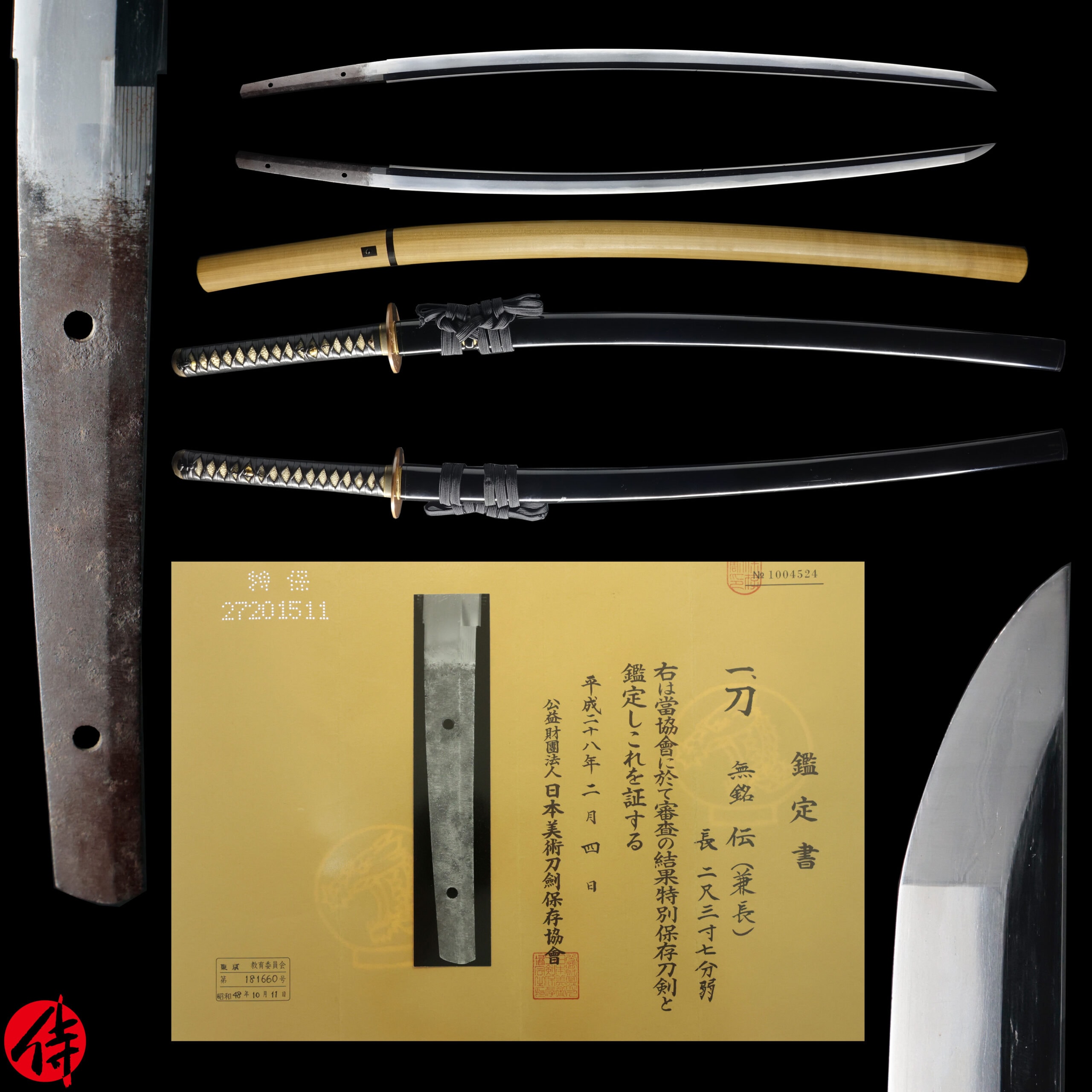
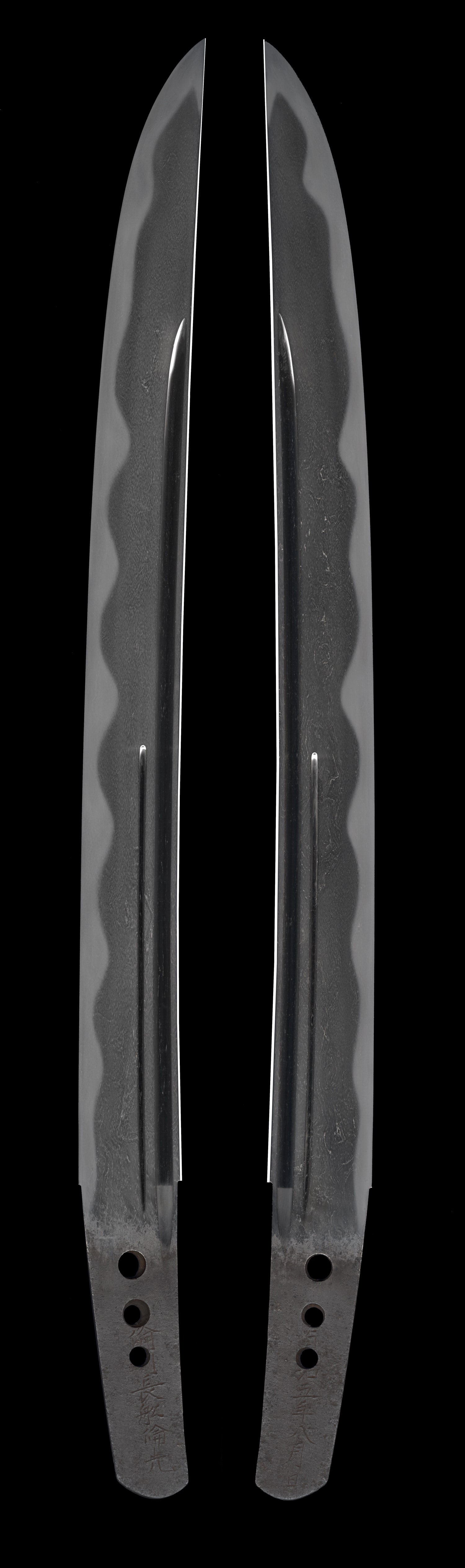
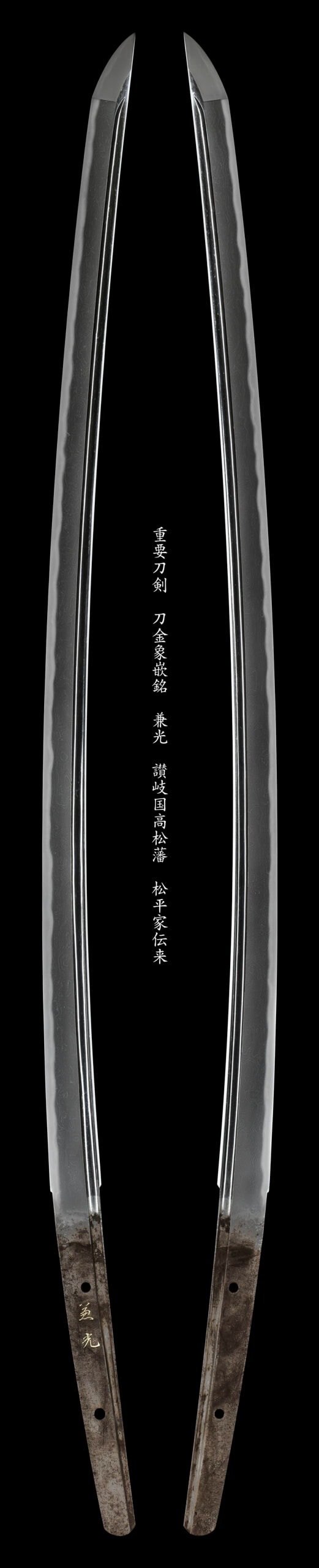
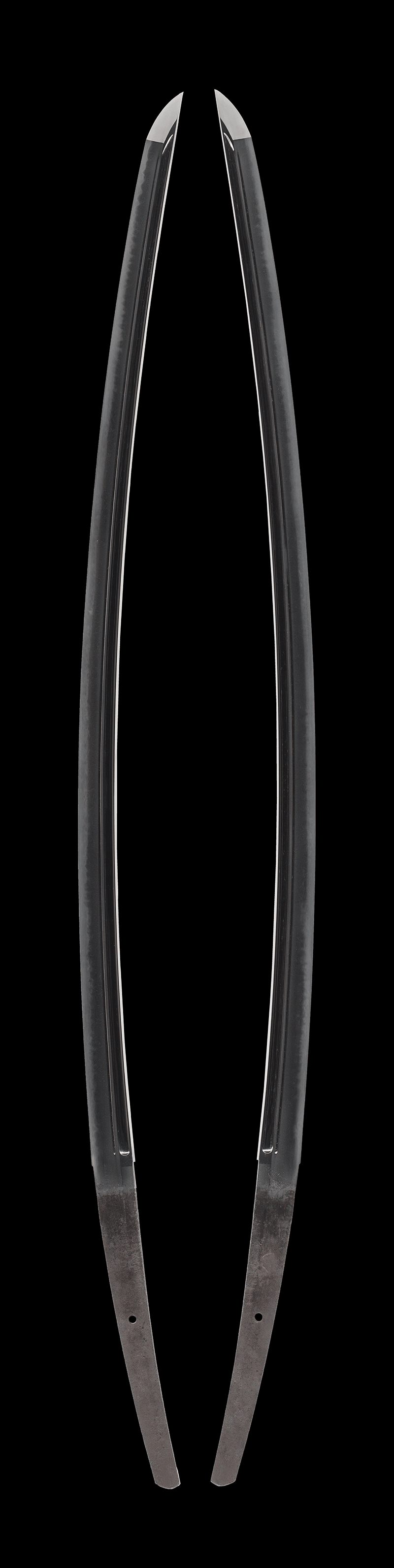
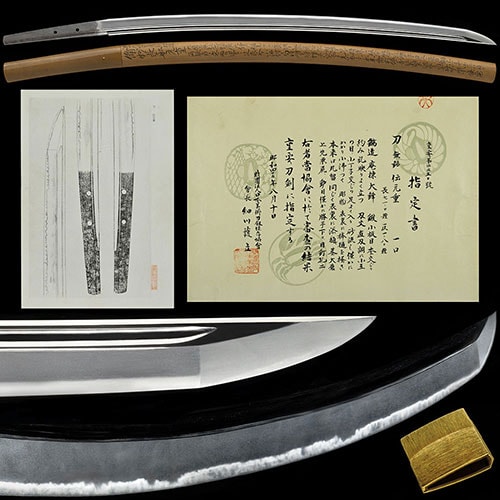
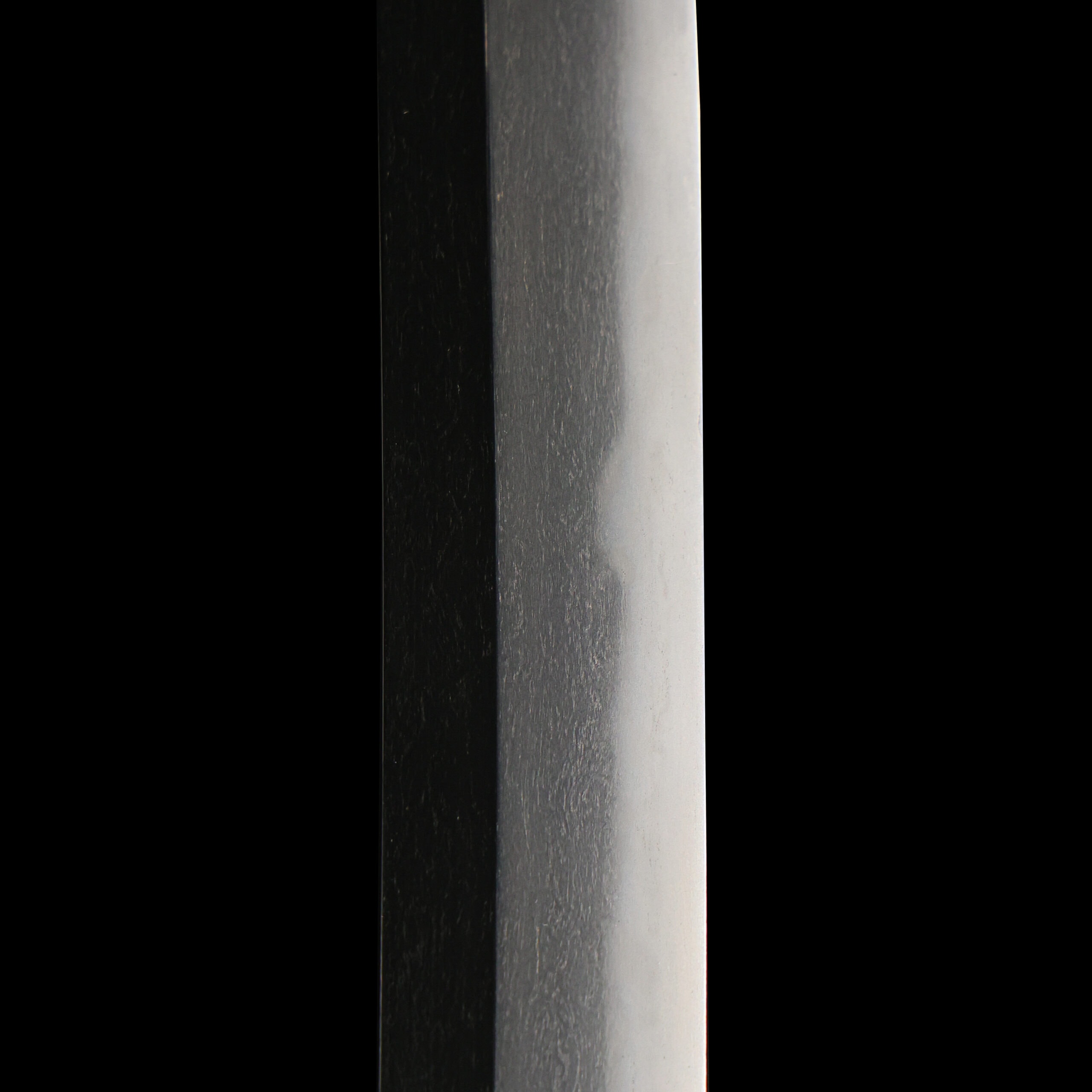
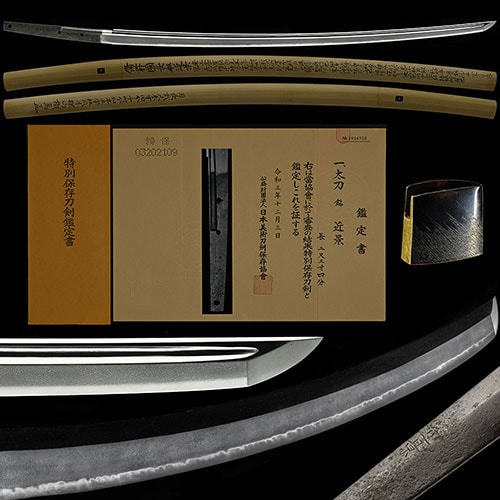
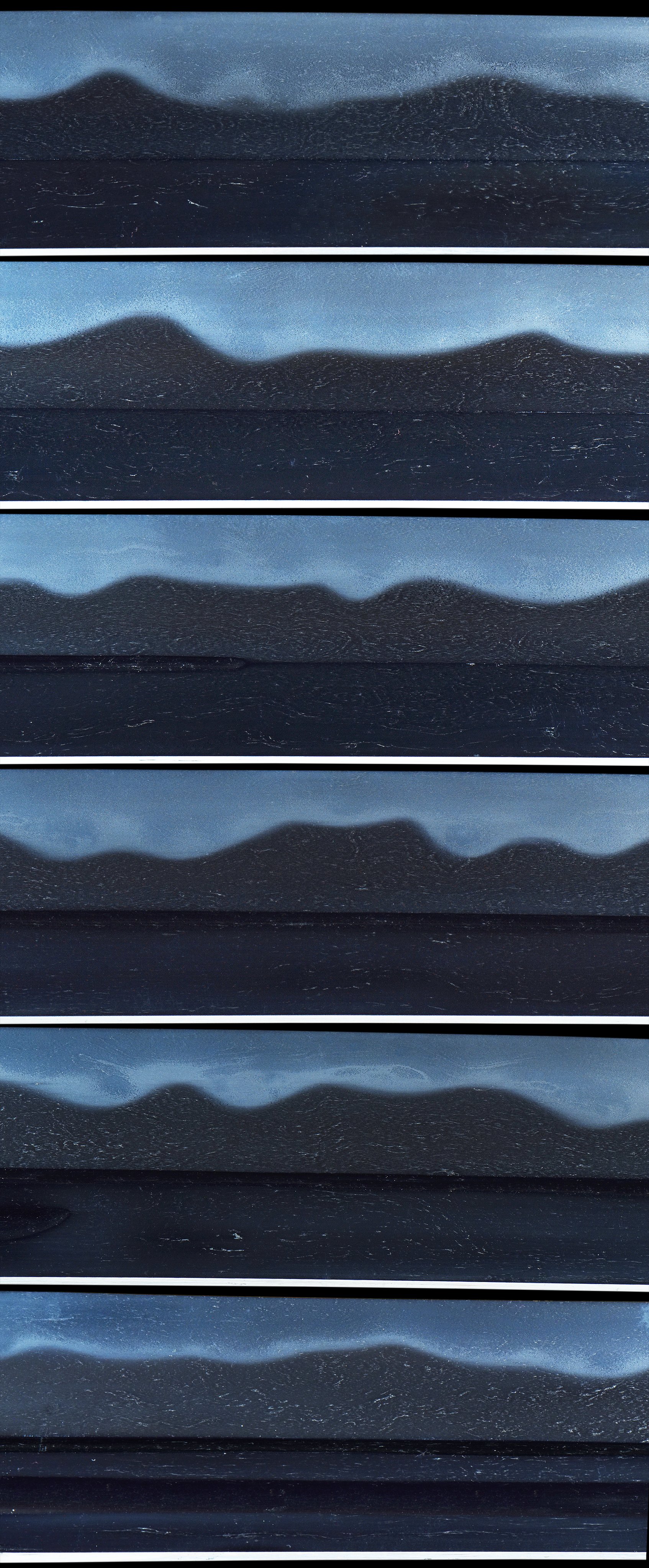
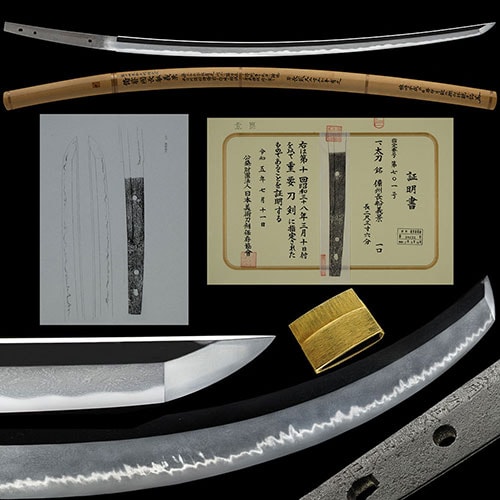
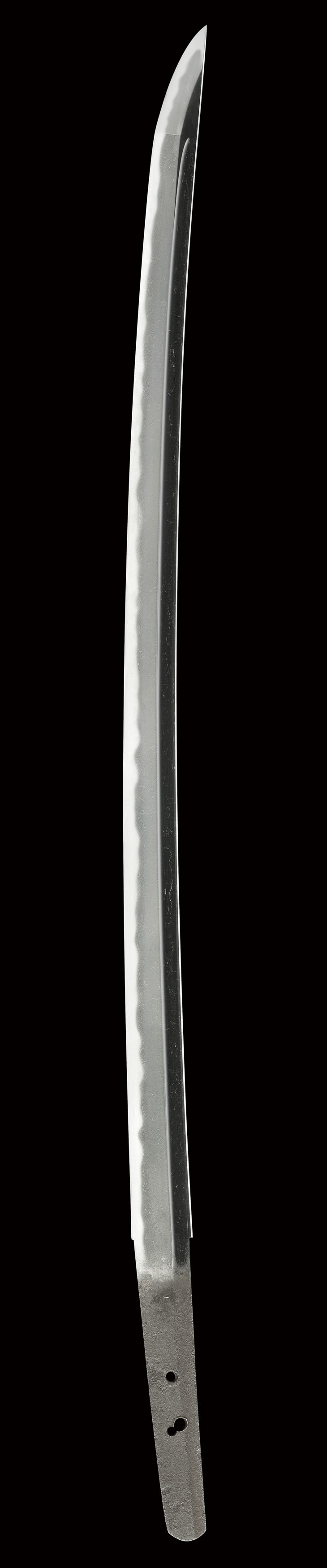
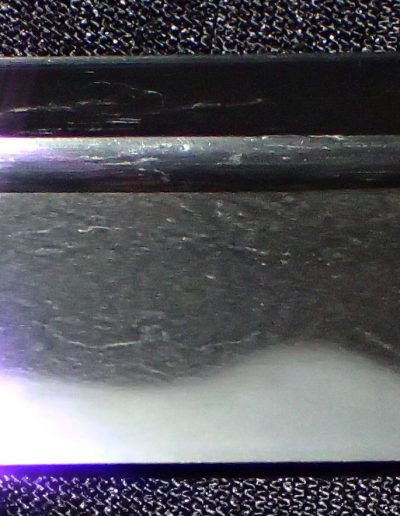
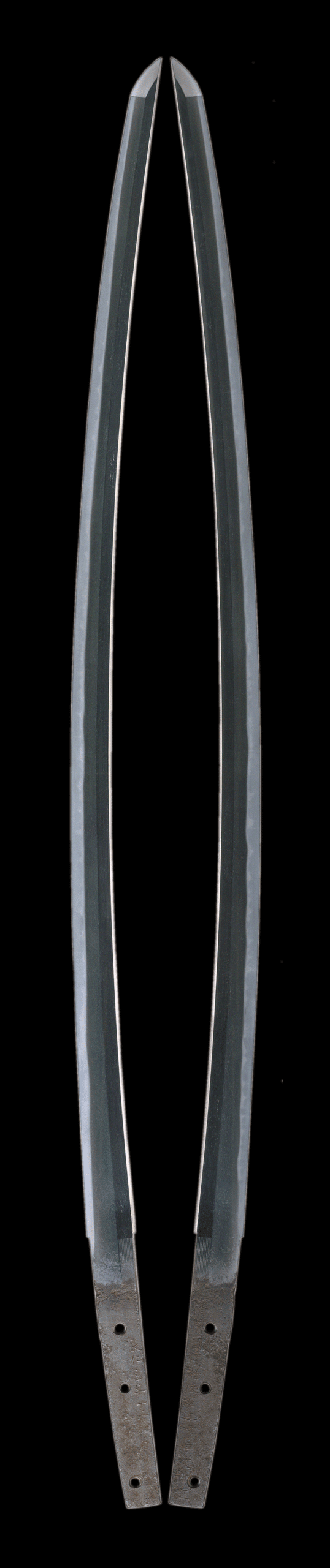
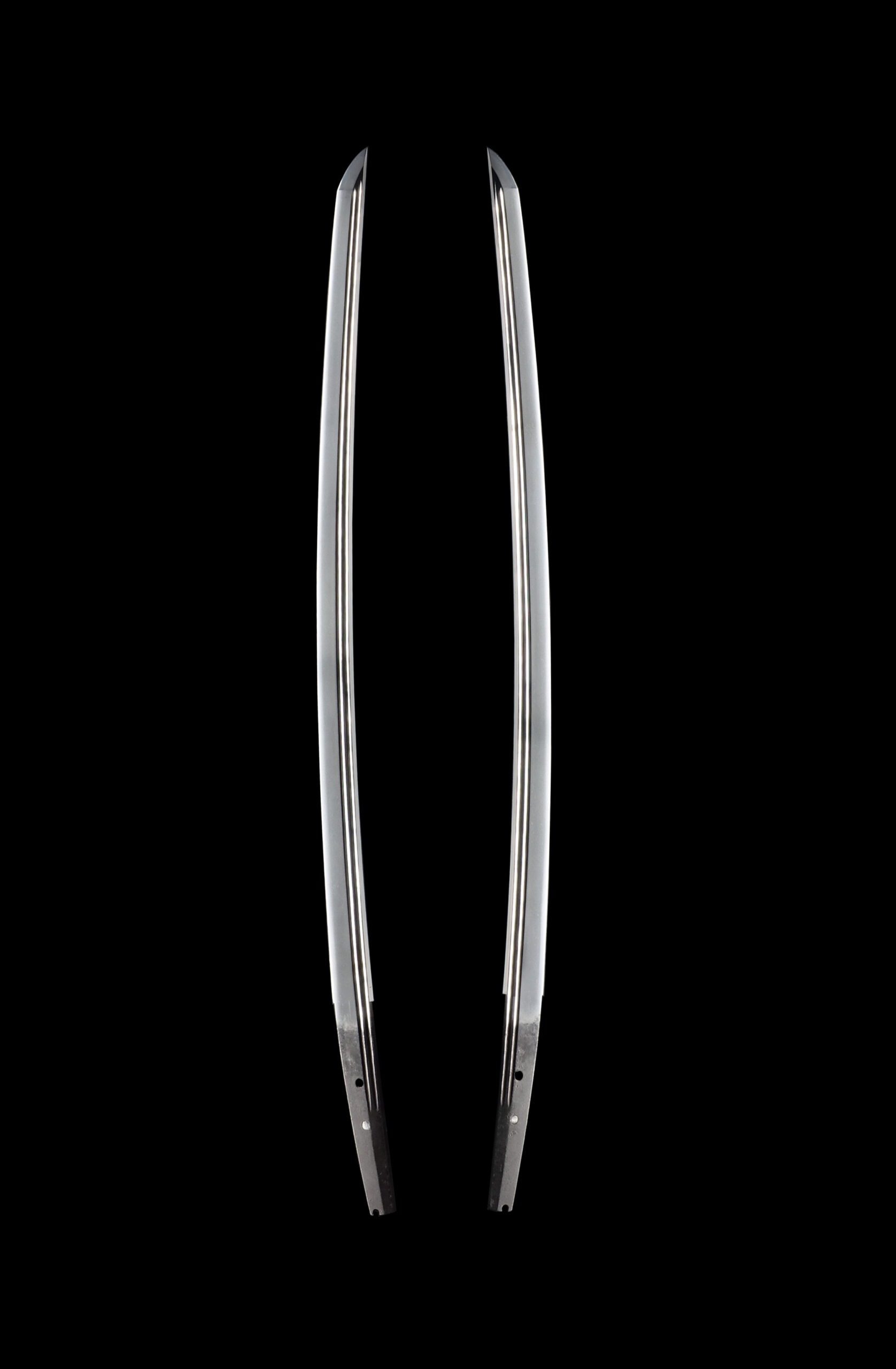
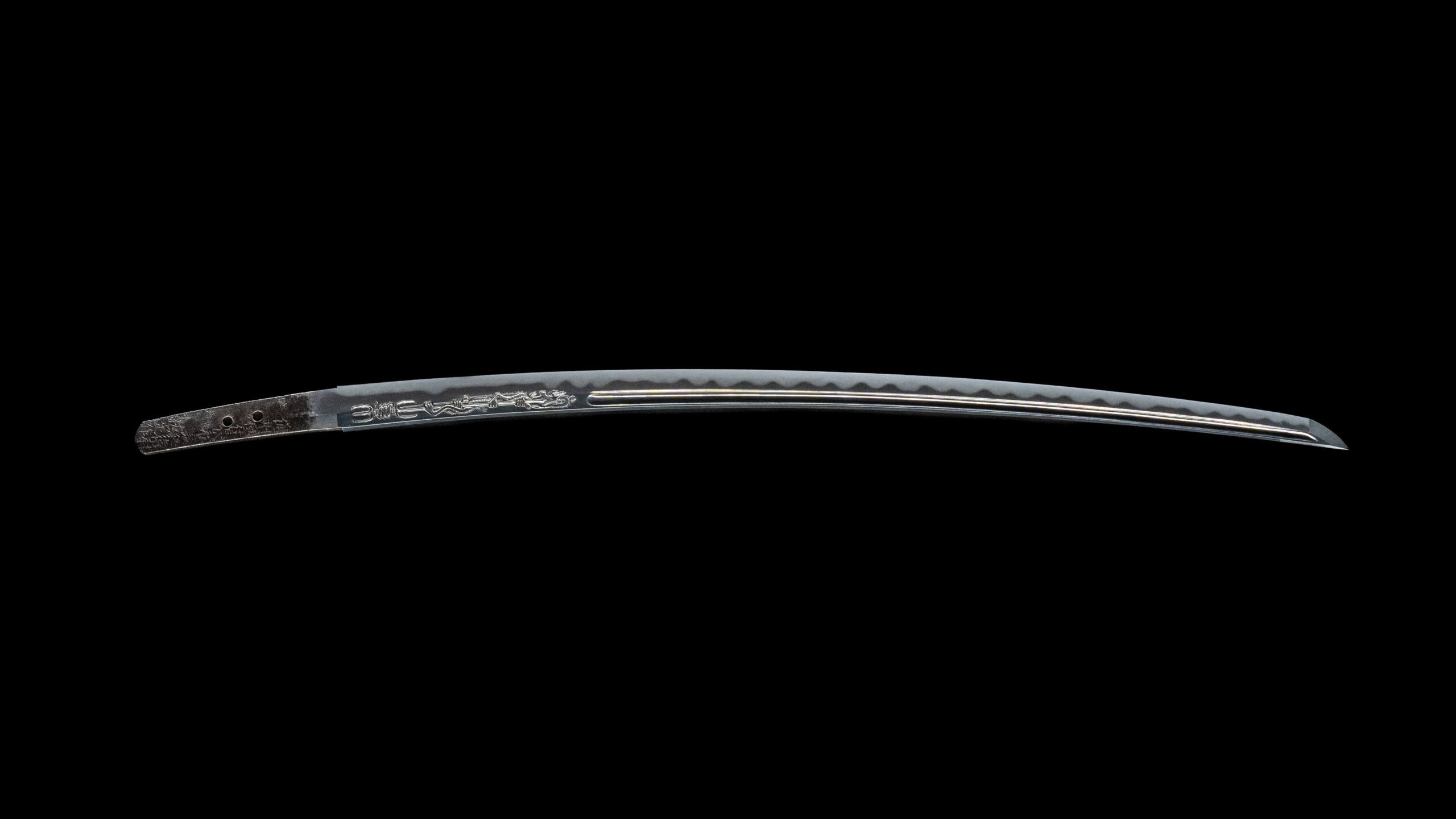
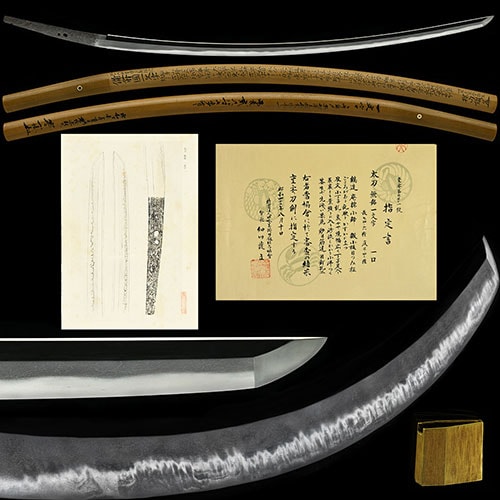
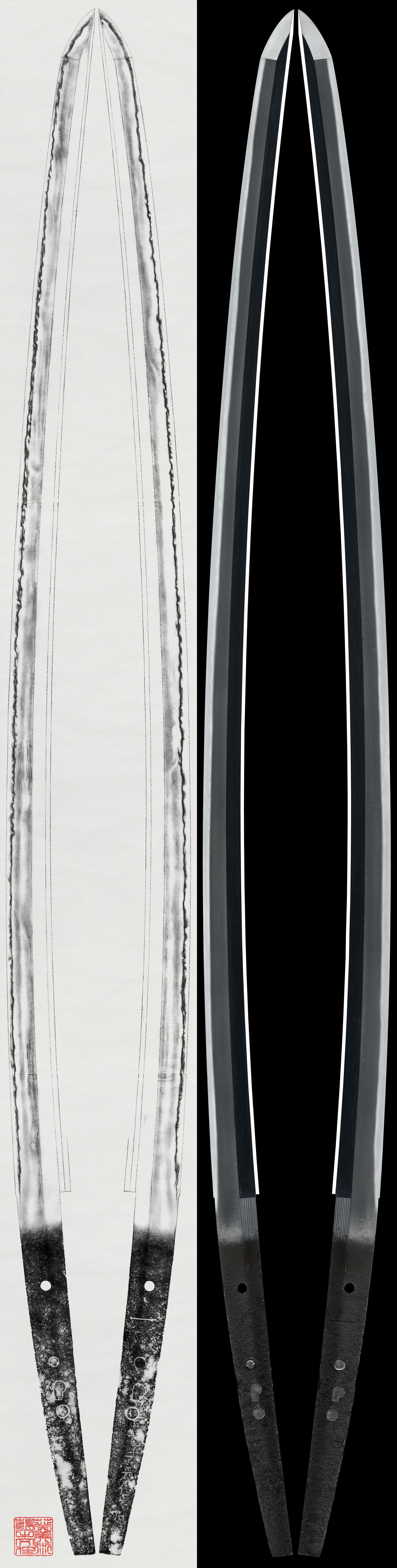
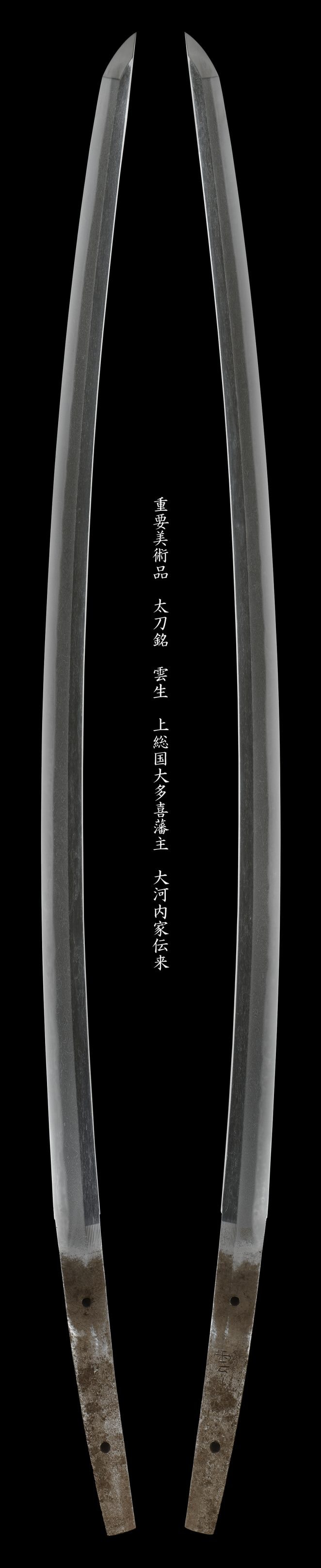
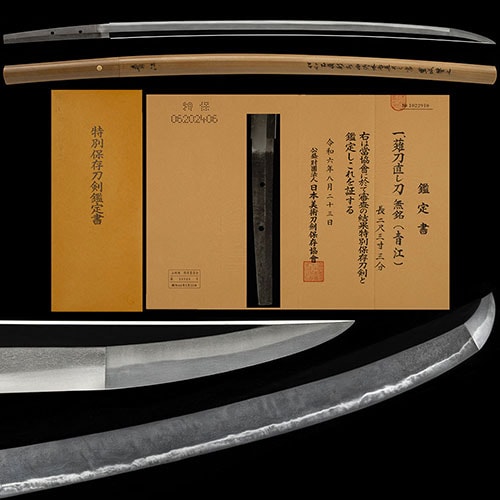
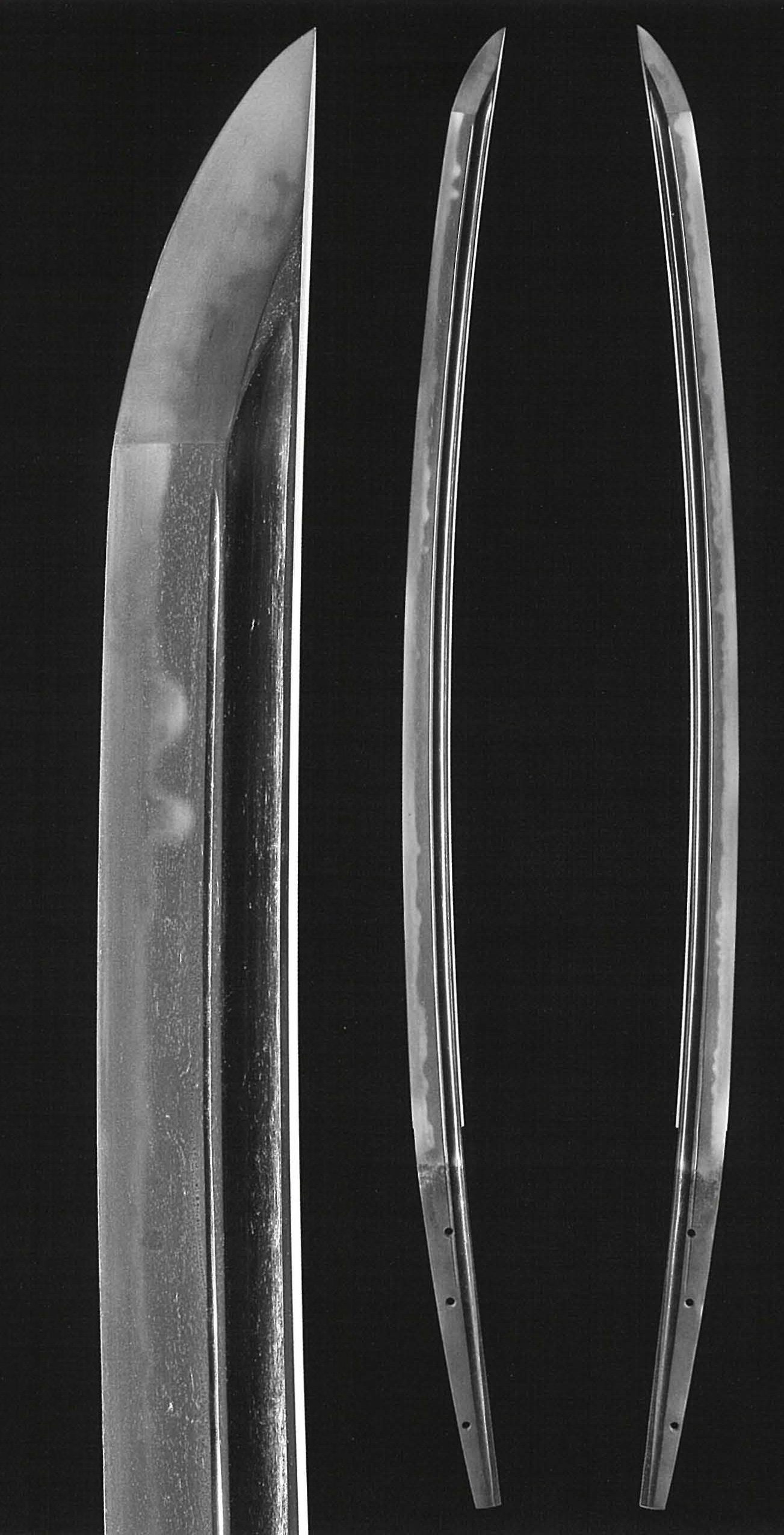
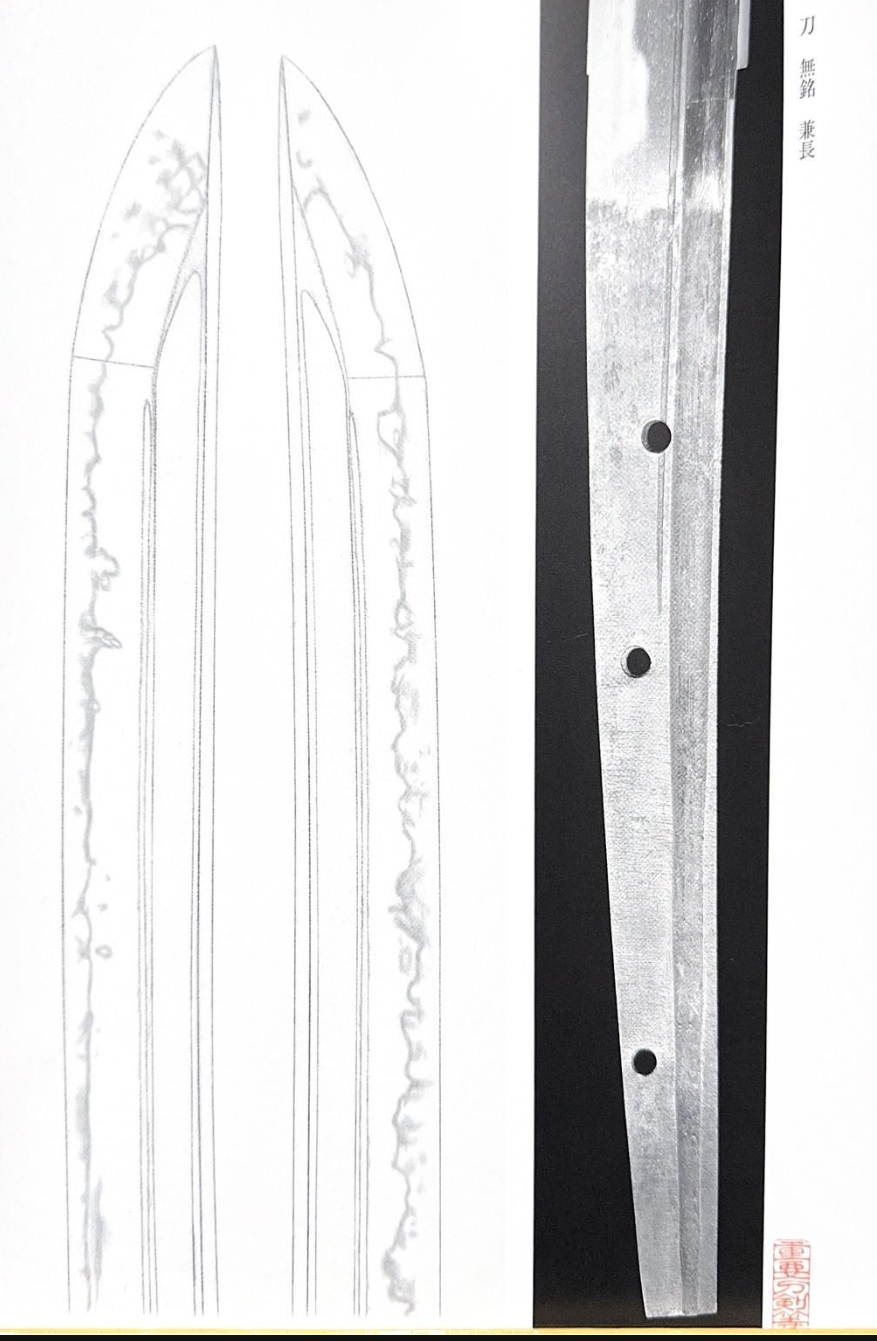
This is a Juyo Token katana by Osafune Kanenaga (Kencho) from Bizen province. The blade is ō-suriage mumei and dates to the Nanbokucho period. It features a yamagata-gunome-midare hamon in nie-deki, reflecting the Sōden-Bizen style of the Chōgi group.

NBTHK Setsumei

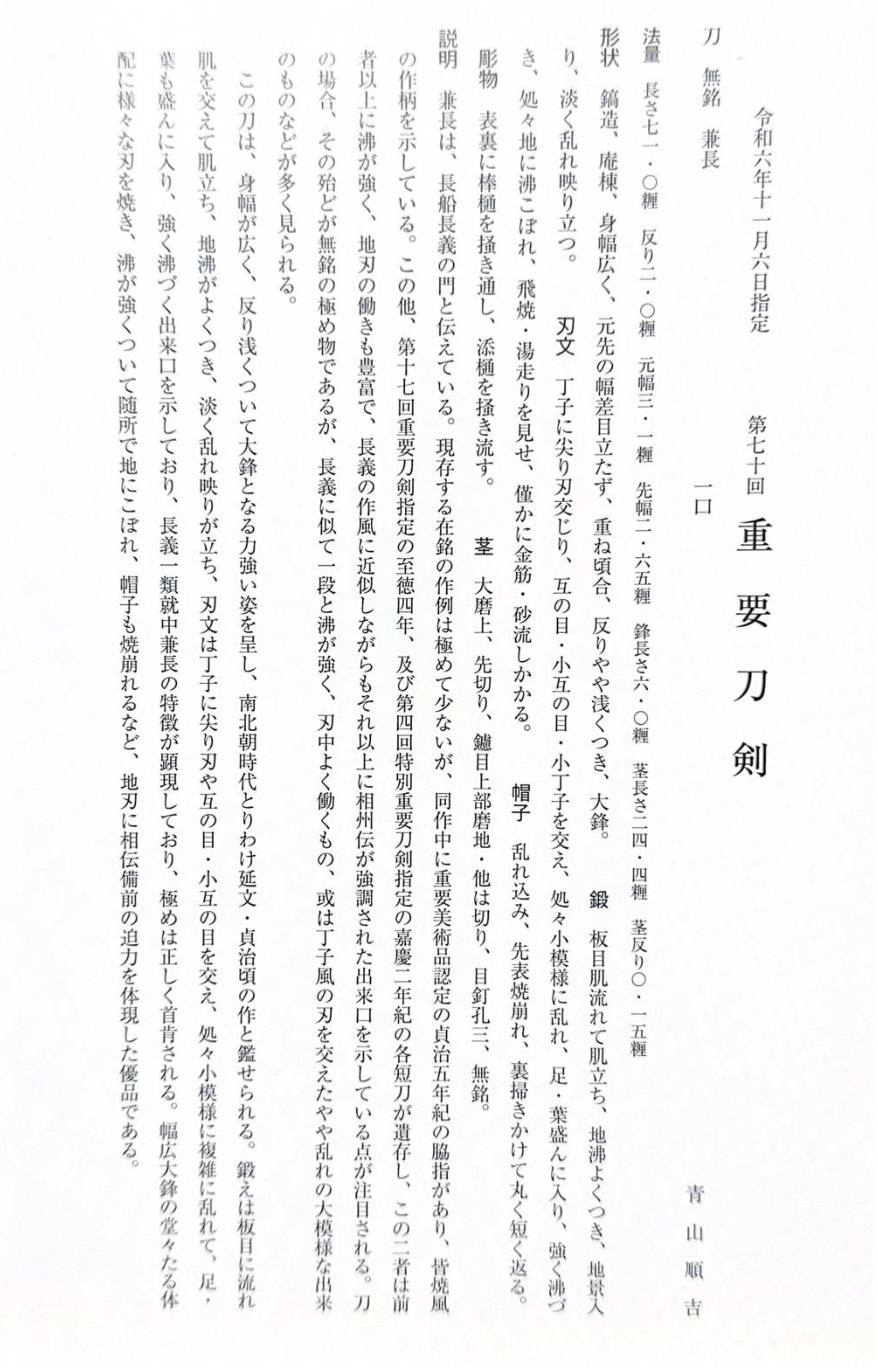
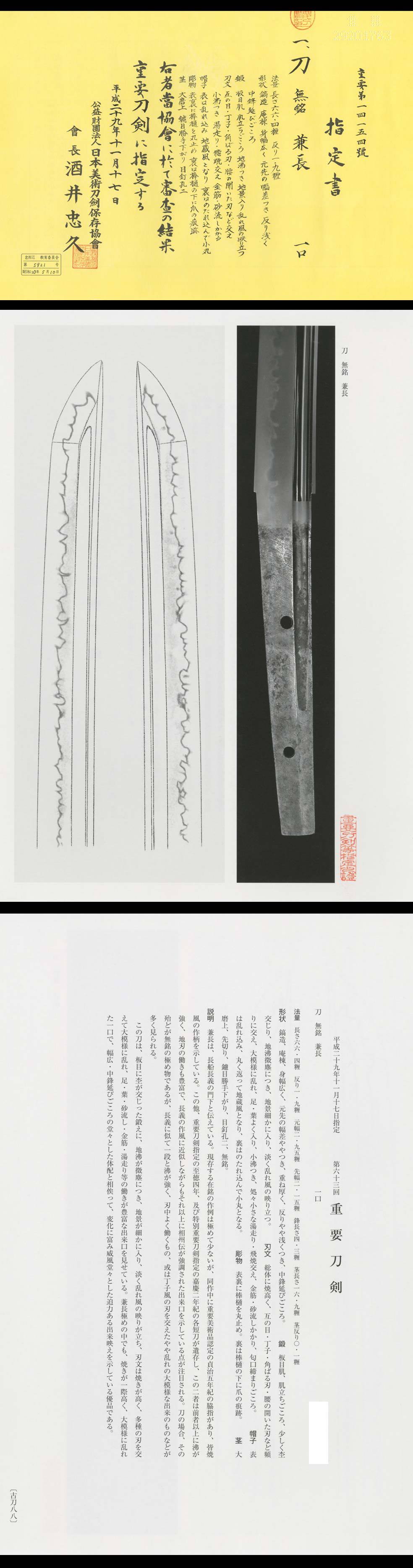
Juyo-Token, 70th Session — Designated November 6, 2024 Katana, mumei: Kenchō (兼長) Measurements Nagasa 71.0 cm, sori 2.0 cm, motohaba 3.1 cm, sakihaba 2.65 cm, kissaki-nagasa 6.0 cm, nakago-nagasa 24.4 cm, nakago-sori 0.15 cm Description Keijo: shinogi-zukuri, iori-mune; wide mihaba with little difference between base and tip widths; moderate kasane; rather shallow sori; ō-kissaki. Kitae: Flowing itame-hada with nagare tendency and standing grain; ji-nie adheres well; chikei appears; a faint midare-utsuri stands out. Hamon: chōji mixed with togariba; incorporating gunome, ko-gunome, and ko-chōji; in places it forms small, intricate midare; ashi and yō are profuse; strongly nie-deki; nie spills into the ji in places; shows tobiyaki and yubashiri, with slight kinsuji and sunagashi. Boshi: midare-komi; on the omote it shows yakikuzure at the tip; on the ura it is hakikake, turning back in a round, short kaeri. Horimono: On both sides, a bō-hi is carved through (kaki-tōshi), with accompanying soe-hi carved off (kaki-nagashi). Nakago: ō-suriage; kiri-jiri; yasurime are migaki-ji in the upper part and otherwise kiri; three mekugi-ana; unsigned. Artisan Kenchō (兼長) Era Nanbokuchō period, judged to date particularly to around the Enbun–Jōji eras (mid-14th century) Explanation Kenchō is traditionally said to have been a student of Osafune Chōgi. Extant signed works are extremely few; however, among them is a Jūyō Bijutsuhin-designated wakizashi dated Jōji 5 (1366), and works of this group exhibit a hitatsura-like manner. In addition, there survive two tantō: one dated Shitoku 4 (1387), designated Jūyō Tōken in the 17th Session, and another dated Kakitsu 2 (1442), designated Tokubetsu Jūyō Tōken in the 4th Session. These two display even stronger nie than the former, with abundant activity in both ji and ha; while resembling Chōgi’s style, they are notable for presenting a workmanship in which the Sōshū-den element is emphasized even more strongly. In the case of katana, most examples are unsigned pieces that have been appraised (kiwame) to him. Many are seen to resemble Chōgi in showing intensified nie and lively internal activity within the ha, or in presenting somewhat larger-patterned midare that incorporates a chōji-like flavor. This katana has a wide blade, shallow sori, and ō-kissaki, presenting a powerful overall form, and it is judged to be a work of the Nanbokuchō period, especially around the Enbun–Jōji era. The kitae is a standing-grain mixture of flowing itame with nagare; ji-nie adheres well; and faint midare-utsuri appears. The hamon mixes chōji with togariba, and incorporates gunome and ko-gunome; in places it becomes a complex, intricate midare of small motifs, with vigorous ashi and yō and a strongly nie-deki execution. These features conspicuously manifest the characteristics of the Chōgi lineage, and, within it, those of Kenchō in particular; accordingly, the appraisal is rightly affirmed. With its dignified, broad and large-kissaki taihai, varied tempering patterns, powerful nie that at points spills into the ji, and a boshi that shows yakikuzure, this is an excellent piece embodying the forcefulness of the combined Bizen and Sōshū-den traditions in both ji and ha. Setsumei by Aoyama Junkichi (青山順吉)

NihontoWatch MonNihontoWatch
MarketAuctionsEncyclopedia
Swords›Bizen-den›Osafune›Chogi›Sōden-Bizen›Kanenaga›Katana: Bizen Osafune Kanenaga (Kencho)
katanaJūyō
Kencho

Katana: Bizen Osafune Kanenaga (Kencho)

suriage-mumei · Osafune · Nanbokucho · nagasa 70.9cm

SOLD
Kencho — 1 of 4
Kencho — 2 of 4
Kencho — 3 of 4
Kencho — 4 of 4
1 / 4
1 / 4
Kencho — 1 of 4Kencho — 2 of 4Kencho — 3 of 4Kencho — 4 of 4
Measurements & details
Smith
Kencho
Type
Katana
School
Chogi
Period
Around 1362–1388(Teiji ND)
Province
Bizen
Signature
suriage-mumei(3% of this smith's designated works are signed)
Measurements
Nagasa 70.9cm
Description

This is a Juyo Token katana by Osafune Kanenaga (Kencho) from Bizen province. The blade is ō-suriage mumei and dates to the Nanbokucho period. It features a yamagata-gunome-midare hamon in nie-deki, reflecting the Sōden-Bizen style of the Chōgi group.

NBTHK Zufu Commentary

Juyo #70

AI translation — may contain errors

-, 70th Session — Designated November 6, 2024

, : Kenchō (兼長)

Measurements 71.0 cm, 2.0 cm, 3.1 cm, 2.65 cm, 6.0 cm, 24.4 cm, 0.15 cm

Description Keijo: , ; wide with little difference between base and tip widths; moderate ; rather shallow ; . : Flowing with tendency and standing grain; adheres well; appears; a faint stands out. : mixed with ; incorporating , , and ; in places it forms small, intricate ; and are profuse; strongly ; spills into the in places; shows and , with slight and . : ; on the it shows at the tip; on the it is , turning back in a round, short . : On both sides, a is carved through (), with accompanying carved off (kaki-nagashi). : ; ; are in the upper part and otherwise ; three ; unsigned.

Artisan Kenchō (兼長)

Era period, judged to date particularly to around the Enbun–Jōji eras (mid-14th century)

Explanation Kenchō is traditionally said to have been a student of Chōgi. Extant signed works are extremely few; however, among them is a Jūyō Bijutsuhin-designated dated Jōji 5 (1366), and works of this group exhibit a -like manner. In addition, there survive two : one dated Shitoku 4 (1387), designated in the 17th Session, and another dated Kakitsu 2 (1442), designated in the 4th Session. These two display even stronger than the former, with abundant activity in both and ; while resembling Chōgi’s style, they are notable for presenting a workmanship in which the Sōshū-den element is emphasized even more strongly.

In the case of , most examples are unsigned pieces that have been appraised () to him. Many are seen to resemble Chōgi in showing intensified and lively internal activity within the , or in presenting somewhat larger-patterned that incorporates a -like flavor.

This has a wide blade, shallow , and , presenting a powerful overall form, and it is judged to be a work of the period, especially around the Enbun–Jōji era. The is a standing-grain mixture of flowing with ; adheres well; and faint appears. The mixes with , and incorporates and ; in places it becomes a complex, intricate of small motifs, with vigorous and and a strongly execution. These features conspicuously manifest the characteristics of the Chōgi lineage, and, within it, those of Kenchō in particular; accordingly, the appraisal is rightly affirmed. With its dignified, broad and large- , varied tempering patterns, powerful that at points spills into the , and a that shows , this is an excellent piece embodying the forcefulness of the combined and Sōshū-den traditions in both and .

by Aoyama Junkichi (青山順吉)

About the maker

Kanenaga

兼長

Osafune Chogi school (Soden-Bizen) · Bizen · around 1362-1388

Fujishiro Jo saku · Tōken Taikan top 10%

4 pieces on the market now

›

Kanenaga of Bizen, written 兼長, is transmitted in the published sources as a pupil of Osafune Chōgi[[c:1]], and so as a smith of the Soden-Bizen line in which the Sōshū manner of Masamune was carried into the Bizen workshop. The published record is candid about how little signed work survives: extant in-mei examples are exceedingly few. The standards are a wakizashi dated Jōji 5 (1366), designated an Important Art Object, and tantō dated Shitoku 4 (1387) and Kakei 2 (1388), the latter two showing nie stronger and ji-ha activity richer than the first. From these few dated blades the published sources draw the judgment that anchors the whole attribution: his workmanship approaches that of Chōgi yet pushes the Sōshū side further still[[c:2]]. The reality of the kantei, however, lies elsewhere, since almost everything that survives under his name is a grand o-suriage mumei katana attributed to him by workmanship rather than by a signature.

In that majority register the published sources describe a katana that resembles Chōgi but is, in their words, more strongly nie-laden, with activity working freely within the temper[[c:3]]. The form they record is itself part of the recognition: wide mihaba with almost no taper from base to tip, thick kasane, a rather deep sori, and an ō-kissaki or an extended chū-kissaki, the bold Nanbokuchō shape preserved by ō-suriage. The temper they describe is a large-pattern midare on a notare or gunome base, mixing gunome and ko-gunome with chōji, angular ha, pointed togari elements, and the waist-open koshi-biraki shapes that give his work its swing. Ashi and yō enter well, the nioiguchi runs deep and bright, and the nie clots and in places coarsens, with kinsuji and sunagashi running frequently. Small yubashiri and detached tobiyaki break out above the temper, and the bōshi runs midare-komi, often pointed and sweeping into hakikake or a flame-like kaen tip.

The jigane is the Bizen base over which that Sōshū temper is laid. The published sources describe itame mixed with mokume and ō-mokume, areas of nagare-hada, and a grain that stands out (hada-dachi); over it fine ji-nie adheres densely and chikei enter thickly and well. The Bizen utsuri is present but faint, recorded again and again as a midare-utsuri that stands only dimly[[c:4]]. That thin reflection is itself a tell: the more the Sōshū side is pushed, the less the old Bizen jigane shows its utsuri, and on the most Sōshū of his blades the reflection recedes almost to nothing. The published commentary reads the surviving utsuri as the proof of his province, judging one such katana, because the reflection appears at all, to be Soden-Bizen[[c:5]].

The work therefore divides in two. The rare dated signed pieces are the calibration: the Jōji wakizashi runs toward a hitatsura tone, and the Shitoku and Kakei tantō carry the Sōshū manner so far that the published sources liken them to Norishige, written as blades that at a glance could be confused for him in their emphasized Sōshū-den[[c:6]]. The signature style and the chisel-work of these dated pieces confirm, the sources say, that this hand belongs to the Chōgi line. Against that calibration stands the great body of ō-suriage mumei katana, more flamboyant and bolder in pattern than Chōgi himself. The published record also preserves a dating question, attributed to Honma: the Jōji Kanenaga signature differs from Chōgi's, whereas the later Shitoku, Kakei and Meitoku pieces match the signature style of Chōgi's Ōan years, so that the received account ought to be re-examined[[c:7]], and the earlier Jōji Kanenaga may be a separate line while the later Kanenaga is the true Chōgi pupil[[c:8]]. The sources present this as an open question of scholarship, not a settled fact.

Within the Chōgi group his place is the most Sōshū-emphasized extreme. The published commentary repeatedly distinguishes him from Chōgi by degree: where the ordinary ō-suriage mumei attribution to Chōgi runs a step quieter, his is the bolder, larger-patterned, more strongly nie-laden hand, and one Tokubetsu Jūyō katana is judged, among the Chōgi group, the work most properly attributed to Kanenaga himself[[c:9]]. His waist-open gunome is the most particular of these tells, a swing the orthodox-Bizen members of the group do not show; his sunagashi and kinsuji are the most profuse, and his detached tobiyaki the most insistent. He stands thereby apart from the more orthodox-Bizen Kanemitsu and Motoshige, whose work keeps closer to the Bizen chōji line, and beside Chōgi as the pupil who carried the Sōshū side of Soden-Bizen the furthest.

Kanenaga is Jō saku in Fujishiro's grading, with a Tōkō Taikan valuation of 900. Despite the near-absent signed record, the weight of designation behind his name is substantial: none of his blades carry a national heritage designation, but eleven have reached Tokubetsu Jūyō and seventy-nine more are Jūyō, ninety in the two top tiers, with several further designated Juyo Bijutsuhin. The provenance recorded against his blades carries names of standing, the Sanada Family, the Tōdō Family, Sakai Tadayoshi, the Tsuchiya Family of Tsuchiura, the Yamauchi, and the American collector Walter A. Compton. Of recorded whereabouts, two examples are held by institutions, the Bizen Osafune Sword Museum and Itsukushima Jinja, the rest by private hands. Because almost nothing signed survives and the attributed katana are themselves uncommon, a Kanenaga reaches the market only rarely; with no blade locked in the highest heritage tiers, the recorded examples sit in the Tokubetsu Jūyō and Jūyō tiers, most of them held rather than traded, so that an example coming into open hands is a landmark when it does, not a thing to be sought at will.

Historical importance

Where Kanenaga stands among comparable artisans: across all of nihontō, and within tradition, era, and period. The tiers (Foremost · Leading · Major · Notable) weigh official designations from the NBTHK and Japan's Agency for Cultural Affairs, together with historical honors of lasting repute such as the Sansaku and Meibutsu-chō.

随一
Foremost
屈指
Leading
有数
Major
著名
Notable

Select a lens to see how it's measured.

Designation record
94 designated works
Jūyō Bijutsuhin
3
Tokubetsu Jūyō
11
Jūyō
80
4 works by Kanenaga on the market→
Kanenaga — full profileOsafune Chogi school (Soden-Bizen) school

Dated Works

Years he was demonstrably active, proven by signed-and-dated blades

Active period
1366–1388Editorial estimate: 1362–1388
2 of 3 designated works carry a date
1360
1370
1380
1390
About the school

Chogi

長義

Bizen-den

Phase: Sōden-Bizen相伝備前· 1330–1394

9 pieces on the market now

›

The Soden Bizen school encompasses the group of Nanbokucho-period Osafune smiths in Bizen Province whose work absorbed the technical influence of the Soshu-den, producing a distinctive synthesis that stands apart from both orthodox Bizen and pure Sagami practice. Learn more →

4 recorded smiths284 designated works
Leading smiths
SmithEraDesignated
Chogi長義1356-1379108
Kanenaga兼長1362-138894
Nagashige長重1334-134216
Yoshikage義景1334-136366
Nagashige長重1356-13610
Explore the Chogi school →
NBTHK Certificate
Jūyō Tōken重要刀剣
Important Sword
›

A blade of top-grade workmanship and condition, formally judged to rank with a nationally recognized Important Art Object (Jūyō Bijutsuhin). Awarded only at the NBTHK’s competitive annual examination.

Of Japan’s roughly 2.5 million registered swords, only 12,307 (about 1 in 203) have ever attained Jūyō.

About the NBTHK›

The NBTHK (Nihon Bijutsu Tōken Hozon Kyōkai, the Society for the Preservation of Japanese Art Swords) is a public-interest incorporated foundation founded in 1948 and supervised by Japan’s Agency for Cultural Affairs (Bunkachō); it is based at the Japanese Sword Museum in Tokyo. Its expert panels physically examine each submitted work (shinsa) and issue a certificate (kanteishō) ranking it by artistic and historical merit. NBTHK papers are the most widely recognized standard of authentication for Japanese swords and fittings.

NBTHK official site→
Seller
N
Nihon Art
🇺🇸Ships from United States
›
✓Verified dealernihonart.com
View all of Nihon Art’s listings→View this item on the dealer’s site→

More works by Kencho

View all →
Giuseppe Piva
Jūyō
Katana - Jūyō - by Kencho - Katana by Kencho, circa 1365 – Jūyō TōkenKatana - Jūyō - by Kencho - Katana by Kencho, circa 1365 – Jūyō Tōken

Katana

ByKencho
Ask
Toushin
Tokubetsu Kichō
Wakizashi - Tokubetsu Kichō - by Kencho - Mumei (Osafune Kanenaga)Wakizashi - Tokubetsu Kichō - by Kencho - Mumei (Osafune Kanenaga)

Wakizashi

ByKencho
¥880,000
Nihonto Australia
Katana - by Kencho - Kanenaga - Koto NambokuchoKatana - by Kencho - Kanenaga - Koto Nambokucho

Katana

ByKencho
¥11,000
Nipponto
Tokuho
Katana - Tokuho - by Kencho - Mumei Katana attributed to Osafune Kanenaga (student of Osafune Nagayoshi)Katana - Tokuho - by Kencho - Mumei Katana attributed to Osafune Kanenaga (student of Osafune Nagayoshi)

Katana

ByKencho
Ask

Previously sold by Kencho

Toukentakarado
Jūyō
Katana - Jūyō - by Kencho - Mumei Attributed to KanenagaKatana - Jūyō - by Kencho - Mumei Attributed to Kanenaga
Sold

Katana

ByKencho
SOLD
Aoi Art
Tokuho
Katana - Tokuho - by Kencho - Mumei (Unsigned) (Attributed to Kanenaga) - NBTHK Tokubetsu Hozon TokenKatana - Tokuho - by Kencho - Mumei (Unsigned) (Attributed to Kanenaga) - NBTHK Tokubetsu Hozon Token
Sold

Katana

ByKencho
SOLD
Choshuya
Katana - by Kencho - Attributed to Kanenaga (O-wazamono)Katana - by Kencho - Attributed to Kanenaga (O-wazamono)
Sold

Katana

ByKencho
SOLD
Unique Japan
Tokujū
Katana - Tokuju - by Kencho - Kanenaga - Nanbokucho period masterpieceKatana - Tokuju - by Kencho - Kanenaga - Nanbokucho period masterpiece
Sold

Katana

ByKencho
SOLD
Shoubudou
Jūyō
Katana - Jūyō - by Kencho - Katana (Naginata Naoshi): Mumei KanenagaKatana - Jūyō - by Kencho - Katana (Naginata Naoshi): Mumei Kanenaga
Sold

Katana

ByKencho
SOLD
Taiseido
Tokujū
Tokuju - by Kencho - Orders and InquiriesTokuju - by Kencho - Orders and Inquiries
Sold

Orders and Inquiries

ByKencho
SOLD
Unique Japan
Tokujū
Katana - Tokuju - by Kencho - KenchôKatana - Tokuju - by Kencho - Kenchô
Sold

Katana

ByKencho
SOLD
Samurai Museum
Tokuho
Katana - Tokuho - by Kencho - Antique Japanese Sword Katana Attributed to Kanenaga NBTHK Tokubetsu Hozon CertificateKatana - Tokuho - by Kencho - Antique Japanese Sword Katana Attributed to Kanenaga NBTHK Tokubetsu Hozon Certificate
Sold

Katana

ByKencho
SOLD

More Sōden-Bizen works

View all →
Katanahanbai
Tokuho
Wakizashi - Tokuho - by Osafune Tomomitsu - Bishu Osafune Tomomitsu - Dated Teiji 5th Year, 8th MonthWakizashi - Tokuho - by Osafune Tomomitsu - Bishu Osafune Tomomitsu - Dated Teiji 5th Year, 8th Month

Wakizashi

ByOsafune Tomomitsu
¥4,800,000
Aoi Art
Tokuho
Katana - Tokuho - by Osafune Motomitsu - Mumei (Attributed to Osafune Motomitsu)Katana - Tokuho - by Osafune Motomitsu - Mumei (Attributed to Osafune Motomitsu)

Katana

ByOsafune Motomitsu
¥1,200,000
Goushuya
Jūyō
Katana - Jūyō - by Osafune Kanemitsu - Kanemitsu with Gold Inlay InscriptionKatana - Jūyō - by Osafune Kanemitsu - Kanemitsu with Gold Inlay Inscription

Katana

ByOsafune Kanemitsu
Ask
Iida Koendo
Jūyō
Tachi - Jūyō - by Osafune Shigezane - Bishu Osafune ju Shigezane, Enbun 3rd year, 12th monthTachi - Jūyō - by Osafune Shigezane - Bishu Osafune ju Shigezane, Enbun 3rd year, 12th month

Tachi

ByOsafune Shigezane
¥33,000,000
Choshuya
Jūyō
Tachi - Jūyō - by Osafune Motomitsu - Signed Bishu (ika kire) den Osafune MotomitsuTachi - Jūyō - by Osafune Motomitsu - Signed Bishu (ika kire) den Osafune Motomitsu

Tachi

ByOsafune Motomitsu
¥8,500,000
Eirakudo
Jūyō
Katana - Jūyō - by Motoshige - Motoshige - Juyo TokenKatana - Jūyō - by Motoshige - Motoshige - Juyo Token

Katana

ByMotoshige
¥6,000,000
Samurai Museum
Katana - by Osafune Kanemitsu - Antique Japanese Sword Katana Attributed to Den Osafune Kanemitsu NTHK Yushu Saku Kanteisho CertificateKatana - by Osafune Kanemitsu - Antique Japanese Sword Katana Attributed to Den Osafune Kanemitsu NTHK Yushu Saku Kanteisho Certificate

Katana

ByOsafune Kanemitsu
¥27,569
Eirakudo
Tokuho
Tachi - Tokuho - by Osafune Chikakage - Zaimei Chikakage Tachi - Tokubetsu Hozon TokenTachi - Tokuho - by Osafune Chikakage - Zaimei Chikakage Tachi - Tokubetsu Hozon Token

Tachi

ByOsafune Chikakage
¥5,500,000

More from the Chogi school

View all →
Nihonto Antiques
Jūyō
Katana - Jūyō - by Chogi - Den Chōgi (Nagayoshi) - JuyoKatana - Jūyō - by Chogi - Den Chōgi (Nagayoshi) - Juyo

Katana

ByChogi
Ask
Nihonto Australia
Tokujū
Katana - Tokuju - by Chogi Yoshikage - A Tokubetsu Juyo Masterpiece Yoshikage KatanaKatana - Tokuju - by Chogi Yoshikage - A Tokubetsu Juyo Masterpiece Yoshikage Katana

Katana

ByChogi Yoshikage
Ask
Eirakudo
Jūyō
Tachi - Jūyō - by Chogi Yoshikage - Yoshikage Tachi Juyo TokenTachi - Jūyō - by Chogi Yoshikage - Yoshikage Tachi Juyo Token

Tachi

ByChogi Yoshikage
Ask
Samurai Nippon
Tokuho
Katana - Tokuho - by Chogi Yoshikage - Osafune Yoshikage (Mumei)Katana - Tokuho - by Chogi Yoshikage - Osafune Yoshikage (Mumei)

Katana

ByChogi Yoshikage
¥850,000
Nihonto Australia
Tokuho
Wakizashi - Tokuho - by Chogi Yoshikage - Yoshikage - with NBTHK Tokubetsu Hozon CertificateWakizashi - Tokuho - by Chogi Yoshikage - Yoshikage - with NBTHK Tokubetsu Hozon Certificate

Wakizashi

ByChogi Yoshikage
Ask

More from the Osafune school

View all →
Nihonto.com
Jūyō
Tanto - Jūyō - by Osafune Kagemitsu - Juyo Tanto by Bizen KagemitsuTanto - Jūyō - by Osafune Kagemitsu - Juyo Tanto by Bizen Kagemitsu

Tantō

ByOsafune Kagemitsu
¥89,500
Iida Koendo
Jūyō
Tachi - Jūyō - by Osafune Nagamitsu - Bizenkoku Osafune ju Sakonshogen Nagamitsu tsukuru, Einin Gannen Junigatsu Hi (December 1293)Tachi - Jūyō - by Osafune Nagamitsu - Bizenkoku Osafune ju Sakonshogen Nagamitsu tsukuru, Einin Gannen Junigatsu Hi (December 1293)

Tachi

ByOsafune Nagamitsu
¥55,000,000
Eirakudo
Tokuho
Tachi - Tokuho - by Osafune Sanenaga - Sanenaga - Tokubetsu Hozon TokenTachi - Tokuho - by Osafune Sanenaga - Sanenaga - Tokubetsu Hozon Token

Tachi

ByOsafune Sanenaga
¥7,500,000
Samurai Museum
Tokuho
Wakizashi - Tokuho - by Osafune Kagemitsu - Antique Japanese Sword Wakizashi Attributed to Den Osafune Kagemitsu NBTHK Tokubetsu Hozon CertificateWakizashi - Tokuho - by Osafune Kagemitsu - Antique Japanese Sword Wakizashi Attributed to Den Osafune Kagemitsu NBTHK Tokubetsu Hozon Certificate

Wakizashi

ByOsafune Kagemitsu
¥20,966
Ginza Seikodo
Jūyō
Katana - Jūyō - by Sukesada - Katana Signed Bizen no Kuni Ju Osafune Hikobeno Jo Sukesada SakuKatana - Jūyō - by Sukesada - Katana Signed Bizen no Kuni Ju Osafune Hikobeno Jo Sukesada Saku

Katana

BySukesada
Ask
Iida Koendo
Jūyō
Tachi - Jūyō - by Osafune Nagamitsu - NagamitsuTachi - Jūyō - by Osafune Nagamitsu - Nagamitsu

Tachi

ByOsafune Nagamitsu
¥33,000,000
Tosa Touken Do
Tokujū
Tachi - Tokuju - by Osafune Kagemasa - Ko Osafune KagemasaTachi - Tokuju - by Osafune Kagemasa - Ko Osafune Kagemasa

Tachi

ByOsafune Kagemasa
Ask
Hyozaemon
Jūyō
Tachi - Jūyō - by Osafune Kagemitsu - Osafune KagemitsuTachi - Jūyō - by Osafune Kagemitsu - Osafune Kagemitsu

Tachi

ByOsafune Kagemitsu
Ask

More from the Bizen tradition

View all →
Eirakudo
Jūyō Bijutsuhin
Katana - Jubi - by Chu-Aoe Sadatsugu - Aoe Sadatsugu - Juyo BijutsuhinKatana - Jubi - by Chu-Aoe Sadatsugu - Aoe Sadatsugu - Juyo Bijutsuhin

Katana

ByChu-Aoe Sadatsugu
Ask
Tsuruginoya
Jūyō
Katana - Jūyō - by Fukuoka Ichimonji School - Mumei Fukuoka IchimonjiKatana - Jūyō - by Fukuoka Ichimonji School - Mumei Fukuoka Ichimonji

Katana

ByFukuoka Ichimonji School
¥10,000,000
Eirakudo
Jūyō
Tachi - Jūyō - by Fukuoka Ichimonji School - Fukuoka Ichimonji - Juyo TokenTachi - Jūyō - by Fukuoka Ichimonji School - Fukuoka Ichimonji - Juyo Token

Tachi

ByFukuoka Ichimonji School
Ask
Aoi Art
Jūyō
Katana - Jūyō - by Yoshioka Ichimonji Sukemitsu - Ichi Bizen-koku Yoshioka Sakon Sho (Sukemitsu)Katana - Jūyō - by Yoshioka Ichimonji Sukemitsu - Ichi Bizen-koku Yoshioka Sakon Sho (Sukemitsu)

Katana

ByYoshioka Ichimonji Sukemitsu
¥9,500,000
Hyozaemon
Tokuho
Wakizashi - Tokuho - by Fukuoka Ichimonji Yoshifusa - Fukuoka Ichimonji YoshifusaWakizashi - Tokuho - by Fukuoka Ichimonji Yoshifusa - Fukuoka Ichimonji Yoshifusa

Wakizashi

ByFukuoka Ichimonji Yoshifusa
Ask
Goushuya
Jūyō Bijutsuhin
Tachi - Jubi - by Ukai Unsho - Kumoio - From the collection of the Okouchi family, lord of Otaki Domain, Kazusa ProvinceTachi - Jubi - by Ukai Unsho - Kumoio - From the collection of the Okouchi family, lord of Otaki Domain, Kazusa Province

Tachi

ByUkai Unsho
Ask
Token-Net
Jūyō
Jūyō - by Aoe School - Naginata Naoshi Katana: Mumei (Aoe)Jūyō - by Aoe School - Naginata Naoshi Katana: Mumei (Aoe)

Naginata Naoshi Katana: Mumei (Aoe)

ByAoe School
¥3,200,000
Eirakudo
Tokuho
Tokuho - by Aoe School - Aoe Katana Tokubetsu Hozon TokenTokuho - by Aoe School - Aoe Katana Tokubetsu Hozon Token

Aoe Katana Tokubetsu Hozon Token

ByAoe School
¥2,380,000

Swords

  • Katana
  • Wakizashi
  • Tantō
  • Tachi
  • Naginata
  • Yari

Fittings

  • Tsuba
  • Fuchi-Kashira
  • Kozuka
  • Menuki

By Certification

  • Tokujū
  • Jūyō
  • Tokuho
  • Hozon

Resources

  • Dealer Directory
  • Artist Directory
  • Glossary
  • Browse All
Nihontowatch© 2026
TermsPrivacyCookiesAbout

Description

This is a Juyo Token katana by Osafune Kanenaga (Kencho) from Bizen province. The blade is ō-suriage mumei and dates to the Nanbokucho period. It features a yamagata-gunome-midare hamon in nie-deki, reflecting the Sōden-Bizen style of the Chōgi group.

NBTHK Setsumei

Juyo-Token, 70th Session — Designated November 6, 2024 Katana, mumei: Kenchō (兼長) Measurements Nagasa 71.0 cm, sori 2.0 cm, motohaba 3.1 cm, sakihaba 2.65 cm, kissaki-nagasa 6.0 cm, nakago-nagasa 24.4 cm, nakago-sori 0.15 cm Description Keijo: shinogi-zukuri, iori-mune; wide mihaba with little difference between base and tip widths; moderate kasane; rather shallow sori; ō-kissaki. Kitae: Flowing itame-hada with nagare tendency and standing grain; ji-nie adheres well; chikei appears; a faint midare-utsuri stands out. Hamon: chōji mixed with togariba; incorporating gunome, ko-gunome, and ko-chōji; in places it forms small, intricate midare; ashi and yō are profuse; strongly nie-deki; nie spills into the ji in places; shows tobiyaki and yubashiri, with slight kinsuji and sunagashi. Boshi: midare-komi; on the omote it shows yakikuzure at the tip; on the ura it is hakikake, turning back in a round, short kaeri. Horimono: On both sides, a bō-hi is carved through (kaki-tōshi), with accompanying soe-hi carved off (kaki-nagashi). Nakago: ō-suriage; kiri-jiri; yasurime are migaki-ji in the upper part and otherwise kiri; three mekugi-ana; unsigned. Artisan Kenchō (兼長) Era Nanbokuchō period, judged to date particularly to around the Enbun–Jōji eras (mid-14th century) Explanation Kenchō is traditionally said to have been a student of Osafune Chōgi. Extant signed works are extremely few; however, among them is a Jūyō Bijutsuhin-designated wakizashi dated Jōji 5 (1366), and works of this group exhibit a hitatsura-like manner. In addition, there survive two tantō: one dated Shitoku 4 (1387), designated Jūyō Tōken in the 17th Session, and another dated Kakitsu 2 (1442), designated Tokubetsu Jūyō Tōken in the 4th Session. These two display even stronger nie than the former, with abundant activity in both ji and ha; while resembling Chōgi’s style, they are notable for presenting a workmanship in which the Sōshū-den element is emphasized even more strongly. In the case of katana, most examples are unsigned pieces that have been appraised (kiwame) to him. Many are seen to resemble Chōgi in showing intensified nie and lively internal activity within the ha, or in presenting somewhat larger-patterned midare that incorporates a chōji-like flavor. This katana has a wide blade, shallow sori, and ō-kissaki, presenting a powerful overall form, and it is judged to be a work of the Nanbokuchō period, especially around the Enbun–Jōji era. The kitae is a standing-grain mixture of flowing itame with nagare; ji-nie adheres well; and faint midare-utsuri appears. The hamon mixes chōji with togariba, and incorporates gunome and ko-gunome; in places it becomes a complex, intricate midare of small motifs, with vigorous ashi and yō and a strongly nie-deki execution. These features conspicuously manifest the characteristics of the Chōgi lineage, and, within it, those of Kenchō in particular; accordingly, the appraisal is rightly affirmed. With its dignified, broad and large-kissaki taihai, varied tempering patterns, powerful nie that at points spills into the ji, and a boshi that shows yakikuzure, this is an excellent piece embodying the forcefulness of the combined Bizen and Sōshū-den traditions in both ji and ha. Setsumei by Aoyama Junkichi (青山順吉)

NihontoWatch MonNihontoWatch
MarketAuctionsEncyclopedia
Swords›Bizen-den›Osafune›Chogi›Sōden-Bizen›Kanenaga›Katana: Bizen Osafune Kanenaga (Kencho)
katanaJūyō
Kencho

Katana: Bizen Osafune Kanenaga (Kencho)

suriage-mumei · Osafune · Nanbokucho · nagasa 70.9cm

SOLD
Kencho — 1 of 4
Kencho — 2 of 4
Kencho — 3 of 4
Kencho — 4 of 4
1 / 4
1 / 4
Kencho — 1 of 4Kencho — 2 of 4Kencho — 3 of 4Kencho — 4 of 4
Measurements & details
Smith
Kencho
Type
Katana
School
Chogi
Period
Around 1362–1388(Teiji ND)
Province
Bizen
Signature
suriage-mumei(3% of this smith's designated works are signed)
Measurements
Nagasa 70.9cm
Description

This is a Juyo Token katana by Osafune Kanenaga (Kencho) from Bizen province. The blade is ō-suriage mumei and dates to the Nanbokucho period. It features a yamagata-gunome-midare hamon in nie-deki, reflecting the Sōden-Bizen style of the Chōgi group.

NBTHK Zufu Commentary

Juyo #70

AI translation — may contain errors

-, 70th Session — Designated November 6, 2024

, : Kenchō (兼長)

Measurements 71.0 cm, 2.0 cm, 3.1 cm, 2.65 cm, 6.0 cm, 24.4 cm, 0.15 cm

Description Keijo: , ; wide with little difference between base and tip widths; moderate ; rather shallow ; . : Flowing with tendency and standing grain; adheres well; appears; a faint stands out. : mixed with ; incorporating , , and ; in places it forms small, intricate ; and are profuse; strongly ; spills into the in places; shows and , with slight and . : ; on the it shows at the tip; on the it is , turning back in a round, short . : On both sides, a is carved through (), with accompanying carved off (kaki-nagashi). : ; ; are in the upper part and otherwise ; three ; unsigned.

Artisan Kenchō (兼長)

Era period, judged to date particularly to around the Enbun–Jōji eras (mid-14th century)

Explanation Kenchō is traditionally said to have been a student of Chōgi. Extant signed works are extremely few; however, among them is a Jūyō Bijutsuhin-designated dated Jōji 5 (1366), and works of this group exhibit a -like manner. In addition, there survive two : one dated Shitoku 4 (1387), designated in the 17th Session, and another dated Kakitsu 2 (1442), designated in the 4th Session. These two display even stronger than the former, with abundant activity in both and ; while resembling Chōgi’s style, they are notable for presenting a workmanship in which the Sōshū-den element is emphasized even more strongly.

In the case of , most examples are unsigned pieces that have been appraised () to him. Many are seen to resemble Chōgi in showing intensified and lively internal activity within the , or in presenting somewhat larger-patterned that incorporates a -like flavor.

This has a wide blade, shallow , and , presenting a powerful overall form, and it is judged to be a work of the period, especially around the Enbun–Jōji era. The is a standing-grain mixture of flowing with ; adheres well; and faint appears. The mixes with , and incorporates and ; in places it becomes a complex, intricate of small motifs, with vigorous and and a strongly execution. These features conspicuously manifest the characteristics of the Chōgi lineage, and, within it, those of Kenchō in particular; accordingly, the appraisal is rightly affirmed. With its dignified, broad and large- , varied tempering patterns, powerful that at points spills into the , and a that shows , this is an excellent piece embodying the forcefulness of the combined and Sōshū-den traditions in both and .

by Aoyama Junkichi (青山順吉)

About the maker

Kanenaga

兼長

Osafune Chogi school (Soden-Bizen) · Bizen · around 1362-1388

Fujishiro Jo saku · Tōken Taikan top 10%

4 pieces on the market now

›

Kanenaga of Bizen, written 兼長, is transmitted in the published sources as a pupil of Osafune Chōgi[[c:1]], and so as a smith of the Soden-Bizen line in which the Sōshū manner of Masamune was carried into the Bizen workshop. The published record is candid about how little signed work survives: extant in-mei examples are exceedingly few. The standards are a wakizashi dated Jōji 5 (1366), designated an Important Art Object, and tantō dated Shitoku 4 (1387) and Kakei 2 (1388), the latter two showing nie stronger and ji-ha activity richer than the first. From these few dated blades the published sources draw the judgment that anchors the whole attribution: his workmanship approaches that of Chōgi yet pushes the Sōshū side further still[[c:2]]. The reality of the kantei, however, lies elsewhere, since almost everything that survives under his name is a grand o-suriage mumei katana attributed to him by workmanship rather than by a signature.

In that majority register the published sources describe a katana that resembles Chōgi but is, in their words, more strongly nie-laden, with activity working freely within the temper[[c:3]]. The form they record is itself part of the recognition: wide mihaba with almost no taper from base to tip, thick kasane, a rather deep sori, and an ō-kissaki or an extended chū-kissaki, the bold Nanbokuchō shape preserved by ō-suriage. The temper they describe is a large-pattern midare on a notare or gunome base, mixing gunome and ko-gunome with chōji, angular ha, pointed togari elements, and the waist-open koshi-biraki shapes that give his work its swing. Ashi and yō enter well, the nioiguchi runs deep and bright, and the nie clots and in places coarsens, with kinsuji and sunagashi running frequently. Small yubashiri and detached tobiyaki break out above the temper, and the bōshi runs midare-komi, often pointed and sweeping into hakikake or a flame-like kaen tip.

The jigane is the Bizen base over which that Sōshū temper is laid. The published sources describe itame mixed with mokume and ō-mokume, areas of nagare-hada, and a grain that stands out (hada-dachi); over it fine ji-nie adheres densely and chikei enter thickly and well. The Bizen utsuri is present but faint, recorded again and again as a midare-utsuri that stands only dimly[[c:4]]. That thin reflection is itself a tell: the more the Sōshū side is pushed, the less the old Bizen jigane shows its utsuri, and on the most Sōshū of his blades the reflection recedes almost to nothing. The published commentary reads the surviving utsuri as the proof of his province, judging one such katana, because the reflection appears at all, to be Soden-Bizen[[c:5]].

The work therefore divides in two. The rare dated signed pieces are the calibration: the Jōji wakizashi runs toward a hitatsura tone, and the Shitoku and Kakei tantō carry the Sōshū manner so far that the published sources liken them to Norishige, written as blades that at a glance could be confused for him in their emphasized Sōshū-den[[c:6]]. The signature style and the chisel-work of these dated pieces confirm, the sources say, that this hand belongs to the Chōgi line. Against that calibration stands the great body of ō-suriage mumei katana, more flamboyant and bolder in pattern than Chōgi himself. The published record also preserves a dating question, attributed to Honma: the Jōji Kanenaga signature differs from Chōgi's, whereas the later Shitoku, Kakei and Meitoku pieces match the signature style of Chōgi's Ōan years, so that the received account ought to be re-examined[[c:7]], and the earlier Jōji Kanenaga may be a separate line while the later Kanenaga is the true Chōgi pupil[[c:8]]. The sources present this as an open question of scholarship, not a settled fact.

Within the Chōgi group his place is the most Sōshū-emphasized extreme. The published commentary repeatedly distinguishes him from Chōgi by degree: where the ordinary ō-suriage mumei attribution to Chōgi runs a step quieter, his is the bolder, larger-patterned, more strongly nie-laden hand, and one Tokubetsu Jūyō katana is judged, among the Chōgi group, the work most properly attributed to Kanenaga himself[[c:9]]. His waist-open gunome is the most particular of these tells, a swing the orthodox-Bizen members of the group do not show; his sunagashi and kinsuji are the most profuse, and his detached tobiyaki the most insistent. He stands thereby apart from the more orthodox-Bizen Kanemitsu and Motoshige, whose work keeps closer to the Bizen chōji line, and beside Chōgi as the pupil who carried the Sōshū side of Soden-Bizen the furthest.

Kanenaga is Jō saku in Fujishiro's grading, with a Tōkō Taikan valuation of 900. Despite the near-absent signed record, the weight of designation behind his name is substantial: none of his blades carry a national heritage designation, but eleven have reached Tokubetsu Jūyō and seventy-nine more are Jūyō, ninety in the two top tiers, with several further designated Juyo Bijutsuhin. The provenance recorded against his blades carries names of standing, the Sanada Family, the Tōdō Family, Sakai Tadayoshi, the Tsuchiya Family of Tsuchiura, the Yamauchi, and the American collector Walter A. Compton. Of recorded whereabouts, two examples are held by institutions, the Bizen Osafune Sword Museum and Itsukushima Jinja, the rest by private hands. Because almost nothing signed survives and the attributed katana are themselves uncommon, a Kanenaga reaches the market only rarely; with no blade locked in the highest heritage tiers, the recorded examples sit in the Tokubetsu Jūyō and Jūyō tiers, most of them held rather than traded, so that an example coming into open hands is a landmark when it does, not a thing to be sought at will.
Historical importance

Where Kanenaga stands among comparable artisans: across all of nihontō, and within tradition, era, and period. The tiers (Foremost · Leading · Major · Notable) weigh official designations from the NBTHK and Japan's Agency for Cultural Affairs, together with historical honors of lasting repute such as the Sansaku and Meibutsu-chō.

随一
Foremost
屈指
Leading
有数
Major
著名
Notable

Select a lens to see how it's measured.

Designation record
94 designated works
Jūyō Bijutsuhin
3
Tokubetsu Jūyō
11
Jūyō
80
4 works by Kanenaga on the market→
Kanenaga — full profileOsafune Chogi school (Soden-Bizen) school

Dated Works

Years he was demonstrably active, proven by signed-and-dated blades

Active period
1366–1388Editorial estimate: 1362–1388
2 of 3 designated works carry a date
1360
1370
1380
1390
About the school

Chogi

長義

Bizen-den

Phase: Sōden-Bizen相伝備前· 1330–1394

9 pieces on the market now

›

The Soden Bizen school encompasses the group of Nanbokucho-period Osafune smiths in Bizen Province whose work absorbed the technical influence of the Soshu-den, producing a distinctive synthesis that stands apart from both orthodox Bizen and pure Sagami practice. Learn more →

4 recorded smiths284 designated works
Leading smiths
SmithEraDesignated
Chogi長義1356-1379108
Kanenaga兼長1362-138894
Nagashige長重1334-134216
Yoshikage義景1334-136366
Nagashige長重1356-13610
Explore the Chogi school →
NBTHK Certificate
Jūyō Tōken重要刀剣
Important Sword
›

A blade of top-grade workmanship and condition, formally judged to rank with a nationally recognized Important Art Object (Jūyō Bijutsuhin). Awarded only at the NBTHK’s competitive annual examination.

Of Japan’s roughly 2.5 million registered swords, only 12,307 (about 1 in 203) have ever attained Jūyō.

About the NBTHK›

The NBTHK (Nihon Bijutsu Tōken Hozon Kyōkai, the Society for the Preservation of Japanese Art Swords) is a public-interest incorporated foundation founded in 1948 and supervised by Japan’s Agency for Cultural Affairs (Bunkachō); it is based at the Japanese Sword Museum in Tokyo. Its expert panels physically examine each submitted work (shinsa) and issue a certificate (kanteishō) ranking it by artistic and historical merit. NBTHK papers are the most widely recognized standard of authentication for Japanese swords and fittings.

NBTHK official site→
Seller
N
Nihon Art
🇺🇸Ships from United States
›
✓Verified dealernihonart.com
View all of Nihon Art’s listings→View this item on the dealer’s site→

More works by Kencho

View all →
Giuseppe Piva
Jūyō
Katana - Jūyō - by Kencho - Katana by Kencho, circa 1365 – Jūyō TōkenKatana - Jūyō - by Kencho - Katana by Kencho, circa 1365 – Jūyō Tōken

Katana

ByKencho
Ask
Toushin
Tokubetsu Kichō
Wakizashi - Tokubetsu Kichō - by Kencho - Mumei (Osafune Kanenaga)Wakizashi - Tokubetsu Kichō - by Kencho - Mumei (Osafune Kanenaga)

Wakizashi

ByKencho
¥880,000
Nihonto Australia
Katana - by Kencho - Kanenaga - Koto NambokuchoKatana - by Kencho - Kanenaga - Koto Nambokucho

Katana

ByKencho
¥11,000
Nipponto
Tokuho
Katana - Tokuho - by Kencho - Mumei Katana attributed to Osafune Kanenaga (student of Osafune Nagayoshi)Katana - Tokuho - by Kencho - Mumei Katana attributed to Osafune Kanenaga (student of Osafune Nagayoshi)

Katana

ByKencho
Ask

Previously sold by Kencho

Toukentakarado
Jūyō
Katana - Jūyō - by Kencho - Mumei Attributed to KanenagaKatana - Jūyō - by Kencho - Mumei Attributed to Kanenaga
Sold

Katana

ByKencho
SOLD
Aoi Art
Tokuho
Katana - Tokuho - by Kencho - Mumei (Unsigned) (Attributed to Kanenaga) - NBTHK Tokubetsu Hozon TokenKatana - Tokuho - by Kencho - Mumei (Unsigned) (Attributed to Kanenaga) - NBTHK Tokubetsu Hozon Token
Sold

Katana

ByKencho
SOLD
Choshuya
Katana - by Kencho - Attributed to Kanenaga (O-wazamono)Katana - by Kencho - Attributed to Kanenaga (O-wazamono)
Sold

Katana

ByKencho
SOLD
Unique Japan
Tokujū
Katana - Tokuju - by Kencho - Kanenaga - Nanbokucho period masterpieceKatana - Tokuju - by Kencho - Kanenaga - Nanbokucho period masterpiece
Sold

Katana

ByKencho
SOLD
Shoubudou
Jūyō
Katana - Jūyō - by Kencho - Katana (Naginata Naoshi): Mumei KanenagaKatana - Jūyō - by Kencho - Katana (Naginata Naoshi): Mumei Kanenaga
Sold

Katana

ByKencho
SOLD
Taiseido
Tokujū
Tokuju - by Kencho - Orders and InquiriesTokuju - by Kencho - Orders and Inquiries
Sold

Orders and Inquiries

ByKencho
SOLD
Unique Japan
Tokujū
Katana - Tokuju - by Kencho - KenchôKatana - Tokuju - by Kencho - Kenchô
Sold

Katana

ByKencho
SOLD
Samurai Museum
Tokuho
Katana - Tokuho - by Kencho - Antique Japanese Sword Katana Attributed to Kanenaga NBTHK Tokubetsu Hozon CertificateKatana - Tokuho - by Kencho - Antique Japanese Sword Katana Attributed to Kanenaga NBTHK Tokubetsu Hozon Certificate
Sold

Katana

ByKencho
SOLD

More Sōden-Bizen works

View all →
Katanahanbai
Tokuho
Wakizashi - Tokuho - by Osafune Tomomitsu - Bishu Osafune Tomomitsu - Dated Teiji 5th Year, 8th MonthWakizashi - Tokuho - by Osafune Tomomitsu - Bishu Osafune Tomomitsu - Dated Teiji 5th Year, 8th Month

Wakizashi

ByOsafune Tomomitsu
¥4,800,000
Aoi Art
Tokuho
Katana - Tokuho - by Osafune Motomitsu - Mumei (Attributed to Osafune Motomitsu)Katana - Tokuho - by Osafune Motomitsu - Mumei (Attributed to Osafune Motomitsu)

Katana

ByOsafune Motomitsu
¥1,200,000
Goushuya
Jūyō
Katana - Jūyō - by Osafune Kanemitsu - Kanemitsu with Gold Inlay InscriptionKatana - Jūyō - by Osafune Kanemitsu - Kanemitsu with Gold Inlay Inscription

Katana

ByOsafune Kanemitsu
Ask
Iida Koendo
Jūyō
Tachi - Jūyō - by Osafune Shigezane - Bishu Osafune ju Shigezane, Enbun 3rd year, 12th monthTachi - Jūyō - by Osafune Shigezane - Bishu Osafune ju Shigezane, Enbun 3rd year, 12th month

Tachi

ByOsafune Shigezane
¥33,000,000
Choshuya
Jūyō
Tachi - Jūyō - by Osafune Motomitsu - Signed Bishu (ika kire) den Osafune MotomitsuTachi - Jūyō - by Osafune Motomitsu - Signed Bishu (ika kire) den Osafune Motomitsu

Tachi

ByOsafune Motomitsu
¥8,500,000
Eirakudo
Jūyō
Katana - Jūyō - by Motoshige - Motoshige - Juyo TokenKatana - Jūyō - by Motoshige - Motoshige - Juyo Token

Katana

ByMotoshige
¥6,000,000
Samurai Museum
Katana - by Osafune Kanemitsu - Antique Japanese Sword Katana Attributed to Den Osafune Kanemitsu NTHK Yushu Saku Kanteisho CertificateKatana - by Osafune Kanemitsu - Antique Japanese Sword Katana Attributed to Den Osafune Kanemitsu NTHK Yushu Saku Kanteisho Certificate

Katana

ByOsafune Kanemitsu
¥27,569
Eirakudo
Tokuho
Tachi - Tokuho - by Osafune Chikakage - Zaimei Chikakage Tachi - Tokubetsu Hozon TokenTachi - Tokuho - by Osafune Chikakage - Zaimei Chikakage Tachi - Tokubetsu Hozon Token

Tachi

ByOsafune Chikakage
¥5,500,000

More from the Chogi school

View all →
Nihonto Antiques
Jūyō
Katana - Jūyō - by Chogi - Den Chōgi (Nagayoshi) - JuyoKatana - Jūyō - by Chogi - Den Chōgi (Nagayoshi) - Juyo

Katana

ByChogi
Ask
Nihonto Australia
Tokujū
Katana - Tokuju - by Chogi Yoshikage - A Tokubetsu Juyo Masterpiece Yoshikage KatanaKatana - Tokuju - by Chogi Yoshikage - A Tokubetsu Juyo Masterpiece Yoshikage Katana

Katana

ByChogi Yoshikage
Ask
Eirakudo
Jūyō
Tachi - Jūyō - by Chogi Yoshikage - Yoshikage Tachi Juyo TokenTachi - Jūyō - by Chogi Yoshikage - Yoshikage Tachi Juyo Token

Tachi

ByChogi Yoshikage
Ask
Samurai Nippon
Tokuho
Katana - Tokuho - by Chogi Yoshikage - Osafune Yoshikage (Mumei)Katana - Tokuho - by Chogi Yoshikage - Osafune Yoshikage (Mumei)

Katana

ByChogi Yoshikage
¥850,000
Nihonto Australia
Tokuho
Wakizashi - Tokuho - by Chogi Yoshikage - Yoshikage - with NBTHK Tokubetsu Hozon CertificateWakizashi - Tokuho - by Chogi Yoshikage - Yoshikage - with NBTHK Tokubetsu Hozon Certificate

Wakizashi

ByChogi Yoshikage
Ask

More from the Osafune school

View all →
Nihonto.com
Jūyō
Tanto - Jūyō - by Osafune Kagemitsu - Juyo Tanto by Bizen KagemitsuTanto - Jūyō - by Osafune Kagemitsu - Juyo Tanto by Bizen Kagemitsu

Tantō

ByOsafune Kagemitsu
¥89,500
Iida Koendo
Jūyō
Tachi - Jūyō - by Osafune Nagamitsu - Bizenkoku Osafune ju Sakonshogen Nagamitsu tsukuru, Einin Gannen Junigatsu Hi (December 1293)Tachi - Jūyō - by Osafune Nagamitsu - Bizenkoku Osafune ju Sakonshogen Nagamitsu tsukuru, Einin Gannen Junigatsu Hi (December 1293)

Tachi

ByOsafune Nagamitsu
¥55,000,000
Eirakudo
Tokuho
Tachi - Tokuho - by Osafune Sanenaga - Sanenaga - Tokubetsu Hozon TokenTachi - Tokuho - by Osafune Sanenaga - Sanenaga - Tokubetsu Hozon Token

Tachi

ByOsafune Sanenaga
¥7,500,000
Samurai Museum
Tokuho
Wakizashi - Tokuho - by Osafune Kagemitsu - Antique Japanese Sword Wakizashi Attributed to Den Osafune Kagemitsu NBTHK Tokubetsu Hozon CertificateWakizashi - Tokuho - by Osafune Kagemitsu - Antique Japanese Sword Wakizashi Attributed to Den Osafune Kagemitsu NBTHK Tokubetsu Hozon Certificate

Wakizashi

ByOsafune Kagemitsu
¥20,966
Ginza Seikodo
Jūyō
Katana - Jūyō - by Sukesada - Katana Signed Bizen no Kuni Ju Osafune Hikobeno Jo Sukesada SakuKatana - Jūyō - by Sukesada - Katana Signed Bizen no Kuni Ju Osafune Hikobeno Jo Sukesada Saku

Katana

BySukesada
Ask
Iida Koendo
Jūyō
Tachi - Jūyō - by Osafune Nagamitsu - NagamitsuTachi - Jūyō - by Osafune Nagamitsu - Nagamitsu

Tachi

ByOsafune Nagamitsu
¥33,000,000
Tosa Touken Do
Tokujū
Tachi - Tokuju - by Osafune Kagemasa - Ko Osafune KagemasaTachi - Tokuju - by Osafune Kagemasa - Ko Osafune Kagemasa

Tachi

ByOsafune Kagemasa
Ask
Hyozaemon
Jūyō
Tachi - Jūyō - by Osafune Kagemitsu - Osafune KagemitsuTachi - Jūyō - by Osafune Kagemitsu - Osafune Kagemitsu

Tachi

ByOsafune Kagemitsu
Ask

More from the Bizen tradition

View all →
Eirakudo
Jūyō Bijutsuhin
Katana - Jubi - by Chu-Aoe Sadatsugu - Aoe Sadatsugu - Juyo BijutsuhinKatana - Jubi - by Chu-Aoe Sadatsugu - Aoe Sadatsugu - Juyo Bijutsuhin

Katana

ByChu-Aoe Sadatsugu
Ask
Tsuruginoya
Jūyō
Katana - Jūyō - by Fukuoka Ichimonji School - Mumei Fukuoka IchimonjiKatana - Jūyō - by Fukuoka Ichimonji School - Mumei Fukuoka Ichimonji

Katana

ByFukuoka Ichimonji School
¥10,000,000
Eirakudo
Jūyō
Tachi - Jūyō - by Fukuoka Ichimonji School - Fukuoka Ichimonji - Juyo TokenTachi - Jūyō - by Fukuoka Ichimonji School - Fukuoka Ichimonji - Juyo Token

Tachi

ByFukuoka Ichimonji School
Ask
Aoi Art
Jūyō
Katana - Jūyō - by Yoshioka Ichimonji Sukemitsu - Ichi Bizen-koku Yoshioka Sakon Sho (Sukemitsu)Katana - Jūyō - by Yoshioka Ichimonji Sukemitsu - Ichi Bizen-koku Yoshioka Sakon Sho (Sukemitsu)

Katana

ByYoshioka Ichimonji Sukemitsu
¥9,500,000
Hyozaemon
Tokuho
Wakizashi - Tokuho - by Fukuoka Ichimonji Yoshifusa - Fukuoka Ichimonji YoshifusaWakizashi - Tokuho - by Fukuoka Ichimonji Yoshifusa - Fukuoka Ichimonji Yoshifusa

Wakizashi

ByFukuoka Ichimonji Yoshifusa
Ask
Goushuya
Jūyō Bijutsuhin
Tachi - Jubi - by Ukai Unsho - Kumoio - From the collection of the Okouchi family, lord of Otaki Domain, Kazusa ProvinceTachi - Jubi - by Ukai Unsho - Kumoio - From the collection of the Okouchi family, lord of Otaki Domain, Kazusa Province

Tachi

ByUkai Unsho
Ask
Token-Net
Jūyō
Jūyō - by Aoe School - Naginata Naoshi Katana: Mumei (Aoe)Jūyō - by Aoe School - Naginata Naoshi Katana: Mumei (Aoe)

Naginata Naoshi Katana: Mumei (Aoe)

ByAoe School
¥3,200,000
Eirakudo
Tokuho
Tokuho - by Aoe School - Aoe Katana Tokubetsu Hozon TokenTokuho - by Aoe School - Aoe Katana Tokubetsu Hozon Token

Aoe Katana Tokubetsu Hozon Token

ByAoe School
¥2,380,000

Swords

  • Katana
  • Wakizashi
  • Tantō
  • Tachi
  • Naginata
  • Yari

Fittings

  • Tsuba
  • Fuchi-Kashira
  • Kozuka
  • Menuki

By Certification

  • Tokujū
  • Jūyō
  • Tokuho
  • Hozon

Resources

  • Dealer Directory
  • Artist Directory
  • Glossary
  • Browse All
Nihontowatch© 2026
TermsPrivacyCookiesAbout
NihontoWatch Mon

NihontoWatch

MarketAuctions
Encyclopedia
NihontoWatch Mon

NihontoWatch

MarketAuctions
Encyclopedia