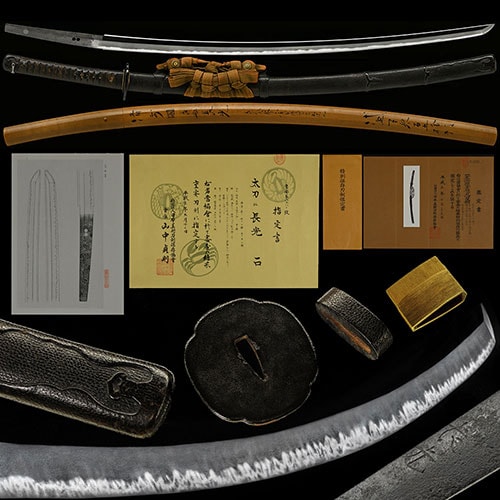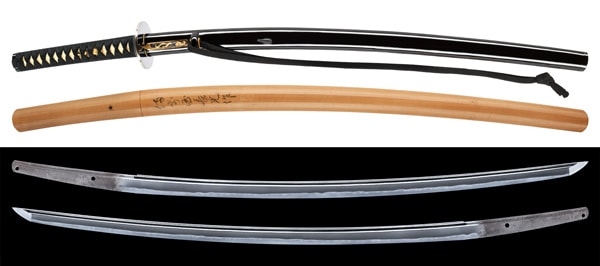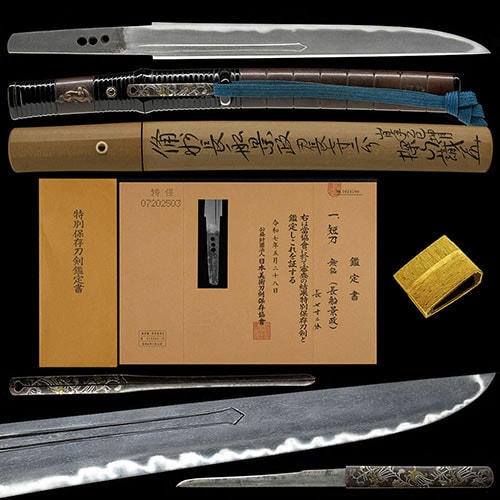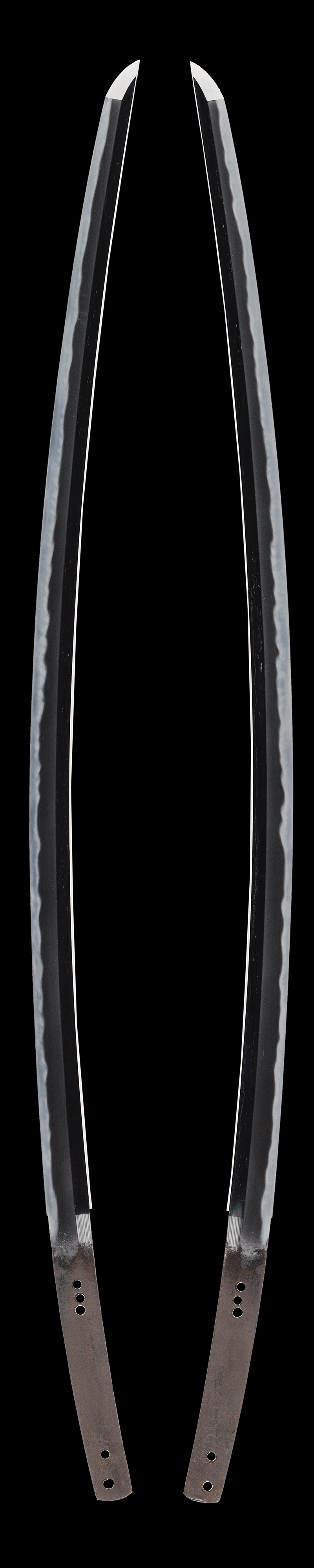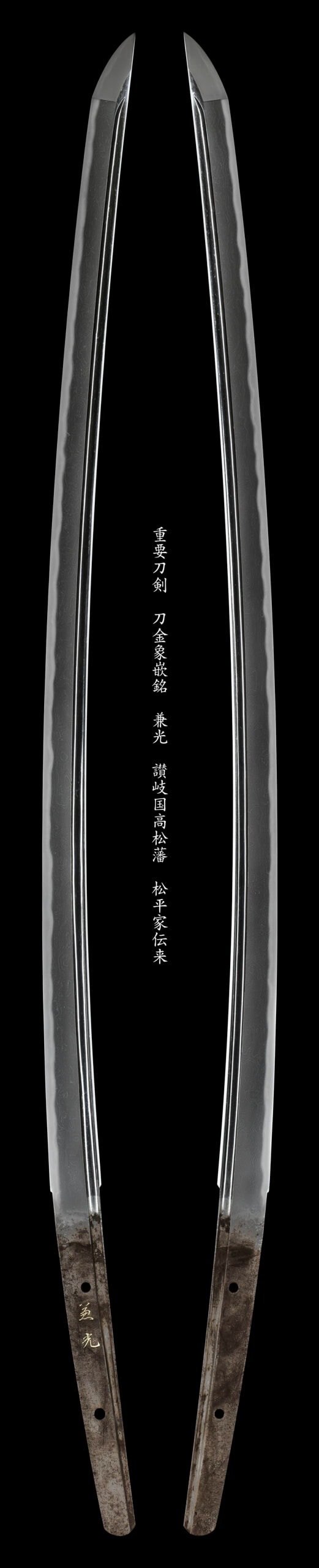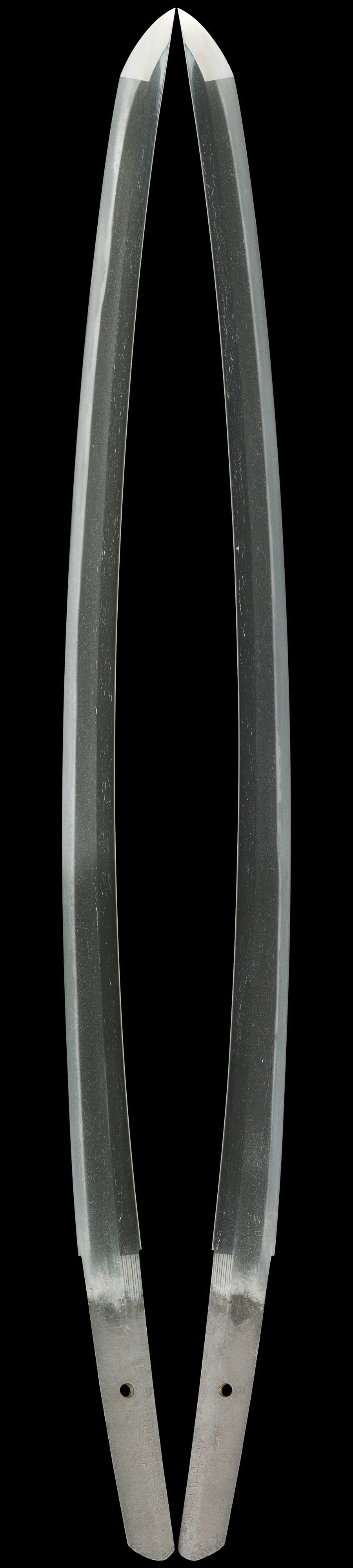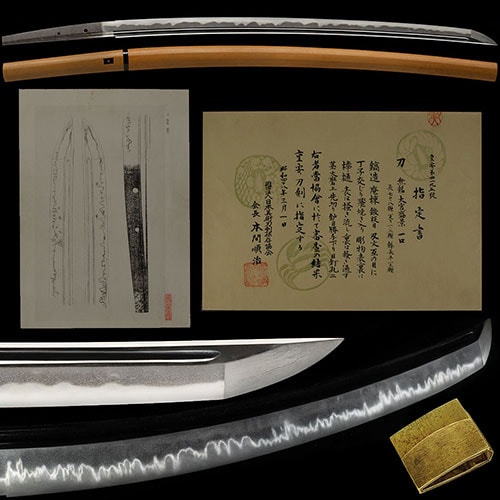
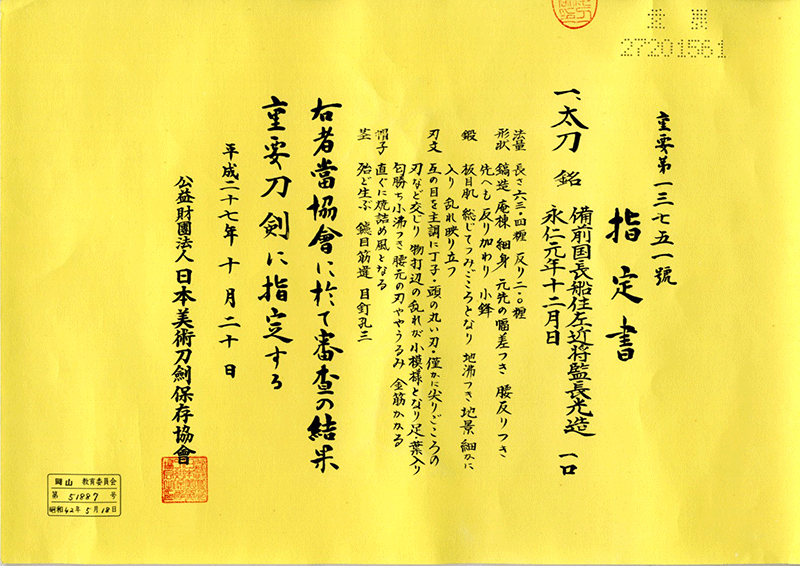
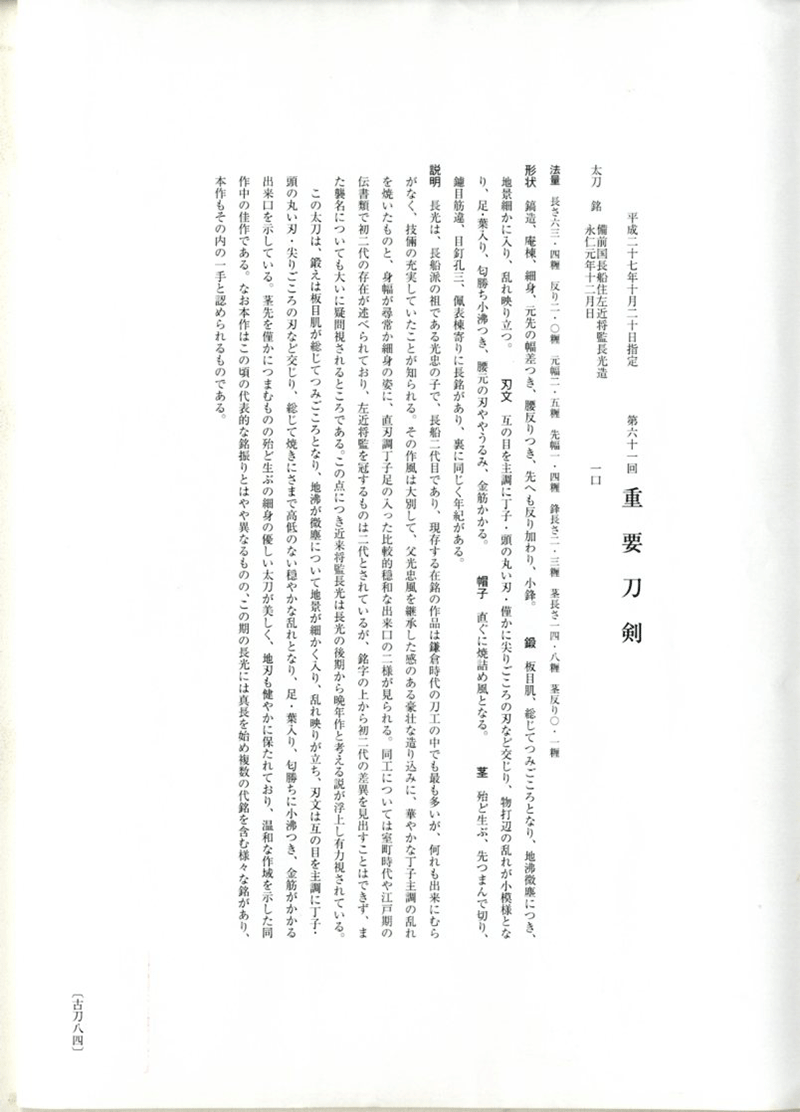
-, 61st Session — Designated October 20, 2015
, : Sakon Shōgen Nagamitsu, resident of in Province (長光)
Measurements 63.4 cm, 2.0 cm, 2.5 cm, 1.4 cm, 2.3 cm, 14.8 cm, 0.1 cm
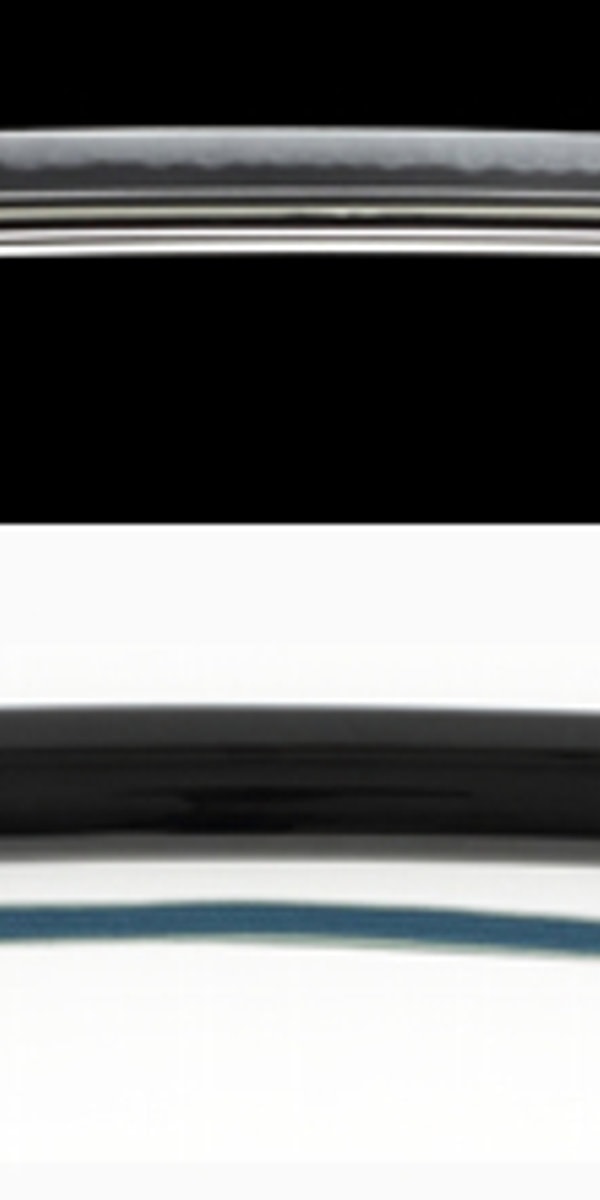
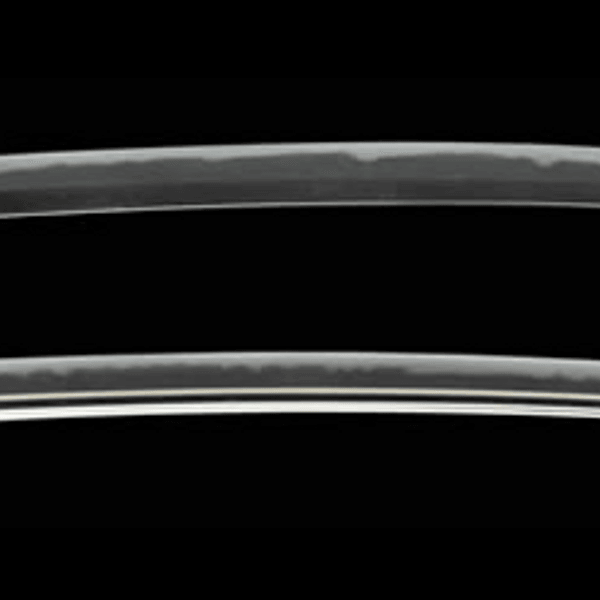
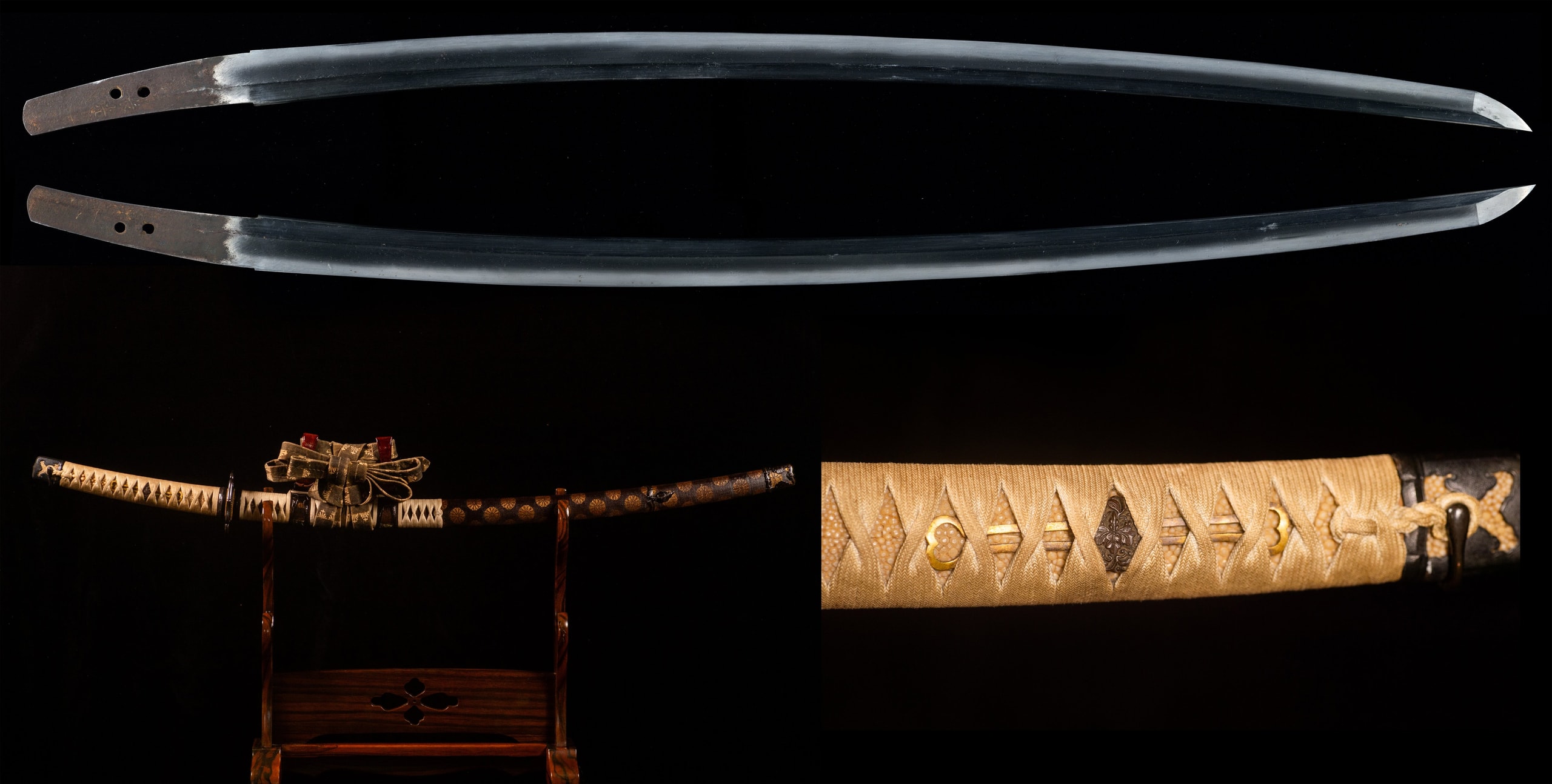
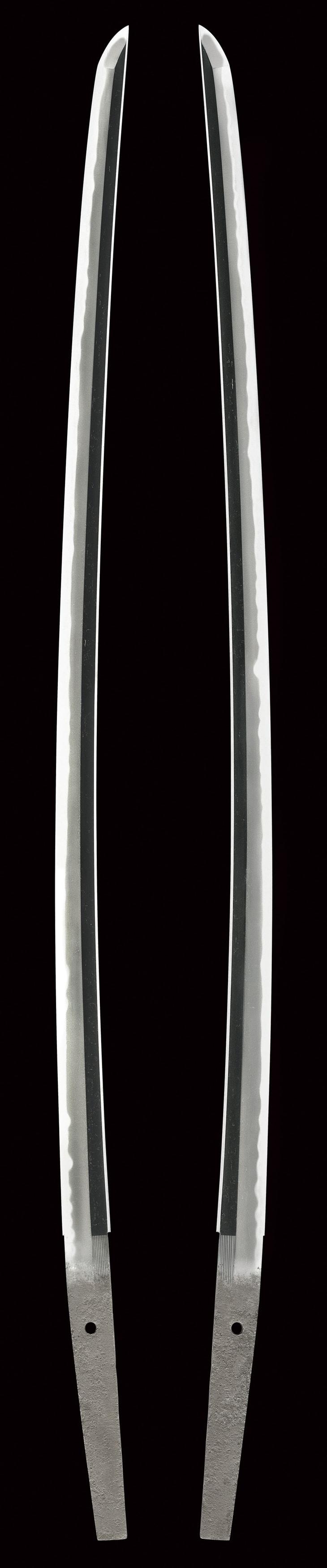
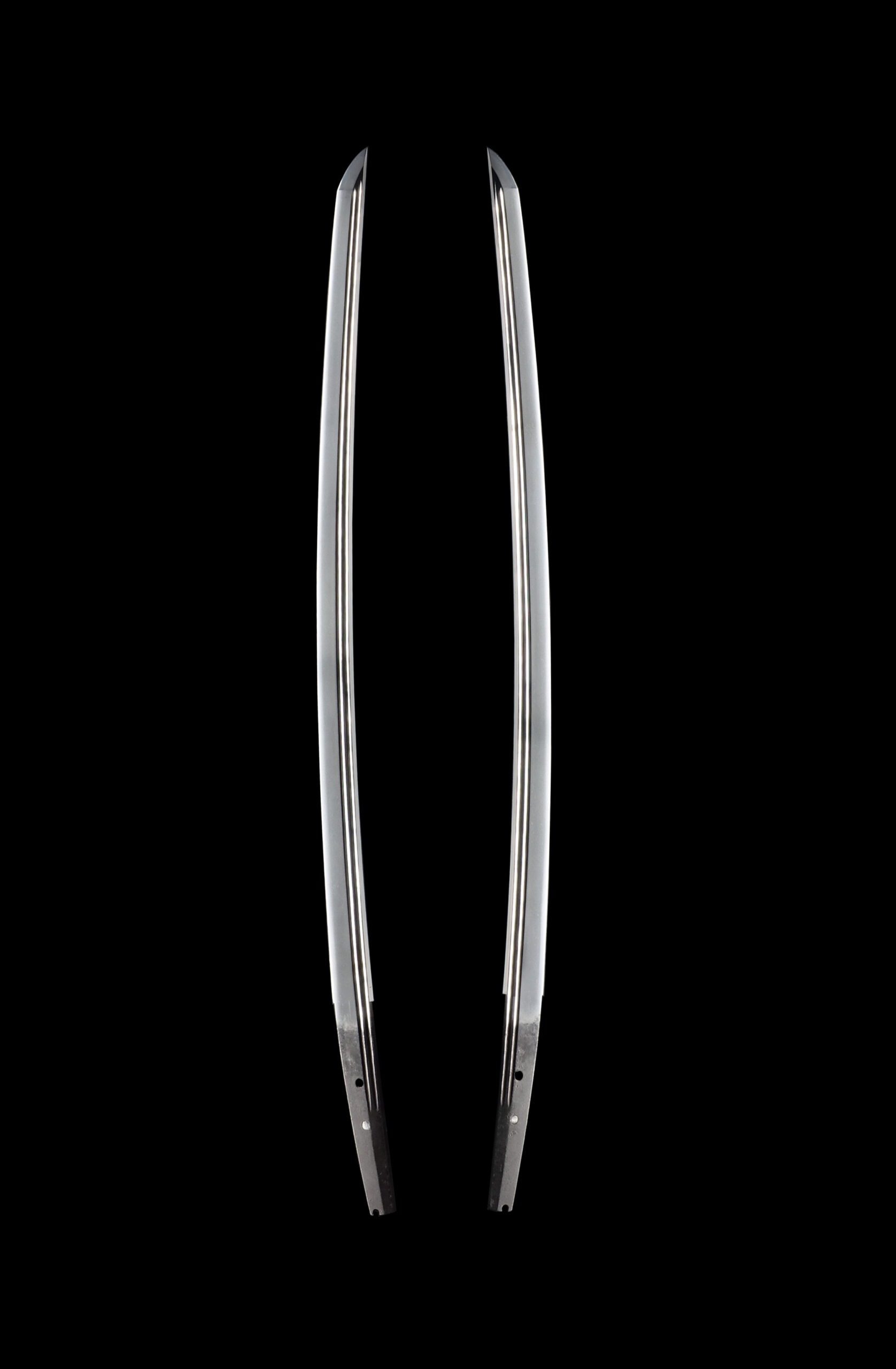
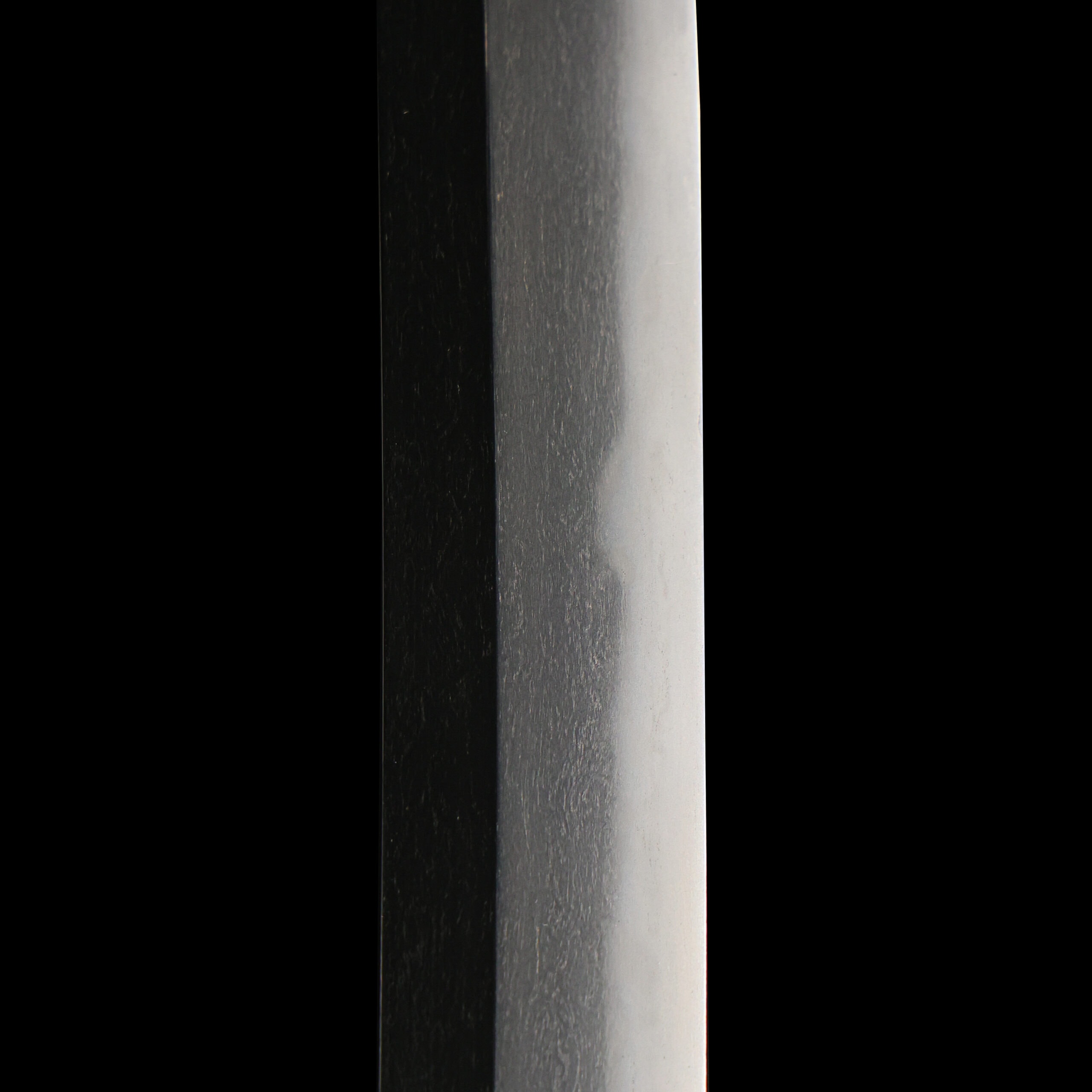
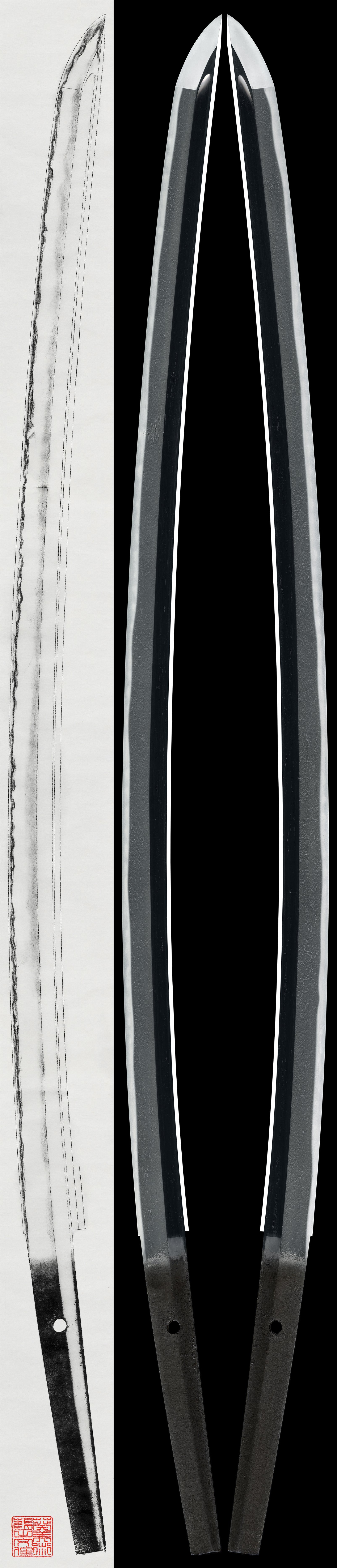
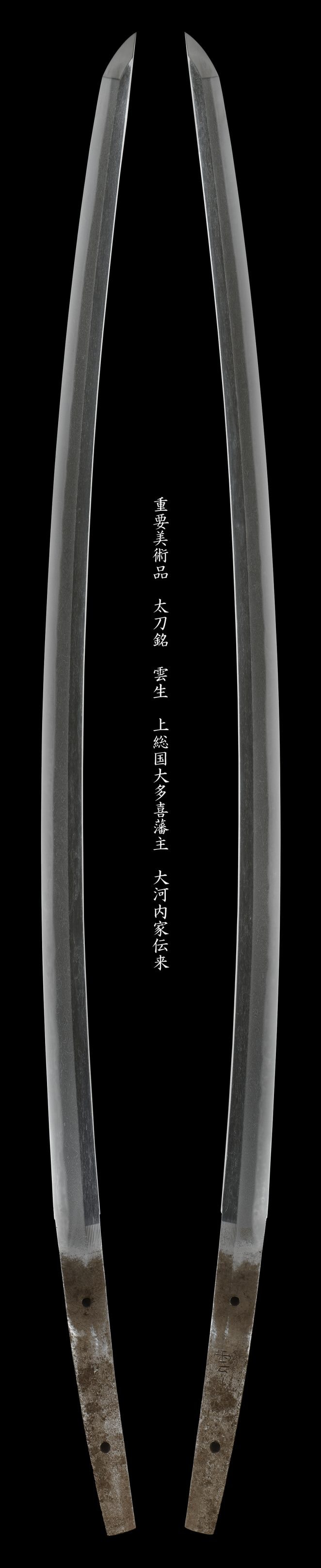
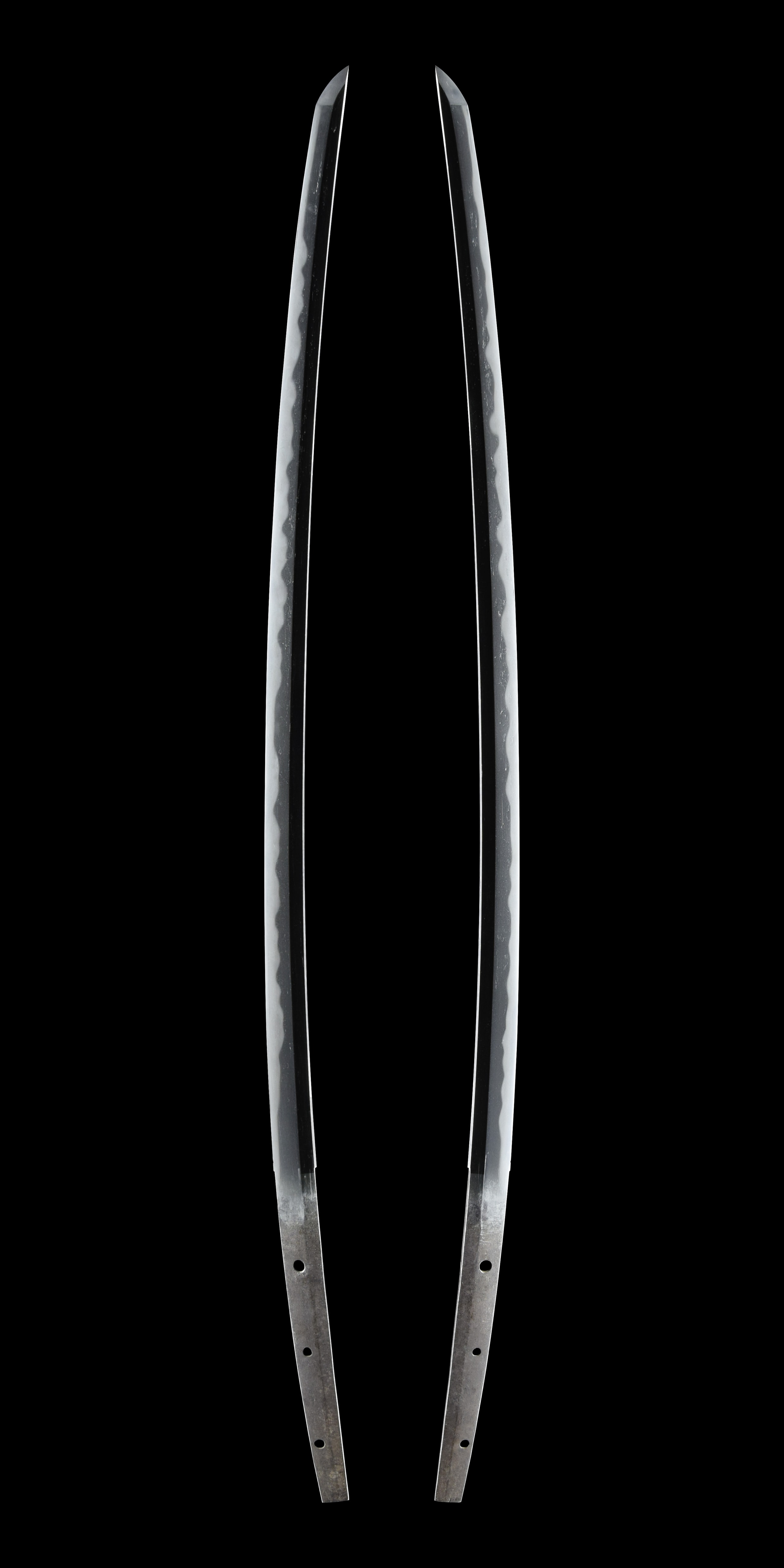
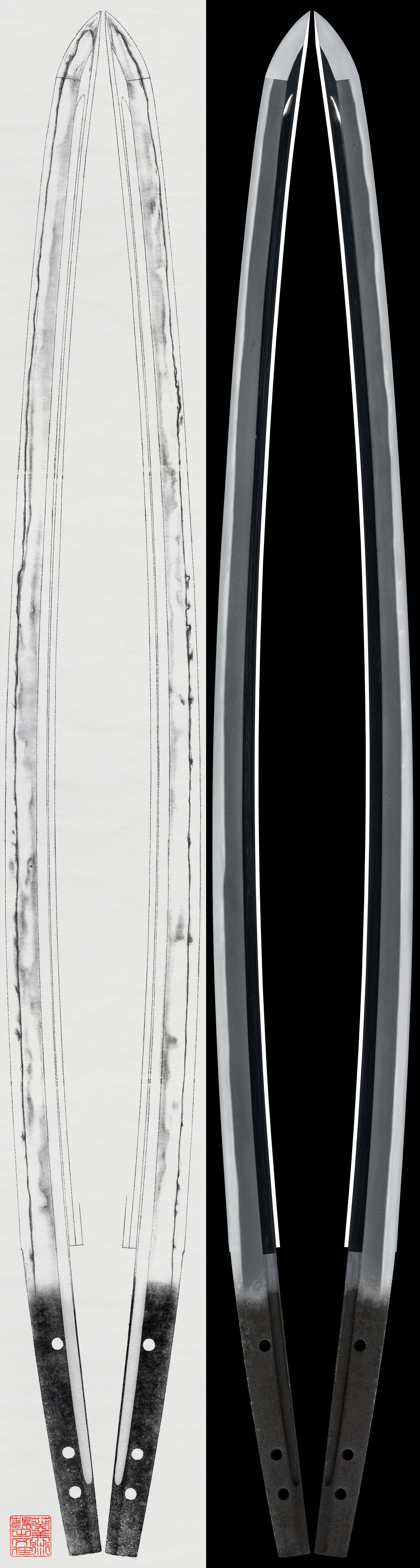
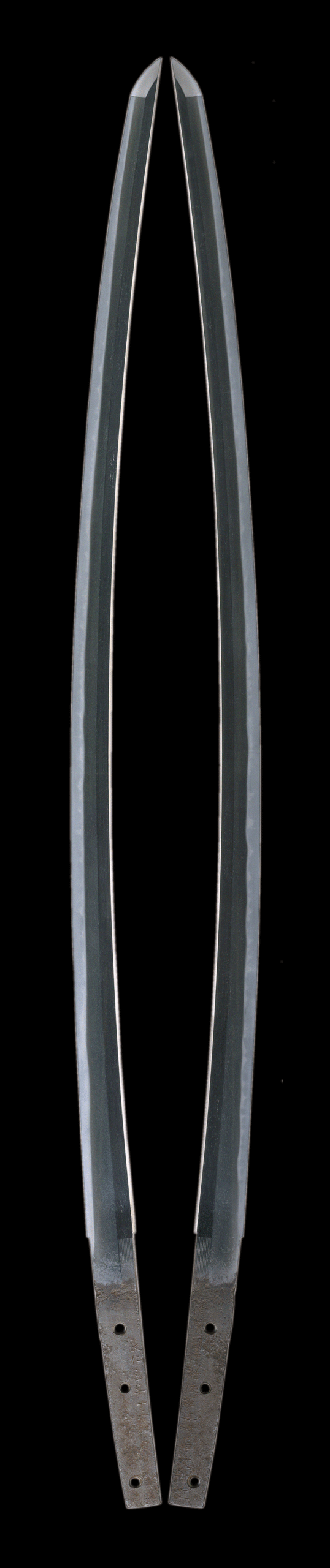
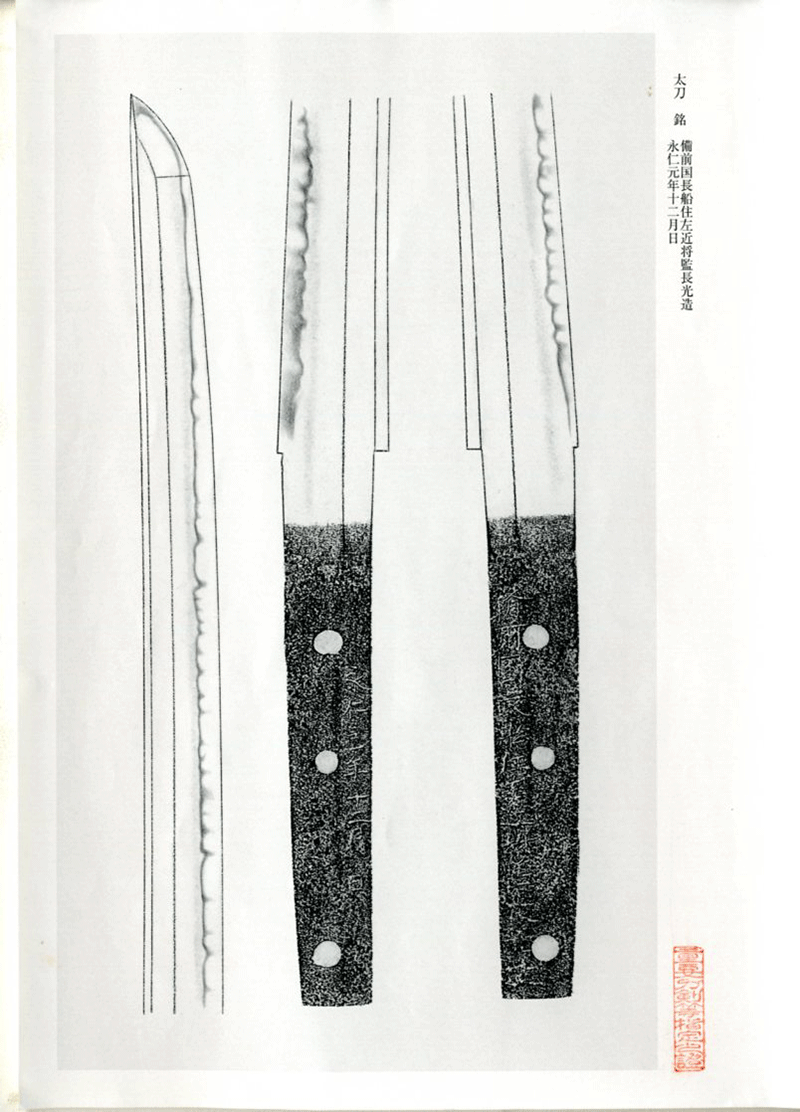
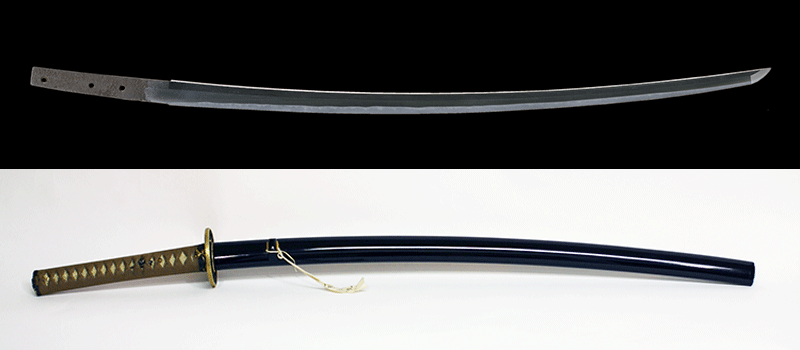
Description Keijō: , ; slender, with a marked difference between and width; with additional curvature toward the tip; . : ; overall a piled-wood () texture; fine ; delicate ; appears. : as the main theme, mixed with , rounded-headed elements, and slightly pointed elements; toward the the undulations become smaller in pattern; and enter; -dominant with ; near the base the is slightly (moist/soft quality), and appear. : turns straight and becomes -like. : None. : almost ; the is slightly pinched and cut; are ; three ; a long signature on the toward the , and the date inscription on the reverse.
Artisan Sakon Shōgen Nagamitsu (長光)
Era period; dated Einin 1 (1293), 12th month (day unspecified)
Explanation Nagamitsu was the son of Mitsutada, founder of the school, and is regarded as the second generation of the line. Among -period swordsmiths, extant signed works by Nagamitsu are the most numerous. Moreover, they show no unevenness of workmanship, revealing the high degree to which his technique was consistently developed.
Broadly speaking, his style may be divided into two types: one is a powerfully constructed manner that seems to carry on his father Mitsutada’s style, tempered with flamboyant -based ; the other presents either normal width or a slender form, with a comparatively calm workmanship in a -toned containing chōji-ashi.
With respect to Nagamitsu, densho (transmission texts) of the period and the period mention the existence of first and second generations, and works bearing the title “Sakon Shōgen” have been treated as those of a second generation. However, no differences can be discerned in the style of the inscribed characters that would distinguish a first and second generation, and the notion of succession itself is also a point that invites considerable doubt. In connection with this, in recent years a theory has emerged and gained persuasive support that “Sakon Shōgen Nagamitsu” represents work from Nagamitsu’s later to last years.
This shows an forging that overall takes on a piled-wood () appearance; with fine , delicate , and clearly standing . The is primarily , mixed with , rounded-headed elements, and slightly pointed elements; overall it is a calm without conspicuous highs and lows. and are seen; the temper is -dominant with ; and appear, while near the base the shows a slight (moist/soft quality).
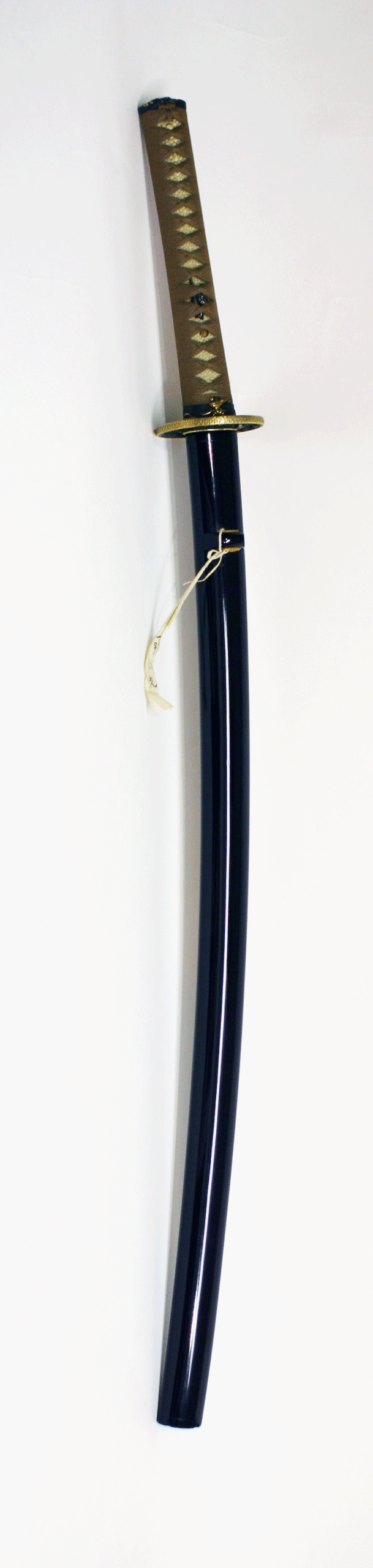
Although the tang tip is very slightly pinched, the blade remains almost , and its slender, gentle form is beautiful. Both and are preserved in (sound and well-preserved) condition, and this work is a fine example among his productions that displays a mild and restrained working range.
It should be noted that while this piece’s inscription style differs somewhat from what is typical of representative examples from this period, Nagamitsu of this time is known to have employed a variety of signatures—including multiple substituted-name signatures such as Sanenaga—and this work is recognized as one such variant.
[ 84]